Fish
What a fish is, how it behaves, what it eats, where it is documented as being caught, and what all of that means for anyone trying to catch or return one. Ranges given on a species page are biological: they say where the animal lives, not that you will catch one there.
The fish we can tell you most about
Species with a reviewed photograph and the most publicly documented places behind them — so the page answers where and how as well as what. It is a measure of coverage, not a ranking of fish.
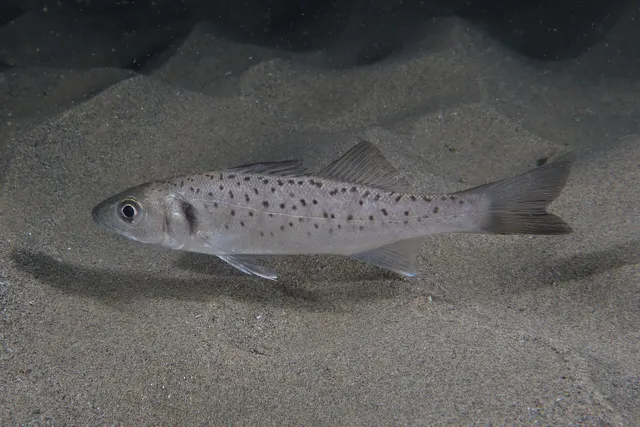 European sea bassA fast, predatory inshore fish that hunts in broken water and surf, and one of the most closely managed recreational species in European seas.
Julien Renoult — CC BY 4.0, via Wikimedia Commons
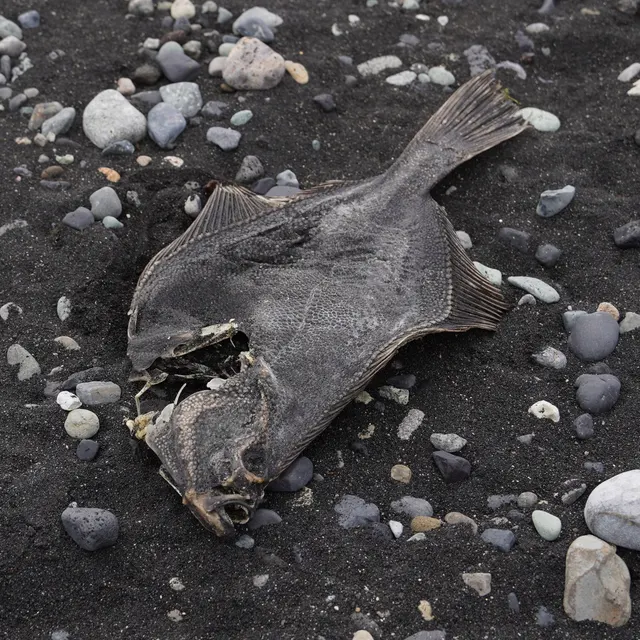 European flounderThe flatfish that runs up rivers — a tolerant, estuarine right-eyed flounder with bony tubercles along its fin bases and a habit of turning up in fresh water.
nbasargin — CC BY, via iNaturalist
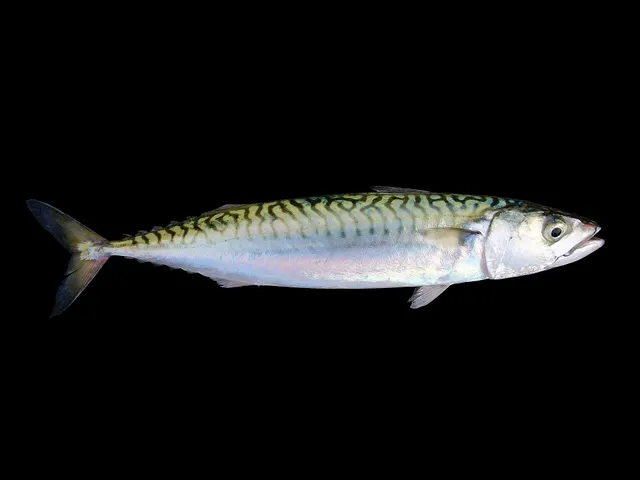 Atlantic mackerelA fast, schooling, obligate-swimming pelagic fish that arrives inshore in summer in enormous numbers, and the species most sea anglers catch first.
Hans Hillewaert — CC BY-SA 4.0, via Wikimedia Commons
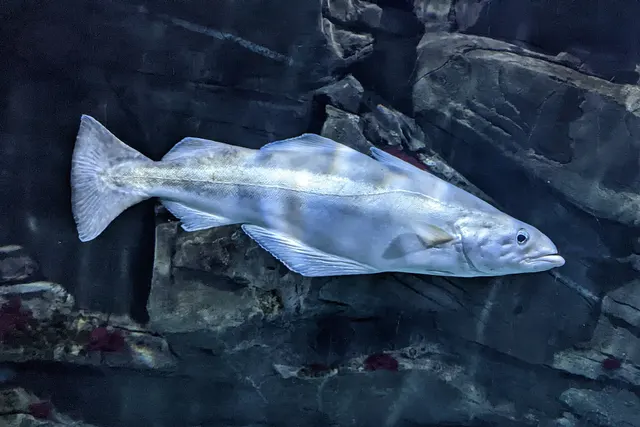 PollackA fast gadoid that hunts up off reefs and wrecks and takes a lure on the drop — and the sea fish most likely to convert a bait angler to lure fishing.
Wilhelm Thomas Fiege — CC BY-SA 4.0, via Wikimedia Commons
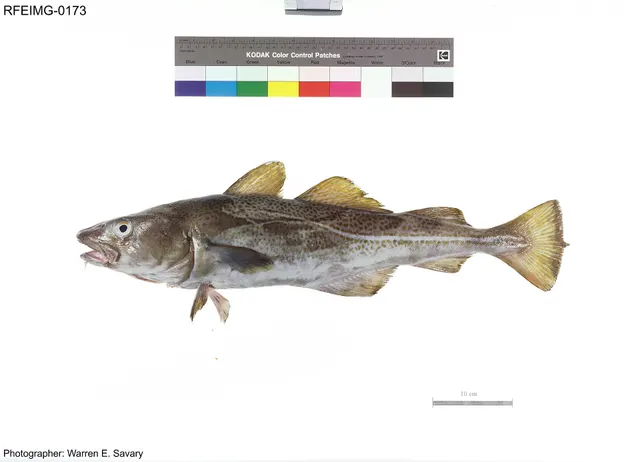 Atlantic codA large, heavily-built demersal predator of the North Atlantic, and the species whose commercial history is the standard example of stock collapse.
The U.S. Food and Drug Administration, Public domain, via Wikimedia Commons
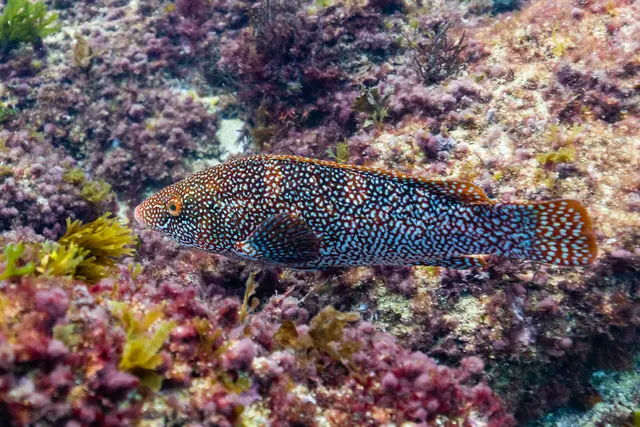 Ballan wrasseA long-lived rocky-ground resident that begins life female and may change sex — and the species that turned rock marks into a lure fishery.
Diego Delso — CC BY-SA 4.0, via Wikimedia Commons
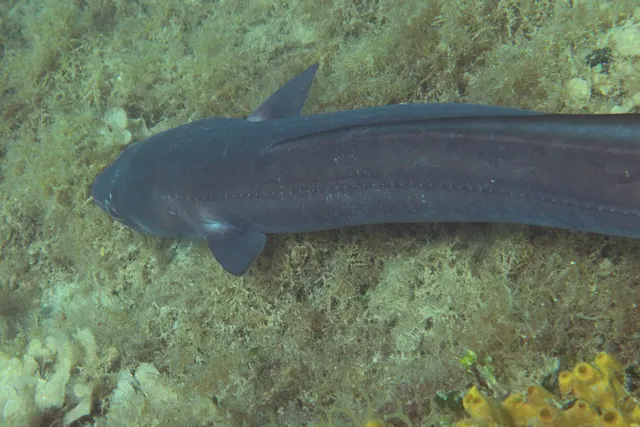 Conger eelA very large scaleless eel of wrecks, rock and harbour walls, reaching three metres, and among the most powerful and most genuinely dangerous fish to handle in European seas.
Holger Krisp — CC BY 3.0, via Wikimedia Commons
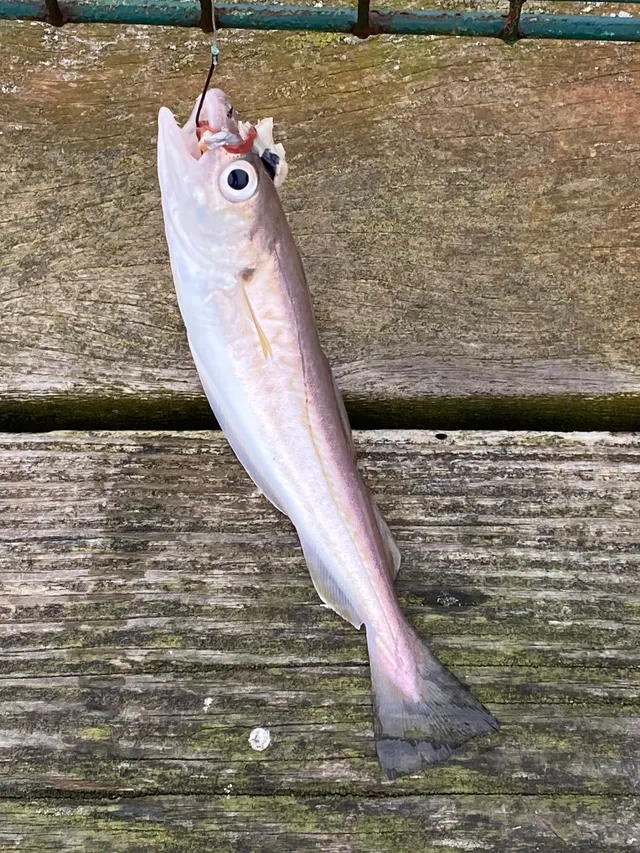 WhitingA small, abundant, silver gadoid of European coasts, a mainstay of winter shore fishing and distinguished by a dark spot at the pectoral fin base.
rmjb — CC BY, via iNaturalist
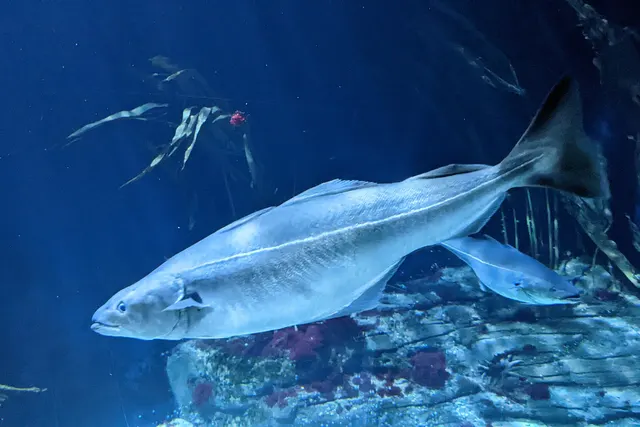 SaitheA fast, hard-fighting shoaling gadoid of northern rock and wreck — routinely confused with pollack, and a completely different fish once you know the lateral line.
Wilhelm Thomas Fiege — CC BY-SA 4.0, via Wikimedia Commons
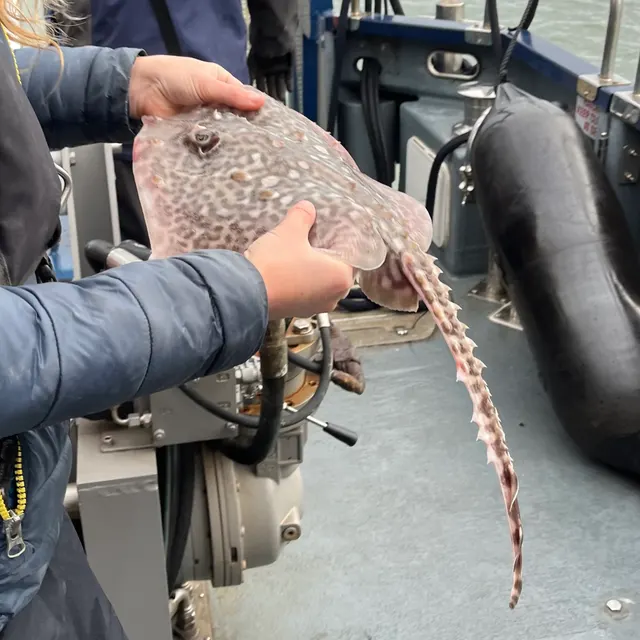 Thornback rayThe commonest European ray, covered in thorn-like bucklers, laying horny egg cases known as mermaid's purses, and requiring careful handling on release.
Ella McCausland — CC BY, via iNaturalist
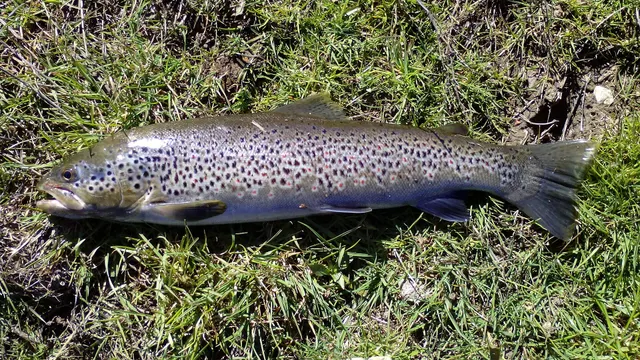 Brown troutA single, extraordinarily plastic species that appears as a tiny hill-stream fish, a deep-bodied loch trout and a silver sea-run migrant — all the same animal.
Robermix, CC0, via Wikimedia Commons
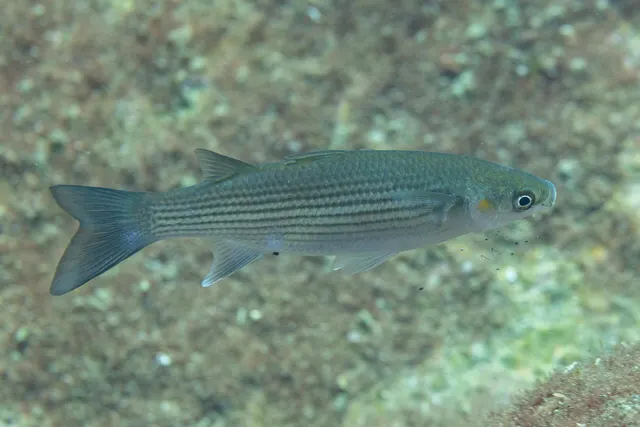 Thick-lipped grey mulletA shoaling coastal fish that eats algae and detritus rather than prey — which makes it the hardest common sea fish to catch and the most interesting to think about.
Diego Delso — CC BY-SA 4.0, via Wikimedia Commons
Narrow it down
By the water a fish lives in, or by how the sources describe it being caught. Every one of these is derived from the records rather than chosen, so a short list means the evidence is thin rather than that the fishing is.
Saltwater · 283
Species the record places in the sea, from harbour-wall mackerel to offshore tuna.
Albacore · Almaco jack · Arctic char · Atlantic blue marlin · Atlantic bluefin tuna · Atlantic bonito · Atlantic chub mackerel · Atlantic cod · Atlantic goliath grouper · Atlantic halibut · Atlantic horse mackerel · Atlantic lizardfish · Atlantic mackerel · Atlantic rock crab · and 269 more below
Freshwater · 117
Rivers, lakes, canals and stillwaters — the coarse, game and predator species of fresh water.
African sharptooth catfish · African tigerfish · Arapaima · Arctic char · Arctic grayling · Asp · Atlantic salmon · Atlantic tarpon · Australian bass · Ayu · Barbel · Barramundi · Big-scale sand smelt · Bigeye trevally · and 103 more below
Moves between fresh and salt water · 26
Fish that move between salt and fresh water during their lives, and are fished in both.
Allis shad · Arctic char · Atlantic salmon · Australian bass · Ayu · Barramundi · Beluga sturgeon · Brook trout · Brown trout · Bull trout · Chinook salmon · Chum salmon · Coho salmon · Cutthroat trout · and 12 more below
From the shore · 150
Documented as a shore target at a place covered here.
Atlantic bonito · Atlantic chub mackerel · Atlantic cod · Atlantic horse mackerel · Atlantic lizardfish · Atlantic mackerel · Atlantic rock crab · Atlantic salmon · Atlantic tarpon · Azores chromis · Ballan wrasse · Barbel · Big-scale sand smelt · Bigeye trevally · and 136 more below
From a boat · 74
Documented as a boat target at a place covered here.
Albacore · Arctic char · Atlantic bluefin tuna · Atlantic bonito · Atlantic cod · Atlantic halibut · Atlantic mackerel · Atlantic salmon · Atlantic tarpon · Barracouta · Bigeye trevally · Blue shark · Bluefish · Bonefish · and 60 more below
On a charter · 26
Species the sources describe as a charter proposition rather than a shore one.
Albacore · Atlantic blue marlin · Atlantic bluefin tuna · Atlantic bonito · Atlantic cod · Atlantic halibut · Blue shark · Cobia · Conger eel · Geelbek · Great barracuda · Greater amberjack · Haddock · King mackerel · and 12 more below
Fly fishing · 13
Documented as a fly-fishing target at a specific place.
Atlantic salmon · Atlantic tarpon · Bonefish · Brown trout · Common snook · European sea bass · Grayling · Great barracuda · Northern pike · Permit · Rainbow trout · Red drum · Spotted seatrout
Spearfishing · 17
Documented as a spearfishing catch at a specific place. A short list, because mode-level evidence for it is scarce rather than because the fish are.
Ballan wrasse · Black musselcracker · Bronze bream · Bronze whaler · Common dentex · Common octopus · Dusky grouper · Galjoen · Giant trevally · Greater amberjack · Hottentot · Pollack · Raggedtooth shark · Roman · and 3 more below
Other ways in
- Identify a fish you have caught
The characters that settle it, ranked by how far each one can be trusted.
- Tell two similar species apart
Side-by-side on the features that actually separate them.
- What each species eats
Feeding biology, kept separate from what anglers infer from it.
- Fish by where you are
Coasts, countries and river systems, and the places documented under them.
- Fish by the ground they live on
Reef, kelp, estuary, surf beach, weir pool — and what each one holds.
- Find places near a town
Filter publicly documented places by what you want to catch.
A
African sharptooth catfish
A large air-breathing African catfish able to move overland between waters, widely farmed, and a major invasive outside its native range.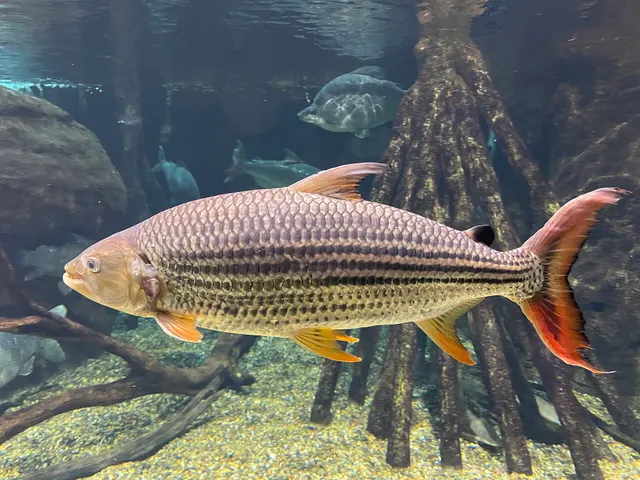
African tigerfish
A fast, silver, heavily toothed river predator of tropical Africa whose interlocking fangs are visible with its mouth shut — and one of the hardest fish in fresh water to hook.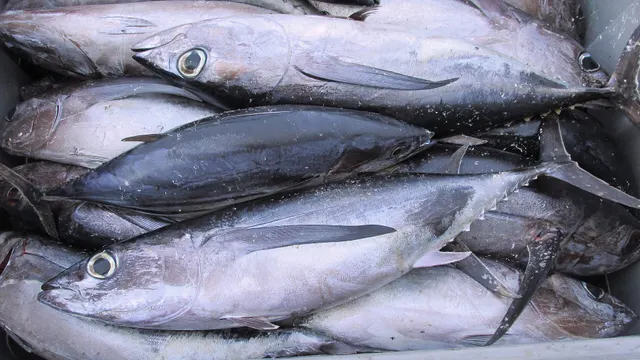
Albacore
The long-finned tuna of temperate open ocean — smaller and cooler-water than its relatives, with pectoral fins so long they are the identification.Allis shad
The larger of the two European shads: a herring that runs up rivers to spawn, separated from twaite shad by a character you have to count rather than look at.Almaco jack
A circumglobal amberjack of deeper reef — and a fish whose eastern Atlantic distribution FishBase itself declines to state confidently.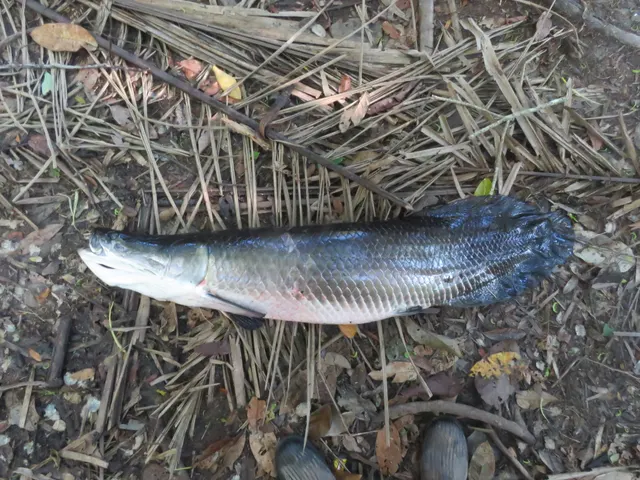
Arapaima
One of the largest freshwater fish in the world, an air-breathing Amazonian giant that must surface regularly and is managed through community quota systems.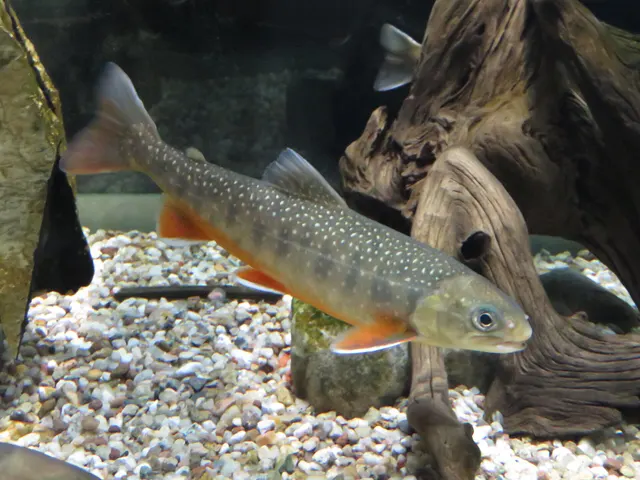
Arctic char
The most northerly freshwater fish in the world, a cold-demanding char with brilliant orange-red spawning bellies and highly distinct landlocked populations.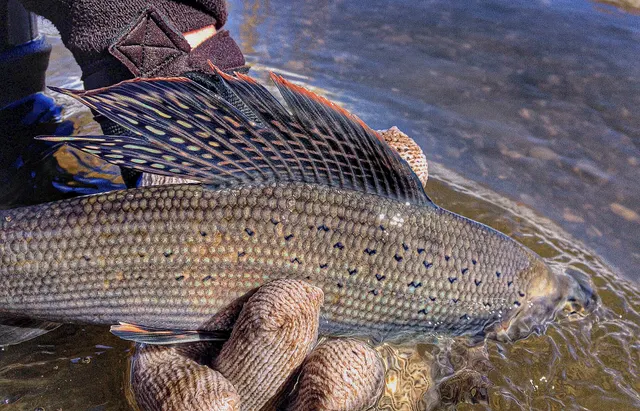
Arctic grayling
A northern river salmonid with an enormous sail-like dorsal fin, feeding on drifting insects in cold clear water across Arctic North America and Siberia.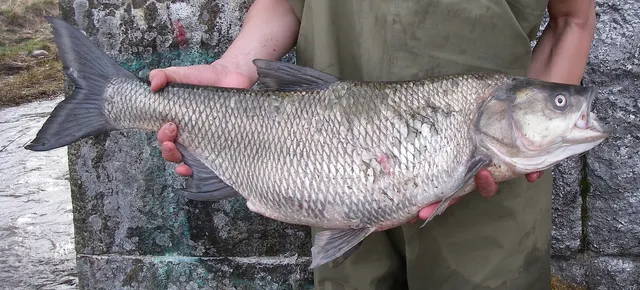
Asp
Europe's largest predatory cyprinid, a fast open-water hunter that smashes into baitfish shoals at the surface and is fished like a saltwater predator.Atlantic blue marlin
The largest Atlantic billfish, a fast blue-water predator now released almost universally by recreational anglers because of stock concerns.Atlantic bluefin tuna
A warm-blooded ocean-crossing predator reaching three metres and 680 kilograms, whose collapse and partial recovery is the most consequential fisheries story of the last fifty years.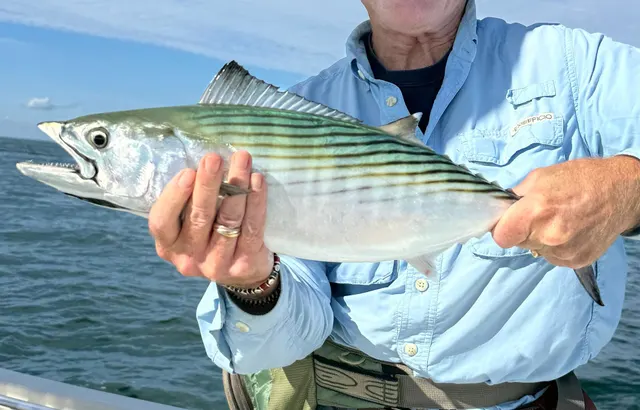
Atlantic bonito
A small, fast, striped tuna relative that arrives on temperate coasts in shoals each year and is the most accessible member of the family to a shore angler.Atlantic chub mackerel
The mackerel of warm Atlantic water — and, in the Canaries, the fish that `caballa` actually means, which is not the mackerel a British angler is thinking of.Atlantic cod
A large, heavily-built demersal predator of the North Atlantic, and the species whose commercial history is the standard example of stock collapse.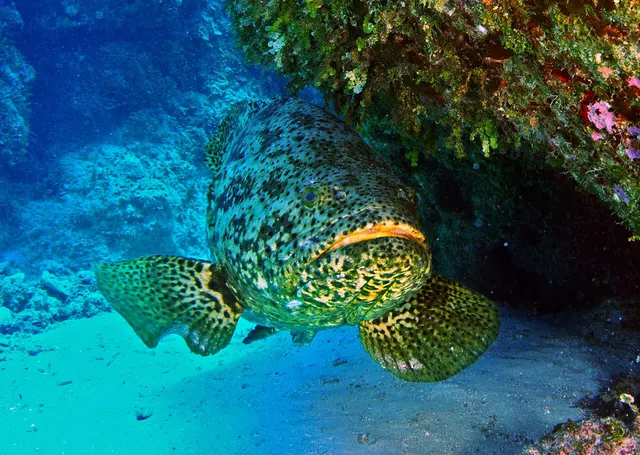
Atlantic goliath grouper
An enormous, slow-growing reef grouper that was fished to collapse, is now protected across much of its range, and must be released without being lifted.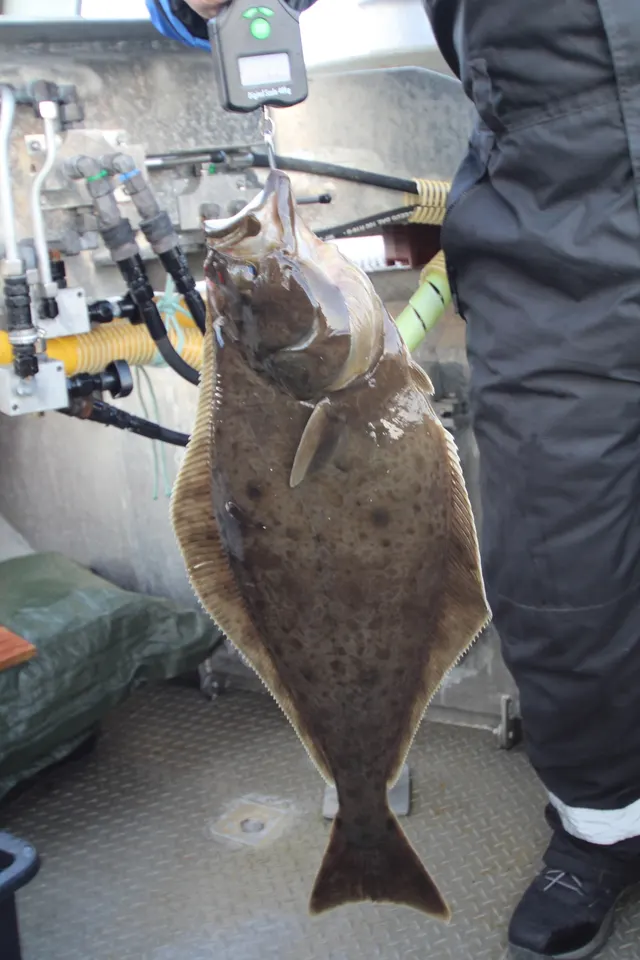
Atlantic halibut
The largest flatfish in the world, reaching over four metres, and a species whose commercial collapse made it one of the clearest cautionary tales in North Atlantic fisheries.Atlantic horse mackerel
Not a mackerel at all but a jack, armoured with a line of bony scutes, and one of the most abundant and least appreciated fish on European coasts.Atlantic lizardfish
A cigar-shaped ambush predator that lies half-buried on clean sand beside rock and takes anything small that swims past it.Atlantic mackerel
A fast, schooling, obligate-swimming pelagic fish that arrives inshore in summer in enormous numbers, and the species most sea anglers catch first.Atlantic rock crab
The fast dark crab that runs across Macaronesian splash-zone rock — a regulated species with a closed season, standard bait, and the animal a Madeiran survey and a Canary government table each named under a different binomial.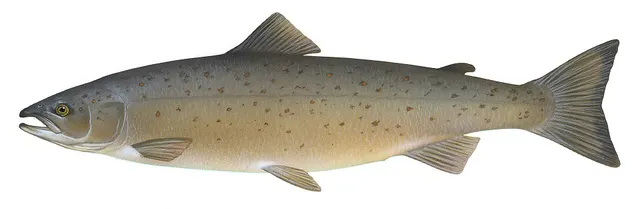
Atlantic salmon
An anadromous salmonid that migrates from its natal river to the North Atlantic and returns to spawn — and a species in serious, well-documented decline.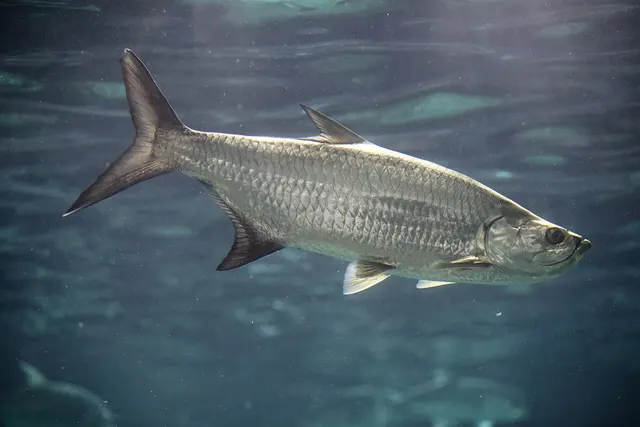
Atlantic tarpon
A huge, ancient, air-breathing fish of tropical Atlantic coasts that jumps repeatedly when hooked and is almost never eaten — fished purely for the encounter.Australasian snapper
The most important inshore recreational species of Australia and New Zealand — a sea bream rather than a true snapper, and a lesson in why common names travel badly.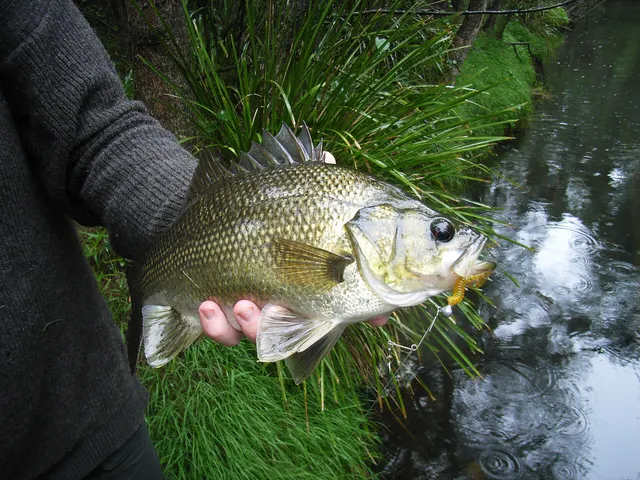
Australian bass
A hard-fighting catadromous native of eastern Australian coastal rivers that must reach estuarine salt water to breed — which makes dams its defining problem.Axillary seabream
A small pink Pagellus with a dark mark in the pectoral axil — and the reason `besugo` cannot be trusted to mean the same fish in the Canaries as on the mainland.Ayu
A territorial algae-grazing river fish of East Asia, fished by tomozuri — using a live decoy to provoke a territorial attack — and famous for a melon-like scent.Azores chromis
The pale damselfish of Macaronesian rock — the second of the two fula, and the one that made an unidentifiable 'damselfish' in a trip report resolvable.
B
Baardman
A barbelled croaker of the South African surf and inshore reef — the fish that grunts, feels the bottom with a chin barbel, and is best known to shore anglers as the belman.Ballan wrasse
A long-lived rocky-ground resident that begins life female and may change sex — and the species that turned rock marks into a lure fishery.Bank steenbras
Not a steenbras and not a sea bream: a large fingerfin of the Cape reefs that seldom takes a bait, is a prized spearfishing target, and reaches nearly two metres on the reference data.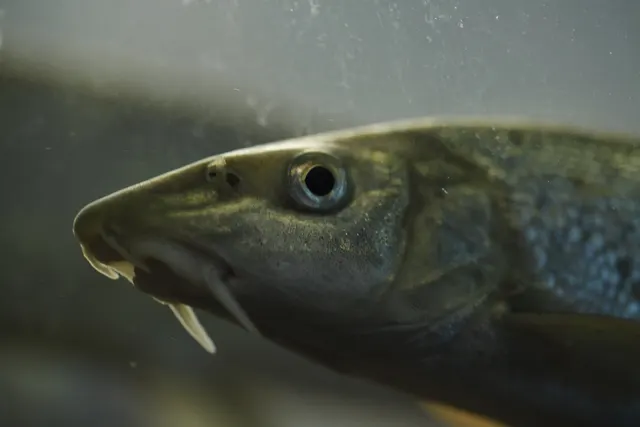
Barbel
A powerful, streamlined river cyprinid built for holding station in fast water — and the hardest-fighting freshwater fish most British anglers will meet.Barracouta
A long, toothy, southern-ocean snake mackerel — snoek in South Africa, couta in New Zealand — that destroys tackle, cuts fingers and is the backbone of two national food fisheries.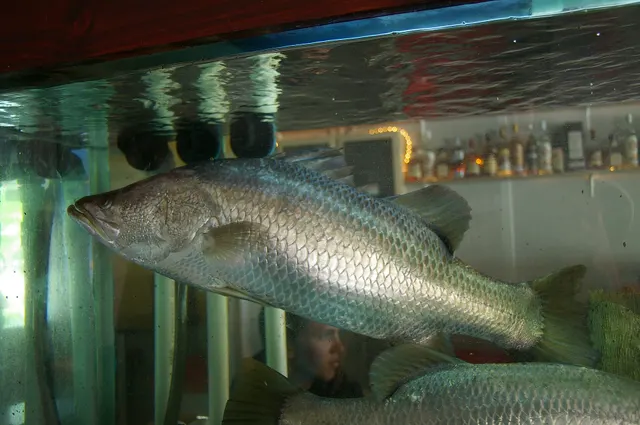
Barramundi
An estuarine ambush predator that begins life as a male and changes sex to female, so the largest fish are all breeding hens.Bastard grunt
A silver eastern Atlantic grunt that makes an audible noise with its swim bladder when it is landed — which is where the family name comes from.Beluga sturgeon
The largest fish that has ever entered European fresh water, a survivor of a lineage older than the dinosaurs, and now Critically Endangered — a fish FishingHQ describes so it can be recognised and released, not caught.Bermuda sea chub
A shoaling grazer of shallow Atlantic rock that eats weed — and one of the few fish on a Macaronesian wall that bread genuinely out-fishes bait for.Big-scale sand smelt
A translucent, silver-striped little fish that shoals in harbours from Madeira to the Black Sea — bait to most anglers, catch to those fishing small enough.Bigeye trevally
The kingfish that hunts at night: a large-eyed Indo-Pacific trevally that shoals in daylight and disperses to feed after dark, common in KwaZulu-Natal estuaries and harbours and a first-class light-tackle target.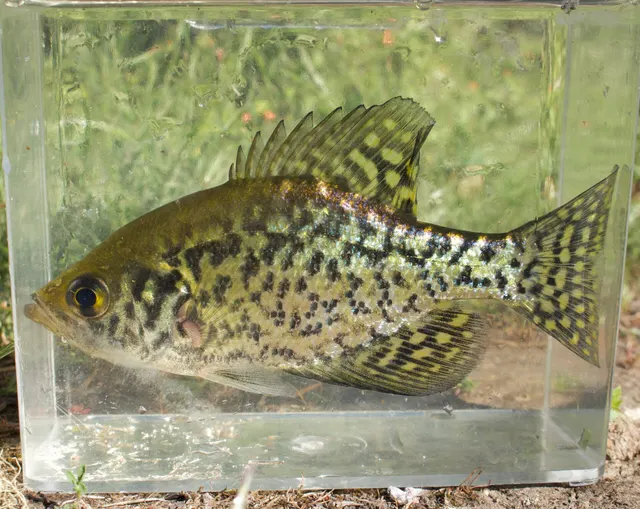
Black crappie
A schooling, structure-loving panfish with a mouth so thin it is nicknamed papermouth — and one of North America's most popular table fish.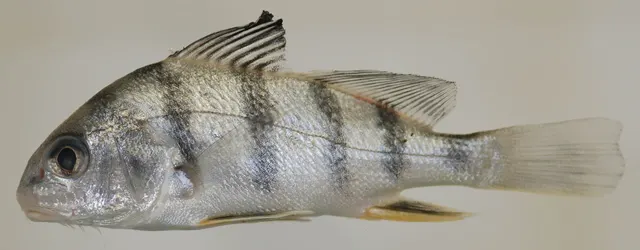
Black drum
The largest of the drums, reaching over fifty kilograms, with chin barbels, crushing throat teeth and a drumming call audible from a boat.Black goby
A dark goby of harbours, estuaries and soft ground — and the fish naturalists kept reporting from islands where it turned out not to live.Black moray
A moray restricted to the Macaronesian archipelagos and nowhere else on earth — dark, up to ninety centimetres, and in the shallow water a shore angler fishes.Black musselcracker
Poenskop: the second largest sparid in the world, one of the slowest-growing fish in South African water, aged to forty-five years, sex-changing at eighteen, and reduced to about a fifth of its historical abundance.Black rockfish
A schooling Pacific rockfish taken close inshore over reef, long-lived and slow-growing, with venomous fin spines and a serious barotrauma problem.Black sea bass
A structure-loving Atlantic reef fish that begins life female and commonly changes to male, with a distinctive high nape and elongated tail filament in large males.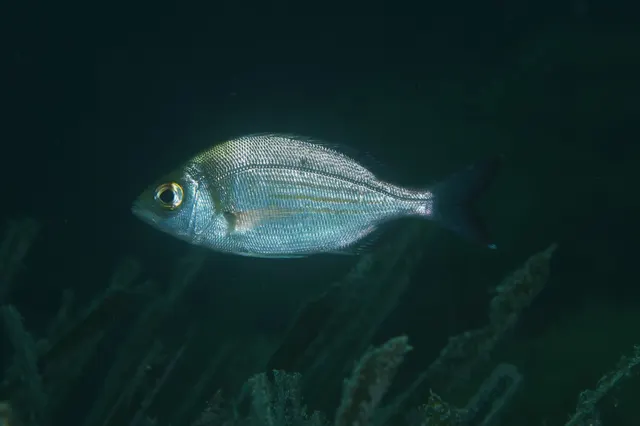
Black seabream
A deep-bodied silver bream that builds and guards nests on gravel — a hard-fighting south-coast summer species whose spawning aggregations are unusually easy to damage.Black-faced blenny
Not a blenny at all but a triplefin — three separate dorsal fins, a male that turns yellow with a black head, and a fish that lives upside down under overhangs.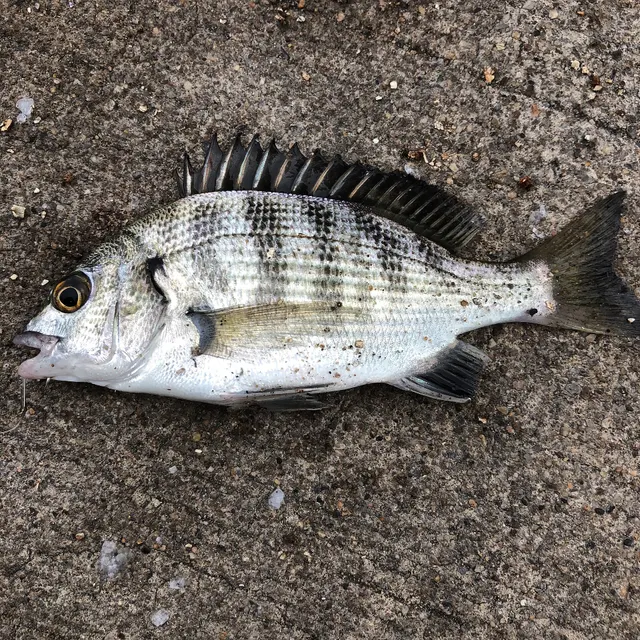
Blackhead seabream
A wary East Asian sparid of harbours and rocky shores, sex-changing as it grows, and the subject of an entire specialised Japanese angling discipline.Blackspot seabream
The deep red sparid of the eastern Atlantic — the Azorean goraz, Near Threatened, and the fish `besugo` means on the Spanish mainland but not in the Canaries.Blacktail
The dassie: a small silver sparid with a black saddle at the tail root that ranks third among shore angling species on the whole South African south-east coast, eats almost anything, and lives its whole life in the surf zone.Blacktail comber
The second fish Canary sources mean by `cabrilla` — a larger, longer-lived serranid than the comber, and assessed by the IUCN as Data Deficient.Blacktip reef shark
The small, shy, dipped-in-ink shark that patrols tropical reef flats in water barely deep enough to cover it — the shark most holidaymakers actually see, and the one they are most likely to be needlessly frightened of.Blonde ray
A large, pale, heavily spotted ray of clean offshore banks — told from the spotted ray by one thing: its dark spots run right to the very edge of the wing.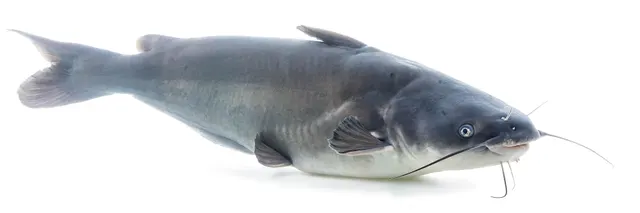
Blue catfish
North America's largest catfish, reaching over sixty kilograms, and a large-river specialist that has become a serious invasive where it was introduced.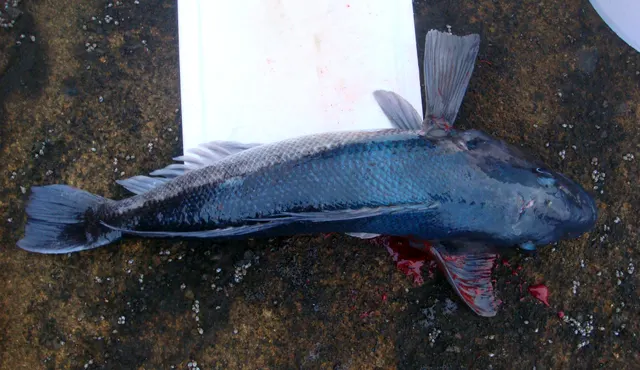
Blue cod
A New Zealand endemic reef fish that changes sex from female to male and shifts colour with it, territorial, curious and heavily fished.Blue jack mackerel
The horse mackerel of the Atlantic islands — and the fish `chicharro` means in the Azores, where the same word means a different species in the Canaries.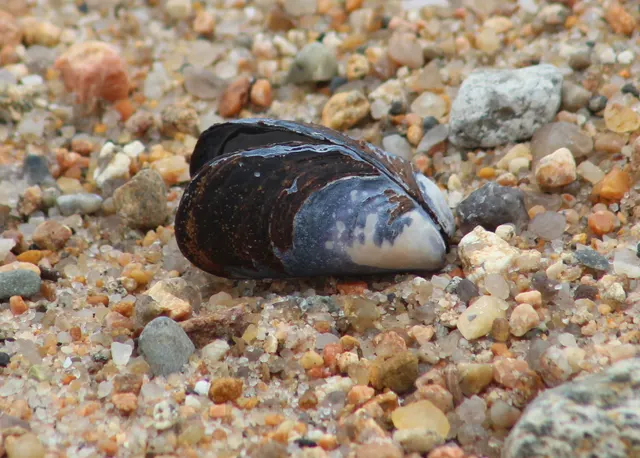
Blue mussel
The commonest gathered shellfish on Atlantic European shores, attached to rock by threads it spins itself, and an animal whose safety is decided entirely by the water it grew in.Blue shark
The oceanic shark that comes within reach of a British day boat every summer — slender, indigo, curious, and the reason shark fishing exists as a UK charter fishery at all.Blue swimmer crab
The swimming crab of Australian and Indo-Pacific sand and seagrass — raked, netted, scooped and caught by hand, and one of the most-taken recreational crustaceans anywhere.Blue threadfin
A tropical estuary fish that hunts with four free filaments extending from the pectoral fin, feeling for prawns in water too turbid to see through.Blue wrasse
The other half of the Macaronesian Symphodus pair — split from the emerald wrasse after most field guides were printed, and not reliably separable in a photograph.Bluefin gurnard
The gurnard of New Zealand and southern Australia — brilliant blue-edged pectoral fins, and six free rays it uses to walk on and taste the seabed.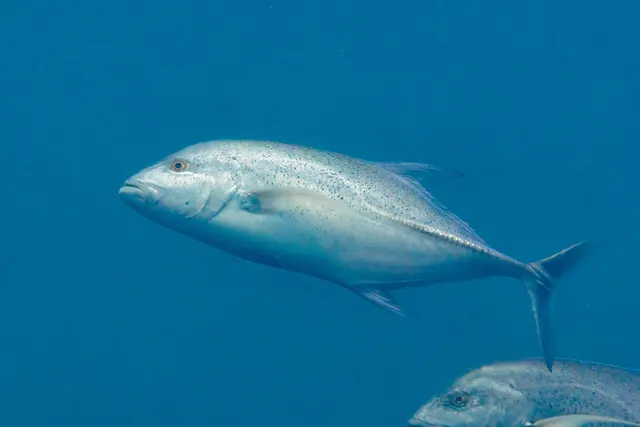
Bluefin trevally
A brilliantly marked reef trevally with electric blue fins that hunts cooperatively with other predators — including, remarkably, with octopus and moray eels.Bluefish
A circumglobal shoaling predator with a reputation for feeding frenzies and a mouth that goes through wire — called tailor in Australia and elf in South Africa.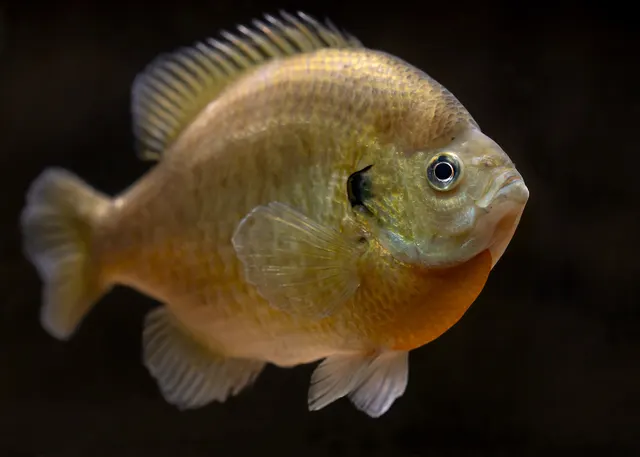
Bluegill
Probably the most-caught freshwater fish in North America, the species most anglers there start on, and a nest-guarding sunfish with a genuine stunting problem.Bluenose warehou
A deep southern-ocean fish of the 260-to-490-metre band, reaching 63 kilos — one of the prizes of Australasian deep dropping, and slow enough growing to be easy to overfish.Bogue
A slim, big-eyed, gold-striped sparid that shoals in enormous numbers along eastern Atlantic and Mediterranean shores — the everyday catch, and the bait that catches everything else.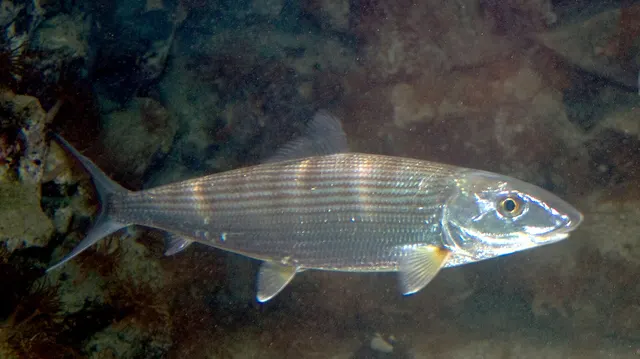
Bonefish
A silver bottom-feeder of tropical shallows, hunted on sight in knee-deep water, that runs further than anything of its size.Bowfin
An ancient, air-breathing North American predator with a long undulating dorsal fin and a bony head, able to survive in water that would kill most fish.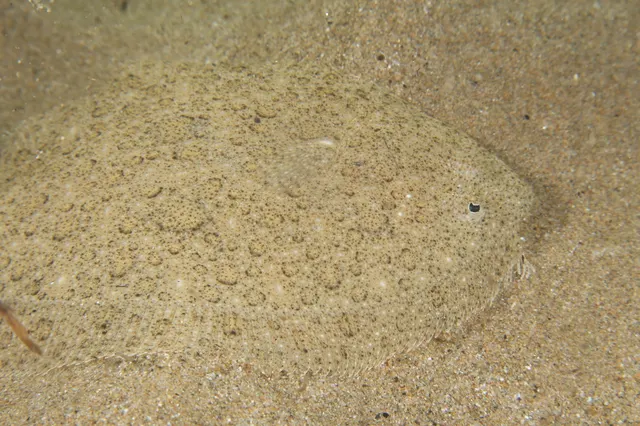
Brill
A smooth-skinned left-eyed flatfish of sandy ground, separated from turbot by scales rather than tubercles and by fringed rays at the front of the dorsal fin.Bronze bream
A coppery, blue-headed, algae-browsing sparid of the Eastern Cape surf reefs — a shy feeder taken on small hooks and light tackle, highly resident, and aged to thirty-eight years.Bronze whaler
The copper shark: a large bronze requiem shark of temperate southern African coasts, the species most closely associated with the KwaZulu-Natal sardine run, and a Vulnerable one caught from South African beaches on heavy tackle.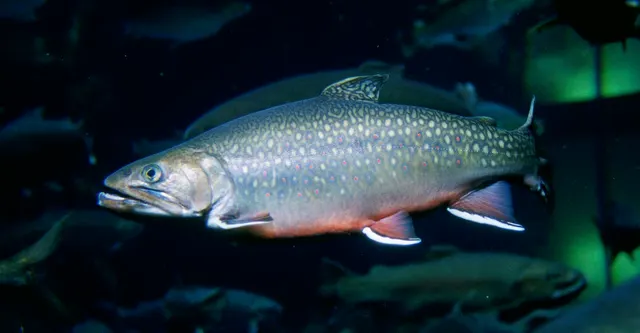
Brook trout
A char rather than a true trout, native to cold clean eastern North American streams, and one of the most reliable indicators of water quality there is.Brown moray
The shallowest of the three Canary morays — nought to twenty metres, which is precisely the water a shore angler fishes, and up to a metre long.Brown shrimp
The small, sand-coloured shrimp that buries itself by day on tidal flats, is pushed for with a net across the shallows, and is a different animal in a different family caught over different ground from the rock-pool prawn FishingHQ already held.Brown trout
A single, extraordinarily plastic species that appears as a tiny hill-stream fish, a deep-bodied loch trout and a silver sea-run migrant — all the same animal.Bull huss
The large rough-ground catshark that gets called a big dogfish — separated from its small cousin by two nasal flaps that do not reach the mouth, and worth far more attention than it usually gets.Bull shark
A heavy, blunt-nosed, genuinely dangerous requiem shark that swims hundreds of miles up rivers into fresh water — the only large shark a freshwater angler can realistically meet, and the one that most deserves to be taken seriously.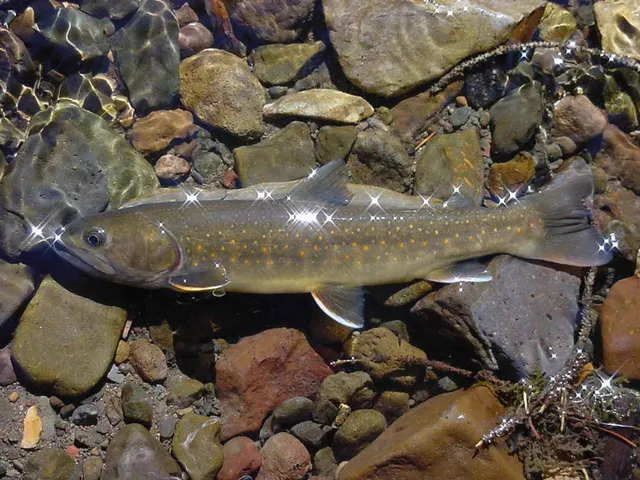
Bull trout
A large, cold-demanding North American char of high-quality mountain rivers, threatened across much of its range and protected in many waters.Bumphead parrotfish
The largest parrotfish in the world — 130 centimetres, 46 kilos, and Vulnerable largely because it sleeps in shallow water where anybody with a torch can find it.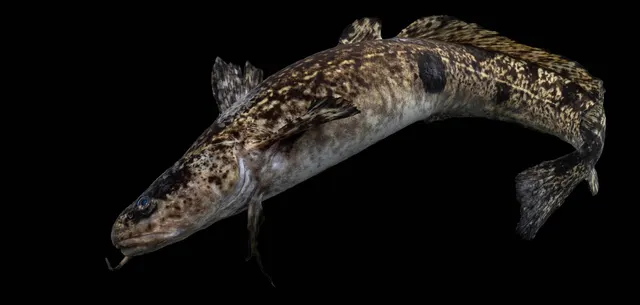
Burbot
The only freshwater cod, a nocturnal cold-water bottom predator with a single chin barbel that spawns under ice in midwinter.Butterfly peacock bass
The smaller and most widely introduced peacock bass, marked with three dark vertical bars and a black eyespot on the tail, and established in Florida and Hawaii.Butterfly-winged comber
The Canary comber — and not the painted comber, which is a different fish in a different sea. Separated from it by genetics and colour in 2021.
C
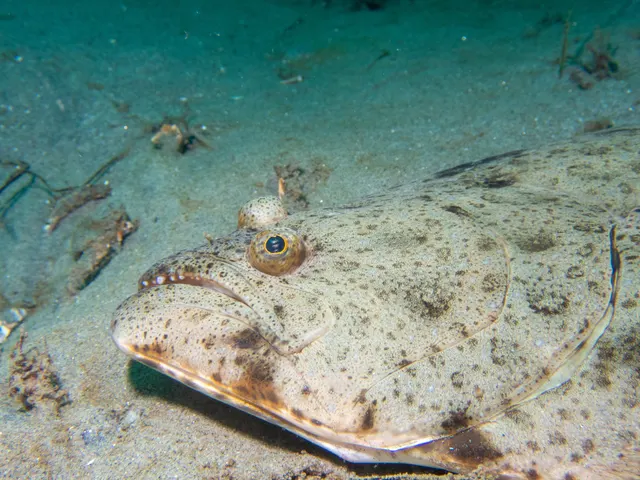
California halibut
A large ambush flatfish of Pacific sand and surf, unusual in that individuals may be either left-eyed or right-eyed, with a mouth full of sharp teeth.Canary black limpet
A Macaronesian limpet with a legal minimum size and a five-month closed season on every Canary island — and the animal a reader looking up `limpet` here used to be shown a British species for.Canary damselfish
The dark blue damselfish that hangs over every piece of Canarian rock in numbers — the second most abundant fish in the archipelago's light shore fishing.Canary mussel
The brown mussel of warm Atlantic rock — and the only animal in the Canary shore-gathering table that one island closes for the entire year.Cape gurnard
The knorhaan: a red-orange armoured gurnard of the South African sand and mixed ground that walks on three modified fin rays, spreads huge blue-edged pectoral fins, and grunts audibly in the hand.Cape knifejaw
A South African endemic with a parrot's beak: fused teeth forming a solid cutting plate that shears urchins and mussels off rock, on a heavy, blotched, reef-dwelling fish that spearfishers prize and anglers rarely land.Cape stumpnose
The small silver sparid that fills South African estuaries: a blunt-nosed, yellow-finned fish that spends its juvenile life in brackish water, feeds on eelgrass and small shellfish, and is most anglers' first estuary catch.Caribbean spiny lobster
A clawless, long-antennaed, gregarious tropical lobster taken by hand and snare on breath-hold across the Caribbean — a different animal, a different fishery and a different rulebook from the clawed lobster of northern Europe.Carpenter
Silverfish: a slim, silvery-pink, twenty-seven-year-old sparid of the Agulhas Bank and the Cape offshore reefs, and one of the mainstays of the South African commercial line fishery.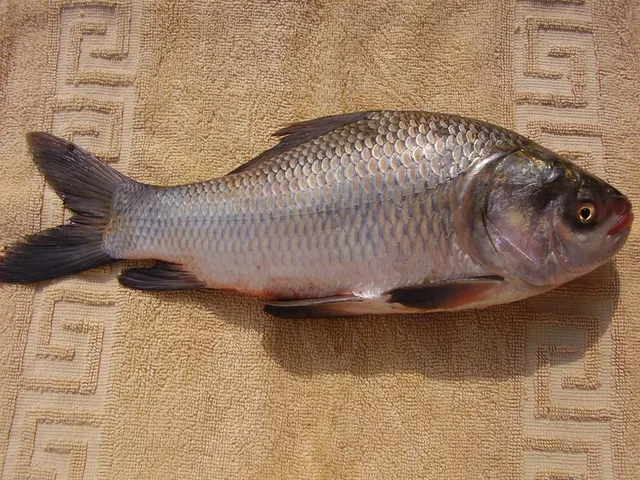
Catla
The largest of the major Indian carps, a surface and midwater plankton feeder with an enormous upturned mouth and a very deep body.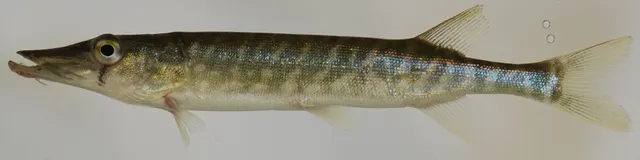
Chain pickerel
The smallest widely-fished Esox of eastern North America, marked with a distinctive dark chain-link pattern and a vertical bar beneath the eye.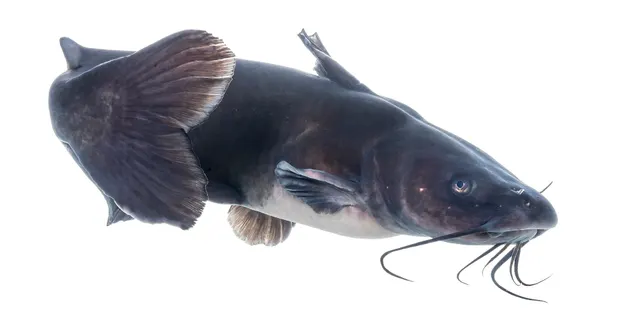
Channel catfish
North America's most widely fished catfish — a scent-driven omnivore covered in taste buds, catchable on almost anything, and the reason smelly baits exist.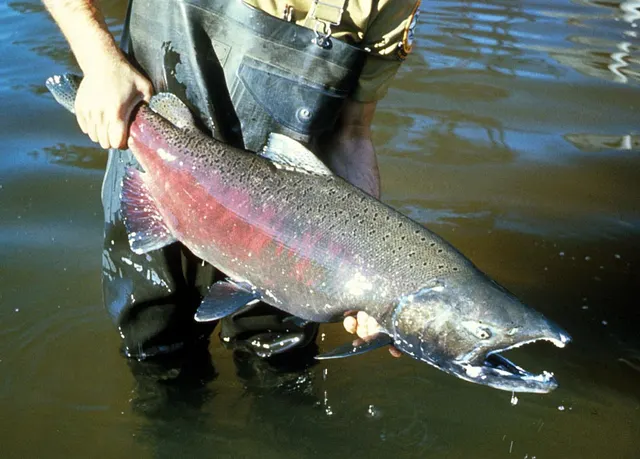
Chinook salmon
The largest Pacific salmon, reaching over sixty kilograms, and the one whose runs carry the most cultural and ecological weight on that coast.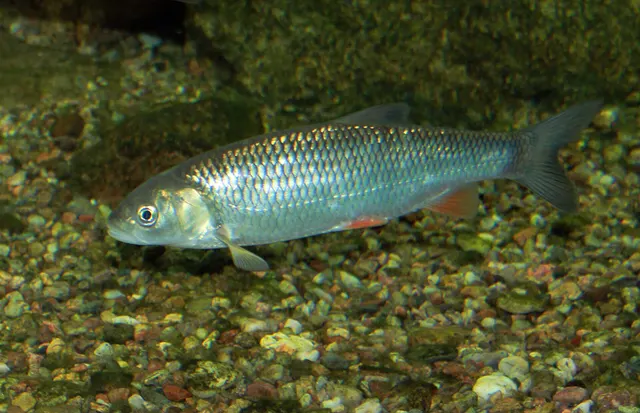
Chub
A bold, omnivorous river fish that eats almost anything and grows large enough to be a predator — and the species most likely to be caught on a bait nobody expected to work.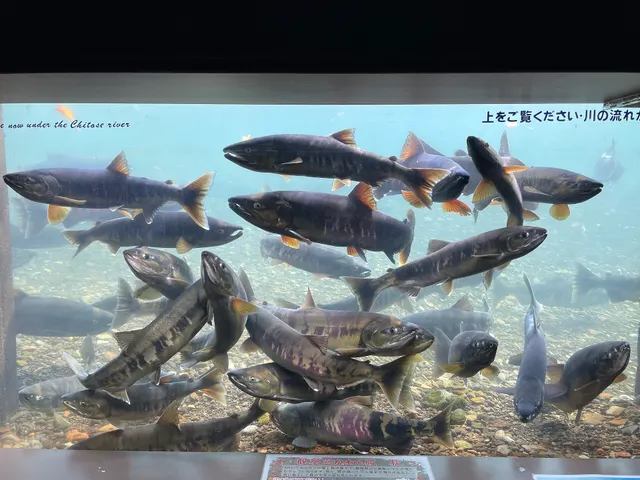
Chum salmon
A large Pacific salmon without body spotting, developing striking purple calico bars and enlarged canine teeth at spawning, and the widest-ranging of its genus.Clanwilliam yellowfish
An Endangered yellowfish confined to one Western Cape river system: a golden, powerful cyprinid of the Olifants and Doring, fished on fly in clear mountain water, and threatened above all by introduced bass and trout.Cobia
A large, powerful, shark-like pelagic fish that shadows rays, buoys and structure, and is commonly hunted by sight from the bow of a boat.Coho salmon
The acrobatic Pacific salmon — smaller than a chinook, far more willing to take a lure or fly, and the one most river anglers actually catch.Comber
A small, boldly barred sea bass of rock and rubble from the English Channel to South Africa, hermaphroditic in both directions at once, and the fish that takes the bait meant for something better.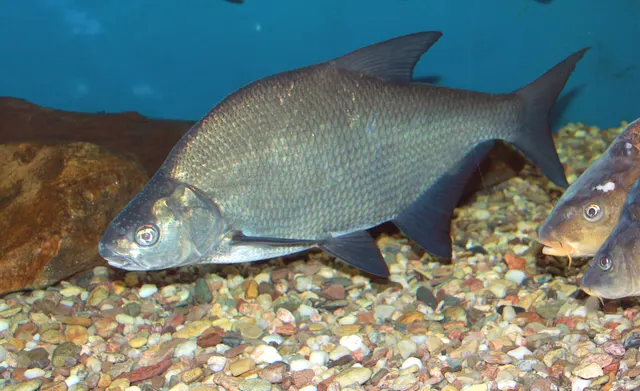
Common bream
A deep-bodied, slow-moving shoal fish that feeds in large groups over soft bottoms and can transform a swim when it arrives.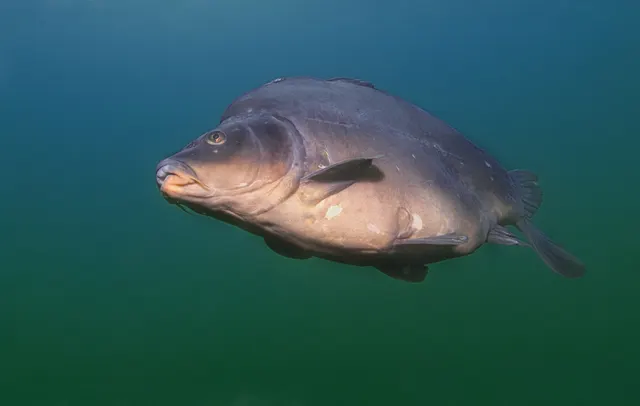
Common carp
A large, long-lived, highly adaptable cyprinid whose capacity to learn has shaped more angling technique than any other freshwater fish.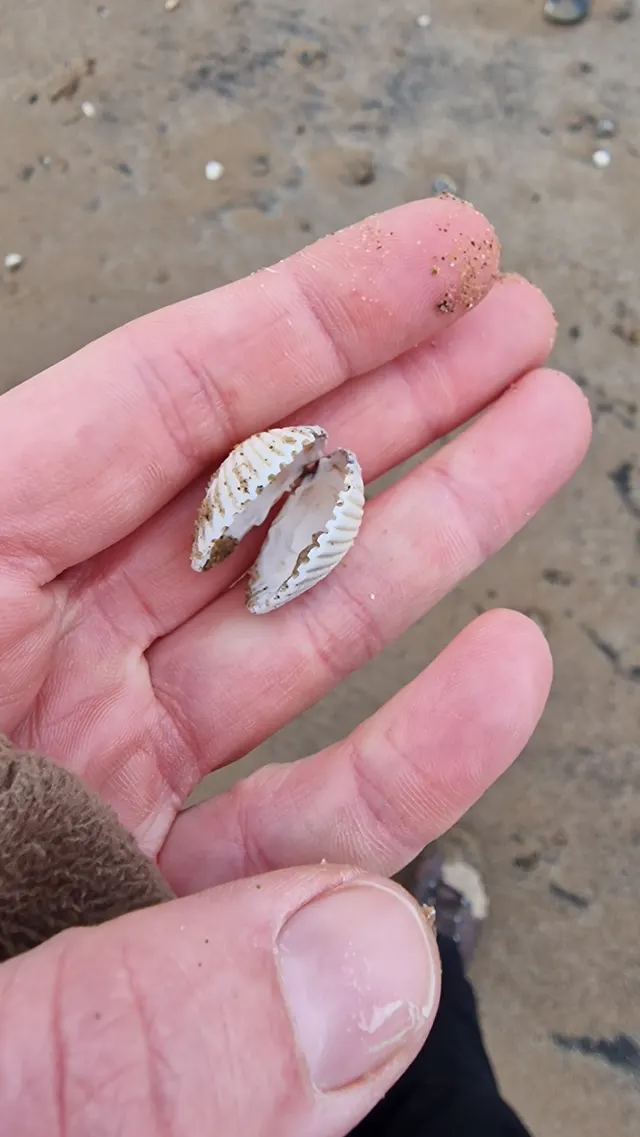
Common cockle
A ribbed bivalve living just under the surface of intertidal sand and mud, gathered by rake and by foot, and the animal behind one of the most dangerous gathering fisheries there is.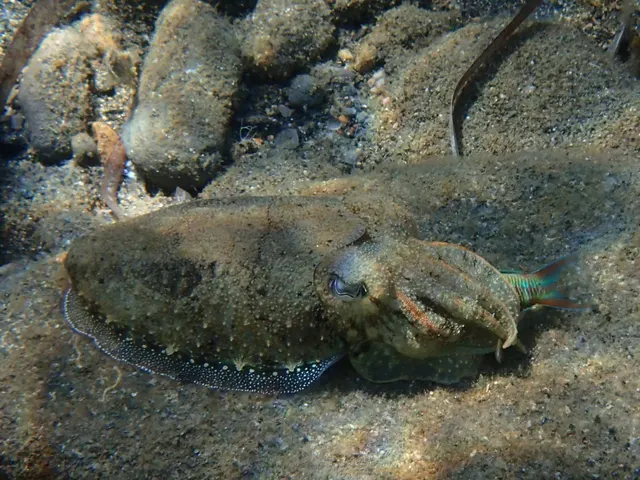
Common cuttlefish
A bottom-oriented cephalopod with an internal buoyancy shell, the best-studied invertebrate mind in the sea, and a fishery that works quite differently from squid.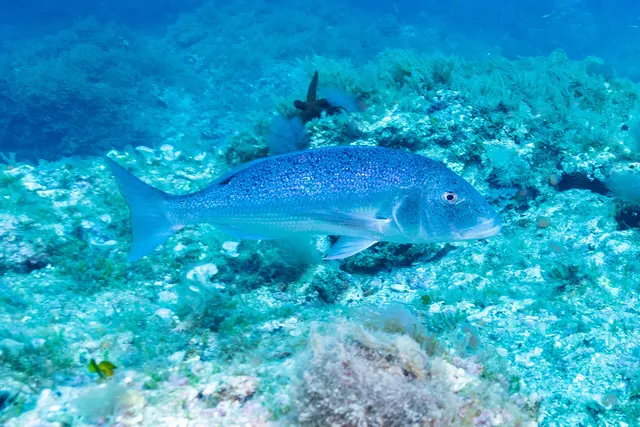
Common dentex
The Mediterranean's fastest and warriest inshore predator — a sea bream that hunts like a jack, and the fish spearfishers there rate above all others.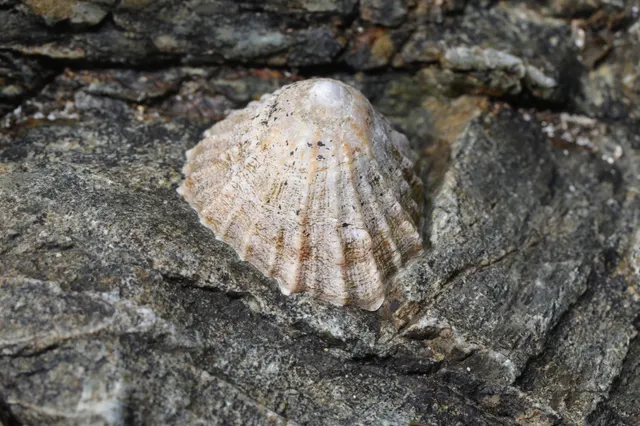
Common limpet
The conical shell clamped to rock on every exposed Atlantic shore, gathered for food worldwide, and an animal whose grip and homing behaviour are more interesting than its reputation suggests.Common octopus
A solitary, short-lived, startlingly intelligent mollusc taken by hand, hook and spear across the eastern Atlantic and Mediterranean — and the animal FishingHQ had written handling guidance for without holding a record of it.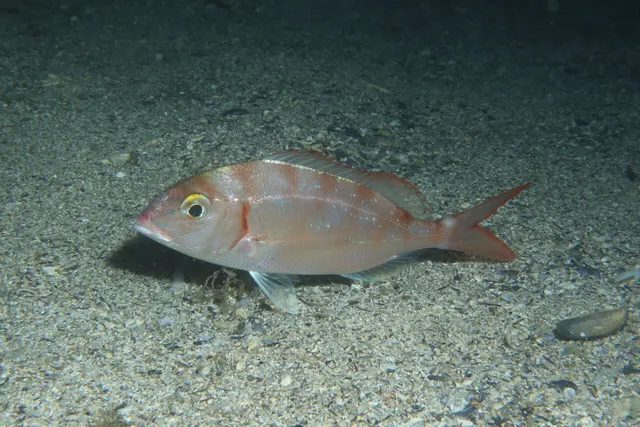
Common pandora
A pink-silver Mediterranean sparid of sand and mixed ground, changing sex from female to male with age, and a staple of light bottom fishing.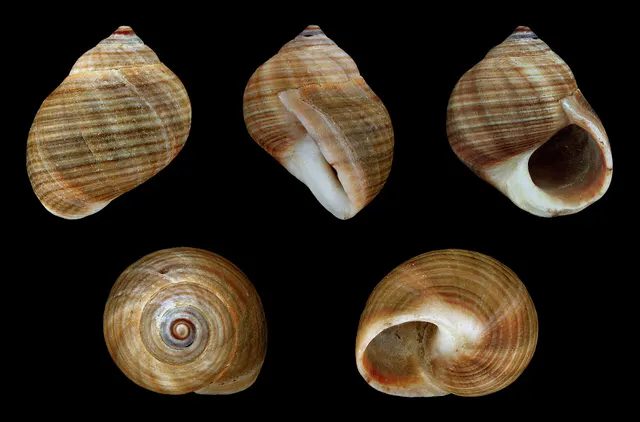
Common periwinkle
The small dark sea snail of rocky shores across the north Atlantic, gathered by hand for centuries, and a grazer rather than a filter feeder — which changes its safety profile substantially.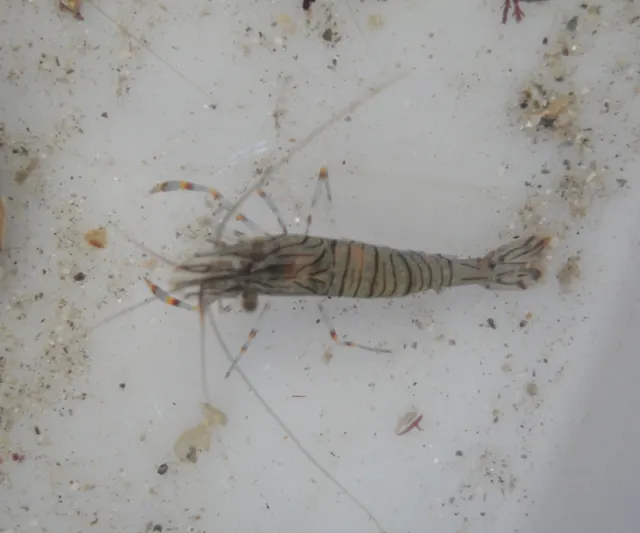
Common prawn
The translucent rock-pool prawn taken by hand net and drop net around Atlantic Europe, and the animal behind a shore practice FishingHQ modelled only as bait.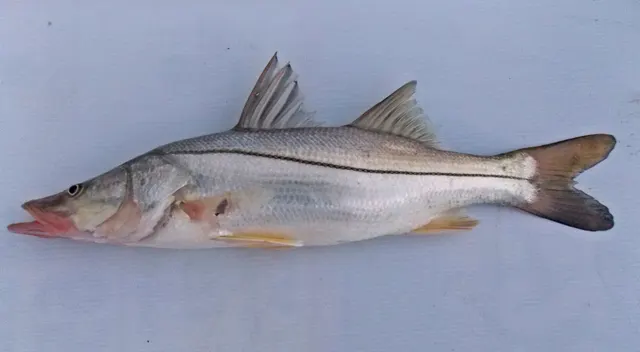
Common snook
A structure-hugging ambush predator of tropical American coasts, marked by a hard black lateral line, that moves freely between the sea and fresh water.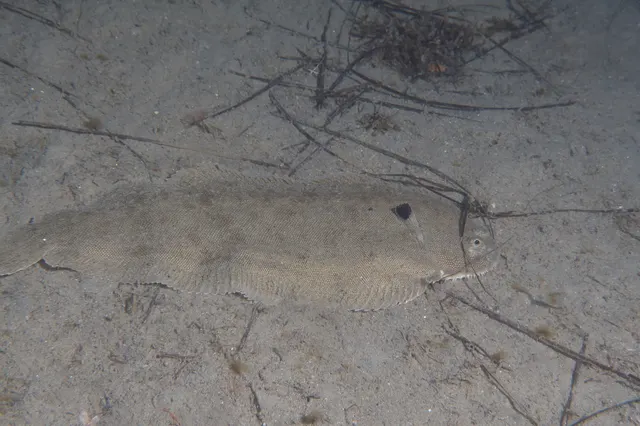
Common sole
A nocturnal, sand-dwelling flatfish with a rounded head and a small twisted mouth, and one of the most valuable food fish in European waters.Common stingray
A smooth, whip-tailed ray with a serrated venomous spine — an estuary and shallow-bay fish that turns up in British summers where nobody is expecting a stingray, and the one British ray that can put an angler in hospital.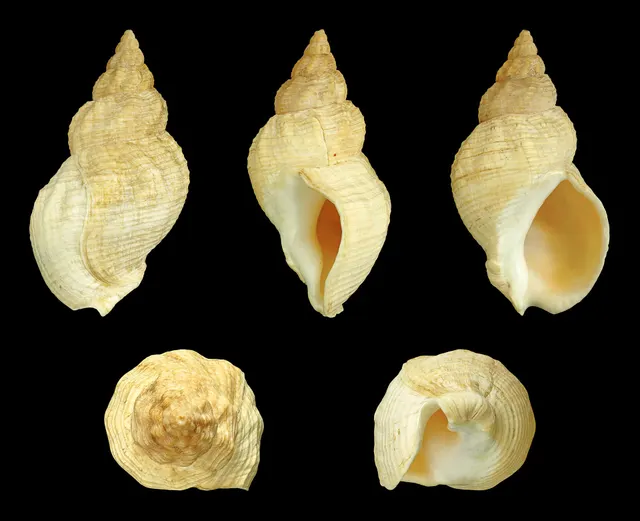
Common whelk
A large predatory and scavenging sea snail of soft ground, taken in baited pots in one of the north Atlantic's more valuable inshore fisheries, and a scavenger rather than a filter feeder.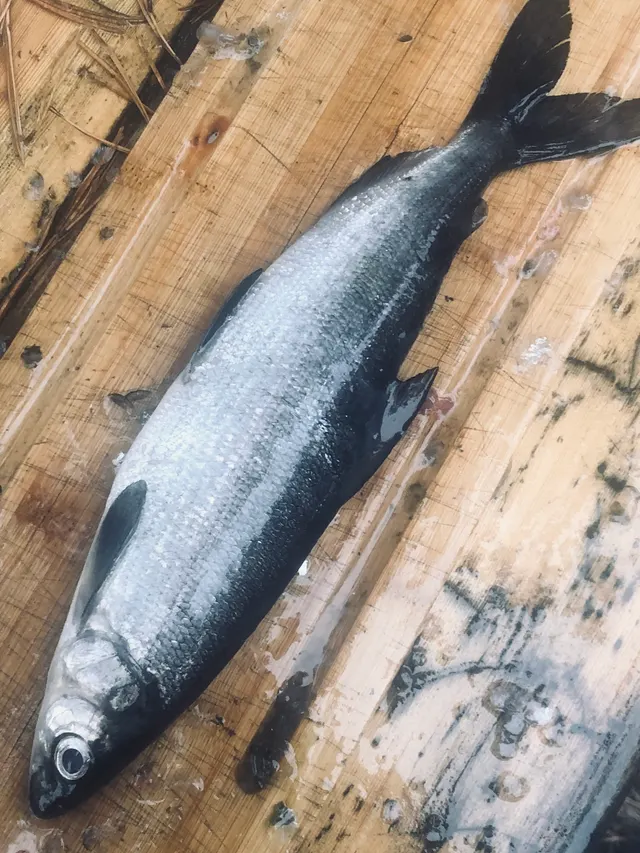
Common whitefish
The Alpine and northern lake fish that carries a different name in every country it lives in — powan, schelly, gwyniad, felchen, renke — and one of the few European species fished with a purpose-built rig of its own.Conger eel
A very large scaleless eel of wrecks, rock and harbour walls, reaching three metres, and among the most powerful and most genuinely dangerous fish to handle in European seas.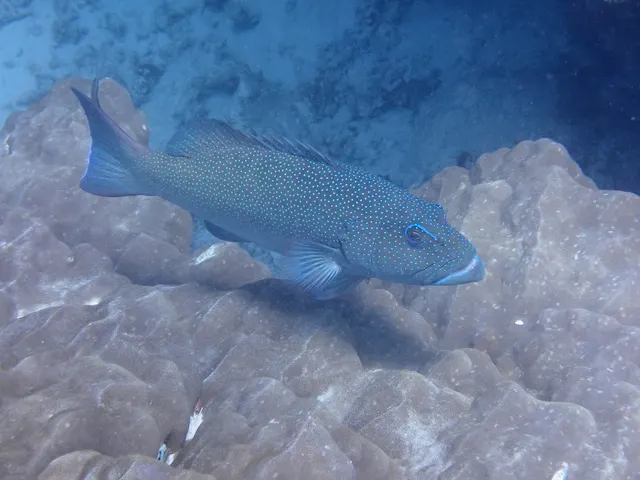
Coral trout
A brilliant red-orange coral reef grouper marked with blue spots, known for cooperative hunting with moray eels, and a prime Great Barrier Reef target.Corkwing wrasse
The small wrasse a light-tackle angler actually catches, a nest-builder that carries weed in its mouth, and the subject of a live wild fishery most anglers have never heard of.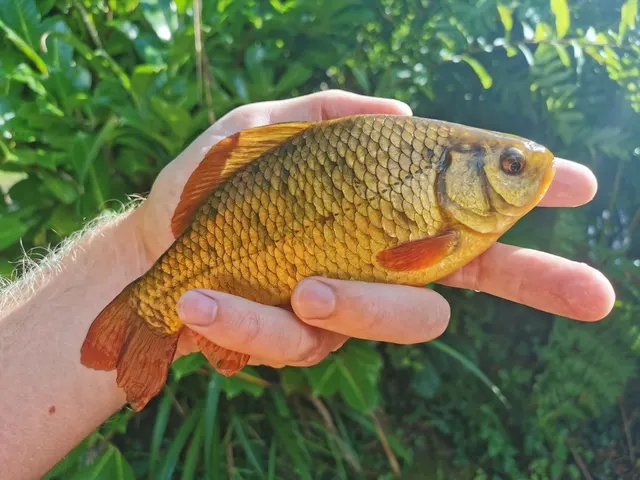
Crucian carp
A small, deep-bodied, barbel-less carp of small still waters, remarkable for surviving winters under ice in oxygen-free water, and widely compromised by hybridisation.Cuckoo wrasse
The most extravagantly two-coloured fish in British waters, and the reason is that every blue male on the reef began life as an orange female.Curled octopus
The octopus of northern European waters, and the one nearly every British capture actually is — told from the common octopus by a single row of suckers on each arm rather than two.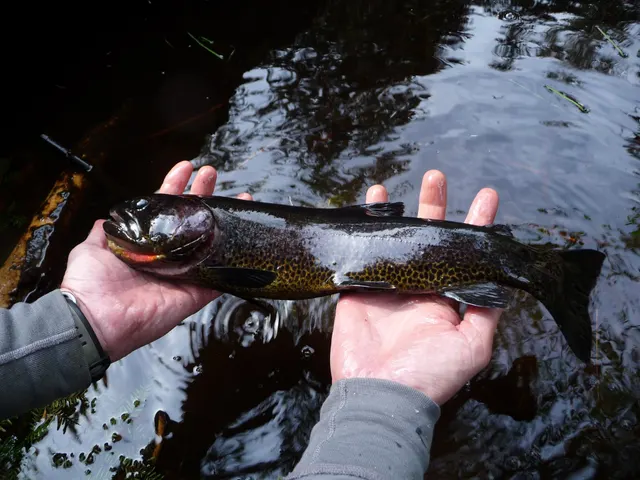
Cutthroat trout
The native trout of western North America, named for a red slash under the jaw, and a species fragmented into subspecies that hybridise readily with introduced rainbows.
D
Dab
A small right-eyed flatfish, rough to the touch and curved along the lateral line — the commonest flatfish on most British beaches and the one plaice get mistaken for.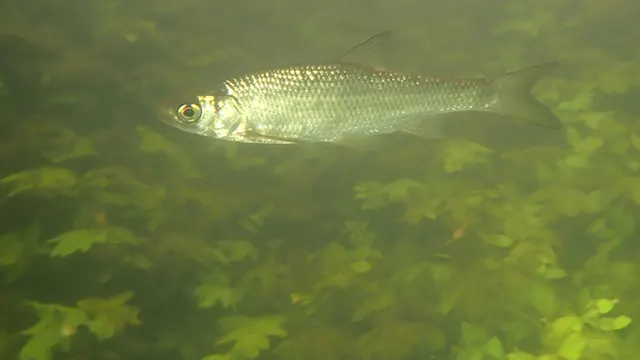
Dace
A small, quick, silver river cyprinid separated from chub by the shape of one fin — the anal fin is concave in a dace and convex in a chub, and nothing else settles it as reliably.Dageraad
Named for the dawn colours it shows when it comes out of the water, and Critically Endangered: a deep-reef South African endemic reduced far enough that the limit is one fish a day.Deccan mahseer
A dark, powerful mahseer of peninsular Indian rivers, distinguished from the golden mahseer by colour and range, and dependent on temple-pool sanctuaries in parts of its range.Derbio
The eastern Atlantic pompano — a fast, deep-bodied jack that comes into the surge along rocky shores and is caught at night from steep ground.Diamond lizardfish
The second Canary lizardfish, marked with dark saddles rather than blotches, and an amphi-Atlantic fish that turns up from Florida to Madeira.Dogtooth tuna
A 131-kilo reef-dwelling scombrid with conical teeth and no swim bladder — the fish jigging tackle failure is measured against across the Indo-Pacific.Dungeness crab
The large Pacific crab of the North American west coast, and the reason a rod-and-line snare exists at all — it is caught from the surf by casting.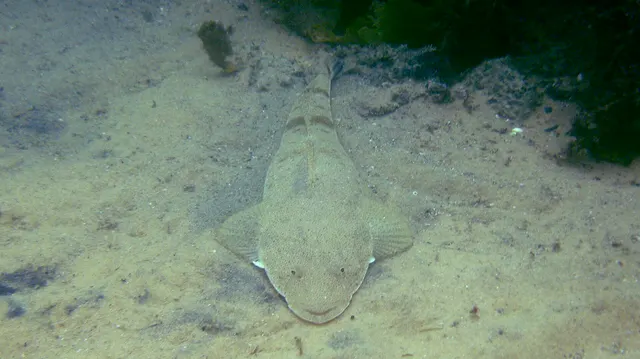
Dusky flathead
An Australian estuary ambush predator that lies buried in sand waiting for something to swim over it — and the fish most Australian shore anglers catch first.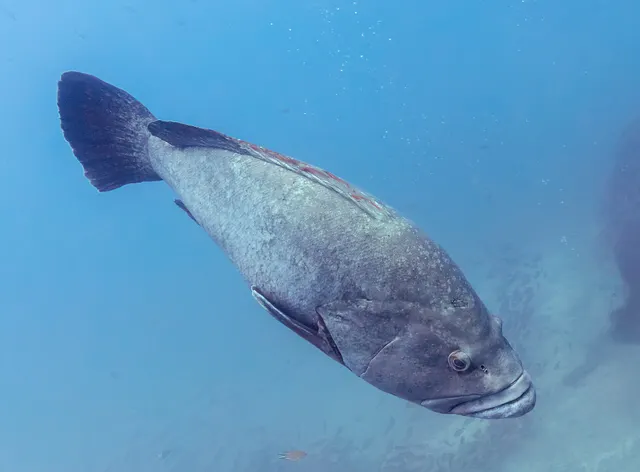
Dusky grouper
The Mediterranean's iconic reef predator: territorial, slow to mature, sex-changing, and the species whose decline made the case for marine protected areas there.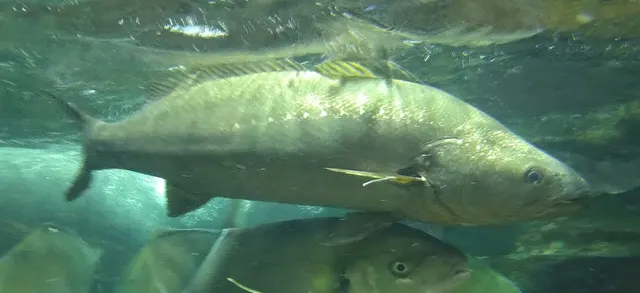
Dusky kob
A large, long-lived estuarine and surf predator of southern African and Australian coasts, assessed as Endangered, and one of the clearest cases where a popular sport fish is genuinely in trouble.
E
Eastern little tuna
Kawakawa: a small Indo-Pacific tuna with a broken pattern of oblique stripes on the upper back and dark spots between the fins, common off the KwaZulu-Natal coast and routinely called bonito along with three other species.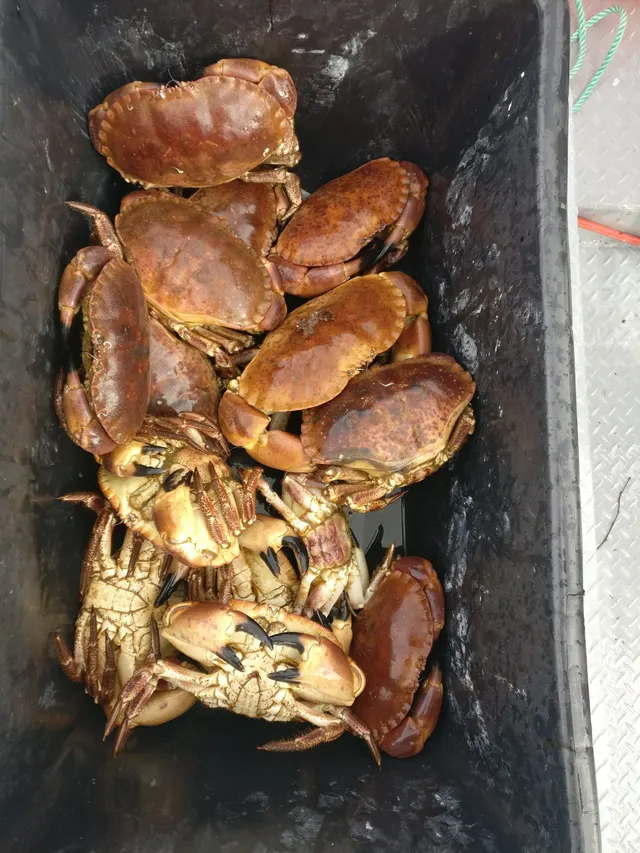
Edible crab
The large pie-crust crab of Atlantic Europe: slow-growing, long-lived, heavily regulated, and the animal most people mean when they say they went crabbing and caught something worth keeping.Emerald wrasse
A small Macaronesian wrasse of the Azores, Madeira and the Canaries — and half of a species pair whose boundary moved after most field guides were printed.Englishman
A pink-red KwaZulu-Natal reef sparid with blue-white blotches and a name nobody can explain, Near Threatened, and one of the pair every east-coast ski-boat angler learns alongside the Scotsman.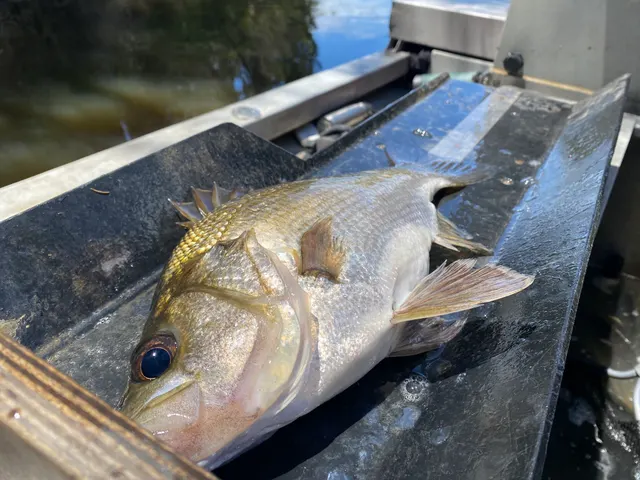
Estuary perch
A close relative of the Australian bass that spawns in brackish water, separated by a concave head profile and a preference for lower estuaries.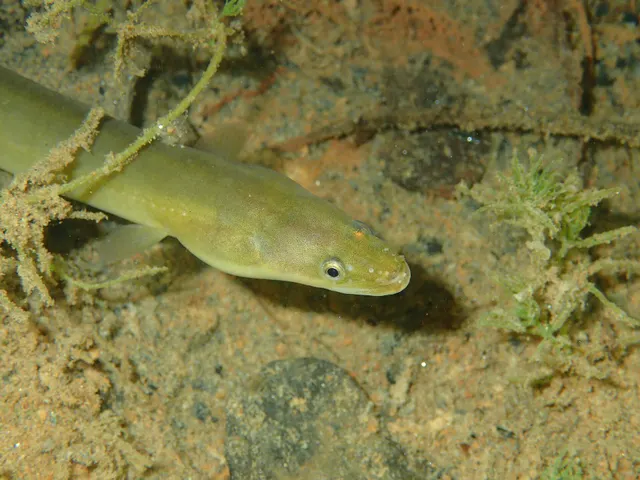
European eel
A Critically Endangered fish that breeds in the Sargasso Sea, drifts to Europe as a transparent larva, lives decades in fresh water and returns once to spawn and die.European flounder
The flatfish that runs up rivers — a tolerant, estuarine right-eyed flounder with bony tubercles along its fin bases and a habit of turning up in fresh water.European lobster
A long-lived, territorial, blue-shelled crustacean taken in pots and by hand-diving, and the animal behind the conservation measure most anglers have never heard of.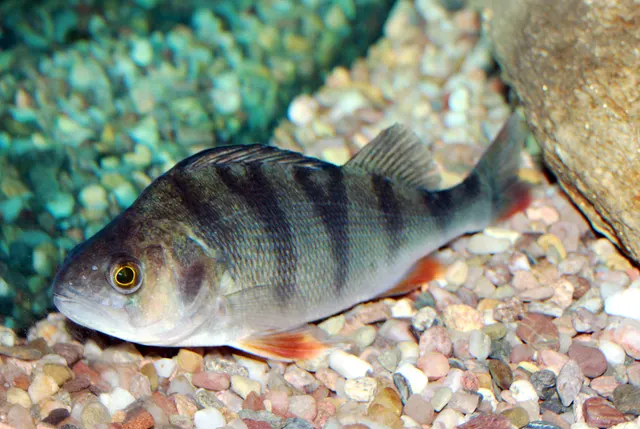
European perch
A small, shoaling, spiny-finned predator that is both the most accessible predator to catch and the one most anglers first learn on.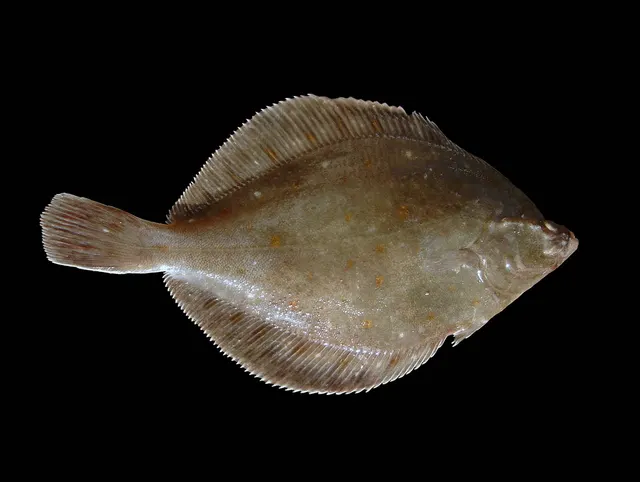
European plaice
A right-eyed flatfish with orange spots and a remarkable lifespan, and the representative flatfish for a body plan nothing else on FishingHQ shares.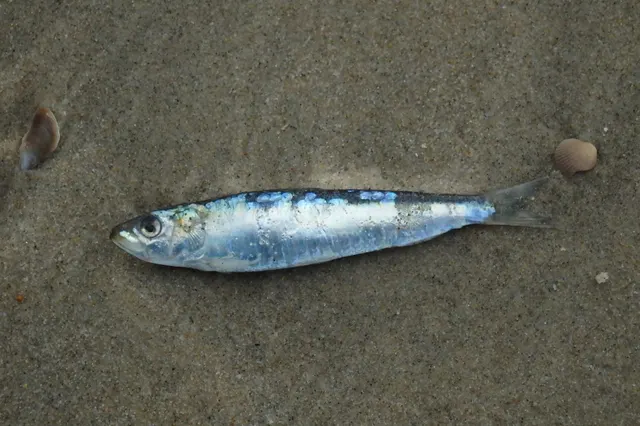
European sardine
The small silver fish that upwelling coasts produce in millions — the same species as a Cornish pilchard, the foundation of the Moroccan and Iberian fisheries, and the forage base almost every predator on those coasts depends on.European sea bass
A fast, predatory inshore fish that hunts in broken water and surf, and one of the most closely managed recreational species in European seas.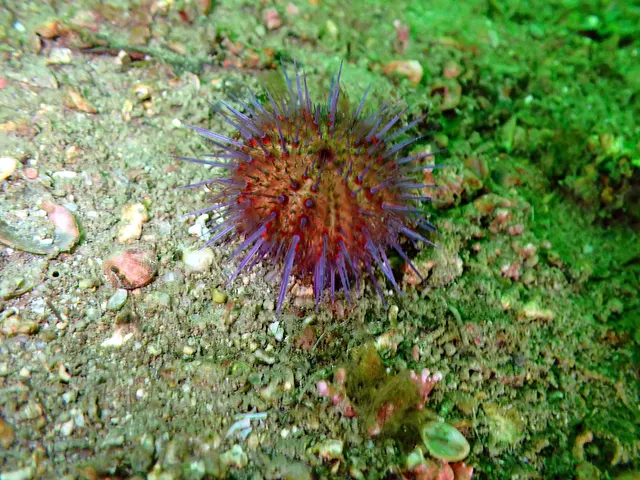
European sea urchin
A spined grazer of shallow Mediterranean and Atlantic rock whose gonads are a delicacy, collected by hand and by free-diving, and depleted across much of its range by exactly that.European squid
A fast, short-lived, visually hunting mollusc that is taken on barbed jigs rather than hooks, and the animal behind an entire discipline FishingHQ had never named.
F
Five-bearded rockling
The commonest rockling on British shores and the only one that will live in an estuary — small, plain, slimy, five-barbelled, and for most of a century the fish that stole the bait meant for something better.Flapper skate
One of the largest fish in British waters and among the most threatened — a two-metre skate that was fished out of most of its range, survives in strongholds off western Scotland, and is now almost entirely a catch-and-release fishery.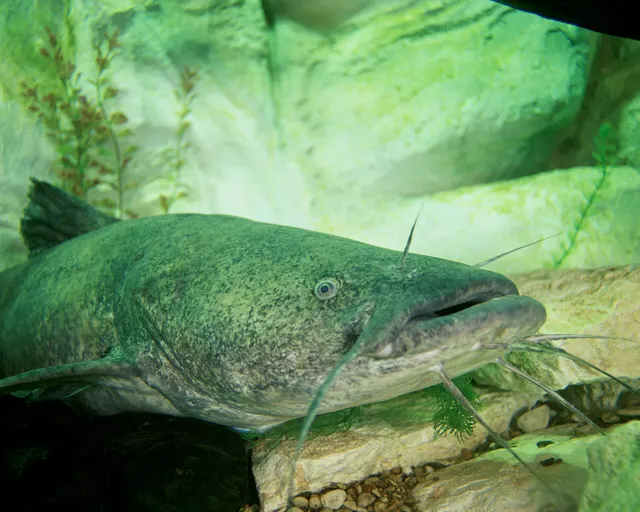
Flathead catfish
A large, solitary, strictly predatory catfish that eats live fish and almost nothing else — which makes it the one catfish that will not take a stink bait.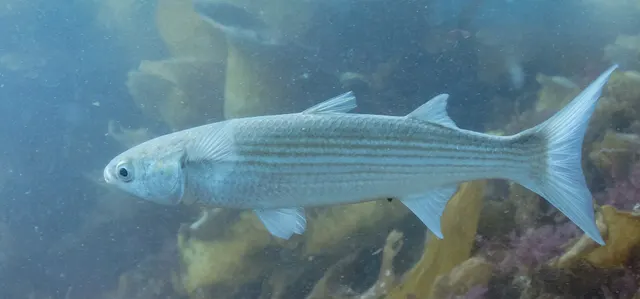
Flathead grey mullet
The most widely distributed mullet in the world, found on almost every warm and temperate coast, and a detritus feeder with a gizzard-like stomach.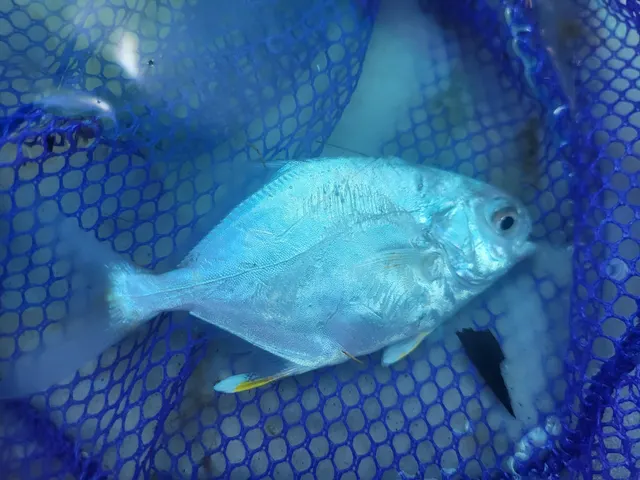
Florida pompano
A small, deep-bodied, hard-fighting jack of sandy surf beaches, feeding on sand fleas in the wash and prized out of proportion to its size.Forkbeard
The shallower, southern forkbeard — a nocturnal rock-hole cod-relative that a Macaronesian night session produces and a daylight one never will.Fransmadam
Karel Grootoog — Charlie Big-Eye: a small, huge-eyed Cape reef sparid that is the fish a South African shore angler catches when they wanted something else, and one of the best-named fish anywhere.Freshwater drum
The only member of the drum family that lives its whole life in fresh water, the fish that produces an audible grunt with muscles against its swim bladder, and the source of the 'lucky stones' found on lake shores.
G
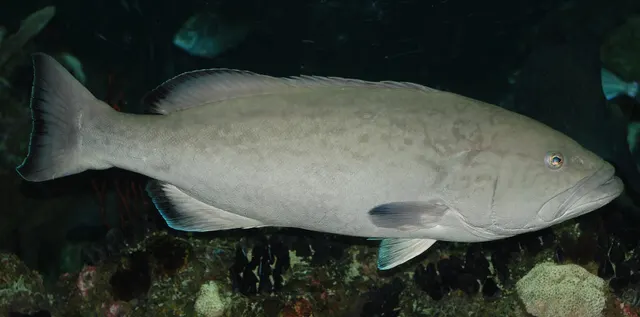
Gag grouper
A protogynous grouper of the American south-east whose entire male population comes from sex-changed females — which makes size-selective fishing a demographic problem, not just a numerical one.Galjoen
South Africa's national fish and the shore angler's fish of the Western Cape: a deep, powerful, dark-bodied surf specialist that lives in white water, eats mussel off the rock, and whose stock has collapsed to under a fifth of what it was.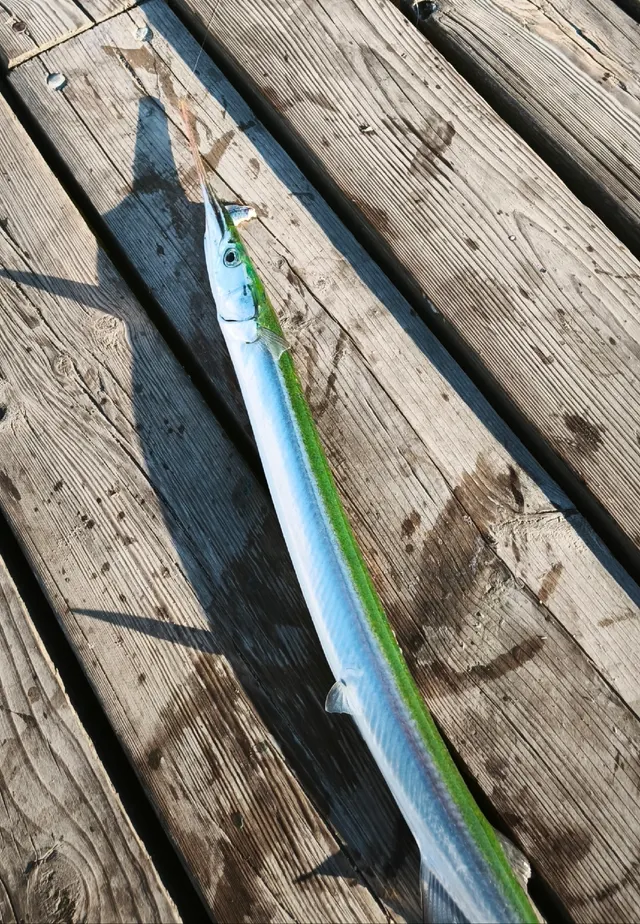
Garfish
A slender surface-hunting fish with a long beaked jaw and green bones — a harmless pigment that alarms people unnecessarily.Geelbek
Cape salmon: a shoaling sciaenid with a bright yellow mouth that migrates from the Western Cape to KwaZulu-Natal every spring to spawn at night in aggregations that are actively targeted — and whose spawner biomass is at a tenth of pristine.Giant African threadfin
A large West African surf and lagoon predator that hunts with free pectoral filaments, and the premier shore gamefish of Gabon and neighbouring coasts.Giant freshwater stingray
One of the largest freshwater fish in the world, an Endangered Mekong and Southeast Asian river ray with a serrated venomous barb capable of severe injury.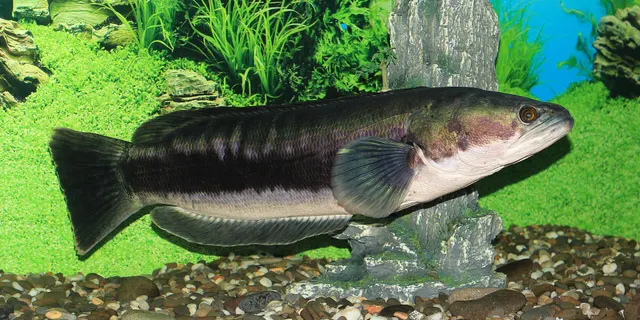
Giant snakehead
An air-breathing Southeast Asian predator that guards its young in a shoal and defends them aggressively — the fish that made topwater lure fishing a South-East Asian sport.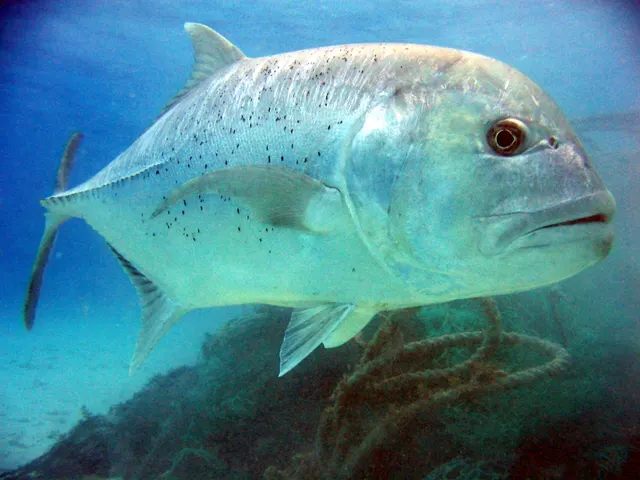
Giant trevally
A hugely powerful Indo-Pacific reef predator that hunts over shallow structure, and the fish popping was built around.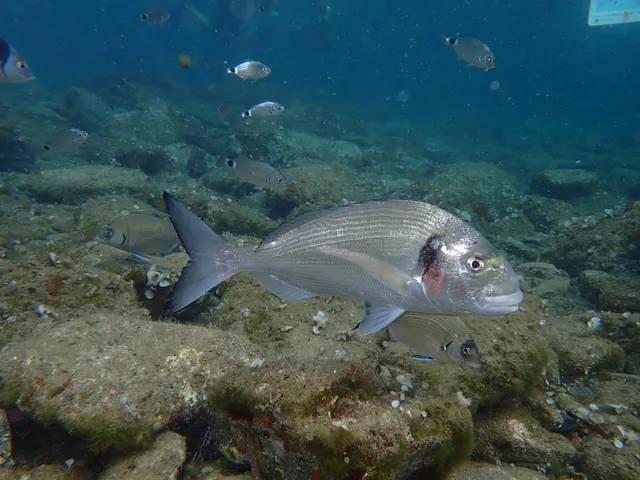
Gilthead bream
The Mediterranean's most prized sea bream, marked by a golden band between the eyes, with a jaw powerful enough to crush shellfish and a range now expanding northward.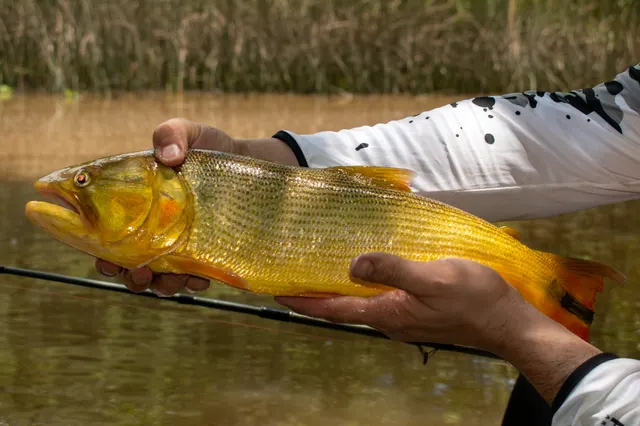
Golden dorado
A brilliant gold, heavily toothed river predator of the Paraná and Paraguay systems — a characin built like a salmon and fighting like a tarpon.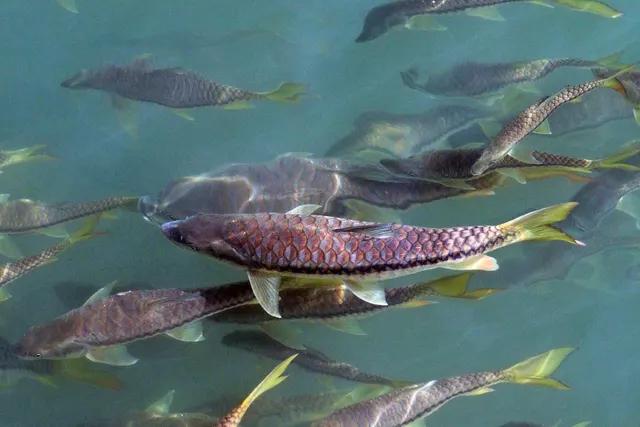
Golden mahseer
A huge Himalayan river carp reaching 275 cm, assessed as Endangered, and the fish around which the whole idea of Indian sport fishing was built.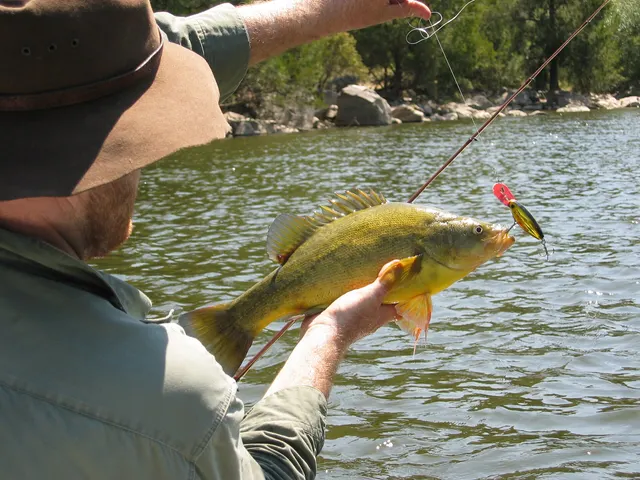
Golden perch
The Murray-Darling's other great native target — a flood-cued spawner that can travel a thousand kilometres and barely breeds at all in a regulated river.Goliath tigerfish
The largest of the African tigerfish and one of the most formidable freshwater predators in the world — a Congo-basin characin with interlocking conical teeth that close outside the jaw.Goonch
A huge flattened catfish of fast Himalayan and Southeast Asian rivers, gripping rock in torrential current with a broad head and clinging body form.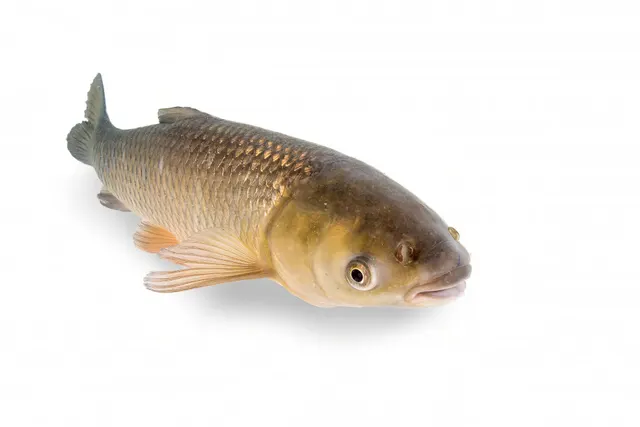
Grass carp
A large herbivorous carp introduced worldwide to control aquatic weed, which is exactly why it has become one of the most consequential fish introductions there is.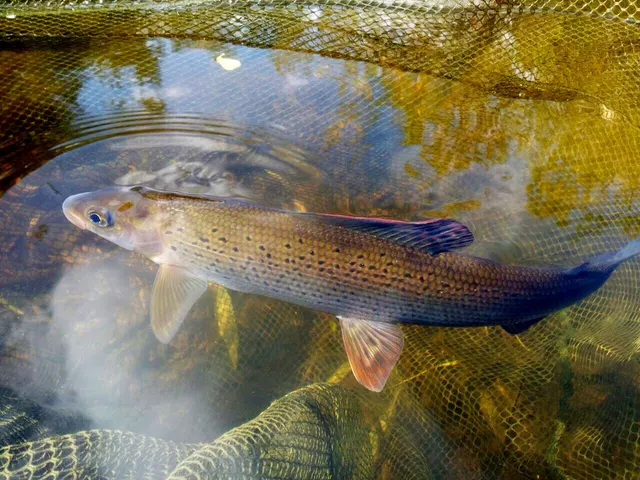
Grayling
A salmonid with a sail for a dorsal fin that feeds hard through the winter — which makes it the game angler's season when the trout season has closed.Great barracuda
A fast reef predator built entirely around a single explosive strike, and a fish whose principal hazard to people is not its teeth but eating it.Great snakehead
A large South Asian snakehead with a distinctive orange-ringed eyespot at the tail base, guarding its young in shallow water and taken on topwater lures.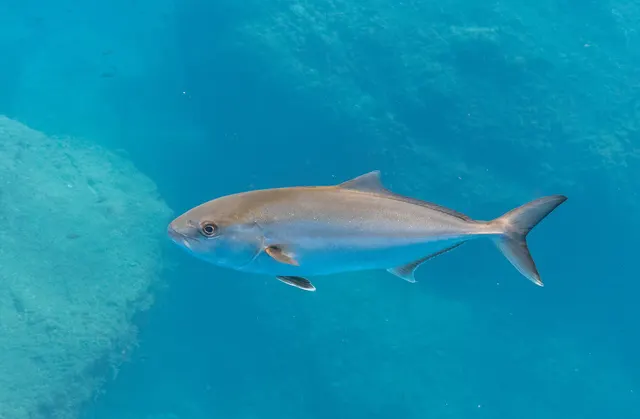
Greater amberjack
The largest amberjack — a circumglobal reef and wreck predator that fights downward with more raw power per kilogram than almost anything, and carries a genuine ciguatera caveat.Greater forkbeard
A deep-water cod relative with a long feeler under the chin and a thread trailing from each pelvic fin — and one of the odder things to come up a harbour wall.Green jobfish
A long, torpedo-shaped snapper of the Indo-Pacific reef that reaches fifteen kilos and thirty-two years — and does not look like a snapper at all.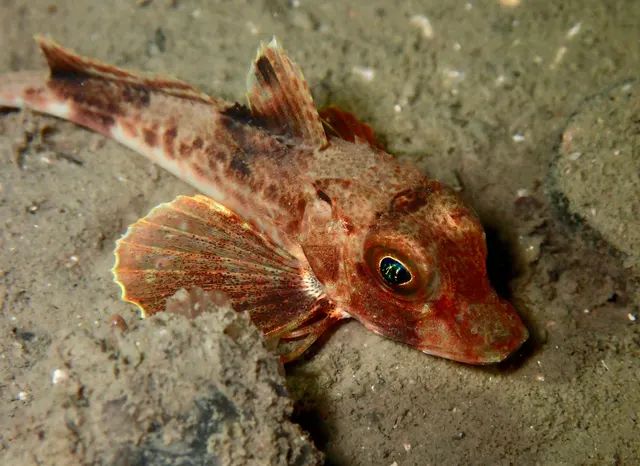
Grey gurnard
A small, abundant, bony-headed gurnard that walks the seabed on three free finger-rays per side, grunts when handled, and is caught far more often than it is recognised.Grey triggerfish
A deep, disc-shaped Atlantic triggerfish with teeth that go through hooklengths and a locking dorsal spine — and one of the few Vulnerable species in the Madeiran shore catch.Gudgeon
A small bottom-living river fish with a barbel at each corner of the mouth and a row of dark blotches along the flank — and, for a great many anglers, the first fish they ever caught.Guinean puffer
The larger of the two Canary puffers, and the one whose tetrodotoxin load has actually been measured — high enough in the gut and gonads to matter.
H
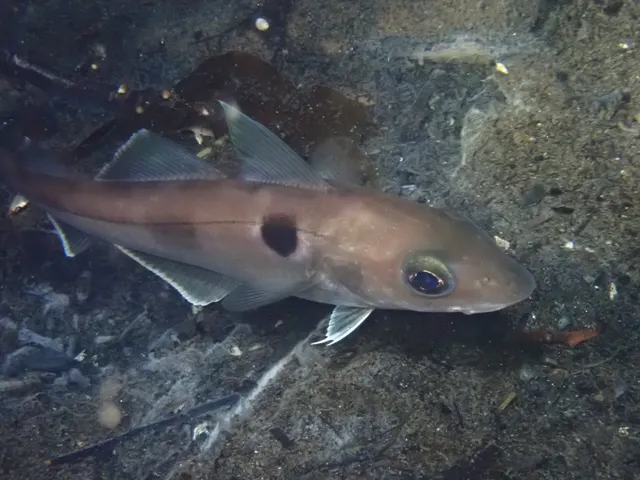
Haddock
The cod's smaller relative, marked with a black lateral line and a dark thumbprint, and one of the most important food fish in the North Atlantic.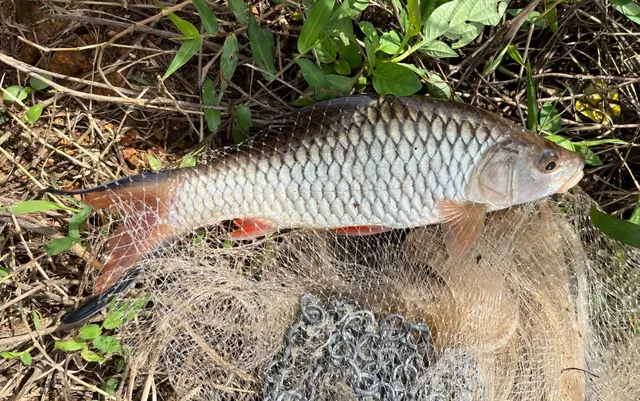
Hampala barb
A predatory Southeast Asian barb with a bold black vertical bar and red-edged tail, hunting small fish in clear rivers and taken on lures.Hapuku
A large, very slow-growing deepwater wreckfish of southern-hemisphere reefs and pinnacles, long-lived and easily depleted at known marks.Hilsa shad
The anadromous shad of the Bay of Bengal — the national fish of Bangladesh, and among the most economically important fish in South Asia.Hottentot
The Cape west coast's everyday fish: a dark, blunt-headed sparid of the kelp beds and harbour walls, caught in numbers on light tackle, and the species most South African anglers learn on.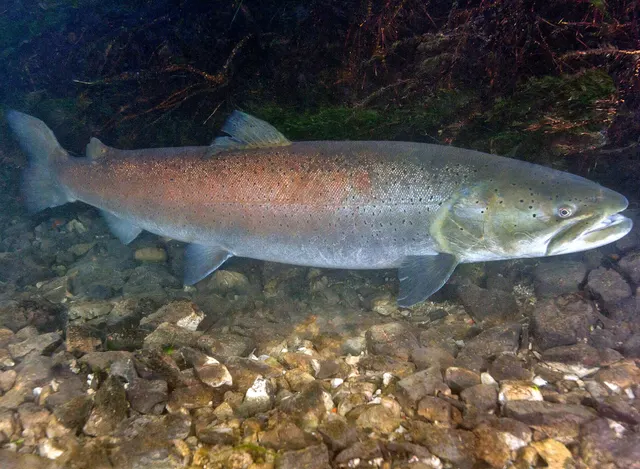
Huchen
A very large predatory salmonid of the Danube basin, entirely freshwater, endangered through damming and habitat loss, and fished almost exclusively on a release basis.Humphead wrasse
The largest wrasse in the world at 229 centimetres and 191 kilos — thirty-two years old, ENDANGERED, and a fish to recognise rather than to catch.
I
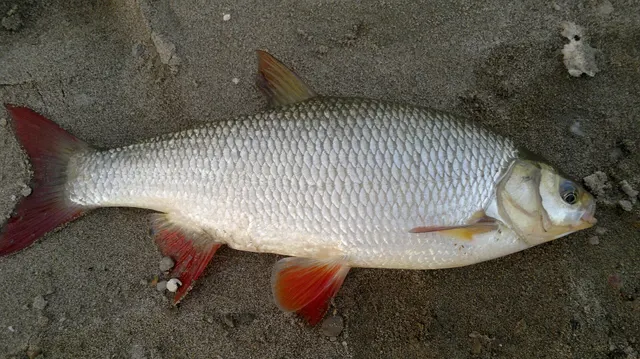
Ide
A large, fast-growing shoaling cyprinid of northern and central European rivers, also kept ornamentally as golden orfe, and a genuine surface-feeding target.Indian mackerel
One of the most important food fishes of the Indian Ocean and South-East Asia — a filter-feeding mackerel that swims with its mouth open.Island grouper
The Macaronesian endemic grouper — the other Canary mero, assessed as Vulnerable, and the fish the islands' size limits are strictest about.
J
Japanese amberjack
A large, fast Seriola of Japanese and Korean waters, of major food and aquaculture importance, and known by different names at each stage of its growth.Japanese horse mackerel
The aji — the fish Japanese light-tackle fishing is built around, and the reason the rods and jigheads a Canarian species hunter uses exist at all.Japanese rockfish
The mebaru — the second fish Japanese ultralight fishing was built around, and a species that may quietly be three.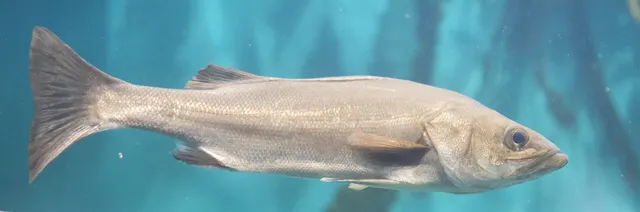
Japanese sea bass
The principal lure-fishing target of Japan, an estuary and coastal predator whose Japanese name changes with its size as it grows.John Brown
Janbruin: a plain brown, curved-toothed South African endemic of the shallow Cape reefs, easily caught, rarely written about, and carrying one of the country's several human-name fish.John Dory
A thin, slow, unmistakable ambush predator with a black thumbprint on each flank and a mouth that shoots forward — a fish that hunts by being almost invisible edge-on.Jungle perch
A silver, large-eyed predator of clear coastal streams from Africa to the Pacific, requiring an unobstructed connection to the sea to complete its life cycle.
K
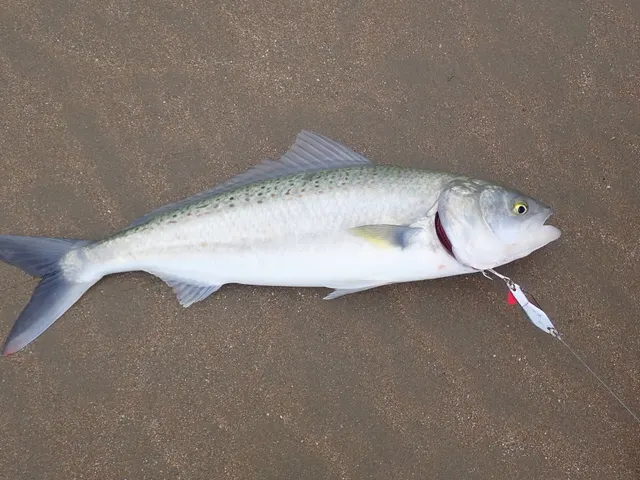
Kahawai
A hard-fighting schooling predator of southern Australian and New Zealand coasts, called salmon in one country and kahawai in the other, and related to neither salmon nor trout.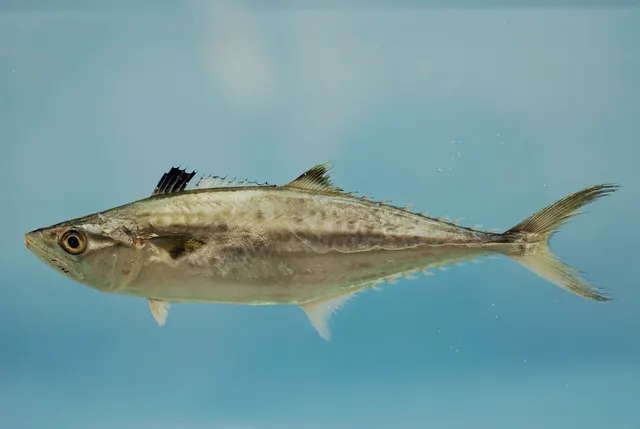
King mackerel
A fast, toothy, migratory Atlantic mackerel taken by slow-trolling live bait and by pier fishing, known for a vertical strike that cuts baits in half.King scallop
A bivalve that swims, sees with dozens of eyes along the edge of its mantle, and is the reason most British freedivers who are not spearfishing are in the water — and it had no record while FishingHQ explained how to dive for it.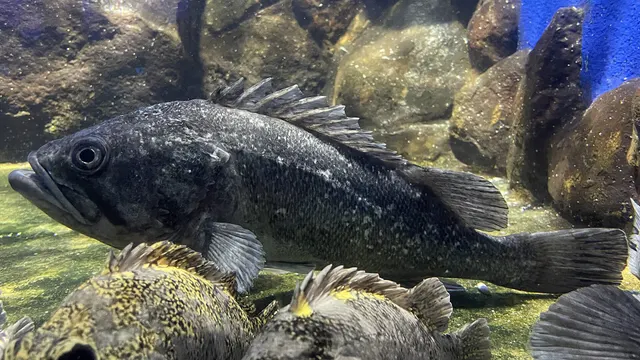
Korean rockfish
The principal recreational and farmed rockfish of Korea, China and Japan, bearing live young and carrying venomous fin spines.
L
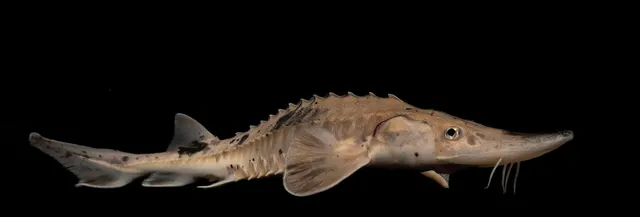
Lake sturgeon
An ancient armoured Great Lakes and Mississippi basin fish that may take twenty years to first spawn and then spawns only every few years.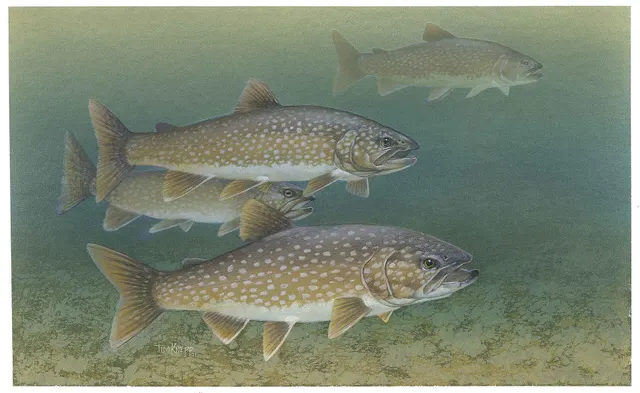
Lake trout
A deep, cold, slow-growing char of northern lakes that can live decades and takes a very long time to replace anything removed.Large-eye dentex
The deep dentex of the eastern Atlantic — a red, huge-eyed sparid of 30 to 500 metres, and the fish behind the Canary bottom-fishing modality.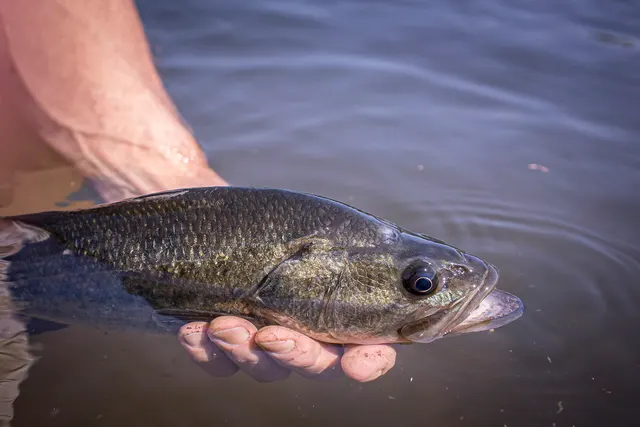
Largemouth bass
The most heavily fished freshwater sport species in the world: an ambush predator of warm, weedy, structured water.Largemouth yellowfish
A predatory South African yellowfish of the Orange-Vaal system, Near Threatened, and one of Africa's premier freshwater fly targets.Largespot pompano
The wave garrick: a fast, silver, spot-flanked jack that lives in the breaking waves themselves, chases sand mussel and small prey in inches of moving water, and is the most exciting light-tackle fish on a South African beach.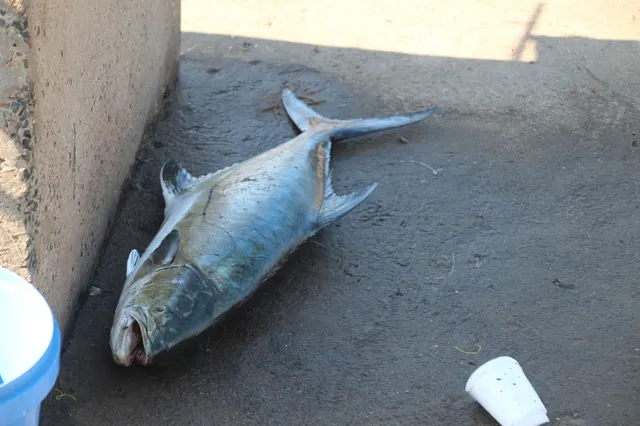
Leerfish
A large, fast, laterally compressed jack of Mediterranean and African coasts, known as garrick in South Africa, and a prime surf and lure target.Lesser weever
A fish the length of a finger that buries itself in warm shallow sand with a venomous black dorsal fin showing, and puts more people into British emergency departments each summer than every other marine animal here combined.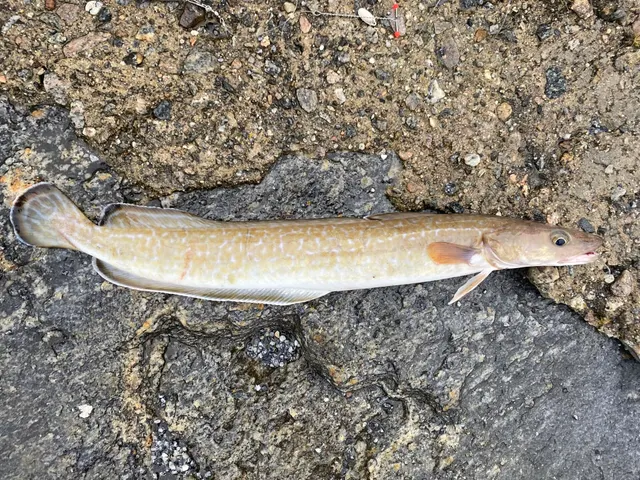
Ling
A long, eel-shaped gadoid of deep northern wrecks and rough ground, reaching over two metres and forty kilograms, and the classic wreck-fishing prize.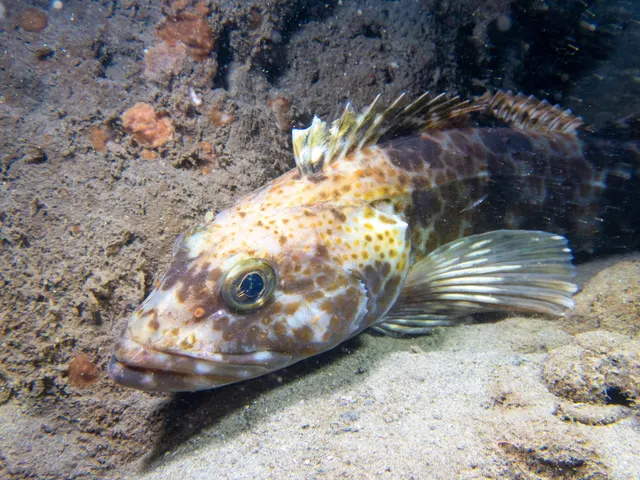
Lingcod
A large ambush predator of Pacific rocky reefs with an enormous toothed mouth, no relation to true cod, and a serious barotrauma problem on release.Long-spined sea scorpion
A wide-mouthed, spiny, superbly camouflaged ambush predator that sits in British rock pools looking like a stone — the largest fish most light-tackle anglers catch on a bad day, and the one they should not grab.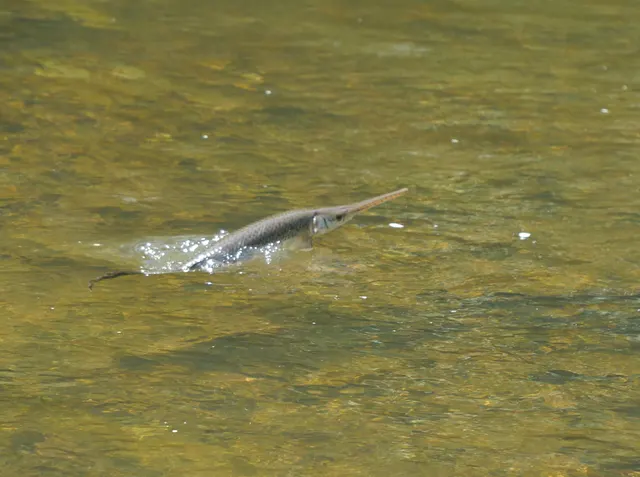
Longnose gar
A slender ancient predator armoured in diamond-shaped ganoid scales, with an extremely long toothed beak that makes conventional hooking difficult.Longtail tuna
A slender coastal tuna of the Indo-Pacific that comes close enough inshore to be cast to from beaches and rocks, unusually among tunas.
M
Macaronesian sharpnose puffer
A palm-sized puffer of the Atlantic islands that takes lures freely — and a fish nobody should eat, because puffers carry tetrodotoxin and there is no antidote.Macaronesian topshell
The Macaronesian burgado — a small intertidal topshell that carries a legal minimum size, and one of the very few animals named independently by both a Canary government table and a Madeiran catch survey.Macaronesian white limpet
The lower-shore Macaronesian limpet — and an animal the Canary government files as a subspecies of a British one while the taxonomic register calls it a species of its own.Madeira goby
A goby found nowhere on earth except Madeira, the Salvage Islands and the Canaries — and one of the commonest fish in their rockpools.Madeira rockfish
The small scorpionfish of Macaronesian rock, venomous in the dorsal spines, and one of the commonest fish a light shore rod picks up in the Canaries.Madeiran sardinella
A West African sardinella that carries Madeira in its name, appears once in a Madeiran catch table, and is not listed from Madeira by FishBase — written here, and deliberately attached to nothing.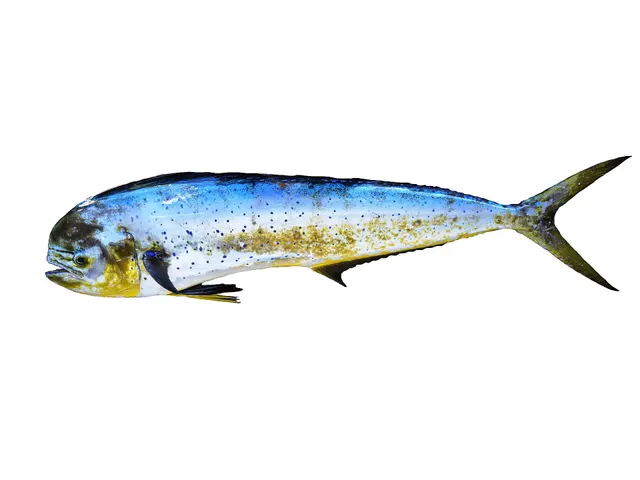
Mahi-mahi
The fastest-growing large fish an angler is likely to meet — brilliantly coloured, mature within months, and gathered around anything floating in the open ocean.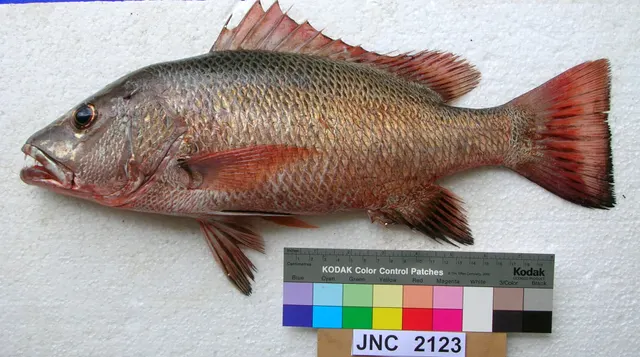
Mangrove jack
A powerful red snapper of mangrove creeks and estuaries that moves to offshore reef as it matures, notorious for reaching structure the instant it is hooked.Meagre
A large predatory drum of the eastern Atlantic and Mediterranean, audible drumming with its swim bladder, and a prime estuary and surf target.Mediterranean moray
The eel in the hole. Rarely described in spearfishing writing, and the animal behind the classic hole-hunting injury, which is a bite that will not let go.Mediterranean parrotfish
The parrotfish of the eastern Atlantic islands and the fish the Canaries are identified with — red-and-grey, beaked, and the everyday catch of anybody fishing Canarian rock.Milkfish
A fast, powerful, algae-eating flats fish with a tiny toothless mouth — one of the hardest fish in the world to hook on a fly, and one of the most important farmed food fish in Asia.Montagu's blenny
A tiny rockpool blenny with a fringed crest across the top of its head, living in the highest and hottest pools on the shore.Mud crab
A very large, immensely powerful swimming crab of Indo-Pacific mangroves — a serious food fishery, a genuine recreational target from Queensland to Kerala, and an animal that can break a finger.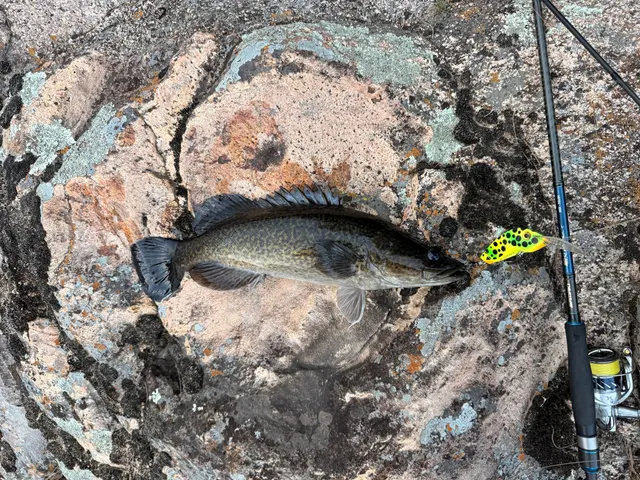
Murray cod
Australia's largest wholly freshwater fish, reaching 113 kg and 48 years, and not a cod at all — a temperate perch that has been the Murray-Darling's apex predator for a very long time.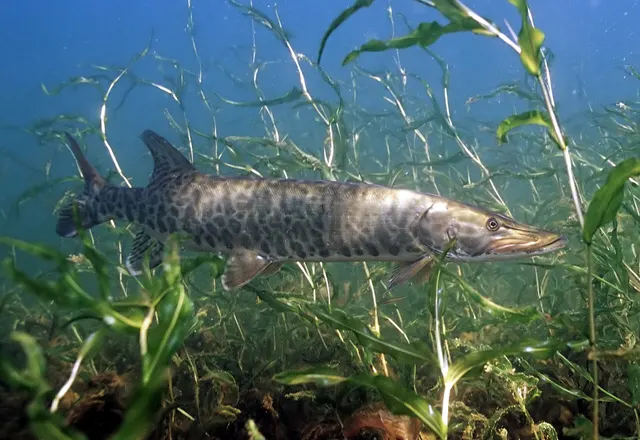
Muskellunge
North America's largest pike and the fish that gave rise to the phrase "the fish of ten thousand casts" — a solitary ambush predator with a well-earned reputation for refusal.
N
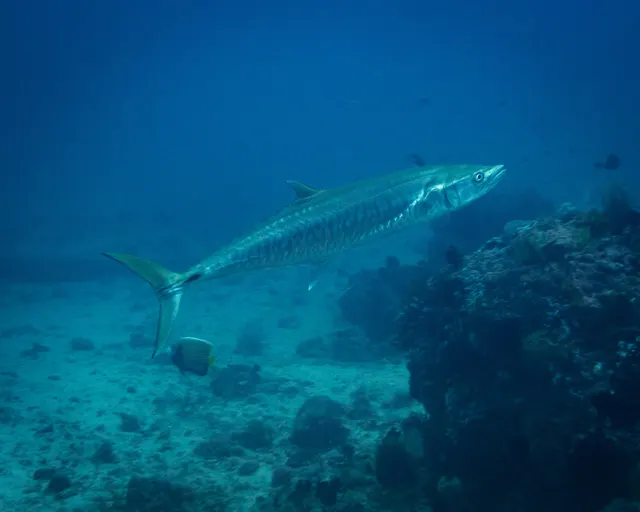
Narrow-barred Spanish mackerel
A fast Indo-Pacific mackerel with vertical bars and shearing teeth that is a headline sport and food fish from South Africa to Australia — and a well-known ciguatera risk in parts of its range.Natal stumpnose
The east coast's stumpnose and the most widespread of the three: a deep, silver, gold-lined sparid found from South Africa to Japan, and the one an Australian angler would call tarwhine.Native oyster
A flat, round, slow-growing oyster whose British beds collapsed within living memory, sitting on the same shores as a fast-growing introduced congener that is reefing over them — and the two are told apart by the shape of the shell.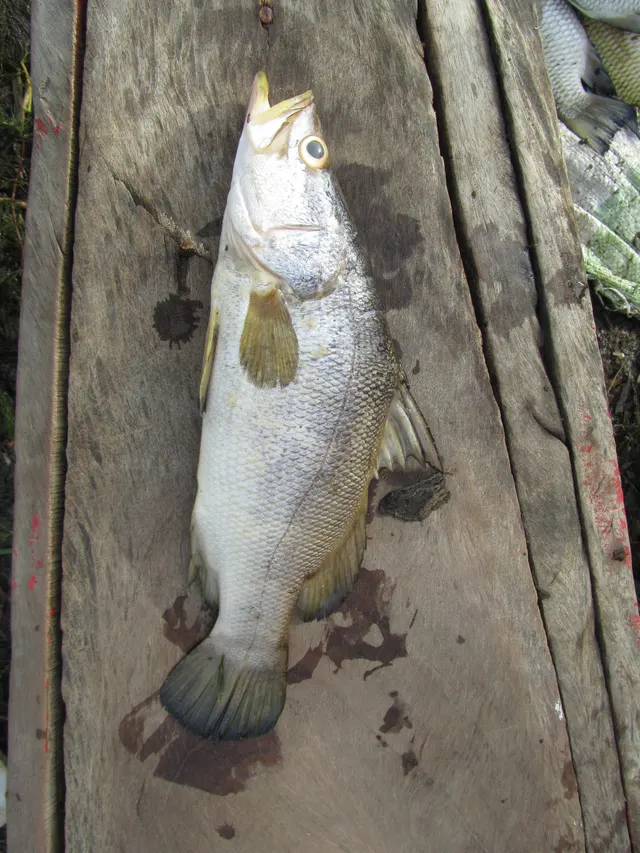
Nile perch
A huge African predator that is a major food fishery, a sport fish, and the cause of one of the worst extinction events on record.Nile tilapia
An African cichlid that broods its young in the mouth, farmed on an enormous global scale, and both a valued food fish and a significant invasive.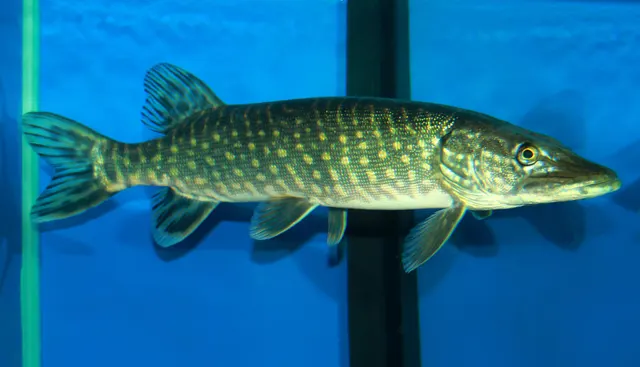
Northern pike
The dominant freshwater ambush predator of the northern hemisphere: long, cryptic, and built for one violent acceleration rather than pursuit.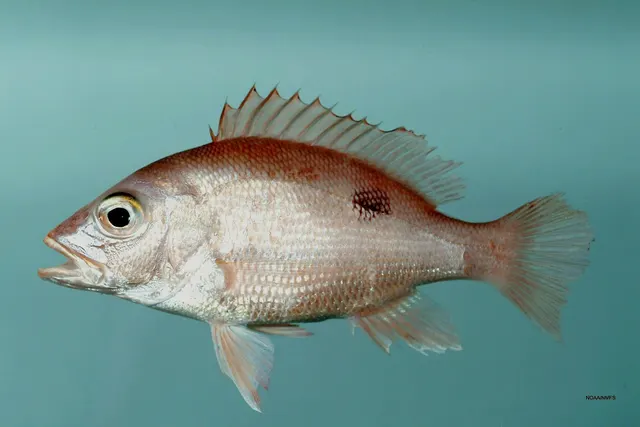
Northern red snapper
The Gulf of Mexico's emblematic reef fish — long-lived, structure-bound, subject to the most contested recreational quota in American fishing, and a barotrauma case study.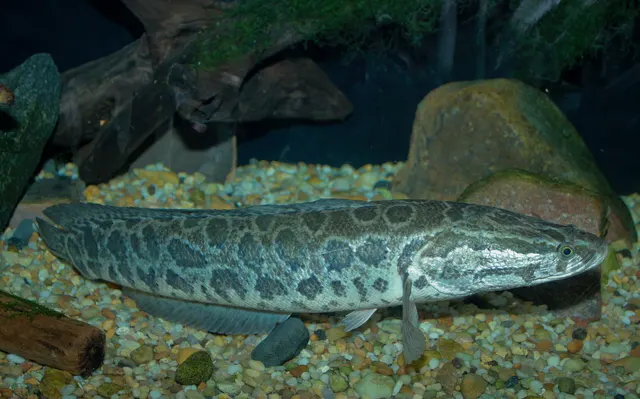
Northern snakehead
An air-breathing East Asian predator, native and farmed in its home range, and a regulated invasive species in North America where introduced populations are established.
O
Olive grunter
Piggy: the small grunter that South African anglers catch by the dozen and use as live bait for everything bigger, with a legal minimum size of seven and a half centimetres — the smallest in the whole regulation.Ornate wrasse
The green-and-orange wrasse that takes everything on Canarian rock — sixty of them in a week to one angler, and the single most abundant fish in the archipelago's shore fishing.
P
Panga
A small pink-and-silver deep-reef sparid of the Agulhas Bank and the Cape offshore grounds — abundant, commercially important, and the fish that fills a box when nothing bigger is feeding.Papuan black bass
A nineteen-kilo snapper that lives in Papua New Guinea's jungle rivers and nowhere else — pound for pound the hardest-pulling freshwater fish many anglers will meet.Payara
An Amazonian predator with two enormous lower fangs that pass through sockets in its own skull, hunting in fast rapids and whitewater.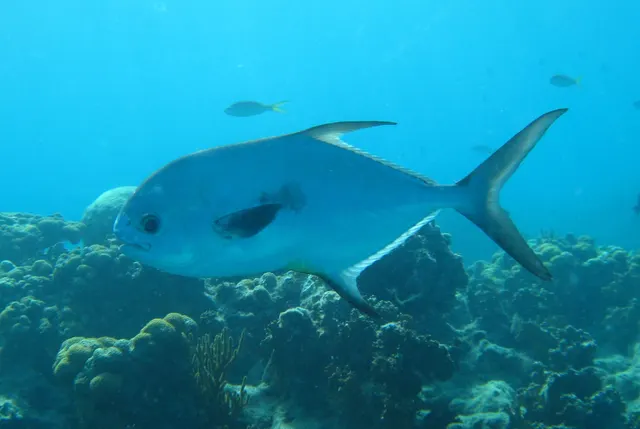
Permit
A large, deep-bodied jack of tropical flats and wrecks, famously difficult on fly and the third fish of the flats grand slam.Pink dentex
The big Canary sama — over a metre and sixteen kilos, with a bulging forehead on old fish, and the fish the word actually means when a Canary source uses it.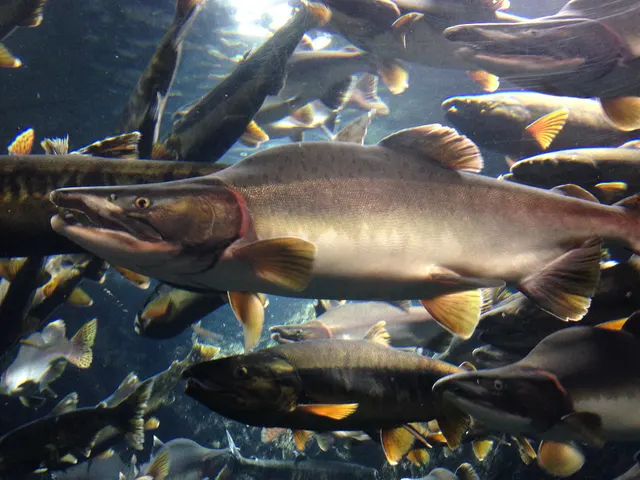
Pink salmon
The smallest and most abundant Pacific salmon, running on a strict two-year cycle, and the male developing a pronounced hump at spawning.Planehead filefish
A tough-skinned, tiny-mouthed amphi-Atlantic filefish with a locking spine on its head — caught on both sides of the ocean and famous for stealing baits.Pollack
A fast gadoid that hunts up off reefs and wrecks and takes a lure on the drop — and the sea fish most likely to convert a bait angler to lure fishing.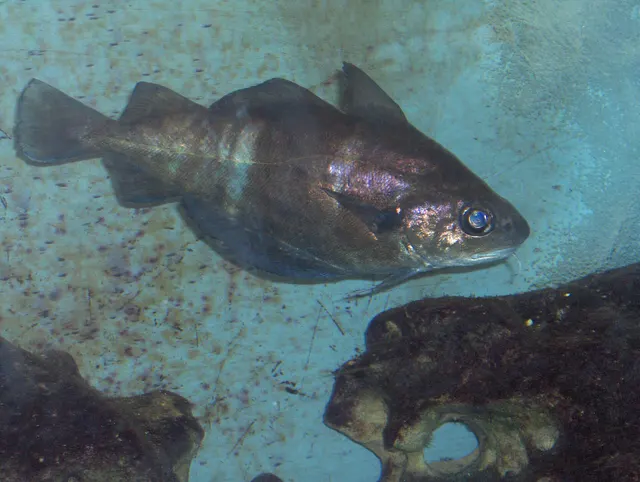
Pouting
A deep-bodied coppery gadoid of wrecks and rough ground, barred when fresh, with a prominent chin barbel and a very short shelf life.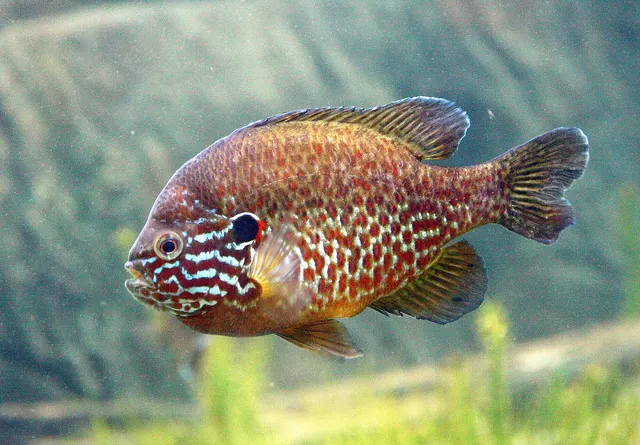
Pumpkinseed
A vividly marked small sunfish, separated from bluegill by the orange-red spot on the rear edge of its gill flap and the wavy blue lines across its cheek.
Q
R
Raggedtooth shark
The raggie: a Critically Endangered shark with a permanent mouthful of visible teeth and a placid temperament, which migrates up the South African east coast to mate and is the species most divers on Aliwal Shoal come to see.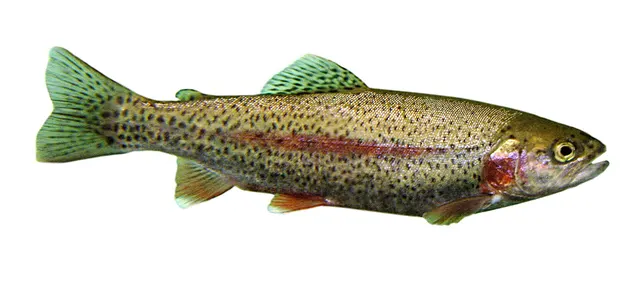
Rainbow trout
The most widely introduced sport fish on Earth — a Pacific salmonid now stocked on every continent except Antarctica, and the same species as the steelhead.Rainbow wrasse
A slim, orange-zigzagged wrasse that changes sex and colour so completely the two phases were long taken for different fish.Razor clam
A long, straight-shelled bivalve that burrows faster than a person can dig, taken by the salt trick and by hand at the bottom of a spring tide — and one of the few gathering fisheries with real skill in it.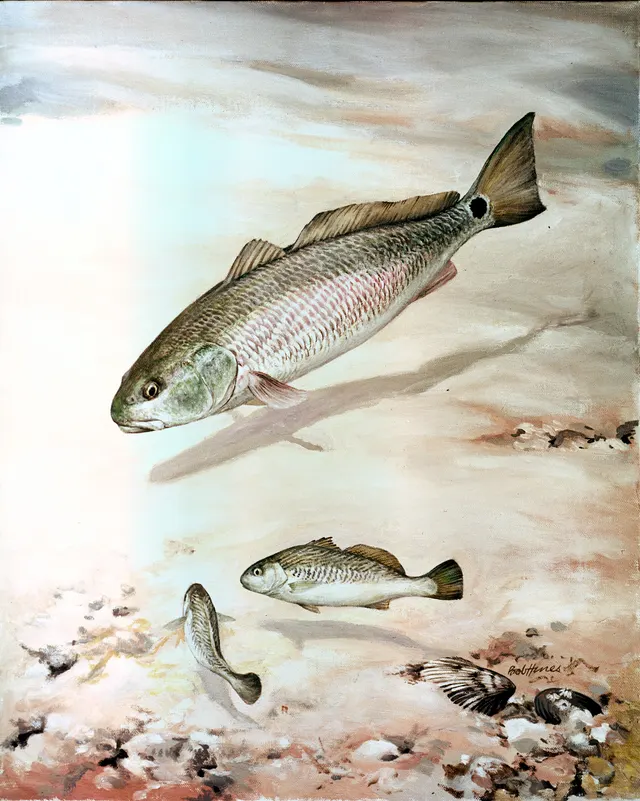
Red drum
A copper-coloured inshore predator of the American south-east, marked with a false eyespot at the tail, fished on shallow flats where its tail breaks the surface as it feeds.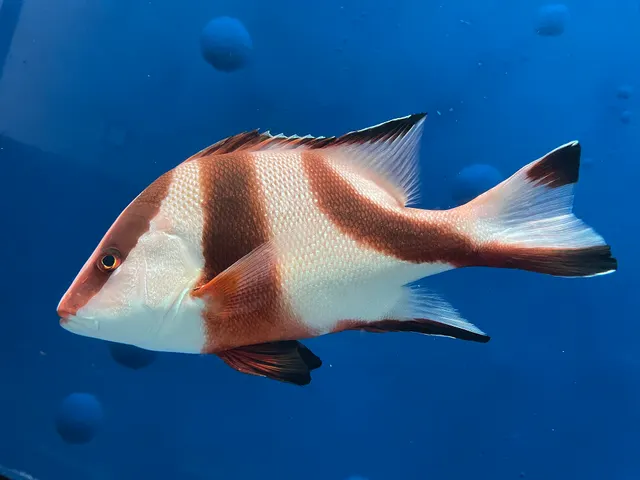
Red emperor
A large deep-red Indo-Pacific snapper whose juveniles carry three bold dark bands that fade almost entirely with age.Red gurnard
The smallest and best-eating of the three British gurnards, and the one that proves colour cannot be used to tell gurnards apart — because all three of them can be red.Red lionfish
A spectacular venomous Indo-Pacific reef fish that has invaded the western Atlantic and Caribbean, eats juvenile reef fish faster than the reef can replace them, and is the one animal on FishingHQ where spearing it is the conservation action rather than the cost of one.Red porgy
A large pink sparid of the eastern Atlantic islands and the Mediterranean, the quality shore and boat target on Canarian rock, and long-lived enough to be slow to replace.Red scorpionfish
A Mediterranean ambush predator that is simultaneously one of the region's most prized food fish and the commonest cause of serious envenomation among the people who catch it — and it does not move when you reach for it.Red steenbras
The biggest sparid in the world and one of the most depleted fish in South African water: a copper-red reef predator to two metres and eighty kilograms, Critically Endangered, with a closed season and a daily bag limit.Red stumpnose
Miss Lucy: a crimson, hump-headed, non-migratory Cape reef sparid confined to twenty to fifty metres of South African water, and Endangered on the July 2024 assessment.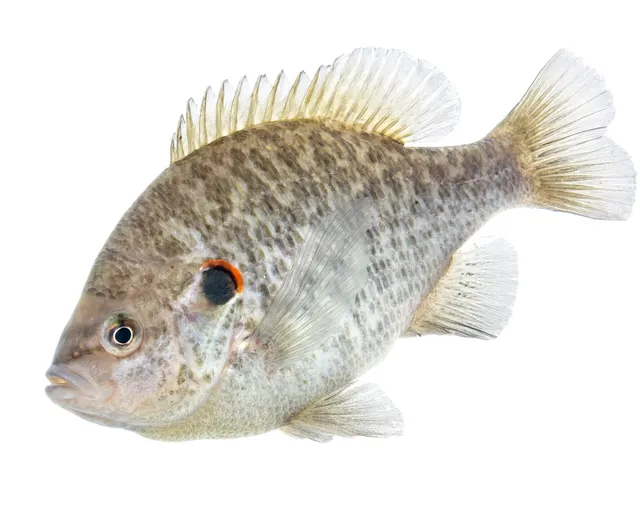
Redear sunfish
A large sunfish with heavy throat teeth that crush snails and small mussels, giving it the name shellcracker and a role in controlling invasive snails.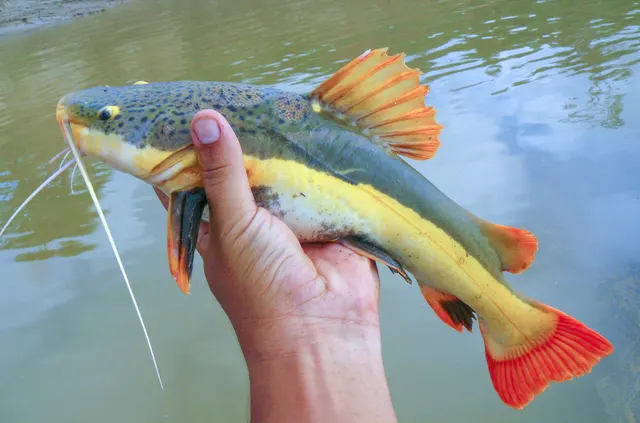
Redtail catfish
A very large Amazonian catfish with a brilliant orange-red tail and a white belly stripe, popular in the aquarium trade and unsuited to it.Reef stonefish
The most venomous fish known, sitting motionless and indistinguishable from a rock in shallow tropical water — and the specific animal behind the advice never to walk barefoot on a reef flat.Rig
New Zealand's estuary smooth-hound — a small shark with crushing plates instead of teeth, and the fish sold there as lemon fish.Ringneck blenny
The second Macaronesian blenny, and the wide-ranging one — Iberia to Namibia, into the Mediterranean, and across to Brazil and South Africa.Riverbream
Slimjannie — the sly little one: a shy, wary estuary sparid of the KwaZulu-Natal and Eastern Cape river systems that runs a long way into fresh water, and is assessed Vulnerable on both range and decline.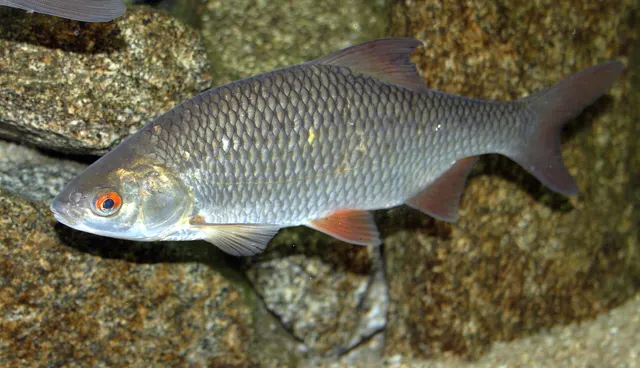
Roach
The most numerous and most frequently caught coarse fish across much of Europe, and the prey species that underpins the whole freshwater predator food web.Rock goby
The goby in the same rock pool as the shanny, and the fish that makes the blenny-versus-goby question answerable — because it carries the sucker disc on its belly that every goby has and no blenny does.Rockpool blenny
The blenny of Macaronesian rockpools — the islands' answer to the shanny, living in the top metre of water and nowhere else.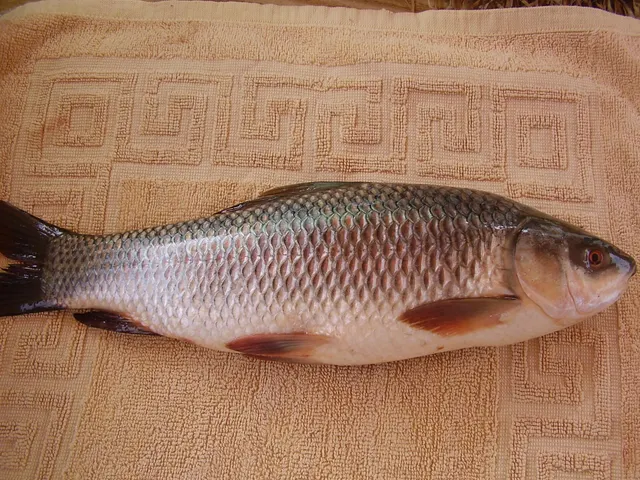
Rohu
One of the major Indian carps, a fast-growing river and pond cyprinid of enormous food importance and a principal bait-fishing target across South Asia.Roman
A bright orange-red reef sparid with a white saddle and a home range under a hundred metres — and the South African linefish that management and marine reserves demonstrably held while its neighbours collapsed.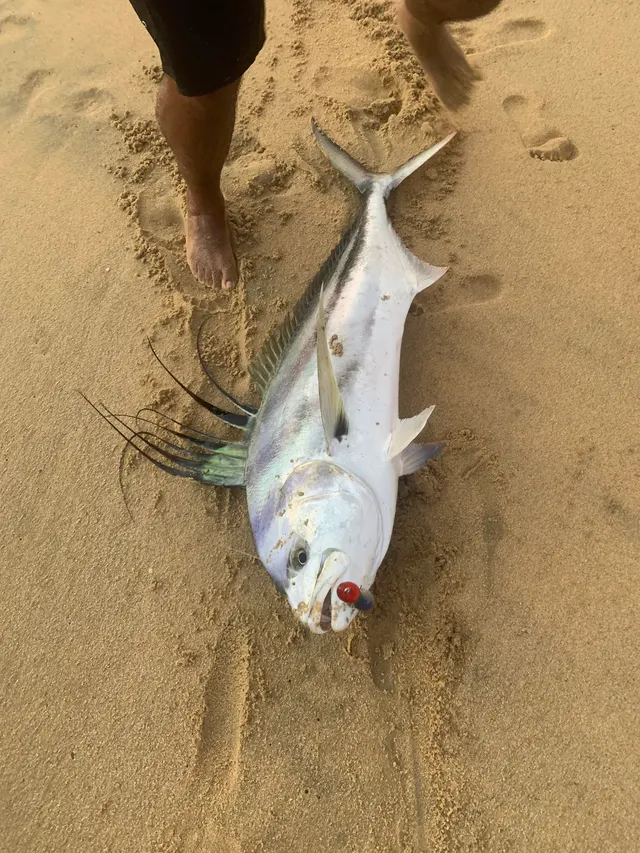
Roosterfish
An eastern Pacific surf predator with a seven-rayed dorsal comb it raises when hunting — the only member of its family, and one of the great shore sport fish.Roundjaw bonefish
The Indo-Pacific bonefish — the flats fish of the Pacific atolls, assessed as Vulnerable, and a different species from the Caribbean one.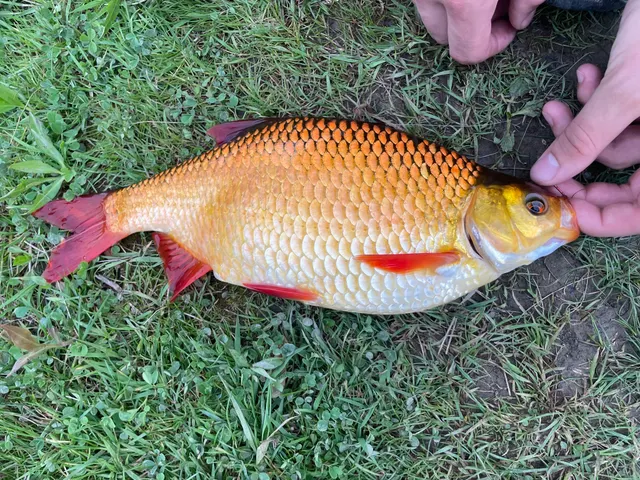
Rudd
A golden, blood-finned cyprinid of still water, separated from roach by an upturned mouth and a dorsal fin set behind the pelvic fins.
S
Saddled seabream
A silver sparid with one black saddle at the tail, shoaling over shallow rock from the Azores to Angola — and not the salema it is constantly confused with.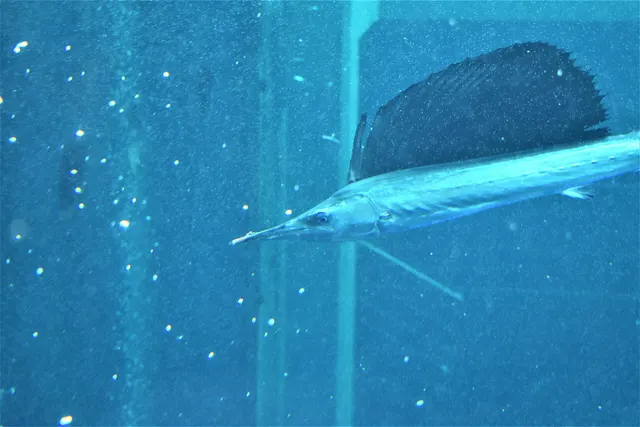
Sailfish
The billfish with a sail — a dorsal fin taller than the fish is deep, raised when hunting, and probably the fastest accelerator in the ocean.Saithe
A fast, hard-fighting shoaling gadoid of northern rock and wreck — routinely confused with pollack, and a completely different fish once you know the lateral line.Salema porgy
A gold-striped, weed-grazing sparid that shoals over shallow rock and seagrass from the Canaries to the Mediterranean — and one of the very few fish with a documented hallucinogenic effect when eaten.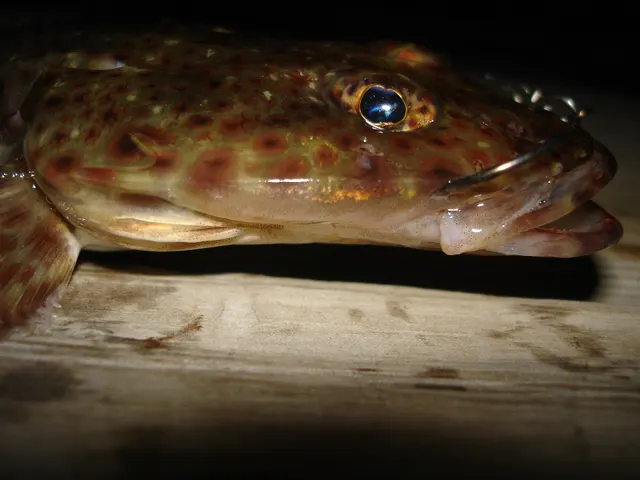
Sand flathead
The abundant southern Australian flathead of sandy bays, smaller than the dusky flathead and marked with rows of brown spots and a dark-blotched tail.Sand whiting
A slender silver Australian surf and estuary fish that feeds on worms and nippers in the wash, and is fished with light tackle over clean sand.Santer
The soldier: a pink-silver deep-reef sparid of the South African east coast with long trailing fin filaments, found from Mossel Bay to the Red Sea, and a regular part of a mixed reef catch.Saratoga
An ancient surface-feeding fish of Queensland rivers that carries its eggs and young in its mouth — and one of very few Australian native freshwater species genuinely suited to a fly rod.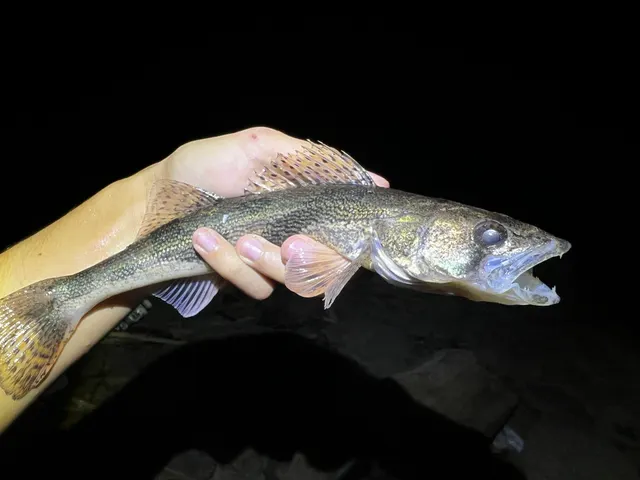
Sauger
The walleye's smaller river-dwelling relative, separated by spotted dorsal membranes and the absence of a white tail tip — a fish of big turbid rivers where walleye are fish of lakes.Scotsman
The Englishman's counterpart on the same reefs: a pink KwaZulu-Natal sparid with a distinctive blue-marked snout, Vulnerable, and a close relative of the prohibited seventy-four.Sea lamprey
A jawless, boneless, parasitic fish with a rasping sucker for a mouth — a delicacy in Iberia, an invasion that broke the Great Lakes, and a strictly protected species across much of its native range.Seventy-four
PROHIBITED IN SOUTH AFRICA: no person may catch, land or possess one. Once the most important line fish in KwaZulu-Natal, the seventy-four collapsed under the targeting of its own spawning aggregations and is now Endangered.Shanny
The commonest blenny on the British shore, the fish under most rocks in most rock pools, and — for a very large number of people — the first fish they ever caught.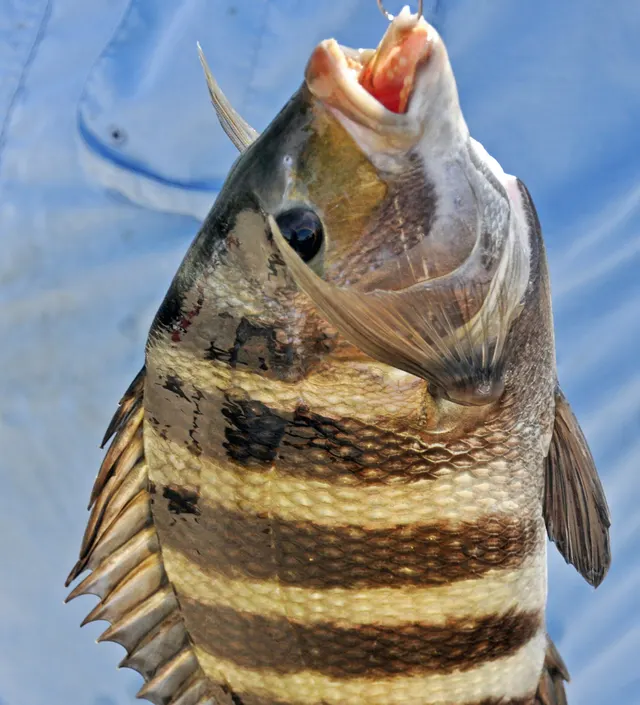
Sheepshead
A boldly barred inshore sea bream with flattened human-like incisors and heavy molars, built to crush barnacles and shellfish off pilings and structure.Shore crab
The crab a child catches off a quayside on a line with a bit of bacon — abundant, harmless, inedible in any useful quantity, and one of the most damaging marine invaders in the world outside its native range.Short-spined sea scorpion
The bigger, deeper, colder relative of the fish in the rock pool — a sculpin that grows to arm's length in the far north, sits on sand and mud as readily as on rock, and reaches a shore angler's bait mostly in Scotland.Signal crayfish
An introduced North American crayfish that carries a plague fatal to European natives, and the one catch on FishingHQ that must never be returned to the water alive.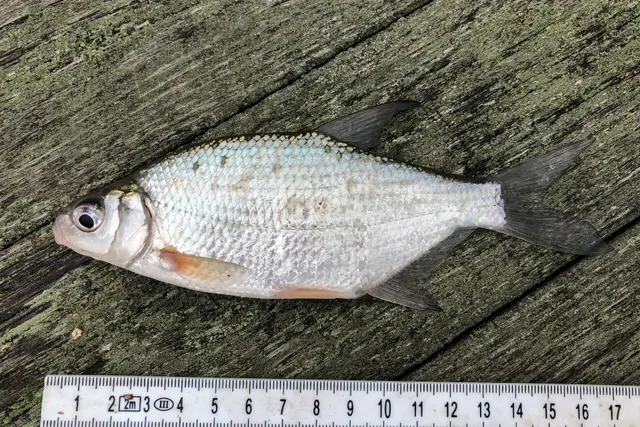
Silver bream
A small deep-bodied cyprinid separated from common bream by large eyes, orange-based paired fins and a shorter anal fin.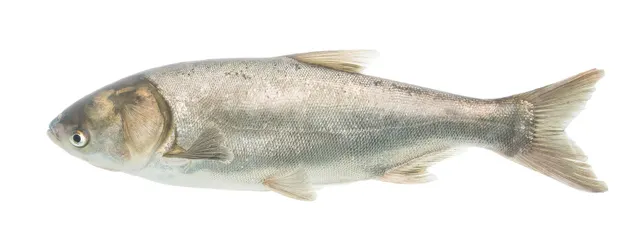
Silver carp
A filter-feeding Asian carp that leaps clear of the water when startled by boat engines, and one of the most damaging freshwater invasives in North America.Silver kob
The kob most South African anglers actually catch: a silver sciaenid of the surf and the inshore reef, at 10.4 per cent of its unfished biomass, and carrying four different sets of legal limits depending on where and how it was caught.Silver trevally
A schooling southern-hemisphere jack of reefs and harbours, silver with a yellow tail and a small dark shoulder spot, and a mainstay of Australian and New Zealand fishing.Skipjack tuna
The most heavily fished tuna in the world and a familiar South African offshore catch: a small, fast, striped-bellied tuna that boils on the surface in feeding shoals and is the fish most 'bonito' actually is.Slinger
The KwaZulu-Natal ski-boat staple: a pink-red reef sparid of the east-coast reefs that supports one of South Africa's most important commercial line fisheries, taken in numbers on squid over structure.Small-eyed ray
The surf-beach ray of the Bristol Channel and the south-west — patterned with pale streaks running parallel to the wing margins rather than with spots, and caught from the shore where other rays are not.Small-spotted catshark
The small, densely freckled shark that almost every British sea angler catches and almost nobody looks at properly — abundant, harmless, sandpaper-skinned, and the reason a great many anglers think they dislike dogfish.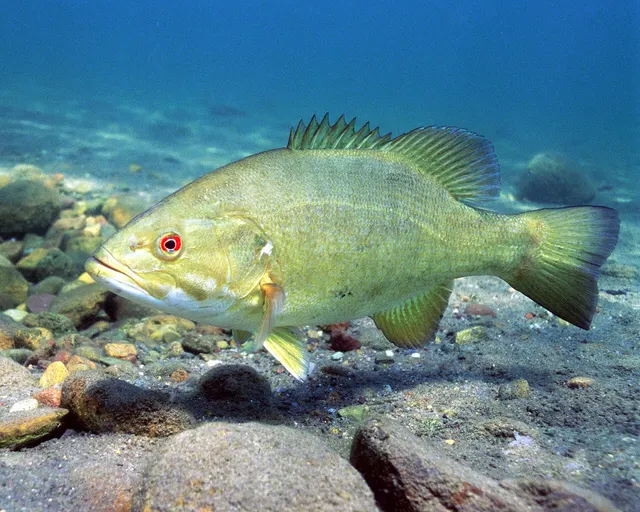
Smallmouth bass
A hard-fighting river and rocky-lake predator of North America, reckoned pound for pound the strongest freshwater fish on the continent.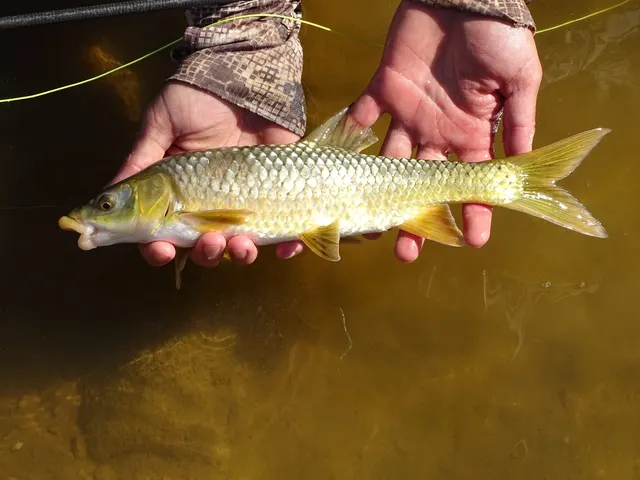
Smallmouth yellowfish
A golden grazing cyprinid of southern African rivers, fished on nymphs in fast shallow water and often called Africa's answer to the bonefish.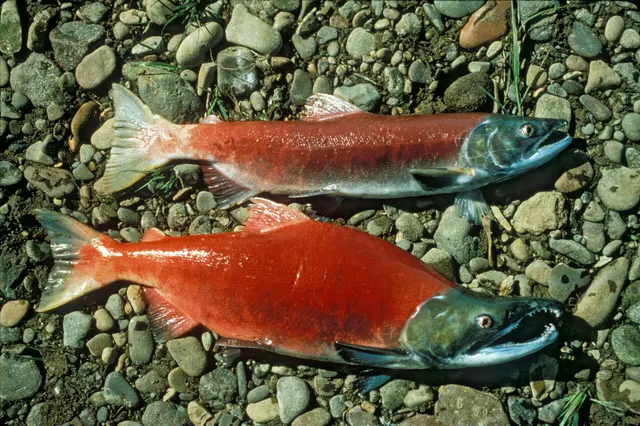
Sockeye salmon
The plankton-feeding Pacific salmon that turns brilliant scarlet to spawn, depends on lakes rather than just rivers, and barely takes a lure at all.Sooty grunter
Northern Australia's freshwater brawler — a six-kilo terapontid endemic to the tropical rivers, and the fish barramundi anglers catch when the barra will not play.Spangled emperor
A heavy-shouldered reef and flats fish of the Indo-Pacific with blue spangles on the scales and crushing molars behind its canines — and twenty-eight years of life to lose.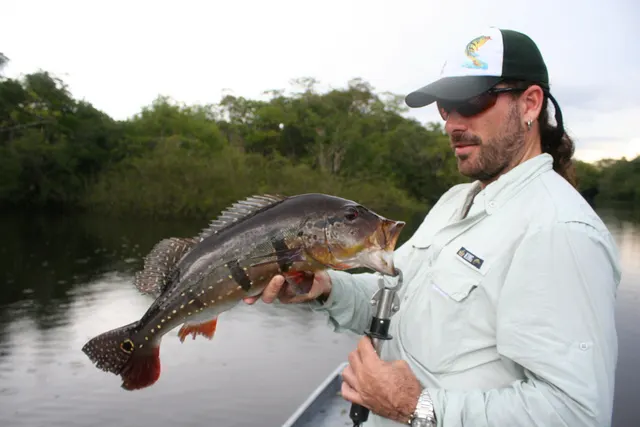
Speckled peacock bass
A large Amazonian cichlid — not a bass at all — that hunts small characins in blackwater rivers and strikes surface lures with more violence than almost anything in fresh water.Spiny spider crab
A large, long-legged, orange-red crab that walks into British shallows in summer in numbers, is excellent eating, and is put back by most people who find one because they assume it is not worth having.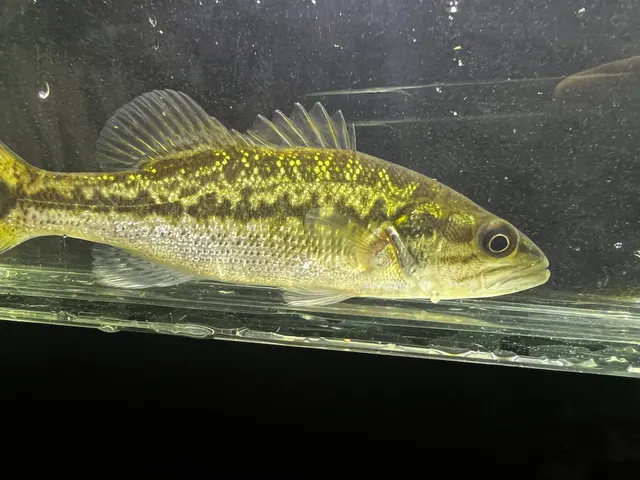
Spotted bass
The third black bass — intermediate between largemouth and smallmouth in habitat and appearance, and identified by rows of spots below the lateral line and a tooth patch on the tongue.Spotted eagle ray
A large, white-spotted, genuinely graceful ray that flies rather than crawls — an open-water swimmer with a duck-like bill for excavating shellfish and a tail carrying venomous spines.Spotted grunter
A southern African estuary fish that grunts audibly by grinding its pharyngeal teeth, and feeds by blowing jets of water to excavate prawns from sand.Spotted gully shark
A stocky, spotted houndshark endemic to southern Africa that lives in the surf gullies themselves — the shark a Cape shore angler is most likely to hook, and one of the few assessed as Least Concern.Spotted ray
The small spotted ray of inshore clean ground — dark spots that stop short of the wing edge, usually an eye-like blotch on each wing, and rarely much over 70 centimetres.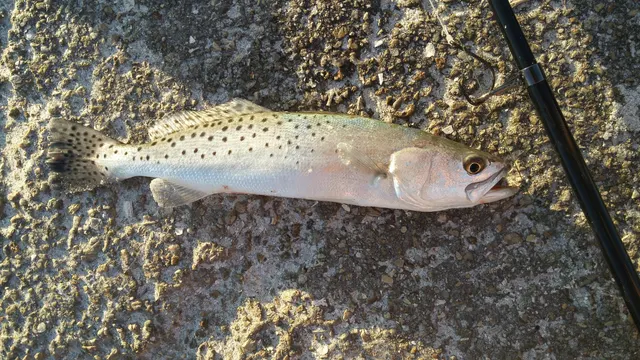
Spotted seatrout
A drum-family inshore predator of American southern estuaries, marked with distinct round black spots and armed with two prominent canine teeth.Spotted sorubim
A large spotted South American catfish with a long flattened shovel snout, a principal target of the Paraná and São Francisco river fisheries.Springer
The estuary acrobat: a slim silver tenpounder that hits a lure at speed, jumps repeatedly, and is caught almost entirely for the fight because almost nobody eats it.Spurdog
A small shoaling shark with a sharp venomous spine in front of each dorsal fin, a gestation approaching two years, and a habit of arriving in packs — the most awkward fish to unhook in British waters.Starry smooth-hound
A small crab-eating shark of European coasts with crushing plate-like teeth rather than cutting ones, and white spots along the flank.Steentjie
The southern African black seabream: a small, drab, abundant shoaling sparid of the inshore reefs, treated as a bait fish as often as a target, and a close relative of the European black bream.Sterlet
The small sturgeon that never goes to sea, the only one an ordinary angler is likely to meet, and the reason 'I caught a sturgeon' is a harder statement than it sounds.Stonebream
Stinkvis: a dark, deep-bodied, weed-grazing kyphosid of the KwaZulu-Natal and Eastern Cape gullies that is easy to catch, hard on tackle, and named for exactly what it smells like.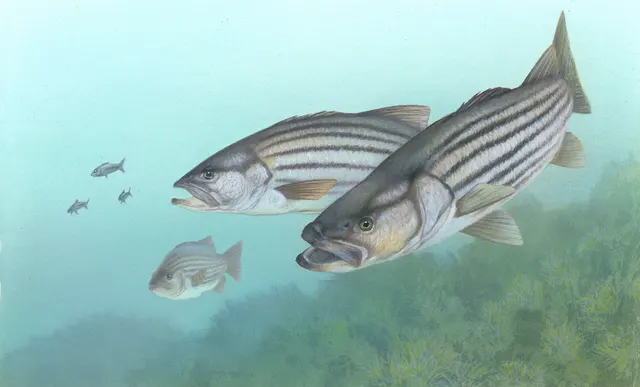
Striped bass
A large anadromous predator of the North American Atlantic coast, fished from surf, rock, boat and river, and the subject of one of the better-known fishery recoveries.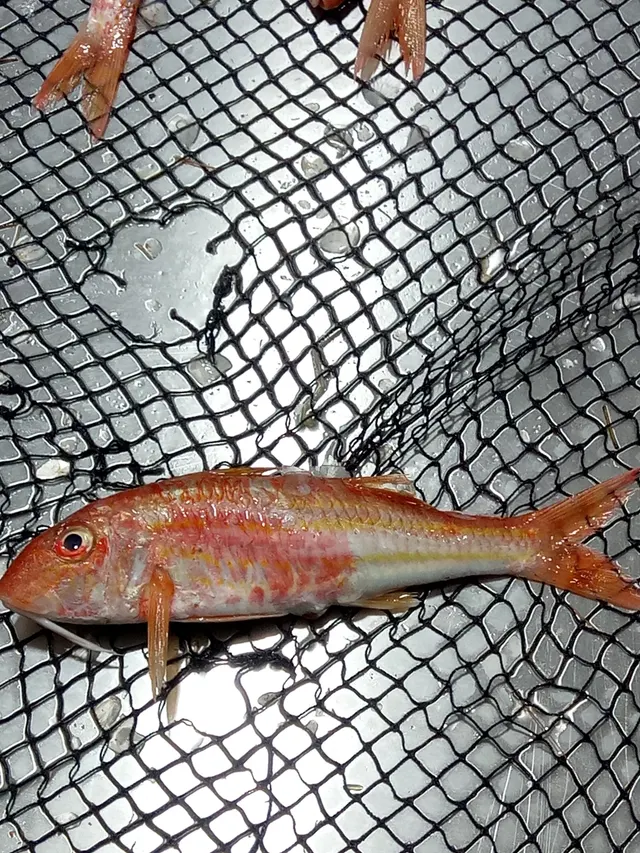
Striped red mullet
A red and gold bottom-feeding fish that hunts with a pair of long chin barbels, unrelated to grey mullet and among the most prized European table fish.Striped seabream
The sparid that lives on sand rather than rock — a finely barred, long-snouted seabream that turns a Macaronesian beach into somewhere worth fishing.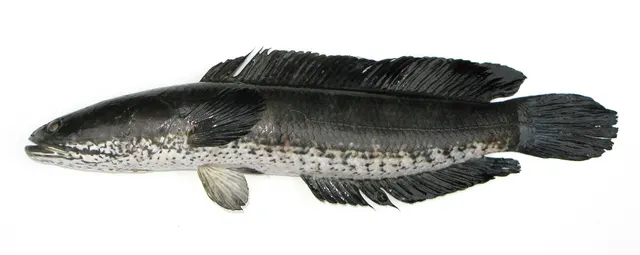
Striped snakehead
The most widely distributed and most farmed Asian snakehead, air-breathing, able to survive in mud through dry seasons, and a staple food fish across the region.Striped trumpeter
A boldly striped southern reef fish reaching 25 kilos and forty-three years — Tasmania's most prized table fish, and a species that grows far too slowly to be fished casually.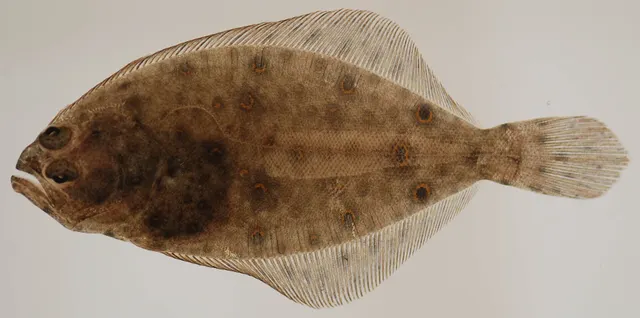
Summer flounder
A large left-eyed ambush flatfish of the American Atlantic coast with a toothy mouth, fished by drifting rather than by static bottom fishing.Swordfish
A large oceanic predator with a flat sword-like bill and specialised tissue that warms its eyes and brain, allowing it to hunt in cold deep water.
T
Taimen
The largest salmonid in the world, a long-lived river predator of Siberia and Mongolia, Vulnerable to extinction and fished almost entirely on a release basis.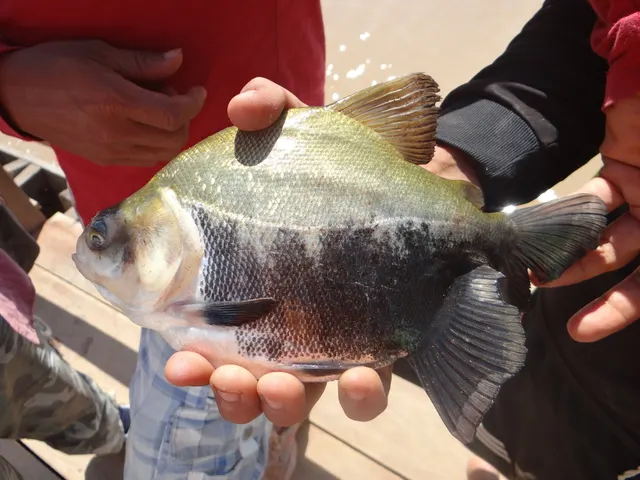
Tambaqui
A very large Amazonian characin with molar-like teeth for crushing fruit and seeds, feeding in flooded forest and dispersing seeds as it goes.Tarakihi
One of the commonest fish in the New Zealand recreational catch — a silver, black-collared bottom fish that lives fifty years and had no record here.Tautog
A blunt-headed structure-dwelling wrasse of the American Atlantic with crushing teeth, extreme site fidelity, and a habit of resting on its side in crevices at night.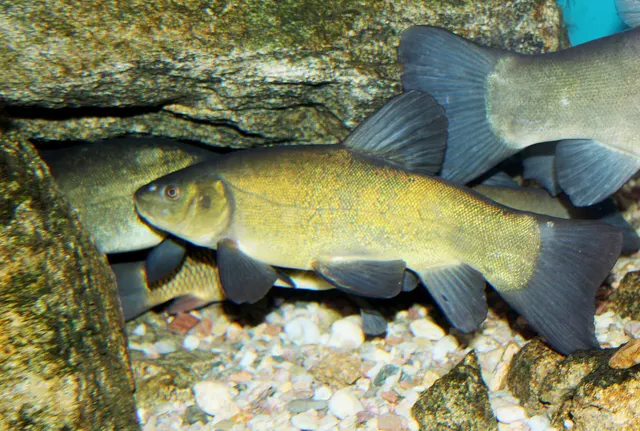
Tench
A thick-set, olive-green stillwater fish with tiny scales, a heavy mucus coat, and a strong association with warm, weedy, silty water.Thick-lipped grey mullet
A shoaling coastal fish that eats algae and detritus rather than prey — which makes it the hardest common sea fish to catch and the most interesting to think about.Thin-lipped grey mullet
The grey mullet that will chase a baited spinner up a tidal river — which makes it the only one of the three that can be fished for like a predator, and the reason a whole British technique existed with nothing to attach it to.Thornback ray
The commonest European ray, covered in thorn-like bucklers, laying horny egg cases known as mermaid's purses, and requiring careful handling on release.Three-bearded rockling
The largest and by a distance the most recognisable of the British rocklings — boldly marbled orange and dark brown, three barbels, and the only one of the five most anglers can name with any confidence.Tope
A fast, slender, genuinely large houndshark that comes into British shallows in summer — the shark most likely to empty a shore reel, and one of the most threatened fish an angler can catch.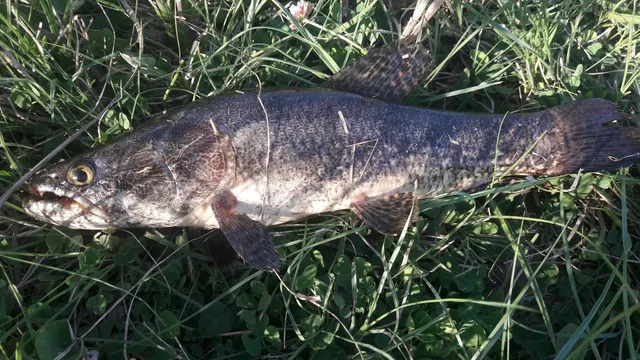
Traíra
South America's most widely caught freshwater ambush predator: a cylindrical, heavily-toothed fish of still and slow water that can breathe air and survive where almost nothing else will.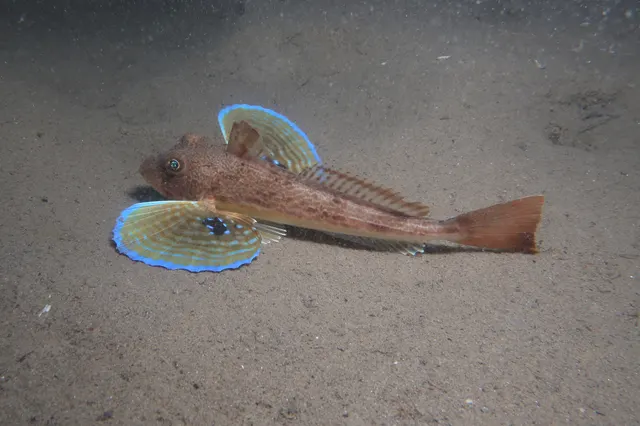
Tub gurnard
The big, brilliantly coloured gurnard — vivid blue-edged pectoral fins spread like wings, a red body, and the largest of the British gurnards by a clear margin.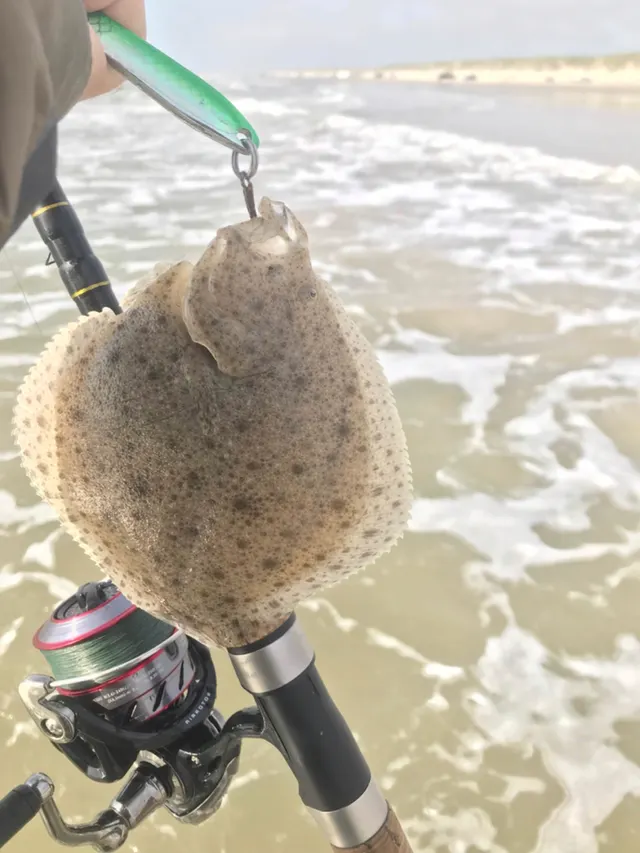
Turbot
A large, almost circular left-eyed flatfish with bony tubercles instead of scales, the most valuable flatfish in European waters.Twaite shad
The shad a British angler actually meets: smaller than allis, usually marked with a row of dark spots, and running the Severn, Wye and Usk in a spring migration that has been fished for centuries.Two-banded seabream
The other Diplodus — two dark bars rather than one, on the same rock as the white seabream, and every bit as much the everyday fish of a Canary or Mediterranean shore session.
V
Veined squid
The larger, more northerly of the two British squid, and the one most autumn and winter pier catches actually are — taken on the same jig, by the same people, who believe they are catching the other one.Velvet swimming crab
The crab under every British rock that stands up and fights you — brilliant red eyes, a coat of fine hair, paddle back legs, and a grip that does not release. Excellent eating, exported in quantity, and ignored by almost everybody who meets one.Vendace
A small silver plankton-feeding lake fish with an adipose fin and a projecting lower jaw — abundant enough in Finland to support a commercial fishery, and reduced in Britain to a single water.
W
Wahoo
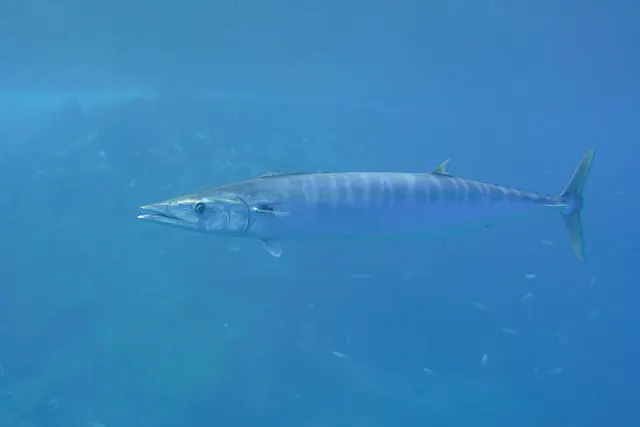
An extremely fast blue-water mackerel with razor teeth and a long slender body, taken by high-speed trolling and almost always fished on wire.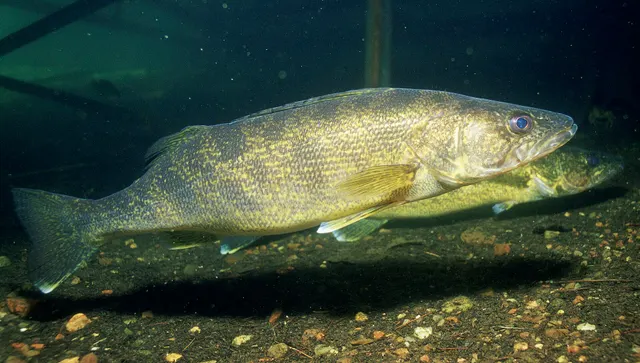
Walleye
A low-light predator of large North American lakes and rivers whose reflective eye lets it hunt in conditions where its prey cannot see it coming.Weakfish
A purple-sheened Atlantic drum named for its fragile mouth rather than any lack of fight, and a species whose stock has declined sharply.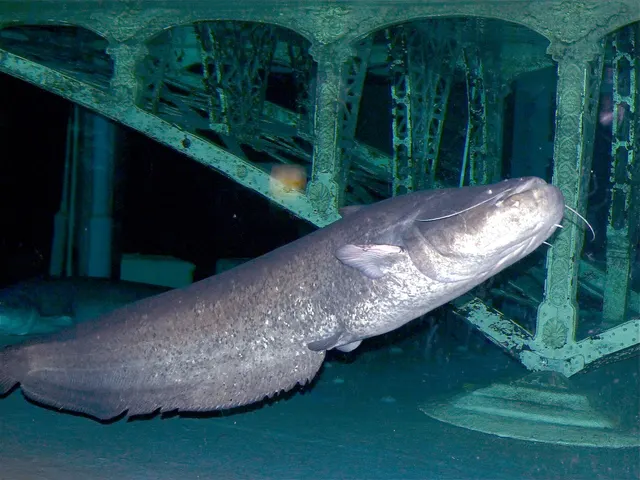
Wels catfish
Europe's largest freshwater fish, reaching well over two metres, and an expanding introduced range that has made it one of the continent's most contested species.West coast steenbras
The Benguela's own steenbras: a long-snouted sand-feeder of the Namibian and west South African surf, aged to fifty years, and Endangered — the northern counterpart of the white steenbras and in the same trouble.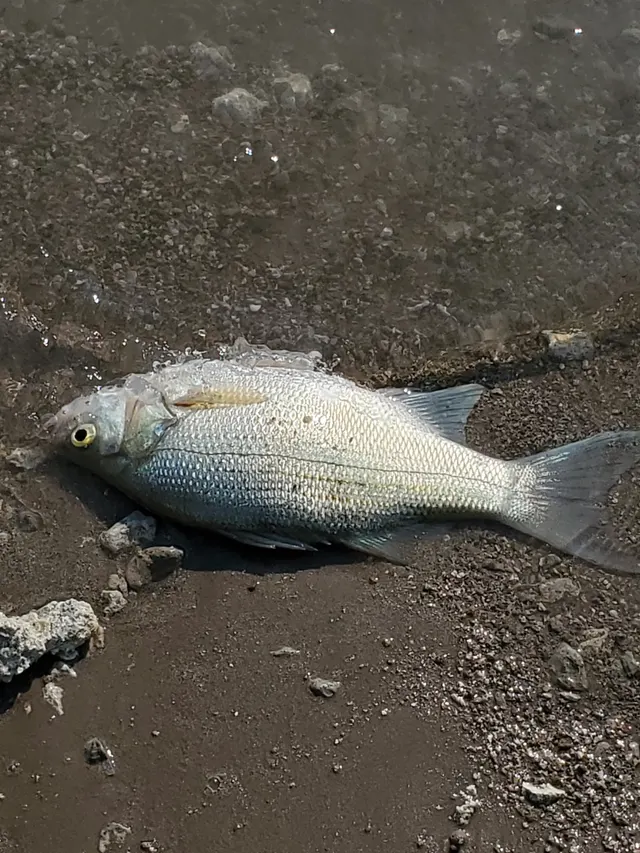
White bass
A schooling open-water Morone of large rivers and reservoirs, smaller and deeper-bodied than a striped bass and famous for surface feeding frenzies.White crappie
The paler, bar-marked crappie of turbid rivers and reservoirs, separated from the black crappie by six dorsal spines and vertical banding rather than scattered blotches.White musselcracker
The rock-gully heavyweight of the South African shore: a big, silver, shell-crushing sparid with a mouth full of molars, taken on red bait and mussel from exactly the ledges that are most dangerous to stand on.White seabream
A boldly barred Mediterranean sparid of rocky shores, marked with vertical black bands and a black saddle at the tail, and a mainstay of shore fishing.White seacatfish
The sea barbel: a barbelled, venomous-spined marine catfish of South African sand and estuaries whose males carry the eggs in their mouths for weeks and eat nothing while they do it.White steenbras
A large, silver, long-snouted sparid endemic to South Africa that blows sandprawn out of estuary and surf-zone sand, spends its first three years in an estuary, and is now assessed as Endangered after a ninety per cent decline in recreational catch rates.White stumpnose
The west coast's stumpnose: a silver, faintly barred sparid of Saldanha and the Cape bays, assessed Vulnerable in 2024, and the one of the three stumpnoses that carries a daily bag limit.White sturgeon
North America's largest freshwater fish, an ancient armoured bottom-feeder of Pacific rivers that must be handled entirely in the water and is very largely catch-and-release.White trevally
The Atlantic half of a trevally that was one species until recently — and one of two Pseudocaranx that most field guides still print as one.White-clawed crayfish
Britain's only native crayfish, Endangered, and being erased from its own rivers by a larger American relative that carries a disease it cannot survive — which is the single most important thing about crayfish here, and FishingHQ could not say it.Whiting
A small, abundant, silver gadoid of European coasts, a mainstay of winter shore fishing and distinguished by a dark spot at the pectoral fin base.Wide-eyed flounder
A small left-eyed flatfish of warm Atlantic and Mediterranean sand, with eyes set unusually far apart on the males, and the left-eyed flatfish of Canarian and Mediterranean sand.Wreckfish
A very large, very long-lived deep-water fish of wrecks, banks and shelf edges worldwide, reaching 100 kg and eighty years, and assessed by the IUCN as Data Deficient.
Y
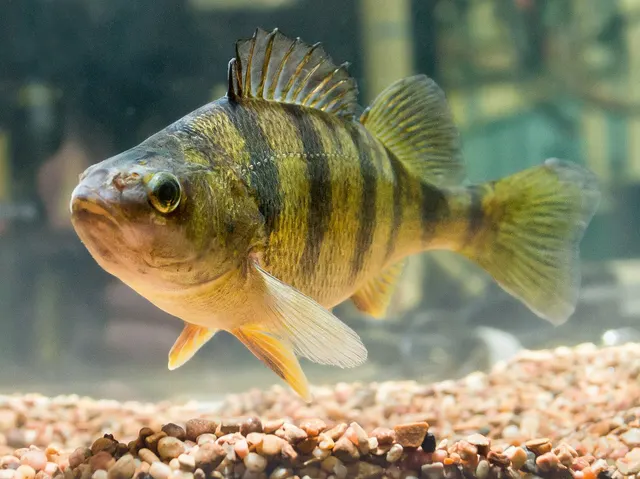
Yellow perch
North America's most-caught panfish and the walleye's principal prey — the fish that anchors both the food chain and the family fishing trip across a whole continent.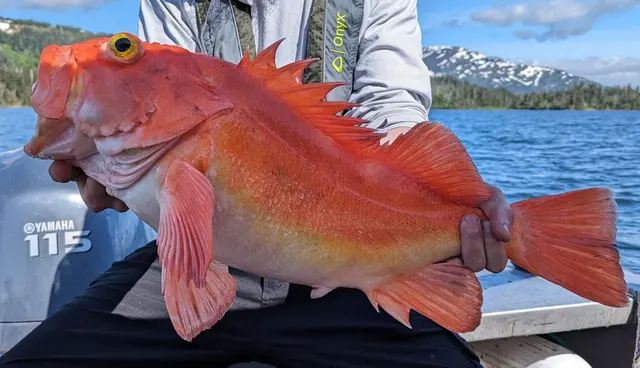
Yelloweye rockfish
A brilliant orange-red deepwater rockfish that lives well over a century, matures very late, and is a rebuilding species under strict protection.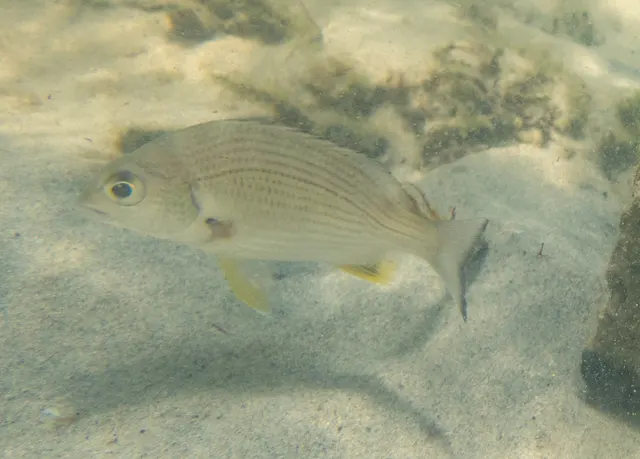
Yellowfin bream
The archetypal Australian estuary sparid, wary, structure-oriented, and the species around which a whole competitive lure discipline has been built.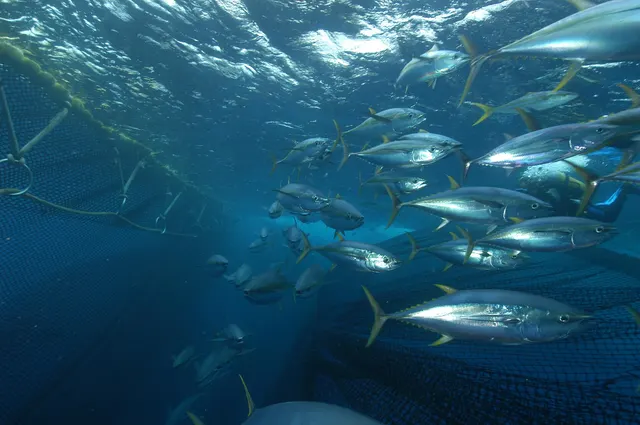
Yellowfin tuna
A warm-blooded, high-speed oceanic predator that schools with dolphins and under floating debris, and one of the most commercially important fish in the world.Yellowmouth barracuda
The barracuda of the eastern Atlantic islands, named by every Lanzarote source and by none of them correctly — the Canary fish is not the great barracuda.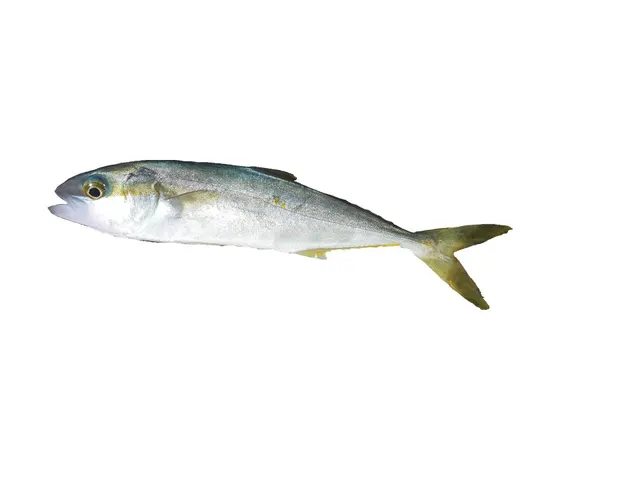
Yellowtail kingfish
A circumglobal subtropical jack of kelp edges and rocky reef that fights harder than almost anything of its size and heads straight for structure.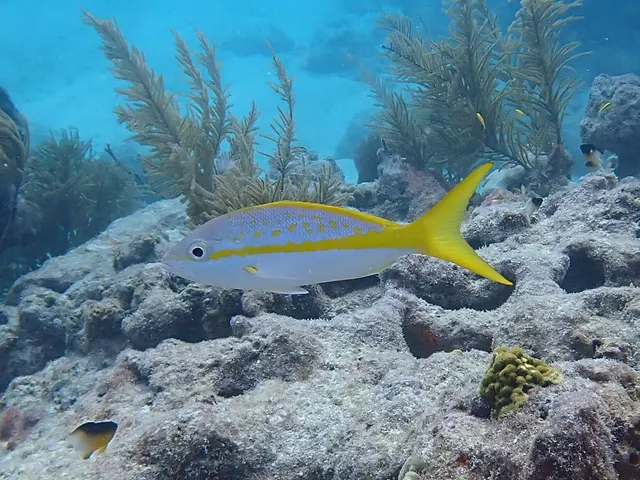
Yellowtail snapper
A slim reef snapper with a broad yellow stripe and deeply forked yellow tail, feeding well above the bottom and fished with drifting chum.
Z
Zander
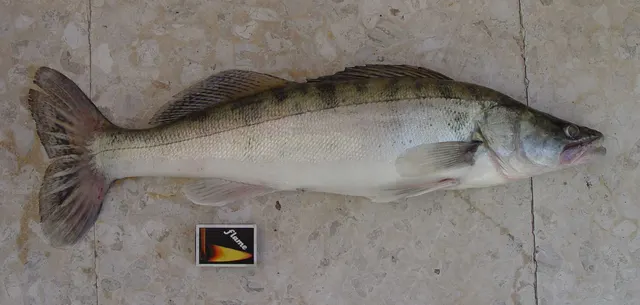
A shoaling freshwater predator built for hunting in low light and coloured water, and the fish that made a virtue of the conditions pike find difficult.Zebra (South African)
Wildeperd — the wild horse: a boldly barred South African sparid of the surf gullies, aged to thirty-three years, and a fish that was treated as a Mediterranean subspecies until it was recognised as one of its own.Zebra seabream
The big barred Diplodus of Atlantic island rock — and the fish whose English name is also, confusingly, given to a much smaller sparid on the same ground.
Supporting ecological records
Species that are not fishing subjects but that FishingHQ needs in order to be accurate about the ones that are — mostly prey. These are short reference pages: identity, distribution and the biological relationship that justifies them. They are not fishing profiles, and their presence here does not mean the fish is pursued.
Alewife
An anadromous river herring of eastern North America that has also formed permanent landlocked populations, becoming a principal prey fish in the Great Lakes.Atlantic herring
The shoaling fish that shaped the economies of the North Atlantic, and one of the two or three most important prey species in it.Atlantic menhaden
A deep-bodied filter-feeding clupeid of the American Atlantic coast, and the forage species that most of the region's inshore sport fisheries are built on.Ballyhoo
A surface-schooling halfbeak of warm Atlantic waters with a greatly elongated lower jaw, and the standard prey and trolling bait of the tropical western Atlantic.Bay anchovy
A tiny, translucent, extraordinarily abundant anchovy of American Atlantic and Gulf estuaries, and probably the most numerous fish in them.Bleak
A small, silver, surface-shoaling cyprinid of European rivers and lakes, and the principal prey of asp, zander and pike where it occurs.Capelin
A small Arctic smelt that spawns on beaches in immense numbers, and the animal most of the North Atlantic's cold-water fisheries ultimately rest on.Cisco
A silvery, deep-bodied whitefish of cold northern lakes, and the native prey species that lake trout, muskellunge and northern pike evolved alongside.Dagaa
A small pelagic cyprinid endemic to the Lake Victoria basin, and the prey species that the lake's Nile perch fishery came to depend on.European anchovy
A small, large-mouthed shoaling fish of warm coastal seas, and the principal forage species of the Mediterranean and the Iberian Atlantic.European sprat
A small shoaling clupeid of coastal and shelf water, abundant enough to feed most of the predators in the northern European sea and to support a large fishery besides.Gizzard shad
A deep-bodied filter-feeding clupeid of American rivers and reservoirs, and the dominant forage fish in a very large number of them.Greater weever
The most venomous fish in British and Irish waters — a small sand-burying ambush predator with venomous dorsal and gill-cover spines, caught by accident and stood on by bathers.Japanese anchovy
The forage anchovy of the north-west Pacific, supporting one of the world's largest fisheries and most of the predatory fish of the Japanese and Korean coasts.Lesser sandeel
A slender, burrowing shoaling fish of sandy seabeds, and the single most important forage species in the northern North Sea food web.Northern anchovy
A shoaling anchovy of the eastern Pacific upwelling coast, and one of the two forage species that alternate in dominating that ecosystem.Pacific sand lance
The North Pacific counterpart of the sandeel: a slender burrowing shoaling fish that underpins the salmon, seabird and marine mammal food webs of that ocean.Pacific sardine
One shoaling sardine found around most of the Pacific and southern oceans under half a dozen different names, and a dominant forage species in every one of them.Rainbow smelt
A small, slender, cold-water smelt of northern lakes and coastal rivers, and the deep-water forage fish that lake trout and burbot depend on.Ruffe
A small, spiny, bottom-dwelling perch relative that feeds in darkness and turbid water, and a named prey item of zander and pike across northern Europe.Sábalo
A large, migratory, detritus-feeding characiform of the Paraná and Paraguay basins, and both the dominant biomass and the principal prey of the golden dorado.Scaled sardine
A small coastal clupeid of the warm western Atlantic, known to anglers as the pilchard or greenback and central to inshore live-bait fishing in the region.Yellowtail scad
A small shoaling jack of Australian and New Zealand coastal waters, known as yakka to anglers and a principal prey of kingfish and snapper.