Barbel
Fish · Last reviewed 2026-08-10
A powerful, streamlined river cyprinid built for holding station in fast water — and the hardest-fighting freshwater fish most British anglers will meet.
Safety: fish welfare — can cause serious injury or death. 6 more points apply here.

Catching Barbel
Everything here on fishing for it. Each entry opens the page behind it.
- Ground
- When
- Jun–Oct — months recorded at the places that document it, not a season for the whole range.
- Where
- 5 places FishingHQ documents — strongest claim anywhere: characteristic of this water · From the shore
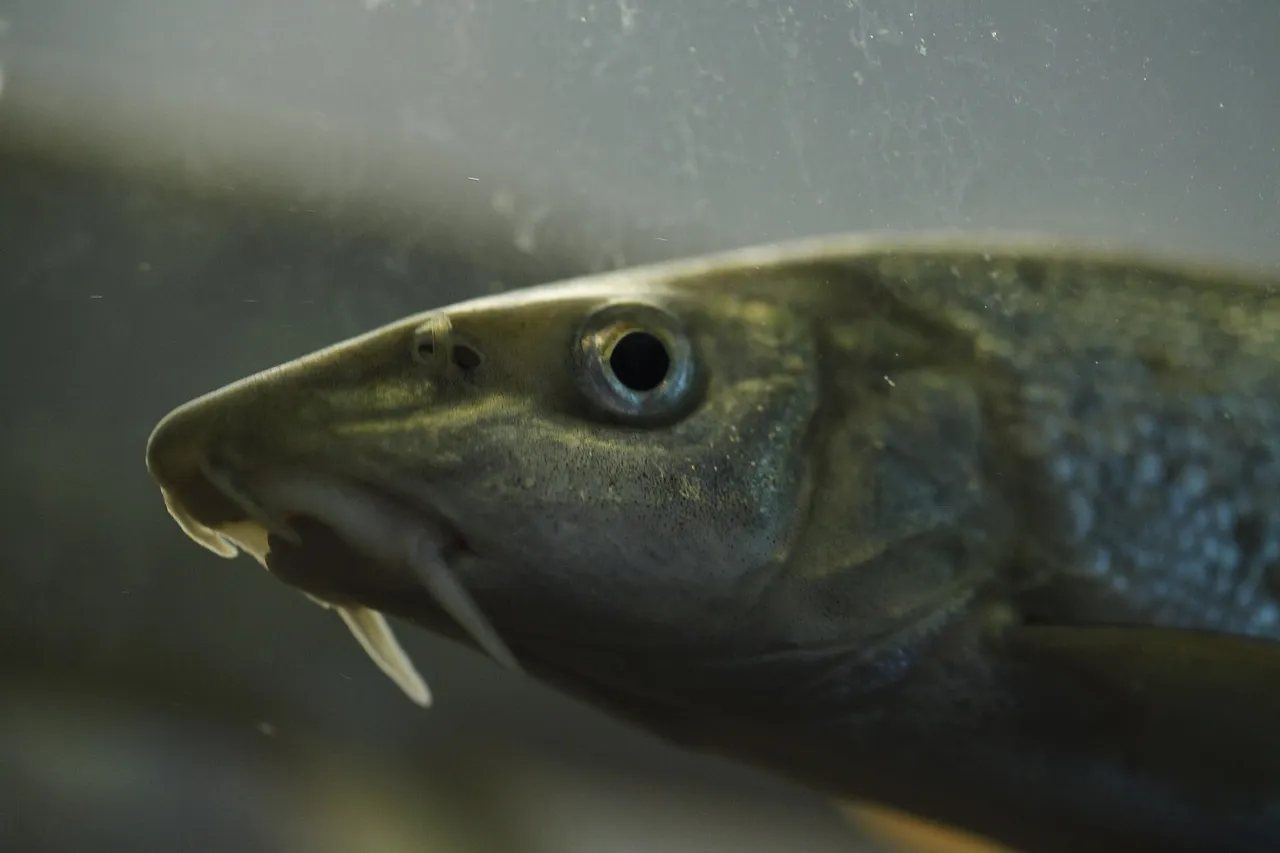
A barbel is a fish designed by moving water. The body is torpedo-shaped and the belly is flattened, so the fish can sit on the bed of a fast run with the current pressing it down rather than pushing it back; the large pectoral fins act as hydrofoils doing the same job. The mouth is underslung and rubbery, flanked by four barbels, and it works the gravel for invertebrates.
What that produces on the end of a line is out of proportion to the fish's size. A barbel that is hooked uses the current as a weapon, turning side-on and holding, and a five-kilogram barbel in a strong flow will beat tackle that would land a much larger stillwater fish. That is also the reason barbel demand more care after capture than almost anything else in fresh water: a fish that has fought to exhaustion in warm, low-oxygen summer water may swim away and die hours later unless it is properly rested first.
Barbel are shoaling, largely nocturnal in heavily-fished water, and strongly associated with specific bottom features — gravel runs, streamer weed, the crease beside a fast run.
How it is caught
- TrottingTaken on a trotted bait in steadier water as well as on a static ledger, and the fish that most tests a centrepin's palmed drag in current.
- Feeder fishingLegering with a weight that also carries bait, so that free offerings arrive in exactly the same place as the hookbait, cast after cast.
- LedgeringFishing a bait on the bottom held by a weight, with no float — the simplest way to fish at distance, in depth, or in wind.
Gear for this fish
- Luncheon meatA bait with a long association with barbel in flowing water, valued because it holds on the hook in current and can be cut to a size that resists small fish.
- Hair rigThe hair reached barbel fishing after carp and for the same reason — a bottom-feeding fish large enough to sort a bait in its mouth before committing to it.
- Particle baitsHempseed in particular produces a feeding response in barbel that has no obvious explanation and is one of the more striking pieces of practitioner knowledge in the sport.
- Running legerA river fish that takes a static bait on the bottom and runs hard with it — which is precisely the case the running arrangement exists for, because the fish feels the lead late or not at all.
- Lobworms and wormsThe oldest fishing bait there is, and still among the most effective for almost every freshwater species — and one nearly everybody can obtain.
Where Barbel is documented
Places where public sources describe this species as fished, with how it is fished and how strongly the evidence supports it. This is not a range map and it is not a recommendation — it is what has been written down about a fishery rather than a record of any individual catch, and being listed is never permission to fish.
The River Trent
2 documented places
River reach
Characteristic of this water
From the shore
Around Jun, Jul, Aug, Sept, Oct
Gunthorpe weir pool, River Trent
Weir pool
Regular local target
From the shore
Around Jun, Jul, Aug, Sept
England and Wales
2 documented places
River reach
Characteristic of this water
From the shore
Around Jun, Jul, Aug, Sept, Oct
River reach
Seasonal
From the shore
Around Jun, Jul, Aug, Sept, Oct
The River Wye
1 documented place
River reach
Characteristic of this water
From the shore
Around Jun, Jul, Aug, Sept, Oct
What these strengths mean
- Characteristic of this water
- This water is strongly identified with this species by the sources that cover it.
- Regular local target
- Fishing sources describe this as a normal local target here, not merely as caught.
- Seasonal
- Well supported, and concentrated in part of the year rather than spread through it.
When to fish for barbel
Where the places here state a season for barbel, it clusters in Jun–Oct. This is a count of how many documented places name each month — evidence about when people fish for it, not a prediction of what any particular day will produce.
| Jan | Feb | Mar | Apr | May | Jun | Jul | Aug | Sep | Oct | Nov | Dec |
|---|---|---|---|---|---|---|---|---|---|---|---|
| January: no place here names this month — no place names it. | February: no place here names this month — no place names it. | March: no place here names this month — no place names it. | April: no place here names this month — no place names it. | May: no place here names this month — no place names it. | June: 5 places name this month — most places. | July: 5 places name this month — most places. | August: 5 places name this month — most places. | September: 5 places name this month — most places. | October: 4 places name this month — many places. | November: no place here names this month — no place names it. | December: no place here names this month — no place names it. |
5 of the 5 places that record catches of barbel state which months. The dated records span 3 separate areas.
Identification
- Scientific name
- Barbus barbus
- Family
- Cyprinidae
- Water
- Freshwater
- Conservation status
- Least Concern
- Regions
- Britain & Ireland, Western Europe, Central & Eastern Europe
- Long, rounded, torpedo-shaped body with a distinctly flattened belly.
- Four barbels around an underslung, thick-lipped, protrusible mouth.
- Large, low-set pectoral fins, often orange-tinged, used to hold position in current.
- Small scales and a bronze-olive back shading to a cream belly.
- Forked tail with a noticeably longer lower lobe.
Size
- Typical
- 40–60 cm and 1.5–4 kg in most river populations.
- Large
- Over 70 cm and 6 kg.
Exceptional: Fish over 9 kg are recorded from the most productive southern English rivers, where growth reflects unusually rich feeding rather than typical river conditions.
How barbel feed, and why current is the whole story
ESTABLISHED. Barbel are bottom-feeding cyprinids of flowing water, equipped with four barbels carrying taste receptors and an underslung mouth adapted to taking food from the riverbed. They are strongly rheophilic — current-loving — and are built for it: a streamlined body with large pectoral fins that hold them against the bottom in flow rather than lifting them.
FEEDING FOLLOWS THE CURRENT. They locate food largely by taste and touch on the bottom, working upstream into flow, and they hold station behind features that break the current while feeding into the food it delivers. That combination — a fish that needs flow but shelters from it — is why gravel runs, streamer weed and the downstream edge of obstructions are where they are found.
WHAT ANGLERS RELIABLY REPORT. Increased feeding activity when a river rises and colours after rain, and low-light activity in clear conditions. Both are consistently observed across many rivers and are plausible — extra flow moves food and reduces visibility — but the strength of the effect is convention rather than measurement.
AND THE HANDLING CONSEQUENCE. Barbel fight hard in current and exhaust themselves thoroughly, and recovery in flowing water before release is a real requirement rather than a courtesy.
Backed by research — why, and the sources (2)
Supported by peer-reviewed research or fisheries science. The sources are listed and can be checked.
- FishBase: a global information system on fishes — Froese, R. and D. Pauly, eds. — FishBase Consortium (Scientific institute)Relied on for: Life history, spawning biology, habitat association and feeding ecology for the species.States this directlyPassage read and verified
- Freshwater Fishes of the British Isles — HarperCollins (New Naturalist 75), 1992 (Reference work)Relied on for: Life history and behaviour of European freshwater fishes, independently of the angling literature.Background and mechanism onlyCitation checked — the work exists and is described correctly
The fish that dies twenty minutes after it swims away
Barbel present the clearest example in British freshwater fishing of a species that is not dangerous, is not fragile to hold, and dies after release more often than almost anything else — and the reason is entirely about recovery rather than about handling.
WHAT HAPPENS. Barbel are built for flowing water and they fight using that current, at full effort, until they can no longer do it. A landed barbel is far more physiologically exhausted than a still-water fish of the same size after a fight of the same length. Released too early it is swept downstream on its side, cannot right itself, and dies out of sight.
SO RECOVERY IS THE TECHNIQUE. The fish is held upright in the margin, facing upstream, in water flowing over its gills, supported under the belly, for as long as it takes — which is frequently several minutes and occasionally much longer. The test is that the fish holds its own position and drives out of your hands. A fish that stays where it is put is not ready, however lively it looks.
AND THE WARM WATER MULTIPLIES IT. Low summer flows, high temperatures and low dissolved oxygen are the conditions in which barbel mortality happens. Several fisheries advise against fishing for them at all in those conditions, and that advice is well founded.
THE HANDLING PROPER IS ORDINARY. No teeth of consequence, no spines, though the leading ray of the dorsal is stiff. Wet hands, unhooking mat, support the fish horizontally, keep it low.
AND THE ANGLER'S HAZARD IS THE RIVER. Barbel fishing puts people in flowing water at the margin, often at dusk, often on a steep bank, to land and hold a fish. That is the actual risk in this fishery and it has nothing to do with the fish.
Official guidance — why, and the sources (3)
Stated by a fisheries authority, scientific institute or recognised angling body. Authoritative, but summarising rather than demonstrating.
- Angling Trust guidance for anglers — Angling Trust (Angling or fisheries organisation)Relied on for: Angler guidance on handling and recovering barbel in flowing water, and on fishing during periods of low flow and high temperature.States this directlyCitation checked — the work exists and is described correctly
- Do we need species-specific guidelines for catch-and-release recreational angling? — Biodiversity and Conservation 14:1195–1209, 2005 (Scientific literature)Relied on for: That post-release mortality varies with species, capture depth, water temperature, air exposure and handling, and that species-specific guidance outperforms general guidance.States this directlyCitation checked — the work exists and is described correctly
- A review of catch-and-release angling mortality with implications for no-take reserves — Reviews in Fish Biology and Fisheries 15:129–154, 2005 (Scientific literature)Relied on for: Review of hooking and release mortality across fisheries, including the contribution of depth of capture and handling duration.States this directlyCitation checked — the work exists and is described correctly
Rising water, falling oxygen, and the season that is dangerous rather than good
Barbel are a river fish whose year is organised around two variables that usually move together and occasionally move apart, and the occasions when they move apart are the ones worth understanding.
WATER LEVEL IS THE FIRST. A rise in a river does three things at once: it dislodges invertebrates and washes them downstream, it colours the water and reduces the fish's caution, and it increases flow, which barbel are built to work in. A settled rise is therefore a feeding trigger rather than a disturbance, and it is the single most reliable predictor in this fishery. That is a mechanism, not a month — it happens whenever it rains enough in the catchment, which in most of the species' range can be almost any time of year.
TEMPERATURE IS THE SECOND, and barbel need warmth to feed hard. They remain active in cold water and continue to feed slowly through it, which is why settled mild spells in winter produce good fish and why hard frost does not shut the river down completely. This is a more cold-tolerant fish than its reputation suggests.
AND THE TWO COME APART IN HIGH SUMMER, WHICH IS THE POINT OF THIS SECTION. Low, clear, warm, slow water is the condition in which barbel are most visible, most concentrated and most catchable, and it is also the condition in which they are least able to survive being caught. Warm water holds less oxygen while the fish needs more; a barbel fights harder for its size and for longer than almost any other coarse fish; and the recovery from that fight is aerobic work being attempted in water that cannot supply it. Barbel that have been played hard in warm low water and released have a documented habit of dying some hours later, out of sight.
SO THE HONEST SEASONAL STATEMENT IS AN INVERSION OF THE USUAL ONE. This is not the best time to fish for barbel. It is the time when the fishing is easiest and the cost to the fish is highest, and a considerable number of fisheries now suspend or restrict barbel angling on water temperature for exactly that reason. Where the fishing goes ahead, the fight is kept short and the fish is supported in flowing water until it leaves under its own power — which on a hot afternoon can take a very long time.
Backed by research — why, and the sources (3)
Supported by peer-reviewed research or fisheries science. The sources are listed and can be checked.
- Coarse Fishing — A. & C. Black, 1912 (Specialist angling publication)Relied on for: Seasonal patterns in British coarse angling and the conditions that drive them.States this directlyCitation checked — the work exists and is described correctly
- Freshwater Fishes of the British Isles — HarperCollins (New Naturalist 75), 1992 (Reference work)Relied on for: Seasonal behaviour and temperature response of British freshwater fishes.States this directlyCitation checked — the work exists and is described correctly
- Understanding the Complexity of Catch-and-Release in Recreational Fishing — Reviews in Fisheries Science 15:75–167, 2007 (Scientific literature)Relied on for: The determinants of catch-and-release outcome, including water temperature, fight duration and delayed mortality.States this directlyCitation checked — the work exists and is described correctly
Strictly flowing water, and why gravel and oxygen decide everything
Barbel are the most habitat-specific fish in British coarse angling, and the specificity is worth stating precisely because it is so often obscured by where they have been put.
THEY ARE A FISH OF FLOWING WATER, STRICTLY. Everything about a barbel is built for current: a streamlined, ventrally flattened body that generates downforce in flow, large pectoral fins used to hold station against the bed, a sub-terminal mouth pointing downward, and four barbels carrying taste receptors for finding food by touch and chemistry on the bottom. Put that animal in a still lake and every one of those adaptations is doing nothing. Introduced stillwater barbel populations exist and they are an artificial situation rather than a natural one.
WITHIN A RIVER, THE REQUIREMENTS ARE SPECIFIC. Clean gravel and stone rather than silt, because that is where the invertebrates are and because barbel spawn on it. Steady, well-oxygenated flow — a barbel working the bed in current has a high oxygen demand and moving water supplies it. Depth enough to feel secure, with structure: streamer weed, undercut banks, bridge footings, the crease where fast water meets slow, and the deeper glides below riffles.
OXYGEN IS THE BINDING CONSTRAINT AND IT EXPLAINS THE SPECIES' VULNERABILITY. A large, active fish in warm, low, slow summer water is at the edge of what the river can supply, which is why barbel are so susceptible to being fought to death in those conditions and why the fishery has moved toward temperature-based restraint.
AND SILTATION IS WHAT REMOVES THEM. Fine sediment from agricultural run-off fills the spaces between gravel, which suffocates eggs, eliminates the invertebrates and turns a barbel reach into a barbel-shaped absence with adult fish still in it. A river can look right and be reproductively dead. That is why barbel distribution in Britain — naturally restricted to a number of eastern and southern systems, with introductions elsewhere — tracks river condition rather than simply latitude, and why the species is used as an indicator of the health of a gravel-bedded river.
Backed by research — why, and the sources (2)
Supported by peer-reviewed research or fisheries science. The sources are listed and can be checked.
- Freshwater Fishes of the British Isles — HarperCollins (New Naturalist 75), 1992 (Reference work)Relied on for: Habitat association, distribution and ecology of European freshwater fishes, including position within a water body.States this directlyCitation checked — the work exists and is described correctly
- FishBase: a global information system on fishes — Froese, R. and D. Pauly, eds. — FishBase Consortium (Scientific institute)Relied on for: Habitat association, depth range and water-type tolerance recorded for the species.States this directlyPassage read and verified
A river fish whose size is set by the river
Barbel size varies more between rivers than it does between fish, and the variation is systematic rather than random — which makes it usable.
THE CONSTRAINT IS PRODUCTIVITY AND SEASON LENGTH. A barbel grows by working the bed of a river for invertebrates in flowing, well-oxygenated water, and how much it can grow depends on how much invertebrate life the river produces and for how many months of the year the water is warm enough for the fish to convert it. Rich, alkaline, weed-heavy southern English rivers with long warm seasons produce fast growth and large fish. Colder, steeper, more acidic northern rivers produce smaller fish of the same age, and a good barbel there is a different weight from a good barbel two hundred miles south.
WHICH IS WHY THE 'EXCEPTIONAL' FIGURE ON THIS PAGE IS TIED TO PARTICULAR RIVERS rather than to the species. Fish in that class come from a small number of unusually productive systems, and treating them as what barbel grow to would leave an angler on a northern river believing their fishery was failing when it is behaving exactly as its geology dictates.
STOCKING HAS MUDDIED THIS CONSIDERABLY. Barbel were introduced widely outside their natural British range through the twentieth century, and some of the rivers now producing the largest fish are not rivers the species reached on its own. Where an introduced population lands in a rich river with little competition, growth for the first decades can be spectacular and is not necessarily sustained.
AND A BARBEL'S WEIGHT MOVES WITH THE SEASON MORE THAN MOST. A fish in late autumn, having fed through a productive summer, may carry a fifth more weight than the same fish in spring after spawning, and 'the same fish at a different weight' accounts for a good deal of apparent variation in reported catches.
LENGTH IS THE STABLE MEASUREMENT and it is the one to think in if the question is how big the fish actually was. A long, lean, out-of-condition barbel is a bigger animal than a short deep one of the same weight, and it is the one that will be heavier next October.
AGE UNDERPINS ALL OF IT. Large barbel are old fish — well into their teens and beyond — which is the fact behind the species' handling problem: a river that loses its large fish does not replace them quickly, and the summer mortality that handling guidance exists to prevent falls hardest on exactly those individuals.
Backed by research — why, and the sources (2)
Supported by peer-reviewed research or fisheries science. The sources are listed and can be checked.
- Freshwater Fishes of the British Isles — HarperCollins (New Naturalist 75), 1992 (Reference work)Relied on for: Growth, age structure, maximum sizes and regional variation in British and European freshwater fishes.States this directlyCitation checked — the work exists and is described correctly
- FishBase: a global information system on fishes — Froese, R. and D. Pauly, eds. — FishBase Consortium (Scientific institute)Relied on for: Maximum recorded length and weight and reported longevity for the species.Background and mechanism onlyPassage read and verified
Gravel, current and a migration up the river: the requirement that silt destroys
Barbel reproduction demands a specific physical situation, and the failure of that situation is the main reason barbel populations decline in rivers that still hold plenty of adult fish.
SPAWNING IS ON CLEAN GRAVEL IN FLOWING WATER. Barbel gather in spring and early summer, as water warms past a threshold, over shallow gravel runs and riffles. Eggs are released into the gravel where they lodge in the interstitial spaces, and development depends on river water flowing down through those spaces to supply oxygen and remove waste. There is no nest and no care; the gravel does the work.
WHICH MEANS FINE SEDIMENT IS LETHAL AND INVISIBLE. Silt from agricultural run-off, bank erosion, road drainage and forestry settles into the gravel and fills the spaces. The riffle still looks like a riffle. The eggs suffocate. A river can hold good numbers of large adult barbel and produce nothing, and the failure shows up only when the year classes stop arriving, by which time it has been happening for years.
A SPAWNING MIGRATION IS INVOLVED AND IT IS OFTEN OVERLOOKED. Barbel move upstream to reach suitable gravel, sometimes considerable distances, and weirs, sluices, gauging stations and poorly designed structures block that movement. A river with excellent gravel above an impassable weir has excellent gravel and no barbel spawning on it.
THE EGGS THEMSELVES CARRY A WARNING WORTH REPEATING. Barbel roe is toxic to humans and causes severe gastrointestinal illness. This is a long-recorded fact about the species and it is a food-safety matter rather than an angling one.
FRY REQUIRE SHALLOW MARGINAL HABITAT with slow flow and cover, and juveniles need progressively faster water as they grow. A canalised, uniform, hardened channel that has lost its shallow margins fails the young fish even where the spawning gravel survives.
MATURITY IS LATE AND ADULTS ARE LONG-LIVED, so a population can persist for a long time on ageing fish while recruiting nothing. That lag is why barbel decline is so often noticed late.
AND CLOSED SEASONS ON RIVERS EXIST IN SEVERAL JURISDICTIONS but they are set by statute and tradition and do not necessarily coincide with the spawning period. What applies on any river is a matter for the competent authority.
Backed by research — why, and the sources (2)
Supported by peer-reviewed research or fisheries science. The sources are listed and can be checked.
- Freshwater Fishes of the British Isles — HarperCollins (New Naturalist 75), 1992 (Reference work)Relied on for: Spawning behaviour, substrate requirements, timing and recruitment of European freshwater fishes.States this directlyCitation checked — the work exists and is described correctly
- FishBase: a global information system on fishes — Froese, R. and D. Pauly, eds. — FishBase Consortium (Scientific institute)Relied on for: Reproductive mode, spawning season, fecundity and maturity for the species.States this directlyPassage read and verified
Tackle for a fish that fights in current, and why the rod's job is to protect the hook hold
Barbel tackle is designed around a fish that combines exceptional power with a body built to use flowing water against you, and around a welfare problem that is unusually acute.
THE FISH FIGHTS WITH THE RIVER. A barbel turns side-on in current and lets the flow do the work, which means the pressure on the tackle is sustained rather than peaky and can be far higher than the fish's weight suggests. That is why barbel rods have a through action with real reserve power: the rod must both apply steady pressure and absorb the sudden loading when a fish changes angle in fast water.
WHICH MAKES THE ROD'S REAL JOB PROTECTING THE HOOK HOLD. A stiff rod against a hard-running fish in current pulls hooks; a soft one cannot turn the fish before it reaches a snag. The compromise most barbel tackle settles on is a rod that bends progressively into a strong butt, and it is a genuine engineering trade-off rather than a preference.
LEAD AND FEEDER CHOICE IS ABOUT HOLDING BOTTOM IN FLOW, and the amount needed rises steeply with current and with line diameter. As with cod fishing, thinner line means less water pressure means less lead — but braided line's lack of stretch is a poor match for a hard-fighting fish at close range in current, which is why many barbel anglers use monofilament or a stretchy shock element deliberately.
THE SNAG PROBLEM SETS THE LINE STRENGTH. Barbel live around streamer weed, bridge footings, undercut banks and timber, and the tackle must be capable of stopping a fish before it reaches them. Fine tackle in a snaggy barbel swim leaves fish attached to line.
AND THE WELFARE CONSTRAINT IS THE MOST IMPORTANT PART OF THE ANSWER. A barbel fought to exhaustion in warm, low, oxygen-poor summer water frequently dies after release, sometimes twenty minutes later, and the tackle decision that most affects survival is using gear heavy enough to end the fight quickly. Light tackle here is not sporting; it is the opposite. The species' handling section sets out the recovery procedure, and tackle choice is the step before it.
WHAT IS PERMITTED ON ANY RIVER — closed seasons, hook and bait rules, keepnet restrictions — is a matter for the competent authority and the fishery.
Official guidance — why, and the sources (2)
Stated by a fisheries authority, scientific institute or recognised angling body. Authoritative, but summarising rather than demonstrating.
- Understanding the Complexity of Catch-and-Release in Recreational Fishing — Reviews in Fisheries Science 15:75–167, 2007 (Scientific literature)Relied on for: Catch-and-release outcomes and the tackle and handling variables that govern post-release survival, including hooking location and fight duration.States this directlyCitation checked — the work exists and is described correctly
- Do we need species-specific guidelines for catch-and-release recreational angling? — Biodiversity and Conservation 14:1195–1209, 2005 (Scientific literature)Relied on for: Physiological consequences of capture and the effect of gear choice on injury and recovery.Background and mechanism onlyCitation checked — the work exists and is described correctly
Bait that holds in current and smells its way upstream to the fish
Barbel bait selection is governed by flow, because a river carries scent downstream to the fish and carries loose bait away from where you put it — and both facts drive the choices.
SCENT TRAVELS DOWNSTREAM AND FISH MOVE UP IT. A barbel locating food by taste and by the four barbels on its snout will follow a scent trail upstream to its source. That is the mechanism behind virtually all barbel baiting: putting a strongly scented bait or a bed of feed in the water and letting the current do the advertising. It is also why baiting a swim and waiting is more effective than moving frequently.
WHICH MAKES DELIVERY AS IMPORTANT AS THE BAIT. Loose feed introduced into a river ends up somewhere downstream of where it went in, and how far depends on flow, depth and the density of the item. Heavier, denser baits — pellets, meat, particles — hold their position; light ones do not. Feeders and blockend feeders exist to deliver feed at the hook bait rather than upstream of it, and in strong flow they are the only reliable way.
DURABLE BAITS SURVIVE THE CURRENT AND THE NUISANCE FISH. A soft bait in a river holding minnows, chub and crayfish is stripped quickly, which is why meat, pellets, boilies and paste dominate — they stay on and they resist attention. Signal crayfish in particular have changed barbel bait practice on many rivers, because a soft bait can be gone within a minute.
NATURAL BAITS REMAIN EFFECTIVE AND ARE UNDERUSED. Worms, maggots and caster match what a barbel actually eats off the gravel, and in clear low water they frequently out-fish anything manufactured. The trade-off is durability.
HEMP AND PARTICLES CREATE A FEEDING SITUATION RATHER THAN OFFERING A MEAL, which is a genuinely different tactic: many small items on the gravel keep fish grubbing in one area, and a single larger hook bait among them is then taken confidently.
AND BAIT IS A WELFARE VARIABLE IN WARM WATER. Heavy baiting in low warm summer conditions encourages sustained feeding by fish already close to their oxygen limit, and the species' handling and season sections explain the consequence. Many rivers and fisheries restrict bait types, quantities and seasons; those rules come from the fishery and the competent authority.
What experienced anglers do — why, and the sources (2)
Widely and independently recommended by experienced anglers and specialist sources. This is real angling knowledge, not proof: controlled evidence for it is limited, and FishingHQ records it as convention rather than as a demonstrated effect.
- Coarse Fishing — A. & C. Black, 1912 (Specialist angling publication)Relied on for: Established coarse angling practice, including tackle, bait and presentation and the reasoning behind them.States this directlyCitation checked — the work exists and is described correctly
- Freshwater Fishing — Macdonald & Jane's, 1975 (Specialist angling publication)Relied on for: Freshwater angling technique, tackle and the principles behind method selection.Background and mechanism onlyCitation checked — the work exists and is described correctly
Lifecycle and reproduction
Barbel are long-lived and slow-maturing, typically spawning first at four to six years and living well beyond fifteen. Growth is strongly dependent on river productivity, and populations in different rivers are not comparable. Because recruitment depends on clean gravel and adequate flow at the right time of year, barbel populations respond sharply to siltation, abstraction and flow modification — which makes them a useful indicator of river condition as well as an angling target.
Barbel spawn in late spring and early summer on clean gravel in fast, well-oxygenated water, often migrating upstream to reach suitable shallows. Eggs are deposited into the gravel where flow keeps them oxygenated and free of silt. Siltation of spawning gravels is one of the principal pressures on the species, because eggs buried in fine sediment suffocate.
Feeding and senses
Barbel are bottom-feeding omnivores that root through gravel and weed for invertebrates — caddis, shrimp, snails, mayfly nymphs — using the barbels to locate food by touch and taste. They also take fish eggs, small fish and, in practice, a great deal of whatever anglers introduce. Feeding is strongly current-linked: fish move onto gravel runs and the downstream edge of weed beds where food is delivered to them, which is why location in barbel fishing is a question about water rather than about the fish.
Touch and taste, concentrated in the barbels and lips, dominate close-range feeding, and barbel will feed effectively in complete darkness and heavily coloured water. Like other cyprinids they have acute hearing via the Weberian apparatus, and in clear, low, heavily-fished rivers they become notably wary of bankside movement and shadow — which is why so much barbel fishing happens at dusk and after dark.
Through the year
Barbel feed most reliably in warm, well-oxygenated water and after a rise in river level, when food is dislodged and the extra colour reduces their caution. High summer in low, clear, warm water is the period of greatest risk to the fish rather than greatest opportunity for the angler. In cold water they become progressively less active but do not stop, and settled mild spells in winter can produce good fish.
Distribution
Native to rivers across much of central and western Europe; in Britain naturally restricted to a number of eastern and southern river systems and introduced to several others. Strictly a fish of flowing water, with introduced stillwater populations being an artificial situation rather than a natural one.
This is a biological range — where the species occurs, not a prediction that you will catch one. To browse the fishing geography FishingHQ holds, start at fishing places.
Why anglers care
One of the most highly regarded river species in Britain, valued specifically for the fight rather than for the size. Barbel angling has an unusually strong welfare culture, developed in direct response to documented post-capture mortality in warm water, and that culture is now as much part of the method as the tackle is.
Handling and returning
A barbel must be rested before release, and this is not a courtesy — it is the difference between a returned fish and a dead one. Hold the fish upright in flowing water, facing upstream, supported under the belly, until it kicks hard and repeatedly against your hands. That may take several minutes after a hard fight in warm water. Do not release a barbel that has not done this, and do not fish for them at all in very low, very warm water where recovery cannot be achieved.
Going further
- What does barbel eat? — feeding biology, kept separate from what anglers infer from it.
Safety
Fish welfare — Can cause serious injury or death
A barbel fought to exhaustion in warm, low-oxygen water and released before it has recovered will often swim off strongly and die within hours. The angler sees a successful release; the river gets a dead fish. This is a documented and well-understood pattern in barbel angling specifically.
What reduces it: Rest every fish in flowing, oxygenated water, supported upright and facing the flow, until it kicks powerfully and repeatedly against your grip — several minutes if necessary, and longer in warm conditions. Use tackle strong enough to shorten the fight rather than tackle light enough to prolong it. In very low, warm summer conditions, do not fish for them.
Worse when:
- Low river levels and water above roughly 20°C
- Light tackle that extends the fight
- Slack margins with no flow to hold the fish in while it recovers
Moving water and currents — Can cause serious injury or death
Barbel fishing puts anglers on the banks of fast rivers, often at dusk or in the dark, often after rain when levels are up and banks are undercut and slippery. Moving water needs very little depth to take a person off their feet and does not let go.
What reduces it: Choose and check your swim in daylight, keep well back from undercut and eroding banks, wear a buoyancy aid where there is any wading or steep-bank risk, tell somebody where you are, and treat a rising river as a reason to leave rather than a reason to stay.
Worse when:
- After heavy rain, when levels rise fast and banks are saturated
- At night, when the bank you scouted looks different and the edge is invisible
Precautions that always apply here
- Wet your hands before touching a fish. Dry hands strip the protective mucus layer that keeps infection out.
- Support the fish's weight along its body, keep it out of the water for as short a time as possible, and hold it over something soft.
- Do not wade alone. Judge depth and flow from the bank first, and turn back sooner than feels necessary.
- Tell somebody where you are going and when you expect to be back.
- Carry a charged phone in a waterproof case, or another means of calling for help.
Further safety reading
- Wading safely — Barbel fishing puts anglers on fast river banks, often at dusk and often after rain.
Where to go next
Where it lives
Where you will find it
- Moroccan mountain and reservoir fresh waterStands for the native North African cyprinid fauna of these rivers, which includes species restricted to single catchments and of serious conservation concern.
- The DanubePresent through the faster gravel reaches, part of a cyprinid fauna that is both a fishery and the forage base for the river's predators.
- The Danube basinOccupies the gravel-bedded reaches of the middle river, where clean substrate and steady oxygenated flow remain.
- The RhineIn the faster gravel reaches and around the groyne heads where the current scours, which is the habitat the species needs and one of the few things canalisation did not remove.
- The River ThamesBarbel concentrate in the weir pools and streamy reaches of the non-tidal river, which are the most productive and the most dangerous features on it.
- The River TrentThe middle river's gravel and pace is textbook barbel water, and the Trent is now one of the principal barbel rivers in England — a status it could not have held while the water quality was what it was.
- The River WyeThe modern Wye's reputation rests on barbel, distributed through the streamy middle reaches over gravel and bedrock.
Understanding this fish
- Aquatic insect larvae as preyBarbel feed on the bed of running water, taking insect larvae and other invertebrates located by the barbels in gravel and among stones.
- Bivalve and gastropod molluscs as preySmall molluscs are taken from gravel and weed alongside insect larvae, particularly in rivers with hard water and dense snail populations.
- What actually happens to a released fishBarbel are the clearest example in fresh water of a fish that can be released successfully and die anyway.
Told apart from
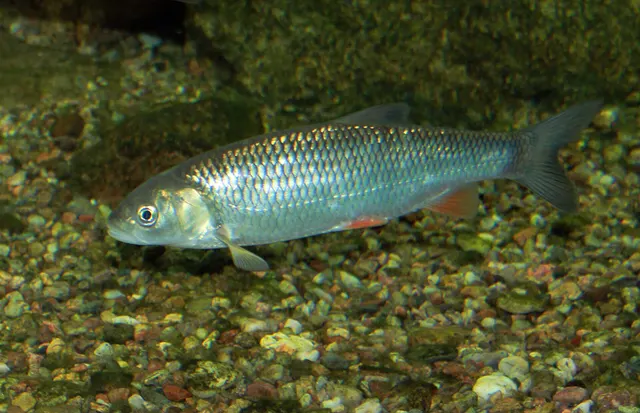 ChubBoth are large river cyprinids fished on the same water with much the same tackle, and they behave completely differently: barbel hold on the bed in the main flow, chub hold under cover and will take off the surface.
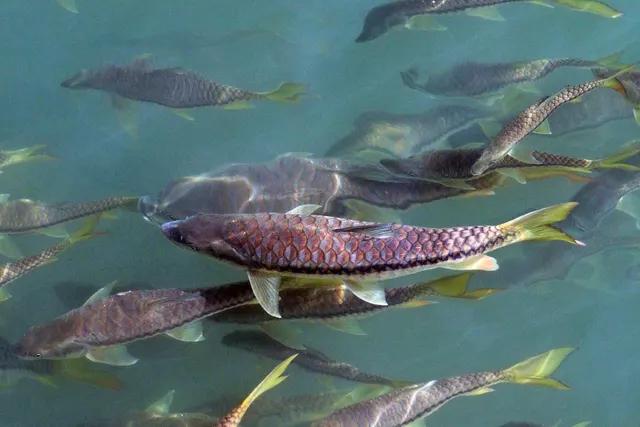 Golden mahseerBoth are large river cyprinids with barbels and inferior mouths, feeding on and near the bed in current — the mahseer being what that design becomes when it has a Himalayan river and no upper size limit.
- GudgeonA gudgeon is regularly assumed to be a small barbel, and the barbel count settles it: a gudgeon has two barbels at the corners of the mouth, a barbel has four. Gudgeon also carry a row of dark blotches along the flank that a barbel never has, and they do not grow past a size a barbel passes in its first years.
Sources and evidence
- Freshwater Fishes of the British Isles — HarperCollins (New Naturalist 75), 1992 (Reference work)Relied on for: Identification, gravel spawning requirements and British distribution.States this directlyCitation checked — the work exists and is described correctly
- FishBase: a global information system on fishes — Froese, R. and D. Pauly, eds. — FishBase Consortium (Scientific institute)Relied on for: Taxonomy, family and size range.States this directlyPassage read and verified
- Understanding the Complexity of Catch-and-Release in Recreational Fishing — Reviews in Fisheries Science 15:75–167, 2007 (Scientific literature)Relied on for: That post-release mortality rises sharply with exhaustion, warm water and air exposure — the mechanism behind the barbel recovery protocol.FishingHQ's interpretation of what it saysCitation checked — the work exists and is described correctly
- The IUCN Red List of Threatened Species — International Union for Conservation of Nature (Conservation authority)Relied on for: The global conservation assessment. Re-checked via FishBase's republication of the current category, because the Red List's own pages could not be read.States this directlyCitation checked — the work exists and is described correctly
Why the 23 connections on this page are here, and the sources
How it is caught
What experienced anglers do — 3 connections
Widely and independently recommended by experienced anglers and specialist sources. This is real angling knowledge, not proof: controlled evidence for it is limited, and FishingHQ records it as convention rather than as a demonstrated effect.
Trotting
That a species is conventionally fished for by this method, drawn from angling literature and from widely restated practitioner description rather than from testing.
- Coarse Fishing — A. & C. Black, 1912 (Specialist angling publication)Relied on for: Classical British coarse angling practice: river float work, shotting, bait delivery and the reels and rods used for each.States this directlyCitation checked — the work exists and is described correctly
- Freshwater Fishing — Macdonald & Jane's, 1975 (Specialist angling publication)Relied on for: Comprehensive British freshwater angling practice including river float fishing, surface presentation and the equipment for each.States this directlyCitation checked — the work exists and is described correctly
Feeder fishing
Established river practice, independently described.
- Freshwater Fishing — Macdonald & Jane's, 1975 (Specialist angling publication)Relied on for: Feeder and leger practice for barbel.Citation checked — the work exists and is described correctly
- Angling Times — Bauer Media (Specialist angling publication)Relied on for: Contemporary barbel feeder practice.Citation checked — the work exists and is described correctly
Ledgering
Established river practice, independently described.
- Freshwater Fishing — Macdonald & Jane's, 1975 (Specialist angling publication)Relied on for: Leger practice for barbel in flowing water.Citation checked — the work exists and is described correctly
- Angling Times — Bauer Media (Specialist angling publication)Relied on for: Contemporary barbel practice.Citation checked — the work exists and is described correctly
Gear for this fish
What experienced anglers do — 5 connections
Widely and independently recommended by experienced anglers and specialist sources. This is real angling knowledge, not proof: controlled evidence for it is limited, and FishingHQ records it as convention rather than as a demonstrated effect.
Luncheon meat
Long-established and independently described.
- Freshwater Fishing — Macdonald & Jane's, 1975 (Specialist angling publication)Relied on for: Meat baits for barbel and chub in rivers.Citation checked — the work exists and is described correctly
- Angling Times — Bauer Media (Specialist angling publication)Relied on for: Contemporary meat bait practice for barbel.Citation checked — the work exists and is described correctly
Established angling convention about what a bait is used for. Convention is what this is, and labelling it as convention is what stops it being read as a tested result.
- Coarse Fishing — A. & C. Black, 1912 (Specialist angling publication)Relied on for: Classical coarse angling practice: baits, presentation, swim selection and the reasoning behind them.States this directlyCitation checked — the work exists and is described correctly
- Angling Times — Bauer Media (Specialist angling publication)Relied on for: Contemporary UK coarse and match angling practice as reported by practitioners, including bait convention and rig use.Background and mechanism onlyCitation checked — the work exists and is described correctly
Hair rig
Which species a terminal arrangement is directed at is established practitioner knowledge, converging across independent angling traditions and literatures, and is labelled as consensus rather than as tested result.
- Carp Fever — Beekay Publishers, 1981 (Specialist angling publication)Relied on for: Carp angling practice including bolt and hair rigs, bait presentation off the hook, and the reasoning that produced them.States this directlyCitation checked — the work exists and is described correctly
- Angling Times — Bauer Media (Specialist angling publication)Relied on for: Contemporary UK carp and coarse angling practice as reported by practitioners, including rig convention.States this directlyCitation checked — the work exists and is described correctly
Particle baits
A practitioner claim recorded as such precisely because the mechanism is unexplained.
- Coarse Fishing — A. & C. Black, 1912 (Specialist angling publication)Relied on for: Early practitioner treatment of hempseed and its effect on barbel and roach.Citation checked — the work exists and is described correctly
- Angling Times — Bauer Media (Specialist angling publication)Relied on for: Contemporary practitioner treatment of hemp as a river bait.Citation checked — the work exists and is described correctly
Running leger
Which species a terminal arrangement is directed at is established practitioner knowledge, converging across independent angling traditions and literatures, and is labelled as consensus rather than as tested result.
- Coarse Fishing — A. & C. Black, 1912 (Specialist angling publication)Relied on for: Classical coarse angling practice: terminal arrangements, shotting, bite registration and the species each is directed at.States this directlyCitation checked — the work exists and is described correctly
- Angling Times — Bauer Media (Specialist angling publication)Relied on for: Contemporary UK coarse and match angling practice as reported by practitioners, including which rigs are directed at which species.States this directlyCitation checked — the work exists and is described correctly
Lobworms and worms
Established river practice, independently described.
- Freshwater Fishing — Macdonald & Jane's, 1975 (Specialist angling publication)Relied on for: Worm baits for barbel and chub in rivers.Citation checked — the work exists and is described correctly
- Angling Times — Bauer Media (Specialist angling publication)Relied on for: Contemporary worm practice for barbel.Citation checked — the work exists and is described correctly
Where it lives
Backed by research — 1 connection
Supported by peer-reviewed research or fisheries science. The sources are listed and can be checked.
Lowland rivers
Habitat requirement is documented and follows from the species' morphology.
- FishBase: a global information system on fishes — Froese, R. and D. Pauly, eds. — FishBase Consortium (Scientific institute)Relied on for: Habitat requirements for Barbus barbus.States this directlyPassage read and verified
- Freshwater Fishes of the British Isles — HarperCollins (New Naturalist 75), 1992 (Reference work)Relied on for: Barbel habitat association and gravel spawning requirements in British rivers.FishingHQ's interpretation of what it saysCitation checked — the work exists and is described correctly
Where you will find it
Backed by research — 7 connections
Supported by peer-reviewed research or fisheries science. The sources are listed and can be checked.
Moroccan mountain and reservoir fresh water
A distribution claim about the world, so it rests on the reference datasets rather than on angling report. FishingHQ's evidence policy requires it.
- FishBase: a global information system on fishes — Froese, R. and D. Pauly, eds. — FishBase Consortium (Scientific institute)Relied on for: Distribution, habitat association and depth range recorded for the species, including its occurrence in the water body concerned.States this directlyPassage read and verified
- FAO Species Identification Guides for Fishery Purposes and the FAO Species Catalogues — Food and Agriculture Organization of the United Nations (Scientific institute)Relied on for: Distribution, habitat, depth and fishery accounts for the species of the eastern central Atlantic and Mediterranean.States this directlyCitation checked — the work exists and is described correctly
The Danube
A distributional claim taken from reference works and databases on the fishes of the region rather than from angling report. It states presence and asserts nothing about a fishery.
- FishBase: a global information system on fishes — Froese, R. and D. Pauly, eds. — FishBase Consortium (Scientific institute)Relied on for: Distribution, habitat association, life history and size recorded for the species concerned.States this directlyPassage read and verified
- Freshwater Fishes of the British Isles — HarperCollins (New Naturalist 75), 1992 (Reference work)Relied on for: Biology, distribution, life history and conservation status of northern European freshwater and diadromous fishes.States this directlyCitation checked — the work exists and is described correctly
The Danube basin
A distribution association between an animal and a kind of water, rather than a claim about any named mark.
- Freshwater Fishes of the British Isles — HarperCollins (New Naturalist 75), 1992 (Reference work)Relied on for: Distribution and habitat association of European freshwater fishes, including occurrence in the river system concerned.States this directlyCitation checked — the work exists and is described correctly
- FishBase: a global information system on fishes — Froese, R. and D. Pauly, eds. — FishBase Consortium (Scientific institute)Relied on for: Distribution and habitat association recorded for the species.States this directlyPassage read and verified
The Rhine
A claim that a place contains the ground, water and seasonal conditions the species is associated with. It is a distributional statement about the world, it rests on the regional reference literature, and it deliberately asserts nothing about access, permission or catch.
- Freshwater Fishes of the British Isles — HarperCollins (New Naturalist 75), 1992 (Reference work)Relied on for: Distribution, ecology and conservation status of European freshwater and migratory fishes, including in modified and artificial waters.States this directlyCitation checked — the work exists and is described correctly
- FishBase: a global information system on fishes — Froese, R. and D. Pauly, eds. — FishBase Consortium (Scientific institute)Relied on for: Recorded distribution, habitat association and life history for the freshwater and migratory species named.States this directlyPassage read and verified
The River Thames
A distributional claim taken from reference works on the fishes of the region rather than from angling report. It states presence and asserts nothing about a fishery.
- FishBase: a global information system on fishes — Froese, R. and D. Pauly, eds. — FishBase Consortium (Scientific institute)Relied on for: Distribution, habitat association, life history and depth range recorded for the species concerned.States this directlyPassage read and verified
- Freshwater Fishes of the British Isles — HarperCollins (New Naturalist 75), 1992 (Reference work)Relied on for: Biology, distribution and conservation status of British and Irish freshwater and diadromous fishes.States this directlyCitation checked — the work exists and is described correctly
- The Fishes of the British Isles and North-West Europe — Macmillan, 1969 (Reference work)Relied on for: Distribution, habitat and biology of the fishes of the British Isles and north-west Europe.States this directlyCitation checked — the work exists and is described correctly
The River Trent
A claim that a place contains the ground, water and seasonal conditions the species is associated with. It is a distributional statement about the world, it rests on the regional reference literature, and it deliberately asserts nothing about access, permission or catch.
- Freshwater Fishes of the British Isles — HarperCollins (New Naturalist 75), 1992 (Reference work)Relied on for: Distribution, habitat and conservation status of British freshwater fishes, including the isolated glacial-relict populations of northern England.States this directlyCitation checked — the work exists and is described correctly
- Environment Agency fisheries management, byelaws and rod licensing information — Environment Agency (Government fisheries body)Relied on for: Fisheries monitoring, water quality and species distribution in English rivers and still waters.States this directlyCitation checked — the work exists and is described correctly
The River Wye
A distributional claim taken from reference works on the fishes of the region rather than from angling report. It states presence and asserts nothing about a fishery.
- FishBase: a global information system on fishes — Froese, R. and D. Pauly, eds. — FishBase Consortium (Scientific institute)Relied on for: Distribution, habitat association, life history and depth range recorded for the species concerned.States this directlyPassage read and verified
- Freshwater Fishes of the British Isles — HarperCollins (New Naturalist 75), 1992 (Reference work)Relied on for: Biology, distribution and conservation status of British and Irish freshwater and diadromous fishes.States this directlyCitation checked — the work exists and is described correctly
- The Fishes of the British Isles and North-West Europe — Macmillan, 1969 (Reference work)Relied on for: Distribution, habitat and biology of the fishes of the British Isles and north-west Europe.States this directlyCitation checked — the work exists and is described correctly
Understanding this fish
Backed by research — 3 connections
Supported by peer-reviewed research or fisheries science. The sources are listed and can be checked.
Aquatic insect larvae as prey
Recorded diet evidence identifies aquatic insect larvae as a food item of this predator at group level rather than to species. The edge points at the taxon record for that reason, and encoding it as a species-level claim would assert something the source does not.
- FishBase: a global information system on fishes — Froese, R. and D. Pauly, eds. — FishBase Consortium (Scientific institute)Relied on for: Food items recorded for this predator, given as aquatic insect larvae.States this directlyPassage read and verified
- FAO Species Identification Guides for Fishery Purposes and the FAO Species Catalogues — Food and Agriculture Organization of the United Nations (Scientific institute)Relied on for: Species account describing this predator's diet, recorded at the level of aquatic insect larvae.Background and mechanism onlyCitation checked — the work exists and is described correctly
Bivalve and gastropod molluscs as prey
Recorded diet evidence identifies gastropod and bivalve molluscs as a food item of this predator at group level rather than to species. The edge points at the taxon record for that reason, and encoding it as a species-level claim would assert something the source does not.
- FishBase: a global information system on fishes — Froese, R. and D. Pauly, eds. — FishBase Consortium (Scientific institute)Relied on for: Food items recorded for this predator, given as gastropod and bivalve molluscs.States this directlyPassage read and verified
- FAO Species Identification Guides for Fishery Purposes and the FAO Species Catalogues — Food and Agriculture Organization of the United Nations (Scientific institute)Relied on for: Species account describing this predator's diet, recorded at the level of gastropod and bivalve molluscs.Background and mechanism onlyCitation checked — the work exists and is described correctly
What actually happens to a released fish
Post-release mortality mechanisms are documented in the catch-and-release literature.
- Understanding the Complexity of Catch-and-Release in Recreational Fishing — Reviews in Fisheries Science 15:75–167, 2007 (Scientific literature)Relied on for: That exhaustion, warm water and air exposure predict post-release mortality.States this directlyCitation checked — the work exists and is described correctly
Told apart from
What experienced anglers do — 1 connection
Widely and independently recommended by experienced anglers and specialist sources. This is real angling knowledge, not proof: controlled evidence for it is limited, and FishingHQ records it as convention rather than as a demonstrated effect.
Chub
Two species a river angler is genuinely choosing between on the day.
- Coarse Fishing — A. & C. Black, 1912 (Specialist angling publication)Relied on for: The distinct habits of chub and barbel on the same rivers.Citation checked — the work exists and is described correctly
- Freshwater Fishing — Macdonald & Jane's, 1975 (Specialist angling publication)Relied on for: Comparative treatment of river cyprinid species and approach.Citation checked — the work exists and is described correctly
Backed by research — 2 connections
Supported by peer-reviewed research or fisheries science. The sources are listed and can be checked.
Golden mahseer
A comparison resting on shared family and shared feeding morphology, naming both binomials.
- FishBase: a global information system on fishes — Froese, R. and D. Pauly, eds. — FishBase Consortium (Scientific institute)Relied on for: That Tor putitora is a Cyprinidae of streams, riverine pools and lakes with an omnivorous diet including plant matter and invertebrates.States this directlyPassage read and verified
- Freshwater Fishes of the British Isles — HarperCollins (New Naturalist 75), 1992 (Reference work)Relied on for: The morphology and bottom-oriented feeding of Barbus barbus in European rivers, including its barbels and inferior mouth.States this directlyCitation checked — the work exists and is described correctly
Gudgeon
An identification link between two species readers genuinely mistake for one another, resting on published identification keys rather than on angling lore. It names the character that separates them, which is what makes it useful rather than merely adjacent.
- Freshwater Fishes of the British Isles — HarperCollins (New Naturalist 75), 1992 (Reference work)Relied on for: Identification, distinguishing features and confusable species among the freshwater fishes of the British Isles, together with their distribution and habitat.States this directlyCitation checked — the work exists and is described correctly
- The Fishes of the British Isles and North-West Europe — Macmillan, 1969 (Reference work)Relied on for: Morphological identification features and identification keys for the fishes of the British Isles and north-west Europe, including the characters separating confusable species.States this directlyCitation checked — the work exists and is described correctly
Safety reading
Official guidance — 1 connection
Stated by a fisheries authority, scientific institute or recognised angling body. Authoritative, but summarising rather than demonstrating.
Wading safely
Water safety guidance for inland water users.
- RNLI water safety guidance: cold water shock and Float to Live — Royal National Lifeboat Institution (Water-safety or diver-training authority)Relied on for: Guidance on the risks of moving water for inland water users.FishingHQ's interpretation of what it saysPassage read and verified
How FishingHQ labels evidence is explained in the evidence policy.