Luncheon meat
Bait · Last reviewed 2026-08-10
Tinned processed pork: dense, oily, cheap, and one of the most effective baits for barbel, chub and carp.
- How long it keeps
- Indefinite unopened; two to three days refrigerated once opened; months frozen. Meat that has been left warm and become slimy should be discarded.
Luncheon meat is a bait that has no business working as well as it does, and it works extremely well. It is dense enough to cast without a feeder, oily enough to leave a scent trail, soft enough to be taken confidently, and tough enough to survive small fish for a reasonable time.
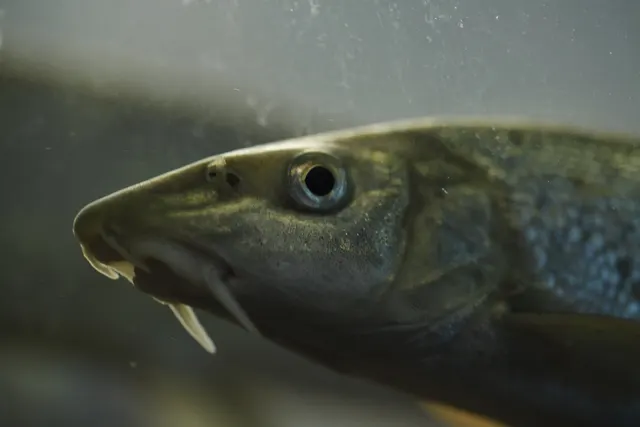
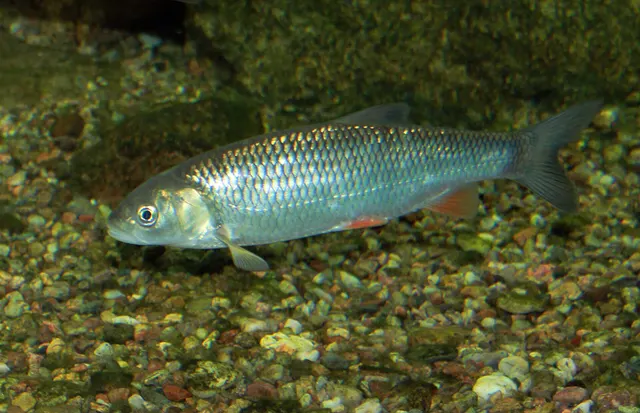
It is particularly associated with barbel and chub in rivers, where a cube of meat rolled down a gravel run has been a standard approach for decades. It also catches carp, tench and bream readily.
Its drawbacks are practical rather than fundamental: it is greasy, it softens in warm weather to the point where it will not stay on a hook, and it is banned at some fisheries — usually on the grounds of the fat content and the litter that tins generate.
What it is
A dense, uniform, pink processed meat block, cut into cubes typically 10–20 mm. Dense enough to sink quickly and to cast a reasonable distance without added weight, soft enough to be taken without suspicion, and greasy enough to release an oil trail. It firms up considerably if chilled and softens badly in heat.
Fish it catches
Finding and obtaining it
Any supermarket. Cheaper own-brand tins are generally firmer and hold on the hook better than premium ones, which tend to be softer and fattier — one of the few cases where the cheapest option is also the better bait.
Keeping and storing it
Unopened tins keep indefinitely. Once opened, keep chilled and use within a couple of days. Cubed meat freezes well and is much easier to handle after partial thawing, when it is firm.
Preparing it
Cut into cubes with a clean knife or a purpose-made cutter. Chilling or part-freezing the block before cutting gives much cleaner cubes and firmer bait. Some anglers flavour or colour it, and some fry or grill the outside to form a skin that resists small fish — a genuinely useful modification rather than a superstition, since it directly addresses the bait's main weakness.
Using it
Hook a cube directly, passing the hook right through and burying it or leaving the point proud. On a hair rig with a bait band or a stop, meat behaves like any other hookbait and stays on far better. In flowing water, a cube rolled downstream on a light leger is the classic barbel and chub presentation.
Disposing of what is left
Meat is a high-fat, high-protein item and dumping the surplus into a swim is both a water quality issue and a rule breach at many fisheries. Take it home. Dispose of tins properly — discarded bait tins are a persistent litter problem at popular swims and their edges are genuinely dangerous to wildlife and to people.
Biosecurity
Processed meat carries no fish disease risk. The containers and any water carried in them do, and the same rinse-and-dry discipline applies as for every other bait. Tins and their lids are a litter and injury hazard on the bank rather than a biosecurity one, and they should leave with you rather than being left in a bin that overflows.
Check the rules before you fish
Fishing laws, bylaws, access rules, seasons, bait restrictions and permitted methods vary by location and can change. Check the current rules from the relevant authority and the water you intend to fish before fishing.
Check with:
- Current national or regional law for where you are fishing
- Current local bylaws
- The relevant fisheries authority
- The landowner, club or fishery whose water it is
- Any restrictions specific to the species or the method you intend to use
Where to go next
How it is fished
More baits
Not related to this page — just the rest of the section. There is little else joined to this subject yet, and a short page should still lead somewhere.
Sources and evidence
Why the 4 connections on this page are here, and the sources
Fish it catches
What experienced anglers do — 2 connections
Widely and independently recommended by experienced anglers and specialist sources. This is real angling knowledge, not proof: controlled evidence for it is limited, and FishingHQ records it as convention rather than as a demonstrated effect.
Barbel
Long-established and independently described.
- Freshwater Fishing — Macdonald & Jane's, 1975 (Specialist angling publication)Relied on for: Meat baits for barbel and chub in rivers.Citation checked — the work exists and is described correctly
- Angling Times — Bauer Media (Specialist angling publication)Relied on for: Contemporary meat bait practice for barbel.Citation checked — the work exists and is described correctly
Established angling convention about what a bait is used for. Convention is what this is, and labelling it as convention is what stops it being read as a tested result.
- Coarse Fishing — A. & C. Black, 1912 (Specialist angling publication)Relied on for: Classical coarse angling practice: baits, presentation, swim selection and the reasoning behind them.States this directlyCitation checked — the work exists and is described correctly
- Angling Times — Bauer Media (Specialist angling publication)Relied on for: Contemporary UK coarse and match angling practice as reported by practitioners, including bait convention and rig use.Background and mechanism onlyCitation checked — the work exists and is described correctly
Chub
Established angling convention about what a bait is used for. Convention is what this is, and labelling it as convention is what stops it being read as a tested result.
- Coarse Fishing — A. & C. Black, 1912 (Specialist angling publication)Relied on for: Classical coarse angling practice: baits, presentation, swim selection and the reasoning behind them.States this directlyCitation checked — the work exists and is described correctly
- Angling Times — Bauer Media (Specialist angling publication)Relied on for: Contemporary UK coarse and match angling practice as reported by practitioners, including bait convention and rig use.Background and mechanism onlyCitation checked — the work exists and is described correctly
How it is fished
What experienced anglers do — 2 connections
Widely and independently recommended by experienced anglers and specialist sources. This is real angling knowledge, not proof: controlled evidence for it is limited, and FishingHQ records it as convention rather than as a demonstrated effect.
Ledgering
Meat's density is the property a ledger exploits: a cube holds station in flowing water on less lead than a lighter bait would need, and the rolling-meat presentation is a ledger with the lead reduced until the bait moves.
- Coarse Fishing — A. & C. Black, 1912 (Specialist angling publication)Relied on for: Specialist treatment of which bait or lure family this technique is fished with.States this directlyCitation checked — the work exists and is described correctly
- Angling Times — Bauer Media (Specialist angling publication)Relied on for: The independently restated practitioner pairing of this technique with this family.Background and mechanism onlyCitation checked — the work exists and is described correctly
Trotting
The meat page names rolling a cube downstream on light terminal tackle as the classic barbel and chub presentation. Trotted under a float is the same drift with the depth controlled, and is how the bait is fished where the bottom is snaggy.
- Coarse Fishing — A. & C. Black, 1912 (Specialist angling publication)Relied on for: Specialist treatment of which bait or lure family this technique is fished with.States this directlyCitation checked — the work exists and is described correctly
- Angling Times — Bauer Media (Specialist angling publication)Relied on for: The independently restated practitioner pairing of this technique with this family.Background and mechanism onlyCitation checked — the work exists and is described correctly
How FishingHQ labels evidence is explained in the evidence policy.