Chub
Fish · Last reviewed 2026-08-10
A bold, omnivorous river fish that eats almost anything and grows large enough to be a predator — and the species most likely to be caught on a bait nobody expected to work.
Safety: standing precautions apply on this water.
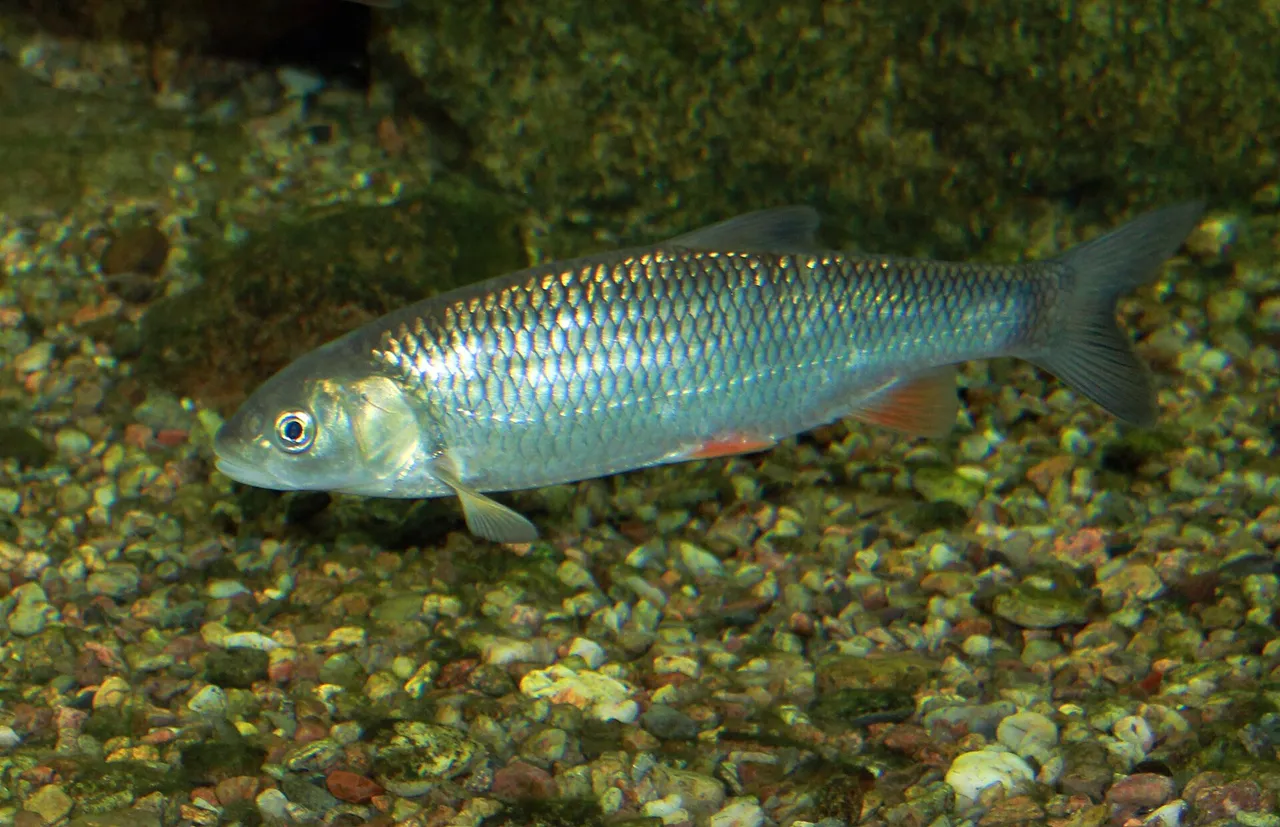
How this was identified, and who took it
Identified by: Blunt broad head with a large mouth, large scales with dark edging producing a net pattern, and a convex anal fin — the last being the standard separation from dace, whose anal fin is concave.Karelj, Public domain, via Wikimedia Commons — source, licence
Catching Chub
Everything here on fishing for it. Each entry opens the page behind it.
- Ground
- Where
- 7 places FishingHQ documents — strongest claim anywhere: characteristic of this water · From the shore
Chub have a reputation for eating anything, and it is deserved. FishBase records them feeding on a wide variety of aquatic and terrestrial animals and plant material, with large individuals preying predominantly on fish. Over a season a chub population will take insects, snails, crayfish, berries, bread, cheese, slugs blown off the bank, and each other's young.
That omnivory is what makes them such a good species to learn river fishing on. A chub will take a bait presented reasonably in the right place, which means the feedback loop is about location and approach rather than about bait selection — and location and approach are the things worth learning.
What they are not is unwary. Chub in clear low water are among the spookiest fish in a British river: they will hold under a bush and refuse everything for an hour, and a single careless movement on the bank empties the swim. The species rewards a stalking approach more than almost any other coarse fish, which is why so much chub fishing is done kneeling.
How it is caught
- Float fishingTrotting a float down a run covers the length of a swim and presents a bait moving at the pace of the current, which is how a chub expects its food to arrive.
- LedgeringThe standard winter approach: a chub in cold water holds deep under cover and will not move far, so the bait goes to the fish rather than the fish coming to the bait.
- SpinningChub take small lures readily, and spinning is how a river's chub lies are covered quickly on a walk rather than one swim at a time.
- Surface fishing for coarse fishA river fish that takes floating bread and terrestrial insects readily, frequently at ranges of a few metres under overhanging cover.
- TrottingHolds in and beside the current under structure and takes a trotted bait confidently, which makes it the species a beginner most often catches first on a river.
Gear for this fish
- HooksChub have hard mouths and are frequently fished with large baits in current, which pushes hook choice towards a strong wide-gape pattern rather than a fine-wire one.
- Luncheon meatWidely used for chub for the same reasons it suits barbel, and often fished on the bottom in the same swims.
- Running legerA chub in flowing water takes a static bait cautiously and drops it the moment it feels resistance, which is the situation a running arrangement exists for.
- SpinnersA small spinner fished downstream past a known lie takes chub because they hold facing flow and intercept, and it is the traditional method of covering a river's chub in a single walk.
- Stick float rigTrotted baits down a chub swim are one of the standard river approaches, and the float allows the bait to be presented far down a swim the angler could not otherwise reach without disturbing it.
- Surface controller rigChub take floating baits confidently and are frequently fished for with a controller on rivers, where the float also carries the bait downstream to fish that cannot be approached.
- Surface luresChub feed opportunistically at the surface on anything that falls in — fruit, beetles, small mammals — and will take a small surface lure worked under overhanging cover for exactly that reason. It is a stalking fishery rather than a searching one.
Where Chub is documented
Places where public sources describe this species as fished, with how it is fished and how strongly the evidence supports it. This is not a range map and it is not a recommendation — it is what has been written down about a fishery rather than a record of any individual catch, and being listed is never permission to fish.
The River Trent
2 documented places
River reach
Regular local target
From the shore
Gunthorpe weir pool, River Trent
Weir pool
Regular local target
From the shore
England and Wales
2 documented places
River reach
Regular local target
From the shore
River reach
Regular local target
From the shore
The River Thames
2 documented places
River reach
Regular local target
From the shore
River reach
Regular local target
From the shore
What these strengths mean
- Regular local target
- Fishing sources describe this as a normal local target here, not merely as caught.
- Characteristic of this water
- This water is strongly identified with this species by the sources that cover it.
Identification
- Scientific name
- Squalius cephalus
- Family
- Leuciscidae
- Water
- Freshwater, Brackish
- Conservation status
- Least Concern
- Regions
- Britain & Ireland, Western Europe, Central & Eastern Europe, Northern Europe
- Blunt, rounded head with a notably large mouth for a silver-flanked river fish — the origin of 'loggerhead'.
- Large scales with dark edges, giving a distinct net-like pattern over a bronze-silver flank.
- Dorsal and anal fins with CONVEX, rounded outer edges — the anal fin's shape separates chub from dace, whose anal fin is concave.
- Orange-red pelvic and anal fins, and a dark-edged tail.
- Larger and heavier-headed than dace, with which small chub are routinely confused.
Size
- Typical
- 25–40 cm and 0.5–1.5 kg.
- Large
- Over 50 cm and 2.5 kg.
Exceptional: FishBase records a maximum of 60 cm SL and 8 kg, the latter well beyond anything ordinarily encountered in British rivers.
The most reliable winter fish in a British river, and why the diet explains it
Chub are the species most likely to save a river session in February, and the reason is dietary breadth rather than cold tolerance in any special sense.
A CHUB WILL EAT ALMOST ANYTHING. Invertebrates, crustaceans, molluscs, small fish, plant material, fruit falling from bankside trees, and anything that lands on the water. That breadth is the whole explanation for the seasonal pattern: a specialist feeder has periods when its food is unavailable, and a generalist does not. In cold, high, coloured winter water — when insect activity has collapsed and most species have slowed — there is still something a chub can find, and it is still worth its while to go and find it.
HIGH WATER CONCENTRATES THEM RATHER THAN DISPERSING THEM, which is the single most useful thing to know about winter chub. A river in flood is not uniformly fast; it has slacks, eddies, the inside of bends, and the dead water behind any solid obstruction. Chub move into those and hold there, because holding station in the main flow costs energy that the food available does not repay. So a flooded river reduces the amount of water worth fishing to a small number of identifiable places, and it puts fish into them.
SUMMER IS A DIFFERENT AND HARDER FISHERY. In low, clear water the same dietary opportunism expresses itself at the surface — chub take terrestrial insects, and anything else that falls in, from under overhanging cover — and the fish become extremely wary. Summer chub are hunted individually, by sight, with a careful approach, and they are famously willing to be put down by a shadow. It is stalking rather than searching.
WHICH GIVES THE SPECIES AN UNUSUAL PROPERTY: the winter fishing is easier than the summer fishing, and both are good. That is close to unique among British river fish and it is why chub carry the reputation they do.
What experienced anglers do — why, and the sources (2)
Widely and independently recommended by experienced anglers and specialist sources. This is real angling knowledge, not proof: controlled evidence for it is limited, and FishingHQ records it as convention rather than as a demonstrated effect.
- Coarse Fishing — A. & C. Black, 1912 (Specialist angling publication)Relied on for: Seasonal patterns in British coarse angling and the conditions that drive them.States this directlyCitation checked — the work exists and is described correctly
- Freshwater Fishes of the British Isles — HarperCollins (New Naturalist 75), 1992 (Reference work)Relied on for: Seasonal behaviour and temperature response of British freshwater fishes.States this directlyCitation checked — the work exists and is described correctly
A fish that keeps growing slowly for a very long time
Chub size is best understood through longevity rather than through growth rate, because the growth rate is unremarkable and the lifespan is not.
CHUB GROW SLOWLY AND STEADILY AND LIVE A LONG TIME. A chub does not put on weight quickly at any stage; it simply keeps adding a little each year for far longer than most river cyprinids manage, and a large chub is therefore an old chub — commonly well into its teens, sometimes beyond. That is the mechanism behind the size structure of any chub population: plenty of small fish, a reasonable number of middling ones, and a thin tail of large individuals that took fifteen years to get there.
THE DIET EXPLAINS WHY THEY GET THERE AT ALL. Chub are the most catholic feeders in a British river — invertebrates, crayfish, fruit, small fish, almost anything organic — and that breadth means a chub is rarely limited by food in the way a specialist is. What limits it is temperature-driven season length and, in cold years, simply the number of days on which it can feed profitably.
SO THE RIVER MATTERS LESS THAN IT DOES FOR BARBEL, AND CONSISTENCY MATTERS MORE. Chub of respectable size turn up in small streams as well as large rivers, which is unusual and is why the species is such a good target on waters too small for anything else. A four-pound chub from a stream you can jump across is a genuinely large fish and is not rare.
THE RECORD FIGURE NEEDS THE USUAL CAUTION AND ONE EXTRA. The FishBase maximum for this species is far above anything encountered in British rivers and reflects continental populations in large productive systems. Reading it as a British expectation would be a mistake of a factor of several. Beyond that, large 'chub' claims are occasionally chub × dace or chub × roach hybrids; the convex anal fin and the white-edged fins settle it, and the weight does not.
AND THE PRACTICAL LANDMARK IS THE ONE ANGLERS ACTUALLY USE. On most British rivers a chub over the 'large' threshold on this page is a fish worth remembering, a five-pounder is a specimen, and anything beyond that is a fish of a lifetime on the great majority of waters. Anchoring on the maximum instead makes every good fish look ordinary.
Backed by research — why, and the sources (2)
Supported by peer-reviewed research or fisheries science. The sources are listed and can be checked.
- Freshwater Fishes of the British Isles — HarperCollins (New Naturalist 75), 1992 (Reference work)Relied on for: Growth, age structure, maximum sizes and regional variation in British and European freshwater fishes.States this directlyCitation checked — the work exists and is described correctly
- FishBase: a global information system on fishes — Froese, R. and D. Pauly, eds. — FishBase Consortium (Scientific institute)Relied on for: Maximum recorded length and weight and reported longevity for the species.Background and mechanism onlyPassage read and verified
Stalking single fish, and why chub fishing is a mobile discipline
Chub fishing is unlike almost anything else in British coarse angling because the productive approach is to move, look, and cast to a fish you have already seen.
THE FISH ARE VISIBLE AND THEY ARE EVERYWHERE. Chub hold under cover — overhanging trees, rafts of debris, undercut banks, bridge shadow — in water shallow enough to see into, and a slow walk up a river with polarised glasses locates them. That is a fundamentally different activity from sitting behind rods, and it produces far more fish.
WHICH MAKES CONCEALMENT THE PRIMARY SKILL. Chub are extremely wary of movement and shadow and will vacate a swim for twenty minutes over a careless approach. Working from downstream, keeping low and off the skyline, and casting from further back than feels necessary are what make the difference.
FREELINING AND LIGHT LEDGERING SUIT THE STALK, because a bait allowed to fall naturally in front of a fish under a tree looks like what the tree has just dropped. A large bait on a bare hook, lowered rather than cast, is the classic summer approach and remains one of the most effective.
TROTTING A FLOAT COVERS WATER IN WINTER, when fish are less visible and holding in deeper steadier glides. A bait presented at the speed of the current down a run reaches fish that will not be seen, and it is the method the record's season section implies — chub feed reliably in cold water when much else has stopped.
LEDGERING AND FEEDER FISHING WORK IN HIGH COLOURED WATER where sight fishing is impossible and scent has to do the work.
LURE FISHING IS GENUINELY EFFECTIVE AND STILL UNDERUSED. Chub are opportunistic predators and take small lures, flies and surface baits readily, and a small crankbait or a fly worked past a raft will take fish that ignore bait.
AND THE DIET IS THE PERMISSION TO EXPERIMENT. Chub eat almost anything organic, which is why the method matters far more than the bait, and why a bad presentation of a good bait catches nothing while a good presentation of an unlikely one works.
What experienced anglers do — why, and the sources (2)
Widely and independently recommended by experienced anglers and specialist sources. This is real angling knowledge, not proof: controlled evidence for it is limited, and FishingHQ records it as convention rather than as a demonstrated effect.
- Coarse Fishing — A. & C. Black, 1912 (Specialist angling publication)Relied on for: Established coarse angling practice, including method, presentation and the reasoning behind them.States this directlyCitation checked — the work exists and is described correctly
- Freshwater Fishing — Macdonald & Jane's, 1975 (Specialist angling publication)Relied on for: Freshwater angling technique and the principles behind method selection.States this directlyCitation checked — the work exists and is described correctly
Under something, in almost any river: the most adaptable predator a British river holds
Chub habitat is best described by what they need rather than by where they are found, because they are found nearly everywhere.
THE REQUIREMENT IS OVERHEAD COVER BESIDE MOVING WATER. Chub hold under overhanging trees, in the shade of rafts of accumulated debris, beneath undercut banks, against bridge footings, among streamer weed and beside any structure that breaks the surface view. What they want is somewhere to be unseen with food passing close by, and they will use almost anything that provides it.
WHICH MAKES THEM A FISH OF SMALL WATERS AS WELL AS LARGE ONES. A chub will occupy a stream you can jump across as readily as a major river, and the record's size section explains why that matters — a good chub from a tiny stream is a genuinely large fish. Very few British species span that range of water size.
FLOW PREFERENCE IS MODERATE RATHER THAN SPECIFIC. Chub want steady flow rather than fast water or slack, and in a river they occupy the glides, the creases beside faster water, and the slower water below obstructions. In high water they move to the margins and into slacks; in low clear water they lie under cover in the shallows.
THE DIET IS WHY THE HABITAT IS SO BROAD. Chub eat invertebrates, crayfish, fruit, vegetation, small fish and effectively anything organic that enters the river, which means almost no water is unproductive for them. A tree overhanging a river is both cover and a food supply.
WINTER MOVES THEM DEEPER AND SLOWER. As water cools chub shoal more and hold in the deeper steadier reaches, which is why the record's season section describes them as the most reliable winter fish in a British river.
AND THEY TOLERATE ENRICHMENT AND MODERATE POLLUTION BETTER THAN MOST, which is why chub persist in rivers that have lost more sensitive species — and why their presence alone is a weak indicator of river health, unlike barbel or grayling.
Backed by research — why, and the sources (2)
Supported by peer-reviewed research or fisheries science. The sources are listed and can be checked.
- Freshwater Fishes of the British Isles — HarperCollins (New Naturalist 75), 1992 (Reference work)Relied on for: Habitat association, spawning behaviour, seasonal activity and ecology of freshwater fishes, including position within a water body.States this directlyCitation checked — the work exists and is described correctly
- FishBase: a global information system on fishes — Froese, R. and D. Pauly, eds. — FishBase Consortium (Scientific institute)Relied on for: Habitat association, spawning season, temperature tolerance and water-type tolerance recorded for the species.States this directlyPassage read and verified
Tackle for chub, and why the constraint is the swim rather than the fish
A chub is not a hard fish to hold. It is a hard fish to hook, and then a hard fish to keep out of the place it immediately runs to — and both of those set the tackle rather than the fish's size does.
THE MOUTH IS LARGE, HARD AND RUBBERY. A chub takes a substantial bait comfortably and a small fine-wire hook frequently fails to find purchase in the tough tissue at the corner of it. The conventional answer is a strong, wide-gape pattern in a size matched to the bait rather than to the fish, set with a firm sweep rather than a snap.
THE FISH LIVES BESIDE COVER AND USES IT IMMEDIATELY. Chub hold under overhanging trees, against sunken timber, beneath undercut banks and in the streamy water beside them, and a hooked fish turns for that cover in the first two seconds. The tackle therefore has to be able to apply real pressure immediately, which is why chub fishing in a snaggy swim is conducted on line and hooklengths considerably heavier than the fish's weight suggests. Playing a chub gently in front of a raft of branches is how the fish is lost and how a hook is left in it.
THE APPROACH DECIDES MORE THAN THE TACKLE. Chub are exceptionally wary of movement and vibration from the bank, and a heavy-footed arrival empties a swim before the first cast. Fine tackle deployed clumsily catches less than heavy tackle deployed quietly, which inverts the usual assumption about what refinement buys.
AND THE TERMINAL ARRANGEMENT IS USUALLY A RUNNING ONE. In flowing water a chub takes a static bait cautiously, moves off with it, and drops it the instant it feels resistance — which is precisely the situation a free-running lead exists for. A fixed or semi-fixed arrangement is used where the bait is fished tight to cover and the fish is expected to bolt, and the choice between the two is a decision about how confident the fish is rather than a preference.
What experienced anglers do — why, and the sources (2)
Widely and independently recommended by experienced anglers and specialist sources. This is real angling knowledge, not proof: controlled evidence for it is limited, and FishingHQ records it as convention rather than as a demonstrated effect.
- Coarse Fishing — A. & C. Black, 1912 (Specialist angling publication)Relied on for: Classical coarse angling practice for river species including chub: bait, approach, terminal arrangements and the reasoning behind them.States this directlyCitation checked — the work exists and is described correctly
- Angling Times — Bauer Media (Specialist angling publication)Relied on for: Contemporary UK coarse angling practice as reported by practitioners, including tackle and rig convention for river species.States this directlyCitation checked — the work exists and is described correctly
Lifecycle and reproduction
Chub are long-lived for a river cyprinid relative — FishBase records a maximum age of 22 years — and grow slowly after early maturity at three to four years. Populations are typically dominated by fish well below the maximum size, and a genuinely large chub represents a great many years of survival in a river that mostly does not favour it.
Chub spawn in spring on gravel in flowing water, gathering in shoals over shallow runs and scattering adhesive eggs. As with barbel, clean gravel is the requirement and siltation is the pressure. Spawning is brief and conspicuous.
Feeding and senses
Broadly omnivorous, taking aquatic and terrestrial invertebrates, plant material, and — as they grow — fish. The ontogenetic shift is pronounced: a large chub is functionally a predator and will take a small lure or a livebait as readily as a perch would. That is why chub occupy an odd position in angling, targeted with float tackle by one angler and with a spinner by another on the same day.
Vision dominates and it is acute. Chub feed heavily on items falling from the bank, so they watch upwards and outwards, and the same attention that lets them intercept a beetle off an overhanging branch lets them see an angler standing on the skyline. Hearing via the Weberian apparatus is good. The practical consequence is that approach matters more than presentation for this species.
Through the year
Chub feed year-round and are one of the most reliable winter river species, often continuing to take baits in cold, high water when little else will. Summer brings surface feeding on terrestrials and the greatest wariness in low clear conditions. Floodwater concentrates them in slacks and behind cover.
Distribution
Native across Eurasia in the North, Baltic and Black Sea basins, from Great Britain to Scandinavia and into Mediterranean drainages in France; naturally absent from Italy and the Adriatic basin. Introduced elsewhere. The global IUCN category is Least Concern, assessed in May 2022.
This is a biological range — where the species occurs, not a prediction that you will catch one. To browse the fishing geography FishingHQ holds, start at fishing places.
Why anglers care
One of the most approachable river species for a beginner and one of the most demanding for a specimen angler, which is an unusual combination. Chub also make the case for stalking better than any other British coarse fish: seeing the fish first is most of the battle.
Handling and returning
Chub are robust and unhook easily, with no spines or teeth of consequence. Wet hands, support the body, and return promptly. Their mouths are large and soft — a hook hold tears out easily under pressure, which is a fish-losing problem rather than a welfare one, but it argues for a steady rather than a violent strike.
Going further
- What does chub eat? — feeding biology, kept separate from what anglers infer from it.
- Chub vs Ide — how to tell them apart.
Safety
Precautions that always apply here
- Wet your hands before touching a fish. Dry hands strip the protective mucus layer that keeps infection out.
- Support the fish's weight along its body, keep it out of the water for as short a time as possible, and hold it over something soft.
Where to go next
Similar and related fish
Where it lives
Where you will find it
Understanding this fish
- Aquatic insect larvae as preyChub are omnivores whose diet is dominated by invertebrates for most of their lives, with fish prey becoming significant only in large individuals.
- Freshwater crayfish as preyCrayfish are taken readily where they occur, and the spread of introduced crayfish across European rivers has measurably changed what large chub eat.
- Where fly fishing goes beyond troutThe record's central example in Britain. Chub take surface flies freely, feed through summer in low clear water where they can be seen and stalked, and are classified as coarse fish — so an angler who believes fly fishing is for game fish walks past them all season.
Told apart from
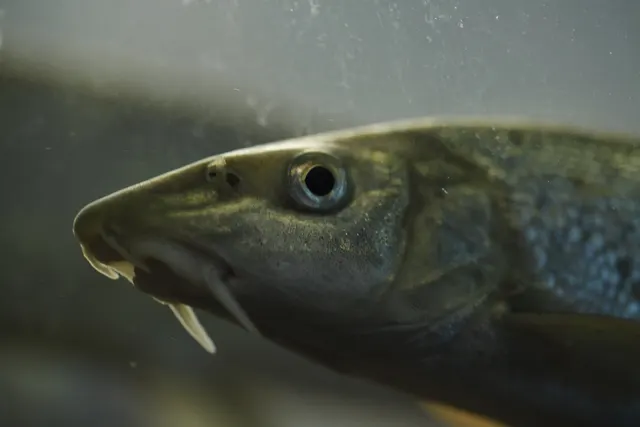 BarbelBoth are large river cyprinids fished on the same water with much the same tackle, and they behave completely differently: barbel hold on the bed in the main flow, chub hold under cover and will take off the surface.
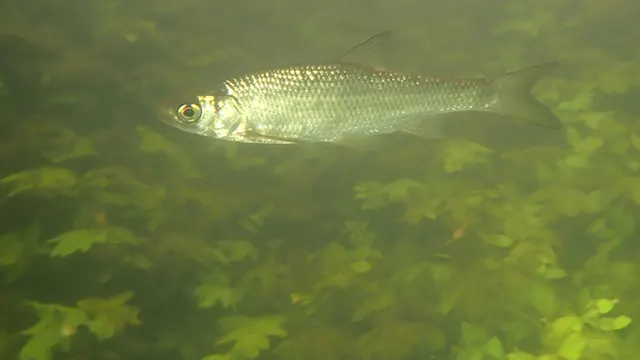 DaceThe confusion this page exists for. The anal fin is CONCAVE in a dace and CONVEX in a chub, at any size; the mouth is small and neat in one and large and blunt in the other. Colour and fin tint are supporting only.
Sources and evidence
- FishBase: a global information system on fishes — Froese, R. and D. Pauly, eds. — FishBase Consortium (Scientific institute)Relied on for: Family (Leuciscidae), maxima of 60 cm SL and 8 kg, maximum age 22 years, native distribution including the natural absence from Italy, the omnivorous diet with large individuals preying predominantly on fish, and Least Concern assessed 29 May 2022. Read during source review.States this directlyPassage read and verified
- The Fishes of the British Isles and North-West Europe — Macmillan, 1969 (Reference work)Relied on for: Morphological separation of chub from dace, particularly the anal fin profile.States this directlyCitation checked — the work exists and is described correctly
Why the 21 connections on this page are here, and the sources
Similar and related fish
Backed by research — 1 connection
Supported by peer-reviewed research or fisheries science. The sources are listed and can be checked.
Ide
An identification comparison naming both binomials: Leuciscus idus and Squalius cephalus.
- FishBase: a global information system on fishes — Froese, R. and D. Pauly, eds. — FishBase Consortium (Scientific institute)Relied on for: Morphological and distributional data for Leuciscus idus and for Squalius cephalus.States this directlyPassage read and verified
- The IUCN Red List of Threatened Species — International Union for Conservation of Nature (Conservation authority)Relied on for: Separate assessments treating Leuciscus idus and Squalius cephalus as distinct species.States this directlyCitation checked — the work exists and is described correctly
How it is caught
What experienced anglers do — 5 connections
Widely and independently recommended by experienced anglers and specialist sources. This is real angling knowledge, not proof: controlled evidence for it is limited, and FishingHQ records it as convention rather than as a demonstrated effect.
Float fishing
Established angling practice for this species, recorded as convention. The note states the property of the animal or its water that makes the method the answer.
- Coarse Fishing — A. & C. Black, 1912 (Specialist angling publication)Relied on for: Established coarse-angling technique and its application to the species.States this directlyCitation checked — the work exists and is described correctly
- Angling Times — Bauer Media (Specialist angling publication)Relied on for: Contemporary British coarse practice for this species.Background and mechanism onlyCitation checked — the work exists and is described correctly
Ledgering
Established angling practice for this species, recorded as convention. The note states the property of the animal or its water that makes the method the answer.
- Coarse Fishing — A. & C. Black, 1912 (Specialist angling publication)Relied on for: Established coarse-angling technique and its application to the species.States this directlyCitation checked — the work exists and is described correctly
- Angling Times — Bauer Media (Specialist angling publication)Relied on for: Contemporary British coarse practice for this species.Background and mechanism onlyCitation checked — the work exists and is described correctly
Spinning
Established angling practice for this species, recorded as convention. The note states the property of the animal or its water that makes the method the answer.
- Coarse Fishing — A. & C. Black, 1912 (Specialist angling publication)Relied on for: Established coarse-angling technique and its application to the species.States this directlyCitation checked — the work exists and is described correctly
- Angling Times — Bauer Media (Specialist angling publication)Relied on for: Contemporary British coarse practice for this species.Background and mechanism onlyCitation checked — the work exists and is described correctly
Surface fishing for coarse fish
That a species is conventionally fished for by this method, drawn from angling literature and from widely restated practitioner description rather than from testing.
- Coarse Fishing — A. & C. Black, 1912 (Specialist angling publication)Relied on for: Classical British coarse angling practice: river float work, shotting, bait delivery and the reels and rods used for each.States this directlyCitation checked — the work exists and is described correctly
- Freshwater Fishing — Macdonald & Jane's, 1975 (Specialist angling publication)Relied on for: Comprehensive British freshwater angling practice including river float fishing, surface presentation and the equipment for each.States this directlyCitation checked — the work exists and is described correctly
Trotting
That a species is conventionally fished for by this method, drawn from angling literature and from widely restated practitioner description rather than from testing.
- Coarse Fishing — A. & C. Black, 1912 (Specialist angling publication)Relied on for: Classical British coarse angling practice: river float work, shotting, bait delivery and the reels and rods used for each.States this directlyCitation checked — the work exists and is described correctly
- Freshwater Fishing — Macdonald & Jane's, 1975 (Specialist angling publication)Relied on for: Comprehensive British freshwater angling practice including river float fishing, surface presentation and the equipment for each.States this directlyCitation checked — the work exists and is described correctly
Gear for this fish
What experienced anglers do — 7 connections
Widely and independently recommended by experienced anglers and specialist sources. This is real angling knowledge, not proof: controlled evidence for it is limited, and FishingHQ records it as convention rather than as a demonstrated effect.
Hooks
Hook requirement for a species is angling convention, reported consistently across independent coarse-angling sources.
- Coarse Fishing — A. & C. Black, 1912 (Specialist angling publication)Relied on for: Classical coarse angling practice: baits, terminal arrangements, presentation and swim selection for river species.States this directlyCitation checked — the work exists and is described correctly
- Angling Times — Bauer Media (Specialist angling publication)Relied on for: Contemporary UK coarse angling practice as reported by practitioners, including rig and tackle convention.States this directlyCitation checked — the work exists and is described correctly
Luncheon meat
Established angling convention about what a bait is used for. Convention is what this is, and labelling it as convention is what stops it being read as a tested result.
- Coarse Fishing — A. & C. Black, 1912 (Specialist angling publication)Relied on for: Classical coarse angling practice: baits, presentation, swim selection and the reasoning behind them.States this directlyCitation checked — the work exists and is described correctly
- Angling Times — Bauer Media (Specialist angling publication)Relied on for: Contemporary UK coarse and match angling practice as reported by practitioners, including bait convention and rig use.Background and mechanism onlyCitation checked — the work exists and is described correctly
Running leger
Terminal arrangement for a species is angling convention, reported consistently by independent practitioner sources across the classical and contemporary coarse literature.
- Coarse Fishing — A. & C. Black, 1912 (Specialist angling publication)Relied on for: Classical coarse angling practice: baits, terminal arrangements, presentation and swim selection for river species.States this directlyCitation checked — the work exists and is described correctly
- Angling Times — Bauer Media (Specialist angling publication)Relied on for: Contemporary UK coarse angling practice as reported by practitioners, including rig and tackle convention.States this directlyCitation checked — the work exists and is described correctly
Spinners
A practitioner claim about which lure family answers this species' feeding or holding behaviour.
- Freshwater Fishing — Macdonald & Jane's, 1975 (Specialist angling publication)Relied on for: Lure and spinning practice for freshwater predators in Britain and northern Europe.States this directlyCitation checked — the work exists and is described correctly
- Angling Times — Bauer Media (Specialist angling publication)Relied on for: Contemporary British and European lure practice for this species in the weekly angling press.Background and mechanism onlyCitation checked — the work exists and is described correctly
Stick float rig
That anglers conventionally choose this arrangement when targeting this fish. It is a claim about practice rather than about the fish, and it does not assert that the arrangement is necessary or that it will succeed.
- Coarse Fishing — A. & C. Black, 1912 (Specialist angling publication)Relied on for: Classical coarse angling practice: terminal arrangements, shotting, float attachment and bite registration in still and running water.States this directlyCitation checked — the work exists and is described correctly
- Angling Times — Bauer Media (Specialist angling publication)Relied on for: Contemporary UK coarse and match angling practice as reported by practitioners, including pole, float and surface rig convention.States this directlyCitation checked — the work exists and is described correctly
Surface controller rig
That anglers conventionally choose this arrangement when targeting this fish. It is a claim about practice rather than about the fish, and it does not assert that the arrangement is necessary or that it will succeed.
- Coarse Fishing — A. & C. Black, 1912 (Specialist angling publication)Relied on for: Classical coarse angling practice: terminal arrangements, shotting, float attachment and bite registration in still and running water.States this directlyCitation checked — the work exists and is described correctly
- Angling Times — Bauer Media (Specialist angling publication)Relied on for: Contemporary UK coarse and match angling practice as reported by practitioners, including pole, float and surface rig convention.States this directlyCitation checked — the work exists and is described correctly
Surface lures
A practitioner claim about which lure family answers this species' feeding or holding behaviour.
- Freshwater Fishing — Macdonald & Jane's, 1975 (Specialist angling publication)Relied on for: Lure and spinning practice for freshwater predators in Britain and northern Europe.States this directlyCitation checked — the work exists and is described correctly
- Angling Times — Bauer Media (Specialist angling publication)Relied on for: Contemporary British and European lure practice for this species in the weekly angling press.Background and mechanism onlyCitation checked — the work exists and is described correctly
Where it lives
Backed by research — 1 connection
Supported by peer-reviewed research or fisheries science. The sources are listed and can be checked.
Lowland rivers
A habitat claim held to an authoritative standard because it is about where a species is actually found rather than about how to catch it.
- Freshwater Fishes of the British Isles — HarperCollins (New Naturalist 75), 1992 (Reference work)Relied on for: Habitat use of Squalius cephalus in European rivers.States this directlyCitation checked — the work exists and is described correctly
- FishBase: a global information system on fishes — Froese, R. and D. Pauly, eds. — FishBase Consortium (Scientific institute)Relied on for: Recorded habitat for Squalius cephalus.States this directlyPassage read and verified
Where you will find it
Backed by research — 2 connections
Supported by peer-reviewed research or fisheries science. The sources are listed and can be checked.
The Rhine
A claim that a place contains the ground, water and seasonal conditions the species is associated with. It is a distributional statement about the world, it rests on the regional reference literature, and it deliberately asserts nothing about access, permission or catch.
- Freshwater Fishes of the British Isles — HarperCollins (New Naturalist 75), 1992 (Reference work)Relied on for: Distribution, ecology and conservation status of European freshwater and migratory fishes, including in modified and artificial waters.States this directlyCitation checked — the work exists and is described correctly
- FishBase: a global information system on fishes — Froese, R. and D. Pauly, eds. — FishBase Consortium (Scientific institute)Relied on for: Recorded distribution, habitat association and life history for the freshwater and migratory species named.States this directlyPassage read and verified
The River Trent
A claim that a place contains the ground, water and seasonal conditions the species is associated with. It is a distributional statement about the world, it rests on the regional reference literature, and it deliberately asserts nothing about access, permission or catch.
- Freshwater Fishes of the British Isles — HarperCollins (New Naturalist 75), 1992 (Reference work)Relied on for: Distribution, habitat and conservation status of British freshwater fishes, including the isolated glacial-relict populations of northern England.States this directlyCitation checked — the work exists and is described correctly
- Environment Agency fisheries management, byelaws and rod licensing information — Environment Agency (Government fisheries body)Relied on for: Fisheries monitoring, water quality and species distribution in English rivers and still waters.States this directlyCitation checked — the work exists and is described correctly
Understanding this fish
Backed by research — 2 connections
Supported by peer-reviewed research or fisheries science. The sources are listed and can be checked.
Aquatic insect larvae as prey
Recorded diet evidence identifies aquatic insect larvae as a food item of this predator at group level rather than to species. The edge points at the taxon record for that reason, and encoding it as a species-level claim would assert something the source does not.
- FishBase: a global information system on fishes — Froese, R. and D. Pauly, eds. — FishBase Consortium (Scientific institute)Relied on for: Food items recorded for this predator, given as aquatic insect larvae.States this directlyPassage read and verified
- FAO Species Identification Guides for Fishery Purposes and the FAO Species Catalogues — Food and Agriculture Organization of the United Nations (Scientific institute)Relied on for: Species account describing this predator's diet, recorded at the level of aquatic insect larvae.Background and mechanism onlyCitation checked — the work exists and is described correctly
Freshwater crayfish as prey
Recorded diet evidence identifies freshwater crayfish as a food item of this predator at group level rather than to species. The edge points at the taxon record for that reason, and encoding it as a species-level claim would assert something the source does not.
- FishBase: a global information system on fishes — Froese, R. and D. Pauly, eds. — FishBase Consortium (Scientific institute)Relied on for: Food items recorded for this predator, given as freshwater crayfish.States this directlyPassage read and verified
- FAO Species Identification Guides for Fishery Purposes and the FAO Species Catalogues — Food and Agriculture Organization of the United Nations (Scientific institute)Relied on for: Species account describing this predator's diet, recorded at the level of freshwater crayfish.Background and mechanism onlyCitation checked — the work exists and is described correctly
What experienced anglers do — 1 connection
Widely and independently recommended by experienced anglers and specialist sources. This is real angling knowledge, not proof: controlled evidence for it is limited, and FishingHQ records it as convention rather than as a demonstrated effect.
Where fly fishing goes beyond trout
A fish or a water joined to the fly-fishing mechanism it is a worked example of, written only where the subject's own behaviour or physical character is what this page explains. The direction is the one FishingHQ writes this kind of connection in, and the one it already uses 176 times, and it is also the semantically correct one: the mechanism explains the fish, not the reverse.
- Freshwater Fishes of the British Isles — HarperCollins (New Naturalist 75), 1992 (Reference work)Relied on for: Life history, feeding biology, habitat requirement and seasonal behaviour of the freshwater fishes of the British Isles.States this directlyCitation checked — the work exists and is described correctly
- FishBase: a global information system on fishes — Froese, R. and D. Pauly, eds. — FishBase Consortium (Scientific institute)Relied on for: Recorded environment, depth range, feeding biology and distribution of the species named.States this directlyPassage read and verified
- Still Water Fly-Fishing — Andre Deutsch, 1952 (Specialist angling publication)Relied on for: Stillwater fly practice: line density and depth, leader construction, fly selection against the food present, and the behaviour of stocked and wild trout in still water.States this directlyCitation checked — the work exists and is described correctly
- Trout & Salmon — Bauer Media (Specialist angling publication)Relied on for: Long-running published description of British game angling practice: river and stillwater trout, grayling and salmon fishing, and the presentation each demands.States this directlyCitation checked — the work exists and is described correctly
Told apart from
What experienced anglers do — 1 connection
Widely and independently recommended by experienced anglers and specialist sources. This is real angling knowledge, not proof: controlled evidence for it is limited, and FishingHQ records it as convention rather than as a demonstrated effect.
Barbel
Two species a river angler is genuinely choosing between on the day.
- Coarse Fishing — A. & C. Black, 1912 (Specialist angling publication)Relied on for: The distinct habits of chub and barbel on the same rivers.Citation checked — the work exists and is described correctly
- Freshwater Fishing — Macdonald & Jane's, 1975 (Specialist angling publication)Relied on for: Comparative treatment of river cyprinid species and approach.Citation checked — the work exists and is described correctly
Backed by research — 1 connection
Supported by peer-reviewed research or fisheries science. The sources are listed and can be checked.
Dace
A claim that two species are genuinely confused and are separated by stated characters. It rests on the identification literature rather than on the observation that both exist.
- Freshwater Fishes of the British Isles — HarperCollins (New Naturalist 75), 1992 (Reference work)Relied on for: Distribution, habitat association, identification and life history of the freshwater fishes of the British Isles.States this directlyCitation checked — the work exists and is described correctly
- FishBase: a global information system on fishes — Froese, R. and D. Pauly, eds. — FishBase Consortium (Scientific institute)Relied on for: Distribution, habitat association, depth range, diet and reproductive parameters recorded for the species.States this directlyPassage read and verified
How FishingHQ labels evidence is explained in the evidence policy.