Where fly fishing goes beyond trout
Explainer · Last reviewed 2026-08-14
Fly fishing is a casting system, not a water type or a species. Anything that eats something a fly can imitate can be caught on one, and most of them are not trout.
Fly fishing is defined by one mechanical fact and nothing else: the weight of the LINE carries an almost weightless hook dressing, where every other method uses the weight of the terminal tackle to carry the line. That is the whole definition. It says nothing about trout, nothing about rivers and nothing about insects.
THE ASSOCIATION WITH TROUT IS HISTORICAL AND REGIONAL. The written tradition of fly fishing in English is overwhelmingly a tradition of chalk streams, spate rivers and stillwater reservoirs, and it produced a literature so strong that the method and the fish became difficult to separate. That is a fact about publishing rather than a fact about fishing.
IN FRESH WATER THE METHOD REACHES far past salmonids. Pike, perch, chub, carp, barbel, bream, rudd and grayling are all taken on the fly, and so are the black basses, the peacock basses, the tigerfish, the mahseer and the golden dorado. Some of these demand tackle a trout angler would find absurd; none of them demands a different principle.
IN SALT WATER THE METHOD IS A MAJOR DISCIPLINE IN ITS OWN RIGHT. Bass, pollack, sea trout, mullet, mackerel, garfish and shad around north-west Europe; bonefish, permit, tarpon, jacks, snapper and barracuda in warm water; and offshore, fish large enough that the reel becomes the most important component in the outfit.
WHAT CHANGES BETWEEN THEM IS SCALE AND ENVIRONMENT, NOT PRINCIPLE. A heavier line to carry a larger fly, a stronger leader, a sealed drag where the fish runs, corrosion resistance where there is salt, and a fly that imitates whatever the fish is actually eating — which is an insect in some places and a sandeel, a shrimp or a crab in others.
AND THE PRACTICAL CONSEQUENCE IS WORTH STATING PLAINLY. A reader who learns fly fishing as 'trout fishing' will believe the discipline stops at the tideline, and will not recognise that the skill they already have transfers to a beach three miles from their house.
The methods travel further than the culture does
Fly fishing in English is written overwhelmingly about trout, which leaves a large amount of what the method can actually do underdescribed.
COARSE AND PREDATOR SPECIES take flies readily and are barely covered. Pike take large streamers and are one of the most spectacular fly species in Europe; perch, chub, rudd and carp are all genuinely catchable on a fly, and chub in particular take surface flies with an enthusiasm no trout matches.
THE SEA IS THE BIGGEST OMISSION and FishingHQ treats it as its own branch. Bass, pollack, mackerel, garfish and mullet in temperate water; bonefish, permit, tarpon, snook, trevally and a long list of others in the tropics.
TROPICAL FRESHWATER is a whole world of its own: peacock bass, golden dorado, mahseer, tigerfish, snakeheads and arapaima are all fly-fishing target, and most of them are absent from the English fly literature entirely.
AND THE FIXED-LINE TRADITIONS ARE OLDER THAN THE REEL. Tenkara in Japan is fly fishing with a long rod, a line, a fly and no reel at all, and it is not a simplification of Western fly fishing — it is a parallel tradition that arrived at the same problem from a different direction.
WHAT CHANGES AS THE FISH CHANGES is scale rather than principle. Bigger fish need heavier lines, stronger leaders, reels with real drags and backing that will actually be used. Bigger flies need steeper leaders and tighter loops. The cast and the reading of water are the same.
WHAT DOES NOT TRANSFER is the entomology. A pike, a bass or a trevally is not selective in the way a chalk-stream trout is, and an angler bringing a hatch-matching mindset to a predator will over-think a problem that is about profile, size, speed and depth.
AND THE HONEST NOTE ON WHY THIS MATTERS TO FISHINGHQ. Fly fishing is thinly served by general fishing writing, and the reason is the same one that makes this page necessary: fly fishing is written about as a trout activity, so a guide built from the literature inherits that shape unless somebody notices.
What experienced anglers do — why, and the sources (3)
Widely and independently recommended by experienced anglers and specialist sources. This is real angling knowledge, not proof: controlled evidence for it is limited, and FishingHQ records it as convention rather than as a demonstrated effect.
- Still Water Fly-Fishing — Andre Deutsch, 1952 (Specialist angling publication)Relied on for: Fly-fishing practice from a practitioner tradition: line control, presentation, depth management and the reading of water.States this directlyCitation checked — the work exists and is described correctly
- Trout & Salmon — Bauer Media (Specialist angling publication)Relied on for: Contemporary UK game angling practice as reported by practitioners: tackle, casting, presentation and river craft.States this directlyCitation checked — the work exists and is described correctly
- Sea Angler — Bauer Media (Specialist angling publication)Relied on for: Contemporary UK sea angling practice as reported by practitioners: ground, tackle and presentation.States this directlyCitation checked — the work exists and is described correctly
Check the rules before you fish
Fishing laws, bylaws, access rules, seasons, bait restrictions and permitted methods vary by location and can change. Check the current rules from the relevant authority and the water you intend to fish before fishing.
Check with:
- Current national or regional law for where you are fishing
- Current local bylaws
- The relevant fisheries authority
- The landowner, club or fishery whose water it is
- Any restrictions specific to the species or the method you intend to use
Where to go next
Fish this applies to
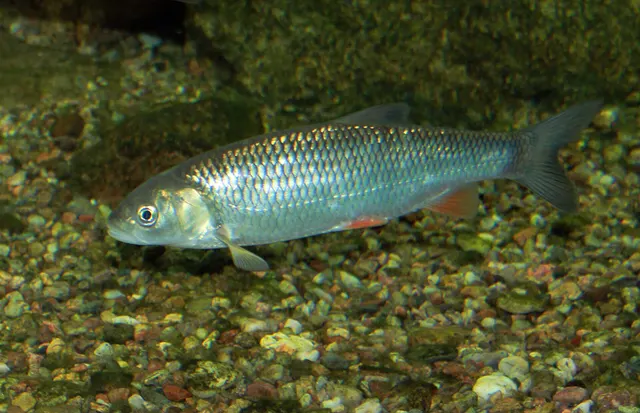 ChubThe record's central example in Britain. Chub take surface flies freely, feed through summer in low clear water where they can be seen and stalked, and are classified as coarse fish — so an angler who believes fly fishing is for game fish walks past them all season.
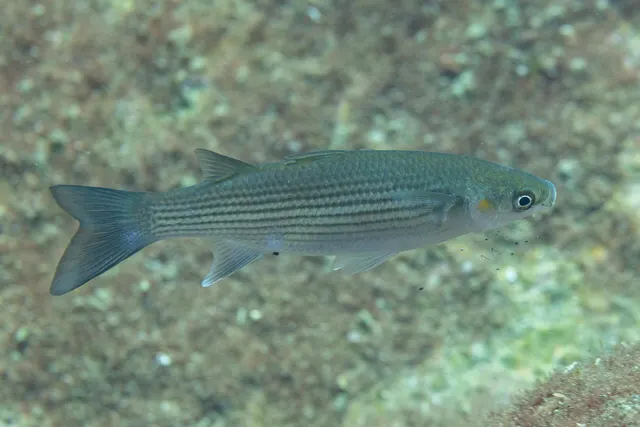 Thick-lipped grey mulletThe fish that breaks the category hardest. A sea fish, extremely visible, extremely difficult, feeding on algae and tiny items in harbours and estuaries, and taken on flies that imitate neither insect nor baitfish. Nothing about it fits the discipline's self-description and it is one of the finest fly targets in Britain.
Where it matters
- Fly fishingThe discipline record asserts that fly fishing is a casting system rather than a species or a water type. This is where that claim is actually argued.
- Saltwater fly fishingSaltwater fly fishing is one instance of the general case, and a reader who arrives at it from the sea should be able to reach the statement of scope rather than infer it.
How this compares
- Fly fishing for bass in surf, estuary and over rockThe clearest temperate demonstration that the discipline does not stop at the tideline.
- Fly fishing for predators: pike, bass and beyondThe freshwater half of the same argument. Fly fishing does not stop at salmonids any more than it stops at the tideline.
- Fly fishing for warm-water and tropical speciesThe clearest available demonstration that the discipline is not about trout.
- Saltwater fly fishing: what changesThe scope statement and the account of what changes in salt water answer two halves of one question, and a reader who has just learned the discipline reaches the coast needs the second immediately.
Rules and access
History and culture
Sources and evidence
- Freshwater Fishing — Macdonald & Jane's, 1975 (Specialist angling publication)Relied on for: Comprehensive freshwater angling practice including fly fishing tackle, casting, presentation and the reasoning behind terminal tackle choices.States this directlyCitation checked — the work exists and is described correctly
- The Fishes of the British Isles and North-West Europe — Macmillan, 1969 (Reference work)Relied on for: Distribution, habitat and biology of the fishes of the British Isles and north-west Europe.States this directlyCitation checked — the work exists and is described correctly
- Trout & Salmon — Bauer Media (Specialist angling publication)Relied on for: Contemporary game and fly angling practice as reported and restated by practitioners, including tackle convention and technique.Background and mechanism onlyCitation checked — the work exists and is described correctly
Why the 10 connections on this page are here, and the sources
Fish this applies to
What experienced anglers do — 2 connections
Widely and independently recommended by experienced anglers and specialist sources. This is real angling knowledge, not proof: controlled evidence for it is limited, and FishingHQ records it as convention rather than as a demonstrated effect.
Chub
A fish or a water joined to the fly-fishing mechanism it is a worked example of, written only where the subject's own behaviour or physical character is what this page explains. The direction is the one FishingHQ writes this kind of connection in, and the one it already uses 176 times, and it is also the semantically correct one: the mechanism explains the fish, not the reverse.
- Freshwater Fishes of the British Isles — HarperCollins (New Naturalist 75), 1992 (Reference work)Relied on for: Life history, feeding biology, habitat requirement and seasonal behaviour of the freshwater fishes of the British Isles.States this directlyCitation checked — the work exists and is described correctly
- FishBase: a global information system on fishes — Froese, R. and D. Pauly, eds. — FishBase Consortium (Scientific institute)Relied on for: Recorded environment, depth range, feeding biology and distribution of the species named.States this directlyPassage read and verified
- Still Water Fly-Fishing — Andre Deutsch, 1952 (Specialist angling publication)Relied on for: Stillwater fly practice: line density and depth, leader construction, fly selection against the food present, and the behaviour of stocked and wild trout in still water.States this directlyCitation checked — the work exists and is described correctly
- Trout & Salmon — Bauer Media (Specialist angling publication)Relied on for: Long-running published description of British game angling practice: river and stillwater trout, grayling and salmon fishing, and the presentation each demands.States this directlyCitation checked — the work exists and is described correctly
Thick-lipped grey mullet
A fish or a water joined to the fly-fishing mechanism it is a worked example of, written only where the subject's own behaviour or physical character is what this page explains. The direction is the one FishingHQ writes this kind of connection in, and the one it already uses 176 times, and it is also the semantically correct one: the mechanism explains the fish, not the reverse.
- Sea Angler — Bauer Media (Specialist angling publication)Relied on for: British sea angling practice including shore fishing for bass, pollack and mullet, the ground each is found over and the presentation each takes.FishingHQ's interpretation of what it saysCitation checked — the work exists and is described correctly
- FAO Species Identification Guides for Fishery Purposes and the FAO Species Catalogues — Food and Agriculture Organization of the United Nations (Scientific institute)Relied on for: Distribution, habitat and feeding biology of coastal and tropical marine species, from regional identification guides prepared for fishery purposes.States this directlyCitation checked — the work exists and is described correctly
- Freshwater Fishes of the British Isles — HarperCollins (New Naturalist 75), 1992 (Reference work)Relied on for: Life history, feeding biology, habitat requirement and seasonal behaviour of the freshwater fishes of the British Isles.States this directlyCitation checked — the work exists and is described correctly
- FishBase: a global information system on fishes — Froese, R. and D. Pauly, eds. — FishBase Consortium (Scientific institute)Relied on for: Recorded environment, depth range, feeding biology and distribution of the species named.States this directlyPassage read and verified
Where it matters
What experienced anglers do — 2 connections
Widely and independently recommended by experienced anglers and specialist sources. This is real angling knowledge, not proof: controlled evidence for it is limited, and FishingHQ records it as convention rather than as a demonstrated effect.
Fly fishing
Why it works, and what that rests on. Fly tackle and technique rest on established practitioner craft rather than on experiment, and the strength shown says so rather than borrowing an authority the subject does not have.
- Freshwater Fishing — Macdonald & Jane's, 1975 (Specialist angling publication)Relied on for: Comprehensive freshwater angling practice including fly tackle, casting, presentation and the reasoning behind terminal tackle choices.States this directlyCitation checked — the work exists and is described correctly
- Trout & Salmon — Bauer Media (Specialist angling publication)Relied on for: Contemporary game and fly angling practice as reported and restated by practitioners, including tackle convention and technique.Background and mechanism onlyCitation checked — the work exists and is described correctly
Saltwater fly fishing
Why it works, and what that rests on. Fly tackle and technique rest on established practitioner craft rather than on experiment, and the strength shown says so rather than borrowing an authority the subject does not have.
- Sea Angler — Bauer Media (Specialist angling publication)Relied on for: Contemporary UK sea angling practice as reported and restated by practitioners, including shore technique and tackle convention.Background and mechanism onlyCitation checked — the work exists and is described correctly
- General angling website restatements of established technique — Various (Credible secondary source)Relied on for: Widely restated angling practice and belief, recorded as practitioner consensus rather than as tested fact.Background and mechanism onlyCitation checked — the work exists and is described correctly
How this compares
What experienced anglers do — 4 connections
Widely and independently recommended by experienced anglers and specialist sources. This is real angling knowledge, not proof: controlled evidence for it is limited, and FishingHQ records it as convention rather than as a demonstrated effect.
Fly fishing for bass in surf, estuary and over rock
Two records a reader would reasonably weigh against one another, joined where the comparison teaches something about both.
- Freshwater Fishing — Macdonald & Jane's, 1975 (Specialist angling publication)Relied on for: Comprehensive angling practice including fly tackle, casting, presentation and the reasoning behind terminal tackle choices.States this directlyCitation checked — the work exists and is described correctly
- Trout & Salmon — Bauer Media (Specialist angling publication)Relied on for: Contemporary game and fly angling practice as reported and restated by practitioners, including tackle convention and technique.Background and mechanism onlyCitation checked — the work exists and is described correctly
Fly fishing for predators: pike, bass and beyond
Two records a reader would reasonably weigh against one another, joined where the comparison teaches something about both. A navigation claim rather than a claim about the world.
- Trout & Salmon — Bauer Media (Specialist angling publication)Relied on for: Contemporary game and fly angling practice as reported and restated by practitioners, including tackle convention and technique.Background and mechanism onlyCitation checked — the work exists and is described correctly
- General angling website restatements of established technique — Various (Credible secondary source)Relied on for: Widely restated angling practice and belief, recorded as practitioner consensus rather than as tested fact.Background and mechanism onlyCitation checked — the work exists and is described correctly
Fly fishing for warm-water and tropical species
Two records a reader would reasonably weigh against one another, joined where the comparison teaches something about both. A navigation claim rather than a claim about the world.
- Trout & Salmon — Bauer Media (Specialist angling publication)Relied on for: Contemporary game and fly angling practice as reported and restated by practitioners, including tackle convention and technique.Background and mechanism onlyCitation checked — the work exists and is described correctly
- General angling website restatements of established technique — Various (Credible secondary source)Relied on for: Widely restated angling practice and belief, recorded as practitioner consensus rather than as tested fact.Background and mechanism onlyCitation checked — the work exists and is described correctly
Saltwater fly fishing: what changes
Two records a reader would reasonably weigh against one another, joined where the comparison teaches something about both. A navigation claim rather than a claim about the world.
- Trout & Salmon — Bauer Media (Specialist angling publication)Relied on for: Contemporary game and fly angling practice as reported and restated by practitioners, including tackle convention and technique.Background and mechanism onlyCitation checked — the work exists and is described correctly
- General angling website restatements of established technique — Various (Credible secondary source)Relied on for: Widely restated angling practice and belief, recorded as practitioner consensus rather than as tested fact.Background and mechanism onlyCitation checked — the work exists and is described correctly
Rules and access
Official guidance — 1 connection
Stated by a fisheries authority, scientific institute or recognised angling body. Authoritative, but summarising rather than demonstrating.
Method and bait restrictions
Written for the five fly records where a genuine regulatory dimension exists — fly-only water as a method restriction, salmon and pike close seasons, bass retention — and refused for the twenty-four where it does not. The edge names the CLASS of rule and never its content, which is the product's standing position on regulation.
- Environment Agency fisheries management, byelaws and rod licensing information — Environment Agency (Government fisheries body)Relied on for: Rod licensing, close seasons, byelaws and method restrictions for freshwater and migratory fish in England.States this directlyCitation checked — the work exists and is described correctly
- Angling Trust guidance for anglers — Angling Trust (Angling or fisheries organisation)Relied on for: Guidance to anglers on the rules applying to game, coarse and sea angling and on where to check them.States this directlyCitation checked — the work exists and is described correctly
History and culture
What experienced anglers do — 1 connection
Widely and independently recommended by experienced anglers and specialist sources. This is real angling knowledge, not proof: controlled evidence for it is limited, and FishingHQ records it as convention rather than as a demonstrated effect.
Coarse, game and sea: the British three-way split
Written for the six fly records whose subject IS a documented tradition — the dry-fly and nymph literature, the development of the artificial fly, the British three-way split, the rod and reel lineage — and refused for the twenty-three where the only claim would be that fly fishing is old.
- The Compleat Angler, or the Contemplative Man's Recreation — Richard Marriot, 1653 (Reference work)Relied on for: Seventeenth-century English angling practice including artificial flies, their dressing and the fishing they were used for.States this directlyPassage read and verified
- Treatyse of Fysshynge with an Angle — Wynkyn de Worde, in the Boke of Saint Albans, 1496 (Reference work)Relied on for: The earliest printed English account of angling, including dressed artificial flies listed by season.States this directlyCitation checked — the work exists and is described correctly
How FishingHQ labels evidence is explained in the evidence policy.