Saltwater fly fishing: what changes
Explainer · Last reviewed 2026-08-14
The casting is the same and almost nothing else is: heavier and more aggressive lines, shorter and stronger leaders, a reel that has to work, flies that imitate baitfish and crustaceans, and salt that destroys whatever is not rinsed.
Fly fishing in salt water uses the same mechanics as fly fishing anywhere. Everything downstream of the cast is different, and treating it as freshwater fly fishing with a sea tag is how people arrive on a beach with tackle that fails on the first fish.
THE REEL BECOMES A FUNCTIONAL COMPONENT. A trout is fought against the rod and the hand, and many trout reels are line stores with a click. A bass, a pollack, a jack or a bonefish RUNS, and it takes the loose line off the deck and then keeps going into the backing. A smooth, sealed, adjustable drag stops being a luxury and becomes the part of the outfit most likely to decide the outcome.
THE LINE IS HEAVIER AND MORE AGGRESSIVELY TAPERED, because coastal fly fishing is done in wind almost by definition and because the flies are larger and more wind-resistant than anything a river demands. Delicacy is not the constraint; turning a big fly over into moving air is.
THE LEADER IS SHORTER AND STRONGER for the same reason, and because the fish are rarely leader-shy in broken water. A nine-foot tapered leader ending in fine tippet is a river solution to a river problem.
THE FLIES IMITATE DIFFERENT ANIMALS. Sandeel, sprat, shrimp, prawn and crab rather than upwinged flies and midge pupae, tied on corrosion-resistant hooks at sizes that would be startling on a chalk stream.
THE RETRIEVE IS MADE BY HAND, and the take is answered with a STRIP STRIKE — pulling the line rather than lifting the rod. Lifting the rod, which is correct for a trout, pulls a large fly out of a hard mouth and is the characteristic way a first saltwater fish is lost.
THE ENVIRONMENT IS CORROSIVE AND UNFORGIVING. Salt destroys unprotected components, and rinsing everything in fresh water after every session is maintenance rather than fastidiousness.
AND THE ANGLER'S POSITION CHANGES, which is the part most often left out. Coastal fly fishing usually means standing in the water, or on rock, with a line in the hand and attention on the fish. Sea state, tide state and the route back matter more here than in any freshwater fly fishing, and they are decided before the rod is assembled.
Four things change and the rest is the same skill
The commonest mistake a competent trout angler makes at the coast is assuming everything is different. Almost nothing is. Four things change and they change decisively.
WIND STOPS BEING A CONDITION AND BECOMES THE MEDIUM. Inland, wind is a thing that sometimes spoils a day. On a coast it is the normal state, and a caster who can only deliver a line in still air is limited to a fraction of the days and a fraction of the coast. That single fact reshapes the tackle — heavier lines to carry into it, shorter steeper leaders that turn over rather than collapse, weighted flies that do not sail — and it reshapes the casting, because delivering with the wind on the wrong shoulder is a requirement rather than a refinement.
THE FISH MOVE AND SO DOES THE WATER. A trout holds a lie; a bass, a pollack or a jack patrols. Casting to a spot and waiting is a freshwater habit that fails in salt. What replaces it is covering water, intercepting a moving fish, and reading a current seam or a gutter for where prey is being pushed — which is closer to lure fishing's thinking than to dry-fly thinking.
DEPTH IS CONTROLLED BY THE LINE, NOT THE FLY. Freshwater fly fishing manages depth mostly with weight on the fly and length of leader. Coastal fly fishing manages it with line density — floating, intermediate, or sinking at a stated rate — because holding a fly at a metre and a half through a whole retrieve in moving water is something only a line can do. A weighted fly on a floating line rises through the retrieve; an unweighted fly on an intermediate does not.
THE RETRIEVE IS THE PRESENTATION AND THE STRIKE IS MADE WITH THE HAND. In a river the current animates the fly; in the sea the angler does, and speed and rhythm matter more than pattern. The associated habit is the STRIP STRIKE — setting by pulling the line hand rather than by lifting the rod — and it is the single thing freshwater anglers most reliably get wrong on their first saltwater fish. Lifting the rod on a hard-mouthed sea fish moves the fly out of its mouth and leaves nothing to strike with.
WHAT DOES NOT CHANGE: loading a rod, the cast itself, reading water, and the fact that presentation beats pattern. A competent freshwater caster is most of the way there.
What experienced anglers do — why, and the sources (3)
Widely and independently recommended by experienced anglers and specialist sources. This is real angling knowledge, not proof: controlled evidence for it is limited, and FishingHQ records it as convention rather than as a demonstrated effect.
- Still Water Fly-Fishing — Andre Deutsch, 1952 (Specialist angling publication)Relied on for: Fly-fishing practice from a practitioner tradition: line control, presentation, depth management and the reading of water.States this directlyCitation checked — the work exists and is described correctly
- Sea Angler — Bauer Media (Specialist angling publication)Relied on for: Contemporary UK sea angling practice as reported by practitioners: ground, tackle, presentation and seasonal timing.States this directlyCitation checked — the work exists and is described correctly
- General angling website restatements of established technique — Various (Credible secondary source)Relied on for: Widely restated descriptions of technique, tackle convention and regional practice, recorded as consensus rather than as scholarship.Background and mechanism onlyCitation checked — the work exists and is described correctly
Salt is a maintenance problem, and it is not optional
The part nobody mentions until something has already corroded.
SALT WATER ATTACKS EVERYTHING ON A FLY OUTFIT and it attacks the parts that matter. Reel drags seize. Rod rings corrode at the frame where the wrap is. Hooks rust from the inside of the point outward and fail on the fish that matters. Line coatings degrade. Zips, clips and pliers stop working.
RINSE AFTER EVERY SESSION, IN FRESH WATER, WHILE IT IS STILL WET. Not at the end of the week. Salt crystallises as it dries and then sits in the mechanism, and a reel rinsed a day later is a reel that has already spent a day corroding. Rinse gently rather than blasting a hose into a sealed drag, dry it, and let it dry properly rather than putting it away damp.
HOOKS ARE THE CONSUMABLE. Saltwater fly hooks are made of heavier wire and are frequently coated, and they still rust. A fly that has been in salt and left in a damp box is a fly with a compromised point, and the failure shows up as a fish that came off rather than as visible rust. Dry flies — the fly box sense, not the dry-fly sense — before they go away, and treat hooks as something replaced rather than maintained.
RODS: rinse, and pay attention to the reel seat and the ferrules. Salt in a ferrule makes sections stick, and a stuck ferrule is broken later.
AND THE LINE ITSELF. Rinse it, and clean it periodically. A salt- and sand-loaded line shoots badly, which people diagnose as a casting problem for months.
WHY THIS BELONGS IN A DEPTH RECORD RATHER THAN A FOOTNOTE. Corrosion is the most common reason a coastal fly outfit stops working well, it is entirely preventable, and it is the one maintenance task that is genuinely different from freshwater practice — where a rinse is optional and here it is not.
What experienced anglers do — why, and the sources (3)
Widely and independently recommended by experienced anglers and specialist sources. This is real angling knowledge, not proof: controlled evidence for it is limited, and FishingHQ records it as convention rather than as a demonstrated effect.
- Sea Angler — Bauer Media (Specialist angling publication)Relied on for: Contemporary UK sea angling practice as reported by practitioners: ground, tackle, presentation and seasonal timing.States this directlyCitation checked — the work exists and is described correctly
- Still Water Fly-Fishing — Andre Deutsch, 1952 (Specialist angling publication)Relied on for: Fly-fishing practice from a practitioner tradition: line control, presentation, depth management and the reading of water.States this directlyCitation checked — the work exists and is described correctly
- General angling website restatements of established technique — Various (Credible secondary source)Relied on for: Widely restated descriptions of technique, tackle convention and regional practice, recorded as consensus rather than as scholarship.Background and mechanism onlyCitation checked — the work exists and is described correctly
Safety
Further safety reading
- Coastal fly fishing: the safety problem you bring with you — Everything this page says changes also changes the risk. Rock platforms with swell, a retrieve made with loose line at the angler's feet, wading a flooding flat, and a discipline whose practitioners mostly learned it standing in a river.
Check the rules before you fish
Fishing laws, bylaws, access rules, seasons, bait restrictions and permitted methods vary by location and can change. Check the current rules from the relevant authority and the water you intend to fish before fishing.
Check with:
- Current national or regional law for where you are fishing
- Current local bylaws
- The relevant fisheries authority
- The landowner, club or fishery whose water it is
- Any restrictions specific to the species or the method you intend to use
Where to go next
Fish this applies to
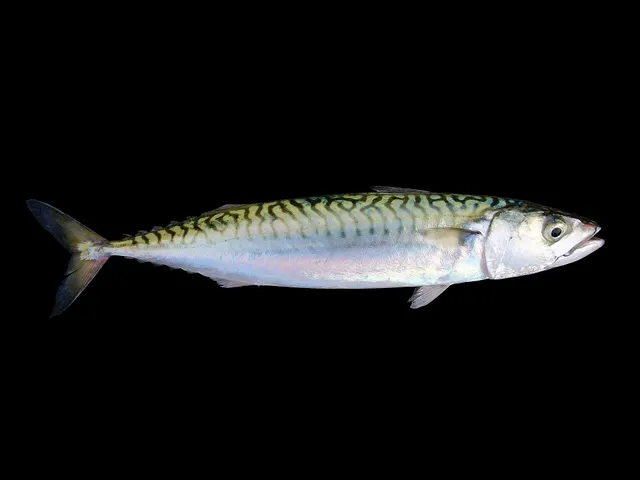 Atlantic mackerelThe species that makes the point about line management. Mackerel arrive in numbers, feed at speed near the surface and are gone, so the difference between a stripping basket and loose line round your feet is the difference between fishing the shoal and untangling during it.
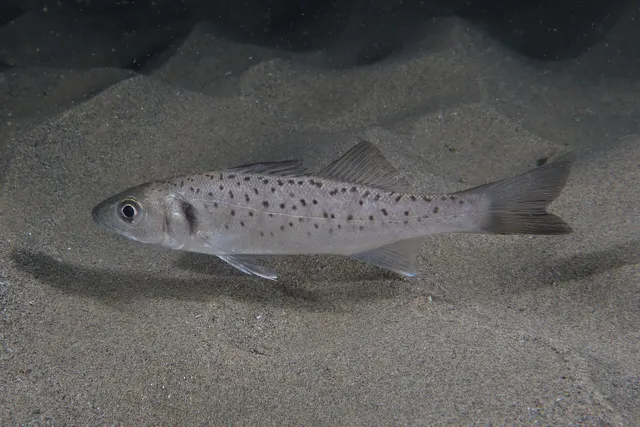 European sea bassThe British catch the whole coastal fly proposition rests on. Bass hunt small fish in broken water over rock and along surf edges, in exactly the depth a fly can be fished, and they feed hardest when the water is moving — which is what makes the tide rather than the hatch the organising variable.
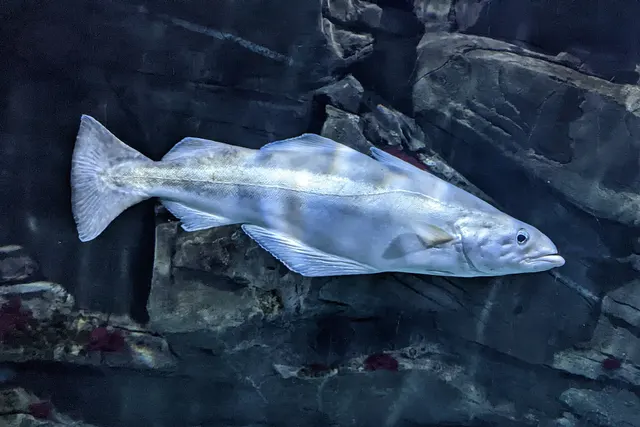 PollackThe case for a sinking line in the salt. Pollack hold over rough ground and rise to take, so the fly is fished down and brought up rather than across — a vertical problem that a floating-line freshwater technique has no answer for.
Where it matters
Water and ground
- EstuaryWhere the tide replaces the hatch as the thing being read. An estuary's current reverses twice a day and concentrates food on the ebb, so the productive window is defined by the state of the tide rather than by the time of day — and being wrong about it means fishing dead water competently.
- Rocky shores and reefsThe ground that changes the mechanics most. Standing on rock with swell running, wind at your back or in your face, line to be managed on a surface that catches it, and a retrieve made with the hand rather than the reel — none of which a river bank prepares an angler for.
Related reading
How this compares
- Floating, sinking and intermediate fly linesLine density is the choice that changes most on the coast, where an intermediate is frequently the correct first line rather than a specialist option.
- Fly fishing for warm-water and tropical speciesTwo accounts of salt water at different latitudes. The tackle reasoning is shared and the fishing is not.
- Leaders and tippet in fly fishingThe leader calculation inverts in salt water — short and strong rather than long and fine — and the two records must be reachable from one another for that inversion to be visible.
- Where fly fishing goes beyond troutThe scope statement and the account of what changes in salt water answer two halves of one question, and a reader who has just learned the discipline reaches the coast needs the second immediately.
Rules and access
Sources and evidence
- Sea Angler — Bauer Media (Specialist angling publication)Relied on for: Contemporary UK sea angling practice as reported and restated by practitioners, including shore and boat technique and tackle convention.Background and mechanism onlyCitation checked — the work exists and is described correctly
- General angling website restatements of established technique — Various (Credible secondary source)Relied on for: Widely restated angling practice and belief, recorded as practitioner consensus rather than as tested fact.Background and mechanism onlyCitation checked — the work exists and is described correctly
- Freshwater Fishing — Macdonald & Jane's, 1975 (Specialist angling publication)Relied on for: Comprehensive freshwater angling practice including fly fishing tackle, casting, presentation and the reasoning behind terminal tackle choices.States this directlyCitation checked — the work exists and is described correctly
Why the 13 connections on this page are here, and the sources
Fish this applies to
What experienced anglers do — 3 connections
Widely and independently recommended by experienced anglers and specialist sources. This is real angling knowledge, not proof: controlled evidence for it is limited, and FishingHQ records it as convention rather than as a demonstrated effect.
Atlantic mackerel
A fish or a water joined to the fly-fishing mechanism it is a worked example of, written only where the subject's own behaviour or physical character is what this page explains. The direction is the one FishingHQ writes this kind of connection in, and the one it already uses 176 times, and it is also the semantically correct one: the mechanism explains the fish, not the reverse.
- Sea Angler — Bauer Media (Specialist angling publication)Relied on for: British sea angling practice including shore fishing for bass, pollack and mullet, the ground each is found over and the presentation each takes.FishingHQ's interpretation of what it saysCitation checked — the work exists and is described correctly
- FAO Species Identification Guides for Fishery Purposes and the FAO Species Catalogues — Food and Agriculture Organization of the United Nations (Scientific institute)Relied on for: Distribution, habitat and feeding biology of coastal and tropical marine species, from regional identification guides prepared for fishery purposes.States this directlyCitation checked — the work exists and is described correctly
- Freshwater Fishes of the British Isles — HarperCollins (New Naturalist 75), 1992 (Reference work)Relied on for: Life history, feeding biology, habitat requirement and seasonal behaviour of the freshwater fishes of the British Isles.States this directlyCitation checked — the work exists and is described correctly
- FishBase: a global information system on fishes — Froese, R. and D. Pauly, eds. — FishBase Consortium (Scientific institute)Relied on for: Recorded environment, depth range, feeding biology and distribution of the species named.States this directlyPassage read and verified
European sea bass
A fish or a water joined to the fly-fishing mechanism it is a worked example of, written only where the subject's own behaviour or physical character is what this page explains. The direction is the one FishingHQ writes this kind of connection in, and the one it already uses 176 times, and it is also the semantically correct one: the mechanism explains the fish, not the reverse.
- Sea Angler — Bauer Media (Specialist angling publication)Relied on for: British sea angling practice including shore fishing for bass, pollack and mullet, the ground each is found over and the presentation each takes.FishingHQ's interpretation of what it saysCitation checked — the work exists and is described correctly
- FAO Species Identification Guides for Fishery Purposes and the FAO Species Catalogues — Food and Agriculture Organization of the United Nations (Scientific institute)Relied on for: Distribution, habitat and feeding biology of coastal and tropical marine species, from regional identification guides prepared for fishery purposes.States this directlyCitation checked — the work exists and is described correctly
- Freshwater Fishes of the British Isles — HarperCollins (New Naturalist 75), 1992 (Reference work)Relied on for: Life history, feeding biology, habitat requirement and seasonal behaviour of the freshwater fishes of the British Isles.States this directlyCitation checked — the work exists and is described correctly
- FishBase: a global information system on fishes — Froese, R. and D. Pauly, eds. — FishBase Consortium (Scientific institute)Relied on for: Recorded environment, depth range, feeding biology and distribution of the species named.States this directlyPassage read and verified
Pollack
A fish or a water joined to the fly-fishing mechanism it is a worked example of, written only where the subject's own behaviour or physical character is what this page explains. The direction is the one FishingHQ writes this kind of connection in, and the one it already uses 176 times, and it is also the semantically correct one: the mechanism explains the fish, not the reverse.
- Sea Angler — Bauer Media (Specialist angling publication)Relied on for: British sea angling practice including shore fishing for bass, pollack and mullet, the ground each is found over and the presentation each takes.FishingHQ's interpretation of what it saysCitation checked — the work exists and is described correctly
- FAO Species Identification Guides for Fishery Purposes and the FAO Species Catalogues — Food and Agriculture Organization of the United Nations (Scientific institute)Relied on for: Distribution, habitat and feeding biology of coastal and tropical marine species, from regional identification guides prepared for fishery purposes.States this directlyCitation checked — the work exists and is described correctly
- Freshwater Fishes of the British Isles — HarperCollins (New Naturalist 75), 1992 (Reference work)Relied on for: Life history, feeding biology, habitat requirement and seasonal behaviour of the freshwater fishes of the British Isles.States this directlyCitation checked — the work exists and is described correctly
- FishBase: a global information system on fishes — Froese, R. and D. Pauly, eds. — FishBase Consortium (Scientific institute)Relied on for: Recorded environment, depth range, feeding biology and distribution of the species named.States this directlyPassage read and verified
Where it matters
What experienced anglers do — 1 connection
Widely and independently recommended by experienced anglers and specialist sources. This is real angling knowledge, not proof: controlled evidence for it is limited, and FishingHQ records it as convention rather than as a demonstrated effect.
Saltwater fly fishing
Why it works, and what that rests on. Fly tackle and technique rest on established practitioner craft rather than on experiment, and the strength shown says so rather than borrowing an authority the subject does not have.
- Sea Angler — Bauer Media (Specialist angling publication)Relied on for: Contemporary UK sea angling practice as reported and restated by practitioners, including shore technique and tackle convention.Background and mechanism onlyCitation checked — the work exists and is described correctly
- General angling website restatements of established technique — Various (Credible secondary source)Relied on for: Widely restated angling practice and belief, recorded as practitioner consensus rather than as tested fact.Background and mechanism onlyCitation checked — the work exists and is described correctly
Water and ground
What experienced anglers do — 2 connections
Widely and independently recommended by experienced anglers and specialist sources. This is real angling knowledge, not proof: controlled evidence for it is limited, and FishingHQ records it as convention rather than as a demonstrated effect.
Estuary
A fish or a water joined to the fly-fishing mechanism it is a worked example of, written only where the subject's own behaviour or physical character is what this page explains. The direction is the one FishingHQ writes this kind of connection in, and the one it already uses 176 times, and it is also the semantically correct one: the mechanism explains the fish, not the reverse.
- Sea Angler — Bauer Media (Specialist angling publication)Relied on for: British sea angling practice including shore fishing for bass, pollack and mullet, the ground each is found over and the presentation each takes.FishingHQ's interpretation of what it saysCitation checked — the work exists and is described correctly
- FAO Species Identification Guides for Fishery Purposes and the FAO Species Catalogues — Food and Agriculture Organization of the United Nations (Scientific institute)Relied on for: Distribution, habitat and feeding biology of coastal and tropical marine species, from regional identification guides prepared for fishery purposes.States this directlyCitation checked — the work exists and is described correctly
Rocky shores and reefs
A fish or a water joined to the fly-fishing mechanism it is a worked example of, written only where the subject's own behaviour or physical character is what this page explains. The direction is the one FishingHQ writes this kind of connection in, and the one it already uses 176 times, and it is also the semantically correct one: the mechanism explains the fish, not the reverse.
- Sea Angler — Bauer Media (Specialist angling publication)Relied on for: British sea angling practice including shore fishing for bass, pollack and mullet, the ground each is found over and the presentation each takes.FishingHQ's interpretation of what it saysCitation checked — the work exists and is described correctly
- FAO Species Identification Guides for Fishery Purposes and the FAO Species Catalogues — Food and Agriculture Organization of the United Nations (Scientific institute)Relied on for: Distribution, habitat and feeding biology of coastal and tropical marine species, from regional identification guides prepared for fishery purposes.States this directlyCitation checked — the work exists and is described correctly
Related reading
What experienced anglers do — 1 connection
Widely and independently recommended by experienced anglers and specialist sources. This is real angling knowledge, not proof: controlled evidence for it is limited, and FishingHQ records it as convention rather than as a demonstrated effect.
Salt, corrosion and what it does to tackle
Why it works, and what that rests on. Fly tackle and technique rest on established practitioner craft rather than on experiment, and the strength shown says so rather than borrowing an authority the subject does not have.
- Trout & Salmon — Bauer Media (Specialist angling publication)Relied on for: Contemporary game and fly angling practice as reported and restated by practitioners, including tackle convention and technique.Background and mechanism onlyCitation checked — the work exists and is described correctly
- General angling website restatements of established technique — Various (Credible secondary source)Relied on for: Widely restated angling practice and belief, recorded as practitioner consensus rather than as tested fact.Background and mechanism onlyCitation checked — the work exists and is described correctly
How this compares
What experienced anglers do — 4 connections
Widely and independently recommended by experienced anglers and specialist sources. This is real angling knowledge, not proof: controlled evidence for it is limited, and FishingHQ records it as convention rather than as a demonstrated effect.
Floating, sinking and intermediate fly lines
Two records a reader would reasonably weigh against one another, joined where the comparison teaches something about both. A navigation claim rather than a claim about the world.
- Trout & Salmon — Bauer Media (Specialist angling publication)Relied on for: Contemporary game and fly angling practice as reported and restated by practitioners, including tackle convention and technique.Background and mechanism onlyCitation checked — the work exists and is described correctly
- General angling website restatements of established technique — Various (Credible secondary source)Relied on for: Widely restated angling practice and belief, recorded as practitioner consensus rather than as tested fact.Background and mechanism onlyCitation checked — the work exists and is described correctly
Fly fishing for warm-water and tropical species
Two records a reader would reasonably weigh against one another, joined where the comparison teaches something about both. A navigation claim rather than a claim about the world.
- Trout & Salmon — Bauer Media (Specialist angling publication)Relied on for: Contemporary game and fly angling practice as reported and restated by practitioners, including tackle convention and technique.Background and mechanism onlyCitation checked — the work exists and is described correctly
- General angling website restatements of established technique — Various (Credible secondary source)Relied on for: Widely restated angling practice and belief, recorded as practitioner consensus rather than as tested fact.Background and mechanism onlyCitation checked — the work exists and is described correctly
Leaders and tippet in fly fishing
Two records a reader would reasonably weigh against one another, joined where the comparison teaches something about both. A navigation claim rather than a claim about the world.
- Trout & Salmon — Bauer Media (Specialist angling publication)Relied on for: Contemporary game and fly angling practice as reported and restated by practitioners, including tackle convention and technique.Background and mechanism onlyCitation checked — the work exists and is described correctly
- General angling website restatements of established technique — Various (Credible secondary source)Relied on for: Widely restated angling practice and belief, recorded as practitioner consensus rather than as tested fact.Background and mechanism onlyCitation checked — the work exists and is described correctly
Where fly fishing goes beyond trout
Two records a reader would reasonably weigh against one another, joined where the comparison teaches something about both. A navigation claim rather than a claim about the world.
- Trout & Salmon — Bauer Media (Specialist angling publication)Relied on for: Contemporary game and fly angling practice as reported and restated by practitioners, including tackle convention and technique.Background and mechanism onlyCitation checked — the work exists and is described correctly
- General angling website restatements of established technique — Various (Credible secondary source)Relied on for: Widely restated angling practice and belief, recorded as practitioner consensus rather than as tested fact.Background and mechanism onlyCitation checked — the work exists and is described correctly
Safety reading
What experienced anglers do — 1 connection
Widely and independently recommended by experienced anglers and specialist sources. This is real angling knowledge, not proof: controlled evidence for it is limited, and FishingHQ records it as convention rather than as a demonstrated effect.
Coastal fly fishing: the safety problem you bring with you
A fly-fishing technique joined to the harm its own mechanics create, rather than to the general hazards of being near water. Written where the technique itself is the risk factor — a weighted fly accelerating past a head, a wader standing in current, a line manager on a rock platform with a swell running.
- RNLI water safety guidance: cold water shock and Float to Live — Royal National Lifeboat Institution (Water-safety or diver-training authority)Relied on for: Water safety guidance including cold water shock, sudden immersion and the behaviour that reduces both.States this directlyPassage read and verified
- Trout & Salmon — Bauer Media (Specialist angling publication)Relied on for: British game angling practice including wading, river safety and the handling of a weighted fly under load.FishingHQ's interpretation of what it saysCitation checked — the work exists and is described correctly
Rules and access
Official guidance — 1 connection
Stated by a fisheries authority, scientific institute or recognised angling body. Authoritative, but summarising rather than demonstrating.
Size limits and retention
Written for the five fly records where a genuine regulatory dimension exists — fly-only water as a method restriction, salmon and pike close seasons, bass retention — and refused for the twenty-four where it does not. The edge names the CLASS of rule and never its content, which is the product's standing position on regulation.
- Environment Agency fisheries management, byelaws and rod licensing information — Environment Agency (Government fisheries body)Relied on for: Rod licensing, close seasons, byelaws and method restrictions for freshwater and migratory fish in England.States this directlyCitation checked — the work exists and is described correctly
- Angling Trust guidance for anglers — Angling Trust (Angling or fisheries organisation)Relied on for: Guidance to anglers on the rules applying to game, coarse and sea angling and on where to check them.States this directlyCitation checked — the work exists and is described correctly
How FishingHQ labels evidence is explained in the evidence policy.