Fly fishing for warm-water and tropical species
Explainer · Last reviewed 2026-08-14
Sight fishing in clear shallow water, where the whole encounter is visible and the constraint is the angler's ability to deliver a fly quickly, accurately and once.
Warm-water and tropical fly fishing is the most visual form the discipline takes, and the skills it rewards are not the ones a river teaches.
THE FISHING IS DONE BY SIGHT. On a clear flat the fish is located, its direction and speed are judged, and the fly is delivered ahead of it. The reader who has learned to cover water methodically has to unlearn it: casting at nothing is how a flat is emptied.
SPEED AND ACCURACY REPLACE DISTANCE. A fish crossing a flat gives a few seconds. The useful skill is getting a fly to a specific spot in one or two false casts, which is a different skill from casting far and a much harder one to acquire.
THE PREY IS CRUSTACEAN AS OFTEN AS IT IS FISH. Shrimp and crab imitations dominate on the flats because bonefish and permit are feeding on the bottom, and the fly is frequently fished by being allowed to sink and then moved a very short distance — the opposite of a stripped baitfish pattern.
THE LIGHT IS PART OF THE TACKLE. Sight fishing needs sun, a favourable angle and polarised lenses, which is why the fishing day on a flat is often the middle of the day rather than dawn and dusk. That inverts the rule most anglers arrive with.
THE FISH RUN, AND THE BACKING IS NOT DECORATION. A bonefish empties a fly line in seconds. Knots between backing and line are load-bearing components rather than tidy details, and a drag that is jerky at the start of a run breaks tippet.
AND THE CONSERVATION CONTEXT IS UNUSUALLY DIRECT. Many of these fisheries are catch-and-release by convention or by law, several of the target species are slow-growing and locally depleted, and some — permit and certain snappers among them — aggregate to spawn in ways that make them easy to overfish. Warm-water flats fishing also carries a food-safety dimension that cooler-water fishing does not: ciguatera risk in some reef species is real, geographically patchy and not removed by cooking, and it is a matter for local authoritative guidance rather than for a website.
Flats, mangrove and blue water: three tropical fly problems, not one
Tropical fly fishing is usually described as one thing and is at least three, with different tackle and different skills.
THE FLATS PROBLEM IS SEEING THE FISH. Bonefish, permit and their equivalents are hunted by sight in shallow clear water, and the whole discipline is spotting a fish, judging its direction, and putting a fly where it will arrive — usually with one cast, usually into wind, usually within a few seconds. Presentation is a crab or shrimp fly landing softly and then doing almost nothing. Polarised glasses are equipment rather than comfort, and a guide's eyes are worth more than any fly.
THE MANGROVE AND ESTUARY PROBLEM IS TURNING THE FISH. Snook, barramundi, mangrove jack and juvenile trevally live in cover a fly angler cannot follow them into. The cast is into the structure, the take is immediate, and the fight is decided in the first second by whether the tackle can pull the fish out. Heavy tippet, heavy bite sections against oyster-encrusted roots, and a locked hand rather than a played fish.
THE BLUE-WATER PROBLEM IS SPEED AND ENDURANCE. Trevally, tuna and their like run further and faster than any temperate fish a fly angler meets, which makes backing capacity and drag genuine equipment questions rather than specifications nobody reads. Two hundred metres of backing on a sealed drag is the honest requirement, and a reel that will not do it is the wrong reel.
WHAT IS COMMON TO ALL THREE. Wind is constant, the strip strike is universal, and the fish are hard-mouthed. Heat, sun and dehydration degrade casting accuracy long before people notice, which is a fishing problem as well as a health one.
AND THE HAZARD LIST IS DIFFERENT. Coral cuts that infect fast, venomous and spined fish on reef flats — stonefish and scorpionfish in the Indo-Pacific are stood on rather than encountered — stingrays on sand, and in parts of the tropics crocodilians in exactly the mangrove systems the fishing happens in. Footwear on any tropical flat is not optional, and local advice on specific systems is the authority rather than a suggestion.
WHAT THIS PAGE DOES NOT ADDRESS is access or permission anywhere in particular. Tropical fisheries are frequently inside marine parks or community-managed areas with rules a visitor will not guess, and the destination records name the authorities.
What experienced anglers do — why, and the sources (4)
Widely and independently recommended by experienced anglers and specialist sources. This is real angling knowledge, not proof: controlled evidence for it is limited, and FishingHQ records it as convention rather than as a demonstrated effect.
- Sea Angler — Bauer Media (Specialist angling publication)Relied on for: Contemporary UK sea angling practice as reported by practitioners: ground, tackle, presentation and seasonal timing.States this directlyCitation checked — the work exists and is described correctly
- Still Water Fly-Fishing — Andre Deutsch, 1952 (Specialist angling publication)Relied on for: Fly-fishing practice from a practitioner tradition: line control, presentation, depth management and the reading of water.States this directlyCitation checked — the work exists and is described correctly
- FAO Species Identification Guides for Fishery Purposes and the FAO Species Catalogues — Food and Agriculture Organization of the United Nations (Scientific institute)Relied on for: Species composition, habitat association and prey of the fishes concerned, as set out in the FAO species identification sheets.States this directlyCitation checked — the work exists and is described correctly
- General angling website restatements of established technique — Various (Credible secondary source)Relied on for: Widely restated descriptions of technique, tackle convention and regional practice, recorded as consensus rather than as scholarship.Background and mechanism onlyCitation checked — the work exists and is described correctly
Where to go next
Fish this applies to
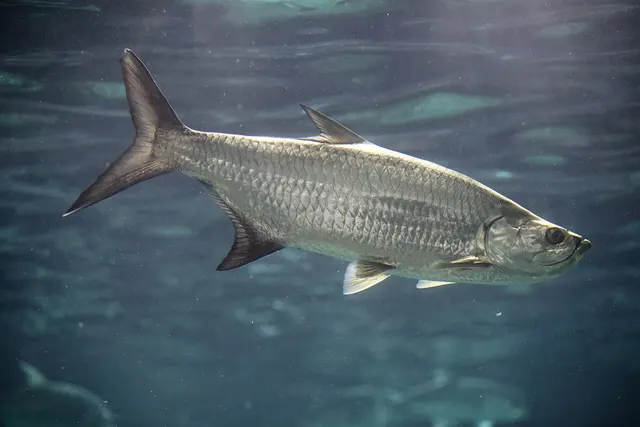 Atlantic tarponThe fish that most changes the tackle. A very large fish with a hard bony mouth taken in shallow water on heavy tippet and a shock leader, and the reason saltwater fly reels have the drags they do.
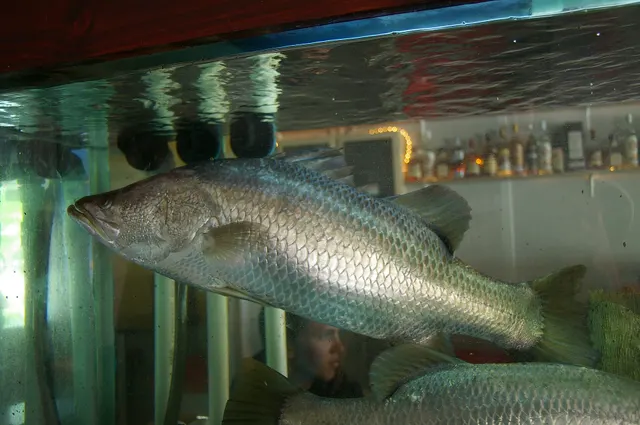 BarramundiThe estuarine and freshwater case in one fish. Barramundi move between salt, brackish and fresh water through their life and are fished for in all three, which makes them a worked example of the record's point that warm-water fly fishing is not a single environment.
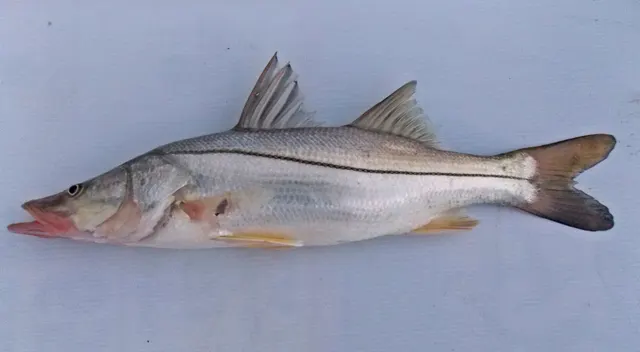 Common snookThe structure-oriented case. Snook hold hard against mangrove roots, docks and edges and run straight back into them when hooked, so the fishing is about accurate short casting into cover rather than about distance.
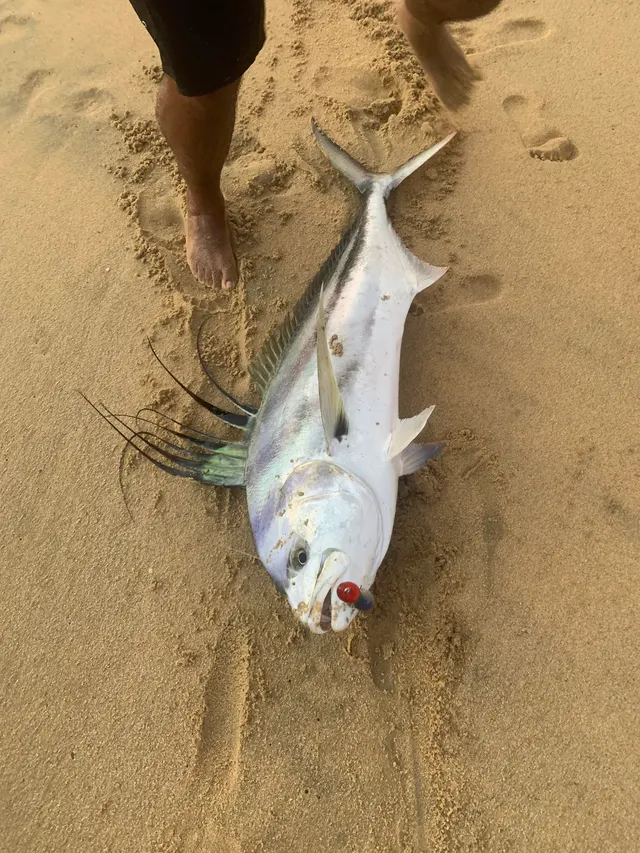 RoosterfishThe surf case. Roosterfish hunt in breaking water off steep beaches, which is sight fishing conducted in moving water rather than on a calm flat — a combination that defeats tackle and technique developed for either alone.
Where it matters
Water and ground
- Coral reefThe ground that sets the tackle limit. A hooked fish that reaches coral cuts off, so the fishing runs heavier tippet than the fish's caution would otherwise allow — the opposite of the freshwater instinct to go finer when refused.
- MangroveThe habitat that concentrates the fishing. Roots shelter juvenile fish and crustaceans and the predators that follow them, which is why so much tropical fly fishing is accurate casting at an edge rather than searching open water.
- Tropical estuary and tidal creekThe fly-fishing half of tropical estuarine fishing, which is a distinct branch rather than a variation on trout tackle.
How this compares
Sources and evidence
- FishBase: a global information system on fishes — Froese, R. and D. Pauly, eds. — FishBase Consortium (Scientific institute)Relied on for: Diet, habitat, temperature tolerance and distribution recorded for the species concerned.States this directlyPassage read and verified
- General angling website restatements of established technique — Various (Credible secondary source)Relied on for: Widely restated angling practice and belief, recorded as practitioner consensus rather than as tested fact.Background and mechanism onlyCitation checked — the work exists and is described correctly
- IGFA International Angling Rules and World Record Requirements — International Game Fish Association (Angling or fisheries organisation)Relied on for: International angling rules, including the definitions and equipment specifications used across fly and conventional tackle classes.Background and mechanism onlyPassage read and verified
Why the 10 connections on this page are here, and the sources
Fish this applies to
What experienced anglers do — 4 connections
Widely and independently recommended by experienced anglers and specialist sources. This is real angling knowledge, not proof: controlled evidence for it is limited, and FishingHQ records it as convention rather than as a demonstrated effect.
Atlantic tarpon
A fish or a water joined to the fly-fishing mechanism it is a worked example of, written only where the subject's own behaviour or physical character is what this page explains. The direction is the one FishingHQ writes this kind of connection in, and the one it already uses 176 times, and it is also the semantically correct one: the mechanism explains the fish, not the reverse.
- FAO Species Identification Guides for Fishery Purposes and the FAO Species Catalogues — Food and Agriculture Organization of the United Nations (Scientific institute)Relied on for: Distribution, habitat association and feeding biology of tropical inshore and reef species, from regional identification guides prepared for fishery purposes.States this directlyCitation checked — the work exists and is described correctly
- FishBase: a global information system on fishes — Froese, R. and D. Pauly, eds. — FishBase Consortium (Scientific institute)Relied on for: Recorded environment, depth range, feeding biology and distribution of the tropical species named.States this directlyPassage read and verified
Barramundi
A fish or a water joined to the fly-fishing mechanism it is a worked example of, written only where the subject's own behaviour or physical character is what this page explains. The direction is the one FishingHQ writes this kind of connection in, and the one it already uses 176 times, and it is also the semantically correct one: the mechanism explains the fish, not the reverse.
- FAO Species Identification Guides for Fishery Purposes and the FAO Species Catalogues — Food and Agriculture Organization of the United Nations (Scientific institute)Relied on for: Distribution, habitat association and feeding biology of tropical inshore and reef species, from regional identification guides prepared for fishery purposes.States this directlyCitation checked — the work exists and is described correctly
- FishBase: a global information system on fishes — Froese, R. and D. Pauly, eds. — FishBase Consortium (Scientific institute)Relied on for: Recorded environment, depth range, feeding biology and distribution of the tropical species named.States this directlyPassage read and verified
Common snook
A fish or a water joined to the fly-fishing mechanism it is a worked example of, written only where the subject's own behaviour or physical character is what this page explains. The direction is the one FishingHQ writes this kind of connection in, and the one it already uses 176 times, and it is also the semantically correct one: the mechanism explains the fish, not the reverse.
- FAO Species Identification Guides for Fishery Purposes and the FAO Species Catalogues — Food and Agriculture Organization of the United Nations (Scientific institute)Relied on for: Distribution, habitat association and feeding biology of tropical inshore and reef species, from regional identification guides prepared for fishery purposes.States this directlyCitation checked — the work exists and is described correctly
- FishBase: a global information system on fishes — Froese, R. and D. Pauly, eds. — FishBase Consortium (Scientific institute)Relied on for: Recorded environment, depth range, feeding biology and distribution of the tropical species named.States this directlyPassage read and verified
Roosterfish
A fish or a water joined to the fly-fishing mechanism it is a worked example of, written only where the subject's own behaviour or physical character is what this page explains. The direction is the one FishingHQ writes this kind of connection in, and the one it already uses 176 times, and it is also the semantically correct one: the mechanism explains the fish, not the reverse.
- FAO Species Identification Guides for Fishery Purposes and the FAO Species Catalogues — Food and Agriculture Organization of the United Nations (Scientific institute)Relied on for: Distribution, habitat association and feeding biology of tropical inshore and reef species, from regional identification guides prepared for fishery purposes.States this directlyCitation checked — the work exists and is described correctly
- FishBase: a global information system on fishes — Froese, R. and D. Pauly, eds. — FishBase Consortium (Scientific institute)Relied on for: Recorded environment, depth range, feeding biology and distribution of the tropical species named.States this directlyPassage read and verified
Where it matters
What experienced anglers do — 1 connection
Widely and independently recommended by experienced anglers and specialist sources. This is real angling knowledge, not proof: controlled evidence for it is limited, and FishingHQ records it as convention rather than as a demonstrated effect.
Saltwater fly fishing
Why it works, and what that rests on. Fly tackle and technique rest on established practitioner craft rather than on experiment, and the strength shown says so rather than borrowing an authority the subject does not have.
- Trout & Salmon — Bauer Media (Specialist angling publication)Relied on for: Contemporary game and fly angling practice as reported and restated by practitioners, including tackle convention and technique.Background and mechanism onlyCitation checked — the work exists and is described correctly
- General angling website restatements of established technique — Various (Credible secondary source)Relied on for: Widely restated angling practice and belief, recorded as practitioner consensus rather than as tested fact.Background and mechanism onlyCitation checked — the work exists and is described correctly
Water and ground
What experienced anglers do — 3 connections
Widely and independently recommended by experienced anglers and specialist sources. This is real angling knowledge, not proof: controlled evidence for it is limited, and FishingHQ records it as convention rather than as a demonstrated effect.
Coral reef
A fish or a water joined to the fly-fishing mechanism it is a worked example of, written only where the subject's own behaviour or physical character is what this page explains. The direction is the one FishingHQ writes this kind of connection in, and the one it already uses 176 times, and it is also the semantically correct one: the mechanism explains the fish, not the reverse.
- FAO Species Identification Guides for Fishery Purposes and the FAO Species Catalogues — Food and Agriculture Organization of the United Nations (Scientific institute)Relied on for: Distribution, habitat association and feeding biology of tropical inshore and reef species, from regional identification guides prepared for fishery purposes.States this directlyCitation checked — the work exists and is described correctly
- FishBase: a global information system on fishes — Froese, R. and D. Pauly, eds. — FishBase Consortium (Scientific institute)Relied on for: Recorded environment, depth range, feeding biology and distribution of the tropical species named.States this directlyPassage read and verified
Mangrove
A fish or a water joined to the fly-fishing mechanism it is a worked example of, written only where the subject's own behaviour or physical character is what this page explains. The direction is the one FishingHQ writes this kind of connection in, and the one it already uses 176 times, and it is also the semantically correct one: the mechanism explains the fish, not the reverse.
- FAO Species Identification Guides for Fishery Purposes and the FAO Species Catalogues — Food and Agriculture Organization of the United Nations (Scientific institute)Relied on for: Distribution, habitat association and feeding biology of tropical inshore and reef species, from regional identification guides prepared for fishery purposes.States this directlyCitation checked — the work exists and is described correctly
- FishBase: a global information system on fishes — Froese, R. and D. Pauly, eds. — FishBase Consortium (Scientific institute)Relied on for: Recorded environment, depth range, feeding biology and distribution of the tropical species named.States this directlyPassage read and verified
Tropical estuary and tidal creek
An explainer that carries a mechanism the subject record depends on.
- General angling website restatements of established technique — Various (Credible secondary source)Relied on for: Widely restated descriptions of technique, ground and fish behaviour, recorded as consensus rather than as scholarship.Background and mechanism onlyCitation checked — the work exists and is described correctly
- Sea Angler — Bauer Media (Specialist angling publication)Relied on for: Contemporary angling practice as reported by practitioners: ground, tackle, presentation and seasonal timing.States this directlyCitation checked — the work exists and is described correctly
How this compares
What experienced anglers do — 2 connections
Widely and independently recommended by experienced anglers and specialist sources. This is real angling knowledge, not proof: controlled evidence for it is limited, and FishingHQ records it as convention rather than as a demonstrated effect.
Saltwater fly fishing: what changes
Two records a reader would reasonably weigh against one another, joined where the comparison teaches something about both. A navigation claim rather than a claim about the world.
- Trout & Salmon — Bauer Media (Specialist angling publication)Relied on for: Contemporary game and fly angling practice as reported and restated by practitioners, including tackle convention and technique.Background and mechanism onlyCitation checked — the work exists and is described correctly
- General angling website restatements of established technique — Various (Credible secondary source)Relied on for: Widely restated angling practice and belief, recorded as practitioner consensus rather than as tested fact.Background and mechanism onlyCitation checked — the work exists and is described correctly
Where fly fishing goes beyond trout
Two records a reader would reasonably weigh against one another, joined where the comparison teaches something about both. A navigation claim rather than a claim about the world.
- Trout & Salmon — Bauer Media (Specialist angling publication)Relied on for: Contemporary game and fly angling practice as reported and restated by practitioners, including tackle convention and technique.Background and mechanism onlyCitation checked — the work exists and is described correctly
- General angling website restatements of established technique — Various (Credible secondary source)Relied on for: Widely restated angling practice and belief, recorded as practitioner consensus rather than as tested fact.Background and mechanism onlyCitation checked — the work exists and is described correctly
How FishingHQ labels evidence is explained in the evidence policy.