Estuary
Habitat · Last reviewed 2026-08-10
Where a river meets the sea: brackish, turbid, enormously productive, and governed by a tide that reverses the current twice a day.
Safety: tides and being cut off — can cause serious injury or death. 7 more points apply here.
- Water
- Brackish, Saltwater, Freshwater
An estuary is a mixing zone. Fresh water arrives from upstream, salt water arrives on the tide, and the boundary between them moves up and down the system every day. Salinity at any given point is therefore not a property of the place but of the hour.
That instability is why estuaries are so productive. Fine sediment settles out where the flow slows, building mud and sand flats that support extremely high densities of worms, molluscs and crustaceans — often higher than anything in the open sea. Fish come in on the flood to feed over ground that is dry or nearly dry at low water, and leave again as it drains.
For an angler the consequences are practical. The productive period is a window defined by the tide rather than by the clock. Fish arrive along the channels and gutters that hold water at all states, and they move as those channels fill. And because much of the ground is soft mud that is walkable at low water and covered at high, an estuary is one of the more genuinely dangerous places to fish — softness and the speed at which a flood tide fills a flat are both routinely underestimated.
What characterises it
A semi-enclosed body of water where fresh and salt water mix, with salinity varying continuously in both space and time. Typically shallow, turbid and sediment-rich, with extensive intertidal mud and sand flats, drainage channels and creeks, and often saltmarsh at the upper edge. The physical layout at low water bears little resemblance to the same place at high water.
What lives there
Among the most productive habitats in temperate and tropical coasts alike. Fine sediment supports very high invertebrate densities; the system acts as a nursery for many marine species, whose juveniles use the shallow turbid water as cover; and it is the corridor every diadromous fish must pass through — salmon, sea trout, eels and shads all depend on estuaries being passable. The species present at a given point are determined by their salinity tolerance, which is why an estuary holds a mixture nowhere else does.
Through the year
Species composition shifts through the year as marine species move in during warmer months and retreat in cold, and as migratory species pass through on their own schedules. Freshwater input varies with rainfall, and a spate pushes the salt wedge seaward for days. Neap and spring tide cycles change how much of the system is covered and how fast, on a fortnightly rhythm that matters as much as the seasonal one.
Channels, drains and where fish actually run in an estuary
An estuary at low water looks like mud with water in the middle of it, and that appearance is the most useful thing about it: what is exposed at low water is the map of where fish move at high water.
THE STRUCTURE IS A DRAINAGE NETWORK. The main channel carries most of the flow; secondary channels and drains feed into it from the flats; and gutters, creeks and pools sit within the flats themselves. Every one of these fills and empties on the tide, and fish use them as routes rather than as destinations.
WHICH MEANS THE FISHING IS ABOUT TIMING A POSITION. Predators follow the flood onto the flats to feed and drop back into the channels as it ebbs. A drain mouth is a place where fish must pass and where food is being funnelled, and it fishes for a specific part of the tide — commonly the last of the ebb, as everything that fed on the flats is squeezed back into a narrow channel.
SALINITY IS THE OTHER VARIABLE AND IT IS INVISIBLE. An estuary is a salinity gradient that moves up and down with the tide and changes shape after rain. Bass, mullet and flounder tolerate low salinity and penetrate far up; most fully marine species do not. Heavy freshwater run-off pushes the whole gradient seaward and moves the fishing with it, which is why an estuary mark can be dead the day after rain and normal a week later.
AND THE WATER IS USUALLY COLOURED, which favours the angler more than the fish.
WALK IT AT LOW WATER BEFORE FISHING IT AT HIGH. That is the single most useful practice for estuary fishing and there is no substitute: the features that matter are visible for two hours a day and invisible for the rest.
THE SAFETY POSITION IS SERIOUS AND SPECIFIC. Estuary mud is soft, deep and capable of trapping a person; channels fill from behind as well as in front, so ground that looked connected becomes an island; and the flood can move faster than a walking pace across flat ground. People die in estuaries every year in exactly this way. Know the tide, know the route back, do not cross a channel you cannot recross, and tell somebody where you are.
RELATED INTELLIGENCE. Tides and how to read a tide table; bass and mullet, both of which are estuarine for part of their lives; and the general water-safety material.
What experienced anglers do — why, and the sources (2)
Widely and independently recommended by experienced anglers and specialist sources. This is real angling knowledge, not proof: controlled evidence for it is limited, and FishingHQ records it as convention rather than as a demonstrated effect.
- Sea Angler — Bauer Media (Specialist angling publication)Relied on for: Shore and boat practice in north-west European sea angling for the ground, method or species described, presented across multiple independent contributors.States this directlyCitation checked — the work exists and is described correctly
- The Fishes of the British Isles and North-West Europe — Macmillan, 1969 (Reference work)Relied on for: Habitat association, distribution and life history of the north-west European inshore fish community that uses this ground.States this directlyCitation checked — the work exists and is described correctly
Some of what lives here
Fish recorded here that FishingHQ holds a reviewed photograph of. It is not a complete list of what Estuary holds, and it is not a prediction that you will catch any of them — it is a way in to the ones we can show you.
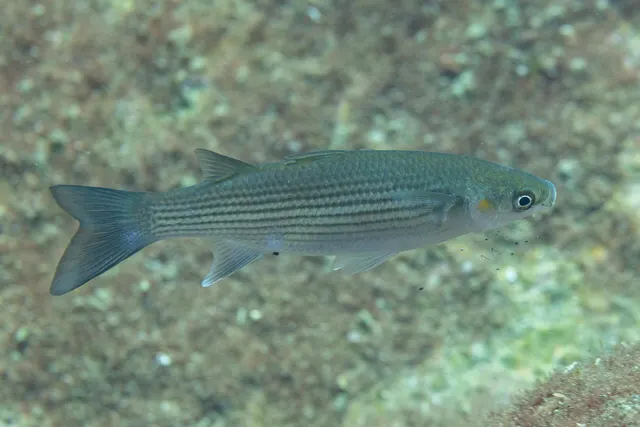 Thick-lipped grey mulletA shoaling coastal fish that eats algae and detritus rather than prey — which makes it the hardest common sea fish to catch and the most interesting to think about.
Diego Delso — CC BY-SA 4.0, via Wikimedia Commons
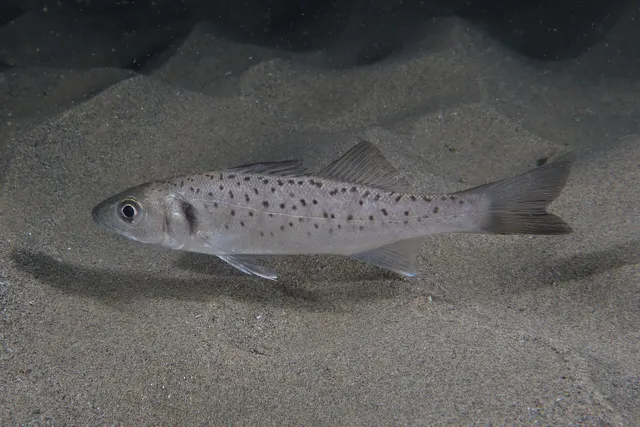 European sea bassA fast, predatory inshore fish that hunts in broken water and surf, and one of the most closely managed recreational species in European seas.
Julien Renoult — CC BY 4.0, via Wikimedia Commons
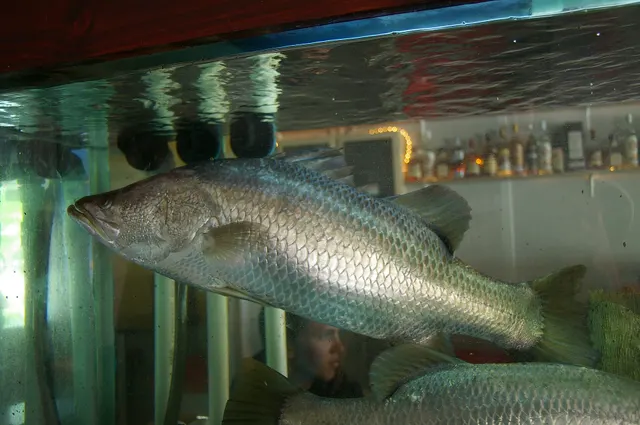 BarramundiAn estuarine ambush predator that begins life as a male and changes sex to female, so the largest fish are all breeding hens.
John Robert McPherson — CC0 1.0 Public Domain Dedication, via Wikimedia Commons
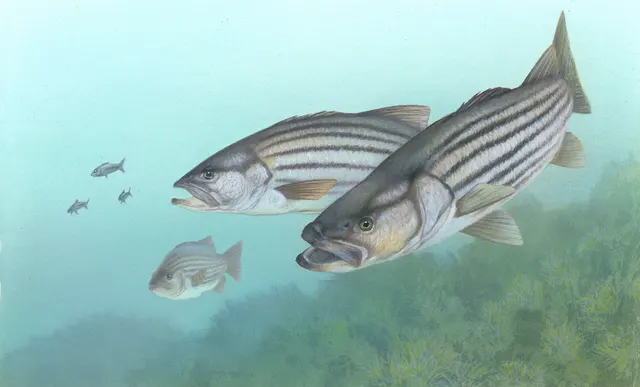 Striped bassA large anadromous predator of the North American Atlantic coast, fished from surf, rock, boat and river, and the subject of one of the better-known fishery recoveries.
Timothy Knepp — Public domain, via Wikimedia Commons
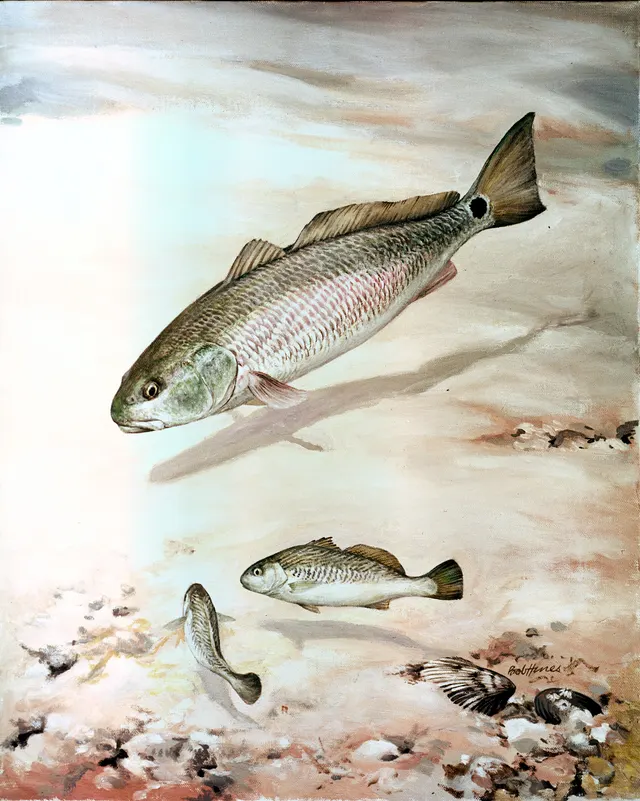 Red drumA copper-coloured inshore predator of the American south-east, marked with a false eyespot at the tail, fished on shallow flats where its tail breaks the surface as it feeds.
Hines, Robert W., Public domain, via Wikimedia Commons
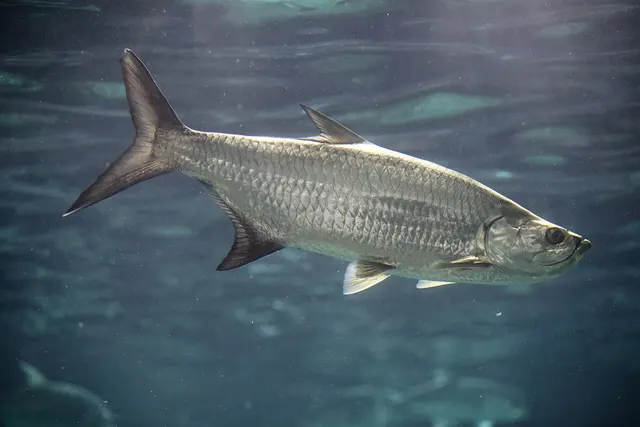 Atlantic tarponA huge, ancient, air-breathing fish of tropical Atlantic coasts that jumps repeatedly when hooked and is almost never eaten — fished purely for the encounter.
Daiju Azuma — CC BY-SA 4.0, via Wikimedia Commons
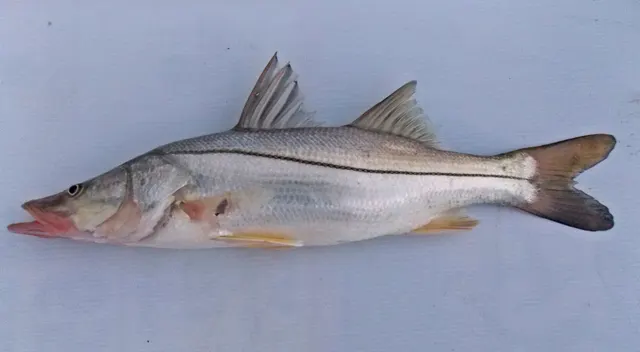 Common snookA structure-hugging ambush predator of tropical American coasts, marked by a hard black lateral line, that moves freely between the sea and fresh water.
jose_colorado-dapa — CC BY-SA 4.0, via Wikimedia Commons
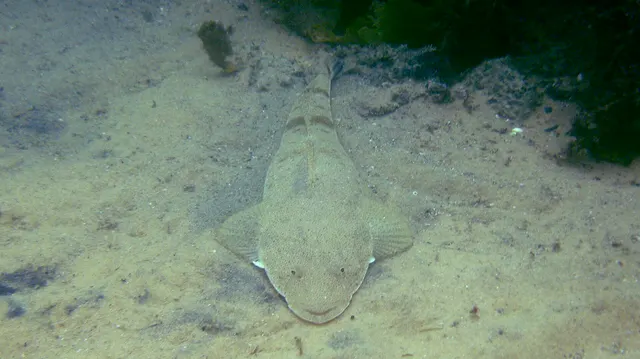 Dusky flatheadAn Australian estuary ambush predator that lies buried in sand waiting for something to swim over it — and the fish most Australian shore anglers catch first.
Sylke Rohrlach from Sydney — CC BY-SA 2.0, via Wikimedia Commons
Why a drying estuary fishes on the last of the ebb and the first of the flood
Why a drying estuary fishes on the last of the ebb and the first of the flood
Reading the ground · Draft — not yet checked against an external reference
This drawing has not been checked against any reference outside FishingHQ. It is a schematic of what the surrounding text describes, and the text is what carries the detail.
Describe this diagram in words
Two stacked cross-sections through the same drying estuary, taken from bank to bank. In the upper panel, at low water, a broad and almost level flat of sand and mud runs in from each bank and falls into a channel cut through the middle; the only water in the figure lies in that channel, and a label beneath it states that every fish in the system is in there because there is nowhere else for them to be. In the lower panel the bed is identical, offset downward, but the water surface now runs unbroken from bank to bank at high tide with the channel invisible beneath it, and two horizontal arrows lead outward from the channel across the covered flats to show fish leaving it to feed on ground the tide has just reached. A label beneath the lower channel states that it is now the part of the estuary the fish have left. Two lines of text at the foot give the conclusion: the draining flats push fish back into the channel on the last of the ebb, and they run up it ahead of the water on the first of the flood, which is why a guide names those two halves together as a single window. No depth, width, number of hours or species appears anywhere on the figure.
How this drawing was produced
Drawn by hand as two stacked cross-sections of one piece of ground, and looked at as a finished image before publication. THE TWO PANELS SHARE A BED PROFILE DELIBERATELY. The first draft varied the bed between them to make the panels distinct, which was exactly wrong: the argument is that the ground does not change and only the water does. The bed paths are now one shape offset vertically, so a reader comparing panels compares water levels and nothing else. THE SPREAD ARROWS WERE VERTICAL in the first draft, which read as fish rising in the water column rather than moving out over new ground. They now run horizontally to both banks. NO HOUR COUNT IS DRAWN although every source names one, because the number is a fact about a particular estuary and drawing it would turn a mechanism into a rule. The vertical is exaggerated, as on every section through a sea floor.
Safety
Tides and being cut off — Can cause serious injury or death
A flood tide fills an estuary flat far faster than most people expect, and it does not arrive from one direction — channels behind an angler fill first, cutting off the route back while the water ahead still looks distant. This is the commonest way people are trapped on intertidal ground.
What reduces it: Check the tide times and the height of the tide, not just the times — a big spring tide covers ground a neap does not. Identify the exit and the channels behind you before walking out. Leave on a set time, early, and never on the appearance of the water. Tell somebody where you are going and carry a means of calling for help.
Worse when:
- Spring tides, which flood faster and higher
- Fog or darkness, when the route back is hard to find
- Ground with channels between the angler and the shore
Moving water and currents — Can cause serious injury or death
Estuary mud can be soft enough to trap a person to the knee or deeper, and a person stuck in mud on a rising tide is in a life-threatening situation. Attempts at self-rescue frequently make it worse.
What reduces it: Do not walk on soft mud. Test ground before committing weight and stay on firm sand or shingle. If stuck, do not struggle — spread your weight, call for help immediately, and stay as still as possible while waiting.
Biosecurity and disease transfer — Can cause injury needing treatment
Estuaries are focal points for the movement of non-native species and for pathogens carried between waters on wet equipment, because they connect river systems to the sea and to shipping.
What reduces it: Clean, drain, dry and check all equipment between waters. Never move live fish or water between systems.
Precautions that always apply here
- Check the tide before you go and know your exit route. Being cut off is the commonest way a shore session becomes a rescue.
- Tell somebody where you are going and when you expect to be back.
- Carry a charged phone in a waterproof case, or another means of calling for help.
- Do not wade alone. Judge depth and flow from the bank first, and turn back sooner than feels necessary.
- Check, clean and dry your kit between different waters — the published guidance is 48 hours’ drying, in sunlight where possible, because a number of invasive species survive over two weeks in damp conditions. Nets, boots and wet mats move invasive species and disease more effectively than anything else anglers do.
Further safety reading
- Tides and being cut off — Estuary flats flood from behind before they flood in front, which is why people are cut off there while the water ahead still looks a long way away.
Where to go next
Fish found here
- Allis shadThe transition the whole life history turns on: adults enter estuaries in spring before ascending, and juveniles drop back through them to sea in their first year.
- Atlantic tarponAir-breathing lets tarpon live in stagnant backwaters and mangrove lagoons where no fish of that size otherwise could — the swim bladder connects to the oesophagus and is filled directly.
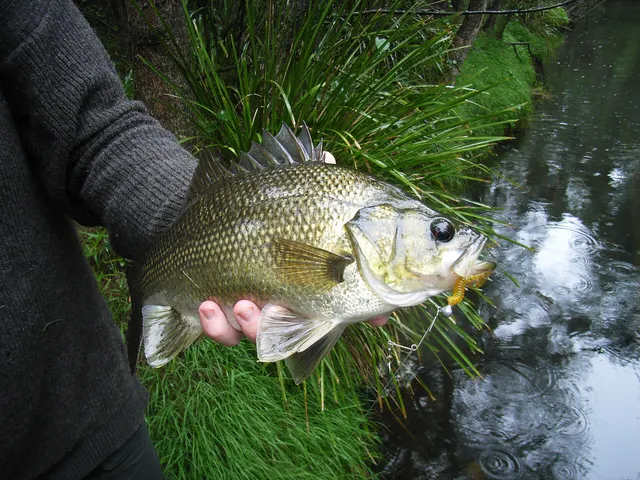 Australian bassCatadromous: adults live in fresh water and must reach estuarine salt water to spawn, which makes a barrier anywhere between the two fatal to reproduction.
- BarramundiBarramundi are estuarine before they are anything else, holding against snags, mangrove roots and drain mouths where tidal flow delivers prey past a fixed ambush point.
- Black gobyBrackish, soft-bottomed and variable — which is the whole of why it is there.
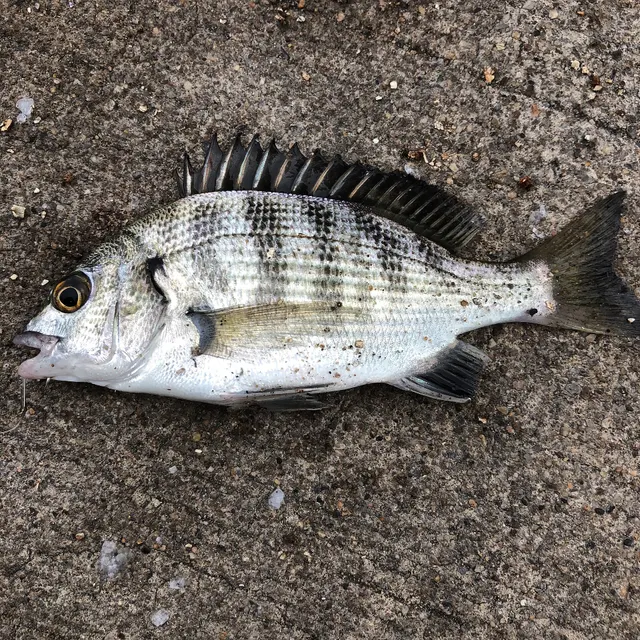 Blackhead seabreamWorks harbours, breakwaters, rocky shores and estuaries, crushing shellfish.
- Blue swimmer crabEstuarine sand and the gulf shallows, which is where most of the amateur fishery happens.
- Blue threadfinFeels for prawns with its pectoral filaments in turbid tropical estuaries.
39 more
- Brown shrimp Fish
- Bull shark Fish
- Common cockle Fish
- Common snook Fish
- Common stingray Fish
- Dab Fish
- Derbio Fish
- Dungeness crab Fish
- Dusky flathead Fish
- Dusky kob Fish
- Estuary perch Fish
- European eel Fish
- European flounder Fish
- European sea bass Fish
- Five-bearded rockling Fish
- Giant African threadfin Fish
- Hilsa shad Fish
- Japanese sea bass Fish
- Mangrove jack Fish
- Meagre Fish
- Mud crab Fish
- Native oyster Fish
- Permit Fish
- Red drum Fish
- Rig Fish
- Sand whiting Fish
- Shore crab Fish
- Spotted eagle ray Fish
- Spotted grunter Fish
- Spotted seatrout Fish
- Striped bass Fish
- Thick-lipped grey mullet Fish
- Thin-lipped grey mullet Fish
- Tope Fish
- Tub gurnard Fish
- Twaite shad Fish
- Weakfish Fish
- White sturgeon Fish
- Yellowfin bream Fish
Reading this water
- Estuary fishing: tide, salinity and the moving frontThe habitat page describes what an estuary is; the fishing depends on where the salinity front is at a given hour, which is a different question with a moving answer.
- Osmoregulation and diadromous fishEstuaries are where the machinery is under most strain.
- Reading a tide for fishingAn estuary is where the state of the tide changes salinity as well as depth, which relocates species that follow the salt wedge up and down and makes the timing question sharper than on open coast.
- Reading the tideAn estuary is not a place with a tide; it is a place made by one. Salinity, depth, current direction and where the fish are all change with the state of tide rather than with the hour.
- Saltwater fly fishing: what changesWhere the tide replaces the hatch as the thing being read. An estuary's current reverses twice a day and concentrates food on the ebb, so the productive window is defined by the state of the tide rather than by the time of day — and being wrong about it means fishing dead water competently.
- Telling juveniles from adults underwaterMany species use sheltered, structured, shallower ground as juveniles, so nursery habitat is itself an identification clue.
- Why the fish are not where they were last weekThe water where this happens fastest and most legibly. An estuary's fish distribution reorganises twice a day on the tide and again seasonally as salinity and temperature shift, so 'the same place' at a different hour is genuinely a different piece of water.
How this compares
- Brackish waterAn estuary is a brackish system with a tide. Separating the two keeps the tide with the estuary and the salinity biology with brackish water, where it applies equally to a tideless sea.
- Fly fishing for bass in surf, estuary and over rockThe estuary is where temperate Europe comes closest to flats fishing: shallow, clear, drained by channels, and holding fish that can be seen and stalked.
- MangroveThe temperate estuary record and this one share a salinity gradient and very little else about how the year works: one is organised around water warming, the other around a forest flooding twice a day.
- Mudflats and intertidal sandflatsThe flats are the floor of the estuary, and the two records answer different questions: one is a salinity gradient, the other is the sediment surface people stand on.
- Saltwater fly fishingThe salinity gradient and the tide together decide where prey is being pushed, which is the whole of estuary fly fishing.
- Tropical estuary and tidal creekThe same physical structure on two different clocks. A temperate estuary's year is a temperature curve; a tropical one's is a hydrograph, and mistaking one for the other is how a trip gets planned into the wrong month.
Environment and conservation
Sources and evidence
- RNLI water safety guidance: cold water shock and Float to Live — Royal National Lifeboat Institution (Water-safety or diver-training authority)Relied on for: Tidal cut-off and soft-ground risk on intertidal areas, and the response to being stuck.FishingHQ's interpretation of what it saysPassage read and verified
- JNCC species and habitat conservation advice — Joint Nature Conservation Committee (Conservation authority)Relied on for: The characterisation of estuaries as high-productivity intertidal habitats with nursery function.FishingHQ's interpretation of what it saysCitation checked — the work exists and is described correctly
Why the 62 connections on this page are here, and the sources
Fish found here
Backed by research — 47 connections
Supported by peer-reviewed research or fisheries science. The sources are listed and can be checked.
Allis shad
A distributional claim about where a species is found, which is a claim about the world and rests on regional reference works rather than on angling report.
- Freshwater Fishes of the British Isles — HarperCollins (New Naturalist 75), 1992 (Reference work)Relied on for: Distribution, habitat association, identification and life history of the freshwater fishes of the British Isles.States this directlyCitation checked — the work exists and is described correctly
- FishBase: a global information system on fishes — Froese, R. and D. Pauly, eds. — FishBase Consortium (Scientific institute)Relied on for: Distribution, habitat association, depth range, diet and reproductive parameters recorded for the species.States this directlyPassage read and verified
Atlantic tarpon
A physiological and habitat claim held to a scientific standard, because the air-breathing capacity is the explanation for the distribution rather than a curiosity beside it.
- FishBase: a global information system on fishes — Froese, R. and D. Pauly, eds. — FishBase Consortium (Scientific institute)Relied on for: That Megalops atlanticus occurs in coastal waters, bays, estuaries, mangrove-lined lagoons and rivers, and that the swim bladder attached to the oesophagus can be filled directly with air permitting the fish to live in oxygen-poor waters.States this directlyPassage read and verified
Australian bass
A life-history claim with direct management consequence, held to a scientific standard.
- FishBase: a global information system on fishes — Froese, R. and D. Pauly, eds. — FishBase Consortium (Scientific institute)Relied on for: That Macquaria novemaculeata occupies coastal rivers and estuaries of eastern Australia with a catadromous life history.States this directlyPassage read and verified
- NASCO conservation and management of North Atlantic salmon — North Atlantic Salmon Conservation Organization (Government fisheries body)Relied on for: That diadromous fish depend on unobstructed passage between fresh and salt water and that barriers are a recognised management concern.FishingHQ's interpretation of what it saysCitation checked — the work exists and is described correctly
Barramundi
A habitat claim held to a scientific standard.
- FishBase: a global information system on fishes — Froese, R. and D. Pauly, eds. — FishBase Consortium (Scientific institute)Relied on for: Recorded habitat use of Lates calcarifer across estuarine, riverine and coastal environments.States this directlyPassage read and verified
- JNCC species and habitat conservation advice — Joint Nature Conservation Committee (Conservation authority)Relied on for: The general characterisation of estuarine habitat and its productivity.Background and mechanism onlyCitation checked — the work exists and is described correctly
Black goby
Recorded as demersal in marine and brackish water over a depth range of 1 to 96 m from Trondheim and the Baltic to Cape Blanc and through the Mediterranean and Black Sea. Its salinity tolerance is what puts it in harbours and estuaries where the rock-dwelling gobies are not.
- FishBase: a global information system on fishes — Froese, R. and D. Pauly, eds. — FishBase Consortium (Scientific institute)Relied on for: Environment, depth range, habitat association and distribution for Gobius niger.States this directlyPassage read and verified
Blackhead seabream
A habitat association for Acanthopagrus schlegelii taken from the environment and distribution data on its FishBase summary.
- FishBase: a global information system on fishes — Froese, R. and D. Pauly, eds. — FishBase Consortium (Scientific institute)Relied on for: The environment, depth range and habitat description recorded for Acanthopagrus schlegelii.States this directlyPassage read and verified
Blue swimmer crab
Recorded from estuarine bottoms across its Australian range, including the South Australian gulfs where the shallow sand fishery is worked on foot.
- FAO Species Identification Guides for Fishery Purposes and the FAO Species Catalogues — Food and Agriculture Organization of the United Nations (Scientific institute)Relied on for: Identification, distribution, habitat and fishery description for the crustacean and reef species named here.States this directlyCitation checked — the work exists and is described correctly
Blue threadfin
A habitat association for Eleutheronema tetradactylum taken from the environment and distribution data on its FishBase summary.
- FishBase: a global information system on fishes — Froese, R. and D. Pauly, eds. — FishBase Consortium (Scientific institute)Relied on for: The environment, depth range and habitat description recorded for Eleutheronema tetradactylum.States this directlyPassage read and verified
Brown shrimp
A distributional claim about where a species is found, resting on the standard regional reference works rather than on angling report.
- The Fishes of the British Isles and North-West Europe — Macmillan, 1969 (Reference work)Relied on for: Distribution, habitat association, identification and biology of the fishes and inshore fauna of the British Isles and north-west Europe.States this directlyCitation checked — the work exists and is described correctly
- FAO Species Identification Guides for Fishery Purposes and the FAO Species Catalogues — Food and Agriculture Organization of the United Nations (Scientific institute)Relied on for: Diagnostic characters, family placement, habitat and depth range as set out in the FAO species identification sheets for the eastern Atlantic and Mediterranean.States this directlyCitation checked — the work exists and is described correctly
Bull shark
A distributional claim about where a species is found, resting on the standard identification and compilation sources rather than on fishing report.
- FAO Species Identification Guides for Fishery Purposes and the FAO Species Catalogues — Food and Agriculture Organization of the United Nations (Scientific institute)Relied on for: Diagnostic characters, habitat association, depth range and distribution as set out in the FAO species identification guides for fishery purposes.States this directlyCitation checked — the work exists and is described correctly
- FishBase: a global information system on fishes — Froese, R. and D. Pauly, eds. — FishBase Consortium (Scientific institute)Relied on for: Distribution, maximum size, depth range, habitat association and biology as compiled for the species.States this directlyPassage read and verified
Common cockle
Habitat association recorded for the species rather than inferred from the fishery.
- FishBase: a global information system on fishes — Froese, R. and D. Pauly, eds. — FishBase Consortium (Scientific institute)Relied on for: Habitat association, depth range and distribution for the species, with SeaLifeBase as its sister database for non-finfish taxa.States this directlyPassage read and verified
Common snook
A habitat claim held to a scientific standard.
- FishBase: a global information system on fishes — Froese, R. and D. Pauly, eds. — FishBase Consortium (Scientific institute)Relied on for: That Centropomus undecimalis occurs in marine, fresh and brackish water in coastal waters, estuaries and lagoons, penetrating into fresh water at depths under 20 m.States this directlyPassage read and verified
Common stingray
A distributional claim about where a species is found, which rests on the standard regional reference works rather than on angling report.
- The Fishes of the British Isles and North-West Europe — Macmillan, 1969 (Reference work)Relied on for: Distribution, habitat association, identification and biology of the sharks, skates and rays of the British Isles and north-west Europe.States this directlyCitation checked — the work exists and is described correctly
- FAO Species Identification Guides for Fishery Purposes and the FAO Species Catalogues — Food and Agriculture Organization of the United Nations (Scientific institute)Relied on for: Diagnostic characters, habitat and depth range as set out in the FAO species identification sheets for the eastern Atlantic and Mediterranean.States this directlyCitation checked — the work exists and is described correctly
Dab
A distributional claim about where a species is found, which is a claim about the world and rests on the standard regional reference works rather than on angling report.
- The Fishes of the British Isles and North-West Europe — Macmillan, 1969 (Reference work)Relied on for: Distribution, habitat association, identification and biology of the fishes of the British Isles and north-west Europe.States this directlyCitation checked — the work exists and is described correctly
- FAO Species Identification Guides for Fishery Purposes and the FAO Species Catalogues — Food and Agriculture Organization of the United Nations (Scientific institute)Relied on for: Diagnostic characters, habitat and depth range as set out in the FAO species identification sheets for the eastern Atlantic and Mediterranean.States this directlyCitation checked — the work exists and is described correctly
Derbio
FishBase records it as occasionally entering lagoons and river estuaries. `Occasionally` is carried through rather than smoothed away, because a fish that sometimes enters brackish water is not an estuary fish.
- FishBase: a global information system on fishes — Froese, R. and D. Pauly, eds. — FishBase Consortium (Scientific institute)Relied on for: Environment, depth range, habitat association and distribution for Trachinotus ovatus.States this directlyPassage read and verified
Dungeness crab
Juveniles are recorded as inhabiting and foraging in estuaries, particularly over oyster reef and eelgrass, which is a different habitat from the adult fishery and is the reason estuarine closures exist where they do.
- FAO Species Identification Guides for Fishery Purposes and the FAO Species Catalogues — Food and Agriculture Organization of the United Nations (Scientific institute)Relied on for: Identification, distribution, habitat and fishery description for the crustacean and reef species named here.States this directlyCitation checked — the work exists and is described correctly
Dusky flathead
A habitat and feeding-mechanism claim held to a scientific standard, because the upward strike is what determines presentation.
- FishBase: a global information system on fishes — Froese, R. and D. Pauly, eds. — FishBase Consortium (Scientific institute)Relied on for: That Platycephalus fuscus inhabits shallow bays and estuaries over mud, silt, gravel, sand and seagrass from the intertidal zone to about 30 m, and feeds on small fish, crabs, prawns, small crustaceans, octopus, squid and polychaete worms.States this directlyPassage read and verified
Dusky kob
A life-history claim with direct management consequence, held to a scientific standard.
- FishBase: a global information system on fishes — Froese, R. and D. Pauly, eds. — FishBase Consortium (Scientific institute)Relied on for: That Argyrosomus japonicus has adults inhabiting near-shore areas beyond the surf zone while juveniles are found exclusively inshore and recruit to estuaries at around 30 cm length.States this directlyPassage read and verified
Estuary perch
A habitat association for Percalates colonorum taken from the environment and distribution data on its FishBase summary.
- FishBase: a global information system on fishes — Froese, R. and D. Pauly, eds. — FishBase Consortium (Scientific institute)Relied on for: The environment, depth range and habitat description recorded for Percalates colonorum.States this directlyPassage read and verified
European eel
A life-history claim with direct management consequence, held to a scientific standard.
- FishBase: a global information system on fishes — Froese, R. and D. Pauly, eds. — FishBase Consortium (Scientific institute)Relied on for: That Anguilla anguilla occupies fresh, brackish and marine water with a catadromous life history, entering rivers as juveniles and returning to sea to spawn.States this directlyPassage read and verified
- Freshwater Fishes of the British Isles — HarperCollins (New Naturalist 75), 1992 (Reference work)Relied on for: The freshwater phase and migration of Anguilla anguilla in European waters.States this directlyCitation checked — the work exists and is described correctly
European flounder
A distributional claim about where a species is found, which is a claim about the world and rests on the standard regional reference works rather than on angling report.
- The Fishes of the British Isles and North-West Europe — Macmillan, 1969 (Reference work)Relied on for: Distribution, habitat association, identification and biology of the fishes of the British Isles and north-west Europe.States this directlyCitation checked — the work exists and is described correctly
- FAO Species Identification Guides for Fishery Purposes and the FAO Species Catalogues — Food and Agriculture Organization of the United Nations (Scientific institute)Relied on for: Diagnostic characters, habitat and depth range as set out in the FAO species identification sheets for the eastern Atlantic and Mediterranean.States this directlyCitation checked — the work exists and is described correctly
European sea bass
A habitat and life-history claim held to a scientific standard, because it underpins a management measure rather than a technique.
- Cefas science, advice and data on marine and freshwater environments — Centre for Environment, Fisheries and Aquaculture Science (Government fisheries body)Relied on for: The role of estuarine nursery areas in the life history of European sea bass.States this directlyCitation checked — the work exists and is described correctly
- ICES Advice on fishing opportunities, catch and effort — International Council for the Exploration of the Sea (Scientific institute)Relied on for: Stock assessment context for European sea bass including nursery habitat.Background and mechanism onlyCitation checked — the work exists and is described correctly
Five-bearded rockling
A habitat association resting on the standard regional reference works rather than on angling report.
- The Fishes of the British Isles and North-West Europe — Macmillan, 1969 (Reference work)Relied on for: Distribution, habitat association, identification and biology of the fishes of the British Isles and north-west Europe.States this directlyCitation checked — the work exists and is described correctly
- FAO Species Identification Guides for Fishery Purposes and the FAO Species Catalogues — Food and Agriculture Organization of the United Nations (Scientific institute)Relied on for: Diagnostic characters, family placement, habitat and depth range as set out in the FAO species identification sheets for the north-east Atlantic.States this directlyCitation checked — the work exists and is described correctly
Giant African threadfin
A habitat association for Polydactylus quadrifilis taken from the environment and distribution data on its FishBase summary.
- FishBase: a global information system on fishes — Froese, R. and D. Pauly, eds. — FishBase Consortium (Scientific institute)Relied on for: The environment, depth range and habitat description recorded for Polydactylus quadrifilis.States this directlyPassage read and verified
Hilsa shad
Recorded as anadromous and pelagic-neritic in marine, brackish and fresh water from Madagascar and the Persian Gulf east to Vietnam, running from the sea far up rivers to spawn.
- FishBase: a global information system on fishes — Froese, R. and D. Pauly, eds. — FishBase Consortium (Scientific institute)Relied on for: Environment, depth range, habitat association and distribution for Tenualosa ilisha.States this directlyPassage read and verified
Japanese sea bass
A habitat association for Lateolabrax japonicus taken from the environment and distribution data on its FishBase summary.
- FishBase: a global information system on fishes — Froese, R. and D. Pauly, eds. — FishBase Consortium (Scientific institute)Relied on for: The environment, depth range and habitat description recorded for Lateolabrax japonicus.States this directlyPassage read and verified
Mangrove jack
A habitat association for Lutjanus argentimaculatus taken from the environment and distribution data on its FishBase summary.
- FishBase: a global information system on fishes — Froese, R. and D. Pauly, eds. — FishBase Consortium (Scientific institute)Relied on for: The environment, depth range and habitat description recorded for Lutjanus argentimaculatus.States this directlyPassage read and verified
Meagre
A habitat association for Argyrosomus regius taken from the environment and distribution data on its FishBase summary.
- FishBase: a global information system on fishes — Froese, R. and D. Pauly, eds. — FishBase Consortium (Scientific institute)Relied on for: The environment, depth range and habitat description recorded for Argyrosomus regius.States this directlyPassage read and verified
Mud crab
A distributional claim resting on the regional identification and fisheries literature rather than on angling report.
- Cefas science, advice and data on marine and freshwater environments — Centre for Environment, Fisheries and Aquaculture Science (Government fisheries body)Relied on for: UK marine science: distribution, habitat association, shellfish and crustacean monitoring, and the biological basis of management advice.States this directlyCitation checked — the work exists and is described correctly
- FAO Species Identification Guides for Fishery Purposes and the FAO Species Catalogues — Food and Agriculture Organization of the United Nations (Scientific institute)Relied on for: Habitat, depth range and distribution as set out in the FAO species identification sheets for the region concerned.States this directlyCitation checked — the work exists and is described correctly
Native oyster
A distributional claim about where a species is found, resting on the standard regional reference works rather than on angling report.
- The Fishes of the British Isles and North-West Europe — Macmillan, 1969 (Reference work)Relied on for: Distribution, habitat association, identification and biology of the fishes and inshore fauna of the British Isles and north-west Europe.States this directlyCitation checked — the work exists and is described correctly
- FAO Species Identification Guides for Fishery Purposes and the FAO Species Catalogues — Food and Agriculture Organization of the United Nations (Scientific institute)Relied on for: Diagnostic characters, family placement, habitat and depth range as set out in the FAO species identification sheets for the eastern Atlantic and Mediterranean.States this directlyCitation checked — the work exists and is described correctly
Permit
A habitat association for Trachinotus falcatus taken from the environment and distribution data on its FishBase summary.
- FishBase: a global information system on fishes — Froese, R. and D. Pauly, eds. — FishBase Consortium (Scientific institute)Relied on for: The environment, depth range and habitat description recorded for Trachinotus falcatus.States this directlyPassage read and verified
Red drum
A habitat claim held to a scientific standard.
- FishBase: a global information system on fishes — Froese, R. and D. Pauly, eds. — FishBase Consortium (Scientific institute)Relied on for: That Sciaenops ocellatus occurs usually over sand and sandy mud bottoms in coastal waters and estuaries and is abundant in the surf zone.States this directlyPassage read and verified
Rig
Demersal and oceanodromous over a depth range of 0 to 860 m but usually inside 400 m, with shallow coastal water and estuaries used as nursery ground by juveniles around New Zealand and the Kermadecs.
- FishBase: a global information system on fishes — Froese, R. and D. Pauly, eds. — FishBase Consortium (Scientific institute)Relied on for: Environment, depth range, habitat association and distribution for Mustelus lenticulatus.States this directlyPassage read and verified
Sand whiting
A habitat association for Sillago ciliata taken from the environment and distribution data on its FishBase summary.
- FishBase: a global information system on fishes — Froese, R. and D. Pauly, eds. — FishBase Consortium (Scientific institute)Relied on for: The environment, depth range and habitat description recorded for Sillago ciliata.States this directlyPassage read and verified
Shore crab
A claim that a place contains the ground and conditions the animal is associated with. It is a distributional statement about the world and rests on reference works, and it deliberately asserts nothing about access or permission.
- The Fishes of the British Isles and North-West Europe — Macmillan, 1969 (Reference work)Relied on for: Distribution and habitat association of the inshore fauna of the British Isles and the north-east Atlantic.States this directlyCitation checked — the work exists and is described correctly
- FishBase: a global information system on fishes — Froese, R. and D. Pauly, eds. — FishBase Consortium (Scientific institute)Relied on for: Recorded distribution and habitat association for the species where held.Background and mechanism onlyPassage read and verified
- The IUCN Red List of Threatened Species — International Union for Conservation of Nature (Conservation authority)Relied on for: Range and recorded threats for the species where assessed.Background and mechanism onlyCitation checked — the work exists and is described correctly
Spotted eagle ray
A distributional claim about where a species is found, resting on the standard identification and compilation sources rather than on fishing report.
- FAO Species Identification Guides for Fishery Purposes and the FAO Species Catalogues — Food and Agriculture Organization of the United Nations (Scientific institute)Relied on for: Diagnostic characters, habitat association, depth range and distribution as set out in the FAO species identification guides for fishery purposes.States this directlyCitation checked — the work exists and is described correctly
- FishBase: a global information system on fishes — Froese, R. and D. Pauly, eds. — FishBase Consortium (Scientific institute)Relied on for: Distribution, maximum size, depth range, habitat association and biology as compiled for the species.States this directlyPassage read and verified
Spotted grunter
A habitat association for Pomadasys commersonnii taken from the environment and distribution data on its FishBase summary.
- FishBase: a global information system on fishes — Froese, R. and D. Pauly, eds. — FishBase Consortium (Scientific institute)Relied on for: The environment, depth range and habitat description recorded for Pomadasys commersonnii.States this directlyPassage read and verified
Spotted seatrout
A habitat association for Cynoscion nebulosus taken from the environment and distribution data on its FishBase summary.
- FishBase: a global information system on fishes — Froese, R. and D. Pauly, eds. — FishBase Consortium (Scientific institute)Relied on for: The environment, depth range and habitat description recorded for Cynoscion nebulosus.States this directlyPassage read and verified
Striped bass
A life-history claim with direct management consequences.
- FishBase: a global information system on fishes — Froese, R. and D. Pauly, eds. — FishBase Consortium (Scientific institute)Relied on for: That Morone saxatilis is anadromous, moving into fresh or brackish water to spawn, with adults inhabiting coastal waters and bays and entering rivers during the spring spawning season.States this directlyPassage read and verified
Thick-lipped grey mullet
A habitat and salinity-tolerance claim held to a scientific standard, because the tolerance is the biological fact that explains everything about where the fish is found.
- The Fishes of the British Isles and North-West Europe — Macmillan, 1969 (Reference work)Relied on for: Estuarine and brackish habitat use and the feeding habits of Chelon labrosus on fine organic material.States this directlyCitation checked — the work exists and is described correctly
- FishBase: a global information system on fishes — Froese, R. and D. Pauly, eds. — FishBase Consortium (Scientific institute)Relied on for: Recorded habitat and salinity tolerance for Chelon labrosus.States this directlyPassage read and verified
Thin-lipped grey mullet
A distributional claim about where a species is found, resting on the standard regional reference works rather than on angling report.
- The Fishes of the British Isles and North-West Europe — Macmillan, 1969 (Reference work)Relied on for: Distribution, habitat association, identification and biology of the fishes and inshore fauna of the British Isles and north-west Europe.States this directlyCitation checked — the work exists and is described correctly
- FAO Species Identification Guides for Fishery Purposes and the FAO Species Catalogues — Food and Agriculture Organization of the United Nations (Scientific institute)Relied on for: Diagnostic characters, family placement, habitat and depth range as set out in the FAO species identification sheets for the eastern Atlantic and Mediterranean.States this directlyCitation checked — the work exists and is described correctly
Tope
A distributional claim about where a species is found, which rests on the standard regional reference works rather than on angling report.
- The Fishes of the British Isles and North-West Europe — Macmillan, 1969 (Reference work)Relied on for: Distribution, habitat association, identification and biology of the sharks, skates and rays of the British Isles and north-west Europe.States this directlyCitation checked — the work exists and is described correctly
- FAO Species Identification Guides for Fishery Purposes and the FAO Species Catalogues — Food and Agriculture Organization of the United Nations (Scientific institute)Relied on for: Diagnostic characters, habitat and depth range as set out in the FAO species identification sheets for the eastern Atlantic and Mediterranean.States this directlyCitation checked — the work exists and is described correctly
Tub gurnard
A distributional claim about where a species is found, which is a claim about the world and rests on the standard regional reference works rather than on angling report.
- The Fishes of the British Isles and North-West Europe — Macmillan, 1969 (Reference work)Relied on for: Distribution, habitat association, identification and biology of the fishes of the British Isles and north-west Europe.States this directlyCitation checked — the work exists and is described correctly
- FAO Species Identification Guides for Fishery Purposes and the FAO Species Catalogues — Food and Agriculture Organization of the United Nations (Scientific institute)Relied on for: Diagnostic characters, habitat and depth range as set out in the FAO species identification sheets for the eastern Atlantic and Mediterranean.States this directlyCitation checked — the work exists and is described correctly
Twaite shad
A distributional claim about where a species is found, which is a claim about the world and rests on regional reference works rather than on angling report.
- Freshwater Fishes of the British Isles — HarperCollins (New Naturalist 75), 1992 (Reference work)Relied on for: Distribution, habitat association, identification and life history of the freshwater fishes of the British Isles.States this directlyCitation checked — the work exists and is described correctly
- FishBase: a global information system on fishes — Froese, R. and D. Pauly, eds. — FishBase Consortium (Scientific institute)Relied on for: Distribution, habitat association, depth range, diet and reproductive parameters recorded for the species.States this directlyPassage read and verified
Weakfish
A habitat association for Cynoscion regalis taken from the environment and distribution data on its FishBase summary.
- FishBase: a global information system on fishes — Froese, R. and D. Pauly, eds. — FishBase Consortium (Scientific institute)Relied on for: The environment, depth range and habitat description recorded for Cynoscion regalis.States this directlyPassage read and verified
White sturgeon
A habitat association for Acipenser transmontanus taken from the environment and distribution data on its FishBase summary.
- FishBase: a global information system on fishes — Froese, R. and D. Pauly, eds. — FishBase Consortium (Scientific institute)Relied on for: The environment, depth range and habitat description recorded for Acipenser transmontanus.States this directlyPassage read and verified
Yellowfin bream
A habitat association for Acanthopagrus australis taken from the environment and distribution data on its FishBase summary.
- FishBase: a global information system on fishes — Froese, R. and D. Pauly, eds. — FishBase Consortium (Scientific institute)Relied on for: The environment, depth range and habitat description recorded for Acanthopagrus australis.States this directlyPassage read and verified
Reading this water
Backed by research — 4 connections
Supported by peer-reviewed research or fisheries science. The sources are listed and can be checked.
Estuary fishing: tide, salinity and the moving front
Estuarine stratification and the tidal excursion of the salinity front are described physical processes.
- NOAA National Ocean Service education on estuaries and the National Estuarine Research Reserve System — National Oceanic and Atmospheric Administration, United States (Government fisheries body)Relied on for: Estuarine salinity gradients, stratification types and their dependence on tide and river flow.States this directlyCitation checked — the work exists and is described correctly
Osmoregulation and diadromous fish
Estuaries are where the machinery is under most strain.
- FishBase: a global information system on fishes — Froese, R. and D. Pauly, eds. — FishBase Consortium (Scientific institute)Relied on for: Species and habitat data underlying this connection. Estuaries are where the machinery is under most strain.States this directlyPassage read and verified
Reading the tide
A claim about what physically drives the habitat, held to a scientific standard on the tidal mechanism.
- NOAA Ocean Service tides and water levels educational tutorial — National Oceanic and Atmospheric Administration, United States (Government fisheries body)Relied on for: The tidal cycle and the currents it generates.States this directlyPassage read and verified
- JNCC species and habitat conservation advice — Joint Nature Conservation Committee (Conservation authority)Relied on for: The characterisation of estuaries as tidally driven mixing zones.FishingHQ's interpretation of what it saysCitation checked — the work exists and is described correctly
Telling juveniles from adults underwater
The habitat record and the age-class intelligence that belongs to it.
- FishBase: a global information system on fishes — Froese, R. and D. Pauly, eds. — FishBase Consortium (Scientific institute)Relied on for: Species habitat association, depth range and feeding ecology across marine fishes.Background and mechanism onlyPassage read and verified
What experienced anglers do — 3 connections
Widely and independently recommended by experienced anglers and specialist sources. This is real angling knowledge, not proof: controlled evidence for it is limited, and FishingHQ records it as convention rather than as a demonstrated effect.
Reading a tide for fishing
The physical or biological reason behind a situation. Where that reason is documented science the page for it carries the citation; the association itself is practitioner observation and is labelled as such.
- Sea Angler — Bauer Media (Specialist angling publication)Relied on for: Contemporary UK sea angling practice as reported by practitioners, including tidal timing and shore conditions.States this directlyCitation checked — the work exists and is described correctly
- NOAA Ocean Service tides and water levels educational tutorial — National Oceanic and Atmospheric Administration, United States (Government fisheries body)Relied on for: Public education on tidal generation, tidal streams and the relationship between water level and flow.States this directlyPassage read and verified
Saltwater fly fishing: what changes
A fish or a water joined to the fly-fishing mechanism it is a worked example of, written only where the subject's own behaviour or physical character is what this page explains. The direction is the one FishingHQ writes this kind of connection in, and the one it already uses 176 times, and it is also the semantically correct one: the mechanism explains the fish, not the reverse.
- Sea Angler — Bauer Media (Specialist angling publication)Relied on for: British sea angling practice including shore fishing for bass, pollack and mullet, the ground each is found over and the presentation each takes.FishingHQ's interpretation of what it saysCitation checked — the work exists and is described correctly
- FAO Species Identification Guides for Fishery Purposes and the FAO Species Catalogues — Food and Agriculture Organization of the United Nations (Scientific institute)Relied on for: Distribution, habitat and feeding biology of coastal and tropical marine species, from regional identification guides prepared for fishery purposes.States this directlyCitation checked — the work exists and is described correctly
Why the fish are not where they were last week
A fish or a record joined to the comparison it is a worked example of, written only where the subject's own behaviour is what makes the comparison concrete rather than where the comparison could apply to it.
- Freshwater Fishes of the British Isles — HarperCollins (New Naturalist 75), 1992 (Reference work)Relied on for: Feeding biology, behaviour and life history of the freshwater fishes of the British Isles.States this directlyCitation checked — the work exists and is described correctly
- FishBase: a global information system on fishes — Froese, R. and D. Pauly, eds. — FishBase Consortium (Scientific institute)Relied on for: Recorded feeding biology, environment and behaviour of the species named.States this directlyPassage read and verified
How this compares
Backed by research — 1 connection
Supported by peer-reviewed research or fisheries science. The sources are listed and can be checked.
Brackish water
A named water joined to the kind of habitat it is an example of, so the habitat page carries real examples and the place page can stop restating the physics.
- NOAA National Ocean Service education on estuaries and the National Estuarine Research Reserve System — National Oceanic and Atmospheric Administration, United States (Government fisheries body)Relied on for: The physical structure and ecology of estuarine, lagoon and coastal systems, including salinity gradients, exchange and nursery function.States this directlyCitation checked — the work exists and is described correctly
- Cefas science, advice and data on marine and freshwater environments — Centre for Environment, Fisheries and Aquaculture Science (Government fisheries body)Relied on for: Coastal and transitional water science, including salinity, water quality and the biology those conditions support.States this directlyCitation checked — the work exists and is described correctly
What experienced anglers do — 5 connections
Widely and independently recommended by experienced anglers and specialist sources. This is real angling knowledge, not proof: controlled evidence for it is limited, and FishingHQ records it as convention rather than as a demonstrated effect.
Fly fishing for bass in surf, estuary and over rock
Two records a reader would reasonably weigh against one another, joined where the comparison teaches something about both.
- Sea Angler — Bauer Media (Specialist angling publication)Relied on for: Contemporary UK sea angling practice as reported and restated by practitioners, including shore technique, species behaviour and tackle convention.Background and mechanism onlyCitation checked — the work exists and is described correctly
- General angling website restatements of established technique — Various (Credible secondary source)Relied on for: Widely restated angling practice and belief, recorded as practitioner consensus rather than as tested fact.Background and mechanism onlyCitation checked — the work exists and is described correctly
Mangrove
A comparison a reader trying to understand one of these systems genuinely needs, joining two records that resolve one another.
- FAO Species Identification Guides for Fishery Purposes and the FAO Species Catalogues — Food and Agriculture Organization of the United Nations (Scientific institute)Relied on for: Habitat association, depth range and distribution of the species concerned as set out in the FAO species identification sheets for the region.States this directlyCitation checked — the work exists and is described correctly
- The World's Mangroves and their Fisheries — FAO Forestry and Fisheries assessments — Food and Agriculture Organization of the United Nations, Rome (Standards body)Relied on for: The dependence of tropical coastal fisheries species on mangrove and estuarine habitat, including the nursery function.States this directlyCitation checked — the work exists and is described correctly
Mudflats and intertidal sandflats
A comparison a reader with the animal or the decision in front of them actually needs, joining two records that resolve one another.
- Cefas science, advice and data on marine and freshwater environments — Centre for Environment, Fisheries and Aquaculture Science (Government fisheries body)Relied on for: UK marine science: distribution, habitat association, shellfish and crustacean monitoring, and the biological basis of management advice.States this directlyCitation checked — the work exists and is described correctly
- FAO Species Identification Guides for Fishery Purposes and the FAO Species Catalogues — Food and Agriculture Organization of the United Nations (Scientific institute)Relied on for: Habitat, depth range and distribution as set out in the FAO species identification sheets for the region concerned.States this directlyCitation checked — the work exists and is described correctly
Saltwater fly fishing
A comparison a reader making this decision genuinely needs.
- Still Water Fly-Fishing — Andre Deutsch, 1952 (Specialist angling publication)Relied on for: Fly-fishing practice from a practitioner tradition: line control, depth management, retrieve and the reading of water.States this directlyCitation checked — the work exists and is described correctly
- Sea Angler — Bauer Media (Specialist angling publication)Relied on for: Contemporary UK sea angling practice as reported by practitioners: ground, tackle, presentation and seasonal timing.States this directlyCitation checked — the work exists and is described correctly
Tropical estuary and tidal creek
A comparison a reader trying to understand one of these systems genuinely needs, joining two records that resolve one another.
- FAO Species Identification Guides for Fishery Purposes and the FAO Species Catalogues — Food and Agriculture Organization of the United Nations (Scientific institute)Relied on for: Habitat association, depth range and distribution of the species concerned as set out in the FAO species identification sheets for the region.States this directlyCitation checked — the work exists and is described correctly
- The World's Mangroves and their Fisheries — FAO Forestry and Fisheries assessments — Food and Agriculture Organization of the United Nations, Rome (Standards body)Relied on for: The dependence of tropical coastal fisheries species on mangrove and estuarine habitat, including the nursery function.States this directlyCitation checked — the work exists and is described correctly
Safety reading
Official guidance — 1 connection
Stated by a fisheries authority, scientific institute or recognised angling body. Authoritative, but summarising rather than demonstrating.
Tides and being cut off
A specific hazard mechanism, sourced to a water safety authority.
- RNLI water safety guidance: cold water shock and Float to Live — Royal National Lifeboat Institution (Water-safety or diver-training authority)Relied on for: Tidal cut-off on intertidal ground and the mechanism by which channels fill behind people.States this directlyPassage read and verified
- RoSPA water safety information and UK accidental drowning statistics — Royal Society for the Prevention of Accidents (Water-safety or diver-training authority)Relied on for: That inland and coastal water accounts for the majority of accidental drownings.Background and mechanism onlyPassage read and verified
Environment and conservation
Official guidance — 1 connection
Stated by a fisheries authority, scientific institute or recognised angling body. Authoritative, but summarising rather than demonstrating.
Invasive species and biosecurity
A biosecurity claim held to an authoritative standard, because it concerns a statutory management concern rather than an angler's practice.
- Check Clean Dry — biosecurity guidance for water users — GB Non-native Species Secretariat (Conservation authority)Relied on for: Pathways by which non-native aquatic species are introduced and spread.States this directlyPassage read and verified
- JNCC species and habitat conservation advice — Joint Nature Conservation Committee (Conservation authority)Relied on for: The connectivity of estuarine systems to both freshwater and marine environments.FishingHQ's interpretation of what it saysCitation checked — the work exists and is described correctly
How FishingHQ labels evidence is explained in the evidence policy.