Dab
Fish · Last reviewed 2026-08-15
A small right-eyed flatfish, rough to the touch and curved along the lateral line — the commonest flatfish on most British beaches and the one plaice get mistaken for.
Safety: fish welfare — minor injury. 3 more points apply here.
Catching Dab
Everything here on fishing for it. Each entry opens the page behind it.
- When
- Somewhere documents it in almost every month, so there is no season for the species as a whole — the season is a property of the ground, and each place states its own.
- Where
- 118 places FishingHQ documents — strongest claim anywhere: regular local target · From the shore, From a boat, From a kayak
The dab is the flatfish a British beach angler actually catches. It is abundant, it feeds year-round, it takes a worm bait readily, and it is small enough that a great many are returned.
IT IS SEPARATED FROM PLAICE BY TOUCH AS MUCH AS BY SIGHT. Run a finger from tail to head along the upper side: a dab feels like fine sandpaper because its scales are ctenoid — combed, with tiny rearward spines — while a plaice feels smooth. That single test settles most identifications on a dark beach faster than any amount of looking at spots.
THE SECOND TEST IS THE LATERAL LINE. In a dab it curves in a pronounced arch over the pectoral fin before running straight; in a plaice it is very nearly straight all the way. Both fish are right-eyed, so the eye test that separates flatfish families does not help here.
DABS ARE ALSO THE FLATFISH MOST OFTEN CAUGHT SMALL AND DEEP-HOOKED, because they are taken on small hooks and worm baits by anglers waiting for something larger. That is a welfare problem with a straightforward solution, and it is dealt with under handling below.
How it is caught
- Drift fishingDrifting baited traces over clean sand covers ground and finds dabs that are thinly spread.
- LedgeringBottom fishing on clean ground from boat or shore, which is where dabs feed.
- SurfcastingThe standard dab approach: a two- or three-hook flapper with small hooks and worm baits, fished on clean sand.
Gear for this fish
- LugwormThe standard dab bait. Dabs track a scent trail across open sand, and practitioners hold that a fresh leaking worm does considerably better than a tidy one.
- Paternoster rigFished with the hooklengths short and close to the lead for a small flatfish feeding hard on the bottom itself.
- RagwormInterchangeable with lugworm for dabs and often better where ragworm is the local worm.
- Squid and cuttlefishA small strip tipped onto a worm holds the bait together and keeps it leaking, which is a genuine improvement rather than superstition.
Where Dab is documented
Places where public sources describe this species as fished, with how it is fished and how strongly the evidence supports it. This is not a range map and it is not a recommendation — it is what has been written down about a fishery rather than a record of any individual catch, and being listed is never permission to fish.
Morecambe Bay and the north-west England coast
11 documented places
Rock mark
Regular local target
From the shore
Promenade
Regular local target
From the shore
Jetty
Regular local target
From the shore
Pier
Regular local target
From the shore
Blackpool piers and the north wall
Pier
Regular local target
From the shore
Beach
Regular local target
From the shore
Headland
Recorded here
From the shore
Jetty
Regular local target
From the shore
Rock mark
Regular local target
From the shore
The Norfolk and Suffolk sandbank coast
10 documented places
Sandbank
Regular local target
From the shore
Beach section
Regular local target
From the shore
Pier
Seasonal
From the shore
Around Oct, Nov, Dec, Jan, Feb, Mar
Beach
Recorded here
From the shore
Beach
Regular local target
From the shore
The Orwell and Stour estuaries
Estuary
Regular local target
From the shore
Beach
Recorded here
From the shore
Beach
Regular local target
From the shore
Beach
Recorded here
From the shore
The Donegal coast and its sea loughs
10 documented places
Headland
Regular local target
From the shore
Pier
Recorded here
From the shore
Surf beach
Recorded here
From the shore
Headland
Recorded here
From the shore
Beach
Regular local target
From the shore
Beach
Recorded here
From the shore
Pier
Recorded here
From the shore
Beach
Regular local target
From the shore
Pier
Regular local target
From the shore
The north-east England coast
7 documented places
Pier
Seasonal
From the shore
Around Apr, May, Jun, Jul, Aug, Sept
Beach
Regular local target
From the shore
Around Nov, Dec, Jan, Feb
Beach
Regular local target
From the shore
Promenade
Recorded here
From the shore
Beach
Recorded here
From the shore
Beach
Regular local target
From the shore
Beach
Recorded here
From the shore
The Kerry coast
6 documented places
Pier
Regular local target
From the shore
Surf beach
Regular local target
From the shore
Surf beach
Occasional
From the shore
Beach
Recorded here
From the shore
Surf beach
Recorded here
From the shore
Beach
Recorded here
From the shore
Dublin Bay and the Wicklow coast
5 documented places
Pier
Regular local target
From the shore
Greystones North Beach and Pier
Pier
Regular local target
From the shore
Rock mark
Regular local target
From the shore
Surf beach
Regular local target
From the shore
Pier
Regular local target
From the shore
The Moray Firth
4 documented places
Breakwater
Recorded here
From a boat
Harbour wall
Recorded here
From a boat
Beach
Regular local target
From the shore
Beach
Regular local target
From the shore
The Causeway and Antrim coast
4 documented places
Harbour wall
Regular local target
From the shore
Harbour wall
Regular local target
From the shore
Beach
Regular local target
From the shore
Harbour wall
Regular local target
From the shore
Also documented on 26 more coasts
Fewer places each, or less strongly supported. Each one names its own marks.
The Wexford coast (4) · Cardigan Bay and the sarnau (3) · West Cork (3) · Connemara and Galway Bay (3) · Clew Bay and Achill (3) · The Louth and Meath coast (3) · The Wash and the Lincolnshire coast (2) · Anglesey (2) · The Solway Firth (2) · Cork Harbour and the east Cork coast (2) · The Waterford coast (2) · The Mourne coast and Carlingford Lough (1) · Pembrokeshire and the south-west Wales coast (1) · The Welsh coast and Anglesey (1) · Scottish sea lochs (3) · The Yorkshire coast (2) · The Thames Estuary (2) · Chesil Beach (1) · The Cornish and Devon coasts (6) · The Clare coast and the Shannon estuary (5) · Orkney (3) · The Severn Estuary (2) · The Sligo and Leitrim coast (2) · Weymouth Bay (1) · The Firth of Clyde (1) · Caithness and the north coast (1)
What these strengths mean
- Seasonal
- Well supported, and concentrated in part of the year rather than spread through it.
- Recorded here
- At least one credible public account of this species being caught here. That is all it means.
- Regular local target
- Fishing sources describe this as a normal local target here, not merely as caught.
- Repeatedly reported
- Several independent public accounts. Enough to say it happens more than once; not enough to call it a fishery.
- Occasional
- Caught here, and described as unusual rather than normal. Do not plan a session around it.
When to fish for dab
Where the places here state a season for dab, it clusters through most of the year. This is a count of how many documented places name each month — evidence about when people fish for it, not a prediction of what any particular day will produce.
| Jan | Feb | Mar | Apr | May | Jun | Jul | Aug | Sep | Oct | Nov | Dec |
|---|---|---|---|---|---|---|---|---|---|---|---|
| January: 5 places name this month — some places. | February: 5 places name this month — some places. | March: 3 places name this month — few places. | April: 1 place names this month — few places. | May: 1 place names this month — few places. | June: 9 places name this month — most places. | July: 9 places name this month — most places. | August: 9 places name this month — most places. | September: 9 places name this month — most places. | October: 3 places name this month — few places. | November: 5 places name this month — some places. | December: 5 places name this month — some places. |
14 of the 118 places that record catches of dab state which months. The other 104 name no season, so they are counted in neither direction: the shape above is what the dated records say, not the whole picture. The dated records span 9 separate areas.
Identification
No photograph of Dab has passed identity review yet, so none is shown. A photograph is published only once somebody has checked the animal in it against the diagnostic features described on this page.
- Scientific name
- Limanda limanda
- Family
- Pleuronectidae
- Water
- Saltwater
- Conservation status
- Least Concern
- Regions
- Britain & Ireland, Northern Europe, Western Europe, Arctic & Subarctic
- ROUGH TO THE TOUCH. Stroke the upper side from tail towards head: a dab feels like fine sandpaper. A plaice of the same size feels smooth. This is the fastest and most reliable field test.
- THE LATERAL LINE ARCHES STEEPLY over the pectoral fin before straightening. In plaice it is almost straight throughout. Look at the curve, not the colour.
- Both eyes on the RIGHT side, as in plaice and unlike turbot and brill — so the eye side places the family but does not separate dab from plaice.
- Sandy or greyish-brown upper side, sometimes with faint darker blotches and small pale speckles. Never the bright orange-red spots of a plaice, though worn plaice spots can fade confusingly.
- No bony knobs behind the eyes. A plaice has a line of them and they can be felt.
- Small: an adult dab is usually well under 30 cm, which itself is a clue when the fish is beside a plaice.
Size
- Typical
- 15–25 cm and 100–250 g for rod-caught fish.
- Large
- Over 30 cm and 400 g is a good dab anywhere.
Exceptional: Around 40 cm is the widely reported maximum for the species. Fish approaching that are rare and old, and most claimed monsters are small plaice.
Where dabs live, and when the beach fishing is worth doing
Dabs want clean sand or fine gravel and shallow water, and that combination is what makes them a shore species rather than a boat one.
THE GROUND MATTERS MORE THAN THE DEPTH. A dab is a small flatfish that hunts by lying on the bottom and taking what crosses it, so it needs a surface it can bury into and see over — open sand, sand with a fine shell content, or fine gravel. Heavy weed, rough rock and thick mud are all poor dab ground. On a mixed beach the dabs will be on the clean patches and the wrasse and pouting on the rough, and reading that boundary is most of the skill.
DEPTH RANGE IS BROAD AND THE USEFUL PART IS NARROW. The species occurs from the tideline down to around 150 metres, but the concentrations that matter to an angler are in 20 to 40 metres offshore and in a few metres of water off a surf beach. Dabs come genuinely close in — closer than plaice — and a short cast into the first gully is widely held to do better than a long one.
THE SEASON IS THE OPPOSITE OF MOST SEA FISHING. Dab fishing improves as the year gets worse. Autumn and winter are the season, with fish moving inshore and feeding hard in cold water when bass, bream and most of the summer species have gone. A December beach that produces nothing else will produce dabs, and that is precisely their value: they are what keeps winter shore fishing worth doing.
CONDITION FOLLOWS SPAWNING RATHER THAN TEMPERATURE. Fish are heaviest and best in late autumn before spawning and thin and poor immediately after it in late spring, which is worth knowing before deciding whether to keep one.
SEA STATE MATTERS AND CALM IS NOT BEST. A moderate surf stirs the sand, dislodges worms and crustaceans, and puts dabs on the feed inside the coloured water. Flat calm and gin-clear conditions are the harder session.
NOTHING HERE STATES WHEN OR WHERE FISHING IS PERMITTED, what minimum size applies, or whether any beach is open. Those are set by the relevant fisheries authority and by local byelaws, they differ between administrations, and they are revised.
What experienced anglers do — why, and the sources (3)
Widely and independently recommended by experienced anglers and specialist sources. This is real angling knowledge, not proof: controlled evidence for it is limited, and FishingHQ records it as convention rather than as a demonstrated effect.
- The Fishes of the British Isles and North-West Europe — Macmillan, 1969 (Reference work)Relied on for: Distribution, habitat, identification characters and biology of the fishes of the British Isles and north-west Europe.States this directlyCitation checked — the work exists and is described correctly
- Sea Angler — Bauer Media (Specialist angling publication)Relied on for: Contemporary UK and European sea angling practice as reported by practitioners, including regional ground, seasonal timing and species behaviour.States this directlyCitation checked — the work exists and is described correctly
- General angling website restatements of established technique — Various (Credible secondary source)Relied on for: Widely restated descriptions of species behaviour and regional angling practice, recorded as consensus rather than as scholarship.Background and mechanism onlyCitation checked — the work exists and is described correctly
How big dabs get, what they eat, and why scent beats presentation
A dab is a small fish and knowing how small is the fastest way to avoid misidentifying one.
THE HONEST NUMBERS. Most rod-caught dabs are 15 to 25 centimetres and 100 to 250 grams. Anything over 30 centimetres and 400 grams is a good fish anywhere in Britain, and around 40 centimetres is the widely reported maximum for the species. A great many claimed record dabs are small plaice, which is one more reason to run a finger along the fish before deciding what it is.
GROWTH IS FAST AND MATURITY IS EARLY, commonly in the second or third year. That is the whole explanation for dab abundance: a species that breeds young and produces large numbers of pelagic eggs recovers from pressure in a way that a slow-maturing flatfish cannot.
WHAT THEY EAT IS SMALL AND MOSTLY BURIED. Small crustaceans, thin-shelled molluscs, brittlestars, polychaete worms, and opportunistically fish eggs and small fish. Nothing on that list is chased. A dab does not hunt so much as detect and pounce over a short distance.
WHICH IS WHY SCENT DOES THE WORK. Vision is real — the eyes sit on the upper surface and a buried dab can still see — but the sense that finds a bait is smell, and dabs will track a scent trail across open sand. The practical consequences are concrete: anglers consistently report that fresh worm does far better than stale, a bait that has been soaking for forty minutes has lost most of its edge, and tipping a worm with a small piece of squid to hold it together and keep it leaking is a genuine improvement rather than superstition.
SMALL HOOKS, AND NO SMALLER THAN NECESSARY. The mouth is small and the fish is small, so hooks in the size range beach anglers use for flatfish are what the fishing needs. Going smaller still increases deep hooking without increasing the catch, which is a bad trade in a species this often returned.
MOVEMENT HELPS AT THE MARGIN. A slowly worked bait, or beads and a small spoon above the hook, will attract fish that a static bait would not — a trick borrowed from plaice fishing that works here for the same reason.
What experienced anglers do — why, and the sources (3)
Widely and independently recommended by experienced anglers and specialist sources. This is real angling knowledge, not proof: controlled evidence for it is limited, and FishingHQ records it as convention rather than as a demonstrated effect.
- The Fishes of the British Isles and North-West Europe — Macmillan, 1969 (Reference work)Relied on for: Distribution, habitat, identification characters and biology of the fishes of the British Isles and north-west Europe.States this directlyCitation checked — the work exists and is described correctly
- Sea Angler — Bauer Media (Specialist angling publication)Relied on for: Contemporary UK and European sea angling practice as reported by practitioners, including regional ground, seasonal timing and species behaviour.States this directlyCitation checked — the work exists and is described correctly
- Cefas science, advice and data on marine and freshwater environments — Centre for Environment, Fisheries and Aquaculture Science (Government fisheries body)Relied on for: UK marine fisheries science: stock monitoring, survey data and the biological basis of management advice for the species concerned.States this directlyCitation checked — the work exists and is described correctly
Spawning, the flatfish metamorphosis, and returning a deep-hooked dab
Everything odd about a flatfish happens in its first few weeks, and the dab is an ordinary example of an extraordinary process.
IT HATCHES AS A NORMAL FISH. A dab larva is symmetrical, swims upright in the plankton, and has one eye on each side of its head. Then it is rebuilt: the left eye migrates across the skull to join the right, the skull twists to accommodate it, the body flattens, the pigment reorganises so the upward-facing side is coloured and the downward side white, and the fish tips over and settles onto the bottom. It never swims upright again.
SPAWNING IS SPRING AND EARLY SUMMER, over inshore and offshore grounds, with eggs and larvae that float and drift. The drift is the point: pelagic eggs let the species distribute its young over a wide area and towards the shallow sandy nurseries juveniles need. That dependence on shallow clean sand is the part of the cycle most easily damaged by dredging, smothering and coastal development, and it is more relevant to dab numbers than fishing pressure is.
MATURITY IS EARLY, at two or three years, and fecundity is high. Together with fast growth this makes the dab a resilient species — the biological opposite of a slow-growing, late-maturing fish like a common skate, and the reason a beach can be fished for dabs season after season without visible harm.
HANDLING IS EASY AND DEEP HOOKING IS NOT. There are no spines and no teeth of consequence; wet hands and a flat supporting grip are all the fish needs, and it should never be held by the edges of its body. But dabs swallow small worm baits readily and are very often caught by anglers whose attention is elsewhere, and a bait left out for half an hour on a small hook will produce a deep-hooked fish.
SO THE WELFARE ANSWER IS ABOUT ATTENTION, NOT EQUIPMENT. Strike the bite rather than waiting for it to develop, check baits often, and if a fish is hooked out of sight cut the trace as close as you can reach rather than digging for the hook — a fish returned with a hook in it has a far better chance than one returned after a minute of excavation. Return fish promptly and in the water where the ground allows it.
Backed by research — why, and the sources (3)
Supported by peer-reviewed research or fisheries science. The sources are listed and can be checked.
- The Fishes of the British Isles and North-West Europe — Macmillan, 1969 (Reference work)Relied on for: Distribution, habitat, identification characters and biology of the fishes of the British Isles and north-west Europe.States this directlyCitation checked — the work exists and is described correctly
- Cefas science, advice and data on marine and freshwater environments — Centre for Environment, Fisheries and Aquaculture Science (Government fisheries body)Relied on for: UK marine fisheries science: stock monitoring, survey data and the biological basis of management advice for the species concerned.States this directlyCitation checked — the work exists and is described correctly
- FAO Species Identification Guides for Fishery Purposes and the FAO Species Catalogues — Food and Agriculture Organization of the United Nations (Scientific institute)Relied on for: Diagnostic identification characters, family placement and distribution as set out in the FAO species identification sheets for the eastern Atlantic and Mediterranean.States this directlyCitation checked — the work exists and is described correctly
Tackle for dabs, and why it is lighter than the beach suggests
Dab tackle is the clearest case in British beach fishing of the fish deciding the gear rather than the venue deciding it.
THE HOOK IS THE WHOLE ARGUMENT. A dab has a small mouth and is itself a small fish, and a size 1 or 1/0 intended for cod will be picked at rather than taken. Sizes 4 to 8 on a fine-wire pattern hook far more dabs, hook them in the mouth rather than deep, and cost almost nothing in terms of the larger fish that might turn up — a whiting or a small codling takes a size 6 perfectly well.
THE ROD DOES NOT NEED TO BE A BEACHCASTER, and on many marks it is actively worse. Dabs feed close, often inside fifty yards and frequently within twenty, so a rod that casts five ounces two hundred yards is delivering distance nobody needs while transmitting almost nothing back. A lighter rod — a bass rod, a light beachcaster, even a strong carp rod on a sheltered mark — shows bites a stiff blank hides, and the bites are the point: a dab bite is a small, quick knock.
THE TERMINAL SET-UP FOLLOWS FROM BOTH. A two- or three-hook flapper on light snoods puts several small baits on the bottom over a spread of ground; a clipped rig matters much less when the cast is short. Fine line and a modest lead let the whole arrangement move naturally in the tide, which is closer to how a dab finds food than a rig pinned rigidly to the sand.
AND THE ONE PIECE OF KIT THAT MATTERS MOST is a hook remover or long forceps. Dabs are the flatfish most often deep-hooked, because they are taken on small baits by anglers waiting for something bigger, and the fish that is going back needs the hook out without a hand in its throat.
What experienced anglers do — why, and the sources (2)
Widely and independently recommended by experienced anglers and specialist sources. This is real angling knowledge, not proof: controlled evidence for it is limited, and FishingHQ records it as convention rather than as a demonstrated effect.
- Sea Angler — Bauer Media (Specialist angling publication)Relied on for: Contemporary UK and European sea angling practice as reported by practitioners, including ground, seasonal timing, bait and method convention.States this directlyCitation checked — the work exists and is described correctly
- General angling website restatements of established technique — Various (Credible secondary source)Relied on for: Widely restated descriptions of species behaviour and regional angling practice, recorded as consensus rather than as scholarship.Background and mechanism onlyCitation checked — the work exists and is described correctly
Bait for dabs: worm, and then worm that has been left a while
Dab bait is unusually settled, and one of its conventions is genuinely counter-intuitive.
LUGWORM AND RAGWORM ARE THE FOUNDATION and account for most dabs caught anywhere. A dab feeds by working over clean sand and taking small items from it, so a modest worm bait presented on the bottom is close to what the fish is already eating.
THE COUNTER-INTUITIVE PART IS THAT BLACK, SOFT, WELL-USED LUGWORM OFTEN OUT-FISHES FRESH. Practitioner consensus across British beach fishing holds this consistently, and the usual explanation is scent: a worm that has broken down leaks far more into the tide than a firm fresh one, and a dab is hunting by smell over featureless ground. It is convention rather than tested fact and is recorded as such — but it is convention held by enough independent practitioners, in enough places, to be worth acting on.
SMALL BAITS BEAT BIG ONES, for the same reason small hooks do. A whole lugworm on a size 6 is a bait a dab cannot get into its mouth; a section of one is a bait it can.
TIPPING WITH A SLIVER OF FISH — mackerel, squid or bluey — is standard and adds scent and visual contrast without adding bulk. The convention is a worm body with a small fish tip, not the reverse.
AND SHELLFISH BAITS WORK IN THEIR SEASON. After a big blow that has churned razorfish and other bivalves out of the sand, dabs feed on the wreckage, and a shellfish bait presented then matches what is genuinely available. That is a rare case where a bait choice can be reasoned from a weather event rather than from habit.
What experienced anglers do — why, and the sources (2)
Widely and independently recommended by experienced anglers and specialist sources. This is real angling knowledge, not proof: controlled evidence for it is limited, and FishingHQ records it as convention rather than as a demonstrated effect.
- Sea Angler — Bauer Media (Specialist angling publication)Relied on for: Contemporary UK and European sea angling practice as reported by practitioners, including ground, seasonal timing, bait and method convention.States this directlyCitation checked — the work exists and is described correctly
- General angling website restatements of established technique — Various (Credible secondary source)Relied on for: Widely restated descriptions of species behaviour and regional angling practice, recorded as consensus rather than as scholarship.Background and mechanism onlyCitation checked — the work exists and is described correctly
How dabs are actually caught
The methods are few and the reasons are worth stating, because dab fishing is done badly far more often than it is done unsuccessfully.
BEACH LEDGERING OVER CLEAN SAND is the principal method: a light multi-hook flapper cast onto open sand, left to settle, and watched. The ground matters more than the distance — dabs are on clean sand and fine gravel, and casting past it into rough ground catches nothing but tackle losses.
BOAT AND PIER LEDGERING accounts for a great many dabs, and both benefit from the same lightness. From a pier a light rig fished straight down in the tide run is often better than a cast, because dabs work the scoured ground close in.
MOVING THE BAIT IS AN UNDERUSED TACTIC. Dabs are visual as well as scent-led feeders, and a slow lift-and-drop of the lead, or letting a rig trundle a few feet in the tide, brings takes that a static bait does not. This is not a trick — it mimics disturbed sand, which is exactly what a feeding dab investigates.
AND THE TIMING IS THE OTHER HALF. Dabs feed year-round but are at their best from autumn into winter, when they move inshore in numbers and when few other beach species compete for attention. A cold, calm December afternoon on clean sand is prime dab conditions and is the fishing most anglers drive past.
THE THING TO AVOID is fishing dab ground with cod tackle in the hope of both. Cod gear catches few dabs and a winter of few cod, and an angler who commits to the dabs usually goes home having caught rather more.
What experienced anglers do — why, and the sources (2)
Widely and independently recommended by experienced anglers and specialist sources. This is real angling knowledge, not proof: controlled evidence for it is limited, and FishingHQ records it as convention rather than as a demonstrated effect.
- Sea Angler — Bauer Media (Specialist angling publication)Relied on for: Contemporary UK and European sea angling practice as reported by practitioners, including ground, seasonal timing, bait and method convention.States this directlyCitation checked — the work exists and is described correctly
- General angling website restatements of established technique — Various (Credible secondary source)Relied on for: Widely restated descriptions of species behaviour and regional angling practice, recorded as consensus rather than as scholarship.Background and mechanism onlyCitation checked — the work exists and is described correctly
Lifecycle and reproduction
Dabs hatch as symmetrical pelagic larvae with an eye on each side and undergo the flatfish metamorphosis — one eye migrating across the skull, the body flattening, pigment reorganising — before settling to the bottom as juveniles in shallow water. They grow quickly for a flatfish and mature young, commonly in their second or third year, which is part of why they are so numerous. Life span is moderate rather than remarkable; they do not approach the great ages plaice reach.
Spawning takes place in spring and early summer over offshore and inshore grounds, with pelagic eggs and larvae that drift towards shallow inshore nurseries. Early maturity and high fecundity make the species resilient in a way that slower-growing flatfish are not, and the shallow sandy nurseries juveniles depend on are the part of the cycle most easily damaged.
Feeding and senses
A bottom feeder taking small crustaceans, molluscs, brittlestars, worms and, opportunistically, fish eggs and small fish. Dabs feed actively through the winter when many other inshore species have gone quiet, which is why a winter beach session that produces nothing else will still produce dabs. They locate food by a combination of sight and smell and will move to a scent trail, so a bait that leaks — worm, particularly ragworm and lugworm — is the conventional choice over a clean one.
Vision matters and the eyes are set on the upper surface where a buried fish can still see, but scent does more of the work than in plaice. The practical consequence is that dab fishing rewards fresh, well-scented worm baits and small hooks rather than presentation subtlety, and that a bait left too long loses its edge as the scent washes out of it.
Through the year
Present inshore year-round, with shore catches rising sharply through autumn and winter as fish move into shallow water and feed hard. Numbers thin in high summer as fish move a little deeper and other species dominate the catch. Condition is best in autumn before spawning and poorest immediately after it in late spring.
Distribution
North-east Atlantic from the Bay of Biscay north to Iceland and the White Sea, throughout the North Sea, the Irish Sea and the Baltic approaches. Occupies sand and fine gravel from the shoreline down to around 150 m, most abundantly in shallow water of 20 to 40 m. Abundant across essentially the whole of its range, which is what a Least Concern listing reflects — a statement about the species and not about any individual managed stock.
This is a biological range — where the species occurs, not a prediction that you will catch one. To browse the fishing geography FishingHQ holds, start at fishing places.
Why anglers care
The bread-and-butter flatfish of British beach and inshore boat fishing, and for many anglers the first flatfish they catch. Dabs are a winter species in practice: they feed when little else does, they take simple baits, and a two- or three-hook flapper trace with small hooks and worm is all the tackle the fishing requires. That accessibility makes them one of the best species to learn beach fishing on, and their small size makes careful handling more important than it looks.
Handling and returning
Dabs have no spines or teeth worth worrying about and can be handled with wet hands without difficulty. The real problem is deep hooking: they are caught on small hooks and soft worm baits, they swallow readily, and an angler waiting for a cod will leave a bait out far too long. Strike early rather than letting a bite develop, use hooks no smaller than the fishing requires, and if a fish is hooked deep cut the trace close rather than digging for the hook. Support the fish flat rather than gripping its edges and return it promptly.
Going further
- What does dab eat? — feeding biology, kept separate from what anglers infer from it.
Safety
Fish welfare — Minor injury
Dabs are caught on small hooks and soft worm baits by anglers whose attention is on a rod tip waiting for something bigger, and they swallow readily. A bait left out for half an hour produces a deep-hooked fish, and digging for a hook that cannot be seen does far more damage than the hook itself.
What reduces it: Strike the bite rather than letting it develop, check and refresh baits often, and use hooks no smaller than the fishing actually needs. If a fish is hooked out of sight, cut the trace as close as you can reach and return it rather than excavating.
Worse when:
- Fishing at night or in poor light, when bites are felt late and baits are left longer.
- Fishing several rods, where any one bait is unattended for longer.
- Using hooks smaller than the fishing requires, which increases deep hooking without increasing the catch.
Precautions that always apply here
- Wet your hands before touching a fish. Dry hands strip the protective mucus layer that keeps infection out.
- Check the tide before you go and know your exit route. Being cut off is the commonest way a shore session becomes a rescue.
- If a hook goes past the barb into a person, cut the line, leave the hook where it is, and get medical help. Pulling it back out does far more damage than pushing it through under proper care.
Check the rules before you fish
Fishing laws, bylaws, access rules, seasons, bait restrictions and permitted methods vary by location and can change. Check the current rules from the relevant authority and the water you intend to fish before fishing.
Check with:
- Current national or regional law for where you are fishing
- Current local bylaws
- The relevant fisheries authority
- The landowner, club or fishery whose water it is
- Any restrictions specific to the species or the method you intend to use
Where to go next
Where it lives
- EstuaryDabs use the clean sandy parts of estuary mouths, though they do not penetrate brackish water as flounders do.
- Inshore groundThe concentrations that matter to a boat angler are on clean sand and fine gravel in roughly 20 to 40 metres.
- Surf beachesDabs come genuinely close in over clean sand, closer than plaice, and a short cast into the first gully is widely held to do better than a long one.
Where you will find it
- Strangford Lough and the Ards coastOver the soft and mixed ground of the lough's shallower basins, alongside plaice and flounder, which is the general bottom fishery inside the narrows.
- The Norfolk and Suffolk sandbank coastAbundant on the clean sand of this coast through the colder months, and one of the species that makes a winter session productive when the larger fish are absent.
- The Wexford coastAbundant over the clean sand of these Irish Sea beaches and one of the species that makes a session here productive when the larger fish are absent.
- The Yorkshire coastOver the clean sand of the Holderness beaches and the cleaner ground between the northern scars, through autumn and winter.
Understanding this fish
- Bivalve and gastropod molluscs as preyThin-shelled molluscs taken from the sediment. Dabs are not equipped to crush heavy shell and take the thin-shelled species a soft-bottom flatfish can manage.
- Decapod crustaceans as preySmall crustaceans taken over and within the sediment, alongside brittlestars and, opportunistically, fish eggs.
- How fish smell and tasteDabs find buried food by scent as much as by sight, which is why bait freshness matters more to dab fishing than presentation does.
- Polychaete worms as preyPolychaete worms taken from and just under the surface of clean sand — the reason a fresh, leaking worm bait is the standard dab bait rather than a traditional one.
- Why fish are hooked deeply, and how to reduce itDabs are the species most often deep-hooked on British beaches: small hooks, soft worm baits, and an angler whose attention is on a rod tip waiting for a cod.
Told apart from
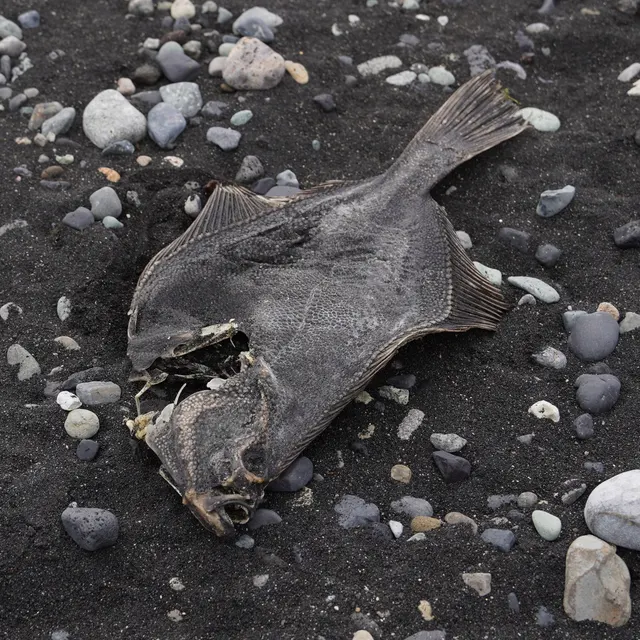 European flounderBoth are dull-coloured right-eyed flatfish of similar size. Feel for the flounder's row of bony tubercles at the fin bases; a dab is uniformly rough all over instead, and its lateral line arches far more steeply.
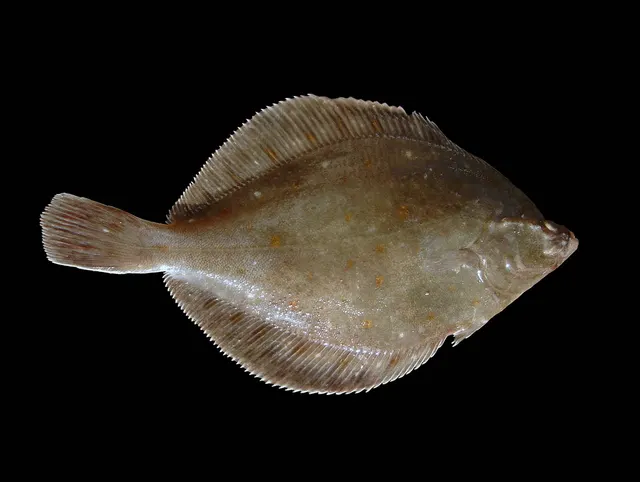 European plaiceThe commonest flatfish confusion in British sea angling. Settle it by touch — a dab feels like fine sandpaper, a plaice feels smooth — and by the lateral line, which arches steeply over the pectoral in a dab and runs nearly straight in a plaice.
Sources and evidence
- The Fishes of the British Isles and North-West Europe — Macmillan, 1969 (Reference work)Relied on for: Distribution, habitat, identification characters and biology of the fishes of the British Isles and north-west Europe.States this directlyCitation checked — the work exists and is described correctly
- FAO Species Identification Guides for Fishery Purposes and the FAO Species Catalogues — Food and Agriculture Organization of the United Nations (Scientific institute)Relied on for: Diagnostic identification characters, family placement and distribution as set out in the FAO species identification sheets for the eastern Atlantic and Mediterranean.States this directlyCitation checked — the work exists and is described correctly
- Cefas science, advice and data on marine and freshwater environments — Centre for Environment, Fisheries and Aquaculture Science (Government fisheries body)Relied on for: UK marine fisheries science: stock monitoring, survey data and the biological basis of management advice for the species concerned.States this directlyCitation checked — the work exists and is described correctly
- Sea Angler — Bauer Media (Specialist angling publication)Relied on for: Contemporary UK and European sea angling practice as reported by practitioners, including regional ground, seasonal timing and species behaviour.States this directlyCitation checked — the work exists and is described correctly
Why the 21 connections on this page are here, and the sources
How it is caught
What experienced anglers do — 3 connections
Widely and independently recommended by experienced anglers and specialist sources. This is real angling knowledge, not proof: controlled evidence for it is limited, and FishingHQ records it as convention rather than as a demonstrated effect.
Drift fishing
A statement about how a species is fished, which is angling convention rather than biology and is labelled as such.
- Sea Angler — Bauer Media (Specialist angling publication)Relied on for: Contemporary UK and European sea angling practice as reported by practitioners, including ground, seasonal timing, bait and method convention.States this directlyCitation checked — the work exists and is described correctly
- General angling website restatements of established technique — Various (Credible secondary source)Relied on for: Widely restated descriptions of species behaviour and regional angling practice, recorded as consensus rather than as scholarship.Background and mechanism onlyCitation checked — the work exists and is described correctly
Ledgering
A statement about how a species is fished, which is angling convention rather than biology and is labelled as such.
- Sea Angler — Bauer Media (Specialist angling publication)Relied on for: Contemporary UK and European sea angling practice as reported by practitioners, including ground, seasonal timing, bait and method convention.States this directlyCitation checked — the work exists and is described correctly
- General angling website restatements of established technique — Various (Credible secondary source)Relied on for: Widely restated descriptions of species behaviour and regional angling practice, recorded as consensus rather than as scholarship.Background and mechanism onlyCitation checked — the work exists and is described correctly
Surfcasting
A statement about how a species is fished, which is angling convention rather than biology and is labelled as such.
- Sea Angler — Bauer Media (Specialist angling publication)Relied on for: Contemporary UK and European sea angling practice as reported by practitioners, including ground, seasonal timing, bait and method convention.States this directlyCitation checked — the work exists and is described correctly
- General angling website restatements of established technique — Various (Credible secondary source)Relied on for: Widely restated descriptions of species behaviour and regional angling practice, recorded as consensus rather than as scholarship.Background and mechanism onlyCitation checked — the work exists and is described correctly
Gear for this fish
What experienced anglers do — 4 connections
Widely and independently recommended by experienced anglers and specialist sources. This is real angling knowledge, not proof: controlled evidence for it is limited, and FishingHQ records it as convention rather than as a demonstrated effect.
Lugworm
A bait joined to the fish it is conventionally used for. Convention, recorded as convention.
- Sea Angler — Bauer Media (Specialist angling publication)Relied on for: Contemporary UK and European sea angling practice as reported by practitioners, including ground, seasonal timing, bait and method convention.States this directlyCitation checked — the work exists and is described correctly
- General angling website restatements of established technique — Various (Credible secondary source)Relied on for: Widely restated descriptions of species behaviour and regional angling practice, recorded as consensus rather than as scholarship.Background and mechanism onlyCitation checked — the work exists and is described correctly
Paternoster rig
Which species a terminal arrangement is directed at is established practitioner knowledge, converging across independent angling traditions and literatures, and is labelled as consensus rather than as tested result.
- Sea Angler — Bauer Media (Specialist angling publication)Relied on for: Contemporary UK sea angling practice as reported by practitioners, including rig construction and the species each is directed at.States this directlyCitation checked — the work exists and is described correctly
- General angling website restatements of established technique — Various (Credible secondary source)Relied on for: Widely restated descriptions of established terminal-rig convention, recorded as practitioner consensus rather than as scholarship.Background and mechanism onlyCitation checked — the work exists and is described correctly
Ragworm
A bait joined to the fish it is conventionally used for. Convention, recorded as convention.
- Sea Angler — Bauer Media (Specialist angling publication)Relied on for: Contemporary UK and European sea angling practice as reported by practitioners, including ground, seasonal timing, bait and method convention.States this directlyCitation checked — the work exists and is described correctly
- General angling website restatements of established technique — Various (Credible secondary source)Relied on for: Widely restated descriptions of species behaviour and regional angling practice, recorded as consensus rather than as scholarship.Background and mechanism onlyCitation checked — the work exists and is described correctly
Squid and cuttlefish
A bait joined to the fish it is conventionally used for. Convention, recorded as convention.
- Sea Angler — Bauer Media (Specialist angling publication)Relied on for: Contemporary UK and European sea angling practice as reported by practitioners, including ground, seasonal timing, bait and method convention.States this directlyCitation checked — the work exists and is described correctly
- General angling website restatements of established technique — Various (Credible secondary source)Relied on for: Widely restated descriptions of species behaviour and regional angling practice, recorded as consensus rather than as scholarship.Background and mechanism onlyCitation checked — the work exists and is described correctly
Where it lives
Backed by research — 3 connections
Supported by peer-reviewed research or fisheries science. The sources are listed and can be checked.
Estuary
A distributional claim about where a species is found, which is a claim about the world and rests on the standard regional reference works rather than on angling report.
- The Fishes of the British Isles and North-West Europe — Macmillan, 1969 (Reference work)Relied on for: Distribution, habitat association, identification and biology of the fishes of the British Isles and north-west Europe.States this directlyCitation checked — the work exists and is described correctly
- FAO Species Identification Guides for Fishery Purposes and the FAO Species Catalogues — Food and Agriculture Organization of the United Nations (Scientific institute)Relied on for: Diagnostic characters, habitat and depth range as set out in the FAO species identification sheets for the eastern Atlantic and Mediterranean.States this directlyCitation checked — the work exists and is described correctly
Inshore ground
A distributional claim about where a species is found, which is a claim about the world and rests on the standard regional reference works rather than on angling report.
- The Fishes of the British Isles and North-West Europe — Macmillan, 1969 (Reference work)Relied on for: Distribution, habitat association, identification and biology of the fishes of the British Isles and north-west Europe.States this directlyCitation checked — the work exists and is described correctly
- FAO Species Identification Guides for Fishery Purposes and the FAO Species Catalogues — Food and Agriculture Organization of the United Nations (Scientific institute)Relied on for: Diagnostic characters, habitat and depth range as set out in the FAO species identification sheets for the eastern Atlantic and Mediterranean.States this directlyCitation checked — the work exists and is described correctly
Surf beaches
A distributional claim about where a species is found, which is a claim about the world and rests on the standard regional reference works rather than on angling report.
- The Fishes of the British Isles and North-West Europe — Macmillan, 1969 (Reference work)Relied on for: Distribution, habitat association, identification and biology of the fishes of the British Isles and north-west Europe.States this directlyCitation checked — the work exists and is described correctly
- FAO Species Identification Guides for Fishery Purposes and the FAO Species Catalogues — Food and Agriculture Organization of the United Nations (Scientific institute)Relied on for: Diagnostic characters, habitat and depth range as set out in the FAO species identification sheets for the eastern Atlantic and Mediterranean.States this directlyCitation checked — the work exists and is described correctly
Where you will find it
Backed by research — 4 connections
Supported by peer-reviewed research or fisheries science. The sources are listed and can be checked.
Strangford Lough and the Ards coast
A claim that a place contains the ground, water and seasonal conditions the species is associated with. It is a distributional statement about the world, it rests on the regional reference literature, and it deliberately asserts nothing about access, permission or catch.
- The Fishes of the British Isles and North-West Europe — Macmillan, 1969 (Reference work)Relied on for: Distribution and habitat association of the marine, estuarine and freshwater fishes of the British Isles, including which coasts, estuaries and ground types a species occupies.States this directlyCitation checked — the work exists and is described correctly
- FishBase: a global information system on fishes — Froese, R. and D. Pauly, eds. — FishBase Consortium (Scientific institute)Relied on for: Recorded distribution, depth range and habitat association for the species named.States this directlyPassage read and verified
The Norfolk and Suffolk sandbank coast
A claim that a place contains the ground and conditions the species is associated with. It is a distributional statement about the world, it rests on the regional reference literature, and it deliberately asserts nothing about access, permission or catch.
- The Fishes of the British Isles and North-West Europe — Macmillan, 1969 (Reference work)Relied on for: Distribution and habitat association of the marine and estuarine fishes of the British Isles, including which coasts and ground types a species occupies.States this directlyCitation checked — the work exists and is described correctly
- FishBase: a global information system on fishes — Froese, R. and D. Pauly, eds. — FishBase Consortium (Scientific institute)Relied on for: Recorded distribution, depth range and habitat association for the species named.States this directlyPassage read and verified
The Wexford coast
A claim that a coast contains the ground and conditions the species is associated with. It is a distributional statement about the world, it rests on the regional reference literature, and it deliberately asserts nothing about access, permission or catch.
- The Fishes of the British Isles and North-West Europe — Macmillan, 1969 (Reference work)Relied on for: Distribution and habitat association of the marine and estuarine fishes of the British Isles and north-west Europe, including which coasts and ground types a species occupies.States this directlyCitation checked — the work exists and is described correctly
- FishBase: a global information system on fishes — Froese, R. and D. Pauly, eds. — FishBase Consortium (Scientific institute)Relied on for: Recorded distribution, depth range and habitat association for the species named.States this directlyPassage read and verified
The Yorkshire coast
A claim that a place contains the ground, water and seasonal conditions the species is associated with. It is a distributional statement about the world, it rests on the regional reference literature, and it deliberately asserts nothing about access, permission or catch.
- The Fishes of the British Isles and North-West Europe — Macmillan, 1969 (Reference work)Relied on for: Distribution and habitat association of the marine, estuarine and freshwater fishes of the British Isles, including which coasts and ground types a species occupies.States this directlyCitation checked — the work exists and is described correctly
- FishBase: a global information system on fishes — Froese, R. and D. Pauly, eds. — FishBase Consortium (Scientific institute)Relied on for: Recorded distribution, depth range and habitat association for the species named.States this directlyPassage read and verified
Understanding this fish
Backed by research — 3 connections
Supported by peer-reviewed research or fisheries science. The sources are listed and can be checked.
Bivalve and gastropod molluscs as prey
A dietary claim recorded at GROUP level against a modelled prey concept, because the sources describe the prey as a group and inventing a species to point at would be the fabrication the precision audit exists to prevent.
- Cefas science, advice and data on marine and freshwater environments — Centre for Environment, Fisheries and Aquaculture Science (Government fisheries body)Relied on for: UK marine fisheries science: survey data, distribution and the biological basis of management advice for the species concerned.States this directlyCitation checked — the work exists and is described correctly
- The Fishes of the British Isles and North-West Europe — Macmillan, 1969 (Reference work)Relied on for: Distribution, habitat and biology of the fishes of the British Isles and north-west Europe.States this directlyCitation checked — the work exists and is described correctly
Decapod crustaceans as prey
A dietary claim recorded at GROUP level against a modelled prey concept, because the sources describe the prey as a group and inventing a species to point at would be the fabrication the precision audit exists to prevent.
- Cefas science, advice and data on marine and freshwater environments — Centre for Environment, Fisheries and Aquaculture Science (Government fisheries body)Relied on for: UK marine fisheries science: survey data, distribution and the biological basis of management advice for the species concerned.States this directlyCitation checked — the work exists and is described correctly
- The Fishes of the British Isles and North-West Europe — Macmillan, 1969 (Reference work)Relied on for: Distribution, habitat and biology of the fishes of the British Isles and north-west Europe.States this directlyCitation checked — the work exists and is described correctly
Polychaete worms as prey
A dietary claim recorded at GROUP level against a modelled prey concept, because the sources describe the prey as a group and inventing a species to point at would be the fabrication the precision audit exists to prevent.
- Cefas science, advice and data on marine and freshwater environments — Centre for Environment, Fisheries and Aquaculture Science (Government fisheries body)Relied on for: UK marine fisheries science: survey data, distribution and the biological basis of management advice for the species concerned.States this directlyCitation checked — the work exists and is described correctly
- The Fishes of the British Isles and North-West Europe — Macmillan, 1969 (Reference work)Relied on for: Distribution, habitat and biology of the fishes of the British Isles and north-west Europe.States this directlyCitation checked — the work exists and is described correctly
What experienced anglers do — 2 connections
Widely and independently recommended by experienced anglers and specialist sources. This is real angling knowledge, not proof: controlled evidence for it is limited, and FishingHQ records it as convention rather than as a demonstrated effect.
How fish smell and taste
A record joined to the mechanism that explains it, which is what makes a species page transferable rather than a list of facts.
- Sea Angler — Bauer Media (Specialist angling publication)Relied on for: Contemporary UK and European sea angling practice as reported by practitioners, including ground, seasonal timing, bait and method convention.States this directlyCitation checked — the work exists and is described correctly
- General angling website restatements of established technique — Various (Credible secondary source)Relied on for: Widely restated descriptions of species behaviour and regional angling practice, recorded as consensus rather than as scholarship.Background and mechanism onlyCitation checked — the work exists and is described correctly
Why fish are hooked deeply, and how to reduce it
A record joined to the mechanism that explains it, which is what makes a species page transferable rather than a list of facts.
- Sea Angler — Bauer Media (Specialist angling publication)Relied on for: Contemporary UK and European sea angling practice as reported by practitioners, including ground, seasonal timing, bait and method convention.States this directlyCitation checked — the work exists and is described correctly
- General angling website restatements of established technique — Various (Credible secondary source)Relied on for: Widely restated descriptions of species behaviour and regional angling practice, recorded as consensus rather than as scholarship.Background and mechanism onlyCitation checked — the work exists and is described correctly
Told apart from
What experienced anglers do — 2 connections
Widely and independently recommended by experienced anglers and specialist sources. This is real angling knowledge, not proof: controlled evidence for it is limited, and FishingHQ records it as convention rather than as a demonstrated effect.
European flounder
Two records a reader will hold together — here because the fish are confused with one another in the hand, which is an identification problem rather than a preference.
- The Fishes of the British Isles and North-West Europe — Macmillan, 1969 (Reference work)Relied on for: Distribution, habitat association, identification and biology of the fishes of the British Isles and north-west Europe.States this directlyCitation checked — the work exists and is described correctly
- FAO Species Identification Guides for Fishery Purposes and the FAO Species Catalogues — Food and Agriculture Organization of the United Nations (Scientific institute)Relied on for: Diagnostic characters, habitat and depth range as set out in the FAO species identification sheets for the eastern Atlantic and Mediterranean.States this directlyCitation checked — the work exists and is described correctly
European plaice
Two records a reader will hold together — here because the fish are confused with one another in the hand, which is an identification problem rather than a preference.
- The Fishes of the British Isles and North-West Europe — Macmillan, 1969 (Reference work)Relied on for: Distribution, habitat association, identification and biology of the fishes of the British Isles and north-west Europe.States this directlyCitation checked — the work exists and is described correctly
- FAO Species Identification Guides for Fishery Purposes and the FAO Species Catalogues — Food and Agriculture Organization of the United Nations (Scientific institute)Relied on for: Diagnostic characters, habitat and depth range as set out in the FAO species identification sheets for the eastern Atlantic and Mediterranean.States this directlyCitation checked — the work exists and is described correctly
How FishingHQ labels evidence is explained in the evidence policy.