Ragworm
Bait · Last reviewed 2026-08-10
A large, active marine polychaete that is among the most effective and most universally accepted sea baits.
Safety: tides and being cut off — can cause serious injury or death. 4 more points apply here.
- What it actually is
- Marine polychaetes, chiefly Alitta virens (king ragworm) and Hediste diversicolor (harbour ragworm).
- How long it keeps
- Two to four days kept cold in damp newspaper; longer in aerated chilled seawater. Ragworm deteriorate faster than lugworm and are best bought for the session rather than stockpiled.
Ragworm are marine bristleworms that live in burrows in muddy and mixed intertidal sediment. They are large, they are extremely active when hooked, and almost every inshore sea species will take one — bass, flounder, plaice, dab, whiting, codling, wrasse and more.
The activity is the point. A ragworm on a hook writhes vigorously and continuously, and that movement is what distinguishes it from almost every other sea bait. It is why ragworm is the standard bait for species that hunt by sight and movement in relatively clear inshore water.
King ragworm are the large form, reaching impressive lengths and used whole or in sections; harbour ragworm are smaller and used for smaller species and in colder water. They bite: king ragworm have a pair of retractable black jaws that they will use on a finger, and while the bite is not dangerous it is genuinely painful.
What it is
A long segmented worm with a pair of bristly parapodia on each segment, giving a characteristic fringed appearance. King ragworm are bronze-green with an iridescent sheen and reach 20–40 cm, occasionally more. Harbour ragworm are smaller, greener and more slender. Both have a retractable proboscis carrying two dark chitinous jaws which they will extend and use if handled roughly.
Fish it catches
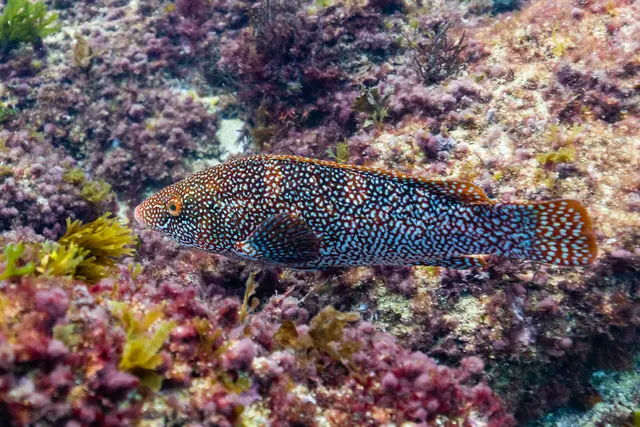 Ballan wrasseWhere the wrasse are under the angler's feet rather than at range, worm on a single-hook paternoster is what the sources give — Carnsore Point specifically, where the directory says the best fish are directly below and lugworm on a single hook is the way to reach them.
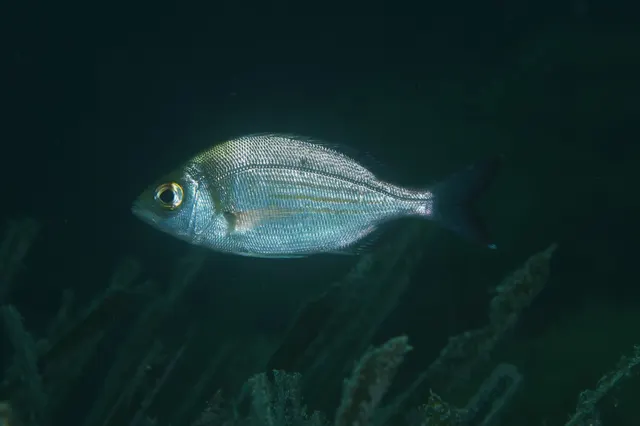 Black seabreamAn excellent bream bait, again used small and on small hooks.
- DabInterchangeable with lugworm for dabs and often better where ragworm is the local worm.
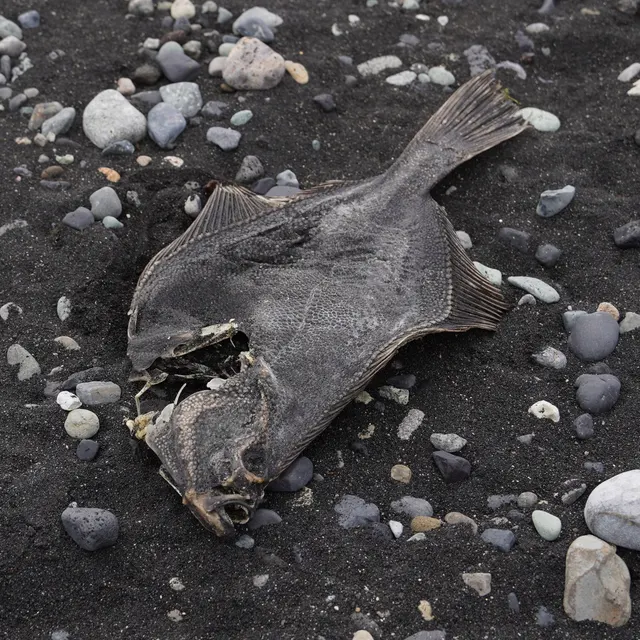 European flounderThe near-universal flounder bait, because it is the thing the fish is already eating in quantity on intertidal mud.
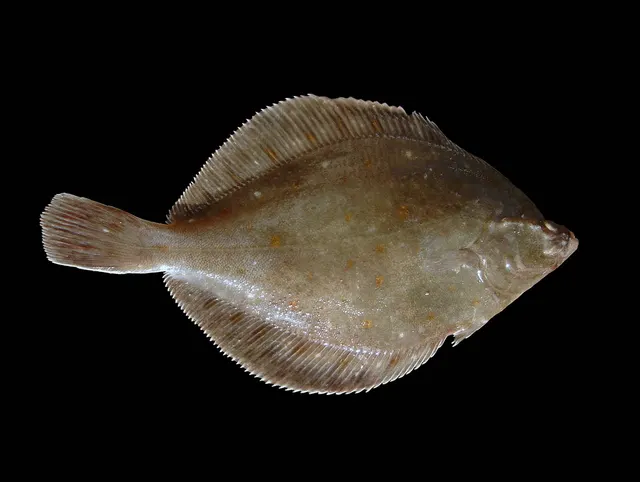 European plaicePlaice and dab come to worm over clean sand, and the Waterford directory records a fine plaice and a small dab taken at distance off a rock mark on lugworm dug that morning at a beach in the next county.
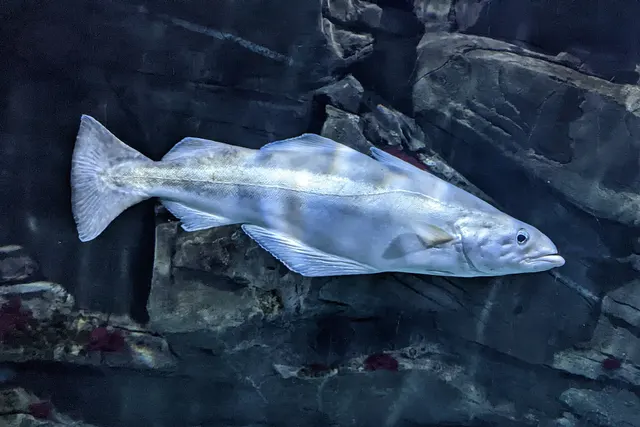 PollackThe bait that fills the gap in the pollack answer. A Wicklow contributor describes masses of pollack sweeping in on the evening flood under the pier and taking ragworm fished just under the surface on 2/0 hooks — which is bait fishing for a fish more often taken on lures.
- Small-spotted catsharkWorm baits meant for flatfish are taken freely; the species is entirely undiscriminating.
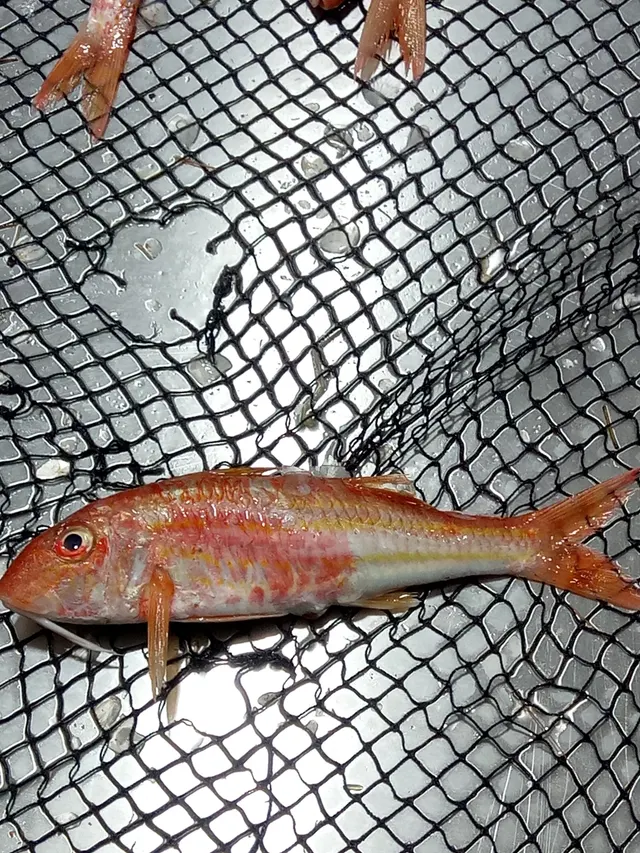 Striped red mulletRagworm fished on the clean sand the fish probes with its barbels.
2 more
- Tub gurnard Fish
- European sea bass Fish
Finding and obtaining it
Bought from tackle shops, or dug from intertidal mud and mixed ground at low water. Digging is hard work and its regulation is a genuinely serious matter: bait collection is restricted or prohibited on many shores, and in protected sites, nature reserves and designated conservation areas it may be an offence. It is also frequently subject to local byelaws and to landowner permission on private foreshore. Check what applies where you are before digging anything, and do not assume that an open beach is open for collection.
Keeping and storing it
Cool, damp and in a single layer, in newspaper or in a shallow tray with a little seawater. The critical points are temperature — cold but never freezing — and not stacking them, because a dead ragworm in a container kills those around it very quickly. Check regularly and remove any that have died or burst.
Keeping it alive
Cold, damp, dark and undisturbed. Cool boxes with ice packs — never in direct contact — work well for a session. For longer periods, chilled aerated seawater is far better than damp paper, but requires equipment. Remove casualties immediately.
Preparing it
Sort by size before you fish. Larger worms can be used whole or cut into sections; a cut worm releases fluid strongly and is often more effective for scent-feeding species even though it moves less. Some anglers keep the head sections, which contain the jaws and are the toughest part, for the hook and use the rest as tipping.
Using it
Thread the worm onto the hook from the head end, passing the hook down through the body and out, leaving the tail free to move. A long-shank or Aberdeen-pattern hook makes this considerably easier. The whole point of ragworm is movement, so a worm threaded solidly up the hook and the trace with nothing free is a worm that has been wasted.
Disposing of what is left
Live ragworm should not be returned to a shore they did not come from, and should never be released into fresh water. Bought worms are frequently not local and may not even be native to the country they are sold in; releasing them is an introduction. Unused live worms go home for the next session, or into sealed domestic waste. Do not tip a tray of dead worms and seawater into a harbour.
Biosecurity
Bait worms are traded internationally and arrive with packing material — seaweed, sediment, vermiculite — that can carry non-native organisms. Do not release worms or packing material into the sea or onto the shore, and dispose of packaging in domestic waste. This is a documented and underappreciated introduction pathway.
Keeping ragworm alive
Ragworm keep considerably better than lugworm, and the reason is anatomical rather than lucky: they are tougher-skinned, less prone to bursting, and less quick to poison each other.
THE PRINCIPLE IS THE SAME. Cold, separated, damp rather than wet. Vermiculite or damp newspaper in a shallow tray in a cool box, out of the sun, checked and picked over daily.
WHAT KILLS THEM. Heat first. Then their own damaged neighbours — a burst ragworm still fouls the ones around it, just less catastrophically than a burst lugworm. Then standing water, which deoxygenates.
A WEEK IS REALISTIC in good conditions, and considerably longer for king ragworm kept properly cold. That makes them the sea bait worth buying ahead, where lugworm is the one to buy for the day.
BITING. King ragworm have jaws and will use them. It is startling rather than dangerous, and the answer is to pick them up behind the head.
FREEZING is poor for ragworm — they turn to liquid on thawing far more readily than lugworm, and what remains is difficult to keep on a hook. Where a worm must be preserved, salting is the better route, and a salted ragworm is a distinctly tougher and more castable bait than a fresh one.
Collecting ragworm responsibly
Ragworm are dug and raked from estuarine mud and muddy sand, which is the same habitat lugworm digging affects and frequently the same designated ground.
THE HARM AND ITS MITIGATION are as for lugworm: backfill, work a small area, take what you will use, avoid ground already worked, and keep off flats that matter to feeding and roosting birds.
ONE ADDITIONAL CONSIDERATION. Ragworm ground is often soft estuarine mud a long way from a hard edge, on a falling tide. People are cut off and people become stuck, and both happen to experienced diggers who misjudged the tide by twenty minutes. Anybody digging soft ground should know the state of tide, have a route back that does not depend on crossing a channel, and tell somebody where they are.
COMMERCIALLY DUG AND FARMED RAGWORM are widely available, and where digging is restricted or the ground is fragile that is the straightforward answer rather than a compromise.
AND THE RULES ARE LOCAL. Estuaries are among the most heavily designated coastal habitats there are. Permits, quantity limits, closed areas and seasonal restrictions all exist in places, and they differ between neighbouring estuaries. Check with the harbour authority, the inshore fisheries body and the protected-area manager for that ground before digging it.
Official guidance — why, and the sources (1)
Stated by a fisheries authority, scientific institute or recognised angling body. Authoritative, but summarising rather than demonstrating.
- JNCC species and habitat conservation advice — Joint Nature Conservation Committee (Conservation authority)Relied on for: The framework of protected areas covering intertidal and estuarine habitats, and the conservation interest of the bird and invertebrate communities they support.Background and mechanism onlyCitation checked — the work exists and is described correctly
Safety
Tides and being cut off — Can cause serious injury or death
Bait digging happens on the low tide, on soft ground, often far out from the shore, often with the digger's attention entirely on the sediment. The tide returns across flats faster than most people expect, and soft mud makes retreat slow.
What reduces it: Know the time of low water and the time your route back closes, not just the time the tide turns. Set an alarm. Never dig alone on soft ground, and tell somebody where you have gone.
Species that bite — Minor injury
King ragworm extend a pair of hard black jaws and bite. It is sharp, surprising and can draw blood, and marine-contaminated punctures infect readily.
What reduces it: Hold worms behind the head, not at the head, and expect the bite rather than being startled into dropping the worm. Clean any puncture properly.
Precautions that always apply here
- Check the tide before you go and know your exit route. Being cut off is the commonest way a shore session becomes a rescue.
- Tell somebody where you are going and when you expect to be back.
- Carry a charged phone in a waterproof case, or another means of calling for help.
Check the rules before you fish
Fishing laws, bylaws, access rules, seasons, bait restrictions and permitted methods vary by location and can change. Check the current rules from the relevant authority and the water you intend to fish before fishing.
Check with:
- Current national or regional law for where you are fishing
- Current local bylaws
- The relevant fisheries authority
- The landowner, club or fishery whose water it is
- Any restrictions specific to the species or the method you intend to use
Where to go next
How it is fished
Understanding it
- Sea fishing baits, and what lives locallyRagworm works because it is the prey, and it works on a coast where nobody has ever introduced anything — which is the general principle this page is built on.
- What a bait imitates, and why that mattersAnd ragworm is the clearest case of the first: it IS the prey, it needs no learning, and it works on a coast where nobody has ever loose-fed anything.
- Why bait dies quicklyAccumulated waste in a closed container is toxic well before the water looks or smells wrong.
Instead of this
Rules and access
Sources and evidence
- Check Clean Dry — biosecurity guidance for water users — GB Non-native Species Secretariat (Conservation authority)Relied on for: That imported bait and its packing material are a recognised introduction pathway for non-native marine organisms.FishingHQ's interpretation of what it saysPassage read and verified
Why the 16 connections on this page are here, and the sources
Fish it catches
What experienced anglers do — 10 connections
Widely and independently recommended by experienced anglers and specialist sources. This is real angling knowledge, not proof: controlled evidence for it is limited, and FishingHQ records it as convention rather than as a demonstrated effect.
Ballan wrasse
Two independent county pages naming worm for wrasse, each with the presentation attached — one close in on a paternoster, one on a float.
- Sea Angling in Ireland: the shore marks of Wexford — Sea Angling Ireland (Credible secondary source)Relied on for: A county directory naming lugworm on a single-hook paternoster fished close in for the wrasse of a named rough-ground point.Passage read and verified
- Sea Angling in Ireland: the shore marks of Donegal — Sea Angling Ireland (Credible secondary source)Relied on for: A county directory describing float-fished worm keeping an angler in wrasse all day at a named Donegal headland.Passage read and verified
Black seabream
A bait joined to the fish it is conventionally used for. Convention, recorded as convention.
- Sea Angler — Bauer Media (Specialist angling publication)Relied on for: Contemporary UK and European sea angling practice as reported by practitioners, including ground, seasonal timing, bait and method convention.States this directlyCitation checked — the work exists and is described correctly
- General angling website restatements of established technique — Various (Credible secondary source)Relied on for: Widely restated descriptions of species behaviour and regional angling practice, recorded as consensus rather than as scholarship.Background and mechanism onlyCitation checked — the work exists and is described correctly
Dab
A bait joined to the fish it is conventionally used for. Convention, recorded as convention.
- Sea Angler — Bauer Media (Specialist angling publication)Relied on for: Contemporary UK and European sea angling practice as reported by practitioners, including ground, seasonal timing, bait and method convention.States this directlyCitation checked — the work exists and is described correctly
- General angling website restatements of established technique — Various (Credible secondary source)Relied on for: Widely restated descriptions of species behaviour and regional angling practice, recorded as consensus rather than as scholarship.Background and mechanism onlyCitation checked — the work exists and is described correctly
European flounder
A bait joined to the fish it is conventionally used for. Convention, recorded as convention.
- Sea Angler — Bauer Media (Specialist angling publication)Relied on for: Contemporary UK and European sea angling practice as reported by practitioners, including ground, seasonal timing, bait and method convention.States this directlyCitation checked — the work exists and is described correctly
- General angling website restatements of established technique — Various (Credible secondary source)Relied on for: Widely restated descriptions of species behaviour and regional angling practice, recorded as consensus rather than as scholarship.Background and mechanism onlyCitation checked — the work exists and is described correctly
European plaice
Two independent county pages naming worm for plaice, one of them attached to a dated capture with the bait's provenance stated.
- Sea Angling in Ireland: the shore marks of Waterford — Sea Angling Ireland (Credible secondary source)Relied on for: A county directory recording a plaice and a dab taken at distance on fresh worm at a named rock mark, on a dated visit.Passage read and verified
- Sea Angling in Ireland: the shore marks of northern and western Donegal — Sea Angling Ireland (Credible secondary source)Relied on for: A county directory naming worm baits for the plaice and dabs of the northern piers and strands.Passage read and verified
Pollack
Two independent county pages naming ragworm for pollack from structure, one of them with a presentation depth and a hook size.
- Sea Angling in Ireland: the shore marks of Wicklow, Dublin, Louth and Meath — Sea Angling Ireland (Credible secondary source)Relied on for: A named contributor describing ragworm fished just under the surface for pollack on an evening flood, with the hook size.Passage read and verified
- Sea Angling in Ireland: the shore marks of Clare and the Shannon estuary — Sea Angling Ireland (Credible secondary source)Relied on for: A county directory naming locally dug harbour ragworm for small pollack and whiting from a deepwater pier.Passage read and verified
Small-spotted catshark
A bait joined to the fish it is conventionally used for. Convention, recorded as convention.
- Sea Angler — Bauer Media (Specialist angling publication)Relied on for: Contemporary UK sea angling practice as reported by practitioners, including ground, seasonal timing, bait and method convention.States this directlyCitation checked — the work exists and is described correctly
- General angling website restatements of established technique — Various (Credible secondary source)Relied on for: Widely restated descriptions of species behaviour and regional angling practice, recorded as consensus rather than as scholarship.Background and mechanism onlyCitation checked — the work exists and is described correctly
Striped red mullet
A practitioner claim about tackle commonly used for Mullus surmuletus.
- General angling website restatements of established technique — Various (Credible secondary source)Relied on for: Widely restated practitioner accounts of this presentation for striped red mullet.Citation checked — the work exists and is described correctly
- Angling Times — Bauer Media (Specialist angling publication)Relied on for: Practitioner treatment of comparable presentations for the species group.Citation checked — the work exists and is described correctly
Tub gurnard
A bait joined to the fish it is conventionally used for. Convention, recorded as convention.
- Sea Angler — Bauer Media (Specialist angling publication)Relied on for: Contemporary UK and European sea angling practice as reported by practitioners, including ground, seasonal timing, bait and method convention.States this directlyCitation checked — the work exists and is described correctly
- General angling website restatements of established technique — Various (Credible secondary source)Relied on for: Widely restated descriptions of species behaviour and regional angling practice, recorded as consensus rather than as scholarship.Background and mechanism onlyCitation checked — the work exists and is described correctly
European sea bass
Established sea angling practice, independently described.
- Sea Angler — Bauer Media (Specialist angling publication)Relied on for: Ragworm as an inshore bait for bass and flatfish.Citation checked — the work exists and is described correctly
- Angling Times — Bauer Media (Specialist angling publication)Relied on for: Contemporary ragworm practice.Citation checked — the work exists and is described correctly
How it is fished
What experienced anglers do — 1 connection
Widely and independently recommended by experienced anglers and specialist sources. This is real angling knowledge, not proof: controlled evidence for it is limited, and FishingHQ records it as convention rather than as a demonstrated effect.
Surfcasting
The ragworm record's whole presentation instruction is to leave the tail free to work. In a surf table that movement is supplied continuously by the water, which is the condition the bait is best suited to and the reason practitioners reach for it there rather than for lugworm.
- Sea Angler — Bauer Media (Specialist angling publication)Relied on for: Specialist treatment of which bait or lure family this technique is fished with.States this directlyCitation checked — the work exists and is described correctly
- General angling website restatements of established technique — Various (Credible secondary source)Relied on for: The independently restated practitioner pairing of this technique with this family.Background and mechanism onlyCitation checked — the work exists and is described correctly
Understanding it
What experienced anglers do — 2 connections
Widely and independently recommended by experienced anglers and specialist sources. This is real angling knowledge, not proof: controlled evidence for it is limited, and FishingHQ records it as convention rather than as a demonstrated effect.
Sea fishing baits, and what lives locally
Why it works, resting on shore-fishing practice reported consistently across independent practitioner sources rather than on experiment.
- Sea Angler — Bauer Media (Specialist angling publication)Relied on for: Contemporary UK sea angling practice as reported by practitioners, including shore technique, terminal tackle, regional ground and species behaviour.States this directlyCitation checked — the work exists and is described correctly
- Freshwater Fishing — Macdonald & Jane's, 1975 (Specialist angling publication)Relied on for: Comprehensive angling practice including terminal tackle, casting, leaders and the reasoning behind the choices.States this directlyCitation checked — the work exists and is described correctly
What a bait imitates, and why that matters
Why it works, resting on practice reported consistently across independent angling traditions rather than on experiment.
- Coarse Fishing — A. & C. Black, 1912 (Specialist angling publication)Relied on for: Classical coarse angling practice: baits, hooking, loose feed, presentation and swim selection.States this directlyCitation checked — the work exists and is described correctly
- Sea Angler — Bauer Media (Specialist angling publication)Relied on for: Contemporary UK sea angling practice as reported by practitioners, including bait preparation, hooking and presentation.States this directlyCitation checked — the work exists and is described correctly
Backed by research — 1 connection
Supported by peer-reviewed research or fisheries science. The sources are listed and can be checked.
Why bait dies quickly
The cause anglers most often miss.
- Cefas science, advice and data on marine and freshwater environments — Centre for Environment, Fisheries and Aquaculture Science (Government fisheries body)Relied on for: The relationship between water temperature, dissolved oxygen capacity and metabolic demand in aquatic organisms.States this directlyCitation checked — the work exists and is described correctly
Instead of this
What experienced anglers do — 1 connection
Widely and independently recommended by experienced anglers and specialist sources. This is real angling knowledge, not proof: controlled evidence for it is limited, and FishingHQ records it as convention rather than as a demonstrated effect.
Lugworm
The functional distinction is described independently in sea angling practice.
- Sea Angler — Bauer Media (Specialist angling publication)Relied on for: The comparative characteristics of lugworm and ragworm as baits.Citation checked — the work exists and is described correctly
- Angling Times — Bauer Media (Specialist angling publication)Relied on for: Contemporary bait selection practice for shore fishing.Citation checked — the work exists and is described correctly
Rules and access
Official guidance — 1 connection
Stated by a fisheries authority, scientific institute or recognised angling body. Authoritative, but summarising rather than demonstrating.
Method and bait restrictions
Shore bait collection is subject to statutory and site-based restriction that varies by location.
- Environment Agency fisheries management, byelaws and rod licensing information — Environment Agency (Government fisheries body)Relied on for: That bait and method restrictions exist in statutory byelaws and differ by area.FishingHQ's interpretation of what it saysCitation checked — the work exists and is described correctly
- JNCC species and habitat conservation advice — Joint Nature Conservation Committee (Conservation authority)Relied on for: That designated conservation sites carry restrictions on activities affecting their features.FishingHQ's interpretation of what it saysCitation checked — the work exists and is described correctly
How FishingHQ labels evidence is explained in the evidence policy.