European plaice
Fish · Last reviewed 2026-08-10
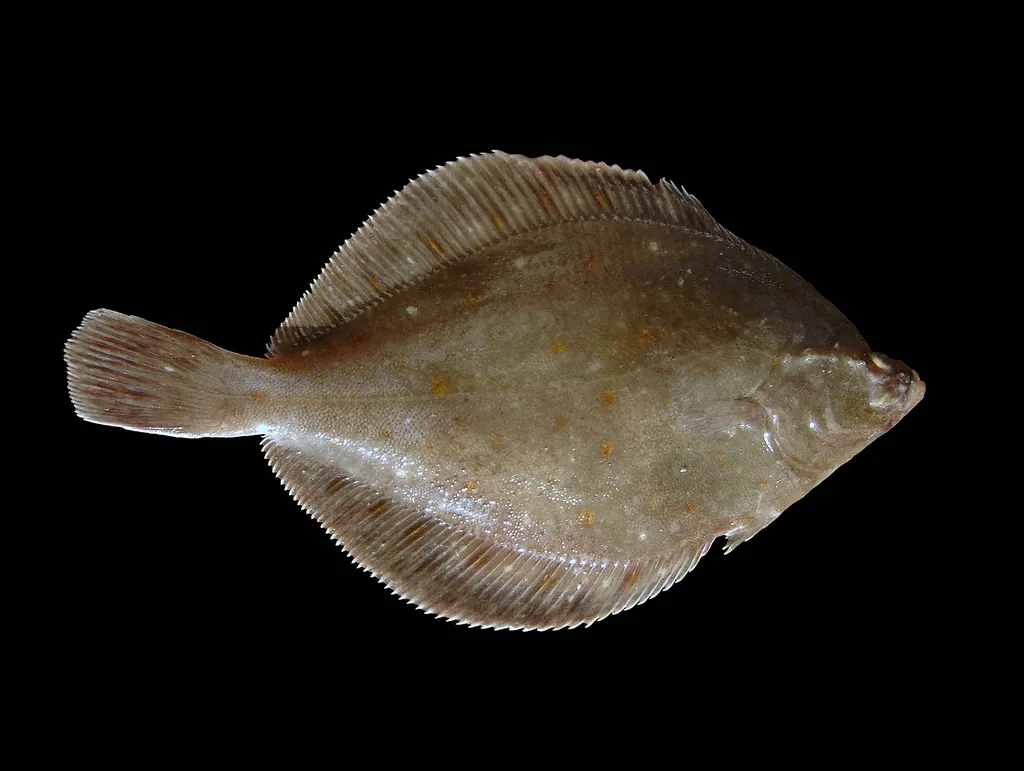
A right-eyed flatfish with orange spots and a remarkable lifespan, and the representative flatfish for a body plan nothing else on FishingHQ shares.
Safety: standing precautions apply on this water.

Catching European plaice
Everything here on fishing for it. Each entry opens the page behind it.
- When
- Mar–Sept — months recorded at the places that document it, not a season for the whole range.
- Where
- 75 places FishingHQ documents — strongest claim anywhere: characteristic of this water · From the shore, From a boat, From a kayak
A flatfish is not a fish lying on its side in the way a person lies on their side. It is a fish that has been rebuilt: plaice hatch as ordinary upright larvae with an eye on each side, and during development one eye MIGRATES across the skull to join the other. The skull twists, the body flattens, the pigmentation reorganises so the upward-facing side is coloured and the downward side is white, and the fish settles onto the bottom for the rest of its life.
Plaice are right-eyed — both eyes end up on the right side — which is what places them in the righteye flounder family and is the first thing to check when identifying a flatfish. The orange or red spots on a brown-green upper side, and the bony ridge behind the eyes, do the rest.
They are also long-lived to a degree that surprises people: FishBase records a maximum age of 50 years.
How it is caught
- Drift fishingWorking a bait slowly across banks and the edges of mixed ground, which covers the patchy features plaice concentrate on rather than the sand between them.
- Float fishingOccasionally used over shallow clean ground in calm conditions to present a bait moving with the tide rather than static on the bottom.
- LedgeringA small bait presented on or just above clean and mixed ground, which is where plaice feed and how they are taken from shore and boat alike.
Gear for this fish
- LugwormThe bait a plaice is caught on over clean sand, and the reason a beach with a lugworm bed beside it is a plaice mark rather than a coincidence.
- RagwormPlaice and dab come to worm over clean sand, and the Waterford directory records a fine plaice and a small dab taken at distance off a rock mark on lugworm dug that morning at a beach in the next county.
Where European plaice is documented
Places where public sources describe this species as fished, with how it is fished and how strongly the evidence supports it. This is not a range map and it is not a recommendation — it is what has been written down about a fishery rather than a record of any individual catch, and being listed is never permission to fish.
Chesil Beach
4 documented places
Ferrybridge and the Chesil Beach centre
Beach section
Seasonal
From the shore
Around Mar, Apr, May
Beach section
Characteristic of this water
From the shore
Around Mar, Apr, May
Beach section
Regular local target
From the shore
Around Mar, Apr, May
Beach section
Recorded here
From the shore
The Cornish and Devon coasts
17 documented places
Beach section
Recorded here
From the shore
Exmouth and the Exe estuary
Estuary
Recorded here
From the shore
Teignmouth
Estuary mark
Recorded here
From the shore
Harbour wall
Repeatedly reported
From a kayak
Headland
Repeatedly reported
From a kayak
Estuary
Recorded here
From the shore
Headland
Repeatedly reported
From a kayak
Estuary
Repeatedly reported
From a kayak
Beach
Recorded here
From the shore
The north-east England coast
4 documented places
Pier
Seasonal
From the shore
Around Apr, May, Jun, Jul, Aug, Sept
Seahouses harbour
Harbour wall
Regular local target
From the shore
Around Jun, Jul, Aug, Sept
South Shields and the Tyne piers
Pier
Regular local target
From the shore
Around Jun, Jul, Aug, Sept
Beach
Recorded here
From the shore
The Solway Firth
3 documented places
Maryport harbour and promenade
Harbour wall
Seasonal
From the shore
Around Jun, Jul, Aug, Sept
Bay
Recorded here
From the shore
Bay
Regular local target
From the shore
The Kerry coast
3 documented places
Surf beach
Occasional
From the shore
Estuary
Regular local target
From the shore
Surf beach
Occasional
From the shore
Dublin Bay and the Wicklow coast
3 documented places
Greystones North Beach and Pier
Pier
Occasional
From the shore
Surf beach
Occasional
From the shore
Surf beach
Regular local target
From the shore
Cardigan Bay and the sarnau
2 documented places
The Causeway and Antrim coast
2 documented places
Also documented on 21 more coasts
Fewer places each, or less strongly supported. Each one names its own marks.
The Moray Firth (2) · Outer Hebrides (2) · Caithness and the north coast (2) · The Waterford coast (2) · The Clare coast and the Shannon estuary (2) · Connemara and Galway Bay (2) · The Donegal coast and its sea loughs (2) · The Louth and Meath coast (2) · West Cork (1) · Cork Harbour and the east Cork coast (1) · Morecambe Bay and the north-west England coast (3) · Scottish sea lochs (3) · The Severn Estuary (3) · Anglesey (2) · The Norfolk and Suffolk sandbank coast (1) · The outer Ards coast (1) · The Fife, Angus and Mearns coast (1) · Weymouth Bay (1) · The Welsh coast and Anglesey (1) · The Sligo and Leitrim coast (2) · Clew Bay and Achill (1)
What these strengths mean
- Seasonal
- Well supported, and concentrated in part of the year rather than spread through it.
- Recorded here
- At least one credible public account of this species being caught here. That is all it means.
- Regular local target
- Fishing sources describe this as a normal local target here, not merely as caught.
- Repeatedly reported
- Several independent public accounts. Enough to say it happens more than once; not enough to call it a fishery.
- Characteristic of this water
- This water is strongly identified with this species by the sources that cover it.
- Occasional
- Caught here, and described as unusual rather than normal. Do not plan a session around it.
When to fish for european plaice
Where the places here state a season for european plaice, it clusters in Jun–Sep. This is a count of how many documented places name each month — evidence about when people fish for it, not a prediction of what any particular day will produce.
| Jan | Feb | Mar | Apr | May | Jun | Jul | Aug | Sep | Oct | Nov | Dec |
|---|---|---|---|---|---|---|---|---|---|---|---|
| January: no place here names this month — no place names it. | February: no place here names this month — no place names it. | March: 4 places name this month — few places. | April: 6 places name this month — few places. | May: 7 places name this month — few places. | June: 22 places name this month — most places. | July: 22 places name this month — most places. | August: 22 places name this month — most places. | September: 21 places name this month — most places. | October: no place here names this month — no place names it. | November: no place here names this month — no place names it. | December: no place here names this month — no place names it. |
26 of the 75 places that record catches of european plaice state which months. The other 49 name no season, so they are counted in neither direction: the shape above is what the dated records say, not the whole picture. The dated records span 16 separate areas.
Identification
- Scientific name
- Pleuronectes platessa
- Family
- Pleuronectidae
- Water
- Saltwater, Brackish
- Conservation status
- Least Concern
- Regions
- Britain & Ireland, Northern Europe, Western Europe, Arctic & Subarctic
- BOTH EYES ON THE RIGHT SIDE — lay the fish with its upper side towards you and the head pointing away; if the eyes are on the right it is a righteye flounder. This is the first check for any flatfish.
- Bright red or orange spots, irregularly distributed, on a brown or greenish-brown upper side. The spots are the plaice's signature.
- A bony ridge, felt as a line of knobs, running behind the eyes.
- Smooth skin with small scales, unlike the rougher-feeling flounder.
- White, unpigmented underside.
Size
- Typical
- 25–40 cm and 0.4–1 kg for rod-caught fish.
- Large
- Over 50 cm and 2 kg.
Exceptional: FishBase records a maximum of 100 cm SL and 7 kg. Fish approaching that are exceptional and, given the growth rate, extremely old.
Sand, and the specific bits of it that hold plaice
Plaice live on the bottom over soft ground, and the useful part of that is not the sand but which sand — because clean featureless sand holds far fewer plaice than anglers expect.
WHAT THEY ARE EQUIPPED FOR. A right-eyed flatfish lying on its blind side, cryptically coloured, feeding by taking small prey from and just below the surface of the bottom: worms, small bivalves and their siphons, brittlestars, crustaceans. The mouth is small and the feeding is close work rather than pursuit.
SO THE GROUND THAT HOLDS THEM IS THE GROUND THAT HOLDS THAT FOOD. Mussel beds, patches of shell and gravel within sand, the edges of banks, the margins where sand meets weed or rock, and the scoured areas around any structure. A large area of clean uniform sand is a desert by comparison. This is the single most useful thing to know about finding them, and it is why plaice fishing is about reading small variations in an apparently featureless bottom.
DEPTH IS SHALLOW BY NORTH SEA STANDARDS — typically ten to fifty metres, with a range from the shoreline down to two hundred — and juveniles use very shallow inshore water and estuaries as nursery ground.
TIDE MOVES THEM. Plaice work up onto banks and shallow ground on the flood to feed and drop back as it ebbs, so the same piece of ground fishes at a particular state of tide, in the same way a bass mark does.
AND THE NURSERY DEPENDENCE IS A CONSERVATION POINT. Young plaice depend on shallow inshore and estuarine ground, which means the quality of that habitat — much of it developed, dredged or degraded — matters directly to the adult stock in places where no adult plaice is ever seen.
Backed by research — why, and the sources (3)
Supported by peer-reviewed research or fisheries science. The sources are listed and can be checked.
- FishBase: a global information system on fishes — Froese, R. and D. Pauly, eds. — FishBase Consortium (Scientific institute)Relied on for: Depth range, habitat association, distribution, spawning mode and recorded maximum size for the species.States this directlyPassage read and verified
- The Fishes of the British Isles and North-West Europe — Macmillan, 1969 (Reference work)Relied on for: Habitat, life history and seasonal occurrence of the species in north-west European waters.States this directlyCitation checked — the work exists and is described correctly
- ICES Advice on fishing opportunities, catch and effort — International Council for the Exploration of the Sea (Scientific institute)Relied on for: That management advice for these species is issued per stock rather than per species, and that stock status differs between areas.Background and mechanism onlyCitation checked — the work exists and is described correctly
The plaice year, and the difference between a fish that is present and one worth catching
Plaice seasonality has two components that anglers routinely conflate: where the fish are, and what condition they are in. They peak at different times.
THE MOVEMENT. Plaice are inshore through spring, summer and autumn and move offshore to spawn in winter. That is the availability half, and it means the inshore fishery has a season set by the spawning migration rather than by temperature tolerance.
THE CONDITION HALF IS THE ONE PEOPLE MISS. Plaice spawn in winter and early spring, and a fish that has just spawned is thin — noticeably so, with poor flesh and a much lower weight for its length. Fish taken shortly after the spawning period are in the worst condition of the year. They recover through the feeding season, and by late summer and autumn they are at their heaviest and best.
SO THE BEST OF THE FISHERY IS LATE. Early-season plaice are available and are poor; late-summer and autumn plaice are the same fish having fed for months. An angler judging a mark on spring catches is judging it at its worst.
WITHIN A SESSION, TIDE ORGANISES EVERYTHING, because plaice move onto feeding ground with the flood and drop back with the ebb. Slack water over the same ground frequently produces nothing.
WHAT NOT TO CONVERT INTO MONTHS. The pattern is driven by spawning timing, which shifts across a range running from northern Norway to Iberia. The transferable version is: offshore and thin around spawning, inshore and improving through the feeding season, best at the end of it.
AND WHERE CLOSED SEASONS OR SIZE LIMITS APPLY they exist because of the spawning movement described above. Check the current position locally.
Backed by research — why, and the sources (3)
Supported by peer-reviewed research or fisheries science. The sources are listed and can be checked.
- FishBase: a global information system on fishes — Froese, R. and D. Pauly, eds. — FishBase Consortium (Scientific institute)Relied on for: Depth range, habitat association, distribution, spawning mode and recorded maximum size for the species.States this directlyPassage read and verified
- The Fishes of the British Isles and North-West Europe — Macmillan, 1969 (Reference work)Relied on for: Habitat, life history and seasonal occurrence of the species in north-west European waters.States this directlyCitation checked — the work exists and is described correctly
- ICES Advice on fishing opportunities, catch and effort — International Council for the Exploration of the Sea (Scientific institute)Relied on for: That management advice for these species is issued per stock rather than per species, and that stock status differs between areas.Background and mechanism onlyCitation checked — the work exists and is described correctly
How plaice spawn, and why the nursery grounds are the whole story
Plaice reproduction is a two-place life history — spawn offshore, grow up inshore — and almost every conservation question about the species comes from the second half.
THE STRATEGY. Adults move to specific offshore areas in winter and early spring and release pelagic eggs, which drift in the water column. The larvae drift with currents toward the coast, and during that drift they undergo one of the more remarkable transformations in the fauna: a symmetrical larva swimming upright becomes an asymmetrical flatfish lying on its left side, with the left eye migrating across the head. The fish that settles is a different shape from the one that hatched.
AND IT SETTLES IN THE SHALLOWS. Juvenile plaice settle into very shallow inshore sand and estuarine ground and spend their early life there before moving progressively deeper. Those nursery grounds are the bottleneck: the number of adults a stock produces depends heavily on how much suitable shallow nursery habitat the larvae arrive at, and in what condition.
WHICH MAKES COASTAL DEVELOPMENT A FISHERIES QUESTION. Dredging, reclamation, water quality and the loss of intertidal and shallow subtidal habitat act on the stock at a life stage that no fishery ever sees. This is the clearest example in British sea fishing of a stock limited by habitat rather than by catch.
ADULTS RETURN TO SPAWNING AREAS with some fidelity, and larger females produce disproportionately more eggs, so the demographic argument for protecting older fish applies here as it does to cod and bass.
WHAT THIS SECTION DOES NOT DO. It does not describe where spawning aggregations form or when to fish them.
Backed by research — why, and the sources (3)
Supported by peer-reviewed research or fisheries science. The sources are listed and can be checked.
- FishBase: a global information system on fishes — Froese, R. and D. Pauly, eds. — FishBase Consortium (Scientific institute)Relied on for: Depth range, habitat association, distribution, spawning mode and recorded maximum size for the species.States this directlyPassage read and verified
- The Fishes of the British Isles and North-West Europe — Macmillan, 1969 (Reference work)Relied on for: Habitat, life history and seasonal occurrence of the species in north-west European waters.States this directlyCitation checked — the work exists and is described correctly
- ICES Advice on fishing opportunities, catch and effort — International Council for the Exploration of the Sea (Scientific institute)Relied on for: That management advice for these species is issued per stock rather than per species, and that stock status differs between areas.Background and mechanism onlyCitation checked — the work exists and is described correctly
How big plaice get, and why a fish of a kilo is a good one
Plaice size expectations are distorted by a very large recorded maximum and by historical catches, and the gap between those and a modern good fish is worth stating plainly.
THE ORDINARY FISH is twenty-five to forty centimetres and roughly four hundred grams to a kilogram. That is what rod-caught plaice mostly are and it is a perfectly respectable fish.
A GOOD FISH is over fifty centimetres and around two kilograms. In most accessible inshore fisheries that is a notable capture, and an angler who catches one has caught something.
THE RECORDED MAXIMUM is 100 centimetres and 7 kilograms in FishBase. A fish anywhere near that is exceptional and, given how slowly plaice grow, extremely old. It is not a benchmark and treating it as one misrepresents the species badly.
GROWTH IS SLOW AND SEX-DIFFERENTIATED. Females grow larger and live longer than males, so the large fish are predominantly female — the same demographic pattern that makes big fish disproportionately valuable to the stock.
AND CONDITION MAKES WEIGHT UNRELIABLE AS A MEASURE. The same plaice weighs substantially more in autumn than after spawning, so a length is a much better comparison between fish than a weight, and a spring weight record and an autumn one are not describing the same thing.
THE MINIMUM SIZE QUESTION IS LOCAL. Minimum conservation reference sizes apply in most areas and differ between them, and they are set against the size at maturity for that stock. Check the current figure rather than a remembered one.
Backed by research — why, and the sources (3)
Supported by peer-reviewed research or fisheries science. The sources are listed and can be checked.
- FishBase: a global information system on fishes — Froese, R. and D. Pauly, eds. — FishBase Consortium (Scientific institute)Relied on for: Depth range, habitat association, distribution, spawning mode and recorded maximum size for the species.States this directlyPassage read and verified
- The Fishes of the British Isles and North-West Europe — Macmillan, 1969 (Reference work)Relied on for: Habitat, life history and seasonal occurrence of the species in north-west European waters.States this directlyCitation checked — the work exists and is described correctly
- ICES Advice on fishing opportunities, catch and effort — International Council for the Exploration of the Sea (Scientific institute)Relied on for: That management advice for these species is issued per stock rather than per species, and that stock status differs between areas.Background and mechanism onlyCitation checked — the work exists and is described correctly
Attraction over clean ground: why plaice fishing is about movement and colour on the bottom
Plaice fishing is one of the few sea disciplines where deliberate attraction on the seabed is the central technique, and it works for a reason rooted in how the fish feeds.
PLAICE FEED BY SIGHT AND BY DISTURBANCE ON CLEAN GROUND. They lie on sand and fine gravel, watching, and they investigate movement and disturbance — the signature of a bivalve siphon retracting or a worm being uncovered. That is why the traditional plaice rig carries beads, spoons and sequins above the hook: the assembly flashes and moves in the tide and mimics something feeding on the bottom, which brings a plaice over to look.
WHICH MAKES SLOW MOVEMENT OF THE BAIT PART OF THE METHOD. A bait dragged slowly across clean ground with the tide, or lifted and dropped, out-fishes a static one because it produces the disturbance the fish is looking for. Drifting a bait across a bank from a boat is the same principle at a larger scale.
BAIT IS SMALL, NATURAL AND MATCHED TO THE MOUTH. Plaice have small mouths and crushing teeth for shellfish; ragworm, lugworm, and shellfish baits presented small and neat are what the fish can take. A large bait intended for cod is not a plaice bait.
GROUND SELECTION IS THE WHOLE FIRST STEP. Plaice are on clean sand, fine gravel, banks and mussel beds, not on rough ground, and a plaice mark is defined by its bottom rather than by anything visible from the surface. Fishing the right bait on the wrong ground catches nothing.
TIDE AND SEASON GOVERN WHEN THE GROUND FISHES. Plaice move inshore as water warms and are in poor condition immediately after spawning, so both availability and quality vary through the year — which is a matter of the fish's condition rather than of any rule.
AND THE SPECIES REWARDS PATIENCE OVER POWER. Plaice fishing is light-tackle bottom fishing with fine terminal tackle and attention to presentation, and heavy gear intended for other species both misses bites and defeats the attraction principle the method depends on.
WHAT MAY BE RETAINED, AT WHAT SIZE, IS A MATTER FOR THE COMPETENT AUTHORITY and it differs between areas.
What experienced anglers do — why, and the sources (2)
Widely and independently recommended by experienced anglers and specialist sources. This is real angling knowledge, not proof: controlled evidence for it is limited, and FishingHQ records it as convention rather than as a demonstrated effect.
- Sea Angler — Bauer Media (Specialist angling publication)Relied on for: Established shore and boat angling practice, including tackle selection and the reasoning behind it.States this directlyCitation checked — the work exists and is described correctly
- General angling website restatements of established technique — Various (Credible secondary source)Relied on for: The widely restated sea angling practice for this species, recorded as a consensus position rather than as an original observation.States this directlyCitation checked — the work exists and is described correctly
Lifecycle and reproduction
Plaice hatch as symmetrical pelagic larvae and undergo metamorphosis — the eye migration and the flattening — before settling to the bottom as juveniles in shallow inshore nursery ground. They then grow slowly and live a very long time: FishBase records a maximum reported age of 50 years, which is among the highest on FishingHQ.
Plaice spawn in winter and early spring in specific offshore areas, releasing pelagic eggs that drift towards inshore nursery grounds. Adults undertake seasonal movements between spawning and feeding areas. The dependence on shallow inshore nurseries is the reason estuarine and coastal habitat quality matters to the stock.
Feeding and senses
Plaice feed on thin-shelled molluscs and polychaete worms taken from and just under the surface of the sediment. They are visual bottom feeders, working over clean and mixed ground, and they are frequently taken on worm baits fished hard on the bottom for exactly that reason. Small movement attracts them — a slowly worked bait with beads or a spoon above it is the traditional approach.
Vision is the primary sense and the eyes sit on stalks that can be raised above the sediment, so a buried plaice can still see. Smell locates buried prey. The combination explains why a scented bait moved slightly outfishes either a static one or a purely visual lure.
Through the year
Inshore through spring, summer and autumn, moving offshore to spawn in winter. Condition varies markedly through the year: fish are thin after spawning and best in late summer and autumn. Depth range is 0 to 200 m, typically 10 to 50 m.
Distribution
North-east Atlantic and adjacent seas, broadly from 72°N to 36°N. Found on sand, mud and mixed ground. The global IUCN category is Least Concern, assessed in June 2022 — which, as always, is a statement about the species and not about any individual managed stock.
This is a biological range — where the species occurs, not a prediction that you will catch one. To browse the fishing geography FishingHQ holds, start at fishing places.
Why anglers care
The representative flatfish for European shore and boat angling, and the species most beach anglers meet first after whiting and dab. The taxonomy on FishingHQ is deliberately structured so that flounder, dab and turbot can be added beside plaice later rather than folded into a single 'flatfish' page, because they differ in ways that matter to identification and to retention rules.
Handling and returning
Plaice have no spines or teeth of consequence and are easy to handle. Support the body flat rather than gripping the edges, wet hands, and return promptly. Deep-hooked fish are a real risk with small worm baits and small hooks, so strike early rather than letting a bite develop.
Going further
- What does european plaice eat? — feeding biology, kept separate from what anglers infer from it.
- European plaice vs Common sole — how to tell them apart.
Safety
Precautions that always apply here
- Wet your hands before touching a fish. Dry hands strip the protective mucus layer that keeps infection out.
- Check the tide before you go and know your exit route. Being cut off is the commonest way a shore session becomes a rescue.
Check the rules before you fish
Fishing laws, bylaws, access rules, seasons, bait restrictions and permitted methods vary by location and can change. Check the current rules from the relevant authority and the water you intend to fish before fishing.
Check with:
- Current national or regional law for where you are fishing
- Current local bylaws
- The relevant fisheries authority
- The landowner, club or fishery whose water it is
- Any restrictions specific to the species or the method you intend to use
Where to go next
Similar and related fish
Where it lives
Where you will find it
- Chesil BeachA flatfish of the clean shingle and sand offshore of the barrier, moving inshore as water warms.
- The Channel shingle coastsUses the cleaner sand and mixed ground beyond the step rather than the mobile shingle itself, which supports very little infauna.
- The Lecale coast and Dundrum BayDundrum Bay shelves gently over several kilometres of clean sand under the Mournes, which is plaice ground, and it is the half of this coast that the reef either side of St John's Point is not.
- The north-east England coastOccupies the clean sand of the bays between the rock outcrops, which is the other half of a coast whose ground alternates over short distances.
- The Solway FirthFlatfish over the extensive sand flats are the constant of this firth, present through the year where the winter and summer species come and go.
- The Wadden SeaThe largest intertidal system on earth is a nursery of first importance for this species, so juveniles are abundant across the flats and a substantial share of the adults caught across the southern North Sea grew up here.
- The Wash and the Lincolnshire coastThe bay's enormous shallow warm flats are a nursery of national importance for this species, so juveniles are abundant here and a substantial share of the adults caught across the southern North Sea grew up in it.
- Weymouth BayA shallow, sheltered, predominantly sandy bay in the lee of Portland is plaice ground, and the shore fishery along Preston Beach and the boat fishery over the banks outside are the same fish at two depths.
Understanding this fish
- Bivalve and gastropod molluscs as preyBivalve siphons are a substantial part of the diet on muddy ground, a form of feeding that leaves the prey alive and available again.
- Gutting a fish, and why it usually comes firstThe flatfish case: a small cavity behind the head that comes out in one cut, rather than the long belly incision a round fish needs. Anybody applying the bass procedure to a plaice makes a mess of it.
- Polychaete worms as preyPlaice feed on worms in soft sediment, frequently by cropping exposed siphons and tentacles rather than by excavating the animal, which is why they can feed continuously without moving far.
Told apart from
- DabThe commonest flatfish confusion in British sea angling. Settle it by touch — a dab feels like fine sandpaper, a plaice feels smooth — and by the lateral line, which arches steeply over the pectoral in a dab and runs nearly straight in a plaice.
- European flounderSeparated by the rough bony tubercles along the flounder's dorsal and anal fin bases, which plaice lack entirely, and by colour: dull orange spots on a muddy brown fish rather than bright orange on a clean one.
- Greater weeverBoth lie on clean sand in shallow water and both are landed by anglers fishing worm baits for flatfish in the dark. One is supper and the other is a hospital visit, and the difference is a short black first dorsal fin.
Sources and evidence
- FishBase: a global information system on fishes — Froese, R. and D. Pauly, eds. — FishBase Consortium (Scientific institute)Relied on for: Family (Pleuronectidae, righteye flounders), maxima of 100 cm SL and 7 kg, maximum reported age 50 years, depth 0–200 m typically 10–50 m, the diet of thin-shelled molluscs and polychaetes, the bony ridge behind the eyes and the orange-red spotting, and Least Concern assessed 2 June 2022. Read during source review.States this directlyPassage read and verified
Why the 22 connections on this page are here, and the sources
Similar and related fish
Backed by research — 1 connection
Supported by peer-reviewed research or fisheries science. The sources are listed and can be checked.
Common sole
An identification and behavioural comparison naming both binomials.
- FishBase: a global information system on fishes — Froese, R. and D. Pauly, eds. — FishBase Consortium (Scientific institute)Relied on for: That Solea solea and Pleuronectes platessa are both right-eyed flatfish of sand and mud bottoms in the North East Atlantic.States this directlyPassage read and verified
- The Fishes of the British Isles and North-West Europe — Macmillan, 1969 (Reference work)Relied on for: The morphological separation of sole from plaice by fin arrangement and mouth structure, and their differing activity patterns.States this directlyCitation checked — the work exists and is described correctly
How it is caught
What experienced anglers do — 3 connections
Widely and independently recommended by experienced anglers and specialist sources. This is real angling knowledge, not proof: controlled evidence for it is limited, and FishingHQ records it as convention rather than as a demonstrated effect.
Drift fishing
An established way this species is taken recreationally in north-west European waters.
- Sea Angler — Bauer Media (Specialist angling publication)Relied on for: Shore and boat practice in north-west European sea angling for the species and method described, presented across multiple independent contributors.States this directlyCitation checked — the work exists and is described correctly
- General angling website restatements of established technique — Various (Credible secondary source)Relied on for: Widely restated practice connecting this species to this method, recorded as practitioner consensus rather than as tested fact.Background and mechanism onlyCitation checked — the work exists and is described correctly
Float fishing
An established way this species is taken recreationally in north-west European waters.
- Sea Angler — Bauer Media (Specialist angling publication)Relied on for: Shore and boat practice in north-west European sea angling for the species and method described, presented across multiple independent contributors.States this directlyCitation checked — the work exists and is described correctly
- General angling website restatements of established technique — Various (Credible secondary source)Relied on for: Widely restated practice connecting this species to this method, recorded as practitioner consensus rather than as tested fact.Background and mechanism onlyCitation checked — the work exists and is described correctly
Ledgering
An established way this species is taken recreationally in north-west European waters.
- Sea Angler — Bauer Media (Specialist angling publication)Relied on for: Shore and boat practice in north-west European sea angling for the species and method described, presented across multiple independent contributors.States this directlyCitation checked — the work exists and is described correctly
- General angling website restatements of established technique — Various (Credible secondary source)Relied on for: Widely restated practice connecting this species to this method, recorded as practitioner consensus rather than as tested fact.Background and mechanism onlyCitation checked — the work exists and is described correctly
Gear for this fish
What experienced anglers do — 2 connections
Widely and independently recommended by experienced anglers and specialist sources. This is real angling knowledge, not proof: controlled evidence for it is limited, and FishingHQ records it as convention rather than as a demonstrated effect.
Lugworm
Named for plaice independently by a statutory mark guide and by a practitioner directory that records a specific capture on freshly dug lugworm.
- Inland Fisheries Ireland: South West Sea Angling Guide — Cork Harbour to Mine Head — Inland Fisheries Ireland, 2020 (Government fisheries body)Relied on for: The statutory fisheries body naming the bait alongside the species and the season, mark by mark.Passage read and verified
- Sea Angling in Ireland: the shore marks of Waterford — Sea Angling Ireland (Credible secondary source)Relied on for: A practitioner shore directory naming the bait alongside the species, mark by mark.Passage read and verified
Ragworm
Two independent county pages naming worm for plaice, one of them attached to a dated capture with the bait's provenance stated.
- Sea Angling in Ireland: the shore marks of Waterford — Sea Angling Ireland (Credible secondary source)Relied on for: A county directory recording a plaice and a dab taken at distance on fresh worm at a named rock mark, on a dated visit.Passage read and verified
- Sea Angling in Ireland: the shore marks of northern and western Donegal — Sea Angling Ireland (Credible secondary source)Relied on for: A county directory naming worm baits for the plaice and dabs of the northern piers and strands.Passage read and verified
Where it lives
Backed by research — 2 connections
Supported by peer-reviewed research or fisheries science. The sources are listed and can be checked.
Seagrass beds
A habitat association resting on the regional identification and fisheries literature rather than on angling report.
- JNCC species and habitat conservation advice — Joint Nature Conservation Committee (Conservation authority)Relied on for: UK and European habitat classification and the conservation status of seagrass beds, including the species associated with them.States this directlyCitation checked — the work exists and is described correctly
- FAO Species Identification Guides for Fishery Purposes and the FAO Species Catalogues — Food and Agriculture Organization of the United Nations (Scientific institute)Relied on for: Habitat association and distribution of the species concerned.States this directlyCitation checked — the work exists and is described correctly
Surf beaches
A habitat claim about substrate association, held to a scientific standard.
- The Fishes of the British Isles and North-West Europe — Macmillan, 1969 (Reference work)Relied on for: Substrate association of Pleuronectes platessa with sand and fine gravel.States this directlyCitation checked — the work exists and is described correctly
- FishBase: a global information system on fishes — Froese, R. and D. Pauly, eds. — FishBase Consortium (Scientific institute)Relied on for: Recorded habitat for Pleuronectes platessa.States this directlyPassage read and verified
Where you will find it
Backed by research — 8 connections
Supported by peer-reviewed research or fisheries science. The sources are listed and can be checked.
Chesil Beach
A distribution association between an animal and a kind of water, rather than a claim about any named mark.
- The Fishes of the British Isles and North-West Europe — Macmillan, 1969 (Reference work)Relied on for: Distribution, habitat association, depth and ground preference of fishes in British and north-west European waters.States this directlyCitation checked — the work exists and is described correctly
- FishBase: a global information system on fishes — Froese, R. and D. Pauly, eds. — FishBase Consortium (Scientific institute)Relied on for: Distribution, habitat association and depth range recorded for the species.Background and mechanism onlyPassage read and verified
The Channel shingle coasts
Occurrence of the species in this system or along this coast: a statement about the animal's distribution, not a venue recommendation.
- The Fishes of the British Isles and North-West Europe — Macmillan, 1969 (Reference work)Relied on for: Distribution and habitat association of fishes in British and north-west European waters.States this directlyCitation checked — the work exists and is described correctly
- FishBase: a global information system on fishes — Froese, R. and D. Pauly, eds. — FishBase Consortium (Scientific institute)Relied on for: Distribution, depth range and habitat association recorded for the species.States this directlyPassage read and verified
The Lecale coast and Dundrum Bay
A claim that a coast or region contains the ground and conditions this species is associated with. It is a distributional statement about the world, it rests on the reference literature and on the institute that surveyed it, and it deliberately asserts nothing about access, permission or catch.
- The Fishes of the British Isles and North-West Europe — Macmillan, 1969 (Reference work)Relied on for: Distribution and habitat association of the marine fishes of the British Isles and north-west Europe, including which coasts and ground types a species occupies.States this directlyCitation checked — the work exists and is described correctly
- FishBase: a global information system on fishes — Froese, R. and D. Pauly, eds. — FishBase Consortium (Scientific institute)Relied on for: Recorded distribution, depth range and habitat association for the species named.States this directlyPassage read and verified
The north-east England coast
A claim that a place contains the ground and conditions the species is associated with. It is a distributional statement about the world, it rests on the regional reference literature, and it deliberately asserts nothing about access, permission or catch.
- The Fishes of the British Isles and North-West Europe — Macmillan, 1969 (Reference work)Relied on for: Distribution and habitat association of the marine and estuarine fishes of the British Isles, including which coasts and ground types a species occupies.States this directlyCitation checked — the work exists and is described correctly
- FishBase: a global information system on fishes — Froese, R. and D. Pauly, eds. — FishBase Consortium (Scientific institute)Relied on for: Recorded distribution, depth range and habitat association for the species named.States this directlyPassage read and verified
The Solway Firth
A distributional claim about where a species occurs, taken from reference works on the fishes of the region rather than from angling report. It states presence and habitat association and asserts nothing about a fishery.
- FishBase: a global information system on fishes — Froese, R. and D. Pauly, eds. — FishBase Consortium (Scientific institute)Relied on for: Distribution, habitat association, depth range and feeding behaviour recorded for the species concerned.States this directlyPassage read and verified
- The Fishes of the British Isles and North-West Europe — Macmillan, 1969 (Reference work)Relied on for: Distribution, habitat and biology of the fishes of the British Isles and north-west Europe.States this directlyCitation checked — the work exists and is described correctly
The Wadden Sea
A claim that a place contains the ground, water and seasonal conditions the species is associated with. It is a distributional statement about the world, it rests on the regional reference literature, and it deliberately asserts nothing about access, permission or catch.
- JNCC species and habitat conservation advice — Joint Nature Conservation Committee (Conservation authority)Relied on for: Habitat classification and description for the intertidal, coastal and freshwater habitats named, and the species characteristically associated with them.States this directlyCitation checked — the work exists and is described correctly
- ICES Advice on fishing opportunities, catch and effort — International Council for the Exploration of the Sea (Scientific institute)Relied on for: Ecoregion description, nursery function and the hydrography of the European sea areas assessed.States this directlyCitation checked — the work exists and is described correctly
The Wash and the Lincolnshire coast
A claim that a place contains the ground, water and seasonal conditions the species is associated with. It is a distributional statement about the world, it rests on the regional reference literature, and it deliberately asserts nothing about access, permission or catch.
- The Fishes of the British Isles and North-West Europe — Macmillan, 1969 (Reference work)Relied on for: Distribution and habitat association of the marine, estuarine and freshwater fishes of the British Isles, including which coasts, estuaries and ground types a species occupies.States this directlyCitation checked — the work exists and is described correctly
- FishBase: a global information system on fishes — Froese, R. and D. Pauly, eds. — FishBase Consortium (Scientific institute)Relied on for: Recorded distribution, depth range and habitat association for the species named.States this directlyPassage read and verified
Weymouth Bay
A claim that a coast or region contains the ground and conditions this species is associated with. It is a distributional statement about the world, it rests on the reference literature and on the institute that surveyed it, and it deliberately asserts nothing about access, permission or catch.
- The Fishes of the British Isles and North-West Europe — Macmillan, 1969 (Reference work)Relied on for: Distribution and habitat association of the marine fishes of the British Isles and north-west Europe, including which coasts and ground types a species occupies.States this directlyCitation checked — the work exists and is described correctly
- FishBase: a global information system on fishes — Froese, R. and D. Pauly, eds. — FishBase Consortium (Scientific institute)Relied on for: Recorded distribution, depth range and habitat association for the species named.States this directlyPassage read and verified
Understanding this fish
Backed by research — 2 connections
Supported by peer-reviewed research or fisheries science. The sources are listed and can be checked.
Bivalve and gastropod molluscs as prey
Recorded diet evidence identifies bivalve molluscs as a food item of this predator at group level rather than to species. The edge points at the taxon record for that reason, and encoding it as a species-level claim would assert something the source does not.
- FishBase: a global information system on fishes — Froese, R. and D. Pauly, eds. — FishBase Consortium (Scientific institute)Relied on for: Food items recorded for this predator, given as bivalve molluscs.States this directlyPassage read and verified
- FAO Species Identification Guides for Fishery Purposes and the FAO Species Catalogues — Food and Agriculture Organization of the United Nations (Scientific institute)Relied on for: Species account describing this predator's diet, recorded at the level of bivalve molluscs.Background and mechanism onlyCitation checked — the work exists and is described correctly
Polychaete worms as prey
Recorded diet evidence identifies polychaete worms as a food item of this predator at group level rather than to species. The edge points at the taxon record for that reason, and encoding it as a species-level claim would assert something the source does not.
- FishBase: a global information system on fishes — Froese, R. and D. Pauly, eds. — FishBase Consortium (Scientific institute)Relied on for: Food items recorded for this predator, given as polychaete worms.States this directlyPassage read and verified
- FAO Species Identification Guides for Fishery Purposes and the FAO Species Catalogues — Food and Agriculture Organization of the United Nations (Scientific institute)Relied on for: Species account describing this predator's diet, recorded at the level of polychaete worms.Background and mechanism onlyCitation checked — the work exists and is described correctly
What experienced anglers do — 1 connection
Widely and independently recommended by experienced anglers and specialist sources. This is real angling knowledge, not proof: controlled evidence for it is limited, and FishingHQ records it as convention rather than as a demonstrated effect.
Gutting a fish, and why it usually comes first
A statement about how a fish is prepared, which is convention rather than biology and is labelled as such.
- Sea Angler — Bauer Media (Specialist angling publication)Relied on for: Contemporary UK and European sea angling practice as reported by practitioners, including catch handling convention.States this directlyCitation checked — the work exists and is described correctly
- General angling website restatements of established technique — Various (Credible secondary source)Relied on for: Widely restated angling practice, recorded as consensus rather than as scholarship.Background and mechanism onlyCitation checked — the work exists and is described correctly
Told apart from
What experienced anglers do — 3 connections
Widely and independently recommended by experienced anglers and specialist sources. This is real angling knowledge, not proof: controlled evidence for it is limited, and FishingHQ records it as convention rather than as a demonstrated effect.
Dab
Two records a reader will hold together — here because the fish are confused with one another in the hand, which is an identification problem rather than a preference.
- The Fishes of the British Isles and North-West Europe — Macmillan, 1969 (Reference work)Relied on for: Distribution, habitat association, identification and biology of the fishes of the British Isles and north-west Europe.States this directlyCitation checked — the work exists and is described correctly
- FAO Species Identification Guides for Fishery Purposes and the FAO Species Catalogues — Food and Agriculture Organization of the United Nations (Scientific institute)Relied on for: Diagnostic characters, habitat and depth range as set out in the FAO species identification sheets for the eastern Atlantic and Mediterranean.States this directlyCitation checked — the work exists and is described correctly
European flounder
Two records a reader will hold together — here because the fish are confused with one another in the hand, which is an identification problem rather than a preference.
- The Fishes of the British Isles and North-West Europe — Macmillan, 1969 (Reference work)Relied on for: Distribution, habitat association, identification and biology of the fishes of the British Isles and north-west Europe.States this directlyCitation checked — the work exists and is described correctly
- FAO Species Identification Guides for Fishery Purposes and the FAO Species Catalogues — Food and Agriculture Organization of the United Nations (Scientific institute)Relied on for: Diagnostic characters, habitat and depth range as set out in the FAO species identification sheets for the eastern Atlantic and Mediterranean.States this directlyCitation checked — the work exists and is described correctly
Greater weever
Two records a reader will hold together — here because the fish are confused with one another in the hand, which is an identification problem rather than a preference.
- The Fishes of the British Isles and North-West Europe — Macmillan, 1969 (Reference work)Relied on for: Distribution, habitat association, identification and biology of the fishes of the British Isles and north-west Europe.States this directlyCitation checked — the work exists and is described correctly
- FAO Species Identification Guides for Fishery Purposes and the FAO Species Catalogues — Food and Agriculture Organization of the United Nations (Scientific institute)Relied on for: Diagnostic characters, habitat and depth range as set out in the FAO species identification sheets for the eastern Atlantic and Mediterranean.States this directlyCitation checked — the work exists and is described correctly
How FishingHQ labels evidence is explained in the evidence policy.