Polychaete worms as prey
Explainer · Last reviewed 2026-08-11
Segmented marine bristle worms living in sediment and tubes, and the single largest food source for flatfish and other bottom-feeding sea fish.
Background, not a fishing profile
This page is here so FishingHQ can describe a biological relationship accurately — usually because a fish covered elsewhere on the site feeds on this. It covers what it is, where it lives and the evidence behind that relationship, and deliberately nothing about methods, bait or tackle. Its presence here is not a statement that anybody fishes for it.
Polychaeta is a large class of segmented marine worms. They live buried in sand and mud, in tubes they construct, among weed and stones, and in the water column as larvae, and in soft-sediment habitats they frequently make up the greater part of the animal biomass.
For fish they are a foundational food. Flatfish take them from the sediment, often by cropping the exposed siphons and tentacles rather than by excavating the whole animal. Bass, bream, wrasse and a long list of others take them opportunistically, and almost everything eats them as larvae.
This page exists because that is the granularity at which the evidence is usually recorded. A stomach-content study reports polychaetes, sometimes to family, rarely to species, and claiming a named ragworm as the prey because it happens to be in FishingHQ as a bait would assert something no source has established.
The scope here is the class Polychaeta. It covers ragworms, lugworms, catworms, white rag, tube worms and their relatives. It does not cover oligochaetes — the earthworms and their aquatic relatives — which are a separate class and a separate food source in fresh water.
Where to go next
Fish this applies to
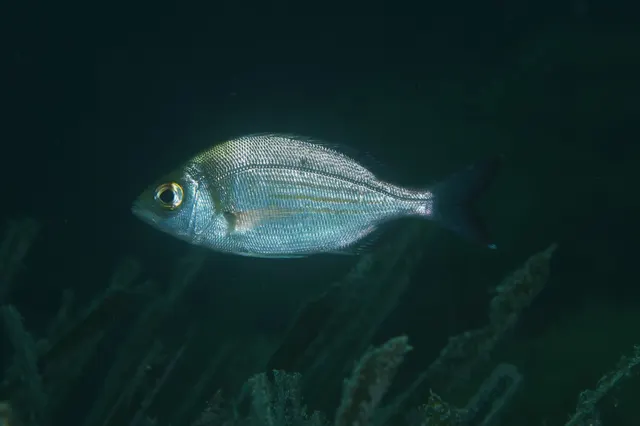 Black seabreamWorms taken from coarse ground and from among weed-associated growth.
- Brown shrimpWorms and other small infauna taken from and on the sediment, described in the literature at group level.
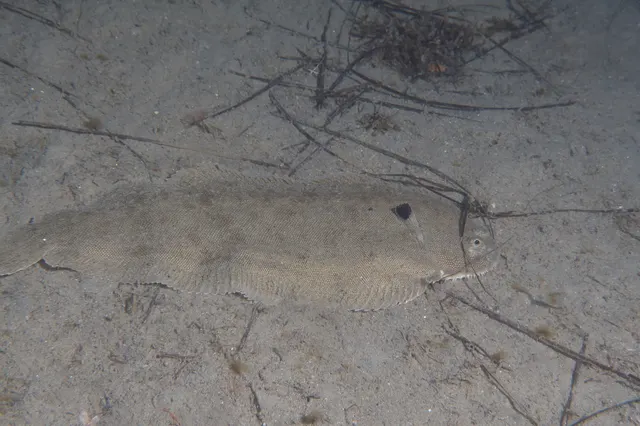 Common soleSole feed at night on buried invertebrates located by touch and chemoreception rather than by sight, with polychaetes the dominant item.
- Common stingrayWorms taken from soft estuarine ground, located by the electric field of their tissue rather than seen.
- DabPolychaete worms taken from and just under the surface of clean sand — the reason a fresh, leaking worm bait is the standard dab bait rather than a traditional one.
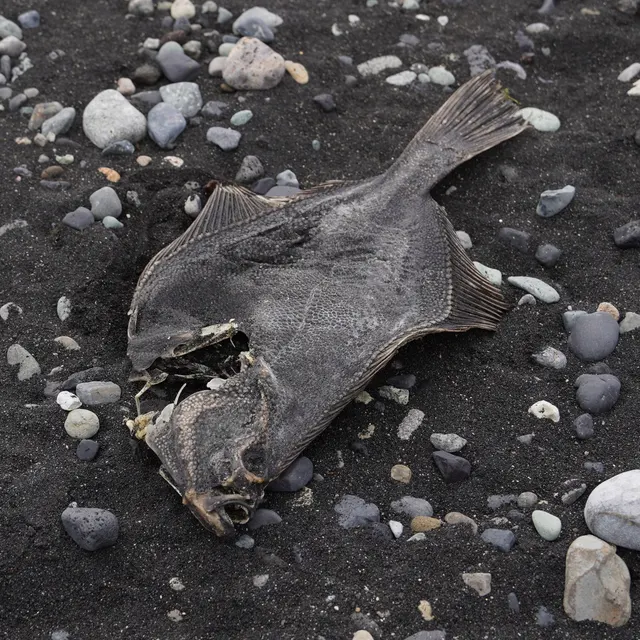 European flounderRagworm above all, which is what an estuary offers in quantity and why ragworm is the near-universal flounder bait.
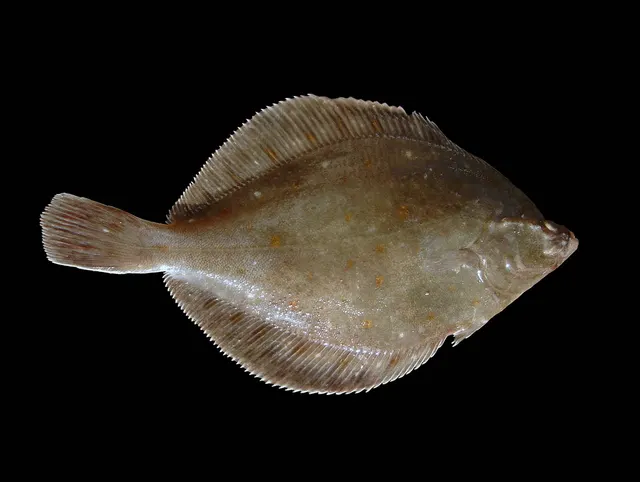 European plaicePlaice feed on worms in soft sediment, frequently by cropping exposed siphons and tentacles rather than by excavating the animal, which is why they can feed continuously without moving far.
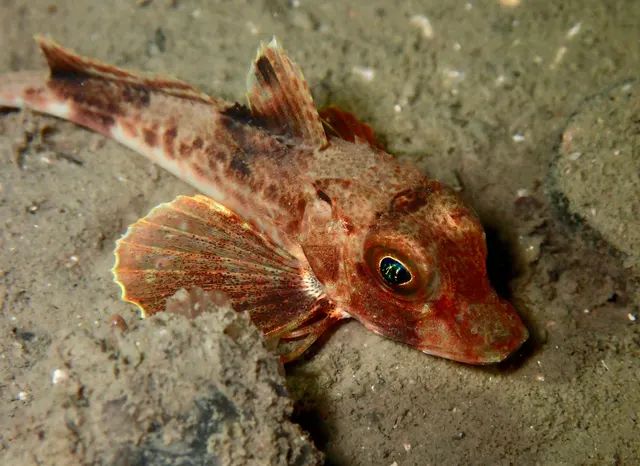 Grey gurnardPolychaetes taken from clean sand and fine gravel, detected by contact and chemistry rather than by sight.
2 more
- Haddock Fish
- Small-spotted catshark Fish
Sources and evidence
- FishBase: a global information system on fishes — Froese, R. and D. Pauly, eds. — FishBase Consortium (Scientific institute)Relied on for: Recorded food items for the predatory species this taxon is cited as prey for, at the granularity the database records them.States this directlyPassage read and verified
- FAO Species Identification Guides for Fishery Purposes and the FAO Species Catalogues — Food and Agriculture Organization of the United Nations (Scientific institute)Relied on for: Species and family accounts describing food items, given at family or functional-group level where that is what the account states.States this directlyCitation checked — the work exists and is described correctly
Why the 10 connections on this page are here, and the sources
Fish this applies to
Backed by research — 10 connections
Supported by peer-reviewed research or fisheries science. The sources are listed and can be checked.
Black seabream
A dietary claim recorded at GROUP level against a modelled prey concept, because the sources describe the prey as a group and inventing a species to point at would be the fabrication the precision audit exists to prevent.
- Cefas science, advice and data on marine and freshwater environments — Centre for Environment, Fisheries and Aquaculture Science (Government fisheries body)Relied on for: UK marine fisheries science: survey data, distribution and the biological basis of management advice for the species concerned.States this directlyCitation checked — the work exists and is described correctly
- The Fishes of the British Isles and North-West Europe — Macmillan, 1969 (Reference work)Relied on for: Distribution, habitat and biology of the fishes of the British Isles and north-west Europe.States this directlyCitation checked — the work exists and is described correctly
Brown shrimp
A diet claim recorded at group level, pointed at a modelled prey CATEGORY, because the reference works describe the diet as a group rather than by species. Naming a particular species FishingHQ happens to hold would invent a precision the evidence never had.
- The Fishes of the British Isles and North-West Europe — Macmillan, 1969 (Reference work)Relied on for: Distribution, habitat association, identification and biology of the fishes and inshore fauna of the British Isles and north-west Europe.States this directlyCitation checked — the work exists and is described correctly
- FAO Species Identification Guides for Fishery Purposes and the FAO Species Catalogues — Food and Agriculture Organization of the United Nations (Scientific institute)Relied on for: Diagnostic characters, family placement, habitat and depth range as set out in the FAO species identification sheets for the eastern Atlantic and Mediterranean.States this directlyCitation checked — the work exists and is described correctly
Common sole
Recorded diet evidence identifies polychaete worms as a food item of this predator at group level rather than to species. The edge points at the taxon record for that reason, and encoding it as a species-level claim would assert something the source does not.
- FishBase: a global information system on fishes — Froese, R. and D. Pauly, eds. — FishBase Consortium (Scientific institute)Relied on for: Food items recorded for this predator, given as polychaete worms.States this directlyPassage read and verified
- FAO Species Identification Guides for Fishery Purposes and the FAO Species Catalogues — Food and Agriculture Organization of the United Nations (Scientific institute)Relied on for: Species account describing this predator's diet, recorded at the level of polychaete worms.Background and mechanism onlyCitation checked — the work exists and is described correctly
Common stingray
A dietary claim recorded at GROUP level against a modelled prey concept, because the sources describe the prey as a group and selecting a species for the edge to point at would assert a precision the evidence does not carry.
- The Fishes of the British Isles and North-West Europe — Macmillan, 1969 (Reference work)Relied on for: Distribution, habitat association, identification and biology of the sharks, skates and rays of the British Isles and north-west Europe.States this directlyCitation checked — the work exists and is described correctly
- FAO Species Identification Guides for Fishery Purposes and the FAO Species Catalogues — Food and Agriculture Organization of the United Nations (Scientific institute)Relied on for: Diagnostic characters, habitat and depth range as set out in the FAO species identification sheets for the eastern Atlantic and Mediterranean.States this directlyCitation checked — the work exists and is described correctly
Dab
A dietary claim recorded at GROUP level against a modelled prey concept, because the sources describe the prey as a group and inventing a species to point at would be the fabrication the precision audit exists to prevent.
- Cefas science, advice and data on marine and freshwater environments — Centre for Environment, Fisheries and Aquaculture Science (Government fisheries body)Relied on for: UK marine fisheries science: survey data, distribution and the biological basis of management advice for the species concerned.States this directlyCitation checked — the work exists and is described correctly
- The Fishes of the British Isles and North-West Europe — Macmillan, 1969 (Reference work)Relied on for: Distribution, habitat and biology of the fishes of the British Isles and north-west Europe.States this directlyCitation checked — the work exists and is described correctly
European flounder
A dietary claim recorded at GROUP level against a modelled prey concept, because the sources describe the prey as a group and inventing a species to point at would be the fabrication the precision audit exists to prevent.
- Cefas science, advice and data on marine and freshwater environments — Centre for Environment, Fisheries and Aquaculture Science (Government fisheries body)Relied on for: UK marine fisheries science: survey data, distribution and the biological basis of management advice for the species concerned.States this directlyCitation checked — the work exists and is described correctly
- The Fishes of the British Isles and North-West Europe — Macmillan, 1969 (Reference work)Relied on for: Distribution, habitat and biology of the fishes of the British Isles and north-west Europe.States this directlyCitation checked — the work exists and is described correctly
European plaice
Recorded diet evidence identifies polychaete worms as a food item of this predator at group level rather than to species. The edge points at the taxon record for that reason, and encoding it as a species-level claim would assert something the source does not.
- FishBase: a global information system on fishes — Froese, R. and D. Pauly, eds. — FishBase Consortium (Scientific institute)Relied on for: Food items recorded for this predator, given as polychaete worms.States this directlyPassage read and verified
- FAO Species Identification Guides for Fishery Purposes and the FAO Species Catalogues — Food and Agriculture Organization of the United Nations (Scientific institute)Relied on for: Species account describing this predator's diet, recorded at the level of polychaete worms.Background and mechanism onlyCitation checked — the work exists and is described correctly
Grey gurnard
A dietary claim recorded at GROUP level against a modelled prey concept, because the sources describe the prey as a group and inventing a species to point at would be the fabrication the precision audit exists to prevent.
- Cefas science, advice and data on marine and freshwater environments — Centre for Environment, Fisheries and Aquaculture Science (Government fisheries body)Relied on for: UK marine fisheries science: survey data, distribution and the biological basis of management advice for the species concerned.States this directlyCitation checked — the work exists and is described correctly
- The Fishes of the British Isles and North-West Europe — Macmillan, 1969 (Reference work)Relied on for: Distribution, habitat and biology of the fishes of the British Isles and north-west Europe.States this directlyCitation checked — the work exists and is described correctly
Haddock
Recorded diet evidence identifies polychaete worms as a food item of this predator at group level rather than to species. The edge points at the taxon record for that reason, and encoding it as a species-level claim would assert something the source does not.
- FishBase: a global information system on fishes — Froese, R. and D. Pauly, eds. — FishBase Consortium (Scientific institute)Relied on for: Food items recorded for this predator, given as polychaete worms.States this directlyPassage read and verified
- FAO Species Identification Guides for Fishery Purposes and the FAO Species Catalogues — Food and Agriculture Organization of the United Nations (Scientific institute)Relied on for: Species account describing this predator's diet, recorded at the level of polychaete worms.Background and mechanism onlyCitation checked — the work exists and is described correctly
Small-spotted catshark
A dietary claim recorded at GROUP level against a modelled prey concept, because the sources describe the prey as a group and selecting a species for the edge to point at would assert a precision the evidence does not carry.
- The Fishes of the British Isles and North-West Europe — Macmillan, 1969 (Reference work)Relied on for: Distribution, habitat association, identification and biology of the sharks, skates and rays of the British Isles and north-west Europe.States this directlyCitation checked — the work exists and is described correctly
- FAO Species Identification Guides for Fishery Purposes and the FAO Species Catalogues — Food and Agriculture Organization of the United Nations (Scientific institute)Relied on for: Diagnostic characters, habitat and depth range as set out in the FAO species identification sheets for the eastern Atlantic and Mediterranean.States this directlyCitation checked — the work exists and is described correctly
How FishingHQ labels evidence is explained in the evidence policy.