European flounder
Fish · Last reviewed 2026-08-15
The flatfish that runs up rivers — a tolerant, estuarine right-eyed flounder with bony tubercles along its fin bases and a habit of turning up in fresh water.
Safety: injury while handling fish — minor injury. 5 more points apply here.
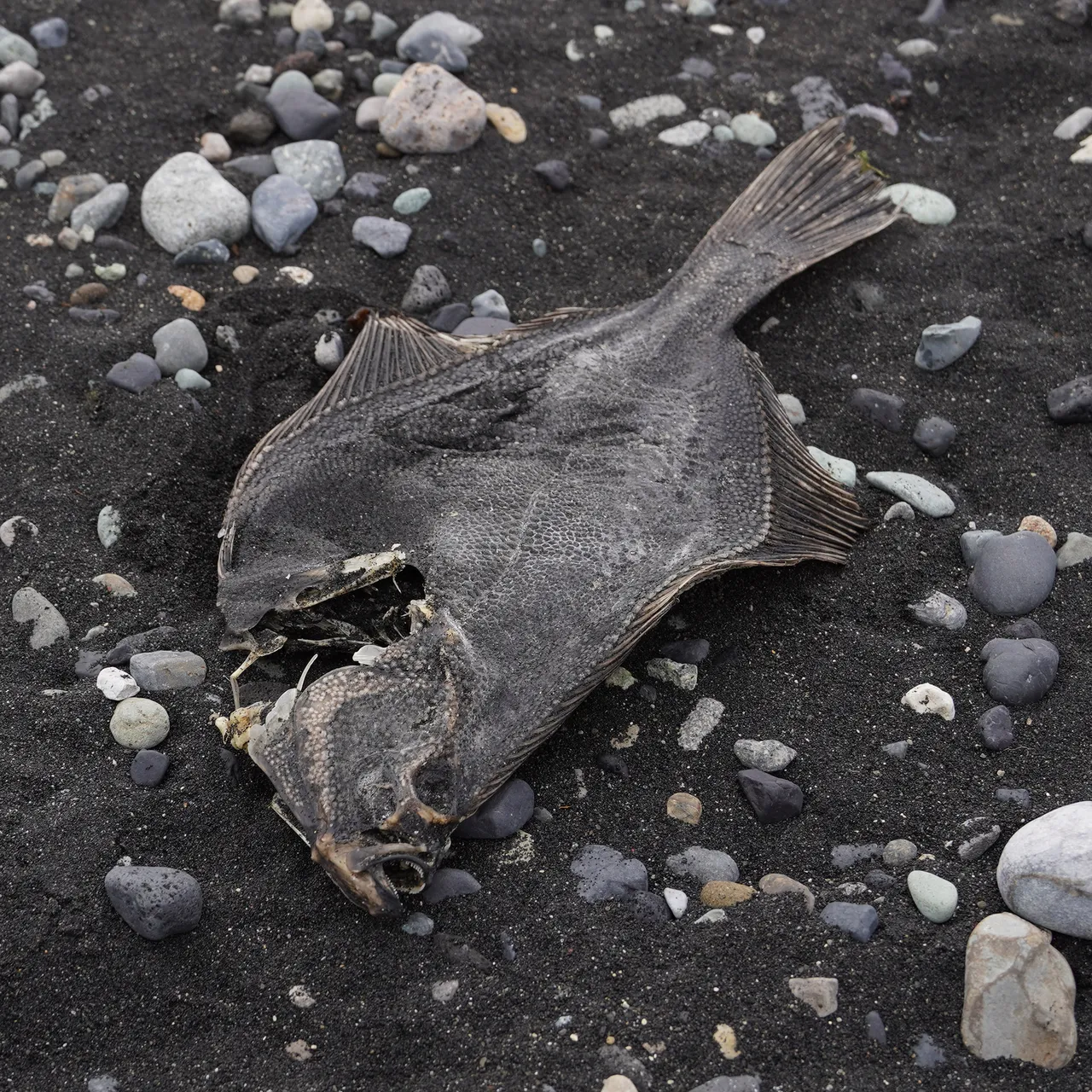
How this was identified, and who took it
Identified by: The record's diagnostic is shown here better than a live fish would show it. A continuous row of rough bony tubercles runs along the base of the dorsal fin and along the base of the anal fin, with a further patch over the head behind the eyes, standing out as hard pale knobs against dried skin. Drying has stripped the mucus and slack tissue that normally hide them. The right-eyed arrangement and the whole diamond outline are in frame.nbasargin — CC BY, via iNaturalist — source, licenceCatching European flounder
Everything here on fishing for it. Each entry opens the page behind it.
- When
- Somewhere documents it in almost every month, so there is no season for the species as a whole — the season is a property of the ground, and each place states its own.
- Where
- 234 places FishingHQ documents — strongest claim anywhere: characteristic of this water · From the shore, From a kayak
The flounder is the flatfish that refuses to stay in the sea. It penetrates estuaries further than any other British flatfish, ascends rivers well above the tidal limit, and has been recorded in genuinely fresh water many miles inland. That tolerance is the species' defining characteristic and the reason it turns up in catches nobody expected.
IT IS THE THIRD MEMBER OF A TRIANGLE. Plaice, dab and flounder are all right-eyed flatfish of similar shape caught on the same ground, and they are confused constantly. The flounder's tell is touch again, but in a different place: run a finger along the base of the dorsal and anal fins, where the flounder carries a row of small rough bony tubercles that neither of the others has. There is a second patch of the same roughness around the lateral line at the head.
FLOUNDERS ARE ALSO THE FLATFISH MOST LIKELY TO BE CAUGHT BY A FRESHWATER ANGLER BY ACCIDENT, in the lower reaches of rivers where coarse fishing and tidal water overlap. A tidal Thames or Severn angler who catches a flatfish has almost certainly caught this one.
How it is caught
- LedgeringLight bottom fishing with small hooks and ragworm is the everyday estuary flounder method.
- SpinningThe baited spoon — a small flashing blade above a baited hook, drawn slowly across the bottom — is a specialist flounder rig that works by stirring sediment, which is the signal a feeding flounder is tuned to.
- SurfcastingFished from open sandy beaches, though usually with much lighter gear than cod or bass fishing on the same ground.
Gear for this fish
Where European flounder is documented
Places where public sources describe this species as fished, with how it is fished and how strongly the evidence supports it. This is not a range map and it is not a recommendation — it is what has been written down about a fishery rather than a record of any individual catch, and being listed is never permission to fish.
The Causeway and Antrim coast
9 documented places
Beach
Regular local target
From the shore
Estuary
Regular local target
From the shore
Harbour wall
Regular local target
From the shore
Harbour wall
Regular local target
From the shore
Bay
Seasonal
From the shore
Around Nov, Dec, Jan, Feb, Mar
Beach
Regular local target
From the shore
Surf beach
Characteristic of this water
From the shore
Harbour wall
Regular local target
From the shore
Beach
Regular local target
From the shore
The north-east England coast
22 documented places
Holy Island and the Lindisfarne causeway
Island
Seasonal
From the shore
Around Apr, May, Jun, Jul, Aug, Sept
Pier
Seasonal
From the shore
Around Apr, May, Jun, Jul, Aug, Sept
Rock mark
Seasonal
From the shore
Around Nov, Dec, Jan, Feb
Amble and the Coquet estuary
Estuary
Regular local target
From the shore
Beach
Seasonal
From the shore
Around Apr, May, Jun, Jul, Aug, Sept
Bay
Regular local target
From the shore
Rock mark
Recorded here
From the shore
Pier
Regular local target
From the shore
Beach
Regular local target
From the shore
Around Nov, Dec, Jan, Feb
The Cornish and Devon coasts
17 documented places
Estuary
Recorded here
From the shore
Exmouth and the Exe estuary
Estuary
Recorded here
From the shore
Teignmouth
Estuary mark
Recorded here
From the shore
The Dart estuary
Estuary
Recorded here
From the shore
The Tamar estuary
Estuary
Recorded here
From the shore
Estuary mark
Repeatedly reported
From a kayak
Beach section
Repeatedly reported
From a kayak
Estuary
Recorded here
From the shore
Estuary
Repeatedly reported
From the shore
Morecambe Bay and the north-west England coast
13 documented places
Promenade
Regular local target
From the shore
Walney Island
Island
Regular local target
From the shore
Rock mark
Regular local target
From the shore
Promenade
Regular local target
From the shore
Jetty
Regular local target
From the shore
Pier
Regular local target
From the shore
Blackpool piers and the north wall
Pier
Regular local target
From the shore
Beach
Regular local target
From the shore
Headland
Seasonal
From the shore
Around May, Jun, Jul, Aug, Sept, Oct
The Norfolk and Suffolk sandbank coast
10 documented places
Brancaster and the north Norfolk marshes
Estuary mark
Regular local target
From the shore
Sandbank
Regular local target
From the shore
Beach section
Regular local target
From the shore
Pier
Regular local target
From the shore
Beach
Regular local target
From the shore
The Orwell and Stour estuaries
Estuary
Regular local target
From the shore
Beach
Regular local target
From the shore
Beach
Regular local target
From the shore
Beach
Regular local target
From the shore
The Kerry coast
10 documented places
Pier
Regular local target
From the shore
Estuary mark
Regular local target
From the shore
Estuary mark
Regular local target
From the shore
Surf beach
Regular local target
From the shore
Estuary
Regular local target
From the shore
Surf beach
Regular local target
From the shore
Estuary
Regular local target
From the shore
Beach
Regular local target
From the shore
Surf beach
Regular local target
From the shore
West Cork
9 documented places
Beach
Regular local target
From the shore
Surf beach
Regular local target
From the shore
Pier
Regular local target
From the shore
Harbour wall
Regular local target
From the shore
Estuary
Regular local target
From the shore
Estuary mark
Regular local target
From the shore
Estuary
Regular local target
From the shore
Surf beach
Regular local target
From the shore
Surf beach
Regular local target
From the shore
Also documented on 41 more coasts
Fewer places each, or less strongly supported. Each one names its own marks.
The Donegal coast and its sea loughs (9) · The Wexford coast (8) · The Wash and the Lincolnshire coast (7) · Cork Harbour and the east Cork coast (7) · Dublin Bay and the Wicklow coast (7) · The Clare coast and the Shannon estuary (7) · The Severn Estuary (6) · The Welsh coast and Anglesey (6) · Clew Bay and Achill (6) · The Solway Firth (6) · Cardigan Bay and the sarnau (5) · Connemara and Galway Bay (5) · The Thames Estuary (4) · The Fife, Angus and Mearns coast (4) · The Louth and Meath coast (4) · The Purbeck coast and Poole Bay (3) · Belfast Lough and the north Down shore (3) · East Lothian and the Firth of Forth coast (3) · The Moray Firth (3) · Weymouth Bay (3) · Orkney (3) · The Waterford coast (3) · Scottish sea lochs (2) · The Gower and Carmarthen Bay (2) · Anglesey (2) · Outer Hebrides (2) · Caithness and the north coast (2) · The Sligo and Leitrim coast (2) · The Mourne coast and Carlingford Lough (1) · The Solent and the Hampshire coast (1) · The outer Ards coast (1) · Brittany and the French Atlantic coast (1) · France (1) · Chesil Beach (1) · The Isle of Man (1) · The Yorkshire coast (4) · The Channel shingle coasts (1) · The Firth of Clyde (3) · Pembrokeshire and the south-west Wales coast (2) · The Lecale coast and Dundrum Bay (1) · Skye and the Inner Hebrides (1)
What these strengths mean
- Seasonal
- Well supported, and concentrated in part of the year rather than spread through it.
- Regular local target
- Fishing sources describe this as a normal local target here, not merely as caught.
- Recorded here
- At least one credible public account of this species being caught here. That is all it means.
- Repeatedly reported
- Several independent public accounts. Enough to say it happens more than once; not enough to call it a fishery.
- Characteristic of this water
- This water is strongly identified with this species by the sources that cover it.
When to fish for european flounder
Where the places here state a season for european flounder, it clusters through most of the year. This is a count of how many documented places name each month — evidence about when people fish for it, not a prediction of what any particular day will produce.
| Jan | Feb | Mar | Apr | May | Jun | Jul | Aug | Sep | Oct | Nov | Dec |
|---|---|---|---|---|---|---|---|---|---|---|---|
| January: 16 places name this month — most places. | February: 16 places name this month — most places. | March: 8 places name this month — some places. | April: 3 places name this month — few places. | May: 5 places name this month — few places. | June: 10 places name this month — some places. | July: 10 places name this month — some places. | August: 10 places name this month — some places. | September: 11 places name this month — many places. | October: 10 places name this month — some places. | November: 17 places name this month — most places. | December: 16 places name this month — most places. |
27 of the 234 places that record catches of european flounder state which months. The other 207 name no season, so they are counted in neither direction: the shape above is what the dated records say, not the whole picture. The dated records span 14 separate areas.
Identification
- Scientific name
- Platichthys flesus
- Family
- Pleuronectidae
- Water
- Saltwater, Brackish, Freshwater
- Conservation status
- Least Concern
- Regions
- Britain & Ireland, Northern Europe, Western Europe, Mediterranean, Arctic & Subarctic
- ROUGH BONY TUBERCLES along the bases of the dorsal and anal fins — a row of small hard knobs you can feel with a finger. Neither plaice nor dab has them, and this is the diagnostic character.
- A second patch of the same rough tubercles around the lateral line just behind the head.
- The lateral line is nearly straight, with only a slight curve over the pectoral — closer to plaice than to the dab's pronounced arch.
- Dull brown or olive upper side, often muddy-looking, sometimes with vague orange or reddish spots that are dull rather than the plaice's bright orange.
- Usually right-eyed, but LEFT-EYED individuals are commoner in this species than in most — an unexpectedly reversed flatfish in an estuary is very often a flounder.
- Caught in brackish or fresh water, it is almost certainly this species: no other British flatfish goes so far up a river.
Size
- Typical
- 25–35 cm and 300–700 g for rod-caught fish.
- Large
- Over 40 cm and 1 kg.
Exceptional: Around 50 cm and 2–3 kg is the reported upper end. Fish of that size are uncommon and generally come from productive estuaries rather than open coast.
Estuaries, fresh water, and a fish that goes where flatfish are not supposed to
The flounder's habitat is the reason it exists as a separate story rather than as a footnote to plaice.
IT IS AN ESTUARINE FISH, NOT A MARINE ONE THAT VISITS. Flounders occupy the whole salinity gradient from open coast through brackish estuary into genuinely fresh water, and adults are found well above the tidal limit of rivers, sometimes many miles inland. No other British flatfish does this. A flatfish caught in fresh water is a flounder until proved otherwise.
THE GROUND IS MUD AND FINE SAND. Where a dab wants clean sand and a plaice wants clean sand or mixed gravel, a flounder is at home on the soft intertidal mud of an estuary — the ground everything else avoids. That is why flounder fishing happens in places that look unpromising: harbour mud, creek mouths, the inside of a sandbar, the tidal reach of a river running through a town.
DEPTH IS SHALLOW AND SOMETIMES ABSURDLY SO. Flounders work up over the flats on a flooding tide into water that barely covers them, feeding on the invertebrates the tide has reached. Fishing very close in, and fishing the flood rather than waiting for depth, is the whole approach on many estuaries.
THE SEASONAL PATTERN RUNS THE OPPOSITE WAY TO MOST SEA FISHING. Fish move up the estuary and into fresh water through spring and summer, and drop back seaward in late autumn and winter to spawn at sea. Autumn is the season for the estuary angler, because fish that have fed all summer concentrate on the way down and are in their best condition. A fish caught far up a river in high summer is often thin.
SUMMER FISH IN THE RIVER, WINTER FISH IN THE SEA. That single sentence organises most of what an angler needs, and it also explains the species' vulnerability: it depends on open sea to spawn and on estuarine mud as a nursery, so damage at either end reaches the whole population.
WATER QUALITY IS PART OF THE FISHING HERE IN A WAY IT IS NOT ELSEWHERE. Estuaries receive what the catchment sends down, and a flounder spends its life in that water. Whether fish from a particular estuary should be eaten is a question for the local authority and food agency, not for FishingHQ, and it is a real question rather than a formality.
NO ACCESS, PERMISSION, CLOSE SEASON OR SIZE LIMIT IS STATED HERE. Tidal reaches frequently sit at the boundary between sea and freshwater regimes, which is exactly where rules get complicated; ask the relevant fisheries authority before fishing one.
What experienced anglers do — why, and the sources (3)
Widely and independently recommended by experienced anglers and specialist sources. This is real angling knowledge, not proof: controlled evidence for it is limited, and FishingHQ records it as convention rather than as a demonstrated effect.
- The Fishes of the British Isles and North-West Europe — Macmillan, 1969 (Reference work)Relied on for: Distribution, habitat, identification characters and biology of the fishes of the British Isles and north-west Europe.States this directlyCitation checked — the work exists and is described correctly
- Sea Angler — Bauer Media (Specialist angling publication)Relied on for: Contemporary UK and European sea angling practice as reported by practitioners, including regional ground, seasonal timing and species behaviour.States this directlyCitation checked — the work exists and is described correctly
- General angling website restatements of established technique — Various (Credible secondary source)Relied on for: Widely restated descriptions of species behaviour and regional angling practice, recorded as consensus rather than as scholarship.Background and mechanism onlyCitation checked — the work exists and is described correctly
Size, an estuary diet, and why the baited spoon works
Flounders are bigger than dabs and smaller than good plaice, and they are caught in water where you often cannot see them at all.
THE NUMBERS. Most rod-caught flounders are 25 to 35 centimetres and 300 to 700 grams. Over 40 centimetres and a kilogram is a good fish; the reported upper end is around 50 centimetres and two to three kilograms, and fish at that size generally come from rich, productive estuaries rather than from open coast.
THE DIET IS WHATEVER THE ESTUARY HAS. Ragworm above all, then small molluscs, shrimps, small crabs and small fish, with the balance shifting between systems and seasons. This is an opportunist working intertidal mud, not a specialist, and that is why ragworm is the near-universal flounder bait: it is the thing the fish is already eating in quantity.
SMELL LEADS, BECAUSE SIGHT CANNOT. Estuary water is usually coloured and often genuinely opaque, so the visual approach that works for plaice over clean sand is unavailable. Flounders find food by scent and by detecting disturbance in the sediment, and their behaviour follows: practitioners hold that a fresh, leaking worm bait does considerably better than a tidy one, and a bait that has been in the water an hour has stopped working.
WHICH IS THE WHOLE EXPLANATION OF THE BAITED SPOON. A small spoon or flashing blade set above a baited hook and drawn slowly across the bottom does two things at once: it stirs the sediment, which is the signal a feeding flounder is tuned to, and it flashes, which draws attention in whatever visibility there is. Then the fish arrives to find a worm. It is one of the oldest specialist rigs in British sea angling, it is genuinely effective rather than traditional for its own sake, and it works because it matches how the fish hunts rather than what it eats.
MOVEMENT IS THE ACTIVE INGREDIENT. A static bait catches flounders, and the practitioner view is that a slowly moved one does better. Retrieving a few turns, pausing, and retrieving again covers ground and repeatedly restarts the disturbance signal, and on a big flat where fish are thinly spread that is worth more than any bait refinement.
What experienced anglers do — why, and the sources (3)
Widely and independently recommended by experienced anglers and specialist sources. This is real angling knowledge, not proof: controlled evidence for it is limited, and FishingHQ records it as convention rather than as a demonstrated effect.
- The Fishes of the British Isles and North-West Europe — Macmillan, 1969 (Reference work)Relied on for: Distribution, habitat, identification characters and biology of the fishes of the British Isles and north-west Europe.States this directlyCitation checked — the work exists and is described correctly
- Sea Angler — Bauer Media (Specialist angling publication)Relied on for: Contemporary UK and European sea angling practice as reported by practitioners, including regional ground, seasonal timing and species behaviour.States this directlyCitation checked — the work exists and is described correctly
- FAO Species Identification Guides for Fishery Purposes and the FAO Species Catalogues — Food and Agriculture Organization of the United Nations (Scientific institute)Relied on for: Diagnostic identification characters, family placement and distribution as set out in the FAO species identification sheets for the eastern Atlantic and Mediterranean.States this directlyCitation checked — the work exists and is described correctly
Spawning at sea, growing up in the mud, and a fish that grips back
The flounder's life cycle runs between two habitats and it needs both.
SPAWNING IS AT SEA, in relatively deep water in late winter and spring, with floating eggs. Adults that have spent months far up an estuary or river must therefore make a seaward migration to breed, and that movement in late autumn and winter is predictable enough to fish.
THE NURSERY IS THE INTERTIDAL. After the flatfish metamorphosis — the eye migrating across the skull, the body flattening, the fish tipping onto its side — tiny flounders settle into very shallow estuarine sand and mud, often in water measured in centimetres. Those flats are the species' nursery and they are precisely the habitat most affected by dredging, land claim, smothering and poor water quality.
THEN THE DIRECTION REVERSES. Juveniles move progressively further up the estuary and into fresh water as they grow, which is the opposite of the usual arrangement where young fish stay in brackish nurseries and adults go to sea. A flounder is genuinely a two-habitat animal, and its population can be limited by either end.
LEFT-EYED FISH ARE COMMONER HERE THAN ELSEWHERE. Reversed individuals — both eyes on the left — occur in most flatfish and occur in flounders at a noticeably higher rate. A reversed flatfish from an estuary is usually this species rather than a rarity.
HANDLING: THE FISH IS TOUGHER THAN IT LOOKS AND SO IS ITS SKIN. Flounders tolerate handling and brief air exposure better than most flatfish, which is genuinely useful when unhooking in mud. But the bony tubercles along the dorsal and anal fin bases are abrasive, and gripping a thrashing fish firmly will take skin off a hand — hold it flat across the body with wet hands, not by the edges.
UNHOOK OVER WATER OR OVER SOMETHING WET. A flounder dropped on soft estuary mud is very hard to return in decent condition, and one dropped on shingle is worse. Deep hooking on ragworm is common because the bites are gentle and easy to ignore; strike them rather than let them develop, and if a fish is hooked out of sight cut the trace close rather than digging for the hook.
Backed by research — why, and the sources (3)
Supported by peer-reviewed research or fisheries science. The sources are listed and can be checked.
- The Fishes of the British Isles and North-West Europe — Macmillan, 1969 (Reference work)Relied on for: Distribution, habitat, identification characters and biology of the fishes of the British Isles and north-west Europe.States this directlyCitation checked — the work exists and is described correctly
- Cefas science, advice and data on marine and freshwater environments — Centre for Environment, Fisheries and Aquaculture Science (Government fisheries body)Relied on for: UK marine fisheries science: stock monitoring, survey data and the biological basis of management advice for the species concerned.States this directlyCitation checked — the work exists and is described correctly
- FAO Species Identification Guides for Fishery Purposes and the FAO Species Catalogues — Food and Agriculture Organization of the United Nations (Scientific institute)Relied on for: Diagnostic identification characters, family placement and distribution as set out in the FAO species identification sheets for the eastern Atlantic and Mediterranean.States this directlyCitation checked — the work exists and is described correctly
How flounder are caught, and why the estuary is the whole answer
Flounder fishing is estuary fishing, and almost every effective method follows from that one fact.
THE FISH IS IN THE MUD, NOT ON THE SAND. Flounder tolerate fresh and brackish water better than any other British flatfish, run far up estuaries and into rivers, and feed over soft mud and muddy sand where plaice and dab will not be. An angler fishing 'flatfish ground' on a clean surf beach is usually fishing for the wrong flatfish.
LEDGERING WITH A LIGHT FLOWING TRACE is the foundation. A single or two-hook trace on a light lead, fished so the tide moves it slowly across the mud, covers ground and imitates a disturbed bottom. A rig pinned rigidly in place is the commonest mistake in flounder fishing.
BAITED SPOONS ARE A GENUINE FLOUNDER SPECIALITY and one of the few pieces of British sea tackle designed for a single species. A small metal spoon above the hook, drawn slowly across the bottom, kicks up sediment and flashes; the flounder investigates the disturbance and finds the worm. It works because it exploits exactly the curiosity that makes flounder follow a moving bait.
SLOW RETRIEVE IS THE COMMON THREAD. Whether the rig is a spoon, a trace or a plain lead, drawing it back a foot at a time with pauses is held by estuary flounder anglers to out-fish leaving it still. This is the opposite of the discipline most beach anglers have learned.
AND THE TIDE DECIDES EVERYTHING ELSE. Flounder follow the flood up onto mud flats to feed and drop back on the ebb, so the productive window is a specific state of tide on a specific bank rather than a time of day. On many estuaries the last two hours of the flood and the first of the ebb are the whole session.
FLOUNDER ARE ALSO CAUGHT ON LIGHT LURE TACKLE — small soft plastics worked slowly along the bottom — which is a recent development and a natural extension of why the baited spoon works.
What experienced anglers do — why, and the sources (2)
Widely and independently recommended by experienced anglers and specialist sources. This is real angling knowledge, not proof: controlled evidence for it is limited, and FishingHQ records it as convention rather than as a demonstrated effect.
- Sea Angler — Bauer Media (Specialist angling publication)Relied on for: Contemporary UK and European sea angling practice as reported by practitioners, including ground, seasonal timing, bait and method convention.States this directlyCitation checked — the work exists and is described correctly
- General angling website restatements of established technique — Various (Credible secondary source)Relied on for: Widely restated descriptions of species behaviour and regional angling practice, recorded as consensus rather than as scholarship.Background and mechanism onlyCitation checked — the work exists and is described correctly
Lifecycle and reproduction
Flounders hatch from pelagic eggs at sea as symmetrical larvae, undergo the flatfish metamorphosis, and settle into very shallow water — commonly the intertidal sand and mud of estuaries, which are the species' nursery. Juveniles then move progressively further up the estuary and into fresh water as they grow, returning seaward to spawn as adults. That reversal of the usual pattern, with the young in salt and the adults ranging into fresh, is unusual and is what makes the flounder a genuinely estuarine fish rather than a marine one that tolerates estuaries.
Spawning takes place at sea in late winter and spring, in relatively deep water, with pelagic eggs. Adults that have spent the summer and autumn far up estuaries and rivers must therefore drop back down to salt water to breed, and that seaward migration in late autumn and winter is a predictable movement an angler can fish. The dependence on both open sea for spawning and estuarine mud for nursery habitat makes the species vulnerable at two separate points in its cycle.
Feeding and senses
An opportunistic bottom feeder taking ragworm, small molluscs, shrimps, small crabs and small fish, with the diet shifting according to what the estuary offers. Flounders feed heavily on the invertebrate life of intertidal mud and sand, and they follow the tide up and across the flats to do it — a flounder will work into water barely deep enough to cover it. They are also markedly attracted to movement and to disturbance in the sediment.
Sight and smell together, with smell dominant in the coloured, sediment-laden water flounders usually inhabit. Estuary water is frequently too murky for vision to lead, which is why scented baits and slow movement work so well and why bright presentation matters far less than it does for plaice on clean sand. Flounders also respond strongly to vibration and disturbance in the substrate, which is the mechanism behind the traditional baited spoon: a spoon dragged slowly across the bottom stirs sediment and flashes, and the fish comes to investigate.
Through the year
Flounders move up estuaries and into fresh water through spring and summer, feed there through the warmer months, and drop back down towards the sea in late autumn and winter to spawn. The best estuary fishing is generally autumn, as fish that have fed all summer concentrate on their way seaward. Fish caught well up a river in high summer are usually in poor condition compared with autumn fish that have begun to move down.
Distribution
North-east Atlantic from the Mediterranean and Black Sea north to the White Sea, including the whole of the British Isles, the North Sea and the Baltic, where it tolerates very low salinity. Occupies sand and mud from the intertidal down to around 50 m, and ascends estuaries and rivers into fresh water. Widespread and generally abundant; the global assessment is Least Concern, which is a statement about the species rather than about any local estuary.
This is a biological range — where the species occurs, not a prediction that you will catch one. To browse the fishing geography FishingHQ holds, start at fishing places.
Why anglers care
The estuary flatfish, and one of very few species that gives shore anglers good sport in the depth of winter in water most people write off. Flounder fishing is a distinct tradition with its own tackle — light gear, small hooks, ragworm, and the baited spoon, which is one of the oldest and most effective specialist rigs in British sea angling. It is also the flatfish most often caught by freshwater anglers, in tidal rivers where the two worlds overlap.
Handling and returning
Flounders have no venomous spines and no teeth of consequence, but the bony tubercles along the fin bases are genuinely abrasive and a firm grip on a struggling fish will take skin off a hand. Hold it flat across the body with wet hands rather than by the edges. Flounders are hardy and tolerate handling and air exposure better than most flatfish, but they are frequently caught from soft mud where a dropped fish becomes impossible to return cleanly, so unhook over water or over a wet surface. Deep hooking on ragworm is common for the same reason as in dab, and the same answer applies: strike early, and cut the trace rather than excavate.
Why a drying estuary fishes on the last of the ebb and the first of the flood
Why a drying estuary fishes on the last of the ebb and the first of the flood
Reading the ground · Draft — not yet checked against an external reference
This drawing has not been checked against any reference outside FishingHQ. It is a schematic of what the surrounding text describes, and the text is what carries the detail.
Describe this diagram in words
Two stacked cross-sections through the same drying estuary, taken from bank to bank. In the upper panel, at low water, a broad and almost level flat of sand and mud runs in from each bank and falls into a channel cut through the middle; the only water in the figure lies in that channel, and a label beneath it states that every fish in the system is in there because there is nowhere else for them to be. In the lower panel the bed is identical, offset downward, but the water surface now runs unbroken from bank to bank at high tide with the channel invisible beneath it, and two horizontal arrows lead outward from the channel across the covered flats to show fish leaving it to feed on ground the tide has just reached. A label beneath the lower channel states that it is now the part of the estuary the fish have left. Two lines of text at the foot give the conclusion: the draining flats push fish back into the channel on the last of the ebb, and they run up it ahead of the water on the first of the flood, which is why a guide names those two halves together as a single window. No depth, width, number of hours or species appears anywhere on the figure.
How this drawing was produced
Drawn by hand as two stacked cross-sections of one piece of ground, and looked at as a finished image before publication. THE TWO PANELS SHARE A BED PROFILE DELIBERATELY. The first draft varied the bed between them to make the panels distinct, which was exactly wrong: the argument is that the ground does not change and only the water does. The bed paths are now one shape offset vertically, so a reader comparing panels compares water levels and nothing else. THE SPREAD ARROWS WERE VERTICAL in the first draft, which read as fish rising in the water column rather than moving out over new ground. They now run horizontally to both banks. NO HOUR COUNT IS DRAWN although every source names one, because the number is a fact about a particular estuary and drawing it would turn a mechanism into a rule. The vertical is exaggerated, as on every section through a sea floor.
Going further
- What does european flounder eat? — feeding biology, kept separate from what anglers infer from it.
Safety
Injury while handling fish — Minor injury
The rows of bony tubercles along the bases of the dorsal and anal fins are genuinely abrasive, and a firm grip on a struggling flounder will take skin off a palm or fingers. It is a graze rather than a puncture, but it is broken skin in contact with a marine fish, which infects more readily than it looks like it should.
What reduces it: Hold the fish flat across the body with wet hands rather than gripping its edges, and support rather than squeeze. Wash and cover any graze.
Fish welfare — Minor injury
Flounder bites on ragworm are gentle and easy to ignore, so fish are frequently hooked deep. Flounders are also usually caught from soft estuary mud, where a fish put down to be unhooked cannot be returned cleanly and a dropped one is coated in silt.
What reduces it: Strike the bite rather than letting it develop. Unhook over water, or over a wet surface, and never on dry mud or shingle. If a fish is hooked out of sight, cut the trace close rather than digging for the hook.
Worse when:
- Fishing soft intertidal mud where there is nowhere clean to put a fish down.
- Fishing at night, when bites are felt late and unhooking is done by feel.
Precautions that always apply here
- Wet your hands before touching a fish. Dry hands strip the protective mucus layer that keeps infection out.
- Check the tide before you go and know your exit route. Being cut off is the commonest way a shore session becomes a rescue.
- If a hook goes past the barb into a person, cut the line, leave the hook where it is, and get medical help. Pulling it back out does far more damage than pushing it through under proper care.
- Do not wade alone. Judge depth and flow from the bank first, and turn back sooner than feels necessary.
Check the rules before you fish
Fishing laws, bylaws, access rules, seasons, bait restrictions and permitted methods vary by location and can change. Check the current rules from the relevant authority and the water you intend to fish before fishing.
Check with:
- Current national or regional law for where you are fishing
- Current local bylaws
- The relevant fisheries authority
- The landowner, club or fishery whose water it is
- Any restrictions specific to the species or the method you intend to use
Where to go next
Where it lives
- Brackish waterFlounders tolerate very low salinity and are abundant in the brackish reaches of the Baltic and of British estuaries.
- EstuaryThe defining habitat. Flounders occupy the whole salinity gradient and are at home on the soft intertidal mud that other flatfish avoid.
- Lowland riversAdults ascend rivers well above the tidal limit, sometimes many miles inland. A flatfish caught in fresh water is a flounder until proved otherwise.
- Surf beachesPresent on open sandy coast as well as in estuaries, though the estuary is where the species is concentrated.
Where you will find it
- Clew Bay and AchillThe dominant flatfish of the bay's extensive soft ground and of the beaches, and the species a competition on one of these beaches found in greatest numbers when six different baits were fished against each other.
- Connemara and Galway BayDominates almost every flatfish account on this coast, and the reason is structural rather than incidental: every bay in Connemara has a river running into it, so every bay is part estuary and the brackish head of each one is flounder ground.
- Cork Harbour and the east Cork coastThrough the harbour's soft ground and at the estuary at the eastern end of this coast, where one hour at slack low water from a shingle point is named specifically for them.
- DenmarkA staple of the Danish coast and of the exposed North Sea beaches, and one of the species that makes the west coast worth fishing when the sea-trout coast is unfishable.
- Dublin Bay and the Wicklow coastThrough the bay's extensive sand flats and the two estuaries north of the city, which are the soft ground this urban coast is built around.
- Lough Foyle and its riversA large shallow sea lough with extensive intertidal mud and sand flats, and river estuaries entering across them. Flounder are what that ground holds, on both the Roe side and the main lough.
- Morecambe Bay and the north-west England coastThroughout the bay all year, following the flood out over the flats to feed and dropping back with it. Flounder are the fish this coast is honestly best at, and the local name for them — fluke — carries a traditional method of its own.
- Scottish sea lochsOccupies the brackish, silty head of a loch where the river enters, tolerating the salinity gradient that runs from nearly fresh at the head to fully marine at the mouth.
16 more
- The Black Sea Fishing regions
- The Donegal coast and its sea loughs Fishing regions
- The Fife, Angus and Mearns coast Fishing regions
- The Gower and Carmarthen Bay Fishing regions
- The Kerry coast Fishing regions
- The Louth and Meath coast Fishing regions
- The Moray Firth Fishing regions
- The Norfolk and Suffolk sandbank coast Fishing regions
- The Sligo and Leitrim coast Fishing regions
- The Solent and the Hampshire coast Fishing regions
- The Thames Estuary Fishing regions
- The Wadden Sea Fishing regions
- The Wash and the Lincolnshire coast Fishing regions
- The Waterford coast Fishing regions
- The Yorkshire coast Fishing regions
- West Cork Fishing regions
Understanding this fish
- Bivalve and gastropod molluscs as preySmall molluscs taken from soft sediment, a component that rises where the estuary is rich in them.
- Decapod crustaceans as preyShrimps and small crabs from intertidal mud and sand — the reason peeler crab takes better flounders than worm in many estuaries in spring.
- Osmoregulation and diadromous fishThe flounder's whole distribution rests on an ability to move between full salt water and fresh, which is a physiological problem most marine fish cannot solve.
- Polychaete worms as preyRagworm above all, which is what an estuary offers in quantity and why ragworm is the near-universal flounder bait.
- Turbidity and visibilityEstuary water is usually coloured and often opaque, which is why flounder fishing rewards scent and sediment disturbance rather than the visual presentation that works for plaice on clean sand.
Told apart from
- DabBoth are dull-coloured right-eyed flatfish of similar size. Feel for the flounder's row of bony tubercles at the fin bases; a dab is uniformly rough all over instead, and its lateral line arches far more steeply.
- European plaiceSeparated by the rough bony tubercles along the flounder's dorsal and anal fin bases, which plaice lack entirely, and by colour: dull orange spots on a muddy brown fish rather than bright orange on a clean one.
- Five-bearded rocklingNot a confusion but a coincidence of ground. These are the two fish a British estuary most reliably produces on a small worm bait over soft mud, and the rockling is what most anglers assume is a missed flounder bite.
Sources and evidence
- The Fishes of the British Isles and North-West Europe — Macmillan, 1969 (Reference work)Relied on for: Distribution, habitat, identification characters and biology of the fishes of the British Isles and north-west Europe.States this directlyCitation checked — the work exists and is described correctly
- FAO Species Identification Guides for Fishery Purposes and the FAO Species Catalogues — Food and Agriculture Organization of the United Nations (Scientific institute)Relied on for: Diagnostic identification characters, family placement and distribution as set out in the FAO species identification sheets for the eastern Atlantic and Mediterranean.States this directlyCitation checked — the work exists and is described correctly
- Cefas science, advice and data on marine and freshwater environments — Centre for Environment, Fisheries and Aquaculture Science (Government fisheries body)Relied on for: UK marine fisheries science: stock monitoring, survey data and the biological basis of management advice for the species concerned.States this directlyCitation checked — the work exists and is described correctly
- Sea Angler — Bauer Media (Specialist angling publication)Relied on for: Contemporary UK and European sea angling practice as reported by practitioners, including regional ground, seasonal timing and species behaviour.States this directlyCitation checked — the work exists and is described correctly
Why the 41 connections on this page are here, and the sources
How it is caught
What experienced anglers do — 3 connections
Widely and independently recommended by experienced anglers and specialist sources. This is real angling knowledge, not proof: controlled evidence for it is limited, and FishingHQ records it as convention rather than as a demonstrated effect.
Ledgering
A statement about how a species is fished, which is angling convention rather than biology and is labelled as such.
- Sea Angler — Bauer Media (Specialist angling publication)Relied on for: Contemporary UK and European sea angling practice as reported by practitioners, including ground, seasonal timing, bait and method convention.States this directlyCitation checked — the work exists and is described correctly
- General angling website restatements of established technique — Various (Credible secondary source)Relied on for: Widely restated descriptions of species behaviour and regional angling practice, recorded as consensus rather than as scholarship.Background and mechanism onlyCitation checked — the work exists and is described correctly
Spinning
A statement about how a species is fished, which is angling convention rather than biology and is labelled as such.
- Sea Angler — Bauer Media (Specialist angling publication)Relied on for: Contemporary UK and European sea angling practice as reported by practitioners, including ground, seasonal timing, bait and method convention.States this directlyCitation checked — the work exists and is described correctly
- General angling website restatements of established technique — Various (Credible secondary source)Relied on for: Widely restated descriptions of species behaviour and regional angling practice, recorded as consensus rather than as scholarship.Background and mechanism onlyCitation checked — the work exists and is described correctly
Surfcasting
A statement about how a species is fished, which is angling convention rather than biology and is labelled as such.
- Sea Angler — Bauer Media (Specialist angling publication)Relied on for: Contemporary UK and European sea angling practice as reported by practitioners, including ground, seasonal timing, bait and method convention.States this directlyCitation checked — the work exists and is described correctly
- General angling website restatements of established technique — Various (Credible secondary source)Relied on for: Widely restated descriptions of species behaviour and regional angling practice, recorded as consensus rather than as scholarship.Background and mechanism onlyCitation checked — the work exists and is described correctly
Gear for this fish
What experienced anglers do — 2 connections
Widely and independently recommended by experienced anglers and specialist sources. This is real angling knowledge, not proof: controlled evidence for it is limited, and FishingHQ records it as convention rather than as a demonstrated effect.
Peeler crab
A bait joined to the fish it is conventionally used for. Convention, recorded as convention.
- Sea Angler — Bauer Media (Specialist angling publication)Relied on for: Contemporary UK and European sea angling practice as reported by practitioners, including ground, seasonal timing, bait and method convention.States this directlyCitation checked — the work exists and is described correctly
- General angling website restatements of established technique — Various (Credible secondary source)Relied on for: Widely restated descriptions of species behaviour and regional angling practice, recorded as consensus rather than as scholarship.Background and mechanism onlyCitation checked — the work exists and is described correctly
Ragworm
A bait joined to the fish it is conventionally used for. Convention, recorded as convention.
- Sea Angler — Bauer Media (Specialist angling publication)Relied on for: Contemporary UK and European sea angling practice as reported by practitioners, including ground, seasonal timing, bait and method convention.States this directlyCitation checked — the work exists and is described correctly
- General angling website restatements of established technique — Various (Credible secondary source)Relied on for: Widely restated descriptions of species behaviour and regional angling practice, recorded as consensus rather than as scholarship.Background and mechanism onlyCitation checked — the work exists and is described correctly
Where it lives
Backed by research — 4 connections
Supported by peer-reviewed research or fisheries science. The sources are listed and can be checked.
Brackish water
A distributional claim about where a species is found, which is a claim about the world and rests on the standard regional reference works rather than on angling report.
- The Fishes of the British Isles and North-West Europe — Macmillan, 1969 (Reference work)Relied on for: Distribution, habitat association, identification and biology of the fishes of the British Isles and north-west Europe.States this directlyCitation checked — the work exists and is described correctly
- FAO Species Identification Guides for Fishery Purposes and the FAO Species Catalogues — Food and Agriculture Organization of the United Nations (Scientific institute)Relied on for: Diagnostic characters, habitat and depth range as set out in the FAO species identification sheets for the eastern Atlantic and Mediterranean.States this directlyCitation checked — the work exists and is described correctly
Estuary
A distributional claim about where a species is found, which is a claim about the world and rests on the standard regional reference works rather than on angling report.
- The Fishes of the British Isles and North-West Europe — Macmillan, 1969 (Reference work)Relied on for: Distribution, habitat association, identification and biology of the fishes of the British Isles and north-west Europe.States this directlyCitation checked — the work exists and is described correctly
- FAO Species Identification Guides for Fishery Purposes and the FAO Species Catalogues — Food and Agriculture Organization of the United Nations (Scientific institute)Relied on for: Diagnostic characters, habitat and depth range as set out in the FAO species identification sheets for the eastern Atlantic and Mediterranean.States this directlyCitation checked — the work exists and is described correctly
Lowland rivers
A distributional claim about where a species is found, which is a claim about the world and rests on the standard regional reference works rather than on angling report.
- The Fishes of the British Isles and North-West Europe — Macmillan, 1969 (Reference work)Relied on for: Distribution, habitat association, identification and biology of the fishes of the British Isles and north-west Europe.States this directlyCitation checked — the work exists and is described correctly
- FAO Species Identification Guides for Fishery Purposes and the FAO Species Catalogues — Food and Agriculture Organization of the United Nations (Scientific institute)Relied on for: Diagnostic characters, habitat and depth range as set out in the FAO species identification sheets for the eastern Atlantic and Mediterranean.States this directlyCitation checked — the work exists and is described correctly
Surf beaches
A distributional claim about where a species is found, which is a claim about the world and rests on the standard regional reference works rather than on angling report.
- The Fishes of the British Isles and North-West Europe — Macmillan, 1969 (Reference work)Relied on for: Distribution, habitat association, identification and biology of the fishes of the British Isles and north-west Europe.States this directlyCitation checked — the work exists and is described correctly
- FAO Species Identification Guides for Fishery Purposes and the FAO Species Catalogues — Food and Agriculture Organization of the United Nations (Scientific institute)Relied on for: Diagnostic characters, habitat and depth range as set out in the FAO species identification sheets for the eastern Atlantic and Mediterranean.States this directlyCitation checked — the work exists and is described correctly
Where you will find it
Backed by research — 24 connections
Supported by peer-reviewed research or fisheries science. The sources are listed and can be checked.
Clew Bay and Achill
A claim that a coast contains the ground and conditions the species is associated with. It is a distributional statement about the world, it rests on the regional reference literature, and it deliberately asserts nothing about access, permission or catch.
- The Fishes of the British Isles and North-West Europe — Macmillan, 1969 (Reference work)Relied on for: Distribution and habitat association of the marine and estuarine fishes of the British Isles and north-west Europe, including which coasts and ground types a species occupies.States this directlyCitation checked — the work exists and is described correctly
- FishBase: a global information system on fishes — Froese, R. and D. Pauly, eds. — FishBase Consortium (Scientific institute)Relied on for: Recorded distribution, depth range and habitat association for the species named.States this directlyPassage read and verified
Connemara and Galway Bay
A claim that a coast contains the ground and conditions the species is associated with. It is a distributional statement about the world, it rests on the regional reference literature, and it deliberately asserts nothing about access, permission or catch.
- The Fishes of the British Isles and North-West Europe — Macmillan, 1969 (Reference work)Relied on for: Distribution and habitat association of the marine and estuarine fishes of the British Isles and north-west Europe, including which coasts and ground types a species occupies.States this directlyCitation checked — the work exists and is described correctly
- FishBase: a global information system on fishes — Froese, R. and D. Pauly, eds. — FishBase Consortium (Scientific institute)Relied on for: Recorded distribution, depth range and habitat association for the species named.States this directlyPassage read and verified
Cork Harbour and the east Cork coast
A claim that a coast contains the ground and conditions the species is associated with. It is a distributional statement about the world, it rests on the regional reference literature, and it deliberately asserts nothing about access, permission or catch.
- The Fishes of the British Isles and North-West Europe — Macmillan, 1969 (Reference work)Relied on for: Distribution and habitat association of the marine and estuarine fishes of the British Isles and north-west Europe, including which coasts and ground types a species occupies.States this directlyCitation checked — the work exists and is described correctly
- FishBase: a global information system on fishes — Froese, R. and D. Pauly, eds. — FishBase Consortium (Scientific institute)Relied on for: Recorded distribution, depth range and habitat association for the species named.States this directlyPassage read and verified
Denmark
That a species occurs in these waters, drawn from distribution science and stock assessment. It is a statement about where the animal lives and is not a statement that anybody will catch one, still less where.
- FishBase: a global information system on fishes — Froese, R. and D. Pauly, eds. — FishBase Consortium (Scientific institute)Relied on for: Recorded distribution, depth range and habitat association of the species named, including its occurrence in the waters of the jurisdiction named.States this directlyPassage read and verified
- ICES Advice on fishing opportunities, catch and effort — International Council for the Exploration of the Sea (Scientific institute)Relied on for: Stock distribution and assessment across the European ecoregions, which is the basis for stating that a species occurs in a given national sea area.States this directlyCitation checked — the work exists and is described correctly
Dublin Bay and the Wicklow coast
A claim that a coast contains the ground and conditions the species is associated with. It is a distributional statement about the world, it rests on the regional reference literature, and it deliberately asserts nothing about access, permission or catch.
- The Fishes of the British Isles and North-West Europe — Macmillan, 1969 (Reference work)Relied on for: Distribution and habitat association of the marine and estuarine fishes of the British Isles and north-west Europe, including which coasts and ground types a species occupies.States this directlyCitation checked — the work exists and is described correctly
- FishBase: a global information system on fishes — Froese, R. and D. Pauly, eds. — FishBase Consortium (Scientific institute)Relied on for: Recorded distribution, depth range and habitat association for the species named.States this directlyPassage read and verified
Lough Foyle and its rivers
A claim that a coast or region contains the ground and conditions this species is associated with. It is a distributional statement about the world, it rests on the reference literature and on the institute that surveyed it, and it deliberately asserts nothing about access, permission or catch.
- The Fishes of the British Isles and North-West Europe — Macmillan, 1969 (Reference work)Relied on for: Distribution and habitat association of the marine fishes of the British Isles and north-west Europe, including which coasts and ground types a species occupies.States this directlyCitation checked — the work exists and is described correctly
- FishBase: a global information system on fishes — Froese, R. and D. Pauly, eds. — FishBase Consortium (Scientific institute)Relied on for: Recorded distribution, depth range and habitat association for the species named.States this directlyPassage read and verified
Morecambe Bay and the north-west England coast
A claim that a place contains the ground, water and seasonal conditions the species is associated with. It is a distributional statement about the world, it rests on the regional reference literature, and it deliberately asserts nothing about access, permission or catch.
- The Fishes of the British Isles and North-West Europe — Macmillan, 1969 (Reference work)Relied on for: Distribution and habitat association of the marine, estuarine and freshwater fishes of the British Isles, including which coasts and ground types a species occupies.States this directlyCitation checked — the work exists and is described correctly
- FishBase: a global information system on fishes — Froese, R. and D. Pauly, eds. — FishBase Consortium (Scientific institute)Relied on for: Recorded distribution, depth range and habitat association for the species named.States this directlyPassage read and verified
Scottish sea lochs
A claim that a place contains the ground and conditions the species is associated with. It is a distributional statement about the world, it rests on the regional reference literature, and it deliberately asserts nothing about access, permission or catch.
- The Fishes of the British Isles and North-West Europe — Macmillan, 1969 (Reference work)Relied on for: Distribution and habitat association of the marine and estuarine fishes of the British Isles, including which coasts and ground types a species occupies.States this directlyCitation checked — the work exists and is described correctly
- FishBase: a global information system on fishes — Froese, R. and D. Pauly, eds. — FishBase Consortium (Scientific institute)Relied on for: Recorded distribution, depth range and habitat association for the species named.States this directlyPassage read and verified
The Black Sea
A distribution edge resting on published identification and distribution references rather than on angling report, written where the species is genuinely characteristic of the system rather than merely recorded in it once.
- FishBase: a global information system on fishes — Froese, R. and D. Pauly, eds. — FishBase Consortium (Scientific institute)Relied on for: Recorded environment, salinity tolerance, depth range, distribution and biology of the species named.States this directlyPassage read and verified
- FAO Species Identification Guides for Fishery Purposes and the FAO Species Catalogues — Food and Agriculture Organization of the United Nations (Scientific institute)Relied on for: Distribution, habitat association and identification of the fishes of the Mediterranean and Black Sea region.States this directlyCitation checked — the work exists and is described correctly
The Donegal coast and its sea loughs
A claim that a coast contains the ground and conditions the species is associated with. It is a distributional statement about the world, it rests on the regional reference literature, and it deliberately asserts nothing about access, permission or catch.
- The Fishes of the British Isles and North-West Europe — Macmillan, 1969 (Reference work)Relied on for: Distribution and habitat association of the marine and estuarine fishes of the British Isles and north-west Europe, including which coasts and ground types a species occupies.States this directlyCitation checked — the work exists and is described correctly
- FishBase: a global information system on fishes — Froese, R. and D. Pauly, eds. — FishBase Consortium (Scientific institute)Relied on for: Recorded distribution, depth range and habitat association for the species named.States this directlyPassage read and verified
The Fife, Angus and Mearns coast
A claim that a coast or region contains the ground and conditions this species is associated with. It is a distributional statement about the world, it rests on the reference literature and on the institute that surveyed it, and it deliberately asserts nothing about access, permission or catch.
- The Fishes of the British Isles and North-West Europe — Macmillan, 1969 (Reference work)Relied on for: Distribution and habitat association of the marine fishes of the British Isles and north-west Europe, including which coasts and ground types a species occupies.States this directlyCitation checked — the work exists and is described correctly
- FishBase: a global information system on fishes — Froese, R. and D. Pauly, eds. — FishBase Consortium (Scientific institute)Relied on for: Recorded distribution, depth range and habitat association for the species named.States this directlyPassage read and verified
The Gower and Carmarthen Bay
A claim that a place contains the ground, water and seasonal conditions the species is associated with. It is a distributional statement about the world, it rests on the regional reference literature, and it deliberately asserts nothing about access, permission or catch.
- The Fishes of the British Isles and North-West Europe — Macmillan, 1969 (Reference work)Relied on for: Distribution and habitat association of the marine, estuarine and freshwater fishes of the British Isles, including which coasts, estuaries and ground types a species occupies.States this directlyCitation checked — the work exists and is described correctly
- FishBase: a global information system on fishes — Froese, R. and D. Pauly, eds. — FishBase Consortium (Scientific institute)Relied on for: Recorded distribution, depth range and habitat association for the species named.States this directlyPassage read and verified
The Kerry coast
A claim that a coast contains the ground and conditions the species is associated with. It is a distributional statement about the world, it rests on the regional reference literature, and it deliberately asserts nothing about access, permission or catch.
- The Fishes of the British Isles and North-West Europe — Macmillan, 1969 (Reference work)Relied on for: Distribution and habitat association of the marine and estuarine fishes of the British Isles and north-west Europe, including which coasts and ground types a species occupies.States this directlyCitation checked — the work exists and is described correctly
- FishBase: a global information system on fishes — Froese, R. and D. Pauly, eds. — FishBase Consortium (Scientific institute)Relied on for: Recorded distribution, depth range and habitat association for the species named.States this directlyPassage read and verified
The Louth and Meath coast
A claim that a coast contains the ground and conditions the species is associated with. It is a distributional statement about the world, it rests on the regional reference literature, and it deliberately asserts nothing about access, permission or catch.
- The Fishes of the British Isles and North-West Europe — Macmillan, 1969 (Reference work)Relied on for: Distribution and habitat association of the marine and estuarine fishes of the British Isles and north-west Europe, including which coasts and ground types a species occupies.States this directlyCitation checked — the work exists and is described correctly
- FishBase: a global information system on fishes — Froese, R. and D. Pauly, eds. — FishBase Consortium (Scientific institute)Relied on for: Recorded distribution, depth range and habitat association for the species named.States this directlyPassage read and verified
The Moray Firth
A claim that a place contains the ground, water and seasonal conditions the species is associated with. It is a distributional statement about the world, it rests on the regional reference literature, and it deliberately asserts nothing about access, permission or catch.
- The Fishes of the British Isles and North-West Europe — Macmillan, 1969 (Reference work)Relied on for: Distribution and habitat association of the marine, estuarine and freshwater fishes of the British Isles, including which coasts, estuaries and ground types a species occupies.States this directlyCitation checked — the work exists and is described correctly
- FishBase: a global information system on fishes — Froese, R. and D. Pauly, eds. — FishBase Consortium (Scientific institute)Relied on for: Recorded distribution, depth range and habitat association for the species named.States this directlyPassage read and verified
The Norfolk and Suffolk sandbank coast
A claim that a place contains the ground and conditions the species is associated with. It is a distributional statement about the world, it rests on the regional reference literature, and it deliberately asserts nothing about access, permission or catch.
- The Fishes of the British Isles and North-West Europe — Macmillan, 1969 (Reference work)Relied on for: Distribution and habitat association of the marine and estuarine fishes of the British Isles, including which coasts and ground types a species occupies.States this directlyCitation checked — the work exists and is described correctly
- FishBase: a global information system on fishes — Froese, R. and D. Pauly, eds. — FishBase Consortium (Scientific institute)Relied on for: Recorded distribution, depth range and habitat association for the species named.States this directlyPassage read and verified
The Sligo and Leitrim coast
A claim that a coast contains the ground and conditions the species is associated with. It is a distributional statement about the world, it rests on the regional reference literature, and it deliberately asserts nothing about access, permission or catch.
- The Fishes of the British Isles and North-West Europe — Macmillan, 1969 (Reference work)Relied on for: Distribution and habitat association of the marine and estuarine fishes of the British Isles and north-west Europe, including which coasts and ground types a species occupies.States this directlyCitation checked — the work exists and is described correctly
- FishBase: a global information system on fishes — Froese, R. and D. Pauly, eds. — FishBase Consortium (Scientific institute)Relied on for: Recorded distribution, depth range and habitat association for the species named.States this directlyPassage read and verified
The Solent and the Hampshire coast
A claim that a place contains the ground, water and seasonal conditions the species is associated with. It is a distributional statement about the world, it rests on the regional reference literature, and it deliberately asserts nothing about access, permission or catch.
- The Fishes of the British Isles and North-West Europe — Macmillan, 1969 (Reference work)Relied on for: Distribution and habitat association of the marine, estuarine and freshwater fishes of the British Isles, including which coasts, estuaries and ground types a species occupies.States this directlyCitation checked — the work exists and is described correctly
- FishBase: a global information system on fishes — Froese, R. and D. Pauly, eds. — FishBase Consortium (Scientific institute)Relied on for: Recorded distribution, depth range and habitat association for the species named.States this directlyPassage read and verified
The Thames Estuary
A claim that a place contains the ground, water and seasonal conditions the species is associated with. It is a distributional statement about the world, it rests on the regional reference literature, and it deliberately asserts nothing about access, permission or catch.
- The Fishes of the British Isles and North-West Europe — Macmillan, 1969 (Reference work)Relied on for: Distribution and habitat association of the marine, estuarine and freshwater fishes of the British Isles, including which coasts, estuaries and ground types a species occupies.States this directlyCitation checked — the work exists and is described correctly
- FishBase: a global information system on fishes — Froese, R. and D. Pauly, eds. — FishBase Consortium (Scientific institute)Relied on for: Recorded distribution, depth range and habitat association for the species named.States this directlyPassage read and verified
The Wadden Sea
A claim that a place contains the ground, water and seasonal conditions the species is associated with. It is a distributional statement about the world, it rests on the regional reference literature, and it deliberately asserts nothing about access, permission or catch.
- FishBase: a global information system on fishes — Froese, R. and D. Pauly, eds. — FishBase Consortium (Scientific institute)Relied on for: Recorded distribution, depth range and habitat association for the species named.States this directlyPassage read and verified
- The Fishes of the British Isles and North-West Europe — Macmillan, 1969 (Reference work)Relied on for: Distribution and habitat association of the fishes of north-west Europe, including the continental coasts and seas named.States this directlyCitation checked — the work exists and is described correctly
The Wash and the Lincolnshire coast
A claim that a place contains the ground, water and seasonal conditions the species is associated with. It is a distributional statement about the world, it rests on the regional reference literature, and it deliberately asserts nothing about access, permission or catch.
- The Fishes of the British Isles and North-West Europe — Macmillan, 1969 (Reference work)Relied on for: Distribution and habitat association of the marine, estuarine and freshwater fishes of the British Isles, including which coasts, estuaries and ground types a species occupies.States this directlyCitation checked — the work exists and is described correctly
- FishBase: a global information system on fishes — Froese, R. and D. Pauly, eds. — FishBase Consortium (Scientific institute)Relied on for: Recorded distribution, depth range and habitat association for the species named.States this directlyPassage read and verified
The Waterford coast
A claim that a coast contains the ground and conditions the species is associated with. It is a distributional statement about the world, it rests on the regional reference literature, and it deliberately asserts nothing about access, permission or catch.
- The Fishes of the British Isles and North-West Europe — Macmillan, 1969 (Reference work)Relied on for: Distribution and habitat association of the marine and estuarine fishes of the British Isles and north-west Europe, including which coasts and ground types a species occupies.States this directlyCitation checked — the work exists and is described correctly
- FishBase: a global information system on fishes — Froese, R. and D. Pauly, eds. — FishBase Consortium (Scientific institute)Relied on for: Recorded distribution, depth range and habitat association for the species named.States this directlyPassage read and verified
The Yorkshire coast
A claim that a place contains the ground, water and seasonal conditions the species is associated with. It is a distributional statement about the world, it rests on the regional reference literature, and it deliberately asserts nothing about access, permission or catch.
- The Fishes of the British Isles and North-West Europe — Macmillan, 1969 (Reference work)Relied on for: Distribution and habitat association of the marine, estuarine and freshwater fishes of the British Isles, including which coasts and ground types a species occupies.States this directlyCitation checked — the work exists and is described correctly
- FishBase: a global information system on fishes — Froese, R. and D. Pauly, eds. — FishBase Consortium (Scientific institute)Relied on for: Recorded distribution, depth range and habitat association for the species named.States this directlyPassage read and verified
West Cork
A claim that a coast contains the ground and conditions the species is associated with. It is a distributional statement about the world, it rests on the regional reference literature, and it deliberately asserts nothing about access, permission or catch.
- The Fishes of the British Isles and North-West Europe — Macmillan, 1969 (Reference work)Relied on for: Distribution and habitat association of the marine and estuarine fishes of the British Isles and north-west Europe, including which coasts and ground types a species occupies.States this directlyCitation checked — the work exists and is described correctly
- FishBase: a global information system on fishes — Froese, R. and D. Pauly, eds. — FishBase Consortium (Scientific institute)Relied on for: Recorded distribution, depth range and habitat association for the species named.States this directlyPassage read and verified
Understanding this fish
Backed by research — 3 connections
Supported by peer-reviewed research or fisheries science. The sources are listed and can be checked.
Bivalve and gastropod molluscs as prey
A dietary claim recorded at GROUP level against a modelled prey concept, because the sources describe the prey as a group and inventing a species to point at would be the fabrication the precision audit exists to prevent.
- Cefas science, advice and data on marine and freshwater environments — Centre for Environment, Fisheries and Aquaculture Science (Government fisheries body)Relied on for: UK marine fisheries science: survey data, distribution and the biological basis of management advice for the species concerned.States this directlyCitation checked — the work exists and is described correctly
- The Fishes of the British Isles and North-West Europe — Macmillan, 1969 (Reference work)Relied on for: Distribution, habitat and biology of the fishes of the British Isles and north-west Europe.States this directlyCitation checked — the work exists and is described correctly
Decapod crustaceans as prey
A dietary claim recorded at GROUP level against a modelled prey concept, because the sources describe the prey as a group and inventing a species to point at would be the fabrication the precision audit exists to prevent.
- Cefas science, advice and data on marine and freshwater environments — Centre for Environment, Fisheries and Aquaculture Science (Government fisheries body)Relied on for: UK marine fisheries science: survey data, distribution and the biological basis of management advice for the species concerned.States this directlyCitation checked — the work exists and is described correctly
- The Fishes of the British Isles and North-West Europe — Macmillan, 1969 (Reference work)Relied on for: Distribution, habitat and biology of the fishes of the British Isles and north-west Europe.States this directlyCitation checked — the work exists and is described correctly
Polychaete worms as prey
A dietary claim recorded at GROUP level against a modelled prey concept, because the sources describe the prey as a group and inventing a species to point at would be the fabrication the precision audit exists to prevent.
- Cefas science, advice and data on marine and freshwater environments — Centre for Environment, Fisheries and Aquaculture Science (Government fisheries body)Relied on for: UK marine fisheries science: survey data, distribution and the biological basis of management advice for the species concerned.States this directlyCitation checked — the work exists and is described correctly
- The Fishes of the British Isles and North-West Europe — Macmillan, 1969 (Reference work)Relied on for: Distribution, habitat and biology of the fishes of the British Isles and north-west Europe.States this directlyCitation checked — the work exists and is described correctly
What experienced anglers do — 2 connections
Widely and independently recommended by experienced anglers and specialist sources. This is real angling knowledge, not proof: controlled evidence for it is limited, and FishingHQ records it as convention rather than as a demonstrated effect.
Osmoregulation and diadromous fish
A record joined to the mechanism that explains it, which is what makes a species page transferable rather than a list of facts.
- Sea Angler — Bauer Media (Specialist angling publication)Relied on for: Contemporary UK and European sea angling practice as reported by practitioners, including ground, seasonal timing, bait and method convention.States this directlyCitation checked — the work exists and is described correctly
- General angling website restatements of established technique — Various (Credible secondary source)Relied on for: Widely restated descriptions of species behaviour and regional angling practice, recorded as consensus rather than as scholarship.Background and mechanism onlyCitation checked — the work exists and is described correctly
Turbidity and visibility
A record joined to the mechanism that explains it, which is what makes a species page transferable rather than a list of facts.
- Sea Angler — Bauer Media (Specialist angling publication)Relied on for: Contemporary UK and European sea angling practice as reported by practitioners, including ground, seasonal timing, bait and method convention.States this directlyCitation checked — the work exists and is described correctly
- General angling website restatements of established technique — Various (Credible secondary source)Relied on for: Widely restated descriptions of species behaviour and regional angling practice, recorded as consensus rather than as scholarship.Background and mechanism onlyCitation checked — the work exists and is described correctly
Told apart from
What experienced anglers do — 3 connections
Widely and independently recommended by experienced anglers and specialist sources. This is real angling knowledge, not proof: controlled evidence for it is limited, and FishingHQ records it as convention rather than as a demonstrated effect.
Dab
Two records a reader will hold together — here because the fish are confused with one another in the hand, which is an identification problem rather than a preference.
- The Fishes of the British Isles and North-West Europe — Macmillan, 1969 (Reference work)Relied on for: Distribution, habitat association, identification and biology of the fishes of the British Isles and north-west Europe.States this directlyCitation checked — the work exists and is described correctly
- FAO Species Identification Guides for Fishery Purposes and the FAO Species Catalogues — Food and Agriculture Organization of the United Nations (Scientific institute)Relied on for: Diagnostic characters, habitat and depth range as set out in the FAO species identification sheets for the eastern Atlantic and Mediterranean.States this directlyCitation checked — the work exists and is described correctly
European plaice
Two records a reader will hold together — here because the fish are confused with one another in the hand, which is an identification problem rather than a preference.
- The Fishes of the British Isles and North-West Europe — Macmillan, 1969 (Reference work)Relied on for: Distribution, habitat association, identification and biology of the fishes of the British Isles and north-west Europe.States this directlyCitation checked — the work exists and is described correctly
- FAO Species Identification Guides for Fishery Purposes and the FAO Species Catalogues — Food and Agriculture Organization of the United Nations (Scientific institute)Relied on for: Diagnostic characters, habitat and depth range as set out in the FAO species identification sheets for the eastern Atlantic and Mediterranean.States this directlyCitation checked — the work exists and is described correctly
Five-bearded rockling
A comparison written to prevent a misidentification, resting on the identification characters the cited entries set out.
- The Fishes of the British Isles and North-West Europe — Macmillan, 1969 (Reference work)Relied on for: Distribution, habitat association, identification and biology of the fishes of the British Isles and north-west Europe.States this directlyCitation checked — the work exists and is described correctly
- FAO Species Identification Guides for Fishery Purposes and the FAO Species Catalogues — Food and Agriculture Organization of the United Nations (Scientific institute)Relied on for: Diagnostic characters, family placement, habitat and depth range as set out in the FAO species identification sheets for the north-east Atlantic.States this directlyCitation checked — the work exists and is described correctly
How FishingHQ labels evidence is explained in the evidence policy.