Lugworm
Bait · Last reviewed 2026-08-10
A soft, deep-burrowing marine worm that is the standard bottom-fishing bait for cod, whiting and flatfish through the winter.
Safety: tides and being cut off — can cause serious injury or death. 3 more points apply here.
- What it actually is
- Arenicola marina and related species — marine polychaetes of the family Arenicolidae.
- How long it keeps
- One to three days fresh in cold damp newspaper. Frozen lugworm keeps for months and is a genuinely useful bait, though it is softer on thawing and needs mounting carefully. Salted lug keeps for weeks and casts far better than fresh.
Lugworm live head-down in U-shaped burrows in sand and muddy sand, and their presence is announced by the coiled casts that cover an estuary flat at low water. They are the workhorse bait of British winter shore fishing.
Unlike ragworm they do not move much when hooked. What they offer instead is scent: a lugworm is soft, full of body fluid, and releases strongly into the water, which is exactly what is wanted for species that feed by smell in coloured winter water. Cod, whiting, dab and flounder all take lugworm readily.
Two forms are distinguished. Blow lug are the smaller, shallower-burrowing form found in dense colonies and dug in quantity. Black lug are larger, deeper and dug individually with a bait pump or a long spade — tougher, better for casting, and considerably more work to obtain.
What it is
A soft, plump, segmented worm with a thicker gill-bearing forward section and a thinner tail. Blow lug are pinkish and typically 10–15 cm; black lug are darker, larger, tougher and can exceed 25 cm. Both are soft-bodied and full of fluid, and both burst readily if handled roughly or hooked carelessly.
Fish it catches
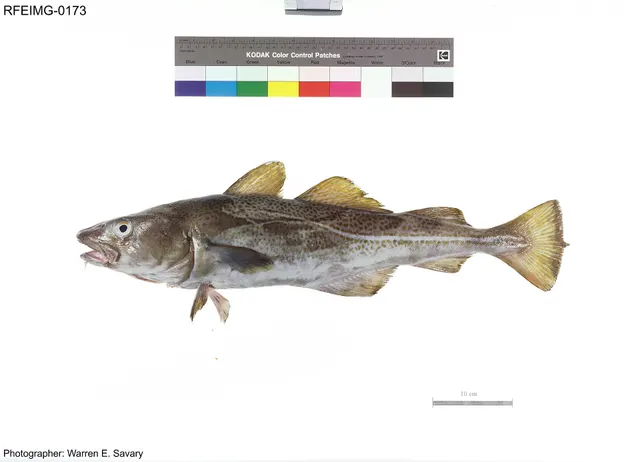 Atlantic codSoft, full of body fluid, and strongly scented — which is what winter cod in coloured water are actually responding to.
- DabThe standard dab bait. Dabs track a scent trail across open sand, and practitioners hold that a fresh leaking worm does considerably better than a tidy one.
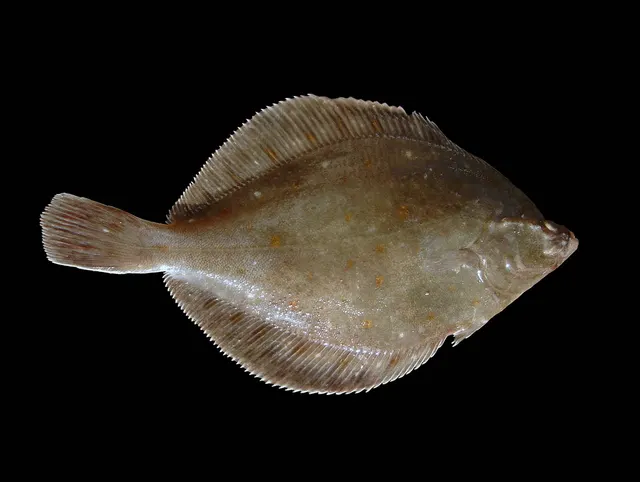 European plaiceThe bait a plaice is caught on over clean sand, and the reason a beach with a lugworm bed beside it is a plaice mark rather than a coincidence.
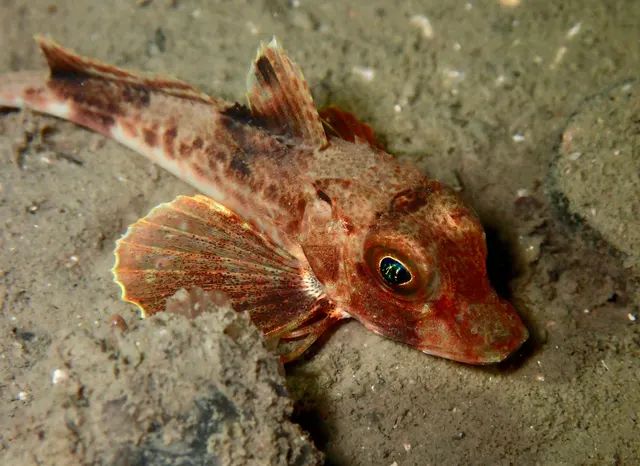 Grey gurnardWorm baits on the bottom take gurnards constantly, usually while the angler is fishing for something else.
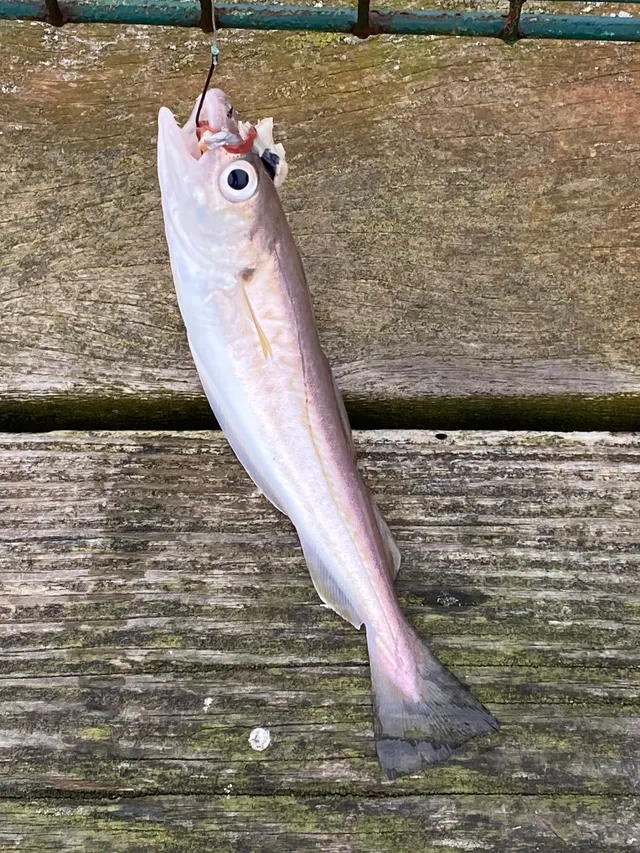 WhitingWorm baits on multi-hook rigs through the winter.
Finding and obtaining it
Bought from tackle shops fresh or frozen, or dug at low water from sand and muddy sand. The ground is read from the surface: the coiled cast of extruded sand marks the tail end of the burrow and a small depression a short distance away marks the head, and the worm lies in the U between them — which is why digging at the cast alone misses. Blow lug are shallow enough for a fork; black lug are deeper, are usually taken with a bait pump or a narrow lug spade, and are hard work for a modest number of worms. Backfill every trench, because an unfilled hole on a productive flat degrades the ground for everybody who follows. As with all shore bait collection, this is subject to rules that vary substantially by location, may be restricted or prohibited on protected and designated sites, and may require permission from the landowner or the harbour authority. Check before you dig.
Keeping and storing it
Wrapped individually or in small numbers in newspaper, kept cold. The newspaper draws off moisture, which toughens the worm and helps it keep. Lugworm cannot be stored in seawater in bulk — they foul it and die quickly. Black lug are often gutted and salted or frozen for longer storage, which changes the bait but makes it far more durable for casting.
Keeping it alive
Cold and wrapped, not submerged. Lugworm kept in bulk seawater die and foul rapidly. A cool box with the worms individually papered is the practical approach for a session.
Preparing it
Change the newspaper daily and remove any that have burst. For casting distance, gutting and salting toughens the worm considerably. Frozen lug should be thawed only as needed and used the same day.
Using it
Thread onto a long-shank hook from the head end, working the worm up the hook and onto the line, so that the soft body is supported rather than hanging on one point. Two or three worms are commonly used for cod. Bait elastic — fine elastic thread wound around the bait — is close to essential for holding soft lugworm together during a long cast, and is one of the few pieces of sea tackle that genuinely transforms results.
Disposing of what is left
Do not release bought worms onto a shore — they may not be from that area or that country. Take unused worms home to keep, or freeze them. Dead worms and packing material go in sealed domestic waste. Do not tip worm water into a harbour or fresh water.
Biosecurity
As with ragworm, imported bait worms and their packing material are a recognised pathway for non-native marine organisms. Nothing from a bait box should end up in the sea or on the shore.
Keeping lugworm alive, and what actually kills them
Lugworm die from heat, from their own fluids, and from contact with each other — in that order, and much faster than most people expect.
THE MECHANISM. A lugworm is a burrowing animal adapted to cool, wet, oxygenated sand. Out of it, three things go wrong at once. Warmth raises its metabolic rate and its oxygen demand at the moment supply has collapsed. Damaged worms leak fluid, and that fluid kills the worms around them far more effectively than time does. And worms in contact with one another abrade and burst.
SO THE PRACTICE FOLLOWS DIRECTLY. Keep them COLD — a cool box, out of sun, never in a car. Keep them SEPARATED, in a single layer on newspaper rather than heaped in a bucket. Keep them DRY rather than submerged: a lugworm in standing water suffocates, because the water deoxygenates within hours. And REMOVE THE DEAD ONE IMMEDIATELY, because it is not simply spent — it is actively killing its neighbours.
WRAPPING. Newspaper does two jobs: it absorbs the fluid that does the damage and it separates the worms. It is replaced when it is wet, not when it looks unpleasant.
HOW LONG. A day or two in good condition is realistic; longer is possible and every extra day costs quality. A worm that has gone soft, pale or watery will burst on the hook and wash off the first time it lands.
FREEZING is the alternative when they cannot be kept alive, and it is a genuine change of product rather than a way of storing the same one — see below.
Freezing lugworm, and what it costs
Frozen lugworm is a different bait from fresh lugworm, and pretending otherwise is why people are disappointed by it.
WHAT FREEZING DOES. Ice crystals rupture cell walls, so the worm loses structure. It comes out softer, it stays on a hook far less well, and it releases its scent faster and for a shorter time. What it keeps is the scent itself, which is the part the fish responds to.
SO IT IS WORTH DOING and worth doing properly. Gut the worms first — the contents accelerate breakdown from the inside. Blot them dry, because water is what forms the damaging crystals. Wrap individually or in small batches in newspaper, so they can be taken out in usable quantities rather than as one block. Freeze fast and keep them frozen hard; repeated partial thawing destroys them.
SALTING is the older answer and produces something different again: a tougher, smaller, darker worm that casts well and stays on a hook, at the cost of most of its body fluid. It suits distance casting and rough ground, where a soft bait would not survive the cast.
THAWING. Thaw only what will be used, and thaw it cold. A worm thawed in the sun on a beach has been spoiling for an hour before it reaches the water.
WHAT NOT TO EXPECT. Frozen or salted lugworm will not out-fish fresh in most situations, and there are days when it is the only bait available and catches perfectly well. Both statements are true and the second is the reason to bother.
Digging lugworm responsibly
Bait digging is extractive, it happens in the most biologically productive part of the shore, and the damage is mostly to the habitat rather than to the worms taken.
WHAT THE HARM ACTUALLY IS. Digging turns over sediment, and turned sediment loses its structure, its oxygen gradient and much of the invertebrate community living in it. Trenches left open collect anoxic water. Ground that is dug repeatedly does not recover between visits. The birds that feed on the same flats — waders in particular — lose both food and undisturbed ground, which is why so much bait-digging regulation sits inside conservation designations rather than fisheries ones.
WHAT REDUCES IT. Backfill every hole, which costs a few seconds and is the single most useful thing a digger does. Work a small area rather than scattering trenches across a flat. Take what will be used on the day and no more. Avoid ground that is obviously already worked. And stay off the areas that matter most for feeding birds, particularly through the months when overwintering flocks depend on them.
AND THE RULES ARE LOCAL AND REAL. Bait collection is among the most locally regulated activities in angling. Many estuaries, bays and flats sit inside marine protected areas, sites of special scientific interest or local byelaws, and restrictions range from permits and quantity limits to outright prohibition. Several places distinguish personal use from commercial digging.
FishingHQ does not state what is permitted anywhere. Check with the harbour authority, the local inshore fisheries body and the protected-area manager for the ground you intend to dig, before you dig it.
Official guidance — why, and the sources (1)
Stated by a fisheries authority, scientific institute or recognised angling body. Authoritative, but summarising rather than demonstrating.
- JNCC species and habitat conservation advice — Joint Nature Conservation Committee (Conservation authority)Relied on for: The framework of protected areas covering intertidal and estuarine habitats, and the conservation interest of the bird and invertebrate communities they support.Background and mechanism onlyCitation checked — the work exists and is described correctly
Safety
Tides and being cut off — Can cause serious injury or death
Lugworm digging takes place on low-tide flats, often a long way from the shore, on ground that is slow to cross. Diggers are cut off every year, and soft sand and mud make running impossible.
What reduces it: Work out when your route back closes rather than when the tide turns, set an alarm, and go back then. Never dig alone on extensive flats, and tell somebody where you are.
Precautions that always apply here
- Check the tide before you go and know your exit route. Being cut off is the commonest way a shore session becomes a rescue.
- Tell somebody where you are going and when you expect to be back.
- Carry a charged phone in a waterproof case, or another means of calling for help.
Check the rules before you fish
Fishing laws, bylaws, access rules, seasons, bait restrictions and permitted methods vary by location and can change. Check the current rules from the relevant authority and the water you intend to fish before fishing.
Check with:
- Current national or regional law for where you are fishing
- Current local bylaws
- The relevant fisheries authority
- The landowner, club or fishery whose water it is
- Any restrictions specific to the species or the method you intend to use
Where to go next
How it is fished
Understanding it
- How to hook a bait so it behaves naturallyA soft marine worm is the case where durability wins outright: threaded up the shank or it does not survive the cast, and the movement is sacrificed deliberately.
- Preparing and toughening baitSalting lugworm is the standard preparation and the standard trade: a much tougher bait that moves less and has already leaked some of what made it attractive.
- Sea fishing baits, and what lives locallyWorm casts on the sand at low water are the shore publishing its own bait list, and reading them is the transferable skill for unfamiliar ground.
- Why bait comes off the hookSoft worm baits are the ones that tear on the cast, and their condition on the day decides how much binding they need.
- Why bait dies quicklyDamaged worms die over hours and take the rest of the container down with them as they decompose.
Instead of this
Sources and evidence
- Check Clean Dry — biosecurity guidance for water users — GB Non-native Species Secretariat (Conservation authority)Relied on for: That traded bait and its packaging are a recognised non-native introduction pathway.FishingHQ's interpretation of what it saysPassage read and verified
Why the 12 connections on this page are here, and the sources
Fish it catches
What experienced anglers do — 5 connections
Widely and independently recommended by experienced anglers and specialist sources. This is real angling knowledge, not proof: controlled evidence for it is limited, and FishingHQ records it as convention rather than as a demonstrated effect.
Atlantic cod
Standard winter shore practice, independently described.
- Sea Angler — Bauer Media (Specialist angling publication)Relied on for: Lugworm as the standard winter shore bait for cod and whiting.Citation checked — the work exists and is described correctly
- Angling Times — Bauer Media (Specialist angling publication)Relied on for: Contemporary winter shore bait practice.Citation checked — the work exists and is described correctly
Dab
A bait joined to the fish it is conventionally used for. Convention, recorded as convention.
- Sea Angler — Bauer Media (Specialist angling publication)Relied on for: Contemporary UK and European sea angling practice as reported by practitioners, including ground, seasonal timing, bait and method convention.States this directlyCitation checked — the work exists and is described correctly
- General angling website restatements of established technique — Various (Credible secondary source)Relied on for: Widely restated descriptions of species behaviour and regional angling practice, recorded as consensus rather than as scholarship.Background and mechanism onlyCitation checked — the work exists and is described correctly
European plaice
Named for plaice independently by a statutory mark guide and by a practitioner directory that records a specific capture on freshly dug lugworm.
- Inland Fisheries Ireland: South West Sea Angling Guide — Cork Harbour to Mine Head — Inland Fisheries Ireland, 2020 (Government fisheries body)Relied on for: The statutory fisheries body naming the bait alongside the species and the season, mark by mark.Passage read and verified
- Sea Angling in Ireland: the shore marks of Waterford — Sea Angling Ireland (Credible secondary source)Relied on for: A practitioner shore directory naming the bait alongside the species, mark by mark.Passage read and verified
Grey gurnard
A bait joined to the fish it is conventionally used for. Convention, recorded as convention.
- Sea Angler — Bauer Media (Specialist angling publication)Relied on for: Contemporary UK and European sea angling practice as reported by practitioners, including ground, seasonal timing, bait and method convention.States this directlyCitation checked — the work exists and is described correctly
- General angling website restatements of established technique — Various (Credible secondary source)Relied on for: Widely restated descriptions of species behaviour and regional angling practice, recorded as consensus rather than as scholarship.Background and mechanism onlyCitation checked — the work exists and is described correctly
Whiting
A practitioner claim about tackle commonly used for Merlangius merlangus.
- General angling website restatements of established technique — Various (Credible secondary source)Relied on for: Widely restated practitioner accounts of this presentation for whiting.Citation checked — the work exists and is described correctly
- Angling Times — Bauer Media (Specialist angling publication)Relied on for: Practitioner treatment of comparable presentations for the species group.Citation checked — the work exists and is described correctly
How it is fished
What experienced anglers do — 1 connection
Widely and independently recommended by experienced anglers and specialist sources. This is real angling knowledge, not proof: controlled evidence for it is limited, and FishingHQ records it as convention rather than as a demonstrated effect.
Surfcasting
The surfcasting page describes bait fishing at range over clean ground, and the lugworm page describes the bait that ground's species take — the pairing both records assume without either naming the other.
- Sea Angler — Bauer Media (Specialist angling publication)Relied on for: Practitioner treatment of which lure or bait family this technique is fished with.States this directlyCitation checked — the work exists and is described correctly
- General angling website restatements of established technique — Various (Credible secondary source)Relied on for: The widely restated practitioner pairing of this technique with this family.Background and mechanism onlyCitation checked — the work exists and is described correctly
Understanding it
What experienced anglers do — 4 connections
Widely and independently recommended by experienced anglers and specialist sources. This is real angling knowledge, not proof: controlled evidence for it is limited, and FishingHQ records it as convention rather than as a demonstrated effect.
How to hook a bait so it behaves naturally
Why it works, resting on practice reported consistently across independent angling traditions rather than on experiment.
- Coarse Fishing — A. & C. Black, 1912 (Specialist angling publication)Relied on for: Classical coarse angling practice: baits, hooking, loose feed, presentation and swim selection.States this directlyCitation checked — the work exists and is described correctly
- Sea Angler — Bauer Media (Specialist angling publication)Relied on for: Contemporary UK sea angling practice as reported by practitioners, including bait preparation, hooking and presentation.States this directlyCitation checked — the work exists and is described correctly
Preparing and toughening bait
Why it works, resting on practice reported consistently across independent angling traditions rather than on experiment.
- Coarse Fishing — A. & C. Black, 1912 (Specialist angling publication)Relied on for: Classical coarse angling practice: baits, hooking, loose feed, presentation and swim selection.States this directlyCitation checked — the work exists and is described correctly
- Sea Angler — Bauer Media (Specialist angling publication)Relied on for: Contemporary UK sea angling practice as reported by practitioners, including bait preparation, hooking and presentation.States this directlyCitation checked — the work exists and is described correctly
Sea fishing baits, and what lives locally
Why it works, resting on shore-fishing practice reported consistently across independent practitioner sources rather than on experiment.
- Sea Angler — Bauer Media (Specialist angling publication)Relied on for: Contemporary UK sea angling practice as reported by practitioners, including shore technique, terminal tackle, regional ground and species behaviour.States this directlyCitation checked — the work exists and is described correctly
- Freshwater Fishing — Macdonald & Jane's, 1975 (Specialist angling publication)Relied on for: Comprehensive angling practice including terminal tackle, casting, leaders and the reasoning behind the choices.States this directlyCitation checked — the work exists and is described correctly
Why bait comes off the hook
The soft bait whose condition on the day decides how much binding it needs.
- Freshwater Fishing — Macdonald & Jane's, 1975 (Specialist angling publication)Relied on for: Terminal tackle behaviour, line drag in flow, bait presentation and rig geometry.States this directlyCitation checked — the work exists and is described correctly
- Pike and the Pike Angler — Stanley Paul, 1981 (Specialist angling publication)Relied on for: Rig and terminal-tackle mechanics described independently of the sea-angling tradition.States this directlyCitation checked — the work exists and is described correctly
Backed by research — 1 connection
Supported by peer-reviewed research or fisheries science. The sources are listed and can be checked.
Why bait dies quickly
Handling damage is the least visible of the four causes.
- Cefas science, advice and data on marine and freshwater environments — Centre for Environment, Fisheries and Aquaculture Science (Government fisheries body)Relied on for: The relationship between water temperature, dissolved oxygen capacity and metabolic demand in aquatic organisms.States this directlyCitation checked — the work exists and is described correctly
Instead of this
What experienced anglers do — 1 connection
Widely and independently recommended by experienced anglers and specialist sources. This is real angling knowledge, not proof: controlled evidence for it is limited, and FishingHQ records it as convention rather than as a demonstrated effect.
Ragworm
The functional distinction is described independently in sea angling practice.
- Sea Angler — Bauer Media (Specialist angling publication)Relied on for: The comparative characteristics of lugworm and ragworm as baits.Citation checked — the work exists and is described correctly
- Angling Times — Bauer Media (Specialist angling publication)Relied on for: Contemporary bait selection practice for shore fishing.Citation checked — the work exists and is described correctly
How FishingHQ labels evidence is explained in the evidence policy.