Pouting
Fish · Last reviewed 2026-08-10
A deep-bodied coppery gadoid of wrecks and rough ground, barred when fresh, with a prominent chin barbel and a very short shelf life.
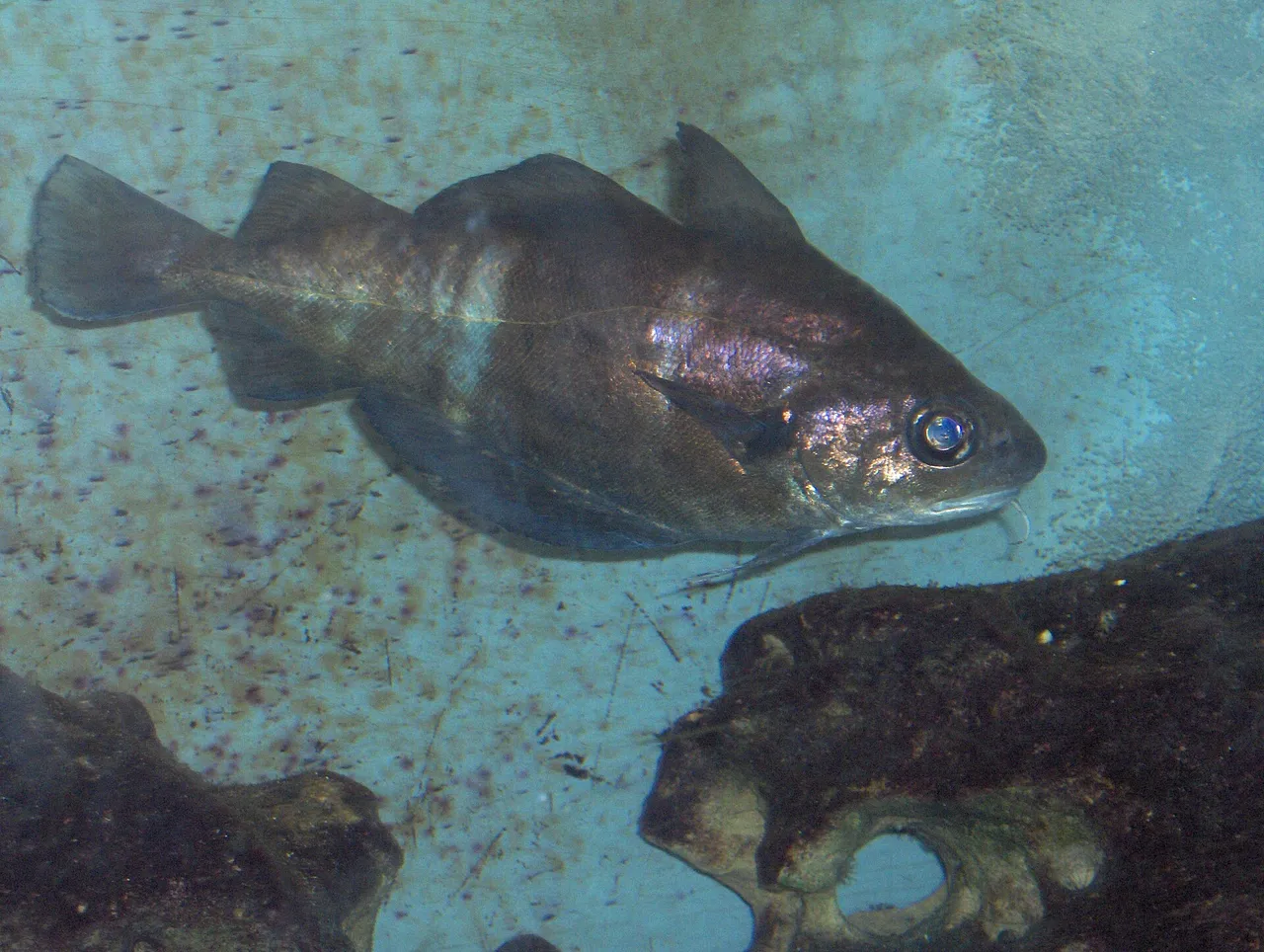
How this was identified, and who took it
Identified by: Identified on three characters that together separate Trisopterus luscus from T. minutus: a LONG chin barbel where a poor cod's is shorter, a distinct dark blotch at the pectoral base, and a body notably deeper at comparable length. Three dorsals and two anals place it in the cod family. STATED LIMITATION: shot through aquarium glass with a blue cast that washes out the coppery banding which would have confirmed it a fourth time.Georges Jansoone (JoJan) — CC BY-SA 3.0, via Wikimedia Commons — source, licence
Catching Pouting
Everything here on fishing for it. Each entry opens the page behind it.
- When
- Nov–Feb and Jun–Sept — months recorded at the places that document it, not a season for the whole range.
- Where
- 24 places FishingHQ documents — strongest claim anywhere: regular local target · From a boat, From the shore, From a kayak
Pouting is the fish that finds your bait first. It is a deep-bodied, coppery-bronze gadoid that swarms over wrecks, piers and rough ground in enormous numbers, and it is simultaneously a nuisance to anglers targeting better species and one of the best natural baits available for them.
When freshly caught it carries a series of dark vertical bars over a coppery flank that fade within minutes — a genuinely striking piece of colour change. It has a prominent chin barbel and a deep, laterally compressed body quite unlike the slim whiting it shares ground with.
Its flesh deteriorates unusually quickly, which is why it has a poor culinary reputation that is really a reputation about handling and freshness.
How it is caught
Where Pouting is documented
Places where public sources describe this species as fished, with how it is fished and how strongly the evidence supports it. This is not a range map and it is not a recommendation — it is what has been written down about a fishery rather than a record of any individual catch, and being listed is never permission to fish.
The Cornish and Devon coasts
6 documented places
Harbour wall
Repeatedly reported
From a kayak
Beach
Regular local target
From the shore
Pier
Regular local target
From the shore
Headland
Regular local target
From the shore
Surf beach
Regular local target
From the shore
Pier
Regular local target
From the shore
The Norfolk and Suffolk sandbank coast
3 documented places
Pier
Regular local target
From the shore
The Orwell and Stour estuaries
Estuary
Regular local target
From the shore
Felixstowe and Landguard Point
Beach
Recorded here
From the shore
Belfast Lough and the north Down shore
2 documented places
Bay
Regular local target
From the shore
Harbour wall
Regular local target
From the shore
The Severn Estuary
4 documented places
Estuary mark
Recorded here
From the shore
Headland
Recorded here
From the shore
Beach
Seasonal
From the shore
Around Jun, Jul, Aug, Sept
Headland
Seasonal
From the shore
Around Jun, Jul, Aug, Sept
The Wash and the Lincolnshire coast
1 documented place
Beach
Seasonal
From the shore
Around Nov, Dec, Jan, Feb
Pembrokeshire and the south-west Wales coast
2 documented places
Surf beach
Recorded here
From the shore
Breakwater
Recorded here
From the shore
Also documented on 4 more coasts
Fewer places each, or less strongly supported. Each one names its own marks.
Scottish sea lochs (1) · The Moray Firth (1) · The Gower and Carmarthen Bay (1) · The Donegal coast and its sea loughs (1)
What these strengths mean
- Recorded here
- At least one credible public account of this species being caught here. That is all it means.
- Seasonal
- Well supported, and concentrated in part of the year rather than spread through it.
- Regular local target
- Fishing sources describe this as a normal local target here, not merely as caught.
- Repeatedly reported
- Several independent public accounts. Enough to say it happens more than once; not enough to call it a fishery.
Identification
- Scientific name
- Trisopterus luscus
- Family
- Gadidae
- Water
- Saltwater
- Conservation status
- Not assessed
- Regions
- Britain & Ireland, Western Europe, Mediterranean
- Deep, laterally compressed coppery-bronze body — much deeper than a whiting of the same length.
- A prominent barbel on the chin.
- Dark vertical bars on the flank in freshly caught fish, fading rapidly after capture.
- A dark spot at the base of the pectoral fin, and three dorsal fins set close together.
Size
- Typical
- 150–400 g (5–14 oz)
- Large
- 600 g–1.2 kg (1.3–2.6 lb)
Exceptional: FishBase records a maximum of 46 cm
Lifecycle and reproduction
Short-lived and fast-growing, maturing within a year or two. Abundant and forming dense shoals over structure, which makes it a major prey species for larger predators.
Spawns in spring in coastal waters, broadcasting pelagic eggs. Juveniles shoal in very shallow water and around piers before moving onto structure.
Feeding and senses
Takes crustaceans, worms and small fish around structure, feeding in dense competitive shoals which is why baits intended for other species are stripped so quickly.
Feeds in low light and after dark using the chin barbel and lateral line as well as sight, which is why pouting dominate night catches over rough ground.
Through the year
Present year-round over structure, with the largest fish generally taken in colder months. Shoals over wrecks are dense and persistent.
Distribution
Northeastern Atlantic: from Norway to Morocco incl. British Isles and offshore islands, and Skagerrak, and in the western Mediterranean , 90172 )
This is a biological range — where the species occurs, not a prediction that you will catch one. To browse the fishing geography FishingHQ holds, start at fishing places.
Why anglers care
Ubiquitous over European wrecks, piers and rough ground, taken on almost any bait. Its significance to anglers is twofold and contradictory: it is the principal nuisance species when fishing for better fish, and it is among the most effective natural baits for conger, ling, bass and tope. Practitioner consensus is firm that fresh pouting fillet is a first-class bait, which is the main reason anglers retain them.
Handling and returning
Small, spiny and easily damaged. Unhook with a disgorger and return promptly, or dispatch humanely if retained for bait — leaving unwanted fish to die slowly on a deck or a pier is neither acceptable nor necessary. Fish from deep wrecks show barotrauma.
Going further
- Pouting vs Whiting — how to tell them apart.
Where to go next
Similar and related fish
Where it lives
Where you will find it
- Chesil BeachOccupies the same clean ground as whiting and is taken in numbers through the colder months.
- Portland Bill and the Portland RaceHolds around the rough ground and structure below the headland throughout much of the year.
- The Severn EstuaryOccupies the same ground as whiting and is taken in numbers around structure.
Sources and evidence
- FishBase: a global information system on fishes — Froese, R. and D. Pauly, eds. — FishBase Consortium (Scientific institute)Relied on for: Family, maximum size, depth and environment, distribution and the IUCN assessment for Trisopterus luscus.States this directlyPassage read and verified
- The IUCN Red List of Threatened Species — International Union for Conservation of Nature (Conservation authority)Relied on for: The Not Evaluated assessment for Trisopterus luscus.States this directlyCitation checked — the work exists and is described correctly
Why the 7 connections on this page are here, and the sources
Similar and related fish
Backed by research — 1 connection
Supported by peer-reviewed research or fisheries science. The sources are listed and can be checked.
Whiting
An identification comparison naming both binomials: Merlangius merlangus and Trisopterus luscus.
- FishBase: a global information system on fishes — Froese, R. and D. Pauly, eds. — FishBase Consortium (Scientific institute)Relied on for: Morphological and distributional data for Merlangius merlangus and for Trisopterus luscus.States this directlyPassage read and verified
- The IUCN Red List of Threatened Species — International Union for Conservation of Nature (Conservation authority)Relied on for: Separate assessments treating Merlangius merlangus and Trisopterus luscus as distinct species.States this directlyCitation checked — the work exists and is described correctly
How it is caught
What experienced anglers do — 1 connection
Widely and independently recommended by experienced anglers and specialist sources. This is real angling knowledge, not proof: controlled evidence for it is limited, and FishingHQ records it as convention rather than as a demonstrated effect.
Ledgering
A practitioner claim about how Trisopterus luscus is commonly fished, following from where and how it feeds.
- General angling website restatements of established technique — Various (Credible secondary source)Relied on for: Widely restated practitioner accounts of fishing for pouting.Citation checked — the work exists and is described correctly
- Sea Angler — Bauer Media (Specialist angling publication)Relied on for: Practitioner treatment of the methods used for pouting and comparable species.Citation checked — the work exists and is described correctly
Where it lives
Backed by research — 2 connections
Supported by peer-reviewed research or fisheries science. The sources are listed and can be checked.
Harbours, piers and breakwaters
A habitat association for Trisopterus luscus taken from the environment and distribution data on its FishBase summary.
- FishBase: a global information system on fishes — Froese, R. and D. Pauly, eds. — FishBase Consortium (Scientific institute)Relied on for: The environment, depth range and habitat description recorded for Trisopterus luscus.States this directlyPassage read and verified
Inshore ground
A habitat association for Trisopterus luscus taken from the environment and distribution data on its FishBase summary.
- FishBase: a global information system on fishes — Froese, R. and D. Pauly, eds. — FishBase Consortium (Scientific institute)Relied on for: The environment, depth range and habitat description recorded for Trisopterus luscus.States this directlyPassage read and verified
Where you will find it
Backed by research — 3 connections
Supported by peer-reviewed research or fisheries science. The sources are listed and can be checked.
Chesil Beach
A distribution association between an animal and a kind of water, rather than a claim about any named mark.
- The Fishes of the British Isles and North-West Europe — Macmillan, 1969 (Reference work)Relied on for: Distribution, habitat association, depth and ground preference of fishes in British and north-west European waters.States this directlyCitation checked — the work exists and is described correctly
- FishBase: a global information system on fishes — Froese, R. and D. Pauly, eds. — FishBase Consortium (Scientific institute)Relied on for: Distribution, habitat association and depth range recorded for the species.Background and mechanism onlyPassage read and verified
Portland Bill and the Portland Race
A distribution association between an animal and a kind of water, rather than a claim about any named mark.
- The Fishes of the British Isles and North-West Europe — Macmillan, 1969 (Reference work)Relied on for: Distribution, habitat association, depth and ground preference of fishes in British and north-west European waters.States this directlyCitation checked — the work exists and is described correctly
- FishBase: a global information system on fishes — Froese, R. and D. Pauly, eds. — FishBase Consortium (Scientific institute)Relied on for: Distribution, habitat association and depth range recorded for the species.Background and mechanism onlyPassage read and verified
The Severn Estuary
A distribution association between an animal and a kind of water, rather than a claim about any named mark.
- The Fishes of the British Isles and North-West Europe — Macmillan, 1969 (Reference work)Relied on for: Distribution, habitat association, depth and ground preference of fishes in British and north-west European waters.States this directlyCitation checked — the work exists and is described correctly
- FishBase: a global information system on fishes — Froese, R. and D. Pauly, eds. — FishBase Consortium (Scientific institute)Relied on for: Distribution, habitat association and depth range recorded for the species.Background and mechanism onlyPassage read and verified
How FishingHQ labels evidence is explained in the evidence policy.