Harbours, piers and breakwaters
Habitat · Last reviewed 2026-08-10
Man-made structure that behaves like reef — the most accessible sea fishing anywhere, and the reason a great many people fish at all.
Safety: drowning and immersion — can cause serious injury or death. 6 more points apply here.
- Water
- Saltwater, Brackish
A breakwater is an artificial reef that somebody built for a different reason. It provides hard vertical surface in water that had none, it shelters slack water beside moving water, and within a few years of construction it is colonised by weed, mussels, crustaceans and everything that eats them.
That makes harbours and piers genuinely productive rather than merely convenient, which is worth saying because they are often treated as where you fish when you cannot get anywhere better. The structure concentrates food, the shelter concentrates small fish, and predators work the edges — exactly as they do on natural reef.
They are also where most people in the world can actually reach the sea. No boat, no long walk, frequently a handrail and a light, and often deep water within a rod's length. For an enormous number of anglers this is not a compromise, it is the fishery.
What it costs is that the ground is heavily fished, the fish are educated, and the water is frequently disturbed by traffic. And it introduces hazards no natural mark has: a vertical drop with no gradual entry, moving vessels, mooring lines, and the specific problem that a person in the water beside a harbour wall may have nowhere at all to climb out.
What characterises it
Man-made hard structure — stone, concrete, timber and steel — placed in water for shelter, berthing or coastal defence. Provides vertical surface, shaded overhangs, pilings, and a boundary between sheltered slack water inside and moving water outside. Depth is frequently substantial immediately at the wall, which is unusual for shore-accessible ground and is a large part of why it fishes.
What lives there
Colonised rapidly after construction by algae, mussels, barnacles, crabs and tube worms, which support small fish, which support predators. The vertical surface adds habitat that flat seabed does not provide, and the light-and-shade boundary under a pier or beside a lit harbour wall concentrates prey at night in a way that is genuinely exploitable. Species composition tends toward structure-associated and opportunistic fish rather than open-ground specialists.
Through the year
Follows the inshore cycle of whatever coast it is on: warm-water species use harbours through the warmer months and cold-water species through the cooler ones, with the calendar reversed between hemispheres and replaced by monsoon cycles in the tropics. Within a session, tide dominates — a harbour that fishes on a flood tide at night may be dead at low water in daylight, and the difference is measured in hours rather than seasons.
Piers, breakwaters and jetties are three different fisheries
They are lumped together as man-made structure and they behave differently, because what they are built from and what they are built for decides what lives on them.
A PIER IS A PLATFORM ON LEGS. Water passes underneath it, so it does not change the current much, and its value to fish is the legs themselves — vertical structure, fouled with mussel and weed, holding food, in water that would otherwise be featureless. The fishing is vertical and close: down the legs, not out from the end. It also gives access to deeper water than the shore behind it, which is why piers are where beginners meet mackerel and where night anglers meet larger fish.
A BREAKWATER IS A SOLID WALL. It is built to stop water, so it does change the current, substantially — deflecting it, accelerating it round the head, and creating a scour hole at the tip and a slack behind the arm. That scour is the most consistently productive feature on any breakwater and it is why the head fishes better than the middle. The structure is also usually armoured with rock, which is habitat in its own right: wrasse, conger and crabs live in it.
A JETTY OR QUAY IS WORKING INFRASTRUCTURE, and its value is often organic input. Where boats are cleaned and fish are landed, mullet and other opportunists concentrate, and they are habituated to noise in a way the same species is not elsewhere.
THE PRACTICAL CONSEQUENCE. On a pier, fish down. On a breakwater, fish the head and the scour, and work with the current the structure has created. In a harbour, fish where organic material accumulates and expect the fish to be wary of tackle rather than of people.
THE SHARED HAZARDS ARE HEIGHT AND RETURN. All three put an angler above the water, frequently several metres above it, which makes landing and returning fish a real problem — a fish dropped from height is injured, and a drop net is not optional equipment. The same height is a fall risk, particularly at night on wet concrete with weed on it, and structures with no railing should be treated accordingly.
AND ACCESS IS NOT GUARANTEED. Many of these are working or privately managed structures with their own rules, closures and permit requirements, and those change. Check locally.
What experienced anglers do — why, and the sources (2)
Widely and independently recommended by experienced anglers and specialist sources. This is real angling knowledge, not proof: controlled evidence for it is limited, and FishingHQ records it as convention rather than as a demonstrated effect.
- Sea Angler — Bauer Media (Specialist angling publication)Relied on for: Shore and boat practice in north-west European sea angling for the ground, method or species described, presented across multiple independent contributors.States this directlyCitation checked — the work exists and is described correctly
- The Fishes of the British Isles and North-West Europe — Macmillan, 1969 (Reference work)Relied on for: Habitat association, distribution and life history of the north-west European inshore fish community that uses this ground.States this directlyCitation checked — the work exists and is described correctly
Some of what lives here
Fish recorded here that FishingHQ holds a reviewed photograph of. It is not a complete list of what Harbours, piers and breakwaters holds, and it is not a prediction that you will catch any of them — it is a way in to the ones we can show you.
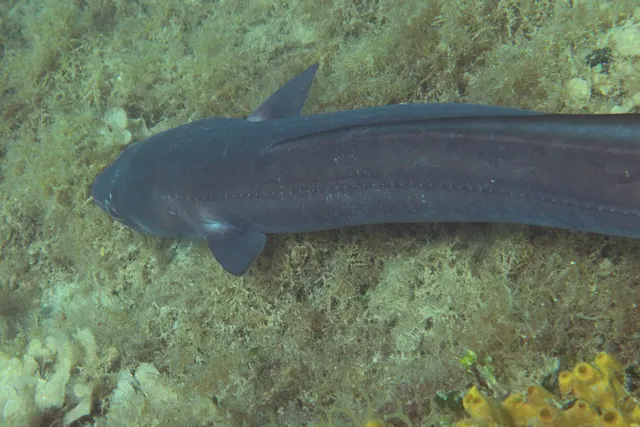 Conger eelA very large scaleless eel of wrecks, rock and harbour walls, reaching three metres, and among the most powerful and most genuinely dangerous fish to handle in European seas.
Holger Krisp — CC BY 3.0, via Wikimedia Commons
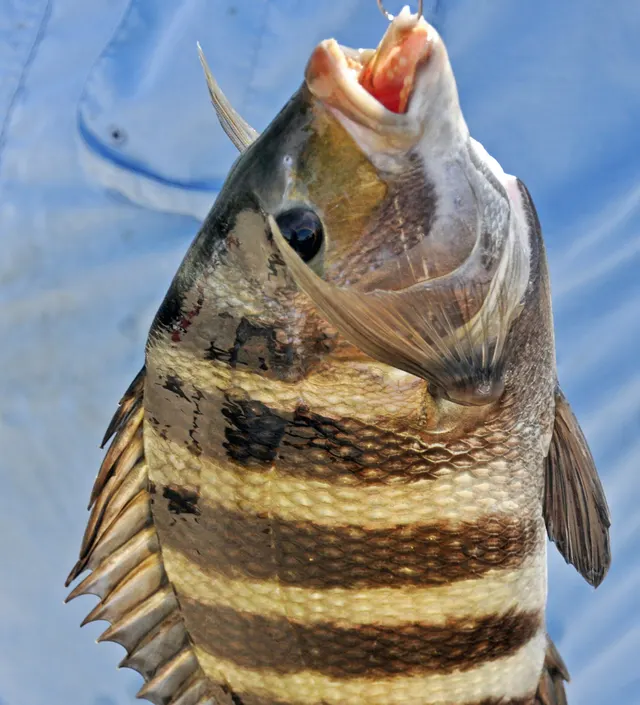 SheepsheadA boldly barred inshore sea bream with flattened human-like incisors and heavy molars, built to crush barnacles and shellfish off pilings and structure.
James St. John — CC BY 2.0, via Wikimedia Commons
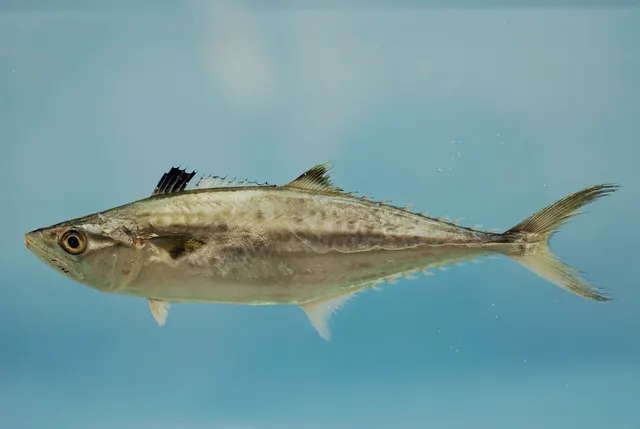 King mackerelA fast, toothy, migratory Atlantic mackerel taken by slow-trolling live bait and by pier fishing, known for a vertical strike that cuts baits in half.
NOAA Fisheries, SEFSC Pascagoula Laboratory, public domain, via Wikimedia Commons
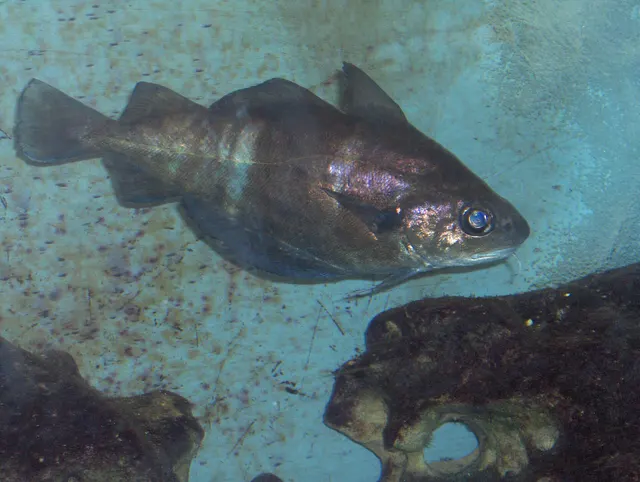 PoutingA deep-bodied coppery gadoid of wrecks and rough ground, barred when fresh, with a prominent chin barbel and a very short shelf life.
Georges Jansoone (JoJan) — CC BY-SA 3.0, via Wikimedia Commons
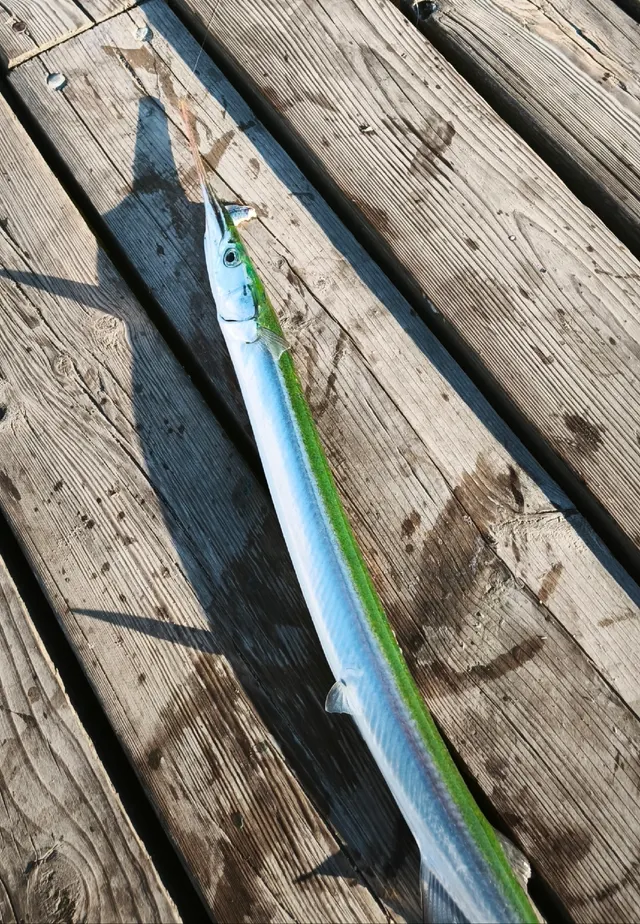 GarfishA slender surface-hunting fish with a long beaked jaw and green bones — a harmless pigment that alarms people unnecessarily.
Dmitry Petrov — CC BY, via iNaturalist
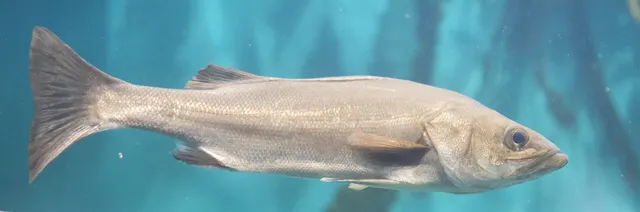 Japanese sea bassThe principal lure-fishing target of Japan, an estuary and coastal predator whose Japanese name changes with its size as it grows.
Kinori — CC0 1.0, via Wikimedia Commons
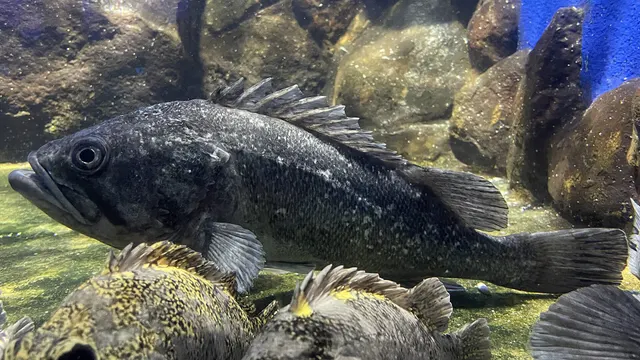 Korean rockfishThe principal recreational and farmed rockfish of Korea, China and Japan, bearing live young and carrying venomous fin spines.
Totti — CC BY-SA 4.0, via Wikimedia Commons
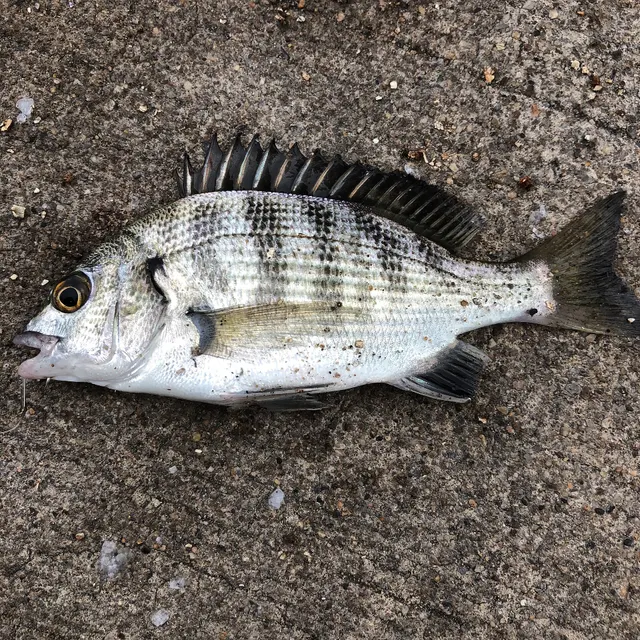 Blackhead seabreamA wary East Asian sparid of harbours and rocky shores, sex-changing as it grows, and the subject of an entire specialised Japanese angling discipline.
Rakurakuda — CC BY-SA 4.0, via Wikimedia Commons
A harbour wall in section: the artificial reef you are standing on
A harbour wall in section: the artificial reef you are standing on
Reading the ground · Draft — not yet checked against an external reference
This drawing has not been checked against any reference outside FishingHQ. It is a schematic of what the surrounding text describes, and the text is what carries the detail.
Describe this diagram in words
A harbour wall drawn in cross-section, from the side rather than from the top where a reader would normally stand. The wall is a mass of stone rising above the water line and continuing down to the seabed, standing on soft bottom that is what the ground was before it was built. Both submerged faces carry weed, mussels and crustaceans, drawn as short growths standing out from the stone: within a few years of construction the structure is colonised, and that is what turns a piece of engineering into a fishery. On the exposed side an arrow shows moving water running along the outer face; on the sheltered side a small closed circulation shows the slack water the wall creates. Predators are marked on both faces, on the boundary between structure and water, exactly as they hold on natural reef — the structure concentrates food and the shelter concentrates small fish. The same figure carries the hazard, because it is a property of the same geometry: the outer face at the waterline is sheer, wet and vertical, and a person in the water beside it has nothing to climb. Nothing in the figure is drawn to scale and no depth, distance or state of tide is stated.
How this drawing was produced
Drawn in-repository from the standing visual vocabulary. Reviewed for internal consistency: the wall is a closed section standing on the seabed, the growth strokes attach to its two faces, the moving-water arrow runs along the exposed side and the slack circulation is drawn closed on the sheltered side, and the predators sit on the structure boundary on both faces. No depth, distance, tidal range or state of tide is drawn, because a harbour wall varies in all four and the record states none. RENDERED AND LOOKED AT. Two labels ran straight across the wall in the first draft and were moved to the left margin, and the slack-water circulation was redrawn because the first version read as a boat hull rather than as an eddy.
Safety
Drowning and immersion — Can cause serious injury or death
Harbour walls and piers present a vertical drop into deep water with no gradual entry and frequently no way back out. A person who goes in beside a wall may be unable to climb it, and cold water shock arrives in the first seconds regardless of swimming ability. Many such structures have no barrier, and many are fished at night.
What reduces it: Wear a buoyancy aid — this is the setting where one most clearly changes the outcome. Know where the ladders and lifebuoys are BEFORE you need them. Do not fish alone at night on unrailed structure. Stay back from the edge, particularly when landing a fish, which is when people go in.
Worse when:
- At night, which is when much of this fishing happens
- On wet, weeded or icy stonework
- Where there is no ladder within reach and no barrier
Boat traffic and being seen — Can cause injury needing treatment
Harbours are working spaces. Vessels manoeuvre close to walls, mooring lines run under tension, and lines cast across a channel foul propellers and rudders — which is dangerous to the vessel as well as annoying to its crew.
What reduces it: Do not cast across navigable channels or into berths. Retrieve immediately when a vessel approaches. Keep clear of mooring lines and of the area where they will come under load. Fish where fishing is permitted and accept when it is not.
Hooks and barbs — Can cause injury needing treatment
Popular walls and piers are crowded, frequently with people who are not fishing, and casting in that environment puts hooks near other people. Discarded line and hooks accumulate on the structure and injure both people and wildlife.
What reduces it: Look behind and beside you before every cast. Use a controlled cast rather than a full-power one in company. Take all line home — a harbour wall is where discarded tackle is most concentrated and most likely to be found by a bird or a child.
Precautions that always apply here
- Wear a buoyancy aid or lifejacket. Cold water incapacitates strong swimmers within a minute, long before swimming ability matters.
- Tell somebody where you are going and when you expect to be back.
- Carry a charged phone in a waterproof case, or another means of calling for help.
- If a hook goes past the barb into a person, cut the line, leave the hook where it is, and get medical help. Pulling it back out does far more damage than pushing it through under proper care.
Further safety reading
- Cold water shock and immersion — A vertical drop into deep water with no gradual entry and frequently no ladder — the setting where a buoyancy aid most clearly changes the outcome.
Where to go next
Fish found here
- Common prawnHarbour walls, steps and pier structure hold prawns in the weed and among the stone, and the baited drop net worked from above is the standard way of taking them. They move out of cover as the light goes, so a wall that looks empty in the afternoon is not at dusk.
- Atlantic chub mackerelWhere a shore angler meets the shoals when they come in.
- Big-scale sand smeltThe shoal under the wall, in water most species will not tolerate.
- Black gobyHarbour bottom: mud, sand and whatever has been dropped on it.
- Black sea bassHolds on wrecks, reefs and rock ledges, moving offshore in winter.
- Blackhead seabreamWorks harbours, breakwaters, rocky shores and estuaries, crushing shellfish.
- Blue jack mackerelShoals come into harbours and along walls, which is where a shore angler meets it.
- Blue musselPier legs, harbour walls and artificial structure carry mussel beds as readily as natural rock, which is why built structure holds the fish that feed on them.
22 more
- Bogue Fish
- Bull shark Fish
- Conger eel Fish
- Corkwing wrasse Fish
- Edible crab Fish
- European squid Fish
- Garfish Fish
- Japanese horse mackerel Fish
- Japanese sea bass Fish
- King mackerel Fish
- Korean rockfish Fish
- Pouting Fish
- Saddled seabream Fish
- Sheepshead Fish
- Shore crab Fish
- Silver trevally Fish
- Small-spotted catshark Fish
- Tautog Fish
- Thin-lipped grey mullet Fish
- Two-banded seabream Fish
- Veined squid Fish
- Yellowmouth barracuda Fish
Reading this water
- Etiquette on charter boats and crowded shore marksStructures are the most crowded shore fishing there is, and lines crossing in current is the normal state of affairs rather than a failure.
- Fishing at night: what is differentStructures with lights on them concentrate what light concentrates — plankton, then baitfish, then predators — which is why so much harbour fishing happens after dark.
- Pier and harbour fishingThe habitat page explains why a structure holds fish; this one explains how to read one, where the productive positions are, and how a fish is landed from height.
- The kinds of fishing, and how they differThe physical structure that makes the sea accessible to somebody with no boat and no knowledge of a coast: deep water reachable from safe standing, which is otherwise the hardest thing for a shore angler to find.
How this compares
Sources and evidence
- RNLI water safety guidance: cold water shock and Float to Live — Royal National Lifeboat Institution (Water-safety or diver-training authority)Relied on for: Cold water shock on sudden immersion, the value of a buoyancy aid, and the importance of knowing the exit and carrying a means of calling for help.States this directlyPassage read and verified
- RoSPA water safety information and UK accidental drowning statistics — Royal Society for the Prevention of Accidents (Water-safety or diver-training authority)Relied on for: That immersion rather than tackle dominates angling fatality figures, and that recreational activity accounts for a large share of accidental drownings.States this directlyPassage read and verified
Why the 36 connections on this page are here, and the sources
Fish found here
Backed by research — 30 connections
Supported by peer-reviewed research or fisheries science. The sources are listed and can be checked.
Common prawn
Habitat association recorded for the species rather than inferred from the fishery.
- FishBase: a global information system on fishes — Froese, R. and D. Pauly, eds. — FishBase Consortium (Scientific institute)Relied on for: Habitat association, depth range, diet and distribution for the species, with SeaLifeBase as its sister database for non-finfish taxa.States this directlyPassage read and verified
A claim that a place contains the ground and conditions the animal is associated with. It is a distributional statement about the world and rests on reference works, and it deliberately asserts nothing about access or permission.
- The Fishes of the British Isles and North-West Europe — Macmillan, 1969 (Reference work)Relied on for: Distribution and habitat association of the inshore fauna of the British Isles and the north-east Atlantic.States this directlyCitation checked — the work exists and is described correctly
- FishBase: a global information system on fishes — Froese, R. and D. Pauly, eds. — FishBase Consortium (Scientific institute)Relied on for: Recorded distribution and habitat association for the species where held.Background and mechanism onlyPassage read and verified
- The IUCN Red List of Threatened Species — International Union for Conservation of Nature (Conservation authority)Relied on for: Range and recorded threats for the species where assessed.Background and mechanism onlyCitation checked — the work exists and is described correctly
Atlantic chub mackerel
A neritic shoaling scombrid that drives bait fish against structure, which is what brings it within reach of a mole and a breakwater rather than keeping it offshore.
- FishBase: a global information system on fishes — Froese, R. and D. Pauly, eds. — FishBase Consortium (Scientific institute)Relied on for: Environment, depth range, habitat association and distribution for Scomber colias.States this directlyPassage read and verified
Big-scale sand smelt
Recorded as demersal and amphidromous in marine, brackish AND fresh water from about 1 m down. That salinity tolerance is why it occupies harbours and lagoons — the disturbed, variable water that excludes most of what it shoals alongside.
- FishBase: a global information system on fishes — Froese, R. and D. Pauly, eds. — FishBase Consortium (Scientific institute)Relied on for: Environment, depth range, habitat association and distribution for Atherina boyeri.States this directlyPassage read and verified
Black goby
A soft-ground goby tolerant of the variable salinity and turbidity of enclosed water, recorded over sand, mud and eelgrass throughout its range.
- FishBase: a global information system on fishes — Froese, R. and D. Pauly, eds. — FishBase Consortium (Scientific institute)Relied on for: Environment, depth range, habitat association and distribution for Gobius niger.States this directlyPassage read and verified
Black sea bass
A habitat association for Centropristis striata taken from the environment and distribution data on its FishBase summary.
- FishBase: a global information system on fishes — Froese, R. and D. Pauly, eds. — FishBase Consortium (Scientific institute)Relied on for: The environment, depth range and habitat description recorded for Centropristis striata.States this directlyPassage read and verified
Blackhead seabream
A habitat association for Acanthopagrus schlegelii taken from the environment and distribution data on its FishBase summary.
- FishBase: a global information system on fishes — Froese, R. and D. Pauly, eds. — FishBase Consortium (Scientific institute)Relied on for: The environment, depth range and habitat description recorded for Acanthopagrus schlegelii.States this directlyPassage read and verified
Blue jack mackerel
A benthopelagic oceanodromous scad of the eastern Atlantic islands. Its recorded band of 170 to 370 m is the offshore adult population; the Azorean distinction between `chicharro` and `chicharro do alto` is the same split in local language, and the inshore shoals are what a mole produces.
- FishBase: a global information system on fishes — Froese, R. and D. Pauly, eds. — FishBase Consortium (Scientific institute)Relied on for: Environment, depth range, habitat association and distribution for Trachurus picturatus.States this directlyPassage read and verified
Blue mussel
Habitat association recorded for the species rather than inferred from the fishery.
- FishBase: a global information system on fishes — Froese, R. and D. Pauly, eds. — FishBase Consortium (Scientific institute)Relied on for: Habitat association, depth range and distribution for the species, with SeaLifeBase as its sister database for non-finfish taxa.States this directlyPassage read and verified
Bogue
A shoaling, shallow, hard-ground fish across the eastern Atlantic and Mediterranean, which puts it under every mole and harbour wall on those coasts.
- FishBase: a global information system on fishes — Froese, R. and D. Pauly, eds. — FishBase Consortium (Scientific institute)Relied on for: Environment, depth range, habitat association and distribution for Boops boops.States this directlyPassage read and verified
Bull shark
A distributional claim about where a species is found, resting on the standard identification and compilation sources rather than on fishing report.
- FAO Species Identification Guides for Fishery Purposes and the FAO Species Catalogues — Food and Agriculture Organization of the United Nations (Scientific institute)Relied on for: Diagnostic characters, habitat association, depth range and distribution as set out in the FAO species identification guides for fishery purposes.States this directlyCitation checked — the work exists and is described correctly
- FishBase: a global information system on fishes — Froese, R. and D. Pauly, eds. — FishBase Consortium (Scientific institute)Relied on for: Distribution, maximum size, depth range, habitat association and biology as compiled for the species.States this directlyPassage read and verified
Conger eel
A habitat claim held to a scientific standard.
- FishBase: a global information system on fishes — Froese, R. and D. Pauly, eds. — FishBase Consortium (Scientific institute)Relied on for: That Conger conger is a marine demersal species associated with wrecks, reefs, rocky ground and harbour structures from the shoreline to several hundred metres.States this directlyPassage read and verified
Corkwing wrasse
A distributional claim about where a species is found, resting on the standard regional reference works rather than on angling report.
- The Fishes of the British Isles and North-West Europe — Macmillan, 1969 (Reference work)Relied on for: Distribution, habitat association, identification and biology of the fishes and inshore fauna of the British Isles and north-west Europe.States this directlyCitation checked — the work exists and is described correctly
- FAO Species Identification Guides for Fishery Purposes and the FAO Species Catalogues — Food and Agriculture Organization of the United Nations (Scientific institute)Relied on for: Diagnostic characters, family placement, habitat and depth range as set out in the FAO species identification sheets for the eastern Atlantic and Mediterranean.States this directlyCitation checked — the work exists and is described correctly
Edible crab
Habitat association recorded for the species rather than inferred from the fishery.
- FishBase: a global information system on fishes — Froese, R. and D. Pauly, eds. — FishBase Consortium (Scientific institute)Relied on for: Habitat association, depth range, diet and distribution for the species, with SeaLifeBase as its sister database for non-finfish taxa.States this directlyPassage read and verified
European squid
Habitat association recorded for the species rather than inferred from the fishery.
- FishBase: a global information system on fishes — Froese, R. and D. Pauly, eds. — FishBase Consortium (Scientific institute)Relied on for: Habitat association, depth range, diet and distribution for the species, with SeaLifeBase as its sister database for non-finfish taxa.States this directlyPassage read and verified
Garfish
A habitat association for Belone belone taken from the environment and distribution data on its FishBase summary.
- FishBase: a global information system on fishes — Froese, R. and D. Pauly, eds. — FishBase Consortium (Scientific institute)Relied on for: The environment, depth range and habitat description recorded for Belone belone.States this directlyPassage read and verified
Japanese horse mackerel
Pelagic-neritic and oceanodromous over 0 to 275 m, shoaling over the shelf and moving inshore to feed on drifting plankton and larval fish. Artificial light on harbour structure concentrates that food, which is why the fishery follows the light rather than the wall.
- FishBase: a global information system on fishes — Froese, R. and D. Pauly, eds. — FishBase Consortium (Scientific institute)Relied on for: Environment, depth range, habitat association and distribution for Trachurus japonicus.States this directlyPassage read and verified
Japanese sea bass
A habitat association for Lateolabrax japonicus taken from the environment and distribution data on its FishBase summary.
- FishBase: a global information system on fishes — Froese, R. and D. Pauly, eds. — FishBase Consortium (Scientific institute)Relied on for: The environment, depth range and habitat description recorded for Lateolabrax japonicus.States this directlyPassage read and verified
King mackerel
A habitat association for Scomberomorus cavalla taken from the environment and distribution data on its FishBase summary.
- FishBase: a global information system on fishes — Froese, R. and D. Pauly, eds. — FishBase Consortium (Scientific institute)Relied on for: The environment, depth range and habitat description recorded for Scomberomorus cavalla.States this directlyPassage read and verified
Korean rockfish
A habitat association for Sebastes schlegelii taken from the environment and distribution data on its FishBase summary.
- FishBase: a global information system on fishes — Froese, R. and D. Pauly, eds. — FishBase Consortium (Scientific institute)Relied on for: The environment, depth range and habitat description recorded for Sebastes schlegelii.States this directlyPassage read and verified
Pouting
A habitat association for Trisopterus luscus taken from the environment and distribution data on its FishBase summary.
- FishBase: a global information system on fishes — Froese, R. and D. Pauly, eds. — FishBase Consortium (Scientific institute)Relied on for: The environment, depth range and habitat description recorded for Trisopterus luscus.States this directlyPassage read and verified
Saddled seabream
A shallow, shoaling, midwater sparid across the eastern Atlantic and Mediterranean, which puts it along the hard vertical structure of every harbour on those coasts.
- FishBase: a global information system on fishes — Froese, R. and D. Pauly, eds. — FishBase Consortium (Scientific institute)Relied on for: Environment, depth range, habitat association and distribution for Oblada melanura.States this directlyPassage read and verified
Sheepshead
A habitat association for Archosargus probatocephalus taken from the environment and distribution data on its FishBase summary.
- FishBase: a global information system on fishes — Froese, R. and D. Pauly, eds. — FishBase Consortium (Scientific institute)Relied on for: The environment, depth range and habitat description recorded for Archosargus probatocephalus.States this directlyPassage read and verified
Shore crab
A claim that a place contains the ground and conditions the animal is associated with. It is a distributional statement about the world and rests on reference works, and it deliberately asserts nothing about access or permission.
- The Fishes of the British Isles and North-West Europe — Macmillan, 1969 (Reference work)Relied on for: Distribution and habitat association of the inshore fauna of the British Isles and the north-east Atlantic.States this directlyCitation checked — the work exists and is described correctly
- FishBase: a global information system on fishes — Froese, R. and D. Pauly, eds. — FishBase Consortium (Scientific institute)Relied on for: Recorded distribution and habitat association for the species where held.Background and mechanism onlyPassage read and verified
- The IUCN Red List of Threatened Species — International Union for Conservation of Nature (Conservation authority)Relied on for: Range and recorded threats for the species where assessed.Background and mechanism onlyCitation checked — the work exists and is described correctly
Silver trevally
A habitat association for Pseudocaranx georgianus taken from the environment and distribution data on its FishBase summary.
- FishBase: a global information system on fishes — Froese, R. and D. Pauly, eds. — FishBase Consortium (Scientific institute)Relied on for: The environment, depth range and habitat description recorded for Pseudocaranx georgianus.States this directlyPassage read and verified
Small-spotted catshark
A distributional claim about where a species is found, which rests on the standard regional reference works rather than on angling report.
- The Fishes of the British Isles and North-West Europe — Macmillan, 1969 (Reference work)Relied on for: Distribution, habitat association, identification and biology of the sharks, skates and rays of the British Isles and north-west Europe.States this directlyCitation checked — the work exists and is described correctly
- FAO Species Identification Guides for Fishery Purposes and the FAO Species Catalogues — Food and Agriculture Organization of the United Nations (Scientific institute)Relied on for: Diagnostic characters, habitat and depth range as set out in the FAO species identification sheets for the eastern Atlantic and Mediterranean.States this directlyCitation checked — the work exists and is described correctly
Tautog
A habitat association for Tautoga onitis taken from the environment and distribution data on its FishBase summary.
- FishBase: a global information system on fishes — Froese, R. and D. Pauly, eds. — FishBase Consortium (Scientific institute)Relied on for: The environment, depth range and habitat description recorded for Tautoga onitis.States this directlyPassage read and verified
Thin-lipped grey mullet
A distributional claim about where a species is found, resting on the standard regional reference works rather than on angling report.
- The Fishes of the British Isles and North-West Europe — Macmillan, 1969 (Reference work)Relied on for: Distribution, habitat association, identification and biology of the fishes and inshore fauna of the British Isles and north-west Europe.States this directlyCitation checked — the work exists and is described correctly
- FAO Species Identification Guides for Fishery Purposes and the FAO Species Catalogues — Food and Agriculture Organization of the United Nations (Scientific institute)Relied on for: Diagnostic characters, family placement, habitat and depth range as set out in the FAO species identification sheets for the eastern Atlantic and Mediterranean.States this directlyCitation checked — the work exists and is described correctly
Two-banded seabream
Its commonest depth band, 0 to 30 m over hard ground, is the water under every mole and harbour wall on the eastern Atlantic and Mediterranean coasts.
- FishBase: a global information system on fishes — Froese, R. and D. Pauly, eds. — FishBase Consortium (Scientific institute)Relied on for: Environment, depth range, habitat association and distribution for Diplodus vulgaris.States this directlyPassage read and verified
Veined squid
A distributional claim about where a species is found, resting on the standard regional reference works rather than on angling report.
- The Fishes of the British Isles and North-West Europe — Macmillan, 1969 (Reference work)Relied on for: Distribution, habitat association, identification and biology of the fishes and inshore fauna of the British Isles and north-west Europe.States this directlyCitation checked — the work exists and is described correctly
- FAO Species Identification Guides for Fishery Purposes and the FAO Species Catalogues — Food and Agriculture Organization of the United Nations (Scientific institute)Relied on for: Diagnostic characters, family placement, habitat and depth range as set out in the FAO species identification sheets for the eastern Atlantic and Mediterranean.States this directlyCitation checked — the work exists and is described correctly
Yellowmouth barracuda
A shoaling neritic predator with a depth range beginning at the surface, hunting small fish against hard edges. That combination is what makes a harbour mouth and a breakwater a mark for it rather than merely water it passes through.
- FishBase: a global information system on fishes — Froese, R. and D. Pauly, eds. — FishBase Consortium (Scientific institute)Relied on for: Environment, depth range, habitat association and distribution for Sphyraena viridensis.States this directlyPassage read and verified
Reading this water
Official guidance — 1 connection
Stated by a fisheries authority, scientific institute or recognised angling body. Authoritative, but summarising rather than demonstrating.
Etiquette on charter boats and crowded shore marks
Angling body guidance on conduct at shared venues.
- Angling Trust guidance for anglers — Angling Trust (Angling or fisheries organisation)Relied on for: Guidance on considerate conduct and shared access.States this directlyCitation checked — the work exists and is described correctly
Backed by research — 1 connection
Supported by peer-reviewed research or fisheries science. The sources are listed and can be checked.
Fishing at night: what is different
A link from a practice, an environment or a geography to the mechanism it rests on. It asserts that the mechanism is load-bearing here rather than merely relevant, which is the test applied throughout this file.
- The Ecology of Vision — Clarendon Press, Oxford, 1979 (Scientific literature)Relied on for: How light behaves in water, how fish vision is adapted to the light available, and what changes at the transitions between light levels.States this directlyCitation checked — the work exists and is described correctly
What experienced anglers do — 2 connections
Widely and independently recommended by experienced anglers and specialist sources. This is real angling knowledge, not proof: controlled evidence for it is limited, and FishingHQ records it as convention rather than as a demonstrated effect.
Pier and harbour fishing
Position reading on a structure is practitioner knowledge with a clear physical basis in current and shelter.
- Sea Angler — Bauer Media (Specialist angling publication)Relied on for: Sea angling practice on shore and boat fishing in tidal conditions.States this directlyCitation checked — the work exists and is described correctly
- Freshwater Fishing — Macdonald & Jane's, 1975 (Specialist angling publication)Relied on for: Comparable reasoning about reading moving water and presenting bait in it, independently arrived at in the freshwater tradition.Background and mechanism onlyCitation checked — the work exists and is described correctly
The kinds of fishing, and how they differ
A record joined to the beginner explainer that answers a question it raises. Written to open the beginner spine outward, which carried eleven internal edges and almost nothing else — a reader could circle it indefinitely without reaching a method, a habitat or a fault they were actually experiencing.
- Angling Times — Bauer Media (Specialist angling publication)Relied on for: Contemporary UK angling practice as reported by practitioners, including the faults beginners actually meet and what is done about them.FishingHQ's interpretation of what it saysCitation checked — the work exists and is described correctly
- Sea Angler — Bauer Media (Specialist angling publication)Relied on for: British sea angling practice including shore access, pier and harbour fishing and session conduct.FishingHQ's interpretation of what it saysCitation checked — the work exists and is described correctly
How this compares
What experienced anglers do — 1 connection
Widely and independently recommended by experienced anglers and specialist sources. This is real angling knowledge, not proof: controlled evidence for it is limited, and FishingHQ records it as convention rather than as a demonstrated effect.
Rocky shores and reefs
An ecological comparison stated at practitioner level, because the claim is about how anglers should read the ground rather than about the ecology itself.
- Sea Angler — Bauer Media (Specialist angling publication)Relied on for: Practitioner treatment of harbour and breakwater ground as functionally equivalent to natural rough ground.Citation checked — the work exists and is described correctly
- General angling website restatements of established technique — Various (Credible secondary source)Relied on for: Widely restated practitioner guidance on fishing man-made coastal structure.Citation checked — the work exists and is described correctly
Safety reading
Official guidance — 1 connection
Stated by a fisheries authority, scientific institute or recognised angling body. Authoritative, but summarising rather than demonstrating.
Cold water shock and immersion
A direct safety claim about the environment's defining hazard.
- RNLI water safety guidance: cold water shock and Float to Live — Royal National Lifeboat Institution (Water-safety or diver-training authority)Relied on for: Cold water shock on sudden immersion, the float-to-live response, and the value of a buoyancy aid.States this directlyPassage read and verified
- RoSPA water safety information and UK accidental drowning statistics — Royal Society for the Prevention of Accidents (Water-safety or diver-training authority)Relied on for: That immersion rather than tackle dominates angling fatality figures, and that angling is the leading recreational activity in the UK accidental drowning figures.States this directlyPassage read and verified
How FishingHQ labels evidence is explained in the evidence policy.