Pouting vs Whiting
How to tell them apart, and what follows from getting it right.
Why they get confused
The standing confusion of European winter beach fishing. Both are small gadoids caught on the same beaches on the same rigs on the same night, both are silver-flanked with three dorsal fins, and both are frequently identified by torchlight in the rain by somebody who wants to get the fish off the hook and the bait back in the water. Pouting loses its barring within minutes of capture, which removes the character most anglers would use.
Pouting
Trisopterus luscus — Gadidae
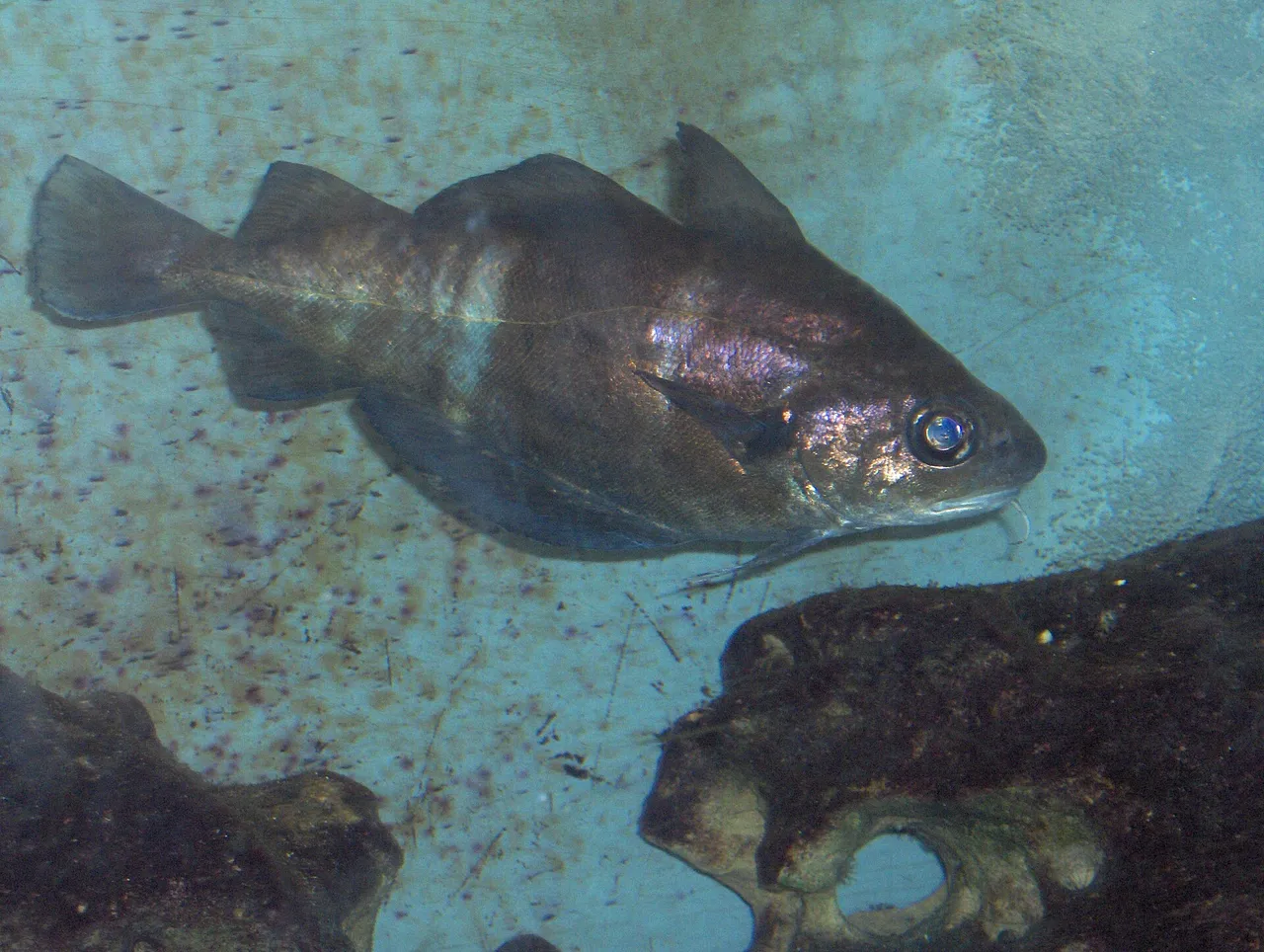
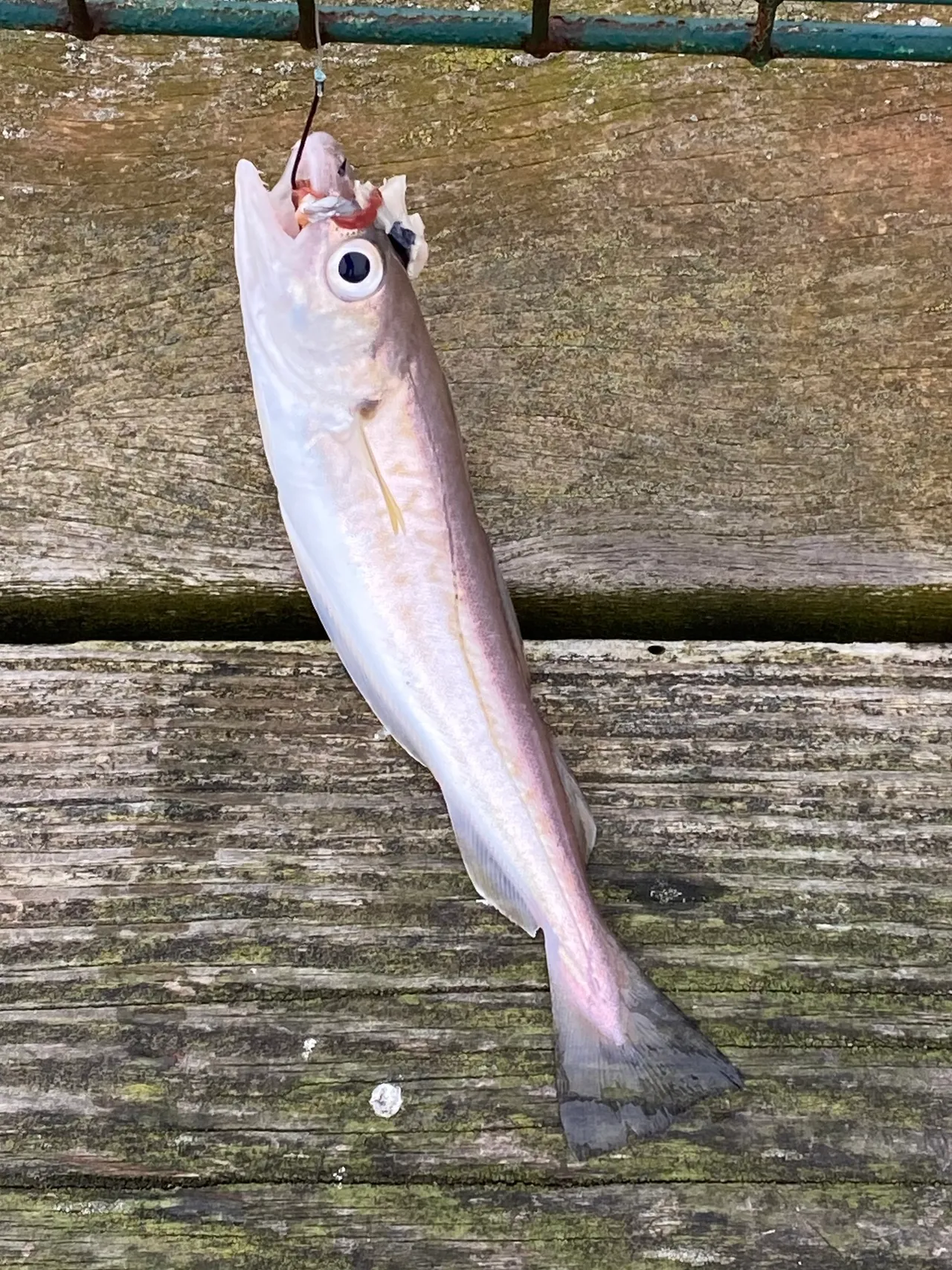

The differences
Each difference is marked with how far it can be trusted on its own. A single diagnostic character settles the identification; suggestive ones only narrow it.
| Character | Pouting | Whiting | Reliability |
|---|---|---|---|
| Barbel under the chinIdentification | A prominent barbel hangs from the chin at every size. | None in adults. Very small fish can carry a vestigial one, so use it as an adult character. | Diagnostic on its own |
| Body depthIdentification | Deep and strongly compressed — much deeper for its length than a whiting, which is where the name comes from. | Slender throughout, with a pointed head and no depth through the shoulder. | Diagnostic on its own |
| Which jaw projectsIdentification | Jaws close to level, with the barbel below. | The upper jaw overhangs the lower, giving a distinctly pointed profile. | Supporting — use with others |
| Dark spot at the pectoral baseIdentification | Present at the base of the pectoral fin, and it is not a separator here. | Present too. Shared by both fish, so it identifies neither on its own — worth knowing precisely so that it is not mistaken for a difference. | Suggestive only — varies |
| Colour and barringIdentification | Coppery bronze with dark vertical bars on a freshly caught fish, both fading within minutes. | Silvery flanks with a sandy or bluish back, and no barring at any point. | Suggestive only — varies |
| When they are inshoreSeason | Present on inshore rough ground and structure across much of the year, often in numbers around wrecks and piers. | Moves inshore in autumn and winter in large numbers and retreats to deeper water in summer — the defining winter species of many European beaches. | Suggestive only — varies |
Why it matters
Whiting carries a minimum landing size in most European fisheries and pouting frequently does not, so the identification determines whether a rule applies at all — verify the current local rules before retaining anything. The practical difference is a table one. Both deteriorate quickly, but pouting is notorious for it: the flesh softens within hours and a pouting kept in a bag on a warm beach is not worth taking home, while a whiting chilled promptly is a genuinely good fish. Both facts argue for the same behaviour, which is to identify the fish quickly, return what you are not keeping, and get the rest on ice.
The full records
This page compares two species. Each of them has a complete record covering biology, behaviour, handling and the evidence behind all of it.
More about pouting
Where it lives, how it is caught, and what else it is confused with.
Similar and related fish
How it is caught
Where it lives
Why the 4 connections on this page are here, and the sources
Similar and related fish
Backed by research — 1 connection
Supported by peer-reviewed research or fisheries science. The sources are listed and can be checked.
Whiting
An identification comparison naming both binomials: Merlangius merlangus and Trisopterus luscus.
- FishBase: a global information system on fishes — Froese, R. and D. Pauly, eds. — FishBase Consortium (Scientific institute)Relied on for: Morphological and distributional data for Merlangius merlangus and for Trisopterus luscus.States this directlyPassage read and verified
- The IUCN Red List of Threatened Species — International Union for Conservation of Nature (Conservation authority)Relied on for: Separate assessments treating Merlangius merlangus and Trisopterus luscus as distinct species.States this directlyCitation checked — the work exists and is described correctly
How it is caught
What experienced anglers do — 1 connection
Widely and independently recommended by experienced anglers and specialist sources. This is real angling knowledge, not proof: controlled evidence for it is limited, and FishingHQ records it as convention rather than as a demonstrated effect.
Ledgering
A practitioner claim about how Trisopterus luscus is commonly fished, following from where and how it feeds.
- General angling website restatements of established technique — Various (Credible secondary source)Relied on for: Widely restated practitioner accounts of fishing for pouting.Citation checked — the work exists and is described correctly
- Sea Angler — Bauer Media (Specialist angling publication)Relied on for: Practitioner treatment of the methods used for pouting and comparable species.Citation checked — the work exists and is described correctly
Where it lives
Backed by research — 2 connections
Supported by peer-reviewed research or fisheries science. The sources are listed and can be checked.
Harbours, piers and breakwaters
A habitat association for Trisopterus luscus taken from the environment and distribution data on its FishBase summary.
- FishBase: a global information system on fishes — Froese, R. and D. Pauly, eds. — FishBase Consortium (Scientific institute)Relied on for: The environment, depth range and habitat description recorded for Trisopterus luscus.States this directlyPassage read and verified
Inshore ground
A habitat association for Trisopterus luscus taken from the environment and distribution data on its FishBase summary.
- FishBase: a global information system on fishes — Froese, R. and D. Pauly, eds. — FishBase Consortium (Scientific institute)Relied on for: The environment, depth range and habitat description recorded for Trisopterus luscus.States this directlyPassage read and verified
Reviewed 2026-08-15. FishingHQ does not state what any rule is or where any rule applies. Where this page says the two species are managed differently, that is a reason to check the authority for the water you are on — not a statement of what it requires.