Kayak fishing
Method · Last reviewed 2026-08-12
A platform rather than a technique: quiet, shallow-draught access to water no other craft reaches, bought at the price of exposure, and a discipline where the decision not to launch is part of the skill.
Safety: cold water shock — can cause serious injury or death. 9 more points apply here.
A fishing kayak puts an angler on the water with almost no draught, no engine noise and no mooring, which reaches ground that a boat cannot enter and a shore angler cannot cast to. Shallow estuary flats, kelp edges, reef margins, backwaters and the inside of surf lines all become fishable, and the fish in them have not heard anybody coming.
That is the whole appeal and it is inseparable from the cost. A kayak has no shelter, no reserve of power, very little freeboard and a paddler who is part of the propulsion system. Wind, tide and swell act on it far more than on any powered boat, and the margin between a good session and a serious situation is decided before launching rather than during.
Almost everything specific to kayak fishing follows from those two facts. The tackle is short, simple and secured because there is nowhere to put a spare rod and no way to retrieve one. The fishing is done on the drift or at anchor because holding position by paddling is not sustainable. Fish are landed alongside at water level rather than lifted, and a large fish that a boat angler would gaff is a different proposition entirely at deck height with no crew.
The discipline exists worldwide and transfers almost completely: a kayak in Cornwall, Florida, Western Australia or the Baltic presents the same problems in the same order. What changes is water temperature, which decides how much time a capsized paddler has.
What it is
Fishing from a small, human-powered craft — almost always a sit-on-top for this purpose — which the angler both propels and fishes from, usually alone and usually without any support on the water. It is a platform rather than a technique: the methods are ordinary lure, bait, trolling and jigging methods, and nothing about the casting or the retrieve is unique to the craft. What changes is access, exposure, stability, capacity and the consequences of everything going wrong, and those five between them account for essentially all of what has to be learned.
What it is for
It reaches water nothing else does: too shallow for a boat, too far for a cast, too sensitive for an engine. It also puts the angler at eye level with the surface, which changes what can be seen and how close fish will tolerate a person. And it is the cheapest way onto the water by a wide margin — which is precisely why the safety content matters, because the cost, licensing and launching barriers that keep inexperienced people off powered boats simply do not exist here, and the sea does not know the difference.
Setting it up
- A sit-on-top hull, and the ability to get back onto it from deep water, practised before it is needed rather than discovered when it is.
- A buoyancy aid worn, not carried. It is the single item with the strongest evidence behind it and it does nothing in a hatch.
- Everything secured or expendable. Anything not leashed or stowed is gone the first time the kayak goes over.
- A means of calling for help that works when wet and is on your person rather than on the kayak, because the two can separate.
- Clothing chosen for immersion rather than for air temperature, which in British water means the difference between an incident and a fatality for most of the year.
What it catches
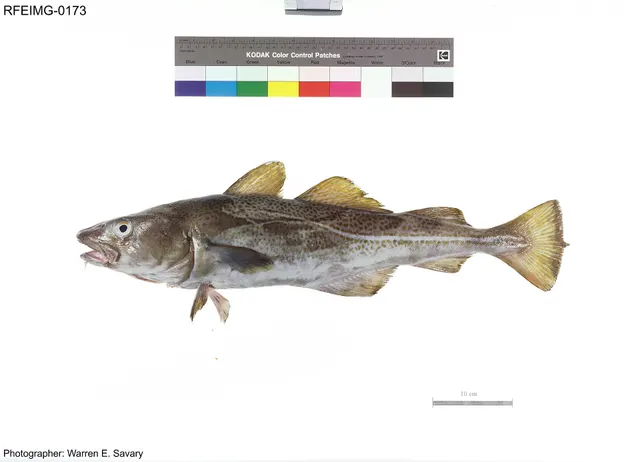 Atlantic codInshore rough ground holding cod is reachable by kayak in settled conditions, and a drifting kayak presents a bait or lure over it more slowly than a powered drift.
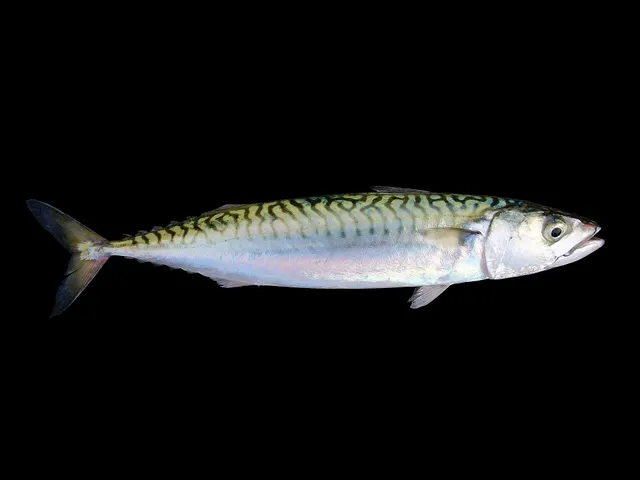 Atlantic mackerelMackerel shoals inshore in summer are within easy reach of a launch and provide both a target and bait, which is why they are what most kayak anglers meet first.
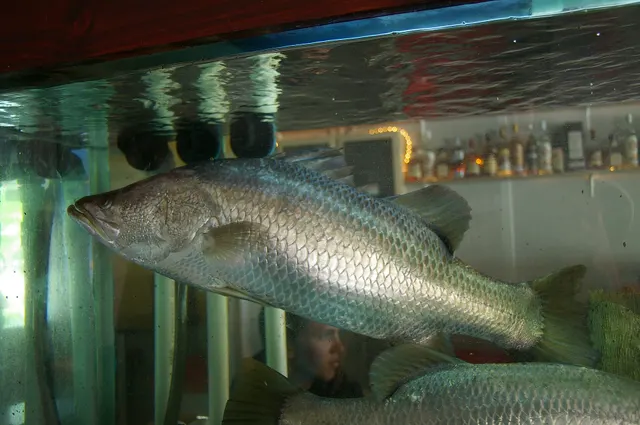 BarramundiMangrove creeks are shallow, narrow, overhung and frequently unreachable by a boat with a motor, which makes a kayak the practical craft for the estuarine barramundi fishing a visitor can actually do.
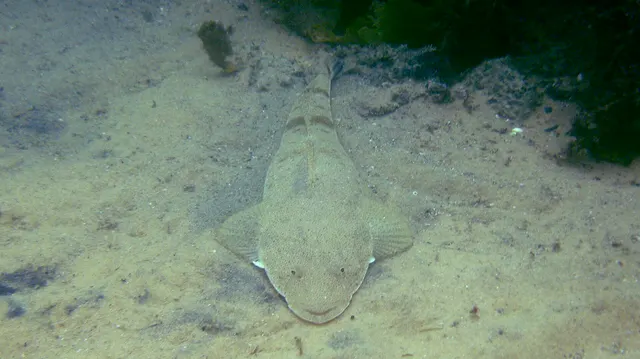 Dusky flatheadFrom kayaks and small boats over the same flats.
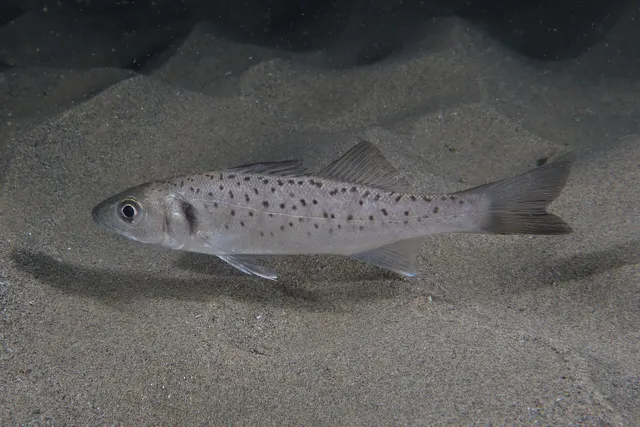 European sea bassA kayak reaches inshore reef and estuary ground that is too far to wade to and too shallow or too small to take a boat into, which is precisely the ground bass feed over. It is the clearest case of the platform opening water rather than a technique.
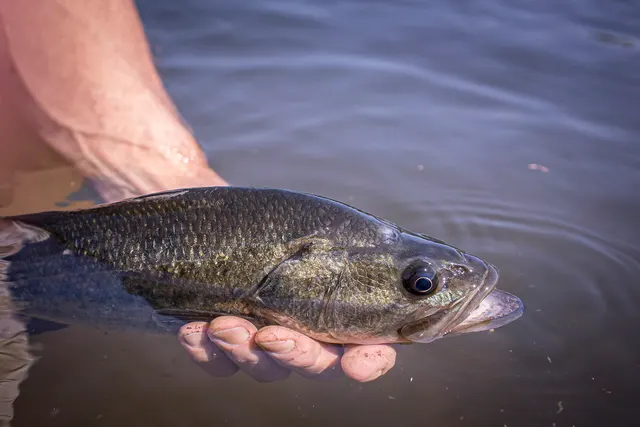 Largemouth bassKayak bass fishing is a mainstream branch of the North American sport, reaching shallow, weedy and timbered water that a powered boat cannot enter.
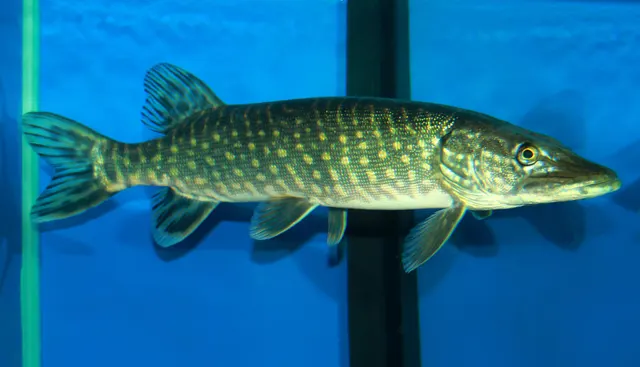 Northern pikeA kayak gives access to stillwater and river pike swims unreachable from a bank, and the quiet approach suits an ambush predator in shallow water.
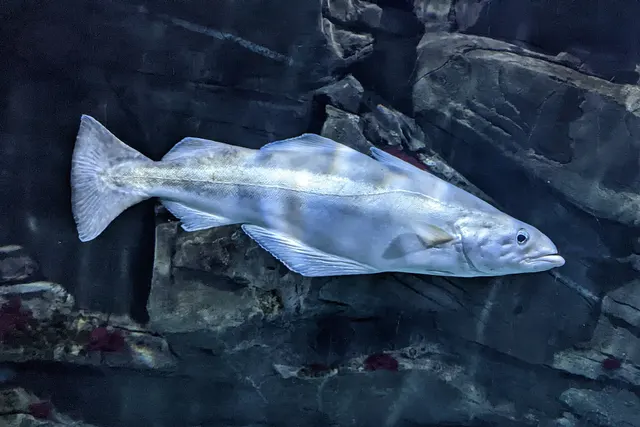 PollackInshore reef and kelp edges hold pollack within a short paddle of many launches, and a kayak drifts slowly enough over them to fish a lure vertically without power.
1 more
- Yellowtail kingfish Fish
How it works
A sit-on-top kayak is self-draining and is designed to be re-entered from the water, which is why it is the hull used for fishing and why a sit-inside is not. Stability comes from hull width and from the paddler's own balance, and it is dynamic rather than absolute — a kayak that feels solid at rest behaves differently when a fish is pulling sideways.
Propulsion is paddle or pedal. A pedal drive frees both hands for the rod and is the single largest practical difference in the sport, but it draws more water and is vulnerable in shallows and weed, which is where a kayak's advantage lies in the first place.
Positioning is the real skill. Wind and tide move the craft continuously, so fishing is done on a controlled drift, at anchor from a trolley that lets the bow be pointed into the flow, or with a drogue slowing the drift. A kayak held broadside to wind and swell is both uncomfortable and less stable, and managing the angle to the weather is a constant background task rather than an occasional adjustment.
Conditions
Suits light winds, modest swell, and water within a paddler's genuine range with reserve. Offshore winds, wind against tide, breaking surf at the launch or landing, poor visibility and any forecast of deterioration are all reasons not to launch. Cold water shortens the survivable time after a capsize to minutes and is the factor most often underestimated in Britain, where the sea is cold enough to matter for most of the year even when the air is warm.
Common mistakes
- Judging conditions from the beach. An offshore wind produces flat, inviting water at the launch and open sea conditions a kilometre out, and it is the single commonest way kayak anglers get into trouble.
- Dressing for the air rather than for the water. Air temperature is irrelevant once you are in.
- Never practising a re-entry. A capsize is an ordinary event; it becomes an emergency only if getting back on is being attempted for the first time in cold water in a swell.
- Carrying the phone in a hatch and the buoyancy aid on the deck. Both are on the wrong side of the moment they are needed.
- Paddling out with the wind and tide and planning to come back against both. Work out the return leg first — it is the one that will be done tired.
- Anchoring straight off the bow or stern in current. An anchor trolley exists so that the craft can be pointed safely into the flow, and a kayak pinned broadside by an anchor line in a tide is a capsize.
Advantages
- Access to shallow, quiet and inshore water that neither shore nor boat fishing reaches — estuary flats, kelp edges, reef margins and the inside of a surf line.
- Silence. No engine, minimal hull noise, and fish that have not heard anybody coming, which matters most in exactly the shallow clear water a kayak is best in.
- Very low cost of entry, and no mooring, launch fee, trailer, insurance or engine to maintain.
- It launches from almost anywhere — a beach, a slipway, a shingle bank — so the choice of where to fish is made on the fishing rather than on where a boat can be got in.
- One person can decide to go and go, without a crew, a forecast window long enough for a passage, or anybody else's diary.
Limitations
- No shelter, no reserve power, and a paddler who tires. Conditions that a small boat tolerates can end a kayak session.
- Offshore wind is the specific killer: it flatters the water at the launch point and takes a paddler away from shore faster than they can paddle back.
- Very limited capacity for tackle, catch and anything else, which forces genuine simplicity.
- Landing and handling large fish at water level, alone, with nowhere to put anything.
Terms you will meet
- Sit-on-top
- A self-draining hull the paddler sits on rather than in. It is the standard fishing hull because it can be re-entered from deep water; a sit-inside generally cannot without assistance or specific training.
- Anchor trolley
- A loop of line running along the side of the kayak that lets the anchor attachment point be moved fore or aft, so the craft can be held bow or stern into wind and tide rather than broadside.
- Drogue
- A small drift chute streamed to slow the rate of drift and hold the kayak at a chosen angle to wind or tide. Not an anchor and not a substitute for one.
- Re-entry
- Getting back onto the kayak from deep water unassisted. The defining skill of the discipline, and the one most likely never to have been practised.
Where people fish it
187 places FishingHQ holds name this among the ways they are fished, across 56 coasts and systems. Being named here describes what sources report, not that the method is permitted — check the local rules before you fish.
Bude breakwater, Cape Cornwall, Exmouth and the Exe estuary, Falmouth and Castle Beach and 24 more
Applecross and the Inner Sound, Durness and Balnakeil Bay, Gairloch, Gruinard Bay and 16 more
Aberdaron, Aberdyfi and the Dyfi estuary, Barmouth and the Mawddach estuary, Cardigan and the Teifi estuary and 4 more
Campbeltown Loch, Dunoon and the Holy Loch, Girvan, Largs and the Cumbrae channel and 4 more
Banff and the Deveron mouth, Findhorn Bay, Montrose and the South Esk, Nairn and 4 more
Pembrokeshire and the south-west Wales coast
Broad Haven and Little Haven, Milford Haven waterway, Ramsey Sound, Solva and 3 more
Ballycastle, Benone Strand and Magilligan, Carnlough, Glenarm and 3 more
The Solent and the Hampshire coast
Calshot Spit, Chichester Harbour, Christchurch Harbour and Mudeford Run, Hayling Island and 2 more
48 further coasts and systems are not listed here. Browse every place FishingHQ holds.
Why the same craft is a different proposition on a small-shelf coast
Kayak fishing transfers between coasts almost completely, and there is one variable that changes what the craft is FOR rather than how it is handled: how far you have to go before the bottom drops away.
ON A BROAD-SHELF COAST — most of Britain, the North Sea, the Baltic, the American mid-Atlantic — a kayak is a shallow-water tool. It reaches flats, kelp, estuary and reef margin that a boat cannot enter, and the deep water stays out of reach because it is miles offshore. The fishing is inshore fishing done better, and the safety question is mostly about wind and getting home.
ON A SMALL-SHELF COAST — oceanic islands like the Canaries, Madeira, the Azores, Hawaii, much of the Caribbean — the same kayak is over water hundreds of metres deep within a few hundred metres of the beach. That turns it into a genuine offshore platform reached by a short paddle, and it is why guided kayak fishing exists at all on islands where the charter fleet is a mile from the same ground.
THE SAFETY ARITHMETIC INVERTS WITH IT. On a broad shelf a paddler blown offshore has a long, shallow, gradually worsening problem. On a steep island coast the water is deep immediately, there is no shallow ground to be washed onto and nothing to slow the current, and an offshore wind removes the only thing that was close by. The craft handles identically. The consequences of the same mistake do not.
The practical reading is that the distance to deep water tells you what kind of kayak fishing a coast offers, and it should be the first thing checked about unfamiliar water — before the species list, and before anybody's opinion of the marks.
What experienced anglers do — why, and the sources (2)
Widely and independently recommended by experienced anglers and specialist sources. This is real angling knowledge, not proof: controlled evidence for it is limited, and FishingHQ records it as convention rather than as a demonstrated effect.
- Kayak Fishing Lanzarote — trip and contact pages — Kayak Fishing Lanzarote (Credible secondary source)Relied on for: That guided kayak fishing on a steep-sided oceanic island is run to deep-water species from short launches at named coastal points.Background and mechanism onlyPassage read and verified
- Spearfishing in the Canary Islands: is the devil as black as it seems to be? — Pablo Martín-Sosa, Instituto Español de Oceanografía — Revista Scientia Insularum, 2019 (Scientific literature)Relied on for: That the Canary islands' bathymetry puts deep water within reach of a land entry, measured as two-thirds of Canary spearfishers entering the sea from the shore rather than by boat.Background and mechanism onlyPassage read and verified
Holding position from a kayak: drift, drogue and anchor, seen from above
Holding position from a kayak: drift, drogue and anchor, seen from above
Safety system · Draft — not yet checked against an external reference
This drawing has not been checked against any reference outside FishingHQ. It is a schematic of what the surrounding text describes, and the text is what carries the detail.
Describe this diagram in words
A plan view — looking down on the water — divided into three panels, with a single arrow across the top showing wind and tide running left to right in all of them. In the first panel a kayak lies with its long axis running up and down the figure, ACROSS that flow, and an arrow shows the water arriving from up-flow and pushing on the whole side of the hull rather than on an end. This is drifting free, and it is the unstable attitude the other two panels exist to avoid. In the second, a kayak lies along the flow, bow up-stream, with a short line from its bow to a small open cone whose mouth faces the current. The drogue has pulled the boat into line and slowed it, but the boat is still drifting — that is the difference between a drogue and an anchor and it is the thing most easily missed. In the third, a kayak lies along the flow with its bow up-stream, held by an anchor on the bottom. A line runs the length of the hull from bow to stern, and the anchor rode leaves it at the bow; an arrow below the hull shows that attachment point being slid along the trolley, which is what sets the angle the boat sits at. The figure publishes no wind speed, no drift rate, no rope length and no depth: those belong to the day and not to a drawing.
How this drawing was produced
Drawn from FishingHQ's own kayak fishing and anchoring records, as a plan view rather than a section because the thing being shown is an ANGLE between a hull and a flow, which a side view cannot carry. The three panels share one flow arrow deliberately: the first draft drew a separate arrow above each boat and the figure read as three different days rather than as three answers to one condition. Nothing here has been checked against a seamanship reference, and the trolley geometry in panel three is the element most likely to be wrong in detail — its attachment point is drawn forward of amidships because that is what brings a bow round, and no read source confirms the arrangement.
Why the fish change when you leave the rock: one mark, three pieces of ground
- 1. Over the reef and broken rock, with a lure worked or trolled along its edge. The same fish a shore angler catches from the mark, over the same ground, from the other side of it — and out along the parts of the reef a cast never reaches.
- 2. Held in one place over the rough ground, with a bait on the bottom. This is where the fish that live in the broken rock come from, and it is the position that produces conger and bull huss rather than pollack.
- 3. Drifting across the clean sand beyond the rough, with a bait moving over the bottom. Everything here is a fish of clean ground, and at most marks it is the half of the fishery a shore angler has no access to at all.
Why the fish change when you leave the rock: one mark, three pieces of ground
Reading the ground · Draft — not yet checked against an external reference
This drawing has not been checked against any reference outside FishingHQ. It is a schematic of what the surrounding text describes, and the text is what carries the detail.
Describe this diagram in words
A cross-section through the sea bottom at a single fishing mark, with the shore at the left and open water at the right. At the far left, rock stands above the water: the mark a shore angler fishes from, labelled beneath it. From the foot of that rock the bottom falls away steeply and irregularly, drawn as a jagged line — reef and broken rock. Beyond it the jagged line continues but flattens: rough ground. Beyond that again the line becomes smooth and gently deepening: clean ground of sand and shell. Each of the three is named where it lies. A dashed horizontal line across the upper part of the figure is the surface of the sea. Above the water at the left, a short bar with an upright stop at its end shows how far a cast from the rock reaches — out over the near edge of the reef only, and ending well short of where the reef itself ends. Three numbered markers sit on the surface further out. Marker one is over the reef, with a line running out to a lure disc, showing a lure worked or trolled along the reef edge. Marker two is over the rough ground, with a heavy line dropping vertically to a weight resting on the broken bottom — a kayak holding in one place. Marker three is over the clean ground, with a bar above it showing the direction of a drift and a heavy line trailing behind and below to a weight tripping across the sand. A line of text above the surface states that this is the same mark, and three different fisheries. What each position produces is set out in the three captions beneath the figure rather than on it.
How this drawing was produced
Drawn from the structure that recurs across thirteen Cornish kayak venue pages read for this figure. RENDERED AND INSPECTED, and looking at it changed the figure three times. The shore angler's reach ran to the same x as the first kayak position, which made the drawing say the kayak adds nothing there; it stops short of the reef's far edge instead, because the venue pages put fish out along the reef beyond casting range. The drifted bait was drawn vertical like the anchored one, which lost the distinction between the two positions; it trails behind and below the kayak now, so a reader can see one is moving and one is not. And the three species lists were IN the drawing until the render showed every one struck through by the line it belonged to — the reef zigzag, the anchored line, the drifted line. They are the stage captions now. No depth, distance or gradient appears in the figure.
Why the deep water in a sea loch is at the far end from the sea
Why the deep water in a sea loch is at the far end from the sea
Reading the ground · Draft — not yet checked against an external reference
This drawing has not been checked against any reference outside FishingHQ. It is a schematic of what the surrounding text describes, and the text is what carries the detail.
Describe this diagram in words
A cross-section along the length of a Scottish fjordic sea loch, from the open sea at the left to the head of the loch at the right. At the left the sea bed shelves gently upward towards the mouth. At the mouth it rises into a bar of rock — the sill — which is the shallowest point the bottom reaches anywhere in the figure, with an arrow above it pointing inward to show the tidal stream that has to squeeze across it and a label naming the rapid that forms there as a result. Landward of the sill the bottom falls away steeply into a broad, flat-floored basin lying far below the level of the bar and below the sea bed outside, so that the water gets deeper the further from the sea you go rather than shallower. A second line beneath the surface across the inner loch marks the base of a fresher layer floating on the denser sea water below; it sits shallower than the crest of the sill, which is why the bar holds the loch's water in. At the head an arrow points down into the loch to show the river or burn that supplies the fresh layer. No depth, distance, gradient or stream rate appears anywhere on the figure, and no loch is named: this is the shape the west-coast lochs share rather than a map of any one of them.
How this drawing was produced
Drawn by hand, and then looked at as a finished image before publication — which is not the same check as verifying its coordinates, and here it caught three things the coordinates could not. A NEAR BANK was drawn rising out of the basin, to show how close deep water is to a road. It was a second viewpoint inside a single side-on section, and on the page it read as the bottom crossing itself. Removed; its point moved into the text. THE TIDAL ARROW had no head. A plain horizontal stroke sat beneath the label for the sill and read as a rule underlining it rather than as water moving. It now carries a chevron. THE FRESHER LAYER sat at the height of the crest of the sill and the two lines collided. It is now clearly shallower than the crest, which is true and is why the sill matters. The vertical is exaggerated, as on every section drawn through a piece of sea floor.
The same short paddle, over two different seas
The same short paddle, over two different seas
Reading the ground · Draft — not yet checked against an external reference
This drawing has not been checked against any reference outside FishingHQ. It is a schematic of what the surrounding text describes, and the text is what carries the detail.
Describe this diagram in words
Two side-on profiles of a coast, drawn one above the other at the same horizontal scale, with the shore on the left in both. In the upper panel the seabed leaves the shore and runs almost level for the whole width of the figure before beginning to turn down at the far right; a small craft sits on the surface a short distance from the shore with only a little water beneath it, and the shelf edge is noted as lying beyond the panel. In the lower panel the seabed leaves the shore at the same point and falls away almost at once, continuing down past the bottom of the figure; the same craft sits at the same distance from the shore with a long drop beneath it. The figure carries no depth, distance or gradient, and its conclusion is that the steep profile is what makes deep water reachable without a boat and is also what leaves nothing shallow to be washed onto.
How this drawing was produced
Drawn from the relationship the two records state rather than from any surveyed transect: a broad continental shelf carries shallow ground far offshore, and an oceanic volcanic island falls away close inshore. The horizontal scale is held identical between the panels because the comparison is the entire content — the craft is at the same distance from the shore in both, and everything the figure says follows from that being the controlled variable. The island bed deliberately leaves the frame at the foot rather than levelling out, because levelling it anywhere would be inventing a depth. No axis, no tick, no figure, in keeping with the standing rule for this diagram type.
Safety
Cold water shock — Can cause serious injury or death
A capsize puts the paddler into water that around Britain and Ireland is cold enough to matter for most of the year. Cold water shock causes an involuntary gasp and hyperventilation in the first minute, which is the phase that drowns people, followed by rapid loss of useful strength in the hands and arms — the strength needed to get back onto the kayak.
What reduces it: Wear a buoyancy aid, which keeps the airway clear through the gasp phase. Dress for immersion rather than air temperature. Practise re-entry in controlled conditions so that it is a rehearsed action rather than a first attempt. Do not fish alone in cold water, and tell somebody your plan and your expected return.
Boat safety — Can cause serious injury or death
Offshore wind flatters the launch and takes a paddler downwind faster than they can return, and wind against tide raises a short steep sea that a kayak handles badly. Conditions frequently deteriorate faster than a paddler can cover the distance home.
What reduces it: Check wind, sea state and swell forecasts before launching, and treat any offshore component as a reason to reconsider. Plan the return leg first and paddle out against wind or tide where possible. Set a turn-back time and keep it. Not launching is a valid and frequently correct decision.
Boat traffic and being seen — Can cause serious injury or death
A kayak sits low, is small, is frequently the same colour as the sea and is invisible to a powered vessel at distance or in swell. Being seen is not automatic and cannot be assumed.
What reduces it: A high-visibility flag, bright hull and clothing, and a light in poor visibility or near dusk. Stay out of shipping channels and harbour entrances, cross them at right angles and quickly, and assume you have not been seen.
Entanglement — Can cause injury needing treatment
Anchor line, leashes, fishing line and a drogue warp are all in reach of a paddler who has just capsized, and a line around a limb or the body in current is a serious situation.
What reduces it: Carry a cutting tool on the buoyancy aid where it can be reached with either hand. Keep the deck clear. Never anchor from a fixed point without an anchor trolley and a means of releasing the whole system quickly.
Hypothermia — Can cause injury needing treatment
Sitting still, wet and exposed to wind for hours produces heat loss that builds unnoticed and degrades judgement and dexterity before the paddler recognises it.
What reduces it: Immersion-appropriate clothing, windproof outer layers, food and warm drink, and a session length matched to the conditions rather than to the fishing.
Precautions that always apply here
- Wear a buoyancy aid or lifejacket. Cold water incapacitates strong swimmers within a minute, long before swimming ability matters.
- Tell somebody where you are going and when you expect to be back.
- Carry a charged phone in a waterproof case, or another means of calling for help.
- Check the tide before you go and know your exit route. Being cut off is the commonest way a shore session becomes a rescue.
- Do not wade alone. Judge depth and flow from the bank first, and turn back sooner than feels necessary.
Further safety reading
- Kayak fishing: cold water, offshore wind and getting back on — Cold water, offshore wind and an unpractised re-entry account for most incidents in the discipline, and none of the three is an equipment problem.
Check the rules before you fish
Fishing laws, bylaws, access rules, seasons, bait restrictions and permitted methods vary by location and can change. Check the current rules from the relevant authority and the water you intend to fish before fishing.
Check with:
- Current national or regional law for where you are fishing
- Current local bylaws
- The relevant fisheries authority
- The landowner, club or fishery whose water it is
- Any restrictions specific to the species or the method you intend to use
Where to go next
Related techniques
Skills behind it
- Being seen from a kayakA kayak presents almost no freeboard and almost no radar signature, so the planning assumption has to be that nobody has seen you.
- Calling for help from a kayakBeing seen and being able to summon are two different problems, and the second is the one most often left out of a kit list because it costs more and is used less.
- Currents, eddies and where fish holdA paddler is carried by water they cannot outrun, so current is a safety input before it is a fishing one — which is why the decision not to launch is part of the discipline rather than an admission within it.
- Electronics on a fishing kayakA wet, tipping, single-battery platform breaks three assumptions the equipment was designed around, and the safety-critical device on a kayak is the one that summons help rather than the one that finds fish.
- Handling fish from a kayakLanding at water level is better for the fish and considerably more demanding for the angler, and reaching for a fish is the commonest cause of capsize in benign conditions.
- Holding position: anchoring and drifting from a kayakAnchoring a kayak in current is the most dangerous ordinary thing a kayak angler does, and the equipment that makes it survivable is a trolley and a knife rather than a better anchor.
- Kayak conditions: wind, tide, swell, and the decision not to launchThe conditions question is the one every kayak angler asks and the one that has no number in it. Wind direction, tidal stream, swell and temperature interact, and the output is frequently a decision not to launch.
- Kayak fishing in fresh waterInland the binding question is almost never conditions but permission, and access to the water, to the launch and to the fishing are three separate permissions routinely assumed to be one.
14 more
- Kayak seating, and why it is a safety decision Explainer
- Kayak stability, and what a hull trades away Explainer
- Launching and landing a fishing kayak Explainer
- Leashes on a fishing kayak Explainer
- Motors and electric drives on a fishing kayak Explainer
- Paddle or pedal, and what a drive costs Explainer
- Rigging a fishing kayak Explainer
- Sit-on-top and why the hull is a safety decision Explainer
- Tackle management on a kayak Explainer
- Towing and assisting another kayak Explainer
- Transporting and storing a fishing kayak Explainer
- Using a kayak as a dive platform Explainer
- Weather windows in sea fishing Explainer
- Where a kayak changes the fishing Explainer
Rules and access
Environment and conservation
Sources and evidence
- RNLI water safety guidance: cold water shock and Float to Live — Royal National Lifeboat Institution (Water-safety or diver-training authority)Relied on for: Cold water shock and immersion response, the function of a buoyancy aid, the danger of offshore wind to small craft, and the advice to tell somebody your plan and carry a means of calling for help.States this directlyPassage read and verified
- Met Office shipping forecast, inshore waters forecast and marine warnings — Met Office, United Kingdom (Government fisheries body)Relied on for: That wind, sea state and swell forecasts are the operative inputs for small-craft decisions, and that conditions offshore differ from those observed at the launch point.States this directlyCitation checked — the work exists and is described correctly
Why the 35 connections on this page are here, and the sources
What it catches
What experienced anglers do — 9 connections
Widely and independently recommended by experienced anglers and specialist sources. This is real angling knowledge, not proof: controlled evidence for it is limited, and FishingHQ records it as convention rather than as a demonstrated effect.
Atlantic cod
Established angling practice for this species, recorded as convention. The note states the property of the animal or its water that makes the method the answer.
- Sea Angler — Bauer Media (Specialist angling publication)Relied on for: Established sea-angling technique and its application to this species.States this directlyCitation checked — the work exists and is described correctly
- General angling website restatements of established technique — Various (Credible secondary source)Relied on for: Widely restated practice connecting this species and method.Background and mechanism onlyCitation checked — the work exists and is described correctly
Atlantic mackerel
Established angling practice for this species, recorded as convention. The note states the property of the animal or its water that makes the method the answer.
- Sea Angler — Bauer Media (Specialist angling publication)Relied on for: Established sea-angling technique and its application to this species.States this directlyCitation checked — the work exists and is described correctly
- General angling website restatements of established technique — Various (Credible secondary source)Relied on for: Widely restated practice connecting this species and method.Background and mechanism onlyCitation checked — the work exists and is described correctly
Barramundi
What anglers actually use a method for, recorded as convention.
- General angling website restatements of established technique — Various (Credible secondary source)Relied on for: Widely restated descriptions of technique, ground and fish behaviour, recorded as consensus rather than as scholarship.Background and mechanism onlyCitation checked — the work exists and is described correctly
- Sea Angler — Bauer Media (Specialist angling publication)Relied on for: Contemporary angling practice as reported by practitioners: ground, tackle, presentation and seasonal timing.States this directlyCitation checked — the work exists and is described correctly
Dusky flathead
The page names kayaks explicitly among the platforms. On shallow estuary flats the kayak is not merely a way of getting there — it is what allows the water to be fished without pushing the fish off it.
- Australian state recreational crabbing guidance: gear, limits and berried females — Australian state fisheries agencies and Australian crabbing guidance (Credible secondary source)Relied on for: Documents which fishery and which technique takes this species.States this directlyCitation checked — the work exists and is described correctly
- FishBase: a global information system on fishes — Froese, R. and D. Pauly, eds. — FishBase Consortium (Scientific institute)Relied on for: Independently corroborates the species' recreational capture and range.Background and mechanism onlyPassage read and verified
European sea bass
Established angling practice for this species, recorded as convention. The note states the property of the animal or its water that makes the method the answer.
- Sea Angler — Bauer Media (Specialist angling publication)Relied on for: Established sea-angling technique and its application to this species.States this directlyCitation checked — the work exists and is described correctly
- General angling website restatements of established technique — Various (Credible secondary source)Relied on for: Widely restated practice connecting this species and method.Background and mechanism onlyCitation checked — the work exists and is described correctly
Largemouth bass
Established angling practice for this species, recorded as convention. The note states the property of the animal or its water that makes the method the answer.
- IGFA International Angling Rules and World Record Requirements — International Game Fish Association (Angling or fisheries organisation)Relied on for: Recognition of the species as an established sport fish and the angling methods and tackle classes conventionally used for it.States this directlyPassage read and verified
- General angling website restatements of established technique — Various (Credible secondary source)Relied on for: Widely restated practice connecting this species and method.Background and mechanism onlyCitation checked — the work exists and is described correctly
Northern pike
Established angling practice for this species, recorded as convention. The note states the property of the animal or its water that makes the method the answer.
- Freshwater Fishing — Macdonald & Jane's, 1975 (Specialist angling publication)Relied on for: Freshwater angling technique and its application to this species.States this directlyCitation checked — the work exists and is described correctly
- Angling Times — Bauer Media (Specialist angling publication)Relied on for: Contemporary practice for this species in the British and European coarse press.Background and mechanism onlyCitation checked — the work exists and is described correctly
Pollack
Established angling practice for this species, recorded as convention. The note states the property of the animal or its water that makes the method the answer.
- Sea Angler — Bauer Media (Specialist angling publication)Relied on for: Established sea-angling technique and its application to this species.States this directlyCitation checked — the work exists and is described correctly
- General angling website restatements of established technique — Various (Credible secondary source)Relied on for: Widely restated practice connecting this species and method.Background and mechanism onlyCitation checked — the work exists and is described correctly
Yellowtail kingfish
Established angling practice for this species, recorded as convention. The note states the property of the animal or its water that makes the method the answer.
- IGFA International Angling Rules and World Record Requirements — International Game Fish Association (Angling or fisheries organisation)Relied on for: Recognition of the species as an established sport fish and the angling methods and tackle classes conventionally used for it.States this directlyPassage read and verified
- General angling website restatements of established technique — Various (Credible secondary source)Relied on for: Widely restated practice connecting this species and method.Background and mechanism onlyCitation checked — the work exists and is described correctly
Related techniques
What experienced anglers do — 1 connection
Widely and independently recommended by experienced anglers and specialist sources. This is real angling knowledge, not proof: controlled evidence for it is limited, and FishingHQ records it as convention rather than as a demonstrated effect.
Sea fishing
Placing the platform inside the discipline whose methods it carries.
- Sea Angler — Bauer Media (Specialist angling publication)Relied on for: Shore and boat practice in north-west European sea angling for the species and method described, presented across multiple independent contributors.States this directlyCitation checked — the work exists and is described correctly
- General angling website restatements of established technique — Various (Credible secondary source)Relied on for: Widely restated practice connecting this species to this method, recorded as practitioner consensus rather than as tested fact.Background and mechanism onlyCitation checked — the work exists and is described correctly
Skills behind it
Official guidance — 13 connections
Stated by a fisheries authority, scientific institute or recognised angling body. Authoritative, but summarising rather than demonstrating.
Being seen from a kayak
The explanation behind a practice, joined to the surface a reader arrives at so that the reasoning is reachable rather than orphaned.
- RNLI water safety guidance: cold water shock and Float to Live — Royal National Lifeboat Institution (Water-safety or diver-training authority)Relied on for: Cold water shock and the immersion response, the function of a buoyancy aid, the danger of offshore wind to paddled craft, and the advice to tell somebody your plan and carry a means of calling for help.States this directlyPassage read and verified
- Sea Angler — Bauer Media (Specialist angling publication)Relied on for: Contemporary British kayak angling practice, rigging and inshore fishing.Background and mechanism onlyCitation checked — the work exists and is described correctly
Electronics on a fishing kayak
The explanation behind a practice, joined to the surface a reader arrives at so that the reasoning is reachable rather than orphaned.
- RNLI water safety guidance: cold water shock and Float to Live — Royal National Lifeboat Institution (Water-safety or diver-training authority)Relied on for: Water safety guidance for paddled craft, including the means of calling for help, the limits of a mobile telephone at sea, and the principle that equipment supports rather than replaces a plan.States this directlyPassage read and verified
- Sea Angler — Bauer Media (Specialist angling publication)Relied on for: Contemporary British kayak angling practice, rigging and inshore fishing.Background and mechanism onlyCitation checked — the work exists and is described correctly
Handling fish from a kayak
The explanation behind a practice, joined to the surface a reader arrives at so that the reasoning is reachable rather than orphaned.
- RNLI water safety guidance: cold water shock and Float to Live — Royal National Lifeboat Institution (Water-safety or diver-training authority)Relied on for: Cold water shock and the immersion response, the function of a buoyancy aid, the danger of offshore wind to paddled craft, and the advice to tell somebody your plan and carry a means of calling for help.States this directlyPassage read and verified
- Sea Angler — Bauer Media (Specialist angling publication)Relied on for: Contemporary British kayak angling practice, rigging and inshore fishing.Background and mechanism onlyCitation checked — the work exists and is described correctly
Holding position: anchoring and drifting from a kayak
The explanation behind a practice, joined to the surface a reader arrives at so that the reasoning is reachable rather than orphaned.
- RNLI water safety guidance: cold water shock and Float to Live — Royal National Lifeboat Institution (Water-safety or diver-training authority)Relied on for: Cold water shock and the immersion response, the function of a buoyancy aid, the danger of offshore wind to paddled craft, and the advice to tell somebody your plan and carry a means of calling for help.States this directlyPassage read and verified
- Sea Angler — Bauer Media (Specialist angling publication)Relied on for: Contemporary British kayak angling practice, rigging and inshore fishing.Background and mechanism onlyCitation checked — the work exists and is described correctly
Kayak conditions: wind, tide, swell, and the decision not to launch
The explanation behind a practice, joined to the surface a reader arrives at so that the reasoning is reachable rather than orphaned.
- RNLI water safety guidance: cold water shock and Float to Live — Royal National Lifeboat Institution (Water-safety or diver-training authority)Relied on for: Cold water shock and the immersion response, the function of a buoyancy aid, the danger of offshore wind to paddled craft, and the advice to tell somebody your plan and carry a means of calling for help.States this directlyPassage read and verified
- Sea Angler — Bauer Media (Specialist angling publication)Relied on for: Contemporary British kayak angling practice, rigging and inshore fishing.Background and mechanism onlyCitation checked — the work exists and is described correctly
Kayak fishing in fresh water
The explanation behind a practice, joined to the surface a reader arrives at so that the reasoning is reachable rather than orphaned.
- RNLI water safety guidance: cold water shock and Float to Live — Royal National Lifeboat Institution (Water-safety or diver-training authority)Relied on for: Cold water shock and the immersion response, the function of a buoyancy aid, the danger of offshore wind to paddled craft, and the advice to tell somebody your plan and carry a means of calling for help.States this directlyPassage read and verified
- Sea Angler — Bauer Media (Specialist angling publication)Relied on for: Contemporary British kayak angling practice, rigging and inshore fishing.Background and mechanism onlyCitation checked — the work exists and is described correctly
Kayak stability, and what a hull trades away
The explanation behind a practice, joined to the surface a reader arrives at so that the reasoning is reachable rather than orphaned.
- RNLI water safety guidance: cold water shock and Float to Live — Royal National Lifeboat Institution (Water-safety or diver-training authority)Relied on for: Cold water shock and the immersion response, the function of a buoyancy aid, the danger of offshore wind to paddled craft, and the advice to tell somebody your plan and carry a means of calling for help.States this directlyPassage read and verified
- Sea Angler — Bauer Media (Specialist angling publication)Relied on for: Contemporary British kayak angling practice, rigging and inshore fishing.Background and mechanism onlyCitation checked — the work exists and is described correctly
Launching and landing a fishing kayak
The explanation behind a practice, joined to the surface a reader arrives at so that the reasoning is reachable rather than orphaned.
- RNLI water safety guidance: cold water shock and Float to Live — Royal National Lifeboat Institution (Water-safety or diver-training authority)Relied on for: Cold water shock and the immersion response, the function of a buoyancy aid, the danger of offshore wind to paddled craft, and the advice to tell somebody your plan and carry a means of calling for help.States this directlyPassage read and verified
- Sea Angler — Bauer Media (Specialist angling publication)Relied on for: Contemporary British kayak angling practice, rigging and inshore fishing.Background and mechanism onlyCitation checked — the work exists and is described correctly
Paddle or pedal, and what a drive costs
The explanation behind a practice, joined to the surface a reader arrives at so that the reasoning is reachable rather than orphaned.
- RNLI water safety guidance: cold water shock and Float to Live — Royal National Lifeboat Institution (Water-safety or diver-training authority)Relied on for: Cold water shock and the immersion response, the function of a buoyancy aid, the danger of offshore wind to paddled craft, and the advice to tell somebody your plan and carry a means of calling for help.States this directlyPassage read and verified
- Sea Angler — Bauer Media (Specialist angling publication)Relied on for: Contemporary British kayak angling practice, rigging and inshore fishing.Background and mechanism onlyCitation checked — the work exists and is described correctly
Rigging a fishing kayak
The explanation behind a practice, joined to the surface a reader arrives at so that the reasoning is reachable rather than orphaned.
- RNLI water safety guidance: cold water shock and Float to Live — Royal National Lifeboat Institution (Water-safety or diver-training authority)Relied on for: Cold water shock and the immersion response, the function of a buoyancy aid, the danger of offshore wind to paddled craft, and the advice to tell somebody your plan and carry a means of calling for help.States this directlyPassage read and verified
- Sea Angler — Bauer Media (Specialist angling publication)Relied on for: Contemporary British kayak angling practice, rigging and inshore fishing.Background and mechanism onlyCitation checked — the work exists and is described correctly
Sit-on-top and why the hull is a safety decision
The explanation behind a practice, joined to the surface a reader arrives at so that the reasoning is reachable rather than orphaned.
- RNLI water safety guidance: cold water shock and Float to Live — Royal National Lifeboat Institution (Water-safety or diver-training authority)Relied on for: Cold water shock and the immersion response, the function of a buoyancy aid, the danger of offshore wind to paddled craft, and the advice to tell somebody your plan and carry a means of calling for help.States this directlyPassage read and verified
- Sea Angler — Bauer Media (Specialist angling publication)Relied on for: Contemporary British kayak angling practice, rigging and inshore fishing.Background and mechanism onlyCitation checked — the work exists and is described correctly
Using a kayak as a dive platform
The explanation behind a practice, joined to the surface a reader arrives at so that the reasoning is reachable rather than orphaned.
- RNLI water safety guidance: cold water shock and Float to Live — Royal National Lifeboat Institution (Water-safety or diver-training authority)Relied on for: Cold water shock and the immersion response, the function of a buoyancy aid, the danger of offshore wind to paddled craft, and the advice to tell somebody your plan and carry a means of calling for help.States this directlyPassage read and verified
- Sea Angler — Bauer Media (Specialist angling publication)Relied on for: Contemporary British kayak angling practice, rigging and inshore fishing.Background and mechanism onlyCitation checked — the work exists and is described correctly
Where a kayak changes the fishing
The explanation behind a practice, joined to the surface a reader arrives at so that the reasoning is reachable rather than orphaned.
- RNLI water safety guidance: cold water shock and Float to Live — Royal National Lifeboat Institution (Water-safety or diver-training authority)Relied on for: Cold water shock and the immersion response, the function of a buoyancy aid, the danger of offshore wind to paddled craft, and the advice to tell somebody your plan and carry a means of calling for help.States this directlyPassage read and verified
- Sea Angler — Bauer Media (Specialist angling publication)Relied on for: Contemporary British kayak angling practice, rigging and inshore fishing.Background and mechanism onlyCitation checked — the work exists and is described correctly
What experienced anglers do — 9 connections
Widely and independently recommended by experienced anglers and specialist sources. This is real angling knowledge, not proof: controlled evidence for it is limited, and FishingHQ records it as convention rather than as a demonstrated effect.
Calling for help from a kayak
A link from a practice or a piece of equipment to the explanation or mechanism it rests on.
- RNLI water safety guidance: cold water shock and Float to Live — Royal National Lifeboat Institution (Water-safety or diver-training authority)Relied on for: Cold water shock and the immersion response, small-craft water safety, and the advice to carry a means of calling for help on the person.States this directlyPassage read and verified
- RoSPA water safety information and UK accidental drowning statistics — Royal Society for the Prevention of Accidents (Water-safety or diver-training authority)Relied on for: Accident prevention around water, including entanglement, immersion and the measures that reduce both.States this directlyPassage read and verified
Currents, eddies and where fish hold
A link from a practice, an environment or a geography to the mechanism it rests on. It asserts that the mechanism is load-bearing here rather than merely relevant, which is the test applied throughout this file.
- Sea Angler — Bauer Media (Specialist angling publication)Relied on for: Long-running published description of how conditions are read in the practice named, by ground type and by region.FishingHQ's interpretation of what it saysCitation checked — the work exists and is described correctly
- General angling website restatements of established technique — Various (Credible secondary source)Relied on for: Widely restated descriptions of how the condition named governs the practice named, recorded as practitioner consensus rather than as scholarship.Background and mechanism onlyCitation checked — the work exists and is described correctly
Kayak seating, and why it is a safety decision
A link from a practice or a piece of equipment to the explanation or mechanism it rests on.
- Sea Angler — Bauer Media (Specialist angling publication)Relied on for: Long-running published description of British sea angling practice including small-craft, kayak and coastal fly fishing.FishingHQ's interpretation of what it saysCitation checked — the work exists and is described correctly
- General angling website restatements of established technique — Various (Credible secondary source)Relied on for: Widely restated descriptions of kayak and coastal fly practice and equipment convention, recorded as practitioner consensus rather than as scholarship.Background and mechanism onlyCitation checked — the work exists and is described correctly
Leashes on a fishing kayak
A link from a practice or a piece of equipment to the explanation or mechanism it rests on.
- RNLI water safety guidance: cold water shock and Float to Live — Royal National Lifeboat Institution (Water-safety or diver-training authority)Relied on for: Cold water shock and the immersion response, small-craft water safety, and the advice to carry a means of calling for help on the person.States this directlyPassage read and verified
- RoSPA water safety information and UK accidental drowning statistics — Royal Society for the Prevention of Accidents (Water-safety or diver-training authority)Relied on for: Accident prevention around water, including entanglement, immersion and the measures that reduce both.States this directlyPassage read and verified
Motors and electric drives on a fishing kayak
A link from a practice or a piece of equipment to the explanation or mechanism it rests on.
- Sea Angler — Bauer Media (Specialist angling publication)Relied on for: Long-running published description of British sea angling practice including small-craft, kayak and coastal fly fishing.FishingHQ's interpretation of what it saysCitation checked — the work exists and is described correctly
- General angling website restatements of established technique — Various (Credible secondary source)Relied on for: Widely restated descriptions of kayak and coastal fly practice and equipment convention, recorded as practitioner consensus rather than as scholarship.Background and mechanism onlyCitation checked — the work exists and is described correctly
Tackle management on a kayak
A link from a practice or a piece of equipment to the explanation or mechanism it rests on.
- Sea Angler — Bauer Media (Specialist angling publication)Relied on for: Long-running published description of British sea angling practice including small-craft, kayak and coastal fly fishing.FishingHQ's interpretation of what it saysCitation checked — the work exists and is described correctly
- General angling website restatements of established technique — Various (Credible secondary source)Relied on for: Widely restated descriptions of kayak and coastal fly practice and equipment convention, recorded as practitioner consensus rather than as scholarship.Background and mechanism onlyCitation checked — the work exists and is described correctly
Towing and assisting another kayak
A link from a practice or a piece of equipment to the explanation or mechanism it rests on.
- RNLI water safety guidance: cold water shock and Float to Live — Royal National Lifeboat Institution (Water-safety or diver-training authority)Relied on for: Cold water shock and the immersion response, small-craft water safety, and the advice to carry a means of calling for help on the person.States this directlyPassage read and verified
- RoSPA water safety information and UK accidental drowning statistics — Royal Society for the Prevention of Accidents (Water-safety or diver-training authority)Relied on for: Accident prevention around water, including entanglement, immersion and the measures that reduce both.States this directlyPassage read and verified
Transporting and storing a fishing kayak
A link from a practice or a piece of equipment to the explanation or mechanism it rests on.
- Sea Angler — Bauer Media (Specialist angling publication)Relied on for: Long-running published description of British sea angling practice including small-craft, kayak and coastal fly fishing.FishingHQ's interpretation of what it saysCitation checked — the work exists and is described correctly
- General angling website restatements of established technique — Various (Credible secondary source)Relied on for: Widely restated descriptions of kayak and coastal fly practice and equipment convention, recorded as practitioner consensus rather than as scholarship.Background and mechanism onlyCitation checked — the work exists and is described correctly
Weather windows in sea fishing
Written only where the method's own conduct changes because of the condition — a different rig, depth, retrieve, or a decision to move or stop. Every condition is true of every method, so an edge that merely records that would distinguish nothing.
- NOAA Ocean Service tides and water levels educational tutorial — National Oceanic and Atmospheric Administration, United States (Government fisheries body)Relied on for: Tides and water levels: the generating mechanism, the spring–neap cycle, tidal streams and the relationship between tidal height and tidal current.States this directlyPassage read and verified
- Met Office shipping forecast, inshore waters forecast and marine warnings — Met Office, United Kingdom (Government fisheries body)Relied on for: Marine forecasting: sea state, swell, wind and the conventions used to describe them to small-craft and shore users.States this directlyCitation checked — the work exists and is described correctly
- RNLI water safety guidance: cold water shock and Float to Live — Royal National Lifeboat Institution (Water-safety or diver-training authority)Relied on for: Water safety guidance including cold water shock, sudden immersion, tidal cut-off and the behaviour that reduces each.States this directlyPassage read and verified
- Rock fishing safety and the declared lifejacket areas of New South Wales — NSW Department of Primary Industries and Surf Life Saving NSW (Water-safety or diver-training authority)Relied on for: Rock fishing safety guidance including swell, wave sets on ledges, and the equipment and behaviour that reduce drowning risk.States this directlyCitation checked — the work exists and is described correctly
Safety reading
Official guidance — 1 connection
Stated by a fisheries authority, scientific institute or recognised angling body. Authoritative, but summarising rather than demonstrating.
Kayak fishing: cold water, offshore wind and getting back on
The safety topic this method cannot be described without.
- RNLI water safety guidance: cold water shock and Float to Live — Royal National Lifeboat Institution (Water-safety or diver-training authority)Relied on for: Cold water shock and immersion response, the function of a worn buoyancy aid, and the danger offshore wind presents to small craft.States this directlyPassage read and verified
Rules and access
Official guidance — 1 connection
Stated by a fisheries authority, scientific institute or recognised angling body. Authoritative, but summarising rather than demonstrating.
Biosecurity, and moving equipment between waters
This points to the kind of rule that applies rather than to a rule itself, on a craft that is routinely moved between catchments.
- Check Clean Dry — biosecurity guidance for water users — GB Non-native Species Secretariat (Conservation authority)Relied on for: The pathways by which non-native species and pathogens move between waters on damp equipment, and the check-clean-dry principle developed to interrupt them.States this directlyPassage read and verified
- Environment Agency fisheries management, byelaws and rod licensing information — Environment Agency (Government fisheries body)Relied on for: Fisheries management including fish movement controls, disease and the biosecurity measures applied to equipment.States this directlyCitation checked — the work exists and is described correctly
Environment and conservation
Official guidance — 1 connection
Stated by a fisheries authority, scientific institute or recognised angling body. Authoritative, but summarising rather than demonstrating.
Biosecurity: check, clean, dry
An environmental effect attached to the practice that causes it, resting on guidance and monitoring published by the responsible bodies rather than on advocacy.
- Check Clean Dry — biosecurity guidance for water users — GB Non-native Species Secretariat (Conservation authority)Relied on for: Non-native species pathways, the check-clean-dry biosecurity approach and the role of recreational water users in spread.States this directlyPassage read and verified
- Environment Agency fisheries management, byelaws and rod licensing information — Environment Agency (Government fisheries body)Relied on for: The structure of freshwater fisheries regulation including fish movement, bait movement and biosecurity controls.States this directlyCitation checked — the work exists and is described correctly
How FishingHQ labels evidence is explained in the evidence policy.