Portugal
Fishing regions · Last reviewed 2026-08-13
A long Atlantic coast with almost no shelter, fed by the same upwelling that makes Galicia productive, and a country whose fishing culture is organised around octopus and salt cod to a degree no other European nation approaches.
Safety: cliffs and rock platforms — can cause serious injury or death. One more point applies here.
Being listed here is not permission to fish. What that meansClose
Access, fishing rights, seasons, licences, local bylaws and permitted methods vary and can change. Check current access, permission, local regulations, closures and restrictions before you travel or fish. FishingHQ describes what the ground is and names who holds the answer; it does not hold the answer itself.
Find the authority for a jurisdiction · What FishingHQ does and does not cover
Portugal is one of the two highest-dependency unbuilt jurisdictions in FishingHQ, and its character is set by a coastline that runs almost straight for hundreds of kilometres with very few natural harbours.
THE COAST IS EXPOSED ALONG NEARLY ALL OF ITS LENGTH. From the Minho in the north to Cape St Vincent the shore faces the open Atlantic with little to break the swell, and the result is a coast of long surf beaches, high cliffs and a small number of river mouths and artificial harbours. That exposure governs everything: when boats can go out, where shore fishing is possible, and why the fishing communities sit where they do. South of Cape St Vincent the Algarve coast turns east and is markedly more sheltered, warmer and calmer — effectively a different fishery on the same peninsula.
THE PRODUCTIVITY COMES FROM UPWELLING. Portugal sits on the same eastern boundary upwelling system as Galicia: northerly winds in the warmer months push surface water offshore and cold nutrient-rich water rises to replace it, driving very high production. That supports the sardine, mackerel, horse mackerel and anchovy that the country's fisheries and its food culture are built on.
AND OCTOPUS IS THE DEFINING CATCH. Portugal's per-capita consumption of octopus and of seafood generally is among the highest in Europe, and the octopus pot and trap fishery is one of the most important in the country. This matters for a guide that had to be reminded during an earlier pass that catch is not only finfish: on this coast a cephalopod is not a curiosity, it is the fishery.
SALT COD IS THE OTHER CULTURAL FACT and it is worth stating because it is counter-intuitive. Bacalhau is the national dish and the cod has never come from Portuguese water — it was fished on the Grand Banks and off Newfoundland by Portuguese fleets for centuries and salted for the voyage home. A food culture built entirely on a fish from three thousand kilometres away is a good demonstration that fishing geography and culinary geography are not the same map.
THE INLAND FISHERY IS SMALLER and is dominated by reservoirs on the Tagus, Douro and Guadiana systems, holding introduced species — largemouth bass, pike, carp and catfish — alongside native cyprinids, several of which are Iberian endemics of conservation concern.
What fishing here is like
A long, exposed, largely harbourless Atlantic coast of surf beaches and cliffs, turning sheltered and warm along the Algarve. Shore angling from beach and rock dominates the recreational picture, and the exposure decides when any of it is possible. Octopus and cephalopods are central rather than incidental, and the country's shellfish and seafood culture is among the strongest in Europe. Inland fishing is reservoir-based.
What you can target here
One entry per fish, grouped by how you would be fishing — because the answer is a different one from the rocks and from a boat. Each entry says how strongly the sources support it and how much evidence sits behind it. These are documented catches, not a forecast, and none of it is a statement that you may fish any particular ground.
From the shore · 9
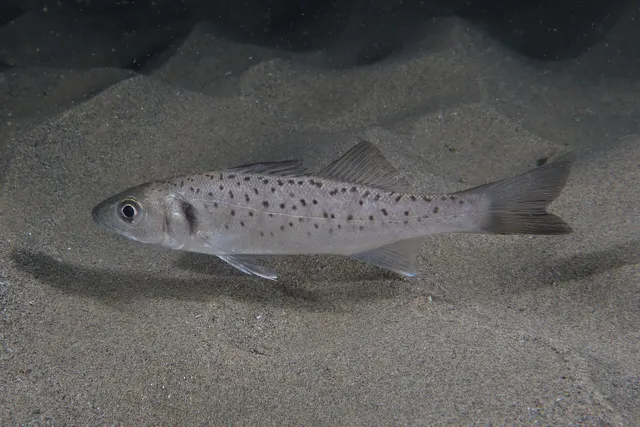 European sea bassRepeatedly reported10 places · 3 fishery accounts · 1 sourceThe Ria Formosa, Praia da Rocha, Portimão, The Alvor estuary, Praia de Quarteira and 6 moreOver beach, cliff coast, estuary, mole, surf beach, tidal channel
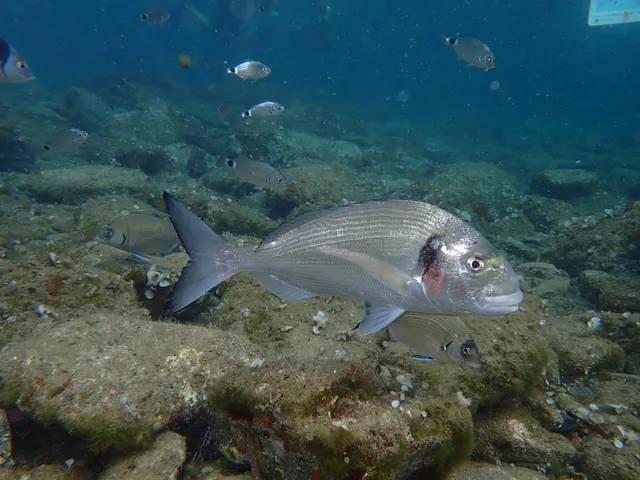 Gilthead breamRepeatedly reported8 places · 4 fishery accounts · 1 sourceThe Ria Formosa, Praia da Rocha, Portimão, The Alvor estuary, The Fuseta channel and 4 moreOver beach, estuary, surf beach, tidal channel
- White seabreamRepeatedly reported7 places · 4 fishery accounts · 1 sourceSagres and Cabo de São Vicente, Praia da Rocha, Portimão, Praia de Quarteira, The Vilamoura moles and 3 moreOver beach, cliff coast, headland, mole, surf beach
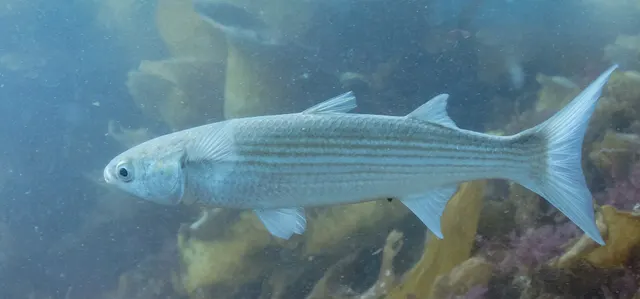 Flathead grey mulletRecorded here3 places · 1 fishery account · 1 sourceThe Ria Formosa, The Alvor estuary, The Fuseta channelOver estuary, tidal channel
- European squidRecorded here1 place · 1 fishery account · 1 sourceThe Vilamoura molesOver mole
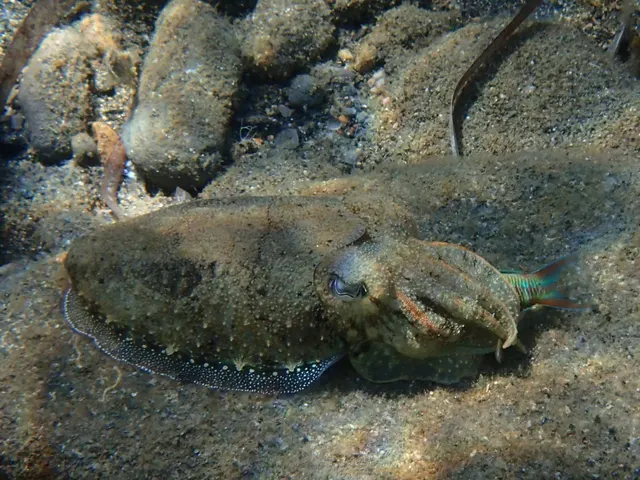 Common cuttlefishRecorded here5 placesThe Ria Formosa, Praia da Rocha, Portimão, The Alvor estuary, The Vilamoura moles and 1 moreOver beach, estuary, mole, tidal channel
Also documented from the shore: Common octopus · Common dentex · Common sole
From a boat · 7
- Atlantic bluefin tunaRepeatedly reported1 place · 1 fishery account · 1 sourceThe Algarve offshore groundsOver sea areaSources name Trolling
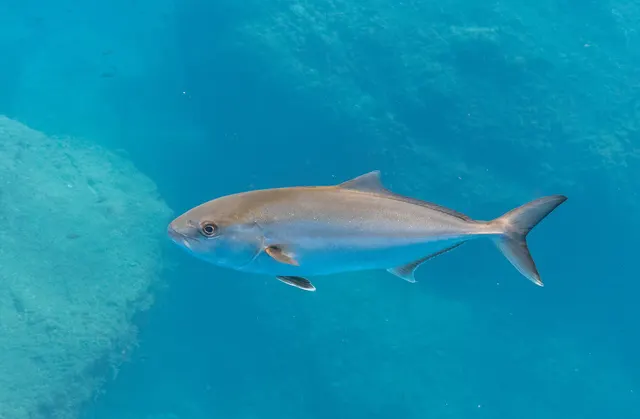 Greater amberjackRecorded here2 places · 1 fishery account · 1 sourceSagres and Cabo de São Vicente, The Algarve offshore groundsOver headland, sea area
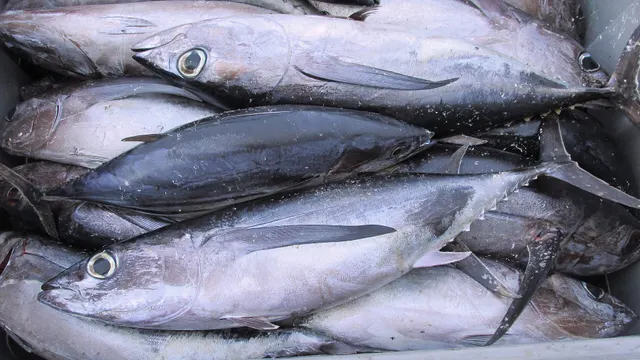 AlbacoreRecorded here1 place · 1 fishery account · 1 sourceThe Algarve offshore groundsOver sea area
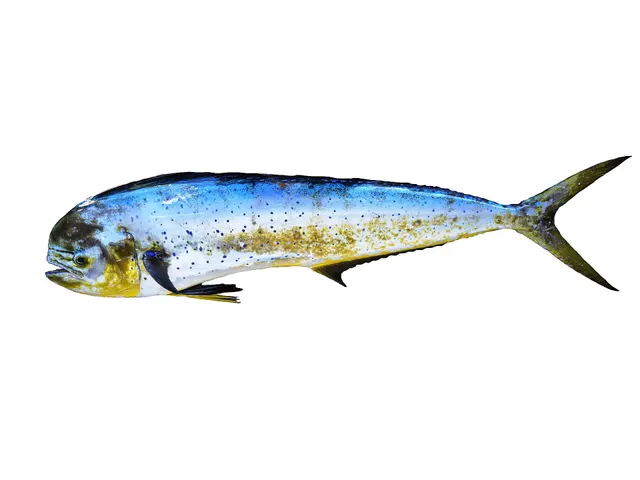 Mahi-mahiRecorded here1 place · 1 fishery account · 1 sourceThe Algarve offshore groundsOver sea area
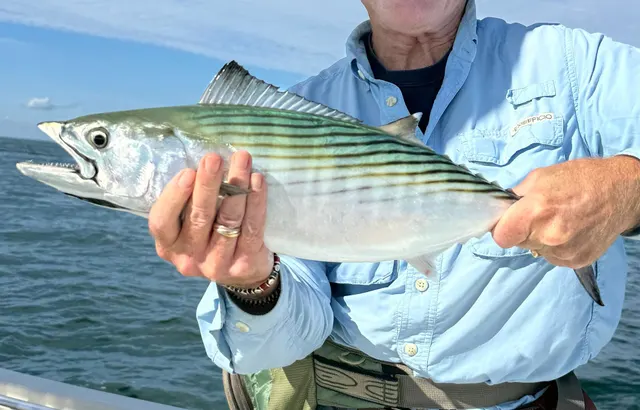 Atlantic bonitoRecorded here2 placesSagres and Cabo de São Vicente, The Algarve offshore groundsOver headland, sea area
- Blue sharkRecorded here1 placeThe Algarve offshore groundsOver sea area
Also documented from a boat: Common dentex
On a charter · 8
- Atlantic blue marlinSeasonal1 place · 1 fishery account · 1 sourceThe Picos HerminiosOver offshore bankAround Jul–Oct
- Atlantic bluefin tunaRepeatedly reported2 places · 2 fishery accounts · 1 sourceThe Algarve offshore grounds, The Picos HerminiosOver offshore bank, sea areaSources name Trolling
- AlbacoreRecorded here2 places · 1 fishery account · 1 sourceThe Algarve offshore grounds, The Picos HerminiosOver offshore bank, sea area
- Greater amberjackRecorded here1 place · 1 fishery account · 1 sourceThe Algarve offshore groundsOver sea area
- Mahi-mahiRecorded here1 place · 1 fishery account · 1 sourceThe Algarve offshore groundsOver sea area
- SwordfishRecorded here1 place · 1 fishery account · 1 sourceThe Picos HerminiosOver offshore bank
Also documented on a charter: Blue shark · Atlantic bonito
Spearfishing · 4
- White seabreamRepeatedly reported2 places · 1 fishery account · 1 sourceSagres and Cabo de São Vicente, The Albufeira cliffs and covesOver cliff coast, headland
- Common octopusRecorded here2 placesSagres and Cabo de São Vicente, The Albufeira cliffs and covesOver cliff coast, headland
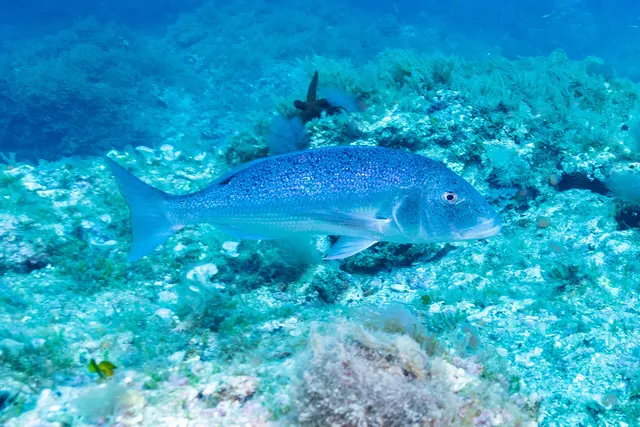 Common dentexRecorded here1 placeSagres and Cabo de São VicenteOver headland
- Greater amberjackRecorded here1 placeSagres and Cabo de São VicenteOver headland
What these strengths mean
- Seasonal
- Well supported, and concentrated in part of the year rather than spread through it.
- Repeatedly reported
- Several independent public accounts. Enough to say it happens more than once; not enough to call it a fishery.
- Recorded here
- At least one credible public account of this species being caught here. That is all it means.
- How breadth is counted
- A fish documented at six marks is shown as six marks: breadth never raises the strength on its own. A fishery account describes the fishing; a recorded catch reports one specific catch. How evidence is weighed.
How people fish here
10 methods are recorded on the places documented here, counted from the records themselves rather than from what is practised in the country. Each opens a full guide to the technique.
Float fishing
Recorded at 15 places here, over beach, estuary, headland, surf beach.
Suspending a bait at a controlled depth beneath a buoyant indicator — the most visual, most controllable and most widely applicable method in angling.
Documented on the same ground: European sea bass, Gilthead bream, White seabream, Atlantic bonito, Common cuttlefish, Common dentex.
Ledgering
Recorded at 12 places here, over beach, estuary, surf beach, cliff coast.
Fishing a bait on the bottom held by a weight, with no float — the simplest way to fish at distance, in depth, or in wind.
Documented on the same ground: European sea bass, Gilthead bream, White seabream, Common cuttlefish, Common octopus, Common sole.
Spinning
Recorded at 12 places here, over beach, estuary, headland, surf beach.
Casting an artificial lure and retrieving it so that it moves like something alive — the most direct form of lure fishing.
Documented on the same ground: European sea bass, Gilthead bream, White seabream, Atlantic bonito, Common cuttlefish, Common dentex.
Shore diving
Recorded at 3 places here, over headland, harbour wall.
Entering and leaving the water from land under your own power — the most accessible spearfishing and the one where the entry and exit are the dangerous part.
Documented on the same ground: White seabream, Atlantic bonito, Common dentex, Common octopus, Greater amberjack.
Deadbaiting
Recorded at 2 places here, over offshore bank, sea area.
Presenting a dead fish as bait for predators — a method that works because scavenging is normal predator behaviour, not an exception.
Documented on the same ground: Atlantic blue marlin, Atlantic bluefin tuna, Albacore, Atlantic bonito, Blue shark, Greater amberjack.
Kayak fishing
Recorded at 2 places here, over estuary.
A platform rather than a technique: quiet, shallow-draught access to water no other craft reaches, bought at the price of exposure, and a discipline where the decision not to launch is part of the skill.
Documented on the same ground: European sea bass, Gilthead bream, Common cuttlefish, Common sole, Flathead grey mullet.
Surfcasting
Recorded at 2 places here, over headland.
Casting heavy baited tackle from a beach into surf — a method defined by distance, by tide, and by reading water that all looks the same.
Trolling
Recorded at 2 places here, over offshore bank, sea area.
Towing lures or baits behind a moving boat to cover large volumes of water and locate scattered fish.
Documented on the same ground: Atlantic blue marlin, Atlantic bluefin tuna, Albacore, Atlantic bonito, Blue shark, Greater amberjack.
Eging
Recorded at 1 place here, over mole.
Jigging for squid and cuttlefish with a barbed, weighted lure worked in lifts and pauses — a Japanese discipline with its own tackle, vocabulary and competitive scene.
Documented on the same ground: White seabream, Common cuttlefish, European sea bass, European squid.
1 further method is recorded at one or two places each: Jigging.
These are the methods documented at the places FishingHQ holds here. A species listed beside a method is documented on the same ground, which is not the same as being taken that way — where a source establishes the method a fish was caught on, it is stated on that place’s own page. All fishing methods.
What dominates
Surfcasting from the long Atlantic beaches for bass, seabream, meagre and flatfish. Rock and cliff fishing along the exposed coast, which is a serious and locally traditional discipline. Boat and charter fishing where harbours allow, including offshore tuna and big-game fishing off Madeira and the Azores under separate island frameworks. Squid and cuttlefish fishing, and octopus potting, both culturally central. Spearfishing on the rocky coast and in the Algarve, separately licensed. Shore gathering of shellfish and percebes, the latter a genuinely hazardous professional practice. Reservoir fishing inland, largely for introduced predators.
The water available
Long exposed surf beaches backed by dunes; high cliffs and wave-cut rock platforms, particularly on the west coast and around Cape St Vincent; a small number of river mouths and estuaries including the Tagus, Sado and Douro; sheltered warm-water coast and lagoon systems along the Algarve, including the Ria Formosa; offshore shelf water under seasonal upwelling; and inland, large reservoirs on the major river systems.
How the rules are structured
Recreational sea fishing is administered nationally by the fisheries and maritime authority, with licences required for shore, boat and underwater fishing as separate categories, and with minimum sizes, daily limits and gear restrictions applying. Underwater fishing carries its own licence and its own conditions. Shellfish gathering is separately regulated and is subject to sanitary classification and biotoxin closure of specific grounds. Marine protected areas, including the Ria Formosa and the south-west coast natural park, carry their own rules. Inland fishing is licensed separately again through the forestry and conservation authority, with seasons and species rules that differ from the marine framework, and several native Iberian cyprinids carry protection. The autonomous regions of Madeira and the Azores administer their own arrangements. FishingHQ does not state what any current rule is.
Who to ask
- The Direção-Geral de Recursos Naturais, Segurança e Serviços Marítimos, for recreational sea fishing and underwater fishing licensing.
- The Instituto da Conservação da Natureza e das Florestas, for inland fishing licences, seasons and protected freshwater species.
- The Instituto Português do Mar e da Atmosfera, for shellfish ground classification and biotoxin monitoring.
- The managing body of the relevant marine protected area or natural park, including the Ria Formosa and the south-west coast.
- The regional government of Madeira or the Azores for fishing in those autonomous regions, which is administered separately.
Words you will meet
- Polvo
- Octopus. Central to Portuguese fishing and cooking, taken principally in pots and traps, and one of the most economically important species landed in the country.
- Bacalhau
- Salt cod, the national dish. Historically fished on the Grand Banks and off Newfoundland by Portuguese fleets and salted for the voyage — never a fish of Portuguese waters.
- Percebes
- Goose barnacles, gathered from wave-exposed rock in the surge zone. Highly valued, and the gathering is among the most dangerous shore work in Europe.
- Ria Formosa
- The barrier-island lagoon system along the eastern Algarve — a sheltered complex of channels, sand islands and salt marsh that functions as nursery habitat and supports extensive shellfish culture.
- Robalo
- European sea bass, and the principal recreational target of the Portuguese shore fishery.
Conditions and hazards
Exposure is the defining hazard and it applies along almost the whole west coast. Long-period Atlantic swell arrives independently of local wind, so a windless sunny day can carry heavy breaking sets onto shoaling ground and onto the low rock platforms that shore anglers use. Being swept from rock is the characteristic accident on this coast and it has a substantial casualty record. The cliffs are high, friable in places, and the paths to fishing platforms are frequently unofficial and unmaintained. Rip currents on the long surf beaches are strong and persistent. Percebes gathering in the surge zone is professional work that kills people regularly and is not something a visitor should attempt. The Algarve's sheltered lagoon systems are the exception to all of this and are correspondingly benign. Water temperature is cool on the west coast year-round despite the air temperature, because the upwelling that makes the coast productive also makes it cold.
Why octopus is the country's fishery, and what a pot fishery actually is
A guide that describes Portugal without describing octopus has described somewhere else. This is the clearest national case in Europe of a cephalopod being the central catch rather than a supporting one.
THE SCALE IS THE POINT. Octopus is among the most valuable species landed in Portugal, the small-scale fleet that targets it operates from harbours along the entire coast, and domestic consumption absorbs a large share of it. Where a British reader would expect cod or bass to anchor a national fishing culture, here it is a mollusc.
THE METHOD FOLLOWS THE ANIMAL'S BEHAVIOUR EXACTLY. Octopus are central-place foragers that occupy a den and return to it, and they will readily enter any dark enclosed space. So the gear is a pot, a trap or — traditionally — an unbaited clay pot or shell strung on a line and dropped on hard ground. The animal moves in because it is looking for a den, not because it is looking for food, which is why the traditional gear needs no bait at all. That is an unusually direct translation of an animal's behaviour into a fishing method, and it is the same logic that makes a lobster pot work.
THE ALENTEJO AND ALGARVE FISHERY IS SMALL-SCALE AND LOCALLY MANAGED, worked from open boats within a short distance of harbour, and it is subject to size limits, closed periods and gear restrictions that change. Recreational taking of octopus is separately governed and is not the same activity.
AND CEPHALOPOD FISHING IS NOT ONLY COMMERCIAL. Squid and cuttlefish are taken recreationally from harbour walls, quaysides and boats along the coast, principally after dark, using jigs — the practice FishingHQ holds as eging. Cuttlefish come inshore into shallow water in the warmer months to spawn and are taken then; squid availability shifts with water temperature rather than with the calendar.
WHAT THIS SECTION IS DOING, EXPLICITLY. an earlier pass found that FishingHQ had modelled catch as finfish and nothing else, and corrected it. Geography is the place where that correction is easiest to lose, because a place page written by somebody thinking about fish will describe fish. Portugal is the test case for whether it held.
What experienced anglers do — why, and the sources (2)
Widely and independently recommended by experienced anglers and specialist sources. This is real angling knowledge, not proof: controlled evidence for it is limited, and FishingHQ records it as convention rather than as a demonstrated effect.
- Fishers' Craft and Lettered Art: Tracts on Fishing from the End of the Middle Ages — University of Toronto Press, 1997 (Scientific literature)Relied on for: That fishing traditions develop around the water and fish available to them, and the historical method of reading such traditions.States this directlyCitation checked — the work exists and is described correctly
- Words of the Lagoon: Fishing and Marine Lore in the Palau District of Micronesia — University of California Press, Berkeley, 1981 (Reference work)Relied on for: That local fishing practice encodes detailed knowledge of fish and conditions, and that the practice is frequently the record of the ecology.Background and mechanism onlyCitation checked — the work exists and is described correctly
An exposed coast, and what that does to where people fish
Almost every distinctive feature of Portuguese shore fishing follows from one fact: the west coast has very little shelter, and the Atlantic reaches it undiminished.
SWELL IS THE GOVERNING VARIABLE. Long-period ground swell generated by depressions far out in the Atlantic arrives regardless of local conditions, and it breaks heavily on a coast that shoals steeply in places and gently in others. A calm, windless, sunny morning with a three-metre swell running is an ordinary Portuguese condition and it is not a fishing day on exposed ground. The forecast that matters is wave height, period and direction — and period is the one visitors ignore, because a long-period swell carries far more energy than the same height at a short period.
THE FISHING ADAPTS TO IT IN THREE WAYS. Beach fishing concentrates where the beach profile and the bar system allow a bait to be held and where the wash is workable rather than where the map suggests. Rock fishing happens from platforms whose usability is decided set by set, and the local knowledge that matters most is which platforms are safe at which swell, which is not written down anywhere and is not something a visitor can acquire quickly. And boat fishing is constrained by harbour access: with few natural harbours and river bars that break in swell, whether a boat goes out is frequently decided by whether it can get back in.
THE ALGARVE IS THE EXCEPTION AND IT IS WHY IT DEVELOPED AS IT DID. East of Cape St Vincent the coast turns and is sheltered from the prevailing north-westerly swell, the water is warmer and clearer, and the Ria Formosa provides a large sheltered lagoon system behind barrier islands. That combination supports small-boat fishing, kayak fishing and shore gathering in conditions the west coast rarely offers, and it is the part of the country most accessible to a visiting angler without local knowledge.
AND THE HAZARD IS NOT ABSTRACT. Being swept from a rock platform by a set wave is the characteristic fatal accident on this coast, and it happens to people who have been fishing comfortably for an hour. The mechanism is the same everywhere Atlantic swell meets low rock: sets are irregular, the largest wave in a set is substantially bigger than those before it, and the water that arrives has crossed an ocean to get there.
Official guidance — why, and the sources (2)
Stated by a fisheries authority, scientific institute or recognised angling body. Authoritative, but summarising rather than demonstrating.
- RNLI water safety guidance: cold water shock and Float to Live — Royal National Lifeboat Institution (Water-safety or diver-training authority)Relied on for: Cold water shock and the immersion response, tidal cut-off, shore angling hazards and small-craft guidance.States this directlyPassage read and verified
- United States Lifesaving Association public education on rip currents and the surf zone — United States Lifesaving Association (Water-safety or diver-training authority)Relied on for: Surf zone hazards, rip current formation and behaviour, and public guidance on shore-break and steep-beach hazards.States this directlyCitation checked — the work exists and is described correctly
A country whose national dish comes from another ocean
Portuguese fishing culture is unusually intense and contains at least one genuine paradox worth explaining.
SEAFOOD CONSUMPTION HERE IS AMONG THE HIGHEST IN EUROPE, and it is not a niche interest: fish is an everyday food across the country, the variety eaten is wide, and the relationship between the fishery and the table is direct.
THE NATIONAL DISH IS A FISH FROM THREE THOUSAND KILOMETRES AWAY. Bacalhau — salt cod — was fished on the Grand Banks and off Newfoundland by Portuguese fleets for centuries and salted for the voyage home. A food culture built entirely around a fish that has never lived in Portuguese water is a good demonstration that culinary geography and fishing geography are different maps.
SHORE ANGLING IS A MAINSTREAM PURSUIT with a serious competitive structure, practised from beach and from cliff on a coast that makes both demanding.
THE PERCEBEIROS OCCUPY A PARTICULAR PLACE. Goose barnacle gathering from the surge zone is licensed professional work with a real fatality record, and it is regarded locally with the mixture of respect and grief that dangerous trades attract.
CEPHALOPODS ARE AN ORDINARY CATCH. Squid, cuttlefish and octopus are everyday food and everyday targets, which is why eging and octopus potting are mainstream here rather than specialist.
THE ISLANDS ARE A SEPARATE CULTURE. Madeira and the Azores have their own maritime traditions, their own big-game history and their own administration, and treating them as extensions of the mainland misdescribes both.
AND THE SEA IS RESPECTED FOR GOOD REASON. This is an exposed Atlantic coast with a substantial record of anglers swept from rock, and the local caution around swell is earned rather than temperamental.
What experienced anglers do — why, and the sources (2)
Widely and independently recommended by experienced anglers and specialist sources. This is real angling knowledge, not proof: controlled evidence for it is limited, and FishingHQ records it as convention rather than as a demonstrated effect.
- General angling website restatements of established technique — Various (Credible secondary source)Relied on for: Widely restated practice associating this discipline or technique with this place, recorded as practitioner consensus rather than as tested fact.Background and mechanism onlyCitation checked — the work exists and is described correctly
- Fishers' Craft and Lettered Art: Tracts on Fishing from the End of the Middle Ages — University of Toronto Press, 1997 (Scientific literature)Relied on for: That fishing traditions develop around the water and fish available to them, and the historical method of reading such traditions from their documentary record.States this directlyCitation checked — the work exists and is described correctly
Surfcasting, rock fishing and the octopus pot
Portugal's disciplines follow from a long exposed coast with few harbours and a food culture built on cephalopods.
SURFCASTING IS THE PRINCIPAL SHORE DISCIPLINE. Long beaches receiving Atlantic swell demand distance, heavy leads and strong tackle, and the target list — bass, seabream, meagre, flatfish — rewards it. There is a substantial competitive surfcasting scene.
ROCK AND CLIFF FISHING IS THE OTHER HALF, worked from wave-cut platforms and cliff ledges with deep water close in, for seabream, bass and pelagics. It is a serious local tradition and it is where the coast's fatal accidents happen.
OCTOPUS POTTING IS THE CHARACTERISTIC SMALL-BOAT COMMERCIAL FISHERY. Pots, traps and traditional unbaited clay vessels set on hard ground exploit the animal's search for a den, and it is among the most valuable fisheries in the country.
EGING AND CEPHALOPOD FISHING ARE MAINSTREAM RECREATIONALLY, worked from quaysides, harbour walls and boats, mostly after dark, and the tackle is ordinary stock rather than specialist import.
BOAT AND CHARTER FISHING OPERATES WHERE HARBOURS ALLOW, and offshore big-game fishing from Madeira and the Azores is internationally significant.
SPEARFISHING IS WELL ESTABLISHED on the rocky coast and separately licensed.
SHORE GATHERING FOR SHELLFISH AND PERCEBES is licensed and, in the case of goose barnacles, professional and dangerous.
AND RESERVOIR FISHING IS THE INLAND DISCIPLINE, for introduced largemouth bass, pike, carp and catfish on the impoundments of the major river systems, which is a wholly different activity from the coastal one.
What experienced anglers do — why, and the sources (2)
Widely and independently recommended by experienced anglers and specialist sources. This is real angling knowledge, not proof: controlled evidence for it is limited, and FishingHQ records it as convention rather than as a demonstrated effect.
- General angling website restatements of established technique — Various (Credible secondary source)Relied on for: Widely restated practice associating this discipline or technique with this place, recorded as practitioner consensus rather than as tested fact.Background and mechanism onlyCitation checked — the work exists and is described correctly
- Fishers' Craft and Lettered Art: Tracts on Fishing from the End of the Middle Ages — University of Toronto Press, 1997 (Scientific literature)Relied on for: That fishing traditions develop around the water and fish available to them, and the historical method of reading such traditions from their documentary record.States this directlyCitation checked — the work exists and is described correctly
A coast where swell decides the season
Portugal's fishing calendar is governed by Atlantic swell and by the upwelling that makes the coast productive.
THE UPWELLING SEASON RUNS THROUGH THE WARMER MONTHS. Northerly winds drive cold nutrient-rich water to the surface along the west coast, producing the sardine, mackerel, horse mackerel and anchovy biomass the country's fisheries and food culture rest on. It also keeps the water genuinely cold in summer.
SUMMER IS THE SETTLED PERIOD FOR SHORE FISHING, with smaller swell, longer days and the pelagic species inshore. The Algarve is at its warmest and calmest and the west coast at its most workable.
AUTUMN IS THE BEST GENERAL SEASON. Warm water, feeding fish, and the first swells of the season stirring the ground without shutting it down.
WINTER IS SWELL SEASON AND IT DOMINATES. Atlantic depressions send long-period ground swell onto a coast with almost no shelter, and shore fishing on exposed rock becomes genuinely dangerous. Whether a mark is fishable is a swell question rather than a wind one, and periods of days are lost.
CUTTLEFISH COME INSHORE TO SPAWN IN THE WARMER MONTHS, which is when the recreational cephalopod fishing peaks; squid availability shifts with water temperature rather than with the calendar.
THE ALGARVE IS THE YEAR-ROUND EXCEPTION, sheltered from the prevailing north-westerly swell, warmer and calmer, and it is the part of the country most reliably accessible to a visitor without local knowledge.
AND THE INLAND RESERVOIRS RUN A CONTINENTAL CALENDAR, with a hot dry summer that drops levels substantially and a spring and autumn that are the productive periods for the introduced predators.
Backed by research — why, and the sources (2)
Supported by peer-reviewed research or fisheries science. The sources are listed and can be checked.
- ICES Advice on fishing opportunities, catch and effort — International Council for the Exploration of the Sea (Scientific institute)Relied on for: Stock assessment, the environmental drivers of stock distribution and abundance, and the scientific basis for advice in the sea areas concerned.States this directlyCitation checked — the work exists and is described correctly
- FishBase: a global information system on fishes — Froese, R. and D. Pauly, eds. — FishBase Consortium (Scientific institute)Relied on for: Distribution, temperature tolerance, migratory behaviour and habitat association of the species concerned.Background and mechanism onlyPassage read and verified
Two licences, two ministries and an island exception
Portugal's regulatory structure separates marine from inland fishing more sharply than a British reader expects.
RECREATIONAL SEA FISHING IS LICENSED NATIONALLY, with separate categories for shore, boat and underwater fishing, administered by the maritime and fisheries authority. Minimum sizes, daily limits and gear restrictions apply, and underwater fishing carries its own conditions.
INLAND FISHING IS LICENSED SEPARATELY AGAIN through the conservation and forestry authority, with different seasons, species rules and permitted methods from the marine framework. A person fishing a reservoir and a person fishing a beach are operating under different ministries.
SHELLFISH GATHERING IS SEPARATELY REGULATED AND SEPARATELY POLICED, subject to sanitary classification of the ground and to biotoxin monitoring by the marine and atmospheric institute. That regime closes specific grounds regardless of what any fisheries rule says, and it exists for public health.
PERCEBES GATHERING IS LICENSED PROFESSIONAL WORK, with defined areas and quotas, and it is not open to visitors.
MARINE PROTECTED AREAS AND NATURAL PARKS carry their own rules, including the Ria Formosa lagoon system and the south-west coast park, and their managing bodies rather than the fisheries authority decide what happens inside them.
THE AUTONOMOUS REGIONS ADMINISTER THEIR OWN ARRANGEMENTS. Madeira and the Azores set their own fishing rules, and a mainland licence does not simply carry across.
SEVERAL NATIVE IBERIAN CYPRINIDS CARRY PROTECTION in the inland waters, which is a conservation constraint an angler targeting introduced predators may not expect.
AND FISHINGHQ DOES NOT STATE WHAT ANY OF THIS CURRENTLY PERMITS.
Official guidance — why, and the sources (2)
Stated by a fisheries authority, scientific institute or recognised angling body. Authoritative, but summarising rather than demonstrating.
- Code of Conduct for Responsible Fisheries — Food and Agriculture Organization of the United Nations, Rome, 1995 (Standards body)Relied on for: Principles for the management of fisheries, including licensing, closed seasons, size limits and the treatment of small-scale and shared stocks.States this directlyCitation checked — the work exists and is described correctly
- Good Fish Guide — Marine Conservation Society (Conservation authority)Relied on for: Assessment of fisheries and the management measures applied to them, including the instruments used and their purpose.Background and mechanism onlyCitation checked — the work exists and is described correctly
Polvo, percebes, robalo: a vocabulary of what gets eaten
Portuguese fishing vocabulary is food vocabulary as much as tackle vocabulary, which tells you what the fishery is for.
POLVO NAMES OCTOPUS and it is among the most important words in Portuguese fishing. The pot fishery that supplies it is one of the country's most valuable, and the animal's centrality to both the fishery and the table is the single clearest illustration in Europe that catch is not only finfish.
BACALHAU NAMES SALT COD, the national dish, historically fished thousands of kilometres away and salted for the voyage. A word for a preserved fish rather than a living one, and it is arguably the most culturally loaded fishing term in the country.
PERCEBES NAMES GOOSE BARNACLES, gathered from the surge zone on wave-exposed rock. The word carries the danger with it: percebeiro is a profession with a fatality record.
ROBALO NAMES EUROPEAN SEA BASS, the principal recreational shore target, and the word a visitor will hear most often on a beach.
DOURADA NAMES GILTHEAD BREAM, and the seabreams generally have a rich Portuguese vocabulary reflecting how many species are distinguished and eaten.
RIA FORMOSA NAMES THE BARRIER-ISLAND LAGOON SYSTEM of the eastern Algarve — a sheltered complex of channels, sand islands and salt marsh functioning as nursery habitat and supporting extensive shellfish culture — and it is a proper name that behaves like a habitat term.
AND CHOCO NAMES CUTTLEFISH, which comes inshore to spawn in the warmer months and is taken on jigs from harbour walls and boats in an ordinary rather than a specialist practice.
What experienced anglers do — why, and the sources (2)
Widely and independently recommended by experienced anglers and specialist sources. This is real angling knowledge, not proof: controlled evidence for it is limited, and FishingHQ records it as convention rather than as a demonstrated effect.
- General angling website restatements of established technique — Various (Credible secondary source)Relied on for: Widely restated practice associating this discipline or technique with this place, recorded as practitioner consensus rather than as tested fact.Background and mechanism onlyCitation checked — the work exists and is described correctly
- Fishers' Craft and Lettered Art: Tracts on Fishing from the End of the Middle Ages — University of Toronto Press, 1997 (Scientific literature)Relied on for: That fishing traditions develop around the water and fish available to them, and the historical method of reading such traditions from their documentary record.States this directlyCitation checked — the work exists and is described correctly
Grand Banks cod, sardine canning and a coast that turned to tourism
Portugal's fishing history is a maritime history, and it runs further offshore than almost any other European country's.
THE COD FISHERY WAS AN OCEAN AWAY. Portuguese fleets fished the Grand Banks and the Newfoundland coast from the fifteenth century onwards, salting cod aboard for the voyage home, and the White Fleet of sailing dory schooners persisted into the twentieth century well after other nations had mechanised. It is one of the longest-running distant-water fisheries in history.
THE SARDINE AND CANNING INDUSTRY BUILT THE COASTAL TOWNS. Upwelling-driven sardine abundance supported a canning industry from the nineteenth century that industrialised the coast and shaped its ports, and the tinned fish culture that survives is a direct descendant.
TUNA TRAPS OPERATED ON THE ALGARVE COAST for centuries, intercepting migrating tuna in fixed net systems of the same family as the Mediterranean almadraba and tonnara. The fishery collapsed with the tuna stocks and the traps are gone.
THE OCTOPUS FISHERY IS OLD AND STILL CENTRAL, worked with pots and traditional clay vessels and now among the country's most valuable landings.
WHALING OPERATED FROM THE AZORES into the twentieth century, using open boats and hand harpoons, and its conversion into a whale-watching industry within a generation is one of the clearer examples anywhere of a hunting economy becoming a viewing one.
TOURISM TRANSFORMED THE ALGARVE from the mid-twentieth century, changing coastal access, land use and the relative economics of fishing along that coast substantially.
AND THE MIGRATORY FISH OF THE RIVERS declined under damming and abstraction, with shad, lamprey and eel populations much reduced, and restoration work now under way on several systems.
Official guidance — why, and the sources (2)
Stated by a fisheries authority, scientific institute or recognised angling body. Authoritative, but summarising rather than demonstrating.
- Fishers' Craft and Lettered Art: Tracts on Fishing from the End of the Middle Ages — University of Toronto Press, 1997 (Scientific literature)Relied on for: The historical development of European fishing practice, its transmission and its documentary record, including medieval and early modern fisheries.States this directlyCitation checked — the work exists and is described correctly
- Code of Conduct for Responsible Fisheries — Food and Agriculture Organization of the United Nations, Rome, 1995 (Standards body)Relied on for: Principles for fisheries management including the treatment of traditional, small-scale and shared fisheries, against which historical arrangements can be read.Background and mechanism onlyCitation checked — the work exists and is described correctly
Upwelling, canyons, and why this coast is cold, rich and dangerous
Three physical facts explain almost everything about fishing the Portuguese coast, and they are connected.
THE COAST FACES THE OPEN ATLANTIC WITH NO SHELTER. It runs nearly north-south into the prevailing swell direction for its whole mainland length. There is no shelf sea, no island chain and no headland system to break the fetch. Ocean swell generated by storms thousands of kilometres away arrives here having lost very little energy, which is why the water is rarely genuinely flat and why the rock fishing is what it is.
UPWELLING MAKES IT PRODUCTIVE AND COLD. In summer, northerly winds along this coast push surface water offshore, and cold, nutrient-rich water rises from depth to replace it. That is the mechanism behind the great eastern-boundary fisheries of the world — off Portugal, off north-west Africa, off California, off Peru — and it is why a coast at the latitude of the Mediterranean has cold water and enormous populations of sardine, mackerel and horse mackerel. It also explains the swimmer's surprise: the sea is markedly colder than the air on a hot day, because the hot day is what drove the wind that brought the cold water up.
SUBMARINE TOPOGRAPHY DECIDES WHERE THE ENERGY LANDS. Canyons cut into the shelf and approach the shore closely in places. A canyon refracts and focuses wave energy, concentrating it onto a small stretch of coast — which is the whole explanation for the extraordinary waves at Nazaré and is not unique to it. The general lesson is the useful one: on this coast, what the sea bed does immediately offshore matters more to conditions at a mark than the general forecast does, and two marks a kilometre apart can be entirely different propositions in the same swell.
Backed by research — why, and the sources (4)
Supported by peer-reviewed research or fisheries science. The sources are listed and can be checked.
- ICES Advice on fishing opportunities, catch and effort — International Council for the Exploration of the Sea (Scientific institute)Relied on for: Ecoregion description, stock distribution and status, nursery function and the hydrography of the European sea areas assessed, including the Baltic, the North Sea, the Celtic Seas and the Iberian and Biscay shelf.States this directlyCitation checked — the work exists and is described correctly
- FAO Species Identification Guides for Fishery Purposes and the FAO Species Catalogues — Food and Agriculture Organization of the United Nations (Scientific institute)Relied on for: Identification, distribution and habitat association of the fishes and invertebrates of the Mediterranean, the Black Sea and the eastern central Atlantic.States this directlyCitation checked — the work exists and is described correctly
- FishBase: a global information system on fishes — Froese, R. and D. Pauly, eds. — FishBase Consortium (Scientific institute)Relied on for: Recorded distribution, depth range, habitat association, size and biology of the species named.States this directlyPassage read and verified
- The IUCN Red List of Threatened Species — International Union for Conservation of Nature (Conservation authority)Relied on for: Current global and regional conservation assessment for the species named, with the assessment date.Background and mechanism onlyCitation checked — the work exists and is described correctly
Sets, not averages: the mechanism that takes anglers off these rocks
Portugal's rock-fishing casualty record is among the worst in Europe and the mechanism behind it is well understood, which means it is avoidable.
SWELL ARRIVES IN SETS, NOT AS AN AVERAGE. Ocean swell is not a uniform train of identical waves; it is a spectrum, and wave heights within it vary considerably. Periodically, component waves align and produce a set substantially larger than anything in the preceding minutes. That is the whole hazard. An angler watches a platform for twenty minutes, sees water that never reaches it, concludes the platform is dry, and is standing on it when the set arrives. Nothing about the twenty minutes was misleading in itself — the information was simply not sufficient, because the dangerous wave had not happened yet.
WHICH IS WHY THE ADVICE IS TO WATCH A FULL SET CYCLE and, honestly, to treat any assessment made in less than that as unreliable. Then: identify the escape route and how long it takes to use, wear a flotation aid rather than carry one, never fish an exposed platform alone, and treat a rising swell forecast as a reason to go somewhere else. A rising swell arrives before the wind that generated it, so it can look like calm weather.
WET ROCK REMOVES SELF-RECOVERY. Weed-covered sloping platforms give no grip, the water below is deep and moving, and exits are frequently vertical or non-existent for a long stretch. Somebody in the water beside a platform in swell is in a very bad position regardless of how well they swim.
AND THE WATER IS COLD ENOUGH TO INCAPACITATE, in summer as much as in winter, because upwelling keeps it that way. Cold water shock — the gasp, the loss of breathing control, the loss of swimming ability — decides the first minute.
THE SURF BEACHES ARE RIP-CURRENT BEACHES with a serious record. The rip is the calmer, darker, less-broken lane through the surf, and it takes an angler wading a trough exactly as readily as it takes a swimmer.
SPEARFISHING ADDS THE ONE THAT KILLS COMPETENT PEOPLE. Hypoxic blackout gives no warning symptoms, happens most often in the final metres of a surfacing ascent, and is survivable only if a partner is watching that specific diver at that specific moment. One-up-one-down direct supervision is the discipline's defining practice, and diving alone is the commonest fatality profile in the sport. FishingHQ publishes nothing designed to extend a breath-hold or increase a depth; that is a matter for a qualified instructor.
INLAND, THE RESERVOIRS DRAW DOWN and expose steep, unstable, deeply soft margins well below the vegetation line, which are much easier to walk out onto than to climb back up. And in the semi-arid south a summer storm falling on high ground can raise a river bed hours later and many kilometres downstream, under clear sky where somebody is standing.
Official guidance — why, and the sources (6)
Stated by a fisheries authority, scientific institute or recognised angling body. Authoritative, but summarising rather than demonstrating.
- Rock fishing safety and the declared lifejacket areas of New South Wales — NSW Department of Primary Industries and Surf Life Saving NSW (Water-safety or diver-training authority)Relied on for: Rock-platform fishing hazards, the mechanism by which anglers are swept from platforms by individual sets rather than by average conditions, and the measures that address it.States this directlyCitation checked — the work exists and is described correctly
- RNLI water safety guidance: cold water shock and Float to Live — Royal National Lifeboat Institution (Water-safety or diver-training authority)Relied on for: Cold water shock, immersion response and the advice to carry a means of calling for help on the person.States this directlyPassage read and verified
- RNLI water safety guidance: cold water shock and Float to Live — Royal National Lifeboat Institution (Water-safety or diver-training authority)Relied on for: Cold water shock and the immersion response, tidal cut-off, and water-safety guidance for shore anglers and small-craft users.States this directlyPassage read and verified
- Met Office shipping forecast, inshore waters forecast and marine warnings — Met Office, United Kingdom (Government fisheries body)Relied on for: That inshore waters forecasts, sea state and swell are the operative inputs for shore and small-craft decisions in north-west European waters.States this directlyCitation checked — the work exists and is described correctly
- DAN guidance on freediving safety, hypoxia and shallow-water blackout — Divers Alert Network (Water-safety or diver-training authority)Relied on for: Hypoxic blackout in breath-hold diving, its absence of warning symptoms, and the direct supervision practice that addresses it.States this directlyPassage read and verified
- AIDA International freediving education and safety standards — AIDA International (Water-safety or diver-training authority)Relied on for: Freediving training and safety standards including one-up-one-down direct supervision and surface interval practice.States this directlyCitation checked — the work exists and is described correctly
Some of what lives here
Fish recorded here that FishingHQ holds a reviewed photograph of. It is not a complete list of what Portugal holds, and it is not a prediction that you will catch any of them — it is a way in to the ones we can show you.
- European sea bassA fast, predatory inshore fish that hunts in broken water and surf, and one of the most closely managed recreational species in European seas.
Julien Renoult — CC BY 4.0, via Wikimedia Commons
- Gilthead breamThe Mediterranean's most prized sea bream, marked by a golden band between the eyes, with a jaw powerful enough to crush shellfish and a range now expanding northward.
jujurenoult — CC BY 4.0, via Wikimedia Commons
- Common cuttlefishA bottom-oriented cephalopod with an internal buoyancy shell, the best-studied invertebrate mind in the sea, and a fishery that works quite differently from squid.
Katerina Kalogerini — CC BY, via iNaturalist
- Flathead grey mulletThe most widely distributed mullet in the world, found on almost every warm and temperate coast, and a detritus feeder with a gizzard-like stomach.
Diego Delso, CC BY-SA 4.0, via Wikimedia Commons
- Atlantic bonitoA small, fast, striped tuna relative that arrives on temperate coasts in shoals each year and is the most accessible member of the family to a shore angler.
ricofish — CC0, via Wikimedia Commons
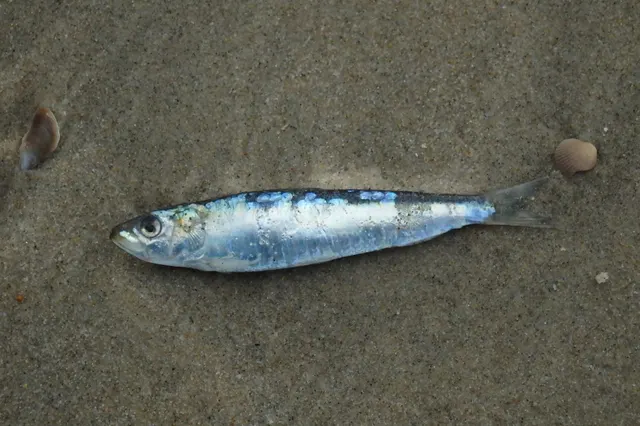 European sardineThe small silver fish that upwelling coasts produce in millions — the same species as a Cornish pilchard, the foundation of the Moroccan and Iberian fisheries, and the forage base almost every predator on those coasts depends on.
Duarte Frade — CC BY, via iNaturalist
Places within this area
Publicly documented fishing geography. FishingHQ describes what the ground is; it does not say whether you may fish it, and every one of these sends that question to the body that holds the answer. Browse every place in this part of the world.
Who to ask before fishing any of these
FishingHQ does not know the current access position here. Recreational sea fishing in mainland Portugal is licensed by the state, with separate categories for shore, boat and underwater fishing and separate arrangements again for shellfish gathering, and with quantity, size and species measures alongside. Licences, measures and closures change. Check the current position with the national fisheries directorate and with the local maritime authority before going.
FishingHQ does not know the current access position here. Recreational sea fishing in mainland Portugal is licensed by the state, with separate categories for shore, boat and underwater fishing and separate arrangements again for shellfish gathering, and with quantity, size and species measures alongside. Licences, measures and closures change. Check the current position with the national fisheries directorate and with the local maritime authority before going. This water is tidal and transitional, so the freshwater regime may also apply above the tidal limit: FishingHQ does not know the current access position here. Inland fishing in mainland Portugal is licensed by the state nature-conservation authority, and many waters are additionally classified as concessions or reserves requiring their own permit. Seasons, methods and classifications change. Check with the Institute for Nature Conservation and Forests and with whoever holds the concession before going.
Peniche and Baleal
Headland · Salt water
A limestone peninsula projecting west from the Estremadura coast, joined to the mainland by a low isthmus, with cliffs and wave-cut ledges on the seaward side, a working fishing harbour on the south and sand beaches on both flanks of the isthmus.
The peninsula's two sides face opposite ways, so one is almost always fishable — which is the practical reason the position matters on a coast this exposed.
Particular to this ground: cliffs and rock platforms.
Severe hazards of Portugal apply here: moving water and currents.
Particular to this water: This is an owned and operated structure. Whether angling is allowed on it, when, from where and on what terms is the operator's decision, is frequently seasonal, and changes without notice. Underwater fishing is licensed and regulated separately from rod fishing throughout this jurisdiction, with its own age, equipment and distance requirements, and holding a rod licence is not permission to spearfish.
Cabo da Roca and Guincho
Headland · Salt water
The westernmost point of continental Europe: a granite and limestone headland falling in high cliffs to the Atlantic, with the exposed sand beach of Guincho immediately north of it and reef and boulder ground below the cliffs.
Fully exposed to Atlantic swell and to a persistent summer northerly that funnels down this coast and makes casting into it a defining problem.
Particular to this ground: cliffs and rock platforms, cold water shock.
Severe hazards of Portugal apply here: moving water and currents.
Sesimbra and Cabo Espichel
Harbour wall · Salt water
A working fishing harbour under the limestone wall of the Arrábida range, sheltered from the north, with quay walls, deep water close in, and the exposed cliffs and platforms of Cabo Espichel a few kilometres west.
The harbour is sheltered by the mountain behind it; the cape west of it is fully exposed and a different proposition entirely.
Severe hazards of Portugal apply here: cliffs and rock platforms, moving water and currents.
Particular to this water: This is an owned and operated structure. Whether angling is allowed on it, when, from where and on what terms is the operator's decision, is frequently seasonal, and changes without notice. This ground lies in or beside a marine protected area whose zoning constrains fishing, diving, anchoring and collection independently of any licence, with rules that differ between zones and boundaries that are not visible from the water.
The Ria Formosa
Estuary · Brackish water
A barrier-island lagoon system running some sixty kilometres along the Algarve coast, with sand islands and spits enclosing a maze of shallow channels, salt marsh, drying mud and sand flats, and extensive clam and oyster ground.
Almost entirely sheltered inside the barrier, with the seaward beaches taking the Atlantic directly.
Particular to this ground: tides and being cut off.
Severe hazards of Portugal apply here: cliffs and rock platforms, moving water and currents.
Particular to this water: Shellfish harvesting areas are classified for food safety and are opened and closed on monitoring results a gatherer cannot see. Neither cooking nor appearance removes a biotoxin. Check the current classification with the responsible authority before taking anything. This ground lies in or beside a marine protected area whose zoning constrains fishing, diving, anchoring and collection independently of any licence, with rules that differ between zones and boundaries that are not visible from the water.
Sagres and Cabo de São Vicente
Headland · Salt water
The south-western corner of continental Europe: flat-topped limestone plateaux ending in sheer cliffs of a hundred metres and more, with deep water immediately below, ledges at the cliff foot in a few places and a working harbour tucked in behind the point.
Two coasts meet here — the west coast taking full Atlantic swell and the south coast comparatively sheltered — so the corner is fishable in almost any weather by moving round it.
Particular to this ground: cliffs and rock platforms, sun, dehydration and fatigue.
Severe hazards of Portugal apply here: moving water and currents.
Particular to this water: Underwater fishing is licensed and regulated separately from rod fishing throughout this jurisdiction, with its own age, equipment and distance requirements, and holding a rod licence is not permission to spearfish.
The Tagus estuary
Estuary · Brackish water
One of the largest estuaries in western Europe: a narrow deep entrance past Lisbon opening into a wide shallow basin with extensive mud and sand flats, salt marsh and reclaimed land, and a working commercial port throughout.
Severe hazards of Portugal apply here: cliffs and rock platforms, moving water and currents.
Particular to this water: This is working water-management or navigation infrastructure, operated to a schedule set by its authority rather than by anything happening in the fishing, and access to it is that authority's decision. This ground lies in or beside a marine protected area whose zoning constrains fishing, diving, anchoring and collection independently of any licence, with rules that differ between zones and boundaries that are not visible from the water.
Praia da Rocha, Portimão
Beach · Salt water
A long south-facing sand beach under ochre cliffs at the mouth of the Arade, with the eastern mole of Portimão harbour closing its western end and rock stacks standing off the sand.
South-facing and sheltered from the prevailing north-westerlies by the landmass.
Particular to this ground: sun, dehydration and fatigue, boat traffic and being seen.
Severe hazards of Portugal apply here: cliffs and rock platforms, moving water and currents.
Particular to this water: Portugal requires a recreational sea fishing licence, and separate conditions apply to spearfishing and to shellfish gathering. Minimum sizes, bag limits and closed seasons are set nationally and change. Check the current requirements with the Portuguese fisheries authority before fishing.
The Alvor estuary
Estuary · Salt water
A shallow tidal lagoon and channel system behind a dune spit west of Portimão, with sandflats that dry over most of their area and a scoured channel running out through the training walls.
Sheltered. Fishable in weather that closes the open beaches.
Particular to this ground: sun, dehydration and fatigue.
Severe hazards of Portugal apply here: cliffs and rock platforms, moving water and currents.
Particular to this water: Portugal requires a recreational sea fishing licence, and separate conditions apply to spearfishing and to shellfish gathering. Minimum sizes, bag limits and closed seasons are set nationally and change. Check the current requirements with the Portuguese fisheries authority before fishing.
11 more places in this area
Praia de Quarteira
Beach · Salt water
A straight south-facing town beach east of Vilamoura, backed by promenade, with groynes along its length and clean sand between them.
South-facing and sheltered.
Particular to this ground: sun, dehydration and fatigue.
Severe hazards of Portugal apply here: cliffs and rock platforms, moving water and currents.
Particular to this water: Portugal requires a recreational sea fishing licence, and separate conditions apply to spearfishing and to shellfish gathering. Minimum sizes, bag limits and closed seasons are set nationally and change. Check the current requirements with the Portuguese fisheries authority before fishing.
The Vilamoura moles
Mole · Salt water
The two rock training walls enclosing the marina entrance, dropping into scoured sand with deeper water on the seaward faces and slack water inside.
Sheltered, with the seaward faces taking any south-easterly swell.
Particular to this ground: drowning and immersion, boat traffic and being seen, cliffs and rock platforms.
Severe hazards of Portugal apply here: moving water and currents.
Particular to this water: Portugal requires a recreational sea fishing licence, and separate conditions apply to spearfishing and to shellfish gathering. Minimum sizes, bag limits and closed seasons are set nationally and change. Check the current requirements with the Portuguese fisheries authority before fishing.
Armação de Pêra
Beach · Salt water
A wide south-facing sand beach between the low cliffs of the central Algarve, opening east into the flatter shore toward the Alcantarilha stream mouth.
South-facing and sheltered.
Particular to this ground: sun, dehydration and fatigue.
Severe hazards of Portugal apply here: cliffs and rock platforms, moving water and currents.
Particular to this water: Portugal requires a recreational sea fishing licence, and separate conditions apply to spearfishing and to shellfish gathering. Minimum sizes, bag limits and closed seasons are set nationally and change. Check the current requirements with the Portuguese fisheries authority before fishing.
The Albufeira cliffs and coves
Cliff coast · Salt water
Soft yellow limestone cliff cut into arches, stacks and small coves between Albufeira and Praia da Falésia, with rock ledges at the foot of the cliff and clean sand in the bays.
South-facing, sheltered, with rock ledges that become unreachable on any swell.
Particular to this ground: cliffs and rock platforms, sun, dehydration and fatigue, drowning and immersion.
Severe hazards of Portugal apply here: moving water and currents.
Particular to this water: Portugal requires a recreational sea fishing licence, and separate conditions apply to spearfishing and to shellfish gathering. Minimum sizes, bag limits and closed seasons are set nationally and change. Check the current requirements with the Portuguese fisheries authority before fishing. The cliffs here are actively eroding soft limestone and rockfall closures are common.
Praia de Faro
Surf beach · Salt water
The seaward face of the barrier spit carrying the Faro road, open sand facing south-west with the Ria Formosa lagoon immediately behind it and the airport channel at its western end.
Open to the south-west. The only genuinely exposed beach in the eastern Algarve.
Particular to this ground: sun, dehydration and fatigue.
Severe hazards of Portugal apply here: cliffs and rock platforms, moving water and currents.
Particular to this water: Much of this shore lies within the Ria Formosa natural park, where access, permitted methods and protected zones are managed and differ from the open coast. Being listed here is not permission to fish: check the park authority and the national licence requirements first.
The Fuseta channel
Tidal channel · Salt water
The bar and channel between the barrier islands at Fuseta, scoured deep by the lagoon emptying through it, with sandflats and shellfish beds on either side.
Sheltered by the barrier islands.
Particular to this ground: boat traffic and being seen, sun, dehydration and fatigue.
Severe hazards of Portugal apply here: cliffs and rock platforms, moving water and currents.
Particular to this water: Much of this shore lies within the Ria Formosa natural park, where access, permitted methods and protected zones are managed and differ from the open coast. Being listed here is not permission to fish: check the park authority and the national licence requirements first.
Ilha de Tavira
Surf beach · Salt water
A barrier island of open south-facing sand reached only by boat, with the lagoon and its channels behind and clean, gently shelving surf on the seaward side.
Open to the south, and much calmer than the west-coast beaches.
Particular to this ground: sun, dehydration and fatigue.
Severe hazards of Portugal apply here: cliffs and rock platforms, moving water and currents.
Particular to this water: Much of this shore lies within the Ria Formosa natural park, where access, permitted methods and protected zones are managed and differ from the open coast. Being listed here is not permission to fish: check the park authority and the national licence requirements first.
Vilamoura marina
Charter departure port · Salt water
A large purpose-built marina on the central Algarve coast, and the main departure point for the region's offshore and big-game charter fleet.
Particular to this ground: boat traffic and being seen.
Severe hazards of Portugal apply here: cliffs and rock platforms, moving water and currents.
Particular to this water: A departure port, not a fishing mark. What the fleet catches is recorded against the offshore grounds. A recreational licence is required and is commonly arranged through the operator; confirm with the skipper and the authority.
Portimão
Charter departure port · Salt water
The commercial and sport-fishing harbour at the mouth of the Arade, and the port the western Algarve big-game fleet works from.
Particular to this ground: boat traffic and being seen.
Severe hazards of Portugal apply here: cliffs and rock platforms, moving water and currents.
Particular to this water: A departure port, not a fishing mark. The offshore ground the fleet works is forty-five nautical miles away and is recorded separately.
The Algarve offshore grounds
Sea area · Salt water
The shelf and shelf-edge water south of the Algarve coast, warm through the summer and autumn, where the region's trolling and big-game fleet works.
Open shelf water, with nothing between it and the Atlantic to the south.
Particular to this ground: boat traffic and being seen.
Severe hazards of Portugal apply here: cliffs and rock platforms, moving water and currents.
Particular to this water: Billfish and tuna here are a boat fishery worked well offshore. Several of these species carry catch limits, size limits or release requirements that differ by species and by year, and bluefin tuna in particular is tightly managed across the whole Atlantic. Check the current rules with the authority and with the skipper before booking.
The Picos Herminios
Offshore bank · Salt water
A seamount and rough-ground complex roughly forty-five nautical miles off Portimão, standing up from deep water and holding the billfish and tuna the Algarve big-game fleet runs out to.
Deep open ocean, a long run from any port.
Particular to this ground: boat traffic and being seen.
Severe hazards of Portugal apply here: cliffs and rock platforms, moving water and currents.
Particular to this water: Billfish and tuna here are a boat fishery worked well offshore. Several of these species carry catch limits, size limits or release requirements that differ by species and by year, and bluefin tuna in particular is tightly managed across the whole Atlantic. Check the current rules with the authority and with the skipper before booking.
Safety
Cliffs and rock platforms — Can cause serious injury or death
Long-period Atlantic swell breaks in irregular sets onto the low rock platforms used for shore fishing along the exposed west coast. Anglers are swept off by a wave substantially larger than those preceding it, frequently after an hour of ordinary conditions, and the water is deep and moving immediately below.
What reduces it: Read a swell forecast — height, period and direction — rather than a wind forecast, and treat a long period as the warning. Watch a full set before committing to a platform, never fish exposed rock alone, wear a buoyancy aid, and treat a windless sunny day with swell running as a hazardous day rather than a safe one.
Worse when:
- Long-period ground swell from a distant Atlantic depression, which gives no local warning at all.
- Rising tide, which brings the break progressively further up the platform.
- Unfamiliar ground, where which platforms are workable at which swell is entirely local knowledge.
Moving water and currents — Can cause serious injury or death
The long surf beaches generate strong, persistent rip currents, and river bars break heavily in swell. Percebes gathering in the surge zone of exposed rock is conducted in breaking water and has a serious fatality record.
What reduces it: Stay out of rip channels, recognisable as darker calmer water moving seaward between areas of breaking waves. Do not attempt goose barnacle gathering — it is licensed professional work. Treat river bar crossings as requiring local knowledge and the right state of tide.
Further safety reading
- Cold water shock and immersion — The upwelling that makes this coast productive also keeps it cold, so water temperature is low year-round despite the air temperature.
- Rock platform and cliff safety — Being swept from a low rock platform by a set wave is the characteristic fatal accident on the exposed west coast, and it happens on days that appear calm.
- Wading safely — The long surf beaches generate strong persistent rip currents, and river bars break heavily when swell meets outgoing flow.
Check the rules before you fish
Fishing laws, bylaws, access rules, seasons, bait restrictions and permitted methods vary by location and can change. Check the current rules from the relevant authority and the water you intend to fish before fishing.
Check with:
- Current national or regional law for where you are fishing
- Current local bylaws
- The relevant fisheries authority
- The landowner, club or fishery whose water it is
- Any restrictions specific to the species or the method you intend to use
Where to go next
What swims here
- Atlantic bonitoPresent seasonally on the shelf and taken on trolled and spun lures when water temperature and bait bring them within reach.
- Common cuttlefishMoves inshore into shallow water in the warmer months to feed and spawn, and is taken on jigs and in traps along the coast.
- Common octopusCentral to Portuguese food culture and to its inshore fishery, and taken by methods that are regulated separately from rod fishing.
- European anchovyA principal small pelagic of the upwelling system off this coast, and part of the forage base the whole shelf fishery depends on.
- European sardineCulturally and economically central, and the fish the Portuguese summer is organised around.
- European sea bassRobalo, the principal recreational target of the Portuguese shore fishery, taken from surf beaches and rock along the exposed Atlantic coast.
- European squidTaken inshore from harbours, quaysides and small boats, principally after dark, and of both commercial and recreational importance.
- Flathead grey mulletUses the harbours, estuaries and lagoon systems in numbers, feeding on fine material in the sheltered productive water they provide.
4 more
- Gilthead bream Fish
- Meagre Fish
- Sea lamprey Fish
- White seabream Fish
How this compares
- SpainTwo Iberian jurisdictions sharing an Atlantic coast and administering it in opposite ways: Portugal licenses recreational sea fishing from the state, Spain from the autonomous community.
- FranceTwo Atlantic states sharing a swell regime, an upwelling system and much of a species list, and administering recreational fishing through almost entirely different structures — which is what makes the two worth reading side by side.
- Galicia and the Iberian ria coastThe ria coast continues south into northern Portugal, where the same drowned-valley landform and the same upwelling operate under a different national framework.
- The Bay of BiscayPortugal lies south of the bay proper and shares the Iberian upwelling that drives its productivity, which is why the two coasts fish alike and are administered entirely differently.
- The Cornish and Devon coastsAtlantic swell against deep rock, warm water for the latitude, and an overlapping species list. The Iberian Atlantic is the nearest analogue to the south-west peninsula and the comparison travels in both directions.
Rules and access
Environment and conservation
Sources and evidence
- ICES Advice on fishing opportunities, catch and effort — International Council for the Exploration of the Sea (Scientific institute)Relied on for: Stock distribution, ecoregion description and the hydrography of the sea areas assessed.States this directlyCitation checked — the work exists and is described correctly
- FishBase: a global information system on fishes — Froese, R. and D. Pauly, eds. — FishBase Consortium (Scientific institute)Relied on for: Distribution and habitat association of the species named as characteristic of these waters.States this directlyPassage read and verified
- Fishers' Craft and Lettered Art: Tracts on Fishing from the End of the Middle Ages — University of Toronto Press, 1997 (Scientific literature)Relied on for: That fishing traditions develop around the water and fish available to them, and the historical method of reading such traditions.States this directlyCitation checked — the work exists and is described correctly
- Words of the Lagoon: Fishing and Marine Lore in the Palau District of Micronesia — University of California Press, Berkeley, 1981 (Reference work)Relied on for: That local fishing practice encodes detailed knowledge of fish and conditions, and that the practice is frequently the record of the ecology.Background and mechanism onlyCitation checked — the work exists and is described correctly
Why the 25 connections on this page are here, and the sources
What swims here
Backed by research — 12 connections
Supported by peer-reviewed research or fisheries science. The sources are listed and can be checked.
Atlantic bonito
Occurrence of the species in these waters: a statement about the animal's distribution, not a venue recommendation.
- The Fishes of the British Isles and North-West Europe — Macmillan, 1969 (Reference work)Relied on for: Distribution and habitat association of fishes in north-west European and eastern Atlantic waters.States this directlyCitation checked — the work exists and is described correctly
- FishBase: a global information system on fishes — Froese, R. and D. Pauly, eds. — FishBase Consortium (Scientific institute)Relied on for: Distribution, depth range and habitat association recorded for the species.States this directlyPassage read and verified
Common cuttlefish
Occurrence of the species in these waters: a statement about the animal's distribution, not a venue recommendation.
- The Fishes of the British Isles and North-West Europe — Macmillan, 1969 (Reference work)Relied on for: Distribution and habitat association of fishes in north-west European and eastern Atlantic waters.States this directlyCitation checked — the work exists and is described correctly
- FishBase: a global information system on fishes — Froese, R. and D. Pauly, eds. — FishBase Consortium (Scientific institute)Relied on for: Distribution, depth range and habitat association recorded for the species.States this directlyPassage read and verified
Common octopus
That a species occurs in these waters, drawn from distribution science and stock assessment. It is a statement about where the animal lives and is not a statement that anybody will catch one, still less where.
- FAO Species Identification Guides for Fishery Purposes and the FAO Species Catalogues — Food and Agriculture Organization of the United Nations (Scientific institute)Relied on for: Identification, distribution and habitat association of the fishes and invertebrates of the Mediterranean and Black Sea.States this directlyCitation checked — the work exists and is described correctly
- FishBase: a global information system on fishes — Froese, R. and D. Pauly, eds. — FishBase Consortium (Scientific institute)Relied on for: Recorded distribution, depth range and habitat association of the species named.States this directlyPassage read and verified
European anchovy
Occurrence of the species in these waters: a statement about the animal's distribution, not a venue recommendation.
- The Fishes of the British Isles and North-West Europe — Macmillan, 1969 (Reference work)Relied on for: Distribution and habitat association of fishes in north-west European and eastern Atlantic waters.States this directlyCitation checked — the work exists and is described correctly
- FishBase: a global information system on fishes — Froese, R. and D. Pauly, eds. — FishBase Consortium (Scientific institute)Relied on for: Distribution, depth range and habitat association recorded for the species.States this directlyPassage read and verified
European sardine
A distribution claim about the world, so it rests on the reference works rather than on angling report. FishingHQ's evidence policy requires it.
- FishBase: a global information system on fishes — Froese, R. and D. Pauly, eds. — FishBase Consortium (Scientific institute)Relied on for: Distribution, habitat association and depth range recorded for the species, including its occurrence in the water body concerned.States this directlyPassage read and verified
- FAO Species Identification Guides for Fishery Purposes and the FAO Species Catalogues — Food and Agriculture Organization of the United Nations (Scientific institute)Relied on for: Distribution, habitat, depth and fishery accounts for the species of the eastern central Atlantic and Mediterranean.States this directlyCitation checked — the work exists and is described correctly
European sea bass
Occurrence of the species in these waters: a statement about the animal's distribution, not a venue recommendation.
- The Fishes of the British Isles and North-West Europe — Macmillan, 1969 (Reference work)Relied on for: Distribution and habitat association of fishes in north-west European and eastern Atlantic waters.States this directlyCitation checked — the work exists and is described correctly
- FishBase: a global information system on fishes — Froese, R. and D. Pauly, eds. — FishBase Consortium (Scientific institute)Relied on for: Distribution, depth range and habitat association recorded for the species.States this directlyPassage read and verified
European squid
Occurrence of the species in these waters: a statement about the animal's distribution, not a venue recommendation.
- The Fishes of the British Isles and North-West Europe — Macmillan, 1969 (Reference work)Relied on for: Distribution and habitat association of fishes in north-west European and eastern Atlantic waters.States this directlyCitation checked — the work exists and is described correctly
- FishBase: a global information system on fishes — Froese, R. and D. Pauly, eds. — FishBase Consortium (Scientific institute)Relied on for: Distribution, depth range and habitat association recorded for the species.States this directlyPassage read and verified
Flathead grey mullet
Occurrence of the species in these waters: a statement about the animal's distribution, not a venue recommendation.
- The Fishes of the British Isles and North-West Europe — Macmillan, 1969 (Reference work)Relied on for: Distribution and habitat association of fishes in north-west European and eastern Atlantic waters.States this directlyCitation checked — the work exists and is described correctly
- FishBase: a global information system on fishes — Froese, R. and D. Pauly, eds. — FishBase Consortium (Scientific institute)Relied on for: Distribution, depth range and habitat association recorded for the species.States this directlyPassage read and verified
Gilthead bream
Occurrence of the species in these waters: a statement about the animal's distribution, not a venue recommendation.
- The Fishes of the British Isles and North-West Europe — Macmillan, 1969 (Reference work)Relied on for: Distribution and habitat association of fishes in north-west European and eastern Atlantic waters.States this directlyCitation checked — the work exists and is described correctly
- FishBase: a global information system on fishes — Froese, R. and D. Pauly, eds. — FishBase Consortium (Scientific institute)Relied on for: Distribution, depth range and habitat association recorded for the species.States this directlyPassage read and verified
Meagre
Occurrence of the species in these waters: a statement about the animal's distribution, not a venue recommendation.
- The Fishes of the British Isles and North-West Europe — Macmillan, 1969 (Reference work)Relied on for: Distribution and habitat association of fishes in north-west European and eastern Atlantic waters.States this directlyCitation checked — the work exists and is described correctly
- FishBase: a global information system on fishes — Froese, R. and D. Pauly, eds. — FishBase Consortium (Scientific institute)Relied on for: Distribution, depth range and habitat association recorded for the species.States this directlyPassage read and verified
Sea lamprey
That the species occurs in these waters. The cultural note describes a fishery that exists; it states no rule about it and no permission to participate in one.
- FishBase: a global information system on fishes — Froese, R. and D. Pauly, eds. — FishBase Consortium (Scientific institute)Relied on for: Distribution, environment and diadromous parasitic life history of Petromyzon marinus.States this directlyPassage read and verified
- Freshwater Fishes of the British Isles — HarperCollins (New Naturalist 75), 1992 (Reference work)Relied on for: The lampreys of the British Isles and north-west Europe: identification, the ammocoete larval phase, spawning behaviour and population status.States this directlyCitation checked — the work exists and is described correctly
White seabream
Occurrence of the species in these waters: a statement about the animal's distribution, not a venue recommendation.
- The Fishes of the British Isles and North-West Europe — Macmillan, 1969 (Reference work)Relied on for: Distribution and habitat association of fishes in north-west European and eastern Atlantic waters.States this directlyCitation checked — the work exists and is described correctly
- FishBase: a global information system on fishes — Froese, R. and D. Pauly, eds. — FishBase Consortium (Scientific institute)Relied on for: Distribution, depth range and habitat association recorded for the species.States this directlyPassage read and verified
How people fish here
What experienced anglers do — 3 connections
Widely and independently recommended by experienced anglers and specialist sources. This is real angling knowledge, not proof: controlled evidence for it is limited, and FishingHQ records it as convention rather than as a demonstrated effect.
Sea fishing
The discipline that dominates fishing in this place, recorded as established practice rather than as a ranking.
- General angling website restatements of established technique — Various (Credible secondary source)Relied on for: Widely restated practice associating this discipline with this place, recorded as practitioner consensus rather than as tested fact.Background and mechanism onlyCitation checked — the work exists and is described correctly
- Fishers' Craft and Lettered Art: Tracts on Fishing from the End of the Middle Ages — University of Toronto Press, 1997 (Scientific literature)Relied on for: That fishing traditions develop around the water and fish available to them, and the historical method of reading such traditions.States this directlyCitation checked — the work exists and is described correctly
Spearfishing
The discipline that dominates fishing in this place, recorded as established practice rather than as a ranking.
- General angling website restatements of established technique — Various (Credible secondary source)Relied on for: Widely restated practice associating this discipline with this place, recorded as practitioner consensus rather than as tested fact.Background and mechanism onlyCitation checked — the work exists and is described correctly
- Fishers' Craft and Lettered Art: Tracts on Fishing from the End of the Middle Ages — University of Toronto Press, 1997 (Scientific literature)Relied on for: That fishing traditions develop around the water and fish available to them, and the historical method of reading such traditions.States this directlyCitation checked — the work exists and is described correctly
Traps and pots
The discipline that dominates fishing in this place, recorded as established practice rather than as a ranking.
- General angling website restatements of established technique — Various (Credible secondary source)Relied on for: Widely restated practice associating this discipline with this place, recorded as practitioner consensus rather than as tested fact.Background and mechanism onlyCitation checked — the work exists and is described correctly
- Fishers' Craft and Lettered Art: Tracts on Fishing from the End of the Middle Ages — University of Toronto Press, 1997 (Scientific literature)Relied on for: That fishing traditions develop around the water and fish available to them, and the historical method of reading such traditions.States this directlyCitation checked — the work exists and is described correctly
How this compares
What experienced anglers do — 5 connections
Widely and independently recommended by experienced anglers and specialist sources. This is real angling knowledge, not proof: controlled evidence for it is limited, and FishingHQ records it as convention rather than as a demonstrated effect.
Spain
A navigational link between two places a reader is genuinely choosing between or reasoning across, offered as orientation rather than as a ranking.
- Sea Angler — Bauer Media (Specialist angling publication)Relied on for: Long-running published description of European sea angling practice by region and destination, including where British anglers travel and what they fish for there.FishingHQ's interpretation of what it saysCitation checked — the work exists and is described correctly
- General angling website restatements of established technique — Various (Credible secondary source)Relied on for: Widely restated descriptions of which disciplines are conventionally practised in the waters named, recorded as practitioner consensus rather than as scholarship.Background and mechanism onlyCitation checked — the work exists and is described correctly
A navigational link between two places a reader is genuinely choosing between or reasoning across, offered as orientation rather than as a ranking.
- Sea Angler — Bauer Media (Specialist angling publication)Relied on for: Long-running published description of European sea angling practice by region and destination, including where British anglers travel and what they fish for there.FishingHQ's interpretation of what it saysCitation checked — the work exists and is described correctly
- General angling website restatements of established technique — Various (Credible secondary source)Relied on for: Widely restated descriptions of which disciplines are conventionally practised in the waters named, recorded as practitioner consensus rather than as scholarship.Background and mechanism onlyCitation checked — the work exists and is described correctly
France
One of these areas contains the other, so the conditions described in the larger are the conditions the smaller inherits — which makes the comparison a matter of geography rather than of opinion.
- General angling website restatements of established technique — Various (Credible secondary source)Relied on for: Widely restated practice associating this discipline with this place, recorded as practitioner consensus rather than as tested fact.Background and mechanism onlyCitation checked — the work exists and is described correctly
- Fishers' Craft and Lettered Art: Tracts on Fishing from the End of the Middle Ages — University of Toronto Press, 1997 (Scientific literature)Relied on for: That fishing traditions develop around the water and fish available to them, and the historical method of reading such traditions.States this directlyCitation checked — the work exists and is described correctly
Galicia and the Iberian ria coast
One of these areas contains the other, so the conditions described in the larger are the conditions the smaller inherits — which makes the comparison a matter of geography rather than of opinion.
- General angling website restatements of established technique — Various (Credible secondary source)Relied on for: Widely restated practice associating this discipline with this place, recorded as practitioner consensus rather than as tested fact.Background and mechanism onlyCitation checked — the work exists and is described correctly
- Fishers' Craft and Lettered Art: Tracts on Fishing from the End of the Middle Ages — University of Toronto Press, 1997 (Scientific literature)Relied on for: That fishing traditions develop around the water and fish available to them, and the historical method of reading such traditions.States this directlyCitation checked — the work exists and is described correctly
The Bay of Biscay
One of these areas contains the other, so the conditions described in the larger are the conditions the smaller inherits — which makes the comparison a matter of geography rather than of opinion.
- General angling website restatements of established technique — Various (Credible secondary source)Relied on for: Widely restated practice associating this discipline with this place, recorded as practitioner consensus rather than as tested fact.Background and mechanism onlyCitation checked — the work exists and is described correctly
- Fishers' Craft and Lettered Art: Tracts on Fishing from the End of the Middle Ages — University of Toronto Press, 1997 (Scientific literature)Relied on for: That fishing traditions develop around the water and fish available to them, and the historical method of reading such traditions.States this directlyCitation checked — the work exists and is described correctly
The Cornish and Devon coasts
Two records a reader will hold in mind together, joined where reading both is what makes either usable.
- Sea Angler — Bauer Media (Specialist angling publication)Relied on for: Contemporary UK sea angling practice as reported by practitioners, including shore technique, terminal tackle, regional ground and species behaviour.States this directlyCitation checked — the work exists and is described correctly
- Freshwater Fishing — Macdonald & Jane's, 1975 (Specialist angling publication)Relied on for: Comprehensive angling practice including terminal tackle, casting, leaders and the reasoning behind the choices.States this directlyCitation checked — the work exists and is described correctly
Safety reading
Official guidance — 3 connections
Stated by a fisheries authority, scientific institute or recognised angling body. Authoritative, but summarising rather than demonstrating.
Cold water shock and immersion
A hazard characteristic of this place, connected to the safety topic that explains the mechanism.
- RNLI water safety guidance: cold water shock and Float to Live — Royal National Lifeboat Institution (Water-safety or diver-training authority)Relied on for: Cold water shock and the immersion response, tidal cut-off, shore angling hazards and small-craft guidance.States this directlyPassage read and verified
- RoSPA water safety information and UK accidental drowning statistics — Royal Society for the Prevention of Accidents (Water-safety or diver-training authority)Relied on for: Accidental drowning statistics and the circumstances in which recreational water users are most often killed.States this directlyPassage read and verified
Rock platform and cliff safety
A hazard characteristic of this place, connected to the safety topic that explains the mechanism.
- United States Lifesaving Association public education on rip currents and the surf zone — United States Lifesaving Association (Water-safety or diver-training authority)Relied on for: Surf zone hazards, rip current formation, shore-break and steep-beach hazards, and public guidance on them.States this directlyCitation checked — the work exists and is described correctly
- RNLI water safety guidance: cold water shock and Float to Live — Royal National Lifeboat Institution (Water-safety or diver-training authority)Relied on for: Shore angling hazards including shore-break, cold water shock and being swept in.States this directlyPassage read and verified
Wading safely
A hazard characteristic of this place, connected to the safety topic that explains the mechanism.
- United States Lifesaving Association public education on rip currents and the surf zone — United States Lifesaving Association (Water-safety or diver-training authority)Relied on for: Surf zone hazards, rip current formation, shore-break and steep-beach hazards, and public guidance on them.States this directlyCitation checked — the work exists and is described correctly
- RNLI water safety guidance: cold water shock and Float to Live — Royal National Lifeboat Institution (Water-safety or diver-training authority)Relied on for: Shore angling hazards including shore-break, cold water shock and being swept in.States this directlyPassage read and verified
Rules and access
Official guidance — 1 connection
Stated by a fisheries authority, scientific institute or recognised angling body. Authoritative, but summarising rather than demonstrating.
Licences and permission
This points to the kind of rule that applies rather than to a rule itself. The same question is administered differently in each of these countries, so the page says that the answer is held elsewhere and changes.
- Code of Conduct for Responsible Fisheries — Food and Agriculture Organization of the United Nations, Rome, 1995 (Standards body)Relied on for: The international framework within which national and regional fisheries authorities set, revise and enforce measures, and the principle that the responsible authority rather than a third party holds the current position.Background and mechanism onlyCitation checked — the work exists and is described correctly
- ICES Advice on fishing opportunities, catch and effort — International Council for the Exploration of the Sea (Scientific institute)Relied on for: That the stock advice European measures are set against is produced internationally and revised annually, which is how a national measure changes without the national law changing.States this directlyCitation checked — the work exists and is described correctly
Environment and conservation
Official guidance — 1 connection
Stated by a fisheries authority, scientific institute or recognised angling body. Authoritative, but summarising rather than demonstrating.
Fish stocks and sustainability
An environmental pressure operating here, recorded rather than adjudicated.
- ICES Advice on fishing opportunities, catch and effort — International Council for the Exploration of the Sea (Scientific institute)Relied on for: Stock status, environmental pressures and the scientific basis for advice in the sea area concerned.States this directlyCitation checked — the work exists and is described correctly
- Good Fish Guide — Marine Conservation Society (Conservation authority)Relied on for: Stock and method assessment and the conservation measures applied to the fisheries.Background and mechanism onlyCitation checked — the work exists and is described correctly
How FishingHQ labels evidence is explained in the evidence policy.