Crab and shellfish
Bait · Last reviewed 2026-08-10
Peeler crab is the best sea bait there is for several species and the most demanding to obtain, keep and present — three separate problems, none of which is optional.
Safety: tides and being cut off — can cause serious injury or death. 6 more points apply here.
- What it actually is
- Decapod crustaceans and bivalve molluscs. Peeler is usually the shore crab Carcinus maenas in north-west Europe; shellfish baits are Mytilus mussels, Ensis razorfish, clams and cockles.
- How long it keeps
- Live peeler crab keeps several days in a cool damp box with attention, and dies in hours in a sealed bag or in the sun. Frozen peeler keeps a few months but degrades noticeably. Shellfish are best fresh, keep a day or two chilled and freeze acceptably. In every case the failure is texture: bait that has gone soft cannot be presented.
Crab and shellfish are what a great many sea fish actually eat, and the baits derived from them are correspondingly effective and correspondingly awkward.
PEELER CRAB is the outstanding example. A crab about to moult — shedding its old shell — is soft, defenceless and enormously attractive to fish, and for bass, cod, smoothhound and several other species nothing else comes close during the moulting season. It is also a bait with three separate difficulties: obtaining it, keeping it alive, and getting it to stay on a hook, and failing any one of them wastes the other two.
SHELLFISH — mussel, razorfish, clam, cockle — are softer again. Mussel is superb for cod and flatfish and falls off the hook if you look at it, which is why it is almost always bound with bait elastic. Razorfish is tougher and an outstanding bass and cod bait. Both are at their best fresh, and both are collected in ways that are frequently regulated.
WHAT MATTERS MOST is that collection is where the rules bite. Shellfish gathering is regulated on grounds of public health as well as conservation, crab collection is restricted in many places, and shore gathering may be prohibited entirely in others. FishingHQ does not state what any of that currently is, and this is one of the records where checking genuinely matters — the health rules exist because shellfish from the wrong water can make you seriously ill.
What it is
Peeler crab is soft-bodied beneath a shell that lifts away, and the whole value of the bait is that softness — a hard crab is a poor bait and a peeler is an outstanding one, with the transition taking place over a few days. Shellfish baits are soft, wet and fragile, releasing scent quickly and staying on a hook badly. Neither survives a hard cast without help.
Fish it catches
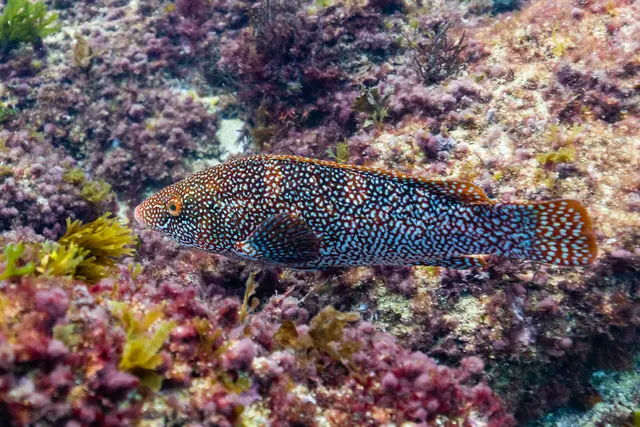 Ballan wrasseCrab is the wrasse bait the sources name most, and where crab is not to hand they name what is: the Clare directory records specimen wrasse and triggerfish taken on local LIMPETS prised off the rock at the mark.
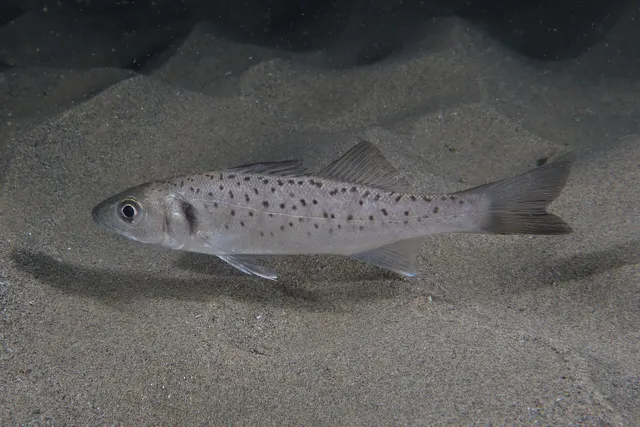 European sea bassPeeler crab during the moulting season is the outstanding bass bait, and the reason a great many anglers spend more time collecting than fishing.
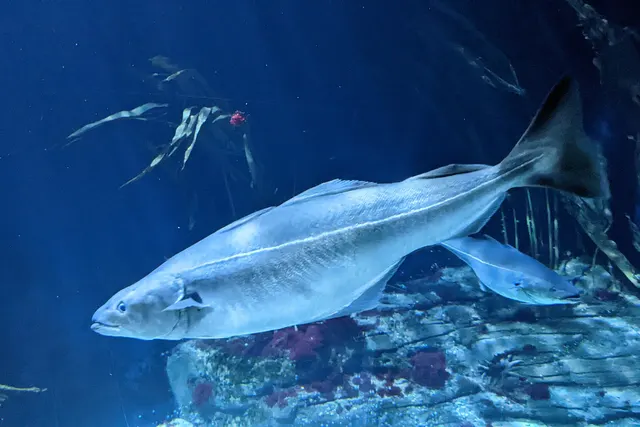 SaitheA Wicklow directory rates mussel far above the alternatives for the coalfish of one named beach, and draws the inference itself: mussel working that well suggests offshore mussel beds, which suggests plaice.
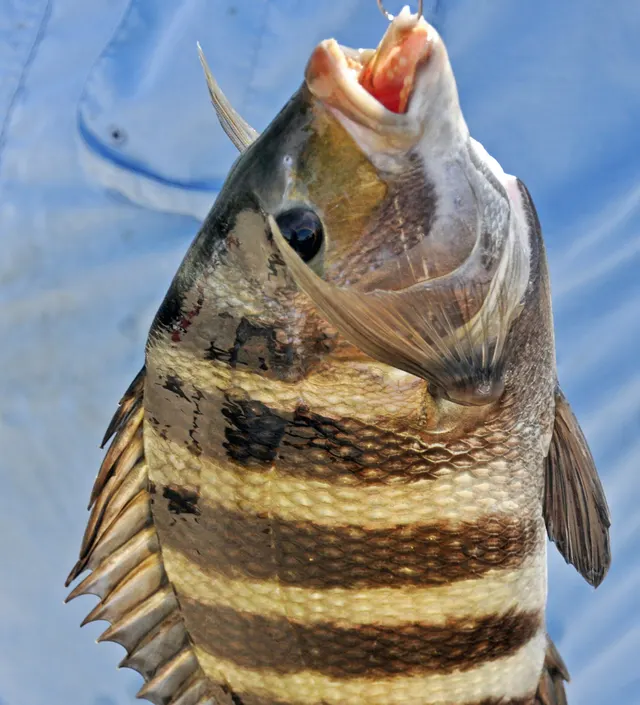 SheepsheadFiddler crab and shellfish presented tight to encrusted pilings.
- Spotted rayCrab and shellfish baits are conventionally rated above fish baits for spotted ray, which is the reverse of the blonde ray convention.
- Starry smooth-houndPeeler and hermit crab fished on the bottom over sand.
- TautogGreen and white-legger crab fished tight to wreck and rock.
Finding and obtaining it
Peeler crab is collected under rocks, weed and man-made refuges on the shore, or bought frozen. Shellfish are gathered on the shore at low water or bought. COLLECTION IS FREQUENTLY REGULATED, on public-health grounds for shellfish as well as for conservation, and may be prohibited entirely in some places and seasons. Check what is permitted where you are before collecting anything, and replace every rock you turn — a shore stripped of cover stops producing crabs for everyone.
Keeping and storing it
Peeler crab is kept alive in a cool box lined with damp seaweed, out of direct sun and not in water — crabs kept submerged in a bucket use up the oxygen and die. Check daily and remove any that have died, because one dead crab spoils the rest quickly. Frozen peeler is wrapped individually and used from frozen. Shellfish are kept chilled and used fresh, or frozen in the shell.
Keeping it alive
Peeler crab: a cool box lined with damp seaweed or damp newspaper, kept cool and out of the sun, NOT submerged in water — a sealed bucket of water suffocates them. Check daily, remove dead crabs immediately, and keep the box damp rather than wet. Live shellfish keep chilled and damp in the same way. Do not transport live bait between waters or release unused live bait anywhere.
Preparing it
Peeler crab is peeled — the shell, legs and gills removed — leaving the soft body, which is then cut into halves or quarters for smaller hooks. Mussel is opened and the flesh removed whole. Razorfish is opened and the foot used, being the toughest part. All of these are prepared immediately before use rather than in advance, because they deteriorate fast once opened.
Using it
Bait elastic is not optional for any of these. Crab and shellfish are bound firmly to the hook with fine elastic thread, which is the only reliable way to get them through a cast intact. Peeler is frequently fished whole on a large hook for bass and cod, or in sections on smaller hooks. Mussel is bound in a bunch. Tipping with a strip of squid adds durability and is a standard combination.
Disposing of what is left
Take unused bait home. Do not tip live or dead bait into the sea at the end of a session — it is a biosecurity route and, with collected shellfish, may move disease between beds. Dispose of dead bait in household waste and return any unused live crabs to the shore they came from if that is practical and permitted.
Biosecurity
Collected shore bait is a genuine transfer route for non-native species and for shellfish disease, and bait moved between coasts is a documented pathway. Do not move live bait between waters or coasts. Clean and dry bait boxes and cool boxes between trips. Never release unused live bait into a water it did not come from.
Gathering shellfish bait responsibly
Shellfish gathering for bait raises two separate questions, and conflating them is how people get into difficulty.
THE ECOLOGICAL QUESTION. Mussel beds, cockle beds and the rocky shore communities that hold limpets and razorfish are habitats rather than stocks. A mussel bed is a structure that supports a great deal else, and stripping it removes the structure as well as the animals. Overturned rocks kill their undersides. Raked beds do not recover quickly.
The practice that reduces it is unglamorous and effective: take a small quantity from a wide area rather than clearing a patch, turn every rock back the way it lay, do not work ground that is obviously already stripped, and leave beds that are visibly thin.
THE PUBLIC HEALTH QUESTION, WHICH IS SEPARATE AND SERIOUS. Filter-feeding shellfish concentrate whatever is in the water, including sewage-derived bacteria and algal toxins. Commercial shellfish beds are classified and monitored precisely because of this, and beds that are unclassified or closed are unclassified or closed for reasons that do not disappear because the shellfish are intended as bait rather than as food. Anybody handling shellfish from an unknown shore should assume nothing about the water and should not eat them.
AND THE RULES ARE STRICT AND VARIED. Shellfish gathering is regulated far more heavily than bait digging in most places — by classification of the bed, by permit, by minimum size, by quantity, by season, and by protected-area conditions. Several fisheries prohibit removal of mussels or limpets entirely.
FishingHQ does not state what is permitted anywhere. Check with the inshore fisheries body, the local authority and the protected-area manager before gathering.
Official guidance — why, and the sources (2)
Stated by a fisheries authority, scientific institute or recognised angling body. Authoritative, but summarising rather than demonstrating.
- Cefas science, advice and data on marine and freshwater environments — Centre for Environment, Fisheries and Aquaculture Science (Government fisheries body)Relied on for: Classification and monitoring of shellfish harvesting areas, and the public-health basis for it.States this directlyCitation checked — the work exists and is described correctly
- JNCC species and habitat conservation advice — Joint Nature Conservation Committee (Conservation authority)Relied on for: Protected-area framework covering intertidal shellfish and rocky-shore habitats.Background and mechanism onlyCitation checked — the work exists and is described correctly
Keeping a live animal alive, and why a bucket of water kills crabs
Peeler crab storage is the most demanding bait care in sea angling, and almost every failure comes from treating a live animal as though it were a piece of stock.
A CRAB IN A SEALED BUCKET OF WATER DROWNS, WHICH IS COUNTER-INTUITIVE AND TRUE. Shore crabs are intertidal animals adapted to spend hours out of water with damp gills; what they cannot do is survive in a small volume of standing water that a group of them rapidly strips of oxygen. Warm still water in a bucket becomes anoxic quickly, and a boxful of crabs will be dead within hours. The correct storage — cool, damp weed, no standing water, out of the sun — is keeping their gills wet rather than keeping them submerged.
DENSITY AND TEMPERATURE ARE THE OTHER TWO VARIABLES, and both act the same way: more crabs and more heat means faster oxygen demand, faster spoilage and faster mortality. A cool box with an ice pack separated from the crabs, low density and daily inspection is what makes several days possible.
ONE DEAD CRAB SPOILS THE REST FASTER THAN ANYTHING ELSE. A dead crustacean decomposes quickly and the ammonia and bacterial load it produces in a confined damp box accelerates the death of its neighbours. Checking daily and removing casualties is not tidiness; it is the single highest-return maintenance action.
THE PEELING WINDOW IS THE OTHER CLOCK AND IT IS BIOLOGICAL. A crab is only an outstanding bait for the short period around its moult, and it is on that schedule whether stored or not. A crab kept until it has moulted and hardened has become a poor bait, and a crab kept past its moult in a box will frequently be eaten by the others. Storage buys days, not weeks, and the animal's own cycle sets the limit.
FREEZING CHANGES THE BAIT RATHER THAN PRESERVING IT. Frozen peeler works and is the practical standard for many anglers, and it is measurably less effective than fresh. Wrapping individually, freezing quickly and using from frozen preserves as much as possible; a repeatedly thawed crab is unusable.
SHELLFISH BAITS FAIL BY TEXTURE, NOT BY SMELL. Mussel, razor and clam go soft before they go off, and soft shellfish cannot be presented at all. Chilled and used within a day or two, or frozen in the shell, is the whole of it.
AND WHERE CRAB AND SHELLFISH MAY BE COLLECTED IS REGULATED — the record's sourcing section and the local competent authority cover that, and it is not a storage question.
What experienced anglers do — why, and the sources (2)
Widely and independently recommended by experienced anglers and specialist sources. This is real angling knowledge, not proof: controlled evidence for it is limited, and FishingHQ records it as convention rather than as a demonstrated effect.
- Sea Angler — Bauer Media (Specialist angling publication)Relied on for: Established sea angling bait practice, including obtaining, keeping and presenting bait.States this directlyCitation checked — the work exists and is described correctly
- General angling website restatements of established technique — Various (Credible secondary source)Relied on for: The widely restated practice for keeping this bait alive and usable, recorded as a consensus position rather than as an original observation.States this directlyCitation checked — the work exists and is described correctly
Safety
Tides and being cut off — Can cause serious injury or death
Bait collection happens at low water on intertidal ground, frequently on rocks, mud and sandbanks, and with attention entirely on the ground rather than on the sea. This is a classic cut-off scenario and it catches out people who would never fish the same ground without checking the tide.
What reduces it: Check the tide times and the height before going, identify the exit route, and leave on a set clock time rather than when the collecting stops being productive. Do not collect alone on soft or remote ground. Tell somebody where you are.
Slips, trips and falls — Can cause injury needing treatment
Turning rocks and walking weed-covered intertidal ground while carrying a bucket is how people fall. Cuts from shells and barnacles are routine and infect readily.
What reduces it: Footwear with grip. Both hands free where possible. Turn rocks toward you and put them back as they were. Wear gloves, and clean any cut properly — marine wound infections are slow and serious.
Biosecurity and disease transfer — Can cause injury needing treatment
Moving live shore bait between coasts transfers non-native species and shellfish disease. Shellfish collected from contaminated water can also cause serious illness if eaten, which is why gathering is regulated on public-health grounds as well as conservation ones.
What reduces it: Do not move live bait between waters or coasts. Do not release unused live bait. Clean and dry containers between trips. Check local public-health advice before eating anything you gather, which is a separate question from whether you may collect it as bait.
Precautions that always apply here
- Check the tide before you go and know your exit route. Being cut off is the commonest way a shore session becomes a rescue.
- Tell somebody where you are going and when you expect to be back.
- Check, clean and dry your kit between different waters — the published guidance is 48 hours’ drying, in sunlight where possible, because a number of invasive species survive over two weeks in damp conditions. Nets, boots and wet mats move invasive species and disease more effectively than anything else anglers do.
- Never move live fish, live bait or water from one water to another.
Further safety reading
- Tides and being cut off — Bait collection happens at low water with attention entirely on the ground rather than the sea, which is the classic cut-off scenario and catches out people who would never fish the same mark without checking.
Check the rules before you fish
Fishing laws, bylaws, access rules, seasons, bait restrictions and permitted methods vary by location and can change. Check the current rules from the relevant authority and the water you intend to fish before fishing.
Check with:
- Current national or regional law for where you are fishing
- Current local bylaws
- The relevant fisheries authority
- The landowner, club or fishery whose water it is
- Any restrictions specific to the species or the method you intend to use
Where to go next
How it is fished
- Digging and raking for shellfishThe bait half of the same tide: what is dug for the table is also what goes on the hook.
- Sea fishingPeeler crab is the best bait there is for several species and the most demanding to obtain, keep and present — three separate problems, none optional.
- Whelk pottingCrab, which is what whelks are drawn to and what the fishery has always used.
Environment and conservation
Sources and evidence
- Sea Angler — Bauer Media (Specialist angling publication)Relied on for: Practitioner treatment of peeler crab collection, storage in damp cool conditions rather than water, and presentation with bait elastic.FishingHQ's interpretation of what it saysCitation checked — the work exists and is described correctly
- Check Clean Dry — biosecurity guidance for water users — GB Non-native Species Secretariat (Conservation authority)Relied on for: That the movement of live bait and of shore-collected organisms is a recognised pathway for the introduction and spread of non-native aquatic species.States this directlyPassage read and verified
- RNLI water safety guidance: cold water shock and Float to Live — Royal National Lifeboat Institution (Water-safety or diver-training authority)Relied on for: Tidal cut-off risk on intertidal ground and the importance of checking tide times and identifying an exit before going out.States this directlyPassage read and verified
Why the 12 connections on this page are here, and the sources
Fish it catches
What experienced anglers do — 7 connections
Widely and independently recommended by experienced anglers and specialist sources. This is real angling knowledge, not proof: controlled evidence for it is limited, and FishingHQ records it as convention rather than as a demonstrated effect.
Ballan wrasse
Named for wrasse by a statutory guide and a practitioner directory independently, the second recording an improvised shellfish bait taken at the mark.
- Inland Fisheries Ireland: South West Sea Angling Guide — the west and south Cork angling marks — Inland Fisheries Ireland, 2020 (Government fisheries body)Relied on for: The statutory body naming crab, shrimp or worm baits for wrasse at the Sheep's Head and Mizen marks.Passage read and verified
- Sea Angling in Ireland: the shore marks of Clare and the Shannon estuary — Sea Angling Ireland (Credible secondary source)Relied on for: A county directory recording specimen wrasse and triggerfish on many baits including local limpets at a named gully.Passage read and verified
European sea bass
A practitioner claim about a species-bait pairing.
- Sea Angler — Bauer Media (Specialist angling publication)Relied on for: Practitioner treatment of peeler crab as a bass bait through the moulting season.Citation checked — the work exists and is described correctly
- Cefas science, advice and data on marine and freshwater environments — Centre for Environment, Fisheries and Aquaculture Science (Government fisheries body)Relied on for: The inshore and estuarine habitat use of European sea bass that puts it on the ground where peeler crab is found.Citation checked — the work exists and is described correctly
Saithe
Two independent county pages naming mussel on two different coasts, one of them explaining what the bait's effectiveness implies about the ground.
- Sea Angling in Ireland: the shore marks of Wicklow, Dublin, Louth and Meath — Sea Angling Ireland (Credible secondary source)Relied on for: A county directory rating mussel far above the alternatives for coalfish at a named beach, and reasoning from it to the ground offshore.Passage read and verified
- Sea Angling in Ireland: the shore marks of Cork — Sea Angling Ireland (Credible secondary source)Relied on for: A county directory naming mussel as the local bait at a named deepwater quay where coalfish are taken year round.Passage read and verified
Sheepshead
A practitioner claim about tackle commonly used for Archosargus probatocephalus.
- General angling website restatements of established technique — Various (Credible secondary source)Relied on for: Widely restated practitioner accounts of this presentation for sheepshead.Citation checked — the work exists and is described correctly
- Angling Times — Bauer Media (Specialist angling publication)Relied on for: Practitioner treatment of comparable presentations for the species group.Citation checked — the work exists and is described correctly
Spotted ray
A bait joined to the fish it is conventionally used for. Convention, recorded as convention.
- Sea Angler — Bauer Media (Specialist angling publication)Relied on for: Contemporary UK sea angling practice as reported by practitioners, including ground, seasonal timing, bait and method convention.States this directlyCitation checked — the work exists and is described correctly
- General angling website restatements of established technique — Various (Credible secondary source)Relied on for: Widely restated descriptions of species behaviour and regional angling practice, recorded as consensus rather than as scholarship.Background and mechanism onlyCitation checked — the work exists and is described correctly
Starry smooth-hound
A practitioner claim about tackle commonly used for Mustelus asterias.
- General angling website restatements of established technique — Various (Credible secondary source)Relied on for: Widely restated practitioner accounts of this presentation for starry smooth hound.Citation checked — the work exists and is described correctly
- Angling Times — Bauer Media (Specialist angling publication)Relied on for: Practitioner treatment of comparable presentations for the species group.Citation checked — the work exists and is described correctly
Tautog
A practitioner claim about tackle commonly used for Tautoga onitis.
- General angling website restatements of established technique — Various (Credible secondary source)Relied on for: Widely restated practitioner accounts of this presentation for tautog.Citation checked — the work exists and is described correctly
- Angling Times — Bauer Media (Specialist angling publication)Relied on for: Practitioner treatment of comparable presentations for the species group.Citation checked — the work exists and is described correctly
How it is fished
What experienced anglers do — 3 connections
Widely and independently recommended by experienced anglers and specialist sources. This is real angling knowledge, not proof: controlled evidence for it is limited, and FishingHQ records it as convention rather than as a demonstrated effect.
Digging and raking for shellfish
This is the one method on FishingHQ whose output is simultaneously food and terminal tackle. Razor and mussel are dug on the same tide, from the same ground, with the same fork, and then bound to a hook with elastic — which is why the bait record's presentation instructions read as though the reader already has the animal.
- Sea Angler — Bauer Media (Specialist angling publication)Relied on for: Practitioner treatment of shore-dug shellfish and worm as sea bait.States this directlyCitation checked — the work exists and is described correctly
- General angling website restatements of established technique — Various (Credible secondary source)Relied on for: The widely restated practice of digging one's own bait on the tide before fishing it.Background and mechanism onlyCitation checked — the work exists and is described correctly
Sea fishing
The definitional relationship, framed by the difficulty that defines the bait.
- Sea Angler — Bauer Media (Specialist angling publication)Relied on for: Practitioner treatment of peeler crab collection, storage and presentation with bait elastic.Citation checked — the work exists and is described correctly
- General angling website restatements of established technique — Various (Credible secondary source)Relied on for: Widely restated practitioner guidance on keeping peeler crab alive in damp cool conditions rather than in water.Citation checked — the work exists and is described correctly
Whelk potting
Whelks are scavengers found by scent. Crushed crab is the traditional and current pot bait for them, and the pairing is specific to whelks rather than shared with crustacean potting.
- Sea Angler — Bauer Media (Specialist angling publication)Relied on for: Specialist treatment of which bait or lure family this technique is fished with.States this directlyCitation checked — the work exists and is described correctly
- FAO fishing gear types and fishing technology information — Food and Agriculture Organization of the United Nations (Scientific institute)Relied on for: The independently restated practitioner pairing of this technique with this family.Background and mechanism onlyCitation checked — the work exists and is described correctly
Safety reading
Official guidance — 1 connection
Stated by a fisheries authority, scientific institute or recognised angling body. Authoritative, but summarising rather than demonstrating.
Tides and being cut off
A safety claim about a specific and well-documented mechanism.
- RNLI water safety guidance: cold water shock and Float to Live — Royal National Lifeboat Institution (Water-safety or diver-training authority)Relied on for: Tidal cut-off on intertidal ground and the importance of checking tide times and identifying an exit before going out.States this directlyPassage read and verified
Environment and conservation
Official guidance — 1 connection
Stated by a fisheries authority, scientific institute or recognised angling body. Authoritative, but summarising rather than demonstrating.
Invasive species and biosecurity
A biosecurity claim held to an authoritative standard.
- Check Clean Dry — biosecurity guidance for water users — GB Non-native Species Secretariat (Conservation authority)Relied on for: That the movement of live bait and shore-collected organisms is a recognised pathway for the introduction and spread of non-native aquatic species.States this directlyPassage read and verified
How FishingHQ labels evidence is explained in the evidence policy.