European sea bass
Fish · Last reviewed 2026-08-10
A fast, predatory inshore fish that hunts in broken water and surf, and one of the most closely managed recreational species in European seas.
Safety: cliffs and rock platforms — can cause serious injury or death. 7 more points apply here.
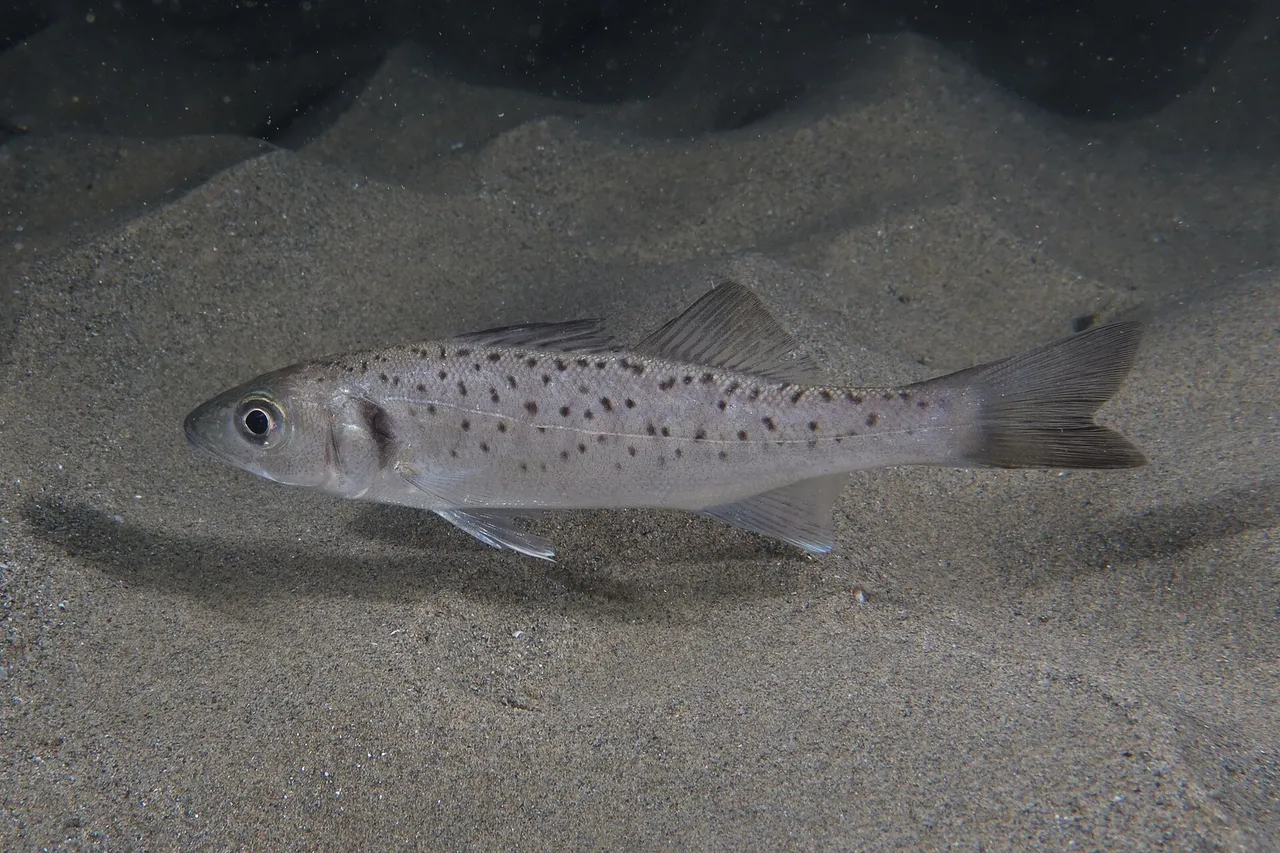
How this was identified, and who took it
Identified by: Full lateral view of a juvenile over sand. Both dorsal fins are separate and distinct, which is the character that separates bass from grey mullet at a glance. Flank spotting is a juvenile trait and the caption says so.Julien Renoult — CC BY 4.0, via Wikimedia Commons — source, licence
Catching European sea bass
Everything here on fishing for it. Each entry opens the page behind it.
- When
- Somewhere documents it in almost every month, so there is no season for the species as a whole — the season is a property of the ground, and each place states its own.
- Where
- 289 places FishingHQ documents — strongest claim anywhere: characteristic of this water · From the shore, From a kayak, Fly fishing, From a boat
Bass are the inshore predator that made lure fishing from the shore a mainstream European pursuit. They are streamlined, silver, spiny-finned and fast, and they hunt in exactly the water most fish avoid: surf tables, tide races, rock gullies, harbour walls and estuary channels, where turbulence disorients prey and delivers it in a form a fast fish can exploit.
That habitat preference is the practical heart of the species. Bass are found where energy is, and reading broken water — where a rip forms, where a gully drains, where a bar breaks the swell — is far more of the skill than tackle selection is. It is also what makes bass fishing genuinely dangerous: the places bass feed are the places anglers get washed off.
Bass are slow-growing and late-maturing, which sits awkwardly with how heavily they have been fished. Stock management has been substantial and repeatedly revised, and the rules governing what a recreational angler may do with a bass are among the most changeable of any European species.
Straight answers
For somebody who is already standing on the mark. Everything below this expands on it.
- Why might bass be on this beach?
- Because moving water is delivering food to a predictable spot: a gutter, a bar, a scour beside a groyne, the edge of coloured water where surf is stirring the sand. Find the feature and you have found the fish's reason to be there.
- What conditions matter most?
- Moving tide first, then some sea state. A flat calm beach at slack water is the hardest bass fishing there is; the same beach with a metre of surf on a running tide is a different place.
- When should I go?
- Around the state of tide that makes your particular mark work — often the flood into the top of the tide — and, if you can, in low light at either end of the day.
- What should I put on?
- A shallow-running lure over rough ground and in surf, a weighted soft plastic where you need depth or distance, and fresh bait where the tide is delivering food rather than fish.
- How many can I keep?
- It depends which jurisdiction you are in and which year it is, and in 2026 England and Wales did not agree. See the rules module on this page, and check the authority before you keep anything.
- Why did I blank?
- Most often because you fished the right place at the wrong time. A bass mark is a window, not a location — try the same spot on a different state of tide before trying a different spot.
Where you are fishing from
The same fish, and genuinely different fishing. Open the one you are standing on.
Beach
Open sand and shingle, and the question of range
Surf, gutters and the fish that feeds in water shallow enough to wade — the classic bass beach, and the one people fish too far out.
- At the surface
- Upper water
Methods: Surfcasting, Spinning, Ledgering
How this mark actually fishes
Why fish are here
A surf beach delivers food into a narrow, turbulent, coloured strip and removes the predator's disadvantage of being visible. Bass come into that strip to feed and will hold in water barely deep enough to cover them.
The ground matters more than the postcode. Beaches with defined gutters, offshore bars, groynes or a stream mouth concentrate both water movement and food; featureless flat sand produces far less.
How to fish it
Walk the beach at low water and find the features, then fish them as the tide covers them. Cast along and into the surf line rather than beyond it, and cover the water methodically rather than fanning at random.
With bait, fish the gutter and let the tide work the scent along it. With lures, a shallow diver or a weightless soft plastic in the broken water beats anything that digs.
What to look at on arrival
- The low-water shape of the beach: gutters, bars, scours beside groynes, stream mouths.
- Where the coloured water ends and clean water begins.
- Whether the surf is building or dropping, and what that means for wading depth.
What goes wrong here
- Casting as far as possible. On many bass beaches the fish are between you and the third wave.
- Fishing a featureless stretch because it is nearest the car park.
- Fishing through slack water and concluding the beach is empty.
Wading a shingle beach in surf is how people get into trouble on this coast. Know where the drop is, and do not wade to gain distance you did not need.
What experienced anglers do — why, and the sources (1)
Widely and independently recommended by experienced anglers and specialist sources. This is real angling knowledge, not proof: controlled evidence for it is limited, and FishingHQ records it as convention rather than as a demonstrated effect.
How beach marks fish for this species, from the evidence named here.
- Sea Angler — Bauer Media (Specialist angling publication)Relied on for: Surf beaches and their features as principal UK shore bass venues.Background and mechanism onlyCitation checked — the work exists and is described correctly
Estuary
Where the river meets the tide
The most reliable bass ground in Britain, and the one where timing matters more than tackle.
- At the surface
- Upper water
- Mid water
Methods: Spinning, Drop shotting, Ledgering, Float fishing
How this mark actually fishes
Why fish are here
An estuary drains an enormous intertidal larder through a small number of channels twice a day. On the ebb, everything the flood deposited is carried back past predictable choke points; on the flood, bass follow prey up onto ground that is dry for half the day.
Estuaries also stay productive when open coast is unfishable, because a channel keeps running whatever the wind is doing.
How to fish it
Work out where the water is concentrated at the state of tide you are fishing. Creek mouths and channel edges on the ebb; the leading edge of new water over banks on the flood.
Fish light and move. An estuary rewards covering several features on one tide far more than sitting on one.
What to look at on arrival
- Seams where draining water meets the main channel.
- The first water moving up over a bank on the flood.
- Bait activity in the shallows — shrimp, small fish, crab.
What goes wrong here
- Fishing the middle of a channel rather than its edges.
- Arriving at the wrong state of tide for the feature and blaming the mark.
- Wading soft mud. Estuary mud strands people and the tide comes back across flat ground faster than a person can walk in it.
Estuary flats flood from behind as well as in front, and soft mud immobilises. Know your route back and start using it earlier than feels necessary.
What experienced anglers do — why, and the sources
Widely and independently recommended by experienced anglers and specialist sources. This is real angling knowledge, not proof: controlled evidence for it is limited, and FishingHQ records it as convention rather than as a demonstrated effect.
How estuary marks fish for this species, from the evidence named here.
Rock marks
Depth close in, and the edge fish hunt along
Deep water, heavy structure and the biggest average fish on the coast — with the least forgiving ground.
- At the surface
- Upper water
- Mid water
Methods: Spinning, Light rock fishing, Float fishing
How this mark actually fishes
Why fish are here
Rock marks give bass everything at once: broken ground full of crustaceans and small fish, current deflected into holding pockets, and depth within a short cast. Larger bass in particular use this ground, because it suits an ambush predator that hunts fish rather than grazes.
A headland concentrates flow, and the eddies and seams either side of the point are where fish sit relative to it.
How to fish it
Read the flow before casting. Fish the seams, the slack behind boulders, and the edges of white water where swell is breaking over structure.
Weedless or shallow presentations earn their keep here — anything that sinks freely will find kelp. Larger, slower presentations suit the bigger fish this ground holds.
What to look at on arrival
- Boils and standing waves marking submerged structure.
- White water washing over a reef edge on the swell.
- The state of the tide relative to your platform and your exit.
What goes wrong here
- Fishing lures that sink into kelp instead of over it.
- Standing on a low ledge on a making tide because the fishing is good.
- Using tackle too light to steer a fish away from the ground it is hooked over.
Rock marks strand and wash people off. Check the swell forecast rather than the view, know your exit before you start, and treat a building sea as a reason to leave.
What experienced anglers do — why, and the sources
Widely and independently recommended by experienced anglers and specialist sources. This is real angling knowledge, not proof: controlled evidence for it is limited, and FishingHQ records it as convention rather than as a demonstrated effect.
How rock marks marks fish for this species, from the evidence named here.
Reef and rough ground
Broken ground, weed and the fish that live in it
Rough ground, weed and boulder fields — where the food is, and where tackle goes to die.
- At the surface
- Upper water
Methods: Spinning, Light rock fishing
How this mark actually fishes
Why fish are here
Broken ground supports the crustaceans and small fish bass eat and gives them cover to ambush from. Reef and boulder ground close to deeper water is among the most consistent bass habitat there is, from shore or afloat.
It is also where presentation choice stops being a preference and becomes the whole problem: a lure that fishes over the structure catches, and one that fishes into it snags.
How to fish it
Fish above the ground rather than in it. Weedless-rigged soft plastics, shallow divers and surface lures let you work water that would take a metal on the first cast.
Work the edges: the transition from reef to sand, the gap between boulder fields, the channel through a weed bed.
What to look at on arrival
- Where the rough ground ends and clean ground begins.
- Weed movement showing how hard the water is running over the structure.
What goes wrong here
- Fishing anything that sinks freely, and spending the session re-rigging.
- Fishing the top of the reef rather than its edges.
What experienced anglers do — why, and the sources
Widely and independently recommended by experienced anglers and specialist sources. This is real angling knowledge, not proof: controlled evidence for it is limited, and FishingHQ records it as convention rather than as a demonstrated effect.
How reef and rough ground marks fish for this species, from the evidence named here.
Harbour
Enclosed water, walls and moored structure
Walls, moorings and lit water — the venue that fishes best when everybody has gone home.
- At the surface
- Upper water
- Mid water
Methods: Spinning, Drop shotting, Float fishing
How this mark actually fishes
Why fish are here
Harbours hold small fish year-round around structure, and bass come in after them, particularly at night and on a moving tide. Harbour lights concentrate small fish in a way that has no equivalent on open coast.
The entrance is a choke point exactly as a creek mouth is, and it works for the same reason.
How to fish it
Fish the entrance and the wall edges rather than open water, and fish quietly. Bass in a harbour are close, in shallow water, and easily spooked.
Light edges are worth working carefully: the boundary between lit and unlit water rather than the bright patch itself.
What to look at on arrival
- Small fish under lights, especially at the light-to-dark boundary.
- Current running through the entrance at mid-tide.
What goes wrong here
- Fishing in daylight in a busy harbour and concluding there are no bass in it.
- Heavy footfall on a wooden pontoon or a quay edge, which carries straight into shallow water.
What experienced anglers do — why, and the sources
Widely and independently recommended by experienced anglers and specialist sources. This is real angling knowledge, not proof: controlled evidence for it is limited, and FishingHQ records it as convention rather than as a demonstrated effect.
How harbour marks fish for this species, from the evidence named here.
Open shore
Exposed coast with water under the rod tip
Exposed coast with depth under the rod tip — big water, long walks and genuine solitude.
- At the surface
- Upper water
- Mid water
Methods: Spinning, Surfcasting
How this mark actually fishes
Why fish are here
Steep exposed shorelines put bass within reach without a boat, and swell breaking against them creates the white water and disorientated prey that bass exploit. These marks are frequently at their best in conditions that make gentler venues unfishable.
How to fish it
Fish the white water and its margins, and use enough weight to keep contact in moving water without dragging the presentation down into structure.
Cover ground. Exposed coast rewards walking between features far more than it rewards persistence at one.
What to look at on arrival
- Where swell breaks consistently over submerged structure.
- Access and exit at the state of tide you will be leaving on.
What goes wrong here
- Committing to a mark that is only accessible for part of the tide.
- Fishing too light to hold position in the surge.
Exposed marks are where a rogue set matters. Watch the sea for several minutes before choosing where to stand, and never stand where the wet rock reaches.
What experienced anglers do — why, and the sources
Widely and independently recommended by experienced anglers and specialist sources. This is real angling knowledge, not proof: controlled evidence for it is limited, and FishingHQ records it as convention rather than as a demonstrated effect.
How open shore marks fish for this species, from the evidence named here.
Boat
Your own hull, and the freedom to move
Reaching structure that no cast covers, and following fish through the tide.
- At the surface
- Upper water
- Mid water
- Deep water
Methods: Drift fishing, Spinning, Jigging
How this mark actually fishes
Why fish are here
The same reefs, banks, overfalls and channel edges that hold shore-caught bass extend well beyond casting range, and a boat can work the up-tide edge of a bank or drift a reef repeatedly in a way no shore angler can.
It also lets an angler follow a productive state of tide from feature to feature instead of waiting for it to reach one spot.
How to fish it
Drift over and alongside structure rather than anchoring on top of it, and present up-tide so the lure or bait works back naturally with the flow.
Overfalls and tide races over reef are the classic boat bass ground, and the working part is the edge of the disturbed water rather than its centre.
What to look at on arrival
- Where the tide accelerates over a bank or reef, and where it eddies behind it.
- Bait and structure on the sounder.
What goes wrong here
- Motoring across the productive water before fishing it.
- Anchoring where a drift would have covered ten times the ground.
What experienced anglers do — why, and the sources
Widely and independently recommended by experienced anglers and specialist sources. This is real angling knowledge, not proof: controlled evidence for it is limited, and FishingHQ records it as convention rather than as a demonstrated effect.
How boat marks fish for this species, from the evidence named here.
Kayak
Mobility, silence, and very little room
Shallow structure a boat cannot reach and a shore angler cannot cast to, approached silently.
- At the surface
- Upper water
- Mid water
Methods: Kayak fishing, Spinning
How this mark actually fishes
Why fish are here
Bass in shallow rough ground are approachable by kayak in a way they are not by boat, and a kayak reaches the back of a reef or the far side of an estuary bank that no cast covers. Silence matters here more than for most species: shallow bass spook.
How to fish it
Drift quietly onto structure and cast ahead of the drift rather than under the hull. Weedless soft plastics and shallow lures suit both the ground and the limited space.
What to look at on arrival
- Wind against tide, which builds a steep sea over shallow banks quickly.
- Your position relative to the launch as the tide turns.
What goes wrong here
- Paddling over the ground you intend to fish.
- Fishing an exposed reef in a rising wind because the fish are there.
Bass ground is frequently rough ground with swell breaking over it, which is the worst place in a kayak to discover the sea has got up. Set a turnaround condition before launching.
What experienced anglers do — why, and the sources
Widely and independently recommended by experienced anglers and specialist sources. This is real angling knowledge, not proof: controlled evidence for it is limited, and FishingHQ records it as convention rather than as a demonstrated effect.
How kayak marks fish for this species, from the evidence named here.
Where bass are, and why
Each of these is a piece of biology or hydrography, what it looks like from where you are standing, and what you can try as a result.
A bass occupies a position, not an address
- What you may see
- Water behaving differently in one small area: a slick, a boil, a line of foam holding station, a patch that stays smoother than the water around it. That is structure showing itself through the surface.
- What to try
- Fish the edge of the feature rather than the middle of it, and fish it on the state of tide that makes it work. If a mark produced nothing, come back at a different point in the tide before writing it off.
Why this happens
A bass feeding in moving water is doing arithmetic: the food arriving past a particular spot has to be worth more than the energy of holding there against the flow. Structure is what makes that sum work. A boulder, a bar, the lip of a gutter or the mouth of a creek creates a pocket of slower water immediately downstream of it, and a fish sitting in that pocket expends little while food is carried past the edge of it.
The consequence is that a bass mark is defined by a moment as much as by a place. When the tide is not moving there is no delivery and no reason to hold; when it is moving too hard the pocket washes out. In between there is a window, and on many marks it is an hour or two long.
What experienced anglers do — why, and the sources (1)
Widely and independently recommended by experienced anglers and specialist sources. This is real angling knowledge, not proof: controlled evidence for it is limited, and FishingHQ records it as convention rather than as a demonstrated effect.
The mechanism above, and what it rests on.
- Sea Angler — Bauer Media (Specialist angling publication)Relied on for: Structure and tidal flow as the organising principles of shore bass location in British and Irish angling practice.Background and mechanism onlyCitation checked — the work exists and is described correctly
Why surf puts bass in water you could paddle in
- What you may see
- A defined surf table with coloured water inside it, and a distinct line where the coloured water meets clean water further out. Sometimes fish swirling inside the breakers in the last of the light.
- What to try
- Cast along the surf line and into the coloured water rather than beyond it. Work the lure or the bait parallel to the beach through the gutters rather than straight out and back.
- Where this breaks down
- Surf that is genuinely worth fishing and surf that is dangerous look similar from a car park, and a shingle beach with a steep drop and a metre of swell can pull an adult off their feet.
Why this happens
Breaking waves do three things at once on a sand or shingle beach. They lift sand and small food items into suspension, they colour the water so a predator is much harder to see, and they create a churning zone in which small prey cannot hold position or navigate.
A bass in that zone is hunting disorganised food in low visibility with no risk of being seen, and it will do it in water so shallow that its back is out. That is why bass in surf are frequently much closer than people cast, and why the third wave out is more often the productive water than the horizon.
What experienced anglers do — why, and the sources (1)
Widely and independently recommended by experienced anglers and specialist sources. This is real angling knowledge, not proof: controlled evidence for it is limited, and FishingHQ records it as convention rather than as a demonstrated effect.
The mechanism above, and what it rests on.
- Sea Angler — Bauer Media (Specialist angling publication)Relied on for: Surf and white water as prime shore bass conditions in UK practice.Background and mechanism onlyCitation checked — the work exists and is described correctly
Why an estuary is a conveyor belt with a timetable
- What you may see
- Water draining hard out of a creek mouth on the ebb, with a visible seam where it meets the main channel. On the flood, the leading edge of water moving up over sand or mud.
- What to try
- On the ebb, fish the seams at creek mouths and channel edges. On the flood, follow the water up and fish shallow — often absurdly shallow — and expect fish to arrive in the first foot of new water over a bank.
Why this happens
An estuary concentrates two things a bass wants. The ebb drains a vast intertidal area through a narrow channel, carrying with it everything the flood deposited — crabs, shrimp, worms, small fish flushed out of the creeks — past a small number of predictable choke points. The flood does the reverse, pushing prey up into the shallows and letting bass follow it into water they could not otherwise use.
Bass exploit both, but not at the same places. The ebb concentrates food at channel mouths and creek exits; the flood spreads fish over ground that is dry for half the day.
What experienced anglers do — why, and the sources
Widely and independently recommended by experienced anglers and specialist sources. This is real angling knowledge, not proof: controlled evidence for it is limited, and FishingHQ records it as convention rather than as a demonstrated effect.
The mechanism above, and what it rests on.
What they are eating changes what will catch them
- What you may see
- What is actually in the water. Peeler crab in the weed at low tide, sandeel showing in the shallows, whitebait scattering, or none of those.
- What to try
- Match the presentation to what the ground is producing rather than to habit. Where crustaceans dominate, bait fished on the bottom in moving water usually beats a lure; where small fish dominate, a lure usually beats bait.
Why this happens
Bass are generalist predators whose diet shifts with size, season and what is locally abundant. Smaller fish take a great deal of crustacean prey — shrimp, small crabs, particularly peeler crabs at the moult — while larger bass take proportionally more fish. Across a year on the same coast the dominant prey can move from crab in late spring to sandeel and small fish through the summer.
This is the mechanism behind an experience anglers describe constantly: a mark that fishes brilliantly to crab bait in May and to a lure in August, with no change in the fish's willingness to feed.
Backed by research — why, and the sources (1)
Supported by peer-reviewed research or fisheries science. The sources are listed and can be checked.
The mechanism above, and what it rests on.
- FishBase: a global information system on fishes — Froese, R. and D. Pauly, eds. — FishBase Consortium (Scientific institute)Relied on for: European sea bass as a generalist predator taking crustaceans, molluscs and fish, with the fish fraction increasing with size.States this directlyPassage read and verified
Why the big ones matter more than their number suggests
- What you may see
- A double-figure bass is a fish older than most anglers' fishing careers, and there are very few of them on any coast.
- What to try
- Return large fish as a matter of course, whatever the daily limit permits, and handle them so they can swim away — supported horizontally, wet hands, unhooked in the water where possible.
Why this happens
Bass grow slowly and mature late, and a large bass is an old fish — frequently well over a decade, sometimes two. Because egg production rises steeply with body size, the largest females contribute far more to reproduction than their number implies, and removing them costs the stock disproportionately.
That is not a moral aside; it is the reason the fishery is governed the way it is, with a minimum size, a daily limit and a spring period when fish must be returned. The management exists because the biology makes this stock slow to recover.
Official guidance — why, and the sources (2)
Stated by a fisheries authority, scientific institute or recognised angling body. Authoritative, but summarising rather than demonstrating.
The mechanism above, and what it rests on.
- ICES Advice on fishing opportunities, catch and effort — International Council for the Exploration of the Sea (Scientific institute)Relied on for: The management framework for European sea bass, reflecting slow growth and late maturity in a stock requiring restrictive recreational and commercial measures.Background and mechanism onlyCitation checked — the work exists and is described correctly
- Cefas science, advice and data on marine and freshwater environments — Centre for Environment, Fisheries and Aquaculture Science (Government fisheries body)Relied on for: Bass life history and stock assessment underpinning the management measures.Background and mechanism onlyCitation checked — the work exists and is described correctly
What actually changes after dark
- What you may see
- Fish moving into water shallower than they would use in daylight, and takes coming much closer to the rod tip than in the afternoon.
- What to try
- Fish the last hour of light and the first of dark before fishing the middle of the day, and fish closer in than daylight instinct suggests. Slow surface and shallow presentations come into their own.
- Where this breaks down
- This is what experienced anglers consistently report rather than something measured for shore-caught bass in British waters. It is well supported as practice and is not a quantified effect.
Why this happens
Bass hunt effectively in very low light and their prey mostly does not. As light falls, the balance tips: a predator that can still locate food by lateral line and by silhouette against a lighter surface gains an advantage over small fish that navigate by sight.
The practical result is that fish move shallower and closer as the light goes, and that marks which are unproductive and busy in the middle of the day become both quiet and productive at either end of it.
What experienced anglers do — why, and the sources (1)
Widely and independently recommended by experienced anglers and specialist sources. This is real angling knowledge, not proof: controlled evidence for it is limited, and FishingHQ records it as convention rather than as a demonstrated effect.
The mechanism above, and what it rests on.
- Sea Angler — Bauer Media (Specialist angling publication)Relied on for: Low light and darkness as productive periods for shore bass fishing.Background and mechanism onlyCitation checked — the work exists and is described correctly
Finding them
What to look for, what it means, and how much it is worth. None of these guarantees a fish — the third column says how far each one is worth trusting.
7 things to look for
A gutter or trough running parallel to the beach
Usually worth acting onA channel scoured between the beach and an offshore bar, holding water at low tide and filling first on the flood. It carries food along it and gives fish depth to move in close.
What to do: Find it at low water — it is obvious then and invisible at high — and fish it as the tide covers it. Cast along it rather than across it.
What experienced anglers do — why, and the sources
Widely and independently recommended by experienced anglers and specialist sources. This is real angling knowledge, not proof: controlled evidence for it is limited, and FishingHQ records it as convention rather than as a demonstrated effect.
What this sign rests on.
Coloured water inside a surf line
Usually worth acting onBreaking waves lifting sand and food into suspension, and reducing visibility enough that bass will hunt in very shallow water.
What to do: Fish inside the coloured water rather than beyond it, and expect takes much closer than instinct suggests.
What experienced anglers do — why, and the sources
Widely and independently recommended by experienced anglers and specialist sources. This is real angling knowledge, not proof: controlled evidence for it is limited, and FishingHQ records it as convention rather than as a demonstrated effect.
What this sign rests on.
A seam where a creek or channel drains into open water
Usually worth acting onA conveyor of food arriving on the ebb at a predictable point, with slack water beside it for a fish to hold in.
What to do: Fish the slower side of the seam and let the presentation swing through the boundary with the flow.
What experienced anglers do — why, and the sources
Widely and independently recommended by experienced anglers and specialist sources. This is real angling knowledge, not proof: controlled evidence for it is limited, and FishingHQ records it as convention rather than as a demonstrated effect.
What this sign rests on.
Boils, slicks or standing waves over rough ground
Often worth acting onSubmerged structure deflecting moving water upwards. Each one marks a boulder or a reef edge with a holding pocket behind it.
What to do: Cast up-tide of the disturbance and let the lure work back past its edge, rather than casting directly at it.
What experienced anglers do — why, and the sources
Widely and independently recommended by experienced anglers and specialist sources. This is real angling knowledge, not proof: controlled evidence for it is limited, and FishingHQ records it as convention rather than as a demonstrated effect.
What this sign rests on.
Peeler crabs under weed at low tide
Often worth acting onThe local crab population is moulting, which is when they are most vulnerable and most heavily eaten. Bass on that ground will be feeding on crab.
What to do: Fish crab bait on the bottom in moving water rather than a lure, and expect the fishing to be about scent and position rather than about movement.
What experienced anglers do — why, and the sources
Widely and independently recommended by experienced anglers and specialist sources. This is real angling knowledge, not proof: controlled evidence for it is limited, and FishingHQ records it as convention rather than as a demonstrated effect.
What this sign rests on.
Small fish scattering in the shallows
Usually worth acting onSomething is hunting them, and in bass ground at low light it is very often bass. The most direct sign there is.
What to do: Cast beyond the disturbance and bring a shallow lure back through it. Do not cast on top of it.
What experienced anglers do — why, and the sources
Widely and independently recommended by experienced anglers and specialist sources. This is real angling knowledge, not proof: controlled evidence for it is limited, and FishingHQ records it as convention rather than as a demonstrated effect.
What this sign rests on.
A quiet flat calm at slack water
Often worth acting onNothing is being delivered anywhere. This is the least productive combination in shore bass fishing and it is worth recognising rather than persevering through.
What to do: Use the time to walk the mark and read the ground for the next tide, or move to somewhere the water is still moving.
What experienced anglers do — why, and the sources
Widely and independently recommended by experienced anglers and specialist sources. This is real angling knowledge, not proof: controlled evidence for it is limited, and FishingHQ records it as convention rather than as a demonstrated effect.
What this sign rests on.
How to fish for them
Lure fishing from the shore
When: Whenever fish are hunting fish rather than grazing crustaceans, and especially over rough ground, in surf, in estuaries and at low light.
- Beach
- Estuary
- Rock marks
- Reef and rough ground
- Harbour
- Open shore
- Kayak
- Boat
- At the surface
- Upper water
- Mid water
Why it works, how to do it, and what it will not do
Why it works
A lure covers water, which is the right response to a fish that occupies positions rather than areas. It lets an angler test six features in a tide instead of committing to one, and it presents something a hunting bass will chase.
It is also the method that most rewards reading water, because the lure only works if it is passing the right piece of it.
How to fish it
Fan casts across a feature and work the presentation past its edge with the flow rather than against it. Vary retrieve speed before changing lure, and give a surface or shallow lure long enough in the productive water to be found.
Move after covering a feature properly. Twenty minutes per mark, several marks per tide.
Tackle
A 9-10 ft lure rod rated roughly 7-35 g, a 3000 size reel, 15-20 lb braid and a fluorocarbon leader. Light enough to cast small lures a long way, strong enough to turn a fish out of structure.
What it will not do
- Much less effective when bass are feeding on crustaceans on the bottom.
- Snags heavily on reef and kelp unless the presentation is chosen for it.
- Needs the angler to identify the right water; it does not fish itself the way a static bait does.
What experienced anglers do — why, and the sources (1)
Widely and independently recommended by experienced anglers and specialist sources. This is real angling knowledge, not proof: controlled evidence for it is limited, and FishingHQ records it as convention rather than as a demonstrated effect.
What this account of the method rests on.
- Sea Angler — Bauer Media (Specialist angling publication)Relied on for: Shore lure fishing as a principal UK bass method.Background and mechanism onlyCitation checked — the work exists and is described correctly
Bait fishing in moving water
When: When crustaceans dominate the local food supply, in coloured or surfy water, and at night — and whenever scent is likely to work better than sight.
- Beach
- Estuary
- Open shore
- Harbour
- Rock marks
- On or near the bottom
Why it works, how to do it, and what it will not do
Why it works
A bait works by scent carried down-tide, which reaches fish a lure would never pass. In coloured surf, over a gutter, or at the mouth of a creek on the ebb, a bait sitting in the right place is being advertised continuously to everything that swims past.
It is also the method that catches when bass are feeding on peeler crab, which no lure imitates convincingly.
How to fish it
Put the bait in the feature — the gutter, the scour, the channel edge — and use just enough lead to hold it there and no more. Re-bait often; the scent trail is the method and a washed-out bait has none.
Fish with a slack-ish line and let the fish take rather than striking at the first knock.
Tackle
A 11-12 ft beachcaster or a lighter bass rod, a fixed spool or multiplier, and simple rigs with one or two hooks. Lead weight set by the tide, not by habit.
What it will not do
- Covers almost no water, so a poor choice for locating fish on unfamiliar ground.
- Requires bait, which for peeler crab means expense or effort.
- Slow to respond when fish move to a different feature.
What experienced anglers do — why, and the sources
Widely and independently recommended by experienced anglers and specialist sources. This is real angling knowledge, not proof: controlled evidence for it is limited, and FishingHQ records it as convention rather than as a demonstrated effect.
What this account of the method rests on.
Surface lure fishing
When: Calm to moderate conditions over shallow rough ground, in low light, and when bass are visibly hunting small fish near the surface.
- Reef and rough ground
- Rock marks
- Estuary
- Beach
- Kayak
- At the surface
Why it works, how to do it, and what it will not do
Why it works
A surface lure works over ground that would snag anything else, and it converts an ambush predator's willingness to attack something struggling on the surface — which is what an injured or trapped small fish looks like from below.
It is also self-limiting in a useful way: it fishes one layer, and that layer is the one shallow bass hunt in at low light.
How to fish it
Walk the lure with rod-tip movement rather than winding it, and keep it moving steadily. Do not strike at the swirl — wait until the rod loads, because bass frequently miss on the first attempt and will come again.
Tackle
The same shore lure outfit. Braid helps, because slack line makes a surface lure hard to work.
What it will not do
- Useless in significant chop or when fish are deep.
- Produces visible refusals and missed takes more than any other method.
- Poor in bright midday conditions.
What experienced anglers do — why, and the sources
Widely and independently recommended by experienced anglers and specialist sources. This is real angling knowledge, not proof: controlled evidence for it is limited, and FishingHQ records it as convention rather than as a demonstrated effect.
What this account of the method rests on.
Soft plastics on weighted or weedless rigs
When: Where depth, distance or snag-resistance is needed — deeper estuary channels, harbour walls, boulder ground, and any time fish are not at the surface.
- Estuary
- Harbour
- Rock marks
- Reef and rough ground
- Boat
- Kayak
- Upper water
- Mid water
- Deep water
Why it works, how to do it, and what it will not do
Why it works
A soft plastic on a chosen head weight lets an angler pick the depth and the sink rate independently of the lure's profile, which is the flexibility rough and variable ground demands. Rigged weedless, it fishes water that would cost a treble-hooked lure on every cast.
The subtler action also suits bass that have refused faster presentations.
How to fish it
Choose head weight for the depth and flow rather than for casting distance, count the lure down, and retrieve slowly with occasional lifts. Fish it along structure rather than away from it.
Tackle
The shore lure outfit, with a selection of head weights rather than one.
What it will not do
- Destroyed quickly by teeth and by rough ground.
- Less effective than a surface lure when fish are actively hunting on top.
- Requires more thought about weight than a fixed-weight lure.
What experienced anglers do — why, and the sources
Widely and independently recommended by experienced anglers and specialist sources. This is real angling knowledge, not proof: controlled evidence for it is limited, and FishingHQ records it as convention rather than as a demonstrated effect.
What this account of the method rests on.
Lures
Chosen by weight, sink rate, depth and retrieve, because those are what decide whether a lure is in front of a fish. There is no best one, and no best colour.
Shallow diving plug
A slim fish-shaped body with a small lip, running in the top half-metre or so.
- Weight
- 10-30 g
- Depth it fishes
- The top half-metre, fixed by the lip
- Retrieve
- Steady, at the speed that keeps the lip working, with occasional pauses.
When it works, and when it does not
The default shore bass lure over rough ground and in surf, because it stays out of the structure by design and works the layer bass hunt in at low light.
Its fixed running depth is the feature rather than a limitation: over kelp and boulders, a lure that cannot sink into the ground is worth more than one that covers the column.
Limitation: Cannot be fished deep, and casts poorly into a headwind for its weight.
- Beach
- Rock marks
- Reef and rough ground
- Estuary
- Open shore
- Kayak
What experienced anglers do — why, and the sources
Widely and independently recommended by experienced anglers and specialist sources. This is real angling knowledge, not proof: controlled evidence for it is limited, and FishingHQ records it as convention rather than as a demonstrated effect.
What this lure guidance rests on.
Surface lure
A floating lure worked on the surface, either walked side to side or popped.
- Weight
- 10-30 g
- Depth it fishes
- The surface only
- Retrieve
- Worked with the rod tip rather than the reel; steady rhythm, no long pauses.
When it works, and when it does not
Calm to moderate conditions over shallow rough ground at first and last light, when bass are hunting small fish near the top. The most visually dramatic bass fishing there is, and genuinely effective in the right window.
Limitation: A narrow window: useless in chop, in bright midday light, or when fish are deep. Missed takes are frequent.
- Reef and rough ground
- Rock marks
- Estuary
- Beach
- Kayak
What experienced anglers do — why, and the sources
Widely and independently recommended by experienced anglers and specialist sources. This is real angling knowledge, not proof: controlled evidence for it is limited, and FishingHQ records it as convention rather than as a demonstrated effect.
What this lure guidance rests on.
Weedless soft plastic
A 10-15 cm soft body rigged on a weedless hook, weightless or lightly weighted.
- Weight
- 0-15 g of added weight
- Depth it fishes
- Surface to mid water, set by weight and countdown
- Sink rate
- Slow and adjustable — the main reason to choose it over a plug
- Retrieve
- Slow and steady, or with small lifts. Often best fished slower than feels right.
When it works, and when it does not
Over the roughest ground, and when bass have refused a plug. The slow fall and soft action suit fish that are feeding but unhurried, which is much of shore bass fishing.
Weightless in shallow surf, weighted where depth or distance is needed.
Limitation: Fragile, and hard to cast far when unweighted in wind.
- Reef and rough ground
- Rock marks
- Estuary
- Beach
- Harbour
- Kayak
- Boat
What experienced anglers do — why, and the sources
Widely and independently recommended by experienced anglers and specialist sources. This is real angling knowledge, not proof: controlled evidence for it is limited, and FishingHQ records it as convention rather than as a demonstrated effect.
What this lure guidance rests on.
Weighted soft plastic on a jig head
A soft body on an exposed-hook weighted head, fishing deeper and casting further.
- Weight
- 7-30 g of head weight
- Depth it fishes
- Mid to deep water
- Sink rate
- Set by head weight; predictable enough to count down
- Retrieve
- Slow, with lifts and drops.
When it works, and when it does not
Deeper estuary channels, harbour walls and boat work, where fish are not near the surface and a fixed-depth plug cannot reach them.
Limitation: Snags readily on rough ground because the hook is exposed.
- Estuary
- Harbour
- Boat
- Kayak
What experienced anglers do — why, and the sources
Widely and independently recommended by experienced anglers and specialist sources. This is real angling knowledge, not proof: controlled evidence for it is limited, and FishingHQ records it as convention rather than as a demonstrated effect.
What this lure guidance rests on.
Metal
A dense slim bar, casting a long way and sinking fast.
- Weight
- 20-40 g
- Depth it fishes
- Any, by countdown
- Sink rate
- Fast and predictable, which is what makes a countdown meaningful
- Retrieve
- Brisk and steady.
When it works, and when it does not
When range is the binding constraint — a long beach with fish showing beyond lure range, or a windy day when nothing lighter will get out. Also when bass are on small fish in open water.
Limitation: Sinks into kelp and boulders, so it is a poor choice over the rough ground bass most often use. Rarely the first answer for bass.
- Beach
- Open shore
- Boat
What experienced anglers do — why, and the sources
Widely and independently recommended by experienced anglers and specialist sources. This is real angling knowledge, not proof: controlled evidence for it is limited, and FishingHQ records it as convention rather than as a demonstrated effect.
What this lure guidance rests on.
Baits
Peeler crab
Why it works, and how to present it
A crab about to moult is soft, defenceless and full of scent, and it is one of the most heavily exploited food items available to inshore bass. When the local crab population is peeling, bass feed on them heavily and a peeler bait is close to unbeatable.
It works by scent in moving water rather than by sight, which is why it out-fishes lures in coloured surf and at night.
Presentation: Peeled, bound to the hook with elastic so it survives the cast, and renewed frequently. A washed-out crab has lost the scent that is the whole method.
Limitation: Expensive to buy, laborious to collect, and seasonal — outside the peeling period it is much less effective than its reputation suggests.
- Beach
- Estuary
- Rock marks
- Open shore
What experienced anglers do — why, and the sources
Widely and independently recommended by experienced anglers and specialist sources. This is real angling knowledge, not proof: controlled evidence for it is limited, and FishingHQ records it as convention rather than as a demonstrated effect.
What this bait guidance rests on.
Sandeel
Why it works, and how to present it
Sandeel is a staple prey fish across most British bass ground, and a whole sandeel presented so it moves naturally in the tide is exactly what a hunting bass is looking for. It suits fish that are on small fish rather than crustaceans.
Presentation: Whole, on a single hook, mounted straight so it does not spin. Fished on a flowing trace so the tide gives it movement rather than pinned to the bottom.
Limitation: Soft, so it casts poorly at distance and is stripped quickly by small fish.
- Beach
- Estuary
- Boat
- Open shore
Backed by research — why, and the sources (1)
Supported by peer-reviewed research or fisheries science. The sources are listed and can be checked.
What this bait guidance rests on.
- FishBase: a global information system on fishes — Froese, R. and D. Pauly, eds. — FishBase Consortium (Scientific institute)Relied on for: Small fish including sandeel as significant prey for European sea bass, with the fish fraction of the diet increasing with body size.FishingHQ's interpretation of what it saysPassage read and verified
Ragworm and lugworm
Why it works, and how to present it
Worm baits are what an estuary and a sandy beach actually produce, and bass rooting over that ground eat them constantly. King ragworm in particular is a large, active, high-scent bait that bass take confidently.
Presentation: Threaded so a good length trails, on a hook large enough to keep it mobile. Fresh matters more than size.
Limitation: Attractive to every small fish on the mark, so it can be stripped before a bass finds it.
- Estuary
- Beach
- Harbour
What experienced anglers do — why, and the sources
Widely and independently recommended by experienced anglers and specialist sources. This is real angling knowledge, not proof: controlled evidence for it is limited, and FishingHQ records it as convention rather than as a demonstrated effect.
What this bait guidance rests on.
Fish strip and small whole fish
Why it works, and how to present it
Oily fish strip gives a strong scent trail in moving water and suits larger bass, which take proportionally more fish prey than smaller ones. It is also the most available bait if mackerel are running locally.
Presentation: A firm strip hooked once so it streams, or a small whole fish on a single hook. Fresh rather than frozen where possible.
Limitation: Attracts a great deal of unwanted attention from dogfish and other scavengers on some ground.
- Rock marks
- Open shore
- Boat
- Beach
Backed by research — why, and the sources (1)
Supported by peer-reviewed research or fisheries science. The sources are listed and can be checked.
What this bait guidance rests on.
- FishBase: a global information system on fishes — Froese, R. and D. Pauly, eds. — FishBase Consortium (Scientific institute)Relied on for: The increase in fish prey with body size in European sea bass, supporting fish baits for larger individuals.FishingHQ's interpretation of what it saysPassage read and verified
Conditions
What each of these changes, why that matters to the fish, and what it is worth trying. None of it is a rule — fishing does not have any.
8 conditions, and what each one changes
Stage of tide
Whether water is moving past the feature you are fishing, and in which direction. Each mark has a state of tide at which its structure produces a feeding position and states at which it does not.
Why it matters, and what to try
This is the single largest variable in shore bass fishing. A bass holds a position because moving water delivers food past it; at slack water there is no delivery, no reason to hold, and typically no fish.
It also determines WHICH feature works. A creek mouth fishes on the ebb; a bank fishes as the flood first covers it; a beach gutter fishes as it fills. The same two hours suit different marks.
What to try: Learn the state of tide that makes your mark work and fish that window, rather than fishing a convenient hour and hoping. If a mark disappoints, change the state of tide before changing the mark.
What experienced anglers do — why, and the sources
Widely and independently recommended by experienced anglers and specialist sources. This is real angling knowledge, not proof: controlled evidence for it is limited, and FishingHQ records it as convention rather than as a demonstrated effect.
What this rests on.
Size of tide
How much water moves, and how fast. A spring tide moves far more water than a neap and runs harder through the same channel.
Why it matters, and what to try
Range changes which features are usable. A gentle mark may only come alive on a big spring that generates enough flow to concentrate food; a fierce headland may be unfishable on springs and ideal on neaps because the flow is otherwise too strong for a fish to hold.
Springs also expose and cover far more ground, which changes what is reachable and what is safe.
What to try: Match the mark to the tide size rather than treating all tides alike, and treat big springs as a reason to reconsider access and exit as well as tactics.
What experienced anglers do — why, and the sources
Widely and independently recommended by experienced anglers and specialist sources. This is real angling knowledge, not proof: controlled evidence for it is limited, and FishingHQ records it as convention rather than as a demonstrated effect.
What this rests on.
Swell and sea state
Surf height and the amount of white water. A flat sea and a metre of surf are different venues on the same sand.
Why it matters, and what to try
Surf creates the coloured, turbulent, food-rich strip that lets bass hunt in very shallow water without being seen. Too little and the advantage disappears; too much and the water becomes unfishable and the mark dangerous.
A moderate surf on a beach is one of the few conditions that reliably improves bass fishing rather than merely changing it.
What to try: Fish beaches when there is some surf and estuaries or harbours when there is not. Judge a rock mark on the swell forecast rather than on how it looks from above.
What experienced anglers do — why, and the sources (1)
Widely and independently recommended by experienced anglers and specialist sources. This is real angling knowledge, not proof: controlled evidence for it is limited, and FishingHQ records it as convention rather than as a demonstrated effect.
What this rests on.
- Sea Angler — Bauer Media (Specialist angling publication)Relied on for: Surf conditions as favourable for shore bass fishing.Background and mechanism onlyCitation checked — the work exists and is described correctly
Light
How well prey can see a predator. Dawn, dusk and darkness shift the balance decisively towards the hunter.
Why it matters, and what to try
Bass locate food in very low light better than their prey can avoid it, so they move shallower and closer as the light goes. Marks that are busy and unproductive in daylight become quiet and productive at either end of the day.
What to try: Fish the last hour of light and the first of dark in preference to the middle of the day, and fish closer in than daylight instinct suggests.
What experienced anglers do — why, and the sources
Widely and independently recommended by experienced anglers and specialist sources. This is real angling knowledge, not proof: controlled evidence for it is limited, and FishingHQ records it as convention rather than as a demonstrated effect.
What this rests on.
Water clarity
How far a fish can see, and how confident it is in shallow water.
Why it matters, and what to try
Slightly coloured water is generally an advantage: it gives cover for a fish to feed shallow and reduces its caution. Water so thick with suspended sand that a lure cannot be seen swings the other way, and that is when scent-based bait fishing overtakes lure fishing.
What to try: In lightly coloured water, fish lures with confidence and close in. In heavily coloured water, switch to bait, or to a larger and slower presentation.
What experienced anglers do — why, and the sources
Widely and independently recommended by experienced anglers and specialist sources. This is real angling knowledge, not proof: controlled evidence for it is limited, and FishingHQ records it as convention rather than as a demonstrated effect.
What this rests on.
Wind
Surf on the beach it blows onto, chop on the surface, and whether a mark is fishable at all.
Why it matters, and what to try
An onshore wind builds the surf that makes a beach work and pushes surface food towards the shore. It also makes casting harder and some marks unusable. Offshore wind flattens the sea, which suits surface lures and harms surf beaches.
What to try: Pick the venue for the wind rather than fighting it: onshore for surf beaches, offshore or light for surface-lure work over reefs and in estuaries.
What experienced anglers do — why, and the sources
Widely and independently recommended by experienced anglers and specialist sources. This is real angling knowledge, not proof: controlled evidence for it is limited, and FishingHQ records it as convention rather than as a demonstrated effect.
What this rests on.
Season
Whether bass are on your coast at all, and what they are eating when they are.
Why it matters, and what to try
Bass move offshore and southward through the winter and return inshore as water warms, so the northern and eastern edges of the range have a much shorter window than the south-west. The prey field also shifts across the season, which changes whether bait or lures dominate.
What to try: See the regional windows below, and expect the early and late season to be shorter the further north and east you are.
What experienced anglers do — why, and the sources
Widely and independently recommended by experienced anglers and specialist sources. This is real angling knowledge, not proof: controlled evidence for it is limited, and FishingHQ records it as convention rather than as a demonstrated effect.
What this rests on.
What the fish are feeding on
Whether the local food supply is crustacean or fish, which decides whether scent or movement is the better presentation.
Why it matters, and what to try
Bass feeding on peeling crab on the bottom will largely ignore a lure worked over their heads; bass hunting sandeel in the shallows will largely ignore a static bait. The same mark on the same tide fishes completely differently depending on which it is.
What to try: Look at what is in the weed and the shallows at low water. Crab means bait; small fish means lures.
Backed by research — why, and the sources (1)
Supported by peer-reviewed research or fisheries science. The sources are listed and can be checked.
What this rests on.
- FishBase: a global information system on fishes — Froese, R. and D. Pauly, eds. — FishBase Consortium (Scientific institute)Relied on for: European sea bass as a generalist taking both crustacean and fish prey, with proportions varying by size and availability.FishingHQ's interpretation of what it saysPassage read and verified
Tackle
Each of these says why it is the size it is. Where a heavier outfit is suggested it is almost always about casting range or holding bottom, not about the strength needed to land the fish.
3 outfits, and why each is the size it is
Shore lure outfit
- Beach
- Estuary
- Rock marks
- Reef and rough ground
- Harbour
- Open shore
- Kayak
- Rod
- 9-10 ft lure rod rated roughly 7-35 g
- Reel
- 3000 size fixed spool with a smooth drag
- Line
- 15-20 lb braid
- Leader
- A rod-length of 20-25 lb fluorocarbon
- Terminal
- A small clip or a loop knot direct to the lure. Nothing heavier is needed.
Light for sea fishing, and deliberately so: this outfit exists to cast a 15 g lure a long way and work it accurately for several hours. The braid is for contact and hook-setting at range rather than for strength, and 20 lb is more than a bass requires — it is what lets you turn one out of kelp.
What experienced anglers do — why, and the sources
Widely and independently recommended by experienced anglers and specialist sources. This is real angling knowledge, not proof: controlled evidence for it is limited, and FishingHQ records it as convention rather than as a demonstrated effect.
What this tackle guidance rests on.
Beach and surf bait outfit
- Beach
- Open shore
- Estuary
- Rod
- 11-12 ft beachcaster, or a lighter bass rod where distance is not needed
- Reel
- Fixed spool or multiplier, 6000 size or equivalent
- Line
- 15-18 lb mono with a shock leader, or braid with a leader
- Leader
- Shock leader matched to the lead weight being cast
- Terminal
- Simple one- or two-hook flowing traces; lead weight set by the tide
Longer than the lure rod for one reason: casting a baited rig and holding a line above surf. Where the fish are in the gutter thirty metres out — which on many bass beaches they are — a shorter, lighter rod is a better tool and this is over-gunned.
What experienced anglers do — why, and the sources
Widely and independently recommended by experienced anglers and specialist sources. This is real angling knowledge, not proof: controlled evidence for it is limited, and FishingHQ records it as convention rather than as a demonstrated effect.
What this tackle guidance rests on.
Rough-ground and boat outfit
- Reef and rough ground
- Rock marks
- Boat
- Rod
- 8-9 ft rod rated to about 40 g, or a light boat rod afloat
- Reel
- 3000-4000 fixed spool
- Line
- 20-30 lb braid
- Leader
- 30 lb fluorocarbon, longer than usual for abrasion over structure
- Terminal
- Weedless-rigged soft plastics or shallow lures; jig heads afloat
Heavier than the general lure outfit purely because of the ground: a bass hooked over boulders and kelp has to be moved away from it immediately, and the leader is doing abrasion work rather than fighting the fish. Nothing here reflects the size of the fish.
What experienced anglers do — why, and the sources
Widely and independently recommended by experienced anglers and specialist sources. This is real angling knowledge, not proof: controlled evidence for it is limited, and FishingHQ records it as convention rather than as a demonstrated effect.
What this tackle guidance rests on.
Things that actually help
8 things that actually help
Walk the mark at low water before you ever fish it
Everything that makes a bass mark work — gutters, bars, boulders, scours, channel edges — is visible at low tide and invisible at high. An hour spent looking at dry ground is worth more than several sessions casting blind over it.
What experienced anglers do — why, and the sources
Widely and independently recommended by experienced anglers and specialist sources. This is real angling knowledge, not proof: controlled evidence for it is limited, and FishingHQ records it as convention rather than as a demonstrated effect.
What this rests on.
Change the state of tide before you change the mark
A bass mark is a window rather than a location. Blanking usually means you were there at the wrong point in the tide, not that the fish are elsewhere, and abandoning a good feature because of one badly timed session is the commonest way to lose a productive mark.
What experienced anglers do — why, and the sources
Widely and independently recommended by experienced anglers and specialist sources. This is real angling knowledge, not proof: controlled evidence for it is limited, and FishingHQ records it as convention rather than as a demonstrated effect.
What this rests on.
Fish closer than you think, especially in surf and at night
Bass feed in water shallow enough to expose their backs, and low light and coloured water bring them closer still. A great many casts land beyond the fish, and the retrieve through the productive strip is over before it started.
What experienced anglers do — why, and the sources
Widely and independently recommended by experienced anglers and specialist sources. This is real angling knowledge, not proof: controlled evidence for it is limited, and FishingHQ records it as convention rather than as a demonstrated effect.
What this rests on.
Do not strike at a surface swirl
Bass frequently miss a surface lure on the first attempt and will come back for it. Striking at the swirl pulls the lure away from a fish that was about to take it properly; waiting until the rod loads converts far more of those takes.
What experienced anglers do — why, and the sources
Widely and independently recommended by experienced anglers and specialist sources. This is real angling knowledge, not proof: controlled evidence for it is limited, and FishingHQ records it as convention rather than as a demonstrated effect.
What this rests on.
Match presentation to what is in the weed, not to what worked last time
Bass switch between crustacean and fish prey with season and locality. When crab are peeling, a bait on the bottom out-fishes a lure worked over their heads; when small fish are in the shallows, the reverse. Checking the low-water ground tells you which it is.
What experienced anglers do — why, and the sources
Widely and independently recommended by experienced anglers and specialist sources. This is real angling knowledge, not proof: controlled evidence for it is limited, and FishingHQ records it as convention rather than as a demonstrated effect.
What this rests on.
Cover ground rather than persist
A bass holds a feeding position for a window and there may be no fish at all on the next feature along. Twenty minutes fished properly at each of five features beats two hours at one, because you are testing locations rather than repeating a cast.
What experienced anglers do — why, and the sources
Widely and independently recommended by experienced anglers and specialist sources. This is real angling knowledge, not proof: controlled evidence for it is limited, and FishingHQ records it as convention rather than as a demonstrated effect.
What this rests on.
Return the big ones whatever the limit permits
Bass grow slowly and mature late, and a large fish is old. Egg production rises steeply with size, so the biggest females contribute far more to the stock than their number suggests — which is why the fishery is governed with a minimum size, a daily cap and a spring release period in the first place.
Official guidance — why, and the sources (1)
Stated by a fisheries authority, scientific institute or recognised angling body. Authoritative, but summarising rather than demonstrating.
What this rests on.
- Angling Trust guidance for anglers — Angling Trust (Angling or fisheries organisation)Relied on for: Recreational bass conservation measures and the case for returning larger fish, in the context of a slow-growing stock under restrictive management.Background and mechanism onlyCitation checked — the work exists and is described correctly
Check the rules for the jurisdiction you are actually standing in
The daily limit is renegotiated annually and is set separately by administration. In 2026 the English guidance stated three fish per day while the Welsh guidance stated two pending legislation — so the number a reader remembers from last year, or from the other side of a border, may be wrong.
Official guidance — why, and the sources (1)
Stated by a fisheries authority, scientific institute or recognised angling body. Authoritative, but summarising rather than demonstrating.
What this rests on.
- Bass fishing guidance 2026 — Marine Management Organisation and Defra (GOV.UK guidance), 2026 (Government fisheries body)Relied on for: The 2026 English recreational bass rules, set annually and expressed in ICES divisions.States this directlyPassage read and verified
What they are feeding on
What the evidence says they eat, and — separately — what that does or does not imply for what you tie on. Some of the most important prey has no angling consequence at all.
5 prey items, and what each implies
Peeler and soft crabs
Crustaceans form a substantial part of the diet of inshore bass, and moulting crabs — soft, defenceless and abundant at the peel — are among the most heavily exploited food items on rough and estuarine ground.
What that means for fishing: The single most important prey item for bait anglers. When crab are peeling locally, crab bait fished in moving water frequently out-fishes everything else, including lures.
Backed by research — why, and the sources (1)
Supported by peer-reviewed research or fisheries science. The sources are listed and can be checked.
What this rests on.
- FishBase: a global information system on fishes — Froese, R. and D. Pauly, eds. — FishBase Consortium (Scientific institute)Relied on for: Crustaceans as a major dietary component of European sea bass, particularly in smaller and inshore fish.States this directlyPassage read and verified
Lesser sandeel
A slim schooling fish abundant over sand and one of the staple fish prey for bass across most British and Irish ground.
What that means for fishing: The template for most bass lures: slim, silver, fish-shaped, fished in the upper water. When sandeel are present in numbers, lure fishing is usually the better method.
Backed by research — why, and the sources (1)
Supported by peer-reviewed research or fisheries science. The sources are listed and can be checked.
What this rests on.
- FishBase: a global information system on fishes — Froese, R. and D. Pauly, eds. — FishBase Consortium (Scientific institute)Relied on for: Small fish including sandeel as prey for European sea bass, increasing as a dietary fraction with body size.States this directlyPassage read and verified
European sprat and small clupeids
Dense schooling small fish that move inshore seasonally and into harbours and estuaries, where they concentrate around structure and light.
What that means for fishing: Where sprat are shoaling — visible under harbour lights or scattering in the shallows — bass are likely to be hunting fish, and a shallow lure worked through the shoal's edge is the direct response.
What experienced anglers do — why, and the sources
Widely and independently recommended by experienced anglers and specialist sources. This is real angling knowledge, not proof: controlled evidence for it is limited, and FishingHQ records it as convention rather than as a demonstrated effect.
What this rests on.
Shrimp and prawns
Small crustaceans abundant in estuaries, over sand and among weed, and a consistent food source particularly for smaller bass.
What that means for fishing: Part of the reason small, subtle presentations work in estuaries. Rarely worth imitating directly, but it explains why bass on that ground are often looking down rather than up.
What experienced anglers do — why, and the sources
Widely and independently recommended by experienced anglers and specialist sources. This is real angling knowledge, not proof: controlled evidence for it is limited, and FishingHQ records it as convention rather than as a demonstrated effect.
What this rests on.
Ragworm and lugworm
Marine worms living in sand and mud across the intertidal, exposed and dislodged by surf and by the tide working over the ground.
What that means for fishing: Why worm baits work on beaches and in estuaries, and why a bait fished in a gutter after a blow — when surf has been turning the sand over — can be particularly effective.
What experienced anglers do — why, and the sources
Widely and independently recommended by experienced anglers and specialist sources. This is real angling knowledge, not proof: controlled evidence for it is limited, and FishingHQ records it as convention rather than as a demonstrated effect.
What this rests on.
When, and where
Not one season. These are different coasts with genuinely different windows, and the boundaries move between years — they follow water temperature rather than the calendar.
| Where | JJan | FFeb | MMar | AApr | MMay | JJun | JJul | AAug | SSep | OOct | NNov | DDec |
|---|---|---|---|---|---|---|---|---|---|---|---|---|
| South-west England and the western Channel | Jan: not expected | Feb: not expected | Mar: not expected | Apr: present inshore | May: present inshore | Jun: present inshore | Jul: present inshore | Aug: present inshore | Sep: present inshore | Oct: present inshore | Nov: present inshore | Dec: not expected |
| Southern and south-east England | Jan: not expected | Feb: not expected | Mar: not expected | Apr: not expected | May: present inshore | Jun: present inshore | Jul: present inshore | Aug: present inshore | Sep: present inshore | Oct: present inshore | Nov: not expected | Dec: not expected |
| Wales and the Bristol Channel | Jan: not expected | Feb: not expected | Mar: not expected | Apr: not expected | May: present inshore | Jun: present inshore | Jul: present inshore | Aug: present inshore | Sep: present inshore | Oct: present inshore | Nov: not expected | Dec: not expected |
| Eastern England | Jan: not expected | Feb: not expected | Mar: not expected | Apr: not expected | May: not expected | Jun: present inshore | Jul: present inshore | Aug: present inshore | Sep: present inshore | Oct: present inshore | Nov: not expected | Dec: not expected |
| Ireland | Jan: not expected | Feb: not expected | Mar: not expected | Apr: not expected | May: present inshore | Jun: present inshore | Jul: present inshore | Aug: present inshore | Sep: present inshore | Oct: present inshore | Nov: present inshore | Dec: not expected |
| Atlantic France, Spain and Portugal | Jan: present inshore | Feb: present inshore | Mar: present inshore | Apr: present inshore | May: present inshore | Jun: present inshore | Jul: present inshore | Aug: present inshore | Sep: present inshore | Oct: present inshore | Nov: present inshore | Dec: present inshore |
| Scotland | Jan: not expected | Feb: not expected | Mar: not expected | Apr: not expected | May: not expected | Jun: present inshore | Jul: present inshore | Aug: present inshore | Sep: present inshore | Oct: not expected | Nov: not expected | Dec: not expected |
What each of these 7 regions actually looks like
South-west England and the western Channel
The longest bass season in Britain, and the most reliable. Warmer water and a mild autumn keep fish inshore well past the point at which other coasts have finished.
Peak: Most consistent from June to October.
What experienced anglers do — why, and the sources
Widely and independently recommended by experienced anglers and specialist sources. This is real angling knowledge, not proof: controlled evidence for it is limited, and FishingHQ records it as convention rather than as a demonstrated effect.
What this seasonal window rests on.
Southern and south-east England
A strong but shorter season than the south-west, with estuaries and shingle beaches producing at both ends of it.
Peak: June to September.
What experienced anglers do — why, and the sources
Widely and independently recommended by experienced anglers and specialist sources. This is real angling knowledge, not proof: controlled evidence for it is limited, and FishingHQ records it as convention rather than as a demonstrated effect.
What this seasonal window rests on.
Wales and the Bristol Channel
Extensive estuarine and rocky ground, with big tidal ranges that make the state and size of tide unusually decisive.
What experienced anglers do — why, and the sources
Widely and independently recommended by experienced anglers and specialist sources. This is real angling knowledge, not proof: controlled evidence for it is limited, and FishingHQ records it as convention rather than as a demonstrated effect.
What this seasonal window rests on.
Eastern England
A shorter and more variable window at the northern and eastern edge of consistent bass fishing, warming later and cooling sooner than the south.
What experienced anglers do — why, and the sources
Widely and independently recommended by experienced anglers and specialist sources. This is real angling knowledge, not proof: controlled evidence for it is limited, and FishingHQ records it as convention rather than as a demonstrated effect.
What this seasonal window rests on.
Ireland
Excellent surf-beach bass fishing on the south and west coasts, with a long autumn. Ireland manages its bass fishery separately from the UK and its rules differ — check the Irish authority rather than assuming UK measures apply.
Peak: Strongest through the autumn on southern and western surf beaches.
What experienced anglers do — why, and the sources
Widely and independently recommended by experienced anglers and specialist sources. This is real angling knowledge, not proof: controlled evidence for it is limited, and FishingHQ records it as convention rather than as a demonstrated effect.
What this seasonal window rests on.
Atlantic France, Spain and Portugal
Bass are present year-round across much of the Atlantic seaboard south of Britain, with seasonal movement rather than seasonal absence. The regulatory position differs by country and is not the UK one.
What experienced anglers do — why, and the sources
Widely and independently recommended by experienced anglers and specialist sources. This is real angling knowledge, not proof: controlled evidence for it is limited, and FishingHQ records it as convention rather than as a demonstrated effect.
What this seasonal window rests on.
Scotland
At the northern edge of the range. Bass are increasingly reported on parts of the west and south-west coast, but this is not an established fishery in the way the south-west of England is, and expectations should be set accordingly.
What experienced anglers do — why, and the sources
Widely and independently recommended by experienced anglers and specialist sources. This is real angling knowledge, not proof: controlled evidence for it is limited, and FishingHQ records it as convention rather than as a demonstrated effect.
What this seasonal window rests on.
Why people blank
5 common mistakes, and what to do instead
Fishing a mark at whatever time is convenient
A bass feeding position exists only while water is moving past it in the right way. A mark fished at slack water, or on the wrong half of the tide, can be genuinely empty and tell you nothing about whether it is a good mark.
Instead: Work out which state of tide makes the feature work and plan the session around that window, even if it is inconvenient.
What experienced anglers do — why, and the sources
Widely and independently recommended by experienced anglers and specialist sources. This is real angling knowledge, not proof: controlled evidence for it is limited, and FishingHQ records it as convention rather than as a demonstrated effect.
What this rests on.
Casting as far as possible
Bass in surf and at low light feed extremely close in, frequently inside the breakers. A maximum-distance cast puts the lure beyond the fish and the productive part of the retrieve is over before the angler starts paying attention.
Instead: Fish the gutter, the surf line and the first thirty metres properly before assuming the fish are further out.
What experienced anglers do — why, and the sources
Widely and independently recommended by experienced anglers and specialist sources. This is real angling knowledge, not proof: controlled evidence for it is limited, and FishingHQ records it as convention rather than as a demonstrated effect.
What this rests on.
Using one lure type over every kind of ground
The ground decides what can be fished. A jig head over kelp is a lost lure, and a floating plug over a deep channel never reaches the fish. Anglers who fish one presentation everywhere spend half their sessions fishing water it cannot work in.
Instead: Carry a shallow diver, a weedless soft plastic and a weighted soft plastic, and pick by the ground rather than by preference.
What experienced anglers do — why, and the sources
Widely and independently recommended by experienced anglers and specialist sources. This is real angling knowledge, not proof: controlled evidence for it is limited, and FishingHQ records it as convention rather than as a demonstrated effect.
What this rests on.
Assuming the rules are the same as last year, or across a border
The recreational bag limit is renegotiated annually and set separately by administration. In 2026 England published three fish per day and Wales published two pending legislation, so a remembered number can be wrong by a year or by a coastline.
Instead: Check the authority for the jurisdiction you are fishing before keeping anything, and treat the minimum size and the February-March release period as separate rules that apply independently.
Official guidance — why, and the sources (1)
Stated by a fisheries authority, scientific institute or recognised angling body. Authoritative, but summarising rather than demonstrating.
What this rests on.
- Bass fishing guidance 2026 — Marine Management Organisation and Defra (GOV.UK guidance), 2026 (Government fisheries body)Relied on for: The 2026 English recreational rules, set annually through UK-EU negotiation and expressed in ICES divisions.States this directlyPassage read and verified
Keeping every legal fish
Bass are slow-growing and late-maturing, and the largest fish contribute disproportionately to the stock. A daily limit is a legal maximum rather than a target, and the fishery is restricted precisely because the biology does not tolerate heavy removal.
Instead: Take at most what will be eaten, return the large ones, and unhook fish in the water where possible.
Official guidance — why, and the sources (1)
Stated by a fisheries authority, scientific institute or recognised angling body. Authoritative, but summarising rather than demonstrating.
What this rests on.
- ICES Advice on fishing opportunities, catch and effort — International Council for the Exploration of the Sea (Scientific institute)Relied on for: The restrictive management framework for European sea bass reflecting stock status and slow life history.Background and mechanism onlyCitation checked — the work exists and is described correctly
How it is caught
- Saltwater fly fishingThe fish British and Irish coastal fly fishing is built on: a visual hunter that pushes into water shallow enough to wade, feeds on a flooding tide over ground that was dry an hour earlier, and will take on the surface.
- Drop shottingSoft plastics fished with a controlled drop over reef and in estuary channels, worked slowly for fish that are holding rather than hunting.
- Float fishingA live or fresh bait suspended over rough ground and around harbour structure, which reaches fish holding above snags that a leger cannot be fished over.
- Kayak fishingA kayak reaches inshore reef and estuary ground that is too far to wade to and too shallow or too small to take a boat into, which is precisely the ground bass feed over. It is the clearest case of the platform opening water rather than a technique.
- Popping and stickbaitingSurface lures over shallow reef and surf tables at low light — one of the defining modern British bass techniques, and the reason so much bass fishing happens at dawn and dusk.
- SpinningLure fishing from the shore for bass is the fastest-growing branch of British sea angling.
- SurfcastingCasting heavy baited tackle from a beach into surf — a method defined by distance, by tide, and by reading water that all looks the same.
Gear for this fish
- Peeler crabThe most highly regarded shore bait in British sea angling for bass, and the reasoning is biological rather than traditional: a crab that has just shed its shell is defenceless and briefly abundant, and bass feed on exactly that.
- Crab and shellfishPeeler crab during the moulting season is the outstanding bass bait, and the reason a great many anglers spend more time collecting than fishing.
- JerkbaitsA shallow-diving minnow worked across a tide line imitates a disoriented baitfish being carried, which is the specific thing bass are hunting when they sit on the downtide edge of a reef or a bar.
- Metal jigsA small casting metal buys distance in wind and gets under the surface when bass are feeding deeper than a surface lure or a shallow minnow will reach — usually the answer in a big sea rather than a fine-weather one.
- Sand eelThe forage fish bass actually eat across most of their range, which makes a sand eel the one bait whose effectiveness needs no explanation.
- Soft plasticsWeedless-rigged and shallow-swum, a soft plastic is the answer to bass feeding hard over rough ground and weed where a treble-hung hard lure fouls on the first cast. The bass are there because the ground holds their food; the lure has to be able to go where the food is.
- StreamersA two-to-four-inch baitfish profile with some flash reads as a sandeel to a bass, and profile and length matter far more than pattern detail.
- Surface luresBass are one of the few European species where a genuinely noisy surface lure is a first-choice approach rather than a novelty.
2 more
- Uptide rig Rig
- Ragworm Bait
Where European sea bass is documented
Places where public sources describe this species as fished, with how it is fished and how strongly the evidence supports it. This is not a range map and it is not a recommendation — it is what has been written down about a fishery rather than a record of any individual catch, and being listed is never permission to fish.
Brittany and the French Atlantic coast
4 documented places
Headland
Characteristic of this water
From the shore
Around Apr, May, Jun, Jul, Aug, Sept, Oct, Nov
Bay
Regular local target
From the shore
Around Apr, May, Jun, Jul, Aug, Sept, Oct, Nov
Tidal channel
Characteristic of this water
From the shore · From a boat
Around Apr, May, Jun, Jul, Aug, Sept, Oct, Nov
Rock mark
Characteristic of this water
From the shore
Around Apr, May, Jun, Jul, Aug, Sept, Oct, Nov
The Bay of Biscay
1 documented place
Bay
Characteristic of this water
From the shore · From a boat
Around May, Jun, Jul, Aug, Sept, Oct, Nov
The Cornish and Devon coasts
51 documented places
Breakwater
Recorded here
From the shore
Beach section
Repeatedly reported
From the shore
Breakwater
Recorded here
From the shore
Headland
Repeatedly reported
From a kayak
Estuary
Repeatedly reported
From the shore
Beach
Recorded here
From the shore
Exmouth and the Exe estuary
Estuary
Recorded here
From the shore
Teignmouth
Estuary mark
Recorded here
From the shore
Harbour wall
Recorded here
From the shore
The Norfolk and Suffolk sandbank coast
18 documented places
Pier
Seasonal
From the shore
Around Jun, Jul, Aug, Sept
Brancaster and the north Norfolk marshes
Estuary mark
Seasonal
From the shore
Around May, Jun, Jul, Aug, Sept, Oct
Sandbank
Seasonal
From the shore
Around Jun, Jul, Aug, Sept
Beach section
Seasonal
From the shore
Around Jun, Jul, Aug, Sept
Happisburgh
Beach
Seasonal
From the shore
Around May, Jun, Jul, Aug, Sept, Oct
Beach section
Seasonal
From the shore
Around Jun, Jul, Aug, Sept
Pier
Seasonal
From the shore
Around Jun, Jul, Aug, Sept
Pier
Seasonal
From the shore
Around Jun, Jul, Aug, Sept
Beach
Regular local target
From the shore
Around May, Jun, Jul, Aug, Sept, Oct
Morecambe Bay and the north-west England coast
12 documented places
Promenade
Recorded here
From the shore
Headland
Seasonal
From the shore
Around Jun, Jul, Aug, Sept
Rock mark
Regular local target
From the shore
Promenade
Regular local target
From the shore
Jetty
Regular local target
From the shore
Pier
Seasonal
From the shore
Around Jun, Jul, Aug, Sept
Blackpool piers and the north wall
Pier
Regular local target
From the shore
Headland
Seasonal
From the shore
Around Jun, Jul, Aug, Sept
Jetty
Regular local target
From the shore
The Kerry coast
10 documented places
Pier
Regular local target
From the shore
Estuary mark
Regular local target
From the shore
Surf beach
Regular local target
From the shore
Estuary
Regular local target
From the shore
Surf beach
Regular local target
From the shore
Estuary
Regular local target
From the shore
Beach
Regular local target
From the shore
Surf beach
Regular local target
From the shore
Beach
Regular local target
From the shore
Cardigan Bay and the sarnau
9 documented places
Reef
Seasonal
From the shore
Around May, Jun, Jul, Aug, Sept, Oct
Cove
Recorded here
From the shore
Harbour wall
Seasonal
From the shore
Around May, Jun, Jul, Aug, Sept, Oct
Beach
Seasonal
From the shore
Around May, Jun, Jul, Aug, Sept, Oct
Rock mark
Regular local target
From the shore
Beach
Regular local target
From the shore
Surf beach
Regular local target
From the shore
Beach
Seasonal
From the shore
Around Apr, May, Jun, Jul, Aug, Sept, Oct
Rock mark
Regular local target
From the shore
Around May, Jun, Jul, Aug, Sept, Oct
The Severn Estuary
9 documented places
Cove
Regular local target
From the shore
Beach section
Regular local target
From the shore
Around May, Jun, Jul, Aug, Sept, Oct
Estuary mark
Regular local target
From the shore
Estuary mark
Recorded here
From the shore
Island
Regular local target
From the shore
Around May, Jun, Jul, Aug, Sept, Oct
Headland
Seasonal
From the shore
Around May, Jun, Jul, Aug, Sept, Oct
Surf beach
Seasonal
From the shore
Around Jun, Jul, Aug, Sept
Beach
Seasonal
From the shore
Around Jun, Jul, Aug, Sept
Headland
Seasonal
From the shore
Around Jun, Jul, Aug, Sept
Also documented on 46 more coasts
Fewer places each, or less strongly supported. Each one names its own marks.
The Wexford coast (8) · The Channel shingle coasts (7) · The Causeway and Antrim coast (7) · West Cork (7) · The Thames Estuary (6) · The Welsh coast and Anglesey (6) · Pembrokeshire and the south-west Wales coast (6) · Chesil Beach (5) · The Purbeck coast and Poole Bay (5) · Anglesey (5) · Clew Bay and Achill (5) · Cork Harbour and the east Cork coast (5) · Weymouth Bay (5) · The Solent and the Hampshire coast (4) · East Lothian and the Firth of Forth coast (4) · Dublin Bay and the Wicklow coast (4) · The Gower and Carmarthen Bay (4) · The Clare coast and the Shannon estuary (4) · The Louth and Meath coast (3) · The Waterford coast (3) · The Mourne coast and Carlingford Lough (2) · The outer Ards coast (2) · France (2) · The Isle of Man (2) · Skye and the Inner Hebrides (2) · Caithness and the north coast (2) · The Donegal coast and its sea loughs (2) · The East Antrim coast (1) · Italy (1) · Portland Bill and the Portland Race (1) · The north-east England coast (14) · The Wash and the Lincolnshire coast (5) · The Yorkshire coast (3) · The Moray Firth (3) · The Fife, Angus and Mearns coast (2) · Scottish sea lochs (2) · Orkney (2) · The Soča and Slovenia's Adriatic rivers (1) · Outer Hebrides (1) · Portugal (10) · The Solway Firth (6) · The Lecale coast and Dundrum Bay (2) · Connemara and Galway Bay (1) · The Firth of Clyde (1) · Lough Foyle and its rivers (1) · The Sligo and Leitrim coast (1)
What these strengths mean
- Seasonal
- Well supported, and concentrated in part of the year rather than spread through it.
- Regular local target
- Fishing sources describe this as a normal local target here, not merely as caught.
- Recorded here
- At least one credible public account of this species being caught here. That is all it means.
- Repeatedly reported
- Several independent public accounts. Enough to say it happens more than once; not enough to call it a fishery.
- Characteristic of this water
- This water is strongly identified with this species by the sources that cover it.
- Occasional
- Caught here, and described as unusual rather than normal. Do not plan a session around it.
When to fish for european sea bass
Where the places here state a season for european sea bass, it clusters in May–Oct. This is a count of how many documented places name each month — evidence about when people fish for it, not a prediction of what any particular day will produce.
| Jan | Feb | Mar | Apr | May | Jun | Jul | Aug | Sep | Oct | Nov | Dec |
|---|---|---|---|---|---|---|---|---|---|---|---|
| January: 1 place names this month — few places. | February: 1 place names this month — few places. | March: 1 place names this month — few places. | April: 6 places name this month — few places. | May: 57 places name this month — some places. | June: 108 places name this month — most places. | July: 110 places name this month — most places. | August: 110 places name this month — most places. | September: 111 places name this month — most places. | October: 60 places name this month — some places. | November: 8 places name this month — few places. | December: 2 places name this month — few places. |
112 of the 289 places that record catches of european sea bass state which months. The other 177 name no season, so they are counted in neither direction: the shape above is what the dated records say, not the whole picture. The dated records span 31 separate areas.
Rules, seasons and limits
The 2026 season, set out separately for each jurisdiction because the rules genuinely differ between them — and for this species, in this year, two of them do. This describes each regime as the fisheries authority publishes it. It is not permission, it is not advice, and it cannot tell you whether you personally may fish — the authority named on each card can.
England
Open, with limits · 2026 season
No permit is needed here. What the authority sets instead is a daily limit, a size below which fish must be returned, and periods when fish may be caught but not kept — and all three are set for a named year.
- Where it applies
- ICES divisions 4b, 4c, 6a, 7a and 7d to 7j — which covers the southern North Sea, the eastern English Channel, the Celtic and Irish Seas, the Bristol Channel and the western approaches. The rules are written in ICES divisions rather than by country, so the boundary that matters is the sea area rather than the coastline.
- Permitted method
- Rod and line, or handline. During the catch-and-release period, rod and handline only. No bass may be taken using fixed nets.
- Retention
- Three fish per angler per day outside 1 February to 31 March. During that period fish may be caught but must be released. Any bass under 42 cm must be returned whatever the date.
- Daily limit
- 3 fish per angler per day.
- Minimum size
- 42 cm. Anything shorter must be returned.
- Catch and release only
- 1 February to 31 March. Recreational fishing continues during these two months, from boat and from shore, but every bass must be returned. This is a retention ban rather than a closed season — the fishing is legal, keeping the fish is not.
- Welfare and release
- A fish that must be returned is worth returning in a condition to survive: unhooked in the water where possible, handled with wet hands, and not held vertically by the jaw.
- Not established
- Bass nursery areas carry additional catch-and-release periods of their own under The Bass (Specified Areas) (Prohibition of Fishing) Order 1990. Those are specific estuaries and creeks, and they are not listed here — the order names them.
- Whether any Inshore Fisheries and Conservation Authority has made a stricter local byelaw was not audited district by district.
- Authority
- Marine Management Organisation and Defra — the body that publishes these rules, and the one to ask. Read on 28 August 2026.
Wales
Open, with limits · 2026 season
No permit is needed here. What the authority sets instead is a daily limit, a size below which fish must be returned, and periods when fish may be caught but not kept — and all three are set for a named year.
- Where it applies
- ICES divisions 4b, 4c, 6a, 7a and 7d to 7j — which covers the southern North Sea, the eastern English Channel, the Celtic and Irish Seas, the Bristol Channel and the western approaches. The rules are written in ICES divisions rather than by country, so the boundary that matters is the sea area rather than the coastline.
- Permitted method
- Rod and line, or handline. During the catch-and-release period, rod and handline only. No bass may be taken by fixed nets.
- Retention
- Two fish per angler per day as the Welsh Government's January 2026 guidance states it, pending legislation to enact the agreed increase to three. During 1 February to 31 March fish may be caught but must be released. Any bass under 42 cm must be returned whatever the date.
- Daily limit
- 2 fish per angler per day.The Welsh Government's guidance says anglers remain limited to two per day until legislation is in place to enact the increase for 2026 to three per day agreed in negotiations with the EU. That legislation may since have been made; this record was checked in August 2026 against a document published in January and does not know.
- Minimum size
- 42 cm. Anything shorter must be returned.
- Catch and release only
- 1 February to 31 March. Recreational fishing continues during these two months, from boat and from shore, but every bass must be returned. This is a retention ban rather than a closed season.
- Welfare and release
- A fish that must be returned is worth returning in a condition to survive: unhooked in the water where possible, handled with wet hands, and not held vertically by the jaw.
- Not established
- Whether the Welsh legislation enacting the three-fish limit has been made since January 2026. The guidance read said two, conditionally; nothing read establishes what happened next.
- Bass nursery areas carry additional catch-and-release periods of their own under The Bass (Specified Areas) (Prohibition of Fishing) Order 1990. Those are specific estuaries and creeks, and they are not listed here — the order names them.
- Authority
- Welsh Government — the body that publishes these rules, and the one to ask. Read on 28 August 2026.
Identification
- Scientific name
- Dicentrarchus labrax
- Family
- Moronidae
- Water
- Saltwater, Brackish
- Conservation status
- Least Concern
- Regions
- Britain & Ireland, Western Europe, Mediterranean, North Africa
- Two separate dorsal fins, the first strongly spined.
- Bright silver flanks with a darker back; no spots on adults, though juveniles may show some.
- A sharp spine on the gill cover and a serrated rear edge to the gill plate — both will cut a hand.
- Large mouth extending back to below the eye.
- Distinguished from grey mullet, which it superficially resembles at a distance, by the large predatory mouth and the spiny first dorsal.
Size
- Typical
- 35–55 cm and 0.7–2 kg for the majority of shore-caught fish.
- Large
- Over 65 cm and 4 kg.
Exceptional: Fish over 8 kg are recorded and are genuinely rare; such a fish is likely to be well over twenty years old, which is why the loss of large individuals matters disproportionately to the stock.
The gill plate, and the grip that keeps hands away from it
Read this in full
Bass injure people with a part of the fish most anglers are not looking at. The visible hazard is the spiny first dorsal, which is sharp and rarely does more than prick. The one that opens a hand is the rear edge of the gill cover, which is serrated like a blade, and the spine at its upper corner.
The injury happens in a predictable way: somebody grips a bass around the shoulders to hold it still for unhooking, the fish kicks, and the gill plate is drawn across the inside of the fingers. Saltwater wounds of that kind infect readily and heal slowly.
Two grips avoid it entirely. Holding the lower jaw with the mouth open keeps the hand forward of the gill plate; supporting the fish across the back with fingers spread wide of the gill cover keeps it behind. Both work and neither requires the fish to be still.
The welfare half matters as much in this fishery as the safety half. Bass are frequently caught in warm shallow water after a hard fight in surf, which is the combination that makes recovery slowest. A fish held upright in the water until it swims off under its own power survives at a rate that a fish dropped back does not, and in warm conditions that recovery can take longer than it feels like it should.
What experienced anglers do — why, and the sources (2)
Widely and independently recommended by experienced anglers and specialist sources. This is real angling knowledge, not proof: controlled evidence for it is limited, and FishingHQ records it as convention rather than as a demonstrated effect.
- Sea Angler — Bauer Media (Specialist angling publication)Relied on for: Shore and boat practice on handling bass, gill-plate hazard and recovery.States this directlyCitation checked — the work exists and is described correctly
- Angling Trust guidance for anglers — Angling Trust (Angling or fisheries organisation)Relied on for: Angler guidance on fish handling and release in warm shallow water.States this directlyCitation checked — the work exists and is described correctly
A slow-growing fish, and why the big ones are so old
Read this in full
Bass grow slowly and live a long time, and almost every management decision about them follows from that pair of facts.
Most shore-caught bass are between thirty-five and fifty-five centimetres and under two kilos. A fish of that size is already several years old. A SIX-POUND FISH — under three kilos — is a good bass by any ordinary standard and is likely to be around ten years old.
FISH OVER EIGHT KILOS exist and are genuinely rare. Such a fish is likely to be well over twenty years old, and may be considerably more. That is the number worth carrying: the specimen bass in a photograph is not a big example of a common thing, it is an old animal that took two decades to become what it is.
THE CONSEQUENCE IS DEMOGRAPHIC. Bass mature late, and a population that loses its large fish loses its most productive spawners and cannot replace them quickly. This is why minimum sizes for the species have been contentious and why the loss of large individuals matters disproportionately to the stock — a point the species page makes and this section exists to explain.
Growth is also temperature-dependent, so bass at the northern edge of the range grow more slowly than the same species in the Mediterranean. A length-for-age figure from one part of the range does not transfer to another.
Backed by research — why, and the sources (2)
Supported by peer-reviewed research or fisheries science. The sources are listed and can be checked.
- ICES Advice on fishing opportunities, catch and effort — International Council for the Exploration of the Sea (Scientific institute)Relied on for: Stock assessment and management advice for European sea bass, including growth, maturity and the role of large individuals.States this directlyCitation checked — the work exists and is described correctly
- Cefas science, advice and data on marine and freshwater environments — Centre for Environment, Fisheries and Aquaculture Science (Government fisheries body)Relied on for: Fisheries science on bass growth, age at maturity and stock structure.States this directlyCitation checked — the work exists and is described correctly
Where bass actually are, and why it is a tidal question rather than a map one
Read this in full
Bass are a shallow-water predator that hunts moving water over broken ground, and almost everything about where they are found follows from those two things rather than from a coastline.
THE SALINITY TOLERANCE IS THE STRUCTURAL FACT. Bass are euryhaline — they move freely between full salinity and near-fresh water — which puts them in estuaries, harbours, creeks and river mouths as well as on the open coast. Very few predators of their size in this fauna can do that, and it is why an estuary can hold bass when the beach outside it holds nothing.
AND THE LIFE STAGES USE DIFFERENT WATER. Juveniles depend on estuarine and sheltered nursery habitat and stay there for years; the adults use the open coast and return to estuaries to feed. That separation is why estuarine water quality and physical habitat matter to the adult fishery in a way that is not obvious from watching adults on a beach, and it is the reasoning behind nursery-area protections where they exist.
THE GROUND THEY FAVOUR is the ground that concentrates food in moving water: reef edges, gullies, rock and sand interfaces, mussel beds, harbour walls, tide races, and the surf table on a shallow shelving beach. Bass are not distributed evenly over any of it. They occupy specific positions where current delivers food, in the same way a trout holds a feeding station in a river, and the distances involved can be a few metres.
WHICH IS WHY TIDE, NOT PLACE, IS THE OPERATIVE VARIABLE. A mark that holds bass does so for part of the tide and not the rest, because the feature only concentrates food while water is moving over it in a particular direction and at a particular depth. Two anglers on the same rock, three hours apart, are fishing different places. This is the single most useful thing to understand about the species and it is the reason bass fishing is organised around states of tide rather than around locations.
WHAT NOT TO ASSUME. That deep water is better. Bass feed in astonishingly shallow water — a foot of it over a reef at night is a normal place to catch one — and the instinct to cast further is usually the wrong one.
Backed by research — why, and the sources (2)
Supported by peer-reviewed research or fisheries science. The sources are listed and can be checked.
- FishBase: a global information system on fishes — Froese, R. and D. Pauly, eds. — FishBase Consortium (Scientific institute)Relied on for: Depth range, habitat association, distribution, spawning mode and recorded maximum size for the species.States this directlyPassage read and verified
- The Fishes of the British Isles and North-West Europe — Macmillan, 1969 (Reference work)Relied on for: Habitat, life history and seasonal occurrence of the species in north-west European waters.States this directlyCitation checked — the work exists and is described correctly
The bass year, and why temperature runs it rather than the calendar
Read this in full
The bass year in the northern part of the range is a temperature story with a spawning movement inside it, and reading it that way transfers between coasts in a way a month list does not.
WHAT DRIVES ARRIVAL. Bass are at the cold edge of their tolerance in northern waters, and inshore arrival tracks water temperature rather than date. As inshore water warms in spring the fish move in and begin feeding; as it cools in autumn they move out and southward. A mild autumn extends the season substantially and a cold spring delays it, which is why anglers who fish by date rather than by temperature spend weeks fishing empty water at both ends.
THE WINTER ABSENCE IS REAL IN THE NORTH. Adults move offshore and south, and in the northern part of the range they are largely gone inshore through winter. That absence is not a fishing failure; it is a migration.
SPAWNING SITS AT THE COLD END. Bass spawn offshore in late winter and spring, which means fish arriving inshore in spring have spawned and are feeding to recover. Their condition improves through the summer, and the heaviest fish for their length are autumn fish rather than spring ones.
WITHIN THE SEASON, LIGHT AND WATER STATE ORGANISE THE DAY more than season does. Bass feed heavily at night in clear conditions and readily in daylight when the water is coloured or broken. A sea that has been stirred by wind moves food and reduces visibility, and both favour the fish.
WHAT NOT TO WRITE DOWN AS A RULE. Specific months. "May to October" describes one part of one coast, and applied elsewhere it is simply wrong. The transferable statement is: they arrive as the water warms, they feed hardest when it is warmest and food is most available, and they leave as it cools. A thermometer is more useful than a calendar.
AND THE MANAGEMENT DIMENSION IS SEASONAL TOO. Bass are managed with measures that have included seasonal closures, catch limits and gear restrictions, and these change. Check the current position before fishing.
Backed by research — why, and the sources (3)
Supported by peer-reviewed research or fisheries science. The sources are listed and can be checked.
- FishBase: a global information system on fishes — Froese, R. and D. Pauly, eds. — FishBase Consortium (Scientific institute)Relied on for: Depth range, habitat association, distribution, spawning mode and recorded maximum size for the species.States this directlyPassage read and verified
- The Fishes of the British Isles and North-West Europe — Macmillan, 1969 (Reference work)Relied on for: Habitat, life history and seasonal occurrence of the species in north-west European waters.States this directlyCitation checked — the work exists and is described correctly
- ICES Advice on fishing opportunities, catch and effort — International Council for the Exploration of the Sea (Scientific institute)Relied on for: That management advice for these species is issued per stock rather than per species, and that stock status differs between areas.Background and mechanism onlyCitation checked — the work exists and is described correctly
How bass reproduce, and why the big fish matter more than their number suggests
Read this in full
Bass reproduction explains most of the management applied to the species, and it is the clearest example in British sea fishing of biology producing a rule that looks arbitrary until you know it.
THE STRATEGY. Bass spawn offshore in deeper water in late winter and spring, releasing pelagic eggs that drift on currents toward inshore nursery grounds. There is no nest, no guarding and no parental investment after release: the strategy is large numbers of eggs and a drift that depends entirely on where the currents go.
WHICH MEANS RECRUITMENT IS ENVIRONMENTAL AND VARIABLE. Whether a year class succeeds depends on temperature, current and the condition of the nursery grounds the larvae arrive at, and it varies enormously between years. Strong year classes are followed by long stretches of weak ones, and the fishery a decade from now is being decided by conditions this spring that nobody can influence.
THEY MATURE LATE AND GROW SLOWLY. Bass take several years to reach maturity, and the exact age varies with temperature — fish in warmer southern water mature earlier than the same species in the north. That is why a minimum size set for one area is not automatically right for another, and why the minimum conservation reference size has been argued over as much as it has.
AND LARGE FEMALES ARE DISPROPORTIONATELY IMPORTANT. Egg production rises steeply with body size, so a small number of large fish contribute a large share of the eggs. A bass over eight kilograms is likely to be more than twenty years old. Removing it removes decades of accumulated reproductive capacity that the population replaces very slowly, which is the biological argument behind returning large bass and behind the slot and maximum-size thinking applied to the species in places.
WHAT THIS SECTION DELIBERATELY DOES NOT DO. It does not say where or when spawning fish aggregate. Spawning biology explains why the rules exist; it is not a method for intercepting fish at their most vulnerable, and closed seasons over the spawning period exist precisely to prevent that.
Backed by research — why, and the sources (3)
Supported by peer-reviewed research or fisheries science. The sources are listed and can be checked.
- FishBase: a global information system on fishes — Froese, R. and D. Pauly, eds. — FishBase Consortium (Scientific institute)Relied on for: Depth range, habitat association, distribution, spawning mode and recorded maximum size for the species.States this directlyPassage read and verified
- The Fishes of the British Isles and North-West Europe — Macmillan, 1969 (Reference work)Relied on for: Habitat, life history and seasonal occurrence of the species in north-west European waters.States this directlyCitation checked — the work exists and is described correctly
- ICES Advice on fishing opportunities, catch and effort — International Council for the Exploration of the Sea (Scientific institute)Relied on for: That management advice for these species is issued per stock rather than per species, and that stock status differs between areas.Background and mechanism onlyCitation checked — the work exists and is described correctly
Bass by day and by night, and what actually changes
Read this in full
The belief that bass are a night fish is half right, and the half that is wrong costs people a lot of daylight fishing.
WHAT IS ESTABLISHED. Bass feed both by day and by night. They are not nocturnal in the sense that a zander or a conger is — there is no physiological adaptation for low light of that kind. What they have is a strong preference for conditions in which they can approach without being seen, and darkness is one way of producing those conditions.
WHICH MEANS THE REAL VARIABLE IS COVER, NOT TIME. Broken water, coloured water, surf, overcast sky, deep shade beside a structure and the last of the light all do the same job as darkness. On a bright flat calm day over clean sand, bass are extremely hard to approach; on the same day over a surf table with three feet of white water, they feed freely in full daylight.
SO THE NIGHT REPUTATION COMES FROM WHERE PEOPLE FISH. Clear, shallow, calm marks — the ones most accessible and most pleasant — genuinely do fish better at night, because that is when they acquire cover. Anglers who learned on those marks generalise correctly about their own ground and incorrectly about the species.
WHAT CHANGES AT NIGHT IN PRACTICE. Bass move noticeably shallower and closer in, so casting distance matters less and frequently hurts. They take a bait or lure more confidently and refuse less. And the angler loses the ability to see the ground, which is a safety matter rather than an angling one.
WHAT ANGLERS RELIABLY REPORT. That the hour either side of dusk is more productive than full darkness on most shore marks, and that bass move in on a rising tide at night into water shallow enough to be surprising. Both are widely observed and consistent with the cover argument.
WHAT IS UNRESOLVED. Whether bass feeding is genuinely more intense at night or merely more catchable, which observation alone cannot separate.
AND THE SAFETY LINE. Night bass fishing means rock, surf and wading in the dark. Recce the ground in daylight, know the tide and the exit, carry a light and a means of calling for help, and tell somebody where you are.
What experienced anglers do — why, and the sources (2)
Widely and independently recommended by experienced anglers and specialist sources. This is real angling knowledge, not proof: controlled evidence for it is limited, and FishingHQ records it as convention rather than as a demonstrated effect.
- Sea Angler — Bauer Media (Specialist angling publication)Relied on for: Shore and boat practice in north-west European sea angling for the ground, method or species described, presented across multiple independent contributors.States this directlyCitation checked — the work exists and is described correctly
- FishBase: a global information system on fishes — Froese, R. and D. Pauly, eds. — FishBase Consortium (Scientific institute)Relied on for: Diet, dentition, reproductive strategy, longevity and habitat association for the species described.States this directlyPassage read and verified
One species, four completely different outfits, and the ground decides which
Read this in full
Bass tackle cannot be answered once because the fish is caught in four situations whose physical demands have almost nothing in common, and choosing by the fish rather than by the ground is the commonest mistake.
OPEN SURF BEACH IS A CASTING PROBLEM. The requirement is distance and the ability to hold a bait against a running surf with a lead, so the rod is long and the line is heavier than the fish requires — the tackle is fighting the sea, not the bass. Everything about a beach outfit is a compromise around getting a bait to where the fish are and keeping it there.
ROCK AND KELP IS AN EXTRACTION PROBLEM. Here the fish must be moved away from ground that will cut the line within seconds, so the tackle is short, powerful and heavily overspecified relative to the weight of the fish. Abrasion resistance in the last few metres of line matters more than breaking strain in the middle of it.
ESTUARY AND HARBOUR LURE FISHING IS A PRESENTATION PROBLEM. Bass in clear shallow water are wary, and the requirement is to cast a light lure accurately and work it with control, so the outfit is light, fast and balanced for the lure weight rather than for the fish. A bass hooked on that tackle in open water is landed easily; the tackle is chosen for the cast.
BOAT FISHING OVER REEF AND WRECK IS A DEPTH AND TIDE PROBLEM, where the tackle has to get a lure or bait down through moving water and keep contact with it. Line diameter matters more than strength because it decides how much lead is needed.
THE COMMON THREAD IS THAT BASS THEMSELVES ARE NOT THE HARDEST PART. A bass is a strong fish that fights well and does not, in open water, require heavy tackle. Almost every heavy bass outfit is heavy because of the surf, the rocks, the tide or the casting distance.
AND HOOK CHOICE IS A CONSERVATION DECISION FOR THIS SPECIES SPECIFICALLY. Bass are widely returned, stocks in several areas are constrained, and hooking damage governs whether a released fish survives. Circle hooks on bait and single hooks on lures both measurably reduce deep hooking and handling time. What may be retained, at what size and when, is a matter for the competent authority and it varies and changes.
What experienced anglers do — why, and the sources (2)
Widely and independently recommended by experienced anglers and specialist sources. This is real angling knowledge, not proof: controlled evidence for it is limited, and FishingHQ records it as convention rather than as a demonstrated effect.
- Sea Angler — Bauer Media (Specialist angling publication)Relied on for: Established shore and boat angling practice, including tackle selection and the reasoning behind it.States this directlyCitation checked — the work exists and is described correctly
- General angling website restatements of established technique — Various (Credible secondary source)Relied on for: The widely restated sea angling practice for this species, recorded as a consensus position rather than as an original observation.States this directlyCitation checked — the work exists and is described correctly
Lures chosen for water movement, not for the fish: surface, sub-surface and the ground beneath
Read this in full
Bass lure fishing is a question of reading water rather than of choosing a pattern, and lures sort naturally into what they let you do in a particular piece of moving water.
BASS HUNT WHERE HYDRAULICS DELIVER FOOD. A tide race over rough ground, a rip off a headland, the mouth of an estuary on the ebb, surf pushing over a bar, a harbour light at night — in each case something is concentrating and disorienting prey, and bass are positioned to intercept it. The lure's job is to be in that flow behaving like something the flow has caught.
SURFACE LURES WORK WHERE THE WATER IS BROKEN AND THE FISH ARE UP. Over shallow reef, in white water, at dawn and dusk, a surface lure exploits the fact that a bass looking up against a bright surface has excellent detection. They are also, practically, the only lure that can be fished over very shallow rough ground without fouling. The trade-off is a high proportion of missed takes.
SHALLOW-DIVING AND SUSPENDING LURES COVER THE TOP METRE and are the workhorse for estuary, beach and rock fishing where the fish are feeding in the upper layer. Their value is control: they can be held in a current, twitched, and paused, which is what a bass following a lure needs.
SOFT PLASTICS ON WEIGHTED HEADS SOLVE THE DEPTH AND SNAG PROBLEM, and they are the tool for fishing deeper water, holes, and rough ground where a treble-hooked plug would be lost. Weight selection is what sets the depth, and it needs to change with the tide.
METALS AND SINKING LURES SOLVE DISTANCE AND WIND. Where fish are beyond casting range with a light lure, a dense metal reaches them, and it also cuts through wind that would kill a plug's flight. The presentation is cruder and the situation frequently makes it the only option.
SINGLE HOOKS ARE WORTH ARGUING FOR ON THIS SPECIES. Bass are widely returned, and replacing trebles with singles reduces damage and unhooking time markedly at a small cost in hook-up rate. Given that stocks in several areas are constrained and that retention rules vary and change — a matter for the competent authority — a fish that is likely to be released deserves the tackle that suits release.
What experienced anglers do — why, and the sources (2)
Widely and independently recommended by experienced anglers and specialist sources. This is real angling knowledge, not proof: controlled evidence for it is limited, and FishingHQ records it as convention rather than as a demonstrated effect.
- Sea Angler — Bauer Media (Specialist angling publication)Relied on for: Established shore and boat angling practice, including tackle selection and the reasoning behind it.States this directlyCitation checked — the work exists and is described correctly
- General angling website restatements of established technique — Various (Credible secondary source)Relied on for: The widely restated sea angling practice for this species, recorded as a consensus position rather than as an original observation.States this directlyCitation checked — the work exists and is described correctly
Bait that matches what the tide is delivering, and why fresh beats everything
Read this in full
Bass bait is best chosen by asking what the water is currently full of, because bass are opportunists that key onto whatever a particular ground and tide state produces.
FRESHNESS IS THE LARGEST SINGLE VARIABLE AND IT IS NOT CLOSE. Bass respond to fresh bait far better than to frozen or stale, and the difference is large enough to outweigh most choices of species. A fresh peeler crab, a live sandeel, a just-dug worm or a fresh mackerel fillet will out-fish an older version of the same thing consistently. Where bait cannot be fresh, presentation and scent leakage matter more.
PEELER CRAB IS THE OUTSTANDING BAIT ON MOST BRITISH GROUND and the reason is biological. A crab that has just moulted or is about to is soft, defenceless and full of scent, and it is a food item bass actively hunt for at the times of year crabs are moulting. Its effectiveness is seasonal for exactly that reason, and it tracks the crab's cycle rather than the angler's calendar.
SANDEEL, LAUNCE AND SMALL FISH BAITS WORK WHERE THOSE ARE THE PREY. On sandy ground, over banks and where sandeel are present, a bass is hunting them and a bait that matches is taken confidently. Live baits work best of all in this category, where they are permitted — which is a local question.
WORM BAITS COVER THE GROUND WHERE BASS ARE FEEDING ON INFAUNA — surf beaches, estuaries and mud — and they are the reliable option where crab and fish baits are not producing.
SQUID AND CUTTLEFISH ARE DURABLE RATHER THAN PREFERRED, which is a genuine trade: they stay on the hook in a strong tide and are less readily stripped by crabs and small fish, at some cost in attractiveness.
PRESENTATION FREQUENTLY MATTERS MORE THAN SPECIES. A bait presented naturally, moving with the tide, on a hook the fish does not feel, out-fishes a better bait presented badly. Circle hooks reduce deep hooking substantially on bait-fished bass, which matters given how many are returned.
AND COLLECTING BAIT IS REGULATED IN MANY PLACES. Crab, worm and shellfish gathering are variously restricted by permit, area, season and quantity, and the rules differ. The competent authority is the source.
What experienced anglers do — why, and the sources (2)
Widely and independently recommended by experienced anglers and specialist sources. This is real angling knowledge, not proof: controlled evidence for it is limited, and FishingHQ records it as convention rather than as a demonstrated effect.
- Sea Angler — Bauer Media (Specialist angling publication)Relied on for: Established shore and boat angling practice, including tackle selection and the reasoning behind it.States this directlyCitation checked — the work exists and is described correctly
- General angling website restatements of established technique — Various (Credible secondary source)Relied on for: The widely restated sea angling practice for this species, recorded as a consensus position rather than as an original observation.States this directlyCitation checked — the work exists and is described correctly
Four disciplines, one fish: choosing the method the ground and the tide allow
Read this in full
Bass are caught by more distinct methods than almost any other British sea fish, and the correct one is decided by ground and tide rather than by preference.
SHORE LURE FISHING IS THE MOBILE DISCIPLINE. Working rock, estuary, beach and harbour with lures, moving to find fish, fishing the states of tide that concentrate them. It is efficient, requires no bait, and is the method most responsive to reading water — the lure section sets out how the lure choice follows the hydraulics.
BAIT FISHING FROM THE SHORE IS THE STATIC DISCIPLINE and it covers ground and conditions lures cannot. Surf beaches at night, coloured water after a blow, deep gullies, and any situation where scent will find fish that sight will not. It is the method that produces fish when conditions are wrong for everything else.
BOAT FISHING SPLITS INTO DRIFTING AND ANCHORING. Drifting over reef, banks and tide races with lures or live baits covers ground and puts the bait where fish are hunting. Anchoring and fishing bait down a tide is the alternative where a specific feature holds fish. Both are governed by tidal state to a degree that shore fishing only partly is.
FLY FISHING IS A GENUINE DISCIPLINE FOR THIS FISH rather than a novelty, and it works where bass are feeding shallow on small prey — estuaries, shallow reefs, sand flats and harbour lights at night. Its limits are wind, depth and distance, and within those it is highly effective.
THE COMMON PRINCIPLE ACROSS ALL FOUR IS THAT TIDE DECIDES WHEN, AND GROUND DECIDES WHERE. Bass are ambush feeders positioned by moving water, so a mark has a tide state at which it works and is largely empty otherwise. Fishing the right place at the wrong time is the single most common failure, and it is why bass anglers talk in terms of tide hours rather than clock hours.
NIGHT CHANGES EVERYTHING AND USUALLY FOR THE BETTER, particularly in shallow clear water and in summer, because bass move much closer inshore in darkness.
AND WHAT MAY BE RETAINED, WHEN, AND BY WHAT METHOD IS SUBJECT TO MEASURES THAT DIFFER AND CHANGE. Bass have been managed restrictively in several areas in recent years. The competent authority is the only source for what currently applies.
What experienced anglers do — why, and the sources (2)
Widely and independently recommended by experienced anglers and specialist sources. This is real angling knowledge, not proof: controlled evidence for it is limited, and FishingHQ records it as convention rather than as a demonstrated effect.
- Sea Angler — Bauer Media (Specialist angling publication)Relied on for: Established shore and boat angling practice, including tackle selection and the reasoning behind it.States this directlyCitation checked — the work exists and is described correctly
- General angling website restatements of established technique — Various (Credible secondary source)Relied on for: The widely restated sea angling practice for this species, recorded as a consensus position rather than as an original observation.States this directlyCitation checked — the work exists and is described correctly
Lifecycle and reproduction
Bass are slow-growing and late-maturing — females typically not spawning until around five to eight years — and long-lived, with individuals exceeding twenty years. Juveniles use estuaries and shallow coastal nursery areas for their first years, which makes those areas disproportionately important to the stock and is the reason nursery-area protection is such a persistent management theme. Growth is temperature-linked and slower towards the northern edge of the range.
Bass spawn offshore in late winter and spring, in deeper water, releasing pelagic eggs that drift with currents towards inshore nursery grounds. Adults undertake seasonal movements between offshore spawning areas and inshore feeding areas, and in the northern part of the range are largely absent inshore through winter.
Feeding and senses
Bass are opportunistic predators taking small fish — sandeel, sprat, mullet fry — crustaceans, crabs and worms, with the balance shifting towards fish as they grow. They hunt actively rather than by ambush, exploiting turbulence: surf tables where the undertow lifts food off the bottom, tide races where prey loses control of its position, and gullies where a receding tide concentrates it. Feeding is strongly tide-linked rather than clock-linked.
Vision and lateral line together; bass hunt effectively in white water and darkness, which is why surface lures worked at night are so effective. They are notably responsive to vibration and surface disturbance, and are one of the few European species where a genuinely noisy surface lure is a first-choice rather than a novelty approach.
Through the year
Strongly seasonal in the northern part of the range: inshore from spring through autumn, moving offshore and southward in winter. Water temperature drives arrival and departure more than the calendar does, and a mild autumn extends the inshore season substantially. Within a day, tide state dominates — specific states of a specific tide over a specific feature are what bass fishing is organised around.
Distribution
Eastern Atlantic from Norway south to north-west Africa, and throughout the Mediterranean and Black Sea. Tolerates a wide salinity range and penetrates estuaries substantially. The IUCN global assessment reflects the species range-wide and is not the same thing as the status of any individual managed stock.
This is a biological range — where the species occurs, not a prediction that you will catch one. To browse the fishing geography FishingHQ holds, start at fishing places.
Why anglers care
The most important recreational sea species in Britain, Ireland and much of north-west Europe, and the species that drove the growth of shore lure fishing. It is also the European sea species whose management rules change most frequently and most consequentially for anglers, which is why every bass page carries the check-the-current-rules notice.
Handling and returning
The gill-cover spine and serrated gill plate cut readily. Grip across the back or hold the lower jaw with the mouth open, avoiding the gill edge entirely. Bass released after a hard fight in warm shallow water need supporting upright until they swim off. Wet hands, minimal air exposure, and unhook with pliers rather than fingers where trebles are involved.
The same rock, three hours apart: why a bass mark is a state of tide rather than a place
The same rock, three hours apart: why a bass mark is a state of tide rather than a place
Reading the ground · Draft — not yet checked against an external reference
This drawing has not been checked against any reference outside FishingHQ. It is a schematic of what the surrounding text describes, and the text is what carries the detail.
Describe this diagram in words
One piece of shore seen from above, drawn twice, one panel above the other, so it can be compared with itself. Two notes at the top state that nothing changes between the panels except whether water is moving. The UPPER panel is headed 1 · TIDE RUNNING. Across its open water runs a long arrow with a head at the right, labelled WATER MOVING, AND FOOD MOVING WITH IT. Below it two broken lines enclose a long irregular shape labelled REEF — ROCK, WITH SAND EITHER SIDE, and a short channel runs out from its far end labelled GULLY. A second arrow, also with a head, runs along the shoreward side of the reef and is deflected around it. Three positions are labelled BASS, each pointing at the line beside it: where the deflected flow first meets the rock, at a step in the shoreward boundary, and at the mouth of the gully. A note reads THE FISH ARE ON THE EDGES — NOT SPREAD OVER THE GROUND. Two lines at the foot mark the SHORE. The LOWER panel is headed 2 · SLACK WATER, SAME ROCK and repeats every drawn feature at the same shape and spacing. It has no arrows and nothing labelled BASS, and two notes say so. Three notes close the figure: SAME GROUND, SAME CAST, DIFFERENT PLACE; that no depths, distances or hours of tide are shown and nor is which side of the rock; and that casting further is not the answer because bass feed in very shallow water over ground like this.
How this drawing was produced
Drawn by hand from the bass record's own section 'Where bass actually are, and why it is a tidal question rather than a map one'. Two things that section does not settle are absent: which SIDE of a feature a fish holds on, and what 'tide running' means in hours. The lower rock outline is the upper one offset by a constant rather than redrawn, so the panels cannot drift apart. Rendered and inspected three times. The first put the panels side by side with centred notes and pushed half the text off the right edge. The second drew the fish near the rock rather than on it, and the geometry audit was right to reject it. In the third the fish became LABELS rather than markers: a component marker must sit on a tackle line and a bed is scenery, so marking a fish with a shape would have meant weakening a guard that has caught a real defect elsewhere — and three unlabelled circles were worse.
Why a drying estuary fishes on the last of the ebb and the first of the flood
Why a drying estuary fishes on the last of the ebb and the first of the flood
Reading the ground · Draft — not yet checked against an external reference
This drawing has not been checked against any reference outside FishingHQ. It is a schematic of what the surrounding text describes, and the text is what carries the detail.
Describe this diagram in words
Two stacked cross-sections through the same drying estuary, taken from bank to bank. In the upper panel, at low water, a broad and almost level flat of sand and mud runs in from each bank and falls into a channel cut through the middle; the only water in the figure lies in that channel, and a label beneath it states that every fish in the system is in there because there is nowhere else for them to be. In the lower panel the bed is identical, offset downward, but the water surface now runs unbroken from bank to bank at high tide with the channel invisible beneath it, and two horizontal arrows lead outward from the channel across the covered flats to show fish leaving it to feed on ground the tide has just reached. A label beneath the lower channel states that it is now the part of the estuary the fish have left. Two lines of text at the foot give the conclusion: the draining flats push fish back into the channel on the last of the ebb, and they run up it ahead of the water on the first of the flood, which is why a guide names those two halves together as a single window. No depth, width, number of hours or species appears anywhere on the figure.
How this drawing was produced
Drawn by hand as two stacked cross-sections of one piece of ground, and looked at as a finished image before publication. THE TWO PANELS SHARE A BED PROFILE DELIBERATELY. The first draft varied the bed between them to make the panels distinct, which was exactly wrong: the argument is that the ground does not change and only the water does. The bed paths are now one shape offset vertically, so a reader comparing panels compares water levels and nothing else. THE SPREAD ARROWS WERE VERTICAL in the first draft, which read as fish rising in the water column rather than moving out over new ground. They now run horizontally to both banks. NO HOUR COUNT IS DRAWN although every source names one, because the number is a fact about a particular estuary and drawing it would turn a mechanism into a rule. The vertical is exaggerated, as on every section through a sea floor.
Going further
- What does european sea bass eat? — feeding biology, kept separate from what anglers infer from it.
- European sea bass vs Japanese sea bass — how to tell them apart.
Safety
Cliffs and rock platforms — Can cause serious injury or death
The water bass feed in is the water that washes people off rocks. Swell arrives in sets, and the largest wave of a set can be several times the height of the ones that came before it; a platform that has been dry for twenty minutes is not a safe platform. People are killed doing this every year.
What reduces it: Watch a mark for a full set cycle — at least twenty minutes — before committing to it. Know the state and direction of the tide and your escape route before you start. Wear a buoyancy aid and studded boots. Never fish a rock mark alone, and treat a forecast swell as a decision that has already been made for you.
Worse when:
- Any ground swell, regardless of local wind
- A rising tide, which removes your exit before it removes your footing
- Darkness, when you cannot see the set coming
Venomous and spined species — Minor injury
The spiny first dorsal, the gill-cover spine and the serrated gill plate all cut, and saltwater wounds infect readily.
What reduces it: Handle from above with the dorsal folded, keep clear of the gill edge, and clean any cut properly rather than rinsing it in the sea.
Precautions that always apply here
- Check the tide before you go and know your exit route. Being cut off is the commonest way a shore session becomes a rescue.
- Wear a buoyancy aid or lifejacket. Cold water incapacitates strong swimmers within a minute, long before swimming ability matters.
- Tell somebody where you are going and when you expect to be back.
- Carry a charged phone in a waterproof case, or another means of calling for help.
- Handle spined and venomous species with the spines controlled. Know which local species have them before you fish, not afterwards.
- Wet your hands before touching a fish. Dry hands strip the protective mucus layer that keeps infection out.
Further safety reading
- Tides and being cut off — The water bass feed in is the water that washes people off rocks, and the marks that produce them are frequently the ones with the worst exits.
Check the rules before you fish
Fishing laws, bylaws, access rules, seasons, bait restrictions and permitted methods vary by location and can change. Check the current rules from the relevant authority and the water you intend to fish before fishing.
Check with:
- Current national or regional law for where you are fishing
- Current local bylaws
- The relevant fisheries authority
- The landowner, club or fishery whose water it is
- Any restrictions specific to the species or the method you intend to use
Where to go next
Similar and related fish
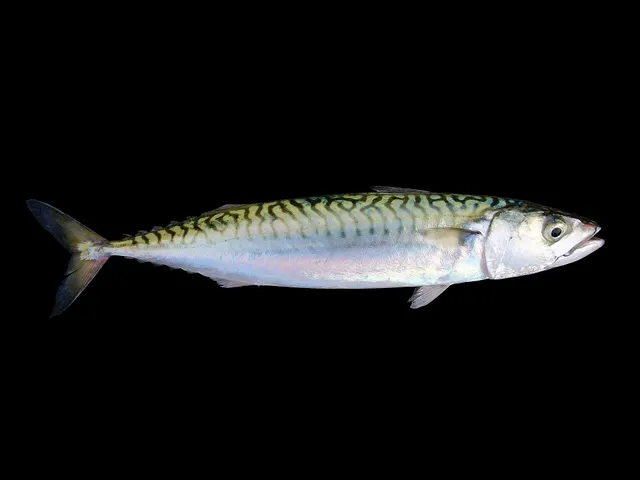 Atlantic mackerelSmall mackerel are taken by bass, which is part of why silver, mackerel-profile lures work inshore in summer.
- European spratAutumn and winter sprat shoals moving inshore are followed by bass, and a sprat shoal in a bay is one of the more reliable indications that bass are present.
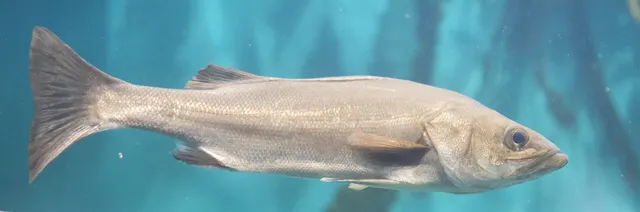 Japanese sea bassUnrelated genera occupying equivalent estuarine niches and both called sea bass in english.
- Lesser sandeelSandeel is a principal bass prey over clean sand and around banks, and the timing of bass arrival on many sandy marks tracks sandeel emergence rather than water temperature alone.
Where it lives
- EstuaryBass use estuaries heavily, and juveniles depend on them as nursery habitat — which is why estuary nursery areas are a standard instrument of bass management.
- Seagrass bedsSeagrass is nursery habitat for juvenile bass and hunting ground for adults working the edges, which is why an eelgrass bed in an estuary is worth more to the fishery than its area suggests.
- Surf beachesBass hunt in broken water where turbulence disorients prey — which is why surf beaches fish better with some sea running.
- Rocky shores and reefsHard, structurally complex ground with kelp, gullies and broken rock — the richest inshore habitat, and the most dangerous to fish from.
Where you will find it
- AngleseyThe species that made the island's modern reputation. Races, headlands and surf beaches all hold bass, and the fast water is what concentrates the feeding that lure fishing exploits.
- Belfast Lough and the north Down shoreThe low rock and small sandy bays between Bangor and Donaghadee are the shape of ground bass hunt, and the corner at Orlock where the stream through the Copeland sound begins to run is the hydraulic feature this coast has to offer them.
- Brittany and the French Atlantic coastThe continental heartland of the fishery. Rock, race, kelp and the largest tidal range in Europe produce more of the turbulence bass exploit than almost anywhere, and a very large body of European lure technique was developed on this coast and exported.
- Cardigan Bay and the sarnauAlong the Ceredigion beaches, around the estuary mouths and over the scour at the ends and flanks of the sarnau, where the moraine reefs interrupt the stream and concentrate food.
- CaribbeanRecorded at the margins of the region rather than as a characteristic species — included so that the record's fauna is navigable rather than to suggest a fishery.
- Chesil BeachFeeds in the broken water at the top of the shingle, taking the invertebrates the surf turns over, and is the principal summer and autumn catch.
- Dublin Bay and the Wicklow coastThe quiet marks on this coast are the productive ones. A large city beach among the least fished on the coast produces double-figure fish consistently each year on big baits at night on an incoming tide, and an estuary a few kilometres north is described as a remarkable big-bass mark fished by freelining sandeel on the flood.
- England and WalesThe most sought-after inshore species and the most heavily regulated, and the fish that drove the growth of shore lure fishing.
33 more
- France Fishing regions
- Galicia and the Iberian ria coast Fishing regions
- Lanzarote Fishing regions
- Morecambe Bay and the north-west England coast Fishing regions
- Pembrokeshire and the south-west Wales coast Fishing regions
- Portland Bill and the Portland Race Fishing regions
- Portugal Fishing regions
- Spain Fishing regions
- The Atlantic coast of Ireland Fishing regions
- The Bay of Biscay Fishing regions
- The Causeway and Antrim coast Fishing regions
- The Channel shingle coasts Fishing regions
- The Clare coast and the Shannon estuary Fishing regions
- The Cornish and Devon coasts Fishing regions
- The Firth of Clyde Fishing regions
- The Gower and Carmarthen Bay Fishing regions
- The Isles of Scilly Fishing regions
- The Kerry coast Fishing regions
- The Louth and Meath coast Fishing regions
- The Moroccan Atlantic coast Fishing regions
- The Moroccan Mediterranean coast Fishing regions
- The Netherlands Fishing regions
- The Norfolk and Suffolk sandbank coast Fishing regions
- The Purbeck coast and Poole Bay Fishing regions
- The Severn Estuary Fishing regions
- The Solent and the Hampshire coast Fishing regions
- The Thames Estuary Fishing regions
- The Wadden Sea Fishing regions
- The Wash and the Lincolnshire coast Fishing regions
- The Waterford coast Fishing regions
- The Wexford coast Fishing regions
- The Yorkshire coast Fishing regions
- West Cork Fishing regions
Understanding this fish
- Bass: the same word for unrelated fishThe fish a British or Irish angler means by bass, and unrelated to the North American ones.
- Crustacean imitation in saltwater fly fishingBass over weed and mixed ground feed heavily on shrimp, prawn and small crabs, which is why a crustacean pattern fished slowly frequently outfishes a baitfish imitation stripped fast.
- Decapod crustaceans as preyBass take crabs and shrimps heavily in shallow rough ground and estuaries, and peeler crab's long-standing status as a bass bait rests on that fact rather than the other way round.
- Dispatching a fish: doing it properly, or not doing it at allThe species where the decision is sharpest for a British angler: bass are frequently kept, they are heavily regulated, and the decision to keep or return is one the rules may already have made.
- Fly fishing for bass in surf, estuary and over rockOne species and three genuinely different fisheries — surf, estuary and rock — each demanding different lines, retrieves and reading.
- Saltwater fly fishing: what changesThe British catch the whole coastal fly proposition rests on. Bass hunt small fish in broken water over rock and along surf edges, in exactly the depth a fly can be fished, and they feed hardest when the water is moving — which is what makes the tide rather than the hatch the organising variable.
- Shooting heads and what a saltwater fly line is forThe distance problem in one fish. Bass frequently feed beyond comfortable single-haul range in wind, over ground that cannot be waded further, which is the situation a concentrated casting weight and thin running line exists to solve.
- The double haul, and casting a fly in windThe commonest British reason to learn the cast. Bass fishing happens in wind because bass feed in broken water, and a single-haul caster on an onshore wind is not fishing badly — they are not reaching the water the fish are in at all.
3 more
Told apart from
Rules and access
Sources and evidence
- Cefas science, advice and data on marine and freshwater environments — Centre for Environment, Fisheries and Aquaculture Science (Government fisheries body)Relied on for: The life history, slow growth and late maturity of European sea bass, and the importance of estuarine nursery areas.States this directlyCitation checked — the work exists and is described correctly
- ICES Advice on fishing opportunities, catch and effort — International Council for the Exploration of the Sea (Scientific institute)Relied on for: That bass are managed as discrete stocks with advice issued at stock rather than species level.States this directlyCitation checked — the work exists and is described correctly
- FishBase: a global information system on fishes — Froese, R. and D. Pauly, eds. — FishBase Consortium (Scientific institute)Relied on for: Taxonomy, family, range and size.States this directlyPassage read and verified
- The IUCN Red List of Threatened Species — International Union for Conservation of Nature (Conservation authority)Relied on for: The global conservation assessment. Re-checked via FishBase's republication of the current category, because the Red List's own pages could not be read.States this directlyCitation checked — the work exists and is described correctly
- RNLI water safety guidance: cold water shock and Float to Live — Royal National Lifeboat Institution (Water-safety or diver-training authority)Relied on for: The nature of the risk from swell and from being cut off by tide on coastal marks.FishingHQ's interpretation of what it saysPassage read and verified
Why the 80 connections on this page are here, and the sources
Similar and related fish
Backed by research — 4 connections
Supported by peer-reviewed research or fisheries science. The sources are listed and can be checked.
Atlantic mackerel
Bass diet includes small pelagic fish; mackerel are recorded among them.
- FishBase: a global information system on fishes — Froese, R. and D. Pauly, eds. — FishBase Consortium (Scientific institute)Relied on for: Diet composition records for Dicentrarchus labrax including small pelagic fish.States this directlyPassage read and verified
- Cefas science, advice and data on marine and freshwater environments — Centre for Environment, Fisheries and Aquaculture Science (Government fisheries body)Relied on for: Bass feeding ecology in inshore waters.FishingHQ's interpretation of what it saysCitation checked — the work exists and is described correctly
European sprat
Recorded diet evidence identifies Sprattus sprattus as a food item of this predator at species level. The edge is written at that granularity and no further.
- FishBase: a global information system on fishes — Froese, R. and D. Pauly, eds. — FishBase Consortium (Scientific institute)Relied on for: Food items recorded for this predator, including Sprattus sprattus.States this directlyPassage read and verified
- FAO Species Identification Guides for Fishery Purposes and the FAO Species Catalogues — Food and Agriculture Organization of the United Nations (Scientific institute)Relied on for: Species account describing the diet of this predator in the region where Sprattus sprattus occurs.Background and mechanism onlyCitation checked — the work exists and is described correctly
Japanese sea bass
An identification comparison naming both binomials: Lateolabrax japonicus and Dicentrarchus labrax.
- FishBase: a global information system on fishes — Froese, R. and D. Pauly, eds. — FishBase Consortium (Scientific institute)Relied on for: Morphological and distributional data for Lateolabrax japonicus and for Dicentrarchus labrax.States this directlyPassage read and verified
- The IUCN Red List of Threatened Species — International Union for Conservation of Nature (Conservation authority)Relied on for: Separate assessments treating Lateolabrax japonicus and Dicentrarchus labrax as distinct species.States this directlyCitation checked — the work exists and is described correctly
Lesser sandeel
Recorded diet evidence identifies Ammodytes marinus as a food item of this predator at species level. The edge is written at that granularity and no further.
- FishBase: a global information system on fishes — Froese, R. and D. Pauly, eds. — FishBase Consortium (Scientific institute)Relied on for: Food items recorded for this predator, including Ammodytes marinus.States this directlyPassage read and verified
- FAO Species Identification Guides for Fishery Purposes and the FAO Species Catalogues — Food and Agriculture Organization of the United Nations (Scientific institute)Relied on for: Species account describing the diet of this predator in the region where Ammodytes marinus occurs.Background and mechanism onlyCitation checked — the work exists and is described correctly
How it is caught
What experienced anglers do — 7 connections
Widely and independently recommended by experienced anglers and specialist sources. This is real angling knowledge, not proof: controlled evidence for it is limited, and FishingHQ records it as convention rather than as a demonstrated effect.
Saltwater fly fishing
An established way this species is taken recreationally in north-west European waters.
- Sea Angler — Bauer Media (Specialist angling publication)Relied on for: Shore and boat practice in north-west European sea angling for the species and method described, presented across multiple independent contributors.States this directlyCitation checked — the work exists and is described correctly
- General angling website restatements of established technique — Various (Credible secondary source)Relied on for: Widely restated practice connecting this species to this method, recorded as practitioner consensus rather than as tested fact.Background and mechanism onlyCitation checked — the work exists and is described correctly
A species joined to a method genuinely used for it, on the strength of the biology that makes the method work rather than on the fact that somebody has tried it.
- FishBase: a global information system on fishes — Froese, R. and D. Pauly, eds. — FishBase Consortium (Scientific institute)Relied on for: Diet, habitat association, depth range, feeding behaviour and seasonal movement recorded for the species concerned.States this directlyPassage read and verified
- The Fishes of the British Isles and North-West Europe — Macmillan, 1969 (Reference work)Relied on for: Distribution, habitat and biology of the fishes of the British Isles and north-west Europe.States this directlyCitation checked — the work exists and is described correctly
A statement about how a species is fished, which is angling convention rather than biology and is labelled as such.
- Still Water Fly-Fishing — Andre Deutsch, 1952 (Specialist angling publication)Relied on for: Fly-fishing practice from a practitioner tradition: line control, depth management, retrieve and the reading of water.States this directlyCitation checked — the work exists and is described correctly
- Sea Angler — Bauer Media (Specialist angling publication)Relied on for: Contemporary UK sea angling practice as reported by practitioners: ground, tackle, presentation and seasonal timing.States this directlyCitation checked — the work exists and is described correctly
Drop shotting
An established way this species is taken recreationally in north-west European waters.
- Sea Angler — Bauer Media (Specialist angling publication)Relied on for: Shore and boat practice in north-west European sea angling for the species and method described, presented across multiple independent contributors.States this directlyCitation checked — the work exists and is described correctly
- General angling website restatements of established technique — Various (Credible secondary source)Relied on for: Widely restated practice connecting this species to this method, recorded as practitioner consensus rather than as tested fact.Background and mechanism onlyCitation checked — the work exists and is described correctly
Float fishing
An established way this species is taken recreationally in north-west European waters.
- Sea Angler — Bauer Media (Specialist angling publication)Relied on for: Shore and boat practice in north-west European sea angling for the species and method described, presented across multiple independent contributors.States this directlyCitation checked — the work exists and is described correctly
- General angling website restatements of established technique — Various (Credible secondary source)Relied on for: Widely restated practice connecting this species to this method, recorded as practitioner consensus rather than as tested fact.Background and mechanism onlyCitation checked — the work exists and is described correctly
Kayak fishing
Established angling practice for this species, recorded as convention. The note states the property of the animal or its water that makes the method the answer.
- Sea Angler — Bauer Media (Specialist angling publication)Relied on for: Established sea-angling technique and its application to this species.States this directlyCitation checked — the work exists and is described correctly
- General angling website restatements of established technique — Various (Credible secondary source)Relied on for: Widely restated practice connecting this species and method.Background and mechanism onlyCitation checked — the work exists and is described correctly
Popping and stickbaiting
An established way this species is taken recreationally in north-west European waters.
- Sea Angler — Bauer Media (Specialist angling publication)Relied on for: Shore and boat practice in north-west European sea angling for the species and method described, presented across multiple independent contributors.States this directlyCitation checked — the work exists and is described correctly
- General angling website restatements of established technique — Various (Credible secondary source)Relied on for: Widely restated practice connecting this species to this method, recorded as practitioner consensus rather than as tested fact.Background and mechanism onlyCitation checked — the work exists and is described correctly
Spinning
Well-established and independently described.
- Sea Angler — Bauer Media (Specialist angling publication)Relied on for: Shore lure practice for bass.Citation checked — the work exists and is described correctly
- Angling Times — Bauer Media (Specialist angling publication)Relied on for: Contemporary shore lure practice.Citation checked — the work exists and is described correctly
Surfcasting
Established shore practice, independently described.
- Sea Angler — Bauer Media (Specialist angling publication)Relied on for: Shore bait practice for bass.Citation checked — the work exists and is described correctly
- Angling Times — Bauer Media (Specialist angling publication)Relied on for: Contemporary bass practice from a separate editorial tradition.Citation checked — the work exists and is described correctly
Gear for this fish
What experienced anglers do — 10 connections
Widely and independently recommended by experienced anglers and specialist sources. This is real angling knowledge, not proof: controlled evidence for it is limited, and FishingHQ records it as convention rather than as a demonstrated effect.
Peeler crab
Long-established and independently described sea angling practice.
- Sea Angler — Bauer Media (Specialist angling publication)Relied on for: Peeler crab as a bass bait and its seasonal availability.Citation checked — the work exists and is described correctly
- Angling Times — Bauer Media (Specialist angling publication)Relied on for: Contemporary peeler crab practice from a separate editorial tradition.Citation checked — the work exists and is described correctly
Established angling convention about what a bait is used for. Convention is what this is, and labelling it as convention is what stops it being read as a tested result.
- Sea Angler — Bauer Media (Specialist angling publication)Relied on for: Contemporary UK sea angling practice as reported and restated by practitioners, including shore technique, bait use and species behaviour.States this directlyCitation checked — the work exists and is described correctly
- General angling website restatements of established technique — Various (Credible secondary source)Relied on for: Widely restated angling practice and belief, recorded as practitioner consensus rather than as tested fact.Background and mechanism onlyCitation checked — the work exists and is described correctly
Crab and shellfish
A practitioner claim about a species-bait pairing.
- Sea Angler — Bauer Media (Specialist angling publication)Relied on for: Practitioner treatment of peeler crab as a bass bait through the moulting season.Citation checked — the work exists and is described correctly
- Cefas science, advice and data on marine and freshwater environments — Centre for Environment, Fisheries and Aquaculture Science (Government fisheries body)Relied on for: The inshore and estuarine habitat use of European sea bass that puts it on the ground where peeler crab is found.Citation checked — the work exists and is described correctly
Jerkbaits
A practitioner claim about which lure family answers this species' feeding or holding behaviour.
- Sea Angler — Bauer Media (Specialist angling publication)Relied on for: Established shore and boat lure practice for the species in north-west European seas.States this directlyCitation checked — the work exists and is described correctly
- General angling website restatements of established technique — Various (Credible secondary source)Relied on for: Widely restated lure selection for this species, recorded as practitioner consensus rather than as tested fact.Background and mechanism onlyCitation checked — the work exists and is described correctly
Metal jigs
A practitioner claim about which lure family answers this species' feeding or holding behaviour.
- Sea Angler — Bauer Media (Specialist angling publication)Relied on for: Established shore and boat lure practice for the species in north-west European seas.States this directlyCitation checked — the work exists and is described correctly
- General angling website restatements of established technique — Various (Credible secondary source)Relied on for: Widely restated lure selection for this species, recorded as practitioner consensus rather than as tested fact.Background and mechanism onlyCitation checked — the work exists and is described correctly
Sand eel
A practitioner claim about a bait-species pairing, with the underlying forage relationship supported separately.
- Sea Angler — Bauer Media (Specialist angling publication)Relied on for: Practitioner treatment of sand eel as a bass bait, live and frozen.Citation checked — the work exists and is described correctly
- Cefas science, advice and data on marine and freshwater environments — Centre for Environment, Fisheries and Aquaculture Science (Government fisheries body)Relied on for: The inshore habitat use and diet of European sea bass, including small forage fish.Citation checked — the work exists and is described correctly
Soft plastics
A practitioner claim about which lure family answers this species' feeding or holding behaviour.
- Sea Angler — Bauer Media (Specialist angling publication)Relied on for: Established shore and boat lure practice for the species in north-west European seas.States this directlyCitation checked — the work exists and is described correctly
- General angling website restatements of established technique — Various (Credible secondary source)Relied on for: Widely restated lure selection for this species, recorded as practitioner consensus rather than as tested fact.Background and mechanism onlyCitation checked — the work exists and is described correctly
Streamers
What anglers actually use a method or a lure for, recorded as convention.
- Still Water Fly-Fishing — Andre Deutsch, 1952 (Specialist angling publication)Relied on for: Fly-fishing practice from a practitioner tradition: line control, depth management, retrieve and the reading of water.States this directlyCitation checked — the work exists and is described correctly
- Sea Angler — Bauer Media (Specialist angling publication)Relied on for: Contemporary UK sea angling practice as reported by practitioners: ground, tackle, presentation and seasonal timing.States this directlyCitation checked — the work exists and is described correctly
Surface lures
Established shore lure practice, independently described.
- Sea Angler — Bauer Media (Specialist angling publication)Relied on for: Surface lure practice for bass.Citation checked — the work exists and is described correctly
- Angling Times — Bauer Media (Specialist angling publication)Relied on for: Contemporary topwater practice from a separate tradition.Citation checked — the work exists and is described correctly
Uptide rig
That anglers conventionally choose this arrangement when targeting this fish. It is a claim about practice rather than about the fish, and it does not assert that the arrangement is necessary or that it will succeed.
- Sea Angler — Bauer Media (Specialist angling publication)Relied on for: Long-running published description of British sea angling practice, including boat and shore terminal arrangements, grip leads and the conditions each is chosen for.States this directlyCitation checked — the work exists and is described correctly
- Angling Times — Bauer Media (Specialist angling publication)Relied on for: Contemporary UK angling practice as reported by practitioners, including sea terminal tackle convention and its development.States this directlyCitation checked — the work exists and is described correctly
Ragworm
Established sea angling practice, independently described.
- Sea Angler — Bauer Media (Specialist angling publication)Relied on for: Ragworm as an inshore bait for bass and flatfish.Citation checked — the work exists and is described correctly
- Angling Times — Bauer Media (Specialist angling publication)Relied on for: Contemporary ragworm practice.Citation checked — the work exists and is described correctly
Where it lives
Backed by research — 4 connections
Supported by peer-reviewed research or fisheries science. The sources are listed and can be checked.
Estuary
A habitat and life-history claim held to a scientific standard, because it underpins a management measure rather than a technique.
- Cefas science, advice and data on marine and freshwater environments — Centre for Environment, Fisheries and Aquaculture Science (Government fisheries body)Relied on for: The role of estuarine nursery areas in the life history of European sea bass.States this directlyCitation checked — the work exists and is described correctly
- ICES Advice on fishing opportunities, catch and effort — International Council for the Exploration of the Sea (Scientific institute)Relied on for: Stock assessment context for European sea bass including nursery habitat.Background and mechanism onlyCitation checked — the work exists and is described correctly
Seagrass beds
A habitat association resting on the regional identification and fisheries literature rather than on angling report.
- JNCC species and habitat conservation advice — Joint Nature Conservation Committee (Conservation authority)Relied on for: UK and European habitat classification and the conservation status of seagrass beds, including the species associated with them.States this directlyCitation checked — the work exists and is described correctly
- FAO Species Identification Guides for Fishery Purposes and the FAO Species Catalogues — Food and Agriculture Organization of the United Nations (Scientific institute)Relied on for: Habitat association and distribution of the species concerned.States this directlyCitation checked — the work exists and is described correctly
Surf beaches
Habitat use and feeding behaviour are documented.
- Cefas science, advice and data on marine and freshwater environments — Centre for Environment, Fisheries and Aquaculture Science (Government fisheries body)Relied on for: Bass habitat use, inshore movements and nursery area dependence.States this directlyCitation checked — the work exists and is described correctly
- FishBase: a global information system on fishes — Froese, R. and D. Pauly, eds. — FishBase Consortium (Scientific institute)Relied on for: Habitat and salinity tolerance records for Dicentrarchus labrax.States this directlyPassage read and verified
Rocky shores and reefs
Recorded habitat association.
- FishBase: a global information system on fishes — Froese, R. and D. Pauly, eds. — FishBase Consortium (Scientific institute)Relied on for: Habitat records for Dicentrarchus labrax including rocky inshore ground.States this directlyPassage read and verified
- Cefas science, advice and data on marine and freshwater environments — Centre for Environment, Fisheries and Aquaculture Science (Government fisheries body)Relied on for: Inshore habitat use by bass.FishingHQ's interpretation of what it saysCitation checked — the work exists and is described correctly
Where you will find it
Backed by research — 41 connections
Supported by peer-reviewed research or fisheries science. The sources are listed and can be checked.
Anglesey
A distributional claim about where a species occurs, which is a claim about the world and rests on the reference literature rather than on angling report.
- The Fishes of the British Isles and North-West Europe — Macmillan, 1969 (Reference work)Relied on for: Distribution, habitat association and biology of the fishes of the British Isles and north-west Europe.States this directlyCitation checked — the work exists and is described correctly
- Cefas science, advice and data on marine and freshwater environments — Centre for Environment, Fisheries and Aquaculture Science (Government fisheries body)Relied on for: UK marine fisheries science: distribution, survey data and the biological basis of management advice.States this directlyCitation checked — the work exists and is described correctly
Belfast Lough and the north Down shore
A claim that a coast or region contains the ground and conditions this species is associated with. It is a distributional statement about the world, it rests on the reference literature and on the institute that surveyed it, and it deliberately asserts nothing about access, permission or catch.
- The Fishes of the British Isles and North-West Europe — Macmillan, 1969 (Reference work)Relied on for: Distribution and habitat association of the marine fishes of the British Isles and north-west Europe, including which coasts and ground types a species occupies.States this directlyCitation checked — the work exists and is described correctly
- FishBase: a global information system on fishes — Froese, R. and D. Pauly, eds. — FishBase Consortium (Scientific institute)Relied on for: Recorded distribution, depth range and habitat association for the species named.States this directlyPassage read and verified
Brittany and the French Atlantic coast
A claim that a place contains the ground, water and seasonal conditions the species is associated with. It is a distributional statement about the world, it rests on the regional reference literature, and it deliberately asserts nothing about access, permission or catch.
- FishBase: a global information system on fishes — Froese, R. and D. Pauly, eds. — FishBase Consortium (Scientific institute)Relied on for: Recorded distribution, depth range and habitat association for the species named.States this directlyPassage read and verified
- The Fishes of the British Isles and North-West Europe — Macmillan, 1969 (Reference work)Relied on for: Distribution and habitat association of the fishes of north-west Europe, including the continental coasts and seas named.States this directlyCitation checked — the work exists and is described correctly
Cardigan Bay and the sarnau
A claim that a place contains the ground, water and seasonal conditions the species is associated with. It is a distributional statement about the world, it rests on the regional reference literature, and it deliberately asserts nothing about access, permission or catch.
- The Fishes of the British Isles and North-West Europe — Macmillan, 1969 (Reference work)Relied on for: Distribution and habitat association of the marine, estuarine and freshwater fishes of the British Isles, including which coasts, estuaries and ground types a species occupies.States this directlyCitation checked — the work exists and is described correctly
- FishBase: a global information system on fishes — Froese, R. and D. Pauly, eds. — FishBase Consortium (Scientific institute)Relied on for: Recorded distribution, depth range and habitat association for the species named.States this directlyPassage read and verified
Caribbean
A distributional claim taken from reference works on the fishes of the region rather than from angling report. It states presence and asserts nothing about a fishery.
- FishBase: a global information system on fishes — Froese, R. and D. Pauly, eds. — FishBase Consortium (Scientific institute)Relied on for: Distribution, habitat association, depth range and feeding behaviour recorded for the species concerned.States this directlyPassage read and verified
- The Fishes of the British Isles and North-West Europe — Macmillan, 1969 (Reference work)Relied on for: Distribution, habitat and biology of the fishes of the British Isles and north-west Europe.States this directlyCitation checked — the work exists and is described correctly
Chesil Beach
A distribution association between an animal and a kind of water, rather than a claim about any named mark.
- The Fishes of the British Isles and North-West Europe — Macmillan, 1969 (Reference work)Relied on for: Distribution, habitat association, depth and ground preference of fishes in British and north-west European waters.States this directlyCitation checked — the work exists and is described correctly
- FishBase: a global information system on fishes — Froese, R. and D. Pauly, eds. — FishBase Consortium (Scientific institute)Relied on for: Distribution, habitat association and depth range recorded for the species.Background and mechanism onlyPassage read and verified
Dublin Bay and the Wicklow coast
A claim that a coast contains the ground and conditions the species is associated with. It is a distributional statement about the world, it rests on the regional reference literature, and it deliberately asserts nothing about access, permission or catch.
- The Fishes of the British Isles and North-West Europe — Macmillan, 1969 (Reference work)Relied on for: Distribution and habitat association of the marine and estuarine fishes of the British Isles and north-west Europe, including which coasts and ground types a species occupies.States this directlyCitation checked — the work exists and is described correctly
- FishBase: a global information system on fishes — Froese, R. and D. Pauly, eds. — FishBase Consortium (Scientific institute)Relied on for: Recorded distribution, depth range and habitat association for the species named.States this directlyPassage read and verified
England and Wales
A distribution claim about the world, so it rests on the reference works rather than on angling report. FishingHQ's evidence policy requires it.
- FishBase: a global information system on fishes — Froese, R. and D. Pauly, eds. — FishBase Consortium (Scientific institute)Relied on for: Distribution, habitat association, water-type tolerance and occurrence records for the species, including its presence in the countries concerned.States this directlyPassage read and verified
- The IUCN Red List of Threatened Species — International Union for Conservation of Nature (Conservation authority)Relied on for: Assessment and range account for the species, including the countries and systems it occupies and its population trend within them.States this directlyCitation checked — the work exists and is described correctly
France
Occurrence of the species in these waters: a statement about the animal's distribution, not a venue recommendation.
- The Fishes of the British Isles and North-West Europe — Macmillan, 1969 (Reference work)Relied on for: Distribution and habitat association of fishes in north-west European and eastern Atlantic waters.States this directlyCitation checked — the work exists and is described correctly
- FishBase: a global information system on fishes — Froese, R. and D. Pauly, eds. — FishBase Consortium (Scientific institute)Relied on for: Distribution, depth range and habitat association recorded for the species.States this directlyPassage read and verified
Galicia and the Iberian ria coast
Occurrence of the species in this system or along this coast: a statement about the animal's distribution, not a venue recommendation.
- The Fishes of the British Isles and North-West Europe — Macmillan, 1969 (Reference work)Relied on for: Distribution and habitat association of fishes in British and north-west European waters.States this directlyCitation checked — the work exists and is described correctly
- FishBase: a global information system on fishes — Froese, R. and D. Pauly, eds. — FishBase Consortium (Scientific institute)Relied on for: Distribution, depth range and habitat association recorded for the species.States this directlyPassage read and verified
Lanzarote
A distributional claim taken from reference works on the fishes of the region rather than from angling report. It states presence and asserts nothing about a fishery.
- FishBase: a global information system on fishes — Froese, R. and D. Pauly, eds. — FishBase Consortium (Scientific institute)Relied on for: Distribution, habitat association, depth range and feeding behaviour recorded for the species concerned.States this directlyPassage read and verified
- The Fishes of the British Isles and North-West Europe — Macmillan, 1969 (Reference work)Relied on for: Distribution, habitat and biology of the fishes of the British Isles and north-west Europe.States this directlyCitation checked — the work exists and is described correctly
Morecambe Bay and the north-west England coast
A claim that a place contains the ground, water and seasonal conditions the species is associated with. It is a distributional statement about the world, it rests on the regional reference literature, and it deliberately asserts nothing about access, permission or catch.
- The Fishes of the British Isles and North-West Europe — Macmillan, 1969 (Reference work)Relied on for: Distribution and habitat association of the marine, estuarine and freshwater fishes of the British Isles, including which coasts and ground types a species occupies.States this directlyCitation checked — the work exists and is described correctly
- FishBase: a global information system on fishes — Froese, R. and D. Pauly, eds. — FishBase Consortium (Scientific institute)Relied on for: Recorded distribution, depth range and habitat association for the species named.States this directlyPassage read and verified
Pembrokeshire and the south-west Wales coast
A claim that a place contains the ground, water and seasonal conditions the species is associated with. It is a distributional statement about the world, it rests on the regional reference literature, and it deliberately asserts nothing about access, permission or catch.
- The Fishes of the British Isles and North-West Europe — Macmillan, 1969 (Reference work)Relied on for: Distribution and habitat association of the marine, estuarine and freshwater fishes of the British Isles, including which coasts and ground types a species occupies.States this directlyCitation checked — the work exists and is described correctly
- FishBase: a global information system on fishes — Froese, R. and D. Pauly, eds. — FishBase Consortium (Scientific institute)Relied on for: Recorded distribution, depth range and habitat association for the species named.States this directlyPassage read and verified
Portland Bill and the Portland Race
A distribution association between an animal and a kind of water, rather than a claim about any named mark.
- The Fishes of the British Isles and North-West Europe — Macmillan, 1969 (Reference work)Relied on for: Distribution, habitat association, depth and ground preference of fishes in British and north-west European waters.States this directlyCitation checked — the work exists and is described correctly
- FishBase: a global information system on fishes — Froese, R. and D. Pauly, eds. — FishBase Consortium (Scientific institute)Relied on for: Distribution, habitat association and depth range recorded for the species.Background and mechanism onlyPassage read and verified
Portugal
Occurrence of the species in these waters: a statement about the animal's distribution, not a venue recommendation.
- The Fishes of the British Isles and North-West Europe — Macmillan, 1969 (Reference work)Relied on for: Distribution and habitat association of fishes in north-west European and eastern Atlantic waters.States this directlyCitation checked — the work exists and is described correctly
- FishBase: a global information system on fishes — Froese, R. and D. Pauly, eds. — FishBase Consortium (Scientific institute)Relied on for: Distribution, depth range and habitat association recorded for the species.States this directlyPassage read and verified
Spain
That a species occurs in these waters, drawn from distribution science and stock assessment. It is a statement about where the animal lives and is not a statement that anybody will catch one, still less where.
- FishBase: a global information system on fishes — Froese, R. and D. Pauly, eds. — FishBase Consortium (Scientific institute)Relied on for: Recorded distribution, depth range and habitat association of the species named, including its occurrence in the waters of the jurisdiction named.States this directlyPassage read and verified
- ICES Advice on fishing opportunities, catch and effort — International Council for the Exploration of the Sea (Scientific institute)Relied on for: Stock distribution and assessment across the European ecoregions, which is the basis for stating that a species occurs in a given national sea area.States this directlyCitation checked — the work exists and is described correctly
The Atlantic coast of Ireland
A claim that a place contains the ground and conditions the species is associated with. It is a distributional statement about the world, it rests on the regional reference literature, and it deliberately asserts nothing about access, permission or catch.
- The Fishes of the British Isles and North-West Europe — Macmillan, 1969 (Reference work)Relied on for: Distribution and habitat association of the marine and estuarine fishes of the British Isles, including which coasts and ground types a species occupies.States this directlyCitation checked — the work exists and is described correctly
- FishBase: a global information system on fishes — Froese, R. and D. Pauly, eds. — FishBase Consortium (Scientific institute)Relied on for: Recorded distribution, depth range and habitat association for the species named.States this directlyPassage read and verified
The Bay of Biscay
Occurrence of the species in this system or along this coast: a statement about the animal's distribution, not a venue recommendation.
- The Fishes of the British Isles and North-West Europe — Macmillan, 1969 (Reference work)Relied on for: Distribution and habitat association of fishes in British and north-west European waters.States this directlyCitation checked — the work exists and is described correctly
- FishBase: a global information system on fishes — Froese, R. and D. Pauly, eds. — FishBase Consortium (Scientific institute)Relied on for: Distribution, depth range and habitat association recorded for the species.States this directlyPassage read and verified
The Causeway and Antrim coast
A claim that a place contains the ground, water and seasonal conditions the species is associated with. It is a distributional statement about the world, it rests on the regional reference literature, and it deliberately asserts nothing about access, permission or catch.
- The Fishes of the British Isles and North-West Europe — Macmillan, 1969 (Reference work)Relied on for: Distribution and habitat association of the marine, estuarine and freshwater fishes of the British Isles, including which coasts, estuaries and ground types a species occupies.States this directlyCitation checked — the work exists and is described correctly
- FishBase: a global information system on fishes — Froese, R. and D. Pauly, eds. — FishBase Consortium (Scientific institute)Relied on for: Recorded distribution, depth range and habitat association for the species named.States this directlyPassage read and verified
The Channel shingle coasts
Occurrence of the species in this system or along this coast: a statement about the animal's distribution, not a venue recommendation.
- The Fishes of the British Isles and North-West Europe — Macmillan, 1969 (Reference work)Relied on for: Distribution and habitat association of fishes in British and north-west European waters.States this directlyCitation checked — the work exists and is described correctly
- FishBase: a global information system on fishes — Froese, R. and D. Pauly, eds. — FishBase Consortium (Scientific institute)Relied on for: Distribution, depth range and habitat association recorded for the species.States this directlyPassage read and verified
The Clare coast and the Shannon estuary
A claim that a coast contains the ground and conditions the species is associated with. It is a distributional statement about the world, it rests on the regional reference literature, and it deliberately asserts nothing about access, permission or catch.
- The Fishes of the British Isles and North-West Europe — Macmillan, 1969 (Reference work)Relied on for: Distribution and habitat association of the marine and estuarine fishes of the British Isles and north-west Europe, including which coasts and ground types a species occupies.States this directlyCitation checked — the work exists and is described correctly
- FishBase: a global information system on fishes — Froese, R. and D. Pauly, eds. — FishBase Consortium (Scientific institute)Relied on for: Recorded distribution, depth range and habitat association for the species named.States this directlyPassage read and verified
The Cornish and Devon coasts
A distributional claim about where a species occurs, taken from reference works on the fishes of the region rather than from angling report. It states presence and habitat association and asserts nothing about a fishery.
- FishBase: a global information system on fishes — Froese, R. and D. Pauly, eds. — FishBase Consortium (Scientific institute)Relied on for: Distribution, habitat association, depth range and feeding behaviour recorded for the species concerned.States this directlyPassage read and verified
- The Fishes of the British Isles and North-West Europe — Macmillan, 1969 (Reference work)Relied on for: Distribution, habitat and biology of the fishes of the British Isles and north-west Europe.States this directlyCitation checked — the work exists and is described correctly
The Firth of Clyde
A claim that a place contains the ground, water and seasonal conditions the species is associated with. It is a distributional statement about the world, it rests on the regional reference literature, and it deliberately asserts nothing about access, permission or catch.
- The Fishes of the British Isles and North-West Europe — Macmillan, 1969 (Reference work)Relied on for: Distribution and habitat association of the marine, estuarine and freshwater fishes of the British Isles, including which coasts and ground types a species occupies.States this directlyCitation checked — the work exists and is described correctly
- FishBase: a global information system on fishes — Froese, R. and D. Pauly, eds. — FishBase Consortium (Scientific institute)Relied on for: Recorded distribution, depth range and habitat association for the species named.States this directlyPassage read and verified
The Gower and Carmarthen Bay
A claim that a place contains the ground, water and seasonal conditions the species is associated with. It is a distributional statement about the world, it rests on the regional reference literature, and it deliberately asserts nothing about access, permission or catch.
- The Fishes of the British Isles and North-West Europe — Macmillan, 1969 (Reference work)Relied on for: Distribution and habitat association of the marine, estuarine and freshwater fishes of the British Isles, including which coasts, estuaries and ground types a species occupies.States this directlyCitation checked — the work exists and is described correctly
- FishBase: a global information system on fishes — Froese, R. and D. Pauly, eds. — FishBase Consortium (Scientific institute)Relied on for: Recorded distribution, depth range and habitat association for the species named.States this directlyPassage read and verified
The Isles of Scilly
A claim that a place contains the ground, water and seasonal conditions the species is associated with. It is a distributional statement about the world, it rests on the regional reference literature, and it deliberately asserts nothing about access, permission or catch.
- The Fishes of the British Isles and North-West Europe — Macmillan, 1969 (Reference work)Relied on for: Distribution and habitat association of the marine, estuarine and freshwater fishes of the British Isles, including which coasts, estuaries and ground types a species occupies.States this directlyCitation checked — the work exists and is described correctly
- FishBase: a global information system on fishes — Froese, R. and D. Pauly, eds. — FishBase Consortium (Scientific institute)Relied on for: Recorded distribution, depth range and habitat association for the species named.States this directlyPassage read and verified
The Kerry coast
A claim that a coast contains the ground and conditions the species is associated with. It is a distributional statement about the world, it rests on the regional reference literature, and it deliberately asserts nothing about access, permission or catch.
- The Fishes of the British Isles and North-West Europe — Macmillan, 1969 (Reference work)Relied on for: Distribution and habitat association of the marine and estuarine fishes of the British Isles and north-west Europe, including which coasts and ground types a species occupies.States this directlyCitation checked — the work exists and is described correctly
- FishBase: a global information system on fishes — Froese, R. and D. Pauly, eds. — FishBase Consortium (Scientific institute)Relied on for: Recorded distribution, depth range and habitat association for the species named.States this directlyPassage read and verified
The Louth and Meath coast
A claim that a coast contains the ground and conditions the species is associated with. It is a distributional statement about the world, it rests on the regional reference literature, and it deliberately asserts nothing about access, permission or catch.
- The Fishes of the British Isles and North-West Europe — Macmillan, 1969 (Reference work)Relied on for: Distribution and habitat association of the marine and estuarine fishes of the British Isles and north-west Europe, including which coasts and ground types a species occupies.States this directlyCitation checked — the work exists and is described correctly
- FishBase: a global information system on fishes — Froese, R. and D. Pauly, eds. — FishBase Consortium (Scientific institute)Relied on for: Recorded distribution, depth range and habitat association for the species named.States this directlyPassage read and verified
The Moroccan Atlantic coast
A distribution association between an animal and a kind of water, rather than a claim about any named mark.
- FAO Species Identification Guides for Fishery Purposes and the FAO Species Catalogues — Food and Agriculture Organization of the United Nations (Scientific institute)Relied on for: Distribution, habitat, depth and fishery accounts for the species of the eastern central Atlantic and Mediterranean in the FAO regional identification guides.States this directlyCitation checked — the work exists and is described correctly
- FishBase: a global information system on fishes — Froese, R. and D. Pauly, eds. — FishBase Consortium (Scientific institute)Relied on for: Distribution, habitat association and depth range recorded for the species.States this directlyPassage read and verified
The Moroccan Mediterranean coast
A distribution claim about the world, so it rests on the reference datasets rather than on angling report. FishingHQ's evidence policy requires it.
- FishBase: a global information system on fishes — Froese, R. and D. Pauly, eds. — FishBase Consortium (Scientific institute)Relied on for: Distribution, habitat association and depth range recorded for the species, including its occurrence in the water body concerned.States this directlyPassage read and verified
- FAO Species Identification Guides for Fishery Purposes and the FAO Species Catalogues — Food and Agriculture Organization of the United Nations (Scientific institute)Relied on for: Distribution, habitat, depth and fishery accounts for the species of the eastern central Atlantic and Mediterranean.States this directlyCitation checked — the work exists and is described correctly
The Netherlands
That a species occurs in these waters, drawn from distribution science and stock assessment. It is a statement about where the animal lives and is not a statement that anybody will catch one, still less where.
- FishBase: a global information system on fishes — Froese, R. and D. Pauly, eds. — FishBase Consortium (Scientific institute)Relied on for: Recorded distribution, depth range and habitat association of the species named, including its occurrence in the waters of the jurisdiction named.States this directlyPassage read and verified
- ICES Advice on fishing opportunities, catch and effort — International Council for the Exploration of the Sea (Scientific institute)Relied on for: Stock distribution and assessment across the European ecoregions, which is the basis for stating that a species occurs in a given national sea area.States this directlyCitation checked — the work exists and is described correctly
The Norfolk and Suffolk sandbank coast
A claim that a place contains the ground and conditions the species is associated with. It is a distributional statement about the world, it rests on the regional reference literature, and it deliberately asserts nothing about access, permission or catch.
- The Fishes of the British Isles and North-West Europe — Macmillan, 1969 (Reference work)Relied on for: Distribution and habitat association of the marine and estuarine fishes of the British Isles, including which coasts and ground types a species occupies.States this directlyCitation checked — the work exists and is described correctly
- FishBase: a global information system on fishes — Froese, R. and D. Pauly, eds. — FishBase Consortium (Scientific institute)Relied on for: Recorded distribution, depth range and habitat association for the species named.States this directlyPassage read and verified
The Purbeck coast and Poole Bay
A claim that a coast or region contains the ground and conditions this species is associated with. It is a distributional statement about the world, it rests on the reference literature and on the institute that surveyed it, and it deliberately asserts nothing about access, permission or catch.
- The Fishes of the British Isles and North-West Europe — Macmillan, 1969 (Reference work)Relied on for: Distribution and habitat association of the marine fishes of the British Isles and north-west Europe, including which coasts and ground types a species occupies.States this directlyCitation checked — the work exists and is described correctly
- FishBase: a global information system on fishes — Froese, R. and D. Pauly, eds. — FishBase Consortium (Scientific institute)Relied on for: Recorded distribution, depth range and habitat association for the species named.States this directlyPassage read and verified
The Severn Estuary
A distribution association between an animal and a kind of water, rather than a claim about any named mark.
- The Fishes of the British Isles and North-West Europe — Macmillan, 1969 (Reference work)Relied on for: Distribution, habitat association, depth and ground preference of fishes in British and north-west European waters.States this directlyCitation checked — the work exists and is described correctly
- FishBase: a global information system on fishes — Froese, R. and D. Pauly, eds. — FishBase Consortium (Scientific institute)Relied on for: Distribution, habitat association and depth range recorded for the species.Background and mechanism onlyPassage read and verified
The Solent and the Hampshire coast
A claim that a place contains the ground, water and seasonal conditions the species is associated with. It is a distributional statement about the world, it rests on the regional reference literature, and it deliberately asserts nothing about access, permission or catch.
- The Fishes of the British Isles and North-West Europe — Macmillan, 1969 (Reference work)Relied on for: Distribution and habitat association of the marine, estuarine and freshwater fishes of the British Isles, including which coasts, estuaries and ground types a species occupies.States this directlyCitation checked — the work exists and is described correctly
- FishBase: a global information system on fishes — Froese, R. and D. Pauly, eds. — FishBase Consortium (Scientific institute)Relied on for: Recorded distribution, depth range and habitat association for the species named.States this directlyPassage read and verified
The Thames Estuary
A claim that a place contains the ground, water and seasonal conditions the species is associated with. It is a distributional statement about the world, it rests on the regional reference literature, and it deliberately asserts nothing about access, permission or catch.
- The Fishes of the British Isles and North-West Europe — Macmillan, 1969 (Reference work)Relied on for: Distribution and habitat association of the marine, estuarine and freshwater fishes of the British Isles, including which coasts, estuaries and ground types a species occupies.States this directlyCitation checked — the work exists and is described correctly
- FishBase: a global information system on fishes — Froese, R. and D. Pauly, eds. — FishBase Consortium (Scientific institute)Relied on for: Recorded distribution, depth range and habitat association for the species named.States this directlyPassage read and verified
The Wadden Sea
A claim that a place contains the ground, water and seasonal conditions the species is associated with. It is a distributional statement about the world, it rests on the regional reference literature, and it deliberately asserts nothing about access, permission or catch.
- FishBase: a global information system on fishes — Froese, R. and D. Pauly, eds. — FishBase Consortium (Scientific institute)Relied on for: Recorded distribution, depth range and habitat association for the species named.States this directlyPassage read and verified
- The Fishes of the British Isles and North-West Europe — Macmillan, 1969 (Reference work)Relied on for: Distribution and habitat association of the fishes of north-west Europe, including the continental coasts and seas named.States this directlyCitation checked — the work exists and is described correctly
The Wash and the Lincolnshire coast
A claim that a place contains the ground, water and seasonal conditions the species is associated with. It is a distributional statement about the world, it rests on the regional reference literature, and it deliberately asserts nothing about access, permission or catch.
- The Fishes of the British Isles and North-West Europe — Macmillan, 1969 (Reference work)Relied on for: Distribution and habitat association of the marine, estuarine and freshwater fishes of the British Isles, including which coasts, estuaries and ground types a species occupies.States this directlyCitation checked — the work exists and is described correctly
- FishBase: a global information system on fishes — Froese, R. and D. Pauly, eds. — FishBase Consortium (Scientific institute)Relied on for: Recorded distribution, depth range and habitat association for the species named.States this directlyPassage read and verified
The Waterford coast
A claim that a coast contains the ground and conditions the species is associated with. It is a distributional statement about the world, it rests on the regional reference literature, and it deliberately asserts nothing about access, permission or catch.
- The Fishes of the British Isles and North-West Europe — Macmillan, 1969 (Reference work)Relied on for: Distribution and habitat association of the marine and estuarine fishes of the British Isles and north-west Europe, including which coasts and ground types a species occupies.States this directlyCitation checked — the work exists and is described correctly
- FishBase: a global information system on fishes — Froese, R. and D. Pauly, eds. — FishBase Consortium (Scientific institute)Relied on for: Recorded distribution, depth range and habitat association for the species named.States this directlyPassage read and verified
The Wexford coast
A claim that a coast contains the ground and conditions the species is associated with. It is a distributional statement about the world, it rests on the regional reference literature, and it deliberately asserts nothing about access, permission or catch.
- The Fishes of the British Isles and North-West Europe — Macmillan, 1969 (Reference work)Relied on for: Distribution and habitat association of the marine and estuarine fishes of the British Isles and north-west Europe, including which coasts and ground types a species occupies.States this directlyCitation checked — the work exists and is described correctly
- FishBase: a global information system on fishes — Froese, R. and D. Pauly, eds. — FishBase Consortium (Scientific institute)Relied on for: Recorded distribution, depth range and habitat association for the species named.States this directlyPassage read and verified
The Yorkshire coast
A claim that a place contains the ground, water and seasonal conditions the species is associated with. It is a distributional statement about the world, it rests on the regional reference literature, and it deliberately asserts nothing about access, permission or catch.
- The Fishes of the British Isles and North-West Europe — Macmillan, 1969 (Reference work)Relied on for: Distribution and habitat association of the marine, estuarine and freshwater fishes of the British Isles, including which coasts and ground types a species occupies.States this directlyCitation checked — the work exists and is described correctly
- FishBase: a global information system on fishes — Froese, R. and D. Pauly, eds. — FishBase Consortium (Scientific institute)Relied on for: Recorded distribution, depth range and habitat association for the species named.States this directlyPassage read and verified
West Cork
A claim that a coast contains the ground and conditions the species is associated with. It is a distributional statement about the world, it rests on the regional reference literature, and it deliberately asserts nothing about access, permission or catch.
- The Fishes of the British Isles and North-West Europe — Macmillan, 1969 (Reference work)Relied on for: Distribution and habitat association of the marine and estuarine fishes of the British Isles and north-west Europe, including which coasts and ground types a species occupies.States this directlyCitation checked — the work exists and is described correctly
- FishBase: a global information system on fishes — Froese, R. and D. Pauly, eds. — FishBase Consortium (Scientific institute)Relied on for: Recorded distribution, depth range and habitat association for the species named.States this directlyPassage read and verified
Understanding this fish
Backed by research — 4 connections
Supported by peer-reviewed research or fisheries science. The sources are listed and can be checked.
Bass: the same word for unrelated fish
A reader arriving at this page from American writing has the wrong fish in mind.
- FishBase: a global information system on fishes — Froese, R. and D. Pauly, eds. — FishBase Consortium (Scientific institute)Relied on for: Family and genus placement for the unrelated fish that carry the common name bass, establishing that the name has no taxonomic content.States this directlyPassage read and verified
Crustacean imitation in saltwater fly fishing
A link from a species to the mechanism explaining a substantial part of its inshore feeding, resting on published diet and habitat description.
- FishBase: a global information system on fishes — Froese, R. and D. Pauly, eds. — FishBase Consortium (Scientific institute)Relied on for: Recorded diet, habitat association and feeding behaviour of the species named, including the invertebrate components of it.States this directlyPassage read and verified
- The Fishes of the British Isles and North-West Europe — Macmillan, 1969 (Reference work)Relied on for: Distribution, habitat association, diet and biology of the fishes of the British Isles and north-west Europe named here.States this directlyCitation checked — the work exists and is described correctly
Decapod crustaceans as prey
Recorded diet evidence identifies decapod crustaceans as a food item of this predator at group level rather than to species. The edge points at the taxon record for that reason, and encoding it as a species-level claim would assert something the source does not.
- FishBase: a global information system on fishes — Froese, R. and D. Pauly, eds. — FishBase Consortium (Scientific institute)Relied on for: Food items recorded for this predator, given as decapod crustaceans.States this directlyPassage read and verified
- FAO Species Identification Guides for Fishery Purposes and the FAO Species Catalogues — Food and Agriculture Organization of the United Nations (Scientific institute)Relied on for: Species account describing this predator's diet, recorded at the level of decapod crustaceans.Background and mechanism onlyCitation checked — the work exists and is described correctly
Dispatching a fish: doing it properly, or not doing it at all
A link from a species commonly retained to the evidence base for how a retained fish should be killed. The welfare standard is general; the species is named because the decision arises there constantly.
- Humane stunning or stun/killing in the slaughter of wild-caught finfish: The scientific evidence base — Animal Welfare (Universities Federation for Animal Welfare), volume 34, e33, 2025 (Scientific literature)Relied on for: The scientific evidence base for humane stunning and stun/killing of wild-caught finfish, including the standard a stun must meet.States this directlyPassage read and verified
What experienced anglers do — 6 connections
Widely and independently recommended by experienced anglers and specialist sources. This is real angling knowledge, not proof: controlled evidence for it is limited, and FishingHQ records it as convention rather than as a demonstrated effect.
Fly fishing for bass in surf, estuary and over rock
Why it works, and what that rests on. Fly craft rests on established practitioner knowledge rather than on experiment, and the strength shown says so rather than borrowing an authority it does not have.
- FishBase: a global information system on fishes — Froese, R. and D. Pauly, eds. — FishBase Consortium (Scientific institute)Relied on for: Diet, habitat association, depth range, feeding behaviour and seasonal movement recorded for the species concerned.States this directlyPassage read and verified
- The Fishes of the British Isles and North-West Europe — Macmillan, 1969 (Reference work)Relied on for: Distribution, habitat and biology of the fishes of the British Isles and north-west Europe.States this directlyCitation checked — the work exists and is described correctly
Saltwater fly fishing: what changes
A fish or a water joined to the fly-fishing mechanism it is a worked example of, written only where the subject's own behaviour or physical character is what this page explains. The direction is the one FishingHQ writes this kind of connection in, and the one it already uses 176 times, and it is also the semantically correct one: the mechanism explains the fish, not the reverse.
- Sea Angler — Bauer Media (Specialist angling publication)Relied on for: British sea angling practice including shore fishing for bass, pollack and mullet, the ground each is found over and the presentation each takes.FishingHQ's interpretation of what it saysCitation checked — the work exists and is described correctly
- FAO Species Identification Guides for Fishery Purposes and the FAO Species Catalogues — Food and Agriculture Organization of the United Nations (Scientific institute)Relied on for: Distribution, habitat and feeding biology of coastal and tropical marine species, from regional identification guides prepared for fishery purposes.States this directlyCitation checked — the work exists and is described correctly
- Freshwater Fishes of the British Isles — HarperCollins (New Naturalist 75), 1992 (Reference work)Relied on for: Life history, feeding biology, habitat requirement and seasonal behaviour of the freshwater fishes of the British Isles.States this directlyCitation checked — the work exists and is described correctly
- FishBase: a global information system on fishes — Froese, R. and D. Pauly, eds. — FishBase Consortium (Scientific institute)Relied on for: Recorded environment, depth range, feeding biology and distribution of the species named.States this directlyPassage read and verified
Shooting heads and what a saltwater fly line is for
A fish or a water joined to the fly-fishing mechanism it is a worked example of, written only where the subject's own behaviour or physical character is what this page explains. The direction is the one FishingHQ writes this kind of connection in, and the one it already uses 176 times, and it is also the semantically correct one: the mechanism explains the fish, not the reverse.
- Sea Angler — Bauer Media (Specialist angling publication)Relied on for: British sea angling practice including shore fishing for bass, pollack and mullet, the ground each is found over and the presentation each takes.FishingHQ's interpretation of what it saysCitation checked — the work exists and is described correctly
- FAO Species Identification Guides for Fishery Purposes and the FAO Species Catalogues — Food and Agriculture Organization of the United Nations (Scientific institute)Relied on for: Distribution, habitat and feeding biology of coastal and tropical marine species, from regional identification guides prepared for fishery purposes.States this directlyCitation checked — the work exists and is described correctly
- Freshwater Fishes of the British Isles — HarperCollins (New Naturalist 75), 1992 (Reference work)Relied on for: Life history, feeding biology, habitat requirement and seasonal behaviour of the freshwater fishes of the British Isles.States this directlyCitation checked — the work exists and is described correctly
- FishBase: a global information system on fishes — Froese, R. and D. Pauly, eds. — FishBase Consortium (Scientific institute)Relied on for: Recorded environment, depth range, feeding biology and distribution of the species named.States this directlyPassage read and verified
The double haul, and casting a fly in wind
A fish or a water joined to the fly-fishing mechanism it is a worked example of, written only where the subject's own behaviour or physical character is what this page explains. The direction is the one FishingHQ writes this kind of connection in, and the one it already uses 176 times, and it is also the semantically correct one: the mechanism explains the fish, not the reverse.
- Sea Angler — Bauer Media (Specialist angling publication)Relied on for: British sea angling practice including shore fishing for bass, pollack and mullet, the ground each is found over and the presentation each takes.FishingHQ's interpretation of what it saysCitation checked — the work exists and is described correctly
- FAO Species Identification Guides for Fishery Purposes and the FAO Species Catalogues — Food and Agriculture Organization of the United Nations (Scientific institute)Relied on for: Distribution, habitat and feeding biology of coastal and tropical marine species, from regional identification guides prepared for fishery purposes.States this directlyCitation checked — the work exists and is described correctly
- Freshwater Fishes of the British Isles — HarperCollins (New Naturalist 75), 1992 (Reference work)Relied on for: Life history, feeding biology, habitat requirement and seasonal behaviour of the freshwater fishes of the British Isles.States this directlyCitation checked — the work exists and is described correctly
- FishBase: a global information system on fishes — Froese, R. and D. Pauly, eds. — FishBase Consortium (Scientific institute)Relied on for: Recorded environment, depth range, feeding biology and distribution of the species named.States this directlyPassage read and verified
What salt water does to fly tackle
A fish or a water joined to the fly-fishing mechanism it is a worked example of, written only where the subject's own behaviour or physical character is what this page explains. The direction is the one FishingHQ writes this kind of connection in, and the one it already uses 176 times, and it is also the semantically correct one: the mechanism explains the fish, not the reverse.
- Sea Angler — Bauer Media (Specialist angling publication)Relied on for: British sea angling practice including shore fishing for bass, pollack and mullet, the ground each is found over and the presentation each takes.FishingHQ's interpretation of what it saysCitation checked — the work exists and is described correctly
- FAO Species Identification Guides for Fishery Purposes and the FAO Species Catalogues — Food and Agriculture Organization of the United Nations (Scientific institute)Relied on for: Distribution, habitat and feeding biology of coastal and tropical marine species, from regional identification guides prepared for fishery purposes.States this directlyCitation checked — the work exists and is described correctly
- Freshwater Fishes of the British Isles — HarperCollins (New Naturalist 75), 1992 (Reference work)Relied on for: Life history, feeding biology, habitat requirement and seasonal behaviour of the freshwater fishes of the British Isles.States this directlyCitation checked — the work exists and is described correctly
- FishBase: a global information system on fishes — Froese, R. and D. Pauly, eds. — FishBase Consortium (Scientific institute)Relied on for: Recorded environment, depth range, feeding biology and distribution of the species named.States this directlyPassage read and verified
Why the fish are not where they were last week
A fish or a record joined to the comparison it is a worked example of, written only where the subject's own behaviour is what makes the comparison concrete rather than where the comparison could apply to it.
- Freshwater Fishes of the British Isles — HarperCollins (New Naturalist 75), 1992 (Reference work)Relied on for: Feeding biology, behaviour and life history of the freshwater fishes of the British Isles.States this directlyCitation checked — the work exists and is described correctly
- FishBase: a global information system on fishes — Froese, R. and D. Pauly, eds. — FishBase Consortium (Scientific institute)Relied on for: Recorded feeding biology, environment and behaviour of the species named.States this directlyPassage read and verified
Official guidance — 1 connection
Stated by a fisheries authority, scientific institute or recognised angling body. Authoritative, but summarising rather than demonstrating.
When fish feed, and why timing is not a rule
The reason it behaves as it does, explained rather than merely listed.
- FishBase: a global information system on fishes — Froese, R. and D. Pauly, eds. — FishBase Consortium (Scientific institute)Relied on for: Temperature tolerance, oxygen requirement, activity pattern and habitat association recorded for the species concerned.Background and mechanism onlyPassage read and verified
- Understanding the Complexity of Catch-and-Release in Recreational Fishing — Reviews in Fisheries Science 15:75–167, 2007 (Scientific literature)Relied on for: The factors determining post-release survival in recreational fishing, including water temperature, fight duration, air exposure and handling.States this directlyCitation checked — the work exists and is described correctly
Told apart from
Backed by research — 1 connection
Supported by peer-reviewed research or fisheries science. The sources are listed and can be checked.
Striped bass
A comparison resting on documented life history rather than on the shared word bass, which is precisely the confusion it exists to resolve.
- FishBase: a global information system on fishes — Froese, R. and D. Pauly, eds. — FishBase Consortium (Scientific institute)Relied on for: That Morone saxatilis is a Moronidae, anadromous, entering rivers to spawn, and inhabiting coastal waters and bays.States this directlyPassage read and verified
- Cefas science, advice and data on marine and freshwater environments — Centre for Environment, Fisheries and Aquaculture Science (Government fisheries body)Relied on for: The role of estuarine nursery areas in the life history of European sea bass and the management measures applied to that stock.States this directlyCitation checked — the work exists and is described correctly
Safety reading
Official guidance — 1 connection
Stated by a fisheries authority, scientific institute or recognised angling body. Authoritative, but summarising rather than demonstrating.
Tides and being cut off
Coastal safety guidance for shore anglers.
- RNLI water safety guidance: cold water shock and Float to Live — Royal National Lifeboat Institution (Water-safety or diver-training authority)Relied on for: Coastal safety guidance including tidal cut-off and swell risk.FishingHQ's interpretation of what it saysPassage read and verified
Rules and access
Official guidance — 1 connection
Stated by a fisheries authority, scientific institute or recognised angling body. Authoritative, but summarising rather than demonstrating.
Size limits and retention
Bass are managed at stock level with recreational measures that have been revised repeatedly.
- ICES Advice on fishing opportunities, catch and effort — International Council for the Exploration of the Sea (Scientific institute)Relied on for: That bass are assessed at stock level and that recreational removals are accounted for.FishingHQ's interpretation of what it saysCitation checked — the work exists and is described correctly
- Cefas science, advice and data on marine and freshwater environments — Centre for Environment, Fisheries and Aquaculture Science (Government fisheries body)Relied on for: The life-history basis for size-based management of bass.FishingHQ's interpretation of what it saysCitation checked — the work exists and is described correctly
How FishingHQ labels evidence is explained in the evidence policy.