Bass: the same word for unrelated fish
Explainer · Last reviewed 2026-08-15
Bass names at least four unrelated groups of fish on three continents, and the word carries no taxonomic meaning at all — which matters because advice written for one is regularly read by somebody holding another.
There is no such thing as a bass. The word is a common name applied independently in several places to fish that are not closely related, and the groups it covers do not share a family, an order or a habitat.
EUROPEAN SEA BASS (Dicentrarchus labrax) is a marine and estuarine predator of the eastern Atlantic and Mediterranean, in the family Moronidae. A British or Irish angler saying bass means this and nothing else.
BLACK BASS (Micropterus) — largemouth, smallmouth, spotted and a growing list of others — are North American freshwater sunfish, family Centrarchidae. An American angler saying bass usually means one of these. They are more closely related to bluegill than to anything European.
TEMPERATE BASSES (Morone) — striped bass, white bass, white perch — are a third group again, North American and partly anadromous, in the same family as European sea bass but a different genus.
SEA BASSES more broadly, including the black sea bass of the western Atlantic, are groupers in the family Serranidae, and are not related to any of the above.
Australia adds Australian bass (Percalates novemaculeata), and Asia adds barramundi, marketed internationally as Asian sea bass, which is a Latidae and not a bass in any sense at all.
The consequence is practical rather than pedantic. A rig, a bait, a season and a set of regulations written for one of these is wrong for the others, and the word gives a reader no warning that they have crossed between them.
What to do about it when reading
The reliable move is to find the binomial. Every species page on FishingHQ gives one, and two pages naming Dicentrarchus labrax and Micropterus salmoides are about fish that share a word and nothing else.
Where a binomial is not given, geography usually resolves it. Bass in a British sea-fishing context is Dicentrarchus; bass in a North American freshwater context is Micropterus; bass on an Australian river is Percalates.
And where regulation is involved the distinction stops being academic. Minimum sizes, closed seasons and bag limits attach to species rather than to words, and reading advice written for the wrong bass is how somebody ends up out of compliance while believing they have checked.
Where to go next
Fish this applies to
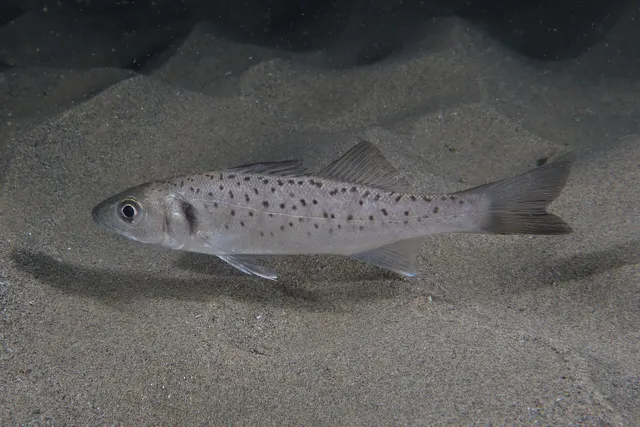 European sea bassThe fish a British or Irish angler means by bass, and unrelated to the North American ones.
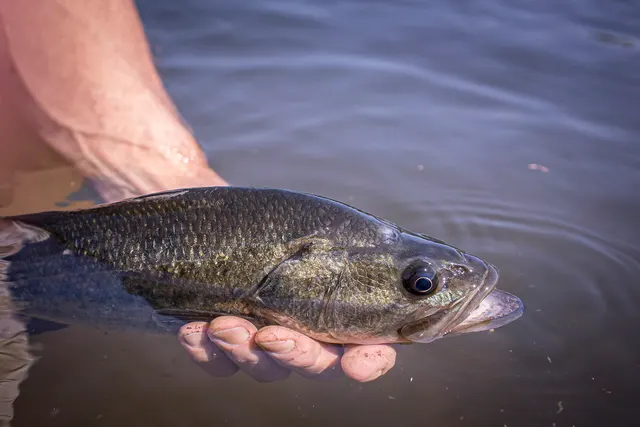 Largemouth bassA North American sunfish, more closely related to bluegill than to any European bass.
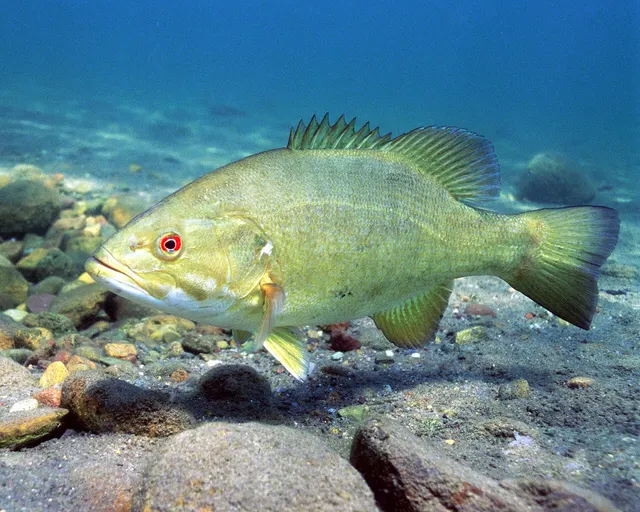 Smallmouth bassA second Micropterus, and a third thing again from the temperate basses of Morone.
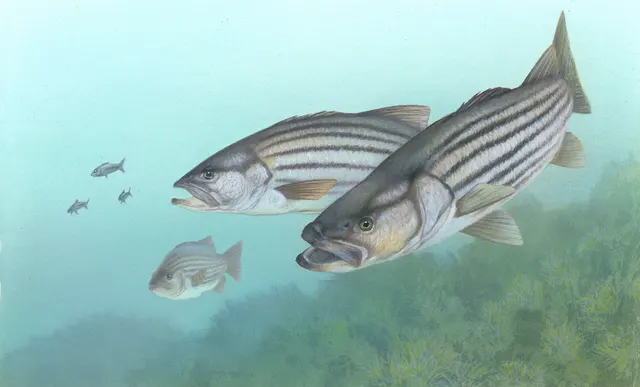 Striped bassA Morone, sharing a family with European sea bass and a name with the freshwater black basses.
Where it matters
Sources and evidence
- FishBase: a global information system on fishes — Froese, R. and D. Pauly, eds. — FishBase Consortium (Scientific institute)Relied on for: Family placement and distribution for Dicentrarchus labrax, Micropterus salmoides, Morone saxatilis, Centropristis striata, Percalates novemaculeata and Lates calcarifer.States this directlyPassage read and verified
Why the 5 connections on this page are here, and the sources
Fish this applies to
Backed by research — 4 connections
Supported by peer-reviewed research or fisheries science. The sources are listed and can be checked.
European sea bass
A reader arriving at this page from American writing has the wrong fish in mind.
- FishBase: a global information system on fishes — Froese, R. and D. Pauly, eds. — FishBase Consortium (Scientific institute)Relied on for: Family and genus placement for the unrelated fish that carry the common name bass, establishing that the name has no taxonomic content.States this directlyPassage read and verified
Largemouth bass
The commonest single case of the collision, in both directions.
- FishBase: a global information system on fishes — Froese, R. and D. Pauly, eds. — FishBase Consortium (Scientific institute)Relied on for: Family and genus placement for the unrelated fish that carry the common name bass, establishing that the name has no taxonomic content.States this directlyPassage read and verified
Smallmouth bass
Three genera share the word inside North America alone.
- FishBase: a global information system on fishes — Froese, R. and D. Pauly, eds. — FishBase Consortium (Scientific institute)Relied on for: Family and genus placement for the unrelated fish that carry the common name bass, establishing that the name has no taxonomic content.States this directlyPassage read and verified
Striped bass
The case that shows the word cuts across families rather than along them.
- FishBase: a global information system on fishes — Froese, R. and D. Pauly, eds. — FishBase Consortium (Scientific institute)Relied on for: Family and genus placement for the unrelated fish that carry the common name bass, establishing that the name has no taxonomic content.States this directlyPassage read and verified
Where it matters
Backed by research — 1 connection
Supported by peer-reviewed research or fisheries science. The sources are listed and can be checked.
Lure fishing
A method or discipline joined to the mechanism that changes how it is conducted. Written where the method's own practice differs because of the mechanism — a different bait, a different season, a different handling routine, a decision not to eat something — and refused where the mechanism is merely true of the fish being caught.
- Freshwater Fishes of the British Isles — HarperCollins (New Naturalist 75), 1992 (Reference work)Relied on for: Life history, physiological tolerance, seasonal behaviour and feeding biology of European freshwater fishes.States this directlyCitation checked — the work exists and is described correctly
- FishBase: a global information system on fishes — Froese, R. and D. Pauly, eds. — FishBase Consortium (Scientific institute)Relied on for: Recorded environment, temperature and oxygen tolerance, feeding biology and distribution of the species named.States this directlyPassage read and verified
How FishingHQ labels evidence is explained in the evidence policy.