Largemouth bass
Fish · Last reviewed 2026-08-10
The most heavily fished freshwater sport species in the world: an ambush predator of warm, weedy, structured water.
Safety: biosecurity and disease transfer — can cause serious injury or death. 5 more points apply here.
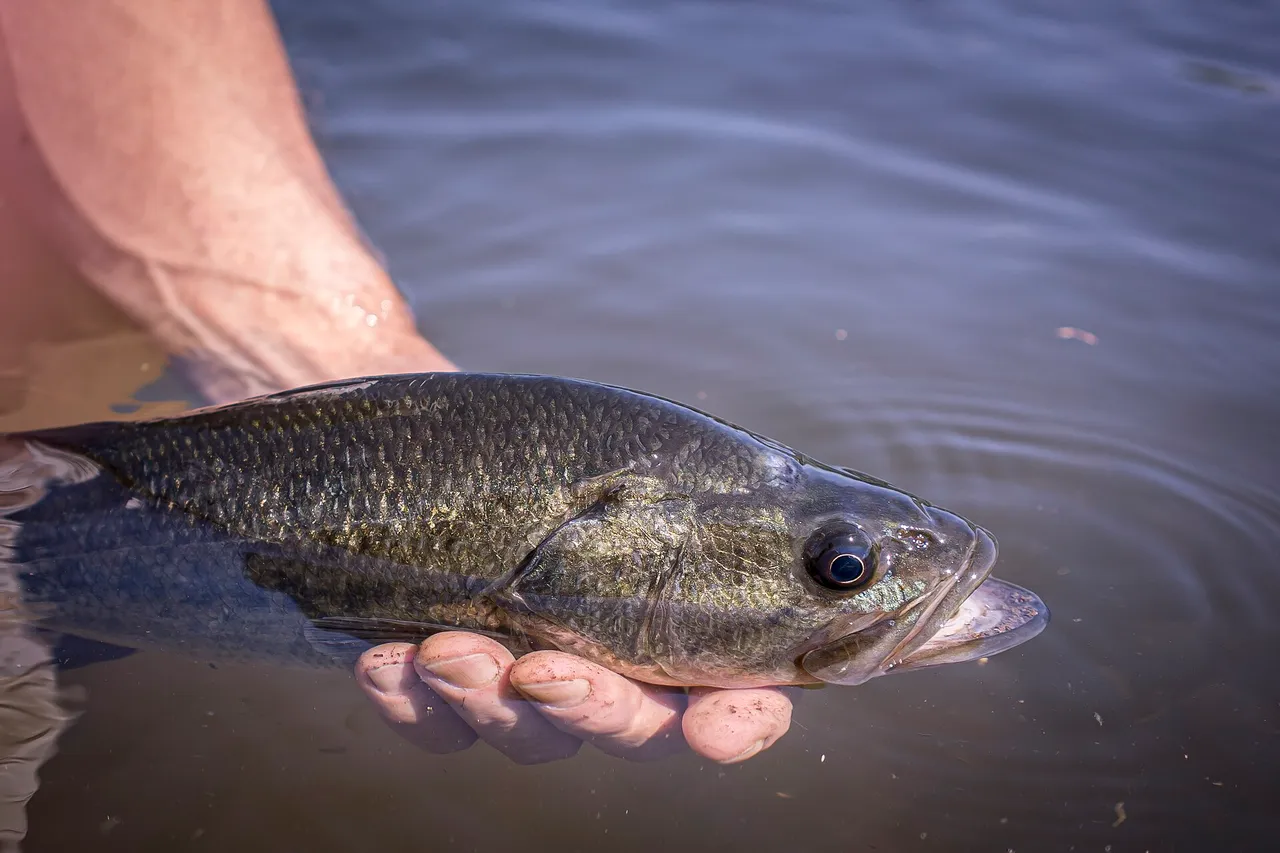
How this was identified, and who took it
Identified by: The upper jaw extends clearly past the rear edge of the eye, which is the defining separation from smallmouth bass, together with the deep body and the dark mottled flank.USFWS Mountain Prairie, Public domain, via Wikimedia Commons — source, licence.jpg)
Catching Largemouth bass
Everything here on fishing for it. Each entry opens the page behind it.
- Ground
- When
- Mar — months recorded at the places that document it, not a season for the whole range.
- Where
- 1 place FishingHQ documents — strongest claim anywhere: recorded here · From the shore
The largemouth bass is a North American freshwater predator that has become, by some distance, the most economically significant sport fish on the planet. It is not the largest fish anybody fishes for, nor the hardest to catch, nor the best to eat. What it is, is available: it tolerates warm water, thrives in man-made reservoirs and farm ponds, feeds aggressively on almost anything, and is within reach of an enormous number of people.
Biologically it is an ambush predator built around structure. It holds against cover — weed, timber, rock, docks, drop-offs — and takes prey that comes past, engulfing it with a very large mouth and considerable suction rather than chasing it down. That single behavioural fact explains why bass fishing is organised around cover to a degree almost no other fishing is, and why so much of the tackle exists to get a lure into places that would snag anything else.
It has been introduced far outside its native range, across Europe, Africa, Asia and South America, and in a number of those places it has caused serious harm to native fish communities. That belongs in the record alongside its status as a sport fish, because both are true and only one of them tends to be mentioned.
How it is caught
- Float-tube fishingFloat tubes are used on small, weedy North American waters where a boat cannot be launched and the shallow, timbered margins that hold bass are unreachable from the bank.
- Kayak fishingKayak bass fishing is a mainstream branch of the North American sport, reaching shallow, weedy and timbered water that a powered boat cannot enter.
- SpinningAlmost all bass fishing is lure fishing, and the tackle industry built around it is the reason so much modern lure design exists at all.
Gear for this fish
- CrankbaitsCrankbaits are how open-water and structure-holding largemouth are located, because a diving lure that contacts bottom or timber and deflects is both a search tool and a trigger.
- Jigs and jig headsThe skirted jig is the cold-water and heavy-cover answer, imitating a crayfish on the bottom rather than a fish in the column, which is what a largemouth is mostly eating outside the warm months.
- Soft plasticsThe soft plastic worm and its descendants were designed for this fish and remain the highest-percentage approach to it, because a largemouth holds in cover and a slow, weedless, falling bait can be delivered into cover that no other lure family survives.
- Spinnerbaits and bladed jigsA spinnerbait is a cover lure that happens to flash: the safety-pin arm deflects it off timber and weed rather than fouling, which is why it is the searching lure in exactly the water the fish prefers.
- Surface luresSurface fishing for largemouth is a genuine seasonal and diurnal specialisation rather than a novelty — it works when the fish are shallow and looking up, and it stops working precisely when they are not.
- SwimbaitsThe lure family that trades numbers for size, developed largely in American bass fishing and now used worldwide wherever a big predator wants one substantial meal.
Where Largemouth bass is documented
Places where public sources describe this species as fished, with how it is fished and how strongly the evidence supports it. This is not a range map and it is not a recommendation — it is what has been written down about a fishery rather than a record of any individual catch, and being listed is never permission to fish.
The Azores
1 documented place
Lagoa das Sete Cidades, São Miguel
Lake
Recorded here
From the shore
Around Mar
What these strengths mean
- Recorded here
- At least one credible public account of this species being caught here. That is all it means.
Identification
- Scientific name
- Micropterus salmoides
- Family
- Centrarchidae
- Water
- Freshwater
- Conservation status
- Least Concern
- Regions
- North America, Central & South America, Western Europe, Mediterranean, East Asia, East & Southern Africa, Global
- Upper jaw extends past the rear edge of the eye — the character that separates it from smallmouth bass, and the origin of the name.
- Dorsal fin deeply notched, almost to the point of appearing as two separate fins.
- A dark, irregular horizontal band along the flank, broken into blotches, running from behind the gill cover to the tail.
- Body deep and laterally compressed, greenish above shading to a pale belly.
- Note that colour varies enormously with water clarity and habitat: fish from clear water are markedly darker and more strongly marked than fish from turbid water, so the jaw and the notched dorsal are the reliable characters.
Size
- Typical
- 0.5–1.5 kg (1–3 lb)
- Large
- 2.5–4 kg (5–9 lb)
Exceptional: Over 5 kg (11 lb); a widely reported angling figure rather than a published scientific maximum
Cover, warmth and the shallow end of whatever water they are in
Largemouth bass occupy warm still and slow-moving fresh water, and cover is the organising principle of their habitat use.
COVER IS EVERYTHING. Largemouth relate to structure and vegetation more strongly than almost any freshwater predator — weed beds, lily pads, timber, docks, undercut banks, rock. They are ambush predators that use cover to hide and to funnel prey, and open featureless water holds few of them.
VEGETATION IS THE PREFERRED FORM. Submerged and emergent plants provide cover, oxygen and a prey community, and a weedy lake generally holds more and better largemouth than a bare one.
WARM AND SHALLOW SUITS THEM, and they tolerate higher temperatures and lower oxygen than smallmouth or trout, which is why they dominate southern reservoirs, farm ponds and slow lowland rivers.
THEY USE DEPTH SEASONALLY BUT SHALLOWLY. Even in summer and winter, largemouth are generally shallower than the smallmouth in the same water, and they relate to the deepest available cover rather than to open depth.
JUVENILES USE DENSE SHALLOW VEGETATION, moving to larger cover as they grow.
OXYGEN AND STRATIFICATION SET LIMITS IN PRODUCTIVE LAKES, where a deoxygenated bottom layer confines fish to the upper water in summer.
AND AS AN INTRODUCED SPECIES ACROSS MUCH OF THE WORLD, largemouth frequently occupy habitat they did not evolve in — reservoirs in Spain, Japan, South Africa and beyond — where their impact on native fish is a real conservation question rather than an incidental one.
Backed by research — why, and the sources (2)
Supported by peer-reviewed research or fisheries science. The sources are listed and can be checked.
- FishBase: a global information system on fishes — Froese, R. and D. Pauly, eds. — FishBase Consortium (Scientific institute)Relied on for: Distribution, habitat association, depth range, size, reproduction and life-history parameters recorded for the species.States this directlyPassage read and verified
- The IUCN Red List of Threatened Species — International Union for Conservation of Nature (Conservation authority)Relied on for: Assessment and range account for the species, including the habitats it depends on, its life history and the pressures acting on it.States this directlyCitation checked — the work exists and is described correctly
Largemouth bass spawning, and the guarding male
ESTABLISHED. Largemouth bass spawn in spring as water warms, with the male excavating a nest in shallow water, and — this is the behaviourally important part — the male guards the nest and then the fry for a period after hatching. He defends the area aggressively against anything that approaches.
WHAT THAT PRODUCES. A fish that is highly catchable during the guarding period, because the strike is a defensive response rather than a feeding one. Sight fishing to bedding bass exploits exactly this, and it is why the practice is contentious: removing the guarding male leaves the nest to predation.
SO THE MANAGEMENT QUESTION IS REAL rather than sentimental. Whether nest fishing measurably affects recruitment is genuinely debated in the fisheries literature, with results varying between waters. FishingHQ records it as unresolved and notes that several jurisdictions apply closed seasons over the spawning period regardless.
THE WIDER BEHAVIOURAL POINT. Largemouth are ambush predators strongly associated with cover — timber, weed, docks, rock — and the American structure-and-cover distinction was developed largely around them: structure is the shape of the bottom the fish relates to, cover is what it hides in.
Backed by research — why, and the sources (2)
Supported by peer-reviewed research or fisheries science. The sources are listed and can be checked.
- FishBase: a global information system on fishes — Froese, R. and D. Pauly, eds. — FishBase Consortium (Scientific institute)Relied on for: Life history, spawning biology, habitat association and feeding ecology for the species.States this directlyPassage read and verified
- Freshwater Fishes of the British Isles — HarperCollins (New Naturalist 75), 1992 (Reference work)Relied on for: Life history and behaviour of European freshwater fishes, independently of the angling literature.Background and mechanism onlyCitation checked — the work exists and is described correctly
What lipping actually does to a jaw, and the angle that ruins it
The lip grip is the most photographed hold in fishing and one of the most widely misunderstood, and largemouth bass are where it is worth explaining properly because they are the species it was developed on.
WHY IT WORKS AT ALL. A black bass's lower jaw is a solid bony structure and the mouth carries no cutting teeth — the sandpaper patches on the jaws abrade a thumb and cannot injure it. Gripping the mandible immobilises the head completely without anything sharp being involved, and a bass held vertically by the jaw, motionless, is not being harmed. The hold is genuinely good and it exists for good reasons.
WHAT BREAKS IT IS THE ANGLE, NOT THE HOLD. The jaw is hinged, and it is designed to take load in the direction it opens and closes — vertically. Held vertically, a bass's weight runs down the line of the jaw and through the joint in the direction it is built for. Rotate the fish toward horizontal while still gripping only the jaw, and the entire weight of the fish now acts as a lever on that joint sideways, in a direction it has no strength in. That is what damages fish: not the grip, the rotation. The injury is to the jaw joint and the connective tissue of the throat, it is largely invisible, and a fish that cannot close its mouth properly afterwards cannot feed properly either.
SO THE RULE IS SIMPLE AND IT IS ABOUT THE SECOND HAND. Either the fish hangs vertically from the jaw, or the body is supported by a hand under the belly. The failure case is a heavy fish turned side-on for the camera with one hand still on the lip and nothing underneath, and that is exactly the shot everybody takes.
AND THERE IS A LEGAL AND ECOLOGICAL QUESTION THAT DOES NOT ARISE AT HOME. Largemouth bass have been introduced widely outside North America and are an invasive predator in a number of those places. Whether a bass should be returned is a local question with a local answer, and in some waters the answer is that it should not be.
What experienced anglers do — why, and the sources (4)
Widely and independently recommended by experienced anglers and specialist sources. This is real angling knowledge, not proof: controlled evidence for it is limited, and FishingHQ records it as convention rather than as a demonstrated effect.
- Understanding the Complexity of Catch-and-Release in Recreational Fishing — Reviews in Fisheries Science 15:75–167, 2007 (Scientific literature)Relied on for: The determinants of catch-and-release outcome in recreational fisheries, and the gap between angler belief and measured survival.States this directlyCitation checked — the work exists and is described correctly
- Do we need species-specific guidelines for catch-and-release recreational angling? — Biodiversity and Conservation 14:1195–1209, 2005 (Scientific literature)Relied on for: That air exposure, handling duration and water temperature are the dominant modifiable determinants of post-release survival.States this directlyCitation checked — the work exists and is described correctly
- Check Clean Dry — biosecurity guidance for water users — GB Non-native Species Secretariat (Conservation authority)Relied on for: Regulatory approach to high-risk invasive freshwater fish, including prohibitions on live possession, on return to the water and on movement between waters.States this directlyPassage read and verified
- JNCC species and habitat conservation advice — Joint Nature Conservation Committee (Conservation authority)Relied on for: Conservation advice on native species and the impact of introduced ones.Background and mechanism onlyCitation checked — the work exists and is described correctly
A year measured in degrees rather than months, because the fish lives in both hemispheres
Largemouth bass are the species that forces FishingHQ to describe a year in temperature rather than in dates, and the reason is that the fish has been introduced so widely that no calendar is true of it.
THE SPECIES IS NOW ESTABLISHED IN BOTH HEMISPHERES and across an enormous range of latitudes — North and Central America, parts of Europe, southern Africa, East Asia, and elsewhere. A statement that bass spawn in April is true in one place, six months wrong in another, and meaningless in a tropical impoundment where the water never gets cold. Temperature is the only frame that survives the translation, and it is also the frame the fish is actually responding to.
THE CYCLE, IN DEGREES.
As water warms through the middle teens, fish move shallow to spawn. Males build and clear nests on firm bottom in shallow water and then guard the eggs and fry, aggressively, driving off anything that approaches. This is the period when bass are shallowest, most concentrated, most aggressive and easiest to catch, and it is also the period when catching them has a population cost — a guarding male removed from a nest leaves it to predation, and nest predation by sunfish is fast.
Through the warm months fish disperse to summer holding areas: cover, weed edges, timber, and deeper structure, with the largest fish frequently deepest. Feeding is efficient but the fish are spread out.
As water cools, bass feed heavily — a pre-winter period of high activity that many anglers consider the most productive of the year — before becoming slow and deep in cold water. Below roughly ten degrees feeding activity drops sharply and the fish become a genuinely different proposition, holding deep and taking slow presentations only.
WHICH IS WHY A TEMPERATURE GAUGE IS MORE USE THAN A CALENDAR, and why a bass angler moving between a Spanish reservoir, a Japanese lake and a Zimbabwean dam can carry the same understanding to all three. Close seasons, where they exist, are generally built around the nesting period; they are local, current, and not stated here.
Backed by research — why, and the sources (2)
Supported by peer-reviewed research or fisheries science. The sources are listed and can be checked.
- FishBase: a global information system on fishes — Froese, R. and D. Pauly, eds. — FishBase Consortium (Scientific institute)Relied on for: Temperature association, migration, flood-cycle response and spawning season recorded for the species.States this directlyPassage read and verified
- IGFA International Angling Rules and World Record Requirements — International Game Fish Association (Angling or fisheries organisation)Relied on for: Recognition of the species as an established sport fish and the seasonal conventions of its recognised fisheries.Background and mechanism onlyPassage read and verified
A four-pound fish nearly everywhere, and a maximum that is a genetic and geographic outlier
Largemouth bass have the most distorted size expectation of any fish on FishingHQ, because the species is enormously popular and the fish that appear in its media are unrepresentative in two separate ways.
THE FIRST IS GEOGRAPHY AND TEMPERATURE. Largemouth grow in proportion to the number of days a year the water is warm enough for them to feed and digest. In the northern part of the range a bass has perhaps half the growing season of one in the deep south, and its size at a given age reflects that. A fish that is remarkable in one state is ordinary in another, and the same is true across the many countries the species has been introduced to.
THE SECOND IS GENETICS AND IT IS SPECIFIC. The very largest largemouth come overwhelmingly from populations carrying Florida-strain genetics, which grow larger than northern-strain fish, and from waters where those fish were stocked into warm, rich, heavily-managed reservoirs. The exceptional figure on this page is a product of that combination rather than of the species in general.
SO THE HONEST ANCHOR IS THE ORDINARY FISH. The typical band on this page is what a day on a decent water produces; a fish in the 'large' band is a good fish that many anglers catch a few of in a season; and anything above it is genuinely uncommon almost everywhere. A reader who has absorbed the record weight will misjudge their own fishing badly.
BIG BASS ARE FEMALE AND SEASONALLY HEAVIER. Females grow larger than males, and a pre-spawn female in spring carries substantial ovary weight. The heaviest weights for a given fish cluster in the weeks before spawning, which is also when those fish are most catchable and most vulnerable — the reason many fisheries manage that window.
AND THE RECORD ITSELF IS A CAUTIONARY EXAMPLE. The world-record largemouth is among the most disputed and most scrutinised claims in angling, which is a useful reminder of what a record list actually is: a set of claims made under rules about tackle and witnessing, not a measurement of what the species reaches.
What experienced anglers do — why, and the sources (2)
Widely and independently recommended by experienced anglers and specialist sources. This is real angling knowledge, not proof: controlled evidence for it is limited, and FishingHQ records it as convention rather than as a demonstrated effect.
- IGFA International Angling Rules and World Record Requirements — International Game Fish Association (Angling or fisheries organisation)Relied on for: The rules under which a record claim is measured, weighed and witnessed, and the line-class structure that record lists are organised by.States this directlyPassage read and verified
- FishBase: a global information system on fishes — Froese, R. and D. Pauly, eds. — FishBase Consortium (Scientific institute)Relied on for: Maximum recorded length and weight and reported longevity for the species.Background and mechanism onlyPassage read and verified
A guarded nest in the shallows, and why removing the male costs the brood
Largemouth bass reproduction involves genuine paternal care, and the consequences of that care being interrupted are direct enough to have changed how several fisheries are managed.
THE MALE BUILDS AND GUARDS THE NEST. As water warms in spring, a male sweeps a circular depression in firm bottom — sand, gravel, hard silt — in shallow water, usually beside cover. A female deposits eggs, and the male then guards them, fanning to keep them oxygenated and driving off intruders. After hatching he continues to guard the fry swarm for a period.
WHICH MEANS THE NEST IS DEFENDED BY ONE FISH AND ONLY ONE. Remove him and the eggs or fry are eaten quickly — sunfish, minnows and other bass will strip an unguarded nest within a short time. The loss is not proportional to the time he is away; it is close to total.
AND HE IS UNUSUALLY EASY TO CATCH WHILE GUARDING, which is the whole difficulty. A guarding male attacks anything that approaches the nest, including a lure, and he does so aggressively. That behaviour is the reason spring bass fishing is so productive and the reason it has consequences.
SO THE MANAGEMENT QUESTION IS ABOUT TIME OFF THE NEST rather than about mortality. Even a released fish is off station while it is being fought, handled and photographed, and in some conditions that is long enough. Several fisheries operate closed seasons or catch-and-release-only periods over the spawn for exactly this reason. Whether any such measure applies is a matter for the competent authority and it varies substantially between jurisdictions — including places with no restriction at all.
NEST SITE QUALITY MATTERS AND IT IS LOCALISED. Bass select firm substrate at particular depths with adequate cover, and heavily silted, weed-choked or hardened shorelines offer fewer options. Water level fluctuation during the spawn — common in managed reservoirs — can dewater nests entirely.
RECRUITMENT IS THEREFORE HIGHLY VARIABLE between years according to spring weather, water level and temperature stability, and a cold snap mid-spawn can cost a year class.
FEMALES CARRY THE FECUNDITY AND ARE LARGER, and a large female may spawn with more than one male, spreading her output across several nests.
Backed by research — why, and the sources (2)
Supported by peer-reviewed research or fisheries science. The sources are listed and can be checked.
- Freshwater Fishes of the British Isles — HarperCollins (New Naturalist 75), 1992 (Reference work)Relied on for: Spawning behaviour, substrate requirements, timing and recruitment of European freshwater fishes.States this directlyCitation checked — the work exists and is described correctly
- FishBase: a global information system on fishes — Froese, R. and D. Pauly, eds. — FishBase Consortium (Scientific institute)Relied on for: Reproductive mode, spawning season, fecundity and maturity for the species.States this directlyPassage read and verified
Tackle organised by cover: the heavier the vegetation, the heavier everything gets
Largemouth bass tackle is organised along a single axis that explains almost every choice, and the axis is not the size of the fish — it is the density of what the fish is living in.
OPEN WATER PERMITS LIGHT TACKLE. A bass hooked over a clean point or a deep structure can be played out on relatively fine line with a moderate rod, and light line improves lure action and casting distance for small baits. Nothing about the fish's strength requires more.
DENSE COVER REQUIRES THE OPPOSITE, AND FOR A SPECIFIC MECHANICAL REASON. A bass hooked in matted vegetation, flooded timber or heavy pads must be moved immediately and vertically, before it can bury itself. That means a rod with the power to lift and line with the strength to drag both fish and weed. The heavy tackle used for that fishing is designed to extract, not to fight, and it is chosen for the vegetation.
HOOK SETTING POWER SCALES WITH THE SAME AXIS. Setting a hook through a soft plastic bait, through weed, at distance, on stretchy line requires a rod that transmits the strike. That is why heavy-cover rods are stiff and why line with low stretch is favoured there — the rod is a hook-setting tool as much as a fighting one.
LINE TYPE IS A REAL TRADE-OFF RATHER THAN A PREFERENCE. Low-stretch braid gives sensitivity and hook-setting power and no shock absorption; monofilament and fluorocarbon give stretch and abrasion behaviour and less feel. Which matters depends on the presentation: a bottom-contact lure needs feel, a treble-hooked crankbait needs stretch so the hooks are not pulled.
THE LIPPING GRIP IS A TACKLE-ADJACENT ISSUE worth restating from the handling section: bass are landed by the lower jaw, and lifting a heavy fish at an angle on that joint damages it. A net or a two-handed support is a piece of tackle in the sense that matters.
AND WHAT IS PERMITTED VARIES. Hook restrictions, live-bait rules, and in some waters restrictions on tackle types are set by the fishery or the competent authority, and tournament rules add another layer that has nothing to do with law. FishingHQ does not state any of them.
What experienced anglers do — why, and the sources (2)
Widely and independently recommended by experienced anglers and specialist sources. This is real angling knowledge, not proof: controlled evidence for it is limited, and FishingHQ records it as convention rather than as a demonstrated effect.
- Angling Times — Bauer Media (Specialist angling publication)Relied on for: Contemporary lure angling practice, presentation and the reasoning behind it.States this directlyCitation checked — the work exists and is described correctly
- FishBase: a global information system on fishes — Froese, R. and D. Pauly, eds. — FishBase Consortium (Scientific institute)Relied on for: Diet, feeding mode, prey composition and sensory biology recorded for the species.Background and mechanism onlyPassage read and verified
A lure for every layer of cover, and the reason the retrieve matters more than the lure
Largemouth bass have more lures designed for them than any fish on earth, and the way to make sense of that catalogue is to sort it by the problem each solves rather than by the shape.
THE FISH IS AN AMBUSH PREDATOR IN COVER, so almost every lure category is defined by how it gets through or past something. Weedless soft plastics go into vegetation and timber where nothing else can. Spinnerbaits and bladed jigs deflect off cover while displacing water. Crankbaits are built to bounce off hard structure and generate a deflection — which is what triggers the strike. Topwater lures work over cover too thick to fish through. Jigs go straight down into the heaviest cover there is.
WHICH MEANS THE FIRST QUESTION IS WHAT THE COVER IS and the second is what depth. Those two answers narrow the choice to a small handful, and the remaining decisions are much less consequential than the tackle industry suggests.
DEFLECTION AND IRREGULARITY TRIGGER STRIKES MORE RELIABLY THAN STEADY RETRIEVES. A crankbait knocking into a stump, a jig hopping off a rock, a soft bait falling on a slack line — the change in behaviour is what commits a following fish. That is why anglers deliberately fish lures into things rather than around them, and it is the single most transferable idea in the discipline.
WATER TEMPERATURE SETS THE SPEED, as with every predator. Cold water means slow, bottom-oriented, subtle presentations; warm water permits fast, aggressive, reaction-based ones. Fishing at the wrong speed for the temperature is the commonest failure.
CLARITY SETS THE PROFILE AND THE VIBRATION. In stained water, a lure that pushes water — a broad blade, a thumping tail — is findable by the lateral line. In clear water, a subtler, more realistic and faster presentation works better because the fish can see it from further away and has time to inspect.
AND THE SPAWNING PERIOD IS AN ETHICAL POINT RATHER THAN A LURE ONE. Bass on nests attack lures because they are defending, not feeding, and the record's spawning section explains the consequence. Where a fishery restricts fishing over beds, that is why; what applies anywhere is a matter for the competent authority.
What experienced anglers do — why, and the sources (2)
Widely and independently recommended by experienced anglers and specialist sources. This is real angling knowledge, not proof: controlled evidence for it is limited, and FishingHQ records it as convention rather than as a demonstrated effect.
- Angling Times — Bauer Media (Specialist angling publication)Relied on for: Contemporary lure angling practice, presentation and the reasoning behind it.States this directlyCitation checked — the work exists and is described correctly
- FishBase: a global information system on fishes — Froese, R. and D. Pauly, eds. — FishBase Consortium (Scientific institute)Relied on for: Diet, feeding mode, prey composition and sensory biology recorded for the species.Background and mechanism onlyPassage read and verified
Methods sorted by cover, and the search that comes before any of them
Largemouth methods are best organised by what the fish is hiding in, because that is what decides how a bait can be delivered at all.
THE FIRST TASK IS ALWAYS LOCATING FISH, and it is the part beginners skip. Largemouth relate to cover and to depth changes, and they move seasonally between shallow spawning areas, summer structure and deeper winter water. Fishing a productive method in the wrong place is the commonest failure, and covering water quickly with a searching presentation before slowing down is the standard resolution.
OPEN-WATER AND STRUCTURE METHODS use moving baits — crankbaits, spinnerbaits, bladed jigs, swimbaits — worked along points, drop-offs, weed edges and hard bottom to find active fish fast.
COVER METHODS ARE SLOWER AND MORE PRECISE. Flipping and pitching a jig or a weighted soft plastic into individual pieces of cover — a laydown, a dock, a bush, a mat of vegetation — is how the fish that will not chase are caught, and it is a short-range accuracy discipline rather than a casting one.
TOPWATER IS A CONDITION-DEPENDENT METHOD rather than a lure category: it works when fish are shallow and willing, at low light, in warm water, and over cover too thick to fish through. When it works it is the most efficient search there is.
FINESSE METHODS EXIST FOR HARD CONDITIONS — clear water, heavy pressure, cold fronts — and they are a genuine and separate approach: small soft baits on light line fished slowly, frequently on a shaky head, drop-shot or wacky rig. They catch fish that will not respond to anything else and they are slow.
LIVE BAIT REMAINS EFFECTIVE AND HONEST TO MENTION, particularly for large fish, though deep hooking is more common and matters where fish are returned.
SEASON DRIVES METHOD SELECTION MORE THAN PREFERENCE DOES. Cold water means slow and deep; warm water permits fast and shallow, and the record's spawning section explains why the spring period is both productive and consequential — a guarding male is defending rather than feeding, and where a fishery restricts fishing over beds, that is why.
What experienced anglers do — why, and the sources (2)
Widely and independently recommended by experienced anglers and specialist sources. This is real angling knowledge, not proof: controlled evidence for it is limited, and FishingHQ records it as convention rather than as a demonstrated effect.
- Angling Times — Bauer Media (Specialist angling publication)Relied on for: Contemporary lure angling practice, presentation and the reasoning behind it.States this directlyCitation checked — the work exists and is described correctly
- FishBase: a global information system on fishes — Froese, R. and D. Pauly, eds. — FishBase Consortium (Scientific institute)Relied on for: Diet, feeding mode, prey composition and sensory biology recorded for the species.Background and mechanism onlyPassage read and verified
Lifecycle and reproduction
Spawns in spring when water temperatures reach roughly 15 to 20 degrees, in shallow water on firm bottom. The male clears a circular nest, the female deposits eggs and departs, and the male guards the nest and then the fry — often for several weeks. Growth is fast in warm water and slow in cool, which is why the same species produces very different size structures at different latitudes, and why fish from the southern part of the range grow far larger than fish from the northern part.
Nest-building and male parental care are the defining features. A guarding male is aggressive towards anything approaching the nest, which is the mechanism behind bed fishing — catching spawning fish off visible nests. That practice is widely debated, restricted in some places and closed-season in others, because removing the guarding male exposes the brood to predation for as long as he is away. FishingHQ records the debate rather than adjudicating it, and notes that where a close season exists this is usually why.
Feeding and senses
An opportunistic ambush predator taking fish, crayfish, amphibians, large insects and occasionally small mammals and birds at the surface. Feeds by rapid engulfing suction through a very large mouth rather than by sustained pursuit. That is why presentations that stall, fall, or simply sit close to cover are effective — a fleeing prey animal is not a requirement, and a slow or motionless lure in the right place frequently outfishes a fast one.
Vision is important in clear water and largely useless in the turbid water the species also thrives in. The lateral line detects vibration and displacement, which is why lures that push water — spinnerbaits, bladed jigs, big-bodied soft plastics — work in conditions where nothing can be seen. Sound and vibration therefore carry the presentation in coloured water and colour carries it in clear water, which is the practical basis of most bass lure selection.
Through the year
Strongly temperature-driven. Fish move shallow to spawn in spring, disperse to summer holding areas around cover and deeper structure, feed heavily in autumn as temperatures fall, and become slow and deep in cold water. Feeding activity drops sharply below roughly 10 degrees. Because the species has been introduced into both hemispheres, the calendar is meaningless and the temperature is not — which is the reason this page describes the cycle by water temperature rather than by month.
Distribution
Native to eastern and central North America from the Great Lakes basin south to Mexico. Introduced very widely — across Europe, southern Africa, east Asia, South America and many islands — for sport fishing, with substantial and frequently negative effects on native species in several of those places.
This is a biological range — where the species occurs, not a prediction that you will catch one. To browse the fishing geography FishingHQ holds, start at fishing places.
Why anglers care
The most heavily fished freshwater sport species in the world, and the foundation of a very large tackle, boat and competition industry, particularly in the United States. Catch-and-release is the strong cultural norm in that fishery, and competitive bass angling is one of the few angling formats with a professional circuit.
Handling and returning
Commonly lipped — held by the lower jaw — which is effective and safe for the fish if the body is supported and the jaw is not levered horizontally. Support a heavy fish with a second hand under the belly. The teeth are abrasive rather than sharp and will roughen a thumb but not injure it. Where the fish is introduced rather than native, releasing it may not be legal or ecologically appropriate — that is a local question, and one worth asking.
Going further
- What does largemouth bass eat? — feeding biology, kept separate from what anglers infer from it.
Safety
Biosecurity and disease transfer — Can cause serious injury or death
Largemouth bass introduced outside their native range prey heavily on native fish and amphibians and have been implicated in serious declines and local extirpations, particularly on islands and in isolated systems. Moving live fish is how that happens.
What reduces it: Never move live fish or water between waters, anywhere, for any reason. Clean, drain, dry and check equipment between waters. Where the species is non-native, find out what the local requirement is before assuming a fish should be returned.
Injury while handling fish — Minor injury
The dorsal spines are sharp and the jaw teeth are abrasive. Neither is dangerous, but both catch out people expecting a smooth fish.
What reduces it: Wet hands before handling. Lip the fish with the body supported rather than lifting it by the jaw alone.
Precautions that always apply here
- Wet your hands before touching a fish. Dry hands strip the protective mucus layer that keeps infection out.
- Support the fish's weight along its body, keep it out of the water for as short a time as possible, and hold it over something soft.
- Check, clean and dry your kit between different waters — the published guidance is 48 hours’ drying, in sunlight where possible, because a number of invasive species survive over two weeks in damp conditions. Nets, boots and wet mats move invasive species and disease more effectively than anything else anglers do.
- Never move live fish, live bait or water from one water to another.
Check the rules before you fish
Fishing laws, bylaws, access rules, seasons, bait restrictions and permitted methods vary by location and can change. Check the current rules from the relevant authority and the water you intend to fish before fishing.
Check with:
- Current national or regional law for where you are fishing
- Current local bylaws
- The relevant fisheries authority
- The landowner, club or fishery whose water it is
- Any restrictions specific to the species or the method you intend to use
Where to go next
Similar and related fish
Where it lives
Where you will find it
- FloridaOccupies the state's shallow lakes, marsh and canal systems in numbers, in a freshwater fishery with a genuine trophy reputation.
- KoreaIntroduced and established in reservoirs, where it supports a substantial and technically-minded lure fishery.
- North American freshwater fishingThe organising fish of American freshwater angling, native to the warm-water south and east and introduced far beyond it.
- The River EbroA North American species established in the warmer shallow arms of the reservoirs, and one more line in a fauna assembled by introduction.
Understanding this fish
Told apart from
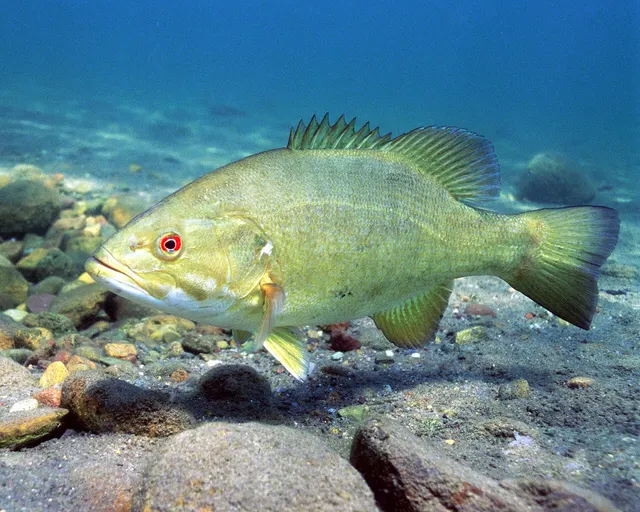 Smallmouth bassThe jaw separates them and the habitat explains them: one is a cool clear rock-and-current fish, the other a warm weedy still-water ambusher, and almost every tackle difference follows.
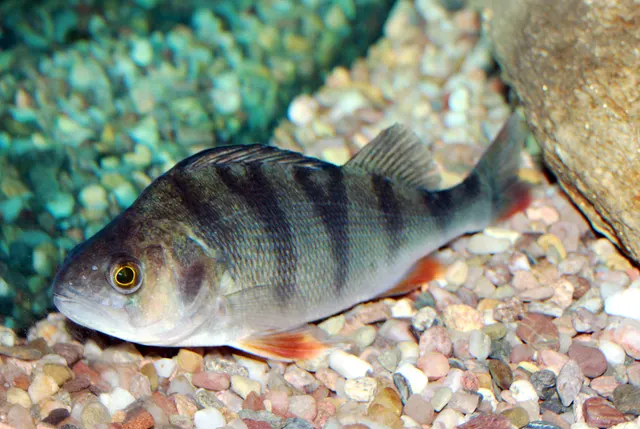 European perchTwo structure-oriented freshwater predators of similar size that occupy the same niche on different continents — and the comparison is the quickest way for a European reader to understand what bass fishing actually is.
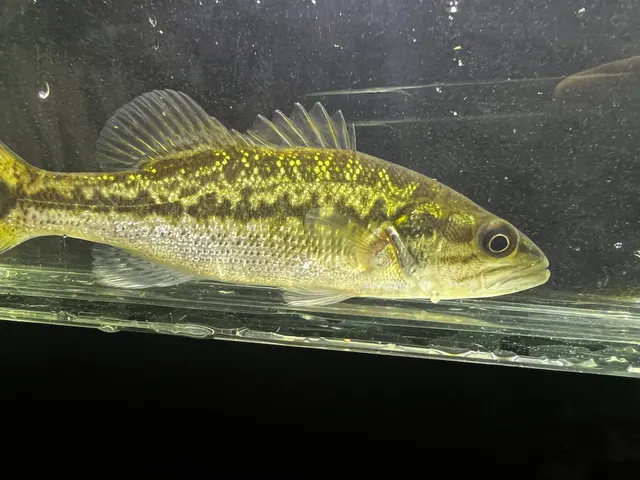 Spotted bassThe black bass confusion with the most consequence, because bag and size limits frequently differ between them. The jaw is the field character: a largemouth's upper jaw extends BEHIND the eye, a spotted bass's does not. A spotted bass also carries a rough tooth patch on the tongue and rows of small dark spots below the lateral line that give it its name.
Environment and conservation
Sources and evidence
- FishBase: a global information system on fishes — Froese, R. and D. Pauly, eds. — FishBase Consortium (Scientific institute)Relied on for: Scientific name, family placement, native distribution, size range, habitat preference and diet.States this directlyPassage read and verified
- FishBase: a global information system on fishes — Froese, R. and D. Pauly, eds. — FishBase Consortium (Scientific institute)Relied on for: The IUCN Red List category as republished by FishBase with its assessment date — Least Concern, assessed 14 November 2018. The Red List itself was not reachable during this review, so the category is attributed to the republication that was actually read.States this directlyPassage read and verified
- Check Clean Dry — biosecurity guidance for water users — GB Non-native Species Secretariat (Conservation authority)Relied on for: The general principle that introduced predatory fish alter native communities and that live movement of fish between waters is the transmission route.FishingHQ's interpretation of what it saysPassage read and verified
Why the 20 connections on this page are here, and the sources
Similar and related fish
Backed by research — 1 connection
Supported by peer-reviewed research or fisheries science. The sources are listed and can be checked.
Bluegill
A predator-prey claim naming the predator binomial, and the basis of the stunting argument on both records.
- FishBase: a global information system on fishes — Froese, R. and D. Pauly, eds. — FishBase Consortium (Scientific institute)Relied on for: That Micropterus salmoides is an opportunistic ambush predator taking fish, occupying the same warm weedy still water as Lepomis macrochirus.States this directlyPassage read and verified
How it is caught
What experienced anglers do — 3 connections
Widely and independently recommended by experienced anglers and specialist sources. This is real angling knowledge, not proof: controlled evidence for it is limited, and FishingHQ records it as convention rather than as a demonstrated effect.
Float-tube fishing
Established angling practice for this species, recorded as convention. The note states the property of the animal or its water that makes the method the answer.
- IGFA International Angling Rules and World Record Requirements — International Game Fish Association (Angling or fisheries organisation)Relied on for: Recognition of the species as an established sport fish and the angling methods and tackle classes conventionally used for it.States this directlyPassage read and verified
- General angling website restatements of established technique — Various (Credible secondary source)Relied on for: Widely restated practice connecting this species and method.Background and mechanism onlyCitation checked — the work exists and is described correctly
Kayak fishing
Established angling practice for this species, recorded as convention. The note states the property of the animal or its water that makes the method the answer.
- IGFA International Angling Rules and World Record Requirements — International Game Fish Association (Angling or fisheries organisation)Relied on for: Recognition of the species as an established sport fish and the angling methods and tackle classes conventionally used for it.States this directlyPassage read and verified
- General angling website restatements of established technique — Various (Credible secondary source)Relied on for: Widely restated practice connecting this species and method.Background and mechanism onlyCitation checked — the work exists and is described correctly
Spinning
A practitioner claim about the dominant method for the species.
- General angling website restatements of established technique — Various (Credible secondary source)Relied on for: Widely restated practitioner accounts of lure fishing as the dominant bass method.Citation checked — the work exists and is described correctly
- Angling Times — Bauer Media (Specialist angling publication)Relied on for: Contemporary lure fishing technique in the angling press.Citation checked — the work exists and is described correctly
Gear for this fish
What experienced anglers do — 6 connections
Widely and independently recommended by experienced anglers and specialist sources. This is real angling knowledge, not proof: controlled evidence for it is limited, and FishingHQ records it as convention rather than as a demonstrated effect.
Crankbaits
A practitioner claim about which lure family answers this species' feeding or holding behaviour.
- General angling website restatements of established technique — Various (Credible secondary source)Relied on for: Widely restated North American lure practice for this species.Background and mechanism onlyCitation checked — the work exists and is described correctly
- IGFA International Angling Rules and World Record Requirements — International Game Fish Association (Angling or fisheries organisation)Relied on for: Recognition of the species as an established sport fish taken on artificial lures, and the tackle conventions used for it.States this directlyPassage read and verified
Jigs and jig heads
A practitioner claim about which lure family answers this species' feeding or holding behaviour.
- General angling website restatements of established technique — Various (Credible secondary source)Relied on for: Widely restated North American lure practice for this species.Background and mechanism onlyCitation checked — the work exists and is described correctly
- IGFA International Angling Rules and World Record Requirements — International Game Fish Association (Angling or fisheries organisation)Relied on for: Recognition of the species as an established sport fish taken on artificial lures, and the tackle conventions used for it.States this directlyPassage read and verified
Soft plastics
A practitioner claim about which lure family answers this species' feeding or holding behaviour.
- General angling website restatements of established technique — Various (Credible secondary source)Relied on for: Widely restated North American lure practice for this species.Background and mechanism onlyCitation checked — the work exists and is described correctly
- IGFA International Angling Rules and World Record Requirements — International Game Fish Association (Angling or fisheries organisation)Relied on for: Recognition of the species as an established sport fish taken on artificial lures, and the tackle conventions used for it.States this directlyPassage read and verified
Spinnerbaits and bladed jigs
A practitioner claim about which lure family answers this species' feeding or holding behaviour.
- General angling website restatements of established technique — Various (Credible secondary source)Relied on for: Widely restated North American lure practice for this species.Background and mechanism onlyCitation checked — the work exists and is described correctly
- IGFA International Angling Rules and World Record Requirements — International Game Fish Association (Angling or fisheries organisation)Relied on for: Recognition of the species as an established sport fish taken on artificial lures, and the tackle conventions used for it.States this directlyPassage read and verified
Surface lures
A practitioner claim about which lure family answers this species' feeding or holding behaviour.
- General angling website restatements of established technique — Various (Credible secondary source)Relied on for: Widely restated North American lure practice for this species.Background and mechanism onlyCitation checked — the work exists and is described correctly
- IGFA International Angling Rules and World Record Requirements — International Game Fish Association (Angling or fisheries organisation)Relied on for: Recognition of the species as an established sport fish taken on artificial lures, and the tackle conventions used for it.States this directlyPassage read and verified
Swimbaits
A practitioner claim about a lure-species pairing and its origin.
- Angling Times — Bauer Media (Specialist angling publication)Relied on for: Contemporary practitioner treatment of swimbait styles and the size-over-numbers trade-off.Citation checked — the work exists and is described correctly
- General angling website restatements of established technique — Various (Credible secondary source)Relied on for: Widely restated practitioner accounts of swimbait fishing for bass.Citation checked — the work exists and is described correctly
Where it lives
Backed by research — 1 connection
Supported by peer-reviewed research or fisheries science. The sources are listed and can be checked.
Lowland stillwaters
A habitat claim held to a scientific standard.
- FishBase: a global information system on fishes — Froese, R. and D. Pauly, eds. — FishBase Consortium (Scientific institute)Relied on for: Recorded habitat and environmental tolerances for Micropterus salmoides.States this directlyPassage read and verified
- Freshwater Fishes of the British Isles — HarperCollins (New Naturalist 75), 1992 (Reference work)Relied on for: Habitat use of introduced centrarchids in European waters.Background and mechanism onlyCitation checked — the work exists and is described correctly
Where you will find it
Backed by research — 4 connections
Supported by peer-reviewed research or fisheries science. The sources are listed and can be checked.
Florida
A distribution association between an animal and a kind of water, rather than a claim about any named mark.
- NOAA National Ocean Service education on estuaries and the National Estuarine Research Reserve System — National Oceanic and Atmospheric Administration, United States (Government fisheries body)Relied on for: Estuarine, seagrass and coastal habitat function in North American waters, and the nursery role of shallow habitat for the species concerned.Background and mechanism onlyCitation checked — the work exists and is described correctly
- FishBase: a global information system on fishes — Froese, R. and D. Pauly, eds. — FishBase Consortium (Scientific institute)Relied on for: Distribution, habitat association, depth range and life history recorded for the species.States this directlyPassage read and verified
Korea
A distribution association between an animal and a kind of water, rather than a claim about any named mark.
- FishBase: a global information system on fishes — Froese, R. and D. Pauly, eds. — FishBase Consortium (Scientific institute)Relied on for: Distribution, habitat association and depth range recorded for the species, including its occurrence in the water body concerned.States this directlyPassage read and verified
- The IUCN Red List of Threatened Species — International Union for Conservation of Nature (Conservation authority)Relied on for: Assessment and range account for the species, including the systems and coasts it occupies.Background and mechanism onlyCitation checked — the work exists and is described correctly
North American freshwater fishing
A distributional claim taken from reference sources on the species rather than from angling report. It states presence and asserts nothing about a fishery.
- FishBase: a global information system on fishes — Froese, R. and D. Pauly, eds. — FishBase Consortium (Scientific institute)Relied on for: Distribution, habitat association, depth range and life history recorded for the species concerned.States this directlyPassage read and verified
- The IUCN Red List of Threatened Species — International Union for Conservation of Nature (Conservation authority)Relied on for: Global distribution, population trend and extinction-risk assessment for the species concerned.States this directlyCitation checked — the work exists and is described correctly
The River Ebro
A distributional claim taken from reference works and databases on the fishes of the region rather than from angling report. It states presence and asserts nothing about a fishery.
- The IUCN Red List of Threatened Species — International Union for Conservation of Nature (Conservation authority)Relied on for: Global extinction-risk assessment, population trend and identified threats for the species concerned.States this directlyCitation checked — the work exists and is described correctly
- FishBase: a global information system on fishes — Froese, R. and D. Pauly, eds. — FishBase Consortium (Scientific institute)Relied on for: Distribution, habitat association and life history recorded for the species concerned.States this directlyPassage read and verified
Understanding this fish
Backed by research — 1 connection
Supported by peer-reviewed research or fisheries science. The sources are listed and can be checked.
Bass: the same word for unrelated fish
The commonest single case of the collision, in both directions.
- FishBase: a global information system on fishes — Froese, R. and D. Pauly, eds. — FishBase Consortium (Scientific institute)Relied on for: Family and genus placement for the unrelated fish that carry the common name bass, establishing that the name has no taxonomic content.States this directlyPassage read and verified
Told apart from
Backed by research — 2 connections
Supported by peer-reviewed research or fisheries science. The sources are listed and can be checked.
Smallmouth bass
The inverse edge, resting on the same documented habitat separation.
- FishBase: a global information system on fishes — Froese, R. and D. Pauly, eds. — FishBase Consortium (Scientific institute)Relied on for: That Micropterus salmoides occupies warm still weedy water while Micropterus dolomieu occupies shallow rocky lake areas and clear gravel-bottom river runs.States this directlyPassage read and verified
A comparison resting on documented habitat and morphology rather than on angling opinion, which is what makes it useful for identification as well as for technique.
- FishBase: a global information system on fishes — Froese, R. and D. Pauly, eds. — FishBase Consortium (Scientific institute)Relied on for: That Micropterus dolomieu occupies shallow rocky areas of lakes and clear gravel-bottom river runs at 9 to 30 degrees, in contrast to the warm still weedy habitat recorded for Micropterus salmoides.States this directlyPassage read and verified
Spotted bass
An identification link between two species readers genuinely mistake for one another, resting on published morphological characters rather than on angling lore, and naming the character that separates them.
- FishBase: a global information system on fishes — Froese, R. and D. Pauly, eds. — FishBase Consortium (Scientific institute)Relied on for: Morphological description, meristic counts, family placement, distribution and environment of the species named.States this directlyPassage read and verified
- FAO Species Identification Guides for Fishery Purposes and the FAO Species Catalogues — Food and Agriculture Organization of the United Nations (Scientific institute)Relied on for: Identification characters and distribution for inland and coastal fishes, from regional identification guides prepared for fishery purposes.States this directlyCitation checked — the work exists and is described correctly
What experienced anglers do — 1 connection
Widely and independently recommended by experienced anglers and specialist sources. This is real angling knowledge, not proof: controlled evidence for it is limited, and FishingHQ records it as convention rather than as a demonstrated effect.
European perch
A comparison offered to make an unfamiliar species legible, which is a legitimate connection to draw rather than a filler link.
- Freshwater Fishes of the British Isles — HarperCollins (New Naturalist 75), 1992 (Reference work)Relied on for: The ecology and habitat use of Perca fluviatilis as a structure-associated predator.Citation checked — the work exists and is described correctly
- General angling website restatements of established technique — Various (Credible secondary source)Relied on for: Widely restated practitioner comparison of perch and bass technique.Citation checked — the work exists and is described correctly
Environment and conservation
Official guidance — 1 connection
Stated by a fisheries authority, scientific institute or recognised angling body. Authoritative, but summarising rather than demonstrating.
Invasive species and biosecurity
An introduction-impact claim held to an authoritative standard, because it is a management concern rather than an angling opinion.
- FishBase: a global information system on fishes — Froese, R. and D. Pauly, eds. — FishBase Consortium (Scientific institute)Relied on for: That several countries report adverse ecological impact following introduction of Micropterus salmoides.States this directlyPassage read and verified
- Check Clean Dry — biosecurity guidance for water users — GB Non-native Species Secretariat (Conservation authority)Relied on for: The general framework for assessing and managing introduced aquatic species.FishingHQ's interpretation of what it saysPassage read and verified
How FishingHQ labels evidence is explained in the evidence policy.