Lowland stillwaters
Habitat · Last reviewed 2026-08-10
Enclosed bodies of standing fresh water — lakes, ponds, reservoirs and worked-out gravel pits — where everything is decided by depth, weed and temperature.
- Water
- Freshwater
A stillwater is a body of fresh water with no significant through-flow, and that single fact governs its behaviour. Without current to mix it, a stillwater stratifies in summer into a warm oxygenated upper layer and a cooler, progressively deoxygenated lower one. It turns over in autumn as the surface cools. Its productivity depends on nutrients that arrive and stay rather than being carried away.
For an angler, the practical consequences are all about location. Fish in a featureless-looking lake are not distributed evenly: they relate to depth changes, to weed beds, to submerged features and to the wind, which pushes surface water and food downwind and creates a subsurface return current.
Gravel pits deserve mention as a distinct type. Worked-out extraction sites are typically deep, clear, gravel-bottomed and irregular, with abrupt depth changes that fish use heavily — a very different water from a shallow, silty, weedy natural pond.
What characterises it
Standing water with no significant through-flow, ranging from shallow silty ponds a few metres across to large deep reservoirs and gravel pits. Depth profile, bottom composition and the extent of marginal and submerged weed are the defining variables. Because nothing carries material away, silt accumulates over time and shallow waters gradually become shallower and more organic — a succession that ends in a marsh unless something interrupts it.
What lives there
Productivity is driven by nutrient input and by light reaching the bottom, so shallow weedy waters typically support far more invertebrate life per unit area than deep clear ones. Weed beds are the engine: they oxygenate, they shelter invertebrates and fry, and they are where a disproportionate share of everything lives. Fish communities are typically dominated by cyprinids — roach, bream, tench, carp — with pike and perch as the resident predators, and the balance between them determines whether a water produces many small fish or fewer large ones.
Through the year
In summer, a deep stillwater stratifies: a warm surface layer sits over a thermocline, below which oxygen falls and fish become scarce. In autumn, surface cooling breaks the stratification and the whole water mixes, which typically triggers a period of strong feeding. Winter brings low temperatures, clearer water as algae die back, and fish concentrating in the more stable deeper areas. Spring warms the shallows first, and the margins become the productive water long before the middle does. Wind matters throughout: a sustained wind pushes warm surface water and food to the downwind bank, and fish follow it.
Some of what lives here
Fish recorded here that FishingHQ holds a reviewed photograph of. It is not a complete list of what Lowland stillwaters holds, and it is not a prediction that you will catch any of them — it is a way in to the ones we can show you.
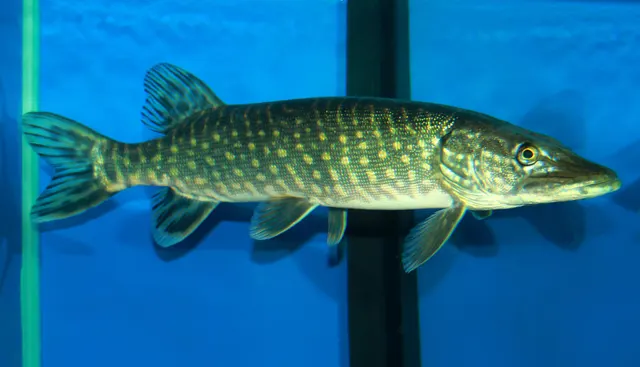 Northern pikeThe dominant freshwater ambush predator of the northern hemisphere: long, cryptic, and built for one violent acceleration rather than pursuit.
Karelj, Public domain, via Wikimedia Commons
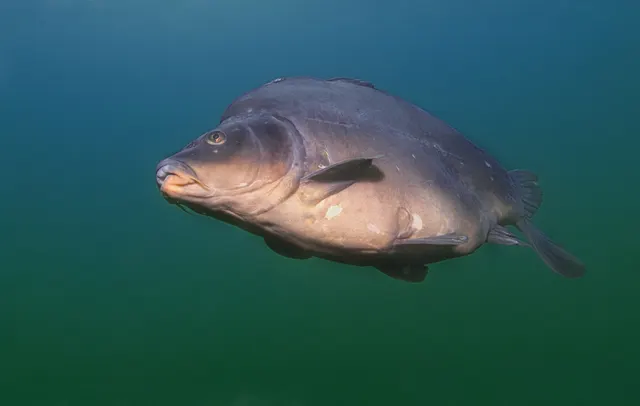 Common carpA large, long-lived, highly adaptable cyprinid whose capacity to learn has shaped more angling technique than any other freshwater fish.
Sven Riewe, CC0, via Wikimedia Commons
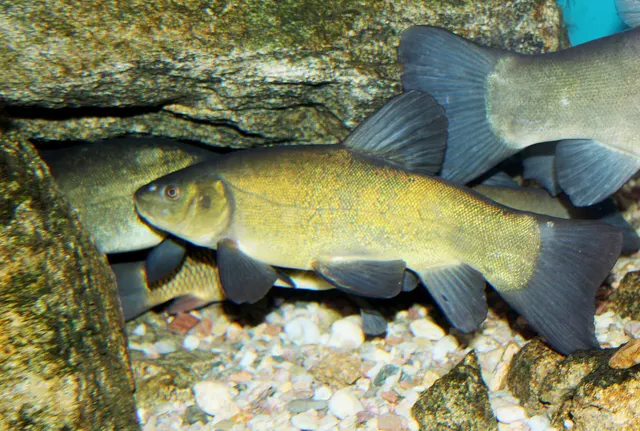 TenchA thick-set, olive-green stillwater fish with tiny scales, a heavy mucus coat, and a strong association with warm, weedy, silty water.
Karelj, Public domain, via Wikimedia Commons
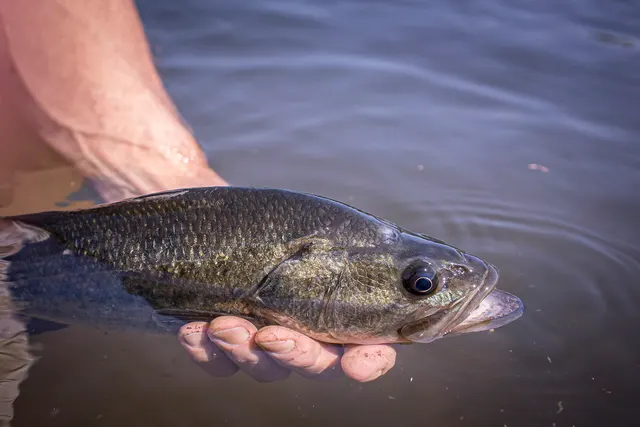 Largemouth bassThe most heavily fished freshwater sport species in the world: an ambush predator of warm, weedy, structured water.
USFWS Mountain Prairie, Public domain, via Wikimedia Commons
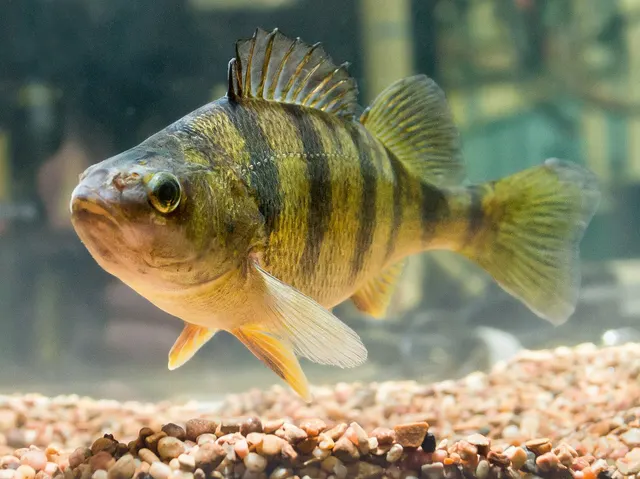 Yellow perchNorth America's most-caught panfish and the walleye's principal prey — the fish that anchors both the food chain and the family fishing trip across a whole continent.
Robert Colletta — Public domain, via Wikimedia Commons
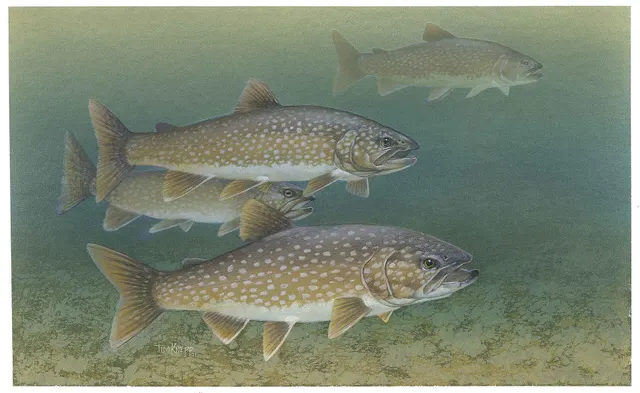 Lake troutA deep, cold, slow-growing char of northern lakes that can live decades and takes a very long time to replace anything removed.
Knepp Timothy, U.S. Fish and Wildlife Service — Public domain, via Wikimedia Commons
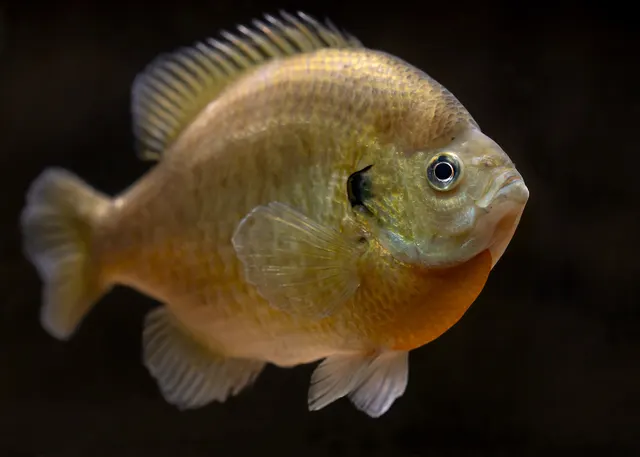 BluegillProbably the most-caught freshwater fish in North America, the species most anglers there start on, and a nest-guarding sunfish with a genuine stunting problem.
USFWS Mountain Prairie — Public domain, via Wikimedia Commons
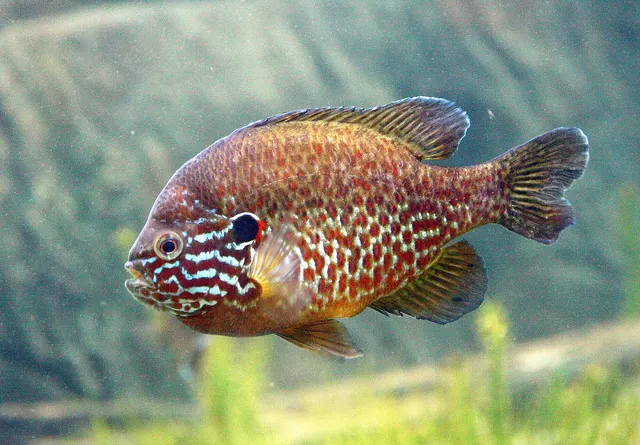 PumpkinseedA vividly marked small sunfish, separated from bluegill by the orange-red spot on the rear edge of its gill flap and the wavy blue lines across its cheek.
Cephas — CC BY-SA 3.0, via Wikimedia Commons
Safety
Further safety reading
- Night fishing safety — Still-water night sessions remove the visual cues that keep anglers away from bank edges and deep margins.
- Overhead power lines and carbon rods — Still waters adjacent to distribution networks are the common setting.
Where to go next
Fish found here
- African sharptooth catfishPersists in warm, poorly oxygenated african waters by breathing air.
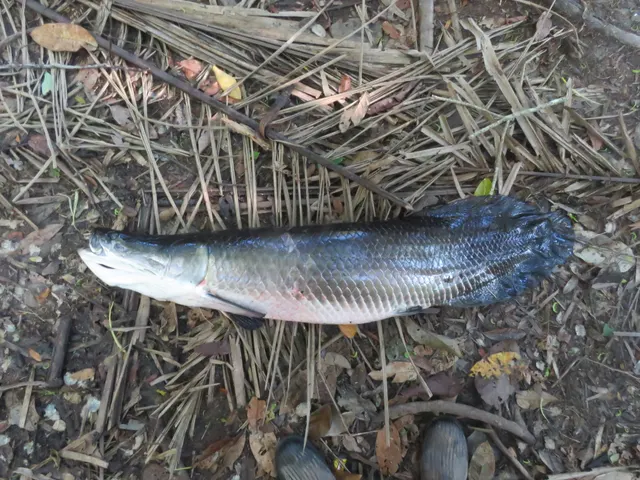 ArapaimaOccupies floodplain lakes and channels, surfacing regularly to breathe air.
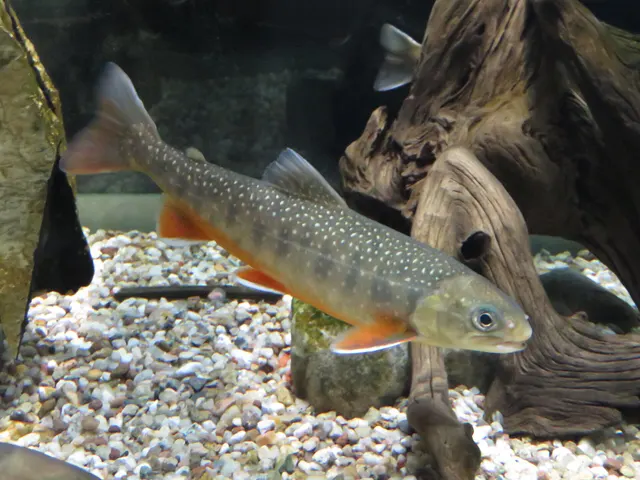 Arctic charHolds in deep cold lakes and runs to sea from northern rivers.
- BluegillClear warm water with vegetation and cover, shallow enough to reach from a bank — which is why bluegill are the fish that teach North America to fish.
- BowfinThrives in warm, weedy, oxygen-poor backwaters that exclude other large predators.
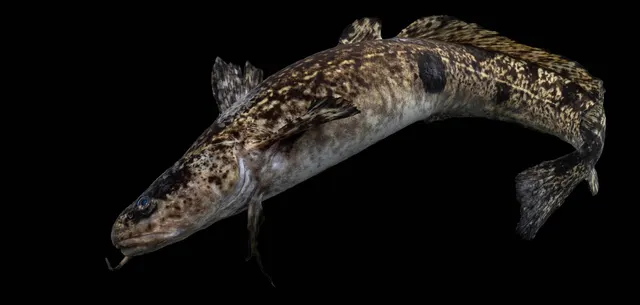 BurbotHunts at night on the bottom of cold deep clean waters.
- Butterfly peacock bassHunts by sight in warm clear tropical water, native and introduced.
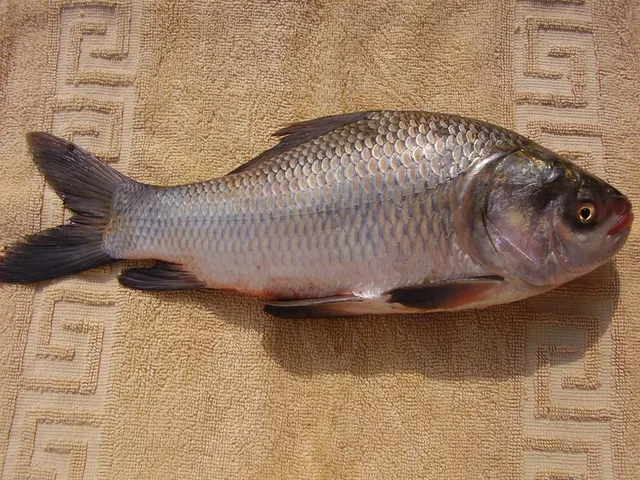 CatlaFilters plankton from the surface and upper water column.
23 more
- Chain pickerel Fish
- Common carp Fish
- Crucian carp Fish
- Great snakehead Fish
- Hampala barb Fish
- Lake sturgeon Fish
- Lake trout Fish
- Largemouth bass Fish
- Longnose gar Fish
- Nile tilapia Fish
- Northern pike Fish
- Northern snakehead Fish
- Pumpkinseed Fish
- Redear sunfish Fish
- Rohu Fish
- Rudd Fish
- Silver bream Fish
- Striped snakehead Fish
- Traíra Fish
- White bass Fish
- White crappie Fish
- Yellow perch Fish
- Tench Fish
Reading this water
- Dissolved oxygen and fishStill waters are where oxygen becomes limiting.
- Floating, sinking and intermediate fly linesThe gentler case, and the one where an intermediate line earns its keep. Shallow enough that a fast sinker is unusable and often too broken by wind for a floater to fish cleanly, which is precisely the gap the intermediate density fills.
- Freshwater spearfishingSharp thermoclines, poor visibility, submerged timber and structure that is neither visible nor charted.
- Margins, features, and why fish use edgesThe weed edge is the single most reliable feature in most stillwaters: prey lives in the weed, predators wait at its edge, and the line between them is visible from the bank.
- The kinds of fishing, and how they differThe water type behind that recommendation. Still water removes current, depth change and casting distance as variables at once, which is what makes it a teaching environment rather than merely an easy one.
- Thermoclines and stratificationDeep still waters are where the cycle operates.
- Why bites stop suddenlyThe water where the record's distinction is hardest to make and most necessary. A still water has no current to move fish predictably and no obvious cue when they have gone, so an angler cannot tell a departed shoal from a switched-off one by looking — which is why the record works from what the bites were doing rather than from what the water looks like.
How this compares
Sources and evidence
Why the 41 connections on this page are here, and the sources
Fish found here
Backed by research — 31 connections
Supported by peer-reviewed research or fisheries science. The sources are listed and can be checked.
African sharptooth catfish
A habitat association for Clarias gariepinus taken from the environment and distribution data on its FishBase summary.
- FishBase: a global information system on fishes — Froese, R. and D. Pauly, eds. — FishBase Consortium (Scientific institute)Relied on for: The environment, depth range and habitat description recorded for Clarias gariepinus.States this directlyPassage read and verified
Arapaima
A habitat association for Arapaima gigas taken from the environment and distribution data on its FishBase summary.
- FishBase: a global information system on fishes — Froese, R. and D. Pauly, eds. — FishBase Consortium (Scientific institute)Relied on for: The environment, depth range and habitat description recorded for Arapaima gigas.States this directlyPassage read and verified
Arctic char
A habitat association for Salvelinus alpinus taken from the environment and distribution data on its FishBase summary.
- FishBase: a global information system on fishes — Froese, R. and D. Pauly, eds. — FishBase Consortium (Scientific institute)Relied on for: The environment, depth range and habitat description recorded for Salvelinus alpinus.States this directlyPassage read and verified
Bluegill
A habitat claim held to a scientific standard.
- FishBase: a global information system on fishes — Froese, R. and D. Pauly, eds. — FishBase Consortium (Scientific institute)Relied on for: That Lepomis macrochirus occupies fresh and brackish water and is associated with vegetation in warm still habitats.States this directlyPassage read and verified
Bowfin
A habitat association for Amia calva taken from the environment and distribution data on its FishBase summary.
- FishBase: a global information system on fishes — Froese, R. and D. Pauly, eds. — FishBase Consortium (Scientific institute)Relied on for: The environment, depth range and habitat description recorded for Amia calva.States this directlyPassage read and verified
Burbot
A habitat association for Lota lota taken from the environment and distribution data on its FishBase summary.
- FishBase: a global information system on fishes — Froese, R. and D. Pauly, eds. — FishBase Consortium (Scientific institute)Relied on for: The environment, depth range and habitat description recorded for Lota lota.States this directlyPassage read and verified
Butterfly peacock bass
A habitat association for Cichla ocellaris taken from the environment and distribution data on its FishBase summary.
- FishBase: a global information system on fishes — Froese, R. and D. Pauly, eds. — FishBase Consortium (Scientific institute)Relied on for: The environment, depth range and habitat description recorded for Cichla ocellaris.States this directlyPassage read and verified
Catla
A habitat association for Labeo catla taken from the environment and distribution data on its FishBase summary.
- FishBase: a global information system on fishes — Froese, R. and D. Pauly, eds. — FishBase Consortium (Scientific institute)Relied on for: The environment, depth range and habitat description recorded for Labeo catla.States this directlyPassage read and verified
Chain pickerel
A habitat association for Esox niger taken from the environment and distribution data on its FishBase summary.
- FishBase: a global information system on fishes — Froese, R. and D. Pauly, eds. — FishBase Consortium (Scientific institute)Relied on for: The environment, depth range and habitat description recorded for Esox niger.States this directlyPassage read and verified
Common carp
Habitat and temperature requirements are well documented.
- FishBase: a global information system on fishes — Froese, R. and D. Pauly, eds. — FishBase Consortium (Scientific institute)Relied on for: Habitat, temperature range and reproduction requirements for Cyprinus carpio.States this directlyPassage read and verified
- Freshwater Fishes of the British Isles — HarperCollins (New Naturalist 75), 1992 (Reference work)Relied on for: Carp habitat association and the temperature dependence of successful spawning in British waters.FishingHQ's interpretation of what it saysCitation checked — the work exists and is described correctly
Crucian carp
A habitat association for Carassius carassius taken from the environment and distribution data on its FishBase summary.
- FishBase: a global information system on fishes — Froese, R. and D. Pauly, eds. — FishBase Consortium (Scientific institute)Relied on for: The environment, depth range and habitat description recorded for Carassius carassius.States this directlyPassage read and verified
Great snakehead
A habitat association for Channa marulius taken from the environment and distribution data on its FishBase summary.
- FishBase: a global information system on fishes — Froese, R. and D. Pauly, eds. — FishBase Consortium (Scientific institute)Relied on for: The environment, depth range and habitat description recorded for Channa marulius.States this directlyPassage read and verified
Hampala barb
A habitat association for Hampala macrolepidota taken from the environment and distribution data on its FishBase summary.
- FishBase: a global information system on fishes — Froese, R. and D. Pauly, eds. — FishBase Consortium (Scientific institute)Relied on for: The environment, depth range and habitat description recorded for Hampala macrolepidota.States this directlyPassage read and verified
Lake sturgeon
A habitat association for Acipenser fulvescens taken from the environment and distribution data on its FishBase summary.
- FishBase: a global information system on fishes — Froese, R. and D. Pauly, eds. — FishBase Consortium (Scientific institute)Relied on for: The environment, depth range and habitat description recorded for Acipenser fulvescens.States this directlyPassage read and verified
Lake trout
A habitat claim held to a scientific standard.
- FishBase: a global information system on fishes — Froese, R. and D. Pauly, eds. — FishBase Consortium (Scientific institute)Relied on for: That Salvelinus namaycush is a freshwater benthopelagic potamodromous species occupying depths from 3 to 61 m.States this directlyPassage read and verified
Largemouth bass
A habitat claim held to a scientific standard.
- FishBase: a global information system on fishes — Froese, R. and D. Pauly, eds. — FishBase Consortium (Scientific institute)Relied on for: Recorded habitat and environmental tolerances for Micropterus salmoides.States this directlyPassage read and verified
- Freshwater Fishes of the British Isles — HarperCollins (New Naturalist 75), 1992 (Reference work)Relied on for: Habitat use of introduced centrarchids in European waters.Background and mechanism onlyCitation checked — the work exists and is described correctly
Longnose gar
A habitat association for Lepisosteus osseus taken from the environment and distribution data on its FishBase summary.
- FishBase: a global information system on fishes — Froese, R. and D. Pauly, eds. — FishBase Consortium (Scientific institute)Relied on for: The environment, depth range and habitat description recorded for Lepisosteus osseus.States this directlyPassage read and verified
Nile tilapia
A habitat association for Oreochromis niloticus taken from the environment and distribution data on its FishBase summary.
- FishBase: a global information system on fishes — Froese, R. and D. Pauly, eds. — FishBase Consortium (Scientific institute)Relied on for: The environment, depth range and habitat description recorded for Oreochromis niloticus.States this directlyPassage read and verified
Northern pike
Habitat association is well documented and follows directly from the species' ambush hunting strategy.
- FishBase: a global information system on fishes — Froese, R. and D. Pauly, eds. — FishBase Consortium (Scientific institute)Relied on for: Habitat and ecology records for Esox lucius.States this directlyPassage read and verified
- Pike: Biology and Exploitation — Chapman & Hall (Fish and Fisheries Series 19), 1996 (Scientific literature)Relied on for: The relationship between pike habitat selection, structure and ambush hunting.States this directlyCitation checked — the work exists and is described correctly
Northern snakehead
A habitat association for Channa argus taken from the environment and distribution data on its FishBase summary.
- FishBase: a global information system on fishes — Froese, R. and D. Pauly, eds. — FishBase Consortium (Scientific institute)Relied on for: The environment, depth range and habitat description recorded for Channa argus.States this directlyPassage read and verified
Pumpkinseed
A habitat association for Lepomis gibbosus taken from the environment and distribution data on its FishBase summary.
- FishBase: a global information system on fishes — Froese, R. and D. Pauly, eds. — FishBase Consortium (Scientific institute)Relied on for: The environment, depth range and habitat description recorded for Lepomis gibbosus.States this directlyPassage read and verified
Redear sunfish
A habitat association for Lepomis microlophus taken from the environment and distribution data on its FishBase summary.
- FishBase: a global information system on fishes — Froese, R. and D. Pauly, eds. — FishBase Consortium (Scientific institute)Relied on for: The environment, depth range and habitat description recorded for Lepomis microlophus.States this directlyPassage read and verified
Rohu
A habitat association for Labeo rohita taken from the environment and distribution data on its FishBase summary.
- FishBase: a global information system on fishes — Froese, R. and D. Pauly, eds. — FishBase Consortium (Scientific institute)Relied on for: The environment, depth range and habitat description recorded for Labeo rohita.States this directlyPassage read and verified
Rudd
A habitat association for Scardinius erythrophthalmus taken from the environment and distribution data on its FishBase summary.
- FishBase: a global information system on fishes — Froese, R. and D. Pauly, eds. — FishBase Consortium (Scientific institute)Relied on for: The environment, depth range and habitat description recorded for Scardinius erythrophthalmus.States this directlyPassage read and verified
Silver bream
A habitat association for Blicca bjoerkna taken from the environment and distribution data on its FishBase summary.
- FishBase: a global information system on fishes — Froese, R. and D. Pauly, eds. — FishBase Consortium (Scientific institute)Relied on for: The environment, depth range and habitat description recorded for Blicca bjoerkna.States this directlyPassage read and verified
Striped snakehead
A habitat association for Channa striata taken from the environment and distribution data on its FishBase summary.
- FishBase: a global information system on fishes — Froese, R. and D. Pauly, eds. — FishBase Consortium (Scientific institute)Relied on for: The environment, depth range and habitat description recorded for Channa striata.States this directlyPassage read and verified
Traíra
A distributional claim about a species outside the range of the British reference works, resting on the global databases instead.
- FishBase: a global information system on fishes — Froese, R. and D. Pauly, eds. — FishBase Consortium (Scientific institute)Relied on for: Distribution, habitat association, depth range, diet and reproductive parameters recorded for the species.States this directlyPassage read and verified
- The IUCN Red List of Threatened Species — International Union for Conservation of Nature (Conservation authority)Relied on for: Global conservation assessment, range and recorded threats for the species.States this directlyCitation checked — the work exists and is described correctly
White bass
A habitat association for Morone chrysops taken from the environment and distribution data on its FishBase summary.
- FishBase: a global information system on fishes — Froese, R. and D. Pauly, eds. — FishBase Consortium (Scientific institute)Relied on for: The environment, depth range and habitat description recorded for Morone chrysops.States this directlyPassage read and verified
White crappie
A habitat association for Pomoxis annularis taken from the environment and distribution data on its FishBase summary.
- FishBase: a global information system on fishes — Froese, R. and D. Pauly, eds. — FishBase Consortium (Scientific institute)Relied on for: The environment, depth range and habitat description recorded for Pomoxis annularis.States this directlyPassage read and verified
Yellow perch
A habitat claim held to a scientific standard.
- FishBase: a global information system on fishes — Froese, R. and D. Pauly, eds. — FishBase Consortium (Scientific institute)Relied on for: That Perca flavescens inhabits fresh and brackish water, prefers clear water near aquatic plants, congregates near shorelines in spring, and occupies depths from 0 to 56 m.States this directlyPassage read and verified
Tench
Habitat and temperature association documented.
- FishBase: a global information system on fishes — Froese, R. and D. Pauly, eds. — FishBase Consortium (Scientific institute)Relied on for: Habitat and temperature requirements for Tinca tinca.States this directlyPassage read and verified
- Freshwater Fishes of the British Isles — HarperCollins (New Naturalist 75), 1992 (Reference work)Relied on for: Tench habitat association and late spawning requirements in British waters.FishingHQ's interpretation of what it saysCitation checked — the work exists and is described correctly
Reading this water
Backed by research — 2 connections
Supported by peer-reviewed research or fisheries science. The sources are listed and can be checked.
Dissolved oxygen and fish
Still waters are where oxygen becomes limiting.
- FishBase: a global information system on fishes — Froese, R. and D. Pauly, eds. — FishBase Consortium (Scientific institute)Relied on for: Species and habitat data underlying this connection. Still waters are where oxygen becomes limiting.States this directlyPassage read and verified
Thermoclines and stratification
Deep still waters are where the cycle operates.
- FishBase: a global information system on fishes — Froese, R. and D. Pauly, eds. — FishBase Consortium (Scientific institute)Relied on for: Species and habitat data underlying this connection. Deep still waters are where the cycle operates.States this directlyPassage read and verified
What experienced anglers do — 4 connections
Widely and independently recommended by experienced anglers and specialist sources. This is real angling knowledge, not proof: controlled evidence for it is limited, and FishingHQ records it as convention rather than as a demonstrated effect.
Floating, sinking and intermediate fly lines
A fish or a water joined to the fly-fishing mechanism it is a worked example of, written only where the subject's own behaviour or physical character is what this page explains. The direction is the one FishingHQ writes this kind of connection in, and the one it already uses 176 times, and it is also the semantically correct one: the mechanism explains the fish, not the reverse.
- Still Water Fly-Fishing — Andre Deutsch, 1952 (Specialist angling publication)Relied on for: Stillwater fly practice: line density and depth, leader construction, fly selection against the food present, and the behaviour of stocked and wild trout in still water.States this directlyCitation checked — the work exists and is described correctly
- Trout & Salmon — Bauer Media (Specialist angling publication)Relied on for: Long-running published description of British game angling practice: river and stillwater trout, grayling and salmon fishing, and the presentation each demands.States this directlyCitation checked — the work exists and is described correctly
Margins, features, and why fish use edges
The physical or biological reason behind a situation. Where that reason is documented science the page for it carries the citation; the association itself is practitioner observation and is labelled as such.
- Freshwater Fishing — Macdonald & Jane's, 1975 (Specialist angling publication)Relied on for: Comprehensive freshwater angling practice including water reading, river conditions, seasonal behaviour and the reasoning behind them.States this directlyCitation checked — the work exists and is described correctly
- Coarse Fishing — A. & C. Black, 1912 (Specialist angling publication)Relied on for: Classical coarse angling practice: swim selection, river and stillwater reading and seasonal observation.States this directlyCitation checked — the work exists and is described correctly
The kinds of fishing, and how they differ
A record joined to the beginner explainer that answers a question it raises. Written to open the beginner spine outward, which carried eleven internal edges and almost nothing else — a reader could circle it indefinitely without reaching a method, a habitat or a fault they were actually experiencing.
- Freshwater Fishing — Macdonald & Jane's, 1975 (Specialist angling publication)Relied on for: Comprehensive angling practice across disciplines, including tackle, water reading and the conduct of a session.States this directlyCitation checked — the work exists and is described correctly
- Coarse Fishing — A. & C. Black, 1912 (Specialist angling publication)Relied on for: Classical coarse angling practice including approach to the water, presentation and the ordinary faults of a day's fishing.States this directlyCitation checked — the work exists and is described correctly
Why bites stop suddenly
A fish or a record joined to the comparison it is a worked example of, written only where the subject's own behaviour is what makes the comparison concrete rather than where the comparison could apply to it.
- Freshwater Fishes of the British Isles — HarperCollins (New Naturalist 75), 1992 (Reference work)Relied on for: Feeding biology, behaviour and life history of the freshwater fishes of the British Isles.States this directlyCitation checked — the work exists and is described correctly
- FishBase: a global information system on fishes — Froese, R. and D. Pauly, eds. — FishBase Consortium (Scientific institute)Relied on for: Recorded feeding biology, environment and behaviour of the species named.States this directlyPassage read and verified
Official guidance — 1 connection
Stated by a fisheries authority, scientific institute or recognised angling body. Authoritative, but summarising rather than demonstrating.
Freshwater spearfishing
The habitat seen from underneath, which is a view FishingHQ did not have.
- BSAC diving safety guidance and annual incident report — British Sub-Aqua Club (Water-safety or diver-training authority)Relied on for: Diving safety guidance on planning, conditions assessment, buddy protocol, entanglement and equipment handling.States this directlyCitation checked — the work exists and is described correctly
How this compares
What experienced anglers do — 1 connection
Widely and independently recommended by experienced anglers and specialist sources. This is real angling knowledge, not proof: controlled evidence for it is limited, and FishingHQ records it as convention rather than as a demonstrated effect.
The Norfolk Broads
Two places or records a reader will hold together, joined where the comparison teaches something neither states alone.
- Coarse Fishing — A. & C. Black, 1912 (Specialist angling publication)Relied on for: Classical British coarse angling practice: river and stillwater reading, baits and seasonal observation.States this directlyCitation checked — the work exists and is described correctly
- Angling Times — Bauer Media (Specialist angling publication)Relied on for: Contemporary UK coarse angling practice as reported by practitioners, including venue character and method convention.States this directlyCitation checked — the work exists and is described correctly
Safety reading
Official guidance — 2 connections
Stated by a fisheries authority, scientific institute or recognised angling body. Authoritative, but summarising rather than demonstrating.
Night fishing safety
Water-safety guidance underlying this connection.
- RNLI water safety guidance: cold water shock and Float to Live — Royal National Lifeboat Institution (Water-safety or diver-training authority)Relied on for: Guidance on lighting, ground familiarity and planning for activity near water in darkness.States this directlyPassage read and verified
Overhead power lines and carbon rods
Still waters adjacent to distribution networks are the common setting.
- RNLI water safety guidance: cold water shock and Float to Live — Royal National Lifeboat Institution (Water-safety or diver-training authority)Relied on for: Water-safety guidance underlying this connection. Still waters adjacent to distribution networks are the common setting.States this directlyPassage read and verified
How FishingHQ labels evidence is explained in the evidence policy.