Why bites stop suddenly
Explainer · Last reviewed 2026-08-15
Bites stopping is usually one of three things — the fish left, the fish stopped feeding, or something the angler changed — and the third is far more common than anglers assume and the easiest to test.
A sudden stop after a period of activity is a different problem from a blank day, and it is more tractable, because something changed between the two states and the change is recent.
THE FISH LEFT. A shoal moved off the spot. This is the most likely explanation where fishing was concentrated and stopped abruptly rather than tailing off, and it is confirmed by the fact that moving a short distance frequently restores it.
THE FISH STOPPED FEEDING. Feeding is episodic in most species and a bout ends. Tide, light, temperature and prey availability all bear on when, and this page treats what is actually known about that below.
SOMETHING THE ANGLER CHANGED. This is the underrated one. Bait that has been on the hook for twenty minutes is different bait. A rig that has been recast is in a slightly different place. Feed that seemed right at the start may now be too much. Loose line, a dragged bait, or a hook point turned over on a stone all stop bites without announcing it.
AND THE PREDATOR EXPLANATION. A pike, a seal, a cormorant or a shark arriving on a shoal empties a swim in seconds, and it is the explanation that best fits an abrupt stop after concentrated action.
The order matters: check what you control before theorising about what you do not.
The checks that cost nothing
Test the hook point on a thumbnail. A point that skates instead of catching has been turned over, and it will have been catching nothing since it happened.
Retrieve and look at the bait. A bait stripped by small fish, washed out, or spun into a ball is not the bait that was catching.
Check the line is where you think it is. A rig dragged by tide or current out of the area that was producing is a common and invisible cause.
Consider feed. Where feeding is part of the method, a swim that has had too much introduced can go quiet precisely because there is now more free food than hookbait — which is the same mechanism that made it work in the first place, overdone.
Only after those is it worth reasoning about the fish, and by then several sessions' worth of mystery has usually been eliminated.
What is known about feeding episodes, and what is not
Feeding activity in fish is genuinely episodic and genuinely responsive to conditions — that much is well established. Water temperature bears directly on metabolic rate and therefore on how much a fish needs to eat and how quickly it digests. Dissolved oxygen bears on activity. Light level changes which senses are useful and how exposed a fish is. Tidal movement changes where food is delivered and when.
What is NOT established is the confident predictive layer built on top: that a specific barometric change, moon phase or hour reliably switches fish on and off. That is dealt with directly in the pages on conditions, and the honest position is that practitioner belief is strong, consistent and not supported by controlled evidence.
This page therefore does not offer a rule. It offers the observation that a bout ending is normal, that it frequently restarts, and that anglers who move or change something and then catch tend to credit the change rather than the timing.
Backed by research — why, and the sources (1)
Supported by peer-reviewed research or fisheries science. The sources are listed and can be checked.
- Cefas science, advice and data on marine and freshwater environments — Centre for Environment, Fisheries and Aquaculture Science (Government fisheries body)Relied on for: Temperature and dissolved oxygen as determinants of fish metabolic rate and activity.Background and mechanism onlyCitation checked — the work exists and is described correctly
When the answer really is a predator
An abrupt stop in a swim that was producing steadily, especially accompanied by fish scattering, small fish leaving, or a bait coming back scored, points at something arriving.
In freshwater that is usually a pike, a zander, an otter or a cormorant. Inshore it may be a seal, and offshore a shark following a hooked fish is visible enough to remove the mystery.
The practical response is to move rather than to wait, because the predator is fishing the same shoal and is better at it. It is also worth knowing because the alternative explanation — that the angler did something wrong — is the one most people reach for, and here it is simply not true.
Where to go next
Fish this applies to
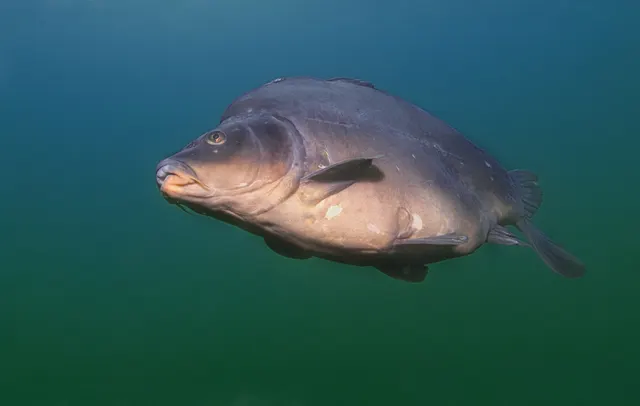 Common carpThe opposite case in the same record. Carp genuinely do stop feeding — a sharp drop in temperature, a change in pressure front, or heavy angling pressure on a water will shut a swim down for hours with the fish still present and visible. Here waiting IS the right answer, which is why the record insists on separating 'the fish left' from 'the fish stopped'.
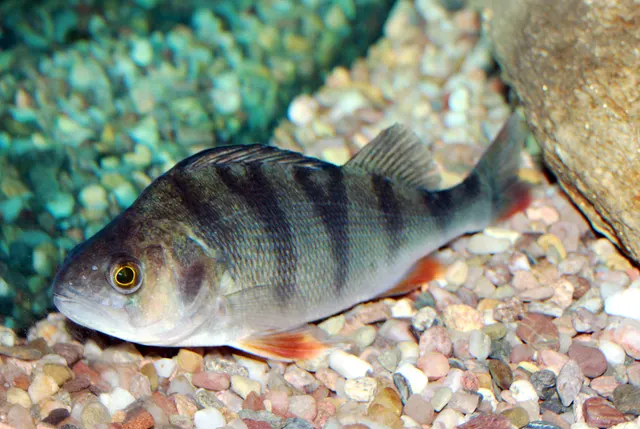 European perchThe clearest worked example, and it is not the one anglers reach for. Perch shoal and hunt as a group, so a swim that produced a fish every cast for twenty minutes and then nothing has usually not 'gone off' at all — the shoal has moved on, and it may be twenty metres away. That is a completely different diagnosis from a change in conditions and calls for moving rather than waiting.
Water and ground
How this compares
- Dissolved oxygen and fishFalling oxygen slows activity before it moves fish, which reads at the rod as bites tailing off.
- Reading waterA shoal moving a short distance is the commonest explanation, and moving with it is the response.
- Water temperature and fish activityFeeding is episodic and temperature bears directly on how much a fish needs and how fast it digests.
Sources and evidence
- Cefas science, advice and data on marine and freshwater environments — Centre for Environment, Fisheries and Aquaculture Science (Government fisheries body)Relied on for: Environmental determinants of fish behaviour and activity in coastal and freshwater systems.Background and mechanism onlyCitation checked — the work exists and is described correctly
Why the 6 connections on this page are here, and the sources
Fish this applies to
What experienced anglers do — 2 connections
Widely and independently recommended by experienced anglers and specialist sources. This is real angling knowledge, not proof: controlled evidence for it is limited, and FishingHQ records it as convention rather than as a demonstrated effect.
Common carp
A fish or a record joined to the comparison it is a worked example of, written only where the subject's own behaviour is what makes the comparison concrete rather than where the comparison could apply to it.
- Freshwater Fishes of the British Isles — HarperCollins (New Naturalist 75), 1992 (Reference work)Relied on for: Feeding biology, behaviour and life history of the freshwater fishes of the British Isles.States this directlyCitation checked — the work exists and is described correctly
- FishBase: a global information system on fishes — Froese, R. and D. Pauly, eds. — FishBase Consortium (Scientific institute)Relied on for: Recorded feeding biology, environment and behaviour of the species named.States this directlyPassage read and verified
European perch
A fish or a record joined to the comparison it is a worked example of, written only where the subject's own behaviour is what makes the comparison concrete rather than where the comparison could apply to it.
- Freshwater Fishes of the British Isles — HarperCollins (New Naturalist 75), 1992 (Reference work)Relied on for: Feeding biology, behaviour and life history of the freshwater fishes of the British Isles.States this directlyCitation checked — the work exists and is described correctly
- FishBase: a global information system on fishes — Froese, R. and D. Pauly, eds. — FishBase Consortium (Scientific institute)Relied on for: Recorded feeding biology, environment and behaviour of the species named.States this directlyPassage read and verified
Water and ground
What experienced anglers do — 1 connection
Widely and independently recommended by experienced anglers and specialist sources. This is real angling knowledge, not proof: controlled evidence for it is limited, and FishingHQ records it as convention rather than as a demonstrated effect.
Lowland stillwaters
A fish or a record joined to the comparison it is a worked example of, written only where the subject's own behaviour is what makes the comparison concrete rather than where the comparison could apply to it.
- Freshwater Fishes of the British Isles — HarperCollins (New Naturalist 75), 1992 (Reference work)Relied on for: Feeding biology, behaviour and life history of the freshwater fishes of the British Isles.States this directlyCitation checked — the work exists and is described correctly
- FishBase: a global information system on fishes — Froese, R. and D. Pauly, eds. — FishBase Consortium (Scientific institute)Relied on for: Recorded feeding biology, environment and behaviour of the species named.States this directlyPassage read and verified
How this compares
Backed by research — 3 connections
Supported by peer-reviewed research or fisheries science. The sources are listed and can be checked.
Dissolved oxygen and fish
A documented mechanism behind an effect usually attributed to luck.
- Cefas science, advice and data on marine and freshwater environments — Centre for Environment, Fisheries and Aquaculture Science (Government fisheries body)Relied on for: Temperature and dissolved oxygen as determinants of fish metabolic rate and activity.States this directlyCitation checked — the work exists and is described correctly
Reading water
The general skill and the specific failure are two views of one thing.
- Cefas science, advice and data on marine and freshwater environments — Centre for Environment, Fisheries and Aquaculture Science (Government fisheries body)Relied on for: Temperature and dissolved oxygen as determinants of fish metabolic rate and activity.States this directlyCitation checked — the work exists and is described correctly
Water temperature and fish activity
The established half of the explanation.
- Cefas science, advice and data on marine and freshwater environments — Centre for Environment, Fisheries and Aquaculture Science (Government fisheries body)Relied on for: Temperature and dissolved oxygen as determinants of fish metabolic rate and activity.States this directlyCitation checked — the work exists and is described correctly
How FishingHQ labels evidence is explained in the evidence policy.