Water temperature and fish activity
Explainer · Last reviewed 2026-08-10
Fish are ectothermic, so water temperature sets their metabolic rate — and therefore how much they need to eat and how hard they will work for it.
Fish do not regulate their own body temperature. Their internal temperature is the water's temperature, which means their metabolic rate — the speed at which everything in their body happens — is set by the water rather than by them.
The consequences run through everything. In cold water, digestion slows dramatically, so a fish needs less food and takes far longer to process what it eats; it also has less energy available for pursuit, so the cost-benefit of chasing something shifts sharply against chasing. In warm water the opposite applies: metabolism rises, food requirement rises, and fish feed more often.
But warm water has a second effect that runs the other way. Warm water holds less dissolved oxygen than cold water, and a fish whose oxygen demand has risen is trying to extract more from water containing less. That is why very warm conditions can shut feeding down as thoroughly as very cold ones, and why the welfare risk of playing a fish is at its highest in exactly those conditions.
Species differ substantially in where their optimum sits. Pike and trout are cold-tolerant and feed through winter; carp and tench are warm-water species whose feeding falls away sharply as water cools. That difference is why the fishing calendar exists at all.
What to change when the water is cold
The reasoning is straightforward once the metabolism is understood. A cold fish will not travel far or work hard for a meal, so the answer is to reduce what it has to do rather than to try harder to attract it.
Slow everything down. A lure worked at summer speed is asking a fish to make a decision and an effort it is not in a state to make. The same lure worked at a third of the speed is asking much less.
Make the target smaller and the presentation closer. A cold fish will move a short distance for something modest and will not cross a swim for something large.
Feed less. A fish that needs a fraction of its summer food intake is easily filled up by a summer feeding rate, and a swim over-fed in winter is a swim with nothing left to catch.
And give it time. Cold-water feeding is episodic and short; the productive window may be an hour rather than a day, and the answer is often patience in one place rather than movement.
What experienced anglers do — why, and the sources (2)
Widely and independently recommended by experienced anglers and specialist sources. This is real angling knowledge, not proof: controlled evidence for it is limited, and FishingHQ records it as convention rather than as a demonstrated effect.
- Still-Water Angling — MacGibbon & Kee, 1953 (Specialist angling publication)Relied on for: The relationship between water temperature and stillwater feeding behaviour, and the practice of reducing feed and slowing presentation in cold conditions.FishingHQ's interpretation of what it saysCitation checked — the work exists and is described correctly
- Sea Angler — Bauer Media (Specialist angling publication)Relied on for: That the same slow-down-and-scale-down convention appears in sea angling practice, from a separate authorial tradition.Background and mechanism onlyCitation checked — the work exists and is described correctly
Why the same rise helps one fish and harms another
A fish's metabolic rate rises with temperature, and the reflex conclusion — warmer means more active means better fishing — is right for part of the range and badly wrong at the top of it.
EACH SPECIES HAS A RANGE, NOT A DIRECTION. Activity, feeding and growth rise with temperature up to an optimum and then fall away, frequently faster than they rose. What differs between species is where that optimum sits. Water at eighteen degrees is comfortably mid-range for a carp and near the upper limit of what a grayling or a trout tolerates well, and the same summer week is therefore a good one for one fishery and a dangerous one for another in the same county.
THE OXYGEN PROBLEM RUNS THE OPPOSITE WAY, AND THAT IS THE SQUEEZE. Warm water holds less dissolved oxygen while the fish in it need more. Demand rises as supply falls, and the gap between them is what actually limits a fish in high summer rather than the temperature itself. This is why a hot still week kills fish in shallow lakes and why the coldwater species suffer first.
RATE OF CHANGE MATTERS AS MUCH AS LEVEL. A fish adjusts to a temperature it has had time to acclimate to. A rapid drop — cold rain onto a shallow lake, snowmelt into a river, a cold front onto an estuary — commonly shuts feeding down for a day or two at a temperature the same fish fed happily at a fortnight earlier. The number on the thermometer does not explain that; the change does.
AND FISH SELECT TEMPERATURE WHERE THEY CAN. Given a stratified lake or a river with springs, seeps and shaded deeps, fish occupy the band that suits them and leave the rest. This is why summer fish concentrate rather than disperse, and why finding the band is more of the problem than finding the fish.
THE PRACTICAL CONSEQUENCE. Learn the range of the species rather than a rule about temperature, expect the fishery to concentrate rather than shut down in heat, and treat a sharp change as more informative than an absolute reading.
Backed by research — why, and the sources (2)
Supported by peer-reviewed research or fisheries science. The sources are listed and can be checked.
- FishBase: a global information system on fishes — Froese, R. and D. Pauly, eds. — FishBase Consortium (Scientific institute)Relied on for: Recorded life history, temperature tolerance, depth range, growth and reproductive biology across species.States this directlyPassage read and verified
- Freshwater Fishes of the British Isles — HarperCollins (New Naturalist 75), 1992 (Reference work)Relied on for: Life history, habitat requirement, seasonal behaviour and physiological tolerance of European freshwater fishes.States this directlyCitation checked — the work exists and is described correctly
The temperature at which the right decision is to stop fishing
This is the point where the temperature record stops being about catching fish and becomes about whether to be fishing at all.
WARM WATER IS WHERE CATCH AND RELEASE STOPS WORKING. Post-release mortality rises with water temperature across the studied species, and the mechanism is the squeeze described above: a fish played to exhaustion has an oxygen debt to repay, and it is being asked to repay it in water that holds less oxygen than usual while its own demand is elevated. A fight and a handling that a fish shrugs off in spring can kill it in August.
THREE THINGS COMPOUND IT, AND ALL THREE ARE THE ANGLER'S. A long fight, because exhaustion is the debt. Air exposure, because a fish out of water cannot repay it and the damage rises steeply with the seconds. And warm shallow water in the margins, where fish are unhooked and where the temperature is highest.
WHAT REDUCES IT IS UNGLAMOROUS. Heavier tackle so the fight is short rather than sporting. Unhooking in the water. If a photograph is taken, the fish is lifted from water it is already resting in, held over it, and returned within a few seconds. Holding a fish upright in flow until it swims off under its own power rather than releasing one that is still on its side.
AND THE DECISION FishingHQ WILL NOT MAKE FOR ANYBODY. There is no universal temperature at which fishing should stop, because it depends on the species, the water, the fishery's own rules and how the fish are actually behaving — and fisheries, clubs and authorities set their own thresholds for exactly that reason. What can be said plainly is that the threshold exists, that it is reached in ordinary British and European summers, and that fish visibly struggling to recover on release is the signal to stop for the day rather than to try one more.
THE SAME LOGIC RUNS AT THE COLD END, MORE WEAKLY. Very cold water slows recovery too, and a fish held out of water in freezing air can suffer gill and eye damage in a way it will not at ten degrees. Short handling matters in both directions; it is simply far more urgent in the heat.
Official guidance — why, and the sources (2)
Stated by a fisheries authority, scientific institute or recognised angling body. Authoritative, but summarising rather than demonstrating.
- Understanding the Complexity of Catch-and-Release in Recreational Fishing — Reviews in Fisheries Science 15:75–167, 2007 (Scientific literature)Relied on for: Review of catch-and-release outcomes including physiological stress, exhaustion, air exposure, water temperature and post-release survival.States this directlyCitation checked — the work exists and is described correctly
- FishBase: a global information system on fishes — Froese, R. and D. Pauly, eds. — FishBase Consortium (Scientific institute)Relied on for: Recorded physiological tolerance and habitat association of the species concerned.Background and mechanism onlyPassage read and verified
Safety
Further safety reading
- Cold water shock and immersion — The page explains what cold water does to a fish and the same water does something faster to a person. Cold water shock is an involuntary gasp and hyperventilation on immersion, it happens in water far warmer than most people expect, and it incapacitates before hypothermia is a factor. The temperature that slows the fishing is the temperature that makes falling in serious.
Where to go next
Fish this applies to
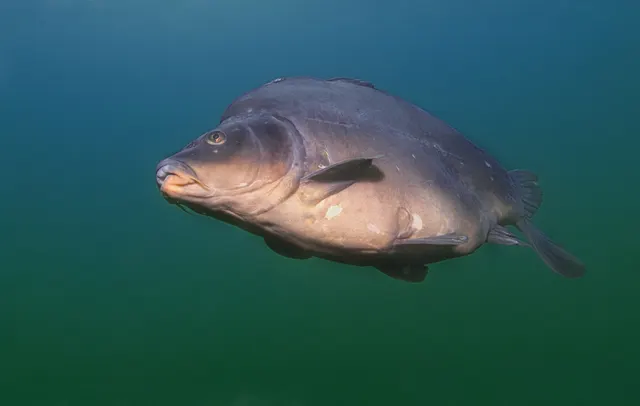 Common carpCarp feeding tracks water temperature more closely than almost anything else, which is why the carp season has the shape it does.
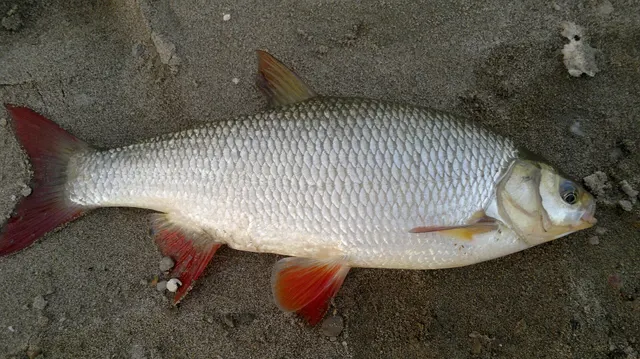 IdeA northern and central European cyprinid at the edge of its range in Britain, which makes it an unusually clear case of temperature setting where a species can live rather than merely when it feeds.
- TaimenA cold-water obligate at the extreme end of the range, which is why it is one of the species whose distribution is most directly threatened by warming rivers and why the surviving populations sit in high, cold, continental headwaters.
Where it matters
- Carp fishingThe discipline most organised around temperature, because carp are among the most temperature-sensitive fish an angler targets. Feeding effectively stops below a threshold and resumes over a few degrees, which is why a carp angler watches water temperature the way a sea angler watches tide.
- DeadbaitingThe method where the mechanism decides everything. A pike in February is not refusing the bait — its metabolism is running at a fraction of summer rate and it will move a very short distance for a very large meal. That is the entire argument for a static deadbait in cold water and for a lure in warm, and an angler who does not know it concludes the water is empty.
- Ice fishingThe extreme case, and it inverts the usual advice. Under ice the water is at its most stable and often warmest at depth, fish are concentrated and feeding slowly rather than not at all, and the small, slow, precisely-placed presentation the method uses is a direct consequence of a metabolism running at its floor.
- Lure fishingThe discipline whose central variable is retrieve speed, and temperature is what sets it. A predator in cold water will not chase, so a lure worked at summer speed passes fish that would have taken it worked slowly — which is the commonest reason a water that fished well in September appears empty in January.
Gear this affects
Water and ground
- Deep cold lakesThe lake is two fisheries at once and temperature is what separates them. Above the thermocline the warmwater fish are active and the coldwater ones cannot go; below it the reverse. A bait at the wrong temperature is not fishing slowly — it is fishing a part of the lake the target species is physiologically excluded from.
- Upland lakes and hill lochsCold, low-productivity, oxygen-rich water is what makes an upland lake or hill loch what it is: slow-growing fish, short feeding seasons and a fishery organised entirely around temperature.
Where this applies
- Cork Harbour and the east Cork coastThe clearest seasonal statement any Irish source makes is on this coast: an annual inshore migration of codling and coalfish onto a named five-kilometre beach from October to December. A species, a direction of movement, a beach and three months is the shape of claim a seasonal model can use, and cooling water is the mechanism behind it.
- The Wexford coastThese are long, shallow-gradient, comparatively featureless surf beaches whose ordinary species list would not make them destinations. What does is a warm-season crab-eating shark arriving in numbers in spring and early summer — a temperature-driven inshore movement, and the reason the whole coast's reputation rests on three or four months.
Related reading
- Dissolved oxygen and fishTemperature acts on fish partly through the oxygen the water can hold.
- Spawning triggersTemperature is the variable that sets the spawning date within the season photoperiod defines.
- Cold-water fishing: what actually changesEverything cold does follows from metabolic rate: slower digestion, less appetite, and a reaction distance measured in centimetres rather than metres.
- Feeding windowsTemperature sets how often a fish needs to eat.
- Retrieve speed and the pauseThe most common reasoning for slowing a retrieve rests on fish metabolic rate falling with temperature, which is biology the angling conclusion is inferred from rather than identical to.
- The fishing year: what each season changesTemperature sets metabolic rate and therefore appetite, which is the other half of the year — and the half that varies between one year and the next while day length does not.
- The insects fly fishing imitatesHatches are temperature-driven, which is why the same water produces different insects in April and August and why a hatch chart is a temperature chart in disguise.
- Thermoclines and stratificationStratification is a temperature structure before it is anything else.
2 more
- When and where squid come inshore Explainer
- When topwater lures work Explainer
How this compares
Environment and conservation
Sources and evidence
- Freshwater Fishes of the British Isles — HarperCollins (New Naturalist 75), 1992 (Reference work)Relied on for: The temperature dependence of feeding, growth and spawning in British freshwater species.States this directlyCitation checked — the work exists and is described correctly
Why the 26 connections on this page are here, and the sources
Fish this applies to
Backed by research — 3 connections
Supported by peer-reviewed research or fisheries science. The sources are listed and can be checked.
Common carp
Temperature dependence of cyprinid metabolism and feeding is well documented.
- Freshwater Fishes of the British Isles — HarperCollins (New Naturalist 75), 1992 (Reference work)Relied on for: The temperature dependence of feeding, growth and spawning in cyprinids.States this directlyCitation checked — the work exists and is described correctly
Ide
A link from a species to the mechanism that explains how it lives, written only where the species is a worked example of that mechanism rather than merely subject to it.
- Freshwater Fishes of the British Isles — HarperCollins (New Naturalist 75), 1992 (Reference work)Relied on for: Life history, habitat requirement, physiological tolerance and seasonal behaviour of European freshwater fishes.States this directlyCitation checked — the work exists and is described correctly
- FishBase: a global information system on fishes — Froese, R. and D. Pauly, eds. — FishBase Consortium (Scientific institute)Relied on for: Recorded environment, depth range, temperature and oxygen tolerance, feeding biology and distribution of the species named.States this directlyPassage read and verified
Taimen
A species joined to the mechanism it is a worked example of, written only where the species demonstrates the mechanism unusually clearly rather than where it is merely subject to it.
- FishBase: a global information system on fishes — Froese, R. and D. Pauly, eds. — FishBase Consortium (Scientific institute)Relied on for: Recorded environment, respiration, oxygen tolerance, feeding biology, growth, longevity and distribution of the species named.States this directlyPassage read and verified
- The IUCN Red List of Threatened Species — International Union for Conservation of Nature (Conservation authority)Relied on for: Conservation assessment, recorded threats and population trend of the species named.States this directlyCitation checked — the work exists and is described correctly
Where it matters
Backed by research — 4 connections
Supported by peer-reviewed research or fisheries science. The sources are listed and can be checked.
Carp fishing
A method or discipline joined to the mechanism that changes how it is conducted. Written where the method's own practice differs because of the mechanism — a different bait, a different season, a different handling routine, a decision not to eat something — and refused where the mechanism is merely true of the fish being caught.
- Freshwater Fishes of the British Isles — HarperCollins (New Naturalist 75), 1992 (Reference work)Relied on for: Life history, physiological tolerance, seasonal behaviour and feeding biology of European freshwater fishes.States this directlyCitation checked — the work exists and is described correctly
- FishBase: a global information system on fishes — Froese, R. and D. Pauly, eds. — FishBase Consortium (Scientific institute)Relied on for: Recorded environment, temperature and oxygen tolerance, feeding biology and distribution of the species named.States this directlyPassage read and verified
- Sea Angler — Bauer Media (Specialist angling publication)Relied on for: British sea angling practice including seasonality, conditions and the conduct of shore and boat fishing.FishingHQ's interpretation of what it saysCitation checked — the work exists and is described correctly
- Freshwater Fishing — Macdonald & Jane's, 1975 (Specialist angling publication)Relied on for: Comprehensive angling practice across disciplines, including seasonal behaviour and the conditions each method is worked in.States this directlyCitation checked — the work exists and is described correctly
Deadbaiting
A method or discipline joined to the mechanism that changes how it is conducted. Written where the method's own practice differs because of the mechanism — a different bait, a different season, a different handling routine, a decision not to eat something — and refused where the mechanism is merely true of the fish being caught.
- Freshwater Fishes of the British Isles — HarperCollins (New Naturalist 75), 1992 (Reference work)Relied on for: Life history, physiological tolerance, seasonal behaviour and feeding biology of European freshwater fishes.States this directlyCitation checked — the work exists and is described correctly
- FishBase: a global information system on fishes — Froese, R. and D. Pauly, eds. — FishBase Consortium (Scientific institute)Relied on for: Recorded environment, temperature and oxygen tolerance, feeding biology and distribution of the species named.States this directlyPassage read and verified
- Sea Angler — Bauer Media (Specialist angling publication)Relied on for: British sea angling practice including seasonality, conditions and the conduct of shore and boat fishing.FishingHQ's interpretation of what it saysCitation checked — the work exists and is described correctly
- Freshwater Fishing — Macdonald & Jane's, 1975 (Specialist angling publication)Relied on for: Comprehensive angling practice across disciplines, including seasonal behaviour and the conditions each method is worked in.States this directlyCitation checked — the work exists and is described correctly
Ice fishing
A method or discipline joined to the mechanism that changes how it is conducted. Written where the method's own practice differs because of the mechanism — a different bait, a different season, a different handling routine, a decision not to eat something — and refused where the mechanism is merely true of the fish being caught.
- Freshwater Fishes of the British Isles — HarperCollins (New Naturalist 75), 1992 (Reference work)Relied on for: Life history, physiological tolerance, seasonal behaviour and feeding biology of European freshwater fishes.States this directlyCitation checked — the work exists and is described correctly
- FishBase: a global information system on fishes — Froese, R. and D. Pauly, eds. — FishBase Consortium (Scientific institute)Relied on for: Recorded environment, temperature and oxygen tolerance, feeding biology and distribution of the species named.States this directlyPassage read and verified
- Sea Angler — Bauer Media (Specialist angling publication)Relied on for: British sea angling practice including seasonality, conditions and the conduct of shore and boat fishing.FishingHQ's interpretation of what it saysCitation checked — the work exists and is described correctly
- Freshwater Fishing — Macdonald & Jane's, 1975 (Specialist angling publication)Relied on for: Comprehensive angling practice across disciplines, including seasonal behaviour and the conditions each method is worked in.States this directlyCitation checked — the work exists and is described correctly
Lure fishing
A method or discipline joined to the mechanism that changes how it is conducted. Written where the method's own practice differs because of the mechanism — a different bait, a different season, a different handling routine, a decision not to eat something — and refused where the mechanism is merely true of the fish being caught.
- Freshwater Fishes of the British Isles — HarperCollins (New Naturalist 75), 1992 (Reference work)Relied on for: Life history, physiological tolerance, seasonal behaviour and feeding biology of European freshwater fishes.States this directlyCitation checked — the work exists and is described correctly
- FishBase: a global information system on fishes — Froese, R. and D. Pauly, eds. — FishBase Consortium (Scientific institute)Relied on for: Recorded environment, temperature and oxygen tolerance, feeding biology and distribution of the species named.States this directlyPassage read and verified
- Sea Angler — Bauer Media (Specialist angling publication)Relied on for: British sea angling practice including seasonality, conditions and the conduct of shore and boat fishing.FishingHQ's interpretation of what it saysCitation checked — the work exists and is described correctly
- Freshwater Fishing — Macdonald & Jane's, 1975 (Specialist angling publication)Relied on for: Comprehensive angling practice across disciplines, including seasonal behaviour and the conditions each method is worked in.States this directlyCitation checked — the work exists and is described correctly
Gear this affects
What experienced anglers do — 1 connection
Widely and independently recommended by experienced anglers and specialist sources. This is real angling knowledge, not proof: controlled evidence for it is limited, and FishingHQ records it as convention rather than as a demonstrated effect.
Surface controller rig
A link from an arrangement to the concept that explains why it is built the way it is, so this page carries the mechanism rather than restating it.
- Coarse Fishing — A. & C. Black, 1912 (Specialist angling publication)Relied on for: Classical coarse angling practice: terminal arrangements, shotting, float attachment and bite registration in still and running water.States this directlyCitation checked — the work exists and is described correctly
- Angling Times — Bauer Media (Specialist angling publication)Relied on for: Contemporary UK coarse and match angling practice as reported by practitioners, including pole, float and surface rig convention.States this directlyCitation checked — the work exists and is described correctly
Water and ground
Backed by research — 1 connection
Supported by peer-reviewed research or fisheries science. The sources are listed and can be checked.
Deep cold lakes
A link from a water type to the physical mechanism that governs it, which is a claim about limnology rather than about fishing.
- Freshwater Fishes of the British Isles — HarperCollins (New Naturalist 75), 1992 (Reference work)Relied on for: Distribution, habitat association, thermal requirements and life history of the freshwater fishes of the British Isles and north-west Europe.States this directlyCitation checked — the work exists and is described correctly
- FishBase: a global information system on fishes — Froese, R. and D. Pauly, eds. — FishBase Consortium (Scientific institute)Relied on for: Recorded depth range, temperature tolerance and habitat association for the species.States this directlyPassage read and verified
What experienced anglers do — 1 connection
Widely and independently recommended by experienced anglers and specialist sources. This is real angling knowledge, not proof: controlled evidence for it is limited, and FishingHQ records it as convention rather than as a demonstrated effect.
Upland lakes and hill lochs
Why it works, and what that rests on. It rests on established practitioner knowledge rather than on experiment, and the strength shown says so rather than borrowing an authority it does not have.
- FishBase: a global information system on fishes — Froese, R. and D. Pauly, eds. — FishBase Consortium (Scientific institute)Relied on for: Diet, habitat association, depth range, feeding behaviour and seasonal movement recorded for the species concerned.States this directlyPassage read and verified
- The Fishes of the British Isles and North-West Europe — Macmillan, 1969 (Reference work)Relied on for: Distribution, habitat and biology of the fishes of the British Isles and north-west Europe.States this directlyCitation checked — the work exists and is described correctly
Where this applies
Backed by research — 2 connections
Supported by peer-reviewed research or fisheries science. The sources are listed and can be checked.
Cork Harbour and the east Cork coast
A link from a coast to the physical mechanism that governs its fishing, which is a claim about coastal process or hydrography rather than about angling.
- ICES Advice on fishing opportunities, catch and effort — International Council for the Exploration of the Sea (Scientific institute)Relied on for: Ecoregion description, stock distribution and the hydrography of the sea areas named, including seasonal inshore movement.States this directlyCitation checked — the work exists and is described correctly
- Cefas science, advice and data on marine and freshwater environments — Centre for Environment, Fisheries and Aquaculture Science (Government fisheries body)Relied on for: Marine environmental science for north-west European shelf seas, including sediment character, coastal process and inshore monitoring.States this directlyCitation checked — the work exists and is described correctly
The Wexford coast
A link from a coast to the physical mechanism that governs its fishing, which is a claim about coastal process or hydrography rather than about angling.
- ICES Advice on fishing opportunities, catch and effort — International Council for the Exploration of the Sea (Scientific institute)Relied on for: Ecoregion description, stock distribution and the hydrography of the sea areas named, including seasonal inshore movement.States this directlyCitation checked — the work exists and is described correctly
- Cefas science, advice and data on marine and freshwater environments — Centre for Environment, Fisheries and Aquaculture Science (Government fisheries body)Relied on for: Marine environmental science for north-west European shelf seas, including sediment character, coastal process and inshore monitoring.States this directlyCitation checked — the work exists and is described correctly
Related reading
Backed by research — 8 connections
Supported by peer-reviewed research or fisheries science. The sources are listed and can be checked.
Dissolved oxygen and fish
Temperature acts on fish partly through the oxygen the water can hold.
- FishBase: a global information system on fishes — Froese, R. and D. Pauly, eds. — FishBase Consortium (Scientific institute)Relied on for: Species and habitat data underlying this connection. Temperature acts on fish partly through the oxygen the water can hold.States this directlyPassage read and verified
Warm water holds less oxygen while fish need more of it.
- FishBase: a global information system on fishes — Froese, R. and D. Pauly, eds. — FishBase Consortium (Scientific institute)Relied on for: Species and habitat data underlying this connection. Warm water holds less oxygen while fish need more of it.States this directlyPassage read and verified
Spawning triggers
Temperature is the variable that sets the spawning date within the season photoperiod defines.
- FishBase: a global information system on fishes — Froese, R. and D. Pauly, eds. — FishBase Consortium (Scientific institute)Relied on for: Species and habitat data underlying this connection. Temperature is the variable that sets the spawning date within the season photoperiod defines.States this directlyPassage read and verified
Temperature sets the date once photoperiod has set the season.
- FishBase: a global information system on fishes — Froese, R. and D. Pauly, eds. — FishBase Consortium (Scientific institute)Relied on for: Species and habitat data underlying this connection. Temperature sets the date once photoperiod has set the season.States this directlyPassage read and verified
Feeding windows
Temperature sets how often a fish needs to eat.
- FishBase: a global information system on fishes — Froese, R. and D. Pauly, eds. — FishBase Consortium (Scientific institute)Relied on for: Species and habitat data underlying this connection. Temperature sets how often a fish needs to eat.States this directlyPassage read and verified
Retrieve speed and the pause
The temperature and metabolic rate relationship is established; the retrieve conclusion drawn from it is inference.
- FishBase: a global information system on fishes — Froese, R. and D. Pauly, eds. — FishBase Consortium (Scientific institute)Relied on for: Species temperature tolerances and the habitat conditions associated with activity.Background and mechanism onlyPassage read and verified
The insects fly fishing imitates
An ecological claim about the drivers of insect emergence, held to a scientific standard because it is a statement about the world rather than about technique.
- Freshwater Fishes of the British Isles — HarperCollins (New Naturalist 75), 1992 (Reference work)Relied on for: Temperature as a driver of invertebrate emergence and of fish feeding activity in fresh water.FishingHQ's interpretation of what it saysCitation checked — the work exists and is described correctly
- Cefas science, advice and data on marine and freshwater environments — Centre for Environment, Fisheries and Aquaculture Science (Government fisheries body)Relied on for: Water temperature as a controlling variable for freshwater ecological processes.Background and mechanism onlyCitation checked — the work exists and is described correctly
Thermoclines and stratification
Stratification is a temperature structure before it is anything else.
- FishBase: a global information system on fishes — Froese, R. and D. Pauly, eds. — FishBase Consortium (Scientific institute)Relied on for: Species and habitat data underlying this connection. Stratification is a temperature structure before it is anything else.States this directlyPassage read and verified
When and where squid come inshore
A seasonal pattern joined to the mechanism that drives it, so the explanation is reachable rather than asserted.
- General angling website restatements of established technique — Various (Credible secondary source)Relied on for: Widely restated practice associating this discipline with this place, recorded as practitioner consensus rather than as tested fact.Background and mechanism onlyCitation checked — the work exists and is described correctly
- Fishers' Craft and Lettered Art: Tracts on Fishing from the End of the Middle Ages — University of Toronto Press, 1997 (Scientific literature)Relied on for: That fishing traditions develop around the water and fish available to them, and the historical method of reading such traditions.States this directlyCitation checked — the work exists and is described correctly
When topwater lures work
Temperature and fish metabolic rate is an established relationship.
- FishBase: a global information system on fishes — Froese, R. and D. Pauly, eds. — FishBase Consortium (Scientific institute)Relied on for: Species temperature tolerances and associated activity patterns.Background and mechanism onlyPassage read and verified
What experienced anglers do — 2 connections
Widely and independently recommended by experienced anglers and specialist sources. This is real angling knowledge, not proof: controlled evidence for it is limited, and FishingHQ records it as convention rather than as a demonstrated effect.
Cold-water fishing: what actually changes
The physical or biological reason behind a situation. Where that reason is documented science the page for it carries the citation; the association itself is practitioner observation and is labelled as such.
- Freshwater Fishes of the British Isles — HarperCollins (New Naturalist 75), 1992 (Reference work)Relied on for: Biology, distribution and seasonal behaviour of British and Irish freshwater fishes, including temperature responses and spawning timing.States this directlyCitation checked — the work exists and is described correctly
- FishBase: a global information system on fishes — Froese, R. and D. Pauly, eds. — FishBase Consortium (Scientific institute)Relied on for: Temperature tolerance, spawning timing, activity period and habitat association recorded for the species concerned.States this directlyPassage read and verified
The fishing year: what each season changes
The physical or biological reason behind a situation. Where that reason is documented science the page for it carries the citation; the association itself is practitioner observation and is labelled as such.
- Freshwater Fishes of the British Isles — HarperCollins (New Naturalist 75), 1992 (Reference work)Relied on for: Biology, distribution and seasonal behaviour of British and Irish freshwater fishes, including temperature responses and spawning timing.States this directlyCitation checked — the work exists and is described correctly
- FishBase: a global information system on fishes — Froese, R. and D. Pauly, eds. — FishBase Consortium (Scientific institute)Relied on for: Temperature tolerance, spawning timing, activity period and habitat association recorded for the species concerned.States this directlyPassage read and verified
How this compares
Backed by research — 2 connections
Supported by peer-reviewed research or fisheries science. The sources are listed and can be checked.
Why bites stop suddenly
The established half of the explanation.
- Cefas science, advice and data on marine and freshwater environments — Centre for Environment, Fisheries and Aquaculture Science (Government fisheries body)Relied on for: Temperature and dissolved oxygen as determinants of fish metabolic rate and activity.States this directlyCitation checked — the work exists and is described correctly
Why the fish are not where they were last week
The first of the established causes and the one most often at work.
- Cefas science, advice and data on marine and freshwater environments — Centre for Environment, Fisheries and Aquaculture Science (Government fisheries body)Relied on for: Environmental determinants of fish distribution, including temperature, oxygen and prey availability.States this directlyCitation checked — the work exists and is described correctly
Safety reading
Official guidance — 1 connection
Stated by a fisheries authority, scientific institute or recognised angling body. Authoritative, but summarising rather than demonstrating.
Cold water shock and immersion
A condition joined to the harm it specifically creates, naming the mechanism. No edge is written because fishing happens near water; each names how THIS condition produces THIS harm, which is what makes the safety layer navigable from the conditions a reader is actually reading about.
- RNLI water safety guidance: cold water shock and Float to Live — Royal National Lifeboat Institution (Water-safety or diver-training authority)Relied on for: Water safety guidance including cold water shock, sudden immersion, tidal cut-off and the behaviour that reduces each.States this directlyPassage read and verified
- Rock fishing safety and the declared lifejacket areas of New South Wales — NSW Department of Primary Industries and Surf Life Saving NSW (Water-safety or diver-training authority)Relied on for: Rock fishing safety guidance including swell, wave sets on ledges, and the equipment and behaviour that reduce drowning risk.States this directlyCitation checked — the work exists and is described correctly
- Understanding the Complexity of Catch-and-Release in Recreational Fishing — Reviews in Fisheries Science 15:75–167, 2007 (Scientific literature)Relied on for: Review of catch-and-release outcomes, including water temperature and dissolved oxygen as determinants of post-release survival.States this directlyCitation checked — the work exists and is described correctly
- A review of catch-and-release angling mortality with implications for no-take reserves — Reviews in Fish Biology and Fisheries 15:129–154, 2005 (Scientific literature)Relied on for: Review of catch-and-release angling mortality and the physiological factors associated with it.States this directlyCitation checked — the work exists and is described correctly
Environment and conservation
Backed by research — 1 connection
Supported by peer-reviewed research or fisheries science. The sources are listed and can be checked.
Climate change and shifting fish distributions
The biology or physiology beneath a handling practice, resting on the catch-and-release and fisheries science cited rather than on convention.
- ICES Advice on fishing opportunities, catch and effort — International Council for the Exploration of the Sea (Scientific institute)Relied on for: Scientific advice on north-east Atlantic stocks including distribution shifts and the environmental drivers identified.States this directlyCitation checked — the work exists and is described correctly
- Cefas science, advice and data on marine and freshwater environments — Centre for Environment, Fisheries and Aquaculture Science (Government fisheries body)Relied on for: Science on UK marine and freshwater fisheries including stock distribution and climate-driven change.States this directlyCitation checked — the work exists and is described correctly
How FishingHQ labels evidence is explained in the evidence policy.