Climate change and shifting fish distributions
Environment · Last reviewed 2026-08-14
Species distributions are shifting with temperature, and anglers are among the first to notice. What that means for a fishery is more complicated than 'new fish arriving', because the losses are quieter than the gains.
TEMPERATURE IS A PRINCIPAL CONSTRAINT ON WHERE A FISH CAN LIVE, and when temperatures change, distributions change with them. This is among the better-documented ecological consequences of climate change, it is observable within a working lifetime, and recreational anglers frequently notice it before anybody publishes on it.
WHAT IS OBSERVED, in general terms rather than as a forecast.
POLEWARD AND DEEPER SHIFTS in marine species distributions, documented across many stocks in the north-east Atlantic and elsewhere. Species become more abundant at the cool edge of their range and less so at the warm edge.
CHANGES IN TIMING. Spawning, migration and the seasonal appearance of species shift as the temperature cues that trigger them arrive earlier or later. Where a predator's timing shifts and its prey's does not, the two can decouple, which is a subtler and potentially larger effect than distribution alone.
ARRIVALS THAT ARE VISIBLE AND LOSSES THAT ARE NOT. A warm-water species appearing on a coast is noticed, reported and celebrated. A cold-water species becoming gradually scarcer at the southern edge of its range produces no single event to notice, and it is the more consequential change.
FRESHWATER SYSTEMS ARE MORE CONSTRAINED, because a fish in a river cannot move poleward without a connected route. Cold-water species in lowland rivers are squeezed towards headwaters and towards groundwater-fed reaches, and where those refuges are also affected there is nowhere left to go. Low flows and high temperatures arriving together are the specific combination that kills.
WHAT IT MEANS FOR ANGLING, honestly stated.
SOME FISHERIES WILL IMPROVE AND SOME WILL DISAPPEAR, and which is which is geographically specific. Treating the arrivals as compensation for the losses is an accounting error: a species arriving at the cool edge of its range is not replacing the ecological role of one lost from the warm edge of another.
MANAGEMENT BASED ON HISTORICAL DISTRIBUTIONS BECOMES LESS RELIABLE. Stock boundaries, closed seasons and size limits are all set against an assumed baseline, and shifting distributions make those assumptions harder to hold.
AND THE OBSERVATION ANGLERS PROVIDE HAS VALUE. Recreational catch records, particularly of unusual species, are a genuine data source for detecting change, and several monitoring programmes rely on them.
WHAT THIS PAGE WILL NOT DO is forecast a particular fishery. Distribution change is documented; predicting what any given water will hold in twenty years involves compounding uncertainties, and a page that did so would be presenting a projection as an expectation.
Where to go next
Species affected
- Common stingrayBritish waters are the cool northern fringe of the range, and increasing reports reflect warming inshore water rather than growth within a stable resident population.
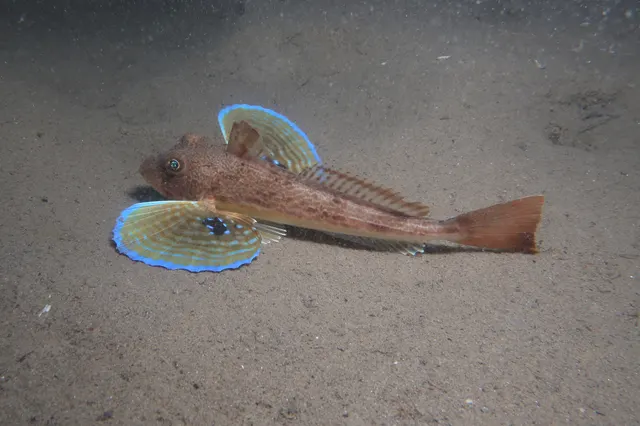 Tub gurnardTub gurnard abundance in the northern part of the range has increased markedly over recent decades, and anglers are catching them in numbers and sizes that would have been remarkable a generation ago. It is one of the clearer distribution shifts an angler can observe within a career.
Practices involved
Where this applies
- GreeceThe eastern Mediterranean is one of the fastest-changing marine systems on earth: warming water and species arriving through the Suez Canal have altered the fish community substantially within decades, and at least one herbivorous arrival has changed the shallow rocky habitat itself.
- The Aegean and CreteWarming water and species arriving from the Red Sea through the Suez Canal have altered this fish community substantially within decades, including venomous arrivals and herbivores that have grazed shallow rocky habitat down to bare rock. It is among the fastest-changing marine ecosystems on earth.
- The Lake District lakesWarming strengthens and lengthens summer stratification, which narrows the habitable band for a cold-water fish confined below the thermocline. These lakes are where that mechanism is visible in England.
Related reading
How this compares
Sources and evidence
- ICES Advice on fishing opportunities, catch and effort — International Council for the Exploration of the Sea (Scientific institute)Relied on for: Scientific advice on north-east Atlantic stocks including distribution shifts, recruitment and the environmental drivers identified.States this directlyCitation checked — the work exists and is described correctly
- Cefas science, advice and data on marine and freshwater environments — Centre for Environment, Fisheries and Aquaculture Science (Government fisheries body)Relied on for: Science on UK marine and freshwater fisheries including stock distribution, environmental monitoring and climate-driven change.States this directlyCitation checked — the work exists and is described correctly
- The IUCN Red List of Threatened Species — International Union for Conservation of Nature (Conservation authority)Relied on for: Global extinction-risk assessment, population trend and the threats identified for the species concerned.States this directlyCitation checked — the work exists and is described correctly
- FishBase: a global information system on fishes — Froese, R. and D. Pauly, eds. — FishBase Consortium (Scientific institute)Relied on for: Temperature tolerance, distribution, habitat association and life history recorded for the species concerned.States this directlyPassage read and verified
Why the 8 connections on this page are here, and the sources
Species affected
Backed by research — 2 connections
Supported by peer-reviewed research or fisheries science. The sources are listed and can be checked.
Common stingray
A conservation claim about a species with a documented assessment, joined to the environmental issue it exemplifies.
- The IUCN Red List of Threatened Species — International Union for Conservation of Nature (Conservation authority)Relied on for: The global Red List category and the population assessment behind it for the species concerned.States this directlyCitation checked — the work exists and is described correctly
- Cefas science, advice and data on marine and freshwater environments — Centre for Environment, Fisheries and Aquaculture Science (Government fisheries body)Relied on for: UK marine fisheries science: survey data, distribution and elasmobranch stock monitoring in UK waters.States this directlyCitation checked — the work exists and is described correctly
Tub gurnard
A claim about a changing distribution, which is a claim about the world and rests on survey science rather than on angling report.
- Cefas science, advice and data on marine and freshwater environments — Centre for Environment, Fisheries and Aquaculture Science (Government fisheries body)Relied on for: UK marine fisheries science: survey data, distribution and the biological basis of management advice for the species concerned.States this directlyCitation checked — the work exists and is described correctly
- The Fishes of the British Isles and North-West Europe — Macmillan, 1969 (Reference work)Relied on for: Distribution, habitat and biology of the fishes of the British Isles and north-west Europe.States this directlyCitation checked — the work exists and is described correctly
Practices involved
Official guidance — 1 connection
Stated by a fisheries authority, scientific institute or recognised angling body. Authoritative, but summarising rather than demonstrating.
Sea fishing
An environmental effect attached to the practice that causes it, resting on guidance and monitoring published by the responsible bodies rather than on advocacy.
- ICES Advice on fishing opportunities, catch and effort — International Council for the Exploration of the Sea (Scientific institute)Relied on for: Scientific advice on north-east Atlantic stocks including distribution shifts and the environmental drivers identified.States this directlyCitation checked — the work exists and is described correctly
- Cefas science, advice and data on marine and freshwater environments — Centre for Environment, Fisheries and Aquaculture Science (Government fisheries body)Relied on for: Science on UK marine and freshwater fisheries including stock distribution and climate-driven change.States this directlyCitation checked — the work exists and is described correctly
Where this applies
Backed by research — 3 connections
Supported by peer-reviewed research or fisheries science. The sources are listed and can be checked.
Greece
An environmental claim attached to the geography where it operates, resting on published stock assessment and conservation status rather than on advocacy.
- The IUCN Red List of Threatened Species — International Union for Conservation of Nature (Conservation authority)Relied on for: The conservation assessment of the species and stocks concerned, with the assessment date, which is the basis for treating the pressure on them as established rather than asserted.States this directlyCitation checked — the work exists and is described correctly
- ICES Advice on fishing opportunities, catch and effort — International Council for the Exploration of the Sea (Scientific institute)Relied on for: Stock status and the advice on which management measures for the stocks concerned are set and revised.States this directlyCitation checked — the work exists and is described correctly
The Aegean and Crete
A claim that a place raises a particular environmental question, resting on the scientific and conservation literature for the system rather than on angling practice.
- JNCC species and habitat conservation advice — Joint Nature Conservation Committee (Conservation authority)Relied on for: Habitat classification and description for the intertidal, coastal and freshwater habitats named, and the species characteristically associated with them.States this directlyCitation checked — the work exists and is described correctly
- ICES Advice on fishing opportunities, catch and effort — International Council for the Exploration of the Sea (Scientific institute)Relied on for: Ecoregion description, nursery function and the hydrography of the European sea areas assessed.States this directlyCitation checked — the work exists and is described correctly
The Lake District lakes
A claim that a place raises a particular environmental question, resting on the scientific and conservation literature for the system rather than on angling practice.
- JNCC species and habitat conservation advice — Joint Nature Conservation Committee (Conservation authority)Relied on for: Habitat classification and description for the intertidal, coastal and freshwater habitats named, and the species characteristically associated with them.States this directlyCitation checked — the work exists and is described correctly
- Cefas science, advice and data on marine and freshwater environments — Centre for Environment, Fisheries and Aquaculture Science (Government fisheries body)Relied on for: Characterisation of UK inshore sediment, intertidal habitat and the shellfish beds associated with them.States this directlyCitation checked — the work exists and is described correctly
Related reading
Backed by research — 1 connection
Supported by peer-reviewed research or fisheries science. The sources are listed and can be checked.
Water temperature and fish activity
The biology or physiology beneath a handling practice, resting on the catch-and-release and fisheries science cited rather than on convention.
- ICES Advice on fishing opportunities, catch and effort — International Council for the Exploration of the Sea (Scientific institute)Relied on for: Scientific advice on north-east Atlantic stocks including distribution shifts and the environmental drivers identified.States this directlyCitation checked — the work exists and is described correctly
- Cefas science, advice and data on marine and freshwater environments — Centre for Environment, Fisheries and Aquaculture Science (Government fisheries body)Relied on for: Science on UK marine and freshwater fisheries including stock distribution and climate-driven change.States this directlyCitation checked — the work exists and is described correctly
How this compares
Backed by research — 1 connection
Supported by peer-reviewed research or fisheries science. The sources are listed and can be checked.
Fish stocks and sustainability
Two records a reader will hold together, joined where the relationship between them is the informative part.
- ICES Advice on fishing opportunities, catch and effort — International Council for the Exploration of the Sea (Scientific institute)Relied on for: Scientific advice on north-east Atlantic stocks including distribution shifts and the environmental drivers identified.States this directlyCitation checked — the work exists and is described correctly
- Cefas science, advice and data on marine and freshwater environments — Centre for Environment, Fisheries and Aquaculture Science (Government fisheries body)Relied on for: Science on UK marine and freshwater fisheries including stock distribution and climate-driven change.States this directlyCitation checked — the work exists and is described correctly
How FishingHQ labels evidence is explained in the evidence policy.