Greece
Fishing regions · Last reviewed 2026-08-18
Fifteen thousand kilometres of coast, six thousand islands, a sea that is nearly tideless and among the least productive on earth — and permission that comes from the harbourmaster rather than from any fisheries body.
Safety: drowning and immersion — can cause serious injury or death. 3 more points apply here.
Shallow water blackout and breath-hold loss of consciousness — Can cause serious injury or death
Hypoxic blackout gives no warning symptoms and takes a diver most often in the last few metres of the ascent, within sight of the surface.
What reduces it: Dive one-up-one-down with a partner watching every dive from the surface, train with a qualified instructor, and treat diving alone as outside the discipline.
Being listed here is not permission to fish. What that meansClose
Access, fishing rights, seasons, licences, local bylaws and permitted methods vary and can change. Check current access, permission, local regulations, closures and restrictions before you travel or fish. FishingHQ describes what the ground is and names who holds the answer; it does not hold the answer itself.
Find the authority for a jurisdiction · What FishingHQ does and does not cover
Greece is a jurisdiction record for a reason that has nothing to do with size: the route to permission here is unlike any other on FishingHQ.
RECREATIONAL SEA FISHING IS PERMITTED THROUGH THE PORT AUTHORITY. Not a fisheries ministry, not an angling federation, not a regional government — the local harbourmaster's office. Boat fishing and underwater fishing carry their own separate permissions on the same route. A visitor who goes looking for a national angling licence will not find one, and this single structural fact is the most practically useful thing FishingHQ can tell them.
THE COASTLINE IS ENORMOUS RELATIVE TO THE COUNTRY. Something in the order of fifteen thousand kilometres of it, most of that belonging to islands, and almost all of it steep rock meeting deep water within a very short distance. There is essentially no continental shelf in the sense a North Sea angler understands, no tidal range worth planning around, and very little soft estuarine ground anywhere.
THE SEA IS OLIGOTROPHIC, AND THAT IS THE HONEST HEADLINE. The eastern Mediterranean is among the most nutrient-poor sea water in the world. Little river input, limited upwelling, low primary production — which is why the water is that colour and that clear, and why the fish are smaller, slower-growing and less abundant than an Atlantic angler expects. A clear blue sea is a hungry sea. Anybody arriving with expectations set by Cornwall or Galicia will conclude they are fishing badly when in fact they are fishing a different kind of ocean.
AND THE FISHERY IS ANCIENT AND HEAVILY EXPLOITED. These waters have been fished continuously for millennia, the small-scale commercial fleet is large, and the traditional target stocks are much reduced. That is a property of the sea rather than of anybody's technique.
THE SYSTEM IS ALSO CHANGING FASTER THAN ALMOST ANY OTHER IN EUROPE. Warming water and species arriving through the Suez Canal have altered the eastern Mediterranean fish community substantially within decades. Some arrivals are commercially useful, several are venomous, and at least one herbivore has changed the shallow rocky habitat itself by grazing out algal beds. An identification problem that did not exist for a visitor's parents exists now.
WIND RATHER THAN TIDE ORGANISES THE FISHING. The meltemi — a strong, dry, persistent northerly through the summer that can blow for days — decides what is possible on any given day more completely than weather does in most places.
WHAT A VISITOR FINDS is a shore and small-boat fishery for seabream, wrasse and mullet, a culturally central squid, cuttlefish and octopus fishery, pelagic species in season, and a spearfishing tradition with deep roots and tight, specific rules.
What fishing here is like
A mountainous peninsula and several thousand islands in the eastern Mediterranean, with an enormous coastline relative to land area and deep water almost everywhere close inshore. Steep rock shores and islets, clean sand in the bays, extensive posidonia seagrass meadows between, and almost no soft estuarine ground. Tidal range is negligible, so the water is organised by wind — the summer meltemi above all — and by light. The sea is warm, exceptionally clear and among the most nutrient-poor on earth, with low primary production and correspondingly small, slow-growing and less abundant fish. Inland water is limited, strongly seasonal and concentrated in the mountainous north-west.
What you can target here
One entry per fish, grouped by how you would be fishing — because the answer is a different one from the rocks and from a boat. Each entry says how strongly the sources support it and how much evidence sits behind it. These are documented catches, not a forecast, and none of it is a statement that you may fish any particular ground.
From the shore · 6
- White seabreamRegular local target3 placesCape Sounion, The west coast of Naxos, The south coast of CreteOver beach section, headland, rock mark
- Common dentexRegular local target2 placesThe south coast of Crete, Cape SounionOver headland, rock mark
- Common octopusRegular local target2 placesCape Sounion, The west coast of NaxosOver beach section, headland
- Greater amberjackRegular local target1 placeThe south coast of CreteOver rock mark
- European squidSeasonal2 placesCape Sounion, The west coast of NaxosOver beach section, headlandAround Jan–Mar, Oct–Dec
- Red scorpionfishRecorded here2 placesCape Sounion, The south coast of CreteOver headland, rock mark
From a boat · 3
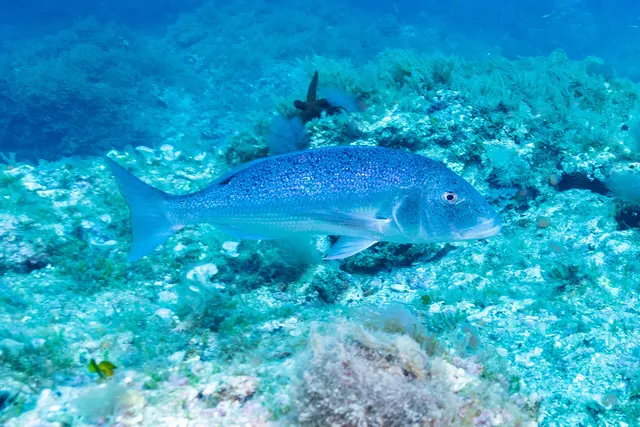
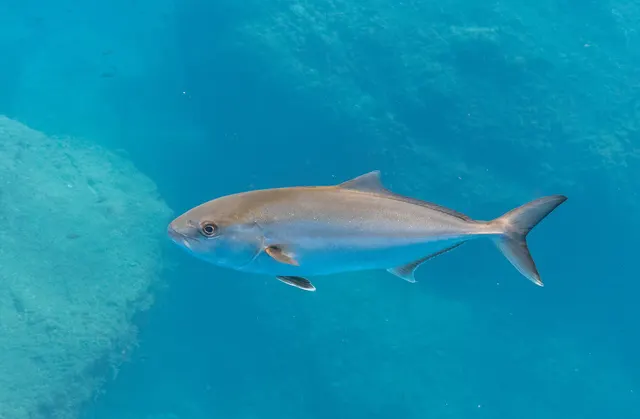
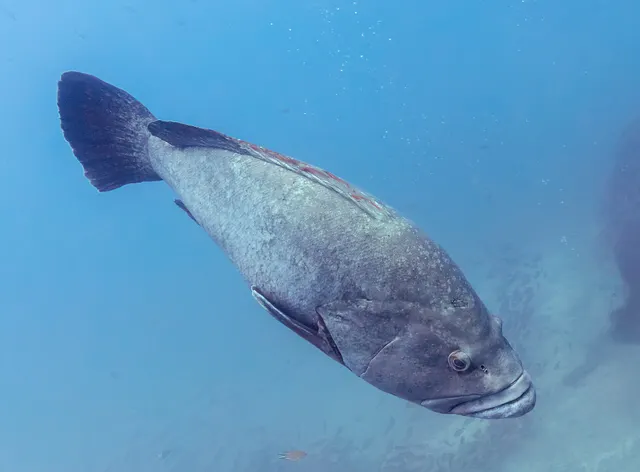
What these strengths mean
- Regular local target
- Fishing sources describe this as a normal local target here, not merely as caught.
- Seasonal
- Well supported, and concentrated in part of the year rather than spread through it.
- Recorded here
- At least one credible public account of this species being caught here. That is all it means.
- How breadth is counted
- A fish documented at six marks is shown as six marks: breadth never raises the strength on its own. A fishery account describes the fishing; a recorded catch reports one specific catch. How evidence is weighed.
How people fish here
7 methods are recorded on the places documented here, counted from the records themselves rather than from what is practised in the country. Each opens a full guide to the technique.
Float fishing
Recorded at 4 places here, over bay, beach section, headland, rock mark.
Suspending a bait at a controlled depth beneath a buoyant indicator — the most visual, most controllable and most widely applicable method in angling.
Documented on the same ground: Common dentex, Common octopus, Greater amberjack, White seabream, European squid, Dusky grouper.
Shore diving
Recorded at 3 places here, over beach section, headland, rock mark.
Entering and leaving the water from land under your own power — the most accessible spearfishing and the one where the entry and exit are the dangerous part.
Documented on the same ground: Common dentex, Common octopus, Greater amberjack, White seabream, European squid, Dusky grouper.
Eging
Recorded at 2 places here, over beach section, headland.
Jigging for squid and cuttlefish with a barbed, weighted lure worked in lifts and pauses — a Japanese discipline with its own tackle, vocabulary and competitive scene.
Documented on the same ground: Common octopus, White seabream, European squid, Common dentex, Red scorpionfish.
Kayak fishing
Recorded at 2 places here, over bay, beach section.
A platform rather than a technique: quiet, shallow-draught access to water no other craft reaches, bought at the price of exposure, and a discipline where the decision not to launch is part of the skill.
Documented on the same ground: Common octopus, White seabream, European squid, Common dentex.
Aspetto (waiting)
Recorded at 1 place here, over rock mark.
Descending, settling on the bottom and waiting for fish to come to you — the technique that produces most of the large fish taken by shore divers.
Documented on the same ground: Common dentex, Greater amberjack, White seabream, Dusky grouper, Red scorpionfish.
Ledgering
Recorded at 1 place here, over bay.
Fishing a bait on the bottom held by a weight, with no float — the simplest way to fish at distance, in depth, or in wind.
Spinning
Recorded at 1 place here, over bay.
Casting an artificial lure and retrieving it so that it moves like something alive — the most direct form of lure fishing.
These are the methods documented at the places FishingHQ holds here. A species listed beside a method is documented on the same ground, which is not the same as being taken that way — where a source establishes the method a fish was caught on, it is stated on that place’s own page. All fishing methods.
Areas within this one
One coast, island group or system inside this area has a fishing guide of its own.
The Aegean and Crete
2 documented places
Several thousand islands in a warm, clear, nutrient-poor sea with almost no tide and a wind that blows for days — and a fishery whose problem is that everything in it has been fished for four thousand years.
Documented here: Common dentex, White seabream, Common octopus, Greater amberjack, European squid
Fished by: float fishing, shore diving, aspetto (waiting), eging
What dominates
Shore angling from rock, mole and harbour wall, which is the ordinary fishing of the coast, frequently at night and frequently with very light tackle. Breath-hold spearfishing with a long tradition and its own tightly specified rules. Small-boat fishing, including drifting, bottom fishing over rough ground and trolling for pelagic species in season. Cephalopod fishing for squid, cuttlefish and octopus, which is culturally central and practised from shore and boat alike. Traditional small-scale commercial fishing with static gear from the caique, which is the visible fishing of most Greek harbours. Inland, a limited trout and cyprinid fishery in the mountainous north-west and in a small number of large lakes.
The water available
Steep Mediterranean rock coast with deep water close inshore; thousands of islands and islets with tidal-free but wind-driven water movement between them; posidonia seagrass meadows as the inshore nursery and food base; clean sand bays; deep basins and trenches within sight of land; a small number of large inland lakes and wetlands in the north-west; and seasonal mountain streams that fall to a chain of pools in summer.
How the rules are structured
Greece routes recreational sea fishing permission through the port authority for the area rather than through a fisheries or angling body, and boat fishing and underwater fishing carry their own separate permissions on the same route. Underwater fishing is regulated in unusual detail — minimum ages, prohibitions on combining breath-hold hunting with breathing apparatus, restrictions on the use of lights and on night activity, distance requirements from bathers, harbours, moored craft and marked bathing areas, and prohibitions on selling the catch. Above that sit national fisheries measures from the ministry responsible for rural development and food, and European measures on species under international management. Two further layers catch visitors out: marine protected areas and national marine parks with their own zoning, and archaeological protection, which closes water for reasons entirely unrelated to fisheries and is enforced seriously. Inland fishing is administered regionally and through the decentralised administration, with protected wetlands treated separately again. FishingHQ does not state what any current rule is; ask the local port authority.
Who to ask
- The local port authority, which administers recreational sea, boat and underwater fishing permission for its stretch of coast and is the first body to ask.
- The ministry responsible for rural development and food, for national fisheries measures and species management.
- The management body of the marine protected area or national marine park, where the water is inside one.
- The archaeological service, where a designation closes water for reasons unconnected with fisheries.
- The regional authority and the decentralised administration, for inland fishing and protected wetland.
Words you will meet
- Meltemi
- The strong, dry, persistent northerly wind of the Aegean summer, which can blow hard for several days at a time. It is the single physical event that decides what is possible on a given day in this sea, and it fills the role tide plays in northern Europe.
- Limenarcheio
- The port authority or harbourmaster's office. It is the body that administers recreational fishing permission in Greek waters, which is a route no other jurisdiction on FishingHQ uses, and it is the office a visitor should look for rather than a fisheries department.
- Caique
- The traditional wooden Greek fishing boat, still the working platform of much of the small-scale commercial fleet and of a great deal of the charter fishing a visitor will encounter.
- Posidonia
- A slow-growing marine flowering plant, not an alga, forming the seagrass meadows that are the nursery and food base of the whole inshore system. Protected across the Mediterranean, damaged by anchoring, and a habitat rather than an obstruction.
- Lessepsian migrant
- A species that has entered the Mediterranean from the Red Sea through the Suez Canal. Several are now common in Greek waters, some are venomous, and their arrival means an identification problem that did not exist a generation ago.
Conditions and hazards
Almost nothing here behaves the way a northern European coast does, and the substitutions are what catch people. There is no tide to plan around and no tidal cut-off, so the ground does not change under somebody — but the water is deep immediately, and a slip from a rock shore puts a person in water they cannot stand up in, out of reach of anybody. The meltemi gets up hard and stays, and a small craft that went out in calm water can find the return leg unmanageable. Summer heat, sun and dehydration degrade judgement on long sessions on shadeless rock. Boat traffic is heavy in season and a diver or float is nearly invisible from a planing hull. Breath-hold blackout is the discipline's defining risk and gives no warning. And the identification problem is a safety problem here in a way it is not in the Atlantic: several venomous species that were absent from these waters a few decades ago are now common, and a fish nobody recognises should not be handled bare-handed on the assumption that it resembles something familiar.
A clear blue sea is a hungry sea
The commonest disappointment a northern European angler has in Greece comes from reading the water's clarity as a sign of health. It is a sign of the opposite.
CLARITY IS LOW PRODUCTIVITY MADE VISIBLE. Water looks green and turbid where there is a great deal of phytoplankton in it, and phytoplankton is the base of the food web. The eastern Mediterranean has very little: limited river input, limited upwelling, and a circulation that keeps nutrients out of the sunlit layer. So the water is transparent, and the biomass it can support is small. Fish here are smaller, slower-growing, longer-lived and far less abundant per unit of coast than in the Atlantic, and that is a property of the sea rather than of anybody's fishing.
WHICH CHANGES WHAT SUCCESS LOOKS LIKE. A shore session producing a handful of small seabream, a wrasse and a garfish is a normal Greek session, not a poor one. Anglers who arrive expecting Atlantic weights and adjust their tackle downward rather than their expectations tend to enjoy the fishing considerably more.
THE SEAGRASS IS THE ENGINE OF WHAT PRODUCTIVITY THERE IS. Posidonia meadows on the sand between the rocks are the nursery, the shelter and the food base of the inshore system, and their edges are where a very large share of the fish live. They are protected across the Mediterranean, they grow at a few centimetres a year, and anchor damage to them takes decades to repair.
DEEP WATER IS CLOSE, WHICH IS THE COMPENSATION. There is essentially no shelf here, so ground that would be twenty miles offshore in the North Sea is a few hundred metres from a Greek rock. That puts pelagic and deep-water species within reach of a small boat, and it puts genuinely deep water within reach of a shore cast in places.
AND THE FISH COMMUNITY IS CHANGING FAST. Warming water and arrivals through the Suez Canal have altered the eastern Mediterranean fauna substantially within a few decades. Some of the new species are commercially useful, several carry venomous spines, and at least one herbivore has grazed out algal beds and changed the shallow rocky habitat itself. For an angler that is a live identification problem: a fish that nobody local recognised twenty years ago may be the commonest thing on the mark now, and the assumption that an unfamiliar fish resembles a familiar one closely enough to handle is exactly the assumption to avoid.
THE FISHERY IS ALSO VERY OLD AND VERY HEAVILY WORKED. Continuous exploitation over millennia, a large small-scale commercial fleet, and reduced stocks of the traditional targets. That is context rather than complaint, and it is the reason the marine protected areas here matter more than their size suggests.
Backed by research — why, and the sources (4)
Supported by peer-reviewed research or fisheries science. The sources are listed and can be checked.
- ICES Advice on fishing opportunities, catch and effort — International Council for the Exploration of the Sea (Scientific institute)Relied on for: Ecoregion description, stock distribution and status, nursery function and the hydrography of the European sea areas assessed, including the Baltic, the North Sea, the Celtic Seas and the Iberian and Biscay shelf.States this directlyCitation checked — the work exists and is described correctly
- FAO Species Identification Guides for Fishery Purposes and the FAO Species Catalogues — Food and Agriculture Organization of the United Nations (Scientific institute)Relied on for: Identification, distribution and habitat association of the fishes and invertebrates of the Mediterranean, the Black Sea and the eastern central Atlantic.States this directlyCitation checked — the work exists and is described correctly
- FishBase: a global information system on fishes — Froese, R. and D. Pauly, eds. — FishBase Consortium (Scientific institute)Relied on for: Recorded distribution, depth range, habitat association, size and biology of the species named.States this directlyPassage read and verified
- The IUCN Red List of Threatened Species — International Union for Conservation of Nature (Conservation authority)Relied on for: Current global and regional conservation assessment for the species named, with the assessment date.Background and mechanism onlyCitation checked — the work exists and is described correctly
The harbourmaster, not the ministry
Every jurisdiction on FishingHQ routes permission somewhere. Greece routes it somewhere nobody expects, and that is worth a section of its own.
THE PORT AUTHORITY IS THE BODY. Recreational sea fishing permission — and separately boat fishing, and separately again underwater fishing — is administered by the harbourmaster's office for the area rather than by a fisheries department or an angling federation. A visitor searching for a Greek equivalent of a rod licence is searching for the wrong shape of thing in the wrong place.
UNDERWATER FISHING IS SPECIFIED IN UNUSUAL DETAIL. The framework addresses minimum age, the prohibition on combining breath-hold hunting with breathing apparatus, restrictions around lights and night activity, distance requirements from bathers, harbours, moored craft and marked bathing areas, and prohibitions on selling what is taken. Those are the kinds of provisions a visitor is most likely to breach without knowing they exist, and they are the reason the port authority is worth visiting rather than assuming.
THE ARCHAEOLOGICAL LAYER IS THE ONE NOBODY ANTICIPATES. Greek waters carry protection over submerged archaeology, and that protection closes areas to diving and to activity on the bottom for reasons that have nothing whatever to do with fish. It is enforced seriously. A place can be entirely unremarkable as a fishery and entirely closed as a site.
MARINE PARKS ZONE INDEPENDENTLY. National marine parks and protected areas operate their own zoning, with cores where nothing is permitted and buffers where some things are, administered by a management body rather than by the port authority — so two different offices can both have an answer about the same piece of water.
NATIONAL AND INTERNATIONAL MEASURES SIT ABOVE ALL OF IT. Species under European or international management are governed by measures revised against scientific advice, which is how what is permitted changes without any Greek instrument changing.
INLAND IS A DIFFERENT ROUTE AGAIN — regional authorities and the decentralised administration, with protected wetlands treated separately, and with a much smaller and more seasonal resource than the coast.
WHAT A READER SHOULD DO. Find the port authority for the stretch of coast, ask what permission covers what they intend to do, and ask separately whether the water carries a marine park or archaeological designation. FishingHQ holds none of those answers and all of them change.
Official guidance — why, and the sources (2)
Stated by a fisheries authority, scientific institute or recognised angling body. Authoritative, but summarising rather than demonstrating.
- Code of Conduct for Responsible Fisheries — Food and Agriculture Organization of the United Nations, Rome, 1995 (Standards body)Relied on for: The international framework within which national and regional fisheries authorities set, revise and enforce measures, and the principle that responsible fishing includes the safety of fishers.Background and mechanism onlyCitation checked — the work exists and is described correctly
- ICES Advice on fishing opportunities, catch and effort — International Council for the Exploration of the Sea (Scientific institute)Relied on for: That the stock advice European fisheries measures are set against is produced internationally and revised annually, which is the mechanism by which a national measure changes without the national law changing.States this directlyCitation checked — the work exists and is described correctly
No tide, deep water at your feet, and fish nobody's grandfather saw
Greece removes the hazard a British angler is trained for and substitutes four they are not.
THERE IS NO TIDAL CUT-OFF, AND THERE IS NO SHALLOW MARGIN EITHER. The ground does not change under somebody here, which is a genuine relief — but the water at the foot of a Greek rock is frequently ten or twenty metres deep within a body length of the edge. A slip does not put a person in a metre of water they can stand up in. It puts them in deep water, in a place with no beach to swim to, possibly out of sight of anybody.
THE MELTEMI IS THE WEATHER HAZARD AND IT IS DIRECTIONAL. It gets up hard, it persists for days, and it blows from the north — so a small craft that has run downwind in the morning has a return leg it may not be able to make. Wind against the water's own movement in the channels between islands stands up a short, steep sea very quickly.
HEAT IS A REAL HAZARD RATHER THAN A DISCOMFORT. Shadeless rock, high sun and long sessions produce dehydration and heat exhaustion, and both degrade judgement and coordination before anything dramatic happens — on ground where those are what keep somebody safe.
BOAT TRAFFIC AND BREATH-HOLD ARE THE DIVING HAZARDS and they are the same everywhere in this sea. A diver or float is nearly invisible from a planing hull, which is why a surface marker buoy with a dive flag kept directly above the diver is standard practice. Hypoxic blackout gives no warning symptom and takes divers most often in the last few metres of the ascent, which is why every dive is watched by a partner at the surface. Diving alone is the commonest fatality profile in the discipline and experience does not change that.
AND THE IDENTIFICATION PROBLEM IS A SAFETY PROBLEM HERE. Species arriving from the Red Sea have brought venomous spines into water that did not previously hold them, and some are now common. The safe default is that an unfamiliar fish is not handled bare-handed, is not assumed to resemble anything familiar, and is unhooked with tools — and that applies with more force in this sea than in almost any other, because the fauna has genuinely changed within living memory.
Official guidance — why, and the sources (4)
Stated by a fisheries authority, scientific institute or recognised angling body. Authoritative, but summarising rather than demonstrating.
- DAN guidance on freediving safety, hypoxia and shallow-water blackout — Divers Alert Network (Water-safety or diver-training authority)Relied on for: Hypoxic blackout in breath-hold diving, its absence of warning symptoms, and the direct supervision practice that addresses it.States this directlyPassage read and verified
- AIDA International freediving education and safety standards — AIDA International (Water-safety or diver-training authority)Relied on for: Freediving training and safety standards including one-up-one-down direct supervision and surface interval practice.States this directlyCitation checked — the work exists and is described correctly
- RNLI water safety guidance: cold water shock and Float to Live — Royal National Lifeboat Institution (Water-safety or diver-training authority)Relied on for: Cold water shock and the immersion response, tidal cut-off, and water-safety guidance for shore anglers and small-craft users.States this directlyPassage read and verified
- Met Office shipping forecast, inshore waters forecast and marine warnings — Met Office, United Kingdom (Government fisheries body)Relied on for: That inshore waters forecasts, sea state and swell are the operative inputs for shore and small-craft decisions in north-west European waters.States this directlyCitation checked — the work exists and is described correctly
Places within this area
Publicly documented fishing geography. FishingHQ describes what the ground is; it does not say whether you may fish it, and every one of these sends that question to the body that holds the answer. Browse every place in this part of the world.
Who to ask before fishing any of these
FishingHQ does not know the current access position here. Recreational sea fishing in Greece is permitted through the port authority rather than a national angling body, boat and underwater fishing carry their own separate permissions, and underwater fishing is subject to distance rules from bathers, harbours and moored craft and to equipment prohibitions. Archaeological protection closes water in places for reasons that have nothing to do with fisheries. All of it changes. Check the current position with the local port authority before going.
FishingHQ does not know the current access position here. Recreational sea fishing in Greece is permitted through the port authority rather than a national angling body, boat and underwater fishing carry their own separate permissions, and underwater fishing is subject to distance rules from bathers, harbours and moored craft and to equipment prohibitions. Archaeological protection closes water in places for reasons that have nothing to do with fisheries. All of it changes. Check the current position with the local port authority before going. This water is tidal and transitional, so the freshwater regime may also apply above the tidal limit: FishingHQ does not know the current access position here. Greek fresh water is limited, seasonal and administered by the region and the decentralised administration, with protected wetlands and salmonid streams treated separately again. Check with the regional authority before going.
Cape Sounion
Headland · Salt water
The southern tip of Attica: a marble and schist headland falling to a rock shore with ledges and boulder at the water's edge, deep water immediately off it, and the temple of Poseidon on the summit above.
Open to the Aegean from east through south-west, and fully exposed to the summer meltemi from the north-east.
Particular to this ground: drowning and immersion, sun, dehydration and fatigue.
Severe hazards of Greece apply here: shallow water blackout and breath-hold loss of consciousness, weather and lightning.
Particular to this water: Underwater fishing is licensed and regulated separately from rod fishing throughout this jurisdiction, with its own age, equipment and distance requirements, and holding a rod licence is not permission to spearfish. This ground lies in or beside a marine protected area whose zoning constrains fishing, diving, anchoring and collection independently of any licence, with rules that differ between zones and boundaries that are not visible from the water.
The Amvrakikos Gulf
Bay · Brackish water
An almost enclosed gulf in western Greece entered through a narrow shallow channel at Preveza, with soft mud bottom, extensive lagoons and reedbeds around its edges, and water that is brackish and stratified rather than fully marine.
Sheltered by its own shape from the open Ionian, so wind rather than sea decides what is possible.
Severe hazards of Greece apply here: drowning and immersion, shallow water blackout and breath-hold loss of consciousness, weather and lightning.
Particular to this water: This ground lies in or beside a marine protected area whose zoning constrains fishing, diving, anchoring and collection independently of any licence, with rules that differ between zones and boundaries that are not visible from the water. Shellfish harvesting areas are classified for food safety and are opened and closed on monitoring results a gatherer cannot see. Neither cooking nor appearance removes a biotoxin. Check the current classification with the responsible authority before taking anything.
Safety
Shallow water blackout and breath-hold loss of consciousness is set out at the top of this page, where it cannot be missed.
Drowning and immersion — Can cause serious injury or death
Greek rock shores drop into deep water within a body length of the edge, so a slip puts somebody into water they cannot stand up in, frequently with no beach within reach and nobody in sight.
What reduces it: Wear a flotation aid rather than carry one, fish with somebody else on rock ground, carry a means of calling for help on the person, and treat wet or weeded rock at the water's edge as unusable rather than careful ground.
Weather and lightning — Can cause serious injury or death
The summer meltemi gets up hard and persists for days from the north, so a small craft that ran downwind in calm water can find the return leg unmanageable, and wind against the movement in the channels between islands raises a short steep sea very quickly.
What reduces it: Plan a small-craft day around the forecast for the whole of it rather than the conditions at launch, make the outward leg the one into the wind, and treat a meltemi forecast as a reason not to go out rather than a reason to come back early.
Venomous and spined species — Can cause injury needing treatment
Species that have entered the eastern Mediterranean from the Red Sea include several with venomous spines, and some are now common on ground where nothing like them occurred a few decades ago. A visitor handling an unfamiliar fish on the assumption that it resembles something familiar is the standard route to a sting.
What reduces it: Do not handle an unfamiliar fish bare-handed, unhook with tools and a wet cloth, and treat identification as a step before handling rather than after it.
Further safety reading
- Breath-hold blackout — Deep water immediately off the rock and a long-established diving culture, in a sea where hypoxic blackout behaves exactly as it does everywhere else.
- Venomous and spined fish — The eastern Mediterranean fish community has changed within living memory and several arrivals carry venomous spines, so the identification-before-handling rule has more force here than on almost any other coast.
Check the rules before you fish
Fishing laws, bylaws, access rules, seasons, bait restrictions and permitted methods vary by location and can change. Check the current rules from the relevant authority and the water you intend to fish before fishing.
Check with:
- Current national or regional law for where you are fishing
- Current local bylaws
- The relevant fisheries authority
- The landowner, club or fishery whose water it is
- Any restrictions specific to the species or the method you intend to use
Where to go next
What swims here
- European squidCephalopod fishing is culturally central across the Greek islands and is practised from shore and small boat alike, which is why the fish belongs on the jurisdiction rather than only on the technique page.
- Red lionfishAn arrival from the Red Sea through the Suez Canal, now established in the eastern Mediterranean. Its presence in Greek water is recent enough that a visitor's field guide may not contain it and its spines are venomous.
- Red scorpionfishA venomous-spined ambush fish of Greek rock and weed ground, and a standing reason not to handle an unfamiliar Mediterranean fish bare-handed.
- White seabreamOne of the commonest inshore sparids of Greek rock and mole ground, and frequently the answer to what a visitor has caught from a harbour wall.
Local knowledge
How this compares
Rules and access
Environment and conservation
Sources and evidence
- ICES Advice on fishing opportunities, catch and effort — International Council for the Exploration of the Sea (Scientific institute)Relied on for: Ecoregion description, stock distribution and status, nursery function and the hydrography of the European sea areas assessed, including the Baltic, the North Sea, the Celtic Seas and the Iberian and Biscay shelf.States this directlyCitation checked — the work exists and is described correctly
- FAO Species Identification Guides for Fishery Purposes and the FAO Species Catalogues — Food and Agriculture Organization of the United Nations (Scientific institute)Relied on for: Identification, distribution and habitat association of the fishes and invertebrates of the Mediterranean, the Black Sea and the eastern central Atlantic.States this directlyCitation checked — the work exists and is described correctly
- FishBase: a global information system on fishes — Froese, R. and D. Pauly, eds. — FishBase Consortium (Scientific institute)Relied on for: Recorded distribution, depth range, habitat association, size and biology of the species named.States this directlyPassage read and verified
- The IUCN Red List of Threatened Species — International Union for Conservation of Nature (Conservation authority)Relied on for: Current global and regional conservation assessment for the species named, with the assessment date.Background and mechanism onlyCitation checked — the work exists and is described correctly
- Fishers' Craft and Lettered Art: Tracts on Fishing from the End of the Middle Ages — University of Toronto Press, 1997 (Scientific literature)Relied on for: That European fishing traditions develop around the water and fish available to them, and the historical method of reading such traditions.Background and mechanism onlyCitation checked — the work exists and is described correctly
- General angling website restatements of established technique — Various (Credible secondary source)Relied on for: Widely restated descriptions of regional angling practice, recorded as practitioner consensus rather than as scholarship.Background and mechanism onlyCitation checked — the work exists and is described correctly
- Sea Angler — Bauer Media (Specialist angling publication)Relied on for: Long-running published description of European sea angling practice by region and by ground type, including the destinations British anglers travel to.FishingHQ's interpretation of what it saysCitation checked — the work exists and is described correctly
- General angling website restatements of established technique — Various (Credible secondary source)Relied on for: Widely restated descriptions of which practices are conventionally used in the waters named, recorded as practitioner consensus rather than as scholarship.Background and mechanism onlyCitation checked — the work exists and is described correctly
Why the 12 connections on this page are here, and the sources
What swims here
Backed by research — 4 connections
Supported by peer-reviewed research or fisheries science. The sources are listed and can be checked.
European squid
That a species occurs in these waters, drawn from distribution science and stock assessment. It is a statement about where the animal lives and is not a statement that anybody will catch one, still less where.
- FAO Species Identification Guides for Fishery Purposes and the FAO Species Catalogues — Food and Agriculture Organization of the United Nations (Scientific institute)Relied on for: Identification, distribution and habitat association of the fishes and invertebrates of the Mediterranean and Black Sea.States this directlyCitation checked — the work exists and is described correctly
- FishBase: a global information system on fishes — Froese, R. and D. Pauly, eds. — FishBase Consortium (Scientific institute)Relied on for: Recorded distribution, depth range and habitat association of the species named.States this directlyPassage read and verified
Red lionfish
That a species occurs in these waters, drawn from distribution science and stock assessment. It is a statement about where the animal lives and is not a statement that anybody will catch one, still less where.
- FAO Species Identification Guides for Fishery Purposes and the FAO Species Catalogues — Food and Agriculture Organization of the United Nations (Scientific institute)Relied on for: Identification, distribution and habitat association of the fishes and invertebrates of the Mediterranean and Black Sea.States this directlyCitation checked — the work exists and is described correctly
- FishBase: a global information system on fishes — Froese, R. and D. Pauly, eds. — FishBase Consortium (Scientific institute)Relied on for: Recorded distribution, depth range and habitat association of the species named.States this directlyPassage read and verified
Red scorpionfish
That a species occurs in these waters, drawn from distribution science and stock assessment. It is a statement about where the animal lives and is not a statement that anybody will catch one, still less where.
- FAO Species Identification Guides for Fishery Purposes and the FAO Species Catalogues — Food and Agriculture Organization of the United Nations (Scientific institute)Relied on for: Identification, distribution and habitat association of the fishes and invertebrates of the Mediterranean and Black Sea.States this directlyCitation checked — the work exists and is described correctly
- FishBase: a global information system on fishes — Froese, R. and D. Pauly, eds. — FishBase Consortium (Scientific institute)Relied on for: Recorded distribution, depth range and habitat association of the species named.States this directlyPassage read and verified
White seabream
That a species occurs in these waters, drawn from distribution science and stock assessment. It is a statement about where the animal lives and is not a statement that anybody will catch one, still less where.
- FAO Species Identification Guides for Fishery Purposes and the FAO Species Catalogues — Food and Agriculture Organization of the United Nations (Scientific institute)Relied on for: Identification, distribution and habitat association of the fishes and invertebrates of the Mediterranean and Black Sea.States this directlyCitation checked — the work exists and is described correctly
- FishBase: a global information system on fishes — Froese, R. and D. Pauly, eds. — FishBase Consortium (Scientific institute)Relied on for: Recorded distribution, depth range and habitat association of the species named.States this directlyPassage read and verified
How people fish here
What experienced anglers do — 2 connections
Widely and independently recommended by experienced anglers and specialist sources. This is real angling knowledge, not proof: controlled evidence for it is limited, and FishingHQ records it as convention rather than as a demonstrated effect.
Sea fishing
That a discipline is conventionally practised in these waters, drawn from published description of practice rather than from participation data, and labelled as consensus accordingly.
- Sea Angler — Bauer Media (Specialist angling publication)Relied on for: Long-running published description of European sea angling practice by region and destination, including where British anglers travel and what they fish for there.FishingHQ's interpretation of what it saysCitation checked — the work exists and is described correctly
- General angling website restatements of established technique — Various (Credible secondary source)Relied on for: Widely restated descriptions of which disciplines are conventionally practised in the waters named, recorded as practitioner consensus rather than as scholarship.Background and mechanism onlyCitation checked — the work exists and is described correctly
Spearfishing
That a discipline is conventionally practised in these waters, drawn from published description of practice rather than from participation data, and labelled as consensus accordingly.
- Sea Angler — Bauer Media (Specialist angling publication)Relied on for: Long-running published description of European sea angling practice by region and destination, including where British anglers travel and what they fish for there.FishingHQ's interpretation of what it saysCitation checked — the work exists and is described correctly
- General angling website restatements of established technique — Various (Credible secondary source)Relied on for: Widely restated descriptions of which disciplines are conventionally practised in the waters named, recorded as practitioner consensus rather than as scholarship.Background and mechanism onlyCitation checked — the work exists and is described correctly
Local knowledge
What experienced anglers do — 1 connection
Widely and independently recommended by experienced anglers and specialist sources. This is real angling knowledge, not proof: controlled evidence for it is limited, and FishingHQ records it as convention rather than as a demonstrated effect.
Wind, and where it puts the food
A link from a practice, an environment or a geography to the mechanism it rests on. It asserts that the mechanism is load-bearing here rather than merely relevant, which is the test applied throughout this file.
- Sea Angler — Bauer Media (Specialist angling publication)Relied on for: Long-running published description of how conditions are read in the practice named, by ground type and by region.FishingHQ's interpretation of what it saysCitation checked — the work exists and is described correctly
- General angling website restatements of established technique — Various (Credible secondary source)Relied on for: Widely restated descriptions of how the condition named governs the practice named, recorded as practitioner consensus rather than as scholarship.Background and mechanism onlyCitation checked — the work exists and is described correctly
How this compares
What experienced anglers do — 1 connection
Widely and independently recommended by experienced anglers and specialist sources. This is real angling knowledge, not proof: controlled evidence for it is limited, and FishingHQ records it as convention rather than as a demonstrated effect.
Italy
A navigational link between two places a reader is genuinely choosing between or reasoning across, offered as orientation rather than as a ranking.
- Sea Angler — Bauer Media (Specialist angling publication)Relied on for: Long-running published description of European sea angling practice by region and destination, including where British anglers travel and what they fish for there.FishingHQ's interpretation of what it saysCitation checked — the work exists and is described correctly
- General angling website restatements of established technique — Various (Credible secondary source)Relied on for: Widely restated descriptions of which disciplines are conventionally practised in the waters named, recorded as practitioner consensus rather than as scholarship.Background and mechanism onlyCitation checked — the work exists and is described correctly
Safety reading
Official guidance — 2 connections
Stated by a fisheries authority, scientific institute or recognised angling body. Authoritative, but summarising rather than demonstrating.
Breath-hold blackout
A link from the place to the substantial safety topic describing the mechanism that hurts people there, rather than a warning restated in prose on the record itself.
- DAN guidance on freediving safety, hypoxia and shallow-water blackout — Divers Alert Network (Water-safety or diver-training authority)Relied on for: Hypoxic blackout in breath-hold diving, its absence of warning symptoms, and the direct supervision practice that addresses it.States this directlyPassage read and verified
Venomous and spined fish
A link from the place to the substantial safety topic describing the mechanism that hurts people there, rather than a warning restated in prose on the record itself.
- RNLI water safety guidance: cold water shock and Float to Live — Royal National Lifeboat Institution (Water-safety or diver-training authority)Relied on for: Cold water shock and the immersion response, tidal cut-off, and water-safety guidance for shore anglers and small-craft users.States this directlyPassage read and verified
Rules and access
Official guidance — 1 connection
Stated by a fisheries authority, scientific institute or recognised angling body. Authoritative, but summarising rather than demonstrating.
Licences and permission
This points to the kind of rule that applies rather than to a rule itself. The same question is administered differently in each of these countries, so the page says that the answer is held elsewhere and changes.
- Code of Conduct for Responsible Fisheries — Food and Agriculture Organization of the United Nations, Rome, 1995 (Standards body)Relied on for: The international framework within which national and regional fisheries authorities set, revise and enforce measures, and the principle that the responsible authority rather than a third party holds the current position.Background and mechanism onlyCitation checked — the work exists and is described correctly
- ICES Advice on fishing opportunities, catch and effort — International Council for the Exploration of the Sea (Scientific institute)Relied on for: That the stock advice European measures are set against is produced internationally and revised annually, which is how a national measure changes without the national law changing.States this directlyCitation checked — the work exists and is described correctly
Environment and conservation
Backed by research — 1 connection
Supported by peer-reviewed research or fisheries science. The sources are listed and can be checked.
Climate change and shifting fish distributions
An environmental claim attached to the geography where it operates, resting on published stock assessment and conservation status rather than on advocacy.
- The IUCN Red List of Threatened Species — International Union for Conservation of Nature (Conservation authority)Relied on for: The conservation assessment of the species and stocks concerned, with the assessment date, which is the basis for treating the pressure on them as established rather than asserted.States this directlyCitation checked — the work exists and is described correctly
- ICES Advice on fishing opportunities, catch and effort — International Council for the Exploration of the Sea (Scientific institute)Relied on for: Stock status and the advice on which management measures for the stocks concerned are set and revised.States this directlyCitation checked — the work exists and is described correctly
How FishingHQ labels evidence is explained in the evidence policy.