Greater amberjack
Fish · Last reviewed 2026-08-10
The largest amberjack — a circumglobal reef and wreck predator that fights downward with more raw power per kilogram than almost anything, and carries a genuine ciguatera caveat.
Safety: venomous and spined species — can cause serious injury or death. 6 more points apply here.
Barotrauma and pressure injury — Can cause injury needing treatment
Fish taken from deep structure suffer swim bladder expansion and cannot return unaided.
What reduces it: Use a descending device where release is intended. Decide before fishing deep what will be kept.
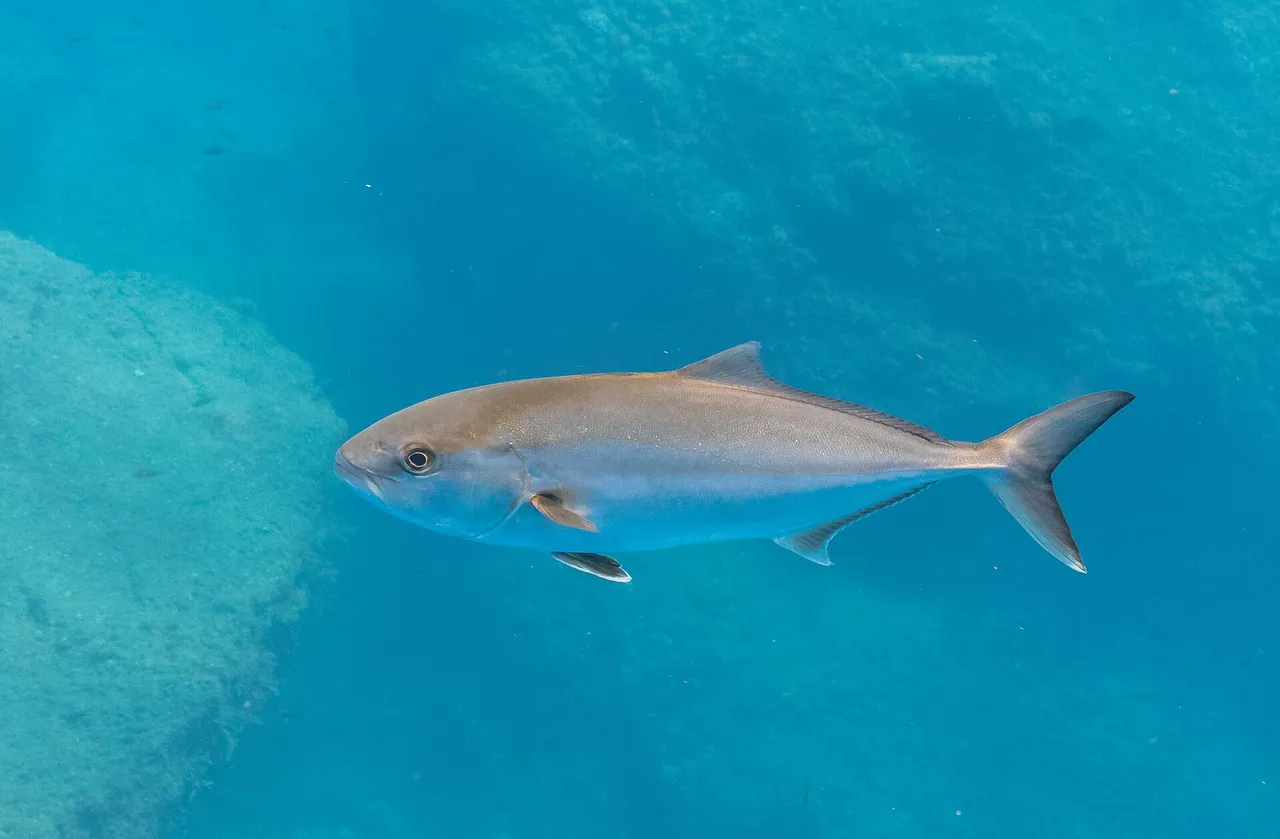
,_Madeira,_Portugal,_2019-05-31,_DD_31.jpg)
Catching Greater amberjack
Everything here on fishing for it. Each entry opens the page behind it.
- When
- Jun–Feb — months recorded at the places that document it, not a season for the whole range.
- Where
- 31 places FishingHQ documents — strongest claim anywhere: characteristic of this water · From the shore, From a boat, Spearfishing, On a charter
The greater amberjack is the biggest of the Seriola and, among people who have fought one, has a reputation for sheer pulling power that few fish match. It reaches nearly two metres and eighty kilograms, it lives over deep reefs, wrecks and pinnacles, and when hooked it goes straight down toward the structure it came from.
That single behaviour organises the fishery. Amberjack tackle is heavy not because the fish are large in absolute terms but because the fight is a vertical tug of war against a fish trying to reach cover, and losing the first thirty seconds means losing the fish and usually the terminal tackle with it.
It is separated from the yellowtail kingfish and other congeners by the dark diagonal band running from the upper jaw through the eye to the first dorsal fin — present in all Seriola but distinctly angled here — and by proportion. The amber stripe along the flank that gives the genus its common name is variable and fades after death.
Two cautions belong on the record. Large amberjack in some parts of the range carry ciguatoxin, which cooking does not remove; and the species is very commonly parasitised in the flesh, which is unappealing rather than dangerous but shapes how it is used.
How it is caught
- JiggingVertical jigging over deep structure is the defining method, and the tackle is heavy because the fight is a straight-down tug of war against a fish trying to reach cover.
- Reef spearfishingSecond by BIOMASS in the Canary catch on only eight fish, at 84.97 kg — which is the whole story of this species in one pair of numbers. It is taken rarely and it is very large when it is, and at a trophic level of 4.5 it is the top predator in the recorded catch.
Where Greater amberjack is documented
Places where public sources describe this species as fished, with how it is fished and how strongly the evidence supports it. This is not a range map and it is not a recommendation — it is what has been written down about a fishery rather than a record of any individual catch, and being listed is never permission to fish.
Canary Islands
12 documented places
Reef
Characteristic of this water
From a boat · From the shore
The Arinaga coast, Gran Canaria
Rock platform
Recorded here
From the shore · From a boat
The Morro Jable coast, Fuerteventura
Rock platform
Recorded here
From a boat
Punta de Fuencaliente, La Palma
Rock platform
Recorded here
Spearfishing · From a boat
The south-east coast of La Gomera
Cliff coast
Recorded here
Spearfishing · From a boat
The Tamaduste coast, El Hierro
Rock platform
Recorded here
Spearfishing
Sea area
Characteristic of this water
From a boat · On a charter · Spearfishing
Harbour wall
Recorded here
From the shore
Bay
Recorded here
From the shore
The Strait of Messina
1 documented place
Tidal race
Characteristic of this water
From a boat · From the shore
Tenerife
4 documented places
Headland
Regular local target
From the shore
Around Sept, Oct, Nov, Dec, Jan, Feb
Rock platform
Recorded here
From the shore
Headland
Recorded here
From the shore · From a boat
Cliff coast
Recorded here
From the shore
The Azores
3 documented places
Cliff coast
Regular local target
From a boat
The Terceira coastal reefs
Reef
Regular local target
From a boat
Around Jun, Jul, Aug, Sept
Offshore bank
Regular local target
From a boat
Around Jun, Jul, Aug, Sept
Madeira
2 documented places
Bay
Repeatedly reported
From the shore · From a boat
Rock platform
Regular local target
From the shore · From a boat
Around Aug, Sept, Oct, Nov
Lanzarote
5 documented places
Rock mark
Seasonal
From the shore
Around Sept, Oct, Nov, Dec, Jan, Feb
Puerto del Carmen harbour, Lanzarote
Harbour wall
Repeatedly reported
From the shore
Rock platform
Recorded here
From the shore
Cliff coast
Recorded here
From the shore
Cove
Repeatedly reported
From the shore
Also documented on 1 more coast
Fewer places each, or less strongly supported. Each one names its own marks.
Portugal (2)
What these strengths mean
- Repeatedly reported
- Several independent public accounts. Enough to say it happens more than once; not enough to call it a fishery.
- Regular local target
- Fishing sources describe this as a normal local target here, not merely as caught.
- Recorded here
- At least one credible public account of this species being caught here. That is all it means.
- Seasonal
- Well supported, and concentrated in part of the year rather than spread through it.
- Characteristic of this water
- This water is strongly identified with this species by the sources that cover it.
When to fish for greater amberjack
Where the places here state a season for greater amberjack, it clusters in Aug–Nov. This is a count of how many documented places name each month — evidence about when people fish for it, not a prediction of what any particular day will produce.
| Jan | Feb | Mar | Apr | May | Jun | Jul | Aug | Sep | Oct | Nov | Dec |
|---|---|---|---|---|---|---|---|---|---|---|---|
| January: 2 places name this month — some places. | February: 2 places name this month — some places. | March: no place here names this month — no place names it. | April: no place here names this month — no place names it. | May: no place here names this month — no place names it. | June: 2 places name this month — some places. | July: 2 places name this month — some places. | August: 3 places name this month — many places. | September: 5 places name this month — most places. | October: 3 places name this month — many places. | November: 3 places name this month — many places. | December: 2 places name this month — some places. |
5 of the 31 places that record catches of greater amberjack state which months. The other 26 name no season, so they are counted in neither direction: the shape above is what the dated records say, not the whole picture. The dated records span 4 separate areas.
Identification
- Scientific name
- Seriola dumerili
- Family
- Carangidae
- Water
- Saltwater
- Conservation status
- Least Concern
- Regions
- North America, Caribbean, Mediterranean, West Africa, Indo-Pacific, East & Southern Africa, Australia, East Asia, Global
- A dark diagonal band running from the upper jaw through the eye up to the origin of the first dorsal fin — present in the genus and distinctly angled in this species.
- An amber to bronze stripe along the flank, variable in intensity and fading rapidly after death.
- Body elongate and powerful with a deeply forked tail and a narrow caudal peduncle.
- First dorsal fin short and low; second dorsal long, with the front lobe somewhat elevated.
- Separated from yellowtail kingfish by the angle of the eye band, body proportion and the shape of the second dorsal lobe rather than by colour.
Size
- Typical
- 5–15 kg (11–33 lb)
- Large
- 25–40 kg (55–88 lb)
Exceptional: Over 55 kg (121 lb); maximum published weight 80.6 kg
Wrecks, pinnacles and the water column above them
Greater amberjack are structure-associated pelagic predators, and the combination is what makes them distinctive.
THEY HOLD OVER HARD STRUCTURE IN OPEN WATER. Wrecks, pinnacles, reef edges, offshore banks, oil platforms and drop-offs concentrate them, but the fish occupy the water column above and around the structure rather than sitting on it. A wreck holds amberjack in the twenty metres above it as much as on it.
DEPTH IS MODERATE TO DEEP, typically from around twenty metres down to well over a hundred, with larger fish generally deeper.
CURRENT IS PART OF THE HABITAT. Amberjack hold on the up-current side of structure and feed on what the flow delivers, which is why a mark fishes on a tide and dies at slack.
JUVENILES LIVE A COMPLETELY DIFFERENT LIFE. Young amberjack associate with floating weed and debris in open ocean — sargassum rafts in the Atlantic — living pelagically before recruiting to bottom structure as they grow. That drifting phase is where the year class is determined and it is invisible to any structure-based survey.
THEY ARE FAST SCHOOLING PREDATORS, and schools are size-sorted, so a piece of structure tends to hold fish of similar size.
AND BAROTRAUMA IS A HABITAT-DRIVEN PROBLEM: fish taken from depth need descending devices for release, which is now standard or required practice in the fisheries concerned.
Backed by research — why, and the sources (2)
Supported by peer-reviewed research or fisheries science. The sources are listed and can be checked.
- FAO Species Identification Guides for Fishery Purposes and the FAO Species Catalogues — Food and Agriculture Organization of the United Nations (Scientific institute)Relied on for: Distribution, habitat, depth and fishery accounts for the species in the FAO regional identification guides for the ocean area concerned.States this directlyCitation checked — the work exists and is described correctly
- ICES Advice on fishing opportunities, catch and effort — International Council for the Exploration of the Sea (Scientific institute)Relied on for: Stock assessment, the environmental drivers of stock distribution and abundance, and the scientific basis for advice in the sea areas concerned.States this directlyCitation checked — the work exists and is described correctly
Spring aggregation over structure, and a fish that grows fast
Greater amberjack spawn in aggregations over offshore structure, which places them in the vulnerable category despite their fast growth.
SPAWNING AGGREGATIONS FORM IN SPRING AND EARLY SUMMER in most of the range, over offshore banks, wrecks and reef, with fish gathering from surrounding areas. The aggregations are predictable enough in place and season to be targeted.
SPAWNING IS BATCH AND PELAGIC, with females releasing eggs repeatedly over the season and fecundity high. Eggs and larvae drift in the surface layer.
JUVENILES ASSOCIATE WITH FLOATING WEED AND DEBRIS, spending their early life in that drifting habitat before recruiting to bottom structure. Sargassum in the Atlantic is a genuine nursery habitat and its abundance affects recruitment.
GROWTH IS FAST AND MATURITY EARLY relative to the fish's eventual size, which gives the species more resilience than a slow-growing grouper of comparable weight.
BUT THE AGGREGATIONS STILL MATTER. Concentrating reproductive adults at known offshore structure in a defined season is the standard mechanism by which a resilient species is nevertheless fished down locally, and several stocks have been assessed as overfished.
AND SEASONAL AND SIZE MEASURES APPLY IN SEVERAL MANAGEMENT AREAS as a result. This page describes the biology; the applicable rules come from the relevant authority.
Backed by research — why, and the sources (2)
Supported by peer-reviewed research or fisheries science. The sources are listed and can be checked.
- Reef Fish Spawning Aggregations: Biology, Research and Management — Springer, Fish & Fisheries Series vol. 35, 2012 (Scientific literature)Relied on for: Reef fish spawning aggregations, their predictability in space and time, and the vulnerability that predictability creates.States this directlyCitation checked — the work exists and is described correctly
- ICES Advice on fishing opportunities, catch and effort — International Council for the Exploration of the Sea (Scientific institute)Relied on for: Stock assessment, the environmental drivers of stock distribution and abundance, and the scientific basis for advice in the sea areas concerned.States this directlyCitation checked — the work exists and is described correctly
Barotrauma, ciguatera, and a fish strong enough to hurt the person holding it
Three separate problems, and the one people prepare for least is the first.
Amberjack are taken from deep structure, and a fish brought up quickly from thirty or forty metres suffers swim bladder expansion it cannot resolve. Released at the surface it floats and dies. A descending device is the answer where release is intended, and choosing to fish shallower is the answer where one is not available.
The second is physical. A large amberjack is heavy, extremely powerful and lands on a moving deck. Support it horizontally and do not lift it vertically; the keeled scutes and gill covers cut, and the fish is entirely capable of injuring somebody with its body alone. Heavy jigging tackle with locked drags adds a line-under-tension hazard on top: when a leader parts under that load it returns toward the boat at speed.
The third is not a handling issue at all but belongs in the same decision. Large amberjack in parts of the range accumulate ciguatoxin, which no cooking or freezing removes and which causes serious and sometimes prolonged illness. Whether a particular fish is safe to eat is a local health question, and the honest answer here is to point at local advice rather than to offer a rule.
Backed by research — why, and the sources (2)
Supported by peer-reviewed research or fisheries science. The sources are listed and can be checked.
- A review of catch-and-release angling mortality with implications for no-take reserves — Reviews in Fish Biology and Fisheries 15:129–154, 2005 (Scientific literature)Relied on for: Catch-and-release mortality including barotrauma and depth of capture.States this directlyCitation checked — the work exists and is described correctly
- Sea Angler — Bauer Media (Specialist angling publication)Relied on for: Boat practice on handling large reef and wreck species, and jigging tackle hazards.States this directlyCitation checked — the work exists and is described correctly
A spawning aggregation in spring, and a fish that is deep in summer and shallow in the cool
Amberjack seasonality has two components that anglers experience quite differently: a depth cycle driven by temperature, and a spring aggregation driven by spawning.
THE SPRING SPAWNING AGGREGATION IS THE DEFINING SEASONAL EVENT. Greater amberjack gather in numbers on offshore reefs, wrecks and hard bottom to spawn through spring and early summer, and those aggregations are large, predictable and located on known structure. That is when the biggest fish are most concentrated, and it is why the species is so vulnerable to targeted fishing at that time — the standard aggregating-reef-fish problem, in a fish that grows large and lives a long time.
WHICH IS WHY THIS IS ONE OF THE MOST ACTIVELY MANAGED SPECIES ON SEVERAL COASTS. Seasonal closures, size limits and quotas for greater amberjack are common, are revised frequently, and are set with the aggregation specifically in mind. Nothing in the biology above tells anybody what is currently permitted; that is a matter for the competent authority and it changes.
OUTSIDE THE AGGREGATION, DEPTH TRACKS TEMPERATURE. Amberjack move deeper as surface waters warm through summer and use shallower structure in cooler periods, so the same wreck holds fish at different depths through the year and the shallow-water encounters cluster in the cooler months.
STRUCTURE IS THE CONSTANT AND CURRENT IS THE SWITCH. Amberjack hold on wrecks, reefs, rigs, pinnacles and any substantial relief, and they feed actively when current runs over that structure. Slack water on a good wreck produces very little; the same wreck with a tide running produces a great deal. That is a within-day cycle sitting under the seasonal one.
JUVENILES ASSOCIATE WITH FLOATING WEED AND DEBRIS in open water, a completely separate seasonal habitat that tracks the abundance of drifting sargassum and other floating material.
AND THE PARASITE QUESTION IS SEASONAL FOLKLORE WORTH ADDRESSING PLAINLY. Amberjack commonly carry visible parasites in the flesh, and the widespread belief that this is worse in warmer months is practitioner observation rather than an established seasonal rule. It is a food-preparation matter rather than a season, and the sensible response is inspection rather than a calendar.
Backed by research — why, and the sources (2)
Supported by peer-reviewed research or fisheries science. The sources are listed and can be checked.
- IGFA International Angling Rules and World Record Requirements — International Game Fish Association (Angling or fisheries organisation)Relied on for: Recognition of the species as a recognised game fish and the seasonal pattern of the recreational fisheries that target it.Background and mechanism onlyPassage read and verified
- FishBase: a global information system on fishes — Froese, R. and D. Pauly, eds. — FishBase Consortium (Scientific institute)Relied on for: Spawning season, temperature preference, migratory behaviour and seasonal distribution for the species.States this directlyPassage read and verified
Lifecycle and reproduction
Fast-growing and moderately long-lived, maturing at around three to five years and living to about seventeen. Spawns in open water in the warmer months, with pelagic eggs and larvae that associate with floating weed and debris — the same juvenile strategy seen in other Seriola. Adults associate strongly with deep structure and show considerable site fidelity to particular wrecks and pinnacles.
Broadcast spawning in open water in spring and summer, with pelagic eggs and larvae. Juveniles shelter under floating weed and debris well away from the reef habitat adults occupy, which is why small amberjack turn up offshore under drifting material. Adults aggregate on structure, and those aggregations are predictable enough to be depleted.
Feeding and senses
A powerful predator taking fish, squid and crustaceans, hunting in packs around deep structure and driving prey against it. The pack habit means a hooked fish is frequently followed by others, which is the basis of the standard technique of keeping one fish in the water to hold the school near the boat.
Sight-dominant in the clear water over deep reef, hunting visually at speed and responding strongly to fast-moving lures and to live bait. Amberjack are notably willing compared with many reef predators, which is part of why they are so heavily fished on wrecks and why individual structures can be depleted of large fish.
Through the year
Present year-round in the warmer parts of the range, with seasonal movement at the margins as water temperature shifts. Spawning aggregations form in the warmer months. Tidal and current flow governs the fishing on any given structure, since the fish position themselves relative to the current sweeping past it.
Distribution
Circumglobal in tropical and subtropical waters: the western and eastern Atlantic including the Mediterranean, the Indo-Pacific and the eastern Pacific. Associated with deep reefs, wrecks, pinnacles and drop-offs, generally between about 20 and 350 m.
This is a biological range — where the species occurs, not a prediction that you will catch one. To browse the fishing geography FishingHQ holds, start at fishing places.
Why anglers care
A major target on deep wrecks and reefs worldwide, taken by vertical jigging, live-baiting and trolling. Its power and its habit of diving for structure make it a benchmark fish for heavy jigging tackle. Regionally significant commercially, and heavily fished on known structures, where local depletion of large fish is a documented effect.
Handling and returning
A large and extremely powerful fish. Support horizontally and handle in the water where possible; never lift a big one vertically. Fish brought up from depth suffer barotrauma and may need a descending device to return successfully. On eating: large fish in some regions carry ciguatoxin, which no preparation removes, and local health advice is the only reliable guide.
Going further
- What does greater amberjack eat? — feeding biology, kept separate from what anglers infer from it.
- Greater amberjack vs Yellowtail kingfish — how to tell them apart.
Safety
Barotrauma and pressure injury is set out at the top of this page, where it cannot be missed.
Venomous and spined species — Can cause serious injury or death
Ciguatera poisoning from eating large amberjack in parts of the range. The toxin accumulates through the reef food chain, is not destroyed by cooking or freezing, and causes serious and sometimes prolonged illness.
What reduces it: Follow local health authority advice about which reef fish are safe to eat where you are, and treat large reef predators with particular caution. The risk varies regionally and by fish size in ways no general rule captures.
Line under tension — Can cause serious injury or death
Heavy jigging and live-bait tackle with locked drags fished directly above structure. When a leader or knot parts under that load it returns toward the boat at speed.
What reduces it: Keep hands clear of running line and of the leader while a fish is on. Nobody stands in line with a loaded rod. Gloves for leader work. Inspect and replace connections regularly.
Precautions that always apply here
- Wear a buoyancy aid or lifejacket. Cold water incapacitates strong swimmers within a minute, long before swimming ability matters.
- Support the fish's weight along its body, keep it out of the water for as short a time as possible, and hold it over something soft.
- Tell somebody where you are going and when you expect to be back.
- Carry a charged phone in a waterproof case, or another means of calling for help.
Check the rules before you fish
Fishing laws, bylaws, access rules, seasons, bait restrictions and permitted methods vary by location and can change. Check the current rules from the relevant authority and the water you intend to fish before fishing.
Check with:
- Current national or regional law for where you are fishing
- Current local bylaws
- The relevant fisheries authority
- The landowner, club or fishery whose water it is
- Any restrictions specific to the species or the method you intend to use
Where to go next
Similar and related fish
- Almaco jackBody depth and fin lobes. The eye bar both have separates nothing.
- Atlantic horse mackerelBoth are Carangidae with the family's keeled lateral scutes — the horse mackerel is what a jack looks like at small size, and the scutes are sharp on both.
- European spratSmall shoaling clupeids are a principal prey where amberjack range overlaps them, and amberjack hunting behaviour is organised around driving such shoals against structure or the surface.
- Yellowtail kingfishCongeners in Seriola, both structure-oriented and both diving hard for cover when hooked. Separated by the angle of the eye band and body proportion rather than by colour.
Where you will find it
- Cape VerdeThe fish that makes rock fishing here worth the effort. Amberjack hunt right into the rock because there is no shelf keeping them offshore, which is why popping and spinning from a ledge is viable here and close to pointless on a shelving European coast.
- CyprusThe seasonal exception to the island's small-fish rule, and the one time light tackle is the wrong answer. Amberjack come inshore to rock marks in season and are taken on lures, which is a completely different fishery from the resident one that occupies the rest of the year.
- Malta and GozoOver deep water close to shore, and one of the pelagic species the limestone drop-offs put within reach of a rock mark.
- The Croatian AdriaticPatrolling the karst walls and offshore banks in season, which is the pelagic component of a fishery otherwise dominated by resident rock species.
- The Gulf of MexicoHolds on wrecks, reefs, platforms and hard bottom across the shelf, aggregating to spawn on offshore structure in spring.
- The Strait of GibraltarHolds the current-swept structure and drop-offs in and around the strait, feeding on what the exchange flow delivers.
Understanding this fish
- Cephalopods as preyAmberjack take squid alongside fish, particularly over deep structure where squid concentrate.
- Ciguatera and reef fish poisoningImplicated in several affected regions, and a fish whose reputation as good eating in temperate waters travels with visitors into waters where the question is different.
- How histamine forms in a fish, and why the enzyme is the problemAmberjacks and the jacks generally are associated with the hazard, and are a principal warm-water catch for spearfishers — who take them into warm surface water on a stringer, which is the worst place available.
Sources and evidence
- FishBase: a global information system on fishes — Froese, R. and D. Pauly, eds. — FishBase Consortium (Scientific institute)Relied on for: Scientific name, family placement in the Carangidae, a maximum length of 190 cm TL, a maximum published weight of 80.6 kg, a maximum reported age of 15 years.States this directlyPassage read and verified
- FishBase: a global information system on fishes — Froese, R. and D. Pauly, eds. — FishBase Consortium (Scientific institute)Relied on for: Environment, climate zone and depth range as recorded: Marine; reef-associated; oceanodromous ; depth range 1 - 385 m , usually 18 - 72 m . Subtropical; 49°N - 36°S, 98°W - 128°EStates this directlyPassage read and verified
- FishBase: a global information system on fishes — Froese, R. and D. Pauly, eds. — FishBase Consortium (Scientific institute)Relied on for: The IUCN Red List category for Seriola dumerili — Least Concern, assessed 07 November 2013 — as republished by FishBase, the Red List itself being unreachable during review.States this directlyPassage read and verified
- Good Fish Guide — Marine Conservation Society (Conservation authority)Relied on for: That aggregating behaviour and site fidelity on known structures are material to local depletion and to sustainability assessment.FishingHQ's interpretation of what it saysCitation checked — the work exists and is described correctly
Why the 16 connections on this page are here, and the sources
Similar and related fish
Backed by research — 4 connections
Supported by peer-reviewed research or fisheries science. The sources are listed and can be checked.
Almaco jack
Seriola rivoliana is markedly deeper-bodied than Seriola dumerili at the same length, and the front lobes of its second dorsal and anal fins are long and falcate where the amberjack's are not. Both carry the dark bar running from the upper jaw through the eye, which is the mark most often used to identify an amberjack and which distinguishes neither from the other.
- FishBase: a global information system on fishes — Froese, R. and D. Pauly, eds. — FishBase Consortium (Scientific institute)Relied on for: The morphology, size, depth range and distribution that separate these two species from one another.States this directlyPassage read and verified
Atlantic horse mackerel
A taxonomic and identification comparison naming both binomials.
- FishBase: a global information system on fishes — Froese, R. and D. Pauly, eds. — FishBase Consortium (Scientific institute)Relied on for: That Trachurus trachurus and Seriola dumerili are both Carangidae, the jacks and pompanos.States this directlyPassage read and verified
European sprat
Recorded diet evidence identifies Sprattus sprattus as a food item of this predator at species level. The edge is written at that granularity and no further.
- FishBase: a global information system on fishes — Froese, R. and D. Pauly, eds. — FishBase Consortium (Scientific institute)Relied on for: Food items recorded for this predator, including Sprattus sprattus.States this directlyPassage read and verified
- FAO Species Identification Guides for Fishery Purposes and the FAO Species Catalogues — Food and Agriculture Organization of the United Nations (Scientific institute)Relied on for: Species account describing the diet of this predator in the region where Sprattus sprattus occurs.Background and mechanism onlyCitation checked — the work exists and is described correctly
Yellowtail kingfish
A taxonomic and identification comparison naming both binomials.
- FishBase: a global information system on fishes — Froese, R. and D. Pauly, eds. — FishBase Consortium (Scientific institute)Relied on for: That Seriola dumerili and Seriola lalandi are congeners in the genus Seriola associated with deep reef, wreck and rocky habitat.States this directlyPassage read and verified
How it is caught
What experienced anglers do — 1 connection
Widely and independently recommended by experienced anglers and specialist sources. This is real angling knowledge, not proof: controlled evidence for it is limited, and FishingHQ records it as convention rather than as a demonstrated effect.
Jigging
A practitioner claim about the principal method for the species.
- Sea Angler — Bauer Media (Specialist angling publication)Relied on for: Practitioner treatment of vertical jigging for amberjack and other deep structure predators.Citation checked — the work exists and is described correctly
- IGFA International Angling Rules and World Record Requirements — International Game Fish Association (Angling or fisheries organisation)Relied on for: The tackle classes used for large marine predators fished vertically.Passage read and verified
Official guidance — 1 connection
Stated by a fisheries authority, scientific institute or recognised angling body. Authoritative, but summarising rather than demonstrating.
Reef spearfishing
A scientific institute reporting what its own survey of the fishery recorded: a two-year catch-recording programme across the Canary archipelago counted and weighed every specimen, and this species appears in its published catch table. That is what Canary spearfishers were measured taking, rather than an inference from where the species lives or an assertion about what people do.
- Spearfishing in the Canary Islands: is the devil as black as it seems to be? — Pablo Martín-Sosa, Instituto Español de Oceanografía — Revista Scientia Insularum, 2019 (Scientific literature)Relied on for: The Canary spearfishing catch table, in which this species appears with a specimen count and a landed weight over the study's two-year recording period.States this directlyPassage read and verified
Gear for this fish
What experienced anglers do — 1 connection
Widely and independently recommended by experienced anglers and specialist sources. This is real angling knowledge, not proof: controlled evidence for it is limited, and FishingHQ records it as convention rather than as a demonstrated effect.
Metal jigs
A practitioner claim about a lure-species pairing.
- Sea Angler — Bauer Media (Specialist angling publication)Relied on for: Practitioner treatment of vertical jigging with metal jigs for deep structure predators.Citation checked — the work exists and is described correctly
- IGFA International Angling Rules and World Record Requirements — International Game Fish Association (Angling or fisheries organisation)Relied on for: The tackle classes used for large marine predators fished vertically.Passage read and verified
A practitioner claim about which lure family answers this species' feeding or holding behaviour.
- IGFA International Angling Rules and World Record Requirements — International Game Fish Association (Angling or fisheries organisation)Relied on for: Recognition of the species as an established sport fish taken on artificial lures, and the line and tackle classes used for it.States this directlyPassage read and verified
- General angling website restatements of established technique — Various (Credible secondary source)Relied on for: Widely restated lure practice for this species.Background and mechanism onlyCitation checked — the work exists and is described correctly
Where you will find it
Backed by research — 6 connections
Supported by peer-reviewed research or fisheries science. The sources are listed and can be checked.
Cape Verde
A distribution edge resting on published regional identification and distribution references, written where the species is genuinely characteristic of the destination's fishing rather than merely recorded from its waters.
- FAO Species Identification Guides for Fishery Purposes and the FAO Species Catalogues — Food and Agriculture Organization of the United Nations (Scientific institute)Relied on for: Distribution, habitat association and biology of the fishes of the eastern central Atlantic and the Mediterranean, from the regional identification guides prepared for fishery purposes.States this directlyCitation checked — the work exists and is described correctly
- FishBase: a global information system on fishes — Froese, R. and D. Pauly, eds. — FishBase Consortium (Scientific institute)Relied on for: Recorded environment, depth range, distribution and biology of the species named.States this directlyPassage read and verified
Cyprus
A distribution edge resting on published regional identification and distribution references, written where the species is genuinely characteristic of the destination's fishing rather than merely recorded from its waters.
- FAO Species Identification Guides for Fishery Purposes and the FAO Species Catalogues — Food and Agriculture Organization of the United Nations (Scientific institute)Relied on for: Distribution, habitat association and biology of the fishes of the eastern central Atlantic and the Mediterranean, from the regional identification guides prepared for fishery purposes.States this directlyCitation checked — the work exists and is described correctly
- FishBase: a global information system on fishes — Froese, R. and D. Pauly, eds. — FishBase Consortium (Scientific institute)Relied on for: Recorded environment, depth range, distribution and biology of the species named.States this directlyPassage read and verified
Malta and Gozo
A distributional claim about where a species occurs, resting on the regional identification literature rather than on angling report. It says nothing about where a reader should fish.
- FAO Species Identification Guides for Fishery Purposes and the FAO Species Catalogues — Food and Agriculture Organization of the United Nations (Scientific institute)Relied on for: Species composition, habitat association and distribution for the region concerned, as set out in the FAO species identification sheets.States this directlyCitation checked — the work exists and is described correctly
- The IUCN Red List of Threatened Species — International Union for Conservation of Nature (Conservation authority)Relied on for: Global assessment and distribution for the species concerned.States this directlyCitation checked — the work exists and is described correctly
The Croatian Adriatic
A claim that a place contains the ground, water and seasonal conditions the species is associated with. It is a distributional statement about the world, it rests on the regional reference literature, and it deliberately asserts nothing about access, permission or catch.
- FishBase: a global information system on fishes — Froese, R. and D. Pauly, eds. — FishBase Consortium (Scientific institute)Relied on for: Recorded distribution, depth range and habitat association for the Mediterranean species named.States this directlyPassage read and verified
- FAO Species Identification Guides for Fishery Purposes and the FAO Species Catalogues — Food and Agriculture Organization of the United Nations (Scientific institute)Relied on for: Regional species identification and distribution for the Mediterranean and eastern Atlantic, including habitat association.States this directlyCitation checked — the work exists and is described correctly
The Gulf of Mexico
A distribution association between an animal and a kind of water, rather than a claim about any named mark.
- FishBase: a global information system on fishes — Froese, R. and D. Pauly, eds. — FishBase Consortium (Scientific institute)Relied on for: Distribution, habitat association and depth range recorded for the species, including its occurrence in the water body concerned.States this directlyPassage read and verified
- The IUCN Red List of Threatened Species — International Union for Conservation of Nature (Conservation authority)Relied on for: Assessment and range account for the species, including the systems and coasts it occupies.Background and mechanism onlyCitation checked — the work exists and is described correctly
The Strait of Gibraltar
A distribution association between an animal and a kind of water, rather than a claim about any named mark.
- FAO Species Identification Guides for Fishery Purposes and the FAO Species Catalogues — Food and Agriculture Organization of the United Nations (Scientific institute)Relied on for: Distribution, habitat, depth and fishery accounts for the species of the eastern central Atlantic and Mediterranean in the FAO regional identification guides.States this directlyCitation checked — the work exists and is described correctly
- FishBase: a global information system on fishes — Froese, R. and D. Pauly, eds. — FishBase Consortium (Scientific institute)Relied on for: Distribution, habitat association and depth range recorded for the species.States this directlyPassage read and verified
Understanding this fish
Backed by research — 2 connections
Supported by peer-reviewed research or fisheries science. The sources are listed and can be checked.
Cephalopods as prey
Recorded diet evidence identifies cephalopods as a food item of this predator at group level rather than to species. The edge points at the taxon record for that reason, and encoding it as a species-level claim would assert something the source does not.
- FishBase: a global information system on fishes — Froese, R. and D. Pauly, eds. — FishBase Consortium (Scientific institute)Relied on for: Food items recorded for this predator, given as cephalopods.States this directlyPassage read and verified
- FAO Species Identification Guides for Fishery Purposes and the FAO Species Catalogues — Food and Agriculture Organization of the United Nations (Scientific institute)Relied on for: Species account describing this predator's diet, recorded at the level of cephalopods.Background and mechanism onlyCitation checked — the work exists and is described correctly
Ciguatera and reef fish poisoning
A link from a species or a place to the accumulation mechanism that decides whether what is caught there should be eaten, resting on published seafood-hazard guidance and on the species' recorded diet and trophic position.
- FAO Species Identification Guides for Fishery Purposes and the FAO Species Catalogues — Food and Agriculture Organization of the United Nations (Scientific institute)Relied on for: Identification, distribution and trophic position of tropical reef fishes, including the large predatory species associated with reef toxin.States this directlyCitation checked — the work exists and is described correctly
- FishBase: a global information system on fishes — Froese, R. and D. Pauly, eds. — FishBase Consortium (Scientific institute)Relied on for: Recorded distribution, diet, size and trophic level of the species named, which is the basis for its position in a reef food web.States this directlyPassage read and verified
Official guidance — 1 connection
Stated by a fisheries authority, scientific institute or recognised angling body. Authoritative, but summarising rather than demonstrating.
How histamine forms in a fish, and why the enzyme is the problem
A claim that a species belongs to the group in which histamine formation is a recognised hazard. That is a statement about the fish's muscle chemistry and about a named regulatory guidance's own species listing, not about angling practice, so it rests on the guidance rather than on report.
- Fish and Fishery Products Hazards and Controls Guidance — US Food and Drug Administration, Center for Food Safety and Applied Nutrition, 2022 (Standards body)Relied on for: Hazards and controls for fish and fishery products: scombrotoxin formation and the species groups associated with it, seafood parasites, and natural toxins.States this directlyPassage read and verified
How FishingHQ labels evidence is explained in the evidence policy.