Livebaiting at sea
Method · Last reviewed 2026-08-10
Presenting a living fish where a predator will find it — the most effective method for many species and the one with the clearest welfare questions attached.
Safety: biosecurity and disease transfer — can cause serious injury or death. 6 more points apply here.
For a considerable number of marine predators, nothing outfishes a live bait. Kingfish, snook, tarpon, large striped bass, billfish and many others will inspect and refuse artificial lures repeatedly and take a live fish without hesitation, because a live fish is behaving correctly in every respect a predator can evaluate.
The method has several forms. A bait may be fished under a float, freelined, weighted down to a depth, slow-trolled behind a moving boat, or fished from an anchored or drifting vessel. What they share is the requirement to keep the bait alive and swimming naturally, which drives everything else: how it is caught, how it is stored, how it is hooked, and how quickly it is used.
HOOKING is the technical heart of it. A bait hooked through the nose swims forward naturally when towed; hooked through the back near the dorsal it swims down and away; bridled — attached with a loop of thread or elastic rather than by driving the hook through flesh — it lives longer and swims better than either. Bridling is more work and it is what serious practitioners do.
And the welfare question is real and should not be skipped over. Using a living animal as bait is a deliberate choice, it is regulated or prohibited in a number of places, and a guide that describes the technique without saying so is being evasive. FishingHQ describes the method, states the constraint, and does not pretend the question is settled.
What it is
Presenting a living fish as bait to marine predators, whether under a float, freelined, weighted to depth, slow-trolled or fished from an anchored or drifting boat. Distinct from deadbaiting in that the bait's own behaviour is the attractant.
What it is for
To present prey that is behaving genuinely rather than being imitated, for species that evaluate a bait closely enough to reject anything artificial.
Setting it up
- Bait quality is the whole method. A tired bait catches nothing, so keep the tank cool, aerated and uncrowded and change baits often.
- Handle baits as little as possible and with wet hands — a bait that has lost scales is a bait that will die.
- Bridle rather than hook through flesh where the bait must survive a long presentation. It is more work and it works.
- Match the bait to what the predator is already eating locally, in size above all.
- Check what is permitted where you are: live baiting is restricted or prohibited in a number of jurisdictions, and moving live fish between waters is a separate and more serious matter.
What it catches
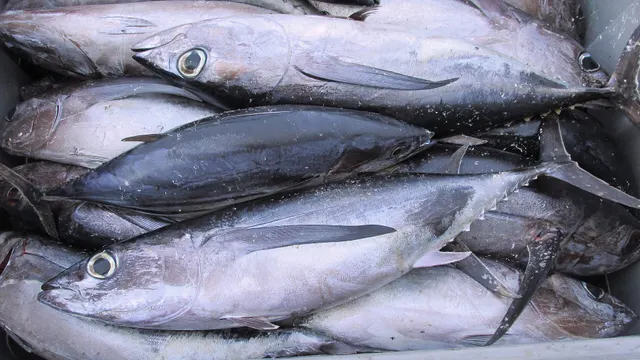 AlbacoreLive bait once a school is located, which is the second half of the same trip.
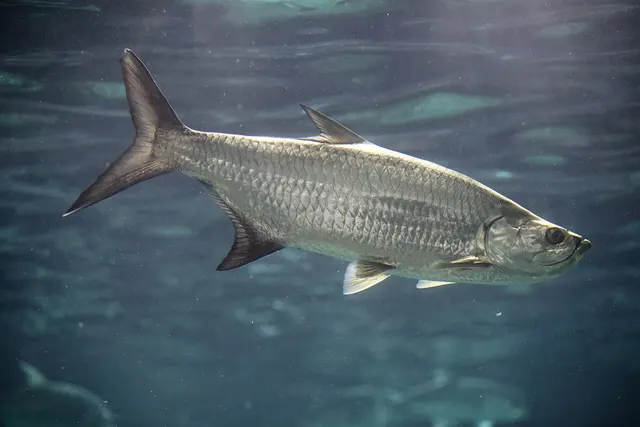 Atlantic tarponA live bait presented in a channel or a pass intercepts tarpon moving with the tide, which is how the fish's predictable movement rather than its location is fished.
- Blue sharkWhole and flapper fish baits fished in the slick are the standard presentation, and freshness does more work than size.
- Bull sharkA live or fresh fish bait in an estuary, river mouth or coastal shallow, on tackle heavy enough to end the fight rather than prolong it.
- CobiaSight-casting to visible fish shadowing rays and buoys, which is how the fishery is conducted.
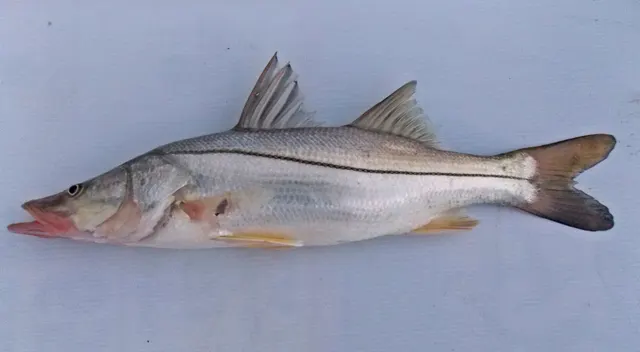 Common snookA live bait drifted into an ambush point takes the larger snook that will refuse an artificial, particularly around passes on a moving tide.
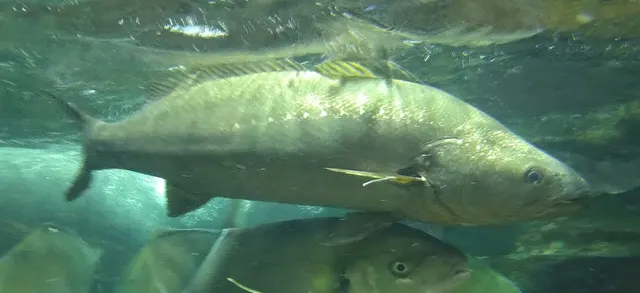 Dusky kobLive bait, which is what the fishery is built on where it can be obtained.
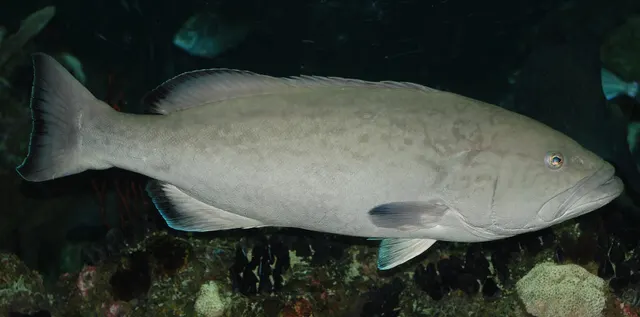 Gag grouperLive bait fished over structure, which is what a grouper fishery is built on.
7 more
- John Dory Fish
- King mackerel Fish
- Meagre Fish
- Narrow-barred Spanish mackerel Fish
- Roosterfish Fish
- Tope Fish
- Yellowtail kingfish Fish
How it works
Bait is caught locally — by sabiki rigs, cast net or small hooks — and kept in aerated, circulating water at a low enough density to survive. It is hooked so as to preserve natural swimming: through the nose or upper lip for towing, near the dorsal for a bait fished under a float, or bridled with thread or elastic so no hook passes through flesh at all. Presentation places the bait where predators hunt: an edge, a current line, a reef drop-off, or a school of bait already being worked. The predator's own senses do the rest, which is why the method needs so little from the angler once the bait is right.
Conditions
Live baiting works across a wide range of conditions and is at its best where predators are hunting but selective — clear water, hard-fished ground, or fish that have refused lures. It needs bait to be available locally, which is a genuine constraint, and it needs water cool enough that baits survive in a tank. Current and tide govern presentation, since a live bait is most convincing when it is working against or across flow.
Common mistakes
- Overcrowding the bait tank, which kills baits faster than anything else.
- Fishing a dead or exhausted bait because changing it is inconvenient.
- Hooking through flesh where a bridle would keep the bait alive far longer.
- Using a bait far larger or smaller than what the fish are actually eating.
- Assuming the method is permitted. It frequently is not, and the rules vary sharply between neighbouring places.
Advantages
- The most effective presentation available for a number of species that refuse lures.
- Requires little skill once the bait is right, so it is accessible.
- Works in poor visibility and at night, where visual methods fail.
- Naturally selective by bait size, since a small bait is not taken by the largest fish.
Limitations
- Depends entirely on obtaining and keeping bait alive, which is half the day's work.
- Bait tanks, pumps and space are a real logistical burden on a small boat.
- Raises welfare questions that lures do not, and is restricted or prohibited in some places.
- Deep hooking is more likely than with lures, which matters if fish are to be released.
Where people fish it
10 places FishingHQ holds name this among the ways they are fished, across 3 coasts and systems. Being named here describes what sources report, not that the method is permitted — check the local rules before you fish.
Safety
Biosecurity and disease transfer — Can cause serious injury or death
Moving live fish between waters is the principal route by which non-native species and pathogens are introduced, and the use of live bait is a well-documented vector. A bait that escapes or is released in a water it did not come from is exactly the mechanism.
What reduces it: Never move live fish or water between waters. Catch bait where you fish it. Do not release unused live bait. Clean, drain, dry and check tanks and equipment between waters.
Fish welfare — Can cause injury needing treatment
Live baiting uses a living animal as tackle. Baits die in poorly managed tanks, are damaged by rough handling, and are used until exhausted. Separately, live baits produce more deep hooking in the predator than lures do, which reduces the survival of fish that are released.
What reduces it: Keep only as many baits as will be used, in cool aerated water at low density. Handle with wet hands and minimally. Bridle rather than hook through flesh. Use circle hooks, which hook in the jaw rather than deeper and materially improve released-fish survival. Do not use a bait that is already dying.
Hooks and barbs — Can cause injury needing treatment
Rigging live baits means handling small sharp hooks on a moving deck while holding a struggling fish, which is a reliable way to hook a hand.
What reduces it: Rig on a stable surface with the bait controlled. Use a bait needle for bridling rather than improvising. Debarb where the fishing allows. Cut the line rather than pulling at a hook that has gone in past the barb.
Precautions that always apply here
- Wet your hands before touching a fish. Dry hands strip the protective mucus layer that keeps infection out.
- Never move live fish, live bait or water from one water to another.
- Check, clean and dry your kit between different waters — the published guidance is 48 hours’ drying, in sunlight where possible, because a number of invasive species survive over two weeks in damp conditions. Nets, boots and wet mats move invasive species and disease more effectively than anything else anglers do.
- If a hook goes past the barb into a person, cut the line, leave the hook where it is, and get medical help. Pulling it back out does far more damage than pushing it through under proper care.
Check the rules before you fish
Fishing laws, bylaws, access rules, seasons, bait restrictions and permitted methods vary by location and can change. Check the current rules from the relevant authority and the water you intend to fish before fishing.
Check with:
- Current national or regional law for where you are fishing
- Current local bylaws
- The relevant fisheries authority
- The landowner, club or fishery whose water it is
- Any restrictions specific to the species or the method you intend to use
Where to go next
Related techniques
Skills behind it
Compared with
- Kite fishingKite fishing is live baiting with the line taken out of the water. Everything about keeping the bait alive still applies; what changes is that the fish sees only the bait.
- LivebaitingThe same principle in a different medium, and the freshwater version is restricted or prohibited far more widely — which is worth knowing before assuming the sea version is permitted where you are.
Environment and conservation
Sources and evidence
- Understanding the Complexity of Catch-and-Release in Recreational Fishing — Reviews in Fisheries Science 15:75–167, 2007 (Scientific literature)Relied on for: That hook type and hooking location materially affect the survival of released fish, and that circle hooks reduce deep hooking relative to J hooks.States this directlyCitation checked — the work exists and is described correctly
- Check Clean Dry — biosecurity guidance for water users — GB Non-native Species Secretariat (Conservation authority)Relied on for: That the movement of live fish is a principal pathway for the introduction and spread of non-native aquatic species.States this directlyPassage read and verified
Why the 20 connections on this page are here, and the sources
What it catches
What experienced anglers do — 15 connections
Widely and independently recommended by experienced anglers and specialist sources. This is real angling knowledge, not proof: controlled evidence for it is limited, and FishingHQ records it as convention rather than as a demonstrated effect.
Albacore
The page describes locating a school by trolling and then live-baiting it. The two are sequential parts of one fishery rather than alternatives, and both belong on the page.
- IGFA International Angling Rules and World Record Requirements — International Game Fish Association (Angling or fisheries organisation)Relied on for: Documents which fishery and which technique takes this species.States this directlyPassage read and verified
- FishBase: a global information system on fishes — Froese, R. and D. Pauly, eds. — FishBase Consortium (Scientific institute)Relied on for: Independently corroborates the species' recreational capture and range.Background and mechanism onlyPassage read and verified
Atlantic tarpon
Established angling practice for this species, recorded as convention. The note states the property of the animal or its water that makes the method the answer.
- IGFA International Angling Rules and World Record Requirements — International Game Fish Association (Angling or fisheries organisation)Relied on for: Recognition of the species as an established sport fish and the angling methods and tackle classes conventionally used for it.States this directlyPassage read and verified
- General angling website restatements of established technique — Various (Credible secondary source)Relied on for: Widely restated practice connecting this species and method.Background and mechanism onlyCitation checked — the work exists and is described correctly
Blue shark
A statement about how a species is fished, which is angling convention rather than biology and is labelled as such.
- Sea Angler — Bauer Media (Specialist angling publication)Relied on for: Contemporary UK sea angling and shore gathering practice as reported by practitioners: ground, seasonal timing, tackle, bait and method convention.States this directlyCitation checked — the work exists and is described correctly
- General angling website restatements of established technique — Various (Credible secondary source)Relied on for: Widely restated descriptions of technique, fish behaviour and regional practice, recorded as consensus rather than as scholarship.Background and mechanism onlyCitation checked — the work exists and is described correctly
Bull shark
A statement about how a species is taken, which is practice convention rather than biology and is labelled as such.
- BlueWater Hunting and Freediving — BlueWater Freedivers, Ventura, California, 1995 (Practitioner report)Relied on for: Reef and blue-water breath-hold hunting practice, including fish behaviour, approach, catch handling and the judgement involved in taking a shot.States this directlyCitation checked — the work exists and is described correctly
- General angling website restatements of established technique — Various (Credible secondary source)Relied on for: Widely restated descriptions of fish behaviour and regional fishing practice, recorded as consensus rather than as scholarship.Background and mechanism onlyCitation checked — the work exists and is described correctly
Cobia
A practitioner claim about how Rachycentron canadum is commonly fished, following from where and how it feeds.
- General angling website restatements of established technique — Various (Credible secondary source)Relied on for: Widely restated practitioner accounts of fishing for cobia.Citation checked — the work exists and is described correctly
- Sea Angler — Bauer Media (Specialist angling publication)Relied on for: Practitioner treatment of the methods used for cobia and comparable species.Citation checked — the work exists and is described correctly
Common snook
Established angling practice for this species, recorded as convention. The note states the property of the animal or its water that makes the method the answer.
- IGFA International Angling Rules and World Record Requirements — International Game Fish Association (Angling or fisheries organisation)Relied on for: Recognition of the species as an established sport fish and the angling methods and tackle classes conventionally used for it.States this directlyPassage read and verified
- General angling website restatements of established technique — Various (Credible secondary source)Relied on for: Widely restated practice connecting this species and method.Background and mechanism onlyCitation checked — the work exists and is described correctly
Dusky kob
Kob take live bait in preference to dead where both are available, and the species page names live bait first. This is a distinct presentation from a static dead bait rather than a refinement of it.
- Assessment of catches in shore angling competitions from the Border region of the Eastern Cape — Pradervand & Govender, African Zoology 38(1), for the Oceanographic Research Institute, 2003 (Scientific literature)Relied on for: Documents which fishery and which technique takes this species.States this directlyPassage read and verified
- Marine Recreational Fishing Regulations in South Africa — South African Association for Marine Biological Research (SAAMBR), summarising the Marine Living Resources Act and its regulations, 2023 (Scientific institute)Relied on for: Independently corroborates the species' recreational capture and range.Background and mechanism onlyPassage read and verified
Gag grouper
The page names live and dead bait over structure. A grouper takes a live bait and runs for the reef, and that first run is what the tackle in this fishery is chosen for.
- Florida saltwater fishing regulations and Keys sanctuary rules — Florida state wildlife authority and the Florida Keys National Marine Sanctuary (Government fisheries body)Relied on for: Documents which fishery and which technique takes this species.States this directlyCitation checked — the work exists and is described correctly
- General angling website restatements of established technique — Various (Credible secondary source)Relied on for: Independently corroborates the species' recreational capture and range.Background and mechanism onlyCitation checked — the work exists and is described correctly
John Dory
A statement about how a species is fished, which is angling convention rather than biology and is labelled as such.
- Sea Angler — Bauer Media (Specialist angling publication)Relied on for: Contemporary UK and European sea angling practice as reported by practitioners, including ground, seasonal timing, bait and method convention.States this directlyCitation checked — the work exists and is described correctly
- General angling website restatements of established technique — Various (Credible secondary source)Relied on for: Widely restated descriptions of species behaviour and regional angling practice, recorded as consensus rather than as scholarship.Background and mechanism onlyCitation checked — the work exists and is described correctly
King mackerel
A practitioner claim about how Scomberomorus cavalla is commonly fished, following from where and how it feeds.
- General angling website restatements of established technique — Various (Credible secondary source)Relied on for: Widely restated practitioner accounts of fishing for king mackerel.Citation checked — the work exists and is described correctly
- Sea Angler — Bauer Media (Specialist angling publication)Relied on for: Practitioner treatment of the methods used for king mackerel and comparable species.Citation checked — the work exists and is described correctly
Meagre
A practitioner claim about how Argyrosomus regius is commonly fished, following from where and how it feeds.
- General angling website restatements of established technique — Various (Credible secondary source)Relied on for: Widely restated practitioner accounts of fishing for meagre.Citation checked — the work exists and is described correctly
- Sea Angler — Bauer Media (Specialist angling publication)Relied on for: Practitioner treatment of the methods used for meagre and comparable species.Citation checked — the work exists and is described correctly
Narrow-barred Spanish mackerel
Established practice for this species: what the fishery that takes it actually does. It is practitioner consensus corroborated by the research institute's own capture notes, and it says nothing about where anybody may fish.
- ORI Fish Fact Sheets: the species accounts of the Oceanographic Research Institute — Oceanographic Research Institute, South African Association for Marine Biological Research (SAAMBR), Durban, 2023 (Scientific institute)Relied on for: The capture context each fact sheet records: which fishery takes the species, on what tackle and on what bait.States this directlyPassage read and verified
- General angling website restatements of established technique — Various (Credible secondary source)Relied on for: Widely restated South African practice for the species named, recorded as practitioner consensus rather than as tested fact.Background and mechanism onlyCitation checked — the work exists and is described correctly
Roosterfish
A practitioner claim consistent with the species' verified trophic position.
- Sea Angler — Bauer Media (Specialist angling publication)Relied on for: Practitioner treatment of live bait presentation for inshore predators.Citation checked — the work exists and is described correctly
- General angling website restatements of established technique — Various (Credible secondary source)Relied on for: Widely restated practitioner accounts of roosterfish taking live bait in preference to dead.Citation checked — the work exists and is described correctly
Tope
A statement about how a species is fished, which is angling convention rather than biology and is labelled as such.
- Sea Angler — Bauer Media (Specialist angling publication)Relied on for: Contemporary UK sea angling practice as reported by practitioners, including ground, seasonal timing, bait and method convention.States this directlyCitation checked — the work exists and is described correctly
- General angling website restatements of established technique — Various (Credible secondary source)Relied on for: Widely restated descriptions of species behaviour and regional angling practice, recorded as consensus rather than as scholarship.Background and mechanism onlyCitation checked — the work exists and is described correctly
Yellowtail kingfish
A practitioner claim about why live bait is generally reported to be more effective than lures for this species, labelled as convention because no controlled comparison supports it.
- Sea Angler — Bauer Media (Specialist angling publication)Relied on for: Practitioner treatment of live bait presentation for reef and pinnacle predators.Citation checked — the work exists and is described correctly
- General angling website restatements of established technique — Various (Credible secondary source)Relied on for: Widely restated practitioner accounts of kingfish refusing artificial lures and taking live baits.Citation checked — the work exists and is described correctly
Related techniques
What experienced anglers do — 1 connection
Widely and independently recommended by experienced anglers and specialist sources. This is real angling knowledge, not proof: controlled evidence for it is limited, and FishingHQ records it as convention rather than as a demonstrated effect.
Sea fishing
The definitional relationship, with the welfare constraint flagged separately.
- Sea Angler — Bauer Media (Specialist angling publication)Relied on for: Practitioner treatment of live bait presentation, bridling and bait care.Citation checked — the work exists and is described correctly
- IGFA International Angling Rules and World Record Requirements — International Game Fish Association (Angling or fisheries organisation)Relied on for: That live bait is a recognised angling method within the sport's rule framework.Passage read and verified
Skills behind it
What experienced anglers do — 1 connection
Widely and independently recommended by experienced anglers and specialist sources. This is real angling knowledge, not proof: controlled evidence for it is limited, and FishingHQ records it as convention rather than as a demonstrated effect.
At anchor or on the drift
Live bait presentation is chosen against the boat's mode in sea angling practice.
- Sea Angler — Bauer Media (Specialist angling publication)Relied on for: Sea angling practice on shore and boat fishing in tidal conditions.States this directlyCitation checked — the work exists and is described correctly
- Freshwater Fishing — Macdonald & Jane's, 1975 (Specialist angling publication)Relied on for: Comparable reasoning about reading moving water and presenting bait in it, independently arrived at in the freshwater tradition.Background and mechanism onlyCitation checked — the work exists and is described correctly
Compared with
What experienced anglers do — 1 connection
Widely and independently recommended by experienced anglers and specialist sources. This is real angling knowledge, not proof: controlled evidence for it is limited, and FishingHQ records it as convention rather than as a demonstrated effect.
Kite fishing
A comparison between two methods that share a dependency and differ in presentation.
- Sea Angler — Bauer Media (Specialist angling publication)Relied on for: Practitioner treatment of live bait presentation and bait care.Citation checked — the work exists and is described correctly
- IGFA International Angling Rules and World Record Requirements — International Game Fish Association (Angling or fisheries organisation)Relied on for: The conventions governing live bait and release clips in offshore angling.Passage read and verified
Official guidance — 1 connection
Stated by a fisheries authority, scientific institute or recognised angling body. Authoritative, but summarising rather than demonstrating.
Livebaiting
A regulatory-structure comparison, stated as variation rather than as content.
- Environment Agency fisheries management, byelaws and rod licensing information — Environment Agency (Government fisheries body)Relied on for: That method and bait restrictions are standard instruments of fisheries regulation.FishingHQ's interpretation of what it saysCitation checked — the work exists and is described correctly
- Check Clean Dry — biosecurity guidance for water users — GB Non-native Species Secretariat (Conservation authority)Relied on for: That live fish movement is regulated because of its role as an introduction pathway.States this directlyPassage read and verified
Environment and conservation
Official guidance — 1 connection
Stated by a fisheries authority, scientific institute or recognised angling body. Authoritative, but summarising rather than demonstrating.
Invasive species and biosecurity
A biosecurity claim held to an authoritative standard because it concerns a recognised introduction pathway rather than an angler's preference.
- Check Clean Dry — biosecurity guidance for water users — GB Non-native Species Secretariat (Conservation authority)Relied on for: That the movement of live fish is a principal pathway for the introduction and spread of non-native aquatic species.States this directlyPassage read and verified
How FishingHQ labels evidence is explained in the evidence policy.