Narrow-barred Spanish mackerel
Fish · Last reviewed 2026-08-10
A fast Indo-Pacific mackerel with vertical bars and shearing teeth that is a headline sport and food fish from South Africa to Australia — and a well-known ciguatera risk in parts of its range.
Safety: species that bite — can cause serious injury or death. 5 more points apply here.
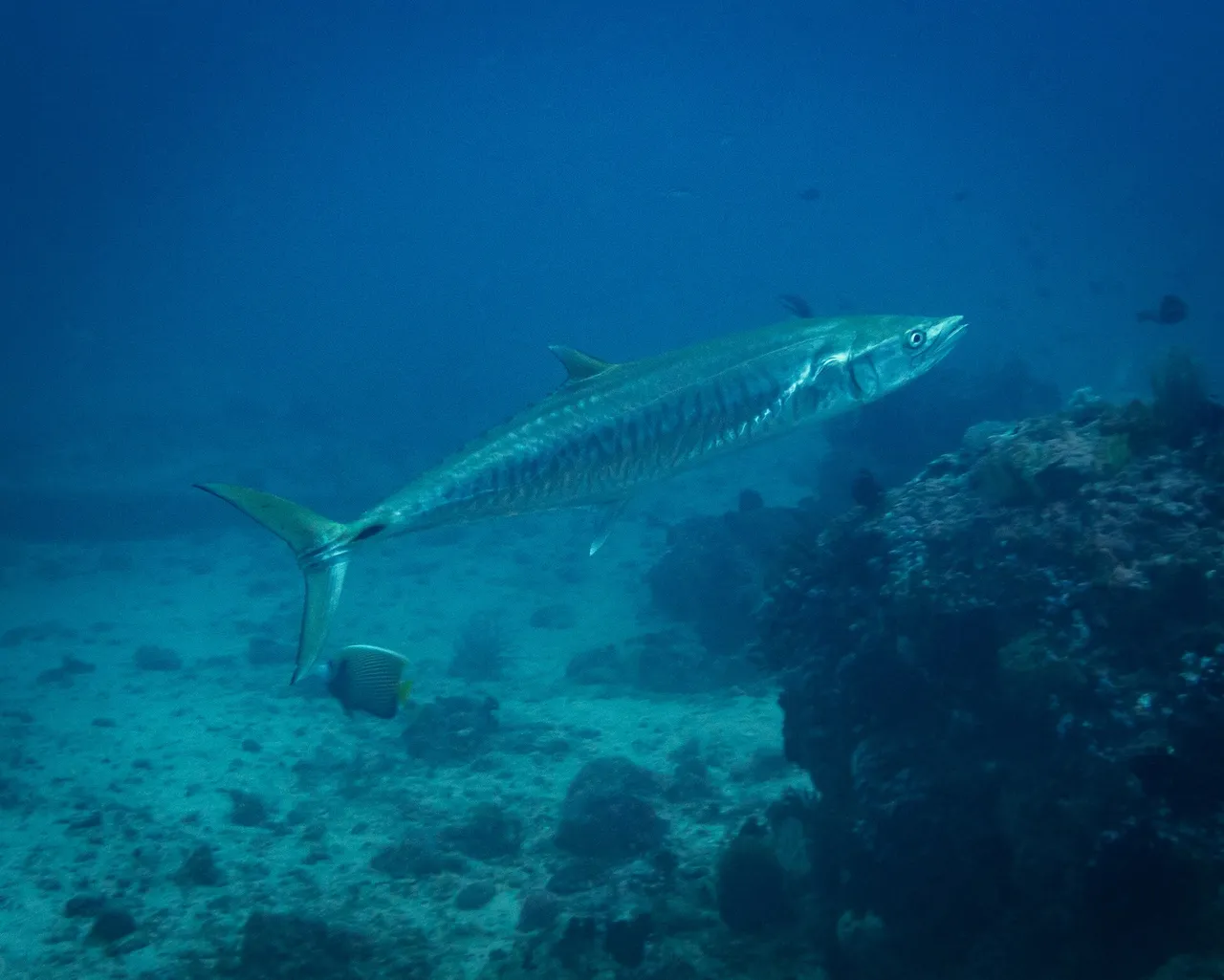
How this was identified, and who took it
Identified by: Full lateral view of a free-swimming fish with the diagnostic narrow wavy vertical barring clearly legible along the flank, together with the elongate body, pointed snout, small finlets and deeply forked tail. Natural-light underwater photography, so the colour is blue-shifted; the barring is unaffected.ppericard — CC BY 4.0, via Wikimedia Commons — source, licence
Catching Narrow-barred Spanish mackerel
Everything here on fishing for it. Each entry opens the page behind it.
- Where
- 3 places FishingHQ documents — strongest claim anywhere: characteristic of this water · From a boat, On a charter
The narrow-barred Spanish mackerel is the principal Scomberomorus of the Indo-Pacific and one of the most important recreational and artisanal fish across an enormous stretch of the world, from the east African coast through the Arabian Sea and South-East Asia to northern Australia.
It is built for speed and shearing. The body is elongate and compressed with a very narrow tail wrist, and the jaws carry large triangular blade-like teeth that cut cleanly through prey — and through monofilament, hooked fish and fingers with equal ease. A wire trace is standard, and anglers who use one anyway still lose fish and lures to bite-offs.
It hunts fast in open water and around reef edges and current lines, often taking a trolled or cast lure at high speed and continuing straight past. The takes are violent and the runs are fast rather than long, which makes it a favourite light-tackle target across its range.
The ciguatera caveat belongs on the record. Large individuals in parts of the range accumulate ciguatoxin, and as with barracuda and amberjack the risk is regional and the only reliable guide is local health advice. It is also a fish that spoils quickly and needs bleeding and chilling immediately.
Where Narrow-barred Spanish mackerel is documented
Places where public sources describe this species as fished, with how it is fished and how strongly the evidence supports it. This is not a range map and it is not a recommendation — it is what has been written down about a fishery rather than a record of any individual catch, and being listed is never permission to fish.
The KwaZulu-Natal coast
3 documented places
Reef
Characteristic of this water
From a boat · On a charter
Reef
Characteristic of this water
From a boat · On a charter
Bay
Characteristic of this water
From a boat · On a charter
What these strengths mean
- Characteristic of this water
- This water is strongly identified with this species by the sources that cover it.
Identification
- Scientific name
- Scomberomorus commerson
- Family
- Scombridae
- Water
- Saltwater
- Conservation status
- Near Threatened
- Regions
- Indo-Pacific, East & Southern Africa, South Asia, South-East Asia, Australia, East Asia, Mediterranean, Pacific Islands
- Narrow vertical bars along the flank — numerous, wavy and often broken, and more numerous than in related species.
- Large triangular blade-like teeth in both jaws, visible and unmistakable.
- Body very elongate and compressed with a distinctly narrow tail wrist carrying keels.
- First dorsal fin dark, usually with a black patch at the front, and folded into a groove when swimming.
- Separated from other Scomberomorus by bar count and pattern and by the lateral line, which dips abruptly below the second dorsal fin.
Size
- Typical
- 3–8 kg (6.6–18 lb)
- Large
- 15–25 kg (33–55 lb)
Exceptional: Over 35 kg (77 lb); maximum published weight 70 kg
Coastal pelagic water, reef edges and the current lines between
Narrow-barred Spanish mackerel occupy the water column over coastal and shelf waters, associating with structure only where it concentrates prey.
THEY ARE NERITIC PELAGICS. The species lives over the continental shelf and around reefs and islands rather than in open ocean, generally in the upper water column, and is common close inshore where deep water approaches the coast.
REEF EDGES, PASSES, HEADLANDS AND CURRENT LINES are the features. Spanish mackerel hunt schooling baitfish and hold where flow concentrates them — the outside of a reef, a channel mouth, a shoal edge, a tide line. Working birds are a better indicator than any bottom feature.
TURBIDITY IS TOLERATED but the fish hunts visually at speed, so clearer water generally holds more.
TEMPERATURE SETS THE RANGE, and the species is tropical to warm-temperate with seasonal movement at the cooler margins.
JUVENILES USE INSHORE AND ESTUARINE-ADJACENT WATERS, in shallower coastal habitat, before moving out to the shelf as they grow.
SCHOOLS ARE LOOSE AND MOBILE, and larger fish are frequently solitary or in small groups rather than in the massed schools of smaller ones.
AND THE SPECIES IS A GENUINE SHORE TARGET WHERE DEEP WATER COMES CLOSE — off headlands, from rock platforms and from piers — which is unusual for a fish of this size and speed and is why it features in shore fisheries across the Indo-Pacific.
Backed by research — why, and the sources (2)
Supported by peer-reviewed research or fisheries science. The sources are listed and can be checked.
- FAO Species Identification Guides for Fishery Purposes and the FAO Species Catalogues — Food and Agriculture Organization of the United Nations (Scientific institute)Relied on for: Distribution, habitat, depth and fishery accounts for the species in the FAO regional identification guides for the ocean area concerned.States this directlyCitation checked — the work exists and is described correctly
- FishBase: a global information system on fishes — Froese, R. and D. Pauly, eds. — FishBase Consortium (Scientific institute)Relied on for: Distribution, habitat association, depth range, size, reproduction and life-history parameters recorded for the species.States this directlyPassage read and verified
Warm-season spawning along the coast, in batches
Spanish mackerel spawn in coastal waters in the warm season, and the pattern is broadly consistent across a very wide range.
SPAWNING OCCURS IN WARM SHELF AND COASTAL WATER, frequently near reefs, islands and shoals, in the warmer months of each hemisphere. Some populations show localised spawning concentrations, and in parts of the range these are well enough known to attract specific management attention.
IT IS BATCH SPAWNING OVER AN EXTENDED PERIOD, with females releasing eggs repeatedly across weeks and total fecundity high.
EGGS AND LARVAE ARE PELAGIC and drift in the surface layer, with juveniles recruiting to inshore coastal habitat.
TEMPERATURE IS THE TRIGGER, so timing shifts with latitude and between years, and spawning at the cool end of the range is compressed into a shorter window than near the equator.
MATURITY COMES EARLY — within the first two or three years — and growth is fast, which is the usual scombrid combination and gives the species reasonable resilience.
BUT THE STOCKS ARE HEAVILY FISHED across much of the range, both commercially and recreationally, and several are assessed as fully or over-exploited. Fast growth does not protect a species from a fishery that removes fish before they spawn, which is why minimum sizes for this species are set with the maturity size in mind.
Backed by research — why, and the sources (2)
Supported by peer-reviewed research or fisheries science. The sources are listed and can be checked.
- FAO Species Identification Guides for Fishery Purposes and the FAO Species Catalogues — Food and Agriculture Organization of the United Nations (Scientific institute)Relied on for: Distribution, habitat, depth and fishery accounts for the species in the FAO regional identification guides for the ocean area concerned.States this directlyCitation checked — the work exists and is described correctly
- FishBase: a global information system on fishes — Froese, R. and D. Pauly, eds. — FishBase Consortium (Scientific institute)Relied on for: Distribution, habitat association, depth range, size, reproduction and life-history parameters recorded for the species.States this directlyPassage read and verified
Blade teeth on a fish that does not stop moving
The teeth are large, triangular and genuinely blade-like, and the fish thrashes hard from the moment it leaves the water until it is controlled. The characteristic injury is a deep clean laceration to a hand or forearm, and it happens fast enough that people frequently cannot describe how.
The rule that follows is absolute rather than cautious: NOTHING GOES NEAR THE MOUTH. Long pliers or a de-hooking tool, and the fish fully controlled — in a net, on a deck, or held behind the head by somebody who is not the person unhooking — before anybody touches it.
A wire trace is not an optional refinement on this species. It is required tackle, and it is required for the same reason the handling advice exists: those teeth cut monofilament instantly and they cut skin just as easily.
If the fish is being kept, bleeding and chilling immediately makes a substantial difference, because the flesh degrades quickly. That is a food-quality point rather than a handling one, and it belongs here because it is the decision made in the same thirty seconds.
On eating: large individuals in parts of the range carry ciguatoxin, which no preparation removes. That is a health matter governed by local advice and it is not something this page can settle for a particular fish.
What experienced anglers do — why, and the sources (2)
Widely and independently recommended by experienced anglers and specialist sources. This is real angling knowledge, not proof: controlled evidence for it is limited, and FishingHQ records it as convention rather than as a demonstrated effect.
- Sea Angler — Bauer Media (Specialist angling publication)Relied on for: Practice on handling toothed pelagic species, wire trace requirement and de-hooking tools.States this directlyCitation checked — the work exists and is described correctly
- IGFA International Angling Rules and World Record Requirements — International Game Fish Association (Angling or fisheries organisation)Relied on for: Terminal tackle conventions for toothed species.Background and mechanism onlyPassage read and verified
A fast fish on a moving temperature line, and a spawning season that follows the coast
Spanish mackerel seasonality is a migration story, and along most coasts it presents as a wave passing through rather than as a population turning on and off.
THE FISH MOVE WITH WARM WATER ALONG A COASTLINE. Narrow-barred Spanish mackerel are a warm-water pelagic species that undertakes substantial coastal migrations, and at any given point on a coast the season is the period when the migrating fish are passing. That produces the characteristic pattern anglers describe: nothing, then a few weeks of excellent fishing, then nothing again, with the timing shifting progressively along the coast as the season advances.
WHICH MEANS THE SEASON IS DIFFERENT AT EVERY HEADLAND. Two ports a couple of hundred kilometres apart will have different peak weeks, and the difference is systematic rather than random — it tracks the movement of the water and the fish. Local knowledge of the sequence is genuinely more useful than any general statement.
SPAWNING OCCURS THROUGH THE WARMER MONTHS and is spread across an extended season with multiple batches, staged along the coast in the same progressive way as the migration. Fish in spawning condition are consequently encountered at different dates in different places.
BAIT DRIVES THE DETAIL. Spanish mackerel follow schools of small pelagic prey, and where the bait concentrates — on headlands, shoals, current lines, reef edges and around bait aggregations — the mackerel concentrate. A season with poor bait presence produces poor fishing even when the water temperature is right, which is why the temperature signal alone is an incomplete predictor.
GROWTH IS FAST AND MATURITY IS EARLY, so abundance responds to recent recruitment rather than to accumulated years, and populations can vary noticeably between seasons.
CIGUATERA IS A REGIONAL FOOD-SAFETY MATTER RATHER THAN A SEASONAL ONE for large individuals of this and related species in some tropical areas, and it is a place-and-size question rather than a time-of-year question. Local advice on it is authoritative.
AND MANAGEMENT VARIES SUBSTANTIALLY BY JURISDICTION, with size limits, bag limits and in some places seasonal measures. The competent authority is the only source for what currently applies.
Backed by research — why, and the sources (2)
Supported by peer-reviewed research or fisheries science. The sources are listed and can be checked.
- IGFA International Angling Rules and World Record Requirements — International Game Fish Association (Angling or fisheries organisation)Relied on for: Recognition of the species as a recognised game fish and the seasonal pattern of the recreational fisheries that target it.Background and mechanism onlyPassage read and verified
- FishBase: a global information system on fishes — Froese, R. and D. Pauly, eds. — FishBase Consortium (Scientific institute)Relied on for: Spawning season, temperature preference, migratory behaviour and seasonal distribution for the species.States this directlyPassage read and verified
Lifecycle and reproduction
Fast-growing and moderately long-lived, maturing at two to four years and living to about twenty. Spawns in coastal waters in the warmer months, with pelagic eggs and larvae. Undertakes substantial coastal migrations, with regionally distinct stocks across the very wide range — which is why status and management differ so much between countries.
Broadcast spawning in coastal waters in the warm season, with pelagic eggs and larvae and no parental care. Regional stocks are managed separately across the range, and the species supports major artisanal fisheries in many of those regions where recreational and subsistence use overlap heavily.
Feeding and senses
A fast pelagic predator taking small schooling fish and squid, hunting at speed in open water and around reef edges and current lines. The blade-like teeth shear prey rather than holding it, which is why a bait or a hooked fish is frequently cut in half and why bite-offs are a routine part of the fishery.
Sight-dominant, hunting fast-moving prey visually in clear water, with strong responses to flash and speed. This is why fast-trolled lures, high-speed spinning and flashy metals are the standard approaches, and why slowing a retrieve down usually reduces takes rather than increasing them.
Through the year
Migratory along coasts following water temperature and bait, with local seasons defined by arrival rather than by a date and running on the southern-hemisphere calendar across much of the range. Current lines, reef edges and bait concentrations govern the daily fishing.
Distribution
Indo-West Pacific: from the Red Sea and East Africa through the Indian Ocean and South-East Asia to northern Australia, China and Japan, and entering the Mediterranean via the Suez Canal. A pelagic neritic species of coastal waters and reef edges.
This is a biological range — where the species occurs, not a prediction that you will catch one. To browse the fishing geography FishingHQ holds, start at fishing places.
Why anglers care
A headline recreational species across its range, taken by trolling, high-speed spinning, live-baiting and float-fishing from boats and from shore and rock marks. Also a major artisanal and commercial food fish across much of the Indian Ocean and South-East Asia, which means the recreational fishery sits alongside a substantial subsistence one.
Handling and returning
The teeth are extremely sharp and the fish thrashes hard. Never put a hand near the mouth, use long pliers or a de-hooking tool, and control the fish fully before touching it. A wire trace is required tackle. If retaining, bleed and chill immediately — the flesh degrades rapidly. On eating: large fish in parts of the range carry ciguatoxin, and local health advice is the only reliable guide.
Going further
- What does narrow-barred spanish mackerel eat? — feeding biology, kept separate from what anglers infer from it.
- Narrow-barred Spanish mackerel vs Atlantic bonito — how to tell them apart.
- Narrow-barred Spanish mackerel vs King mackerel — how to tell them apart.
Safety
Species that bite — Can cause serious injury or death
Large triangular blade-like teeth on a fast, powerful fish that thrashes when landed. Deep clean lacerations are the characteristic injury and they occur readily.
What reduces it: Never put a hand near the mouth, including on a fish that appears spent. Control the fish before unhooking. Long pliers or a de-hooking tool, and gloves. A wire trace is required tackle rather than a refinement.
Venomous and spined species — Can cause serious injury or death
Ciguatera poisoning from eating large individuals in parts of the range. The toxin is not destroyed by cooking or freezing and causes serious and sometimes prolonged illness.
What reduces it: Follow local health authority advice about which fish are safe to eat where you are. The risk varies regionally and with fish size in ways no general rule captures.
Precautions that always apply here
- Keep fingers out of the gills and clear of the teeth. Gill damage is usually fatal to the fish, and several species will remove skin from a finger.
- If a hook goes past the barb into a person, cut the line, leave the hook where it is, and get medical help. Pulling it back out does far more damage than pushing it through under proper care.
- Wear a buoyancy aid or lifejacket. Cold water incapacitates strong swimmers within a minute, long before swimming ability matters.
- Tell somebody where you are going and when you expect to be back.
Check the rules before you fish
Fishing laws, bylaws, access rules, seasons, bait restrictions and permitted methods vary by location and can change. Check the current rules from the relevant authority and the water you intend to fish before fishing.
Check with:
- Current national or regional law for where you are fishing
- Current local bylaws
- The relevant fisheries authority
- The landowner, club or fishery whose water it is
- Any restrictions specific to the species or the method you intend to use
Where to go next
Similar and related fish
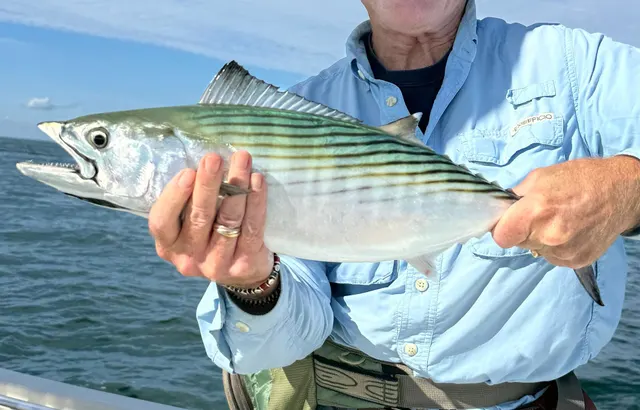 Atlantic bonitoBoth are scombrids with teeth, which separates them from the true tunas, and both cut through monofilament. The Spanish mackerel is much the larger and faster of the two.
- BarracoutaBoth are called couta somewhere. In New Zealand and the Cape, couta is the snoek — Thyrsites atun, a cold-water snake mackerel. In KwaZulu-Natal, couta is Scomberomorus commerson, a warm-water king mackerel on the other coast. The word travels and the fish does not.
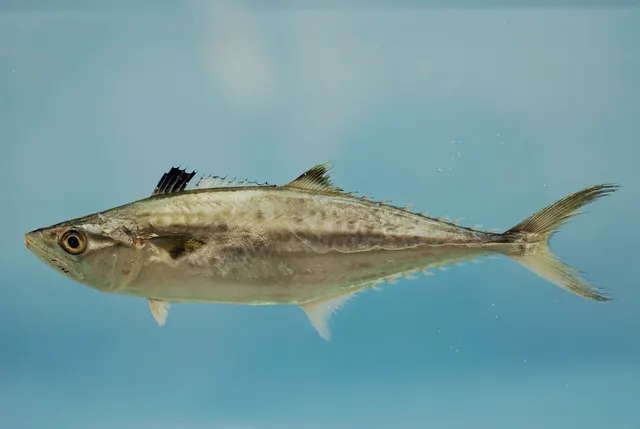 King mackerelCongeners separated by range and by lateral line profile.
- Pacific sardineSmall clupeids including sardines are the principal prey across the range, and the mackerel's movements follow the bait shoals.
Where you will find it
- South AfricaOccurs along the warm east coast carried south by the Agulhas Current, where it supports a seasonal ski-boat fishery.
- The Agulhas CurrentCarried far south along the African east coast by the warm current, well beyond where the latitude alone would place it.
- The Coral TriangleA fast pelagic predator of reef edges and current lines, and an important species in the region's small-scale fisheries.
- The Great Barrier ReefMoves along the reef seasonally with water temperature and bait, supporting a major pelagic fishery on the reef edges and channels.
- The Indian subcontinent coastsA mainstay of both commercial and recreational fishing along the whole coast, worked on trolled and cast lures.
- The Ryukyu IslandsA fast pelagic predator of the reef edges and passes, taken on trolled and cast lures throughout the chain.
- The western Indian Ocean coastA fast pelagic predator of the reef edges and channel mouths, and an important species in the coast's small-scale fishery.
Understanding this fish
- Cephalopods as preySquid are taken alongside small schooling fish, particularly in deeper water and at night.
- Ciguatera and reef fish poisoningA large predatory mackerel of tropical Indo-Pacific reefs and coasts, widely eaten and one of the species implicated in the region — a case where the fish is neither a grouper nor a snapper and the mechanism applies anyway.
Sources and evidence
- FishBase: a global information system on fishes — Froese, R. and D. Pauly, eds. — FishBase Consortium (Scientific institute)Relied on for: Scientific name, family placement in the Scombridae, a maximum length of 240 cm FL, a maximum published weight of 70.0 kg, a maximum reported age of 22 years.States this directlyPassage read and verified
- FishBase: a global information system on fishes — Froese, R. and D. Pauly, eds. — FishBase Consortium (Scientific institute)Relied on for: Environment, climate zone and depth range as recorded: Marine; pelagic-neritic; oceanodromous ; depth range 10 - 70 m . Tropical; 39°N - 41°S, 7°W - 170°WStates this directlyPassage read and verified
- FishBase: a global information system on fishes — Froese, R. and D. Pauly, eds. — FishBase Consortium (Scientific institute)Relied on for: The IUCN Red List category for Scomberomorus commerson — Near Threatened, assessed 10 November 2022 — as republished by FishBase, the Red List itself being unreachable during review.States this directlyPassage read and verified
- Good Fish Guide — Marine Conservation Society (Conservation authority)Relied on for: That regionally distinct stocks of widely distributed pelagic species are assessed and managed separately.FishingHQ's interpretation of what it saysCitation checked — the work exists and is described correctly
Why the 15 connections on this page are here, and the sources
Similar and related fish
Backed by research — 4 connections
Supported by peer-reviewed research or fisheries science. The sources are listed and can be checked.
Atlantic bonito
A taxonomic and identification comparison naming both binomials.
- FishBase: a global information system on fishes — Froese, R. and D. Pauly, eds. — FishBase Consortium (Scientific institute)Relied on for: That Scomberomorus commerson and Sarda sarda are both Scombridae possessing well-developed teeth, unlike the true tunas of Thunnus.States this directlyPassage read and verified
Barracouta
A relatedness claim made for identification rather than for taxonomy: these are the pairs a reader holding one has to tell apart, and in several cases the rules that apply to them differ. The evidence names the object's binomial because the common names are precisely what collides.
- FishBase: a global information system on fishes — Froese, R. and D. Pauly, eds. — FishBase Consortium (Scientific institute)Relied on for: Identity, family placement, distribution and diagnostic characters of Scomberomorus commerson, and of the species it is confused with in the hand.States this directlyPassage read and verified
- ORI Fish Fact Sheets: the species accounts of the Oceanographic Research Institute — Oceanographic Research Institute, South African Association for Marine Biological Research (SAAMBR), Durban, 2023 (Scientific institute)Relied on for: The description and distribution the research institute publishes for Scomberomorus commerson, including the characters that separate it from its neighbours.States this directlyPassage read and verified
King mackerel
An identification comparison naming both binomials: Scomberomorus cavalla and Scomberomorus commerson.
- FishBase: a global information system on fishes — Froese, R. and D. Pauly, eds. — FishBase Consortium (Scientific institute)Relied on for: Morphological and distributional data for Scomberomorus cavalla and for Scomberomorus commerson.States this directlyPassage read and verified
- The IUCN Red List of Threatened Species — International Union for Conservation of Nature (Conservation authority)Relied on for: Separate assessments treating Scomberomorus cavalla and Scomberomorus commerson as distinct species.States this directlyCitation checked — the work exists and is described correctly
Pacific sardine
Recorded diet evidence identifies Sardinops sagax as a food item of this predator at species level. The edge is written at that granularity and no further.
- FishBase: a global information system on fishes — Froese, R. and D. Pauly, eds. — FishBase Consortium (Scientific institute)Relied on for: Food items recorded for this predator, including Sardinops sagax.States this directlyPassage read and verified
- FAO Species Identification Guides for Fishery Purposes and the FAO Species Catalogues — Food and Agriculture Organization of the United Nations (Scientific institute)Relied on for: Species account describing the diet of this predator in the region where Sardinops sagax occurs.Background and mechanism onlyCitation checked — the work exists and is described correctly
How it is caught
What experienced anglers do — 1 connection
Widely and independently recommended by experienced anglers and specialist sources. This is real angling knowledge, not proof: controlled evidence for it is limited, and FishingHQ records it as convention rather than as a demonstrated effect.
Livebaiting at sea
Established practice for this species: what the fishery that takes it actually does. It is practitioner consensus corroborated by the research institute's own capture notes, and it says nothing about where anybody may fish.
- ORI Fish Fact Sheets: the species accounts of the Oceanographic Research Institute — Oceanographic Research Institute, South African Association for Marine Biological Research (SAAMBR), Durban, 2023 (Scientific institute)Relied on for: The capture context each fact sheet records: which fishery takes the species, on what tackle and on what bait.States this directlyPassage read and verified
- General angling website restatements of established technique — Various (Credible secondary source)Relied on for: Widely restated South African practice for the species named, recorded as practitioner consensus rather than as tested fact.Background and mechanism onlyCitation checked — the work exists and is described correctly
Gear for this fish
What experienced anglers do — 1 connection
Widely and independently recommended by experienced anglers and specialist sources. This is real angling knowledge, not proof: controlled evidence for it is limited, and FishingHQ records it as convention rather than as a demonstrated effect.
Saltwater lures
A practitioner claim about which lure family answers this species' feeding or holding behaviour.
- IGFA International Angling Rules and World Record Requirements — International Game Fish Association (Angling or fisheries organisation)Relied on for: Recognition of the species as an established sport fish taken on artificial lures, and the line and tackle classes used for it.States this directlyPassage read and verified
- General angling website restatements of established technique — Various (Credible secondary source)Relied on for: Widely restated lure practice for this species.Background and mechanism onlyCitation checked — the work exists and is described correctly
Where you will find it
Backed by research — 7 connections
Supported by peer-reviewed research or fisheries science. The sources are listed and can be checked.
South Africa
A distribution association between an animal and a kind of water, rather than a claim about any named mark.
- FishBase: a global information system on fishes — Froese, R. and D. Pauly, eds. — FishBase Consortium (Scientific institute)Relied on for: Distribution, habitat association and depth range recorded for the species, including its occurrence in the water body concerned.States this directlyPassage read and verified
- The IUCN Red List of Threatened Species — International Union for Conservation of Nature (Conservation authority)Relied on for: Assessment and range account for the species, including the systems and coasts it occupies.Background and mechanism onlyCitation checked — the work exists and is described correctly
The Agulhas Current
A distribution association between an animal and a kind of water, rather than a claim about any named mark.
- FAO Species Identification Guides for Fishery Purposes and the FAO Species Catalogues — Food and Agriculture Organization of the United Nations (Scientific institute)Relied on for: Distribution, habitat, depth and fishery accounts for the species in the FAO regional identification guides for the ocean area concerned.States this directlyCitation checked — the work exists and is described correctly
- FishBase: a global information system on fishes — Froese, R. and D. Pauly, eds. — FishBase Consortium (Scientific institute)Relied on for: Distribution, habitat association and depth range recorded for the species.States this directlyPassage read and verified
The Coral Triangle
A distribution association between an animal and a kind of water, rather than a claim about any named mark.
- FAO Species Identification Guides for Fishery Purposes and the FAO Species Catalogues — Food and Agriculture Organization of the United Nations (Scientific institute)Relied on for: Distribution, habitat, depth and fishery accounts for the species in the FAO regional identification guides for the ocean area concerned.States this directlyCitation checked — the work exists and is described correctly
- FishBase: a global information system on fishes — Froese, R. and D. Pauly, eds. — FishBase Consortium (Scientific institute)Relied on for: Distribution, habitat association and depth range recorded for the species.States this directlyPassage read and verified
The Great Barrier Reef
A distribution association between an animal and a kind of water, rather than a claim about any named mark.
- FishBase: a global information system on fishes — Froese, R. and D. Pauly, eds. — FishBase Consortium (Scientific institute)Relied on for: Distribution, habitat association and depth range recorded for the species, including its occurrence in the water body concerned.States this directlyPassage read and verified
- The IUCN Red List of Threatened Species — International Union for Conservation of Nature (Conservation authority)Relied on for: Assessment and range account for the species, including the systems and coasts it occupies.Background and mechanism onlyCitation checked — the work exists and is described correctly
The Indian subcontinent coasts
A distribution association between an animal and a kind of water, rather than a claim about any named mark.
- FAO Species Identification Guides for Fishery Purposes and the FAO Species Catalogues — Food and Agriculture Organization of the United Nations (Scientific institute)Relied on for: Distribution, habitat, depth and fishery accounts for the species in the FAO regional identification guides for the ocean area concerned.States this directlyCitation checked — the work exists and is described correctly
- FishBase: a global information system on fishes — Froese, R. and D. Pauly, eds. — FishBase Consortium (Scientific institute)Relied on for: Distribution, habitat association and depth range recorded for the species.States this directlyPassage read and verified
The Ryukyu Islands
A distribution association between an animal and a kind of water, rather than a claim about any named mark.
- FAO Species Identification Guides for Fishery Purposes and the FAO Species Catalogues — Food and Agriculture Organization of the United Nations (Scientific institute)Relied on for: Distribution, habitat, depth and fishery accounts for the species in the FAO regional identification guides for the ocean area concerned.States this directlyCitation checked — the work exists and is described correctly
- FishBase: a global information system on fishes — Froese, R. and D. Pauly, eds. — FishBase Consortium (Scientific institute)Relied on for: Distribution, habitat association and depth range recorded for the species.States this directlyPassage read and verified
The western Indian Ocean coast
A distribution association between an animal and a kind of water, rather than a claim about any named mark.
- FAO Species Identification Guides for Fishery Purposes and the FAO Species Catalogues — Food and Agriculture Organization of the United Nations (Scientific institute)Relied on for: Distribution, habitat, depth and fishery accounts for the species in the FAO regional identification guides for the ocean area concerned.States this directlyCitation checked — the work exists and is described correctly
- FishBase: a global information system on fishes — Froese, R. and D. Pauly, eds. — FishBase Consortium (Scientific institute)Relied on for: Distribution, habitat association and depth range recorded for the species.States this directlyPassage read and verified
Understanding this fish
Backed by research — 2 connections
Supported by peer-reviewed research or fisheries science. The sources are listed and can be checked.
Cephalopods as prey
Recorded diet evidence identifies cephalopods as a food item of this predator at group level rather than to species. The edge points at the taxon record for that reason, and encoding it as a species-level claim would assert something the source does not.
- FishBase: a global information system on fishes — Froese, R. and D. Pauly, eds. — FishBase Consortium (Scientific institute)Relied on for: Food items recorded for this predator, given as cephalopods.States this directlyPassage read and verified
- FAO Species Identification Guides for Fishery Purposes and the FAO Species Catalogues — Food and Agriculture Organization of the United Nations (Scientific institute)Relied on for: Species account describing this predator's diet, recorded at the level of cephalopods.Background and mechanism onlyCitation checked — the work exists and is described correctly
Ciguatera and reef fish poisoning
That the ciguatera mechanism is relevant to this species, because it occupies the trophic position and habitat the toxin concentrates through. It is not a statement that any individual fish is toxic, and the record it points at says plainly that the risk is intensely local and that local knowledge outperforms any species list.
- Fish and Fishery Products Hazards and Controls Guidance — US Food and Drug Administration, Center for Food Safety and Applied Nutrition, 2022 (Standards body)Relied on for: Natural toxins in fishery products including ciguatera, the fish groups and regions associated with it, and that the toxin is not removed by cooking, freezing or any other domestic process.States this directlyPassage read and verified
- FishBase: a global information system on fishes — Froese, R. and D. Pauly, eds. — FishBase Consortium (Scientific institute)Relied on for: Trophic level, maximum size, longevity, reef association and recorded distribution of the species named, which is the basis for treating it as one the mechanism applies to.States this directlyPassage read and verified
How FishingHQ labels evidence is explained in the evidence policy.