The KwaZulu-Natal coast
Fishing regions · Last reviewed 2026-08-27
The subtropical coast: warm Agulhas water, couta and kingfish, the sardine run in winter, and the reefs where the seventy-four was fished to a prohibition.
Safety: boat safety — can cause serious injury or death. 6 more points apply here.
Fishing here at a glance
- Ways to fish
- From the shore · From a boat · On a charter · Spearfishing
- Plan a trip
- When is best · Baits and lures to bring · Open the trip planner
- Rules and access
- Who sets the rules here — being listed is never permission to fish.
Not documented here yet: tackle shops, charters or guides.
Being listed here is not permission to fish. What that meansClose
Access, fishing rights, seasons, licences, local bylaws and permitted methods vary and can change. Check current access, permission, local regulations, closures and restrictions before you travel or fish. FishingHQ describes what the ground is and names who holds the answer; it does not hold the answer itself.
Find the authority for a jurisdiction · What FishingHQ does and does not cover
KwaZulu-Natal is a different country's fishing on the same country's coast.
THE AGULHAS CURRENT IS THE WHOLE STORY. A fast, warm, southward-flowing Indian Ocean current running close inshore, bringing tropical and subtropical species down the coast and giving KwaZulu-Natal a fishery that a Cape angler would not recognise: king mackerel, kingfish, tuna, dorado, sailfish and marlin, on ground reached by ski-boats launched through the surf.
THE SARDINE RUN IS THE FIXED POINT OF THE YEAR. Each winter, cold-water sardine shoals move north up the coast against the current, and everything follows them — game fish, sharks, dolphins, gannets. It is one of the largest marine animal movements on earth and it turns the shore fishing on its head for the weeks it lasts.
THE SHORE FISHERY IS ITS OWN THING. Long surf beaches with gutters, rocky points, piers at Durban and elsewhere, and a species list running to shad, kingfish, garrick, kob, pompano, springer and sharks. Shore-based shark angling is a serious discipline here.
THE REEFS ARE THE FAMOUS PART AND THEY CARRY A WARNING. Aliwal Shoal off Umkomaas and Protea Banks off Shelly Beach are among the best-known dive and fishing reefs in Africa. Aliwal is also where the seventy-four spawned — the fish that was once the most important line fish in Natal and whose fishery was closed in 1988. The MPA declared over the shoal in 2019 zones parts of it specifically to protect the historical spawning grounds, and the same expansion protects geelbek and dusky kob habitat with a ban on night fishing over the aggregations.
AND THE FAR NORTH IS TROPICAL. Sodwana Bay and the iSimangaliso coast are coral-influenced reef with a species list closer to Mozambique than to the Cape.
What fishing here is like
Subtropical and game-fish led. The Agulhas Current runs warm and fast close inshore, bringing king mackerel, kingfish, tuna, dorado and billfish within range of ski-boats launched off the beach, and giving the coast a species list a Cape angler would not recognise. Shore fishing is substantial and distinct — shad, garrick, kingfish, pompano, springer and sharks off long surf beaches, rocky points and piers — and shore-based shark angling is a discipline in its own right.
The reefs are the coast's signature: Aliwal Shoal and Protea Banks are internationally known, and both are inside marine protected areas whose zonation is explicitly about spawning aggregations. The far north around Sodwana is tropical, coral-influenced and closer to Mozambique in character than to anywhere else in South Africa.
What you can target here
One entry per fish, grouped by how you would be fishing — because the answer is a different one from the rocks and from a boat. Each entry says how strongly the sources support it and how much evidence sits behind it. These are documented catches, not a forecast, and none of it is a statement that you may fish any particular ground.
From the shore · 7
- BluefishCharacteristic of this water1 placeUmhlanga RocksOver rock markAround Jan–Sept, Dec
- Bigeye trevallyRegular local target3 placesDurban harbour entrance, Sodwana Bay, Umhlanga RocksOver bay, harbour wall, rock mark
- Giant trevallyRegular local target1 placeSodwana BayOver bay
- Largespot pompanoRegular local target1 placeUmhlanga RocksOver rock mark
- Olive grunterRegular local target1 placeDurban harbour entranceOver harbour wall
- SpringerRegular local target1 placeDurban harbour entranceOver harbour wall
Also documented from the shore: Leerfish
From a boat · 11
- Narrow-barred Spanish mackerelCharacteristic of this water3 placesAliwal Shoal, Protea Banks, Sodwana BayOver bay, reef
- SlingerCharacteristic of this water2 placesAliwal Shoal, Protea BanksOver reef
- Raggedtooth sharkCharacteristic of this water1 placeAliwal ShoalOver reef
- Yellowfin tunaRegular local target2 placesProtea Banks, Sodwana BayOver bay, reefAround Jan–Apr, Nov–Dec
- Bigeye trevallyRegular local target1 placeSodwana BayOver bay
- Eastern little tunaRegular local target1 placeSodwana BayOver bay
Also documented from a boat: Englishman · Giant trevally · Scotsman · Geelbek · Bronze whaler
On a charter · 2
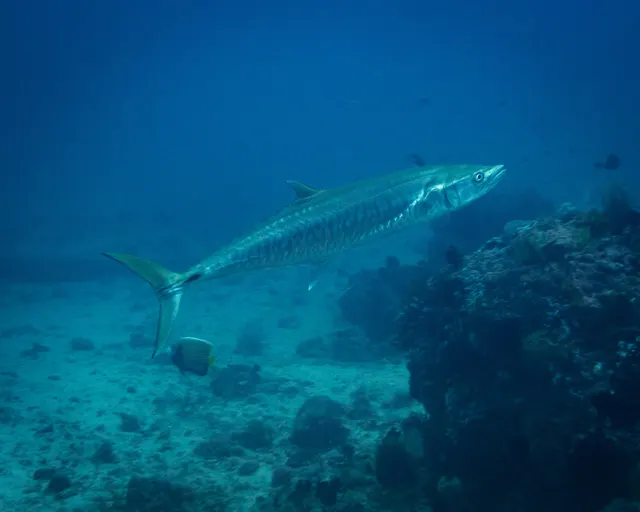 Narrow-barred Spanish mackerelCharacteristic of this water3 placesAliwal Shoal, Protea Banks, Sodwana BayOver bay, reef
Photo: ppericard, via Wikimedia Commons, CC BY 4.0; resized and trimmed to fit
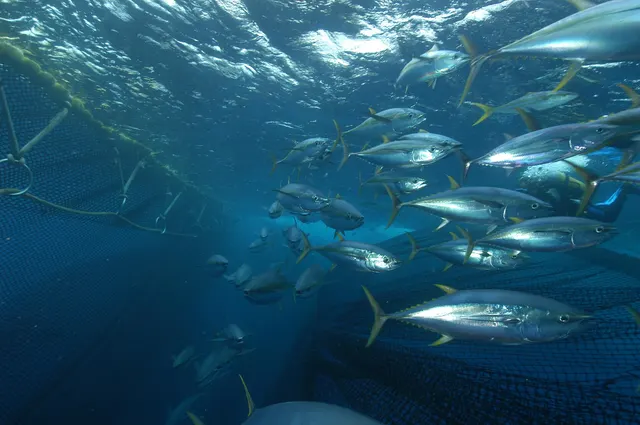 Yellowfin tunaRegular local target2 placesProtea Banks, Sodwana BayOver bay, reefAround Jan–Apr, Nov–Dec
Photo: Marc Taquet, via Wikimedia Commons, CC BY 4.0; resized and trimmed to fit

_(Ifremer_00568-68027_-_25201).jpg)
Spearfishing · 3
What these strengths mean
- Characteristic of this water
- This water is strongly identified with this species by the sources that cover it.
- Regular local target
- Fishing sources describe this as a normal local target here, not merely as caught.
- Seasonal
- Well supported, and concentrated in part of the year rather than spread through it.
- How breadth is counted
- A fish documented at six marks is shown as six marks: breadth never raises the strength on its own. A fishery account describes the fishing; a recorded catch reports one specific catch. How evidence is weighed.
Also caught across this area
Fish documented across this area but not at any of the named places above — from area-wide fishing sources and dated catch accounts that do not name a single spot.
Caught in this area
Documented being caught in this area, without being described as something people set out for.
- Black musselcracker — from a boat
- Bonefish — from the shore
- Bull shark — from the shore · January and June
- Galjoen — from the shore · August to August
- Seventy-four — from a boat · June to June
Where this comes from
- Black musselcracker — caught in this area. 1 dated catch account from The KwaZulu-Natal coast.
- Tagging News, the annual newsletter of the ORI Cooperative Fish Tagging Project — Oceanographic Research Institute, South African Association for Marine Biological Research
- Bonefish — caught in this area. 1 dated catch account from The KwaZulu-Natal coast.
- Tagging News, the annual newsletter of the ORI Cooperative Fish Tagging Project — Oceanographic Research Institute, South African Association for Marine Biological Research
- Bull shark — caught in this area. 2 dated catch accounts from The KwaZulu-Natal coast.
- Tagging News, the annual newsletter of the ORI Cooperative Fish Tagging Project — Oceanographic Research Institute, South African Association for Marine Biological Research
- Galjoen — caught in this area. 1 dated catch account from The KwaZulu-Natal coast.
- Tagging News, the annual newsletter of the ORI Cooperative Fish Tagging Project — Oceanographic Research Institute, South African Association for Marine Biological Research
- Seventy-four — caught in this area. 1 dated catch account from The KwaZulu-Natal coast.
- Tagging News, the annual newsletter of the ORI Cooperative Fish Tagging Project — Oceanographic Research Institute, South African Association for Marine Biological Research
None of this says you may fish anywhere or take anything: licences, protected species, minimum sizes and closed areas are set by the local authority. How evidence is weighed.
How people fish here
14 methods are recorded on the places documented here, counted from those places themselves rather than from what is practised in the country. Each opens a full guide to the technique.
Drift fishing
Recorded at 3 places here, over reef, bay.
Letting the boat move with tide and wind while fishing, so the tackle searches ground instead of waiting on it — and the decision that determines whether a boat session works at all.
Documented on the same ground: Narrow-barred Spanish mackerel, Raggedtooth shark, Slinger, Bigeye trevally, Eastern little tuna, Englishman.
Livebaiting at sea
Recorded at 3 places here, over reef, bay.
Presenting a living fish where a predator will find it — the most effective method for many species and the one with the clearest welfare questions attached.
Documented on the same ground: Narrow-barred Spanish mackerel, Raggedtooth shark, Slinger, Bigeye trevally, Eastern little tuna, Englishman.
Reef spearfishing
Recorded at 3 places here, over reef, bay.
Hunting the most species-rich environment there is, where identification matters more than technique and the substrate is a living animal.
Documented on the same ground: Narrow-barred Spanish mackerel, Raggedtooth shark, Slinger, Bigeye trevally, Eastern little tuna, Englishman.
Trolling
Recorded at 3 places here, over reef, bay.
Towing lures or baits behind a moving boat to cover large volumes of water and locate scattered fish.
Documented on the same ground: Narrow-barred Spanish mackerel, Raggedtooth shark, Slinger, Bigeye trevally, Eastern little tuna, Englishman.
Boat diving
Recorded at 2 places here, over bay, reef.
Spearfishing from a vessel, which removes the swim and adds the two things most likely to kill a diver: propellers and drift.
Documented on the same ground: Narrow-barred Spanish mackerel, Raggedtooth shark, Slinger, Bigeye trevally, Eastern little tuna, Englishman.
Jigging
Recorded at 2 places here, over reef.
Working a weighted lure with a rising-and-falling motion, usually vertically, so it behaves like a wounded or fleeing baitfish.
Documented on the same ground: Narrow-barred Spanish mackerel, Raggedtooth shark, Slinger, Englishman, Scotsman, Yellowfin tuna.
Ledgering
Recorded at 2 places here, over harbour wall, rock mark.
Fishing a bait on the bottom held by a weight, with no float — the simplest way to fish at distance, in depth, or in wind.
Documented on the same ground: Bluefish, Bigeye trevally, Largespot pompano, Olive grunter, Springer, Leerfish.
Popping and stickbaiting
Recorded at 2 places here, over bay, harbour wall.
Casting a large surface lure at reef structure and working it hard enough that a predator comes up from depth to kill it.
Documented on the same ground: Narrow-barred Spanish mackerel, Bigeye trevally, Eastern little tuna, Giant trevally, Olive grunter, Springer.
Spinning
Recorded at 2 places here, over harbour wall, rock mark.
Casting an artificial lure and retrieving it so that it moves like something alive — the most direct form of lure fishing.
Documented on the same ground: Bluefish, Bigeye trevally, Largespot pompano, Olive grunter, Springer, Leerfish.
5 further methods are recorded at one or two places each: Deep-drop fishing, Float fishing, Light rock fishing, Livebaiting, Surfcasting.
These are the methods documented at the places FishingHQ holds here. A species listed beside a method is documented on the same ground, which is not the same as being taken that way — where a source establishes the method a fish was caught on, it is stated on that place’s own page. All fishing methods.
Baits and lures for these fish
The methods, baits and lures each of the fish above is commonly taken on, from that fish’s own page. This is what works for the fish, not a report of what people use on this particular water — local knowledge and the conditions on the day still decide.
Methods
- Saltwater fly fishing — for Bluefish, Giant trevally, Bonefish
- Feathering and multi-lure traces — for Olive grunter
Baits
- Prawns and shrimp — for Bonefish
Lures
- Saltwater lures — for Narrow-barred Spanish mackerel, Yellowfin tuna, Giant trevally
- Surface lures — for Bluefish, Giant trevally, Leerfish
- Metal jigs — for Bluefish, Yellowfin tuna
- Streamers — for Bonefish
The fishing year here
The months the places and accounts under this area actually name, tightest season first. This is “observed in these months” rather than a season: a species whose months nobody recorded is not listed, because a gap in the evidence is not a year-round fishery.
- GeelbekAugust to November
- Bronze whalerMay to August
- Yellowfin tunaNovember to April
- LeerfishApril to September
- BluefishDecember to September
What dominates
Ski-boat game fishing for king mackerel, kingfish, tuna, dorado and billfish, launched through the surf rather than from harbours over much of the coast. Bottom fishing over the reefs for slinger, santer, Englishman, Scotsman and the rock cods. Shore fishing off surf beaches, rocky points and piers for shad, garrick, kingfish, pompano and springer. Shore-based shark angling as a distinct discipline. Estuary fishing in the northern systems for riverbream, kob and grunter. Spearfishing with a strong scene on the reefs, and a major dive industry alongside it.
The water available
Warm Agulhas water running close inshore. Long high-energy surf beaches with gutters and banks, backed by dune. Rocky points and low reef between them. Piers and harbour structures at Durban and Richards Bay. Offshore, the fossilised-dune reef systems of Aliwal Shoal and Protea Banks, and a shelf edge close enough to reach on a day trip. Estuaries and lagoons in the north — the Thukela, Richards Bay, St Lucia — several nationally significant. In the far north around Sodwana and the iSimangaliso coast, coral-influenced tropical reef.
How the rules are structured
National rules apply with KwaZulu-Natal-specific variations: the kob rules differ again in this province, at 40 cm from a boat with the same five-fish and one-over-110-cm structure, and elf carries a no-commercial-sale rule specific to KZN alongside its national closed season. Marine protected areas are extensive and their zonation is unusually purposeful — the 2019 Aliwal Shoal expansion protects historical seventy-four spawning grounds and geelbek and dusky kob habitat, and carries an associated ban on night fishing aimed directly at spawning aggregations. Ezemvelo KZN Wildlife manages several; iSimangaliso has its own authority. FishingHQ does not state what any current rule is: the department's own guidance says adjustments may be forthcoming, and the answer differs by species, by area and by whether you were standing on the shore or sitting in a boat.
Who to ask
- The Department of Forestry, Fisheries and the Environment, which issues the recreational fishing permit and sets the species, size, bag and closed-season measures
- The authority managing the marine protected area — SANParks, CapeNature, Ezemvelo KZN Wildlife or the relevant provincial body — for whether a particular stretch of coast is open and on what terms
- The harbour authority, municipality or landowner, for physical access to structures, beaches and rock
- The South African Post Office, which is where the recreational permit is actually bought
Words you will meet
- Couta
- King mackerel, Scomberomorus commerson, also called cuda. The headline ski-boat gamefish of this coast and the target most trips are built around.
- Shad
- Elf, Pomatomus saltatrix — bluefish everywhere else. The great shore gamefish of the KwaZulu-Natal winter, with a national closed season over part of the spring.
- The sardine run
- The winter northward movement of cold-water sardine shoals up the coast against the Agulhas Current, and the predator activity that follows it. A fixed point in the fishing year and one of the largest animal movements on earth.
- Backline
- The water beyond the breakers. A ski-boat launched off a beach goes through the surf to get to the backline, and the phrase is used for both the passage and the water.
- Mamba Alley
- A named shore fishing area on the Aliwal Shoal coast, zoned inside the 2019 marine protected area specifically to accommodate fishing — an example of a reserve boundary drawn around an existing fishery rather than over it.
Conditions and hazards
Three hazards, and the balance between them is different from the Cape.
SURF LAUNCHING IS THE ONE UNIQUE TO THIS COAST. Ski-boats go out through the breakers off open beaches rather than from harbours, and getting a loaded boat out and back through a KwaZulu-Natal shore break is a skill rather than a formality. Boats are rolled doing it.
SHARKS ARE A GREATER CONSIDERATION HERE THAN ANYWHERE ELSE ON THE SOUTH AFRICAN COAST, particularly for spearfishers and for people in the water around bait activity. Bull sharks, tiger sharks and others are present, the sardine run concentrates them, and shore anglers fishing coloured water at river mouths are fishing where they are. The risk to somebody standing on a beach remains very small; the risk to somebody in the water at the wrong time and place is not.
THE ROCK HAZARD IS PRESENT BUT LESS DOMINANT than in the Cape, because more of this coast is beach.
And the heat is severe. Summer here is humid subtropical, and a full day on an open beach without shade or water is a real risk in itself.
Places within this area
Publicly documented fishing geography. FishingHQ describes what the ground is; it does not say whether you may fish it, and every one of these sends that question to the body that holds the answer. Browse every place in this part of the world.
Who to ask before fishing any of these
FishingHQ does not know the current access position here. South Africa licenses recreational sea angling nationally — a permit is required from the age of twelve — and layers over it a minimum size and daily bag limit set SPECIES BY SPECIES, a cumulative daily cap across all species, closed seasons on some fish, a prohibited list of species that may not be caught at all, and separate rules again for spearfishing, which is prohibited outright in estuaries. Much of the accessible coast additionally sits inside a marine protected area zoned into no-take and controlled areas, administered by a park, provincial or conservation authority rather than by the fisheries department. All of it changes, and the department's own guidance says adjustments may be forthcoming. Check the current position with the Department of Forestry, Fisheries and the Environment and with the authority that manages the protected area before going.
Durban harbour entrance
Harbour wall · Salt water
The trained entrance to Africa's busiest container port, between two long breakwaters, with deep dredged water in the channel and a strong tidal exchange feeding an enclosed bay behind. The north and south piers are fished, and the water beside them is deeper than anything else reachable from the shore on this coast.
Sheltered inside, exposed on the seaward faces of the piers. A big south-easterly swell makes the outer ends of both breakwaters dangerous.
Severe hazards of The KwaZulu-Natal coast apply here: boat safety, cliffs and rock platforms.
Particular to this water: Durban is Africa's busiest container port and access to the piers and the harbour structures is controlled by the port authority, with substantial restricted areas and active shipping in the channel. Access arrangements change.
Aliwal Shoal
Reef · Salt water
A fossilised sand dune lying a few kilometres off Umkomaas on the KwaZulu-Natal south coast, now a reef of coral growing on the old dune rock, with pinnacles, caves and a well-known wreck. The reef rises from surrounding sand and the ground beyond it falls away down the shelf.
Fully offshore and exposed. It is reached by ski-boat launched through the surf at Umkomaas, and the launch is frequently the limiting factor rather than the conditions on the reef.
Severe hazards of The KwaZulu-Natal coast apply here: boat safety, cliffs and rock platforms.
Particular to this water: The Aliwal Shoal Marine Protected Area was declared in its expanded form in 2019, covering about 670 square kilometres between the Illovo and Mzimayi rivers, and it is ZONED: parts protect key deep reefs and the historical seventy-four spawning grounds, and the area carries seasonal protection for spawning aggregations of threatened linefish along with a ban on night fishing aimed at them. A named shore area, Mamba Alley, is zoned specifically to accommodate fishing. Which zone applies where is a question for the managing authority.
Protea Banks
Reef · Salt water
A reef system lying several kilometres off Shelly Beach on the KwaZulu-Natal south coast, running roughly parallel to the shore in two main sections with a gap between them, rising from deeper water on the edge of the continental shelf. The Agulhas Current runs hard over it.
Fully offshore on the edge of the shelf. Reached by ski-boat launched through the surf at Shelly Beach, and the launch and the current together set what is possible on a given day.
Severe hazards of The KwaZulu-Natal coast apply here: boat safety, cliffs and rock platforms.
Particular to this water: The Protea Banks Marine Protected Area was declared in 2019 and is zoned. It is named in the fisheries science as one of the areas whose declaration, together with the associated ban on night fishing, may provide protection for geelbek spawning aggregations. Which zone applies where is a question for the managing authority.
Umhlanga Rocks
Rock mark · Salt water
A short stretch of low rock and reef with sandy bays either side, on the KwaZulu-Natal coast just north of Durban, backed by a promenade and a lighthouse. The ground is low sandstone reef with gutters between it and the sand, close enough to the shore that it is fished from the rocks rather than from a boat.
Open to the Indian Ocean east and south-east. The low reef is wave-washed in any swell and the sandy bays either side take the surf directly.
Severe hazards of The KwaZulu-Natal coast apply here: boat safety, cliffs and rock platforms.
Particular to this water: This is a developed urban beachfront with bathing areas, shark nets and lifesaving operations, and fishing is restricted in the bathing zones and around the netted areas. Local municipal arrangements govern where and when.
Sodwana Bay
Bay · Salt water
A shallow bay on the far northern KwaZulu-Natal coast inside the iSimangaliso Wetland Park, fronting the southernmost coral reefs in Africa — a series of named reefs lying parallel to the shore in warm tropical water, reached by ski-boat launched off the beach.
A shallow open bay on a tropical coast, with reef offering some shelter close in. Boats launch off the beach through the surf, which is the practical limit on when the reefs are reachable.
Severe hazards of The KwaZulu-Natal coast apply here: boat safety, cliffs and rock platforms.
Particular to this water: Sodwana Bay lies inside the iSimangaliso Wetland Park, a World Heritage Site with its own authority and its own zonation. The reefs are heavily used by the dive industry, several areas are closed to extraction, and permits are required from the park authority in addition to the national fishing permit.
Safety
Boat safety — Can cause serious injury or death
Ski-boats on this coast launch through the shore break off open beaches rather than from harbours. Getting a loaded boat out through a KwaZulu-Natal surf and back in again is a skill, the window can close during the day as swell builds, and boats are rolled in the break with people aboard.
What reduces it: Do not launch through surf without somebody aboard who does it regularly. Assess the break before committing and be prepared not to go. Watch the swell forecast for the return as well as the outward trip. Wear flotation, secure everything, and know the recovery procedure before you need it.
Worse when:
- A building swell during the day, so the launch was manageable and the recovery is not
- A heavily loaded boat, which is slower to accelerate through the break
- An unfamiliar beach with a bar or a rip nobody has pointed out
Cliffs and rock platforms — Can cause serious injury or death
The fish that South African rock-and-surf angling is built around — galjoen, both musselcrackers, red steenbras — live where the water is most disturbed, which means the productive stances are low wave-washed ledges and gullies on a high-energy ocean coast. Being swept from rock is the leading cause of death in South African shore angling, and it happens to people who are fishing rather than to people who are careless.
What reduces it: Watch a mark through several full wave sets before committing to a position, and identify the exit before you fish rather than when you need it. Never fish a low ledge on a building swell or a making tide. Fish with a companion. Footwear that grips wet rock, and a flotation aid on exposed marks.
Worse when:
- Long-period south-westerly ground swell, where the dangerous set arrives minutes apart out of a sea that looked manageable
- Kelp and algal growth on the ledge, which is as slippery as anything on a fishing mark anywhere
- Working a heavy fish out of a gully, which is exactly when nobody is watching the water
Encounters with marine life — Can cause injury needing treatment
This coast carries a higher density and diversity of large sharks than anywhere else in South Africa, and the sardine run concentrates them further. The realistic risk is to people IN the water — spearfishers, divers and anyone wading or swimming near bait activity — rather than to an angler standing on a beach, and it is a risk that varies enormously with time, place and what else is in the water.
What reduces it: Do not enter the water where bait fish are being worked by predators. Spearfishers should dive with a buddy, use a float line rather than trailing fish on a belt, and leave the water when a shark shows interest rather than when it becomes assertive. Avoid murky water at river mouths, dawn and dusk, and the period of the sardine run for recreational swimming.
Worse when:
- During the sardine run, when predators of every kind are concentrated inshore
- In murky water at a river mouth after rain
- Carrying speared fish on the body rather than on a float line
Precautions that always apply here
- Tell somebody where you are going and when you expect to be back.
- Carry a charged phone in a waterproof case, or another means of calling for help.
- Check the tide before you go and know your exit route. Being cut off is the commonest way a shore session becomes a rescue.
- Wear a buoyancy aid or lifejacket. Cold water incapacitates strong swimmers within a minute, long before swimming ability matters.
Check the rules before you fish
Fishing laws, bylaws, access rules, seasons, bait restrictions and permitted methods vary by location and can change. Check the current rules from the relevant authority and the water you intend to fish before fishing.
Check with:
- Current national or regional law for where you are fishing
- Current local bylaws
- The relevant fisheries authority
- The landowner, club or fishery whose water it is
- Any restrictions specific to the species or the method you intend to use
Where to go next
What swims here
- Bigeye trevallyReef-associated and amphidromous, entering harbours, estuaries and fresh water freely — which is what makes a large trevally available to shore and kayak anglers here. It shoals inactively by day and disperses at dusk to hunt.
- Bronze whalerA temperate species drawn north out of its usual range each winter by the sardine run, which is why it is the shark in most of the footage. Vulnerable on the 2020 assessment.
- Eastern little tunaPelagic-neritic rather than oceanic, so it works closer inshore than a skipjack and is available to smaller boats. Reaches its southern African limit on this coast.
- EnglishmanReef in twenty to a hundred metres from Mozambique south to Algoa Bay, taken as part of the mixed ski-boat catch alongside slinger and the rock cods.
12 more
- Geelbek Fish
- Largespot pompano Fish
- Natal stumpnose Fish
- Olive grunter Fish
- Raggedtooth shark Fish
- Santer Fish
- Scotsman Fish
- Seventy-four Fish
- Skipjack tuna Fish
- Slinger Fish
- Springer Fish
- Stonebream Fish
Sources and evidence
- Marine Recreational Fishing Regulations in South Africa — South African Association for Marine Biological Research (SAAMBR), summarising the Marine Living Resources Act and its regulations, 2023 (Scientific institute)Relied on for: The structure of South African recreational sea fishing regulation: the per-species size and bag limits, the closed seasons, the cumulative daily cap, the ten-hook limit, the estuary spearfishing prohibition and the prohibited species list.States this directlyPassage read and verified
- Marine Recreational Fishing: Regulations for Linefishing, under the Marine Living Resources Act — Department of Forestry, Fisheries and the Environment, South Africa (published as issued under Act 18 of 1998), 2000 (Government fisheries body)Relied on for: The permit requirement and its age threshold, the no-sale rule, the measurement convention, and the closed seasons named in the regulations themselves.States this directlyPassage read and verified
- ORI Fish Fact Sheets: the species accounts of the Oceanographic Research Institute — Oceanographic Research Institute, South African Association for Marine Biological Research (SAAMBR), Durban, 2023 (Scientific institute)Relied on for: The distribution, habitat, movement and measured stock status of the linefish that characterise this coast, from the institute that did the tagging and the ageing.States this directlyPassage read and verified
- Marine Protected Areas South Africa: the national MPA information resource — Marine Protected Areas South Africa, a collaboration of South African marine conservation and research bodies, 2026 (Conservation authority)Relied on for: The extent, zonation, managing authority and conservation purpose of the marine protected areas on this coast, and what the research inside them has shown.States this directlyPassage read and verified
Why the 16 connections on this page are here, and the sources
What swims here
Backed by research — 16 connections
Supported by peer-reviewed research or fisheries science. The sources are listed and can be checked.
Bigeye trevally
A claim that a coast or region contains the ground and conditions this species is associated with. It is a distributional statement about the world, it rests on the reference literature and on the institute that surveyed it, and it deliberately asserts nothing about access, permission or catch.
- FishBase: a global information system on fishes — Froese, R. and D. Pauly, eds. — FishBase Consortium (Scientific institute)Relied on for: Recorded distribution, depth range and habitat association for the species named.States this directlyPassage read and verified
Bronze whaler
A claim that a coast or region contains the ground and conditions this species is associated with. It is a distributional statement about the world, it rests on the reference literature and on the institute that surveyed it, and it deliberately asserts nothing about access, permission or catch.
- FishBase: a global information system on fishes — Froese, R. and D. Pauly, eds. — FishBase Consortium (Scientific institute)Relied on for: Recorded distribution, depth range and habitat association for the species named.States this directlyPassage read and verified
Eastern little tuna
A claim that a coast or region contains the ground and conditions this species is associated with. It is a distributional statement about the world, it rests on the reference literature and on the institute that surveyed it, and it deliberately asserts nothing about access, permission or catch.
- FishBase: a global information system on fishes — Froese, R. and D. Pauly, eds. — FishBase Consortium (Scientific institute)Relied on for: Recorded distribution, depth range and habitat association for the species named.States this directlyPassage read and verified
Englishman
A claim that a coast or region contains the ground and conditions this species is associated with. It is a distributional statement about the world, it rests on the reference literature and on the institute that surveyed it, and it deliberately asserts nothing about access, permission or catch.
- ORI Fish Fact Sheets: the species accounts of the Oceanographic Research Institute — Oceanographic Research Institute, South African Association for Marine Biological Research (SAAMBR), Durban, 2023 (Scientific institute)Relied on for: Distribution, habitat, movement and residency for South African linefish, from the institute that did the tagging and the ageing.States this directlyPassage read and verified
- FishBase: a global information system on fishes — Froese, R. and D. Pauly, eds. — FishBase Consortium (Scientific institute)Relied on for: Recorded distribution, depth range and habitat association for the species named.States this directlyPassage read and verified
Geelbek
A claim that a coast or region contains the ground and conditions this species is associated with. It is a distributional statement about the world, it rests on the reference literature and on the institute that surveyed it, and it deliberately asserts nothing about access, permission or catch.
- ORI Fish Fact Sheets: the species accounts of the Oceanographic Research Institute — Oceanographic Research Institute, South African Association for Marine Biological Research (SAAMBR), Durban, 2023 (Scientific institute)Relied on for: Distribution, habitat, movement and residency for South African linefish, from the institute that did the tagging and the ageing.States this directlyPassage read and verified
- FishBase: a global information system on fishes — Froese, R. and D. Pauly, eds. — FishBase Consortium (Scientific institute)Relied on for: Recorded distribution, depth range and habitat association for the species named.States this directlyPassage read and verified
Largespot pompano
A claim that a coast or region contains the ground and conditions this species is associated with. It is a distributional statement about the world, it rests on the reference literature and on the institute that surveyed it, and it deliberately asserts nothing about access, permission or catch.
- ORI Fish Fact Sheets: the species accounts of the Oceanographic Research Institute — Oceanographic Research Institute, South African Association for Marine Biological Research (SAAMBR), Durban, 2023 (Scientific institute)Relied on for: Distribution, habitat, movement and residency for South African linefish, from the institute that did the tagging and the ageing.States this directlyPassage read and verified
- FishBase: a global information system on fishes — Froese, R. and D. Pauly, eds. — FishBase Consortium (Scientific institute)Relied on for: Recorded distribution, depth range and habitat association for the species named.States this directlyPassage read and verified
Natal stumpnose
A claim that a coast or region contains the ground and conditions this species is associated with. It is a distributional statement about the world, it rests on the reference literature and on the institute that surveyed it, and it deliberately asserts nothing about access, permission or catch.
- ORI Fish Fact Sheets: the species accounts of the Oceanographic Research Institute — Oceanographic Research Institute, South African Association for Marine Biological Research (SAAMBR), Durban, 2023 (Scientific institute)Relied on for: Distribution, habitat, movement and residency for South African linefish, from the institute that did the tagging and the ageing.States this directlyPassage read and verified
- FishBase: a global information system on fishes — Froese, R. and D. Pauly, eds. — FishBase Consortium (Scientific institute)Relied on for: Recorded distribution, depth range and habitat association for the species named.States this directlyPassage read and verified
Olive grunter
A claim that a coast or region contains the ground and conditions this species is associated with. It is a distributional statement about the world, it rests on the reference literature and on the institute that surveyed it, and it deliberately asserts nothing about access, permission or catch.
- ORI Fish Fact Sheets: the species accounts of the Oceanographic Research Institute — Oceanographic Research Institute, South African Association for Marine Biological Research (SAAMBR), Durban, 2023 (Scientific institute)Relied on for: Distribution, habitat, movement and residency for South African linefish, from the institute that did the tagging and the ageing.States this directlyPassage read and verified
- FishBase: a global information system on fishes — Froese, R. and D. Pauly, eds. — FishBase Consortium (Scientific institute)Relied on for: Recorded distribution, depth range and habitat association for the species named.States this directlyPassage read and verified
Raggedtooth shark
A claim that a coast or region contains the ground and conditions this species is associated with. It is a distributional statement about the world, it rests on the reference literature and on the institute that surveyed it, and it deliberately asserts nothing about access, permission or catch.
- FishBase: a global information system on fishes — Froese, R. and D. Pauly, eds. — FishBase Consortium (Scientific institute)Relied on for: Recorded distribution, depth range and habitat association for the species named.States this directlyPassage read and verified
Santer
A claim that a coast or region contains the ground and conditions this species is associated with. It is a distributional statement about the world, it rests on the reference literature and on the institute that surveyed it, and it deliberately asserts nothing about access, permission or catch.
- ORI Fish Fact Sheets: the species accounts of the Oceanographic Research Institute — Oceanographic Research Institute, South African Association for Marine Biological Research (SAAMBR), Durban, 2023 (Scientific institute)Relied on for: Distribution, habitat, movement and residency for South African linefish, from the institute that did the tagging and the ageing.States this directlyPassage read and verified
- FishBase: a global information system on fishes — Froese, R. and D. Pauly, eds. — FishBase Consortium (Scientific institute)Relied on for: Recorded distribution, depth range and habitat association for the species named.States this directlyPassage read and verified
Scotsman
A claim that a coast or region contains the ground and conditions this species is associated with. It is a distributional statement about the world, it rests on the reference literature and on the institute that surveyed it, and it deliberately asserts nothing about access, permission or catch.
- ORI Fish Fact Sheets: the species accounts of the Oceanographic Research Institute — Oceanographic Research Institute, South African Association for Marine Biological Research (SAAMBR), Durban, 2023 (Scientific institute)Relied on for: Distribution, habitat, movement and residency for South African linefish, from the institute that did the tagging and the ageing.States this directlyPassage read and verified
- FishBase: a global information system on fishes — Froese, R. and D. Pauly, eds. — FishBase Consortium (Scientific institute)Relied on for: Recorded distribution, depth range and habitat association for the species named.States this directlyPassage read and verified
Seventy-four
A claim that a coast or region contains the ground and conditions this species is associated with. It is a distributional statement about the world, it rests on the reference literature and on the institute that surveyed it, and it deliberately asserts nothing about access, permission or catch.
- ORI Fish Fact Sheets: the species accounts of the Oceanographic Research Institute — Oceanographic Research Institute, South African Association for Marine Biological Research (SAAMBR), Durban, 2023 (Scientific institute)Relied on for: Distribution, habitat, movement and residency for South African linefish, from the institute that did the tagging and the ageing.States this directlyPassage read and verified
- FishBase: a global information system on fishes — Froese, R. and D. Pauly, eds. — FishBase Consortium (Scientific institute)Relied on for: Recorded distribution, depth range and habitat association for the species named.States this directlyPassage read and verified
Skipjack tuna
A claim that a coast or region contains the ground and conditions this species is associated with. It is a distributional statement about the world, it rests on the reference literature and on the institute that surveyed it, and it deliberately asserts nothing about access, permission or catch.
- FishBase: a global information system on fishes — Froese, R. and D. Pauly, eds. — FishBase Consortium (Scientific institute)Relied on for: Recorded distribution, depth range and habitat association for the species named.States this directlyPassage read and verified
Slinger
A claim that a coast or region contains the ground and conditions this species is associated with. It is a distributional statement about the world, it rests on the reference literature and on the institute that surveyed it, and it deliberately asserts nothing about access, permission or catch.
- ORI Fish Fact Sheets: the species accounts of the Oceanographic Research Institute — Oceanographic Research Institute, South African Association for Marine Biological Research (SAAMBR), Durban, 2023 (Scientific institute)Relied on for: Distribution, habitat, movement and residency for South African linefish, from the institute that did the tagging and the ageing.States this directlyPassage read and verified
- FishBase: a global information system on fishes — Froese, R. and D. Pauly, eds. — FishBase Consortium (Scientific institute)Relied on for: Recorded distribution, depth range and habitat association for the species named.States this directlyPassage read and verified
Springer
A claim that a coast or region contains the ground and conditions this species is associated with. It is a distributional statement about the world, it rests on the reference literature and on the institute that surveyed it, and it deliberately asserts nothing about access, permission or catch.
- ORI Fish Fact Sheets: the species accounts of the Oceanographic Research Institute — Oceanographic Research Institute, South African Association for Marine Biological Research (SAAMBR), Durban, 2023 (Scientific institute)Relied on for: Distribution, habitat, movement and residency for South African linefish, from the institute that did the tagging and the ageing.States this directlyPassage read and verified
- FishBase: a global information system on fishes — Froese, R. and D. Pauly, eds. — FishBase Consortium (Scientific institute)Relied on for: Recorded distribution, depth range and habitat association for the species named.States this directlyPassage read and verified
Stonebream
A claim that a coast or region contains the ground and conditions this species is associated with. It is a distributional statement about the world, it rests on the reference literature and on the institute that surveyed it, and it deliberately asserts nothing about access, permission or catch.
- ORI Fish Fact Sheets: the species accounts of the Oceanographic Research Institute — Oceanographic Research Institute, South African Association for Marine Biological Research (SAAMBR), Durban, 2023 (Scientific institute)Relied on for: Distribution, habitat, movement and residency for South African linefish, from the institute that did the tagging and the ageing.States this directlyPassage read and verified
- FishBase: a global information system on fishes — Froese, R. and D. Pauly, eds. — FishBase Consortium (Scientific institute)Relied on for: Recorded distribution, depth range and habitat association for the species named.States this directlyPassage read and verified
How FishingHQ labels evidence is explained in the evidence policy.