Prawns and shrimp
Bait · Last reviewed 2026-08-10
A near-universal bait that almost every fish in salt water eats, available everywhere, and better live than dead by a margin most anglers underestimate.
Safety: biosecurity and disease transfer — can cause injury needing treatment. 5 more points apply here.
- What it actually is
- Decapod crustaceans of many genera. In practice the distinction between prawn and shrimp is regional usage rather than taxonomy, and both words cover a wide range of species used identically as bait.
- How long it keeps
- Live prawns keep a day or more with proper aeration and cool water. Fresh dead prawns keep a couple of days chilled. Frozen raw prawns keep a few months but soften noticeably with time. A prawn that has gone soft will not stay on a hook, which is the practical limit rather than smell.
Prawns and shrimp are eaten by essentially everything in the sea that is big enough to catch one, which makes them one of the few genuinely universal baits. They work for bream, bass, wrasse, snapper, snook, permit, cod and a very long list of others, in tropical and temperate water alike.
The important distinction is live versus dead. A live prawn swimming naturally is a substantially better bait than the same animal dead, and for several wary species — permit, bonefish, larger bream — it is the difference between a bait that gets taken and one that gets inspected and left. Keeping them alive is genuinely more work, which is why most people use them dead and why the people who bother do better.
Dead prawns are still excellent, and the supermarket variety works perfectly well with one caveat: cooked prawns are softer and less durable than raw, and peeled prawns fall off a hook. Raw, shell-on prawns are what to buy if the choice exists.
As with all shellfish and crustacean baits, collection is frequently regulated — on public-health grounds as well as conservation ones — and that is a local question FishingHQ does not attempt to answer.
What it is
Translucent, segmented, soft-bodied crustaceans with a hard thin shell. The shell is what holds the bait on a hook — a peeled prawn is a soft mass that will not survive a cast. Prawns release scent readily and, when live, provide movement that no dead bait can match.
Fish it catches
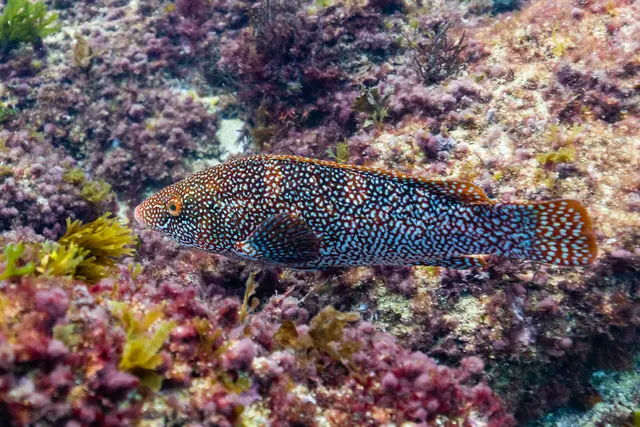 Ballan wrasseThe statutory guide gives crab, SHRIMP or worm for the wrasse of the Sheep's Head marks, and it is the only reading in this set where a shrimp bait is named for a rock species.
- Blue threadfinPrawn baits worked slowly near the bottom in turbid water.
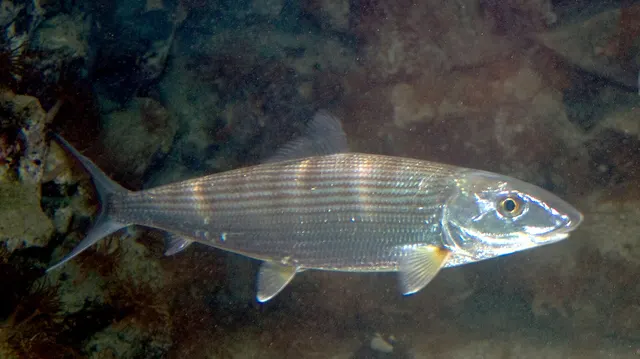 BonefishShrimp are the staple of a bonefish's diet, which is why almost every fly pattern for the species is a shrimp imitation and why a live one is close to irresistible.
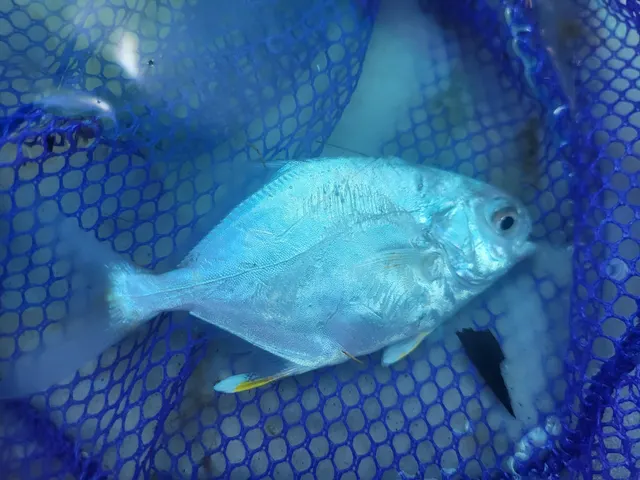 Florida pompanoShrimp and sand fleas fished in the swash zone.
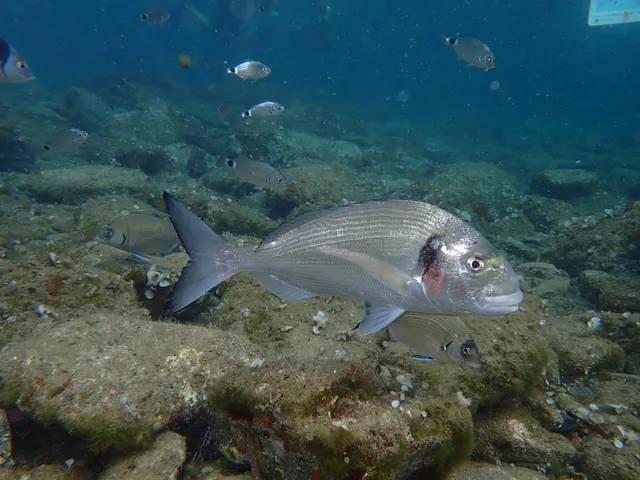 Gilthead breamCrushing jaws built for crustaceans, and a prawn is exactly that — fished whole with the shell on so it survives the cast and the fish.
- Spotted grunterLive and dead mud prawn over estuary sandbanks.
Finding and obtaining it
Bought live from bait suppliers, aquarium suppliers or specialist shops; bought raw and shell-on from fishmongers and supermarkets, which is the practical standard; or collected in shallow water with a push net or drop net where that is permitted. Collection rules vary by jurisdiction, frequently with seasons and gear restrictions, and shellfish collection may also be regulated on public-health grounds.
Keeping and storing it
Live: in an aerated container with cool clean seawater at low density, shaded, with regular water changes. Prawns are more tolerant than sand eels but still die quickly in warm crowded water. Dead: keep chilled and use fresh, or freeze in session-sized portions. Raw shell-on prawns freeze acceptably; cooked and peeled ones do not hold together.
Keeping it alive
An aerated container with cool clean seawater at low stocking density, out of the sun, with partial water changes through the session. Prawns damage each other in a crowded container, so fewer and healthier beats more and stressed. Handle with wet hands and as little as possible. Do not transport live prawns between waters, and never release unused live bait.
Preparing it
Live prawns are used whole. Dead prawns are used whole for larger fish, or the tail alone for smaller hooks. Leave the shell on — it is what holds the bait together. Partly frozen prawns are much easier to hook cleanly than fully thawed ones. Bait elastic helps on longer casts.
Using it
Live prawns are hooked lightly through the last tail segment or through the carapace so the animal continues to swim, and fished under a float, freelined or on a light leader. Dead prawns are threaded onto the hook from the tail with the point emerging near the head, and bound with elastic where casting distance matters. Natural drift with the current, rather than a static bait, is what makes the presentation convincing.
Disposing of what is left
Take unused bait home. Do not release unused live prawns into a water they did not come from, and do not tip dead bait into the sea at the end of a session. Dispose of dead bait in household waste and take all packaging with you.
Biosecurity
Live crustacean bait is a recognised pathway for the movement of non-native organisms and disease, including between coasts and between fresh and salt water. Do not move live bait between waters. Do not release unused live bait. Clean and dry containers between trips.
Keeping prawns and shrimp
Prawns and shrimp are the bait most often ruined between the shore and the hook, and the cause is almost always warmth.
WHY THEY SPOIL SO FAST. Crustacean flesh contains enzymes that break it down rapidly after death, and the process starts in the gut and the head. That is why a prawn dead for an hour in a warm bucket is soft and black-headed while one kept cold is firm.
ALIVE IS BEST AND IS GENUINELY ACHIEVABLE. A bucket of cool, aerated sea water in the shade, changed regularly, will hold prawns lively for a session. What kills them is heat, crowding and their own waste, in that order — the same three things that kill every live bait.
DEAD BUT COLD IS THE PRACTICAL ALTERNATIVE. Straight into a cool box on ice, kept out of meltwater. Kept properly they will be usable for a day or two.
FREEZING WORKS if it is done immediately and properly: brine-frozen or tightly wrapped, in small portions, used from frozen and never refrozen. Frozen prawn is softer than fresh and needs support on the hook.
WHAT NOT TO DO. Leave them in a bucket of water that warms up, which deoxygenates and cooks them slowly. Freeze them after they have already softened, which preserves a poor bait. Or buy cooked prawns expecting them to behave like raw ones — cooking changes the texture and much of the scent, and cooked prawn is a different and generally inferior bait.
Where prawns come from, and the three separate permissions involved in getting your own
Obtaining prawns is easy and obtaining them well is a question with three different answers depending on how they are being got, and each carries a different set of constraints.
BUYING IS THE PRACTICAL STANDARD AND THE DISTINCTION THAT MATTERS IS RAW VERSUS COOKED. Raw shell-on prawns from a fishmonger or supermarket are a good bait and freeze acceptably; cooked and peeled ones fall apart on the hook and are close to useless. That single distinction accounts for most disappointment with bought prawns, and it costs nothing to get right.
BUYING LIVE IS A DIFFERENT PROPOSITION AND A BETTER BAIT. Live prawns from bait or aquarium suppliers provide movement no dead bait matches, and for several species the difference is large. The cost is the care described in the record's storage section — aeration, cool clean water, low density — and a live-bait plan that does not include that is a plan to arrive with dead prawns.
COLLECTING YOUR OWN IS THE THIRD ROUTE AND IT IS WHERE THE PERMISSIONS ARE. Push netting and drop netting in shallow inshore water is straightforward, effective and traditional, and it is also regulated in most jurisdictions — variously by gear type, mesh size, season, area, minimum size, quantity, and by whether any permit or licence is required. Those rules differ between neighbouring districts and they change. FishingHQ does not state what any of them are; the local competent authority does, and checking before rather than after is the whole of the advice.
THERE IS ALSO A PUBLIC-HEALTH DIMENSION WHERE PRAWNS ARE TAKEN FOR THE TABLE, since crustacean and shellfish gathering grounds are classified and may be closed. That is a separate regime from the fisheries one and it has its own authority. Bait use does not exempt anybody from a closure that exists for another reason.
AND THE GROUND ITSELF IS THE THIRD CONSIDERATION. Prawn collecting takes place in shallow water among weed, rock and structure on a falling or low tide — slippery, uneven ground with a tide behind it — and the practical hazard of the activity is the shore rather than the animal.
FINALLY, LEAVE THE GROUND AS YOU FOUND IT. Weed pulled apart and rocks left turned reduce the habitat that produced the prawns, and the sourcing section on crab bait makes the same point for the same reason: a stripped shore stops producing.
Official guidance — why, and the sources (2)
Stated by a fisheries authority, scientific institute or recognised angling body. Authoritative, but summarising rather than demonstrating.
- Cefas science, advice and data on marine and freshwater environments — Centre for Environment, Fisheries and Aquaculture Science (Government fisheries body)Relied on for: Shellfish and crustacean gathering, the classification of ground, and the conservation and public-health considerations attached to collection.States this directlyCitation checked — the work exists and is described correctly
- Sea Angler — Bauer Media (Specialist angling publication)Relied on for: Established shore practice for collecting bait and the etiquette attached to it.Background and mechanism onlyCitation checked — the work exists and is described correctly
Safety
Biosecurity and disease transfer — Can cause injury needing treatment
Live crustacean bait moved between waters or released after a session is a documented introduction route for non-native organisms and disease.
What reduces it: Do not move live bait between waters. Never release unused live bait. Clean and dry containers between trips.
Tides and being cut off — Can cause injury needing treatment
Prawn collection with push and drop nets happens in shallow water on a tide, frequently at night.
What reduces it: Check tide times and heights, identify the exit, and leave on a set clock time. Carry a light and do not collect alone on remote ground.
Precautions that always apply here
- Check, clean and dry your kit between different waters — the published guidance is 48 hours’ drying, in sunlight where possible, because a number of invasive species survive over two weeks in damp conditions. Nets, boots and wet mats move invasive species and disease more effectively than anything else anglers do.
- Never move live fish, live bait or water from one water to another.
- Check the tide before you go and know your exit route. Being cut off is the commonest way a shore session becomes a rescue.
- Wet your hands before touching a fish. Dry hands strip the protective mucus layer that keeps infection out.
Check the rules before you fish
Fishing laws, bylaws, access rules, seasons, bait restrictions and permitted methods vary by location and can change. Check the current rules from the relevant authority and the water you intend to fish before fishing.
Check with:
- Current national or regional law for where you are fishing
- Current local bylaws
- The relevant fisheries authority
- The landowner, club or fishery whose water it is
- Any restrictions specific to the species or the method you intend to use
Sources and evidence
- Sea Angler — Bauer Media (Specialist angling publication)Relied on for: Practitioner treatment of prawn as a sea bait, including live presentation, shell-on durability and float and freeline methods.FishingHQ's interpretation of what it saysCitation checked — the work exists and is described correctly
- Check Clean Dry — biosecurity guidance for water users — GB Non-native Species Secretariat (Conservation authority)Relied on for: That the movement of live bait organisms is a recognised pathway for the introduction and spread of non-native aquatic species.States this directlyPassage read and verified
Why the 6 connections on this page are here, and the sources
Fish it catches
What experienced anglers do — 6 connections
Widely and independently recommended by experienced anglers and specialist sources. This is real angling knowledge, not proof: controlled evidence for it is limited, and FishingHQ records it as convention rather than as a demonstrated effect.
Ballan wrasse
Named by a statutory guide and a practitioner directory on two different Irish coasts, in both cases as one of a short list rather than as the bait.
- Inland Fisheries Ireland: South West Sea Angling Guide — the west and south Cork angling marks — Inland Fisheries Ireland, 2020 (Government fisheries body)Relied on for: The statutory body naming crab, shrimp or worm baits for float-fished wrasse at a named headland path.Passage read and verified
- Sea Angling in Ireland: the shore marks of Galway — Sea Angling Ireland (Credible secondary source)Relied on for: A county directory naming prawn and shellfish among the baits taking the ray and wrasse of the shallow Connemara bays.Passage read and verified
Blue threadfin
A practitioner claim about tackle commonly used for Eleutheronema tetradactylum.
- General angling website restatements of established technique — Various (Credible secondary source)Relied on for: Widely restated practitioner accounts of this presentation for blue threadfin.Citation checked — the work exists and is described correctly
- Angling Times — Bauer Media (Specialist angling publication)Relied on for: Practitioner treatment of comparable presentations for the species group.Citation checked — the work exists and is described correctly
Bonefish
A practitioner claim about a bait-species pairing, with the diet supported separately on the species page.
- IGFA International Angling Rules and World Record Requirements — International Game Fish Association (Angling or fisheries organisation)Relied on for: That live bait and fly tackle are recognised methods in saltwater flats angling.Passage read and verified
- General angling website restatements of established technique — Various (Credible secondary source)Relied on for: Widely restated practitioner accounts of shrimp and shrimp imitations for bonefish.Citation checked — the work exists and is described correctly
Florida pompano
A practitioner claim about tackle commonly used for Trachinotus carolinus.
- General angling website restatements of established technique — Various (Credible secondary source)Relied on for: Widely restated practitioner accounts of this presentation for florida pompano.Citation checked — the work exists and is described correctly
- Angling Times — Bauer Media (Specialist angling publication)Relied on for: Practitioner treatment of comparable presentations for the species group.Citation checked — the work exists and is described correctly
Gilthead bream
A practitioner claim following from the species' verified crushing dentition.
- Sea Angler — Bauer Media (Specialist angling publication)Relied on for: Practitioner treatment of prawn and shellfish baits for sea bream.Citation checked — the work exists and is described correctly
- General angling website restatements of established technique — Various (Credible secondary source)Relied on for: Widely restated practitioner guidance on shell-on prawn presentation.Citation checked — the work exists and is described correctly
Spotted grunter
A practitioner claim about tackle commonly used for Pomadasys commersonnii.
- General angling website restatements of established technique — Various (Credible secondary source)Relied on for: Widely restated practitioner accounts of this presentation for spotted grunter.Citation checked — the work exists and is described correctly
- Angling Times — Bauer Media (Specialist angling publication)Relied on for: Practitioner treatment of comparable presentations for the species group.Citation checked — the work exists and is described correctly
How FishingHQ labels evidence is explained in the evidence policy.