Bonefish
Fish · Last reviewed 2026-08-10
A silver bottom-feeder of tropical shallows, hunted on sight in knee-deep water, that runs further than anything of its size.
Safety: sun, dehydration and fatigue — can cause injury needing treatment. 6 more points apply here.
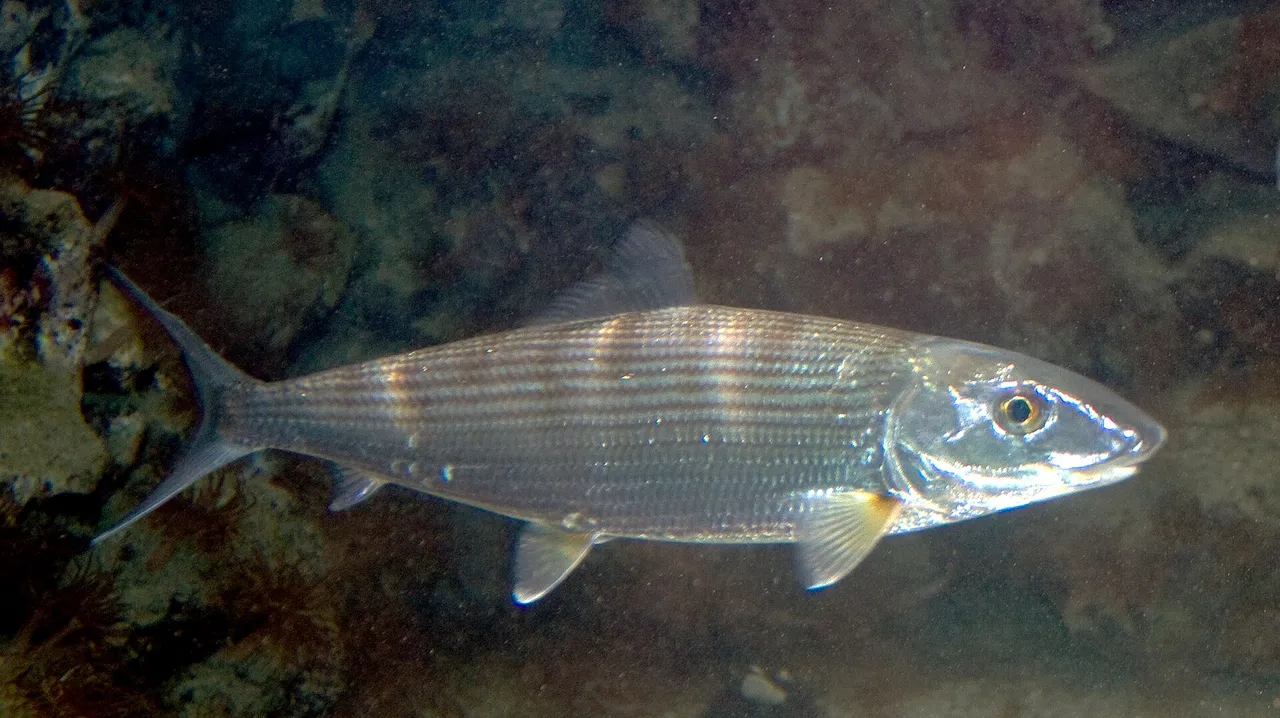
How this was identified, and who took it
Identified by: Sharp, complete lateral view of a free-swimming fish. The conical pointed snout with a distinctly inferior mouth, the slender silver body with faint longitudinal striping, the single dorsal fin and the deeply forked tail together identify the species, and the head shape in particular separates it from the mullets it is superficially similar to at a distance.Brian Gratwicke — CC BY 2.0, via Wikimedia Commons — source, licence
Catching Bonefish
Everything here on fishing for it. Each entry opens the page behind it.
- Ground
- Where
- 1 place FishingHQ documents — strongest claim anywhere: repeatedly reported · Fly fishing, From the shore, From a boat
A bonefish is not much to look at. It is silver, it weighs a few pounds, it eats crabs and shrimps off the bottom, and it is so poorly regarded as food that its name refers to how many bones it has. It is also one of the most sought-after fish in the world, and the reason is entirely about how it is caught.
Bonefish feed in water shallow enough to wade — often less than a metre — over open sand and turtle grass flats. They are extraordinarily wary in that environment, because in a metre of clear water everything can see them and most of it would eat them. So they are hunted rather than fished for: the angler walks or poles the flat, looks for fish, and casts to an individual animal that has been located and read.
That is why bonefishing is regarded as it is. The whole encounter is visible. The fish is found, stalked, cast to, watched as it responds, and — with reasonable frequency — spooked by an imperfect cast. And when one is hooked, it runs: a three-kilogram bonefish will take a hundred metres of backing in seconds, which is why saltwater fly reels have the drags they do.
Almost the entire fishery is catch-and-release, and its economic value in that form is far greater than its value as food ever was.
Gear for this fish
- Prawns and shrimpShrimp are the staple of a bonefish's diet, which is why almost every fly pattern for the species is a shrimp imitation and why a live one is close to irresistible.
- StreamersBonefish fly fishing is an entirely sight-based crustacean-imitation fishery, and the weighted shrimp and crab patterns used are streamers in construction whatever the flat calls them.
Where Bonefish is documented
Places where public sources describe this species as fished, with how it is fished and how strongly the evidence supports it. This is not a range map and it is not a recommendation — it is what has been written down about a fishery rather than a record of any individual catch, and being listed is never permission to fish.
What these strengths mean
- Repeatedly reported
- Several independent public accounts. Enough to say it happens more than once; not enough to call it a fishery.
Identification
- Scientific name
- Albula vulpes
- Family
- Albulidae
- Water
- Saltwater, Brackish
- Conservation status
- Near Threatened
- Regions
- Caribbean, North America, Central & South America
- Body elongate, cylindrical and strongly streamlined, bright silver with faint darker dorsal shading.
- Snout distinctly conical and overhanging a small, inferior, sub-terminal mouth — the shape of a fish designed to root in sand.
- Single dorsal fin set roughly mid-body; deeply forked tail.
- No adipose fin, and no spines in the fins.
- In the water the reliable sight is usually not the fish at all but its tail breaking the surface as it feeds head-down, or the puff of disturbed sediment it leaves — 'mudding'.
Size
- Typical
- 1–2.5 kg (2–5 lb)
- Large
- 3.5–5 kg (8–11 lb)
Exceptional: Over 6 kg (13 lb); a widely reported angling figure rather than a published scientific maximum
Shallow sand, marl and the tide that lets them onto it
Bonefish occupy shallow tropical and subtropical flats, and their habitat use is governed almost entirely by the tide.
THE FLAT IS THE FEEDING GROUND AND IT IS ONLY AVAILABLE PART OF THE TIME. Bonefish move onto shallow sand, marl and seagrass on the flooding tide to feed, and drop back to deeper channels, basins and the reef edge as it falls. A flat that holds fish for three hours is empty for the other nine, and knowing which state of tide puts fish where is the whole of the local knowledge.
THEY FEED HEAD-DOWN ON THE BOTTOM, rooting for crabs, shrimp and worms in sand and marl, which is what produces the tailing behaviour the sight fishery depends on — the tail breaking the surface as the fish tips down to feed.
SUBSTRATE DECIDES THE FEEDING AND THE VISIBILITY. Clean white sand shows fish clearly and holds fewer of them; darker turtle grass and marl hold more food and make the fish far harder to see. Most flats are a mosaic of both and the edges between them are where fish travel.
DEPTH IS MEASURED IN INCHES ON THE FLAT and in metres off it, and the same fish uses both across a tide cycle.
TEMPERATURE SETS THE LIMITS. Bonefish are sensitive to cold and vacate shallow flats when water temperature drops, which is why a winter cold front empties a flat that was full the previous day.
AND THE MANGROVE AND DEEP-WATER REFUGES MATTER AS MUCH AS THE FLATS. Fish need somewhere to go when the tide drops and when it turns cold, so a flat without an adjacent channel, basin or mangrove edge holds far fewer fish than its appearance suggests.
Backed by research — why, and the sources (2)
Supported by peer-reviewed research or fisheries science. The sources are listed and can be checked.
- FAO Species Identification Guides for Fishery Purposes and the FAO Species Catalogues — Food and Agriculture Organization of the United Nations (Scientific institute)Relied on for: Distribution, habitat, depth and fishery accounts for the species in the FAO regional identification guides for the ocean area concerned.States this directlyCitation checked — the work exists and is described correctly
- FishBase: a global information system on fishes — Froese, R. and D. Pauly, eds. — FishBase Consortium (Scientific institute)Relied on for: Distribution, habitat association, depth range, size, reproduction and life-history parameters recorded for the species.States this directlyPassage read and verified
A fish worth more alive, and the thirty seconds that decide whether it stays that way
Bonefish are the clearest case on FishingHQ of a species whose entire economic value depends on release survival, and the handling detail is correspondingly well studied.
THE FISH IS NOT DANGEROUS. No cutting teeth, no venomous spines, nothing that will injure a handler. Every consideration here is about the fish.
THE SPECIFIC VULNERABILITY IS AIR EXPOSURE IN HEAT. Bonefish are caught in shallow warm water, they fight extremely hard for their size, and they are landed exhausted. Research on this species has found that air exposure after a hard fight substantially raises the chance of the fish dying, and that a large part of that mortality is predation — a bonefish released tired on a flat is taken by a shark or a barracuda that would never catch a healthy one. The fish that swims away is not necessarily the fish that survives.
SO THE STANDARD IS: KEEP IT IN THE WATER. Unhook it in the water with barbless or crimped hooks. If a photograph is taken, the fish is lifted for a few seconds with wet hands and returned. Do not lay a bonefish on a deck, on sand or on a boat gunwale — sand and dry surfaces strip the slime coat, and the slime coat is the barrier against infection.
REVIVE IT PROPERLY AND WATCH IT GO. Hold the fish upright, facing into any current, and move it gently forward until it takes hold and leaves powerfully. A fish that drifts is not ready. In water holding predators, staying with it until it leaves is not sentiment.
AND THE ANGLER'S OWN HAZARD IS THE FLAT, NOT THE FISH: rays buried in sand, sun, and a tide that fills the ground you walked out over.
Backed by research — why, and the sources (3)
Supported by peer-reviewed research or fisheries science. The sources are listed and can be checked.
- Do we need species-specific guidelines for catch-and-release recreational angling? — Biodiversity and Conservation 14:1195–1209, 2005 (Scientific literature)Relied on for: That post-release mortality varies with species, capture depth, water temperature, air exposure and handling, and that species-specific guidance outperforms general guidance.States this directlyCitation checked — the work exists and is described correctly
- A review of catch-and-release angling mortality with implications for no-take reserves — Reviews in Fish Biology and Fisheries 15:129–154, 2005 (Scientific literature)Relied on for: Review of hooking and release mortality across fisheries, including the contribution of depth of capture and handling duration.States this directlyCitation checked — the work exists and is described correctly
- Understanding the Complexity of Catch-and-Release in Recreational Fishing — Reviews in Fisheries Science 15:75–167, 2007 (Scientific literature)Relied on for: Review of catch-and-release outcomes including the contribution of air exposure and post-release predation to mortality.States this directlyCitation checked — the work exists and is described correctly
No season at all, a tide window that is everything, and cold fronts in the tropics
Bonefish are the clearest demonstration on FishingHQ that seasonality and availability are different questions, because through most of the range the answer to when bonefish are present is: always.
THERE IS NO SEASON WORTH THE NAME. Bonefish are present year-round across most of their range, and the temperature swings on tropical flats are not large enough to drive the kind of inshore–offshore movement that structures a temperate species' year. Anybody asking which month to go is asking a question the fish does not answer.
THE TIDE IS THE WHOLE THING. A bonefish flat is dry or nearly dry at low water and covered at high, and bonefish come onto it to feed as the water floods and leave as it drains. They are there to eat crustaceans and molluscs that are only accessible when the flat is covered, and they cannot be there when it is not. So a flat has a WINDOW rather than a condition — a period on each tide when it is fishable at all — and the window differs between flats on the same day depending on depth and orientation. Planning a bonefish day means sequencing flats against the tide, not choosing a time.
WITHIN THE WINDOW, THE FISHING IS VISUAL. Bonefish on a flat are located by sight — by the fish itself, by a tailing fish feeding head-down with its tail out of the water, by mud plumes, by nervous water. That makes light and wind into first-order variables: a bright still morning is a different proposition from an overcast breezy afternoon on the same flat at the same tide state, because one of them lets the angler see and the other does not.
AND COLD FRONTS ARE A GENUINE CONSTRAINT EVEN IN THE TROPICS, which surprises people. A front that drops water temperature on shallow flats pushes bonefish off them into deeper adjacent water, and it can shut a fishery down for days. Shallow water responds to air temperature far faster than deep water does, which is exactly why the flats are productive and exactly why they are vulnerable to a few cold nights.
Backed by research — why, and the sources (4)
Supported by peer-reviewed research or fisheries science. The sources are listed and can be checked.
- NOAA Ocean Service tides and water levels educational tutorial — National Oceanic and Atmospheric Administration, United States (Government fisheries body)Relied on for: Tidal generation, the spring–neap cycle, and the relationship between tidal range and tidal stream velocity.States this directlyPassage read and verified
- FishBase: a global information system on fishes — Froese, R. and D. Pauly, eds. — FishBase Consortium (Scientific institute)Relied on for: Habitat association and feeding behaviour recorded for the species.Background and mechanism onlyPassage read and verified
- FishBase: a global information system on fishes — Froese, R. and D. Pauly, eds. — FishBase Consortium (Scientific institute)Relied on for: Temperature association, migration, flood-cycle response and spawning season recorded for the species.States this directlyPassage read and verified
- IGFA International Angling Rules and World Record Requirements — International Game Fish Association (Angling or fisheries organisation)Relied on for: Recognition of the species as an established sport fish and the seasonal conventions of its recognised fisheries.Background and mechanism onlyPassage read and verified
Off the flat to spawn: why a flats population depends on deep water
Bonefish reproduction takes place nowhere near the habitat the species is known for, and that disconnection is the most important thing about it.
THE FLAT IS A FEEDING GROUND, NOT A NURSERY. Adults gather in pre-spawning aggregations near the flats, then move off them entirely — to deep water at the edge of the shelf — to spawn, typically around particular moon phases. The eggs and larvae are pelagic, and bonefish have a leptocephalus larval stage, the same transparent ribbon-like form that eels and tarpon pass through, which drifts in open water for a considerable period before metamorphosing and recruiting to shallow habitat.
SO A FLATS POPULATION DEPENDS ON CONDITIONS WELL OUTSIDE THE FLAT. What happens to a bonefish population is decided partly by oceanography — currents, larval transport, deep-water conditions at the shelf edge — that nobody standing on the flat can observe or influence. A flat that is perfectly managed can still fail to recruit if the offshore half of the cycle does not deliver.
AND THE AGGREGATIONS ARE THE PINCH POINT. They are highly predictable in time and place: the same staging areas, around the same moon phases, year after year. That predictability makes them critical to recruitment and acutely vulnerable, because it concentrates a whole area's spawning adults into a known location on a known date. It is the same mechanism that has emptied grouper aggregation sites across the tropics, and it is why several jurisdictions protect bonefish aggregation sites specifically rather than relying on general catch rules.
THIS SITS ODDLY ALONGSIDE THE FISHERY'S CULTURE, which is worth naming. Bonefish are among the most comprehensively catch-and-release species there are — the flesh is poor and bony and almost nobody eats them, and the fishery is built entirely on returning fish. A recreational sector that kills essentially nothing can still be affected by, and can still contribute to disturbance of, the aggregations. Habitat loss and netting pressure on staging fish matter more than the flats fishery does, and neither is visible from a skiff.
What protection applies at any site is current, local, and not stated here.
Backed by research — why, and the sources (2)
Supported by peer-reviewed research or fisheries science. The sources are listed and can be checked.
- Reef Fish Spawning Aggregations: Biology, Research and Management — Springer, Fish & Fisheries Series vol. 35, 2012 (Scientific literature)Relied on for: The biology of reef fish spawning aggregations, their predictability in time and space, and the disproportionate effect of fishing them on population reproductive output.States this directlyCitation checked — the work exists and is described correctly
- FishBase: a global information system on fishes — Froese, R. and D. Pauly, eds. — FishBase Consortium (Scientific institute)Relied on for: Spawning season, aggregation behaviour and reproductive mode recorded for the species.States this directlyPassage read and verified
Small numbers, large fish, and the reason the size varies by island
Bonefish size is unusually place-specific, and the pattern is well enough established that experienced anglers choose destinations by it.
THE TRADE-OFF IS BETWEEN NUMBERS AND SIZE, AND IT IS CONSISTENT. Some flats fisheries hold very large schools of modest fish; others hold small groups or singles of considerably larger ones. The difference tracks the productivity of the system, the extent of deep water adjacent to the flats, and how heavily the population is exploited. A destination famous for hundred-fish days is rarely the destination famous for double-figure fish, and neither is a better fishery — they are different ones.
GROWTH IS SLOW AND LIFE IS LONG, WHICH IS THE FACT UNDER EVERYTHING ELSE. Bonefish live for a long time, and a large one is old. That is why heavily-fished flats lose their large fish first and recover them slowly, and it is a substantial part of why this is so completely a catch-and-release fishery — the population's size structure is an accumulation of decades and it is not quickly rebuilt.
THE SPECIES QUESTION MATTERS FOR ANY COMPARISON. 'Bonefish' covers several closely related species across the tropics, and they do not all reach the same size. Weights quoted from Pacific or Indian Ocean fisheries may refer to different animals from the Atlantic and Caribbean fish, which is a common source of confusion in size comparisons between destinations.
THE EXCEPTIONAL FIGURE IS AN ANGLING REPORT. Bonefish are almost never killed, so they are almost never weighed on certified scales; most reported weights are estimates from length and girth, and estimates run generous. This page grades the exceptional figure as an angling number for that reason.
AND LENGTH-AND-GIRTH IS THE HONEST MEASUREMENT for a fish that is going straight back. A quick length taken against a marked rod or a measured net, with the fish in the water, gives a better and far cheaper number than lifting the fish onto scales — which for a species whose whole fishery depends on release is the trade worth making.
What experienced anglers do — why, and the sources (2)
Widely and independently recommended by experienced anglers and specialist sources. This is real angling knowledge, not proof: controlled evidence for it is limited, and FishingHQ records it as convention rather than as a demonstrated effect.
- IGFA International Angling Rules and World Record Requirements — International Game Fish Association (Angling or fisheries organisation)Relied on for: The rules under which a record claim is measured, weighed and witnessed, and the line-class structure that record lists are organised by.States this directlyPassage read and verified
- FishBase: a global information system on fishes — Froese, R. and D. Pauly, eds. — FishBase Consortium (Scientific institute)Relied on for: Maximum recorded length and weight and reported longevity for the species.Background and mechanism onlyPassage read and verified
Line management in wind, and why the reel matters more than the rod
Bonefish tackle is fly tackle specified by two things that have nothing to do with the fish's size: wind, and the length of the first run.
THE FIRST RUN IS LONG AND FAST AND IT IS THE ENTIRE FIGHT. A hooked bonefish crosses a flat at speed, taking the fly line and a substantial amount of backing in seconds. That places the reel at the centre of the outfit — capacity for adequate backing, and a smooth, sealed drag that starts without a jolt. A drag that hesitates at the start of the run breaks a light tippet instantly. This is one of very few fly fisheries in which the reel is a fighting tool rather than a line store.
WIND SETS THE ROD WEIGHT. Flats fishing is windy fishing, and the line weight required to turn over a fly into or across a breeze is what specifies the rod, not the weight of the fish. That is why bonefish outfits are heavier than the fish suggests, and why an outfit that is delightful on a calm morning is unusable by noon.
THE CAST IS SHORT, FAST AND ACCURATE RATHER THAN LONG. Bonefish are usually cast to at moderate distance and the requirement is to deliver quickly with few false casts, because the fish is moving and the window is brief. A rod that loads fast at short range suits this better than one built for distance.
LINE MANAGEMENT IS A REAL AND UNDERRATED SKILL. Loose line on a deck, in a stripping basket or in the water must run out cleanly at speed; a tangle at the moment of the run costs the fish and, on light tippet, generally the fly as well.
LEADER AND TIPPET ARE A TRADE BETWEEN VISIBILITY AND ABRASION. Bonefish feed over sand, coral and turtle grass and are wary in shallow clear water. Too heavy and the fish refuses; too light and the leader parts on coral or on the first sharp run.
AND EVERYTHING IS RELEASED, so barbless or crushed-barb hooks and a fight kept short are the standard — the record's size section explains why a flat's large fish are decades of accumulation and are not quickly replaced.
What experienced anglers do — why, and the sources (2)
Widely and independently recommended by experienced anglers and specialist sources. This is real angling knowledge, not proof: controlled evidence for it is limited, and FishingHQ records it as convention rather than as a demonstrated effect.
- IGFA International Angling Rules and World Record Requirements — International Game Fish Association (Angling or fisheries organisation)Relied on for: Recognition of the species as a recognised game fish, the tackle classes record fisheries are organised by, and the practice of the fisheries that target it.States this directlyPassage read and verified
- General angling website restatements of established technique — Various (Credible secondary source)Relied on for: The widely restated tackle practice for this species, recorded as a consensus position rather than as an original observation.States this directlyCitation checked — the work exists and is described correctly
Lifecycle and reproduction
Spawns offshore in deeper water, and the larval stage is a leptocephalus — a transparent, ribbon-like larva of the kind otherwise associated with eels and tarpon, which drifts in the plankton before shrinking and metamorphosing into a juvenile fish. Juveniles settle into shallow sheltered habitat and move onto the flats as they grow. The species is long-lived and slow-growing, which matters for a fishery: a large bonefish represents many years, and the population cannot replace it quickly.
Adults gather in pre-spawning aggregations near the flats and then move offshore to spawn in deep water, typically around particular moon phases. Those aggregations are highly predictable in time and place, which makes them both critical to recruitment and acutely vulnerable, and is why several jurisdictions protect the aggregation sites specifically. The offshore, aggregating spawning strategy also means a flats population depends on conditions well outside the flat itself.
Feeding and senses
Feeds head-down on the bottom, rooting in sediment for crustaceans — particularly crabs and shrimps — along with worms and small molluscs, crushing them with heavy pharyngeal plates. The feeding posture is the fishery's principal visual cue: a feeding fish tips down and its tail breaks the surface, and the disturbed sediment left behind is what anglers call a mud. Fish move onto a flat with the flooding tide and off it as the water drops.
Sight and smell both matter, and the balance shifts with clarity. On a clear flat a bonefish sees an angler, a line and a poorly landed fly from a long way off, which is what makes the fishery a stalking one. In cloudier water and over soft ground scent and vibration dominate, which is why a fly that lands with a small sound and moves in short hops is more convincing than one that lands accurately and then does nothing.
Through the year
Present year-round through most of the range, with activity governed by water temperature and tide rather than by season. Cold fronts push fish off shallow flats into deeper adjacent water and can shut a fishery down for days — a genuine constraint even in the tropics. Within any given day the tide governs everything: fish come onto the flats to feed as the water floods and leave as it drains, so a flat has a window rather than a condition.
Distribution
Tropical and subtropical shallows of the western Atlantic and Caribbean. The name 'bonefish' is applied to several closely related Albula species across the Indo-Pacific and elsewhere, and the taxonomy of the group has been substantially revised, with populations formerly treated as a single widespread species now recognised as several.
This is a biological range — where the species occurs, not a prediction that you will catch one. To browse the fishing geography FishingHQ holds, start at fishing places.
Why anglers care
One of the defining species of saltwater fly fishing and the basis of a very high-value recreational fishery, principally in the Caribbean. Almost entirely catch-and-release, and the economic argument for its protection is built on the value of a living fish caught many times rather than a dead one caught once.
Handling and returning
Handle in the water wherever possible. These fish exhaust themselves on the run and are highly vulnerable to predation immediately afterwards, so recovery before release matters more than for most species — a bonefish let go before it is ready is frequently taken by a shark or barracuda in front of the angler. Wet hands, support the fish horizontally, minimise air exposure, and hold it into the current until it swims off under its own power.
Going further
- What does bonefish eat? — feeding biology, kept separate from what anglers infer from it.
- Bonefish vs Atlantic tarpon — how to tell them apart.
Safety
Sun, dehydration and fatigue — Can cause injury needing treatment
Flats fishing means long hours in shallow tropical water with sun overhead and reflected off both the water and pale sand. Sunburn is worse than expected and dehydration builds unnoticed while concentrating.
What reduces it: Cover up rather than relying on sunscreen, wear polarised glasses — needed to see fish in any case — and drink steadily rather than when thirsty.
Encounters with marine life — Can cause injury needing treatment
Flats hold stingrays resting in the sand, and a wading angler who steps on one may be barbed in the lower leg or foot. Sharks and barracuda follow hooked and exhausted fish, sometimes to the angler's feet.
What reduces it: Shuffle rather than step when wading soft ground, which moves rays away instead of onto. Wear wading boots. Do not hold an exhausted fish beside you if predators are working the flat.
Tides and being cut off — Can cause injury needing treatment
Flats are fishable because they flood and drain. An angler who has waded out on a falling tide and is concentrating on fish may find the return crossing has become deep on the flood.
What reduces it: Know the tide before wading, identify the route back, and leave on a set time rather than on how the fishing is going.
Precautions that always apply here
- Wet your hands before touching a fish. Dry hands strip the protective mucus layer that keeps infection out.
- Support the fish's weight along its body, keep it out of the water for as short a time as possible, and hold it over something soft.
- Check the tide before you go and know your exit route. Being cut off is the commonest way a shore session becomes a rescue.
- Do not wade alone. Judge depth and flow from the bank first, and turn back sooner than feels necessary.
Where to go next
Similar and related fish
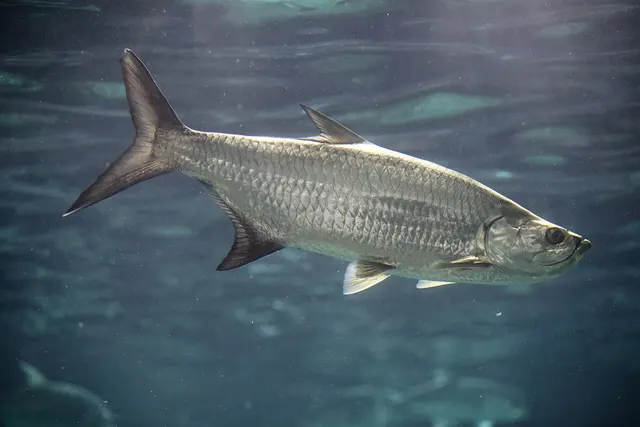 Atlantic tarponBoth produce transparent ribbon-like leptocephalus larvae that drift in the plankton before metamorphosing — a developmental route shared with eels and with almost nothing else an angler meets.
- Roundjaw bonefishThe Indo-Pacific bonefish and the Caribbean one, and almost all the writing is about the second.
Where it lives
Where you will find it
- CubaOn the flats of the offshore cays, in numbers and average size that reflect decades of low fishing pressure as much as they reflect the habitat.
- FloridaFeeds over shallow sand and marl flats, principally in the Keys, and is the species the state's sight-fishing discipline was built around.
- The Egyptian Red Sea coastOn the sand and seagrass flats of sheltered bays, which is the nursery ground this riverless coast has instead of estuaries.
- The Yucatán and Mexican Caribbean coastOn hundreds of square kilometres of white carbonate sand flat, in the numbers that made this coast a flats destination in the first place.
Understanding this fish
- Bivalve and gastropod molluscs as preySmall molluscs are taken from flats sediment alongside crustaceans and are crushed with heavy pharyngeal teeth.
- Crustacean imitation in saltwater fly fishingThe commoner case and the one that teaches the mechanic. Bonefish root shrimps and small crabs out of sand and grass, so a fly is fished on or near the bottom with short movements — a crustacean escapes in darts and pauses and never swims steadily, which is the retrieve rather than the pattern.
- Decapod crustaceans as preyBonefish feed on crustaceans taken from sand and grass flats, rooting head-down in a manner that produces the tailing behaviour the fishery depends on for sight casting.
- Reading the tideBonefish come onto a flat with the flood and leave as it drains. The fishing is not a place, it is a window, and the tide defines it.
- Sight fishing and blind searchingThe fish that defines the discipline. Bonefish feed on hard sand and turtle grass in water shallow enough to expose their tails, they are visible only to a trained eye, and casting blind at a flat catches nothing — so the fishing is finding first and casting second.
Told apart from
Environment and conservation
Sources and evidence
- FishBase: a global information system on fishes — Froese, R. and D. Pauly, eds. — FishBase Consortium (Scientific institute)Relied on for: Scientific name, family placement, morphology, size range, habitat use, feeding behaviour and distribution.States this directlyPassage read and verified
- FishBase: a global information system on fishes — Froese, R. and D. Pauly, eds. — FishBase Consortium (Scientific institute)Relied on for: The IUCN Red List category for Albula vulpes as republished by FishBase with its assessment date — Near Threatened, assessed 29 March 2011. The Red List itself was not reachable during this review.States this directlyPassage read and verified
Why the 17 connections on this page are here, and the sources
Similar and related fish
Backed by research — 2 connections
Supported by peer-reviewed research or fisheries science. The sources are listed and can be checked.
Atlantic tarpon
A developmental-biology claim that links two flagship flats species through something a reader would never guess from looking at them.
- FishBase: a global information system on fishes — Froese, R. and D. Pauly, eds. — FishBase Consortium (Scientific institute)Relied on for: That transparent leptocephalus larvae of Megalops atlanticus migrate into estuaries, and that Albula vulpes has a leptocephalus larval stage.States this directlyPassage read and verified
Roundjaw bonefish
Albula glossodonta has a rounded lower jaw, reaches 90 cm and 8.6 kg, and ranges from the Red Sea to Hawaii and the Tuamotus; Albula vulpes is the western Atlantic species that the great majority of English-language bonefishing literature describes. The Indo-Pacific fish is assessed Vulnerable and the Atlantic one is assessed separately.
- FishBase: a global information system on fishes — Froese, R. and D. Pauly, eds. — FishBase Consortium (Scientific institute)Relied on for: The morphology, size, depth range and distribution that separate these two species from one another.States this directlyPassage read and verified
How it is caught
What experienced anglers do — 1 connection
Widely and independently recommended by experienced anglers and specialist sources. This is real angling knowledge, not proof: controlled evidence for it is limited, and FishingHQ records it as convention rather than as a demonstrated effect.
Saltwater fly fishing
A practitioner claim about the defining method for the species.
- IGFA International Angling Rules and World Record Requirements — International Game Fish Association (Angling or fisheries organisation)Relied on for: Fly tackle classes and their use in saltwater angling.Passage read and verified
- Trout & Salmon — Bauer Media (Specialist angling publication)Relied on for: Contemporary treatment of saltwater flats fly fishing.Citation checked — the work exists and is described correctly
A statement about how a species is fished, which is angling convention rather than biology and is labelled as such.
- Still Water Fly-Fishing — Andre Deutsch, 1952 (Specialist angling publication)Relied on for: Fly-fishing practice from a practitioner tradition: line control, depth management, retrieve and the reading of water.States this directlyCitation checked — the work exists and is described correctly
- Sea Angler — Bauer Media (Specialist angling publication)Relied on for: Contemporary UK sea angling practice as reported by practitioners: ground, tackle, presentation and seasonal timing.States this directlyCitation checked — the work exists and is described correctly
A practitioner claim about the defining application of the method.
- IGFA International Angling Rules and World Record Requirements — International Game Fish Association (Angling or fisheries organisation)Relied on for: Fly tackle classes and their use in saltwater angling.Passage read and verified
- Trout & Salmon — Bauer Media (Specialist angling publication)Relied on for: Contemporary treatment of saltwater fly technique in the angling press.Citation checked — the work exists and is described correctly
Gear for this fish
What experienced anglers do — 2 connections
Widely and independently recommended by experienced anglers and specialist sources. This is real angling knowledge, not proof: controlled evidence for it is limited, and FishingHQ records it as convention rather than as a demonstrated effect.
Prawns and shrimp
A practitioner claim about a bait-species pairing, with the diet supported separately on the species page.
- IGFA International Angling Rules and World Record Requirements — International Game Fish Association (Angling or fisheries organisation)Relied on for: That live bait and fly tackle are recognised methods in saltwater flats angling.Passage read and verified
- General angling website restatements of established technique — Various (Credible secondary source)Relied on for: Widely restated practitioner accounts of shrimp and shrimp imitations for bonefish.Citation checked — the work exists and is described correctly
Streamers
A practitioner claim about which lure family answers this species' feeding or holding behaviour.
- IGFA International Angling Rules and World Record Requirements — International Game Fish Association (Angling or fisheries organisation)Relied on for: Recognition of the species as an established sport fish taken on artificial lures, and the line and tackle classes used for it.States this directlyPassage read and verified
- General angling website restatements of established technique — Various (Credible secondary source)Relied on for: Widely restated lure practice for this species.Background and mechanism onlyCitation checked — the work exists and is described correctly
Where it lives
Backed by research — 1 connection
Supported by peer-reviewed research or fisheries science. The sources are listed and can be checked.
Seagrass beds
A habitat association resting on the regional identification and fisheries literature rather than on angling report.
- JNCC species and habitat conservation advice — Joint Nature Conservation Committee (Conservation authority)Relied on for: UK and European habitat classification and the conservation status of seagrass beds, including the species associated with them.States this directlyCitation checked — the work exists and is described correctly
- FAO Species Identification Guides for Fishery Purposes and the FAO Species Catalogues — Food and Agriculture Organization of the United Nations (Scientific institute)Relied on for: Habitat association and distribution of the species concerned.States this directlyCitation checked — the work exists and is described correctly
Where you will find it
Backed by research — 4 connections
Supported by peer-reviewed research or fisheries science. The sources are listed and can be checked.
Cuba
That a species occurs in these waters, drawn from distribution science. It is a statement about where the animal lives and is not a statement that anybody will catch one, still less where.
- FAO Species Identification Guides for Fishery Purposes and the FAO Species Catalogues — Food and Agriculture Organization of the United Nations (Scientific institute)Relied on for: Identification, distribution and habitat association of the fishes and invertebrates of the tropical region named.States this directlyCitation checked — the work exists and is described correctly
- FishBase: a global information system on fishes — Froese, R. and D. Pauly, eds. — FishBase Consortium (Scientific institute)Relied on for: Recorded distribution, depth range and habitat association of the species named, including its occurrence in the waters concerned.States this directlyPassage read and verified
Florida
A distribution association between an animal and a kind of water, rather than a claim about any named mark.
- NOAA National Ocean Service education on estuaries and the National Estuarine Research Reserve System — National Oceanic and Atmospheric Administration, United States (Government fisheries body)Relied on for: Estuarine, seagrass and coastal habitat function in North American waters, and the nursery role of shallow habitat for the species concerned.Background and mechanism onlyCitation checked — the work exists and is described correctly
- FishBase: a global information system on fishes — Froese, R. and D. Pauly, eds. — FishBase Consortium (Scientific institute)Relied on for: Distribution, habitat association, depth range and life history recorded for the species.States this directlyPassage read and verified
The Egyptian Red Sea coast
A distributional claim about where a species occurs, resting on the regional identification literature rather than on angling report. It says nothing about where a reader should fish.
- FAO Species Identification Guides for Fishery Purposes and the FAO Species Catalogues — Food and Agriculture Organization of the United Nations (Scientific institute)Relied on for: Species composition, habitat association and distribution for the region concerned, as set out in the FAO species identification sheets.States this directlyCitation checked — the work exists and is described correctly
- The IUCN Red List of Threatened Species — International Union for Conservation of Nature (Conservation authority)Relied on for: Global assessment and distribution for the species concerned.States this directlyCitation checked — the work exists and is described correctly
The Yucatán and Mexican Caribbean coast
That a species occurs in these waters, drawn from distribution science. It is a statement about where the animal lives and is not a statement that anybody will catch one, still less where.
- FAO Species Identification Guides for Fishery Purposes and the FAO Species Catalogues — Food and Agriculture Organization of the United Nations (Scientific institute)Relied on for: Identification, distribution and habitat association of the fishes and invertebrates of the tropical region named.States this directlyCitation checked — the work exists and is described correctly
- FishBase: a global information system on fishes — Froese, R. and D. Pauly, eds. — FishBase Consortium (Scientific institute)Relied on for: Recorded distribution, depth range and habitat association of the species named, including its occurrence in the waters concerned.States this directlyPassage read and verified
Understanding this fish
Backed by research — 3 connections
Supported by peer-reviewed research or fisheries science. The sources are listed and can be checked.
Bivalve and gastropod molluscs as prey
Recorded diet evidence identifies bivalve and gastropod molluscs as a food item of this predator at group level rather than to species. The edge points at the taxon record for that reason, and encoding it as a species-level claim would assert something the source does not.
- FishBase: a global information system on fishes — Froese, R. and D. Pauly, eds. — FishBase Consortium (Scientific institute)Relied on for: Food items recorded for this predator, given as bivalve and gastropod molluscs.States this directlyPassage read and verified
- FAO Species Identification Guides for Fishery Purposes and the FAO Species Catalogues — Food and Agriculture Organization of the United Nations (Scientific institute)Relied on for: Species account describing this predator's diet, recorded at the level of bivalve and gastropod molluscs.Background and mechanism onlyCitation checked — the work exists and is described correctly
Decapod crustaceans as prey
Recorded diet evidence identifies crabs and shrimps as a food item of this predator at group level rather than to species. The edge points at the taxon record for that reason, and encoding it as a species-level claim would assert something the source does not.
- FishBase: a global information system on fishes — Froese, R. and D. Pauly, eds. — FishBase Consortium (Scientific institute)Relied on for: Food items recorded for this predator, given as crabs and shrimps.States this directlyPassage read and verified
- FAO Species Identification Guides for Fishery Purposes and the FAO Species Catalogues — Food and Agriculture Organization of the United Nations (Scientific institute)Relied on for: Species account describing this predator's diet, recorded at the level of crabs and shrimps.Background and mechanism onlyCitation checked — the work exists and is described correctly
Reading the tide
A behavioural claim driven by a physical mechanism, held to a scientific standard on both sides.
- FishBase: a global information system on fishes — Froese, R. and D. Pauly, eds. — FishBase Consortium (Scientific institute)Relied on for: Tidal movement onto and off shallow flats to feed in Albula vulpes.States this directlyPassage read and verified
- NOAA Ocean Service tides and water levels educational tutorial — National Oceanic and Atmospheric Administration, United States (Government fisheries body)Relied on for: The tidal cycle that governs when a flat floods and drains.States this directlyPassage read and verified
What experienced anglers do — 2 connections
Widely and independently recommended by experienced anglers and specialist sources. This is real angling knowledge, not proof: controlled evidence for it is limited, and FishingHQ records it as convention rather than as a demonstrated effect.
Crustacean imitation in saltwater fly fishing
A fish or a water joined to the fly-fishing mechanism it is a worked example of, written only where the subject's own behaviour or physical character is what this page explains. The direction is the one FishingHQ writes this kind of connection in, and the one it already uses 176 times, and it is also the semantically correct one: the mechanism explains the fish, not the reverse.
- FAO Species Identification Guides for Fishery Purposes and the FAO Species Catalogues — Food and Agriculture Organization of the United Nations (Scientific institute)Relied on for: Distribution, habitat association and feeding biology of tropical inshore and reef species, from regional identification guides prepared for fishery purposes.States this directlyCitation checked — the work exists and is described correctly
- FishBase: a global information system on fishes — Froese, R. and D. Pauly, eds. — FishBase Consortium (Scientific institute)Relied on for: Recorded environment, depth range, feeding biology and distribution of the tropical species named.States this directlyPassage read and verified
Sight fishing and blind searching
A fish or a water joined to the fly-fishing mechanism it is a worked example of, written only where the subject's own behaviour or physical character is what this page explains. The direction is the one FishingHQ writes this kind of connection in, and the one it already uses 176 times, and it is also the semantically correct one: the mechanism explains the fish, not the reverse.
- FAO Species Identification Guides for Fishery Purposes and the FAO Species Catalogues — Food and Agriculture Organization of the United Nations (Scientific institute)Relied on for: Distribution, habitat association and feeding biology of tropical inshore and reef species, from regional identification guides prepared for fishery purposes.States this directlyCitation checked — the work exists and is described correctly
- FishBase: a global information system on fishes — Froese, R. and D. Pauly, eds. — FishBase Consortium (Scientific institute)Relied on for: Recorded environment, depth range, feeding biology and distribution of the tropical species named.States this directlyPassage read and verified
Told apart from
Backed by research — 1 connection
Supported by peer-reviewed research or fisheries science. The sources are listed and can be checked.
Milkfish
A navigational and diagnostic link between two records a reader genuinely confuses in the field, resting on morphology and feeding biology.
- FishBase: a global information system on fishes — Froese, R. and D. Pauly, eds. — FishBase Consortium (Scientific institute)Relied on for: Distribution, environment, habitat association and feeding biology of Chanos chanos.States this directlyPassage read and verified
- FAO Species Identification Guides for Fishery Purposes and the FAO Species Catalogues — Food and Agriculture Organization of the United Nations (Scientific institute)Relied on for: Identification, distribution and habitat association of Chanos chanos across the Indo-Pacific.States this directlyCitation checked — the work exists and is described correctly
Environment and conservation
Backed by research — 1 connection
Supported by peer-reviewed research or fisheries science. The sources are listed and can be checked.
Fish stocks and sustainability
A conservation claim held to a scientific standard because it rests on an assessment and on life-history traits rather than on sentiment.
- FishBase: a global information system on fishes — Froese, R. and D. Pauly, eds. — FishBase Consortium (Scientific institute)Relied on for: The IUCN Red List category for Albula vulpes as republished with its assessment date, and the species' life history.States this directlyPassage read and verified
- Good Fish Guide — Marine Conservation Society (Conservation authority)Relied on for: That longevity, slow growth and aggregation spawning are material to sustainability assessment.FishingHQ's interpretation of what it saysCitation checked — the work exists and is described correctly
How FishingHQ labels evidence is explained in the evidence policy.