Crustacean imitation in saltwater fly fishing
Explainer · Last reviewed 2026-08-18
Baitfish patterns are what saltwater fly fishing is known for, and shrimp, prawn and crab are what a very large share of the fish are actually eating.
What a saltwater fly imitates is usually explained in terms of baitfish, which is right as far as it goes: a fish chasing a shoal is the image the discipline sells itself on. It is also, on a great many days, not what is happening.
CRUSTACEANS ARE A LARGER PART OF THE INSHORE DIET THAN THEIR REPUTATION SUGGESTS. Shrimp, prawn, small crabs, amphipods and isopods occur in enormous numbers over weed, sand and mixed ground, they are available all year, and they are eaten by almost everything that lives inshore. A sea trout on a Danish or Swedish coast, a bass over a Cornish weed bed, a mullet in a harbour, a bonefish on a flat and a permit over coral are all, much of the time, eating crustaceans rather than fish.
AND THEY BEHAVE COMPLETELY DIFFERENTLY FROM BAITFISH, WHICH IS THE POINT. A baitfish flees in a straight line at speed, so a baitfish imitation is stripped fast and continuously. A shrimp darts backwards in short bursts and then stops; a crab does not flee at all — it settles, sits still, and raises its claws. An imitation retrieved like a baitfish is behaving like nothing the fish has ever eaten.
WHICH MAKES THE RETRIEVE THE PATTERN'S MOST IMPORTANT PROPERTY. Short sharp pulls with pauses for shrimp. For crab, frequently no retrieve at all beyond keeping in touch — the fly is put in front of a moving fish and allowed to sit on the bottom, and the take comes to a stationary fly. Anglers who cannot make themselves stop stripping catch very few permit.
THE DESIGN CONSEQUENCES FOLLOW FROM THE BEHAVIOUR. A shrimp pattern needs to sink at the right rate and to look right when stationary, because it spends much of its time stationary — which is why translucency, a suggestion of legs and eyes, and a subtle rather than a flashy dressing dominate. A crab pattern needs to land the right way up and stay there, which is an engineering problem solved with weight placement rather than with materials.
COLOUR IS MOSTLY ABOUT THE GROUND. Crustaceans are camouflaged against what they live on, so a pattern that matches the bottom is imitating something real and one that contrasts with it is imitating an injured or displaced animal. Both work, and knowing which you are doing is the useful part.
AND THE HOOK POINT USUALLY RIDES UP. Crustacean patterns are fished on or near the bottom over weed, sand and rock, and a point-down fly there is a fly in the ground. Inverted dressings and weight placed to flip the hook are standard for exactly that reason.
The retrieve is the imitation, and the commonest mistake is moving it too far
A crab or shrimp pattern is judged at the vice on how it looks and judged by the fish on how it behaves, and the two have almost nothing to do with each other.
WHAT A CRUSTACEAN ACTUALLY DOES WHEN THREATENED. It does not swim away. A crab drops and hides, flat and still, and a shrimp fires backwards in a short violent burst and then stops dead. Neither travels any distance and neither moves steadily. That is the entire behavioural repertoire being imitated, and it is the opposite of a baitfish retrieve.
WHICH MAKES THE COMMONEST FAULT A LONG STEADY STRIP. An angler who has fished baitfish patterns retrieves in even pulls, and a crab that swims steadily across a flat is something no fish has ever seen. The fly is refused by fish that were coming to it.
THE CORRECT MOVEMENT IS SHORT, SHARP, AND MOSTLY PAUSE. One or two quick strips of a few centimetres, then stop and let it settle. The take very often comes during the pause, which is why the line must stay under control while nothing is happening.
SINK RATE IS A DESIGN DECISION AND USUALLY THE DECISIVE ONE. On a shallow flat a fly that sinks too fast reaches the bottom before the fish reaches it and is lost in the grass; one that sinks too slowly hangs above a fish looking down. Weight, bulk and material absorbency all control this, and two flies that look identical can fish completely differently.
HOW IT LANDS MATTERS MORE THAN ON ANY OTHER FLY. A crab pattern dropped on a permit's head is a crab that has fallen out of the sky. The cast is placed ahead of the fish and to the side, and the fly is allowed to settle before it is moved — which is a casting accuracy problem rather than a tying one.
AND ORIENTATION IS WHY THESE FLIES ARE TIED THE WAY THEY ARE. A crab fly is usually weighted to land and sit hook-point-up, because it is fished on the bottom and a point-down fly fouls immediately in sand and grass. That single constraint explains most of what looks eccentric about the dressings.
THE TEMPERATE CASE IS UNDER-FISHED FOR NO GOOD REASON. Bass take crabs heavily, peeler crab at moult is one of the most effective baits in British sea fishing, and almost nobody fishes a crab pattern for them.
What experienced anglers do — why, and the sources (4)
Widely and independently recommended by experienced anglers and specialist sources. This is real angling knowledge, not proof: controlled evidence for it is limited, and FishingHQ records it as convention rather than as a demonstrated effect.
- Sea Angler — Bauer Media (Specialist angling publication)Relied on for: British sea angling practice including shore fishing for bass, pollack and mullet, the ground each is found over and the conditions each is fished in.FishingHQ's interpretation of what it saysCitation checked — the work exists and is described correctly
- FAO Species Identification Guides for Fishery Purposes and the FAO Species Catalogues — Food and Agriculture Organization of the United Nations (Scientific institute)Relied on for: Habitat association and feeding biology of coastal and tropical marine species, from regional identification guides prepared for fishery purposes.States this directlyCitation checked — the work exists and is described correctly
- Still Water Fly-Fishing — Andre Deutsch, 1952 (Specialist angling publication)Relied on for: Stillwater fly practice: line density and depth, leader construction, fly selection against the food present, and trout behaviour in still water.States this directlyCitation checked — the work exists and is described correctly
- Trout & Salmon — Bauer Media (Specialist angling publication)Relied on for: British game angling practice across river and stillwater, including the presentation each water and each fish demands.States this directlyCitation checked — the work exists and is described correctly
Where to go next
Fish this applies to
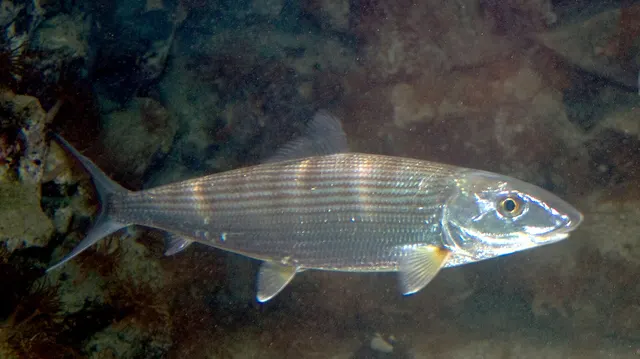 BonefishThe commoner case and the one that teaches the mechanic. Bonefish root shrimps and small crabs out of sand and grass, so a fly is fished on or near the bottom with short movements — a crustacean escapes in darts and pauses and never swims steadily, which is the retrieve rather than the pattern.
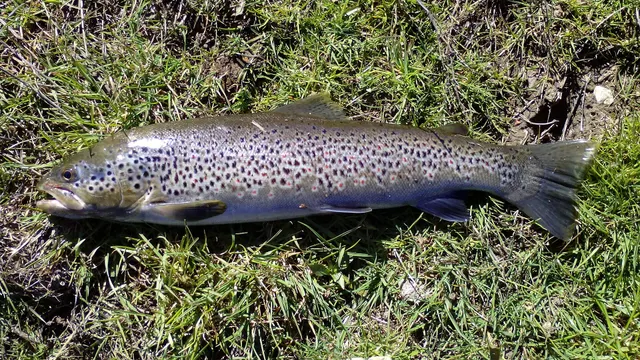 Brown troutSea trout feeding along a brackish coast take shrimp and amphipods in quantity, which is the ecological basis of the shrimp patterns that dominate the Danish and Swedish coastal fishery.
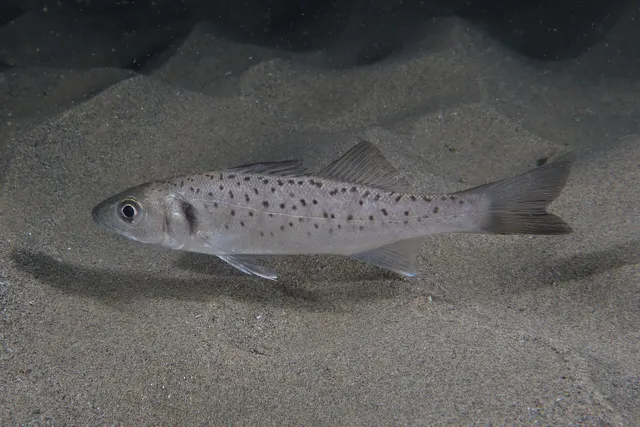 European sea bassBass over weed and mixed ground feed heavily on shrimp, prawn and small crabs, which is why a crustacean pattern fished slowly frequently outfishes a baitfish imitation stripped fast.
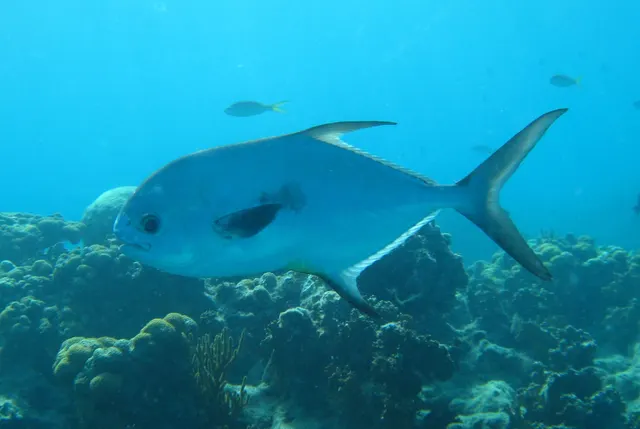 PermitThe fish that made crab imitation a serious subject. Permit feed heavily on crabs on the flats, they inspect closely in clear shallow water, and the fly's sink rate and the way it lands and sits matter more than its outline — which is the record's point about behaviour over silhouette.
Where it matters
- Saltwater fly fishingBaitfish patterns are what the discipline is known for and crustaceans are what a great many of the fish are actually eating, on ground where a shrimp or a crab is available all year.
- Sea fishingJoined to sea fishing as well as to fly, because the completeness engine's finding was that the UK sea map had no fly subfamily at all — a record reachable only from the fly side would repeat that.
Water and ground
Sources and evidence
- FishBase: a global information system on fishes — Froese, R. and D. Pauly, eds. — FishBase Consortium (Scientific institute)Relied on for: Recorded diet, habitat association and feeding behaviour of the species named, including the invertebrate components of it.States this directlyPassage read and verified
- The Fishes of the British Isles and North-West Europe — Macmillan, 1969 (Reference work)Relied on for: Distribution, habitat association, diet and biology of the fishes of the British Isles and north-west Europe named here.States this directlyCitation checked — the work exists and is described correctly
- Trout & Salmon — Bauer Media (Specialist angling publication)Relied on for: Long-running published description of British game angling practice, including casting, line choice, leader construction and the move from fresh water to salt.FishingHQ's interpretation of what it saysCitation checked — the work exists and is described correctly
- Still Water Fly-Fishing — Andre Deutsch, 1952 (Specialist angling publication)Relied on for: Stillwater fly practice including line handling, retrieve, leader construction and the reasoning behind each.States this directlyCitation checked — the work exists and is described correctly
- Sea Angler — Bauer Media (Specialist angling publication)Relied on for: Long-running published description of British sea angling practice by ground type, including the species and conditions coastal fly fishing addresses.FishingHQ's interpretation of what it saysCitation checked — the work exists and is described correctly
- General angling website restatements of established technique — Various (Credible secondary source)Relied on for: Widely restated descriptions of coastal fly fishing practice and equipment convention, recorded as practitioner consensus rather than as scholarship.Background and mechanism onlyCitation checked — the work exists and is described correctly
Why the 7 connections on this page are here, and the sources
Fish this applies to
What experienced anglers do — 2 connections
Widely and independently recommended by experienced anglers and specialist sources. This is real angling knowledge, not proof: controlled evidence for it is limited, and FishingHQ records it as convention rather than as a demonstrated effect.
Bonefish
A fish or a water joined to the fly-fishing mechanism it is a worked example of, written only where the subject's own behaviour or physical character is what this page explains. The direction is the one FishingHQ writes this kind of connection in, and the one it already uses 176 times, and it is also the semantically correct one: the mechanism explains the fish, not the reverse.
- FAO Species Identification Guides for Fishery Purposes and the FAO Species Catalogues — Food and Agriculture Organization of the United Nations (Scientific institute)Relied on for: Distribution, habitat association and feeding biology of tropical inshore and reef species, from regional identification guides prepared for fishery purposes.States this directlyCitation checked — the work exists and is described correctly
- FishBase: a global information system on fishes — Froese, R. and D. Pauly, eds. — FishBase Consortium (Scientific institute)Relied on for: Recorded environment, depth range, feeding biology and distribution of the tropical species named.States this directlyPassage read and verified
Permit
A fish or a water joined to the fly-fishing mechanism it is a worked example of, written only where the subject's own behaviour or physical character is what this page explains. The direction is the one FishingHQ writes this kind of connection in, and the one it already uses 176 times, and it is also the semantically correct one: the mechanism explains the fish, not the reverse.
- FAO Species Identification Guides for Fishery Purposes and the FAO Species Catalogues — Food and Agriculture Organization of the United Nations (Scientific institute)Relied on for: Distribution, habitat association and feeding biology of tropical inshore and reef species, from regional identification guides prepared for fishery purposes.States this directlyCitation checked — the work exists and is described correctly
- FishBase: a global information system on fishes — Froese, R. and D. Pauly, eds. — FishBase Consortium (Scientific institute)Relied on for: Recorded environment, depth range, feeding biology and distribution of the tropical species named.States this directlyPassage read and verified
Backed by research — 2 connections
Supported by peer-reviewed research or fisheries science. The sources are listed and can be checked.
Brown trout
A link from a species to the mechanism explaining a substantial part of its coastal feeding, resting on published diet description.
- FishBase: a global information system on fishes — Froese, R. and D. Pauly, eds. — FishBase Consortium (Scientific institute)Relied on for: Recorded diet, habitat association and feeding behaviour of the species named, including the invertebrate components of it.States this directlyPassage read and verified
- The Fishes of the British Isles and North-West Europe — Macmillan, 1969 (Reference work)Relied on for: Distribution, habitat association, diet and biology of the fishes of the British Isles and north-west Europe named here.States this directlyCitation checked — the work exists and is described correctly
European sea bass
A link from a species to the mechanism explaining a substantial part of its inshore feeding, resting on published diet and habitat description.
- FishBase: a global information system on fishes — Froese, R. and D. Pauly, eds. — FishBase Consortium (Scientific institute)Relied on for: Recorded diet, habitat association and feeding behaviour of the species named, including the invertebrate components of it.States this directlyPassage read and verified
- The Fishes of the British Isles and North-West Europe — Macmillan, 1969 (Reference work)Relied on for: Distribution, habitat association, diet and biology of the fishes of the British Isles and north-west Europe named here.States this directlyCitation checked — the work exists and is described correctly
Where it matters
What experienced anglers do — 2 connections
Widely and independently recommended by experienced anglers and specialist sources. This is real angling knowledge, not proof: controlled evidence for it is limited, and FishingHQ records it as convention rather than as a demonstrated effect.
Saltwater fly fishing
A link from a practice or a piece of equipment to the explanation or mechanism it rests on.
- FishBase: a global information system on fishes — Froese, R. and D. Pauly, eds. — FishBase Consortium (Scientific institute)Relied on for: Recorded diet, habitat association and feeding behaviour of the species named, including the invertebrate components of it.States this directlyPassage read and verified
- The Fishes of the British Isles and North-West Europe — Macmillan, 1969 (Reference work)Relied on for: Distribution, habitat association, diet and biology of the fishes of the British Isles and north-west Europe named here.States this directlyCitation checked — the work exists and is described correctly
Sea fishing
Which branch of fishing the record sits in.
- Sea Angler — Bauer Media (Specialist angling publication)Relied on for: Long-running published description of British sea angling practice including small-craft, kayak and coastal fly fishing.FishingHQ's interpretation of what it saysCitation checked — the work exists and is described correctly
- General angling website restatements of established technique — Various (Credible secondary source)Relied on for: Widely restated descriptions of kayak and coastal fly practice and equipment convention, recorded as practitioner consensus rather than as scholarship.Background and mechanism onlyCitation checked — the work exists and is described correctly
Water and ground
What experienced anglers do — 1 connection
Widely and independently recommended by experienced anglers and specialist sources. This is real angling knowledge, not proof: controlled evidence for it is limited, and FishingHQ records it as convention rather than as a demonstrated effect.
Mudflats and intertidal sandflats
A fish or a water joined to the fly-fishing mechanism it is a worked example of, written only where the subject's own behaviour or physical character is what this page explains. The direction is the one FishingHQ writes this kind of connection in, and the one it already uses 176 times, and it is also the semantically correct one: the mechanism explains the fish, not the reverse.
- FAO Species Identification Guides for Fishery Purposes and the FAO Species Catalogues — Food and Agriculture Organization of the United Nations (Scientific institute)Relied on for: Distribution, habitat association and feeding biology of tropical inshore and reef species, from regional identification guides prepared for fishery purposes.States this directlyCitation checked — the work exists and is described correctly
- FishBase: a global information system on fishes — Froese, R. and D. Pauly, eds. — FishBase Consortium (Scientific institute)Relied on for: Recorded environment, depth range, feeding biology and distribution of the tropical species named.States this directlyPassage read and verified
How FishingHQ labels evidence is explained in the evidence policy.