Bivalve and gastropod molluscs as prey
Explainer · Last reviewed 2026-08-11
Mussels, cockles, clams, limpets and snails — shelled molluscs eaten whole and crushed by fish with the dentition to do it.
Background, not a fishing profile
This page is here so FishingHQ can describe a biological relationship accurately — usually because a fish covered elsewhere on the site feeds on this. It covers what it is, where it lives and the evidence behind that relationship, and deliberately nothing about methods, bait or tackle. Its presence here is not a statement that anybody fishes for it.
Shelled molluscs are abundant, immobile or nearly so, and protected by a shell, which means eating them is a specialisation rather than an opportunity.
The fish that do it have the equipment for it. Ballan wrasse and their relatives have powerful pharyngeal teeth that crush shells behind the mouth. Black drum and sheepshead have flattened crushing dentition. Gilthead bream are known for it to the extent that they are a recognised problem on shellfish farms. In fresh water, tench, bream and carp take small snails and pea mussels among sediment invertebrates.
The evidence is reported at this level in most diet studies, because a crushed shell is frequently identifiable to family and rarely to species.
The scope is the classes Bivalvia and Gastropoda: mussels, cockles, clams, oysters, tellins, limpets, periwinkles and freshwater snails. Cephalopods are molluscs too and are covered separately, because nothing about eating a squid resembles eating a mussel.
Where to go next
Fish this applies to
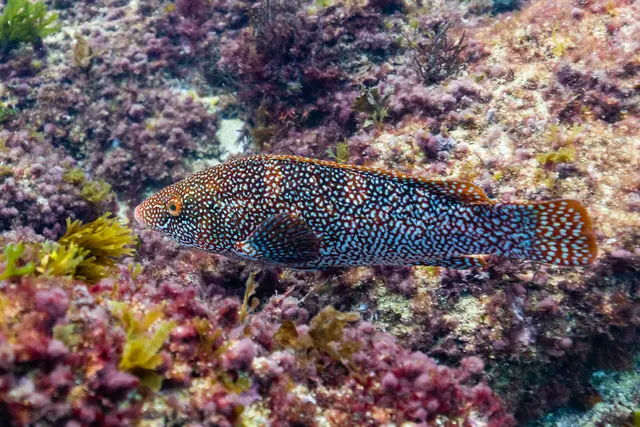 Ballan wrasseBallan wrasse crush shelled molluscs with powerful pharyngeal teeth behind the mouth, which is the specialisation that lets them exploit rocky ground so completely.
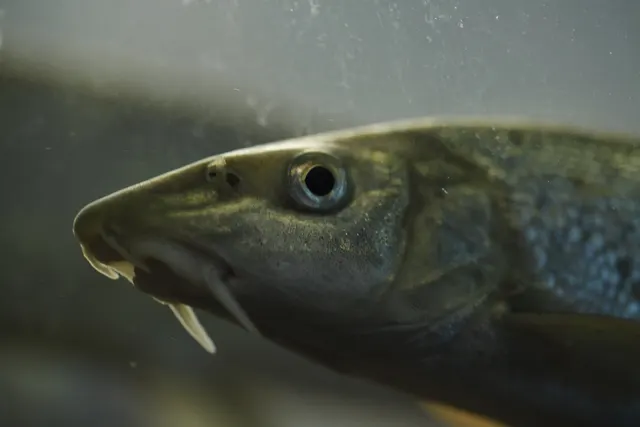 BarbelSmall molluscs are taken from gravel and weed alongside insect larvae, particularly in rivers with hard water and dense snail populations.
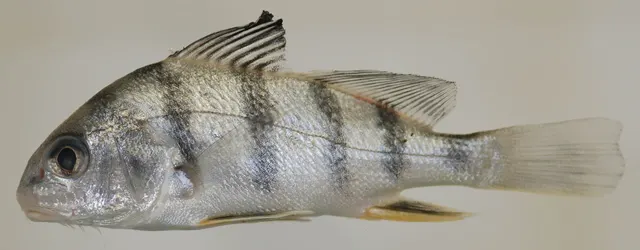 Black drumBlack drum crush shellfish with powerful pharyngeal teeth, and their association with oyster and clam beds follows directly from that ability.
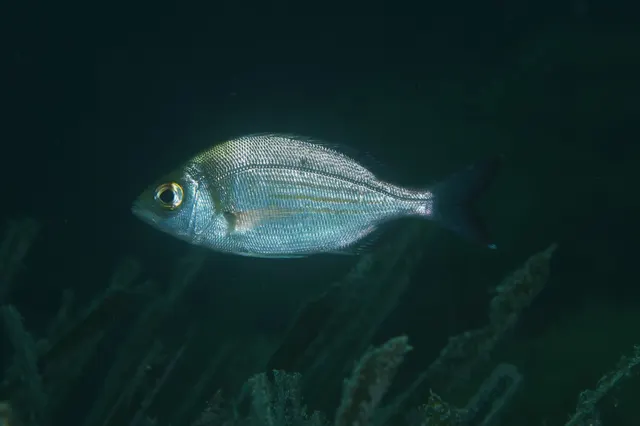 Black seabreamSmall molluscs browsed from structure, part of a diet gathered rather than hunted.
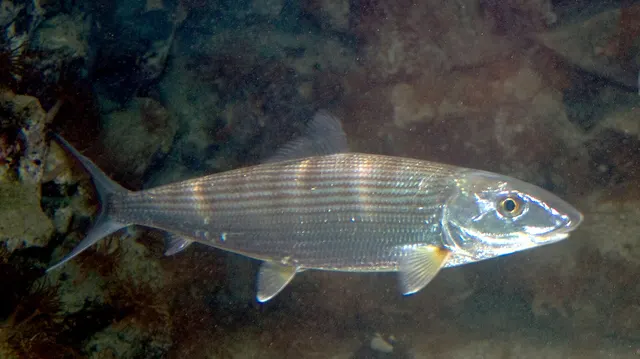 BonefishSmall molluscs are taken from flats sediment alongside crustaceans and are crushed with heavy pharyngeal teeth.
- Caribbean spiny lobsterA nocturnal omnivore taking molluscs, worms, small crustaceans and carrion over reef, rubble and seagrass after dark.
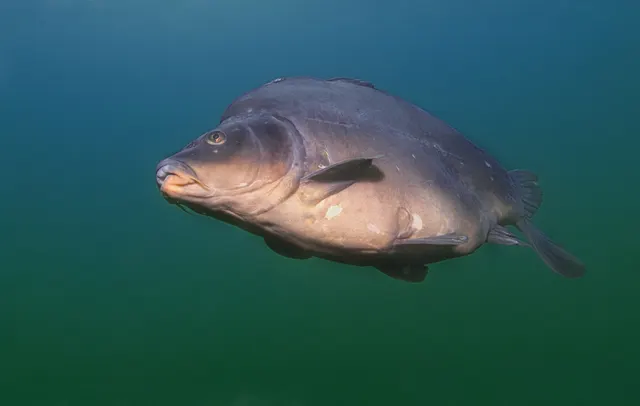 Common carpSnails and small bivalves are taken from weed and sediment and crushed with pharyngeal teeth, which is a substantial part of the natural diet in mature waters.
- Common octopusBivalves and gastropods, frequently drilled through the shell and left outside the den — the drilled shells in a midden are diagnostic of an occupied hole.
10 more
- Cuckoo wrasse Fish
- Dab Fish
- European flounder Fish
- European plaice Fish
- Gilthead bream Fish
- Haddock Fish
- Mud crab Fish
- Spiny spider crab Fish
- Spotted eagle ray Fish
- Velvet swimming crab Fish
Sources and evidence
- FishBase: a global information system on fishes — Froese, R. and D. Pauly, eds. — FishBase Consortium (Scientific institute)Relied on for: Recorded food items for the predatory species this taxon is cited as prey for, at the granularity the database records them.States this directlyPassage read and verified
- FAO Species Identification Guides for Fishery Purposes and the FAO Species Catalogues — Food and Agriculture Organization of the United Nations (Scientific institute)Relied on for: Species and family accounts describing food items, given at family or functional-group level where that is what the account states.States this directlyCitation checked — the work exists and is described correctly
Why the 18 connections on this page are here, and the sources
Fish this applies to
Backed by research — 18 connections
Supported by peer-reviewed research or fisheries science. The sources are listed and can be checked.
Ballan wrasse
Recorded diet evidence identifies bivalve and gastropod molluscs as a food item of this predator at group level rather than to species. The edge points at the taxon record for that reason, and encoding it as a species-level claim would assert something the source does not.
- FishBase: a global information system on fishes — Froese, R. and D. Pauly, eds. — FishBase Consortium (Scientific institute)Relied on for: Food items recorded for this predator, given as bivalve and gastropod molluscs.States this directlyPassage read and verified
- FAO Species Identification Guides for Fishery Purposes and the FAO Species Catalogues — Food and Agriculture Organization of the United Nations (Scientific institute)Relied on for: Species account describing this predator's diet, recorded at the level of bivalve and gastropod molluscs.Background and mechanism onlyCitation checked — the work exists and is described correctly
Barbel
Recorded diet evidence identifies gastropod and bivalve molluscs as a food item of this predator at group level rather than to species. The edge points at the taxon record for that reason, and encoding it as a species-level claim would assert something the source does not.
- FishBase: a global information system on fishes — Froese, R. and D. Pauly, eds. — FishBase Consortium (Scientific institute)Relied on for: Food items recorded for this predator, given as gastropod and bivalve molluscs.States this directlyPassage read and verified
- FAO Species Identification Guides for Fishery Purposes and the FAO Species Catalogues — Food and Agriculture Organization of the United Nations (Scientific institute)Relied on for: Species account describing this predator's diet, recorded at the level of gastropod and bivalve molluscs.Background and mechanism onlyCitation checked — the work exists and is described correctly
Black drum
Recorded diet evidence identifies bivalve molluscs as a food item of this predator at group level rather than to species. The edge points at the taxon record for that reason, and encoding it as a species-level claim would assert something the source does not.
- FishBase: a global information system on fishes — Froese, R. and D. Pauly, eds. — FishBase Consortium (Scientific institute)Relied on for: Food items recorded for this predator, given as bivalve molluscs.States this directlyPassage read and verified
- FAO Species Identification Guides for Fishery Purposes and the FAO Species Catalogues — Food and Agriculture Organization of the United Nations (Scientific institute)Relied on for: Species account describing this predator's diet, recorded at the level of bivalve molluscs.Background and mechanism onlyCitation checked — the work exists and is described correctly
Black seabream
A dietary claim recorded at GROUP level against a modelled prey concept, because the sources describe the prey as a group and inventing a species to point at would be the fabrication the precision audit exists to prevent.
- Cefas science, advice and data on marine and freshwater environments — Centre for Environment, Fisheries and Aquaculture Science (Government fisheries body)Relied on for: UK marine fisheries science: survey data, distribution and the biological basis of management advice for the species concerned.States this directlyCitation checked — the work exists and is described correctly
- The Fishes of the British Isles and North-West Europe — Macmillan, 1969 (Reference work)Relied on for: Distribution, habitat and biology of the fishes of the British Isles and north-west Europe.States this directlyCitation checked — the work exists and is described correctly
Bonefish
Recorded diet evidence identifies bivalve and gastropod molluscs as a food item of this predator at group level rather than to species. The edge points at the taxon record for that reason, and encoding it as a species-level claim would assert something the source does not.
- FishBase: a global information system on fishes — Froese, R. and D. Pauly, eds. — FishBase Consortium (Scientific institute)Relied on for: Food items recorded for this predator, given as bivalve and gastropod molluscs.States this directlyPassage read and verified
- FAO Species Identification Guides for Fishery Purposes and the FAO Species Catalogues — Food and Agriculture Organization of the United Nations (Scientific institute)Relied on for: Species account describing this predator's diet, recorded at the level of bivalve and gastropod molluscs.Background and mechanism onlyCitation checked — the work exists and is described correctly
Caribbean spiny lobster
A dietary claim recorded at GROUP level against a modelled prey concept, because the sources describe the prey as a group and FishingHQ documents no single species from the right ocean to point at.
- FAO Species Identification Guides for Fishery Purposes and the FAO Species Catalogues — Food and Agriculture Organization of the United Nations (Scientific institute)Relied on for: Diagnostic characters, habitat association, depth range and distribution as set out in the FAO species identification guides for fishery purposes.States this directlyCitation checked — the work exists and is described correctly
- FishBase: a global information system on fishes — Froese, R. and D. Pauly, eds. — FishBase Consortium (Scientific institute)Relied on for: Distribution, maximum size, depth range, habitat association and biology as compiled for the species.States this directlyPassage read and verified
Common carp
Recorded diet evidence identifies gastropod and bivalve molluscs as a food item of this predator at group level rather than to species. The edge points at the taxon record for that reason, and encoding it as a species-level claim would assert something the source does not.
- FishBase: a global information system on fishes — Froese, R. and D. Pauly, eds. — FishBase Consortium (Scientific institute)Relied on for: Food items recorded for this predator, given as gastropod and bivalve molluscs.States this directlyPassage read and verified
- FAO Species Identification Guides for Fishery Purposes and the FAO Species Catalogues — Food and Agriculture Organization of the United Nations (Scientific institute)Relied on for: Species account describing this predator's diet, recorded at the level of gastropod and bivalve molluscs.Background and mechanism onlyCitation checked — the work exists and is described correctly
Common octopus
A dietary claim recorded at GROUP level against a modelled prey concept, because the sources describe the prey as a group and FishingHQ documents no single species from the right ocean to point at.
- FAO Species Identification Guides for Fishery Purposes and the FAO Species Catalogues — Food and Agriculture Organization of the United Nations (Scientific institute)Relied on for: Diagnostic characters, habitat association, depth range and distribution as set out in the FAO species identification guides for fishery purposes.States this directlyCitation checked — the work exists and is described correctly
- FishBase: a global information system on fishes — Froese, R. and D. Pauly, eds. — FishBase Consortium (Scientific institute)Relied on for: Distribution, maximum size, depth range, habitat association and biology as compiled for the species.States this directlyPassage read and verified
Cuckoo wrasse
A diet claim recorded at group level, pointed at a modelled prey CATEGORY, because the reference works describe the diet as a group rather than by species. Naming a particular species FishingHQ happens to hold would invent a precision the evidence never had.
- The Fishes of the British Isles and North-West Europe — Macmillan, 1969 (Reference work)Relied on for: Distribution, habitat association, identification and biology of the fishes and inshore fauna of the British Isles and north-west Europe.States this directlyCitation checked — the work exists and is described correctly
- FAO Species Identification Guides for Fishery Purposes and the FAO Species Catalogues — Food and Agriculture Organization of the United Nations (Scientific institute)Relied on for: Diagnostic characters, family placement, habitat and depth range as set out in the FAO species identification sheets for the eastern Atlantic and Mediterranean.States this directlyCitation checked — the work exists and is described correctly
Dab
A dietary claim recorded at GROUP level against a modelled prey concept, because the sources describe the prey as a group and inventing a species to point at would be the fabrication the precision audit exists to prevent.
- Cefas science, advice and data on marine and freshwater environments — Centre for Environment, Fisheries and Aquaculture Science (Government fisheries body)Relied on for: UK marine fisheries science: survey data, distribution and the biological basis of management advice for the species concerned.States this directlyCitation checked — the work exists and is described correctly
- The Fishes of the British Isles and North-West Europe — Macmillan, 1969 (Reference work)Relied on for: Distribution, habitat and biology of the fishes of the British Isles and north-west Europe.States this directlyCitation checked — the work exists and is described correctly
European flounder
A dietary claim recorded at GROUP level against a modelled prey concept, because the sources describe the prey as a group and inventing a species to point at would be the fabrication the precision audit exists to prevent.
- Cefas science, advice and data on marine and freshwater environments — Centre for Environment, Fisheries and Aquaculture Science (Government fisheries body)Relied on for: UK marine fisheries science: survey data, distribution and the biological basis of management advice for the species concerned.States this directlyCitation checked — the work exists and is described correctly
- The Fishes of the British Isles and North-West Europe — Macmillan, 1969 (Reference work)Relied on for: Distribution, habitat and biology of the fishes of the British Isles and north-west Europe.States this directlyCitation checked — the work exists and is described correctly
European plaice
Recorded diet evidence identifies bivalve molluscs as a food item of this predator at group level rather than to species. The edge points at the taxon record for that reason, and encoding it as a species-level claim would assert something the source does not.
- FishBase: a global information system on fishes — Froese, R. and D. Pauly, eds. — FishBase Consortium (Scientific institute)Relied on for: Food items recorded for this predator, given as bivalve molluscs.States this directlyPassage read and verified
- FAO Species Identification Guides for Fishery Purposes and the FAO Species Catalogues — Food and Agriculture Organization of the United Nations (Scientific institute)Relied on for: Species account describing this predator's diet, recorded at the level of bivalve molluscs.Background and mechanism onlyCitation checked — the work exists and is described correctly
Gilthead bream
Recorded diet evidence identifies bivalve and gastropod molluscs as a food item of this predator at group level rather than to species. The edge points at the taxon record for that reason, and encoding it as a species-level claim would assert something the source does not.
- FishBase: a global information system on fishes — Froese, R. and D. Pauly, eds. — FishBase Consortium (Scientific institute)Relied on for: Food items recorded for this predator, given as bivalve and gastropod molluscs.States this directlyPassage read and verified
- FAO Species Identification Guides for Fishery Purposes and the FAO Species Catalogues — Food and Agriculture Organization of the United Nations (Scientific institute)Relied on for: Species account describing this predator's diet, recorded at the level of bivalve and gastropod molluscs.Background and mechanism onlyCitation checked — the work exists and is described correctly
Haddock
Recorded diet evidence identifies bivalve and gastropod molluscs as a food item of this predator at group level rather than to species. The edge points at the taxon record for that reason, and encoding it as a species-level claim would assert something the source does not.
- FishBase: a global information system on fishes — Froese, R. and D. Pauly, eds. — FishBase Consortium (Scientific institute)Relied on for: Food items recorded for this predator, given as bivalve and gastropod molluscs.States this directlyPassage read and verified
- FAO Species Identification Guides for Fishery Purposes and the FAO Species Catalogues — Food and Agriculture Organization of the United Nations (Scientific institute)Relied on for: Species account describing this predator's diet, recorded at the level of bivalve and gastropod molluscs.Background and mechanism onlyCitation checked — the work exists and is described correctly
Mud crab
A diet claim recorded at group level, pointed at a modelled prey CATEGORY, because the reference works describe the diet as a group rather than by species. Naming a particular species FishingHQ happens to hold would invent a precision the evidence never had.
- Cefas science, advice and data on marine and freshwater environments — Centre for Environment, Fisheries and Aquaculture Science (Government fisheries body)Relied on for: UK marine science: distribution, habitat association, shellfish and crustacean monitoring, and the biological basis of management advice.States this directlyCitation checked — the work exists and is described correctly
- FAO Species Identification Guides for Fishery Purposes and the FAO Species Catalogues — Food and Agriculture Organization of the United Nations (Scientific institute)Relied on for: Habitat, depth range and distribution as set out in the FAO species identification sheets for the region concerned.States this directlyCitation checked — the work exists and is described correctly
Spiny spider crab
A diet claim recorded at group level, pointed at a modelled prey CATEGORY, because the reference works describe the diet as a group rather than by species. Naming a particular species FishingHQ happens to hold would invent a precision the evidence never had.
- The Fishes of the British Isles and North-West Europe — Macmillan, 1969 (Reference work)Relied on for: Distribution, habitat association, identification and biology of the fishes and inshore fauna of the British Isles and north-west Europe.States this directlyCitation checked — the work exists and is described correctly
- FAO Species Identification Guides for Fishery Purposes and the FAO Species Catalogues — Food and Agriculture Organization of the United Nations (Scientific institute)Relied on for: Diagnostic characters, family placement, habitat and depth range as set out in the FAO species identification sheets for the eastern Atlantic and Mediterranean.States this directlyCitation checked — the work exists and is described correctly
Spotted eagle ray
A dietary claim recorded at GROUP level against a modelled prey concept, because the sources describe the prey as a group and FishingHQ documents no single species from the right ocean to point at.
- FAO Species Identification Guides for Fishery Purposes and the FAO Species Catalogues — Food and Agriculture Organization of the United Nations (Scientific institute)Relied on for: Diagnostic characters, habitat association, depth range and distribution as set out in the FAO species identification guides for fishery purposes.States this directlyCitation checked — the work exists and is described correctly
- FishBase: a global information system on fishes — Froese, R. and D. Pauly, eds. — FishBase Consortium (Scientific institute)Relied on for: Distribution, maximum size, depth range, habitat association and biology as compiled for the species.States this directlyPassage read and verified
Velvet swimming crab
A diet claim recorded at group level, pointed at a modelled prey CATEGORY, because the reference works describe the diet as a group rather than by species.
- The Fishes of the British Isles and North-West Europe — Macmillan, 1969 (Reference work)Relied on for: Distribution, habitat association, identification and biology of the fishes and inshore fauna of the British Isles and north-west Europe.States this directlyCitation checked — the work exists and is described correctly
- FAO Species Identification Guides for Fishery Purposes and the FAO Species Catalogues — Food and Agriculture Organization of the United Nations (Scientific institute)Relied on for: Diagnostic characters, family placement, habitat and depth range as set out in the FAO species identification sheets for the region concerned.States this directlyCitation checked — the work exists and is described correctly
How FishingHQ labels evidence is explained in the evidence policy.