Mud crab
Fish · Last reviewed 2026-08-17
A very large, immensely powerful swimming crab of Indo-Pacific mangroves — a serious food fishery, a genuine recreational target from Queensland to Kerala, and an animal that can break a finger.
Safety: injury while handling fish — can cause serious injury or death. 3 more points apply here.
Catching Mud crab
Everything here on fishing for it. Each entry opens the page behind it.
The mud crab is the tropical estuarine counterpart to everything FishingHQ holds about British crabs, and it is a substantially more formidable animal.
IT LIVES IN MANGROVES AND SOFT ESTUARINE MUD, burrowing into banks at low tide and moving out to feed on the flood. It is a portunid — a swimming crab — with flattened paddle-shaped rear legs, and it is the largest of them, reaching a carapace width over twenty-five centimetres and weights over two kilograms.
THE CLAWS ARE THE POINT. A mature mud crab's claws are massive, asymmetrical and adapted for crushing molluscs, and they close with enough force to break a finger. Every handling convention for this animal exists because of them, and 'do not pick it up' is genuinely the correct starting advice.
IT IS A MAJOR FISHERY AND A MAJOR RECREATIONAL TARGET. Mud crabs are taken commercially and recreationally across the Indo-Pacific — pots and traps in Australia, hooks and hand-collection in South and South-East Asia, aquaculture in several countries — and 'going crabbing' in northern Australia means this animal specifically.
AND IT CARRIES THE MANGROVE. Barramundi, snook and the mangrove snappers are all associated with these systems, but the mud crab is the animal whose entire life is the mangrove — which makes it the most direct way to explain what one is.
How it is caught
- Gathering winkles, whelks and limpetsHand collection from burrows and mangrove roots is the traditional and artisanal method across South and South-East Asia and parts of Africa, and it is the same activity the gathering page describes on a different shore.
- Recreational pottingPots and dillies baited with oily fish, set to fish the flood, are the mainstream recreational method across northern Australia and much of the range.
Identification
No photograph of Mud crab has passed identity review yet, so none is shown. A photograph is published only once somebody has checked the animal in it against the diagnostic features described on this page.
- Scientific name
- Scylla serrata
- Family
- Portunidae
- Water
- Saltwater, Brackish
- Conservation status
- Not assessed
- Regions
- Australia, South-East Asia, South Asia, East Asia, East & Southern Africa, Indo-Pacific, Pacific Islands
- VERY LARGE AND SMOOTH-SHELLED, olive-green to dark brown to almost purple, with a broad oval carapace reaching over 25 cm across.
- NINE SHARP TEETH ALONG EACH FRONT EDGE of the carapace, either side of the eyes, all of similar size — the character that places it in Scylla.
- REAR LEGS FLATTENED INTO PADDLES. It is a swimming crab, and the paddles are unmistakable.
- MASSIVE ASYMMETRIC CLAWS with heavy crushing teeth, one larger than the other. On a mature male they are enormous relative to the body.
- POLYGONAL PATTERNING ON THE SWIMMING PADDLES AND CLAWS in this species, which is one of the characters separating it from the other Scylla species — S. olivacea, S. tranquebarica and S. paramamosain — which overlap in range and are routinely confused.
- IN OR BESIDE MANGROVES AND SOFT ESTUARINE MUD. A large green-brown paddle-legged crab in a tropical estuary is a Scylla.
Size
- Typical
- 12–18 cm carapace width and 0.5–1.2 kg.
- Large
- Over 20 cm carapace width and 1.8 kg is a very good mud crab.
Exceptional: Around 28 cm carapace width and in the region of 3 kg is the widely reported upper end, in mature males.
The mangrove, and why this animal cannot be explained without it
A mud crab is a mangrove animal in a way that is genuinely structural rather than incidental.
WHAT A MANGROVE IS. Salt-tolerant trees growing in the tropical intertidal, with aerial root systems that trap sediment, dissipate wave energy and create a dense three-dimensional habitat that is underwater at high tide and mud at low. It is simultaneously a forest, a nursery, a sediment trap and a coastal defence.
WHAT IT DOES FOR FISH. An extremely large share of tropical inshore catch passes its juvenile life in mangrove: barramundi, snook, mangrove jack, many snappers and emperors, and a long list of others. The structural complexity gives shelter from predators, and the detrital productivity gives food.
AND THE MUD CRAB LIVES THERE PERMANENTLY. It burrows into banks and among roots at low tide, emerges to feed on the flood, mates in the estuary and migrates out to sea to spawn. Both ends of the life cycle need the connection intact: a mangrove cut off from the sea produces no recruits, and a sea with no mangrove has nowhere for the megalopae to settle.
WHICH IS WHY MANGROVE LOSS IS A FISHERIES QUESTION AND NOT ONLY A CONSERVATION ONE. Clearance for aquaculture ponds, development and timber has removed very large areas across the Indo-Pacific, and the effect on inshore fisheries is direct rather than indirect. In several places crab and prawn ponds were built by clearing the habitat that produced the wild crabs and prawns.
AND FOR AN ANGLER OR CRABBER IT IS ALSO A PLACE WITH ITS OWN HAZARDS. Soft mud that traps a leg, a tide that fills a creek system quickly and confusingly, heat, insects, and in parts of the range — northern Australia and South-East Asia in particular — estuarine crocodiles, for which local advice is not optional and is not something this page will summarise.
WHAT MAY BE TAKEN, BY WHAT MEANS, IS NOT ON THIS PAGE. Spearfishing law, protected areas, size limits and gear restrictions differ sharply between neighbouring countries and are revised. Check the current position with the authority for the water concerned before entering it.
Backed by research — why, and the sources (3)
Supported by peer-reviewed research or fisheries science. The sources are listed and can be checked.
- FAO Species Identification Guides for Fishery Purposes and the FAO Species Catalogues — Food and Agriculture Organization of the United Nations (Scientific institute)Relied on for: Diagnostic identification characters, family placement, depth range and distribution as set out in the FAO species identification sheets for the region concerned.States this directlyCitation checked — the work exists and is described correctly
- Code of Conduct for Responsible Fisheries — Food and Agriculture Organization of the United Nations, Rome, 1995 (Standards body)Relied on for: International principles for responsible fisheries, including selectivity, the treatment of by-catch and the management of small-scale and artisanal fisheries.Background and mechanism onlyCitation checked — the work exists and is described correctly
- General angling website restatements of established technique — Various (Credible secondary source)Relied on for: Widely restated descriptions of species behaviour and regional practice, recorded as consensus rather than as scholarship.Background and mechanism onlyCitation checked — the work exists and is described correctly
Claws that break fingers, and the handling convention that exists because of them
Nearly every crab on FishingHQ can pinch. This one can cause a fracture, and the handling convention across its whole range reflects that.
THE CLAWS ARE CRUSHING TOOLS. They evolved to break the shells of molluscs, they are asymmetric with a heavy-toothed crusher and a finer cutter, and on a mature male they are enormous. Reported injuries include broken fingers, and anybody who has held one understands why immediately.
THE REACH IS GREATER THAN IT LOOKS. A mud crab can bring a claw a long way back over its own carapace. Picking one up 'from behind' is not automatically safe, and the margin people assume they have is smaller than it is.
SO THE CLAWS ARE IMMOBILISED, EVERYWHERE, AS ROUTINE. Across the fishery — commercial, artisanal and recreational — mud crabs are handled with the claws secured, and the technique for doing that is the first thing anybody is taught locally. Lifting is from the rear of the carapace with the animal's claws already dealt with, or with a tool.
AND NEVER LOOSE IN A CONTAINER. An unrestrained mud crab in a bucket, esky or bag is an injury waiting for whoever reaches in next, and mud crabs also attack one another, which damages the catch as well as the person.
KEEP THEM COOL, DAMP AND SHADED, not submerged in a bucket of water, which deoxygenates and kills them. Dispatch properly and immediately if they are for the table.
AND THE RULES HERE ARE UNUSUALLY DETAILED WHEREVER IT IS FISHED. Minimum sizes, sex restrictions, berried-female prohibitions, gear specification, pot numbers, marking and closed areas all apply in most jurisdictions where mud crabs are taken recreationally, and they differ substantially between them. FishingHQ states none of them. The authority for the water is the only source.
WHAT MAY BE TAKEN, BY WHAT MEANS, IS NOT ON THIS PAGE. Spearfishing law, protected areas, size limits and gear restrictions differ sharply between neighbouring countries and are revised. Check the current position with the authority for the water concerned before entering it.
What experienced anglers do — why, and the sources (3)
Widely and independently recommended by experienced anglers and specialist sources. This is real angling knowledge, not proof: controlled evidence for it is limited, and FishingHQ records it as convention rather than as a demonstrated effect.
- FAO Species Identification Guides for Fishery Purposes and the FAO Species Catalogues — Food and Agriculture Organization of the United Nations (Scientific institute)Relied on for: Diagnostic identification characters, family placement, depth range and distribution as set out in the FAO species identification sheets for the region concerned.States this directlyCitation checked — the work exists and is described correctly
- Code of Conduct for Responsible Fisheries — Food and Agriculture Organization of the United Nations, Rome, 1995 (Standards body)Relied on for: International principles for responsible fisheries, including selectivity, the treatment of by-catch and the management of small-scale and artisanal fisheries.Background and mechanism onlyCitation checked — the work exists and is described correctly
- General angling website restatements of established technique — Various (Credible secondary source)Relied on for: Widely restated descriptions of species behaviour and regional practice, recorded as consensus rather than as scholarship.Background and mechanism onlyCitation checked — the work exists and is described correctly
Lifecycle and reproduction
Mud crabs grow quickly and, unlike the spider crab, keep moulting through life. Mating occurs after a female's moult, while she is soft, with the male guarding her before and after. Berried females then undertake a genuine offshore migration — sometimes tens or hundreds of kilometres out to sea — to release larvae, which pass through several planktonic stages before returning to estuaries to settle. That offshore spawning migration is the reason a mud crab population depends on a connection between mangrove and open sea, and it is why the fishery treats berried females quite differently from other crabs.
Mating in the estuary, immediately after the female's moult; spawning at sea. A female carries an enormous egg mass — millions of eggs — beneath the abdomen, and migrates seaward to release the larvae. Larvae develop through zoeal stages in coastal water and return as megalopae to settle in mangrove and estuarine habitat. The consequences are practical: recruitment to any estuary depends on larvae from elsewhere, berried females leaving the system are the reproductive output, and mangrove loss removes both the nursery and the adult habitat at once.
Feeding and senses
A predator and scavenger of molluscs, crustaceans, worms and carrion, with the claws built specifically for crushing shells. Mud crabs feed mainly at night and on the flooding tide, moving out of burrows into the mangrove and across mudflats, and returning as the water drops. That tidal and nocturnal pattern is the whole basis of the fishery: pots are set to fish the flood, and hand collection is done on the drop.
Chemoreception and touch dominate — a crab hunting buried molluscs in turbid estuarine water at night is not doing it by sight. Stalked compound eyes give motion detection. They respond strongly to bait scent, which is why a baited pot works and why oily fish is the standard.
Through the year
Active year-round in the tropics with activity and catch rates driven by temperature, rainfall and the tidal cycle rather than by season in the temperate sense. In the subtropical parts of the range — southern Queensland, northern New South Wales, southern Africa — activity falls markedly in the cooler months. Wet-season freshwater flows move crabs downstream, and the fishery follows.
Distribution
Indo-West Pacific from South and East Africa through the Indian Ocean, South and South-East Asia to southern Japan, Australia and the western Pacific islands, in mangrove forest, estuaries, soft-bottom tidal creeks and sheltered coastal mud from the intertidal to shallow subtidal. Several closely related Scylla species overlap across much of that range and are routinely lumped together in both fisheries and conversation.
This is a biological range — where the species occurs, not a prediction that you will catch one. To browse the fishing geography FishingHQ holds, start at fishing places.
Why anglers care
One of the most important recreational shellfish species in the tropics. In northern Australia mud crabbing with pots and dillies is a mainstream family activity with its own culture and its own rules; across South and South-East Asia the animal supports artisanal fisheries, hand collection from mangrove roots and burrows, and a large aquaculture and fattening industry. For a travelling angler it is often the most accessible catch in a mangrove system and frequently the most memorable meal. It is also a serious injury risk handled casually, which is the reason it needs a record rather than a mention.
Handling and returning
Assume the claws will reach you. A mature mud crab can close on a finger with enough force to break it, and the reach of the claws is greater than people expect. Handle only with the claws immobilised — the standard practice across the fishery is to secure them — and lift from the rear of the carapace, well behind the claws, or use a tool. Never put an unrestrained mud crab loose into a container somebody will later reach into. Keep animals cool, damp and shaded rather than in water. Decapod crustaceans are recognised as sentient in UK law following the review of the evidence, and the same welfare argument applies wherever the animal is caught: dispatch properly and immediately rather than boiling from cold. Return berried females, which are the reproductive output of the estuary.
WHAT MAY BE TAKEN, BY WHAT MEANS, IS NOT ON THIS PAGE. Spearfishing law, protected areas, size limits and gear restrictions differ sharply between neighbouring countries and are revised. Check the current position with the authority for the water concerned before entering it.
Safety
Injury while handling fish — Can cause serious injury or death
A mature mud crab's crushing claw can close on a finger with enough force to break it, and its reach extends further back over the carapace than most people assume. Injuries occur while lifting animals from pots, while sorting a catch, and to people reaching into containers holding unrestrained crabs.
What reduces it: Immobilise the claws before handling, as is routine everywhere the animal is fished, and learn the technique locally. Lift from the rear of the carapace or use a tool. Never leave an unrestrained mud crab in a bucket, box or bag somebody will reach into.
Worse when:
- Large mature males
- Working at night, which is when the fishery mostly operates
- Sorting a catch on a moving boat
Encounters with marine life — Can cause serious injury or death
In parts of the mud crab's range — northern Australia and much of South-East Asia in particular — estuarine crocodiles inhabit exactly the mangrove creek systems the crabs are taken from, and people are killed in them.
What reduces it: Follow local advice without exception and treat it as the authority. FishingHQ does not offer guidance on crocodile country and will not summarise it: the relevant knowledge is specific to the system and is held by the local authorities and the people who live there.
Worse when:
- Wading, working at the water's edge, or repeating a routine at the same spot
Tides and being cut off — Can cause injury needing treatment
Mud crabbing is done in mangrove creek systems on soft mud, on a tide. Creeks fill and drain quickly, the channels look alike, soft mud traps a leg, and a system that was walkable an hour earlier is not.
What reduces it: Know the tide before entering a creek system and set a turnaround time. Do not go in alone. Test soft ground before committing weight. Carry a means of calling for help that survives immersion.
Worse when:
- Spring tides
- Wet-season flows
- Failing light in a system with no landmarks
Fish welfare — Can cause injury needing treatment
Decapod crustaceans are recognised as sentient in UK law following a formal review of the evidence. Crabs held in water in a bucket suffocate, crabs held loose damage each other, and boiling from cold is a slow death.
What reduces it: Keep animals cool, damp and shaded rather than submerged. Keep them restrained and separated. Dispatch properly and immediately by the recognised method if they are for the table, and return berried females and anything you will not eat.
Worse when:
- Heat and sun
- Long journeys home with the catch
Further safety reading
- Dangerous animals where you fish — Mud crabbing happens in mangrove creek systems that in parts of the range hold estuarine crocodiles, and local advice is the authority.
- Tides and being cut off — Creek systems fill and drain quickly, the channels look alike, and soft mud traps a leg.
Check the rules before you fish
Fishing laws, bylaws, access rules, seasons, bait restrictions and permitted methods vary by location and can change. Check the current rules from the relevant authority and the water you intend to fish before fishing.
Check with:
- Current national or regional law for where you are fishing
- Current local bylaws
- The relevant fisheries authority
- The landowner, club or fishery whose water it is
- Any restrictions specific to the species or the method you intend to use
Where to go next
Where it lives
- Brackish waterAn estuarine animal whose whole life runs on the salinity gradient, with the adults in the creeks and the spawning offshore.
- EstuaryMangrove forest, tidal creeks and soft-bottom estuarine mud across the Indo-West Pacific, burrowing into banks at low water and feeding out on the flood.
- MangroveBurrows in the banks and among the roots at low water and feeds out across the system on the flood. The most directly mangrove-dependent catch in FishingHQ.
- Mudflats and intertidal sandflatsSoft intertidal mud and sand flats within and beside mangrove systems are working ground for mud crabs on a flooding tide.
- Tropical estuary and tidal creekTaken in pots through the creek system, with catch rates driven by tide and by the seasonal freshwater flows that move crabs downstream.
Where you will find it
Understanding this fish
Told apart from
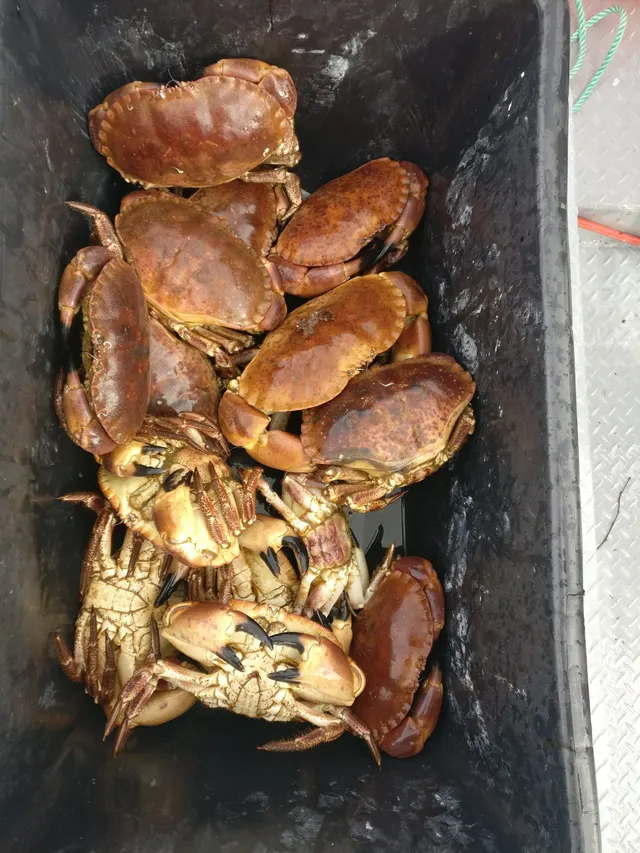 Edible crabThe temperate and the tropical version of the same activity: a large crushing-clawed crab taken in baited pots, eaten locally, and handled with conventions that exist because of the claws.
- Spiny spider crabBoth are large crabs a person meets in shallow water in warm months, and the handling advice is opposite in emphasis: one has legs that detach, the other has claws that break fingers.
Rules and access
Sources and evidence
- FAO Species Identification Guides for Fishery Purposes and the FAO Species Catalogues — Food and Agriculture Organization of the United Nations (Scientific institute)Relied on for: Diagnostic identification characters, family placement, depth range and distribution as set out in the FAO species identification sheets for the region concerned.States this directlyCitation checked — the work exists and is described correctly
- Code of Conduct for Responsible Fisheries — Food and Agriculture Organization of the United Nations, Rome, 1995 (Standards body)Relied on for: International principles for responsible fisheries, including selectivity, the treatment of by-catch and the management of small-scale and artisanal fisheries.Background and mechanism onlyCitation checked — the work exists and is described correctly
- General angling website restatements of established technique — Various (Credible secondary source)Relied on for: Widely restated descriptions of species behaviour and regional practice, recorded as consensus rather than as scholarship.Background and mechanism onlyCitation checked — the work exists and is described correctly
Why the 15 connections on this page are here, and the sources
How it is caught
What experienced anglers do — 2 connections
Widely and independently recommended by experienced anglers and specialist sources. This is real angling knowledge, not proof: controlled evidence for it is limited, and FishingHQ records it as convention rather than as a demonstrated effect.
Gathering winkles, whelks and limpets
Practice, recorded as practice.
- Sea Angler — Bauer Media (Specialist angling publication)Relied on for: Contemporary UK sea angling and shore gathering practice as reported by practitioners: ground, seasonal timing, tackle, bait and method convention.States this directlyCitation checked — the work exists and is described correctly
- General angling website restatements of established technique — Various (Credible secondary source)Relied on for: Widely restated descriptions of technique, fish behaviour and regional practice, recorded as consensus rather than as scholarship.Background and mechanism onlyCitation checked — the work exists and is described correctly
Recreational potting
Practice, recorded as practice.
- Sea Angler — Bauer Media (Specialist angling publication)Relied on for: Contemporary UK sea angling and shore gathering practice as reported by practitioners: ground, seasonal timing, tackle, bait and method convention.States this directlyCitation checked — the work exists and is described correctly
- General angling website restatements of established technique — Various (Credible secondary source)Relied on for: Widely restated descriptions of technique, fish behaviour and regional practice, recorded as consensus rather than as scholarship.Background and mechanism onlyCitation checked — the work exists and is described correctly
Where it lives
Backed by research — 5 connections
Supported by peer-reviewed research or fisheries science. The sources are listed and can be checked.
Brackish water
A distributional claim resting on the regional identification and fisheries literature rather than on angling report.
- Cefas science, advice and data on marine and freshwater environments — Centre for Environment, Fisheries and Aquaculture Science (Government fisheries body)Relied on for: UK marine science: distribution, habitat association, shellfish and crustacean monitoring, and the biological basis of management advice.States this directlyCitation checked — the work exists and is described correctly
- FAO Species Identification Guides for Fishery Purposes and the FAO Species Catalogues — Food and Agriculture Organization of the United Nations (Scientific institute)Relied on for: Habitat, depth range and distribution as set out in the FAO species identification sheets for the region concerned.States this directlyCitation checked — the work exists and is described correctly
Estuary
A distributional claim resting on the regional identification and fisheries literature rather than on angling report.
- Cefas science, advice and data on marine and freshwater environments — Centre for Environment, Fisheries and Aquaculture Science (Government fisheries body)Relied on for: UK marine science: distribution, habitat association, shellfish and crustacean monitoring, and the biological basis of management advice.States this directlyCitation checked — the work exists and is described correctly
- FAO Species Identification Guides for Fishery Purposes and the FAO Species Catalogues — Food and Agriculture Organization of the United Nations (Scientific institute)Relied on for: Habitat, depth range and distribution as set out in the FAO species identification sheets for the region concerned.States this directlyCitation checked — the work exists and is described correctly
Mangrove
A habitat association resting on the regional identification and fisheries literature rather than on angling report.
- FAO Species Identification Guides for Fishery Purposes and the FAO Species Catalogues — Food and Agriculture Organization of the United Nations (Scientific institute)Relied on for: Habitat association, depth range and distribution of the species concerned as set out in the FAO species identification sheets for the region.States this directlyCitation checked — the work exists and is described correctly
- The World's Mangroves and their Fisheries — FAO Forestry and Fisheries assessments — Food and Agriculture Organization of the United Nations, Rome (Standards body)Relied on for: The dependence of tropical coastal fisheries species on mangrove and estuarine habitat, including the nursery function.States this directlyCitation checked — the work exists and is described correctly
Mudflats and intertidal sandflats
A habitat association resting on the regional identification and fisheries literature rather than on angling report.
- FAO Species Identification Guides for Fishery Purposes and the FAO Species Catalogues — Food and Agriculture Organization of the United Nations (Scientific institute)Relied on for: Habitat association, depth range and distribution of the species concerned as set out in the FAO species identification sheets for the region.States this directlyCitation checked — the work exists and is described correctly
- The World's Mangroves and their Fisheries — FAO Forestry and Fisheries assessments — Food and Agriculture Organization of the United Nations, Rome (Standards body)Relied on for: The dependence of tropical coastal fisheries species on mangrove and estuarine habitat, including the nursery function.States this directlyCitation checked — the work exists and is described correctly
Tropical estuary and tidal creek
A habitat association resting on the regional identification and fisheries literature rather than on angling report.
- FAO Species Identification Guides for Fishery Purposes and the FAO Species Catalogues — Food and Agriculture Organization of the United Nations (Scientific institute)Relied on for: Habitat association, depth range and distribution of the species concerned as set out in the FAO species identification sheets for the region.States this directlyCitation checked — the work exists and is described correctly
- The World's Mangroves and their Fisheries — FAO Forestry and Fisheries assessments — Food and Agriculture Organization of the United Nations, Rome (Standards body)Relied on for: The dependence of tropical coastal fisheries species on mangrove and estuarine habitat, including the nursery function.States this directlyCitation checked — the work exists and is described correctly
Where you will find it
Backed by research — 2 connections
Supported by peer-reviewed research or fisheries science. The sources are listed and can be checked.
Sri Lanka
A distributional claim about where a species occurs, resting on the regional identification literature rather than on angling report. It says nothing about where a reader should fish.
- FAO Species Identification Guides for Fishery Purposes and the FAO Species Catalogues — Food and Agriculture Organization of the United Nations (Scientific institute)Relied on for: Species composition, habitat association and distribution for the region concerned, as set out in the FAO species identification sheets.States this directlyCitation checked — the work exists and is described correctly
- The IUCN Red List of Threatened Species — International Union for Conservation of Nature (Conservation authority)Relied on for: Global assessment and distribution for the species concerned.States this directlyCitation checked — the work exists and is described correctly
Thailand
That a species occurs in these waters, drawn from distribution science. It is a statement about where the animal lives and is not a statement that anybody will catch one, still less where.
- FAO Species Identification Guides for Fishery Purposes and the FAO Species Catalogues — Food and Agriculture Organization of the United Nations (Scientific institute)Relied on for: Identification, distribution and habitat association of the fishes and invertebrates of the tropical region named.States this directlyCitation checked — the work exists and is described correctly
- FishBase: a global information system on fishes — Froese, R. and D. Pauly, eds. — FishBase Consortium (Scientific institute)Relied on for: Recorded distribution, depth range and habitat association of the species named, including its occurrence in the waters concerned.States this directlyPassage read and verified
Understanding this fish
Backed by research — 1 connection
Supported by peer-reviewed research or fisheries science. The sources are listed and can be checked.
Bivalve and gastropod molluscs as prey
A diet claim recorded at group level, pointed at a modelled prey CATEGORY, because the reference works describe the diet as a group rather than by species. Naming a particular species FishingHQ happens to hold would invent a precision the evidence never had.
- Cefas science, advice and data on marine and freshwater environments — Centre for Environment, Fisheries and Aquaculture Science (Government fisheries body)Relied on for: UK marine science: distribution, habitat association, shellfish and crustacean monitoring, and the biological basis of management advice.States this directlyCitation checked — the work exists and is described correctly
- FAO Species Identification Guides for Fishery Purposes and the FAO Species Catalogues — Food and Agriculture Organization of the United Nations (Scientific institute)Relied on for: Habitat, depth range and distribution as set out in the FAO species identification sheets for the region concerned.States this directlyCitation checked — the work exists and is described correctly
Told apart from
What experienced anglers do — 2 connections
Widely and independently recommended by experienced anglers and specialist sources. This is real angling knowledge, not proof: controlled evidence for it is limited, and FishingHQ records it as convention rather than as a demonstrated effect.
Edible crab
A comparison a reader with the animal or the decision in front of them actually needs, joining two records that resolve one another.
- Cefas science, advice and data on marine and freshwater environments — Centre for Environment, Fisheries and Aquaculture Science (Government fisheries body)Relied on for: UK marine science: distribution, habitat association, shellfish and crustacean monitoring, and the biological basis of management advice.States this directlyCitation checked — the work exists and is described correctly
- FAO Species Identification Guides for Fishery Purposes and the FAO Species Catalogues — Food and Agriculture Organization of the United Nations (Scientific institute)Relied on for: Habitat, depth range and distribution as set out in the FAO species identification sheets for the region concerned.States this directlyCitation checked — the work exists and is described correctly
Spiny spider crab
A comparison a reader with the animal or the decision in front of them actually needs, joining two records that resolve one another.
- Cefas science, advice and data on marine and freshwater environments — Centre for Environment, Fisheries and Aquaculture Science (Government fisheries body)Relied on for: UK marine science: distribution, habitat association, shellfish and crustacean monitoring, and the biological basis of management advice.States this directlyCitation checked — the work exists and is described correctly
- FAO Species Identification Guides for Fishery Purposes and the FAO Species Catalogues — Food and Agriculture Organization of the United Nations (Scientific institute)Relied on for: Habitat, depth range and distribution as set out in the FAO species identification sheets for the region concerned.States this directlyCitation checked — the work exists and is described correctly
Safety reading
Official guidance — 2 connections
Stated by a fisheries authority, scientific institute or recognised angling body. Authoritative, but summarising rather than demonstrating.
Dangerous animals where you fish
A link to a safety topic substantial enough to be read in full.
- RNLI water safety guidance: cold water shock and Float to Live — Royal National Lifeboat Institution (Water-safety or diver-training authority)Relied on for: Water safety guidance for coastal and inland users.States this directlyPassage read and verified
Tides and being cut off
A link to a safety topic substantial enough to be read in full.
- RNLI water safety guidance: cold water shock and Float to Live — Royal National Lifeboat Institution (Water-safety or diver-training authority)Relied on for: Water safety guidance for coastal and inland users.States this directlyPassage read and verified
Rules and access
Official guidance — 1 connection
Stated by a fisheries authority, scientific institute or recognised angling body. Authoritative, but summarising rather than demonstrating.
Taking crabs, lobsters, squid and shellfish: how the rules are structured
This points to the kind of rule that applies rather than to any rule itself, so the page carries the notice that the requirement varies.
- Angling Trust guidance for anglers — Angling Trust (Angling or fisheries organisation)Relied on for: The structure of angling regulation and representation in England, and the framework within which anglers are asked to check local rules.States this directlyCitation checked — the work exists and is described correctly
- JNCC species and habitat conservation advice — Joint Nature Conservation Committee (Conservation authority)Relied on for: UK conservation designation and the framework of protected species and habitats.States this directlyCitation checked — the work exists and is described correctly
How FishingHQ labels evidence is explained in the evidence policy.