Gathering winkles, whelks and limpets
Method · Last reviewed 2026-08-14
The oldest and least written-about way of taking food from the shore: picking sea snails off rock at low water, with no gear, no licence in most places and a genuine set of consequences.
Safety: cliffs and rock platforms — can cause serious injury or death. 4 more points apply here.
Gathering shore gastropods is the simplest fishing practice there is. A person walks the low-water rock, picks winkles and limpets off it by hand or with a blade, and carries them home in a bucket. No rod, no net, no bait, no boat. It is practised on every rocky coast where people live, it is thousands of years old, and it appears almost nowhere in modern fishing writing — which is why the whole catch group was missing here for so long.
THE THREE ANIMALS ARE NOT THE SAME PROPOSITION. Winkles are picked off rock and weed with fingers and require no technique at all. Limpets are clamped to rock and must be knocked off cleanly before they react, which does require technique. Whelks live on soft ground below the shore and are not hand-gathered at all in most places — they are potted, which is a different method entirely and is treated separately.
THE SAFETY PROFILE IS DIFFERENT FROM BIVALVE GATHERING AND SAYING SO PRECISELY IS MORE USEFUL THAN BLANKET CAUTION. Winkles and limpets are grazers and whelks are scavengers, so none of them filters seawater and none concentrates algal biotoxins the way a mussel or a cockle does. The paralytic and diarrhetic shellfish poisoning framework that dominates bivalve safety is not the primary concern here. Microbiological contamination from sewage-affected shores is real for anything gathered anywhere.
AND THE CONSEQUENCES ARE ECOLOGICAL RATHER THAN REGULATORY IN MOST PLACES. Grazing gastropods control algal cover on rocky shores, so clearing a patch changes what that shore looks like within a season.
What it is
Taking sea snails — principally winkles and limpets — by hand from rock, weed and boulder on the low shore, with no gear beyond a container and, for limpets, something to knock them off with. Whelks are included in the catch group but are taken in baited pots rather than by hand, which is a separate method.
What it is for
It takes food from ground that no other method reaches, using no equipment, in a form that keeps alive until it is cooked. It is also the entry point to the shore for a great many people, which is why it matters more to a fishing catalogue than its economic value suggests.
Setting it up
- A container that lets air in — a bucket or a net bag, not a sealed box — because the animals must stay alive and damp until cooked.
- Footwear with real grip, because the entire practice happens on wet weed-covered rock.
- A blunt blade or a flat tool for limpets, used to knock rather than to prise.
- A known low water time and a known time to leave, decided before starting.
- Somewhere clean to gather: away from outfalls, harbours with poor water quality, and shores that receive run-off after heavy rain.
What it catches
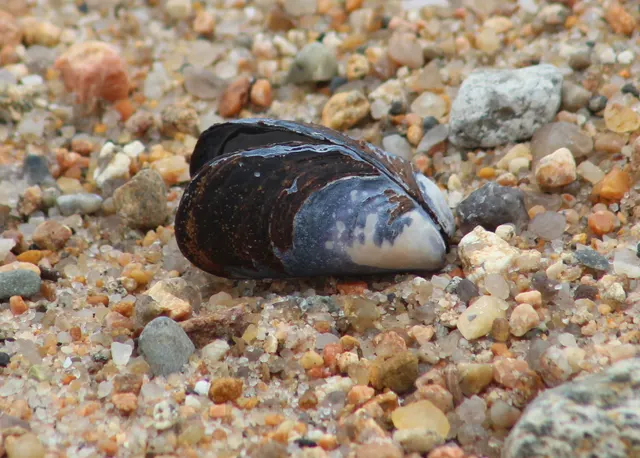 Blue musselGathered by hand from rock at low water, on the same intertidal trip as the winkles and limpets.
- Canary black limpetHand gathering at low water, and one attempt per animal.
- Canary musselGathered from exposed rock for the table and for bait, in the same intertidal trip as the limpets and topshells.
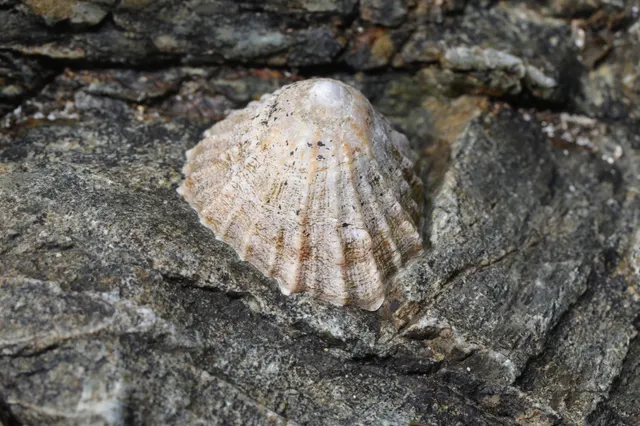 Common limpetKnocked off rock at low water with a single sharp blow before the animal clamps, which is the whole technique and the reason a touched limpet is a lost one.
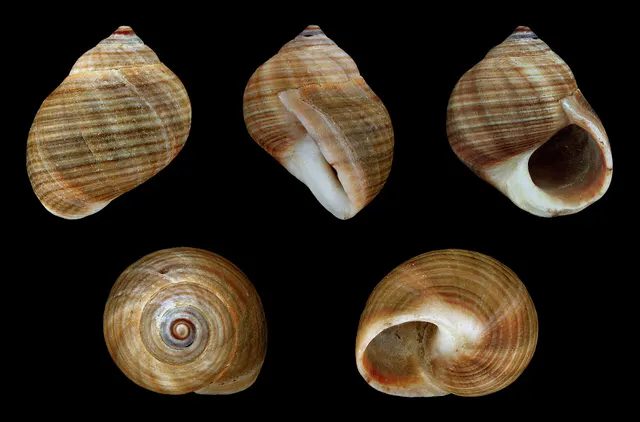 Common periwinklePicked off rock and weed by hand at low water, with no gear and no technique, which is the simplest fishing practice on FishingHQ.
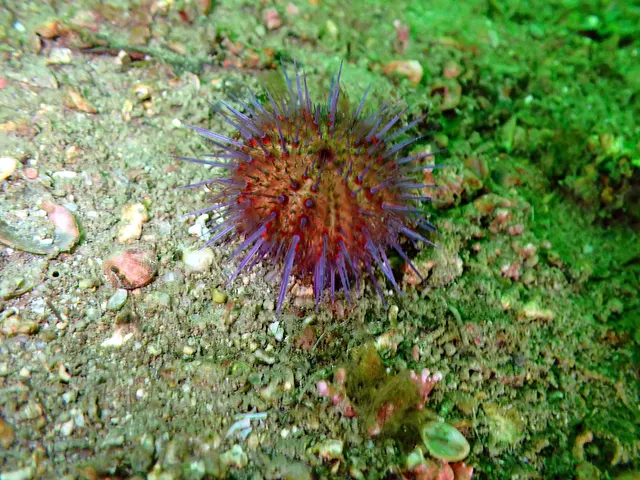 European sea urchinCollected by hand from rock and pool at low water. The free-diving half of its collection is a separate practice FishingHQ does not yet hold.
- Macaronesian topshellPicked off the rock by hand — no tool, no skill, no barrier.
- Macaronesian white limpetThe same gathering, lower down the shore and on a bigger tide.
3 more
- Mud crab Fish
- Native oyster Fish
- Velvet swimming crab Fish
How it works
WINKLES ARE SIMPLY PICKED UP. They sit on rock, in crevices and under weed at low water, withdrawn and sealed behind an operculum, and they come away with no resistance.
LIMPETS RESIST AND THE RESISTANCE IS THE TECHNIQUE. An undisturbed limpet is holding its shell to the rock with a muscular foot and a mucus seal, but it is not yet clamped hard. A single sharp sideways blow removes it intact. A limpet that has been touched first clamps down, generates an adhesion that resists wave force, and cannot be removed without destroying the animal — which is a welfare problem as well as a wasted one.
THE TIDE SUPPLIES THE ACCESS. The whole practice happens in the window either side of low water, and the size of that window is set by the tide's range. A big spring tide exposes ground that a neap does not reach.
AND THE SHORE ITSELF DOES THE SORTING. Different species occupy different heights on the shore and different degrees of exposure, so where a gatherer stands decides what they find, and reading that zonation is the whole of the skill.
Conditions
Suits rocky and boulder shore on a falling and low tide, ideally on a spring tide when the exposure is greatest, in daylight, with little or no swell running. Ruled out by any swell on exposed rock, by rising tide with a channel to cross, by darkness on unfamiliar ground, and by shores affected by sewage discharge or heavy recent run-off. Cold weather does not stop it — the animals are there year-round — but wet cold rock and numb hands make falls more likely.
Common mistakes
- Touching a limpet before striking it. Once it clamps it will not come off intact, and a half-removed animal dies for nothing.
- Taking the largest limpets. They are the females, because the species changes sex with size, so taking the biggest removes the breeding stock rather than a random sample.
- Clearing a patch rather than scattering the take across a wide area, which changes the shore visibly.
- Not turning rocks back the way they were found, which kills everything living underneath them.
- Working the low exposed rock with a swell running, which is the mechanism behind every fatality this practice has.
- Assuming that because bivalve biotoxin warnings do not apply, water quality does not matter. Microbiological contamination applies to anything gathered anywhere.
- Sealing the catch in an airtight container, which kills it before it is cooked.
Advantages
- It requires no equipment, no licence in most jurisdictions and no prior skill.
- The fish stays alive in a bucket, so nothing is wasted and nothing needs keeping cold on the day.
- The safety profile is better understood than for bivalves, because grazers and scavengers do not concentrate algal biotoxins.
- It is one of the few genuinely accessible ways into fishing for somebody with no gear and no boat.
Limitations
- It is entirely tide-dependent and the working window is short.
- Clearing a patch has a visible ecological effect within a season, because grazing controls algal cover.
- The best limpets grow low on exposed rock, which is where the practice becomes genuinely dangerous.
- Water quality is invisible, and a clean-looking shore beside an outfall is not a clean shore.
Safety
Cliffs and rock platforms — Can cause serious injury or death
The best gathering is low on the shore on wave-washed rock, with the gatherer's attention down and their back to the sea. A set wave substantially larger than those preceding it sweeps people off, and this is the mechanism behind the fatalities that limpet gathering has wherever it is prized.
What reduces it: Watch a full set before committing to any ledge, read swell height and period rather than wind, stay higher than feels necessary, never turn your back on the sea, and gather with somebody who can raise help.
Tides and being cut off — Can cause serious injury or death
Shore gathering is done on a falling tide with attention on the ground rather than on the water, and the flood returns across level rock and sand faster than a person expects, filling channels behind before covering the ground underfoot.
What reduces it: Know the time of low water and the time you intend to leave before starting, and leave at that time rather than when the gathering slows. Identify the route back and the channel that will close first. Do not gather alone on unfamiliar ground.
Slips, trips and falls — Can cause injury needing treatment
Weed-covered boulders are among the most slippery surfaces on any shore, and the practice involves constant movement across them while looking down and carrying a container.
What reduces it: Gripped footwear, weight kept low, one hand free, and no hurrying. Test weed-covered rock before committing weight to it.
Precautions that always apply here
- Check the tide before you go and know your exit route. Being cut off is the commonest way a shore session becomes a rescue.
- Tell somebody where you are going and when you expect to be back.
Further safety reading
- Rock platform and cliff safety — The best limpets grow low on wave-washed rock, so the productive ground and the dangerous ground are the same ground.
- Tides and being cut off — The whole practice happens on a falling tide with attention on the ground rather than the water, which is the exact combination that strands people.
Check the rules before you fish
Fishing laws, bylaws, access rules, seasons, bait restrictions and permitted methods vary by location and can change. Check the current rules from the relevant authority and the water you intend to fish before fishing.
Check with:
- Current national or regional law for where you are fishing
- Current local bylaws
- The relevant fisheries authority
- The landowner, club or fishery whose water it is
- Any restrictions specific to the species or the method you intend to use
Where to go next
Related techniques
Skills behind it
- Gathering shellfish, and the hazard that cooking does not removeThe single most consequential missing edge found in this audit. A reader following the platform's own gathering method could not reach the one record that explains why gathered shellfish make people ill — biotoxins that no amount of cooking removes, in water that looks clean, from areas that are monitored and classified precisely because appearance tells you nothing.
- Purging and preparing shellfish you have gatheredWhat happens between the shore and the pan decides whether the catch is worth eating, and the distinction between grazers and filter feeders decides which safety framework applies.
- Reading a tide for fishingGathering happens on ground that is only uncovered for part of the cycle, which makes the tide both the opportunity and the hazard.
Compared with
- Digging and raking for shellfishSand and mud against rock — and, more importantly, filter feeders against grazers, which is why the safety advice differs.
- The Moroccan Mediterranean coastShellfish and urchin gathering on the rock is a traditional practice here, and the gathering craft, the ground and the food-safety frame are the same everywhere.
Rules and access
Sources and evidence
- FAO fishing gear types and fishing technology information — Food and Agriculture Organization of the United Nations (Scientific institute)Relied on for: Descriptions of fishing gear types and their operation, including pots, traps and hand-gathering methods.States this directlyCitation checked — the work exists and is described correctly
- Fishers' Craft and Lettered Art: Tracts on Fishing from the End of the Middle Ages — University of Toronto Press, 1997 (Scientific literature)Relied on for: The historical development of fishing and gathering practice and the method of reading such traditions from their documentary record.States this directlyCitation checked — the work exists and is described correctly
Why the 20 connections on this page are here, and the sources
What it catches
What experienced anglers do — 10 connections
Widely and independently recommended by experienced anglers and specialist sources. This is real angling knowledge, not proof: controlled evidence for it is limited, and FishingHQ records it as convention rather than as a demonstrated effect.
Blue mussel
The page describes gathering for the table across the whole range. Hand-gathering from intertidal rock is the technique, and it is the same trip and the same tide as the other shore gathering FishingHQ holds.
- Recreational fishing and the shellfish permit — North Eastern IFCA — North Eastern Inshore Fisheries and Conservation Authority (Government fisheries body)Relied on for: Documents which fishery and which technique takes this species.States this directlyPassage read and verified
- Cefas science, advice and data on marine and freshwater environments — Centre for Environment, Fisheries and Aquaculture Science (Government fisheries body)Relied on for: Independently corroborates the species' recreational capture and range.Background and mechanism onlyCitation checked — the work exists and is described correctly
Canary black limpet
The Madeiran creel survey records that some shore anglers complete their catches by collecting intertidal invertebrates, naming the limpets among them, and puts limpets at 2.91% of the archipelago's estimated recreational shore catch. The practitioner account is consistent that a limpet prised at and left behind usually dies, so the decision to take it is made before it is touched rather than after.
- Importance of recreational shore angling in the archipelago of Madeira (northeast Atlantic) — Scientia Marina (CSIC), vol. 84 no. 4, 2020 (Scientific literature)Relied on for: That Madeiran shore anglers collect intertidal invertebrates alongside their fishing, which animals they collect, and their use of previously caught bait.States this directlyPassage read and verified
- General angling website restatements of established technique — Various (Credible secondary source)Relied on for: The widely restated practitioner account of how this animal is gathered and used.Background and mechanism onlyCitation checked — the work exists and is described correctly
Canary mussel
The page says so directly and adds the regulatory point that matters more: this is the one animal in the Canary shore-gathering table with a whole-year closure on a named island, which is as clear a signal of local depletion as a government document produces.
- Tallas mínimas de captura — Canarias: minimum landing sizes and closed seasons — Gobierno de Canarias, Consejería de Agricultura, Ganadería y Pesca — Dirección General de Pesca, with the Grupo de Acción Costera de Tenerife and the Cabildo de Tenerife (Government fisheries body)Relied on for: Documents which fishery and which technique takes this species.States this directlyPassage read and verified
- Pesca en Tenerife and Pesca en las Islas Canarias — a Spanish angling guide — EsPesca (Credible secondary source)Relied on for: Independently corroborates the species' recreational capture and range.Background and mechanism onlyPassage read and verified
Common limpet
An established gathering practice for this species, recorded as the convention it is rather than as a tested claim.
- General angling website restatements of established technique — Various (Credible secondary source)Relied on for: Widely restated practice associating this discipline with this place, recorded as practitioner consensus rather than as tested fact.Background and mechanism onlyCitation checked — the work exists and is described correctly
- Fishers' Craft and Lettered Art: Tracts on Fishing from the End of the Middle Ages — University of Toronto Press, 1997 (Scientific literature)Relied on for: That fishing traditions develop around the water and fish available to them, and the historical method of reading such traditions.States this directlyCitation checked — the work exists and is described correctly
Common periwinkle
An established gathering practice for this species, recorded as the convention it is rather than as a tested claim.
- General angling website restatements of established technique — Various (Credible secondary source)Relied on for: Widely restated practice associating this discipline with this place, recorded as practitioner consensus rather than as tested fact.Background and mechanism onlyCitation checked — the work exists and is described correctly
- Fishers' Craft and Lettered Art: Tracts on Fishing from the End of the Middle Ages — University of Toronto Press, 1997 (Scientific literature)Relied on for: That fishing traditions develop around the water and fish available to them, and the historical method of reading such traditions.States this directlyCitation checked — the work exists and is described correctly
Macaronesian topshell
The Madeiran creel survey names the sea snail Phorcus sauciatus among the intertidal animals its shore anglers collect, at 0.10% of the estimated recreational catch, and records that 72.3% of those anglers use previously caught bait including snails. An animal that needs no equipment at all is limited only by how many people want it, which is why a small snail carries a legal minimum size.
- Importance of recreational shore angling in the archipelago of Madeira (northeast Atlantic) — Scientia Marina (CSIC), vol. 84 no. 4, 2020 (Scientific literature)Relied on for: That Madeiran shore anglers collect intertidal invertebrates alongside their fishing, which animals they collect, and their use of previously caught bait.States this directlyPassage read and verified
- General angling website restatements of established technique — Various (Credible secondary source)Relied on for: The widely restated practitioner account of how this animal is gathered and used.Background and mechanism onlyCitation checked — the work exists and is described correctly
Macaronesian white limpet
Gathered by hand at low water alongside the lapa negra and recorded with it in Madeiran shore-angling catches. Because it sits lower on the shore it is reachable for less of the tidal cycle, which concentrates gathering onto the largest spring tides and onto the least forgiving part of the platform.
- Importance of recreational shore angling in the archipelago of Madeira (northeast Atlantic) — Scientia Marina (CSIC), vol. 84 no. 4, 2020 (Scientific literature)Relied on for: That Madeiran shore anglers collect intertidal invertebrates alongside their fishing, which animals they collect, and their use of previously caught bait.States this directlyPassage read and verified
- General angling website restatements of established technique — Various (Credible secondary source)Relied on for: The widely restated practitioner account of how this animal is gathered and used.Background and mechanism onlyCitation checked — the work exists and is described correctly
Mud crab
Practice, recorded as practice.
- Sea Angler — Bauer Media (Specialist angling publication)Relied on for: Contemporary UK sea angling and shore gathering practice as reported by practitioners: ground, seasonal timing, tackle, bait and method convention.States this directlyCitation checked — the work exists and is described correctly
- General angling website restatements of established technique — Various (Credible secondary source)Relied on for: Widely restated descriptions of technique, fish behaviour and regional practice, recorded as consensus rather than as scholarship.Background and mechanism onlyCitation checked — the work exists and is described correctly
Native oyster
Gathering practice, recorded as practice.
- Sea Angler — Bauer Media (Specialist angling publication)Relied on for: Contemporary UK sea angling and shore gathering practice as reported by practitioners: ground, seasonal timing, tackle, bait and method convention.States this directlyCitation checked — the work exists and is described correctly
- General angling website restatements of established technique — Various (Credible secondary source)Relied on for: Widely restated descriptions of technique, fish behaviour and regional practice, recorded as consensus rather than as scholarship.Background and mechanism onlyCitation checked — the work exists and is described correctly
Velvet swimming crab
A statement about how a species is fished or collected, which is convention rather than biology and is labelled as such.
- Sea Angler — Bauer Media (Specialist angling publication)Relied on for: Contemporary UK sea angling and shore gathering practice as reported by practitioners: ground, tackle, presentation and seasonal timing.States this directlyCitation checked — the work exists and is described correctly
- General angling website restatements of established technique — Various (Credible secondary source)Relied on for: Widely restated descriptions of technique, fish behaviour and regional practice, recorded as consensus rather than as scholarship.Background and mechanism onlyCitation checked — the work exists and is described correctly
Official guidance — 1 connection
Stated by a fisheries authority, scientific institute or recognised angling body. Authoritative, but summarising rather than demonstrating.
European sea urchin
The species page describes collection by hand at low water and by free-divers. The low-water hand collection is surface gathering from rock, which is the existing method; the free-diving collection is a different technique and is deliberately not claimed here.
- Recreational fishing and the shellfish permit — North Eastern IFCA — North Eastern Inshore Fisheries and Conservation Authority (Government fisheries body)Relied on for: An English inshore fisheries authority's own recreational shellfish permit and the byelaws around it, as an instance of the district-by-district regulation of hand gathering.States this directlyPassage read and verified
- Shellfish classification — Food Standards Agency, 2026 (Government fisheries body)Relied on for: The existence of an official classification and monitoring regime for shellfish harvesting areas, and the body that administers it.States this directlyCitation checked — the work exists and is described correctly
Related techniques
What experienced anglers do — 1 connection
Widely and independently recommended by experienced anglers and specialist sources. This is real angling knowledge, not proof: controlled evidence for it is limited, and FishingHQ records it as convention rather than as a demonstrated effect.
Hand fishing
A discipline that is characteristic of the place rather than merely possible there, joined so a reader can move between the place and the practice.
- General angling website restatements of established technique — Various (Credible secondary source)Relied on for: Widely restated practice associating this discipline with this place, recorded as practitioner consensus rather than as tested fact.Background and mechanism onlyCitation checked — the work exists and is described correctly
- Fishers' Craft and Lettered Art: Tracts on Fishing from the End of the Middle Ages — University of Toronto Press, 1997 (Scientific literature)Relied on for: That fishing traditions develop around the water and fish available to them, and the historical method of reading such traditions.States this directlyCitation checked — the work exists and is described correctly
Skills behind it
Backed by research — 1 connection
Supported by peer-reviewed research or fisheries science. The sources are listed and can be checked.
Gathering shellfish, and the hazard that cooking does not remove
A method or discipline joined to the mechanism that changes how it is conducted. Written where the method's own practice differs because of the mechanism — a different bait, a different season, a different handling routine, a decision not to eat something — and refused where the mechanism is merely true of the fish being caught.
- Fish and Fishery Products Hazards and Controls Guidance — US Food and Drug Administration, Center for Food Safety and Applied Nutrition, 2022 (Standards body)Relied on for: Hazard analysis for fish and fishery products, including scombrotoxin formation with time and temperature, ciguatera, and marine biotoxins in molluscan shellfish.States this directlyPassage read and verified
- Biotoxin and phytoplankton monitoring — Food Standards Agency, 2026 (Government fisheries body)Relied on for: Biotoxin and phytoplankton monitoring in shellfish harvesting areas and the basis on which areas are classified and closed.States this directlyPassage read and verified
Official guidance — 1 connection
Stated by a fisheries authority, scientific institute or recognised angling body. Authoritative, but summarising rather than demonstrating.
Purging and preparing shellfish you have gathered
A gathering practice joined to the preparation and food-safety explainer that follows it, so the mechanism is reachable rather than assumed.
- General angling website restatements of established technique — Various (Credible secondary source)Relied on for: Widely restated practice associating this discipline with this place, recorded as practitioner consensus rather than as tested fact.Background and mechanism onlyCitation checked — the work exists and is described correctly
- Fishers' Craft and Lettered Art: Tracts on Fishing from the End of the Middle Ages — University of Toronto Press, 1997 (Scientific literature)Relied on for: That fishing traditions develop around the water and fish available to them, and the historical method of reading such traditions.States this directlyCitation checked — the work exists and is described correctly
What experienced anglers do — 1 connection
Widely and independently recommended by experienced anglers and specialist sources. This is real angling knowledge, not proof: controlled evidence for it is limited, and FishingHQ records it as convention rather than as a demonstrated effect.
Reading a tide for fishing
A link from a practice, an environment or a geography to the mechanism it rests on. It asserts that the mechanism is load-bearing here rather than merely relevant, which is the test applied throughout this file.
- Sea Angler — Bauer Media (Specialist angling publication)Relied on for: Long-running published description of how conditions are read in the practice named, by ground type and by region.FishingHQ's interpretation of what it saysCitation checked — the work exists and is described correctly
- General angling website restatements of established technique — Various (Credible secondary source)Relied on for: Widely restated descriptions of how the condition named governs the practice named, recorded as practitioner consensus rather than as scholarship.Background and mechanism onlyCitation checked — the work exists and is described correctly
Compared with
Official guidance — 1 connection
Stated by a fisheries authority, scientific institute or recognised angling body. Authoritative, but summarising rather than demonstrating.
Digging and raking for shellfish
The rock-gathering record states in its own description that the bivalve biotoxin framework is not its primary concern. That sentence only makes sense beside the record it is distinguishing itself from, and a reader who arrives at one needs to know the other exists and has a different answer about what is safe to eat.
- Shellfish classification — Food Standards Agency, 2026 (Government fisheries body)Relied on for: The existence of an official classification and monitoring regime for shellfish harvesting areas, and the body that administers it.States this directlyCitation checked — the work exists and is described correctly
- Cefas science, advice and data on marine and freshwater environments — Centre for Environment, Fisheries and Aquaculture Science (Government fisheries body)Relied on for: Marine environmental science for UK shelf seas: intertidal sediment characterisation, shellfish bed distribution and the monitoring that describes them.Background and mechanism onlyCitation checked — the work exists and is described correctly
What experienced anglers do — 1 connection
Widely and independently recommended by experienced anglers and specialist sources. This is real angling knowledge, not proof: controlled evidence for it is limited, and FishingHQ records it as convention rather than as a demonstrated effect.
The Moroccan Mediterranean coast
Two places a reader would reasonably weigh against one another, joined where the comparison teaches something about both. It is also how the larger geography is linked to what sits inside it.
- General angling website restatements of established technique — Various (Credible secondary source)Relied on for: Widely restated angling practice and belief, recorded as practitioner consensus rather than as tested fact.Background and mechanism onlyCitation checked — the work exists and is described correctly
- Sea Angler — Bauer Media (Specialist angling publication)Relied on for: Contemporary sea angling practice as reported and restated by practitioners, including shore and boat technique and tackle convention.Background and mechanism onlyCitation checked — the work exists and is described correctly
Safety reading
Official guidance — 2 connections
Stated by a fisheries authority, scientific institute or recognised angling body. Authoritative, but summarising rather than demonstrating.
Rock platform and cliff safety
A place is joined to the safety topic that explains a hazard genuinely characteristic of it, so the mechanism is reachable rather than restated as a weak warning.
- RNLI water safety guidance: cold water shock and Float to Live — Royal National Lifeboat Institution (Water-safety or diver-training authority)Relied on for: Cold water shock and the immersion response, shore angling hazards, small-craft guidance and the circumstances in which water users are most often killed.States this directlyPassage read and verified
- RoSPA water safety information and UK accidental drowning statistics — Royal Society for the Prevention of Accidents (Water-safety or diver-training authority)Relied on for: Accidental drowning statistics and the circumstances in which recreational water users are most often killed.Background and mechanism onlyPassage read and verified
Tides and being cut off
A place is joined to the safety topic that explains a hazard genuinely characteristic of it, so the mechanism is reachable rather than restated as a weak warning.
- RNLI water safety guidance: cold water shock and Float to Live — Royal National Lifeboat Institution (Water-safety or diver-training authority)Relied on for: Cold water shock and the immersion response, shore angling hazards, small-craft guidance and the circumstances in which water users are most often killed.States this directlyPassage read and verified
- RoSPA water safety information and UK accidental drowning statistics — Royal Society for the Prevention of Accidents (Water-safety or diver-training authority)Relied on for: Accidental drowning statistics and the circumstances in which recreational water users are most often killed.Background and mechanism onlyPassage read and verified
Rules and access
Official guidance — 1 connection
Stated by a fisheries authority, scientific institute or recognised angling body. Authoritative, but summarising rather than demonstrating.
Taking crabs, lobsters, squid and shellfish: how the rules are structured
A place joined to the regulatory concept whose structure it illustrates. The edge asserts that the concept applies here, never what any current rule says.
- Code of Conduct for Responsible Fisheries — Food and Agriculture Organization of the United Nations, Rome, 1995 (Standards body)Relied on for: Principles for the management of fisheries, including licensing, closed seasons, size limits and the treatment of small-scale and shared stocks.States this directlyCitation checked — the work exists and is described correctly
- Good Fish Guide — Marine Conservation Society (Conservation authority)Relied on for: Assessment of fisheries and the management measures applied to them, including the instruments used and their purpose.Background and mechanism onlyCitation checked — the work exists and is described correctly
How FishingHQ labels evidence is explained in the evidence policy.