Native oyster
Fish · Last reviewed 2026-08-17
A flat, round, slow-growing oyster whose British beds collapsed within living memory, sitting on the same shores as a fast-growing introduced congener that is reefing over them — and the two are told apart by the shape of the shell.
Safety: contamination and toxins in the catch — can cause serious injury or death. 2 more points apply here.
Contamination and toxins in the catch — Can cause serious injury or death
Oysters are filter feeders concentrating marine biotoxins and microbiological contamination — norovirus in particular — from the water around them. They are commonly eaten raw, and biotoxins are not destroyed by cooking in any case, so heat is not the mitigation people assume. There is no visual sign, and neither smell nor taste indicates a problem.
What reduces it: Treat the classification and current status of the harvesting area as the deciding fact and obtain it from the food safety authority and the local authority for that shore. Commercially sold oysters have been through a purification and classification regime that gathered ones have not.
Worse when:
- Waters receiving sewage discharge, and periods after heavy rain when combined sewer overflows operate
- During or after a harmful algal bloom, which may leave no visible trace
Catching Native oyster
Everything here on fishing for it. Each entry opens the page behind it.
- Where
- 2 places FishingHQ documents — strongest claim anywhere: recorded here · From the shore
Two oysters occur on British and Irish shores and almost nobody gathering them knows there are two.
THE NATIVE OYSTER IS FLAT AND ROUND. Both valves are relatively flat, the outline is nearly circular, the shell is smooth-ish with concentric scaly layers, and the inside is smooth pearly white with a dark muscle scar. It grows slowly, spawns as a hermaphrodite, broods its larvae inside the shell, and was once the basis of an enormous British fishery.
THE PACIFIC OYSTER IS LONG, RUFFLED AND SHARP. Elongated, deeply cupped on one valve, with wildly irregular frilled and fluted growth, often cemented into dense clusters and reefs. It was introduced for cultivation, it has established in the wild, and its shell edges are sharp enough to open a bare foot to the bone.
THE NATIVE COLLAPSED AND THE INTRODUCED ONE IS SPREADING. British native oyster beds were reduced by centuries of overfishing, then by disease — Bonamia ostreae in particular — and by habitat loss, to a small fraction of their former extent; the species is a conservation priority and the subject of active restoration projects around the coast. Meanwhile Pacific oysters, once thought unable to reproduce in British water, now do so and are forming reefs on shores that had none.
SO ONE SHORE CAN CARRY AN ANIMAL BEING PUT BACK AND AN ANIMAL BEING TAKEN OUT, and the difference is a shell shape. That is worth knowing before picking anything up.
AND THE OLD RULE IS NOT A SAFETY SYSTEM. Oysters are the animal the months-with-an-R rule was invented for, and it describes spawning condition rather than contamination: it predates refrigeration and toxin monitoring, and harmful blooms and sewage discharge occur in months with an R in them as readily as in months without. It is named here so it can be refused.
Where Native oyster is documented
Places where public sources describe this species as fished, with how it is fished and how strongly the evidence supports it. This is not a range map and it is not a recommendation — it is what has been written down about a fishery rather than a record of any individual catch, and being listed is never permission to fish.
What these strengths mean
- Recorded here
- At least one credible public account of this species being caught here. That is all it means.
Identification
No photograph of Native oyster has passed identity review yet, so none is shown. A photograph is published only once somebody has checked the animal in it against the diagnostic features described on this page.
- Scientific name
- Ostrea edulis
- Family
- Ostreidae
- Water
- Saltwater, Brackish
- Conservation status
- Near Threatened
- Regions
- Britain & Ireland, Western Europe, Northern Europe, Mediterranean, North Africa
- ROUND AND FLAT. The outline is nearly circular and both valves are relatively flat — the lower one only shallowly cupped. A Pacific oyster is elongated and one valve is deeply cupped.
- THE SHELL SURFACE IS SCALY AND CONCENTRIC rather than wildly frilled. A Pacific oyster's growth is irregular, fluted and often sharply ruffled.
- SMOOTH PEARLY WHITE INSIDE, with a dark, often purple-tinged adductor muscle scar. The Pacific oyster's interior is white with the scar frequently darker and the margin more sinuous.
- USUALLY SOLITARY OR IN LOOSE GROUPS ON SOFT OR MIXED GROUND. Pacific oysters cement to one another and to hard surfaces, forming dense clusters and reefs.
- GENERALLY SMALLER in Britain today: commonly 6–11 cm, where an established Pacific oyster reaches 15–20 cm and more.
- SHARPNESS IS A CLUE. If a shell edge has just cut you, it was almost certainly a Pacific oyster.
Size
- Typical
- 6–11 cm shell length.
- Large
- Over 13 cm is a large native oyster in British waters.
Exceptional: Around 20 cm is reported for very old individuals and is unusual; historical beds produced larger animals than modern ones.
Two oysters, one shore, opposite arguments
The most useful thing about either British oyster is the other one.
THE NATIVE IS BEING PUT BACK. Ostrea edulis supported one of the largest fisheries in British history — oysters were a staple food, not a luxury, and the beds of the Thames estuary, the Solent, the Fal and the Firth of Forth were worked at industrial scale. Overfishing reduced them, the parasite Bonamia ostreae did great damage to what remained, and habitat loss finished much of the rest. It is now a conservation priority and the subject of restoration work in several estuaries, which typically involves laying cultch — old shell — because oyster larvae need to settle on oyster shell and a dredged bed leaves nothing to settle on.
THE PACIFIC IS SPREADING. Magallana gigas was introduced for cultivation on the assumption that British water was too cold for it to reproduce. That assumption no longer holds; it now spawns and recruits in the wild in many places, cements into dense reefs on rock, sediment and each other, and changes the character of a shore substantially.
AND THE MANAGEMENT RESPONSE IS GENUINELY CONTESTED. In some places wild Pacific oysters are gathered enthusiastically and their removal encouraged. In others they are tolerated. In others still their spread is being actively resisted. FishingHQ does not state which of those applies where you are standing, because it differs, changes and is somebody else's decision.
WHAT DOES NOT DIFFER is the identification. Round and flat, scaly, pearly inside — native. Long, deeply cupped, wildly frilled, cemented into a cluster, sharp — Pacific.
WHAT MAY BE TAKEN, WHERE, WHEN AND HOW IS NOT ON THIS PAGE. Minimum sizes, licensing, closed areas, protected status and gathering restrictions differ between administrations and are revised. Check the current position with the fisheries or environmental authority for the water concerned.
Official guidance — why, and the sources (4)
Stated by a fisheries authority, scientific institute or recognised angling body. Authoritative, but summarising rather than demonstrating.
- JNCC species and habitat conservation advice — Joint Nature Conservation Committee (Conservation authority)Relied on for: UK conservation designations and the status of protected and priority species and habitats.States this directlyCitation checked — the work exists and is described correctly
- Cefas science, advice and data on marine and freshwater environments — Centre for Environment, Fisheries and Aquaculture Science (Government fisheries body)Relied on for: UK marine science: shellfish and crustacean stock monitoring, biotoxin surveillance, distribution and the biological basis of management advice.States this directlyCitation checked — the work exists and is described correctly
- Good Fish Guide — Marine Conservation Society (Conservation authority)Relied on for: Assessment of the sustainability of UK-caught seafood by species, gear and stock, used here for the fishery context rather than for any statement of rules.States this directlyCitation checked — the work exists and is described correctly
- The IUCN Red List of Threatened Species — International Union for Conservation of Nature (Conservation authority)Relied on for: The global Red List category and the assessment behind it, assessed 21 October 2021. A statement about the species across its range and not about any managed stock.States this directlyCitation checked — the work exists and is described correctly
Brooding, cultch, and why a lost oyster bed stays lost
Most bivalves on FishingHQ spawn into the water and leave. An oyster does neither, and both departures matter.
IT BROODS ITS LARVAE. Eggs are fertilised inside the mantle cavity and the developing larvae are held within the shell for around a week before release. Fecundity is far lower than a broadcast spawner's, and what is released is a competent larva rather than an egg — a smaller number of better-prepared offspring.
AND IT ALTERNATES SEX. Individuals function as male and female in turn, sometimes more than once in a season. Fertilisation depends on sperm from a neighbour reaching a brooding animal, which means it depends on neighbours being close.
SO POPULATION DENSITY IS NOT A DETAIL, IT IS THE MECHANISM. Below a critical density the animals stop finding each other's gametes and recruitment fails even where adults survive. That is one reason British beds did not recover when the fishing pressure came off: the remaining animals were too scattered to reproduce effectively.
AND THE LARVAE NEED SHELL TO LAND ON. Settlement is strongly favoured on clean old oyster shell — cultch. A bed that has been dredged repeatedly loses not only its adults but the substrate the next generation requires, which is why restoration projects begin by laying shell and why simply stopping fishing does not rebuild a bed.
THE CONSEQUENCE FOR A GATHERER is modest and worth stating plainly: taking a native oyster is taking from a population that recovers slowly, requires density to breed at all, and needs the shells of its dead. That is a different act from taking a mussel.
Backed by research — why, and the sources (3)
Supported by peer-reviewed research or fisheries science. The sources are listed and can be checked.
- Cefas science, advice and data on marine and freshwater environments — Centre for Environment, Fisheries and Aquaculture Science (Government fisheries body)Relied on for: UK marine science: shellfish and crustacean stock monitoring, biotoxin surveillance, distribution and the biological basis of management advice.States this directlyCitation checked — the work exists and is described correctly
- JNCC species and habitat conservation advice — Joint Nature Conservation Committee (Conservation authority)Relied on for: UK conservation designations and the status of protected and priority species and habitats.States this directlyCitation checked — the work exists and is described correctly
- FAO Species Identification Guides for Fishery Purposes and the FAO Species Catalogues — Food and Agriculture Organization of the United Nations (Scientific institute)Relied on for: Diagnostic identification characters, family placement, depth range and distribution as set out in the FAO species identification sheets for the eastern Atlantic and Mediterranean.States this directlyCitation checked — the work exists and is described correctly
Lifecycle and reproduction
Native oysters are protandrous alternating hermaphrodites: individuals typically function first as males, then alternate between male and female phases through their lives, sometimes within a single season. Unlike most bivalves they BROOD — eggs are fertilised within the mantle cavity and larvae are retained inside the shell for around a week before release, at which point the shell is said to be 'white sick' then 'black sick' as the larvae develop. Released larvae are planktonic for a further period before settling and cementing to hard substrate, ideally to old oyster shell. That last detail is why restoration projects lay shell: the animal needs the remains of its predecessors to settle on, and a bed that has been dredged away leaves nothing to recolonise.
Spawning is temperature-driven and occurs through summer. Brooding is the distinctive feature and it has consequences: fecundity is far lower than a broadcast spawner's, larvae are released as competent settlers rather than as eggs, and the survival of the brood depends on the condition of the adult. Recruitment is therefore erratic and dependent on a critical density of adults being close enough together — a population thinned below that point can fail to recover even when fishing stops, which is a large part of the British story.
Feeding and senses
A suspension feeder, drawing water across the gills and filtering phytoplankton and suspended organic matter. A dense oyster bed filters a very large volume of water, which is why the loss of British beds is discussed as a loss of water-quality function and habitat structure rather than only as a lost fishery — and why filter feeding is also the mechanism that makes gathered oysters a food-safety question.
Minimal in any familiar sense: an oyster detects light and shadow, chemical cues in the water, and mechanical disturbance, and responds by closing. Everything else about its life is chemistry and current.
Through the year
Sedentary and present year-round. Condition varies through the year with spawning and food supply, and brooding animals through summer are in poor condition and full of larvae — the biological fact behind the traditional aversion to eating oysters in months without an R in the name, which is a rule of thumb about condition and spawning rather than a food-safety rule.
Distribution
North-east Atlantic from Norway to Morocco and into the Mediterranean, on hard and mixed ground in shallow coastal water, estuaries and sea lochs. In Britain and Ireland it survives in scattered populations, greatly reduced from its historical extent, and is the subject of restoration projects in several estuaries and inlets. Pacific oysters, introduced for cultivation, are now established and reproducing in the wild on many of the same shores.
This is a biological range — where the species occurs, not a prediction that you will catch one. To browse the fishing geography FishingHQ holds, start at fishing places.
Why anglers care
Not catch for an angler, and squarely within the gathering layer that an earlier pass opened. Oysters are picked from the shore by hand where that is permitted, and the identification decides what a gatherer is holding: a native that is a conservation priority in decline, or an introduced species that in some places is actively being removed. It also matters to anybody walking or wading a shore, because Pacific oyster reefs are a genuine injury hazard that did not exist on British beaches a generation ago.
Handling and returning
Learn the difference before picking anything up. Oysters are filter feeders and carry what their water carries — the food-safety position on gathered bivalves applies in full and is not something a page can resolve; the food safety or environmental health authority for that shore classifies the area and is the only source for its current status. Wear gloves and sturdy footwear on any shore carrying Pacific oysters: the shells are cemented in place, immovable, and sharp enough to cause deep lacerations to hands, knees and feet, and the wounds contaminate readily. Never move live oysters between shores.
WHETHER A GATHERING AREA IS SAFE IS NOT SOMETHING THIS PAGE CAN TELL YOU. Filter-feeding shellfish concentrate marine biotoxins and microbiological contamination out of the water they sit in, neither cooking nor the animal's appearance, smell or taste removes a biotoxin, and harvesting areas are opened and closed on monitoring results a gatherer cannot see. The food safety authority and the local authority for the shore concerned are the only sources for that.
Safety
Contamination and toxins in the catch is set out at the top of this page, where it cannot be missed.
Slips, trips and falls — Can cause injury needing treatment
Pacific oyster reefs cement to rock, sediment and each other and present dense fields of immovable, extremely sharp shell edges. Falls onto them produce deep lacerations to hands, knees and feet, and bare feet or thin footwear are cut easily. The wounds are contaminated by definition.
What reduces it: Sturdy footwear with a firm sole and gloves on any shore carrying oyster reef. Do not wade barefoot on shores where Pacific oysters have established. Clean and dress any cut properly and seek advice if it inflames.
Worse when:
- Falling tides exposing reef
- Bare feet or thin wetsuit boots
- Shores where reef has established recently and people are not expecting it
Biosecurity and disease transfer — Can cause injury needing treatment
Moving live oysters between shores can move the parasite Bonamia ostreae, other pathogens, and the introduced Pacific oyster itself into places that do not have them.
What reduces it: Never move live shellfish between waters. Do not return gathered animals to a different shore.
Worse when:
- Areas holding restoration projects or surviving native beds
Check the rules before you fish
Fishing laws, bylaws, access rules, seasons, bait restrictions and permitted methods vary by location and can change. Check the current rules from the relevant authority and the water you intend to fish before fishing.
Check with:
- Current national or regional law for where you are fishing
- Current local bylaws
- The relevant fisheries authority
- The landowner, club or fishery whose water it is
- Any restrictions specific to the species or the method you intend to use
Where to go next
Where it lives
- EstuaryHard and mixed ground in estuaries, sea lochs and sheltered coastal water, where the historical beds were and where the restoration projects are.
- Mudflats and intertidal sandflatsNative and Pacific oysters both occupy hard surfaces within and at the margins of intertidal sediment, which is where a gatherer meets them.
Understanding this fish
- Gathering shellfish, and the hazard that cooking does not removeOysters are commonly eaten raw, which removes the one mitigation cooking would otherwise provide.
- Purging and preparing shellfish you have gatheredPreparation practice for gathered bivalves, which reduces grit and does nothing whatever about biotoxins.
Told apart from
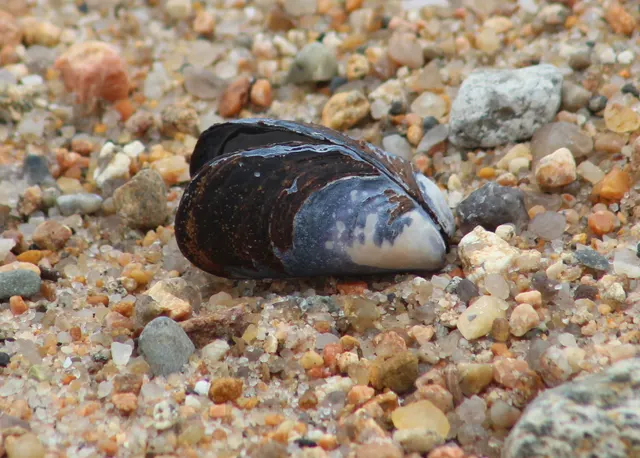 Blue musselThe two hard-substrate bivalves a British gatherer meets. The mussel is abundant and unambiguous; the oyster requires knowing which of two species is in your hand and which argument applies to it.
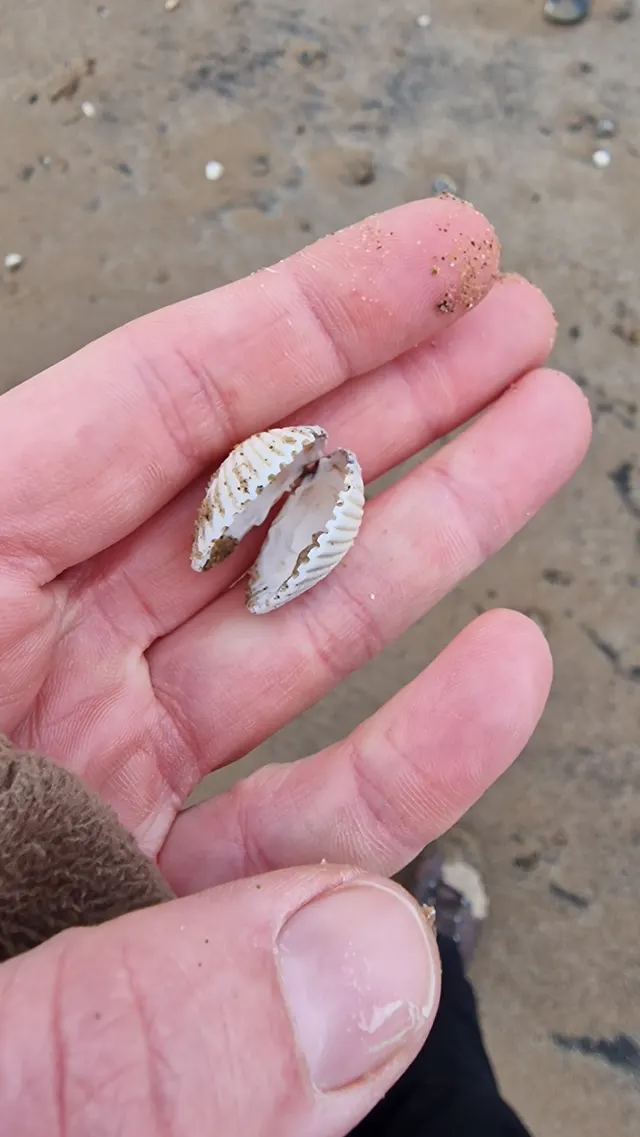 Common cockleBoth are gathered, both filter-feed and both carry the same biotoxin problem — and one is dug from sediment while the other is prised off hard ground.
Rules and access
Environment and conservation
- Fish stocks and sustainabilityA collapsed native fishery, a documented failure to recover after fishing pressure eased, and an active restoration effort that has to lay shell before anything else can happen.
- Invasive species and biosecurityThe introduced Pacific oyster now reproduces in the wild in British and Irish waters and reefs over shores the native used to occupy, and moving live shellfish moves pathogens with them.
Sources and evidence
- The IUCN Red List of Threatened Species — International Union for Conservation of Nature (Conservation authority)Relied on for: The global Red List category and the assessment behind it, assessed 21 October 2021. A statement about the species across its range and not about any managed stock.States this directlyCitation checked — the work exists and is described correctly
- Cefas science, advice and data on marine and freshwater environments — Centre for Environment, Fisheries and Aquaculture Science (Government fisheries body)Relied on for: UK marine science: shellfish and crustacean stock monitoring, biotoxin surveillance, distribution and the biological basis of management advice.States this directlyCitation checked — the work exists and is described correctly
- JNCC species and habitat conservation advice — Joint Nature Conservation Committee (Conservation authority)Relied on for: UK conservation designations and the status of protected and priority species and habitats.States this directlyCitation checked — the work exists and is described correctly
- Shellfish classification — Food Standards Agency, 2026 (Government fisheries body)Relied on for: The classification of shellfish harvesting areas, the monitoring that underlies it, and the marine biotoxin and microbiological risks that make gathered bivalves a food-safety matter rather than an angling one.States this directlyCitation checked — the work exists and is described correctly
- Good Fish Guide — Marine Conservation Society (Conservation authority)Relied on for: Assessment of the sustainability of UK-caught seafood by species, gear and stock, used here for the fishery context rather than for any statement of rules.States this directlyCitation checked — the work exists and is described correctly
Why the 10 connections on this page are here, and the sources
How it is caught
What experienced anglers do — 1 connection
Widely and independently recommended by experienced anglers and specialist sources. This is real angling knowledge, not proof: controlled evidence for it is limited, and FishingHQ records it as convention rather than as a demonstrated effect.
Gathering winkles, whelks and limpets
Gathering practice, recorded as practice.
- Sea Angler — Bauer Media (Specialist angling publication)Relied on for: Contemporary UK sea angling and shore gathering practice as reported by practitioners: ground, seasonal timing, tackle, bait and method convention.States this directlyCitation checked — the work exists and is described correctly
- General angling website restatements of established technique — Various (Credible secondary source)Relied on for: Widely restated descriptions of technique, fish behaviour and regional practice, recorded as consensus rather than as scholarship.Background and mechanism onlyCitation checked — the work exists and is described correctly
Where it lives
Backed by research — 2 connections
Supported by peer-reviewed research or fisheries science. The sources are listed and can be checked.
Estuary
A distributional claim about where a species is found, resting on the standard regional reference works rather than on angling report.
- The Fishes of the British Isles and North-West Europe — Macmillan, 1969 (Reference work)Relied on for: Distribution, habitat association, identification and biology of the fishes and inshore fauna of the British Isles and north-west Europe.States this directlyCitation checked — the work exists and is described correctly
- FAO Species Identification Guides for Fishery Purposes and the FAO Species Catalogues — Food and Agriculture Organization of the United Nations (Scientific institute)Relied on for: Diagnostic characters, family placement, habitat and depth range as set out in the FAO species identification sheets for the eastern Atlantic and Mediterranean.States this directlyCitation checked — the work exists and is described correctly
Mudflats and intertidal sandflats
A distributional claim about where a species is found, resting on the standard regional reference works rather than on angling report.
- The Fishes of the British Isles and North-West Europe — Macmillan, 1969 (Reference work)Relied on for: Distribution, habitat association, identification and biology of the fishes and inshore fauna of the British Isles and north-west Europe.States this directlyCitation checked — the work exists and is described correctly
- FAO Species Identification Guides for Fishery Purposes and the FAO Species Catalogues — Food and Agriculture Organization of the United Nations (Scientific institute)Relied on for: Diagnostic characters, family placement, habitat and depth range as set out in the FAO species identification sheets for the eastern Atlantic and Mediterranean.States this directlyCitation checked — the work exists and is described correctly
Understanding this fish
What experienced anglers do — 2 connections
Widely and independently recommended by experienced anglers and specialist sources. This is real angling knowledge, not proof: controlled evidence for it is limited, and FishingHQ records it as convention rather than as a demonstrated effect.
Gathering shellfish, and the hazard that cooking does not remove
An explainer that carries the mechanism the subject record depends on.
- Shellfish classification — Food Standards Agency, 2026 (Government fisheries body)Relied on for: The classification of shellfish harvesting areas, the monitoring behind it, and the biotoxin and microbiological risks that make gathered bivalves a food-safety matter.States this directlyCitation checked — the work exists and is described correctly
- Cefas science, advice and data on marine and freshwater environments — Centre for Environment, Fisheries and Aquaculture Science (Government fisheries body)Relied on for: UK biotoxin surveillance and shellfish monitoring.States this directlyCitation checked — the work exists and is described correctly
Purging and preparing shellfish you have gathered
An explainer that carries the mechanism the subject record depends on.
- Shellfish classification — Food Standards Agency, 2026 (Government fisheries body)Relied on for: The classification of shellfish harvesting areas, the monitoring behind it, and the biotoxin and microbiological risks that make gathered bivalves a food-safety matter.States this directlyCitation checked — the work exists and is described correctly
- Cefas science, advice and data on marine and freshwater environments — Centre for Environment, Fisheries and Aquaculture Science (Government fisheries body)Relied on for: UK biotoxin surveillance and shellfish monitoring.States this directlyCitation checked — the work exists and is described correctly
Told apart from
What experienced anglers do — 2 connections
Widely and independently recommended by experienced anglers and specialist sources. This is real angling knowledge, not proof: controlled evidence for it is limited, and FishingHQ records it as convention rather than as a demonstrated effect.
Blue mussel
A comparison a reader with the animal or the decision in front of them actually needs, joining two records that resolve one another.
- Shellfish classification — Food Standards Agency, 2026 (Government fisheries body)Relied on for: The classification of shellfish harvesting areas, the monitoring behind it, and the biotoxin and microbiological risks that make gathered bivalves a food-safety matter.States this directlyCitation checked — the work exists and is described correctly
- Cefas science, advice and data on marine and freshwater environments — Centre for Environment, Fisheries and Aquaculture Science (Government fisheries body)Relied on for: UK biotoxin surveillance and shellfish monitoring.States this directlyCitation checked — the work exists and is described correctly
Common cockle
A comparison a reader with the animal or the decision in front of them actually needs, joining two records that resolve one another.
- Shellfish classification — Food Standards Agency, 2026 (Government fisheries body)Relied on for: The classification of shellfish harvesting areas, the monitoring behind it, and the biotoxin and microbiological risks that make gathered bivalves a food-safety matter.States this directlyCitation checked — the work exists and is described correctly
- Cefas science, advice and data on marine and freshwater environments — Centre for Environment, Fisheries and Aquaculture Science (Government fisheries body)Relied on for: UK biotoxin surveillance and shellfish monitoring.States this directlyCitation checked — the work exists and is described correctly
Rules and access
Official guidance — 1 connection
Stated by a fisheries authority, scientific institute or recognised angling body. Authoritative, but summarising rather than demonstrating.
Taking crabs, lobsters, squid and shellfish: how the rules are structured
This points to the kind of rule that applies rather than to any rule itself, so the page carries the notice that the requirement varies.
- Angling Trust guidance for anglers — Angling Trust (Angling or fisheries organisation)Relied on for: The structure of angling regulation and representation in England, and the framework within which anglers are asked to check local rules.States this directlyCitation checked — the work exists and is described correctly
- JNCC species and habitat conservation advice — Joint Nature Conservation Committee (Conservation authority)Relied on for: UK conservation designation and the framework of protected species and habitats.States this directlyCitation checked — the work exists and is described correctly
Environment and conservation
Backed by research — 2 connections
Supported by peer-reviewed research or fisheries science. The sources are listed and can be checked.
Fish stocks and sustainability
An environmental effect attached to the thing that causes it, resting on an authoritative source rather than on advocacy.
- The IUCN Red List of Threatened Species — International Union for Conservation of Nature (Conservation authority)Relied on for: The global Red List assessment for the species concerned, and the population trend and threats recorded in it.States this directlyCitation checked — the work exists and is described correctly
- JNCC species and habitat conservation advice — Joint Nature Conservation Committee (Conservation authority)Relied on for: UK conservation designation and the status of protected and priority species.States this directlyCitation checked — the work exists and is described correctly
Invasive species and biosecurity
An environmental effect attached to the thing that causes it, resting on an authoritative source rather than on advocacy.
- The IUCN Red List of Threatened Species — International Union for Conservation of Nature (Conservation authority)Relied on for: The global Red List assessment for the species concerned, and the population trend and threats recorded in it.States this directlyCitation checked — the work exists and is described correctly
- JNCC species and habitat conservation advice — Joint Nature Conservation Committee (Conservation authority)Relied on for: UK conservation designation and the status of protected and priority species.States this directlyCitation checked — the work exists and is described correctly
How FishingHQ labels evidence is explained in the evidence policy.