Invasive species and biosecurity
Environment · Last reviewed 2026-08-10
Anglers move water, mud and organisms between waters more effectively than almost anybody else — and the damage from a single introduction is permanent.
Invasive non-native species are among the most serious and least reversible pressures on fresh water. A species that establishes cannot generally be removed, and its effects — on native species, on habitat structure, on water quality — persist indefinitely.
Anglers are a significant vector, and it is worth being specific about why rather than defensive. Angling equipment is repeatedly immersed in one water and then, often within a day or two, in another. Nets, waders, boots, unhooking mats, bait containers, keepnets and boats all carry water, mud and organic material, and a great many invasive organisms — including species that are microscopic at the stage that matters — travel perfectly well in a damp fold of net.
The standard response is CHECK, CLEAN, DRY: check equipment and remove visible material, clean it thoroughly with water, and dry it completely before using it elsewhere. The guidance puts a figure on the last step — dry everything for 48 hours, in sunlight where possible — and gives the reason: a number of invasive species can survive more than two weeks in damp conditions. Drying is the step most often skipped and the most effective, because those organisms cannot survive complete desiccation.
The separate and more serious pathway is deliberate movement of live organisms: live fish moved as bait or for stocking, and water transferred between fisheries. That is not accidental transport, and in many jurisdictions it is unlawful. It has caused documented, permanent changes to fisheries.
Check, Clean, Dry — and why drying is the important one
CHECK your equipment and clothing after leaving a water, and remove any visible plant material, animals or mud. Pay attention to the places things collect: net folds, wader seams, boot treads, the underside of an unhooking mat, and any part of a boat that holds water.
CLEAN everything thoroughly. If you find anything, leave it at the water it came from rather than taking it home to deal with. Wash equipment down where you can.
DRY everything completely before using it in another water — 48 hours, and in sunlight if you can. This is the step that does most of the work, because a number of the organisms that matter can survive over two weeks in damp conditions and none of them survives being properly dried out. It is also the step that takes time, which is why it gets skipped, and why carrying a second set of nets rather than using a damp one at a different fishery is a genuinely useful habit.
And separately from all of it: never move live fish, live bait or water from one water to another. That is not a biosecurity lapse; it is an introduction.
Official guidance — why, and the sources (2)
Stated by a fisheries authority, scientific institute or recognised angling body. Authoritative, but summarising rather than demonstrating.
- Check Clean Dry — biosecurity guidance for water users — GB Non-native Species Secretariat (Conservation authority)Relied on for: The three Check Clean Dry steps as published, the 48-hour drying period with sunlight where possible, and the statement that a number of invasive species survive over two weeks in damp conditions. Read during source review, which found the guidance supported a specific drying time FishingHQ had deliberately avoided stating.States this directlyPassage read and verified
- Angling Trust guidance for anglers — Angling Trust (Angling or fisheries organisation)Relied on for: That biosecurity practice is promoted to anglers as a standard part of the sport.States this directlyCitation checked — the work exists and is described correctly
Check the rules before you fish
Fishing laws, bylaws, access rules, seasons, bait restrictions and permitted methods vary by location and can change. Check the current rules from the relevant authority and the water you intend to fish before fishing.
Check with:
- Current national or regional law for where you are fishing
- Current local bylaws
- The relevant fisheries authority
- The landowner, club or fishery whose water it is
- Any restrictions specific to the species or the method you intend to use
Where to go next
Species affected
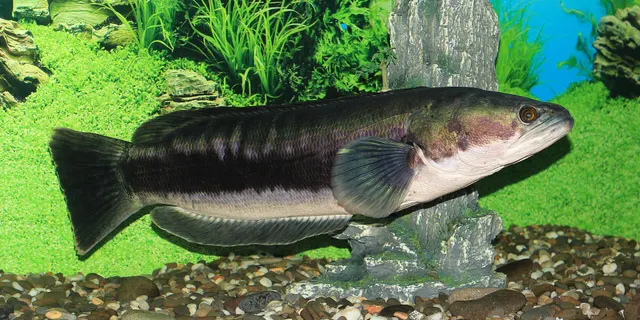 Giant snakeheadAir-breathing lets a snakehead survive transport and short overland movement in a way most fish cannot, which is precisely why introductions outside the native range establish so readily.
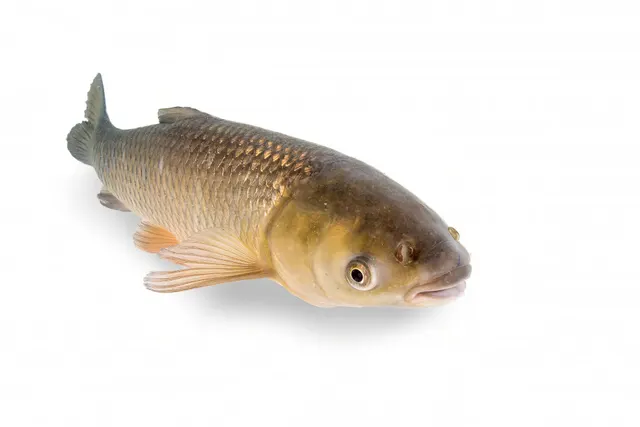 Grass carpIntroduced to more than eighty countries to control weed, and the problem is that it works — aquatic vegetation is habitat rather than clutter, and removing it changes a system.
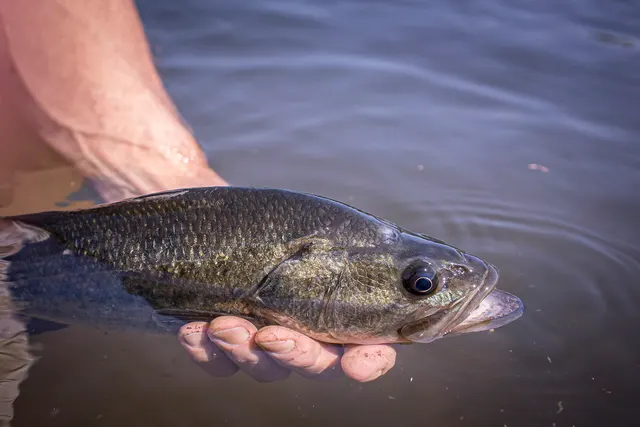 Largemouth bassIntroduced far outside its native range and implicated in serious declines of native fish and amphibians in several of those places — a fact that tends to be omitted from its billing as the world's favourite sport fish.
- Native oysterThe introduced Pacific oyster now reproduces in the wild in British and Irish waters and reefs over shores the native used to occupy, and moving live shellfish moves pathogens with them.
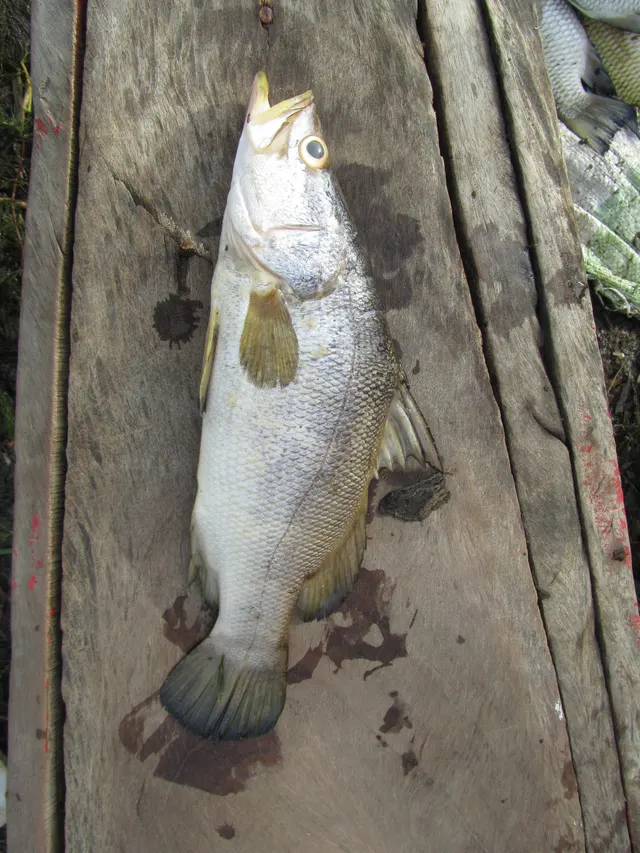 Nile perchThe clearest demonstration anywhere of what a generalist predator does to an isolated fish community — and the mechanism, somebody moving live fish for what seemed a good reason, is available to any angler.
- Red lionfishAn aquarium-trade introduction that established across an ocean basin in two decades and reduced native fish recruitment on invaded reefs — and the clearest case of an invasion no border control could have stopped after the fact.
- Sea lampreyThe clearest demonstration anywhere of an introduction routed through a man-made waterway, and the reason canal and transfer schemes are treated as biosecurity events rather than as engineering.
- Shore crabNative in the north-east Atlantic and among the most damaging marine invaders recorded elsewhere — on both North American coasts, in South Africa, Australia, Argentina and Japan. The mechanism of spread includes movement of live animals in bait buckets and gear, which is why the handling rule differs entirely between a Cornish harbour and a Tasmanian one.
8 more
- Signal crayfish Fish
- Silver carp Fish
- Smallmouth bass Fish
- Speckled peacock bass Fish
- Striped snakehead Fish
- Wels catfish Fish
- White-clawed crayfish Fish
- Zander Fish
Practices involved
- BowfishingIn parts of North America bowfishing is used deliberately against introduced carp species, which is the clearest case in FishingHQ of a method whose ethical standing depends entirely on what it is pointed at.
- DeadbaitingSea baits carry no freshwater pathogens, which is a genuine biosecurity advantage over coarse fish deadbaits moved between waters.
- LivebaitingMoving live fish between waters is the single most damaging thing an angler can do, and it is the reason this method is restricted where it is.
- Livebaiting at seaLive bait is a documented pathway for moving fish between waters, and a bait released or escaping where it did not come from is exactly the mechanism.
Gear involved
- Crab and shellfishShore-collected live bait moved between coasts is a documented pathway for non-native species and shellfish disease, and it is one anglers control entirely.
- Wading boot solesDidymo, invertebrates, plant fragments and fish pathogens all travel between catchments in a damp felt sole, and an angler moving between rivers in a week is a faster vector than any natural spread.
Water and ground
Where this applies
- Lake Victoria and the Rift Valley lakesThe Nile perch introduction to Lake Victoria is among the largest vertebrate extinction events attributable to a single deliberate act, and it is the reference case for what an introduced predator can do.
- Loch LomondRuffe were introduced to the loch, most probably as discarded live bait, and established explosively — in a water holding powan, a glacial relict occurring naturally in Britain only here and in one neighbouring loch.
- Lough CorribZebra mussel arrived and changed the lake substantially by filtering it clear, and invasive waterweed followed, which is why check-clean-dry is enforced practice on Irish waters.
- Lough ErneThis system's own recent history — the arrival and spread of species that changed the fishery — is the argument for biosecurity, and the restored canal connection to the Shannon makes the two the largest connected inland navigation in these islands.
- New ZealandThe country's famous trout fishing is for brown and rainbow trout introduced in the nineteenth century, which thrived — a reminder that some introductions become the fishery rather than destroying it.
- Norway and the Nordic coastSalmon rivers here have suffered severe damage from introduced parasites, which is why disinfection of equipment brought from abroad is a requirement rather than a courtesy.
- PatagoniaInvasive freshwater algae spread on damp gear between rivers have made disinfection of waders and boots a checked legal requirement in both countries.
- South American fishingThe Patagonian trout introduction produced an outstanding fishery and permanently altered native fish communities that evolved without large predatory salmonids. Both are true, and it is the clearest large-scale case of the trade anywhere.
8 more
- Thailand Fishing regions
- The Black Sea Fishing regions
- The English canal network Fishing regions
- The Great Lakes Fishing regions
- The Lake District lakes Fishing regions
- The River Ebro Fishing regions
- The River Tweed Fishing regions
- The Shannon system Fishing regions
Related reading
- Freshwater spearfishingEquipment moves water, mud and organisms between waters, and freshwater systems are where introductions do the most damage.
- Gathering your own baitBait, its packaging and the water it travels in are a recognised pathway for moving organisms between catchments, which is why containers are rinsed and dried between waters.
- Invasive species, and where spearfishing genuinely helpsA diver removing an invasive species from one water and introducing another to the next has not come out ahead.
- Live or dead: what changes for the fishLive bait is a live organism moved between waters, carrying its parasites and pathogens with it. The movement of live fish is separately controlled almost everywhere for precisely this reason.
- Spearfishing in the Caribbean and Central AmericaTargeted lionfish removal reduces density locally while sustained effort continues, and does not eradicate the invasion — both halves matter.
- Travelling with spearfishing equipmentWetsuits, fins and floats carry water, mud and organisms, and a number of countries inspect dive equipment on arrival.
- What to do with bait you did not useReleasing leftover live bait is one of the principal introduction pathways there is, and it is almost always done as an act of kindness at the end of a session.
- Where bait comes from, and the rules that applyBait collected in one place and carried to another moves organisms, pathogens and water, and the equipment used to collect it does the same.
How this compares
- Biosecurity: check, clean, dryOne page describes the threat and the other the protocol. Behaviour changes on the strength of steps rather than of consequences, which is why both are needed.
- Moroccan mountain and reservoir fresh waterDeliberate mid-century stocking created the reservoir fisheries and is a pressure on an endemic river fauna with nowhere else to go. Moving fish, water or wet equipment between catchments is how that pressure spreads.
Sources and evidence
- Check Clean Dry — biosecurity guidance for water users — GB Non-native Species Secretariat (Conservation authority)Relied on for: The biosecurity guidance for water users and the pathways it addresses.States this directlyPassage read and verified
Why the 49 connections on this page are here, and the sources
Species affected
Official guidance — 9 connections
Stated by a fisheries authority, scientific institute or recognised angling body. Authoritative, but summarising rather than demonstrating.
Giant snakehead
An introduction-pathway claim resting on the verified physiology plus the biosecurity framework.
- FishBase: a global information system on fishes — Froese, R. and D. Pauly, eds. — FishBase Consortium (Scientific institute)Relied on for: That Channa micropeltes is an obligate air-breather.States this directlyPassage read and verified
- Check Clean Dry — biosecurity guidance for water users — GB Non-native Species Secretariat (Conservation authority)Relied on for: That the movement of live fish is a principal pathway for the introduction and spread of non-native aquatic species.States this directlyPassage read and verified
Grass carp
An introduction-impact claim held to an authoritative standard, with the sterile-triploid response being the management detail that matters.
- Check Clean Dry — biosecurity guidance for water users — GB Non-native Species Secretariat (Conservation authority)Relied on for: The framework by which introduced fish are assessed and managed, including the use of sterile triploid stock and controls on stocking.States this directlyPassage read and verified
Largemouth bass
An introduction-impact claim held to an authoritative standard, because it is a management concern rather than an angling opinion.
- FishBase: a global information system on fishes — Froese, R. and D. Pauly, eds. — FishBase Consortium (Scientific institute)Relied on for: That several countries report adverse ecological impact following introduction of Micropterus salmoides.States this directlyPassage read and verified
- Check Clean Dry — biosecurity guidance for water users — GB Non-native Species Secretariat (Conservation authority)Relied on for: The general framework for assessing and managing introduced aquatic species.FishingHQ's interpretation of what it saysPassage read and verified
Shore crab
A statement about invasion status and its management, which is guidance issued by bodies with responsibility for it rather than an angling observation.
- Check Clean Dry — biosecurity guidance for water users — GB Non-native Species Secretariat (Conservation authority)Relied on for: The framework under which non-native species are assessed and managed, and the principle that moving live animals and water between sites is the mechanism of spread.States this directlyPassage read and verified
- The IUCN Red List of Threatened Species — International Union for Conservation of Nature (Conservation authority)Relied on for: That the species is recorded as a significant invasive outside its native range, with documented effects on shellfish communities.States this directlyCitation checked — the work exists and is described correctly
Signal crayfish
The one catch on FishingHQ where the standing advice to return a catch is not merely wrong but unlawful.
- Check Clean Dry — biosecurity guidance for water users — GB Non-native Species Secretariat (Conservation authority)Relied on for: That signal crayfish carry crayfish plague, that the disease is fatal to native species, and that live movement and damp equipment are the principal spread vectors.States this directlyPassage read and verified
Smallmouth bass
An introduction-impact claim held to an authoritative standard.
- FishBase: a global information system on fishes — Froese, R. and D. Pauly, eds. — FishBase Consortium (Scientific institute)Relied on for: That Micropterus dolomieu has been introduced into many countries for sport fishing and that several countries report adverse ecological impact after introduction.States this directlyPassage read and verified
- Check Clean Dry — biosecurity guidance for water users — GB Non-native Species Secretariat (Conservation authority)Relied on for: The framework by which introduced predatory fish are assessed and managed, and live movement as the transmission route.FishingHQ's interpretation of what it saysPassage read and verified
Speckled peacock bass
An introduction-pathway claim held to an authoritative standard.
- Check Clean Dry — biosecurity guidance for water users — GB Non-native Species Secretariat (Conservation authority)Relied on for: That the movement of live fish is a principal pathway for the introduction and spread of non-native aquatic species, and the framework by which introduced predators are assessed.States this directlyPassage read and verified
- FishBase: a global information system on fishes — Froese, R. and D. Pauly, eds. — FishBase Consortium (Scientific institute)Relied on for: That Cichla temensis is a piscivorous cichlid native to the Amazon and Orinoco basins.States this directlyPassage read and verified
Wels catfish
An introduction-impact claim held to an authoritative standard because it concerns a statutory management question.
- Check Clean Dry — biosecurity guidance for water users — GB Non-native Species Secretariat (Conservation authority)Relied on for: The framework by which introduced predatory fish are assessed and managed in Britain, including Silurus glanis.States this directlyPassage read and verified
- Freshwater Fishes of the British Isles — HarperCollins (New Naturalist 75), 1992 (Reference work)Relied on for: The introduction history of Silurus glanis into western European waters outside its native range.States this directlyCitation checked — the work exists and is described correctly
Zander
An establishment and management claim, held to an authoritative standard because it concerns what a statutory body treats as a non-native species.
- Check Clean Dry — biosecurity guidance for water users — GB Non-native Species Secretariat (Conservation authority)Relied on for: The status of species introduced outside their native range in Great Britain and the general management framework applied to them.States this directlyPassage read and verified
- Environment Agency fisheries management, byelaws and rod licensing information — Environment Agency (Government fisheries body)Relied on for: That the movement and stocking of fish is regulated in England and Wales.FishingHQ's interpretation of what it saysCitation checked — the work exists and is described correctly
Backed by research — 7 connections
Supported by peer-reviewed research or fisheries science. The sources are listed and can be checked.
Native oyster
An environmental effect attached to the thing that causes it, resting on an authoritative source rather than on advocacy.
- The IUCN Red List of Threatened Species — International Union for Conservation of Nature (Conservation authority)Relied on for: The global Red List assessment for the species concerned, and the population trend and threats recorded in it.States this directlyCitation checked — the work exists and is described correctly
- JNCC species and habitat conservation advice — Joint Nature Conservation Committee (Conservation authority)Relied on for: UK conservation designation and the status of protected and priority species.States this directlyCitation checked — the work exists and is described correctly
Nile perch
An introduction-impact claim held to a scientific standard, because it is FishingHQ's principal worked example of the biosecurity argument.
- FishBase: a global information system on fishes — Froese, R. and D. Pauly, eds. — FishBase Consortium (Scientific institute)Relied on for: That Lates niloticus was introduced outside its native range and that several countries report adverse ecological impact following introduction.States this directlyPassage read and verified
- Check Clean Dry — biosecurity guidance for water users — GB Non-native Species Secretariat (Conservation authority)Relied on for: The mechanism by which introduced generalist predators affect native communities, and live movement as the transmission route.FishingHQ's interpretation of what it saysPassage read and verified
Red lionfish
An environmental effect attached to the thing that causes it, resting on an authoritative source rather than on advocacy.
- NOAA research and management guidance on the invasive Indo-Pacific lionfish — NOAA National Centers for Coastal Ocean Science (Scientific institute)Relied on for: The invasion history, ecology, documented impact on native reef fish recruitment, and the control programmes for Pterois in the western Atlantic.States this directlyCitation checked — the work exists and is described correctly
- The IUCN Red List of Threatened Species — International Union for Conservation of Nature (Conservation authority)Relied on for: The global assessment and distribution of the species.States this directlyCitation checked — the work exists and is described correctly
Sea lamprey
An environmental claim resting on the documented history of the introduction and its consequences, attached to the species that caused it.
- The IUCN Red List of Threatened Species — International Union for Conservation of Nature (Conservation authority)Relied on for: The conservation assessment of the species concerned and the basis for treating population status as varying rather than uniform.States this directlyCitation checked — the work exists and is described correctly
- Freshwater Fishes of the British Isles — HarperCollins (New Naturalist 75), 1992 (Reference work)Relied on for: The decline of migratory fishes in European rivers and the habitat requirements — including long-duration silt beds for larvae — that explain it.States this directlyCitation checked — the work exists and is described correctly
Silver carp
A species joined to the environmental issue it is a worked example of. `explained_by` cannot carry these — its object must be a `concept` and these are `environment` records — and the distinction is real rather than bureaucratic: an environmental issue is something a species CAUSES or is subject to, not a mechanism that explains it.
- Check Clean Dry — biosecurity guidance for water users — GB Non-native Species Secretariat (Conservation authority)Relied on for: Biosecurity guidance for water users and the pathways by which aquatic non-native species are moved between catchments.States this directlyPassage read and verified
- The IUCN Red List of Threatened Species — International Union for Conservation of Nature (Conservation authority)Relied on for: Conservation assessment and recorded threats, including the impact of introduced species on native populations.States this directlyCitation checked — the work exists and is described correctly
Striped snakehead
A species joined to the environmental issue it is a worked example of. `explained_by` cannot carry these — its object must be a `concept` and these are `environment` records — and the distinction is real rather than bureaucratic: an environmental issue is something a species CAUSES or is subject to, not a mechanism that explains it.
- Check Clean Dry — biosecurity guidance for water users — GB Non-native Species Secretariat (Conservation authority)Relied on for: Biosecurity guidance for water users and the pathways by which aquatic non-native species are moved between catchments.States this directlyPassage read and verified
- The IUCN Red List of Threatened Species — International Union for Conservation of Nature (Conservation authority)Relied on for: Conservation assessment and recorded threats, including the impact of introduced species on native populations.States this directlyCitation checked — the work exists and is described correctly
White-clawed crayfish
An environmental effect attached to the thing that causes it, resting on an authoritative source rather than on advocacy.
- Environment Agency fisheries management, byelaws and rod licensing information — Environment Agency (Government fisheries body)Relied on for: Freshwater fisheries management in England: species status, distribution, invasive species policy and biosecurity practice.States this directlyCitation checked — the work exists and is described correctly
- JNCC species and habitat conservation advice — Joint Nature Conservation Committee (Conservation authority)Relied on for: UK conservation designation and the status of protected and priority freshwater species and habitats.States this directlyCitation checked — the work exists and is described correctly
Practices involved
Official guidance — 4 connections
Stated by a fisheries authority, scientific institute or recognised angling body. Authoritative, but summarising rather than demonstrating.
Bowfishing
A claim about how a method is used in management, held to an authoritative standard because it is the record's principal defence and should not rest on assertion.
- Check Clean Dry — biosecurity guidance for water users — GB Non-native Species Secretariat (Conservation authority)Relied on for: That control and removal of introduced aquatic species is a recognised management response, distinct from recreational harvest.FishingHQ's interpretation of what it saysPassage read and verified
- FAO fishing gear types and fishing technology information — Food and Agriculture Organization of the United Nations (Scientific institute)Relied on for: The classification of bow and arrow among harpoon-type fishing gear.States this directlyCitation checked — the work exists and is described correctly
Deadbaiting
Biosecurity guidance identifies movement of fish and water between waters as a transfer pathway.
- Check Clean Dry — biosecurity guidance for water users — GB Non-native Species Secretariat (Conservation authority)Relied on for: That movement of live and dead fish, water and damp equipment between waters is a recognised transfer pathway.States this directlyPassage read and verified
Livebaiting
Live fish movement is identified as a principal introduction pathway for non-native species and disease.
- Check Clean Dry — biosecurity guidance for water users — GB Non-native Species Secretariat (Conservation authority)Relied on for: That movement of live fish and water between waters is a recognised introduction pathway.States this directlyPassage read and verified
- Environment Agency fisheries management, byelaws and rod licensing information — Environment Agency (Government fisheries body)Relied on for: That the movement of live fish is controlled by statute in England.FishingHQ's interpretation of what it saysCitation checked — the work exists and is described correctly
Livebaiting at sea
A biosecurity claim held to an authoritative standard because it concerns a recognised introduction pathway rather than an angler's preference.
- Check Clean Dry — biosecurity guidance for water users — GB Non-native Species Secretariat (Conservation authority)Relied on for: That the movement of live fish is a principal pathway for the introduction and spread of non-native aquatic species.States this directlyPassage read and verified
Gear involved
Official guidance — 2 connections
Stated by a fisheries authority, scientific institute or recognised angling body. Authoritative, but summarising rather than demonstrating.
Crab and shellfish
A biosecurity claim held to an authoritative standard.
- Check Clean Dry — biosecurity guidance for water users — GB Non-native Species Secretariat (Conservation authority)Relied on for: That the movement of live bait and shore-collected organisms is a recognised pathway for the introduction and spread of non-native aquatic species.States this directlyPassage read and verified
Wading boot soles
An environmental claim attached to the transport mechanism rather than to the organism, because the mechanism is the part an angler controls.
- Check Clean Dry — biosecurity guidance for water users — GB Non-native Species Secretariat (Conservation authority)Relied on for: That aquatic invasive organisms are transported between catchments on damp angling equipment, and the good-practice guidance addressing it.States this directlyPassage read and verified
Water and ground
Official guidance — 1 connection
Stated by a fisheries authority, scientific institute or recognised angling body. Authoritative, but summarising rather than demonstrating.
Estuary
A biosecurity claim held to an authoritative standard, because it concerns a statutory management concern rather than an angler's practice.
- Check Clean Dry — biosecurity guidance for water users — GB Non-native Species Secretariat (Conservation authority)Relied on for: Pathways by which non-native aquatic species are introduced and spread.States this directlyPassage read and verified
- JNCC species and habitat conservation advice — Joint Nature Conservation Committee (Conservation authority)Relied on for: The connectivity of estuarine systems to both freshwater and marine environments.FishingHQ's interpretation of what it saysCitation checked — the work exists and is described correctly
Where this applies
Backed by research — 10 connections
Supported by peer-reviewed research or fisheries science. The sources are listed and can be checked.
Lake Victoria and the Rift Valley lakes
An environmental pressure that is specific to this place rather than general to fishing, joined so the issue is anchored to a real example.
- The IUCN Red List of Threatened Species — International Union for Conservation of Nature (Conservation authority)Relied on for: Assessment of the species and habitats affected, and the pressures acting on them, including habitat change and exploitation.States this directlyCitation checked — the work exists and is described correctly
- Code of Conduct for Responsible Fisheries — Food and Agriculture Organization of the United Nations, Rome, 1995 (Standards body)Relied on for: Principles for responsible fisheries management, precaution, gear selectivity and the treatment of shared and small-scale fisheries.Background and mechanism onlyCitation checked — the work exists and is described correctly
Lough Corrib
An environmental pressure that is specific to this place rather than general to fishing, joined so the issue is anchored to a real example.
- The IUCN Red List of Threatened Species — International Union for Conservation of Nature (Conservation authority)Relied on for: Assessment of the species and habitats affected, and the pressures acting on them, including habitat change and exploitation.States this directlyCitation checked — the work exists and is described correctly
- Code of Conduct for Responsible Fisheries — Food and Agriculture Organization of the United Nations, Rome, 1995 (Standards body)Relied on for: Principles for responsible fisheries management, precaution, gear selectivity and the treatment of shared and small-scale fisheries.Background and mechanism onlyCitation checked — the work exists and is described correctly
Lough Erne
A claim that a place raises a particular environmental question, resting on the scientific and conservation literature for the system rather than on angling practice.
- JNCC species and habitat conservation advice — Joint Nature Conservation Committee (Conservation authority)Relied on for: Habitat classification and description for the intertidal, coastal, estuarine and freshwater habitats named, and the species characteristically associated with them.States this directlyCitation checked — the work exists and is described correctly
- Cefas science, advice and data on marine and freshwater environments — Centre for Environment, Fisheries and Aquaculture Science (Government fisheries body)Relied on for: Characterisation of UK inshore sediment, intertidal habitat, estuarine process and the shellfish beds associated with them.States this directlyCitation checked — the work exists and is described correctly
Patagonia
An environmental pressure that is specific to this place rather than general to fishing, joined so the issue is anchored to a real example.
- The IUCN Red List of Threatened Species — International Union for Conservation of Nature (Conservation authority)Relied on for: Assessment of the species and habitats affected, and the pressures acting on them, including habitat change and exploitation.States this directlyCitation checked — the work exists and is described correctly
- Code of Conduct for Responsible Fisheries — Food and Agriculture Organization of the United Nations, Rome, 1995 (Standards body)Relied on for: Principles for responsible fisheries management, precaution, gear selectivity and the treatment of shared and small-scale fisheries.Background and mechanism onlyCitation checked — the work exists and is described correctly
Thailand
An environmental claim attached to the geography where it operates, resting on published assessment rather than on advocacy.
- The IUCN Red List of Threatened Species — International Union for Conservation of Nature (Conservation authority)Relied on for: Current conservation assessment of the species and systems concerned, with the assessment date.States this directlyCitation checked — the work exists and is described correctly
- Reef Fish Spawning Aggregations: Biology, Research and Management — Springer, Fish & Fisheries Series vol. 35, 2012 (Scientific literature)Relied on for: The exploitation and management of aggregating reef species, and the evidence on which protection is argued.States this directlyCitation checked — the work exists and is described correctly
The Black Sea
Written because the sequence is unusually complete: introduction, mechanism, measured collapse, and a subsequent partial recovery with an identified cause. Most invasion accounts have only the first half.
- EMODnet — the European Marine Observation and Data Network — The European Commission, assembled from the national hydrographic offices, geological surveys and marine institutes of the member states (Scientific institute)Relied on for: Bathymetry, salinity and physical oceanography of European sea basins including the Black Sea.States this directlyCitation checked — the work exists and is described correctly
- The European Environment Agency's assessments of Europe's waters, seas and coasts — European Environment Agency, Copenhagen (Conservation authority)Relied on for: State-of-the-environment assessment of Europe's seas and surface waters, including eutrophication, nutrient loading and river continuity in the Danube and Black Sea catchment.States this directlyCitation checked — the work exists and is described correctly
The English canal network
A claim that a place raises a particular environmental question, resting on the scientific and conservation literature for the system rather than on angling practice.
- JNCC species and habitat conservation advice — Joint Nature Conservation Committee (Conservation authority)Relied on for: Habitat classification and description for the intertidal, coastal, estuarine and freshwater habitats named, and the species characteristically associated with them.States this directlyCitation checked — the work exists and is described correctly
- Cefas science, advice and data on marine and freshwater environments — Centre for Environment, Fisheries and Aquaculture Science (Government fisheries body)Relied on for: Characterisation of UK inshore sediment, intertidal habitat, estuarine process and the shellfish beds associated with them.States this directlyCitation checked — the work exists and is described correctly
The Lake District lakes
A claim that a place raises a particular environmental question, resting on the scientific and conservation literature for the system rather than on angling practice.
- JNCC species and habitat conservation advice — Joint Nature Conservation Committee (Conservation authority)Relied on for: Habitat classification and description for the intertidal, coastal and freshwater habitats named, and the species characteristically associated with them.States this directlyCitation checked — the work exists and is described correctly
- Cefas science, advice and data on marine and freshwater environments — Centre for Environment, Fisheries and Aquaculture Science (Government fisheries body)Relied on for: Characterisation of UK inshore sediment, intertidal habitat and the shellfish beds associated with them.States this directlyCitation checked — the work exists and is described correctly
The River Tweed
An environmental pressure that is specific to this place rather than general to fishing, joined so the issue is anchored to a real example.
- The IUCN Red List of Threatened Species — International Union for Conservation of Nature (Conservation authority)Relied on for: Assessment of the species and habitats affected, and the pressures acting on them, including habitat change and exploitation.States this directlyCitation checked — the work exists and is described correctly
- Code of Conduct for Responsible Fisheries — Food and Agriculture Organization of the United Nations, Rome, 1995 (Standards body)Relied on for: Principles for responsible fisheries management, precaution, gear selectivity and the treatment of shared and small-scale fisheries.Background and mechanism onlyCitation checked — the work exists and is described correctly
The Shannon system
A claim that a place raises a particular environmental question, resting on the scientific and conservation literature for the system rather than on angling practice.
- JNCC species and habitat conservation advice — Joint Nature Conservation Committee (Conservation authority)Relied on for: Habitat classification and description for the intertidal, coastal, estuarine and freshwater habitats named, and the species characteristically associated with them.States this directlyCitation checked — the work exists and is described correctly
- Cefas science, advice and data on marine and freshwater environments — Centre for Environment, Fisheries and Aquaculture Science (Government fisheries body)Relied on for: Characterisation of UK inshore sediment, intertidal habitat, estuarine process and the shellfish beds associated with them.States this directlyCitation checked — the work exists and is described correctly
Official guidance — 6 connections
Stated by a fisheries authority, scientific institute or recognised angling body. Authoritative, but summarising rather than demonstrating.
Loch Lomond
An environmental claim about a named water, limited to what the cited monitoring and conservation bodies set out.
- JNCC species and habitat conservation advice — Joint Nature Conservation Committee (Conservation authority)Relied on for: Conservation status, designation and monitoring of species and habitats in the United Kingdom.States this directlyCitation checked — the work exists and is described correctly
- Environment Agency fisheries management, byelaws and rod licensing information — Environment Agency (Government fisheries body)Relied on for: The structure of freshwater fisheries management in England, including water quality monitoring and fishery regulation.States this directlyCitation checked — the work exists and is described correctly
New Zealand
An introduction claim held to an authoritative standard, and included because it complicates FishingHQ's usual biosecurity framing rather than repeating it.
- Check Clean Dry — biosecurity guidance for water users — GB Non-native Species Secretariat (Conservation authority)Relied on for: The framework by which introduced species are assessed, including that outcomes range from severe harm to established naturalised populations.FishingHQ's interpretation of what it saysPassage read and verified
- FishBase: a global information system on fishes — Froese, R. and D. Pauly, eds. — FishBase Consortium (Scientific institute)Relied on for: That Salmo trutta and Oncorhynchus mykiss have been introduced widely outside their native ranges.Background and mechanism onlyPassage read and verified
Norway and the Nordic coast
A biosecurity claim held to an authoritative standard.
- NASCO conservation and management of North Atlantic salmon — North Atlantic Salmon Conservation Organization (Government fisheries body)Relied on for: That biosecurity measures against parasites and disease are a recognised component of Atlantic salmon management.States this directlyCitation checked — the work exists and is described correctly
- Check Clean Dry — biosecurity guidance for water users — GB Non-native Species Secretariat (Conservation authority)Relied on for: That equipment is a recognised pathway for the transfer of aquatic parasites and pathogens.States this directlyPassage read and verified
South American fishing
An environmental claim about a region, limited to what the cited fisheries and conservation bodies set out.
- Code of Conduct for Responsible Fisheries — Food and Agriculture Organization of the United Nations, Rome, 1995 (Standards body)Relied on for: International principles for responsible fisheries, including small-scale fisheries and the role of national authorities.States this directlyCitation checked — the work exists and is described correctly
- Good Fish Guide — Marine Conservation Society (Conservation authority)Relied on for: Synthesis of stock and gear information relating fishing methods to their effects on stocks and habitats.Background and mechanism onlyCitation checked — the work exists and is described correctly
The Great Lakes
An environmental pressure operating in this system, recorded rather than adjudicated.
- Check Clean Dry — biosecurity guidance for water users — GB Non-native Species Secretariat (Conservation authority)Relied on for: The pathways by which aquatic invasive species move between water bodies, including connected navigations and ballast water, and the general irreversibility of establishment.States this directlyPassage read and verified
- JNCC species and habitat conservation advice — Joint Nature Conservation Committee (Conservation authority)Relied on for: Conservation advice on native species and the impact of introduced ones.Background and mechanism onlyCitation checked — the work exists and is described correctly
The River Ebro
An environmental claim about a named water, limited to what the cited assessment and international guidance set out.
- The IUCN Red List of Threatened Species — International Union for Conservation of Nature (Conservation authority)Relied on for: Extinction-risk assessment, population trend and the threats identified for freshwater and diadromous species, including barriers to migration and exploitation.States this directlyCitation checked — the work exists and is described correctly
- Code of Conduct for Responsible Fisheries — Food and Agriculture Organization of the United Nations, Rome, 1995 (Standards body)Relied on for: International principles for responsible fisheries, including the management of shared and transboundary waters and of introduced species.States this directlyCitation checked — the work exists and is described correctly
Related reading
Official guidance — 6 connections
Stated by a fisheries authority, scientific institute or recognised angling body. Authoritative, but summarising rather than demonstrating.
Freshwater spearfishing
An obligation rather than a courtesy, and the control is drying.
- Check Clean Dry — biosecurity guidance for water users — GB Non-native Species Secretariat (Conservation authority)Relied on for: Biosecurity practice for water users, the movement of organisms on equipment, and the role of drying.States this directlyPassage read and verified
Invasive species, and where spearfishing genuinely helps
Removal and vector control as the two halves of the same problem.
- Check Clean Dry — biosecurity guidance for water users — GB Non-native Species Secretariat (Conservation authority)Relied on for: Biosecurity practice for water users, the movement of organisms on equipment, and the role of drying.States this directlyPassage read and verified
Live or dead: what changes for the fish
The pathway and its consequences are documented by the bodies responsible for non-native species and fisheries health, and the claim is limited to what those bodies set out.
- Check Clean Dry — biosecurity guidance for water users — GB Non-native Species Secretariat (Conservation authority)Relied on for: Non-native species pathways, the check-clean-dry biosecurity approach and the role of recreational water users in spread.States this directlyPassage read and verified
- Environment Agency fisheries management, byelaws and rod licensing information — Environment Agency (Government fisheries body)Relied on for: The structure of freshwater fisheries regulation including bait movement, live fish movement and fish health controls.States this directlyCitation checked — the work exists and is described correctly
Travelling with spearfishing equipment
The obligation that travels with the gear.
- Check Clean Dry — biosecurity guidance for water users — GB Non-native Species Secretariat (Conservation authority)Relied on for: Biosecurity practice for water users, the movement of organisms on equipment, and the role of drying.States this directlyPassage read and verified
What to do with bait you did not use
The pathway and its consequences are documented by the bodies responsible for non-native species and fisheries health, and the claim is limited to what those bodies set out.
- Check Clean Dry — biosecurity guidance for water users — GB Non-native Species Secretariat (Conservation authority)Relied on for: Non-native species pathways, the check-clean-dry biosecurity approach and the role of recreational water users in spread.States this directlyPassage read and verified
- Environment Agency fisheries management, byelaws and rod licensing information — Environment Agency (Government fisheries body)Relied on for: The structure of freshwater fisheries regulation including bait movement, live fish movement and fish health controls.States this directlyCitation checked — the work exists and is described correctly
Where bait comes from, and the rules that apply
The pathway and its consequences are documented by the bodies responsible for non-native species and fisheries health, and the claim is limited to what those bodies set out.
- Check Clean Dry — biosecurity guidance for water users — GB Non-native Species Secretariat (Conservation authority)Relied on for: Non-native species pathways, the check-clean-dry biosecurity approach and the role of recreational water users in spread.States this directlyPassage read and verified
- Environment Agency fisheries management, byelaws and rod licensing information — Environment Agency (Government fisheries body)Relied on for: The structure of freshwater fisheries regulation including bait movement, live fish movement and fish health controls.States this directlyCitation checked — the work exists and is described correctly
Backed by research — 2 connections
Supported by peer-reviewed research or fisheries science. The sources are listed and can be checked.
Gathering your own bait
A practice joined to the environmental issue it raises specifically rather than to a general concern.
- ICES Advice on fishing opportunities, catch and effort — International Council for the Exploration of the Sea (Scientific institute)Relied on for: Stock status, environmental pressures and the scientific basis for advice in the waters concerned.Background and mechanism onlyCitation checked — the work exists and is described correctly
- The IUCN Red List of Threatened Species — International Union for Conservation of Nature (Conservation authority)Relied on for: Assessment of the species and habitats affected, and the pressures acting on them.States this directlyCitation checked — the work exists and is described correctly
Spearfishing in the Caribbean and Central America
The one documented case of spearfishing as a conservation measure, stated with its limits.
- NOAA research and management guidance on the invasive Indo-Pacific lionfish — NOAA National Centers for Coastal Ocean Science (Scientific institute)Relied on for: The invasive lionfish situation in the western Atlantic and Caribbean and diver removal as a local management measure.States this directlyCitation checked — the work exists and is described correctly
How this compares
Backed by research — 1 connection
Supported by peer-reviewed research or fisheries science. The sources are listed and can be checked.
Biosecurity: check, clean, dry
Two records a reader will hold together, joined where the relationship between them is the informative part.
- Check Clean Dry — biosecurity guidance for water users — GB Non-native Species Secretariat (Conservation authority)Relied on for: Non-native species pathways, the check-clean-dry biosecurity approach and the role of recreational water users in spread.States this directlyPassage read and verified
- Environment Agency fisheries management, byelaws and rod licensing information — Environment Agency (Government fisheries body)Relied on for: The structure of freshwater fisheries regulation including fish movement, bait movement and biosecurity controls.States this directlyCitation checked — the work exists and is described correctly
What experienced anglers do — 1 connection
Widely and independently recommended by experienced anglers and specialist sources. This is real angling knowledge, not proof: controlled evidence for it is limited, and FishingHQ records it as convention rather than as a demonstrated effect.
Moroccan mountain and reservoir fresh water
Two places a reader would reasonably weigh against one another, joined where the comparison teaches something about both. It is also how the larger geography is linked to what sits inside it.
- Cefas science, advice and data on marine and freshwater environments — Centre for Environment, Fisheries and Aquaculture Science (Government fisheries body)Relied on for: Marine and freshwater environmental science, including coastal physical processes, productivity and the monitoring behind them.States this directlyCitation checked — the work exists and is described correctly
- ICES Advice on fishing opportunities, catch and effort — International Council for the Exploration of the Sea (Scientific institute)Relied on for: Stock assessment and advice for north-east Atlantic and adjacent stocks, including the environmental drivers of productivity.Background and mechanism onlyCitation checked — the work exists and is described correctly
How FishingHQ labels evidence is explained in the evidence policy.