The River Tweed
Fishing regions · Last reviewed 2026-08-14
A large Border river with an autumn salmon run of international standing, governed since the nineteenth century by its own statutory commission across an England-Scotland boundary.
Safety: moving water and currents — can cause serious injury or death. 2 more points apply here.
Being listed here is not permission to fish. What that meansClose
Access, fishing rights, seasons, licences, local bylaws and permitted methods vary and can change. Check current access, permission, local regulations, closures and restrictions before you travel or fish. FishingHQ describes what the ground is and names who holds the answer; it does not hold the answer itself.
Find the authority for a jurisdiction · What FishingHQ does and does not cover
The Tweed is the river FishingHQ explains at this depth, chosen because its run timing, its governance and its history are all genuinely distinctive and all durably documented.
IT IS A BIG RIVER WITH A BIG CATCHMENT. Rising in the Southern Uplands and running roughly a hundred miles east to the North Sea, with substantial tributaries, the Tweed drains a large area of hill, moorland and farmland and carries a considerable volume of water.
THE AUTUMN RUN IS WHAT IT IS KNOWN FOR. Atlantic salmon enter the Tweed across a long season, but the river's international reputation rests on a substantial run of fish entering in autumn, later than on many other British rivers. That timing is a characteristic of the river rather than an accident of a particular year, and it makes the Tweed the autumn destination in British salmon fishing.
THE GOVERNANCE IS UNIQUE. The river forms and crosses the England-Scotland border, and rather than being administered by either country's general fisheries framework it is managed by its own statutory commission under Tweed-specific legislation dating from the nineteenth century and modernised since. It is one of very few rivers in Britain with its own bespoke governing body.
THE FISHERY IS PRIVATE AND ORGANISED INTO BEATS. Fishing rights on the Tweed are owned, the river is divided into beats, and access is let. That is the normal Scottish and Border arrangement and it is the fundamental fact about how the fishery works.
AND THE CONSERVATION POSITION HAS CHANGED SUBSTANTIALLY. Atlantic salmon stocks across the North Atlantic have declined markedly, the species' conservation status has been revised, and management on this river as elsewhere has moved heavily towards release. Any description of the Tweed written from its twentieth-century reputation would be out of date.
What fishing here is like
A large Border river with a long east-flowing course from the Southern Uplands to the North Sea, a substantial tributary system, and an Atlantic salmon run whose autumn component gives it an international reputation. The fishery is private, organised into let beats, and predominantly fly fishing. Governance is by a river-specific statutory commission spanning the England-Scotland border, which is an arrangement almost unique in Britain. Sea trout, brown trout and grayling provide substantial fishing alongside the salmon.
What you can target here
One entry per fish, grouped by how you would be fishing — because the answer is a different one from the rocks and from a boat. Each entry says how strongly the sources support it and how much evidence sits behind it. These are documented catches, not a forecast, and none of it is a statement that you may fish any particular ground.
From the shore · 3
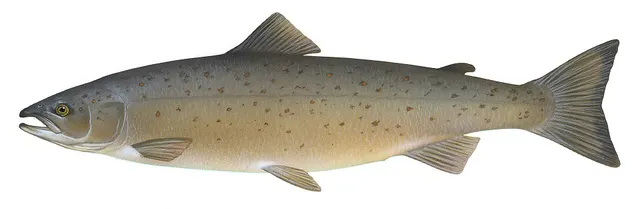 Atlantic salmonCharacteristic of this water2 placesThe Junction Pool, The Tweed at ColdstreamOver confluence, river reach
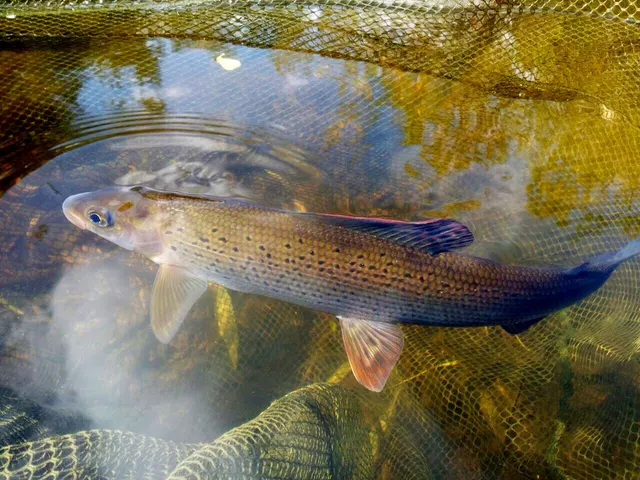 GraylingCharacteristic of this water2 placesThe Junction Pool, The Tweed at ColdstreamOver confluence, river reach
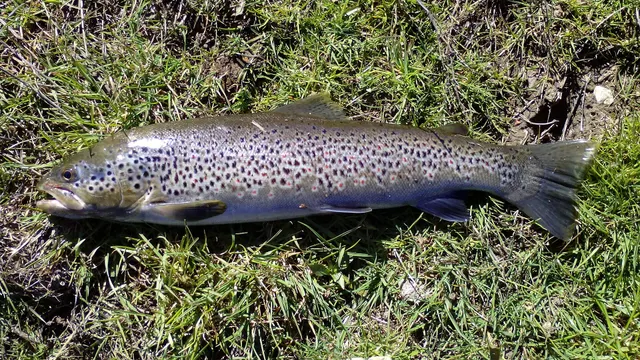 Brown troutRegular local target2 placesThe Junction Pool, The Tweed at ColdstreamOver confluence, river reach
From a boat · 1
What these strengths mean
- Characteristic of this water
- This water is strongly identified with this species by the sources that cover it.
- Regular local target
- Fishing sources describe this as a normal local target here, not merely as caught.
- How breadth is counted
- A fish documented at six marks is shown as six marks: breadth never raises the strength on its own. A fishery account describes the fishing; a recorded catch reports one specific catch. How evidence is weighed.
How people fish here
3 methods are recorded on the places documented here, counted from the records themselves rather than from what is practised in the country. Each opens a full guide to the technique.
Float fishing
Recorded at 2 places here, over confluence, river reach.
Suspending a bait at a controlled depth beneath a buoyant indicator — the most visual, most controllable and most widely applicable method in angling.
Documented on the same ground: Atlantic salmon, Grayling, Brown trout.
Salmon fly fishing
Recorded at 2 places here, over confluence, river reach.
Swinging a fly across a river on a tight line for a fish that has stopped eating — the method behind almost all Atlantic salmon fishing, and the one where fly speed and depth matter more than what the fly resembles.
Documented on the same ground: Atlantic salmon, Grayling, Brown trout.
Spinning
Recorded at 2 places here, over confluence, river reach.
Casting an artificial lure and retrieving it so that it moves like something alive — the most direct form of lure fishing.
Documented on the same ground: Atlantic salmon, Grayling, Brown trout.
These are the methods documented at the places FishingHQ holds here. A species listed beside a method is documented on the same ground, which is not the same as being taken that way — where a source establishes the method a fish was caught on, it is stated on that place’s own page. All fishing methods.
What dominates
Fly fishing for Atlantic salmon, principally with double-handed rods and sunk or floating lines according to season, which is the river's defining discipline. Fly fishing for sea trout, largely at night in summer. Wild brown trout fly fishing on the upper river and tributaries. Grayling fishing in the colder months, a substantial and growing fishery on this river. Spinning and bait fishing where and when the beat rules permit, which varies. Boat fishing from traditional coble-type craft on some of the larger lower beats, which is a distinctive local practice.
The water available
Upland headwaters and moorland tributaries in the Southern Uplands; a middle river of gravel runs, streamy glides and holding pools through farmland and woodland; large slow pools and heavier water on the lower river; a substantial tributary system including several rivers that are significant fisheries in their own right; a tidal reach and estuary at the sea; and a bed that is predominantly gravel and cobble, producing the riffle-pool structure salmon and trout depend on for spawning and holding.
How the rules are structured
The Tweed is governed under river-specific legislation by its own statutory commission, which covers the whole catchment including the parts in England, and which sets the annual close time, permitted methods, and conservation measures such as compulsory release for particular species or periods. That arrangement is almost unique in Britain and exists because the river crosses a national boundary and because its fisheries were considered important enough in the nineteenth century to warrant their own statute. Fishing rights are private property, the river is divided into beats, and permission to fish comes from the owner or their agent. Salmon conservation regulations and national stock assessment in both countries bear on the river, and Atlantic salmon carry conservation listing following substantial North Atlantic declines. Biosecurity requirements on the cleaning and drying of equipment apply because of invasive species risk. Netting fisheries in the estuary and lower river have been substantially bought out and reduced over the past decades. FishingHQ does not state what any current rule is.
Who to ask
- The river's statutory commission, which is the governing body for fisheries on the whole Tweed catchment including the English parts.
- The owner of the fishing rights or their letting agent, whose permission is required to fish any beat.
- The national fisheries and conservation authorities of Scotland and England, for salmon conservation regulation, stock assessment and species protection.
- The river trust or foundation working on habitat, catchment management and juvenile monitoring in the system.
- The biosecurity and invasive species authorities of both countries, for the equipment cleaning requirements that apply to anglers moving between waters.
Words you will meet
- Beat
- A defined length of river let as a fishing unit, with an agreed number of rods and its own rules on method and release. The organising unit of the Tweed fishery and of Scottish salmon fishing generally.
- Ghillie
- The person employed on a beat who knows the water, advises on where and how to fish it, handles the boat where one is used, and enforces the beat's rules. The role is a genuine professional one rather than a courtesy title.
- Autumn run
- The substantial component of the Tweed's salmon run that enters the river late in the season. It is the river's international distinction and it is a characteristic of this system rather than a general feature of British salmon rivers.
- Coble
- A traditional flat-bottomed boat used on the lower river, historically for net fishing and now for fly fishing on the larger pools. Boat fishing from one, with a ghillie on the oars, is a distinctive local practice.
- Annual close time
- The statutory period during which fishing for salmon is closed, set for this river by its own commission rather than by general national rules. Its dates are a matter for the commission and are revised.
Conditions and hazards
Wading a large salmon river is the principal hazard: the Tweed carries substantial volume, the bed is gravel and cobble that shifts, and the current in the heavier pools is strong enough to take a wader off their feet. Levels rise quickly after rain in the hills, and a river that was comfortable in the morning can be dangerous by afternoon with no local rainfall at all. Cold water is a year-round risk, and the autumn and winter fishing that the river is known for happens in the coldest water and the shortest days. Wading at night for sea trout adds the obvious difficulty of not being able to read the water. Slippery bedrock and algae-covered stones cause falls. The river is generally accessible and populated by comparison with remote fisheries, which helps, but a person swept downstream in a heavy pool is in serious difficulty regardless.
A gravel river with the structure salmon need
The Tweed's physical form is what makes it a salmon river, and the components are worth naming because they apply to every river of this type.
THE CATCHMENT IS LARGE AND VARIED. Headwaters rise in the Southern Uplands as moorland burns, gather through hill country, and the main river runs east through farmland and woodland to the sea. Several tributaries are substantial rivers in their own right, and the system as a whole drains a large area.
THE BED IS GRAVEL AND COBBLE, which is the single most important habitat fact for a salmonid river. Salmon and trout cut redds in clean loose gravel, and the eggs need water flowing through the interstices to deliver oxygen. A river with a silted bed cannot do this; a river with a mobile clean gravel bed can.
THE RIFFLE-POOL STRUCTURE IS THE OTHER ESSENTIAL. Alternating fast broken water and deeper slower pools gives spawning ground in the riffles, holding water in the pools and feeding stations at the transitions. The Tweed has that structure through most of its length and it is why the river fishes the way it does.
HOLDING POOLS ARE WHERE RUNNING FISH REST. A salmon moving upstream does not run continuously; it holds in pools with adequate depth, oxygen and shelter, and the fishery is largely about knowing where those are and fishing them properly.
FLOW IS THE VARIABLE THAT DECIDES EVERYTHING. Fish run on rising water, hold on falling water, and become difficult in prolonged low flow. The river's response to rainfall in the hills is therefore the most important short-term information in the fishery.
AND THE TRIBUTARIES ARE THE NURSERY. The bulk of juvenile production in a system like this happens in the smaller tributaries rather than the main river, which is why catchment-scale habitat work concentrates there and why the health of small burns matters to a fishery famous for its big-river pools.
Backed by research — why, and the sources (2)
Supported by peer-reviewed research or fisheries science. The sources are listed and can be checked.
- Freshwater Fishes of the British Isles — HarperCollins (New Naturalist 75), 1992 (Reference work)Relied on for: Distribution, habitat association, spawning requirements and ecology of British and Irish freshwater fishes.States this directlyCitation checked — the work exists and is described correctly
- FishBase: a global information system on fishes — Froese, R. and D. Pauly, eds. — FishBase Consortium (Scientific institute)Relied on for: Distribution, habitat association, size and life history recorded for the species concerned.Background and mechanism onlyPassage read and verified
Salmon, sea trout, brown trout and a grayling fishery that grew
The Tweed holds four fisheries and the least famous of them has become one of the most interesting.
ATLANTIC SALMON ARE THE RIVER'S REPUTATION. Fish enter across a long season, but the substantial autumn component is what distinguishes this river internationally. The species is anadromous — hatched in fresh water, migrating to sea to feed, returning to spawn — and the whole fishery is organised around intercepting that return.
THE STOCK POSITION HAS CHANGED AND THE RECORD SHOULD SAY SO. Atlantic salmon numbers across the North Atlantic have declined substantially over recent decades, marine survival has fallen, and the species' conservation assessment has been revised accordingly. Catches on this river as elsewhere are well below historic levels and management has moved heavily towards release.
SEA TROUT ARE BROWN TROUT WITH A DIFFERENT LIFE HISTORY, running to sea to feed and returning to spawn, and they support a summer night fishery of real quality on this system.
WILD BROWN TROUT ARE ABUNDANT in the upper river and tributaries and are a substantial fishery in their own right, frequently overlooked by visitors focused on salmon.
GRAYLING HAVE BECOME A MAJOR FISHERY. Present in the system and once regarded as a nuisance on a salmon river, grayling are now the subject of a serious winter fly fishery that extends the river's angling year well beyond the salmon season. That change in status — from vermin to catch — is one of the more interesting developments in British angling.
EELS, LAMPREY AND COARSE SPECIES occupy the lower river, and European eel's critically endangered status applies here as everywhere.
AND THE PREY BASE IS THE INVERTEBRATE COMMUNITY of a clean gravel river — upwing flies, caddis, stoneflies and shrimp — which is what the trout and grayling fisheries actually depend on and what catchment water quality work is aimed at.
Backed by research — why, and the sources (2)
Supported by peer-reviewed research or fisheries science. The sources are listed and can be checked.
- Freshwater Fishes of the British Isles — HarperCollins (New Naturalist 75), 1992 (Reference work)Relied on for: Distribution, habitat association, spawning requirements and ecology of British and Irish freshwater fishes.States this directlyCitation checked — the work exists and is described correctly
- FishBase: a global information system on fishes — Froese, R. and D. Pauly, eds. — FishBase Consortium (Scientific institute)Relied on for: Distribution, habitat association, size and life history recorded for the species concerned.Background and mechanism onlyPassage read and verified
Double-handed rods, night sea trout and a boat with a ghillie on the oars
The Tweed's disciplines are the classic disciplines of a large British salmon river, with a couple of local specialities.
DOUBLE-HANDED FLY FISHING IS THE CENTRAL METHOD. A long two-handed rod covering a wide pool, swinging a fly across and down at a controlled speed, is the technique the fishery is built on. Line choice — floating, intermediate or sinking, with tips — is matched to water temperature and height, and that matching is most of the skill.
THE SEASONAL METHOD SHIFT IS REAL AND MECHANISTIC. In cold water salmon hold deep and move little, so a sunk line and a larger fly fished slowly is the approach; in warm water fish move further to a smaller fly near the surface. That is a temperature-driven behavioural fact rather than a convention.
SEA TROUT FISHING IS A NIGHT DISCIPLINE in summer, worked quietly in low water with a different set of flies and a completely different rhythm, and it is one of the more atmospheric branches of British game angling.
BROWN TROUT FISHING ON THE UPPER RIVER is dry fly and nymph work on wild fish, and is genuinely good.
GRAYLING FISHING IN WINTER is nymph-led, frequently with heavy point flies fished close, and it has become a substantial part of the river's angling calendar.
BOAT FISHING FROM A COBLE IS THE LOCAL SPECIALITY. On some of the larger lower beats, fishing from a traditional flat-bottomed boat handled by a ghillie allows a pool to be covered that could not be waded, and it is a practice with a long local history.
AND SPINNING AND BAIT ARE PERMITTED OR NOT ACCORDING TO THE BEAT. Method restriction is a beat-level matter here rather than a river-wide one, which is why a general statement about what is allowed on the Tweed would be wrong.
What experienced anglers do — why, and the sources (2)
Widely and independently recommended by experienced anglers and specialist sources. This is real angling knowledge, not proof: controlled evidence for it is limited, and FishingHQ records it as convention rather than as a demonstrated effect.
- Freshwater Fishing — Macdonald & Jane's, 1975 (Specialist angling publication)Relied on for: Established British freshwater angling practice and its history, including the development of technique on particular kinds of water.States this directlyCitation checked — the work exists and is described correctly
- Trout & Salmon — Bauer Media (Specialist angling publication)Relied on for: Established British and Irish game angling practice, run timing conventions and the culture of particular fisheries.States this directlyCitation checked — the work exists and is described correctly
Spring fish, summer grilse and the autumn run the river is known for
The Tweed's season is unusually long and its shape is the river's distinguishing feature.
SPRING FISH ENTER EARLY AND ARE FEW. A spring run of salmon entering in the first months of the season is a feature of many British rivers and has declined markedly across most of them, this one included. Spring fishing is cold-water fishing, with sunk lines and larger flies, and the fish are prized rather than numerous.
SUMMER BRINGS GRILSE AND SEA TROUT. Grilse — salmon returning after a single winter at sea — enter through summer, and sea trout run in the same period. Low warm water makes summer salmon fishing difficult and moves effort to night sea trout fishing and to the trout of the upper river.
AUTUMN IS THE RIVER'S SEASON. A substantial run of salmon entering late in the year is the Tweed's international distinction. Water temperatures fall, flows generally improve, and the fishing is at its most productive. This is when the river is busiest and when beats are hardest to get.
THE FISH ENTERING IN AUTUMN ARE CLOSE TO SPAWNING, which is a management consideration as well as a fishing one: late fish are near-mature, they colour quickly, and their handling and release matter accordingly.
WINTER IS GRAYLING TIME. Once salmon fishing closes, the grayling fishery takes over, and it has extended the river's angling year substantially.
FLOW OVERRIDES THE CALENDAR AT EVERY POINT. A dry autumn holds fish in the estuary and the lower river; a rise brings them through. Run timing is a distribution over the season, not a date, and what a given week produces depends principally on what the weather has done in the hills.
AND THE ANNUAL CLOSE TIME IS SET BY THE RIVER'S OWN COMMISSION rather than by general national rules, which is one of the practical consequences of this river's unique governance.
Backed by research — why, and the sources (2)
Supported by peer-reviewed research or fisheries science. The sources are listed and can be checked.
- NASCO conservation and management of North Atlantic salmon — North Atlantic Salmon Conservation Organization (Government fisheries body)Relied on for: Atlantic salmon biology, run timing, freshwater habitat requirements, stock status and the management principles applied to them.States this directlyCitation checked — the work exists and is described correctly
- Environment Agency fisheries management, byelaws and rod licensing information — Environment Agency (Government fisheries body)Relied on for: Fisheries management practice for salmon and sea trout in England and Wales, including the structure of licensing, byelaws and stock assessment.Background and mechanism onlyCitation checked — the work exists and is described correctly
A river with its own act of parliament
The Tweed's governance is the most unusual thing about it administratively and it is worth explaining because it solves a genuine problem.
THE RIVER CROSSES A NATIONAL BOUNDARY. The Tweed and its tributaries lie partly in Scotland and partly in England, and the border runs along or across the river in places. Two national fisheries frameworks applying to one salmon population would be an obvious problem.
SO THE RIVER HAS ITS OWN STATUTORY COMMISSION. Under legislation specific to the Tweed, dating from the nineteenth century and modernised since, a commission governs fisheries across the whole catchment regardless of which country a stretch is in. It sets the annual close time, permitted methods and conservation measures, and it employs bailiffs. Very few rivers in Britain have anything comparable.
THE FISHING RIGHTS ARE PRIVATE PROPERTY. As is normal in Scotland and the Borders, the right to fish for salmon is a heritable property right, owned separately from the land in some cases, and let to anglers. The river is divided into beats with defined boundaries and rod numbers.
THE BEAT IS THE UNIT OF RULE-MAKING IN PRACTICE. Method restrictions, release policy and rod numbers are frequently beat-level decisions within the commission's framework, which is why a general statement about what is permitted on the Tweed would be wrong.
CONSERVATION REGULATION HAS TIGHTENED SUBSTANTIALLY. National salmon conservation measures in both countries, together with the commission's own rules, have moved the fishery heavily towards release, and the species' conservation status reflects the North Atlantic-wide decline.
THE NETTING FISHERIES HAVE LARGELY GONE. Estuary and lower-river net fisheries have been bought out and reduced over recent decades, which is a deliberate reallocation of a declining stock.
BIOSECURITY REQUIREMENTS APPLY to anglers moving between waters because of invasive species risk, and they are enforced rather than advisory.
AND FISHINGHQ DOES NOT STATE WHAT ANY OF THIS CURRENTLY PERMITS.
Official guidance — why, and the sources (2)
Stated by a fisheries authority, scientific institute or recognised angling body. Authoritative, but summarising rather than demonstrating.
- NASCO conservation and management of North Atlantic salmon — North Atlantic Salmon Conservation Organization (Government fisheries body)Relied on for: Atlantic salmon biology, run timing, freshwater habitat requirements, stock status and the management principles applied to them.States this directlyCitation checked — the work exists and is described correctly
- Environment Agency fisheries management, byelaws and rod licensing information — Environment Agency (Government fisheries body)Relied on for: Fisheries management practice for salmon and sea trout in England and Wales, including the structure of licensing, byelaws and stock assessment.Background and mechanism onlyCitation checked — the work exists and is described correctly
Beat, ghillie, grilse: the working words of a salmon river
The vocabulary of this river is the vocabulary of British salmon fishing generally, and several of the terms carry more meaning than they appear to.
BEAT NAMES A DEFINED LENGTH OF RIVER LET AS A FISHING UNIT, with its own boundaries, rod number and rules. It is a property and management concept as much as a geographical one, and understanding that the river is divided this way explains almost everything about how access works.
GHILLIE NAMES A PROFESSION. The person employed on a beat to know the water, advise, handle the boat and enforce the rules is a genuine specialist, and the relationship between angler and ghillie is a working one rather than a service one. A visitor who treats the advice as optional has wasted the main asset of the day.
GRILSE NAMES A SALMON RETURNING AFTER ONE WINTER AT SEA, as distinct from a multi-sea-winter fish. The distinction matters biologically — sea age affects size, timing and reproductive contribution — and it is used routinely in conversation on the river.
REDD NAMES THE GRAVEL NEST a female cuts to lay her eggs in. Recognising redds and staying off them is a practical obligation on any spawning river in autumn and winter.
COBLE NAMES THE TRADITIONAL FLAT-BOTTOMED BOAT of the lower river, historically a net boat and now used for fly fishing on the larger pools.
ANNUAL CLOSE TIME IS A LEGAL TERM rather than a description of a season. It names the statutory period when salmon fishing is closed, and on this river it is set by the river's own commission.
AND SUNK LINE AND FLOATING LINE ARE SHORTHAND FOR A WHOLE APPROACH, not just for a piece of tackle. Saying somebody is fishing the sunk line in spring conveys water temperature, fly size, presentation speed and expected fish behaviour all at once.
What experienced anglers do — why, and the sources (2)
Widely and independently recommended by experienced anglers and specialist sources. This is real angling knowledge, not proof: controlled evidence for it is limited, and FishingHQ records it as convention rather than as a demonstrated effect.
- Freshwater Fishing — Macdonald & Jane's, 1975 (Specialist angling publication)Relied on for: Established British freshwater angling practice and its history, including the development of technique on particular kinds of water.States this directlyCitation checked — the work exists and is described correctly
- Trout & Salmon — Bauer Media (Specialist angling publication)Relied on for: Established British and Irish game angling practice, run timing conventions and the culture of particular fisheries.States this directlyCitation checked — the work exists and is described correctly
Nineteenth-century statute, twentieth-century catches, twenty-first-century decline
The Tweed has one of the best-documented fishery histories in Britain, and this page is instructive rather than merely long.
THE FISHERY WAS COMMERCIALLY IMPORTANT BEFORE IT WAS SPORTING. Net fisheries in the estuary and lower river supplied markets over centuries, and the value of the salmon run is why the river attracted specific legislation in the first place.
THE NINETEENTH-CENTURY STATUTE IS THE FOUNDING GOVERNANCE EVENT. Tweed-specific legislation established a commission covering the whole catchment across the national boundary, with powers over close times, methods and enforcement. It was a genuinely modern piece of fisheries governance for its date, and its survival in updated form is why the river is administered as one unit today.
THE SPORTING FISHERY DEVELOPED THROUGH THE VICTORIAN PERIOD, with beats let, ghillies employed and a body of technique and literature accumulating. Much of what is now considered classical British salmon fly fishing was developed on rivers of this kind in this period.
THE TWENTIETH CENTURY SAW VERY LARGE CATCHES and then a long decline. Rod and net catches through the middle of the century were substantial by any modern standard, and the subsequent reduction — driven principally by falling marine survival, together with historical exploitation and habitat pressures — has been dramatic.
NETTING WAS BOUGHT OUT PROGRESSIVELY, reallocating a declining stock towards the rod fishery and towards escapement.
RELEASE BECAME THE NORM. Over recent decades, catch and release has moved from a minority practice to the default and in many cases a requirement, which is one of the clearest cultural shifts in British angling.
AND THE CONSERVATION ASSESSMENT CHANGED. Atlantic salmon's status has been revised in light of North Atlantic-wide declines, and a river with a great historical reputation now operates as a conservation fishery. Any account of the Tweed that presented the Victorian or mid-twentieth-century catches as the norm would be describing a river that no longer exists.
Official guidance — why, and the sources (2)
Stated by a fisheries authority, scientific institute or recognised angling body. Authoritative, but summarising rather than demonstrating.
- NASCO conservation and management of North Atlantic salmon — North Atlantic Salmon Conservation Organization (Government fisheries body)Relied on for: Atlantic salmon biology, run timing, freshwater habitat requirements, stock status and the management principles applied to them.States this directlyCitation checked — the work exists and is described correctly
- Environment Agency fisheries management, byelaws and rod licensing information — Environment Agency (Government fisheries body)Relied on for: Fisheries management practice for salmon and sea trout in England and Wales, including the structure of licensing, byelaws and stock assessment.Background and mechanism onlyCitation checked — the work exists and is described correctly
A private fishery with a public reputation
The culture of the Tweed is the culture of British salmon fishing at its most developed, and it has some genuine tensions in it.
THE FISHERY IS PRIVATE AND THE REPUTATION IS PUBLIC. Everybody in British angling knows the Tweed; comparatively few can fish it, because the rights are owned and the good autumn weeks are expensive and long-booked. That gap between fame and access is a real feature of the sport in Britain and this river is the clearest example of it.
THE GHILLIE RELATIONSHIP IS CENTRAL. A day on a beat is a collaboration with somebody who knows the water intimately, and the transmission of knowledge through that relationship is how a great deal of salmon fishing skill has always propagated.
THE ETIQUETTE IS FORMALISED AND FUNCTIONAL. Rotation down a pool so that everybody covers the water in turn, giving way, not crowding, respecting the beat's method rules — these are conventions with a practical purpose on water where several rods share a limited number of holding pools.
RELEASE IS NOW THE NORM AND THE CULTURE HAS FOLLOWED. Handling practice on this river — keeping fish in water, minimising fight time, supporting fish properly, using appropriate hooks — has become considerably more careful within a generation, driven by the stock position. FishingHQ's handling material is the mechanism behind it.
THE GRAYLING FISHERY HAS ITS OWN, MUCH LESS FORMAL CULTURE, and it has opened the river to a winter angling community with a different character.
THE LOCAL ECONOMY DEPENDS ON THE FISHERY to a significant degree, through lettings, accommodation, ghillies and associated employment, which is part of why stock decline is a regional economic issue and not only an ecological one.
AND THE ARGUMENT ABOUT ACCESS IS LIVE AND OLD. Private ownership of salmon fishing rights in Scotland and the Borders is long-established and is periodically contested, and a record of this river that did not mention it would be describing only one side of the water.
What experienced anglers do — why, and the sources (2)
Widely and independently recommended by experienced anglers and specialist sources. This is real angling knowledge, not proof: controlled evidence for it is limited, and FishingHQ records it as convention rather than as a demonstrated effect.
- Freshwater Fishing — Macdonald & Jane's, 1975 (Specialist angling publication)Relied on for: Established British freshwater angling practice and its history, including the development of technique on particular kinds of water.States this directlyCitation checked — the work exists and is described correctly
- Trout & Salmon — Bauer Media (Specialist angling publication)Relied on for: Established British and Irish game angling practice, run timing conventions and the culture of particular fisheries.States this directlyCitation checked — the work exists and is described correctly
The river rises from rain that fell where you cannot see it
Wading a large salmon river is a hazard that arrives by degrees rather than as an event, which is precisely why it is dangerous: there is no moment at which it announces itself, and the person in the water is the last to notice the change.
THE MECHANISM IS DEPTH TIMES SPEED, NOT DEPTH. Water at mid-thigh in a heavy glide exerts more force on a person than water at chest height in a slow pool, and the force scales sharply with speed rather than gently. A wader working out from the bank is adding both at once, and the point at which the feet stop holding is reached much earlier than most people expect from how the water looks. Then the bed itself moves: this is gravel and cobble, and a stone that was there last cast is not necessarily there this one.
AND THE LEVEL RISES FROM WEATHER NOBODY ON THE BANK CAN SEE. The catchment is upland. Rain that fell in the Southern Uplands hours ago arrives here later, and it arrives under a clear sky over the beat. A river that was comfortable at nine can be dangerous at two with no local rainfall at all. The two early signals are the ones to act on rather than to note: the water begins to COLOUR, and the level begins to lift against a fixed reference on the bank. Both mean the same thing and neither improves.
WHICH GIVES A DECISION RULE, and it is a hard one to keep because a rising river frequently fishes well. Get out at the first sign of rising level or colouring. Not at the second sign, and not after the next pool.
THE SEASON MAKES IT WORSE IN TWO SEPARATE WAYS. The run this river is famous for is the autumn one, so its most-fished period is its coldest water and its shortest days. Cold water takes breathing control within the first minute of immersion — in waders, in current, that is the minute that decides it. And the summer sea trout fishing is done at night, which removes the ability to read the bed, the depth and the speed at all. Wading water at night that has not been walked in daylight is guessing.
WHAT ACTUALLY HELPS. A wading belt fastened tightly, which is what keeps a pair of waders from filling and becoming an anchor, and a staff, which converts two points of contact into three. Wade with the current rather than against it, and do not wade above heavy water — the question is not whether you can stand there, it is where you go if you cannot. Studded soles matched to the bed. An inflatable buoyancy aid is worth considering and is becoming less unusual on rivers of this size. Do not fish heavy water alone.
AND IF IT GOES WRONG: feet downstream, on your back, float and control the breathing before attempting to reach anything. Fighting to stand up in moving water is how people are pinned. Check current river levels before travelling to the water and again during the day; they are published, and on this catchment they move.
Official guidance — why, and the sources (3)
Stated by a fisheries authority, scientific institute or recognised angling body. Authoritative, but summarising rather than demonstrating.
- RNLI water safety guidance: cold water shock and Float to Live — Royal National Lifeboat Institution (Water-safety or diver-training authority)Relied on for: Cold water shock and the immersion response, tidal cut-off, and water-safety guidance for shore anglers and small-craft users.States this directlyPassage read and verified
- Environment Agency fisheries management, byelaws and rod licensing information — Environment Agency (Government fisheries body)Relied on for: Freshwater fisheries and river management in England, including flood response, river level monitoring and the structures that control flow.States this directlyCitation checked — the work exists and is described correctly
- General angling website restatements of established technique — Various (Credible secondary source)Relied on for: Widely restated descriptions of regional angling practice and of the conditions under which it is undertaken, recorded as practitioner consensus rather than as scholarship.Background and mechanism onlyCitation checked — the work exists and is described correctly
Some of what lives here
Fish recorded here that FishingHQ holds a reviewed photograph of. It is not a complete list of what The River Tweed holds, and it is not a prediction that you will catch any of them — it is a way in to the ones we can show you.
- Atlantic salmonAn anadromous salmonid that migrates from its natal river to the North Atlantic and returns to spawn — and a species in serious, well-documented decline.
Knepp, Timothy, Public domain, via Wikimedia Commons
- Brown troutA single, extraordinarily plastic species that appears as a tiny hill-stream fish, a deep-bodied loch trout and a silver sea-run migrant — all the same animal.
Robermix, CC0, via Wikimedia Commons
- GraylingA salmonid with a sail for a dorsal fin that feeds hard through the winter — which makes it the game angler's season when the trout season has closed.
High Plains Grifter — CC BY-SA 4.0, via Wikimedia Commons
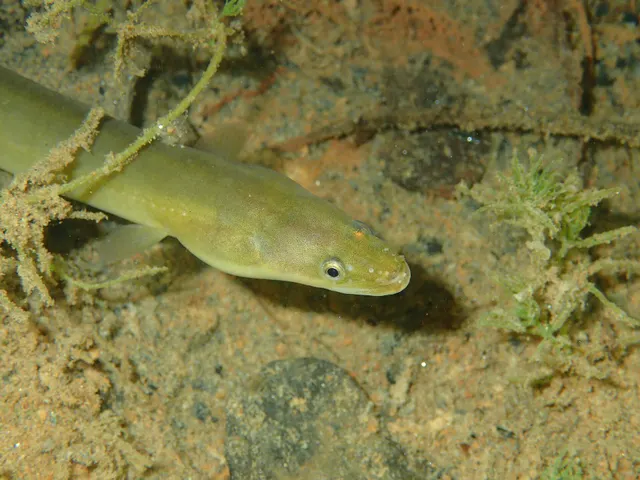 European eelA Critically Endangered fish that breeds in the Sargasso Sea, drifts to Europe as a transparent larva, lives decades in fresh water and returns once to spawn and die.
jujurenoult — CC BY 4.0, via Wikimedia Commons
Places within this area
Publicly documented fishing geography. FishingHQ describes what the ground is; it does not say whether you may fish it, and every one of these sends that question to the body that holds the answer. Browse every place in this part of the world.
Who to ask before fishing any of these
FishingHQ does not know the current access position here. Scotland has no general rod licence, and the fishing rights on almost every river and loch belong to somebody: a proprietor, an estate, an angling association or a district salmon fishery board. Permission is a separate question from access, and both change. Check with the relevant fishery board or association before going.
The Junction Pool
Confluence · Fresh water
Where the Teviot comes into the Tweed at Kelso, and by common consent the most famous salmon pool in the world. The interest is the confluence itself: two substantial rivers meeting at the town, with the holding water running roughly two hundred metres above and below the meeting of the streams. It is the head of a beat of about a mile and a half of double bank with eleven pools, fished by no more than six rods, from the bank and from a boat with a boatman. Fly only in the earliest and latest parts of the season; spinning is allowed between, and treble hooks are not.
An inland river pool in a town, so weather is not the hazard here; water is. This is a big river at a confluence, wading is part of how it is fished, and both rivers rise and colour after rain in the hills behind them.
Severe hazards of The River Tweed apply here: moving water and currents, cold water shock.
Particular to this water: The Tweed is let, beat by beat: the fishing is a property right, and a rod on a named beat is there because it was booked. No Environment Agency rod licence is required anywhere in this catchment, including its English ground, because the district is regulated under its own legislation — do not read that as the fishing being open. The Tweed carries its own statutory season, fly-only periods and conservation measures, all set by instruments that are amended. No date or killing limit is published here. Ask the River Tweed Commission and the beat.
The Tweed at Coldstream
River reach · Fresh water
The lower river where it stops being in a country and starts being between two. Here the Tweed is itself the Anglo-Scottish border, Coldstream on the Scottish bank and Northumberland on the other, and Smeaton's bridge across it listed twice for the same arches — Category A in Scotland, Grade II in England. Big, broad, steady water in the Kelso-to-Coldstream stretch the letting trade calls the super-prime beats. An angler here is inside the Tweed district whichever bank they stand on, which is why this reach is recorded.
Open lowland river in the Merse. The hazard is the water rather than the weather: this is wide, heavy river a long way down a large catchment, and it carries whatever the Cheviots and the Border hills have had.
Severe hazards of The River Tweed apply here: moving water and currents, cold water shock.
Particular to this water: The Tweed is let, beat by beat: the fishing is a property right, and a rod on a named beat is there because it was booked. No Environment Agency rod licence is required anywhere in this catchment, including its English ground, because the district is regulated under its own legislation — do not read that as the fishing being open. The Tweed carries its own statutory season, fly-only periods and conservation measures, all set by instruments that are amended. No date or killing limit is published here. Ask the River Tweed Commission and the beat.
Safety
Moving water and currents — Can cause serious injury or death
Wading a large salmon river in strong flow over shifting gravel and cobble is the principal hazard. Current strong enough to take a wader off their feet arrives at less depth than expected, the bed moves, and a person swept into a heavy pool in waders is in serious difficulty. Levels can rise quickly from rain in the hills with no local weather at all.
What reduces it: Wear a wading belt tightly and use a staff, wade with the current rather than against it, do not wade above heavy water, and get out at the first sign of rising level or colouring. Do not wade at night in water you have not read in daylight.
Worse when:
- After rain in the upper catchment, which raises the river hours later and without local warning.
- In autumn and winter, when the water is coldest and the days shortest.
- At night during the summer sea trout fishery, when the bed cannot be read.
Cold water shock — Can cause serious injury or death
Water temperature is low for much of the season the river is best known for. Sudden immersion triggers gasping and hyperventilation, and swimming ability is lost within the first minute — which in a river in waders is the minute that matters.
What reduces it: Wear a wading belt and consider an inflatable buoyancy aid, do not fish alone in heavy water, and if immersed, get feet downstream, float and control breathing before attempting to reach the bank.
Slips, trips and falls — Can cause injury needing treatment
Bedrock, algae-covered stones and steep muddy banks cause falls, particularly in low light and cold conditions when hands and feet are less reliable.
What reduces it: Use studded soles suited to the bed, take the longer route round a difficult bank rather than the short one across it, and carry a light. Move deliberately when carrying a rod in one hand.
Further safety reading
- Cold water shock and immersion — The autumn and winter fishing the river is known for happens in the coldest water and the shortest days, when an immersion in waders is at its most serious.
- Wading safely — Wading a large river in strong flow over shifting gravel is the principal hazard, and levels can rise hours after rain in the hills with no local weather at all.
Check the rules before you fish
Fishing laws, bylaws, access rules, seasons, bait restrictions and permitted methods vary by location and can change. Check the current rules from the relevant authority and the water you intend to fish before fishing.
Check with:
- Current national or regional law for where you are fishing
- Current local bylaws
- The relevant fisheries authority
- The landowner, club or fishery whose water it is
- Any restrictions specific to the species or the method you intend to use
Where to go next
What swims here
- Atlantic salmonEnters across a long season with a substantial autumn component that is the river's international distinction, and returns to spawn on the clean gravel of the system.
- Brown troutAbundant as a wild resident population in the upper river and tributaries, and present as sea trout running from the sea in summer.
- European eelOccupies the lower river and the system generally, carrying the species' critically endangered status.
- GraylingPresent through the system and now the basis of a substantial winter fly fishery that has extended the river's angling year.
How this compares
- ScotlandOne of the great east-coast salmon rivers, and a working example of the beat-and-ghillie system that organises Scottish salmon fishing.
- The River SpeyThe two Scottish salmon rivers FishingHQ holds, and they differ in the two things that matter: the Tweed is autumn-weighted and governed by its own statutory commission, the Spey is fast, spring-reputed and administered under the general Scottish framework.
- The River TayThe two great east-coast Scottish salmon rivers, with opposite governance: the Tweed under a river-specific statutory commission spanning a national border, the Tay under the standard district board framework. Their physical difference is scale, and it decides whether the fishing is done from the bank or from a boat.
Rules and access
- Close seasonsThe annual close time here is set by the river's own commission rather than by general national rules, which is one of the practical consequences of that unique governance.
- Licences and permissionA river-specific statutory commission governing the whole catchment across a national boundary, on water where the fishing rights are private property, is almost unique in Britain.
Environment and conservation
- Fish stocks and sustainabilityAtlantic salmon numbers across the North Atlantic have declined substantially, netting has been bought out and release has become the default, so a river with a great historical reputation now operates as a conservation fishery.
- Invasive species and biosecurityCleaning and drying equipment between waters is an enforced requirement rather than advice, because invasive species travel on damp gear.
History and culture
Sources and evidence
- NASCO conservation and management of North Atlantic salmon — North Atlantic Salmon Conservation Organization (Government fisheries body)Relied on for: Atlantic salmon biology, run timing, freshwater habitat requirements, stock status and the management principles applied to them.States this directlyCitation checked — the work exists and is described correctly
- Environment Agency fisheries management, byelaws and rod licensing information — Environment Agency (Government fisheries body)Relied on for: Fisheries management practice for salmon and sea trout in England and Wales, including the structure of licensing, byelaws and stock assessment.Background and mechanism onlyCitation checked — the work exists and is described correctly
- Freshwater Fishes of the British Isles — HarperCollins (New Naturalist 75), 1992 (Reference work)Relied on for: Distribution, habitat association, spawning requirements and ecology of British and Irish freshwater fishes.States this directlyCitation checked — the work exists and is described correctly
- FishBase: a global information system on fishes — Froese, R. and D. Pauly, eds. — FishBase Consortium (Scientific institute)Relied on for: Distribution, habitat association, size and life history recorded for the species concerned.Background and mechanism onlyPassage read and verified
Why the 15 connections on this page are here, and the sources
What swims here
Backed by research — 4 connections
Supported by peer-reviewed research or fisheries science. The sources are listed and can be checked.
Atlantic salmon
A distribution association between an animal and a kind of water, rather than a claim about any named mark.
- Freshwater Fishes of the British Isles — HarperCollins (New Naturalist 75), 1992 (Reference work)Relied on for: Distribution, habitat association and ecology of British and Irish freshwater fishes, including occurrence in the water body concerned.States this directlyCitation checked — the work exists and is described correctly
- FishBase: a global information system on fishes — Froese, R. and D. Pauly, eds. — FishBase Consortium (Scientific institute)Relied on for: Distribution, habitat association and life history recorded for the species.Background and mechanism onlyPassage read and verified
Brown trout
A distribution association between an animal and a kind of water, rather than a claim about any named mark.
- Freshwater Fishes of the British Isles — HarperCollins (New Naturalist 75), 1992 (Reference work)Relied on for: Distribution, habitat association and ecology of British and Irish freshwater fishes, including occurrence in the water body concerned.States this directlyCitation checked — the work exists and is described correctly
- FishBase: a global information system on fishes — Froese, R. and D. Pauly, eds. — FishBase Consortium (Scientific institute)Relied on for: Distribution, habitat association and life history recorded for the species.Background and mechanism onlyPassage read and verified
European eel
A distribution association between an animal and a kind of water, rather than a claim about any named mark.
- Freshwater Fishes of the British Isles — HarperCollins (New Naturalist 75), 1992 (Reference work)Relied on for: Distribution, habitat association and ecology of British and Irish freshwater fishes, including occurrence in the water body concerned.States this directlyCitation checked — the work exists and is described correctly
- FishBase: a global information system on fishes — Froese, R. and D. Pauly, eds. — FishBase Consortium (Scientific institute)Relied on for: Distribution, habitat association and life history recorded for the species.Background and mechanism onlyPassage read and verified
Grayling
A distribution association between an animal and a kind of water, rather than a claim about any named mark.
- Freshwater Fishes of the British Isles — HarperCollins (New Naturalist 75), 1992 (Reference work)Relied on for: Distribution, habitat association and ecology of British and Irish freshwater fishes, including occurrence in the water body concerned.States this directlyCitation checked — the work exists and is described correctly
- FishBase: a global information system on fishes — Froese, R. and D. Pauly, eds. — FishBase Consortium (Scientific institute)Relied on for: Distribution, habitat association and life history recorded for the species.Background and mechanism onlyPassage read and verified
How people fish here
What experienced anglers do — 1 connection
Widely and independently recommended by experienced anglers and specialist sources. This is real angling knowledge, not proof: controlled evidence for it is limited, and FishingHQ records it as convention rather than as a demonstrated effect.
Fly fishing
A discipline that is characteristic of the place rather than merely possible there, joined so a reader can move between the place and the practice.
- General angling website restatements of established technique — Various (Credible secondary source)Relied on for: Widely restated practice associating this discipline with this place, recorded as practitioner consensus rather than as tested fact.Background and mechanism onlyCitation checked — the work exists and is described correctly
- Fishers' Craft and Lettered Art: Tracts on Fishing from the End of the Middle Ages — University of Toronto Press, 1997 (Scientific literature)Relied on for: That fishing traditions develop around the water and fish available to them, and the historical method of reading such traditions.States this directlyCitation checked — the work exists and is described correctly
How this compares
What experienced anglers do — 3 connections
Widely and independently recommended by experienced anglers and specialist sources. This is real angling knowledge, not proof: controlled evidence for it is limited, and FishingHQ records it as convention rather than as a demonstrated effect.
Scotland
Two places a reader would reasonably weigh against one another, joined where the comparison teaches something about both. It is also how the larger geography is linked to what sits inside it.
- General angling website restatements of established technique — Various (Credible secondary source)Relied on for: Widely restated angling practice and belief, recorded as practitioner consensus rather than as tested fact.Background and mechanism onlyCitation checked — the work exists and is described correctly
- Angling Trust guidance for anglers — Angling Trust (Angling or fisheries organisation)Relied on for: Guidance for anglers on participation, licensing structure, access arrangements and getting started.Background and mechanism onlyCitation checked — the work exists and is described correctly
The River Spey
A navigational claim that two places pose the same problem differently and that a reader on one is likely to want the other.
- Angling Times — Bauer Media (Specialist angling publication)Relied on for: Contemporary British angling practice as reported week by week, across coarse, game and sea fishing, including which waters are fished for what.States this directlyCitation checked — the work exists and is described correctly
- General angling website restatements of established technique — Various (Credible secondary source)Relied on for: Widely restated descriptions of regional angling practice, recorded as consensus rather than as scholarship.Background and mechanism onlyCitation checked — the work exists and is described correctly
The River Tay
A claim that two places are worth reading against one another, because a reader choosing between them or generalising from one to the other needs to know how the underlying process differs.
- General angling website restatements of established technique — Various (Credible secondary source)Relied on for: Widely restated descriptions of which practices are conventionally used in the waters named, recorded as practitioner consensus rather than as scholarship.Background and mechanism onlyCitation checked — the work exists and is described correctly
- Sea Angler — Bauer Media (Specialist angling publication)Relied on for: Long-running published description of British and Irish sea angling practice by region and by ground type.FishingHQ's interpretation of what it saysCitation checked — the work exists and is described correctly
Safety reading
Official guidance — 2 connections
Stated by a fisheries authority, scientific institute or recognised angling body. Authoritative, but summarising rather than demonstrating.
Cold water shock and immersion
A place is joined to the safety topic that explains a hazard genuinely characteristic of it, so the mechanism is reachable rather than restated as a weak warning.
- RNLI water safety guidance: cold water shock and Float to Live — Royal National Lifeboat Institution (Water-safety or diver-training authority)Relied on for: Cold water shock and the immersion response, shore angling hazards, small-craft guidance and the circumstances in which water users are most often killed.States this directlyPassage read and verified
- RoSPA water safety information and UK accidental drowning statistics — Royal Society for the Prevention of Accidents (Water-safety or diver-training authority)Relied on for: Accidental drowning statistics and the circumstances in which recreational water users are most often killed.Background and mechanism onlyPassage read and verified
Wading safely
A place is joined to the safety topic that explains a hazard genuinely characteristic of it, so the mechanism is reachable rather than restated as a weak warning.
- RNLI water safety guidance: cold water shock and Float to Live — Royal National Lifeboat Institution (Water-safety or diver-training authority)Relied on for: Cold water shock and the immersion response, shore angling hazards, small-craft guidance and the circumstances in which water users are most often killed.States this directlyPassage read and verified
- RoSPA water safety information and UK accidental drowning statistics — Royal Society for the Prevention of Accidents (Water-safety or diver-training authority)Relied on for: Accidental drowning statistics and the circumstances in which recreational water users are most often killed.Background and mechanism onlyPassage read and verified
Rules and access
Official guidance — 2 connections
Stated by a fisheries authority, scientific institute or recognised angling body. Authoritative, but summarising rather than demonstrating.
Close seasons
A place joined to the regulatory concept whose structure it illustrates. The edge asserts that the concept applies here, never what any current rule says.
- Code of Conduct for Responsible Fisheries — Food and Agriculture Organization of the United Nations, Rome, 1995 (Standards body)Relied on for: Principles for the management of fisheries, including licensing, closed seasons, size limits and the treatment of small-scale and shared stocks.States this directlyCitation checked — the work exists and is described correctly
- Good Fish Guide — Marine Conservation Society (Conservation authority)Relied on for: Assessment of fisheries and the management measures applied to them, including the instruments used and their purpose.Background and mechanism onlyCitation checked — the work exists and is described correctly
Licences and permission
A place joined to the regulatory concept whose structure it illustrates. The edge asserts that the concept applies here, never what any current rule says.
- Code of Conduct for Responsible Fisheries — Food and Agriculture Organization of the United Nations, Rome, 1995 (Standards body)Relied on for: Principles for the management of fisheries, including licensing, closed seasons, size limits and the treatment of small-scale and shared stocks.States this directlyCitation checked — the work exists and is described correctly
- Good Fish Guide — Marine Conservation Society (Conservation authority)Relied on for: Assessment of fisheries and the management measures applied to them, including the instruments used and their purpose.Background and mechanism onlyCitation checked — the work exists and is described correctly
Environment and conservation
Backed by research — 2 connections
Supported by peer-reviewed research or fisheries science. The sources are listed and can be checked.
Fish stocks and sustainability
An environmental pressure that is specific to this place rather than general to fishing, joined so the issue is anchored to a real example.
- The IUCN Red List of Threatened Species — International Union for Conservation of Nature (Conservation authority)Relied on for: Assessment of the species and habitats affected, and the pressures acting on them, including habitat change and exploitation.States this directlyCitation checked — the work exists and is described correctly
- Code of Conduct for Responsible Fisheries — Food and Agriculture Organization of the United Nations, Rome, 1995 (Standards body)Relied on for: Principles for responsible fisheries management, precaution, gear selectivity and the treatment of shared and small-scale fisheries.Background and mechanism onlyCitation checked — the work exists and is described correctly
Invasive species and biosecurity
An environmental pressure that is specific to this place rather than general to fishing, joined so the issue is anchored to a real example.
- The IUCN Red List of Threatened Species — International Union for Conservation of Nature (Conservation authority)Relied on for: Assessment of the species and habitats affected, and the pressures acting on them, including habitat change and exploitation.States this directlyCitation checked — the work exists and is described correctly
- Code of Conduct for Responsible Fisheries — Food and Agriculture Organization of the United Nations, Rome, 1995 (Standards body)Relied on for: Principles for responsible fisheries management, precaution, gear selectivity and the treatment of shared and small-scale fisheries.Background and mechanism onlyCitation checked — the work exists and is described correctly
History and culture
Official guidance — 1 connection
Stated by a fisheries authority, scientific institute or recognised angling body. Authoritative, but summarising rather than demonstrating.
Angling literature and the written tradition
A place joined to the documented fishing tradition it belongs to, so the history has a real setting and the place has a real past.
- Fishers' Craft and Lettered Art: Tracts on Fishing from the End of the Middle Ages — University of Toronto Press, 1997 (Scientific literature)Relied on for: The historical development of fishing practice and its transmission, and the method of reading a fishing tradition from its documentary record.States this directlyCitation checked — the work exists and is described correctly
- Words of the Lagoon: Fishing and Marine Lore in the Palau District of Micronesia — University of California Press, Berkeley, 1981 (Reference work)Relied on for: Documented traditional marine knowledge and fishing practice, and the social organisation of fishing rights and closures.Background and mechanism onlyCitation checked — the work exists and is described correctly
How FishingHQ labels evidence is explained in the evidence policy.