The River Spey
Fishing regions · Last reviewed 2026-08-15
The fastest of Scotland's great salmon rivers, and the one whose name became a casting technique used on every large river in the world.
Safety: moving water and currents — can cause serious injury or death. 6 more points apply here.
Being listed here is not permission to fish. What that meansClose
Access, fishing rights, seasons, licences, local bylaws and permitted methods vary and can change. Check current access, permission, local regulations, closures and restrictions before you travel or fish. FishingHQ describes what the ground is and names who holds the answer; it does not hold the answer itself.
Find the authority for a jurisdiction · What FishingHQ does and does not cover
The Spey is the river that exported a method.
IT IS FAST, AND THAT IS ITS DEFINING PHYSICAL PROPERTY. Rising in the Monadhliath hills and running roughly a hundred miles north-east to the Moray Firth, the Spey drops quickly and moves quickly — commonly described as the fastest of the major Scottish salmon rivers. Its bed is gravel and cobble, its gradient is steady, and the water pushes.
SPEY CASTING WAS INVENTED BECAUSE OF THAT, AND BECAUSE OF THE TREES. A conventional overhead cast with a long double-handed rod needs room behind the angler. On a wooded, steep-banked river where wading deep is normal, that room does not exist. The answer developed here in the nineteenth century was a family of casts that keep the line in front of the angler and use water tension to load the rod — a change of direction and a roll-out rather than a back cast. Those casts now carry the river's name and are used on the Skeena, the Kola, the Gaula and everywhere else people fish big rivers with long rods.
THE SALMON RUN IS SUBSTANTIAL AND SPRING-WEIGHTED, and the Spey's traditional reputation is as a spring river — although like every Atlantic salmon river its run composition has shifted, and any account written from a twentieth-century reputation is out of date.
SEA TROUT ARE A MAJOR PART OF THE FISHERY, and the Spey's summer sea trout fishing is significant in its own right rather than an adjunct to the salmon.
THE FISHERY IS PRIVATE AND ORGANISED INTO BEATS, as Scottish salmon fisheries are, with rights owned and access let.
AND THE STRATH ITSELF is one of the most heavily protected landscapes in Britain, which bears on the river's management as much as any fisheries measure does.
What fishing here is like
A large, fast, gravel-bedded Highland salmon river running roughly a hundred miles north-east from the Monadhliath hills to the Moray Firth. Its speed is its defining property and is the reason its wading is demanding, its casting technique developed as it did, and its name attached to a family of casts now used worldwide. The fishery is private, organised into let beats, and predominantly fly fishing for Atlantic salmon and sea trout, with brown trout and grayling alongside. The catchment sits largely within a national park and carries extensive conservation designation.
What you can target here
One entry per fish, grouped by how you would be fishing — because the answer is a different one from the rocks and from a boat. Each entry says how strongly the sources support it and how much evidence sits behind it. These are documented catches, not a forecast, and none of it is a statement that you may fish any particular ground.
Fly fishing · 3
What these strengths mean
- Characteristic of this water
- This water is strongly identified with this species by the sources that cover it.
- Regular local target
- Fishing sources describe this as a normal local target here, not merely as caught.
- Recorded here
- At least one credible public account of this species being caught here. That is all it means.
- How breadth is counted
- A fish documented at six marks is shown as six marks: breadth never raises the strength on its own. A fishery account describes the fishing; a recorded catch reports one specific catch. How evidence is weighed.
How people fish here
2 methods are recorded on the places documented here, counted from the records themselves rather than from what is practised in the country. Each opens a full guide to the technique.
Dry fly fishing
Recorded at 3 places here, over river reach.
Presenting a floating artificial to a fish feeding at the surface, so that it drifts exactly as a natural insect would.
Documented on the same ground: Atlantic salmon, Brown trout, Grayling.
Stillwater fly fishing
Recorded at 1 place here, over loch.
Fly fishing without current, where the angler supplies every movement and the problem becomes finding fish rather than presenting to them.
These are the methods documented at the places FishingHQ holds here. A species listed beside a method is documented on the same ground, which is not the same as being taken that way — where a source establishes the method a fish was caught on, it is stated on that place’s own page. All fishing methods.
What dominates
Fly fishing for Atlantic salmon with double-handed rods, using the Spey and underhand cast family the river gave its name to — the defining discipline. Summer sea trout fishing, largely at night. Wild brown trout fly fishing on the upper river and tributaries. Grayling fishing in the colder months. Wading, which on this river is a skill in its own right rather than an incidental: the current and the cobble bed make it a serious proposition.
The water available
Hill headwaters and moorland tributaries in the Monadhliath and Cairngorms; a long middle river of fast gravel runs, streamy glides and holding pools through woodland and farmland; a substantial tributary system including rivers that are fisheries in their own right; a shifting shingle bed and braided sections; and a mobile gravel estuary at Spey Bay where the river meets the Moray Firth. The bed throughout is gravel and cobble, which is what makes it a salmonid river.
How the rules are structured
Salmon fishing rights in Scotland are a separate heritable property from the land, are privately owned, and are let. Permission to fish comes from the proprietor or their agent. The river is administered by a district salmon fishery board with statutory functions, and salmon and sea trout are additionally covered by national conservation regulations that assess rivers and set retention rules — those assessments are revised annually and their current state is a matter for the Scottish authorities. An annual close time applies. Freshwater fishing for species other than salmon and sea trout sits under different arrangements again. Much of the catchment lies within a national park and carries conservation designations that bear on habitat and on land management. Biosecurity requirements on cleaning and drying equipment apply. FishingHQ does not state what any current rule is, and states no beat, no price and no assessment grade.
Who to ask
- The district salmon fishery board for the river, which has statutory functions in the protection and management of salmon and sea trout.
- The Scottish national authorities responsible for salmon conservation regulation, river assessment and the annual retention rules that follow from it.
- The proprietor of the fishing rights or their letting agent, whose permission is required to fish any beat.
- The river trust or foundation working on catchment habitat, juvenile monitoring and restoration.
- The national park authority and the nature conservation body, for the designations covering much of the catchment.
- The biosecurity authorities, for the equipment cleaning requirements that apply to anglers moving between waters.
Words you will meet
- Spey cast
- A family of casts that change direction and deliver line without a back cast, using water tension against the line to load the rod. Developed on this river because of its wooded steep banks and deep wading, and now used on large rivers worldwide. The name is the river's principal export.
- Beat
- A defined length of river let as a fishing unit, with an agreed number of rods and its own rules on method and release. The organising unit of Scottish salmon fishing.
- Ghillie
- The person employed on a beat who knows the water, advises where and how to fish it, and enforces the beat's rules. A professional role rather than a courtesy title.
- Strath
- A broad river valley, as distinct from a narrow glen. Strathspey is the valley of the Spey, and the word describes a landform that shapes the river's character.
- Grilse
- A salmon returning after a single winter at sea, smaller than a multi-sea-winter fish and usually running later in the season. The proportion of grilse to larger fish in a run is one of the things that has changed across Atlantic salmon rivers.
Conditions and hazards
Wading is the principal hazard and this river makes it a serious one. The Spey is fast, its bed is loose cobble that moves underfoot, and the combination will take a wader off their feet in water that looks manageable. It is a river where a wading staff and a personal flotation device are ordinary equipment rather than precautions for the nervous. Levels rise quickly after rain in the hills, and snowmelt can raise the river with no local rainfall at all. Cold water is a year-round risk and the spring fishing the river is known for happens in the coldest conditions. Night fishing for sea trout adds the difficulty of wading water you cannot read. Much of the river runs through remote or lightly populated country where help is not close.
A fast river on a mobile gravel bed
The Spey's physical character explains almost everything else about it.
IT DROPS FAST AND MOVES FAST. From hill headwaters to the Moray Firth in roughly a hundred miles, with a steady gradient and no long slack sections, the Spey is commonly described as the quickest of the big Scottish salmon rivers. That speed is the reason its wading is demanding and the reason its casting technique developed as it did.
THE BED IS GRAVEL AND COBBLE THROUGHOUT, which is the single most important habitat fact about any salmonid river. Salmon and trout cut redds in clean loose gravel and the eggs need flow through the interstices to deliver oxygen. A gravel bed that is regularly mobilised by high flows stays clean; a silted bed does not.
THE SHINGLE IS GENUINELY MOBILE. The Spey moves large quantities of gravel in flood, braids in places, and reshapes its own channel — which is a functioning river process rather than a problem, and one that most managed lowland rivers have lost.
RIFFLE, RUN AND HOLDING POOL alternate through the length of it, giving spawning ground in the fast water and resting water for running fish in the pools.
THE TRIBUTARIES ARE THE NURSERY. Most juvenile production in a system like this happens in the smaller burns and tributaries rather than the main stem, which is why catchment restoration concentrates there.
AND THE ESTUARY AT SPEY BAY is a mobile shingle system where the river meets the Moray Firth — a dynamic coastal landform in its own right and the transition every fish in the system passes through twice.
Backed by research — why, and the sources (3)
Supported by peer-reviewed research or fisheries science. The sources are listed and can be checked.
- Freshwater Fishes of the British Isles — HarperCollins (New Naturalist 75), 1992 (Reference work)Relied on for: Distribution, habitat association, spawning requirements and ecology of British and Irish freshwater fishes.States this directlyCitation checked — the work exists and is described correctly
- FishBase: a global information system on fishes — Froese, R. and D. Pauly, eds. — FishBase Consortium (Scientific institute)Relied on for: Distribution, habitat association and life history recorded for the species concerned.States this directlyPassage read and verified
- Environment Agency fisheries management, byelaws and rod licensing information — Environment Agency (Government fisheries body)Relied on for: Freshwater fisheries management in England, including byelaws, the rod licence framework, and water-level and flood management.States this directlyCitation checked — the work exists and is described correctly
The cast the river gave its name to
The Spey's contribution to fishing is a technique, and the technique exists because of the river's physical constraints.
THE PROBLEM IT SOLVES IS SPACE BEHIND YOU. A double-handed rod delivering a long line with a conventional overhead cast needs clear room behind the angler. On the Spey, steep wooded banks and deep wading mean that room frequently does not exist — and an angler standing thigh-deep in fast water cannot step back to find it.
THE SOLUTION IS A CAST THAT NEVER GOES BEHIND. The Spey cast family repositions the line in front of the angler, sets an anchor point on the water surface, and uses the tension of the line against the water to load the rod for the forward delivery. There is no back cast in the conventional sense. Single Spey, double Spey, snake roll and the underhand variants are all versions of the same idea applied to different wind and current directions.
WHICH DIRECTION THE WIND AND CURRENT COME FROM DECIDES WHICH CAST YOU USE, and learning that mapping is most of learning to Spey cast. It is a genuinely technical skill with a real learning curve, and the river supports an instruction culture around it.
THE TECHNIQUE TRAVELLED. Spey casting is now standard on large rivers worldwide — British Columbia, the Kola Peninsula, Norway, Patagonia — wherever long rods meet confined banks. It is one of very few British angling exports that became the international norm.
SEA TROUT FISHING AT NIGHT is the river's other characteristic discipline and a completely different one: short casts, quiet approach, and fishing water you have memorised in daylight.
AND WADING IS ITSELF A DISCIPLINE HERE, taught and practised as one, because the river's speed and loose bed make it so.
What experienced anglers do — why, and the sources (2)
Widely and independently recommended by experienced anglers and specialist sources. This is real angling knowledge, not proof: controlled evidence for it is limited, and FishingHQ records it as convention rather than as a demonstrated effect.
- Trout & Salmon — Bauer Media (Specialist angling publication)Relied on for: Contemporary British game angling practice, including river technique, seasonal timing and fishery convention.States this directlyCitation checked — the work exists and is described correctly
- General angling website restatements of established technique — Various (Credible secondary source)Relied on for: Widely restated descriptions of regional angling practice, recorded as consensus rather than as scholarship.Background and mechanism onlyCitation checked — the work exists and is described correctly
Spring fish, summer sea trout, and a season shaped by water
The Spey's year has a traditional shape and a changed reality, and both are worth stating.
THE RIVER'S REPUTATION IS AS A SPRING RIVER. Multi-sea-winter salmon entering early in the season, fished for with sunk lines in cold high water, is the classic Spey picture and the reason the early beats were valued.
THAT REPUTATION IS OLDER THAN THE CURRENT RUN. Atlantic salmon run timing and run composition have shifted across the range, the proportion of early large fish has generally declined, and grilse timing has moved. Any account of what the river does in a given month written from mid-twentieth-century experience should be treated as history rather than as forecast.
SUMMER IS SEA TROUT TIME, and the night fishing is a distinct season within the season, with its own hours and its own following.
AUTUMN brings later salmon and, on many Scottish rivers, the bulk of the modern run.
WATER LEVEL DECIDES MORE THAN THE CALENDAR DOES. Fish run on rising and falling water and become difficult in prolonged low flow; a river in good order in July fishes better than a river out of order in May. Snowmelt from the Cairngorms adds a spring variable that lowland rivers do not have.
WINTER IS CLOSED for salmon under the annual close time, and the grayling fishing continues.
AND THE RETENTION RULES ARE THEMSELVES SEASONAL AND ANNUAL: Scottish rivers are assessed and categorised each year, and what may be kept follows from that assessment. It changes, it is published by the Scottish authorities, and it is not stated here.
What experienced anglers do — why, and the sources (3)
Widely and independently recommended by experienced anglers and specialist sources. This is real angling knowledge, not proof: controlled evidence for it is limited, and FishingHQ records it as convention rather than as a demonstrated effect.
- Trout & Salmon — Bauer Media (Specialist angling publication)Relied on for: Contemporary British game angling practice, including river technique, seasonal timing and fishery convention.States this directlyCitation checked — the work exists and is described correctly
- General angling website restatements of established technique — Various (Credible secondary source)Relied on for: Widely restated descriptions of regional angling practice, recorded as consensus rather than as scholarship.Background and mechanism onlyCitation checked — the work exists and is described correctly
- NASCO conservation and management of North Atlantic salmon — North Atlantic Salmon Conservation Organization (Government fisheries body)Relied on for: Conservation and management of North Atlantic salmon, including stock status and the international framework.States this directlyCitation checked — the work exists and is described correctly
Owned water, a fishery board, and an annual conservation assessment
Three layers of rule apply to the Spey and they come from different places.
THE FISHING RIGHTS ARE PRIVATE PROPERTY. In Scotland the right to fish for salmon is a separate heritable title from ownership of the land, it is bought and sold, and it is let. There is no general public right to fish for salmon in Scotland. Permission comes from the proprietor or their letting agent, and it is the first and most fundamental requirement.
THE DISTRICT SALMON FISHERY BOARD has statutory functions in the protection and management of salmon and sea trout in the river district — enforcement, protection, and works in the interest of the fishery. It is a body specific to the river system rather than a national one.
NATIONAL CONSERVATION REGULATION SITS ON TOP. Scottish rivers are assessed annually against conservation limits and categorised, and the category determines what may be retained. That assessment changes year to year, it is published by the Scottish authorities, and it is exactly the kind of current rule FishingHQ does not state.
AN ANNUAL CLOSE TIME applies to salmon fishing, with dates set for the district.
OTHER SPECIES SIT UNDER DIFFERENT ARRANGEMENTS AGAIN, and brown trout and grayling fishing on the system is governed by the owner's or club's permission rather than by the salmon framework.
AND THE LANDSCAPE DESIGNATIONS MATTER. Much of the catchment lies within a national park and carries conservation designations that bear on habitat, land management and works in and near the river. Those are not fisheries rules and they shape the river's future more than most fisheries rules do.
Official guidance — why, and the sources (3)
Stated by a fisheries authority, scientific institute or recognised angling body. Authoritative, but summarising rather than demonstrating.
- NASCO conservation and management of North Atlantic salmon — North Atlantic Salmon Conservation Organization (Government fisheries body)Relied on for: Conservation and management of North Atlantic salmon, including stock status and the international framework.States this directlyCitation checked — the work exists and is described correctly
- Environment Agency fisheries management, byelaws and rod licensing information — Environment Agency (Government fisheries body)Relied on for: Freshwater fisheries management in England, including byelaws, the rod licence framework, and water-level and flood management.States this directlyCitation checked — the work exists and is described correctly
- The IUCN Red List of Threatened Species — International Union for Conservation of Nature (Conservation authority)Relied on for: Global conservation assessment, range and recorded threats for the species.States this directlyCitation checked — the work exists and is described correctly
Strath, beat, ghillie and grilse
The Spey's working vocabulary is Scottish salmon-fishing vocabulary with a few local additions.
SPEY CAST is the river's own word and its principal export. It names a family of casts rather than one, and the family members — single Spey, double Spey, snake roll, underhand — are chosen according to which bank you are on and which way the wind is blowing.
STRATH means a broad river valley, as opposed to a glen, which is narrow and steep. Strathspey is the valley of the Spey and the word is a landform description rather than a place name.
BEAT is the unit the fishery is organised into: a defined length of river, let with a set number of rods and its own rules.
GHILLIE is the person employed on a beat who knows the water and manages the fishing on it. Asking a ghillie where and how to fish is the point of having one; ignoring the advice is a recognised way to catch nothing.
GRILSE is a salmon returning after one winter at sea. Distinguishing grilse from multi-sea-winter fish matters because the two run at different times and because the balance between them has changed.
SMOLT is a juvenile salmon or sea trout that has undergone the physiological change allowing it to enter salt water, and is on its way down. Smolt runs are counted and monitored because they are the best available forecast of a future adult run.
AND REDD is the gravel nest a salmonid cuts to spawn in. Walking on redds damages them, which is why winter access to spawning gravel matters.
What experienced anglers do — why, and the sources (3)
Widely and independently recommended by experienced anglers and specialist sources. This is real angling knowledge, not proof: controlled evidence for it is limited, and FishingHQ records it as convention rather than as a demonstrated effect.
- Trout & Salmon — Bauer Media (Specialist angling publication)Relied on for: Contemporary British game angling practice, including river technique, seasonal timing and fishery convention.States this directlyCitation checked — the work exists and is described correctly
- General angling website restatements of established technique — Various (Credible secondary source)Relied on for: Widely restated descriptions of regional angling practice, recorded as consensus rather than as scholarship.Background and mechanism onlyCitation checked — the work exists and is described correctly
- Freshwater Fishes of the British Isles — HarperCollins (New Naturalist 75), 1992 (Reference work)Relied on for: Distribution, habitat association, spawning requirements and ecology of British and Irish freshwater fishes.States this directlyCitation checked — the work exists and is described correctly
Timber floating, whisky, and a cast that outlived its own necessity
The Spey's history has three threads and they are connected.
TIMBER FLOATING SHAPED THE RIVER'S USE. Timber from the Strathspey forests was floated down the Spey to the coast for shipbuilding, a substantial industry conducted by men who worked the river professionally. It is part of why the river's channel and banks were managed as they were and part of the working culture salmon fishing later grew alongside.
WHISKY IS THE STRATH'S OTHER INDUSTRY and is inseparable from the river in the region's identity — Speyside is a whisky region before it is a fishing one for most people. The connection is water: the same catchment geology that produces the river produces the water the distilleries use.
AND THE CAST IS THE FISHING HISTORY. Spey casting developed here during the nineteenth century, in the era of long, heavy greenheart rods and confined wooded banks, as a practical solution to a practical problem. What is remarkable is that it outlived its own necessity: modern rods and lines could deliver a line other ways, and the Spey cast persisted and spread because it turned out to be better on any river where the angler is in the water and the bank is close behind.
THE TWENTIETH-CENTURY FISHERY was a substantial commercial and sporting enterprise, with netting in the estuary and lower river alongside the rod fishery. Netting has been largely bought out and reduced across Scottish rivers over recent decades.
AND THE CONTEMPORARY HISTORY IS ONE OF DECLINE AND RESPONSE. Atlantic salmon numbers across the North Atlantic have fallen substantially; the response on this river as elsewhere has been catch-and-release, habitat restoration in the tributaries, and juvenile monitoring — a shift from harvesting a resource to maintaining one.
What experienced anglers do — why, and the sources (3)
Widely and independently recommended by experienced anglers and specialist sources. This is real angling knowledge, not proof: controlled evidence for it is limited, and FishingHQ records it as convention rather than as a demonstrated effect.
- Trout & Salmon — Bauer Media (Specialist angling publication)Relied on for: Contemporary British game angling practice, including river technique, seasonal timing and fishery convention.States this directlyCitation checked — the work exists and is described correctly
- General angling website restatements of established technique — Various (Credible secondary source)Relied on for: Widely restated descriptions of regional angling practice, recorded as consensus rather than as scholarship.Background and mechanism onlyCitation checked — the work exists and is described correctly
- NASCO conservation and management of North Atlantic salmon — North Atlantic Salmon Conservation Organization (Government fisheries body)Relied on for: Conservation and management of North Atlantic salmon, including stock status and the international framework.States this directlyCitation checked — the work exists and is described correctly
A private fishery, a public technique, and a river people learn on
The Spey's fishing culture has a particular shape, and part of it is genuinely open in a way the beat system might not suggest.
THE FISHERY IS PRIVATE AND THE TECHNIQUE IS NOT. Access to the water is bought; the casting knowledge the river produced is taught, published, filmed and argued about worldwide. The Spey is one of the few places where a private fishery generated a genuinely public body of technical knowledge.
INSTRUCTION IS PART OF THE CULTURE HERE. The river supports a teaching tradition around Spey casting, and learning to cast on the Spey is a recognised thing to travel for in a way that learning to cast on most rivers is not.
THE GHILLIE RELATIONSHIP IS CENTRAL and is frequently misunderstood by visitors. A ghillie is not a servant and not a guide in the commercial sense; they hold the knowledge of a specific water accumulated over years, and the fishing goes better for anglers who treat that as the asset it is.
THE RELEASE NORM IS NOW STRONG. Across Scottish salmon fishing the expectation has shifted decisively towards returning fish, driven by the stock position and formalised by the annual assessment framework. On many beats it is a rule rather than an expectation.
SEA TROUT NIGHT FISHING HAS ITS OWN SEPARATE CULTURE — smaller, quieter, more obsessive, and largely invisible to the daytime salmon fishery sharing the same water.
AND THE STRATH IS A LIVED-IN LANDSCAPE rather than a wilderness: a national park with farming, forestry, distilling, tourism and a resident population. The river's future is a land-management question as much as a fisheries one, and the people who decide it live there.
What experienced anglers do — why, and the sources (3)
Widely and independently recommended by experienced anglers and specialist sources. This is real angling knowledge, not proof: controlled evidence for it is limited, and FishingHQ records it as convention rather than as a demonstrated effect.
- Trout & Salmon — Bauer Media (Specialist angling publication)Relied on for: Contemporary British game angling practice, including river technique, seasonal timing and fishery convention.States this directlyCitation checked — the work exists and is described correctly
- General angling website restatements of established technique — Various (Credible secondary source)Relied on for: Widely restated descriptions of regional angling practice, recorded as consensus rather than as scholarship.Background and mechanism onlyCitation checked — the work exists and is described correctly
- General angling website restatements of established technique — Various (Credible secondary source)Relied on for: Widely restated descriptions of regional angling practice, recorded as consensus rather than as scholarship.Background and mechanism onlyCitation checked — the work exists and is described correctly
Some of what lives here
Fish recorded here that FishingHQ holds a reviewed photograph of. It is not a complete list of what The River Spey holds, and it is not a prediction that you will catch any of them — it is a way in to the ones we can show you.
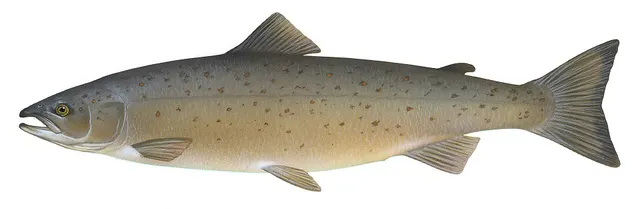 Atlantic salmonAn anadromous salmonid that migrates from its natal river to the North Atlantic and returns to spawn — and a species in serious, well-documented decline.
Knepp, Timothy, Public domain, via Wikimedia Commons
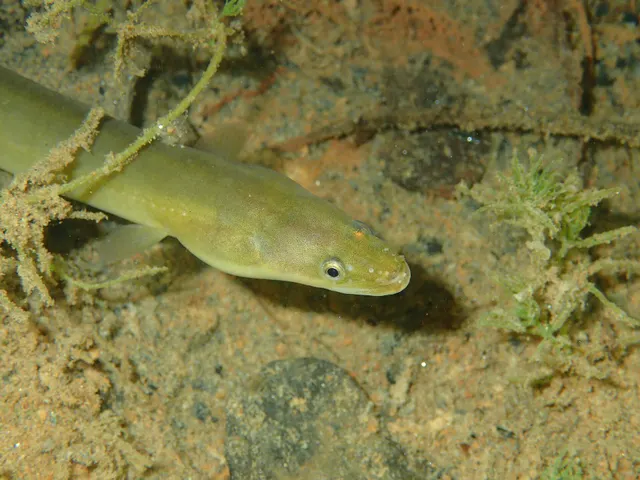 European eelA Critically Endangered fish that breeds in the Sargasso Sea, drifts to Europe as a transparent larva, lives decades in fresh water and returns once to spawn and die.
jujurenoult — CC BY 4.0, via Wikimedia Commons
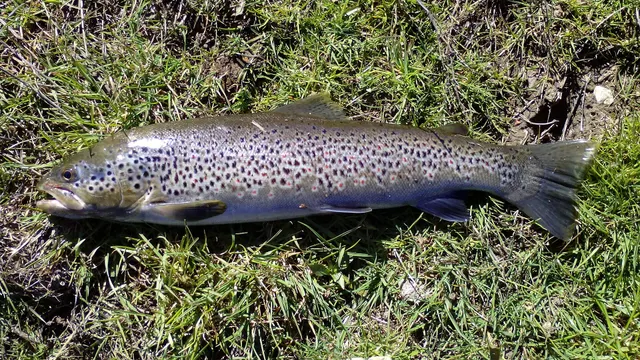 Brown troutA single, extraordinarily plastic species that appears as a tiny hill-stream fish, a deep-bodied loch trout and a silver sea-run migrant — all the same animal.
Robermix, CC0, via Wikimedia Commons
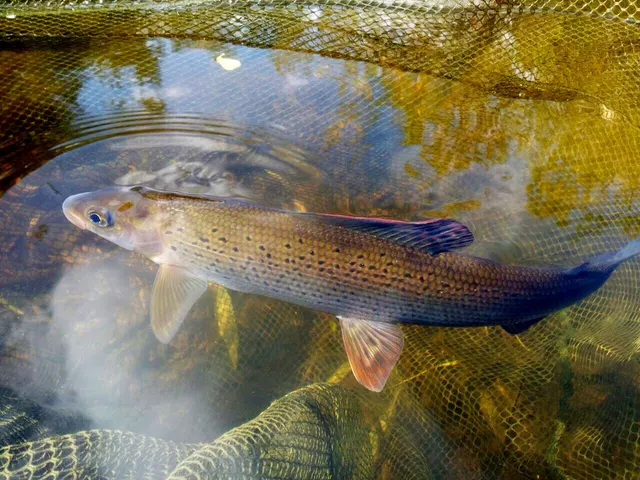 GraylingA salmonid with a sail for a dorsal fin that feeds hard through the winter — which makes it the game angler's season when the trout season has closed.
High Plains Grifter — CC BY-SA 4.0, via Wikimedia Commons
Places within this area
Publicly documented fishing geography. FishingHQ describes what the ground is; it does not say whether you may fish it, and every one of these sends that question to the body that holds the answer. Browse every place in this part of the world.
Who to ask before fishing any of these
FishingHQ does not know the current access position here. Scotland has no general rod licence, and the fishing rights on almost every river and loch belong to somebody: a proprietor, an estate, an angling association or a district salmon fishery board. Permission is a separate question from access, and both change. Check with the relevant fishery board or association before going.
The Spey at Aberlour
River reach · Fresh water
A fast, clean, gravel-and-boulder reach of the middle Spey through Strathspey, with long streamy glides, defined necks and tails, unstable shifting gravel bars and very little slack water anywhere.
Open strath, with wind frequently running up or down the valley — a real factor in a river where casting technique is the point.
Particular to this ground: moving water and currents, moving water and currents, cold water shock.
Particular to this water: This ground carries conservation designations that constrain access, vehicles, bait collection and disturbance independently of any fishing rule.
The Findhorn at Forres
River reach · Fresh water
A fast, spate-prone river running through a red sandstone gorge to a wide gravel floodplain, rising and falling faster than almost any comparable Scottish river.
Severe hazards of The River Spey apply here: moving water and currents.
The Spey at Grantown
River reach · Fresh water
The upper-middle Spey running fast over gravel through Strathspey below the Cairngorms, with long streamy glides, unstable bars and a strong summer sea trout run.
Severe hazards of The River Spey apply here: moving water and currents.
Loch Insh and the Spey lochs
Loch · Fresh water
A shallow loch on the Spey's course in Badenoch, joined to the extensive Insh Marshes floodplain, with peat-stained water and a natural flood storage function.
Severe hazards of The River Spey apply here: moving water and currents.
Safety
Moving water and currents — Can cause serious injury or death
The Spey is among the fastest large salmon rivers in Scotland and its bed is loose cobble that shifts underfoot. Wading water that looks manageable can take an angler off their feet, and a person swept into the main flow of a fast gravel river is in serious difficulty immediately. Levels rise quickly after hill rain and with snowmelt, sometimes with no local rainfall at all.
What reduces it: Treat a wading staff and a personal flotation device as ordinary equipment on this river rather than as precautions. Wade with the current rather than across it where possible, and never wade beyond the point where you could not regain the bank. Check levels and the hill forecast before starting, and get out when the river starts to rise.
Worse when:
- Cold water, which shortens the time available to self-rescue
- Night fishing for sea trout, where the bed cannot be read
- Spring spate and snowmelt conditions
- Remote beats where help is not close
Hypothermia — Can cause injury needing treatment
The river's traditional spring fishing happens in the coldest water and shortest days of the season, and prolonged immersion or a soaking in cold conditions on a remote beat leads to hypothermia quickly.
What reduces it: Carry dry layers and a means of calling for help. Do not fish alone on remote beats in cold conditions. Recognise that a wet angler a mile from a vehicle in February is a serious situation rather than an inconvenience.
Worse when:
- Early season and winter grayling fishing
- Wind and rain on top of a soaking
- Fishing alone
Precautions that always apply here
- Do not wade alone. Judge depth and flow from the bank first, and turn back sooner than feels necessary.
- Wear a buoyancy aid or lifejacket. Cold water incapacitates strong swimmers within a minute, long before swimming ability matters.
- Tell somebody where you are going and when you expect to be back.
- Carry a charged phone in a waterproof case, or another means of calling for help.
- Check, clean and dry your kit between different waters — the published guidance is 48 hours’ drying, in sunlight where possible, because a number of invasive species survive over two weeks in damp conditions. Nets, boots and wet mats move invasive species and disease more effectively than anything else anglers do.
Further safety reading
- Wading safely — The fastest of the large Scottish salmon rivers over a loose cobble bed, where water that looks manageable will take a wader off their feet.
Check the rules before you fish
Fishing laws, bylaws, access rules, seasons, bait restrictions and permitted methods vary by location and can change. Check the current rules from the relevant authority and the water you intend to fish before fishing.
Check with:
- Current national or regional law for where you are fishing
- Current local bylaws
- The relevant fisheries authority
- The landowner, club or fishery whose water it is
- Any restrictions specific to the species or the method you intend to use
Where to go next
What swims here
- Atlantic salmonThe species the fishery exists for, on a river whose traditional reputation rests on early multi-sea-winter fish — a reputation older than the current run composition.
- Brown troutAbundant in the upper river and tributaries. Wild brown trout fly fishing on a Highland river is a substantial pleasure that visiting salmon anglers routinely overlook.
- European eelPresent in the system and critically endangered, which makes its occurrence here a conservation fact rather than a fishery. Sea trout are a major fishery on this river in their own right and FishingHQ holds them within the brown trout record.
- GraylingPresent in the system and providing cold-weather fishing when the salmon season is closed.
Local knowledge
How this compares
- The River TweedThe two Scottish salmon rivers FishingHQ holds, and they differ in the two things that matter: the Tweed is autumn-weighted and governed by its own statutory commission, the Spey is fast, spring-reputed and administered under the general Scottish framework.
- The Welsh sewin riversTwo migratory-salmonid systems with opposite emphases: a Highland salmon river that gave its name to a casting style and is fished in daylight, against a group of Welsh spate rivers whose defining fishery is sea trout in the dark. The comparison is really about which fish a region decided to build its technique around.
Sources and evidence
- Freshwater Fishes of the British Isles — HarperCollins (New Naturalist 75), 1992 (Reference work)Relied on for: Distribution, habitat association, spawning requirements and ecology of British and Irish freshwater fishes.States this directlyCitation checked — the work exists and is described correctly
- FishBase: a global information system on fishes — Froese, R. and D. Pauly, eds. — FishBase Consortium (Scientific institute)Relied on for: Distribution, habitat association and life history recorded for the species concerned.States this directlyPassage read and verified
- NASCO conservation and management of North Atlantic salmon — North Atlantic Salmon Conservation Organization (Government fisheries body)Relied on for: Conservation and management of North Atlantic salmon, including stock status and the international framework.States this directlyCitation checked — the work exists and is described correctly
- Trout & Salmon — Bauer Media (Specialist angling publication)Relied on for: Contemporary British game angling practice, including river technique, seasonal timing and fishery convention.States this directlyCitation checked — the work exists and is described correctly
- Environment Agency fisheries management, byelaws and rod licensing information — Environment Agency (Government fisheries body)Relied on for: Freshwater fisheries management in England, including byelaws, the rod licence framework, and water-level and flood management.States this directlyCitation checked — the work exists and is described correctly
- RNLI water safety guidance: cold water shock and Float to Live — Royal National Lifeboat Institution (Water-safety or diver-training authority)Relied on for: Water safety guidance including cold water shock and coastal risk.States this directlyPassage read and verified
Why the 9 connections on this page are here, and the sources
What swims here
Backed by research — 4 connections
Supported by peer-reviewed research or fisheries science. The sources are listed and can be checked.
Atlantic salmon
A distributional claim about where a species occurs, which is a claim about the world and rests on the reference literature rather than on angling report.
- Freshwater Fishes of the British Isles — HarperCollins (New Naturalist 75), 1992 (Reference work)Relied on for: Distribution, habitat association and ecology of the freshwater fishes of the British Isles.States this directlyCitation checked — the work exists and is described correctly
- FishBase: a global information system on fishes — Froese, R. and D. Pauly, eds. — FishBase Consortium (Scientific institute)Relied on for: Distribution, habitat association and life history recorded for the species.States this directlyPassage read and verified
Brown trout
A distributional claim about where a species occurs, which is a claim about the world and rests on the reference literature rather than on angling report.
- Freshwater Fishes of the British Isles — HarperCollins (New Naturalist 75), 1992 (Reference work)Relied on for: Distribution, habitat association and ecology of the freshwater fishes of the British Isles.States this directlyCitation checked — the work exists and is described correctly
- FishBase: a global information system on fishes — Froese, R. and D. Pauly, eds. — FishBase Consortium (Scientific institute)Relied on for: Distribution, habitat association and life history recorded for the species.States this directlyPassage read and verified
European eel
A distributional claim about where a species occurs, which is a claim about the world and rests on the reference literature rather than on angling report.
- Freshwater Fishes of the British Isles — HarperCollins (New Naturalist 75), 1992 (Reference work)Relied on for: Distribution, habitat association and ecology of the freshwater fishes of the British Isles.States this directlyCitation checked — the work exists and is described correctly
- FishBase: a global information system on fishes — Froese, R. and D. Pauly, eds. — FishBase Consortium (Scientific institute)Relied on for: Distribution, habitat association and life history recorded for the species.States this directlyPassage read and verified
Grayling
A distributional claim about where a species occurs, which is a claim about the world and rests on the reference literature rather than on angling report.
- Freshwater Fishes of the British Isles — HarperCollins (New Naturalist 75), 1992 (Reference work)Relied on for: Distribution, habitat association and ecology of the freshwater fishes of the British Isles.States this directlyCitation checked — the work exists and is described correctly
- FishBase: a global information system on fishes — Froese, R. and D. Pauly, eds. — FishBase Consortium (Scientific institute)Relied on for: Distribution, habitat association and life history recorded for the species.States this directlyPassage read and verified
How people fish here
What experienced anglers do — 1 connection
Widely and independently recommended by experienced anglers and specialist sources. This is real angling knowledge, not proof: controlled evidence for it is limited, and FishingHQ records it as convention rather than as a demonstrated effect.
Fly fishing
A statement about which disciplines are actually practised in a place, which is angling convention rather than a fact about the world.
- Trout & Salmon — Bauer Media (Specialist angling publication)Relied on for: Contemporary British game angling practice, including river technique and fishery convention.States this directlyCitation checked — the work exists and is described correctly
- General angling website restatements of established technique — Various (Credible secondary source)Relied on for: Widely restated regional angling practice, recorded as consensus.Background and mechanism onlyCitation checked — the work exists and is described correctly
Local knowledge
Backed by research — 1 connection
Supported by peer-reviewed research or fisheries science. The sources are listed and can be checked.
Why fish migrate
A link from a place to the mechanism record that explains why its fishing works the way it does.
- Freshwater Fishes of the British Isles — HarperCollins (New Naturalist 75), 1992 (Reference work)Relied on for: Distribution, habitat association and ecology of the freshwater fishes of the British Isles.States this directlyCitation checked — the work exists and is described correctly
- FishBase: a global information system on fishes — Froese, R. and D. Pauly, eds. — FishBase Consortium (Scientific institute)Relied on for: Distribution, habitat association and life history recorded for the species.States this directlyPassage read and verified
How this compares
What experienced anglers do — 2 connections
Widely and independently recommended by experienced anglers and specialist sources. This is real angling knowledge, not proof: controlled evidence for it is limited, and FishingHQ records it as convention rather than as a demonstrated effect.
The River Tweed
A navigational claim that two places pose the same problem differently and that a reader on one is likely to want the other.
- Angling Times — Bauer Media (Specialist angling publication)Relied on for: Contemporary British angling practice as reported week by week, across coarse, game and sea fishing, including which waters are fished for what.States this directlyCitation checked — the work exists and is described correctly
- General angling website restatements of established technique — Various (Credible secondary source)Relied on for: Widely restated descriptions of regional angling practice, recorded as consensus rather than as scholarship.Background and mechanism onlyCitation checked — the work exists and is described correctly
The Welsh sewin rivers
A claim that two places are worth reading against one another, because a reader choosing between them or generalising from one to the other needs to know how the underlying process differs.
- General angling website restatements of established technique — Various (Credible secondary source)Relied on for: Widely restated descriptions of which practices are conventionally used in the waters named, recorded as practitioner consensus rather than as scholarship.Background and mechanism onlyCitation checked — the work exists and is described correctly
- Sea Angler — Bauer Media (Specialist angling publication)Relied on for: Long-running published description of British and Irish sea angling practice by region and by ground type.FishingHQ's interpretation of what it saysCitation checked — the work exists and is described correctly
Safety reading
Official guidance — 1 connection
Stated by a fisheries authority, scientific institute or recognised angling body. Authoritative, but summarising rather than demonstrating.
Wading safely
A link from a place to the safety record covering the hazard its character creates.
- RNLI water safety guidance: cold water shock and Float to Live — Royal National Lifeboat Institution (Water-safety or diver-training authority)Relied on for: Water safety guidance including cold water shock and coastal risk.States this directlyPassage read and verified
How FishingHQ labels evidence is explained in the evidence policy.