The Welsh sewin rivers
Fishing regions · Last reviewed 2026-08-16
The sea trout rivers of west and south-west Wales, fished almost entirely in the dark, with their own tackle, their own literature and — on one of them — a licensed net fishery worked from coracles within living memory.
Safety: moving water and currents — can cause serious injury or death. 3 more points apply here.
Being listed here is not permission to fish. What that meansClose
Access, fishing rights, seasons, licences, local bylaws and permitted methods vary and can change. Check current access, permission, local regulations, closures and restrictions before you travel or fish. FishingHQ describes what the ground is and names who holds the answer; it does not hold the answer itself.
Find the authority for a jurisdiction · What FishingHQ does and does not cover
The rivers of west and south-west Wales — the Tywi, the Teifi, the Cothi, the Dyfi and their neighbours — form a system-tier record because they share one fishery, one method and one set of problems, and describing them individually would repeat all three.
SEWIN IS SEA TROUT AND THE WORD MATTERS. In Wales a sea trout is not treated as a salmon's poor relation or as a brown trout that went to sea. Sewin fishing is a discipline with its own tackle, its own hours, its own flies, its own etiquette and a substantial literature of its own, and treating it as a variant of salmon fishing is the commonest visitor error.
THE RIVERS ARE SPATE RIVERS. Steep, short catchments off the Cambrian mountains and the uplands behind the coast, draining quickly, rising fast after rain and falling almost as fast. That means the fishing is organised around water height rather than around a date: fish run on a spate, and a dry summer is a poor season regardless of anybody's intentions.
AND THE FISHING IS DONE AT NIGHT, WHICH IS THE WHOLE DISCIPLINE. Sewin lie up in deep water and under cover through the day and move and feed after dark. So the fishing begins when most fishing stops, and everything follows from that: the water is walked and learned in daylight before it is fished blind, the casting is by feel over memorised ground, the flies are larger and built to show in silhouette, and the bankside etiquette about noise and light is strict, because a pool that has been disturbed stays disturbed.
THE CORACLE IS THE OTHER TRADITION AND IT IS NOT FOLKLORE. A small round one-person boat of hide or canvas over a wicker frame, light enough to carry on the back, worked in pairs with a net between them and drifted down a pool. On the Teifi and one or two other Welsh rivers this survived as a LICENSED COMMERCIAL NET FISHERY into modern times, with licences held in families and progressively reduced by regulation. It is among the last genuinely pre-industrial fishing methods practised commercially in these islands.
SALMON RUN THESE RIVERS TOO, and brown trout, and there is grayling on some. But the sewin is what the rivers are for in the local mind, and the tackle shops, the clubs and the literature all reflect it.
THE CONSERVATION POSITION IS DIFFICULT AND THE RECORD STATES IT PLAINLY. Salmon and sea trout stocks on these rivers have declined substantially, controls have tightened including mandatory catch-and-release provisions, and the measures have been argued about hard locally by rod anglers, netsmen and the authority alike.
What fishing here is like
A group of short, steep, rain-fed spate rivers draining the Cambrian mountains and the uplands of west and south-west Wales to Cardigan Bay and the Bristol Channel. They rise quickly after rain and fall almost as fast, so height rather than date governs the fishing. Beds are gravel, cobble and bedrock with well-defined pool-and-riffle structure; water is generally soft, clear and quick to colour. Most carry a substantial run of sea trout, a smaller and declining run of salmon, resident brown trout and in places grayling. Several open into sandy estuaries with bars at their mouths.
How people fish here
One method is recorded on the places documented here, counted from the records themselves rather than from what is practised in the country. Each opens a full guide to the technique.
Dry fly fishing
Recorded at 3 places here, over river reach.
Presenting a floating artificial to a fish feeding at the surface, so that it drifts exactly as a natural insect would.
These are the methods documented at the places FishingHQ holds here. A species listed beside a method is documented on the same ground, which is not the same as being taken that way — where a source establishes the method a fish was caught on, it is stated on that place’s own page. All fishing methods.
What dominates
Night fly fishing for sea trout, which is the defining discipline and is practised with a seriousness and a body of technique that has few parallels. Daytime salmon fly fishing where and when conditions and rules permit. Brown trout fly fishing on the upper rivers and tributaries. Spinning and worm fishing in high water where beat rules allow, which varies and has become more restricted. Estuary and coastal-margin fishing for sea trout, which is a genuine Welsh practice since sea trout stay close to home at sea. Coracle net fishing on one or two rivers, as a licensed and steadily reduced commercial fishery rather than a recreational method.
The water available
Short steep rain-fed spate rivers with gravel, cobble and bedrock beds; well-defined pool, glide and riffle structure; deep holding pools with undercut banks and tree cover; upland tributaries and moorland headwaters; wooded middle reaches; sandy estuaries with bars, saltmarsh and brackish transitions; and a coastal margin that sea trout occupy through their marine life.
How the rules are structured
Wales operates its own fisheries framework, administered separately from England since devolution, and the English position should not be assumed. A rod licence from the Welsh environment body is required for freshwater and migratory fishing, and separately the right to fish belongs to somebody — an estate, a club or an association — so permission or a permit is needed as well. Salmon and sea trout are subject to specific and changing controls including mandatory catch-and-release provisions, method restrictions and seasons, which have been introduced progressively and have been genuinely contentious on these rivers. Net fisheries, including the surviving coracle licences, are separately regulated and have been progressively reduced. Several of these rivers carry conservation designation for their habitats and their migratory fish. FishingHQ does not state what any current rule is; seasons and release requirements change and differ between rivers.
Who to ask
- Natural Resources Wales, which administers rod licensing, migratory fisheries controls, net licensing and conservation designations in Wales.
- The fishery owner, estate, hotel or angling association holding the fishing rights, without whose permission the rod licence alone confers nothing.
- The Welsh Government, for fisheries policy and the making of the controls that apply to salmon and sea trout.
- The relevant site management body, where a river carries a conservation designation affecting the water or its species.
Words you will meet
- Sewin
- The Welsh name for sea trout, and in Wales the name of a fishery rather than only of a fish. A sewin angler is understood to be a night fly fisher on a spate river, with a specific set of methods and expectations attached.
- Coracle
- A small round one-person boat of hide or canvas over a wicker frame, light enough to be carried on the back. Worked in pairs with a net stretched between them and drifted down a pool, it survived on the Teifi and one or two other rivers as a licensed commercial net fishery rather than as a heritage display.
- Shwmae fish and harvest fish
- Local terms for size classes of sewin — the small early-summer fish that run in numbers, and the larger fish that come later. The vocabulary varies between rivers and it encodes a real distinction: the two size classes run at different times and are fished for differently.
- Spate
- A sharp rise in a rain-fed river after rainfall. On these rivers a spate is the event that brings fish in from the sea, so the whole season is organised around waiting for one and fishing the falling water afterwards.
Conditions and hazards
This fishery combines three hazards that would each be serious alone: wading, spate and darkness. Wading a stony spate river at night, in water whose bed cannot be seen, is the fishery's defining activity. The bed is gravel, cobble and bedrock, it is slippery and uneven, and current strong enough to take a standing person off their feet arrives at less depth than expected. Levels rise fast from rain on steep upland catchments, frequently hours after the rain and often under a clear sky over the beat, so a river that was comfortable at dusk can be dangerous at midnight with no local weather at all. Darkness removes the ability to read depth, speed and bed entirely and to see the level rising against the bank. Cold water shock is a real factor even in summer on these soft upland waters. Banks are frequently steep, wooded, undercut and a long way from a road, and mobile coverage in the valleys is patchy. The estuary bars at the river mouths break in a swell on the ebb, which is a small-craft hazard rather than an angling one. And the single rule that makes the difference is not fishing water at night that has not been walked in daylight.
A fishery conducted in the dark, and everything that follows from that
Sewin fishing is defined by a single biological fact and organised entirely around it, and the resulting discipline looks like nothing else in British game fishing.
THE FACT IS THAT SEA TROUT MOVE AND FEED AFTER DARK. Through the day they lie deep, under cover, in the fastest or the most shaded water, and they are extremely difficult to approach in the clear low water these rivers usually carry. As the light goes they move out of that cover, into the tails and the necks of pools and into shallower water, and they become catchable.
SO THE SESSION STARTS WHEN OTHER FISHING STOPS, and the first consequence is that the water has to be learned in daylight. A sewin angler walks a pool in the afternoon: where the shelf drops, where the boulder sits, where a wading line runs, where the bank is undercut, where the tree is that will take a back cast. All of that is memorised, because at midnight none of it is visible.
THE SECOND CONSEQUENCE IS THAT CASTING BECOMES A MATTER OF FEEL. Distance is judged by the length of line off the reel and the feel of the loop, direction by memory and by the sound of the water. Long casting is generally unnecessary; accurate, quiet, repeatable casting is everything.
THE THIRD IS ETIQUETTE, AND ON THESE RIVERS IT IS TAKEN SERIOUSLY. A torch shone on the water ends the fishing in that pool for the night. Heavy footfall on a gravel bank telegraphs through the water. A wading angler pushing a bow wave through a shallow tail moves every fish in it. The conventions about light, noise and order of fishing exist because sea trout in shallow water at night are extraordinarily easily spooked, and a visitor who ignores them will be told.
THE FOURTH IS THE TACKLE. Flies are larger and heavier than daytime trout patterns, built to show as a silhouette against whatever light there is rather than to imitate a specific insect — and on many rivers there is a distinct progression from larger flies fished deep early in the night to smaller ones nearer the surface as it goes on. Leaders are stronger than the clear water would suggest, because a fish cannot inspect what it cannot see and because losing a fish in the dark in a wooded pool is a real risk. Some rivers have their own established patterns with their own names.
AND THE SEASON IS RUN BY WATER RATHER THAN BY DATE. Fish enter on a spate, the fishing is best on the falling water afterwards, and a dry summer means fish stacked in the estuary and a river with nothing in it. Anglers on these rivers watch the forecast and the river gauge with an attention that visitors find excessive until they have had a blank fortnight.
What experienced anglers do — why, and the sources (4)
Widely and independently recommended by experienced anglers and specialist sources. This is real angling knowledge, not proof: controlled evidence for it is limited, and FishingHQ records it as convention rather than as a demonstrated effect.
- Coarse Fishing — A. & C. Black, 1912 (Specialist angling publication)Relied on for: Established description of English coarse fishing practice on rivers, canals and still waters, and the reasoning behind the techniques it records.FishingHQ's interpretation of what it saysCitation checked — the work exists and is described correctly
- General angling website restatements of established technique — Various (Credible secondary source)Relied on for: Widely restated descriptions of which practices are conventionally used on the waters named, recorded as practitioner consensus rather than as scholarship.Background and mechanism onlyCitation checked — the work exists and is described correctly
- Fishers' Craft and Lettered Art: Tracts on Fishing from the End of the Middle Ages — University of Toronto Press, 1997 (Scientific literature)Relied on for: That fishing traditions develop around the water and fish available to them, and the historical method of reading such traditions.Background and mechanism onlyCitation checked — the work exists and is described correctly
- General angling website restatements of established technique — Various (Credible secondary source)Relied on for: Widely restated descriptions of regional angling practice, recorded as practitioner consensus rather than as scholarship.Background and mechanism onlyCitation checked — the work exists and is described correctly
Coracles, netsmen and a fishery that has been argued about for a century
The Welsh sewin rivers carry one of the last living connections to pre-industrial commercial fishing in these islands, and the argument around it is the clearest local example of a conflict that recurs everywhere.
WHAT A CORACLE IS. A small, round, shallow one-person boat made of hide or canvas stretched over a wicker or lath frame, weighing little enough to be carried on a person's back, and propelled with a single paddle used in a figure-of-eight in front of the boat. It is an extremely old design and it survived in Wales because it suits exactly these rivers: shallow, quick, wooded and full of obstacles.
HOW IT WAS FISHED. Coracles worked in pairs, each with one end of a net stretched between them, drifting down a pool with the net hanging in the water. It is a netting method, it is commercial rather than recreational, and it takes fish in numbers that a rod cannot.
AND IT SURVIVED AS A LICENSED FISHERY INTO MODERN TIMES, on the Teifi and one or two other rivers, with licences held within families and passed down. That is genuinely unusual — most comparable methods elsewhere in Britain were extinguished by regulation, mechanisation or stock collapse generations earlier.
THE ARGUMENT HAS RUN FOR MORE THAN A CENTURY. Rod anglers upstream have long argued that netting removes fish that would otherwise run through, netsmen have argued that a licensed traditional fishery of a few boats is not what caused a collapse driven by marine survival and habitat, and the authority has progressively reduced licence numbers by attrition — not issuing new ones as old holders stop. The result is a fishery that is slowly ending rather than one that was closed.
WHAT MAKES IT WORTH RECORDING RATHER THAN ROMANTICISING. It is a real allocation problem with real people on both sides, and it has the same shape as every fisheries dispute on FishingHQ: a shared and declining resource, two constituencies with different claims on it, and a scientific picture too complex to settle the argument on its own. Coracle fishing is not the reason these rivers are in difficulty, and it is also not costless.
THE STOCKS ARE THE CONTEXT AND THEY ARE NOT GOOD. Salmon and sea trout on these rivers have declined substantially. Controls have tightened — mandatory catch-and-release provisions, method restrictions and season changes — and their introduction was contentious among rod anglers as well as netsmen. FishingHQ does not state what the current rules are, because they change, they differ between rivers, and the only useful version is the current one from Natural Resources Wales and the fishery concerned.
AND THE ANGLING CULTURE IS DISTINCTIVE. Club and association water is widespread here, which makes the fishing more accessible than the estate-dominated model elsewhere, and the knowledge that decides a night's fishing is held by people who have fished the same pools for decades.
What experienced anglers do — why, and the sources (4)
Widely and independently recommended by experienced anglers and specialist sources. This is real angling knowledge, not proof: controlled evidence for it is limited, and FishingHQ records it as convention rather than as a demonstrated effect.
- Fishers' Craft and Lettered Art: Tracts on Fishing from the End of the Middle Ages — University of Toronto Press, 1997 (Scientific literature)Relied on for: That fishing traditions develop around the water and fish available to them, and the historical method of reading such traditions.Background and mechanism onlyCitation checked — the work exists and is described correctly
- General angling website restatements of established technique — Various (Credible secondary source)Relied on for: Widely restated descriptions of regional angling practice, recorded as practitioner consensus rather than as scholarship.Background and mechanism onlyCitation checked — the work exists and is described correctly
- NASCO conservation and management of North Atlantic salmon — North Atlantic Salmon Conservation Organization (Government fisheries body)Relied on for: The status, conservation and management of North Atlantic salmon and sea trout stocks, and the international framework within which national bodies manage them.States this directlyCitation checked — the work exists and is described correctly
- Freshwater Fishes of the British Isles — HarperCollins (New Naturalist 75), 1992 (Reference work)Relied on for: Life history, distribution and conservation status of Atlantic salmon and sea trout in British and Irish rivers.States this directlyCitation checked — the work exists and is described correctly
Wading water you cannot see, in a river that rises without rain overhead
This fishery deliberately combines three things that any safety assessment would separate, and being clear-eyed about that is more useful than a general warning.
THE THREE ARE WADING, SPATE AND DARKNESS. Each is a recognised hazard on its own. Sewin fishing involves all three simultaneously and by design, because that is when and where the fish are. Nothing about that is irresponsible in itself — it is a long-established fishery conducted competently by a great many people — but it means the margins have to be built in advance rather than judged at the time.
WADING FIRST. The bed of these rivers is gravel, cobble and bedrock: uneven, slippery, and full of holes between stones that will take a foot. Current strong enough to take a standing person off their feet arrives at less depth than expected, because the force rises sharply with speed rather than gently. And a fall in fast water among boulders carries a risk of the foot being trapped, which converts a swim into a pin — which is why the standing instruction in moving water is to get on your back with feet downstream at the surface rather than to try to stand up.
SPATE SECOND, AND IT IS THE ONE VISITORS UNDERESTIMATE. These are short steep rain-fed catchments. Rain that fell on the hills is in the river hours later, and it arrives under a clear sky over the beat — a river comfortable at dusk can be dangerous by midnight with no weather to explain it. The signals are colouring, a level lifting against a fixed mark, and debris starting to move. Each means the same thing, none improves, and the rule is to get out at the first one.
DARKNESS THIRD, AND IT REMOVES THE ANSWERS TO BOTH. At night the bed cannot be read, the depth cannot be judged, and the level cannot be watched rising against the bank. A person wading in the dark is relying entirely on what they learned in daylight — which is why the rule that matters most here is DO NOT WADE AT NIGHT WATER YOU HAVE NOT WALKED IN DAYLIGHT.
WHAT ELSE ACTUALLY HELPS. A fastened wading belt, which stops waders filling. A staff, which turns two points of contact into three and doubles as a depth probe in the dark. Studded soles matched to the bed. Wading with the current rather than against it, and not wading above heavy water. And not fishing heavy water alone at night.
COLD WATER IS A FACTOR EVEN IN SUMMER on soft upland rivers, and the gasp response takes breathing control in the first seconds however warm the evening was.
AND THE BANKS ARE THEIR OWN HAZARD. Steep, wooded, undercut and frequently a long way from a road, with patchy mobile coverage in the valleys. Tell somebody the beat and the expected return time, carry a light and a spare, and carry the means of calling for help on your person rather than in a bag on the bank. Check the river gauge before travelling and again during the evening; the levels are published and on these catchments they move fast.
Official guidance — why, and the sources (4)
Stated by a fisheries authority, scientific institute or recognised angling body. Authoritative, but summarising rather than demonstrating.
- RNLI water safety guidance: cold water shock and Float to Live — Royal National Lifeboat Institution (Water-safety or diver-training authority)Relied on for: Cold water shock and the immersion response, and water-safety guidance for anglers and small-craft users on inland water.States this directlyPassage read and verified
- RoSPA water safety information and UK accidental drowning statistics — Royal Society for the Prevention of Accidents (Water-safety or diver-training authority)Relied on for: UK accidental drowning statistics and inland water-safety guidance, including the proportion of drownings that begin with no intention of entering the water.States this directlyPassage read and verified
- Freshwater Fishes of the British Isles — HarperCollins (New Naturalist 75), 1992 (Reference work)Relied on for: Distribution, ecology, life history and conservation status of the freshwater fishes of the British Isles named here, including in artificial and modified waters.States this directlyCitation checked — the work exists and is described correctly
- Environment Agency fisheries management, byelaws and rod licensing information — Environment Agency (Government fisheries body)Relied on for: Freshwater fisheries management, water quality, river and still-water monitoring, and the structure of the rod licensing framework in England.States this directlyCitation checked — the work exists and is described correctly
Some of what lives here
Fish recorded here that FishingHQ holds a reviewed photograph of. It is not a complete list of what The Welsh sewin rivers holds, and it is not a prediction that you will catch any of them — it is a way in to the ones we can show you.
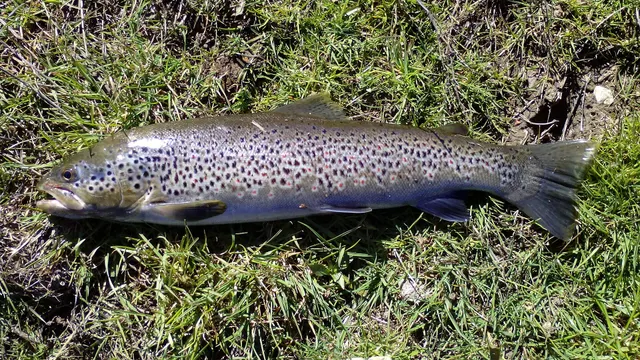 Brown troutA single, extraordinarily plastic species that appears as a tiny hill-stream fish, a deep-bodied loch trout and a silver sea-run migrant — all the same animal.
Robermix, CC0, via Wikimedia Commons
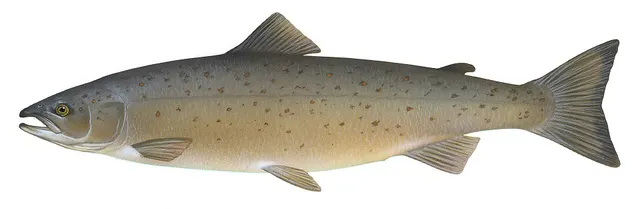 Atlantic salmonAn anadromous salmonid that migrates from its natal river to the North Atlantic and returns to spawn — and a species in serious, well-documented decline.
Knepp, Timothy, Public domain, via Wikimedia Commons
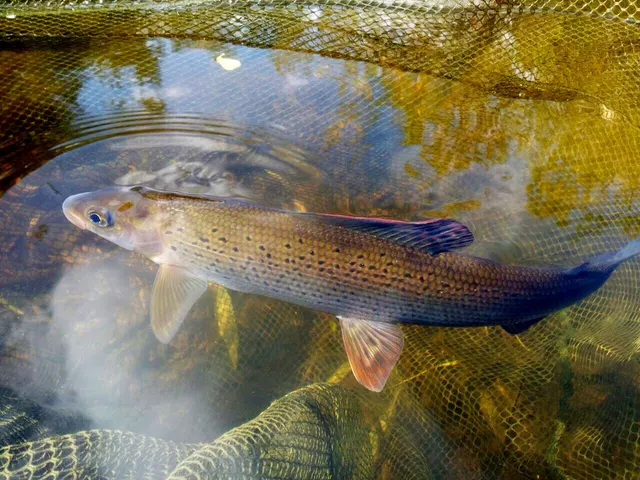 GraylingA salmonid with a sail for a dorsal fin that feeds hard through the winter — which makes it the game angler's season when the trout season has closed.
High Plains Grifter — CC BY-SA 4.0, via Wikimedia Commons
Places within this area
Publicly documented fishing geography. FishingHQ describes what the ground is; it does not say whether you may fish it, and every one of these sends that question to the body that holds the answer. Browse every place in this part of the world.
Who to ask before fishing any of these
FishingHQ does not know the current access position here. Freshwater rod fishing in Wales requires a current rod licence AND separate permission from whoever controls the fishing, which is frequently a club, riparian owner or navigation authority rather than a public body. Close seasons, byelaws and local rules apply and change. Check with Natural Resources Wales and with the controlling club or owner before going.
The Towy at Llandeilo
River reach · Fresh water
A wide, gravel-bedded meandering reach of the Towy through the Vale of Towy, with long deep pools, gravel glides, undercut banks and heavy tree cover in places.
Sheltered valley with substantial bankside cover, which matters for a river fished predominantly at night.
Particular to this ground: moving water and currents, fishing alone, drowning and immersion, cold water shock.
Severe hazards of The Welsh sewin rivers apply here: weather and lightning.
The Teifi at Lampeter
River reach · Fresh water
A middle reach of one of the great Welsh sewin rivers, running over gravel between wooded banks, with the coracle tradition still associated with its lower reaches.
Severe hazards of The Welsh sewin rivers apply here: moving water and currents, weather and lightning.
The Dyfi at Machynlleth
River reach · Fresh water
A spate river running off the Cambrian Mountains over gravel and boulder to a wide tidal estuary, rising and falling very rapidly with hill rainfall.
Severe hazards of The Welsh sewin rivers apply here: moving water and currents, weather and lightning.
Safety
Moving water and currents — Can cause serious injury or death
Wading a stony spate river at night is the fishery's defining activity. The bed is uneven and slippery with holes that take a foot, current strong enough to take a standing person off their feet arrives at less depth than expected, and a fall among boulders in fast water carries a risk of entrapment as well as drowning.
What reduces it: Do not wade at night water you have not walked in daylight. Wear a fastened wading belt, use a staff, wade with the current rather than against it, do not wade above heavy water, and if swept get feet downstream and float before trying to stand.
Worse when:
- At night, when the bed, the depth and the speed cannot be read at all.
- On a rising or falling spate, when the bed has been rearranged and the flow is strongest.
Weather and lightning — Can cause serious injury or death
These are short steep rain-fed catchments. Rain on the hills arrives in the river hours later and under a clear sky over the beat, so a river comfortable at dusk can be dangerous by midnight with no local weather at all — and in darkness the rising level cannot be watched.
What reduces it: Check the river gauge before travelling and again during the evening, mark a level against a fixed point at the start of the session and check it, and get out at the first sign of colouring, rising level or moving debris rather than the second.
Cold water shock — Can cause injury needing treatment
Soft upland river water is cold even in summer, and an immersion produces an involuntary gasp and loss of breathing control in the first seconds — in waders, in current, in the dark.
What reduces it: Consider an inflatable buoyancy aid, do not fish heavy water alone at night, and if immersed float and control the breathing with feet downstream before attempting to reach the bank.
Fishing alone — Can cause injury needing treatment
Banks are steep, wooded, undercut and frequently a long way from a road, mobile coverage in the valleys is patchy, and the fishing is done alone at night as a matter of course.
What reduces it: Tell somebody the specific beat and the expected return time, carry a light and a spare, and carry the means of calling for help on your person rather than in a bag on the bank.
Further safety reading
- Wading safely — The fishery combines wading, spate and darkness by design, because that is when and where the fish are. The single rule that addresses most of it is not wading at night water that has not been walked in daylight.
Check the rules before you fish
Fishing laws, bylaws, access rules, seasons, bait restrictions and permitted methods vary by location and can change. Check the current rules from the relevant authority and the water you intend to fish before fishing.
Check with:
- Current national or regional law for where you are fishing
- Current local bylaws
- The relevant fisheries authority
- The landowner, club or fishery whose water it is
- Any restrictions specific to the species or the method you intend to use
Where to go next
What swims here
- Atlantic salmonA smaller and declining run than the sea trout, entering on spates through the season. Controls including mandatory catch-and-release provisions have tightened progressively and have been contentious on these rivers.
- Brown troutAs sewin — sea trout — which is what these rivers are for in the local mind. The fish lie deep and under cover by day and move into the tails and necks of pools after dark, which is why the whole fishery is conducted at night.
- GraylingOn some of these rivers rather than all of them, in the gravel runs and glides through the colder months, occupying the season when the migratory fishing is closed.
How this compares
Environment and conservation
Sources and evidence
- Freshwater Fishes of the British Isles — HarperCollins (New Naturalist 75), 1992 (Reference work)Relied on for: Distribution, ecology, life history and conservation status of the freshwater fishes of the British Isles named here, including in artificial and modified waters.States this directlyCitation checked — the work exists and is described correctly
- Environment Agency fisheries management, byelaws and rod licensing information — Environment Agency (Government fisheries body)Relied on for: Freshwater fisheries management, water quality, river and still-water monitoring, and the structure of the rod licensing framework in England.States this directlyCitation checked — the work exists and is described correctly
- JNCC species and habitat conservation advice — Joint Nature Conservation Committee (Conservation authority)Relied on for: Designation, habitat description and conservation status of the freshwater and wetland habitats named, and the species characteristically associated with them.States this directlyCitation checked — the work exists and is described correctly
- The Fishes of the British Isles and North-West Europe — Macmillan, 1969 (Reference work)Relied on for: Distribution, habitat association and biology of the freshwater and migratory fishes of the British Isles named here.States this directlyCitation checked — the work exists and is described correctly
- RNLI water safety guidance: cold water shock and Float to Live — Royal National Lifeboat Institution (Water-safety or diver-training authority)Relied on for: Cold water shock and the immersion response, and water-safety guidance for anglers and small-craft users on inland water.States this directlyPassage read and verified
- RoSPA water safety information and UK accidental drowning statistics — Royal Society for the Prevention of Accidents (Water-safety or diver-training authority)Relied on for: UK accidental drowning statistics and inland water-safety guidance, including the proportion of drownings that begin with no intention of entering the water.States this directlyPassage read and verified
Why the 8 connections on this page are here, and the sources
What swims here
Backed by research — 3 connections
Supported by peer-reviewed research or fisheries science. The sources are listed and can be checked.
Atlantic salmon
A claim that a place contains the ground, water and seasonal conditions the species is associated with. It is a distributional statement about the world, it rests on the regional reference literature, and it deliberately asserts nothing about access, permission or catch.
- Freshwater Fishes of the British Isles — HarperCollins (New Naturalist 75), 1992 (Reference work)Relied on for: Distribution, ecology and conservation status of the freshwater fishes of the British Isles, including in artificial and modified waters.States this directlyCitation checked — the work exists and is described correctly
- Environment Agency fisheries management, byelaws and rod licensing information — Environment Agency (Government fisheries body)Relied on for: Fisheries monitoring, water quality and species distribution in English rivers, canals and still waters.States this directlyCitation checked — the work exists and is described correctly
Brown trout
A claim that a place contains the ground, water and seasonal conditions the species is associated with. It is a distributional statement about the world, it rests on the regional reference literature, and it deliberately asserts nothing about access, permission or catch.
- Freshwater Fishes of the British Isles — HarperCollins (New Naturalist 75), 1992 (Reference work)Relied on for: Distribution, ecology and conservation status of the freshwater fishes of the British Isles, including in artificial and modified waters.States this directlyCitation checked — the work exists and is described correctly
- Environment Agency fisheries management, byelaws and rod licensing information — Environment Agency (Government fisheries body)Relied on for: Fisheries monitoring, water quality and species distribution in English rivers, canals and still waters.States this directlyCitation checked — the work exists and is described correctly
Grayling
A claim that a place contains the ground, water and seasonal conditions the species is associated with. It is a distributional statement about the world, it rests on the regional reference literature, and it deliberately asserts nothing about access, permission or catch.
- Freshwater Fishes of the British Isles — HarperCollins (New Naturalist 75), 1992 (Reference work)Relied on for: Distribution, ecology and conservation status of the freshwater fishes of the British Isles, including in artificial and modified waters.States this directlyCitation checked — the work exists and is described correctly
- Environment Agency fisheries management, byelaws and rod licensing information — Environment Agency (Government fisheries body)Relied on for: Fisheries monitoring, water quality and species distribution in English rivers, canals and still waters.States this directlyCitation checked — the work exists and is described correctly
How people fish here
What experienced anglers do — 2 connections
Widely and independently recommended by experienced anglers and specialist sources. This is real angling knowledge, not proof: controlled evidence for it is limited, and FishingHQ records it as convention rather than as a demonstrated effect.
Fly fishing
A claim about angling convention rather than about the world: that this place sits within this branch of fishing, which drives the information architecture as well as the page. It rests on independent practitioner description.
- General angling website restatements of established technique — Various (Credible secondary source)Relied on for: Widely restated descriptions of which practices are conventionally used on the waters named, recorded as practitioner consensus rather than as scholarship.Background and mechanism onlyCitation checked — the work exists and is described correctly
- Coarse Fishing — A. & C. Black, 1912 (Specialist angling publication)Relied on for: Established description of English coarse and game fishing practice on rivers, canals and still waters.FishingHQ's interpretation of what it saysCitation checked — the work exists and is described correctly
Traditional net fishing
A claim about angling convention rather than about the world: that this place sits within this branch of fishing, which drives the information architecture as well as the page. It rests on independent practitioner description.
- General angling website restatements of established technique — Various (Credible secondary source)Relied on for: Widely restated descriptions of which practices are conventionally used on the waters named, recorded as practitioner consensus rather than as scholarship.Background and mechanism onlyCitation checked — the work exists and is described correctly
- Coarse Fishing — A. & C. Black, 1912 (Specialist angling publication)Relied on for: Established description of English coarse and game fishing practice on rivers, canals and still waters.FishingHQ's interpretation of what it saysCitation checked — the work exists and is described correctly
How this compares
What experienced anglers do — 1 connection
Widely and independently recommended by experienced anglers and specialist sources. This is real angling knowledge, not proof: controlled evidence for it is limited, and FishingHQ records it as convention rather than as a demonstrated effect.
The River Spey
A claim that two places are worth reading against one another, because a reader choosing between them or generalising from one to the other needs to know how the underlying process differs.
- General angling website restatements of established technique — Various (Credible secondary source)Relied on for: Widely restated descriptions of which practices are conventionally used in the waters named, recorded as practitioner consensus rather than as scholarship.Background and mechanism onlyCitation checked — the work exists and is described correctly
- Sea Angler — Bauer Media (Specialist angling publication)Relied on for: Long-running published description of British and Irish sea angling practice by region and by ground type.FishingHQ's interpretation of what it saysCitation checked — the work exists and is described correctly
Safety reading
Official guidance — 1 connection
Stated by a fisheries authority, scientific institute or recognised angling body. Authoritative, but summarising rather than demonstrating.
Wading safely
A claim that a place presents a particular hazard strongly enough that the reader should be sent to the page dealing with it in full, rather than left with the short warning on the place itself.
- RNLI water safety guidance: cold water shock and Float to Live — Royal National Lifeboat Institution (Water-safety or diver-training authority)Relied on for: Cold water shock and the immersion response, tidal cut-off, and water-safety guidance for shore anglers and small-craft users.States this directlyPassage read and verified
Environment and conservation
Backed by research — 1 connection
Supported by peer-reviewed research or fisheries science. The sources are listed and can be checked.
Fish stocks and sustainability
A claim that a place raises a particular environmental question, resting on the scientific and conservation literature for the system rather than on angling practice.
- JNCC species and habitat conservation advice — Joint Nature Conservation Committee (Conservation authority)Relied on for: Habitat classification and description for the intertidal, coastal, estuarine and freshwater habitats named, and the species characteristically associated with them.States this directlyCitation checked — the work exists and is described correctly
- Cefas science, advice and data on marine and freshwater environments — Centre for Environment, Fisheries and Aquaculture Science (Government fisheries body)Relied on for: Characterisation of UK inshore sediment, intertidal habitat, estuarine process and the shellfish beds associated with them.States this directlyCitation checked — the work exists and is described correctly
How FishingHQ labels evidence is explained in the evidence policy.