Dry fly fishing
Method · Last reviewed 2026-08-10
Presenting a floating artificial to a fish feeding at the surface, so that it drifts exactly as a natural insect would.
Dry fly fishing is the most visual form of angling there is: you see the fish, you see the fly, and you see the take. It is also the form where presentation matters most and pattern matters least, for a reason that is worth understanding.
A trout holding in a current is judging drifting items against a very specific expectation — that they move at exactly the speed of the water carrying them. A fly attached to a line that crosses faster or slower water is dragged, and drag is visible to the fish long before pattern is. This is why an experienced angler with the wrong fly and a drag-free drift usually beats an inexperienced one with the right fly and a line that pulls.
Everything technical about the method — the tapered leader, the upstream cast, the slack-line presentations, the mending of line on the water — exists to buy a few more seconds of drift before drag sets in.
What it is
Fly fishing with an artificial designed to sit in or on the surface film, presented to a fish that is feeding there so that the fly drifts at exactly the speed of the water carrying it. The fly is held up by surface tension, by hackle fibres standing on the film, by buoyant materials such as deer hair and CDC, and by floatant. What makes it dry fly fishing is not that the fly floats but that the presentation is a drift: the angler's job is to make several metres of line, leader and tippet deliver the fly and then stop influencing it.
What it is for
To take fish that are feeding on or in the surface film, and to do so in a way that shows the whole interaction — the rise that reveals the fish, the cast that places the fly, the drift, and the take. It is the method for rising trout and grayling on rivers and for surface-feeding fish on stillwaters, and it is also the method that teaches the most quickly, because every mistake is visible. A leader that drags, a line that lands across the fish, a fly the wrong size: the river shows you all three at once, which is why anglers who fish it get better at reading water faster than anglers who do not.
Setting it up
- Cast so the fly lands upstream of the fish and drifts down to it, with the leader landing where the fish is not looking.
- Give yourself slack: a straight leader drags almost at once, a leader with deliberate slack in it drifts far longer.
- Mend the line — reposition it on the water after the cast — to stop faster current dragging the belly of the line.
- Approach from downstream and low; a trout's blind spot is behind it.
- Match the size and silhouette of what is hatching before worrying about the exact pattern.
What it catches
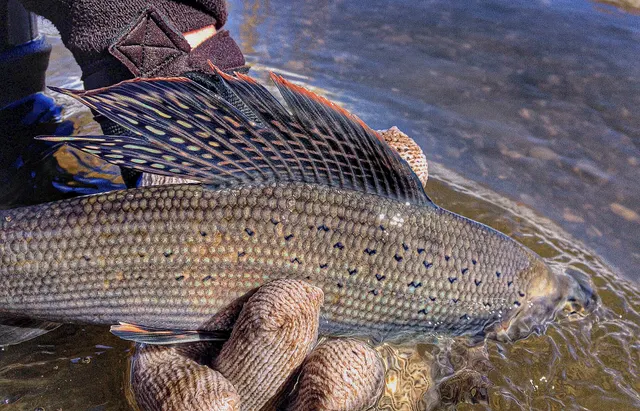 Arctic graylingDry flies and small nymphs, since the species feeds almost entirely on the drift.
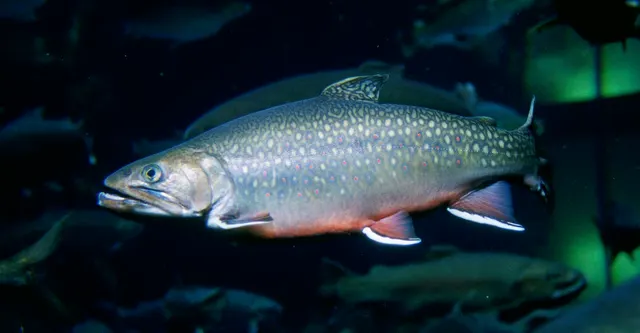 Brook troutBrook trout in their native headwaters rise freely and unselectively, which makes a dry fly both effective and the only practical way to fish tight, shallow, fast water without snagging.
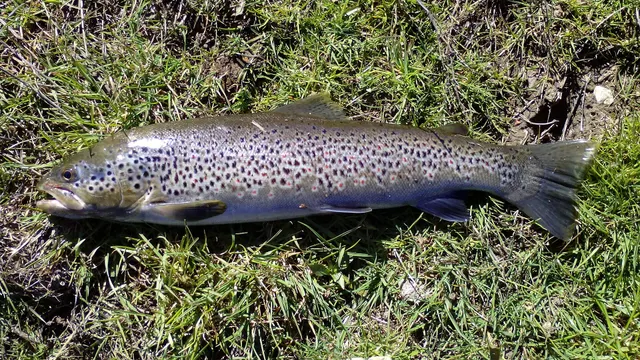 Brown troutDrift feeding is what makes a dry fly work at all — a trout holding station and judging drifting items is a trout that can be deceived by one.
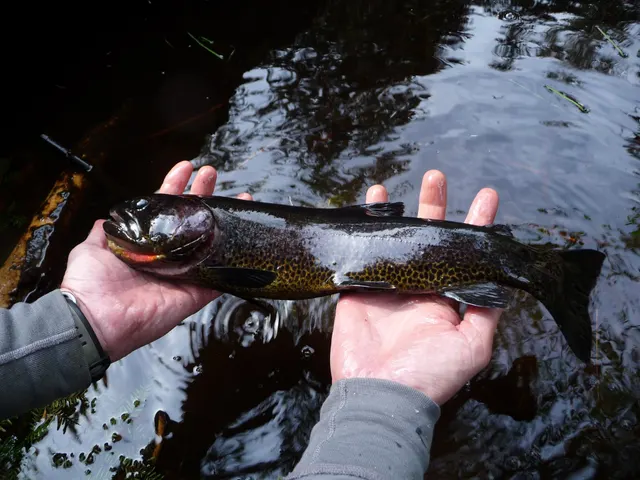 Cutthroat troutThe classic western dry-fly fish, and generally reckoned more willing to rise than a brown trout — which is part of why remnant populations are so vulnerable in accessible water.
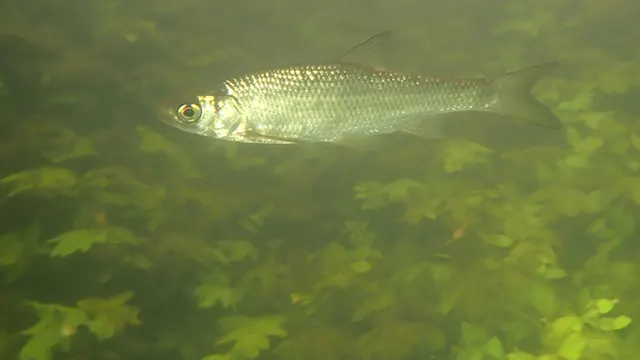 DaceDace rise freely to small dry flies, and are one of the very few British coarse fish a fly angler catches on purpose rather than by accident.
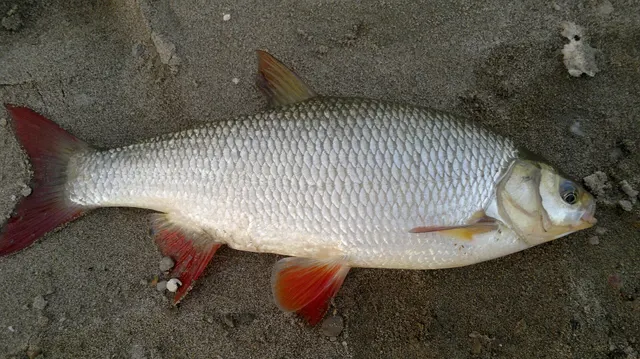 IdeFloat and lure tackle, and one of the few large european cyprinids taken on dry fly.
- Jungle perchSmall poppers, surface lures and dry flies in clear shaded streams.
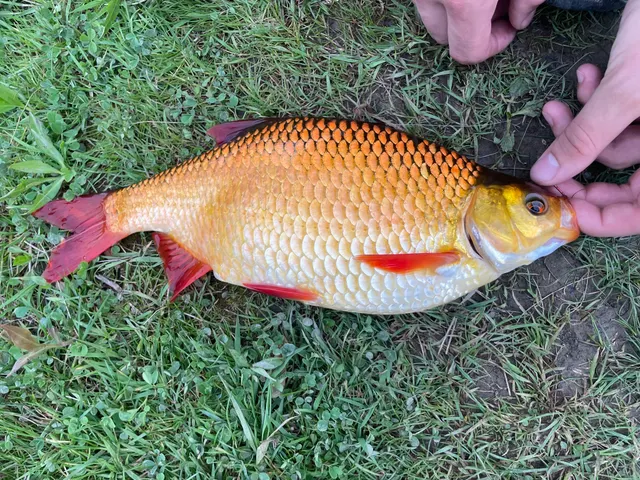 RuddFloat tackle fished shallow, and genuinely a dry-fly target because of the upturned mouth.
1 more
- Saratoga Fish
What you fish it with
- Blood knotThe leader is a tapered series of monofilament sections and the blood knot is what joins one diameter to the next. Its own record excludes braid and wire, neither of which appears in a trout leader.
- Double surgeon's knotChanging tippet is the commonest operation in dry fly fishing — a fly refused, a tippet shortened by three fly changes, a fish broken off — and this is the join that can be made quickly enough to do it without losing the rise.
- Dry fliesThe method is named after the fly, and neither page describes anything the other does not.
- Polarised glasses and eye protectionA hook passes the caster's head twice on every cast, and the fish are frequently being watched rather than searched for. Both halves of the case apply at once.
- Terrestrial fly patternsFished dry, and the patterns that matter when nothing is hatching.
How it works
The fly floats through surface tension, assisted by materials and dressings that resist wetting. The tapered leader transfers casting energy so the fly turns over and lands ahead of the line rather than in a heap, and the fine tippet is flexible enough that the fly is not immediately pulled by the leader. Once on the water, the current acts on the fly line — which is thick and offers a lot of surface for the water to grip — and that is what eventually causes drag.
Conditions
Dry fly requires fish feeding at or near the surface, which usually means an insect hatch, warm still conditions, or terrestrial insects being blown onto the water. It works best in moderate light and moderate wind. It is unproductive when fish are feeding deep, which — over the course of a season — is most of the time.
Common mistakes
- Casting a straight leader that drags immediately, and blaming the fly.
- Casting directly over the fish rather than to one side, so the line lands in its window.
- Wading into the position from which you can reach the fish, and pushing a wave ahead of you as you do.
- Changing fly repeatedly when the problem is drift.
- Striking too hard and too fast, which pulls the fly out of a rising fish's mouth.
Advantages
- Entirely visual, from the rise you are casting to through to the take.
- Very effective when fish are feeding at the surface.
- Requires little more than a rod, a line and a small box of flies.
- Fish are almost always lip-hooked, which makes release straightforward.
Limitations
- Only works when fish are looking up, which is a minority of the time.
- Wind makes accurate presentation difficult and drag worse.
- Casting takes real practice before it becomes accurate at distance.
- It is easy to spook the fish you are casting to before ever making the cast.
Terms you will meet
- Drag
- The fly moving across the current instead of with it, pulled by the line. It is the single commonest reason a good cast to a feeding fish is refused, and a trout will see a dragging fly from a long way off.
- Mending
- Flicking a loop of line upstream or downstream after it lands, to stop faster water bellying the line and dragging the fly. A drift can be extended several times over by mending it well.
- Dead drift
- A drift in which the fly travels at exactly the speed of the surface it is on. This is what the whole method is trying to produce.
- Match the hatch
- Choosing a fly that resembles the insect the fish are actually taking. Size and silhouette matter far more than colour, and a fish locked onto one stage of one insect will ignore everything else on the water.
- Rise form
- The shape of the disturbance a feeding fish makes. A head-and-tail roll, a splashy slash and a quiet sip mean the fish is taking different things at different depths in the film, and reading them tells you what to tie on.
Where people fish it
55 places FishingHQ holds name this among the ways they are fished, across 16 coasts and systems. Being named here describes what sources report, not that the method is permitted — check the local rules before you fish.
Eela Water, Loch of Asta, Loch of Benston, Loch of Clousta and 12 more
The Annan, The Beauly and the Ness, The Clyde at Lanark, The Helmsdale and 6 more
The Conwy at Llanrwst, The Coquet at Rothbury, The Dee at Llangollen, The Eden at Appleby and 5 more
The Findhorn at Forres, The Spey at Aberlour, The Spey at Grantown
The Tay at Dunkeld, The Tay at Stanley, The Tummel and Loch Faskally
The Dyfi at Machynlleth, The Teifi at Lampeter, The Towy at Llandeilo
The Itchen at Winchester, The Test at Stockbridge
8 further coasts and systems are not listed here. Browse every place FishingHQ holds.
Where a trout stands in a river, and why it is not where the water looks best
Where a trout stands in a river, and why it is not where the water looks best
Reading the ground · Draft — not yet checked against an external reference
This drawing has not been checked against any reference outside FishingHQ. It is a schematic of what the surrounding text describes, and the text is what carries the detail.
Describe this diagram in words
A plan view of a short stretch of river, seen from above, with the current running from left to right. The far bank is a straight line along the top and the near bank runs along the bottom with a shallow point pushing out into the flow around the middle. An arrow along the upper third marks the main flow: fast water, carrying the drifting food. A boulder stands in mid-river, and a second arrow curves downstream from its edge marking the seam — the line where the fast water meets the slack behind the obstruction. One trout is drawn in that slack, immediately beside the seam and facing upstream into it. A second trout sits in the eddy downstream of the point on the near bank, in exactly the same relationship to the flow. The wide open middle of the pool, which is the easiest water to cast to, is labelled as almost empty. The figure publishes no depths, no distances and no current speeds, because all three differ by river and by day.
How this drawing was produced
Drawn from coordinates written by hand for this figure and rendered by the site's own diagram component, using the shared element vocabulary rather than any per-diagram styling. Nothing is traced from a photograph or a chart of any real river; the shapes are schematic and the proportions were chosen so the seam and the two lies read clearly at the width the figure is displayed at. It carries no numbers of any kind, and no fly, cast or angler, so that it cannot be read as a tip.
Where to go next
Related techniques
Skills behind it
- Choosing a fly line, a leader and a fly for the water in front of youOne of the four answers the spine's first question can produce — surface, moving water, insects — and reachable from the procedure rather than only by knowing to look for it.
- Dry fly, nymph, wet fly and streamer: the four approachesDry fly is one of four approaches, and the method page should reach the comparison that says when it is the wrong one.
- How fly casting worksThe method where casting accuracy and delicacy are the technique rather than a prerequisite for it. A dry fly is presented to a specific fish at a specific spot, and the cast is what does that.
- Matching the hatch: what it means and when it is wrongDry fly fishing is where selectivity is met most often, and where the emerger-versus-adult error does most damage.
- Mending line, and what it is forA dead drift is impossible without line control, and most refused dry flies are dragging in a way the angler has not noticed.
- Presentation and dragA floating fly must travel at exactly the speed of the water carrying it, and drag is what stops it.
- Reading a river for fishA dry fly is presented to a fish holding a known station in a known current, so the water has to be read before anything is cast.
Compared with
- NymphingThe choice between them is the oldest live argument in fly fishing, and the honest answer is that one matches where trout mostly feed and the other matches how anglers mostly want to fish.
- Salmon fly fishingBoth present a fly with a fly rod, and they are opposites in the thing that matters: one shows a feeding fish something it is eating, the other shows a fish that has stopped eating something it will react to.
- TenkaraThe same problem — a drag-free drift at short range — solved by geometry rather than by line management. Neither replaces the other; the choice is decided by how much reach the water demands.
History and culture
Sources and evidence
Why the 26 connections on this page are here, and the sources
What it catches
What experienced anglers do — 9 connections
Widely and independently recommended by experienced anglers and specialist sources. This is real angling knowledge, not proof: controlled evidence for it is limited, and FishingHQ records it as convention rather than as a demonstrated effect.
Arctic grayling
A practitioner claim about how Thymallus arcticus is commonly fished, following from where and how it feeds.
- General angling website restatements of established technique — Various (Credible secondary source)Relied on for: Widely restated practitioner accounts of fishing for arctic grayling.Citation checked — the work exists and is described correctly
- Sea Angler — Bauer Media (Specialist angling publication)Relied on for: Practitioner treatment of the methods used for arctic grayling and comparable species.Citation checked — the work exists and is described correctly
Brook trout
Established angling practice for this species, recorded as convention. The note states the property of the animal or its water that makes the method the answer.
- Trout & Salmon — Bauer Media (Specialist angling publication)Relied on for: Established salmonid angling technique and its application to this species.States this directlyCitation checked — the work exists and is described correctly
- General angling website restatements of established technique — Various (Credible secondary source)Relied on for: Widely restated practice connecting this species and method.Background and mechanism onlyCitation checked — the work exists and is described correctly
Brown trout
The foundational method for the species, described independently across the game literature.
- Still Water Fly-Fishing — Andre Deutsch, 1952 (Specialist angling publication)Relied on for: Fly fishing method and fly selection for trout.Citation checked — the work exists and is described correctly
- Trout & Salmon — Bauer Media (Specialist angling publication)Relied on for: Contemporary dry fly practice from independent contributors.Citation checked — the work exists and is described correctly
Cutthroat trout
A practitioner claim about relative willingness, labelled as convention.
- Freshwater Fishing — Macdonald & Jane's, 1975 (Specialist angling publication)Relied on for: Practitioner treatment of dry fly technique and of variation in rise willingness between trout species.Citation checked — the work exists and is described correctly
- Trout & Salmon — Bauer Media (Specialist angling publication)Relied on for: Contemporary practitioner treatment of dry fly fishing for western North American trout.Citation checked — the work exists and is described correctly
Dace
A statement about how a species is fished, which is angling convention rather than biology and is labelled as such.
- Coarse Fishing — A. & C. Black, 1912 (Specialist angling publication)Relied on for: Established coarse angling practice, including method selection, presentation and the reasoning behind them.States this directlyCitation checked — the work exists and is described correctly
- Freshwater Fishing — Macdonald & Jane's, 1975 (Specialist angling publication)Relied on for: Freshwater angling technique and the principles behind method selection.States this directlyCitation checked — the work exists and is described correctly
- General angling website restatements of established technique — Various (Credible secondary source)Relied on for: Widely restated angling practice, recorded as consensus rather than as scholarship.Background and mechanism onlyCitation checked — the work exists and is described correctly
Ide
A practitioner claim about how Leuciscus idus is commonly fished, following from where and how it feeds.
- General angling website restatements of established technique — Various (Credible secondary source)Relied on for: Widely restated practitioner accounts of fishing for ide.Citation checked — the work exists and is described correctly
- Sea Angler — Bauer Media (Specialist angling publication)Relied on for: Practitioner treatment of the methods used for ide and comparable species.Citation checked — the work exists and is described correctly
Jungle perch
A practitioner claim about how Kuhlia rupestris is commonly fished, following from where and how it feeds.
- General angling website restatements of established technique — Various (Credible secondary source)Relied on for: Widely restated practitioner accounts of fishing for jungle perch.Citation checked — the work exists and is described correctly
- Sea Angler — Bauer Media (Specialist angling publication)Relied on for: Practitioner treatment of the methods used for jungle perch and comparable species.Citation checked — the work exists and is described correctly
Rudd
A practitioner claim about how Scardinius erythrophthalmus is commonly fished, following from where and how it feeds.
- General angling website restatements of established technique — Various (Credible secondary source)Relied on for: Widely restated practitioner accounts of fishing for rudd.Citation checked — the work exists and is described correctly
- Sea Angler — Bauer Media (Specialist angling publication)Relied on for: Practitioner treatment of the methods used for rudd and comparable species.Citation checked — the work exists and is described correctly
Saratoga
A statement about how a species is fished outside Europe, resting on restated international practice rather than on the British angling literature.
- General angling website restatements of established technique — Various (Credible secondary source)Relied on for: Widely restated descriptions of regional angling practice, recorded as consensus rather than as scholarship.States this directlyCitation checked — the work exists and is described correctly
- IGFA International Angling Rules and World Record Requirements — International Game Fish Association (Angling or fisheries organisation)Relied on for: International recreational angling practice and the record framework that documents which species are pursued and how.Background and mechanism onlyPassage read and verified
Related techniques
What experienced anglers do — 1 connection
Widely and independently recommended by experienced anglers and specialist sources. This is real angling knowledge, not proof: controlled evidence for it is limited, and FishingHQ records it as convention rather than as a demonstrated effect.
Fly fishing
How the discipline classifies it, rather than a claim about how it is fished.
- Still Water Fly-Fishing — Andre Deutsch, 1952 (Specialist angling publication)Relied on for: Dry fly within fly fishing method.Citation checked — the work exists and is described correctly
- Trout & Salmon — Bauer Media (Specialist angling publication)Relied on for: Contemporary categorisation of fly methods.Citation checked — the work exists and is described correctly
What you fish it with
What experienced anglers do — 5 connections
Widely and independently recommended by experienced anglers and specialist sources. This is real angling knowledge, not proof: controlled evidence for it is limited, and FishingHQ records it as convention rather than as a demonstrated effect.
Blood knot
Which knot a kind of fishing conventionally uses is established practitioner knowledge that converges across independent traditions and independent state agency guides, and it is labelled as consensus rather than as tested result. Nothing here ranks knots by strength: see `why-knot-strength-tables-disagree` for why that number does not exist.
- Still Water Fly-Fishing — Andre Deutsch, 1952 (Specialist angling publication)Relied on for: Stillwater fly practice including leader construction, droppers and the joins between line, leader and tippet.States this directlyCitation checked — the work exists and is described correctly
- Trout & Salmon — Bauer Media (Specialist angling publication)Relied on for: Long-running published description of British game angling practice, including leader and tippet construction.States this directlyCitation checked — the work exists and is described correctly
Double surgeon's knot
An arrangement joined to the knot that actually builds it, written where the knot is characteristic of that arrangement rather than merely possible in it. This is the edge a reader travels: they arrive looking for the arrangement and need the connection it depends on.
- How to Tie Fishing Knots — uni, blood, improved blood, surgeon's and loop knots — Recreational Boating & Fishing Foundation (Take Me Fishing) (Angling or fisheries organisation)Relied on for: The double surgeon's knot sequence, and the grouping of knots by the connection each is for.States this directlyPassage read and verified
- Fishing Knots — which knot for which line — Vermont Fish & Wildlife Department (Government fisheries body)Relied on for: A state wildlife agency grouping knots by job and stating that the surgeon's knot joins lines regardless of diameter or line type.States this directlyPassage read and verified
- Still Water Fly-Fishing — Andre Deutsch, 1952 (Specialist angling publication)Relied on for: Stillwater fly practice: leader construction, teams of flies on droppers, and the joins between backing, fly line, leader and tippet.States this directlyCitation checked — the work exists and is described correctly
- Trout & Salmon — Bauer Media (Specialist angling publication)Relied on for: British game angling practice, including leader and tippet construction and the fly-line connections it rests on.States this directlyCitation checked — the work exists and is described correctly
Dry flies
A dry fly is defined as one that floats in or on the film, and dry fly fishing is defined as presenting it there. The two definitions are the same sentence read from opposite ends.
- Still Water Fly-Fishing — Andre Deutsch, 1952 (Specialist angling publication)Relied on for: Specialist treatment of which bait or lure family this technique is fished with.States this directlyCitation checked — the work exists and is described correctly
- Trout & Salmon — Bauer Media (Specialist angling publication)Relied on for: The independently restated practitioner pairing of this technique with this family.Background and mechanism onlyCitation checked — the work exists and is described correctly
Polarised glasses and eye protection
That a practice conventionally depends on a piece of equipment, drawn from published description of practice rather than from testing.
- Trout & Salmon — Bauer Media (Specialist angling publication)Relied on for: Long-running published description of British game angling practice, including casting, sight fishing and the equipment used for both.FishingHQ's interpretation of what it saysCitation checked — the work exists and is described correctly
- Still Water Fly-Fishing — Andre Deutsch, 1952 (Specialist angling publication)Relied on for: Stillwater fly practice including observation, water reading and presentation.States this directlyCitation checked — the work exists and is described correctly
Terrestrial fly patterns
The terrestrial record's claim is that these patterns carry the summer and the small stream, when no hatch supports an imitative dry. They are fished with identical technique, which is why they belong on this method rather than beside it.
- Still Water Fly-Fishing — Andre Deutsch, 1952 (Specialist angling publication)Relied on for: Specialist treatment of which bait or lure family this technique is fished with.States this directlyCitation checked — the work exists and is described correctly
- Trout & Salmon — Bauer Media (Specialist angling publication)Relied on for: The independently restated practitioner pairing of this technique with this family.Background and mechanism onlyCitation checked — the work exists and is described correctly
Skills behind it
What experienced anglers do — 7 connections
Widely and independently recommended by experienced anglers and specialist sources. This is real angling knowledge, not proof: controlled evidence for it is limited, and FishingHQ records it as convention rather than as a demonstrated effect.
Choosing a fly line, a leader and a fly for the water in front of you
The decision record joined to the disciplines and methods it orders, so that a reader arriving at any of them can reach the procedure rather than having to already know it exists. This is the shape `choosing-a-rig-for-the-conditions` established for rigs.
- Still Water Fly-Fishing — Andre Deutsch, 1952 (Specialist angling publication)Relied on for: Stillwater fly practice: line density and depth, leader construction, fly selection against the food present, and the behaviour of stocked and wild trout in still water.States this directlyCitation checked — the work exists and is described correctly
- Trout & Salmon — Bauer Media (Specialist angling publication)Relied on for: Long-running published description of British game angling practice: river and stillwater trout, grayling and salmon fishing, and the presentation each demands.States this directlyCitation checked — the work exists and is described correctly
- Sea Angler — Bauer Media (Specialist angling publication)Relied on for: British sea angling practice including shore fishing for bass, pollack and mullet, the ground each is found over and the presentation each takes.FishingHQ's interpretation of what it saysCitation checked — the work exists and is described correctly
- FAO Species Identification Guides for Fishery Purposes and the FAO Species Catalogues — Food and Agriculture Organization of the United Nations (Scientific institute)Relied on for: Distribution, habitat and feeding biology of coastal and tropical marine species, from regional identification guides prepared for fishery purposes.States this directlyCitation checked — the work exists and is described correctly
Dry fly, nymph, wet fly and streamer: the four approaches
Why it works, and what that rests on. Fly tackle and technique rest on established practitioner craft rather than on experiment, and the strength shown says so rather than borrowing an authority the subject does not have.
- Freshwater Fishing — Macdonald & Jane's, 1975 (Specialist angling publication)Relied on for: Comprehensive freshwater angling practice including fly tackle, casting, presentation and the reasoning behind terminal tackle choices.States this directlyCitation checked — the work exists and is described correctly
- Trout & Salmon — Bauer Media (Specialist angling publication)Relied on for: Contemporary game and fly angling practice as reported and restated by practitioners, including tackle convention and technique.Background and mechanism onlyCitation checked — the work exists and is described correctly
How fly casting works
A fly technique joined to the mechanism it depends on. Ten fly concepts carried no edge to any method, which left the vertical's explainers and its techniques as two halves that could not be navigated between.
- Still Water Fly-Fishing — Andre Deutsch, 1952 (Specialist angling publication)Relied on for: Stillwater fly practice: line density and depth, leader construction, fly selection against the food present, and the behaviour of stocked and wild trout in still water.States this directlyCitation checked — the work exists and is described correctly
- Trout & Salmon — Bauer Media (Specialist angling publication)Relied on for: Long-running published description of British game angling practice: river and stillwater trout, grayling and salmon fishing, and the presentation each demands.States this directlyCitation checked — the work exists and is described correctly
- Sea Angler — Bauer Media (Specialist angling publication)Relied on for: British sea angling practice including shore fishing for bass, pollack and mullet, the ground each is found over and the presentation each takes.FishingHQ's interpretation of what it saysCitation checked — the work exists and is described correctly
- FAO Species Identification Guides for Fishery Purposes and the FAO Species Catalogues — Food and Agriculture Organization of the United Nations (Scientific institute)Relied on for: Distribution, habitat and feeding biology of coastal and tropical marine species, from regional identification guides prepared for fishery purposes.States this directlyCitation checked — the work exists and is described correctly
Matching the hatch: what it means and when it is wrong
Why it works, and what that rests on. Fly tackle and technique rest on established practitioner craft rather than on experiment, and the strength shown says so rather than borrowing an authority the subject does not have.
- Still Water Fly-Fishing — Andre Deutsch, 1952 (Specialist angling publication)Relied on for: Stillwater fly fishing technique, including line choice, depth control, retrieve and the imitation of stillwater food forms.States this directlyCitation checked — the work exists and is described correctly
- Freshwater Fishing — Macdonald & Jane's, 1975 (Specialist angling publication)Relied on for: Comprehensive freshwater angling practice including fly tackle, casting, presentation and the reasoning behind terminal tackle choices.States this directlyCitation checked — the work exists and is described correctly
Mending line, and what it is for
Why it works, and what that rests on. Fly tackle and technique rest on established practitioner craft rather than on experiment, and the strength shown says so rather than borrowing an authority the subject does not have.
- Freshwater Fishing — Macdonald & Jane's, 1975 (Specialist angling publication)Relied on for: Comprehensive freshwater angling practice including fly tackle, casting, presentation and the reasoning behind terminal tackle choices.States this directlyCitation checked — the work exists and is described correctly
- Trout & Salmon — Bauer Media (Specialist angling publication)Relied on for: Contemporary game and fly angling practice as reported and restated by practitioners, including tackle convention and technique.Background and mechanism onlyCitation checked — the work exists and is described correctly
Presentation and drag
The method and the single problem that defines whether it works.
- Still Water Fly-Fishing — Andre Deutsch, 1952 (Specialist angling publication)Relied on for: Stillwater fly fishing practice, including line choice for depth and the role of retrieve.States this directlyCitation checked — the work exists and is described correctly
- Freshwater Fishing — Macdonald & Jane's, 1975 (Specialist angling publication)Relied on for: Fly fishing tackle and presentation practice described independently of the stillwater tradition.States this directlyCitation checked — the work exists and is described correctly
Reading a river for fish
A link from a practice, an environment or a geography to the mechanism it rests on. It asserts that the mechanism is load-bearing here rather than merely relevant, which is the test applied throughout this file.
- Angling Times — Bauer Media (Specialist angling publication)Relied on for: Contemporary UK and European coarse, match and predator practice as reported by practitioners, including how conditions are read on the waters named.FishingHQ's interpretation of what it saysCitation checked — the work exists and is described correctly
- General angling website restatements of established technique — Various (Credible secondary source)Relied on for: Widely restated descriptions of how the condition named governs the practice named, recorded as practitioner consensus rather than as scholarship.Background and mechanism onlyCitation checked — the work exists and is described correctly
Compared with
What experienced anglers do — 2 connections
Widely and independently recommended by experienced anglers and specialist sources. This is real angling knowledge, not proof: controlled evidence for it is limited, and FishingHQ records it as convention rather than as a demonstrated effect.
Nymphing
A comparison a reader is genuinely making, and one where FishingHQ can be useful precisely by not taking the traditional side.
- Freshwater Fishing — Macdonald & Jane's, 1975 (Specialist angling publication)Relied on for: The comparative treatment of dry fly and nymph technique.Citation checked — the work exists and is described correctly
- Trout & Salmon — Bauer Media (Specialist angling publication)Relied on for: Contemporary framing of the same choice.Citation checked — the work exists and is described correctly
Tenkara
Two methods addressing the same presentation problem by different means.
- General angling website restatements of established technique — Various (Credible secondary source)Relied on for: Widely restated practice connecting this species, method or place, recorded as practitioner consensus rather than as tested fact.Background and mechanism onlyCitation checked — the work exists and is described correctly
- Fishers' Craft and Lettered Art: Tracts on Fishing from the End of the Middle Ages — University of Toronto Press, 1997 (Scientific literature)Relied on for: That fishing traditions develop around the water and fish available to them, and the historical method of reading such traditions.Background and mechanism onlyCitation checked — the work exists and is described correctly
Official guidance — 1 connection
Stated by a fisheries authority, scientific institute or recognised angling body. Authoritative, but summarising rather than demonstrating.
Salmon fly fishing
Recorded so that a reader arriving from the trout side of fly fishing does not carry the imitation logic across. The difference is the feeding state of the fish, and it changes fly choice, presentation and expectation.
- Trout & Salmon — Bauer Media (Specialist angling publication)Relied on for: Long-running published description of British and Irish game angling practice by river, beat and season, including the technique, tackle and seasonal decisions of salmon fly fishing.FishingHQ's interpretation of what it saysCitation checked — the work exists and is described correctly
- General angling website restatements of established technique — Various (Credible secondary source)Relied on for: Widely restated public descriptions of salmon fly technique — the down-and-across swing, Spey casting, and the water-temperature convention for fly size and line density — recorded as practitioner consensus rather than as scholarship, including where that consensus is openly disputed.Background and mechanism onlyCitation checked — the work exists and is described correctly
History and culture
What experienced anglers do — 1 connection
Widely and independently recommended by experienced anglers and specialist sources. This is real angling knowledge, not proof: controlled evidence for it is limited, and FishingHQ records it as convention rather than as a demonstrated effect.
Angling literature and the written tradition
Written for the six fly records whose subject IS a documented tradition — the dry-fly and nymph literature, the development of the artificial fly, the British three-way split, the rod and reel lineage — and refused for the twenty-three where the only claim would be that fly fishing is old.
- The Compleat Angler, or the Contemplative Man's Recreation — Richard Marriot, 1653 (Reference work)Relied on for: Seventeenth-century English angling practice including artificial flies, their dressing and the fishing they were used for.States this directlyPassage read and verified
- Treatyse of Fysshynge with an Angle — Wynkyn de Worde, in the Boke of Saint Albans, 1496 (Reference work)Relied on for: The earliest printed English account of angling, including dressed artificial flies listed by season.States this directlyCitation checked — the work exists and is described correctly
How FishingHQ labels evidence is explained in the evidence policy.