Nymphing
Method · Last reviewed 2026-08-10
Fishing sunk imitations of immature insects at the fish's depth — the most productive fly method, and the one where take detection is everything.
Nymphing is fly fishing below the surface for fish feeding on the immature stages of aquatic insects, which is what they do most of the time. It is more productive than dry fly work by a wide margin, and it gets less attention because you cannot see it happen.
The method divides by how the take is detected. INDICATOR nymphing suspends the flies beneath a visible float or a buoyant fly, and the indicator's hesitation is the signal. TIGHT-LINE or 'Euro' nymphing dispenses with the indicator, uses heavy flies and a long rod to keep a nearly straight line to the fly, and reads the take through a coloured section of leader or through the hand.
Both solve the same two problems: get the fly to the fish's depth quickly enough that it is fishing for most of the drift, and detect a take that may be nothing more than the leader stopping a fraction early. Almost everything technical about nymphing follows from those two sentences.
What it is
Fly fishing with sunk imitations of larval and nymphal insects, presented at the depth the fish are feeding, with the take detected by an indicator, by the leader, or by feel rather than by sight of the fly.
What it is for
To fish where the food is for most of the year. Trout and grayling take the overwhelming majority of their diet below the surface, so nymphing addresses the normal case rather than the exception.
Setting it up
- Get the depth right first. A perfectly presented fly at the wrong depth catches nothing and gives no feedback that anything is wrong.
- Add weight until the fly is ticking the bottom occasionally — that is the signal that you are deep enough.
- Keep the leader as straight as you can without dragging; slack that you cannot see through is slack that hides takes.
- Use a visible indicator or sighter until reading the leader by feel becomes reliable.
- Fish the drift out to the end, because the lift as the fly rises imitates an emerging insect and takes a lot of fish.
What it catches
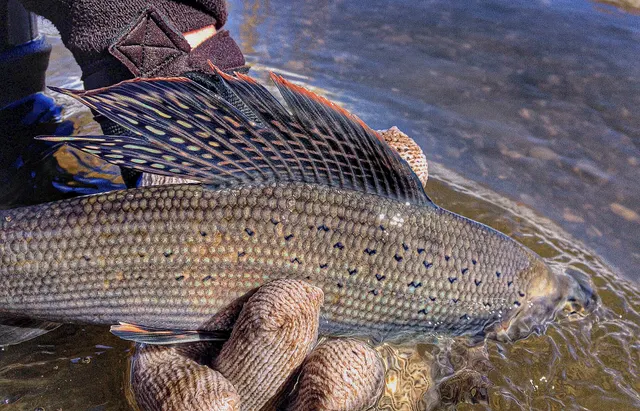 Arctic graylingDry flies and small nymphs, since the species feeds almost entirely on the drift.
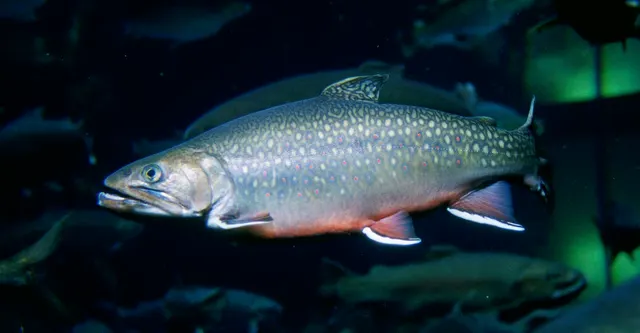 Brook troutMost of a brook trout's food arrives as drifting invertebrates below the surface, and short-line nymphing matches the drift in the pocket water they hold in.
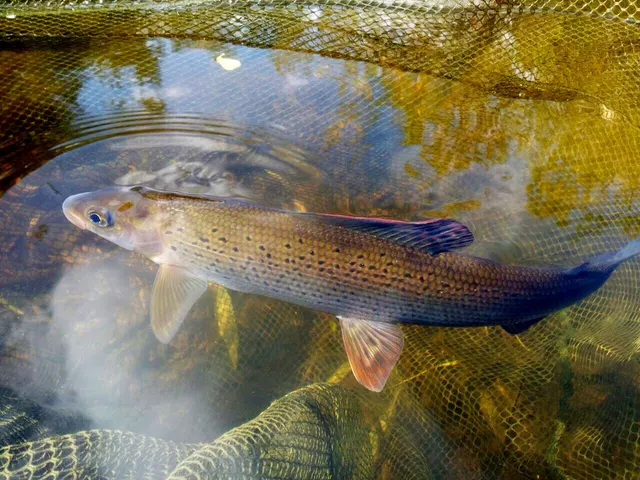 GraylingGrayling feed heavily on subsurface invertebrates and hold close to the bed in fast water, which is the exact situation nymphing was developed for.
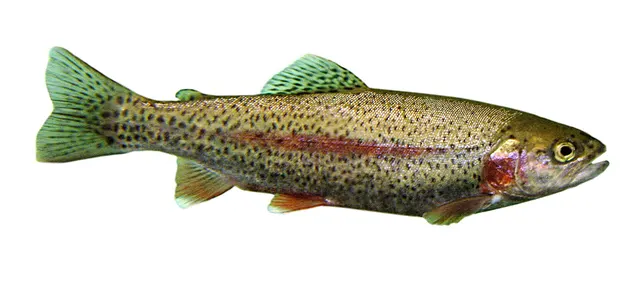 Rainbow troutStillwater rainbows feed heavily on buzzer pupae and other subsurface invertebrates, and imitative nymph fishing at a set depth answers that directly.
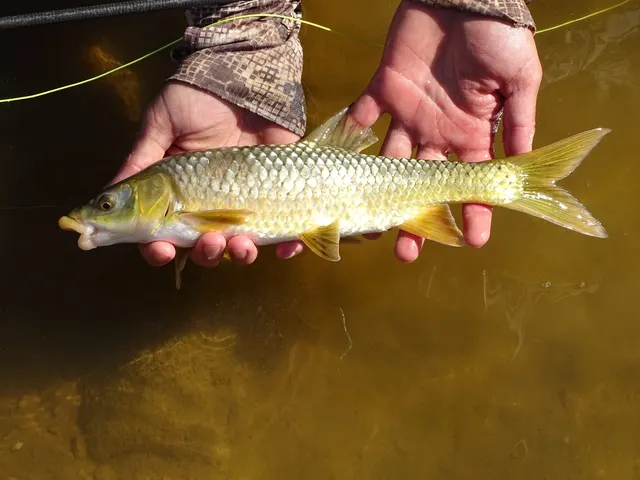 Smallmouth yellowfishSmall weighted nymphs fished on the bottom to sighted fish in wadeable riffles.
What you fish it with
- Blood knotThe same taper, plus the dropper: a blood knot left with one tag long is where a second fly hangs, which is how a team of nymphs is made without a separate device.
- Double surgeon's knotNymphing leaders are rebuilt constantly as depth and weight change, and the join between sections is remade every time. Speed and indifference to a diameter step matter more here than the last few percent of strength.
- NymphsNamed after the fly, and the method exists because the fish feed there.
How it works
Weight in or on the fly takes it down; the current carries it at the fish's level; the angler tracks the drift keeping just enough contact to feel or see a take without pulling the fly out of its natural path. Too much contact drags the fly unnaturally and lifts it; too little means the take is over before anything registers. That balance — contact without drag — is the whole craft.
Conditions
Nymphing works across the widest range of conditions of any fly method, which is much of its value. It comes into its own in cold water, in high or coloured water, and whenever nothing is rising — which is most of the time. Bright, low, clear conditions make it harder because the fish see the leader; heavy flood makes it impractical because the fly cannot be held in place. Grayling in winter are almost exclusively a nymphing proposition.
Common mistakes
- Fishing at the wrong depth for the whole session, because nothing tells you when you are.
- Too little weight, so the fly is only at the fish's level for the last third of the drift.
- Too much contact, which lifts the fly and drags it unnaturally across the current.
- Striking at every hesitation rather than learning which are stones and which are fish.
- Neglecting the lift at the end of the drift, which is when a substantial share of takes come.
Advantages
- Addresses where fish feed most of the time, so it works when nothing is rising.
- Effective in cold water and high water when surface activity has stopped entirely.
- Covers a defined depth band systematically.
- Grayling in winter are almost exclusively a nymphing proposition.
Limitations
- Takes are frequently invisible and require concentration that is genuinely tiring.
- Weighted flies snag on the bed, which is the price of fishing at the right depth.
- Casting weighted flies is clumsy and less accurate than casting a dry.
- It is easy to fish the whole session at the wrong depth without ever finding out.
Terms you will meet
- Sighter
- A short section of brightly coloured leader material used in tight-line nymphing as a visual take indicator, in place of a float.
- Dead drift
- A presentation in which the fly travels at exactly the speed of the current, with no pull from the line.
- The lift
- The rise of the fly through the water at the end of a drift as the line tightens, which imitates an ascending insect and frequently triggers a take.
Where people fish it
4 places FishingHQ holds name this among the ways they are fished, across 4 coasts and systems. Being named here describes what sources report, not that the method is permitted — check the local rules before you fish.
The Laxá í Aðaldal
The Kalix river
Where to go next
Related techniques
Skills behind it
- Presentation and dragNymphing is a depth-control problem before it is anything else: the fly must reach the fish's level and drift at the speed of the water around it.
- Choosing a fly line, a leader and a fly for the water in front of youThe answer to the spine's commonest case on a river: no rises, fish holding low, and detection rather than imitation as the real problem.
- Choosing a fly size, and what the numbers meanWhere size is most consequential and least intuitive, because the fly is not visible while fishing. A nymph is chosen by weight and size together, and the two are frequently traded against each other to reach a depth.
- River levels, and what a flood changesDepth, speed and clarity decide the weight, the depth and whether the method works at all, and all three move with the level — which on a regulated or a melt-fed river moves without weather.
- Strike indicators, and when they helpThe method that gave rise to the tackle and that carries its costs. A nymph is fished where the take cannot be seen, which is the detection problem the indicator solves — and the drag it introduces is felt by exactly this method and no other.
Compared with
History and culture
Sources and evidence
Why the 16 connections on this page are here, and the sources
What it catches
What experienced anglers do — 5 connections
Widely and independently recommended by experienced anglers and specialist sources. This is real angling knowledge, not proof: controlled evidence for it is limited, and FishingHQ records it as convention rather than as a demonstrated effect.
Arctic grayling
A practitioner claim about how Thymallus arcticus is commonly fished, following from where and how it feeds.
- General angling website restatements of established technique — Various (Credible secondary source)Relied on for: Widely restated practitioner accounts of fishing for arctic grayling.Citation checked — the work exists and is described correctly
- Sea Angler — Bauer Media (Specialist angling publication)Relied on for: Practitioner treatment of the methods used for arctic grayling and comparable species.Citation checked — the work exists and is described correctly
Brook trout
Established angling practice for this species, recorded as convention. The note states the property of the animal or its water that makes the method the answer.
- Trout & Salmon — Bauer Media (Specialist angling publication)Relied on for: Established salmonid angling technique and its application to this species.States this directlyCitation checked — the work exists and is described correctly
- General angling website restatements of established technique — Various (Credible secondary source)Relied on for: Widely restated practice connecting this species and method.Background and mechanism onlyCitation checked — the work exists and is described correctly
Grayling
A method-to-species claim resting on practitioner literature rather than on science, and labelled accordingly. The underlying feeding behaviour is separately supported on the species page.
- Freshwater Fishing — Macdonald & Jane's, 1975 (Specialist angling publication)Relied on for: Nymph presentation for grayling in running water.Citation checked — the work exists and is described correctly
- Trout & Salmon — Bauer Media (Specialist angling publication)Relied on for: Contemporary practitioner treatment of grayling nymphing technique.Citation checked — the work exists and is described correctly
Rainbow trout
Established angling practice for this species, recorded as convention. The note states the property of the animal or its water that makes the method the answer.
- Still Water Fly-Fishing — Andre Deutsch, 1952 (Specialist angling publication)Relied on for: Still-water fly technique and the feeding behaviour it is built on.States this directlyCitation checked — the work exists and is described correctly
- Trout & Salmon — Bauer Media (Specialist angling publication)Relied on for: Contemporary still-water fly practice.Background and mechanism onlyCitation checked — the work exists and is described correctly
Smallmouth yellowfish
A practitioner claim about how Labeobarbus aeneus is commonly fished, following from where and how it feeds.
- General angling website restatements of established technique — Various (Credible secondary source)Relied on for: Widely restated practitioner accounts of fishing for smallmouth yellowfish.Citation checked — the work exists and is described correctly
- Sea Angler — Bauer Media (Specialist angling publication)Relied on for: Practitioner treatment of the methods used for smallmouth yellowfish and comparable species.Citation checked — the work exists and is described correctly
Related techniques
What experienced anglers do — 1 connection
Widely and independently recommended by experienced anglers and specialist sources. This is real angling knowledge, not proof: controlled evidence for it is limited, and FishingHQ records it as convention rather than as a demonstrated effect.
Fly fishing
The definitional relationship, with the historical dispute noted.
- Freshwater Fishing — Macdonald & Jane's, 1975 (Specialist angling publication)Relied on for: Nymph fishing within the fly fishing tradition.Citation checked — the work exists and is described correctly
- Trout & Salmon — Bauer Media (Specialist angling publication)Relied on for: Contemporary standing of nymphing technique.Citation checked — the work exists and is described correctly
What you fish it with
What experienced anglers do — 3 connections
Widely and independently recommended by experienced anglers and specialist sources. This is real angling knowledge, not proof: controlled evidence for it is limited, and FishingHQ records it as convention rather than as a demonstrated effect.
Blood knot
Which knot a kind of fishing conventionally uses is established practitioner knowledge that converges across independent traditions and independent state agency guides, and it is labelled as consensus rather than as tested result. Nothing here ranks knots by strength: see `why-knot-strength-tables-disagree` for why that number does not exist.
- Still Water Fly-Fishing — Andre Deutsch, 1952 (Specialist angling publication)Relied on for: Stillwater fly practice including leader construction, droppers and the joins between line, leader and tippet.States this directlyCitation checked — the work exists and is described correctly
- Trout & Salmon — Bauer Media (Specialist angling publication)Relied on for: Long-running published description of British game angling practice, including leader and tippet construction.States this directlyCitation checked — the work exists and is described correctly
Double surgeon's knot
An arrangement joined to the knot that actually builds it, written where the knot is characteristic of that arrangement rather than merely possible in it. This is the edge a reader travels: they arrive looking for the arrangement and need the connection it depends on.
- Still Water Fly-Fishing — Andre Deutsch, 1952 (Specialist angling publication)Relied on for: Stillwater fly practice: leader construction, teams of flies on droppers, and the joins between backing, fly line, leader and tippet.States this directlyCitation checked — the work exists and is described correctly
- Trout & Salmon — Bauer Media (Specialist angling publication)Relied on for: British game angling practice, including leader and tippet construction and the fly-line connections it rests on.States this directlyCitation checked — the work exists and is described correctly
- How to Tie Fishing Knots — uni, blood, improved blood, surgeon's and loop knots — Recreational Boating & Fishing Foundation (Take Me Fishing) (Angling or fisheries organisation)Relied on for: The double surgeon's knot sequence, and the grouping of knots by the connection each is for.States this directlyPassage read and verified
- Fishing Knots — which knot for which line — Vermont Fish & Wildlife Department (Government fisheries body)Relied on for: A state wildlife agency grouping knots by job and stating that the surgeon's knot joins lines regardless of diameter or line type.States this directlyPassage read and verified
Nymphs
The nymph record states that this is where fish feed for most of the year. Nymphing is the set of techniques built to present a fly at that depth, and has no meaning applied to a floating pattern.
- Still Water Fly-Fishing — Andre Deutsch, 1952 (Specialist angling publication)Relied on for: Specialist treatment of which bait or lure family this technique is fished with.States this directlyCitation checked — the work exists and is described correctly
- Trout & Salmon — Bauer Media (Specialist angling publication)Relied on for: The independently restated practitioner pairing of this technique with this family.Background and mechanism onlyCitation checked — the work exists and is described correctly
Skills behind it
What experienced anglers do — 4 connections
Widely and independently recommended by experienced anglers and specialist sources. This is real angling knowledge, not proof: controlled evidence for it is limited, and FishingHQ records it as convention rather than as a demonstrated effect.
Presentation and drag
Why it works, stated in terms of what actually determines success.
- Freshwater Fishing — Macdonald & Jane's, 1975 (Specialist angling publication)Relied on for: Depth and drift control in nymph presentation.Citation checked — the work exists and is described correctly
- Trout & Salmon — Bauer Media (Specialist angling publication)Relied on for: Contemporary nymphing depth-control technique.Citation checked — the work exists and is described correctly
Presentation applied where the angler has no visual feedback.
- Still Water Fly-Fishing — Andre Deutsch, 1952 (Specialist angling publication)Relied on for: Stillwater fly fishing practice, including line choice for depth and the role of retrieve.States this directlyCitation checked — the work exists and is described correctly
- Freshwater Fishing — Macdonald & Jane's, 1975 (Specialist angling publication)Relied on for: Fly fishing tackle and presentation practice described independently of the stillwater tradition.States this directlyCitation checked — the work exists and is described correctly
Choosing a fly line, a leader and a fly for the water in front of you
The decision record joined to the disciplines and methods it orders, so that a reader arriving at any of them can reach the procedure rather than having to already know it exists. This is the shape `choosing-a-rig-for-the-conditions` established for rigs.
- Still Water Fly-Fishing — Andre Deutsch, 1952 (Specialist angling publication)Relied on for: Stillwater fly practice: line density and depth, leader construction, fly selection against the food present, and the behaviour of stocked and wild trout in still water.States this directlyCitation checked — the work exists and is described correctly
- Trout & Salmon — Bauer Media (Specialist angling publication)Relied on for: Long-running published description of British game angling practice: river and stillwater trout, grayling and salmon fishing, and the presentation each demands.States this directlyCitation checked — the work exists and is described correctly
- Sea Angler — Bauer Media (Specialist angling publication)Relied on for: British sea angling practice including shore fishing for bass, pollack and mullet, the ground each is found over and the presentation each takes.FishingHQ's interpretation of what it saysCitation checked — the work exists and is described correctly
- FAO Species Identification Guides for Fishery Purposes and the FAO Species Catalogues — Food and Agriculture Organization of the United Nations (Scientific institute)Relied on for: Distribution, habitat and feeding biology of coastal and tropical marine species, from regional identification guides prepared for fishery purposes.States this directlyCitation checked — the work exists and is described correctly
Choosing a fly size, and what the numbers mean
A fly technique joined to the mechanism it depends on. Ten fly concepts carried no edge to any method, which left the vertical's explainers and its techniques as two halves that could not be navigated between.
- Still Water Fly-Fishing — Andre Deutsch, 1952 (Specialist angling publication)Relied on for: Stillwater fly practice: line density and depth, leader construction, fly selection against the food present, and the behaviour of stocked and wild trout in still water.States this directlyCitation checked — the work exists and is described correctly
- Trout & Salmon — Bauer Media (Specialist angling publication)Relied on for: Long-running published description of British game angling practice: river and stillwater trout, grayling and salmon fishing, and the presentation each demands.States this directlyCitation checked — the work exists and is described correctly
- Sea Angler — Bauer Media (Specialist angling publication)Relied on for: British sea angling practice including shore fishing for bass, pollack and mullet, the ground each is found over and the presentation each takes.FishingHQ's interpretation of what it saysCitation checked — the work exists and is described correctly
- FAO Species Identification Guides for Fishery Purposes and the FAO Species Catalogues — Food and Agriculture Organization of the United Nations (Scientific institute)Relied on for: Distribution, habitat and feeding biology of coastal and tropical marine species, from regional identification guides prepared for fishery purposes.States this directlyCitation checked — the work exists and is described correctly
Strike indicators, and when they help
A fly technique joined to the mechanism it depends on. Ten fly concepts carried no edge to any method, which left the vertical's explainers and its techniques as two halves that could not be navigated between.
- Still Water Fly-Fishing — Andre Deutsch, 1952 (Specialist angling publication)Relied on for: Stillwater fly practice: line density and depth, leader construction, fly selection against the food present, and the behaviour of stocked and wild trout in still water.States this directlyCitation checked — the work exists and is described correctly
- Trout & Salmon — Bauer Media (Specialist angling publication)Relied on for: Long-running published description of British game angling practice: river and stillwater trout, grayling and salmon fishing, and the presentation each demands.States this directlyCitation checked — the work exists and is described correctly
- Sea Angler — Bauer Media (Specialist angling publication)Relied on for: British sea angling practice including shore fishing for bass, pollack and mullet, the ground each is found over and the presentation each takes.FishingHQ's interpretation of what it saysCitation checked — the work exists and is described correctly
- FAO Species Identification Guides for Fishery Purposes and the FAO Species Catalogues — Food and Agriculture Organization of the United Nations (Scientific institute)Relied on for: Distribution, habitat and feeding biology of coastal and tropical marine species, from regional identification guides prepared for fishery purposes.States this directlyCitation checked — the work exists and is described correctly
Backed by research — 1 connection
Supported by peer-reviewed research or fisheries science. The sources are listed and can be checked.
River levels, and what a flood changes
A link from a practice, an environment or a geography to the mechanism it rests on. It asserts that the mechanism is load-bearing here rather than merely relevant, which is the test applied throughout this file.
- Freshwater Fishes of the British Isles — HarperCollins (New Naturalist 75), 1992 (Reference work)Relied on for: Ecology, habitat requirement and behaviour of European freshwater fishes in relation to flow, temperature, level and the modification of their waters.States this directlyCitation checked — the work exists and is described correctly
- The European Environment Agency's assessments of Europe's waters, seas and coasts — European Environment Agency, Copenhagen (Conservation authority)Relied on for: Assessment of Europe's surface waters, including regulation, abstraction, hydromorphological modification and the barriers those produce.States this directlyCitation checked — the work exists and is described correctly
Compared with
What experienced anglers do — 1 connection
Widely and independently recommended by experienced anglers and specialist sources. This is real angling knowledge, not proof: controlled evidence for it is limited, and FishingHQ records it as convention rather than as a demonstrated effect.
Dry fly fishing
A comparison a reader is genuinely making, and one where FishingHQ can be useful precisely by not taking the traditional side.
- Freshwater Fishing — Macdonald & Jane's, 1975 (Specialist angling publication)Relied on for: The comparative treatment of dry fly and nymph technique.Citation checked — the work exists and is described correctly
- Trout & Salmon — Bauer Media (Specialist angling publication)Relied on for: Contemporary framing of the same choice.Citation checked — the work exists and is described correctly
History and culture
What experienced anglers do — 1 connection
Widely and independently recommended by experienced anglers and specialist sources. This is real angling knowledge, not proof: controlled evidence for it is limited, and FishingHQ records it as convention rather than as a demonstrated effect.
Angling literature and the written tradition
Written for the six fly records whose subject IS a documented tradition — the dry-fly and nymph literature, the development of the artificial fly, the British three-way split, the rod and reel lineage — and refused for the twenty-three where the only claim would be that fly fishing is old.
- The Compleat Angler, or the Contemplative Man's Recreation — Richard Marriot, 1653 (Reference work)Relied on for: Seventeenth-century English angling practice including artificial flies, their dressing and the fishing they were used for.States this directlyPassage read and verified
- Treatyse of Fysshynge with an Angle — Wynkyn de Worde, in the Boke of Saint Albans, 1496 (Reference work)Relied on for: The earliest printed English account of angling, including dressed artificial flies listed by season.States this directlyCitation checked — the work exists and is described correctly
How FishingHQ labels evidence is explained in the evidence policy.