Nymphs
Lure · Last reviewed 2026-08-10
Sunk flies imitating the immature stages of aquatic insects — where the fish actually feed for most of the year.
Most of a trout's or grayling's diet is not adult insects on the surface. It is the immature stages living on and among the bed of the river: mayfly and stonefly nymphs, caddis larvae, shrimp. A nymph is a fly tied to imitate those, fished below the surface where they live.
That makes nymphing the productive default and dry fly the exception, which is the reverse of how fly fishing is usually presented. The reason dry fly gets the attention is that you can see it happen.
The technical problem is depth control. A nymph must reach the fish's level and stay there for the duration of the drift, which means weight — built into the fly as a bead or wire underbody, added to the leader, or supplied by a second heavier fly. Everything about modern nymphing technique is an answer to getting a fly down fast enough and holding it there long enough while still detecting a take that may be nothing more than the leader hesitating.
At a glance
- Depth range
- From just under the film to the riverbed, controlled by the weight in or on the fly, the length of leader, and the speed of the water.
What it does in the water
Little of its own beyond the movement of soft materials in the current. A nymph works by being in the right place at the right depth, drifting as the natural does. Some patterns are designed to rise or swing at the end of the drift, imitating an insect ascending to hatch, and that induced movement is frequently what triggers the take.
How it is worked
Dead drift is the foundation: the fly travels with the current at the fish's level, with the leader tracked for the smallest hesitation. Variations include lifting at the end of the drift to imitate an emerging insect, and in stillwater a slow figure-of-eight retrieve.
Fish it catches
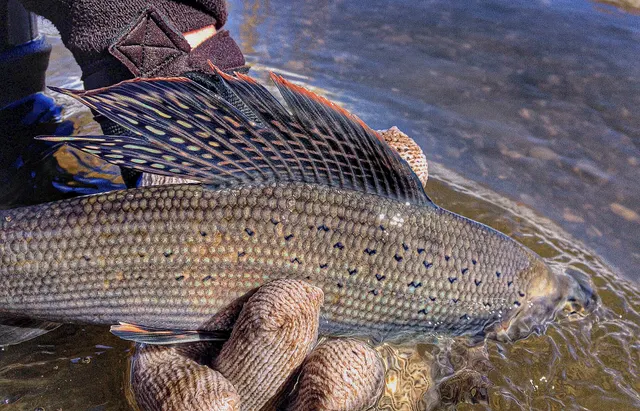 Arctic graylingSmall nymphs fished in the drift of cold clear rivers.
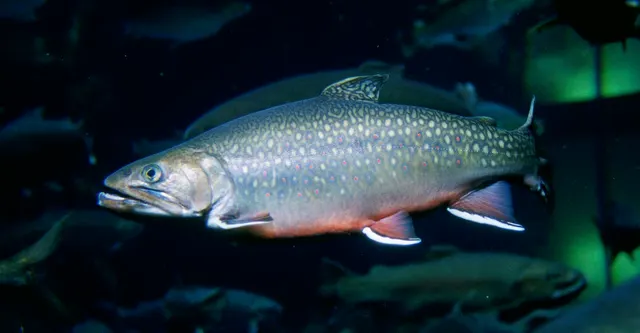 Brook troutBrook trout in their native headwaters feed mainly on drifting invertebrates in fast, cold, shaded water, and a small weighted nymph is the answer to that drift.
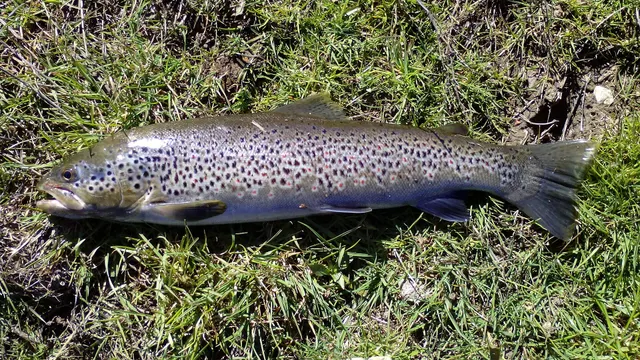 Brown troutTrout take the overwhelming majority of their invertebrate food below the surface, and a weighted nymph fished at the fish's depth answers the ordinary condition rather than the visible one.
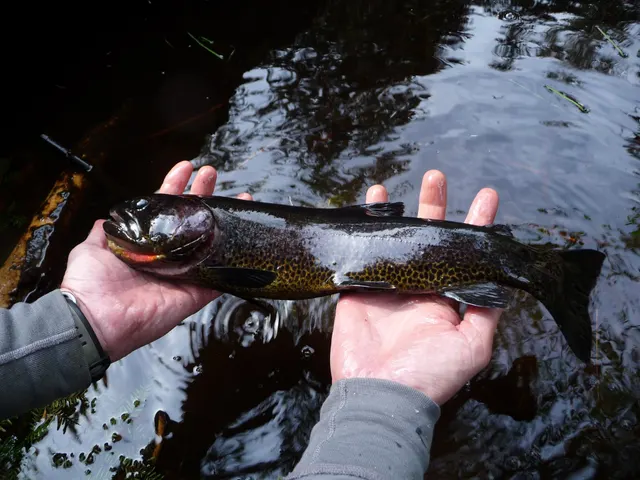 Cutthroat troutCutthroat feed on drifting invertebrates in the cold western rivers they are native to, and nymph fishing is the approach that matches their ordinary rather than their occasional feeding.
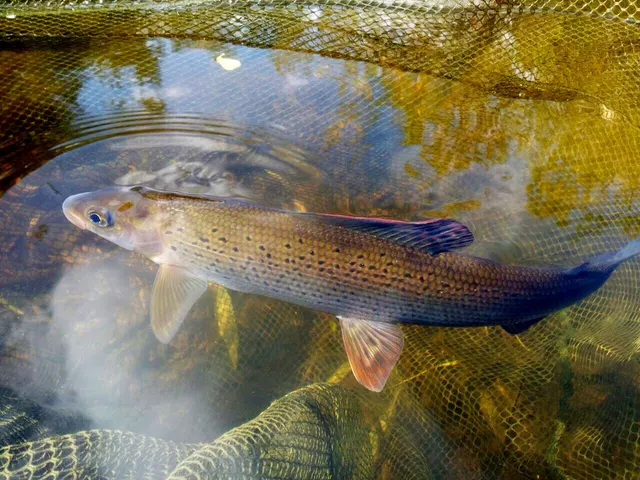 GraylingGrayling take subsurface invertebrates close to the bed, and a weighted nymph fished on a short line is the standard answer.
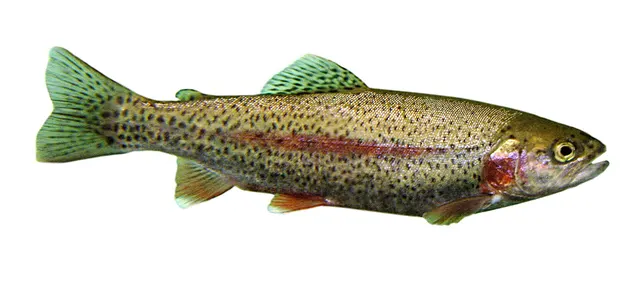 Rainbow troutStillwater rainbows feed heavily on buzzer pupae and other subsurface invertebrates, and imitative nymph fishing at a controlled depth is the most consistently productive approach in that water.
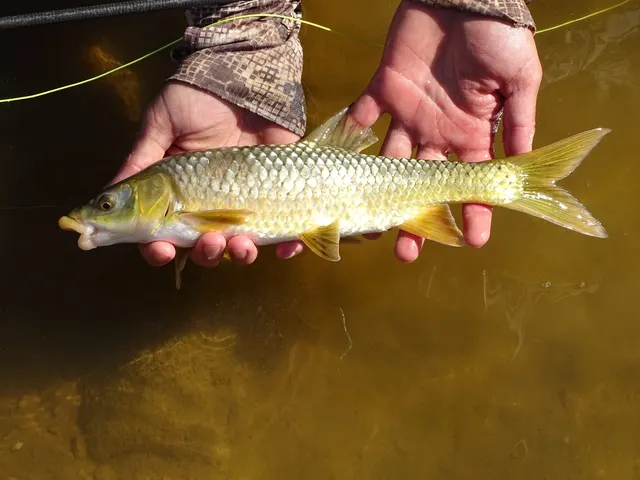 Smallmouth yellowfishSmall weighted nymphs fished on the bottom in shallow riffles.
What it imitates
Larval and nymphal stages of aquatic insects, plus freshwater shrimp. Because the naturals are drab and move little, imitation is dominated by size, profile and how the fly behaves in the current rather than by colour or detail.
Where it stops working
- Takes are frequently invisible and often felt as nothing at all, so detection is the limiting skill.
- Getting the depth wrong means fishing above or below the fish for the whole session with no feedback.
- Weighted flies snag on the bed, which is the cost of fishing where the fish are.
- Casting weighted nymphs is unpleasant and less accurate than casting a dry.
Where to go next
Understanding it
Instead of this
More lures
Not related to this page — just the rest of the section. There is little else joined to this subject yet, and a short page should still lead somewhere.
Sources and evidence
Why the 11 connections on this page are here, and the sources
Fish it catches
What experienced anglers do — 7 connections
Widely and independently recommended by experienced anglers and specialist sources. This is real angling knowledge, not proof: controlled evidence for it is limited, and FishingHQ records it as convention rather than as a demonstrated effect.
Arctic grayling
A practitioner claim about tackle commonly used for Thymallus arcticus.
- General angling website restatements of established technique — Various (Credible secondary source)Relied on for: Widely restated practitioner accounts of this presentation for arctic grayling.Citation checked — the work exists and is described correctly
- Angling Times — Bauer Media (Specialist angling publication)Relied on for: Practitioner treatment of comparable presentations for the species group.Citation checked — the work exists and is described correctly
Brook trout
A practitioner claim about which lure family answers this species' feeding or holding behaviour.
- Trout & Salmon — Bauer Media (Specialist angling publication)Relied on for: Fly categories and their application to salmonids in running and still water.States this directlyCitation checked — the work exists and is described correctly
- Still Water Fly-Fishing — Andre Deutsch, 1952 (Specialist angling publication)Relied on for: Still-water fly categories, and the feeding observations they are chosen from.Background and mechanism onlyCitation checked — the work exists and is described correctly
Brown trout
A practitioner claim about which lure family answers this species' feeding or holding behaviour.
- Trout & Salmon — Bauer Media (Specialist angling publication)Relied on for: Fly categories and their application to river salmonids.States this directlyCitation checked — the work exists and is described correctly
- The Compleat Angler, or the Contemplative Man's Recreation — Richard Marriot, 1653 (Reference work)Relied on for: The long documentary record of artificial-fly fishing for trout and grayling in English rivers.Background and mechanism onlyPassage read and verified
Cutthroat trout
A practitioner claim about which lure family answers this species' feeding or holding behaviour.
- Trout & Salmon — Bauer Media (Specialist angling publication)Relied on for: Fly categories and their application to salmonids in running and still water.States this directlyCitation checked — the work exists and is described correctly
- Still Water Fly-Fishing — Andre Deutsch, 1952 (Specialist angling publication)Relied on for: Still-water fly categories, and the feeding observations they are chosen from.Background and mechanism onlyCitation checked — the work exists and is described correctly
Grayling
A practitioner claim about a species-specific presentation.
- Trout & Salmon — Bauer Media (Specialist angling publication)Relied on for: Nymph presentation for grayling.Citation checked — the work exists and is described correctly
- Freshwater Fishing — Macdonald & Jane's, 1975 (Specialist angling publication)Relied on for: Grayling technique in running water.Citation checked — the work exists and is described correctly
Rainbow trout
A practitioner claim about which lure family answers this species' feeding or holding behaviour.
- Trout & Salmon — Bauer Media (Specialist angling publication)Relied on for: Fly categories and their application to salmonids in running and still water.States this directlyCitation checked — the work exists and is described correctly
- Still Water Fly-Fishing — Andre Deutsch, 1952 (Specialist angling publication)Relied on for: Still-water fly categories, and the feeding observations they are chosen from.Background and mechanism onlyCitation checked — the work exists and is described correctly
Smallmouth yellowfish
A practitioner claim about tackle commonly used for Labeobarbus aeneus.
- General angling website restatements of established technique — Various (Credible secondary source)Relied on for: Widely restated practitioner accounts of this presentation for smallmouth yellowfish.Citation checked — the work exists and is described correctly
- Angling Times — Bauer Media (Specialist angling publication)Relied on for: Practitioner treatment of comparable presentations for the species group.Citation checked — the work exists and is described correctly
How it is worked
What experienced anglers do — 2 connections
Widely and independently recommended by experienced anglers and specialist sources. This is real angling knowledge, not proof: controlled evidence for it is limited, and FishingHQ records it as convention rather than as a demonstrated effect.
Nymphing
The nymph record states that this is where fish feed for most of the year. Nymphing is the set of techniques built to present a fly at that depth, and has no meaning applied to a floating pattern.
- Still Water Fly-Fishing — Andre Deutsch, 1952 (Specialist angling publication)Relied on for: Specialist treatment of which bait or lure family this technique is fished with.States this directlyCitation checked — the work exists and is described correctly
- Trout & Salmon — Bauer Media (Specialist angling publication)Relied on for: The independently restated practitioner pairing of this technique with this family.Background and mechanism onlyCitation checked — the work exists and is described correctly
Stillwater fly fishing
Ivens' subject is the imitative sunk fly on reservoirs, and the still-water page describes fishing depth by counting down. A nymph is the fly that technique was developed around.
- Still Water Fly-Fishing — Andre Deutsch, 1952 (Specialist angling publication)Relied on for: Specialist treatment of which bait or lure family this technique is fished with.States this directlyCitation checked — the work exists and is described correctly
- Trout & Salmon — Bauer Media (Specialist angling publication)Relied on for: The independently restated practitioner pairing of this technique with this family.Background and mechanism onlyCitation checked — the work exists and is described correctly
Understanding it
What experienced anglers do — 1 connection
Widely and independently recommended by experienced anglers and specialist sources. This is real angling knowledge, not proof: controlled evidence for it is limited, and FishingHQ records it as convention rather than as a demonstrated effect.
The insects fly fishing imitates
An imitation claim resting on the underlying entomology, which is supported separately.
- Still Water Fly-Fishing — Andre Deutsch, 1952 (Specialist angling publication)Relied on for: Nymph patterns as imitations of subsurface larval stages.Citation checked — the work exists and is described correctly
- Freshwater Fishing — Macdonald & Jane's, 1975 (Specialist angling publication)Relied on for: The proportion of trout diet taken subsurface.Citation checked — the work exists and is described correctly
Backed by research — 1 connection
Supported by peer-reviewed research or fisheries science. The sources are listed and can be checked.
The insects fly fishing imitates
The imitation and the animal it imitates.
- Freshwater Fishes of the British Isles — HarperCollins (New Naturalist 75), 1992 (Reference work)Relied on for: The freshwater invertebrate groups that dominate the diet of river and stillwater fish, and their life stages.Background and mechanism onlyCitation checked — the work exists and is described correctly
Instead of this
What experienced anglers do — 1 connection
Widely and independently recommended by experienced anglers and specialist sources. This is real angling knowledge, not proof: controlled evidence for it is limited, and FishingHQ records it as convention rather than as a demonstrated effect.
Wet flies
Two sunk approaches a beginner cannot tell apart, separated by what they represent.
- Still Water Fly-Fishing — Andre Deutsch, 1952 (Specialist angling publication)Relied on for: Stillwater fly fishing practice, including line choice for depth and the role of retrieve.States this directlyCitation checked — the work exists and is described correctly
- Freshwater Fishing — Macdonald & Jane's, 1975 (Specialist angling publication)Relied on for: Fly fishing tackle and presentation practice described independently of the stillwater tradition.States this directlyCitation checked — the work exists and is described correctly
How FishingHQ labels evidence is explained in the evidence policy.