Spinners
Lure · Last reviewed 2026-08-10
A blade rotating around a straight wire shaft, producing continuous flash and a strong vibration that fish detect through the lateral line.
A spinner is a metal blade mounted on a clevis around a straight wire body, so that the blade rotates continuously as the lure is drawn along. It produces two signals at once: a constant flicker of reflected light, and — more importantly — a steady pressure pulse through the water.
That vibration is what makes spinners work in conditions where visual lures do not. A fish in coloured water cannot see a spinner from any distance, but it can feel it, and the lateral line is a very sensitive instrument. Spinners are consequently among the best lures for coloured rivers, dusk, and any situation where visibility is limited.
Blade shape is the main variable. A rounder blade throws out at a wider angle, spins slower, and runs shallower with more thump; a narrower blade spins closer to the shaft, faster, and cuts deeper. Both are useful, and they are not interchangeable.
At a glance
- Depth range
- Generally shallow to mid-water, roughly the top two or three metres, because the rotating blade generates lift that resists sinking. Heavier bodies and narrower blades fish deeper.
What it does in the water
Continuous rotation of the blade around the shaft, producing steady flash and a rhythmic pressure wave. Rounder blades — the willow-to-Colorado spectrum — sit out at a wider angle from the shaft, rotate more slowly, generate more vibration and more lift, and therefore run shallower. Narrow blades sit closer in, rotate faster, generate less lift and run deeper for the same retrieve.
How it is worked
Steady, at whatever speed keeps the blade turning reliably — which can be felt clearly through the rod, and which is the simplest feedback loop in lure fishing. In flowing water, casting across and slightly upstream and letting the current work the blade is often more effective than retrieving hard, because the lure covers water at the fish's own pace.
Fish it catches
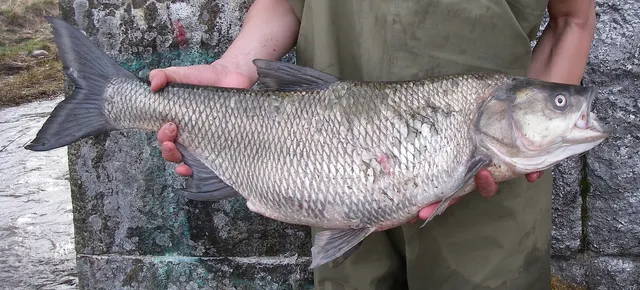 AspFast-retrieved spinners cast at fish smashing into surface shoals.
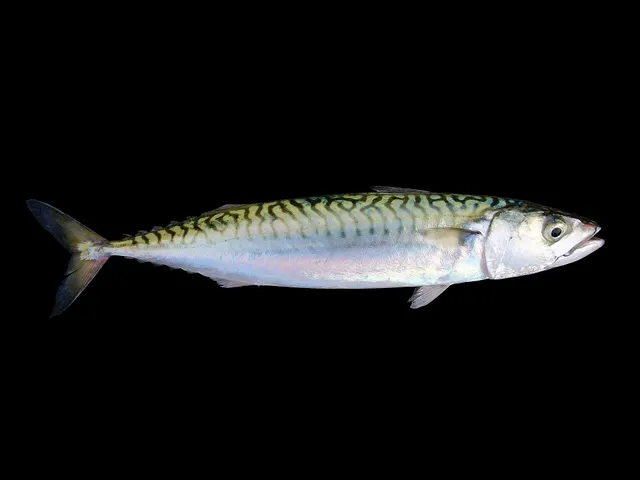 Atlantic mackerelA small bar spinner is the traditional single-fish alternative to a string of feathers, and it is the honest choice when the intention is to take one or two fish rather than a shoal.
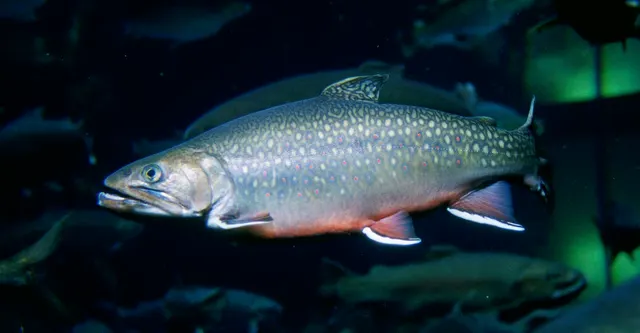 Brook troutA small spinner is the traditional method on the tight, brushy headwater streams where a fly cast is impossible, and it is what most of this fishery is actually conducted with.
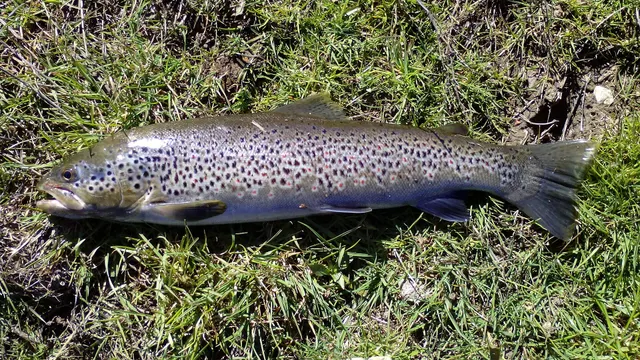 Brown troutThe traditional non-fly answer on spate rivers, and it works for the same reason a streamer does — a trout that has switched to fish prey responds to something the size and speed of a minnow.
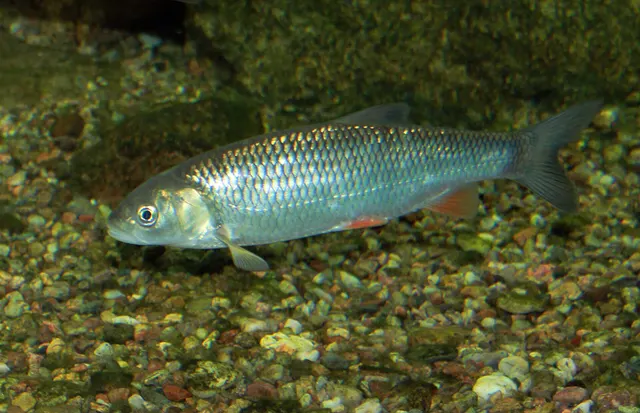 ChubA small spinner fished downstream past a known lie takes chub because they hold facing flow and intercept, and it is the traditional method of covering a river's chub in a single walk.
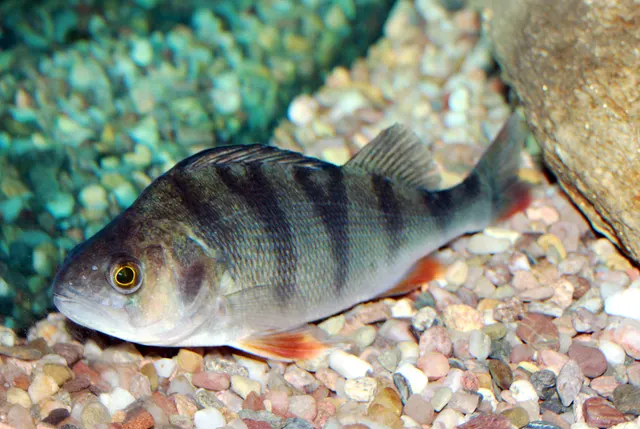 European perchA small spinner is the lure most perch are caught on, and the blade's vibration is why it works in coloured water.
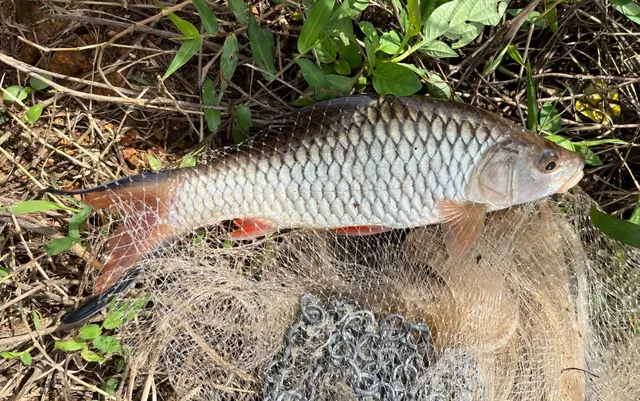 Hampala barbSmall spinners and spoons in clear rivers and reservoirs.
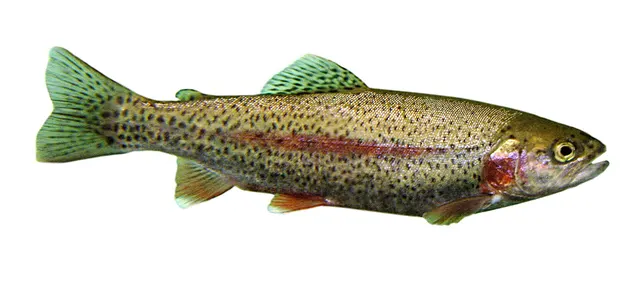 Rainbow troutThe standard non-fly method on stocked stillwaters and on rivers where rainbows have naturalised, taken as a fleeing small fish.
What it imitates
A spinner does not resemble anything. It works by producing two of the signals a small fish produces — flash and a pressure pulse — at an intensity that triggers a response, without any attempt at visual imitation. It is the clearest example in the lure box of provocation rather than deception.
Where it stops working
- Generates severe line twist unless a good swivel is used — the single commonest complaint about spinners, and entirely avoidable.
- Difficult to fish deep, because the blade generates lift.
- The blade stops turning in weed, and a spinner that has collected weed catches nothing until it is cleared.
- Constant flash and vibration can be too much in very clear, calm, heavily-fished water.
- Treble hooks make it a poor choice in snaggy ground.
Where to go next
Understanding it
- Spinner blade shapeBlade outline decides rotation angle, and rotation angle decides drag, depth, frequency and flash together — one choice with five consequences.
- Spinner or spoon: two different ways of making flashA rotating blade produces continuous high-frequency vibration and lift, which is why a spinner runs shallow and rises with speed — and why it puts torque into the line all day.
- Swivels, links and connectorsA rotating lure puts twist into the line continuously, and a swivel above it is part of the lure's function rather than an addition to it.
Instead of this
History and culture
Sources and evidence
Why the 14 connections on this page are here, and the sources
Fish it catches
What experienced anglers do — 8 connections
Widely and independently recommended by experienced anglers and specialist sources. This is real angling knowledge, not proof: controlled evidence for it is limited, and FishingHQ records it as convention rather than as a demonstrated effect.
Asp
A practitioner claim about tackle commonly used for Leuciscus aspius.
- General angling website restatements of established technique — Various (Credible secondary source)Relied on for: Widely restated practitioner accounts of this presentation for asp.Citation checked — the work exists and is described correctly
- Angling Times — Bauer Media (Specialist angling publication)Relied on for: Practitioner treatment of comparable presentations for the species group.Citation checked — the work exists and is described correctly
Atlantic mackerel
A practitioner claim about which lure family answers this species' feeding or holding behaviour.
- Sea Angler — Bauer Media (Specialist angling publication)Relied on for: Established shore and boat lure practice for the species in north-west European seas.States this directlyCitation checked — the work exists and is described correctly
- General angling website restatements of established technique — Various (Credible secondary source)Relied on for: Widely restated lure selection for this species, recorded as practitioner consensus rather than as tested fact.Background and mechanism onlyCitation checked — the work exists and is described correctly
Brook trout
A practitioner claim about which lure family answers this species' feeding or holding behaviour.
- General angling website restatements of established technique — Various (Credible secondary source)Relied on for: Widely restated North American lure practice for this species.Background and mechanism onlyCitation checked — the work exists and is described correctly
- IGFA International Angling Rules and World Record Requirements — International Game Fish Association (Angling or fisheries organisation)Relied on for: Recognition of the species as an established sport fish taken on artificial lures, and the tackle conventions used for it.States this directlyPassage read and verified
Brown trout
A practitioner claim about which lure family answers this species' feeding or holding behaviour.
- Freshwater Fishing — Macdonald & Jane's, 1975 (Specialist angling publication)Relied on for: Lure and spinning practice for freshwater predators in Britain and northern Europe.States this directlyCitation checked — the work exists and is described correctly
- Angling Times — Bauer Media (Specialist angling publication)Relied on for: Contemporary British and European lure practice for this species in the weekly angling press.Background and mechanism onlyCitation checked — the work exists and is described correctly
Chub
A practitioner claim about which lure family answers this species' feeding or holding behaviour.
- Freshwater Fishing — Macdonald & Jane's, 1975 (Specialist angling publication)Relied on for: Lure and spinning practice for freshwater predators in Britain and northern Europe.States this directlyCitation checked — the work exists and is described correctly
- Angling Times — Bauer Media (Specialist angling publication)Relied on for: Contemporary British and European lure practice for this species in the weekly angling press.Background and mechanism onlyCitation checked — the work exists and is described correctly
European perch
Long-established and independently described.
- Freshwater Fishing — Macdonald & Jane's, 1975 (Specialist angling publication)Relied on for: Spinner selection for perch and pike.Citation checked — the work exists and is described correctly
- Angling Times — Bauer Media (Specialist angling publication)Relied on for: Contemporary spinner practice for perch.Citation checked — the work exists and is described correctly
Hampala barb
A practitioner claim about tackle commonly used for Hampala macrolepidota.
- General angling website restatements of established technique — Various (Credible secondary source)Relied on for: Widely restated practitioner accounts of this presentation for hampala barb.Citation checked — the work exists and is described correctly
- Angling Times — Bauer Media (Specialist angling publication)Relied on for: Practitioner treatment of comparable presentations for the species group.Citation checked — the work exists and is described correctly
Rainbow trout
A practitioner claim about which lure family answers this species' feeding or holding behaviour.
- Freshwater Fishing — Macdonald & Jane's, 1975 (Specialist angling publication)Relied on for: Lure and spinning practice for freshwater predators in Britain and northern Europe.States this directlyCitation checked — the work exists and is described correctly
- Angling Times — Bauer Media (Specialist angling publication)Relied on for: Contemporary British and European lure practice for this species in the weekly angling press.Background and mechanism onlyCitation checked — the work exists and is described correctly
How it is worked
What experienced anglers do — 1 connection
Widely and independently recommended by experienced anglers and specialist sources. This is real angling knowledge, not proof: controlled evidence for it is limited, and FishingHQ records it as convention rather than as a demonstrated effect.
Spinning
The spinning page describes a lure retrieved to produce its own action, and the spinner page describes the rotating blade that produces it. The name is shared for that reason.
- Sea Angler — Bauer Media (Specialist angling publication)Relied on for: Practitioner treatment of which lure or bait family this technique is fished with.States this directlyCitation checked — the work exists and is described correctly
- General angling website restatements of established technique — Various (Credible secondary source)Relied on for: The widely restated practitioner pairing of this technique with this family.Background and mechanism onlyCitation checked — the work exists and is described correctly
Understanding it
What experienced anglers do — 3 connections
Widely and independently recommended by experienced anglers and specialist sources. This is real angling knowledge, not proof: controlled evidence for it is limited, and FishingHQ records it as convention rather than as a demonstrated effect.
Spinner blade shape
Blade outline is the property practitioners select on, ahead of finish or size.
- Pike and the Pike Angler — Stanley Paul, 1981 (Specialist angling publication)Relied on for: Predator angling practice on lure choice, retrieve and terminal tackle.States this directlyCitation checked — the work exists and is described correctly
- Angling Times — Bauer Media (Specialist angling publication)Relied on for: Contemporary coarse and predator angling practice.States this directlyCitation checked — the work exists and is described correctly
Spinner or spoon: two different ways of making flash
Why it works, resting on practice reported consistently across independent sources rather than on experiment.
- Angling Times — Bauer Media (Specialist angling publication)Relied on for: Contemporary UK coarse, match and lure angling practice as reported by practitioners, including tackle convention.States this directlyCitation checked — the work exists and is described correctly
- Sea Angler — Bauer Media (Specialist angling publication)Relied on for: Contemporary UK sea angling practice as reported by practitioners, including tackle, bait and lure convention.States this directlyCitation checked — the work exists and is described correctly
Swivels, links and connectors
A swivel above a rotating lure is universal practice and is described as necessary rather than optional.
- Pike and the Pike Angler — Stanley Paul, 1981 (Specialist angling publication)Relied on for: Predator angling practice on lure choice, retrieve and terminal tackle.States this directlyCitation checked — the work exists and is described correctly
- Angling Times — Bauer Media (Specialist angling publication)Relied on for: Contemporary coarse and predator angling practice.States this directlyCitation checked — the work exists and is described correctly
Instead of this
What experienced anglers do — 1 connection
Widely and independently recommended by experienced anglers and specialist sources. This is real angling knowledge, not proof: controlled evidence for it is limited, and FishingHQ records it as convention rather than as a demonstrated effect.
Spoons
The trade-off is described independently across lure sources.
- Pike and the Pike Angler — Stanley Paul, 1981 (Specialist angling publication)Relied on for: Comparative characteristics of spinners and spoons.Citation checked — the work exists and is described correctly
- Angling Times — Bauer Media (Specialist angling publication)Relied on for: Contemporary comparison of metal lure families.Citation checked — the work exists and is described correctly
History and culture
What experienced anglers do — 1 connection
Widely and independently recommended by experienced anglers and specialist sources. This is real angling knowledge, not proof: controlled evidence for it is limited, and FishingHQ records it as convention rather than as a demonstrated effect.
The development of artificial lures
A record joined to the history behind it. Historical placement rests on the documentary and scholarly sources cited; where the tradition is living rather than documented, the claim is kept at the level those sources support.
- Angling Times — Bauer Media (Specialist angling publication)Relied on for: Contemporary UK coarse and match angling practice as reported by practitioners, including competition formats and tackle development.States this directlyCitation checked — the work exists and is described correctly
- Sea Angler — Bauer Media (Specialist angling publication)Relied on for: Contemporary UK sea angling practice as reported by practitioners, including tackle development and the commercial relationship.States this directlyCitation checked — the work exists and is described correctly
How FishingHQ labels evidence is explained in the evidence policy.