European perch
Fish · Last reviewed 2026-08-10
A small, shoaling, spiny-finned predator that is both the most accessible predator to catch and the one most anglers first learn on.
Safety: venomous and spined species — minor injury. 2 more points apply here.

Catching European perch
Everything here on fishing for it. Each entry opens the page behind it.
- Ground
- When
- Oct–Jan and Mar — months recorded at the places that document it, not a season for the whole range.
- Where
- 65 places FishingHQ documents — strongest claim anywhere: regular local target · From the shore, From a boat
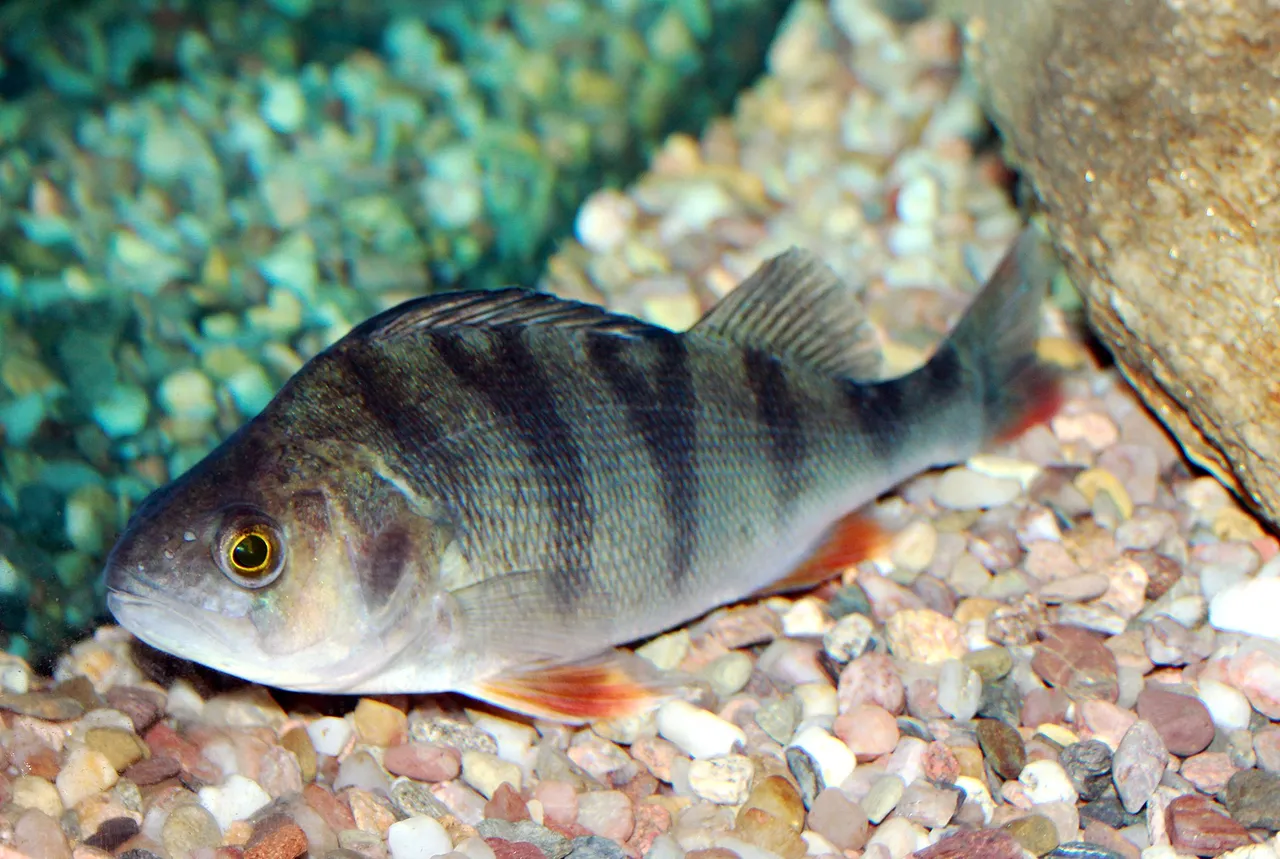
Perch are the fish most European anglers catch first without meaning to, and one of the few that reward a lifetime of attention afterwards. They are compact, deep-bodied and heavily armed: a spiky first dorsal fin, sharp gill-cover points, and a rough, tightly-attached scale layer. The vertical dark bars over a green-bronze flank are unmistakable, and the orange-red pelvic and anal fins give the species its common nickname.
Behaviourally they sit between the ambush strategy of pike and open pursuit. Small and medium perch shoal and hunt cooperatively, herding fry into open water or against a margin; large perch increasingly go solo and behave much more like a pike, holding beside structure and taking single, larger prey. That transition is the single most useful thing to know about the species, because it means the tackle and approach that catch numbers of small perch are not the tackle and approach that catch big ones.
Perch are also the species where the gap between a nuisance and a specimen is widest. A great many are caught by accident; comparatively few large ones are caught deliberately.
How it is caught
Gear for this fish
- CrankbaitsA small crankbait covers water and finds the shoal, which is the actual problem in perch fishing — the fish are gregarious and patchy, so search speed matters more than refinement until the shoal is located.
- Drop shot rigThe rig holds a small soft bait stationary at a chosen height off the bottom, which suits a fish that hunts small prey close to structure and will inspect a stationary bait for a long time.
- Lobworms and wormsA worm is the bait that catches a perch when nothing else will, and the one most people have access to.
- Soft plasticsOnce a shoal is found, practitioners generally switch to a small soft bait fished slowly on a light head or a drop-shot, on the reported basis that perch will follow and refuse a fast lure repeatedly and are less inclined to refuse a slow one twice.
- SpinnersA small spinner is the lure most perch are caught on, and the blade's vibration is why it works in coloured water.
- Jigs and jig headsA hook with weight moulded at the eye end, which makes a lure fall nose-first and lets the angler control depth precisely.
Where European perch is documented
Places where public sources describe this species as fished, with how it is fished and how strongly the evidence supports it. This is not a range map and it is not a recommendation — it is what has been written down about a fishery rather than a record of any individual catch, and being listed is never permission to fish.
The English canal network
10 documented places
Canal section
Regular local target
From the shore
Canal section
Regular local target
From the shore
Canal section
Regular local target
From the shore
Canal section
Regular local target
From the shore
Canal section
Regular local target
From the shore
Canal section
Recorded here
From the shore
The Gloucester and Sharpness Canal
Canal section
Recorded here
From the shore
Canal section
Regular local target
From the shore
Canal section
Regular local target
From the shore
The English trout reservoirs
7 documented places
Reservoir
Seasonal
From a boat
Around Oct, Nov, Dec, Jan
Reservoir
Regular local target
From a boat
Reservoir
Repeatedly reported
From a boat
Reservoir
Recorded here
From the shore
Reservoir
Recorded here
From a boat
Reservoir
Regular local target
From a boat
Reservoir
Repeatedly reported
From a boat
England and Wales
6 documented places
River reach
Repeatedly reported
From the shore
Lake
Regular local target
From the shore
River reach
Recorded here
From the shore
River reach
Recorded here
From the shore
River reach
Recorded here
From the shore
Reservoir
Repeatedly reported
From the shore
The Lake District lakes
6 documented places
Lake
Regular local target
From a boat · From the shore
Lake
Regular local target
From the shore · From a boat
Lake
Regular local target
From the shore · From a boat
Lake
Regular local target
From the shore
Lake
Regular local target
From the shore · From a boat
Lake
Regular local target
From the shore
Scotland
5 documented places
Loch
Regular local target
From the shore · From a boat
Loch
Repeatedly reported
From the shore
Loch
Recorded here
From the shore
Loch
Regular local target
From the shore · From a boat
Loch
Recorded here
From a boat
Lough Erne
2 documented places
Lough
Recorded here
From the shore
River reach
Regular local target
From the shore · From a boat
The Shannon system
2 documented places
Lough
Regular local target
From a boat · From the shore
River reach
Repeatedly reported
From the shore
Also documented on 11 more coasts
Fewer places each, or less strongly supported. Each one names its own marks.
Loch Lomond (1) · The Fens and their drains (9) · Northern Ireland (3) · The River Trent (2) · The River Tay (1) · Lough Corrib (1) · The Norfolk Broads (3) · The Azores (2) · The River Thames (2) · The Severn Estuary (1) · The Moy and Lough Conn (1)
What these strengths mean
- Repeatedly reported
- Several independent public accounts. Enough to say it happens more than once; not enough to call it a fishery.
- Seasonal
- Well supported, and concentrated in part of the year rather than spread through it.
- Regular local target
- Fishing sources describe this as a normal local target here, not merely as caught.
- Recorded here
- At least one credible public account of this species being caught here. That is all it means.
Managed fisheries for european perch
These are private businesses rather than public water: you pay for a day, and the fishery sets its own rules on top of whatever the law requires. That is the opposite of the section above, where the places are public geography and being listed is never permission to fish. Nothing here is a recommendation, the order is alphabetical, and no price or opening hour is carried because both change faster than this page does.
Drennan Lindholme Lakes
Commercial coarse fishery · Epworth, near Doncaster, South Yorkshire
Purpose-built coarse pools, usually day ticket
Ten lakes and more than four hundred and fifty pegs on former farmland near Doncaster, a regular venue for national match series, with lodges and camping on the same site.
Named by the fishery as a species you can fish for. Also named here: Common bream, Common carp, Roach.
How you get a day: Day tickets on arrival, Book in advance.
The fishery’s own conditions: Bait fishing permitted, Coarse tactics permitted, Catch and release only.
Season: Open through the year, with a match calendar and fishing festivals published by the fishery.
The rules this fishery sets, in its own terms
- The fishery's rules are published at the shop and cafe and apply across all ten waters.
- Anglers must supply their own insurance; the fishery states that it accepts no responsibility.
- Waters may be booked whole for matches, from small club events up to national championships.
Checked against the operator's own information. Last checked 2026-08-29.
Linear Fisheries
Carp and specimen water · Enslow, Kidlington, Oxfordshire
Managed for larger carp and specimen fish
A complex of carp and mixed coarse lakes in the Oxfordshire gravel-pit country, run on both day tickets and syndicates, with its own bait and tackle shop on site.
Named by the fishery as a species you can fish for. Also named here: Common bream, Common carp, Northern pike, Roach, Tench, Wels catfish.
How you get a day: Book in advance, Membership or syndicate.
The fishery’s own conditions: Bait fishing permitted, Coarse tactics permitted, Night fishing permitted, Catch and release only.
Season: Open through the year, with individual waters occasionally closed and stated as such on the fishery's own booking platform.
The rules this fishery sets, in its own terms
- Rules are published per water and the fishery states that they are enforced, with sections on fish care, swim reservation and retention slings.
- Individual lakes are booked through the fishery's own platform rather than by turning up at every water.
- Under-sixteens fish free with a paying adult at weekends and during school holidays.
Checked against the operator's own information. Last checked 2026-08-29.
Partridge Lakes Fishery
Commercial coarse fishery · Culcheth, Warrington, Cheshire
Purpose-built coarse pools, usually day ticket
Seventy acres of purpose-built Cheshire coarse fishery with almost four hundred pegs across fifteen waters, long one of the north-west's best-known match venues and now turning towards day-ticket and family angling.
Stocked with this species. Also named here: Common carp, Crucian carp, Roach, Tench.
How you get a day: Book in advance, Day tickets on arrival, Membership or syndicate.
The fishery’s own conditions: Bait fishing permitted, Coarse tactics permitted, Barbless hooks only, No keepnets, No night fishing, Catch and release only.
Season: Open seven days a week through the year, with gate times that shift with the daylight.
The rules this fishery sets, in its own terms
- Night fishing is not permitted. The gates open and close, and fishing stops before they do.
- No keepnets.
- Barbless hooks to a maximum of size 14, and size 12 on Willow, Piper and Gold.
- No braided lines. In-line method feeders only. No elasticated methods except one named safety system. No fixed or floatless rigs.
- No nuts and no cat or dog food.
- Two rods per peg, never left unattended, and juniors under sixteen accompanied by an adult at all times.
Checked against the operator's own information. Last checked 2026-08-29.
A fishery’s own conditions — barbless hooks, no keepnets, no night fishing — are conditions of that water and not law. The licences and close seasons a jurisdiction requires are a separate matter and are set out by the fisheries authority, never here. Telephone before travelling, and see every fishing business FishingHQ lists.
Identification
- Scientific name
- Perca fluviatilis
- Family
- Percidae
- Water
- Freshwater, Brackish
- Conservation status
- Least Concern
- Regions
- Britain & Ireland, Northern Europe, Western Europe, Central & Eastern Europe
- Two separate dorsal fins, the first spiny with a dark blotch at the rear, the second soft-rayed.
- Five to nine dark vertical bars over a green-bronze flank.
- Orange to bright red pelvic, anal and tail fins.
- A pronounced spine on the gill cover — sharp enough to cut a careless hand.
- Deep-bodied profile, with a distinct humped back on older fish.
Size
- Typical
- 12–25 cm and well under 250 g for the overwhelming majority of fish caught.
- Large
- Over 35 cm and 1 kg — an uncommon fish, and a genuinely difficult one to catch deliberately.
Exceptional: Fish over 2 kg are recorded and are rare enough to be notable wherever they occur; they are typically old, solitary individuals from productive waters.
The spines fold one way, and the gill covers do the damage
Perch look more dangerous than they are and are handled badly because of it. The tall spiny first dorsal is the feature everybody sees; it is sharp, it will prick, and it is not the hazard.
The hazard is the gill cover, which carries a spine at its rear corner, and the fact that a perch is a wriggler. Somebody gripping a perch nervously around the middle gets caught on that spine when the fish twists.
The grip that works is firm and deliberate: hand over the back with the dorsal folded flat by the palm — the spines fold backwards readily when stroked from head to tail — and fingers behind the gill covers rather than around them. Confidence genuinely helps, because a loose grip on a moving fish is how people get spiked.
Perch are also frequently caught by beginners and children on small hooks, which makes deep hooking common. A disgorger and an early strike are worth more than any grip. And perch shoal, so a spot that produces one produces many — which is worth knowing because it makes unhooking speed matter across a session rather than on a single fish.
What experienced anglers do — why, and the sources (2)
Widely and independently recommended by experienced anglers and specialist sources. This is real angling knowledge, not proof: controlled evidence for it is limited, and FishingHQ records it as convention rather than as a demonstrated effect.
- Coarse Fishing — A. & C. Black, 1912 (Specialist angling publication)Relied on for: Coarse angling practice on handling perch and other spined species.States this directlyCitation checked — the work exists and is described correctly
- Angling Trust guidance for anglers — Angling Trust (Angling or fisheries organisation)Relied on for: Guidance on unhooking equipment and handling small fish.States this directlyCitation checked — the work exists and is described correctly
Perch through their life, and the shift that changes everything
ESTABLISHED. Perch spawn in spring, laying eggs in distinctive lace-like ribbons draped over vegetation and submerged branches — a spawning mode unusual enough to be diagnostic. They are shoaling fish for most of their lives, and shoaling behaviour is strongest in smaller fish.
THE ONTOGENETIC SHIFT IS THE KEY FACT. Young perch feed on zooplankton and invertebrates; as they grow they switch to fish, including their own young. That shift changes where they are and how they behave, and it is why small perch shoal openly in numbers while large perch are far more solitary and structure-associated.
SO THE SPECIES BEHAVES LIKE TWO DIFFERENT FISH depending on size, and an angler catching endless small perch and no large ones is usually fishing the wrong part of the water rather than using the wrong method.
WHAT ANGLERS RELIABLY REPORT. Feeding in short intense bursts at dawn and dusk, and shoals driving small fish to the surface. Both are consistently observed and the second is directly visible.
WHAT IS UNRESOLVED. Whether large perch are genuinely solitary or simply occupy places anglers fish less, which is difficult to separate by observation alone.
Backed by research — why, and the sources (2)
Supported by peer-reviewed research or fisheries science. The sources are listed and can be checked.
- FishBase: a global information system on fishes — Froese, R. and D. Pauly, eds. — FishBase Consortium (Scientific institute)Relied on for: Life history, spawning biology, habitat association and feeding ecology for the species.States this directlyPassage read and verified
- Freshwater Fishes of the British Isles — HarperCollins (New Naturalist 75), 1992 (Reference work)Relied on for: Life history and behaviour of European freshwater fishes, independently of the angling literature.Background and mechanism onlyCitation checked — the work exists and is described correctly
Why the big perch come in winter, and what shoal structure has to do with it
Perch have a seasonal pattern that runs opposite to most people's expectations, and it is a consequence of how the species shoals rather than of how it feeds.
COLD WATER TIGHTENS THE SHOAL. Perch are gregarious predators that hunt cooperatively, herding small fish and attacking the resulting confusion. As water cools and prey fish themselves become concentrated and less mobile, perch shoals contract into remarkably dense, localised groups — and because perch shoal by size, a group found in winter is frequently a group of similar and often large fish. That is why a disproportionate share of specimen perch are caught in the coldest months: not because individual fish are feeding harder, but because the big ones are findable.
SUMMER DISPERSES EVERYTHING. Prey is abundant and spread through the water, cover is extensive, and perch spread out with it. The catch becomes dominated by small fish, which are numerous, less cautious, and everywhere — and the large fish are still present but are no longer concentrated anywhere a searching angler can reliably find them.
PERCH DO NOT SHUT DOWN IN THE HEAT, which distinguishes them from pike in the same water. A pike in warm water is a large-bodied ambush predator with a poor thermal deal and becomes genuinely difficult and genuinely fragile; a perch goes on hunting. So a summer session produces perch and not pike, and the perch are small.
SPAWNING IS THE ONE HARD INTERRUPTION. Perch lay a distinctive lacy ribbon of eggs draped over weed, submerged branches and other structure in spring, and around it feeding stops for a period and then resumes intensely as fish recover condition. That post-spawning recovery feed is short and it is the one time of year the large fish are both hungry and shallow.
Where a close season exists it is generally built around that spawning window; what applies on a given water is a current, local matter and this page does not state it.
Backed by research — why, and the sources (4)
Supported by peer-reviewed research or fisheries science. The sources are listed and can be checked.
- Coarse Fishing — A. & C. Black, 1912 (Specialist angling publication)Relied on for: Seasonal patterns in British coarse angling and the conditions that drive them.States this directlyCitation checked — the work exists and is described correctly
- Freshwater Fishes of the British Isles — HarperCollins (New Naturalist 75), 1992 (Reference work)Relied on for: Seasonal behaviour and temperature response of British freshwater fishes.States this directlyCitation checked — the work exists and is described correctly
- Freshwater Fishes of the British Isles — HarperCollins (New Naturalist 75), 1992 (Reference work)Relied on for: Seasonal behaviour, spawning timing and temperature response of European freshwater fishes.States this directlyCitation checked — the work exists and is described correctly
- FishBase: a global information system on fishes — Froese, R. and D. Pauly, eds. — FishBase Consortium (Scientific institute)Relied on for: Temperature tolerance, depth range, spawning season and migratory behaviour recorded for the species.States this directlyPassage read and verified
Structure at every scale, and a fish that changes habitat as it grows
Perch habitat is best understood as two different animals occupying two different parts of the same water, because a perch's requirements change substantially as it grows.
SMALL PERCH ARE SHOAL FISH OF THE MARGINS AND THE WEED. Juveniles feed on zooplankton and small invertebrates, are themselves prey for almost everything, and use dense cover — weed beds, marginal vegetation, submerged branches — for concealment. They are shallow, numerous, and everywhere.
LARGE PERCH ARE PREDATORS THAT HOLD ON STRUCTURE. As a perch grows it becomes piscivorous and its habitat requirement changes from concealment-from-predators to ambush-position-on-prey. Big perch relate to hard structure and to depth changes: drop-offs, ledges, the base of a dam wall, bridge supports, moored boats, lock gates, submerged timber, and the deeper end of a gravel bar. They are frequently found tight to something vertical.
WHICH IS WHY THEY ARE JOINED TO CANALS AND GRAVEL PITS SPECIFICALLY, and both are worth explaining. A canal is a uniform trench with very little natural structure, so perch concentrate absolutely on what exists — bridges, moorings, marina entrances, lock approaches — and a canal perch fishery is a matter of identifying the handful of features in a mile of identical water. A gravel pit is the opposite: an artificial, steep-sided, clear, deep water full of bars, plateaux and abrupt depth changes, which suits big perch extremely well and is why pits produce so many specimens.
THE FISH IS ALSO NOT PURELY FRESHWATER. Perch tolerate brackish conditions and are common in the Baltic, using coastal bays and reed habitat in low-salinity water in the same way they use a lake.
AND THE VISUAL SYSTEM SETS THE DEPTH. Perch are sight hunters with good acuity but no special low-light adaptation, so they are shallower and more active in clear water and in daylight than a zander in the same lake, and they concede the dark to it. Where both occur, the depth and time at which each hunts separates them.
Backed by research — why, and the sources (2)
Supported by peer-reviewed research or fisheries science. The sources are listed and can be checked.
- Freshwater Fishes of the British Isles — HarperCollins (New Naturalist 75), 1992 (Reference work)Relied on for: Habitat association, distribution and ecology of European freshwater fishes, including position within a water body.States this directlyCitation checked — the work exists and is described correctly
- FishBase: a global information system on fishes — Froese, R. and D. Pauly, eds. — FishBase Consortium (Scientific institute)Relied on for: Habitat association, depth range and water-type tolerance recorded for the species.States this directlyPassage read and verified
Why almost every perch is small, and what the rare big one has done differently
Perch populations are dominated by small fish to a degree that surprises people, and the reason is a bottleneck in the middle of the fish's life rather than anything about its maximum.
A PERCH HAS TO CHANGE JOBS TO GET BIG. Small perch feed on zooplankton and invertebrates in shoals, and they are extremely numerous — perch are among the most abundant fish in many European waters. Growth on that diet is slow and it plateaus. To get beyond the size of an ordinary shoal fish, a perch has to make the transition to eating other fish, and most of them never do. Where prey fish are scarce, or where the perch population is so dense that everything is competing, the whole cohort stalls at a small size and stays there. That is the classic stunted perch water: thousands of fish, none of them worth a photograph.
WHERE THE TRANSITION HAPPENS, GROWTH ACCELERATES SHARPLY. A perch that becomes piscivorous is converting a far richer food source, and its growth curve bends upward. So a population is frequently bimodal: a great mass of small shoal fish and a thin scattering of much larger solitary individuals that made the switch. There is no smooth continuum between them.
WHICH IS WHY A BIG PERCH IS BOTH RARE AND HARD TO CATCH DELIBERATELY. It is rare because most fish never make the transition; it is hard because the ones that did are few, dispersed, and behave nothing like the shoals.
THE VERY LARGE FISH ARE OLD AND ALMOST ALWAYS FEMALE. Female perch grow faster and larger than males, and the exceptional fish on this page are old individuals from productive waters — often gravel pits and large lowland rivers where prey fish are abundant. A fish of that class may be well into double figures in years.
AND ONE PRACTICAL WARNING ABOUT SCALE. A perch of a kilo looks enormous because the species is deep-bodied, spiny-backed and dramatically marked, and photographs flatter it. Anglers routinely overestimate perch weights by a wide margin. If the question is whether a fish was genuinely large, the length is the honest answer and the impression is not.
Backed by research — why, and the sources (2)
Supported by peer-reviewed research or fisheries science. The sources are listed and can be checked.
- Freshwater Fishes of the British Isles — HarperCollins (New Naturalist 75), 1992 (Reference work)Relied on for: Growth, age structure, maximum sizes and regional variation in British and European freshwater fishes.States this directlyCitation checked — the work exists and is described correctly
- FishBase: a global information system on fishes — Froese, R. and D. Pauly, eds. — FishBase Consortium (Scientific institute)Relied on for: Maximum recorded length and weight and reported longevity for the species.Background and mechanism onlyPassage read and verified
The egg ribbon: a strategy no other British freshwater fish uses
Perch reproduction is visually and mechanically distinctive, and the distinctiveness is functional rather than decorative.
THE EGGS COME OUT AS A SINGLE CONTINUOUS LACE RIBBON. A female perch releases her entire clutch as one long gelatinous strand, patterned in a hexagonal mesh, which she drapes over submerged vegetation, branches, roots, weed stems or debris in relatively shallow water. It is unmistakable and it is unlike anything else in a British water — no other native freshwater fish here produces a structure like it.
THE RIBBON'S STRUCTURE DOES SEVERAL JOBS AT ONCE. The gelatinous matrix holds the eggs apart so water circulates between them, keeps them off the sediment where they would suffocate, makes them physically awkward to eat, and appears to be distasteful to some predators. It is a way of protecting a clutch without guarding it, which is what allows perch to spawn and leave.
SPAWNING IS EARLY, TEMPERATURE-TRIGGERED AND BRIEF. It happens in spring as water reaches a threshold, with several males attending each female, and the whole event for a given water is compressed into a short period. That synchrony produces strong, distinct year classes — a feature of perch populations everywhere, where a single good cohort can dominate a water for years.
WHICH MAKES PERCH POPULATIONS BOOM AND BUST IN A CHARACTERISTIC WAY. A strong year class competes with itself, growth slows, and the water fills with same-sized fish; a series of failures leaves a gap that shows in the size structure a decade later.
THE SUBSTRATE REQUIREMENT IS THE VULNERABILITY. The ribbon must be draped over something. A water that has been dredged, hardened, stripped of marginal vegetation or cleared of woody debris removes the spawning substrate while leaving the adult habitat intact — the same failure that removes roach recruitment, from a different direction.
FEMALES GROW LARGER AND ARE FAR MORE FECUND WITH SIZE, so the big fish carry a disproportionate share of the output.
AND DISEASE HAS PERIODICALLY RESHAPED PERCH POPULATIONS, with recorded mass mortality events affecting adults across whole waters and river systems. Recovery in those cases depends entirely on the recruitment mechanism above.
Backed by research — why, and the sources (2)
Supported by peer-reviewed research or fisheries science. The sources are listed and can be checked.
- Freshwater Fishes of the British Isles — HarperCollins (New Naturalist 75), 1992 (Reference work)Relied on for: Spawning behaviour, substrate requirements, timing and recruitment of European freshwater fishes.States this directlyCitation checked — the work exists and is described correctly
- FishBase: a global information system on fishes — Froese, R. and D. Pauly, eds. — FishBase Consortium (Scientific institute)Relied on for: Reproductive mode, spawning season, fecundity and maturity for the species.States this directlyPassage read and verified
Light tackle for a small mouth, and the one situation that demands more
Perch tackle is a study in restraint, because almost everything about the fish argues for lighter gear than anglers instinctively use — with one exception that matters.
THE MOUTH SETS THE HOOK SIZE AND THE HOOK SETS EVERYTHING ELSE. A perch has a large-looking mouth with thin, papery membrane at the corners and a hard bony roof. Hooks pull free easily, which means the tackle should be soft enough to cushion the fight rather than stiff enough to tear. That argues for a light rod with a forgiving tip and a well-set drag, not for power.
LINE DIAMETER MATTERS FOR PRESENTATION IN CLEAR WATER. Perch are visual hunters and in clear water a heavy line degrades the action of a small lure noticeably, particularly a light jig or a small spinner. Going lighter improves the presentation more than it risks the fish.
THE EXCEPTION IS WHERE PIKE ARE PRESENT, AND IT IS NOT A SMALL POINT. A hooked perch is a prime pike target, and a pike taking a perch off the line will part fine monofilament instantly. Where the two share water — which is most European perch water — some form of bite protection or heavier leader is a practical necessity, and losing lures and leaving them in pike is the alternative. This is the same welfare argument as the pike trace, arriving from the other direction.
SMALL BAITS AND SMALL LURES ARE THE NORM AND THAT IS BIOLOGY RATHER THAN TRADITION. Perch feed on invertebrates and small fish, and their gape limits what they can take. Scaling down consistently produces more fish; scaling up occasionally selects the larger ones and is the recognised trade-off for anybody hunting a specimen.
DROP-SHOT AND JIG ARRANGEMENTS SUIT THE FISH'S HABIT of holding tight to vertical structure, because they allow a bait to be held in place at a set distance off the bottom beside a feature. That is a mechanical fit between a rig and a behaviour rather than a fashion.
AND THE SPINES ARE A TACKLE CONSIDERATION AS WELL AS A HANDLING ONE. Perch are frequently caught in numbers by beginners and children, and forceps and a grip that folds the dorsal down — as the handling section sets out — are part of the kit rather than an optional extra.
What experienced anglers do — why, and the sources (2)
Widely and independently recommended by experienced anglers and specialist sources. This is real angling knowledge, not proof: controlled evidence for it is limited, and FishingHQ records it as convention rather than as a demonstrated effect.
- Coarse Fishing — A. & C. Black, 1912 (Specialist angling publication)Relied on for: Established coarse angling practice, including tackle, bait and presentation and the reasoning behind them.States this directlyCitation checked — the work exists and is described correctly
- Freshwater Fishing — Macdonald & Jane's, 1975 (Specialist angling publication)Relied on for: Freshwater angling technique, tackle and the principles behind method selection.Background and mechanism onlyCitation checked — the work exists and is described correctly
Small, slow and close to something: matching a lure to a fish with a small gape
Perch lure fishing is unusually rewarding to think about because the fish's physical limits are narrow and well defined, and working within them produces obvious results.
THE GAPE SETS THE SIZE, AND SMALLER IS ALMOST ALWAYS RIGHT. A perch's mouth limits what it can engulf, and the great majority of perch feed on small invertebrates and small fish. Lures scaled to that — small soft baits, small jigs, small spinners and crankbaits — catch far more perch than larger ones. Deliberately upsizing selects for the rare large fish and is a specimen tactic with a cost.
STRUCTURE PROXIMITY MATTERS MORE THAN ANYTHING ELSE. Large perch hold tight to vertical features and depth changes, and a lure that passes a metre away is frequently ignored while one that passes close is taken. That is why the vertical presentations — drop-shot, jigging, a jig worked down a wall — are so effective: they keep the lure in a specific place beside a specific feature instead of covering water.
SPEED IS SLOWER THAN INSTINCT SUGGESTS, particularly in cold water. Perch inspect before committing, and a lure that keeps moving away is refused. Pauses are where takes happen, and a bait suspended still in front of a fish is frequently what converts an interested perch into a hooked one.
SHOALING BEHAVIOUR CHANGES THE CALCULUS COMPLETELY. Small perch compete, so a shoal will chase and take almost anything; large perch are solitary or in small groups and are cautious. The lure that works on a shoal of juveniles is rarely the one that takes the big fish in the same water, and the difference is behavioural rather than aesthetic.
CONTRAST WORKS BETTER THAN REALISM IN COLOURED WATER, and in clear water the reverse tends to hold. That is a visual-system point rather than a fashion: perch are daylight sight hunters with good acuity and no low-light specialisation, so what they can see governs what they can take.
AND THE PIKE PROBLEM APPLIES TO LURES AS MUCH AS TO BAIT. Small perch lures attract pike, and a pike hitting a small lure on fine line takes the lure with it. A leader is a lure-retention measure as much as a welfare one.
What experienced anglers do — why, and the sources (2)
Widely and independently recommended by experienced anglers and specialist sources. This is real angling knowledge, not proof: controlled evidence for it is limited, and FishingHQ records it as convention rather than as a demonstrated effect.
- Angling Times — Bauer Media (Specialist angling publication)Relied on for: Contemporary lure angling practice, presentation and the reasoning behind it.States this directlyCitation checked — the work exists and is described correctly
- FishBase: a global information system on fishes — Froese, R. and D. Pauly, eds. — FishBase Consortium (Scientific institute)Relied on for: Diet, feeding mode, prey composition and sensory biology recorded for the species.Background and mechanism onlyPassage read and verified
Lifecycle and reproduction
Perch are prolific and slow-growing, which is a combination that produces very characteristic population structures. Where predation and competition are low, a water fills with large numbers of stunted perch that never exceed a few centimetres — the classic 'perch problem' in a small stillwater. Where predators are present and prey fish abundant, far fewer survive but individuals grow far larger. Growth is slow throughout: a perch of a kilogram is usually well into double figures in years, which is why big perch are so vulnerable to over-removal.
Perch spawn in spring, and do so in a way that is unique among British freshwater fish and easy to recognise: the female lays a long, concertina-folded lace ribbon of eggs, draping it over submerged branches, weed stems and any other structure. The ribbon is unpalatable to most predators, which is part of why perch recruitment is so reliable. No parental care follows.
Feeding and senses
Small perch take invertebrates — bloodworm, shrimp, insect larvae — and increasingly fish fry as they grow. Above roughly 25 cm the diet becomes strongly piscivorous, and above 35 cm it is close to exclusively so. Hunting shifts with size from cooperative shoal herding to solitary ambush beside structure, and large perch are notably reluctant to move far from cover. Feeding is strongly light-linked, with dawn and dusk producing disproportionate activity.
Perch have good colour vision and are visual hunters, but the more useful fact for an angler is that they are very sensitive to vibration through the lateral line and will locate a lure in water too coloured to see it in. They are also markedly sensitive to light level: bright, still, clear conditions push feeding into the margins of the day, whereas an overcast day or a ripple can produce feeding throughout it.
Through the year
Perch shoal more tightly in cold water and can be found in remarkably concentrated groups through winter, which is when many of the largest fish are caught. Summer sees the shoals disperse and small fish dominate the catch. After spawning, fish feed hard to recover. Unlike pike, perch remain catchable through the warmest months, though the fish that come are usually smaller.
Distribution
Native across most of Europe and northern Asia, from Britain and Ireland eastwards. Tolerates brackish conditions and is common in the Baltic. Widely introduced elsewhere, in several places with severe consequences for native fish communities.
This is a biological range — where the species occurs, not a prediction that you will catch one. To browse the fishing geography FishingHQ holds, start at fishing places.
Why anglers care
The gateway predator: caught readily on simple float tackle with worm or maggot, and the species that introduces most anglers to the idea that a fish can be hunted rather than waited for. Modern light lure fishing — drop-shotting, small soft plastics, tiny jigs — has changed perch angling substantially, and specimen perch are now a recognised specialist pursuit in their own right.
Handling and returning
The dorsal spines and gill-cover spine are the hazard, and both are easily managed: run a hand from head to tail rather than tail to head, which folds the dorsal down instead of raising it, and grip across the back behind the fin. Perch are otherwise robust and unhook easily. Return them promptly; a perch held in a keepnet in warm water fares badly.
Going further
- What does european perch eat? — feeding biology, kept separate from what anglers infer from it.
- European perch vs Yellow perch — how to tell them apart.
Safety
Venomous and spined species — Minor injury
The first dorsal fin and the gill-cover spine are genuinely sharp and readily puncture a hand, particularly when the fish is gripped from the tail end and the fin locks upright. The wounds are small, contaminated and disproportionately prone to infection.
What reduces it: Grip the fish from the head end so the dorsal folds back, keep hands wet, and clean any puncture properly afterwards rather than ignoring it.
Precautions that always apply here
- Wet your hands before touching a fish. Dry hands strip the protective mucus layer that keeps infection out.
- Handle spined and venomous species with the spines controlled. Know which local species have them before you fish, not afterwards.
Where to go next
Similar and related fish
- BleakBleak are taken heavily in open water, and perch shoals working bleak near the surface are a characteristic summer sight on European rivers and canals.
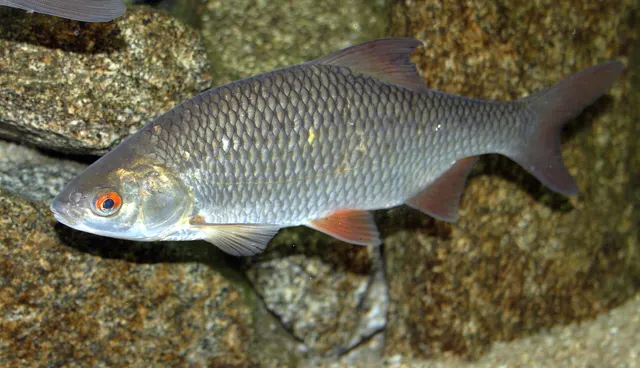 RoachRoach are the principal fish prey of perch across most of Europe, and the shift from invertebrates to roach is what produces the large perch anglers pursue.
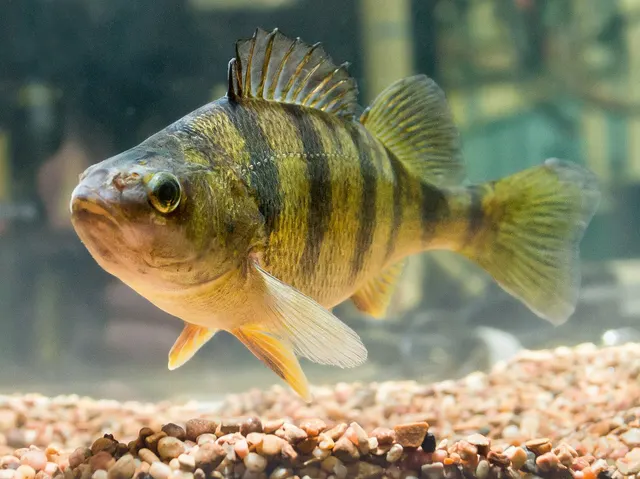 Yellow perchCongeners in the same genus doing the same job on opposite sides of the Atlantic — both shoal in clear weedy water, both drape egg ribbons over structure, and both stunt when nothing eats them.
Where it lives
- CanalsAbundant on canals and increasingly a specimen fishery where prey and structure allow, holding around bridges, moored boats and lock approaches.
- Gravel pitsBars, plateaux and gravel margins concentrate both prey and perch, and the clarity that makes pits hard for bait anglers suits a visual hunter.
Where you will find it
- Lake GenevaAbundant, the basis of the best-known local food fishery, and what most people on the water are actually fishing for.
- Lake VänernThe everyday fish of the lake, worked on rock and structure, and the most accessible good fishing available to a visitor without a large boat.
- Lough ErneThroughout both loughs, genuine and undervalued, in a system whose small-fish production is exceptionally high.
- SwedenUbiquitous across the lakes and the brackish coast, and the fish most Swedish anglers start on.
- The Baltic SeaAbundant throughout the brackish coastal zone and the archipelagos, using the same structure-and-shoal behaviour it uses in a lake, in water too fresh to exclude it.
- The English canal networkThroughout the network, holding to what structure a uniform channel offers — bridge holes, lock approaches, moored boats and marginal cover — and a mainstay of both match and pleasure fishing.
- The English trout reservoirsAt exceptional size in several of these reservoirs, feeding on fry in deep clear productive water, in a fishery that is usually seasonally restricted and separately ticketed.
- The Finnish lake districtIn enormous numbers across the shoals and margins and, in the right waters, at real size. It is the mainstay of both open-water lure fishing and of winter jigging through the ice.
4 more
- The Lake District lakes Fishing regions
- The Rhine Fishing regions
- The River Trent Fishing regions
- The Shannon system Fishing regions
Understanding this fish
- Aquatic insect larvae as preySmall perch feed almost entirely on invertebrates, and the transition to fish prey is gradual and size-dependent rather than sudden.
- Fly fishing for predators: pike, bass and beyondThe accessible case, and the one that shows the approach is not a novelty. Perch shoal, hunt small fish in open water and around structure, and take a small streamer readily on tackle a trout angler already owns.
- How floats workOne of two species edges written into this pillar, and it is written because the fish's behaviour is genuinely the subject. A perch takes a bait and moves off with it, which produces the classic float bite — a dip, a hold, then the float sliding away — and it is the clearest natural demonstration of what a float is for.
- Why bites stop suddenlyThe clearest worked example, and it is not the one anglers reach for. Perch shoal and hunt as a group, so a swim that produced a fish every cast for twenty minutes and then nothing has usually not 'gone off' at all — the shoal has moved on, and it may be twenty metres away. That is a completely different diagnosis from a change in conditions and calls for moving rather than waiting.
- Why fish follow a lure and turn awayThe same behaviour in a shoaling fish, with a different consequence. Perch follow in numbers and competition between them is what converts a follow into a take, which is why a lure that is refused by a single fish is frequently taken by the third one — and why slowing down works on perch where it fails on pike.
Told apart from
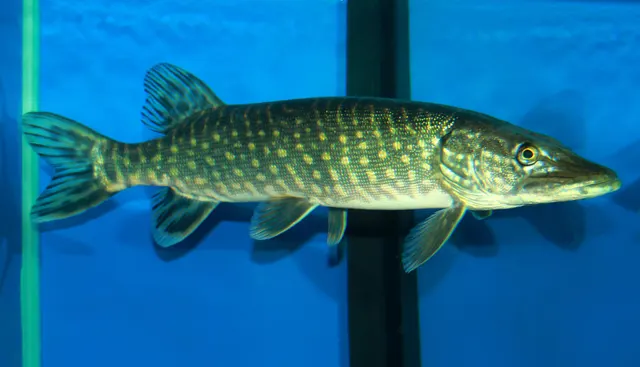 Northern pikeThe inverse of the diet edge, recorded separately because the evidence for a species being eaten and for a species eating is not the same evidence.
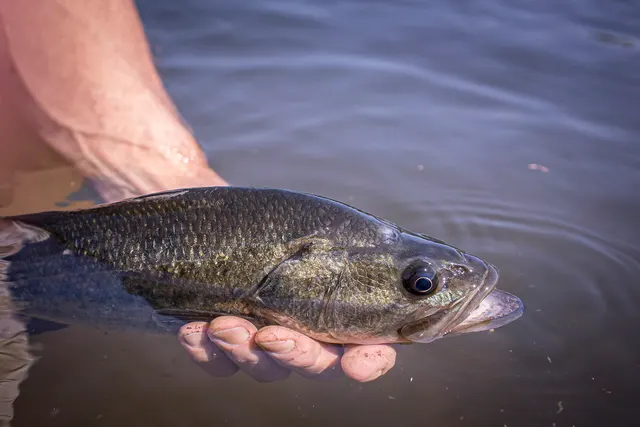 Largemouth bassTwo structure-oriented freshwater predators of similar size that occupy the same niche on different continents — and the comparison is the quickest way for a European reader to understand what bass fishing actually is.
- RuffeA small ruffe is regularly taken for a small perch. Both have a spiny first dorsal, but the ruffe's dorsal fins are joined into one continuous fin while the perch's are clearly separate, and a ruffe carries dark speckling on a drab olive body rather than perch's bold vertical bars.
Sources and evidence
- Freshwater Fishes of the British Isles — HarperCollins (New Naturalist 75), 1992 (Reference work)Relied on for: Identification, the ribbon spawning strategy, growth pattern and stunting in perch populations.States this directlyCitation checked — the work exists and is described correctly
- FishBase: a global information system on fishes — Froese, R. and D. Pauly, eds. — FishBase Consortium (Scientific institute)Relied on for: Taxonomy, family and size range.States this directlyPassage read and verified
- The IUCN Red List of Threatened Species — International Union for Conservation of Nature (Conservation authority)Relied on for: The global conservation assessment. Re-checked via FishBase's republication of the current category, because the Red List's own pages could not be read.States this directlyCitation checked — the work exists and is described correctly
Why the 32 connections on this page are here, and the sources
Similar and related fish
Backed by research — 3 connections
Supported by peer-reviewed research or fisheries science. The sources are listed and can be checked.
Bleak
Recorded diet evidence identifies Alburnus alburnus as a food item of this predator at species level. The edge is written at that granularity and no further.
- FishBase: a global information system on fishes — Froese, R. and D. Pauly, eds. — FishBase Consortium (Scientific institute)Relied on for: Food items recorded for this predator, including Alburnus alburnus.States this directlyPassage read and verified
- FAO Species Identification Guides for Fishery Purposes and the FAO Species Catalogues — Food and Agriculture Organization of the United Nations (Scientific institute)Relied on for: Species account describing the diet of this predator in the region where Alburnus alburnus occurs.Background and mechanism onlyCitation checked — the work exists and is described correctly
Roach
Recorded diet evidence identifies Rutilus rutilus as a food item of this predator at species level. The edge is written at that granularity and no further.
- FishBase: a global information system on fishes — Froese, R. and D. Pauly, eds. — FishBase Consortium (Scientific institute)Relied on for: Food items recorded for this predator, including Rutilus rutilus.States this directlyPassage read and verified
- FAO Species Identification Guides for Fishery Purposes and the FAO Species Catalogues — Food and Agriculture Organization of the United Nations (Scientific institute)Relied on for: Species account describing the diet of this predator in the region where Rutilus rutilus occurs.Background and mechanism onlyCitation checked — the work exists and is described correctly
Yellow perch
A taxonomic and ecological comparison, naming both scientific names so there is no ambiguity about which animals are being compared.
- FishBase: a global information system on fishes — Froese, R. and D. Pauly, eds. — FishBase Consortium (Scientific institute)Relied on for: That Perca flavescens is a Percidae of the genus Perca occupying fresh and brackish water with a preference for clear water near aquatic plants, feeding by day on immature aquatic insects, larger invertebrates, fishes and fish eggs.States this directlyPassage read and verified
- Freshwater Fishes of the British Isles — HarperCollins (New Naturalist 75), 1992 (Reference work)Relied on for: The comparable ecology, egg-ribbon spawning and stunting behaviour of Perca fluviatilis in European fresh waters.States this directlyCitation checked — the work exists and is described correctly
How it is caught
What experienced anglers do — 1 connection
Widely and independently recommended by experienced anglers and specialist sources. This is real angling knowledge, not proof: controlled evidence for it is limited, and FishingHQ records it as convention rather than as a demonstrated effect.
Drop shotting
Modern light lure practice, described independently across contemporary sources. Note that this claim cannot rest on the twentieth-century book literature, which predates the technique — see docs/evidence.md.
- Angling Times — Bauer Media (Specialist angling publication)Relied on for: Contemporary drop shot practice for perch.Citation checked — the work exists and is described correctly
- Sea Angler — Bauer Media (Specialist angling publication)Relied on for: Drop shot and light lure practice from a separate editorial tradition.Citation checked — the work exists and is described correctly
Gear for this fish
What experienced anglers do — 6 connections
Widely and independently recommended by experienced anglers and specialist sources. This is real angling knowledge, not proof: controlled evidence for it is limited, and FishingHQ records it as convention rather than as a demonstrated effect.
Crankbaits
A practitioner claim about which lure family answers this species' feeding or holding behaviour.
- Freshwater Fishing — Macdonald & Jane's, 1975 (Specialist angling publication)Relied on for: Lure and spinning practice for freshwater predators in Britain and northern Europe.States this directlyCitation checked — the work exists and is described correctly
- Angling Times — Bauer Media (Specialist angling publication)Relied on for: Contemporary British and European lure practice for this species in the weekly angling press.Background and mechanism onlyCitation checked — the work exists and is described correctly
Drop shot rig
Which species a terminal arrangement is directed at is established practitioner knowledge, converging across independent angling traditions and literatures, and is labelled as consensus rather than as tested result.
- Angling Times — Bauer Media (Specialist angling publication)Relied on for: Contemporary UK predator and lure angling practice as reported by practitioners, including finesse soft-plastic presentation.States this directlyCitation checked — the work exists and is described correctly
- General angling website restatements of established technique — Various (Credible secondary source)Relied on for: Widely restated descriptions of established lure-rigging convention, recorded as practitioner consensus rather than as scholarship.Background and mechanism onlyCitation checked — the work exists and is described correctly
Lobworms and worms
Long-established and independently described.
- Coarse Fishing — A. & C. Black, 1912 (Specialist angling publication)Relied on for: Worm baits for perch and general coarse fishing.Citation checked — the work exists and is described correctly
- Angling Times — Bauer Media (Specialist angling publication)Relied on for: Contemporary worm practice for perch.Citation checked — the work exists and is described correctly
Soft plastics
A practitioner claim about which lure family answers this species' feeding or holding behaviour.
- Freshwater Fishing — Macdonald & Jane's, 1975 (Specialist angling publication)Relied on for: Lure and spinning practice for freshwater predators in Britain and northern Europe.States this directlyCitation checked — the work exists and is described correctly
- Angling Times — Bauer Media (Specialist angling publication)Relied on for: Contemporary British and European lure practice for this species in the weekly angling press.Background and mechanism onlyCitation checked — the work exists and is described correctly
Spinners
Long-established and independently described.
- Freshwater Fishing — Macdonald & Jane's, 1975 (Specialist angling publication)Relied on for: Spinner selection for perch and pike.Citation checked — the work exists and is described correctly
- Angling Times — Bauer Media (Specialist angling publication)Relied on for: Contemporary spinner practice for perch.Citation checked — the work exists and is described correctly
Jigs and jig heads
Contemporary light lure practice, independently described.
- Angling Times — Bauer Media (Specialist angling publication)Relied on for: Jig head and soft plastic practice for perch.Citation checked — the work exists and is described correctly
- Sea Angler — Bauer Media (Specialist angling publication)Relied on for: Light jig practice from a separate tradition.Citation checked — the work exists and is described correctly
Where it lives
Backed by research — 2 connections
Supported by peer-reviewed research or fisheries science. The sources are listed and can be checked.
Canals
Habitat association recorded for the species, in an environment FishingHQ describes on its own page.
- Freshwater Fishes of the British Isles — HarperCollins (New Naturalist 75), 1992 (Reference work)Relied on for: Habitat association and distribution of European freshwater fishes, including occurrence in artificial and modified waters.States this directlyCitation checked — the work exists and is described correctly
- FishBase: a global information system on fishes — Froese, R. and D. Pauly, eds. — FishBase Consortium (Scientific institute)Relied on for: Habitat association, depth range and water-type tolerance recorded for the species.States this directlyPassage read and verified
Gravel pits
Habitat association recorded for the species, in an environment FishingHQ describes on its own page.
- Freshwater Fishes of the British Isles — HarperCollins (New Naturalist 75), 1992 (Reference work)Relied on for: Habitat association and distribution of European freshwater fishes, including occurrence in artificial and modified waters.States this directlyCitation checked — the work exists and is described correctly
- FishBase: a global information system on fishes — Froese, R. and D. Pauly, eds. — FishBase Consortium (Scientific institute)Relied on for: Habitat association, depth range and water-type tolerance recorded for the species.States this directlyPassage read and verified
Where you will find it
Backed by research — 12 connections
Supported by peer-reviewed research or fisheries science. The sources are listed and can be checked.
Lake Geneva
A distributional claim taken from reference works and databases on the fishes of the region rather than from angling report. It states presence and asserts nothing about a fishery.
- FishBase: a global information system on fishes — Froese, R. and D. Pauly, eds. — FishBase Consortium (Scientific institute)Relied on for: Distribution, habitat association, life history and size recorded for the species concerned.States this directlyPassage read and verified
- Freshwater Fishes of the British Isles — HarperCollins (New Naturalist 75), 1992 (Reference work)Relied on for: Biology, distribution, life history and conservation status of northern European freshwater and diadromous fishes.States this directlyCitation checked — the work exists and is described correctly
Lake Vänern
A distributional claim taken from reference works and databases on the fishes of the region rather than from angling report. It states presence and asserts nothing about a fishery.
- FishBase: a global information system on fishes — Froese, R. and D. Pauly, eds. — FishBase Consortium (Scientific institute)Relied on for: Distribution, habitat association, life history and size recorded for the species concerned.States this directlyPassage read and verified
- Freshwater Fishes of the British Isles — HarperCollins (New Naturalist 75), 1992 (Reference work)Relied on for: Biology, distribution, life history and conservation status of northern European freshwater and diadromous fishes.States this directlyCitation checked — the work exists and is described correctly
Lough Erne
A claim that a place contains the ground, water and seasonal conditions the species is associated with. It is a distributional statement about the world, it rests on the regional reference literature, and it deliberately asserts nothing about access, permission or catch.
- Freshwater Fishes of the British Isles — HarperCollins (New Naturalist 75), 1992 (Reference work)Relied on for: Distribution, ecology and conservation status of the freshwater fishes of the British Isles, including in artificial and modified waters.States this directlyCitation checked — the work exists and is described correctly
- Environment Agency fisheries management, byelaws and rod licensing information — Environment Agency (Government fisheries body)Relied on for: Fisheries monitoring, water quality and species distribution in English rivers, canals and still waters.States this directlyCitation checked — the work exists and is described correctly
Sweden
That a species occurs in these waters, drawn from distribution science and stock assessment. It is a statement about where the animal lives and is not a statement that anybody will catch one, still less where.
- Freshwater Fishes of the British Isles — HarperCollins (New Naturalist 75), 1992 (Reference work)Relied on for: Distribution, habitat requirement and life history of European freshwater fishes, including their occurrence across the continental range named.States this directlyCitation checked — the work exists and is described correctly
- FishBase: a global information system on fishes — Froese, R. and D. Pauly, eds. — FishBase Consortium (Scientific institute)Relied on for: Recorded distribution and habitat association of the freshwater and migratory species named.States this directlyPassage read and verified
The Baltic Sea
Occurrence of the species in this system or along this coast: a statement about the animal's distribution, not a venue recommendation.
- Freshwater Fishes of the British Isles — HarperCollins (New Naturalist 75), 1992 (Reference work)Relied on for: Distribution and habitat association of European freshwater fishes, including their occurrence in brackish and coastal waters.States this directlyCitation checked — the work exists and is described correctly
- FishBase: a global information system on fishes — Froese, R. and D. Pauly, eds. — FishBase Consortium (Scientific institute)Relied on for: Salinity tolerance and distribution recorded for the species.States this directlyPassage read and verified
The English canal network
A claim that a place contains the ground, water and seasonal conditions the species is associated with. It is a distributional statement about the world, it rests on the regional reference literature, and it deliberately asserts nothing about access, permission or catch.
- Freshwater Fishes of the British Isles — HarperCollins (New Naturalist 75), 1992 (Reference work)Relied on for: Distribution, ecology and conservation status of the freshwater fishes of the British Isles, including in artificial and modified waters.States this directlyCitation checked — the work exists and is described correctly
- Environment Agency fisheries management, byelaws and rod licensing information — Environment Agency (Government fisheries body)Relied on for: Fisheries monitoring, water quality and species distribution in English rivers, canals and still waters.States this directlyCitation checked — the work exists and is described correctly
The English trout reservoirs
A claim that a place contains the ground, water and seasonal conditions the species is associated with. It is a distributional statement about the world, it rests on the regional reference literature, and it deliberately asserts nothing about access, permission or catch.
- Freshwater Fishes of the British Isles — HarperCollins (New Naturalist 75), 1992 (Reference work)Relied on for: Distribution, ecology and conservation status of the freshwater fishes of the British Isles, including in artificial and modified waters.States this directlyCitation checked — the work exists and is described correctly
- Environment Agency fisheries management, byelaws and rod licensing information — Environment Agency (Government fisheries body)Relied on for: Fisheries monitoring, water quality and species distribution in English rivers, canals and still waters.States this directlyCitation checked — the work exists and is described correctly
The Finnish lake district
A claim that a place contains the ground, water and seasonal conditions the species is associated with. It is a distributional statement about the world, it rests on the regional reference literature, and it deliberately asserts nothing about access, permission or catch.
- Freshwater Fishes of the British Isles — HarperCollins (New Naturalist 75), 1992 (Reference work)Relied on for: Distribution, ecology and conservation status of European freshwater and migratory fishes, including in modified and artificial waters.States this directlyCitation checked — the work exists and is described correctly
- FishBase: a global information system on fishes — Froese, R. and D. Pauly, eds. — FishBase Consortium (Scientific institute)Relied on for: Recorded distribution, habitat association and life history for the freshwater and migratory species named.States this directlyPassage read and verified
The Lake District lakes
A claim that a place contains the ground, water and seasonal conditions the species is associated with. It is a distributional statement about the world, it rests on the regional reference literature, and it deliberately asserts nothing about access, permission or catch.
- Freshwater Fishes of the British Isles — HarperCollins (New Naturalist 75), 1992 (Reference work)Relied on for: Distribution, habitat and conservation status of British freshwater fishes, including the isolated glacial-relict populations of northern England.States this directlyCitation checked — the work exists and is described correctly
- Environment Agency fisheries management, byelaws and rod licensing information — Environment Agency (Government fisheries body)Relied on for: Fisheries monitoring, water quality and species distribution in English rivers and still waters.States this directlyCitation checked — the work exists and is described correctly
The Rhine
A claim that a place contains the ground, water and seasonal conditions the species is associated with. It is a distributional statement about the world, it rests on the regional reference literature, and it deliberately asserts nothing about access, permission or catch.
- Freshwater Fishes of the British Isles — HarperCollins (New Naturalist 75), 1992 (Reference work)Relied on for: Distribution, ecology and conservation status of European freshwater and migratory fishes, including in modified and artificial waters.States this directlyCitation checked — the work exists and is described correctly
- FishBase: a global information system on fishes — Froese, R. and D. Pauly, eds. — FishBase Consortium (Scientific institute)Relied on for: Recorded distribution, habitat association and life history for the freshwater and migratory species named.States this directlyPassage read and verified
The River Trent
A claim that a place contains the ground, water and seasonal conditions the species is associated with. It is a distributional statement about the world, it rests on the regional reference literature, and it deliberately asserts nothing about access, permission or catch.
- Freshwater Fishes of the British Isles — HarperCollins (New Naturalist 75), 1992 (Reference work)Relied on for: Distribution, habitat and conservation status of British freshwater fishes, including the isolated glacial-relict populations of northern England.States this directlyCitation checked — the work exists and is described correctly
- Environment Agency fisheries management, byelaws and rod licensing information — Environment Agency (Government fisheries body)Relied on for: Fisheries monitoring, water quality and species distribution in English rivers and still waters.States this directlyCitation checked — the work exists and is described correctly
The Shannon system
A claim that a place contains the ground, water and seasonal conditions the species is associated with. It is a distributional statement about the world, it rests on the regional reference literature, and it deliberately asserts nothing about access, permission or catch.
- Freshwater Fishes of the British Isles — HarperCollins (New Naturalist 75), 1992 (Reference work)Relied on for: Distribution, ecology and conservation status of the freshwater fishes of the British Isles, including in artificial and modified waters.States this directlyCitation checked — the work exists and is described correctly
- Environment Agency fisheries management, byelaws and rod licensing information — Environment Agency (Government fisheries body)Relied on for: Fisheries monitoring, water quality and species distribution in English rivers, canals and still waters.States this directlyCitation checked — the work exists and is described correctly
Understanding this fish
Backed by research — 1 connection
Supported by peer-reviewed research or fisheries science. The sources are listed and can be checked.
Aquatic insect larvae as prey
Recorded diet evidence identifies aquatic insect larvae as a food item of this predator at group level rather than to species. The edge points at the taxon record for that reason, and encoding it as a species-level claim would assert something the source does not.
- FishBase: a global information system on fishes — Froese, R. and D. Pauly, eds. — FishBase Consortium (Scientific institute)Relied on for: Food items recorded for this predator, given as aquatic insect larvae.States this directlyPassage read and verified
- FAO Species Identification Guides for Fishery Purposes and the FAO Species Catalogues — Food and Agriculture Organization of the United Nations (Scientific institute)Relied on for: Species account describing this predator's diet, recorded at the level of aquatic insect larvae.Background and mechanism onlyCitation checked — the work exists and is described correctly
What experienced anglers do — 4 connections
Widely and independently recommended by experienced anglers and specialist sources. This is real angling knowledge, not proof: controlled evidence for it is limited, and FishingHQ records it as convention rather than as a demonstrated effect.
Fly fishing for predators: pike, bass and beyond
A fish or a water joined to the fly-fishing mechanism it is a worked example of, written only where the subject's own behaviour or physical character is what this page explains. The direction is the one FishingHQ writes this kind of connection in, and the one it already uses 176 times, and it is also the semantically correct one: the mechanism explains the fish, not the reverse.
- Freshwater Fishes of the British Isles — HarperCollins (New Naturalist 75), 1992 (Reference work)Relied on for: Life history, feeding biology, habitat requirement and seasonal behaviour of the freshwater fishes of the British Isles.States this directlyCitation checked — the work exists and is described correctly
- FishBase: a global information system on fishes — Froese, R. and D. Pauly, eds. — FishBase Consortium (Scientific institute)Relied on for: Recorded environment, depth range, feeding biology and distribution of the species named.States this directlyPassage read and verified
- Still Water Fly-Fishing — Andre Deutsch, 1952 (Specialist angling publication)Relied on for: Stillwater fly practice: line density and depth, leader construction, fly selection against the food present, and the behaviour of stocked and wild trout in still water.States this directlyCitation checked — the work exists and is described correctly
- Trout & Salmon — Bauer Media (Specialist angling publication)Relied on for: Long-running published description of British game angling practice: river and stillwater trout, grayling and salmon fishing, and the presentation each demands.States this directlyCitation checked — the work exists and is described correctly
How floats work
A record joined to the beginner explainer that answers a question it raises. Written to open the beginner spine outward, which carried eleven internal edges and almost nothing else — a reader could circle it indefinitely without reaching a method, a habitat or a fault they were actually experiencing.
- Freshwater Fishing — Macdonald & Jane's, 1975 (Specialist angling publication)Relied on for: Comprehensive angling practice across disciplines, including tackle, water reading and the conduct of a session.States this directlyCitation checked — the work exists and is described correctly
- Coarse Fishing — A. & C. Black, 1912 (Specialist angling publication)Relied on for: Classical coarse angling practice including approach to the water, presentation and the ordinary faults of a day's fishing.States this directlyCitation checked — the work exists and is described correctly
- Angling Times — Bauer Media (Specialist angling publication)Relied on for: Contemporary UK angling practice as reported by practitioners, including the faults beginners actually meet and what is done about them.FishingHQ's interpretation of what it saysCitation checked — the work exists and is described correctly
- Sea Angler — Bauer Media (Specialist angling publication)Relied on for: British sea angling practice including shore access, pier and harbour fishing and session conduct.FishingHQ's interpretation of what it saysCitation checked — the work exists and is described correctly
Why bites stop suddenly
A fish or a record joined to the comparison it is a worked example of, written only where the subject's own behaviour is what makes the comparison concrete rather than where the comparison could apply to it.
- Freshwater Fishes of the British Isles — HarperCollins (New Naturalist 75), 1992 (Reference work)Relied on for: Feeding biology, behaviour and life history of the freshwater fishes of the British Isles.States this directlyCitation checked — the work exists and is described correctly
- FishBase: a global information system on fishes — Froese, R. and D. Pauly, eds. — FishBase Consortium (Scientific institute)Relied on for: Recorded feeding biology, environment and behaviour of the species named.States this directlyPassage read and verified
Why fish follow a lure and turn away
A fish or a record joined to the comparison it is a worked example of, written only where the subject's own behaviour is what makes the comparison concrete rather than where the comparison could apply to it.
- Freshwater Fishes of the British Isles — HarperCollins (New Naturalist 75), 1992 (Reference work)Relied on for: Feeding biology, behaviour and life history of the freshwater fishes of the British Isles.States this directlyCitation checked — the work exists and is described correctly
- FishBase: a global information system on fishes — Froese, R. and D. Pauly, eds. — FishBase Consortium (Scientific institute)Relied on for: Recorded feeding biology, environment and behaviour of the species named.States this directlyPassage read and verified
Told apart from
Backed by research — 2 connections
Supported by peer-reviewed research or fisheries science. The sources are listed and can be checked.
Northern pike
Perch are a recorded prey item of pike wherever the two co-occur, and predation pressure from pike is one of the factors that determines whether a perch population stunts or produces large individuals.
- Pike: Biology and Exploitation — Chapman & Hall (Fish and Fisheries Series 19), 1996 (Scientific literature)Relied on for: Predation by Esox lucius on Perca fluviatilis and its role in structuring prey populations.States this directlyCitation checked — the work exists and is described correctly
- Freshwater Fishes of the British Isles — HarperCollins (New Naturalist 75), 1992 (Reference work)Relied on for: The interaction between pike predation and perch population structure in British waters.FishingHQ's interpretation of what it saysCitation checked — the work exists and is described correctly
Recorded in the pike diet literature. Held to a scientific standard as a claim about feeding ecology.
- Pike: Biology and Exploitation — Chapman & Hall (Fish and Fisheries Series 19), 1996 (Scientific literature)Relied on for: Perca fluviatilis as recorded prey in the pike diet, and prey selection scaling with predator size.States this directlyCitation checked — the work exists and is described correctly
- FishBase: a global information system on fishes — Froese, R. and D. Pauly, eds. — FishBase Consortium (Scientific institute)Relied on for: Diet records for Esox lucius.Background and mechanism onlyPassage read and verified
Ruffe
An identification link between two species readers genuinely mistake for one another, resting on published identification keys rather than on angling lore. It names the character that separates them, which is what makes it useful rather than merely adjacent.
- Freshwater Fishes of the British Isles — HarperCollins (New Naturalist 75), 1992 (Reference work)Relied on for: Identification, distinguishing features and confusable species among the freshwater fishes of the British Isles, together with their distribution and habitat.States this directlyCitation checked — the work exists and is described correctly
- The Fishes of the British Isles and North-West Europe — Macmillan, 1969 (Reference work)Relied on for: Morphological identification features and identification keys for the fishes of the British Isles and north-west Europe, including the characters separating confusable species.States this directlyCitation checked — the work exists and is described correctly
What experienced anglers do — 2 connections
Widely and independently recommended by experienced anglers and specialist sources. This is real angling knowledge, not proof: controlled evidence for it is limited, and FishingHQ records it as convention rather than as a demonstrated effect.
Northern pike
The comparison is drawn routinely in predator angling literature.
- Pike and the Pike Angler — Stanley Paul, 1981 (Specialist angling publication)Relied on for: Comparative predator behaviour between pike and perch.Citation checked — the work exists and is described correctly
- Angling Times — Bauer Media (Specialist angling publication)Relied on for: Contemporary comparison of pike and perch angling approaches.Citation checked — the work exists and is described correctly
Largemouth bass
A comparison offered to make an unfamiliar species legible, which is a legitimate connection to draw rather than a filler link.
- Freshwater Fishes of the British Isles — HarperCollins (New Naturalist 75), 1992 (Reference work)Relied on for: The ecology and habitat use of Perca fluviatilis as a structure-associated predator.Citation checked — the work exists and is described correctly
- General angling website restatements of established technique — Various (Credible secondary source)Relied on for: Widely restated practitioner comparison of perch and bass technique.Citation checked — the work exists and is described correctly
How FishingHQ labels evidence is explained in the evidence policy.