Why fish follow a lure and turn away
Explainer · Last reviewed 2026-08-14
A follow is a fish that has committed to investigating and then found something wrong at close range — and the honest position is that the mechanism is well understood while the remedy is practitioner consensus rather than evidence.
A fish that follows has already made the decision this page is about. It detected the lure, tracked it, and closed the distance, which means the lure worked at range. Something then changed at short range and the fish declined.
What changes at short range is sensory. At distance a predator is working mostly from vibration through the lateral line and from silhouette; the fish is responding to something moving in roughly the right way. As it closes, resolution improves sharply — vision at a few body lengths delivers far more detail than at ten, and the lateral line resolves near-field flow rather than a distant disturbance.
So a follow-and-refuse is a fish that liked the low-resolution version and rejected the high-resolution one. That framing is useful because it tells you the problem is not attraction. Adding flash, noise or size addresses the part that already worked.
The close-range failure candidates are: the lure's action becoming visibly mechanical when the fish is alongside it; the leader, swivel or hooks becoming visible; the retrieve remaining perfectly steady when nothing living moves at a constant speed; and the fish running out of water — which is why so many follows end at the boat or the bank, where the fish turns rather than following into shallow water or towards a hull.
What the sensory biology supports, and where it stops
Two things here rest on published work rather than on angling opinion.
The first is that fish vision and the lateral line operate at different ranges and carry different information — the lateral line detecting water movement in the near field and vision improving with proximity and with light. A predator approaching a lure is therefore receiving a changing picture rather than a constant one.
The second is that visual capability varies enormously with water clarity, depth and the species' own visual pigments, which is why the same lure behaves differently in clear and stained water and why depth changes the available colour information before it changes anything else.
What the science does NOT supply is the inference anglers draw from it: that a specific change of retrieve causes a following fish to commit. That is a step beyond what any of this evidences, and it is handled separately below.
Backed by research — why, and the sources (2)
Supported by peer-reviewed research or fisheries science. The sources are listed and can be checked.
- The Ecology of Vision — Clarendon Press, Oxford, 1979 (Scientific literature)Relied on for: Underwater visual environments, the attenuation of light with depth and water condition, and the consequences for visual detection.States this directlyCitation checked — the work exists and is described correctly
- Lateral line system of fish — Integrative Zoology 4:13–25, 2009 (Scientific literature)Relied on for: The lateral line as a near-field flow-sensing system, distinct in range and information from vision.States this directlyCitation checked — the work exists and is described correctly
What practitioners do about it, labelled as consensus
Anglers across lure traditions converge on a small set of responses to a following fish, and they converge without any controlled evidence that the responses work.
The most consistent is breaking the rhythm: a pause, an acceleration, a change of direction, or a figure-of-eight at the rod tip as the lure reaches the angler. The reasoning offered is that a constant retrieve is the least lifelike thing about the presentation and that a prey animal noticing a predator behaves erratically.
The second is reducing what the fish can see that is not the lure — a longer or finer leader, smaller hardware, a fluorocarbon leader in clear water.
The third is downsizing, on the reasoning that a fish which has inspected and declined has judged something about the lure to be wrong and that a smaller profile presents less to judge.
All three are reported consistently and independently across sea, freshwater predator and game traditions. None has been tested in a way that would separate it from the angler simply making more casts.
What experienced anglers do — why, and the sources (2)
Widely and independently recommended by experienced anglers and specialist sources. This is real angling knowledge, not proof: controlled evidence for it is limited, and FishingHQ records it as convention rather than as a demonstrated effect.
- Sea Angler — Bauer Media (Specialist angling publication)Relied on for: Sea lure-fishing practice on responding to following and short-striking fish.States this directlyCitation checked — the work exists and is described correctly
- Pike and the Pike Angler — Stanley Paul, 1981 (Specialist angling publication)Relied on for: Predator angling practice on working a lure to a following fish, including retrieve variation and the figure-of-eight at the rod tip.States this directlyCitation checked — the work exists and is described correctly
The one thing that is not the answer
Lure colour is where this question is most often taken, and it is where FishingHQ has least to offer, deliberately.
What can be said is physical: water removes long wavelengths first, so a lure's colour at ten metres is not the colour it was at the surface, and contrast against the background survives depth better than hue does. That is optics and it is stated on the lure-mechanics pages.
What cannot be said is that one colour produces more takes than another. There is no body of controlled evidence to support a ranking, the practitioner opinion is genuinely contradictory rather than merely varied, and FishingHQ does not publish colour rankings for that reason. A page that answered a follow-and-refuse with a colour recommendation would be inventing the most confident-sounding part of its own advice.
Where to go next
Fish this applies to
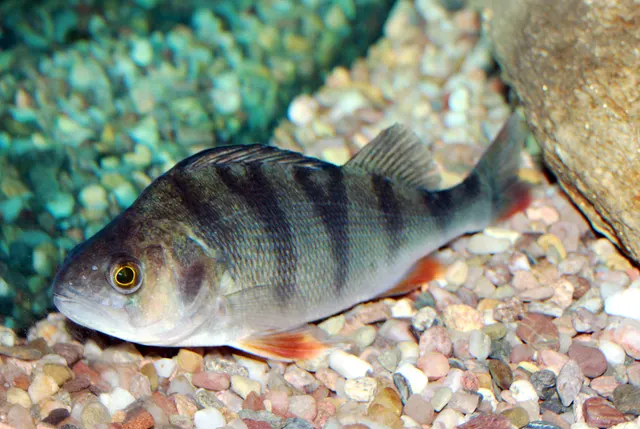 European perchThe same behaviour in a shoaling fish, with a different consequence. Perch follow in numbers and competition between them is what converts a follow into a take, which is why a lure that is refused by a single fish is frequently taken by the third one — and why slowing down works on perch where it fails on pike.
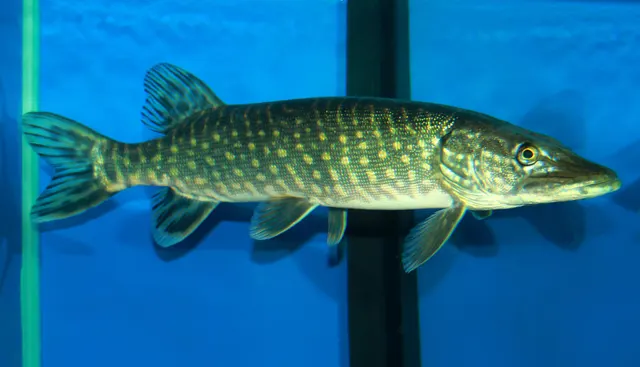 Northern pikeThe species that made this a recognised phenomenon rather than an anecdote, because it is the one where the follow is routinely VISIBLE. A pike tracking a lure to the bank and turning at the last moment is watched, not inferred, which is why almost everything written about the behaviour comes from pike fishing and why the figure-of-eight at the rod tip exists at all.
Where it matters
Related reading
- Do fish rememberHeavily fished water contains fish that have learned, which is a measurable difference rather than an excuse and explains why a presentation that works in one place fails in another.
- Lure size, and what it is selectingFollow-and-refuse is the most informative feedback in lure fishing, and too large a lure is the first of the three things it usually means.
How this compares
Sources and evidence
- The Ecology of Vision — Clarendon Press, Oxford, 1979 (Scientific literature)Relied on for: The visual environment underwater as background to close-range lure inspection.Background and mechanism onlyCitation checked — the work exists and is described correctly
Why the 8 connections on this page are here, and the sources
Fish this applies to
What experienced anglers do — 2 connections
Widely and independently recommended by experienced anglers and specialist sources. This is real angling knowledge, not proof: controlled evidence for it is limited, and FishingHQ records it as convention rather than as a demonstrated effect.
European perch
A fish or a record joined to the comparison it is a worked example of, written only where the subject's own behaviour is what makes the comparison concrete rather than where the comparison could apply to it.
- Freshwater Fishes of the British Isles — HarperCollins (New Naturalist 75), 1992 (Reference work)Relied on for: Feeding biology, behaviour and life history of the freshwater fishes of the British Isles.States this directlyCitation checked — the work exists and is described correctly
- FishBase: a global information system on fishes — Froese, R. and D. Pauly, eds. — FishBase Consortium (Scientific institute)Relied on for: Recorded feeding biology, environment and behaviour of the species named.States this directlyPassage read and verified
Northern pike
A fish or a record joined to the comparison it is a worked example of, written only where the subject's own behaviour is what makes the comparison concrete rather than where the comparison could apply to it.
- Freshwater Fishes of the British Isles — HarperCollins (New Naturalist 75), 1992 (Reference work)Relied on for: Feeding biology, behaviour and life history of the freshwater fishes of the British Isles.States this directlyCitation checked — the work exists and is described correctly
- FishBase: a global information system on fishes — Froese, R. and D. Pauly, eds. — FishBase Consortium (Scientific institute)Relied on for: Recorded feeding biology, environment and behaviour of the species named.States this directlyPassage read and verified
Where it matters
Backed by research — 2 connections
Supported by peer-reviewed research or fisheries science. The sources are listed and can be checked.
Drop shotting
A method that answers the failure belongs beside the failure.
- The Ecology of Vision — Clarendon Press, Oxford, 1979 (Scientific literature)Relied on for: Underwater visual environments and the way detection changes with range, depth and water condition.States this directlyCitation checked — the work exists and is described correctly
Spinning
Retrieve variation is a technique response to a specific failure.
- The Ecology of Vision — Clarendon Press, Oxford, 1979 (Scientific literature)Relied on for: Underwater visual environments and the way detection changes with range, depth and water condition.States this directlyCitation checked — the work exists and is described correctly
Related reading
Backed by research — 1 connection
Supported by peer-reviewed research or fisheries science. The sources are listed and can be checked.
Do fish remember
Why it works, and what that rests on. The underlying claims are documented in the fisheries science and reference literature cited rather than restated from practice.
- Functions of shoaling behaviour in teleosts — In: Pitcher TJ (ed.) Behaviour of Teleost Fishes, 2nd edn. Chapman & Hall, London, 1993 (Scientific literature)Relied on for: Behavioural ecology of shoaling fishes including learning, social transmission and antipredator behaviour.States this directlyCitation checked — the work exists and is described correctly
- Fear of fishers: human predation explains behavioral changes in coral reef fishes — PLoS ONE 6(8): e22761, 2011 (Scientific literature)Relied on for: Evidence that fish adjust flight response to human presence according to local fishing pressure, indicating learning from experience.States this directlyCitation checked — the work exists and is described correctly
What experienced anglers do — 1 connection
Widely and independently recommended by experienced anglers and specialist sources. This is real angling knowledge, not proof: controlled evidence for it is limited, and FishingHQ records it as convention rather than as a demonstrated effect.
Lure size, and what it is selecting
Why it works, resting on practice reported consistently across independent angling traditions rather than on experiment.
- Angling Times — Bauer Media (Specialist angling publication)Relied on for: Contemporary UK coarse, match and lure angling practice as reported by practitioners, including bait and lure convention.States this directlyCitation checked — the work exists and is described correctly
- Sea Angler — Bauer Media (Specialist angling publication)Relied on for: Contemporary UK sea angling practice as reported by practitioners, including lure and bait convention.States this directlyCitation checked — the work exists and is described correctly
How this compares
Backed by research — 2 connections
Supported by peer-reviewed research or fisheries science. The sources are listed and can be checked.
How fish detect prey
Separating detection from inspection is what makes a follow diagnosable at all.
- The Ecology of Vision — Clarendon Press, Oxford, 1979 (Scientific literature)Relied on for: Underwater visual environments and the way detection changes with range, depth and water condition.States this directlyCitation checked — the work exists and is described correctly
How fish see
The sensory page supplies the mechanism the troubleshooting page reasons from.
- The Ecology of Vision — Clarendon Press, Oxford, 1979 (Scientific literature)Relied on for: Underwater visual environments and the way detection changes with range, depth and water condition.States this directlyCitation checked — the work exists and is described correctly
How FishingHQ labels evidence is explained in the evidence policy.