Drop shotting
Method · Last reviewed 2026-08-10
A finesse rig with the weight below the hook, letting a small soft plastic be worked in place, off the bottom, without moving anywhere.
Drop shotting inverts the normal arrangement: the weight goes on the end of the line and the hook is tied in above it, so the lure sits off the bottom at a fixed height. That single change produces a capability nothing else has — the lure can be twitched, shaken and animated indefinitely without travelling anywhere.
That matters when fish are located but reluctant. A conventional retrieve gives a fish one chance to commit as the lure passes; a drop shot gives it an unlimited number, held at exactly the right height, with the angler able to keep working it until curiosity or irritation wins. It is the reason the method transformed perch and zander fishing when it arrived in Europe.
The height of the hook above the weight is the key adjustable, and it should be set by where the fish are sitting rather than by habit.
What it is
Lure fishing with a finesse rig in which the weight is attached at the very end of the line and the hook is tied in above it, so that a small soft plastic is suspended at a set height above the bottom and can be worked without being retrieved at all. The order matters and is the whole idea: on almost every other lure rig the weight leads and the lure follows, so moving the lure means moving the rig. Here the weight is anchored, and the lure can be shaken, twitched or left dead still in one place for as long as the angler is willing to stand there.
What it is for
To present a small lure, at a controlled height, to fish that have been located but are not chasing anything — around structure, in deep margins, in cold water, or anywhere a conventional retrieve moves the lure through the strike zone in under a second. It is a method for converting a known fish rather than for finding an unknown one. The classic use is a perch or a zander sitting hard against a piling or a drop-off that has watched three lures go past and will not follow any of them, and which will eventually take something that has been quivering in front of its face for a minute.
Setting it up
- Set the hook-to-weight distance by where the fish are: short for fish tight on the bottom, longer for fish sitting off it.
- Tie the hook so the point stands out from the line at right angles, or the hooking angle is wrong.
- Use the lightest weight that maintains contact — the point is finesse, not casting distance.
- Work the lure with the rod tip, keeping the weight still, rather than retrieving.
- Use braid with a fluorocarbon leader; you need the sensitivity and the low visibility both.
What it catches
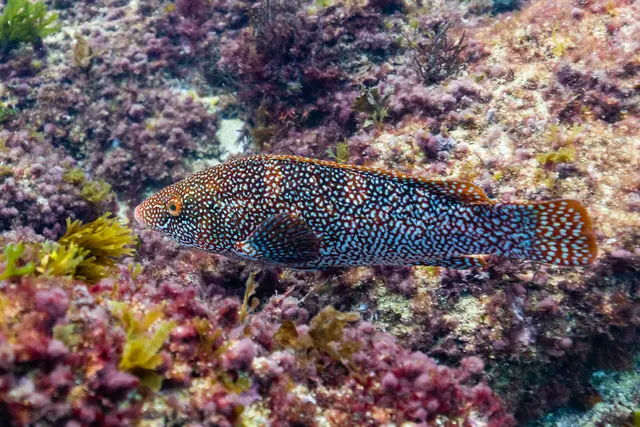 Ballan wrasseWeedless soft plastics worked over and into rough ground — a recent discipline that turned wrasse from an incidental capture into a targeted sport fishery.
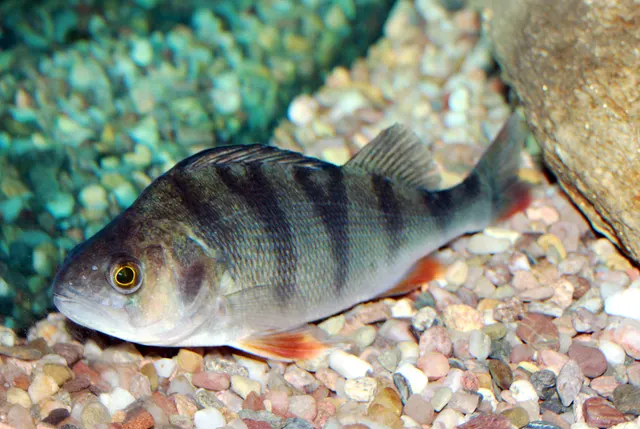 European perchBig perch hold tight to structure and will not chase, which is precisely the problem a drop shot solves.
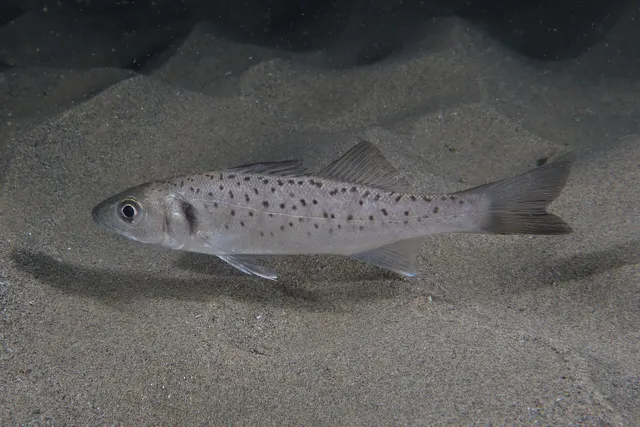 European sea bassSoft plastics fished with a controlled drop over reef and in estuary channels, worked slowly for fish that are holding rather than hunting.
- Ornate wrasseThe specific rig the diary uses more than any other.
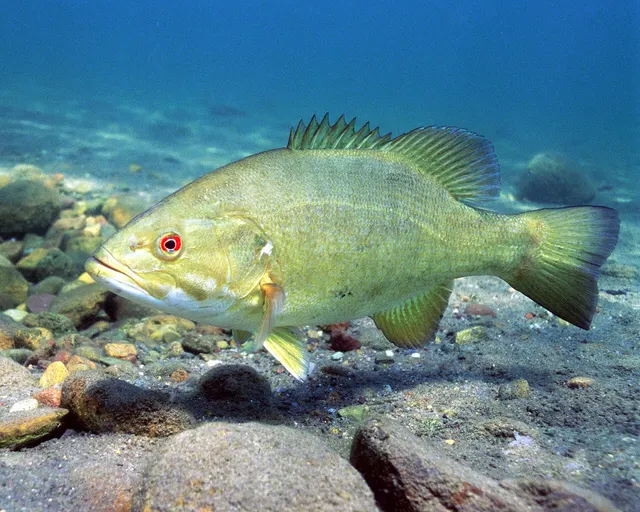 Smallmouth bassDrop-shotting presents a small bait above bottom at a fixed height, which is the answer to smallmouth holding tight to deep rock where a bottom-dragged bait snags.
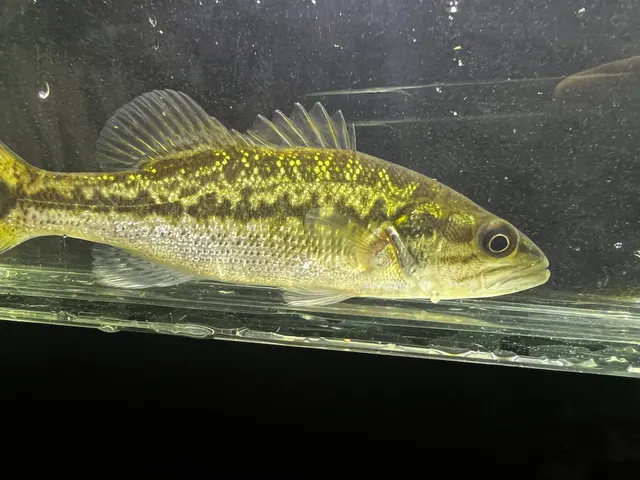 Spotted bassSpotted bass suspend deeper and over steeper structure than largemouth, and a vertically presented bait held off the bottom is the standard approach to them.
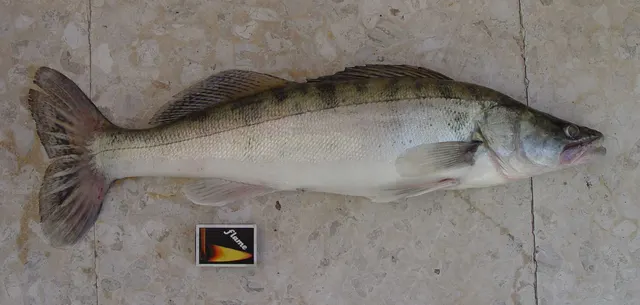 ZanderDrop-shotting suits zander particularly well because it holds a small bait at a fixed height above the bottom, which is exactly where they hunt.
What you fish it with
- Drop shot rigWeight below, hook above, bait suspended at a chosen height off the bottom. The rig is the technique.
- Jigs and jig headsIts absence is the point: a drop-shot hook carries no weight, and the contrast is what the rig teaches.
- Palomar knotThe defining knot of the technique rather than merely a compatible one: tied with a long tag and the tag passed back down through the eye, it stands the hook out from the line at right angles, which is the whole presentation. Nothing else in FishingHQ does that job.
- Soft plasticsA small soft bait held above a weight, which is what the rig exists to do.
How it works
The weight rests on the bottom and anchors the rig. The hook, tied in above it with the point standing away from the line, holds the lure horizontally. Shaking the rod tip transmits movement down the line to the lure, which quivers in place because the weight is not moving. Takes are usually felt as a tap or as weight arriving on the line.
Conditions
Drop shotting suits still or slow water, moderate to deep margins, and fish that have been located but are inactive. It is at its best in cold water and hard against structure — pilings, moored boats, lock walls, sunken timber, the steep side of a drop-off — where a fish holds tight and does not move far to feed.
It is at its worst in strong flow, which sweeps the light weight off the spot and turns the rig into a poorly balanced float, and in the search phase of a session, where its slowness is a straight liability. The usual sequence is to find fish with something faster and then drop shot the spot properly, which is also why it is more of an urban canal and harbour-wall method than a big-open-water one.
Common mistakes
- Retrieving the rig instead of working it, which discards the entire advantage.
- Tying the hook so the point lies along the line rather than standing proud.
- Setting the drop length by habit rather than by where the fish are.
- Using a weight far heavier than needed, so nothing subtle is felt.
- Persisting in fast current, where the method simply does not work.
Advantages
- Keeps a lure in the strike zone indefinitely.
- Extremely effective on fish that will not chase.
- Fishes vertical structure and steep margins well.
- Very light tackle, so it is enjoyable and easy to carry.
Limitations
- Slow — it does not cover water and is therefore poor for locating fish.
- The weight snags readily on rough ground.
- Ineffective in strong current, which sweeps the light rig.
- Light tackle is outgunned by an unexpectedly large fish.
Terms you will meet
- Drop length
- The distance between hook and weight, which is the height the lure sits at. It is the one measurement that decides whether the rig is fishing where the fish are, and it should be set from the sounder or from experience rather than from habit.
- Palomar with a tag
- The standard knot: tied so a long tag end runs down to the weight and the hook stands proud on the mainline. Passing the tag back through the hook eye from the point side is what keeps the hook point angled away from the line.
- Nose-hooking
- Hooking a soft plastic once through the head so it hangs horizontally and can quiver freely. Hooking it through the body kills the action the rig exists to produce.
- Shaking
- Vibrating the rod tip so the slack line transmits movement to the lure without lifting the weight. If the weight moves, it is no longer drop shotting.
Where people fish it
16 places FishingHQ holds name this among the ways they are fished, across 11 coasts and systems. Being named here describes what sources report, not that the method is permitted — check the local rules before you fish.
Lac du Der, The Loire at Nantes, The Rhône at Lyon
Ponta da Costa, São Miguel, Ponta Delgada harbour, São Miguel, Vila Franca do Campo, São Miguel
The Elbe at Hamburg, The Rügen Bodden
The Markermeer
The Amsterdam canals
3 further coasts and systems are not listed here. Browse every place FishingHQ holds.
Where to go next
Related techniques
Skills behind it
- Line memory, stretch and bite detectionDrop-shotting depends on feeling a light take through a vertical line, which is the presentation stretch damages most.
- Spinning, casting and retrievingDescribed as spinning by most people, with nothing rotating at any point.
- The kinds of lure, and what each imitatesA finesse presentation in which the lure's action comes from the rod tip rather than from the retrieve, which is a different way of thinking about a soft plastic.
- Why fish follow a lure and turn awayPresentations that hold a lure in place remove the constant-speed problem entirely, which is part of why they work on inspected fish.
Compared with
Sources and evidence
Why the 17 connections on this page are here, and the sources
What it catches
What experienced anglers do — 6 connections
Widely and independently recommended by experienced anglers and specialist sources. This is real angling knowledge, not proof: controlled evidence for it is limited, and FishingHQ records it as convention rather than as a demonstrated effect.
Ballan wrasse
An established way this species is taken recreationally in north-west European waters.
- Sea Angler — Bauer Media (Specialist angling publication)Relied on for: Shore and boat practice in north-west European sea angling for the species and method described, presented across multiple independent contributors.States this directlyCitation checked — the work exists and is described correctly
- General angling website restatements of established technique — Various (Credible secondary source)Relied on for: Widely restated practice connecting this species to this method, recorded as practitioner consensus rather than as tested fact.Background and mechanism onlyCitation checked — the work exists and is described correctly
European perch
Modern light lure practice, described independently across contemporary sources. Note that this claim cannot rest on the twentieth-century book literature, which predates the technique — see docs/evidence.md.
- Angling Times — Bauer Media (Specialist angling publication)Relied on for: Contemporary drop shot practice for perch.Citation checked — the work exists and is described correctly
- Sea Angler — Bauer Media (Specialist angling publication)Relied on for: Drop shot and light lure practice from a separate editorial tradition.Citation checked — the work exists and is described correctly
European sea bass
An established way this species is taken recreationally in north-west European waters.
- Sea Angler — Bauer Media (Specialist angling publication)Relied on for: Shore and boat practice in north-west European sea angling for the species and method described, presented across multiple independent contributors.States this directlyCitation checked — the work exists and is described correctly
- General angling website restatements of established technique — Various (Credible secondary source)Relied on for: Widely restated practice connecting this species to this method, recorded as practitioner consensus rather than as tested fact.Background and mechanism onlyCitation checked — the work exists and is described correctly
Smallmouth bass
Established angling practice for this species, recorded as convention. The note states the property of the animal or its water that makes the method the answer.
- IGFA International Angling Rules and World Record Requirements — International Game Fish Association (Angling or fisheries organisation)Relied on for: Recognition of the species as an established sport fish and the angling methods and tackle classes conventionally used for it.States this directlyPassage read and verified
- General angling website restatements of established technique — Various (Credible secondary source)Relied on for: Widely restated practice connecting this species and method.Background and mechanism onlyCitation checked — the work exists and is described correctly
Spotted bass
Established angling practice for this species, recorded as convention. The note states the property of the animal or its water that makes the method the answer.
- IGFA International Angling Rules and World Record Requirements — International Game Fish Association (Angling or fisheries organisation)Relied on for: Recognition of the species as an established sport fish and the angling methods and tackle classes conventionally used for it.States this directlyPassage read and verified
- General angling website restatements of established technique — Various (Credible secondary source)Relied on for: Widely restated practice connecting this species and method.Background and mechanism onlyCitation checked — the work exists and is described correctly
Zander
A practitioner claim about presentation, labelled as such. The mechanism — bait held off bottom in the fish's feeding layer — is the part that generalises.
- Angling Times — Bauer Media (Specialist angling publication)Relied on for: Drop-shot presentation for zander in British waters.Citation checked — the work exists and is described correctly
- Pike Anglers' Club of Great Britain guidance on pike care and handling — Pike Anglers' Club of Great Britain, 1977 (Angling or fisheries organisation)Relied on for: Practitioner treatment of light lure presentation for zander, from a source independent of the angling press.Passage read and verified
Reported, not established — 1 connection
Reported, but without independent support. Recorded because it is in circulation, not because it has been shown to hold.
Ornate wrasse
The diary describes a drop-shot rig with a size 10 hook and a small soft-plastic worm bait as the standing setup, and ornate wrasse as the fish that takes it before anything else does.
- Species hunting adventures on Lanzarote — a four-part shore diary with a full tally — Something Fishy Going On (angling blog), parts also posted to World Sea Fishing, 2014 (Practitioner report)Relied on for: The light-tackle methods, rigs, lures, baits and hook sizes a species-hunting angler used on Lanzarote, and the species each took.States this directlyPassage read and verified
Related techniques
What experienced anglers do — 1 connection
Widely and independently recommended by experienced anglers and specialist sources. This is real angling knowledge, not proof: controlled evidence for it is limited, and FishingHQ records it as convention rather than as a demonstrated effect.
Lure fishing
How the discipline classifies it, rather than a claim about how it is fished.
- Angling Times — Bauer Media (Specialist angling publication)Relied on for: Drop shotting within contemporary lure practice.Citation checked — the work exists and is described correctly
- Sea Angler — Bauer Media (Specialist angling publication)Relied on for: Light lure categorisation from a separate tradition.Citation checked — the work exists and is described correctly
What you fish it with
What experienced anglers do — 4 connections
Widely and independently recommended by experienced anglers and specialist sources. This is real angling knowledge, not proof: controlled evidence for it is limited, and FishingHQ records it as convention rather than as a demonstrated effect.
Drop shot rig
That a method is conventionally fished on a particular terminal arrangement, drawn from angling literature and from widely restated practitioner description rather than from testing.
- Angling Times — Bauer Media (Specialist angling publication)Relied on for: Contemporary UK lure and predator angling practice as reported by practitioners, including braid-to-lure connections and finesse rigging.States this directlyCitation checked — the work exists and is described correctly
- How to Tie Fishing Knots — uni, blood, improved blood, surgeon's and loop knots — Recreational Boating & Fishing Foundation (Take Me Fishing) (Angling or fisheries organisation)Relied on for: A contemporary national angling-participation body's knot guide, covering the connections used in modern lure fishing and the materials they are tied in.States this directlyPassage read and verified
Jigs and jig heads
The drop-shot record presents a bait above a weight on a dropper, which is the exact inverse of a jig head's weight-at-the-eye. Recording the pairing as a contrast keeps a reader from arriving at a jig head and rigging it drop-shot.
- Angling Times — Bauer Media (Specialist angling publication)Relied on for: Specialist treatment of which bait or lure family this technique is fished with.States this directlyCitation checked — the work exists and is described correctly
- General angling website restatements of established technique — Various (Credible secondary source)Relied on for: The independently restated practitioner pairing of this technique with this family.Background and mechanism onlyCitation checked — the work exists and is described correctly
Palomar knot
Which knot a kind of fishing conventionally uses is established practitioner knowledge that converges across independent traditions and independent state agency guides, and it is labelled as consensus rather than as tested result. Nothing here ranks knots by strength: see `why-knot-strength-tables-disagree` for why that number does not exist.
- Angling Times — Bauer Media (Specialist angling publication)Relied on for: Contemporary UK lure and predator angling practice as reported by practitioners, including braid-to-lure connections and finesse rigging.States this directlyCitation checked — the work exists and is described correctly
- How to Tie Fishing Knots — uni, blood, improved blood, surgeon's and loop knots — Recreational Boating & Fishing Foundation (Take Me Fishing) (Angling or fisheries organisation)Relied on for: A contemporary national angling-participation body's knot guide, covering the connections used in modern lure fishing and the materials they are tied in.States this directlyPassage read and verified
Soft plastics
The drop-shot page describes presenting a small bait off the bottom on a dropper, and the soft-plastic page describes the subtle-action baits that presentation is built around.
- Sea Angler — Bauer Media (Specialist angling publication)Relied on for: Practitioner treatment of which lure or bait family this technique is fished with.States this directlyCitation checked — the work exists and is described correctly
- General angling website restatements of established technique — Various (Credible secondary source)Relied on for: The widely restated practitioner pairing of this technique with this family.Background and mechanism onlyCitation checked — the work exists and is described correctly
Skills behind it
What experienced anglers do — 2 connections
Widely and independently recommended by experienced anglers and specialist sources. This is real angling knowledge, not proof: controlled evidence for it is limited, and FishingHQ records it as convention rather than as a demonstrated effect.
Line memory, stretch and bite detection
Low-stretch line is treated as part of the method rather than as an option in drop-shot practice.
- Angling Times — Bauer Media (Specialist angling publication)Relied on for: Contemporary lure angling practice with modern materials and lure types.States this directlyCitation checked — the work exists and is described correctly
- Sea Angler — Bauer Media (Specialist angling publication)Relied on for: Saltwater lure angling practice with the same materials and lure types.States this directlyCitation checked — the work exists and is described correctly
The kinds of lure, and what each imitates
A link from a practice or a piece of equipment to the explanation of what it is for. The two records are halves of one answer and the edge is what lets a reader arriving at either find the other.
- Angling Times — Bauer Media (Specialist angling publication)Relied on for: Contemporary UK coarse, match and predator practice as reported by practitioners, including lure and line convention.FishingHQ's interpretation of what it saysCitation checked — the work exists and is described correctly
- General angling website restatements of established technique — Various (Credible secondary source)Relied on for: Widely restated descriptions of contemporary tackle convention, recorded as practitioner consensus rather than as scholarship.Background and mechanism onlyCitation checked — the work exists and is described correctly
Official guidance — 1 connection
Stated by a fisheries authority, scientific institute or recognised angling body. Authoritative, but summarising rather than demonstrating.
Spinning, casting and retrieving
A clear case of the broadened modern usage.
- FAO fishing gear types and fishing technology information — Food and Agriculture Organization of the United Nations (Scientific institute)Relied on for: Gear classification distinguishing rod-and-line lure methods and reel types.States this directlyCitation checked — the work exists and is described correctly
Backed by research — 1 connection
Supported by peer-reviewed research or fisheries science. The sources are listed and can be checked.
Why fish follow a lure and turn away
A method that answers the failure belongs beside the failure.
- The Ecology of Vision — Clarendon Press, Oxford, 1979 (Scientific literature)Relied on for: Underwater visual environments and the way detection changes with range, depth and water condition.States this directlyCitation checked — the work exists and is described correctly
Compared with
What experienced anglers do — 1 connection
Widely and independently recommended by experienced anglers and specialist sources. This is real angling knowledge, not proof: controlled evidence for it is limited, and FishingHQ records it as convention rather than as a demonstrated effect.
Light rock fishing
Two techniques a reader is genuinely choosing between for the same problem.
- Sea Angler — Bauer Media (Specialist angling publication)Relied on for: UK shore lure fishing practice: tackle scale, presentation and ground.States this directlyCitation checked — the work exists and is described correctly
- Angling Times — Bauer Media (Specialist angling publication)Relied on for: Contemporary UK angling practice and the adoption of imported techniques as reported in the angling press.States this directlyCitation checked — the work exists and is described correctly
How FishingHQ labels evidence is explained in the evidence policy.